Tag: Higher

  • Reflections on the demand for higher education – and what UCAS data reveal ahead of Results Day 2025

    Reflections on the demand for higher education – and what UCAS data reveal ahead of Results Day 2025


    This HEPI blog was kindly authored by Maggie Smart, UCAS Director of Data and Analysis

    As we pass the 30 June deadline for this year’s undergraduate admissions cycle, UCAS’ data offers an early view of applicant and provider behaviour as we head into Confirmation and Clearing. It also marks a personal milestone for me, as it’s my first deadline release since rejoining UCAS. I wanted to take a deeper look at the data to reflect on how much things have changed since I worked here 10 years ago.

    Applicant demand has always been shaped by two key elements: the size of the potential applicant pool, and their propensity to apply. Since I last worked at UCAS in 2016, these two factors have continuously interchanged over the better part of the past decade – sometimes increasing or decreasing independently but often counterbalancing each other. Let’s take a look at how things are shaping up this year.

    Overall, by the 30 June there have been 665,070 applicants (all ages, all domiciles) this year, compared to 656,760 (+1.3%) in 2024. This is an increase in applicants of over 64,000 since UCAS last reported in January, although the profile of these additional applicants is very different. At the January Equal Consideration Deadline (ECD), over half of the total number of applicants were UK 18-year olds, who are the most likely group to have applied by that stage in the cycle. They represent just 8% of the additional applicants since January, among a much larger proportion of UK mature and international students.

    As we saw at January, the differences in demand for places between young people from the most advantaged (POLAR4 Quintile 5) and most disadvantaged (POLAR4 Quintile 1) areas at June remain broadly the same as last year – with the most advantaged 2.15 times more likely to apply to HE than those from the least advantaged backgrounds, compared to 2.17 last year.

    UK 18-year-old demand

    Demand for UK higher education (HE) has long been shaped by the 18-year-old population – the largest pool of applicants. Despite the well-known challenges facing the HE sector at present, at the 30 June deadline we see record numbers of UK 18-year-old applicants, with 328,390 applicants this year – up from 321,410 (+2%) in 2024. This trend was almost entirely locked in by the January deadline, given the vast majority of UK 18-year-old applicants have applied at this stage in the cycle.

    During my previous tenure at UCAS, the size of the UK 18-year-old population had been falling year on year but from 2020, it began to increase. This continued growth drives the increase in UK 18-year-old applicant numbers we have observed in recent cycles. But when we look at their overall application rate to understand the strength of demand among this group, the data shows a marginal decline again this year – down to 41.2% from 41.9% in 2024. The historically strong growth in the propensity of UK 18-year-olds to apply for HE, which we’ve observed across the last decade, has clearly plateaued.

    This could be due to a range of factors, such as young people choosing to take up work or an apprenticeship, or financial barriers. We know that cost of living is increasingly influencing young people’s decisions this year, with pre-applicants telling us that financial support – such as scholarships or bursaries – ranks as the second most important consideration for them (46%), followed closely by universities’ specific cost-of-living support (34%).

    Interesting to note is the number of UK 19-year-old applicants. When separating the data to distinguish 19-year-olds applying for the first time (as opposed to those reapplying), there has been a decent increase – from 46,680 last year to 48,890 this year (+4.7%). For many years, the number of first-time UK 19-year-old applicants had been falling year on year, but since 2023 this trend has started to reverse. This suggests that demand among young people may be holding up as they decide to take a year out before applying to university or college.

    Mature students

    For UK mature students (aged 21+), the picture looks very different. The number of mature students applying to university or college ebbs and flows depending on the strength of the job market, so since I was last at UCAS, we have typically seen applications decrease when employment opportunities are strong and vice versa. Alongside fluctuations linked to the employment market, rising participation at age 18 means there is a smaller pool of potential older applicants who have not already entered HE. The falling demand from mature students continues in 2025, although in recent years there have been small but significant increases in the volume of mature applicants applying after the 30 June deadline and directly into Clearing. 

    As of this year’s 30 June deadline there have been 86,310 UK mature (21+) applicants, compared to 89,690 (-3.8%) in 2024, meaning a fall in demand compared to the previous year at this point in the cycle for the fourth year in a row. However, whereas at the January deadline mature applicants were down 6.4% compared to the same point last year, at June the figure is only 3.8% down showing some recovery in the numbers. This is another indication that mature students are applying later in the cycle. While it remains too early to say whether we will see continued growth in mature direct to Clearing applicants in 2025, last year 9,390 UK mature students who applied direct to Clearing were accepted at university or college, an increase of 7.4% on 2023 and 22.7% higher than 2022.

    International students

    When looking at the UCAS data through the lens of international students, the landscape has changed significantly since 2016. Brexit led to a sharp decline in EU applicants, offset by strong growth elsewhere, the pandemic caused disruption to international student mobility, and we’ve seen intensified global competition, shifting market dynamics and geopolitics which are increasingly influencing where they choose to study. This year we’re seeing growth once more, with 138,460 international applicants compared to 135,460 in 2024 (+2.2%) – although this stood at +2.7% at January. It should be noted that UCAS does only see a partial view of undergraduate international admissions (we tend to get a more complete picture by the end of the cycle) and we don’t capture data on postgraduate taught and research pathways.

    Interest among Chinese students in UK education has held firm since my time at UCAS, and this year we’re seeing a record number of applicants from China – 33,870, up from 30,860 (+10%) in 2024. This year’s data also shows increases in applicants from Ireland (6,060 applicants, +15%), Nigeria (3,170 applicants, +23%) and the USA (7,930 applicants, +14%). 

    Offer-making

    We are releasing a separate report on offer-making this year, alongside the usual data dashboard for applications. This additional data covers offers and offer rates over the past three years, from the perspective of applicants according to their age and where they live, and from the perspective of providers by UK nation and tariff group.

    What we’re seeing as the natural consequence of increased applications this year is an uplift in offers. Universities have made more offers than ever before this year, with 2.0 million main scheme offers to January deadline applicants overall, largely driven by the rise in UK 18-year-olds applicants (who are the most likely to use their full five choices while applying). This record high surpasses the previous peak of 1.9 million offers set last year (+3.8%).

    While the main scheme offer rate has increased across all provider tariff groups, the most notable uplift is for higher tariff providers – up 3.2 percentage points to 64.4% this year.  Despite the increase in offer rates, higher tariffs do still remain the lowest, partly due to being the most selective institutions. Offer rates by medium and lower tariff providers have also increased, by 0.9 percentage points to 77.0% among medium tariff providers, and by 1.5 percentage points to 81.7% among lower tariff providers. This means that, among those who applied by the Equal Consideration Deadline in January, 72.5% of main scheme applications received an offer this year, also a record high, and 1.8 percentage points higher than in 2024.

    It’s worth noting that we’ll be updating our provider tariff groupings in time for the 2026 cycle, to reflect changes in the higher education landscape.

    Looking ahead

    For students who are intent on going to university or college, it makes this a very good year, with more opportunities than ever before. A record 94.5% of students who applied by the January deadline will be approaching the critical summer period having received at least one offer. High levels of offer-making by universities and colleges typically translates into more acceptances, which should give applicants plenty of confidence heading into results day. 

    I’m delighted to be back at UCAS, and my team will continue to dig further into the data as Confirmation and Clearing draws nearer to see how demand translates into accepted places come results day.

    UCAS

    UCAS, the Universities and Colleges Admissions Service, is an independent charity, and the UK’s shared admissions service for higher education.

    UCAS’ services support young people making post-18 choices, as well as mature learners, by providing information, advice, and guidance to inspire and facilitate educational progression to university, college, or an apprenticeship.

    UCAS manages almost three million applications, from around 700,000 people each year, for full-time undergraduate courses at over 380 universities and colleges across the UK.

    UCAS is committed to delivering a first-class service to all our beneficiaries — they’re at the heart of everything we do.

    Source link

  • Jessica Berger | Diverse: Issues In Higher Education

    Jessica Berger | Diverse: Issues In Higher Education

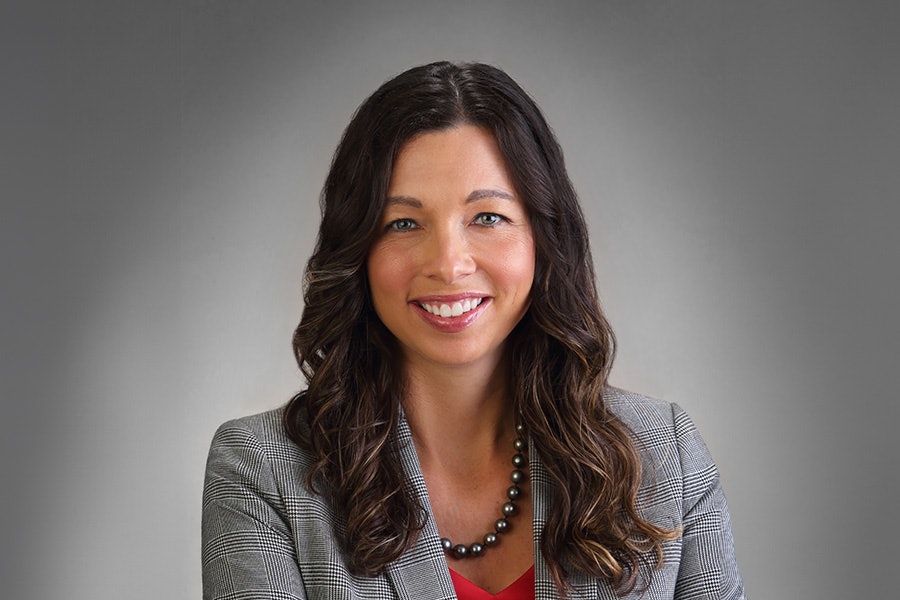
    Jessica BergerJessica Berger has been appointed Executive Vice President and Chief Advancement Officer at Chapman University.

    Berger brings nearly two decades of advancement and fundraising leadership experience across multiple institutions. Most recently, she served as vice president for university advancement and executive director of the foundation at California State University, San Marcos (CSUSM), where she led a team of nearly 50 professionals across fundraising, alumni and donor relations, marketing and communications, events and government relations.

    Prior to CSUSM, Berger spent seven years at Harvey Mudd College, rising to the role of assistant vice president for development. Earlier in her career, Berger contributed to fundraising efforts at Polytechnic School in Pasadena during a $93 million campaign, raised private support for a children’s home in Kenya and served in the U.S. House of Representatives as a congressional staff member focused on constituent advocacy.

    Berger earned a Master of Social Work from Cleveland State University and a Bachelor of Arts in Psychology from Wittenberg University, both with honors.


    Source link

  • Editorial: The Society for Research into Higher Education in 1985

    Editorial: The Society for Research into Higher Education in 1985

    by Rob Cuthbert

    In SRHE News and Blog a series of posts is chronicling, decade by decade, the progress of SRHE since its foundation 60 years ago in 1965. As always, our memories are supported by some music of the times (which had improved somewhat after the nadir of 1975).

    In 1985 Ronald Reagan became the US President, which seemed improbable at the time, but post-Trump now appears positively conventional – that joke isn’t funny any more. Reaganomics fuelled the present US multi-$trillion national debt; it was the era of supply-side economics. President Reagan was of course popular with UK Prime Minister Margaret Thatcher. She was by then at her peak after the 1982 Falklands War restored her own popularity, helping her in 1985 to bring an end to the miners’ strike and to ride out riots in Handsworth in Birmingham and Broadwater Farm in London.

    Vodafone enabled the first commercial mobile phone call in the UK; the BBC micro was the computer of choice for schools. Beverley Hills Cop was one of the top movies in 1985, with Eddie Murphy featured by the Pointer Sisters as they sang “I don’t wanna take it any more”, a 1980s theme song for some in universities. Globalism was in vogue; everybody wants to rule the world. International pop stars came together to sing We are the world in January and then perform at the Live Aid concert at Wembley in July with Queen’s legendary showstopping performance. Nintendo prepared to conquer the world with the launch of Super Mario, but global multinationals took a hit with one of the biggest marketing blunders ever, as Coca-Cola changed its formula, released New Coke in April, then went back to the original less than three months later.

    Higher education in 1985

    Global HE had its own marketing and governance issues after what Guy Neave (then UCL, now Twente) described as a period of consolidation from 1975 to 1985:

    “ … it was during this decade … that these systems assumed the level of dealing with mass higher education … By the late 1980s or 1990s … there are certain countries which anticipate participation rates in higher education of over 30% (Neave, 1984a). Highest amongst them are Denmark and Finland with 40% of the appropriate age group, the Federal Republic with 35% and France with 33%. … In effect, transition to mass higher education gave rise to additional bodies to control, monitor and hold accountable a sector of increasing significance in government social expenditure. Such intermediary agencies stand as a response to the advent of mass higher education, not an anticipation of it.”

    This was prescient: who’s gonna tell you things aren’t so great? Later Paul Windolf (Heidelberg) would take a very long view in his comparative analysis of Cycles of expansion in higher education 1870-1985 in Higher Education (1992:23, 3-19): “For most countries the data confirm the theory of ‘status competition’ (perverse effects): universities expand particularly fast during times of an economic recession … The human capital theory is not confirmed by this longitudinal analysis.” However human capital theory dominated policy thinking in many parts of the world, especially the UK, as Adam Matthews (Birmingham) argued in his blog for Wonkhe on 12 June 2024:

    “Despite so much adversarial and ideologically polarised politics in the 1980s domestically and internationally, we do find consensus around higher education and universities. Growth was still on the agenda. As the country found itself economically struggling, teaching and research was seen as the solution rather than the problem, particularly around research findings being applied to real world issues.”

    UK HE in 1985: a ferment of planning

    In that decade of consolidation after 1975, in the UK no new universities were created until the 1980s. By 1985 there were just two: the University of Buckingham and the University of Ulster. Expansion of UK HE in the 1980s was driven by the polytechnics, especially after the UGC’s unevenly distributed and dramatic financial cuts of 1981. The universities and UGC had tried and failed to protect the so-called ‘unit of resource’, the level of funding per full-time equivalent (FTE) undergraduate student, and the UGC’s established pattern of quinquennial funding had been reluctantly abandoned. Neave noted that:

    “Strictly speaking, university finance in the United Kingdom did not involve change to the basic unit of resource, an issue raised only under dire economic pressure in the period following the 1981 reductions in university budgets. Nor was the abandonment of quinquennial funding a response to mass higher education per se, so much as to the country’s parlous economic status.”

    The UK economy and HE were in Dire Straits: there was no money for nothing. The rapid expansion of the polytechnics, driving down costs, was the dominant influence on policy. A National Advisory Body for Local Authority Higher Education (NAB) had been set up on 1 February 1982 to advise the Secretary of State for Education and Science on matters relating to academic provision and the approval of advanced courses, reconstituted as the National Advisory Body for Public Sector Higher Education (PSHE) from 1 February 1985. In 1985 there were 503,000 students in PSHE in Great Britain, of whom 214,000 were part-time. Universities had 291,000 full-time and 114,000 part-time students. PSHE in England included 29 polytechnics, 30 major colleges, 21 voluntary colleges, and 300 others. In Wales there was one polytechnic, 7 major colleges and 16 others. The Further Education Act 1985 gave more powers to local authorities, who still governed the whole of PSHE, to supply goods and services, especially teaching and  research, through educational institutions.

    Clive Booth, principal private secretary to the Secretary of State for Education and Science since 1975, later to become Director of Oxford Polytechnic, foretold government policy in 1987, reviewing HE planning since 1965 in Higher Education Quarterly:

    “The development of a planning body for public sector higher education in England has created the potentiality for an integrated planning approach to university and non-university higher education.”

    Booth had been involved in the production of a series of significant DES papers: the 1978 Report of the Working Group on the Management of Higher Education in the Maintained Sector (the Oakes Report); in 1981 Higher Education in England outside the Universities: Policy, Funding and Management, a consultative document; and finally the 1985 Green Paper The Development of Higher Education into the 1990s. We saw the present, he saw the whole of the Moon.

    The Green Paper followed the notorious Jarratt Report of 1985, which sent shock waves through the university sector. Paul Greatrix (Nottingham), a long-serving Registrar and Secretary, wrote on his Wonderful (and Frightening) World of HE blogmuch later that:

    “Looking back from 2015, some of these observations and recommendations do seem quite tentative. But in 1985 they were dynamite. After the extraordinary and unprecedented cuts of 1981 and Keith Joseph’s unsuccessful approach to introduce fees in 1984 this seemed like another attack on universities.”

    The widespread view in UK HE at the time was, in the words of the Style Council, “You don’t have to take this crap”, but the policy walls did not come tumbling down. Greatrix cited Geoffrey Alderman’s acerbic review of Malcolm Tight’s 2009 book Higher education in the United Kingdom since 1945 for Times Higher Education:

    “… to my mind one of the most damaging inquiries into higher education over the last half-century was the Jarratt report … a mischievous and malevolent investigation (which, inter alia, popularised if it did not invent the notion that students are “customers”, which foisted on the sector the delusion that factory-floor “performance indicators” are entirely suited to a higher-education setting, and which led to the abolition of academic tenure and the concomitant triumph of managerialism in the academy) … Jarratt was self-inflicted. The inquiry was not a government creation. It was established by the Committee of Vice-Chancellors and Principals. … Jarratt was betrayal from within.”

    For Greatrix:

    “Looking back these do not look like the proposals filled with malevolence or mischief. Many of these changes were inevitable, most were long overdue, a lot would have happened in any case. … From today’s viewpoint it looks more like that what Jarratt offered were some pointers and directions in this strange new terrain.”

    With the benefit of hindsight it can be argued that in 1985 UK universities were unduly concerned, perhaps even obsessed, with what might have been lost from a supposed ‘golden age’ of autonomy. But nothing is so good it lasts eternally. The wreckage of the Titanic was finally located in 1985, another lost cause once assumed unsinkable. Universities were, like Bonnie Tyler, holding out for a hero, but Tina Turner was right, after the 1981 cuts: “Out of the ruins, out from the wreckage, can’t make the same mistake this time”.

    The Green Paper, still Green and not White, announced by Secretary of State Keith Joseph in May 1985, came as the preliminary conclusion to this ferment of planning. He said in Parliament that “… it is vital for our higher education to contribute more effectively to the improvement of the performance of the economy. This is not because the Government place a low value on the general cultural benefits of education and research or on study of the humanities.” But HE mostly heard only the first sentence, and thought we were on the road to nowhere, rather than seeing the opportunities. The Thatcher White Paper Higher Education: Meeting the Challenge would not appear until 1987, and NAB and the UGC would  survive only until 1988. REO Speedwagon captured the mood: Can’t fight this feeling any more.

    SRHE and research into higher education in 1985

    The chairs of SRHE from 1975-1985 included some great names: Lewis Elton (Surrey) 1977-78, Gareth Williams (Lancaster, later London Institute of Education) 1978-80 (and 1986-88), Donald Bligh (Exeter) 1980-82, David Warren-Piper (London Institute of Education) 1982-84, and Michael Shattock (Warwick, later London Institute of Education/UCL) 1984-86. The outstanding highlight of the decade was a major review into higher education organised by the Society. As Gareth Williams wrote:

    “With the help of a substantial grant from the Leverhulme Trust, the Society for Research into Higher Education set up a comprehensive programme of study into the future of higher education which I directed. The aim of the programme was not to undertake new research but rather to focus recent research findings and the views of informed people on the major strategic options likely to be available to higher education institutions and policy making bodies in the 1980s and 1990s.”

    The programme ran from 1980 to 1983 and led to nine themed reports, an overall review and a final report. SRHE had, in Michael Shattock’s words:

    “… established itself as an important voice in policy. It was addressed by higher education Ministers (William Waldegrave 1982, Peter Brooke 1983), at an SRHE/THES Conference on the Green Paper by Sir Keith Joseph the Secretary of State, in 1985. Most unusually it received a visit from the former Prime Minister, Edward Heath, in February 1983 who wished to seek the Society’s advice about higher education.”

    SRHE might have hoped like Madonna to be Into the Groove policywise, but the Prime Minister had a list of questions which were more about living in a material world:

    • To what extent (if any) has the balance between disciplines been inappropriate for Britain’s economic needs?
    • How far should the labour market determine the shape of higher education?
    • Are research and teaching indivisible in higher education if standards are to be maintained?
    • Is it better to have a few research institutions or many, given financial constraints?
    • Is the binary line appropriate?
    • Are the links between HE and industry poor by comparison with other major countries?
    • What are the merits of shorter courses – two years liberal arts followed by two years vocational?”

    Shattock observed:

    “The interest of these questions is both the extent to which the issues were addressed and answered in the Leverhulme Programme and the fact that their underlying assumptions formed the basis of the 1985 Green Paper. It was clear that the Society was at the sharp end of discussions about the future policy.”

    The Leverhulme findings were perhaps just too balanced for the times – can’t get there from here. Shattock as SRHE chair initiated an Enquiry on ‘Questions of Quality’ which became the theme of SRHE’s 1985 annual conference, and one of SRHE’s founders, Graeme Moodie (York), edited a 1986 bookStandards and Criteria in Higher Education. Shattock also established the influential SRHE Policy Forum, a seminar involving leading academics, civil servants and HE managers which met five times a year under the alternate chairmanship of Michael Shattock and Gareth Williams. 

    Nevertheless it was not long after 1985 that a special meeting of SRHE’s Council at the FE Staff College received a report, probably from its administrator Rowland Eustace, saying: “general knowledge and understanding of the Society remains relatively low in higher education despite attempts over recent years to give the Society a higher profile”. Perhaps still a little out of touch, hoping for glory days, still running up that hill, hoping or even believing that things can only get better.

    Rob Cuthbert is editor of SRHE News and the SRHE Blog, Emeritus Professor of Higher Education Management, University of the West of England and Joint Managing Partner, Practical Academics. Email [email protected]. Twitter/X @RobCuthbert.

    Author: SRHE News Blog

    An international learned society, concerned with supporting research and researchers into Higher Education

    Source link

  • Confidence in higher education increases for the first time in a decade

    Confidence in higher education increases for the first time in a decade

    This audio is auto-generated. Please let us know if you have feedback.

    Dive Brief:

    • Americans’ confidence in higher education has increased for the first time in a decade, according to research released Wednesday by Gallup and the Lumina Foundation.
    • Among those surveyed, 42% of adults expressed “a great deal” or “quite a lot” of confidence in the sector, compared with 36% in 2023 and 2024. The percentage of respondents with little to no confidence declined from 32% last year to 23% in 2025.
    • However, the share of adults with high confidence in higher education is still well below 57%, the share who held those views when Gallup first posed the question in 2015.

    Dive Insight:

    Along with breaking a decadelong trend, Wednesday’s findings are noteworthy because they come amid increasing conservative attacks on the sector and continued questioning of the value of college.

    Researchers polled just over 1,400 adults via phone from June 2 to 26.

    When asked to explain their responses, 30% of participants confident in higher education pointed to the value of being educated. And 24% said colleges provide good training, with some respondents citing learning to think for oneself and others citing the ability to appreciate different viewpoints.

    Other reasons were named more frequently than they were in previous years. Last year, 5% of surveyed adults cited the innovations higher education fosters as inspiring confidence. This year, that share jumped to 15%. And 14% said U.S. colleges are some of the best in the world, up from 7% last year.

    In contrast, the share of respondents who pointed to the strength of college instructors and administrators declined from 7% last year to 4% in 2025. And just 1% of adults said college is available to anyone who wants to further their education, down from 2% the previous year.

    More than a third of respondents who said they lacked confidence in higher ed, 38%, cited concerns about political agendas, up from 28% in 2024. Those who had little confidence in the sector also expressed concerns about the cost of college and institutions not focusing on and teaching the “right things,” though mentions of both reasons declined from 2024 to 2025.

    When researchers asked all participants what would increase their confidence in higher education, they said colleges could focus more on practical job skills, lower their costs, and remove politics from the classroom.

    Confidence increased among respondents across the political spectrum, researchers found. But Republicans — who drove much of the decline in confidence in the sector over the past decade — continue to hold more negative views of higher education.

    Among Democrats, 61% expressed confidence in higher ed, up from 56% last year. By comparison, 26% of Republicans said the same, an increase from 20% in 2024. 

    About 2 in 5 respondents who identified as politically independent, 41%, expressed confidence in higher ed. That’s up from 35% last year. 

    Republicans are more likely to express confidence in two-year colleges than four-year colleges, the research found. Almost half of surveyed adults in the party, 48%, expressed confidence in two-year institutions, while just over a quarter, 26%, said the same of four-year colleges.

    A majority of surveyed Democrats had high confidence in both institutional types.

    Source link

  • Free Photo Library Captures Authenticity of Higher Ed

    Free Photo Library Captures Authenticity of Higher Ed

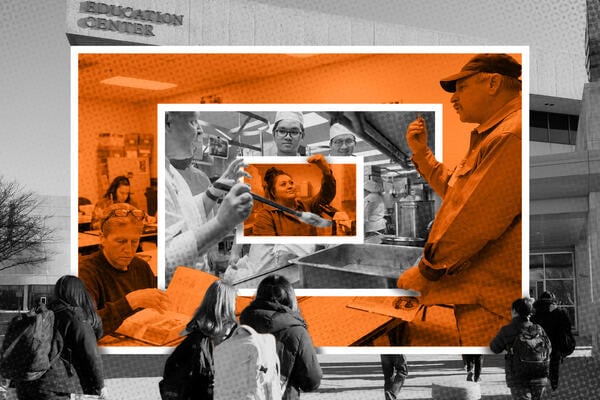
    Photo illustration by Justin Morrison/Inside Higher Ed | Allison Shelley/Complete College Photo Library

    Towering, Hogwarts-style academic buildings. Carefree young students posing with generic textbooks in their dorm rooms or throwing a Frisbee on the lawn. Racially balanced study groups composed of stunningly attractive students who may not actually be students at all.

    Those are the types of stock images that news organizations, policymakers, education and research groups, and institutions often use to visually represent what higher education looks like.

    “They have a very specific look and feel,” said Brandon Protas, interim vice president of alliance and engagement, research and innovation at the higher education advocacy group Complete College America. “Students are often posed, looking directly into the camera, and the racial makeup is very intentional.”

    While they may provide organizations with quick options to accompany stories, reports, presentations and campaigns, such photos don’t always represent what college life actually looks like on a particular campus. Portas said they can also reinforce misconceptions about higher education, including the widespread notion that it’s only an option for recent high school graduates who can afford to attend a pricey, residential, four-year institution.

    Although attending college isn’t without cost, many institutions—especially those rarely pictured in the stock photos that run alongside education-related media—are more affordable than the general public may believe. According to a recent survey from Strada, 77 percent of respondents said college is unaffordable, and the majority significantly overestimated how much it costs.

    “When people are saying college is too expensive, they’re probably not thinking about community colleges or states that offer free tuition programs. They’re thinking of really expensive, elite colleges, which aren’t the types of colleges most students are attending,” Protas said. “We want to change how people are seeing and understanding higher education.”

    That’s why CCA created the new Complete College Photo Library, which launched Wednesday. The searchable photo library includes nearly 1,000 photographs of college students at a mix of institution types, including historically Black colleges and universities, Hispanic-serving institutions, community colleges, tribal colleges, and technical schools. The photos are licensed under Creative Commons and are free for media outlets, researchers and education organizations to use for noncommercial purposes.

    “We took authentic photos of students, faculty and staff on-site to show the reality of students’ lived experiences,” Protas said. “If we can make this the go-to source that people look at first, then that can slowly influence the ecosystem.”

    The library, which is an ongoing project that will be updated with additional images, features photos from seven different campuses across the country, including Bergen Community College, the College of Northern New Mexico, the College of Southern Nevada, Salish Kootenai College, Pasadena City College, Tougaloo College and the University of Indianapolis. At each one, photographer Allison Shelley captured images of actual college students as they balanced their coursework with social lives, jobs and family responsibilities.

    Those artistic choices were meant to reflect the reality that for many college students, school is just one part of life. An estimated 20 percent of students are caregivers or parents, while learners over the age of 25 make up about one-third of all postsecondary students.

    The collection includes shots of students sitting in traditional lecture halls, meeting with their advisers, playing chess, walking to class, reading to their children and getting hands-on training in a variety of different technical fields.

    CCA’s selection of those institutions was designed to reflect a cross-section of geographic locations and institution types.

    And the types of institutions students attend also varies: More than 40 percent attend community colleges, which enroll higher numbers of Black and Hispanic students compared to other institutions. Moreover, HBCUs enroll 10 percent of all Black students in the United States, while HSIs enroll more than 65 percent of all Hispanic undergraduates.

    In addition to widening representation of institution types and student experiences, CCA’s project could also provide a model for how the higher education sector should portray itself during a moment of political and public scrutiny, said Nathan Willers, director of internal communications at the University of Denver, whose research has focused on authenticity in higher education marketing.

    “For a lot of institutions that have limited creative resources, they may be going to something like Shutterstock because they don’t have a lot of other options,” he said. A model like CCA’s library, however, shows how colleges can prioritize using photos that “look like real students in a real classroom with levels of diversity that are appropriate to the institution.”

    Over the past decade, colleges have made a dramatic swing from clamoring to portray themselves as bastions of racial and ethnic diversity—some have even been caught doctoring photos to create such an illusions—to dismantling their diversity, equity and inclusion efforts to comply with President Trump’s recent orders to root out any mention of DEI in education.

    When it comes to promoting a commitment to diversity and inclusion nowadays, “we really have to show and not tell, for better or worse,” Willers said. “This kind of a project helps inform institutions on how to show that effectively.”

    Source link

  • We Can’t Ban Generative AI but We Can Friction Fix It (opinion)

    We Can’t Ban Generative AI but We Can Friction Fix It (opinion)

    As the writing across the curriculum and writing center coordinator on my campus, faculty ask me how to detect their students’ use of generative AI and how to prevent it. My response to both questions is that we can’t.

    In fact, it’s becoming increasingly hard to not use generative AI. Back in 2023, according to a student survey conducted on my campus, some students were nervous to even create ChatGPT accounts for fear of being lured into cheating.  It used to be that a student had to seek it out, create an account and feed it a prompt. Now that generative AI is integrated into programs we already use—Word (Copilot), Google Docs (Gemini) and Grammarly—it’s there beckoning us like the chocolate stashed in my cupboard does around 9 p.m. every night.

    A recent GrammarlyGO advertisement emphasizes the seamless integration of generative AI. In the first 25 seconds of this GrammarlyGO ad, a woman’s confident voice tells us that GrammarlyGO is “easy to use” and that it’s “easy to write better and faster” with just “one download” and the “click of a button.” The ad also seeks to remove any concerns about generative AI’s nonhumanness and detectability: it’s “personalized to you”; “understands your style, voice and intent so your writing doesn’t sound like a robot”; and is “custom-made.” “You’re in control,” and “GrammarlyGO helps you be the best version of yourself.”  The message: Using GrammarlyGO’s generative AI to write is not cheating, it’s self-improvement. 

    This ad calls to my mind the articles we see every January targeting those of us who want to develop healthy habits. The ones that urge us to sleep in our gym clothes if we want to start a morning workout routine. If we sleep in our clothes, we’ll reduce obstacles to going to the gym. Some of the most popular self-help advice focuses on the role of reducing friction to enable us to build habits that we want to build. Like the self-help gurus, GrammarlyGO—and all generative AI companies—are strategically seeking to reduce friction by reducing time (“faster), distance (it’s “where you write”) and effort (it’s “easy”!). 

    Where does this leave us? Do we stop assigning writing? Do we assign in-class writing tests? Do we start grading AI-produced assignments by providing AI-produced feedback? 

    Nope. 

    If we recognize the value of writing as a mode of thinking and believe that effective writing requires revision, we will continue to assign writing. While there is a temptation to shift to off-line, in-class timed writing tests, this removes the opportunity for practicing revision strategies and disproportionately harms students with learning disabilities, as well as English language learners.  

    Instead, like Grammarly, we can tap into what the self-help people champion and engage in what organizational behavior researchers Hayagreeva Rao and Robert I. Sutton call “friction fixing.” In The Friction Project (St. Martin’s Press, 2024), they explain how to “think and live like a friction fixer who makes the right things easier and the wrong things harder.” We can’t ban AI, but we can friction fix by making generative AI harder to use and by making it easier to engage in our writing assignments. This does not mean making our writing assignments easier! The good news is that this approach draws on practices already central to effective writing instruction. 

    After 25 years of working in writing centers at three institutions, I’ve witnessed what stalls students, and it is rarely a lack of motivation. The students who use the writing center are invested in their work, but many can’t start or get stuck. Here are two ways we can decrease friction for writing assignments: 

    1. Break research projects into steps and include interim deadlines, conferences and feedback from you or peers. Note that the feedback doesn’t have to be on full drafts but can be on short pieces, such as paragraph-long project proposals (identify a problem, research question and what is gained if we answer this research question). 
    1. Provide students with time to start on writing projects in class. Have you ever distributed a writing assignment, asked, “any questions?” and been met with crickets? If we give students time to start writing in class, we or peers can answer questions that arise, leaving students to feel more confident that they are going in the right direction and hopefully less likely to turn to AI.

    There are so many ways we faculty (unintentionally) make our assignments uninviting: the barrage of words on a page, the lack of white space, our practice of leading with requirements (citation style, grammatical correctness), the use of SAT words or discipline-specific vocabulary for nonmajors: All this can signal to students that they don’t belong even before they’ve gotten started. Sometimes, our assignment prompts can even sound annoyed, as our frustration with past students is misdirected toward current students and manifests as a long list of don’ts. The vibe is that of an angry Post-it note left for a roommate or partner who left their dishes in the sink … again!

    What if we were to reconceive our assignments as invitations to a party instead?  When we design a party invitation, we have particular goals: We want people to show up, to leave their comfort zones and to be open to engaging with other people. Isn’t that what we want from our students when we assign a writing project? 

    If we designed writing assignments as invitations rather than assessments, we would make them visually appealing and use welcoming language.  Instead of barraging students with all the requirements, we would foreground the enticing facets of the assignment. De-emphasize APA and MLA formatting and grammatical correctness and emphasize the purpose of the assignment. The Transparency in Learning and Teaching in Higher Education framework is useful for improving assignment layout. 

    Further, we can invite students to write for real-world audiences and wrestle with what John C. Bean calls “beautiful problems.” As Bean and Dan Melzer’s Engaging Ideas: The Professor’s Guide to Integrating Writing, Critical Thinking, and Active Learning in the Classroom (Wiley, 2021) emphasizes, problems are naturally motivating. From my 25 years of experience teaching writing, students are motivated to write when they:

    • write about issues they care about;
    • write in authentic genres and for real-world audiences;
    • share their writing in and beyond the classroom;
    • receive feedback on drafts from their professors and peers that builds on their strengths and provides specific tasks for how to improve their pieces; and
    • understand the usefulness of a writing project in relation to their future goals. 

    Much of this is confirmed by a three-year study conducted at three institutions that asked seniors to describe a meaningful writing project. If assignments are inviting and meaningful, students are more likely to do the hard work of learning and writing. In short, we can decrease friction preventing engagement with our assignments by making them sound inviting, by using language and layouts that take our audience into consideration, and by designing assignments that are not just assessments but opportunities to explore or communicate. 

    How then do we create friction when it comes to using generative AI? As a writing instructor, I truly believe in the power of writing to figure out what I think and to push myself toward new insights. Of course, this is not a new idea. Toni Morrison explains, “Writing is really a way of thinking—not just feeling but thinking about things that are disparate, unresolved, mysterious, problematic or just sweet.” If we can get students to truly believe this by assigning regular low-stakes writing and reinforcing this practice, we can help students see the limits of outsourcing their thinking to generative AI. 

    As generative AI emerged, I realized that even though my writing courses are designed to promote writing to think, I don’t explicitly emphasize the value of writing as mode of discovery, so I have rewritten all my freewrite prompts so that I drive this point home: “This is low-stakes writing, so don’t worry about sentence structure or grammar. Feel free to write in your native language, use bullet points, or speech to text. The purpose of this freewriting is to give you an opportunity to pause and reflect, make new connections, uncover a new layer of the issue, or learn something you didn’t know about yourself.” And one of my favorite comments to give on a good piece of writing is “I enjoy seeing your mind at work on the page here.” 

    Additionally, we can create friction by getting to know our students and their writing. We can get to know their writing by collecting ungraded, in-class writing at the beginning of the semester. We can get to know our students by canceling class to hold short one-on-one or small group conferences. If we have strong relationships with students, they are less likely to cheat intentionally. We can build these bonds by sharing a video about ourselves, writing introductory letters, sharing our relevant experiences and failures, writing conversational feedback on student writing, and using alternative grading approaches that enable us to prioritize process above product. 

    There are no “AI-proof” assignments, but we can also create friction by assigning writing projects that don’t enable students to rely solely on generative AI, such as zines, class discussions about an article or book chapter, or presentations: Generative AI can design the slides and write the script, but it can’t present the material in class. Require students to include interactive components to their presentations so that they engage with their audiences. For example, a group of my first-year students gave a presentation on a selection from Jonathan Haidt’s The Anxious Generation, and they asked their peers to check their phones for their daily usage  report and to respond to an anonymous survey.

    Another group created a game, asking the class to guess which books from a display had been banned at one point or another. We can assign group projects and give students time to work on these projects in class; presumably, students will be less likely to misuse generative AI if they feel accountable in some way to their group. We can do a demonstration for students by putting our own prompts through generative AI and asking students to critique the outputs. This has the two-pronged benefit of demonstrating to students that we are savvy while helping them see the limitations of generative AI. 

    Showing students generative AI’s limitations and the harm it causes will also help create friction. Generative AI’s tendency to hallucinate makes it a poor tool for research; its confident tone paired with its inaccuracy has earned it the nickname “bullshit machine.” Worse still are the environmental costs, the exploitation of workers, the copyright infringement, the privacy concerns, the explicit and implicit biases, the proliferation of mis/disinformation, and more. Students should be given the opportunity to research these issues for themselves so that they can make informed decisions about how they will use generative AI. Recently, I dedicated one hour of class time for students to work in groups researching these issues and then present what they found to the class. The students were especially galled by the privacy violations, the environmental impact and the use of writers’ and artists’ work without permission or compensation. 

    When we focus on catching students who use generative AI or banning it, we miss an opportunity to teach students to think critically, we signal to students that we don’t trust them and we diminish our own trustworthiness.  If we do some friction fixing instead, we can support students as they work to become nimble communicators and critical users of new technologies.

    Catherine Savini is the Writing Across the Curriculum coordinator, Reading and Writing Center coordinator, and a professor of English at Westfield State University. She enjoys designing and leading workshops for high school and university educators on writing pedagogy.

    Source link

  • Pa. Clinic Run by Students Supports Community Health

    Pa. Clinic Run by Students Supports Community Health

    Experiential learning opportunities provide students with a space to connect in-classroom learning to real-world situations. A student-run clinic at Widener University provides graduate health science professional students with hands-on learning and career experiences while supporting community health and well-being for Chester, Pa., residents.

    The Chester Community Clinic was founded in 2009 for physical therapy services but has since expanded to cover other health and wellness services, including occupational therapy and speech-language pathology. The clinic gives students studying those fields leadership opportunities, experience working with diverse clients and the confidence to tackle their professional careers.

    What’s the need: Before the clinic was established, physical therapy students at Widener would volunteer at a pro bono clinic in nearby Philadelphia. But students pushed for a clinic within Chester, which is considered a primary care health professional shortage area, meaning it lacks enough providers to serve the local population.

    For some patients, a lack of health insurance can impede their ability to receive care. In Pennsylvania, 5.4 percent of residents are without private or public health insurance, roughly two percentage points lower than the national average. The clinic addresses gaps in health care by providing services for free while educating future health science professionals.

    How it works: The clinic is led by a board of 12 to 14 students from each class and supervised by faculty and community members who are licensed physical therapists. Students begin service in their second semester of the program and participate in the clinic until their final clinical placement.

    Most clients are referred by a physician but have been turned away from local PT clinics due to a lack of health insurance or because they exceeded the allotted insurance benefits for PT.

    During appointments, students provide direct physical therapy services to patients, including making care plans, walking them through exercises and creating medical records.

    Over the years, the clinic has expanded to include occupational therapy, speech-language pathology, clinical psychology and social work services. In 2024, Widener included a Community Nursing Clinic to provide pro bono services as well.

    All students studying physical therapy, occupational therapy and speech-language pathology at Widener volunteer at the clinic as part of the program requirements. PT students are required to serve a minimum of three evenings per semester; board members typically serve more hours.

    The clinic’s multifaceted offerings increase opportunities for students to work across departments, engaging with their peers in other health professions to establish interdisciplinary plans for care.

    Free Talent

    Other colleges and universities offer pro bono student services to support community members and organizations:

    • Gonzaga University has a student-led sports consulting agency that offers strategy ideas and tools to sports brands and teams.
    • Utah Valley University students can intern with a semester-long program that provides digital marketing to businesses in the region.
    • American University’s Kogod School of Business has a business consulting group that provides students with project-based consulting experience.
    • Carroll University faculty and students in the behavioral health psychology master’s program run a free mental health clinic for those in the area.

    The impact: Since the clinic began in 2009, students have provided over 12,000 physical therapy appointments to community members, worth about $1.3 million in costs, according to a 2024 press release from the university.

    A 2017 program evaluation, published in the Internet Journal of Allied Health Sciences and Practice, found that PT students who served in the pro bono clinic felt more equipped to launch into clinical work. They were prepared to manage documentation, use clinical reasoning and engage in interprofessional communication.

    A 2020 study of the clinic also found that students performed better than expected in cultural competence, perhaps due to their experience engaging with clients from a variety of ethnicities, socioeconomic backgrounds, health literacy levels, religions and languages.

    Both Widener and students in the health science professions continue to support the development of other pro bono clinics. The class of 2015 created The Pro Bono Network, facilitating advancement of student-run pro bono services among 109 member institutions across the country. This past spring, Widener’s annual Pro Bono Network Conference welcomed 250 individuals working at or affiliated with pro bono clinics, and featured 32 student leaders presenting their work.

    How do your students gain hands-on experience and give back? Tell us more.

    This article has been updated to reflect the addition of a pro bono nursing clinic in 2024, not the creation of it, and to identify students as health science professional students, not health professional students.

    Source link

  • Tax Policy Belongs in Liberal Arts Curriculum (opinion)

    Tax Policy Belongs in Liberal Arts Curriculum (opinion)

    As congressional Republicans scratched and clawed to pass President Trump’s signature policy effort, the One Big Beautiful Bill Act—a sprawling, tax-heavy package celebrated as much for its branding as for its contents—it is notable how few people could explain what exactly was in it. Tax cuts for some, probably. A Social Security bonus, maybe. A gutting of public benefits, almost certainly. What is clear, though, is that the bill’s complexity was always in service of its politics: When no one understands tax policy, it’s much easier to sell whatever story you want.

    That confusion is exactly why we should be teaching tax policy more broadly—not just in sparsely attended law school classes and accounting departments, but in general education curricula and first-year seminars. Tax isn’t just a technical rule-following subject; it’s a civic one. Tax policy shapes everything from fairness and inequality to the functional shape of the state itself. Yet, most students will graduate college without ever being asked to consider what tax is for—much less whom it helps, whom it harms and why it remains so easy to obscure.

    That is precisely the starting point for the course I designed at Drexel University, Introduction to Tax Theory and Policy, which I teach in our innovative undergraduate law major, housed at the Thomas R. Kline School of Law. It’s not a course for aspiring tax attorneys, prospective C.P.A.s or Excel mavens—few of my students intend to practice tax law. They’re interested in criminal or family law, or they’re business majors, future social workers, engineers or undecided second-years. But they’re all taxpayers—and that’s the relevant bit.

    Courses like mine aim to democratize access to legal and policy tools so that all students, irrespective of their major, can become more informed and empowered participants in civic life. In class, we don’t parse tax rates or calculate deductions. No calculators are required, and at no point is anyone expected to consider the straight-line depreciation of an apartment complex. We ask why the system is built the way it is, and we talk about the power that it reflects and protects. We talk about values: what kinds of behavior the tax code encourages or punishes. We talk about trust and legitimacy: What happens when people believe the system is rigged, and what if they’re right? In short, we treat tax not as a set of arcane rules and rates to memorize, but as a lens through which we can better understand the power structures we live under.

    The surprising part (at least to me, when I first taught it and admittedly just hoped I wouldn’t be lecturing to an empty room) is how much students connect with this approach. More than connect with it—they often enjoy it. I’ve received feedback from students that describes the class as life-changing and course reviews that have noted how it changed assumptions regarding what tax even is. High praise from 19- and 20-year-olds.

    The course itself draws on philosophy, political theory, economics and law—but what it really cultivates is a kind of civic literacy. It asks students to think about who they are in relation to the state and how much of their future may be shaped by the tax policy they’ve never been taught to see. For many, it is the first time they’ve encountered taxation not as something to dodge, but as something to question, debate and reimagine in furtherance of their own values.

    In one session, we explore how the tax code is employed as a kind of soft steering wheel in the economy—how it at turns encourages homeownership, subsidizes sports stadiums, directs corporate research and development, and shapes (or even outright creates) the market for electric vehicles. Another week, we explore estate taxes and inheritance: not just who pays, but what it means to redistribute wealth across generations and what happens when we don’t. We read Garrett Hardin’s “The Tragedy of the Commons,” engage in spirited debates about the potential for tax to solve the artificial intelligence copyright debate, and unpack why TurboTax spent two decades fighting free filing.

    Over the course of the class, the question shifts away from what is a tax and toward whose values does this system reflect? That shift—from mere definitional awareness to focused critical engagement—is when I know the class is working. Students cease to see tax as someone else’s problem and begin seeing it as a potent tool of and for democracy.

    In their final papers, students have proposed remarkably forward-looking and sophisticated tax policy reforms—reflecting both creativity and civic seriousness. One student argued that companies receiving public subsidies through tax credits, like chemical and drug manufacturers, should be barred from claiming additional credits to remediate harms their products create. Another proposed a data-collection “sin tax” aimed at discouraging exploitative surveillance practices by tech companies. These aren’t rote academic exercises. They’re thoughtful intervention proposals that treat tax as a lever for shaping society.

    If tax policy determines who gets what, who pays for it and how the government keeps a hand in the marketplace, then it belongs squarely at the heart of a liberal arts education. We don’t cabin discussions of justice in law schools, and we don’t isolate questions of the public good in policy programs—why do we treat taxation, which intersects with both and innumerable other facets of modern life, as off-limits or too technical for undergraduates?

    This isn’t a plea to teach undergraduates to file their own taxes—though there is probably a case to be made for that, too. It’s about ensuring curricula help them understand how the world works and how it’s been designed to work for some more than others. That means tackling the politics of Internal Revenue Service funding, exploring how “tax relief” often functions as an upstream transfer of wealth and how a positively sprawling bill like the one recently passed through Congress can obscure much more than it reveals.

    If no one understands how tax policy works, how can anyone meaningfully weigh in on whether they support one revenue bill or another? On issues like immigration, abortion or education funding, many people bring at least some passing knowledge or lived experience to the conversation. Tax remains, for most, a black box. The more opaque it becomes, the more tempting it is for lawmakers to retreat into it—tucking major redistributive choices into the shadows of the tax code, where they can be shielded from public scrutiny.

    On the other hand, when students come to see tax as a form of the civic superstructure—something they live within and not just under—they are empowered to not only understand tax policy but to shape it. That should be one of the goals of any serious undergraduate education.

    We don’t have to, and should not, keep treating tax as one professional niche within other professional niches. If we want students to understand how tax relates to power, fairness and democratic participation, we should give them the tools to talk about it. This needn’t focus on the rates and rules but should illustrate the values taxes reflect and trade-offs they embed.

    Courses like mine don’t require a background in economics, accounting or law. They require a willingness to take seriously the idea that how we tax equates to how we govern. If we can help students see tax not as a source of dread or line item on their paycheck, but as the site of collective economic decision-making, we don’t just produce better-informed graduates—we’ll also produce more engaged citizens.

    Andrew Leahey is a practice professor of law at Drexel University’s Thomas R. Kline School of Law.

    Source link

  • Mixed Findings on Community Colleges’ Shared Governance

    Mixed Findings on Community Colleges’ Shared Governance

    A new report, released by the American Association of University Professors Tuesday, found mixed results when it comes to community colleges’ shared governance practices.

    The report used data from the AAUP’s inaugural survey of community colleges, conducted in partnership with the Center for the Study of Community Colleges. In the first survey of its kind, faculty leaders at 507 community colleges were asked to assess their institutions’ shared governance practices in 26 different decision-making areas; faculty senate chairs and governance officials responded at 59 colleges.

    The institutions excelled in some areas and proved lackluster in others. For example, at most institutions surveyed, especially those with tenure systems, faculty had an AAUP-recommended level of authority over decisions about curricula, salary policies, teaching assignments, faculty searches and evaluations, and tenure and promotion standards. But when it came to other decision-making areas—like budgets, provost selection, buildings and strategic planning—faculty were given little say, according to the report.

    Community college professors also participated less than faculty at four-year institutions in most academic and personnel-related decisions, though they played more of a role in decisions about salary policies. The report speculated that the prevalence of community college faculty unions may account for the difference. At higher ed institutions where faculty engage in collective bargaining, faculty tend to have more authority in salary policies and teaching loads. At community colleges, unionized faculty are also more engaged in decisions about full-time, non-tenure-track faculty promotion.

    “Community college–based faculty members and administrators can use the tools described in this report to assess governance practices at their institu­tions and compare those practices with national trends to identify areas where levels of faculty authority might be strengthened,” the report says. “Given the current political climate, economic uncertainty, demographic changes, and chronic underfunding of US higher education, now is the time for community colleges to identify and correct weaknesses in their own shared governance practices.”

    Source link

  • 3 More Campus Leaders Face Congress

    3 More Campus Leaders Face Congress

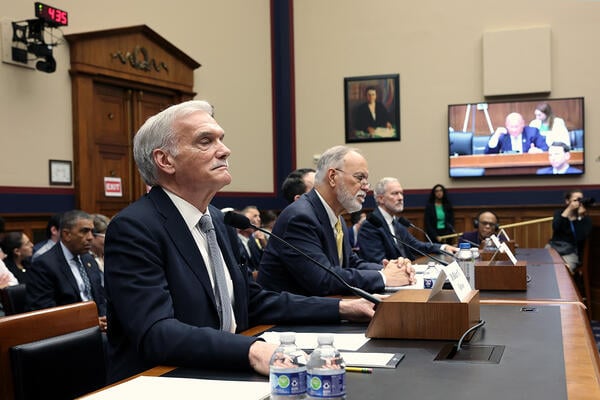
    For the fifth time since late 2023, congressional Republicans on Tuesday interrogated a group of university leaders about campus antisemitism. But unlike previous hearings, this one was short on fireworks and viral moments, even as the three leaders—Georgetown University interim president Robert Groves; University of California, Berkeley, chancellor Rich Lyons; and City University of New York chancellor Félix V. Matos Rodríguez—faced a grilling over faculty remarks, foreign funding and alleged failures to protect Jewish students from discrimination and harassment.

    While the first hearing, in December 2023, contributed to the ouster of the presidents of Harvard University and the University of Pennsylvania, who equivocated on a hypothetical question about calls for the genocide of Jewish students, subsequent sessions have not had the same impact.

    Conducted by the Republican-led Committee on Education and the Workforce, Tuesday’s hearing—titled “Antisemitism in Higher Education: Examining the Role of Faculty, Funding and Ideology”—spanned more than three hours and was interrupted several times by pro-Palestinian protesters, who were quickly removed. In sometimes-heated questioning, lawmakers focused on controversial social media posts by college employees and hypothetical situations, such as whether a faculty union might demand a boycott of Israel in collective bargaining agreements.

    But the campus leaders largely avoided gaffes and appeared to emerge mostly unscathed.

    Here are highlights from Tuesday’s hearing.

    Social Media in the Spotlight

    While past hearings often centered on what happened on campus—particularly at institutions that had pro-Palestinian encampments—at Tuesday’s hearing lawmakers focused more on social media, questioning and condemning posts by professors that were critical of Israel. Some posts also seemed to show support for Hamas’s terrorist attack on Israel on Oct. 7, 2023.

    Rep. Glenn Thompson, a Pennsylvania Republican, specifically highlighted a social media post from Georgetown employee Mobashra Tazamal, associate director of a multiyear research project on Islamophobia who allegedly reposted a statement that said, “Israel has been recreating Auschwitz in Gaza for two years.” Thompson asked interim president Robert Groves if he thought it was “appropriate for a Georgetown-affiliated scholar to publicly endorse a statement comparing Israel actions in Gaza to the evil of Auschwitz.”

    Groves made it clear that he rejected the statement and apologized to anyone harmed by it. But he also defended Georgetown officials for not disciplining Tazamal for the post.

    “That’s behavior covered under the First Amendment on social media that we don’t intervene on,” Groves told Thompson in response. “What we do intervene on quickly is behavior that affects our students in the classroom and research-related activities that involve students.”

    Republican lawmakers also asked about posts by Ussama Makdisi at UC Berkeley, zeroing in on one that read, “I could have been one of those who broke through the siege on October 7,” the title of an article sympathetic to the Palestinian plight that praised the “determination and courage” of the attackers.

    Several Republicans pressed Berkeley chancellor Rich Lyons on how he perceived that post and why Makdisi, a Palestinian American scholar who teaches history, was hired in the first place. Lyons, who became chancellor last July, acknowledged his concerns about the post.

    “I believe it was a celebration of the terrorist attack on Oct. 7,” he told lawmakers.

    Despite that acknowledgement, Lyons twice defended Makdisi as “a fine scholar” and said he was hired as the inaugural chair of a new Palestinian and Arab Studies program based on his qualifications. His defense prompted a sharp rebuke from Lisa McClain, a Michigan Republican.

    “I’m sure there’s a lot of murderers in prison that are fine people, too, fine scholars, but they do some pretty nefarious and heinous acts,” McClain responded to Lyons.

    Protest Interruptions

    Pro-Palestinian protesters interrupted Tuesday’s proceedings at least four times. Authorities quickly shut down and removed protesters, who were not visible and only faintly audible via live stream.

    The protesters seemed to be targeting City University of New York chancellor Félix V. Matos Rodríguez, given that the interruptions occurred when he was speaking or being questioned by Congress. Partial phrases audible over the live stream included “blood on your hands” and “genocidal warmonger.”

    Florida Republican Randy Fine fired back after one such interruption.

    “Shut up and get out of here,” he bellowed at a protester, calling them a “loser” before blaming campus leaders for the disruption. “I hold you all responsible for this. It is the attitude that you have allowed on your college campuses that make people think that this is OK.”

    Stefanik Targets Legal Clinic

    New York Republican Elise Stefanik made headlines in prior hearings when she asked the hypothetical genocide question that tripped up the presidents of Harvard, Penn and the Massachusetts Institute of Technology. But for the first time in five antisemitism hearings, she did not ask that question. Instead she focused on a legal clinic at the CUNY School of Law

    She expressed concern that the legal clinic, CUNY CLEAR, is representing Mahmoud Khalil, the Columbia University graduate who was arrested without charge and incarcerated for three months for his role in organizing pro-Palestinian campus protests.

    Khalil, who was freed last month, has not been accused of a crime and has subsequently sued the Trump administration, alleging he was falsely imprisoned and smeared by the federal government for First Amendment–protected activism.

    “Does it concern you that New York taxpayers are paying the salary for the legal defense fund of Mahmoud Khalil?” Stefanik asked Rodriguez. ”And I’ll remind you who Mahmoud Khalil is: This is the chief pro-Hamas agitator that led to the antisemitic encampments at Columbia, the rioting and violent takeover of Hamilton Hall, the harassment and physical assault of Jewish students.”

    The CUNY chancellor told Stefanik he was not aware CUNY CLEAR was representing Khalil, but that such decisions are “made in the clinics” and at the individual campus level.

    Dems Needle the GOP

    Democratic lawmakers focused less on the presidents on the stand than on the hearing itself. Several cast antisemitism concerns as pretext for the Trump administration’s crackdown on higher education. They also criticized the administration for slashing staff at the Office for Civil Rights, the enforcement arm of the Department of Education tasked with investigating antisemitism and other complaints.

    Suzanne Bonamici, an Oregon Democrat, argued that Republicans are “weaponizing the real problems of the Jewish community” to attack higher education. She also noted that Republicans have been largely silent about President Donald Trump’s own antisemitic remarks recently.

    Bobby Scott, a Virginia Democrat and ranking member of the Education and Workforce Committee, argued that the Trump administration is not approaching concerns about antisemitism in good faith but rather as a way to exert control.

    “The Trump administration is destabilizing higher education itself, eroding trust, silencing dissent and undermining universities’ ability to promote diversity and critical inquiry, while at the same time sabotaging the Office [for] Civil Rights,” he said in closing remarks. “Who suffers most from this strategy? It’s the students, Jewish and non-Jewish, marginalized and unrepresented. They’re the ones who will be left vulnerable and voiceless. This should not be a partisan debate. It should be about ensuring that our schools are safe, inclusive and intellectually vibrant.”

    However, House Education and Workforce chairman Tim Walberg, a Michigan Republican, made it clear that despite criticism from Democrats, such hearings will continue to be held.

    “We need to continue to highlight bad actors in our higher education institutions,” Walberg said.

    Source link