Tag: Higher

  • King Misrepresented in Anti-DEI Congressional Hearing

    King Misrepresented in Anti-DEI Congressional Hearing

    In January 2024, I wrote a Forbes article titled, “How Martin Luther King Would Respond to Today’s Attacks on DEI.” I declared therein that King would be outraged and disgusted by the catastrophic assault on values for which he fought, was arrested 29 times and ultimately died. Were he still alive today, I know for sure that King would call on leaders to demonstrate more courage and integrity as DEI is being recklessly torn down in our nation’s K-12 schools, higher education institutions, government agencies and businesses. He would insist on brave truth telling, nonviolent resistance, larger and more audacious multiracial coalitions, and strategically pulling every possible lever in defense of racial justice. King would not have been okay with colleges and universities closing culture centers and multicultural affairs offices, scrubbing their websites of language pertaining to antiracism and equity, and firing innocent DEI practitioners who broke no laws and did nothing wrong.

    Regarding his dream, I insisted the following in the aforementioned Forbes article about King: “Paradoxically, many people who know little about the greatest American civil rights leader of all time at least know he famously spoke these words: ‘I have a dream that my four little children will one day live in a nation where they will not be judged by the color of their skin, but by the content of their character.’ The part about not judging people by skin color gets weaponized to justify colorblindness.”

    Unsurprisingly, this very thing happened this week in a U.S. House of Representatives hearing titled “Restoring Excellence: The Case Against DEI.” I was the lone expert witness for the Democrats, a role I had played twice before on Capitol Hill.

    Robert Onder, a Republican congressman representing Missouri, prefaced a question to me by reciting the go-to line from King’s speech. “Let me read to you a quote you may have heard of, maybe you haven’t, it goes something like this …”

    Two things ran through my mind at the time. First was “Oh, here we go with the tired, predictable misrepresentation of Martin Luther King’s stance on colorblindness.” Secondly, I thought, “Of course I have heard these words—I have been a Black man in America for nearly 50 years; I am a proud graduate of a historically Black university; I spent a decade as a member of the Africana studies faculty at the University of Pennsylvania; I have delivered numerous Martin Luther King Day keynote addresses for universities and companies across the country (including this one in 2016 at Duke University in which I critiqued the twisting of King’s Dream speech); and I have read dozens of MLK sermons, speeches and letters, including but not limited to those published in A Testament of Hope: The Essential Writings and Speeches—how absurd to even suggest that I may be hearing these words for the first time.” It was the most disgusting moment of the hearing for me, yet I somehow maintained my composure.

    I have said it many times before, but it is worth repeating during these dangerous times in higher education and our democracy: King was not a proponent of colorblindness. He hated racism against African Americans and other people of color. He called white supremacy by its name. He called Black people by their names as he fearlessly demanded equity, opportunity and justice for them. The remedies he advocated were extraordinarily race-forward and color-conscious. Any policy or practice in higher education or elsewhere that insists on colorblindness is a misrepresentation of King’s stance.

    There is at least one other noteworthy thing about the annoying evocation of King in the congressional hearing: The civil rights icon said judged “by the content of their character,” but Onder and other Republicans kept insisting on narrowly judging applicants by standardized college entrance exams that tell admission professionals more about those prospective students’ ZIP codes, socioeconomic statuses, the ability of their families to pay for expensive test prep courses and tutors, and the abundance of resources in the K-12 schools they attended.

    Ironically, DEI opponents often fail to recognize and appreciate the incredibly valuable proxies for character, leadership, creativity and other strong indicators of undeniable potential for greatness in holistic admissions practices.

    Those of us who love King and truly value the race-consciousness of the unrealized American dream for which he fought, was repeatedly jailed and died must continue to help our family members, neighbors, colleagues, presidents and governing board members, students, and elected officials understand why wholesale, decontextualized advocacy for colorblindness is wrong, unfair and bad for our democracy.

    If we really want to honor King, especially during this time, more of us would demonstrate brave resistance to the enormously consequential dismantling of DEI in educational institutions and our broader society. The civil rights hero is widely known for peace, love and nonviolence—what Cornel West calls the “Santa Clausification” of King.

    But to be sure, King would have hated the weaponization of government to dismantle DEI broadly and racial equity efforts specifically right now. He would have put up the biggest fight and demanded that leaders, including those in higher education, stop cowardly surrendering to white supremacy and hate. More of us should do that, too.

    Shaun Harper is University Professor and Provost Professor of education, business and public policy at the University of Southern California, where he holds the Clifford and Betty Allen Chair in Urban Leadership.

    Source link

  • 3 Considerations for “Nudging” Intervention in Higher Ed

    3 Considerations for “Nudging” Intervention in Higher Ed

    Nudging systems are low-cost, simple mechanisms colleges can deploy to ensure students stay on track with enrollment. They can have a long-term impact on student success, creating socioeconomic mobility and closing equity gaps for students from historically marginalized backgrounds. But how does a college create effective nudging measures to enhance student success?

    The nonprofit group ideas42 conducted a field review of available research on educational nudging and its impact on student outcomes and identified promising practices in an April report.

    Over all, researchers found nudges that reduced students and parents’ mental load and simplified processes, such as prefilled forms, were tied to higher educational outcomes, compared to messages that required additional processes or complex decision-making.

    A Slice of Research

    Ideas42’s report addresses the entire education pipeline, from kindergarten to higher education. This article focuses only on processes implemented in university settings or related to enrollment in higher education.

    The background: Behavioral science principles have been applied to higher education for decades with the goal of supporting students and families as they navigate complex institutions. Called nudges, these interventions happen in admissions, financial aid and the registrar’s offices, and can take place via email, learning management systems and texts, to help students meet deadlines.

    Large-scale nudging interventions at the state and national level have been shown to be less effective than smaller-scale outreach from groups students are familiar with. A more recent study from Georgia State University found that time-sensitive nudges, or those related to high-stakes tasks, were more likely to encourage student behavior.

    Methodology: In the report, researchers define nudges as “interventions that change student behavior by modifying their decision-making context, without meaningfully restricting available choices or exerting coercive influence through large incentives or penalties.”

    The report authors focused on three types of nudges that address students’ bounded awareness, rationality and self-control—subconscious factors that may limit an individual’s decision-making, willpower or information-seeking abilities.

    Nudges were categorized by whether they add or subtract elements from student-facing processes. For example, an additive nudge requires students to interact with a new product or service or complete additional tasks, whereas a subtractive nudge reduces the tasks students have to complete or eliminates products (for example, texts to a student rather than notifications through a portal). Researchers also evaluated whether the nudges increased students’ cognitive load, requiring additional processing and decision-making, or reduced mental pressure to help them focus attention and process information.

    The findings: Researchers found that the most effective nudges in improving student outcomes are those that reduce unnecessary steps, simplify processes and make it easier for individuals to complete their goals—such as prefilled financial aid applications or streamlined enrollment forms.

    However, nudge designers often lean toward creating more steps or introducing new tools and activities, such as a texting campaign to connect students to resources about late course withdrawal, that don’t reduce the effort required by students. This can overload them and fail to benefit them in the intended ways, adding confusion.

    Instead, campus leaders should prioritize subtraction in the number of messages and steps a student may receive in the hopes of reducing their mental burden.

    Some additive measures can be helpful, such as creating a tool for students and families to evaluate various options in a choice set, because it makes decision-making easier or enables action in a simpler manner.

    But in general, the best practice is to reduce the complexity of processes and the cognitive demands of the task.

    Making changes: To enhance nudging systems, the ideas42 review suggested education leaders consider the following:

    • Focus on the messenger. Often, nudge development focuses on the content of the message, but identifying a trusted and recognized source to deliver the message can increase its credibility. Messengers who are trusted, local and human are more likely to engage recipients than generic, institutional or automated senders.
    • Forget the low-hanging fruit. Nudges can be developed as a cost-effective and scalable intervention, but they may neglect the deeper, more systemic solutions that could generate long-term student success. “This focus on cheap and incremental solutions also risks exacerbating inequities in educational outcomes, because the barriers faced by historically marginalized communities often require deeper solutions,” the report says.
    • Evaluate the problem thoroughly. The nudge design process can begin with a predetermined solution, rather than a diagnosis-driven approach, which doesn’t necessarily fit the need at hand. Campus leaders should seek to understand the barriers students face and create nudges that touch the root of the problem.

    Get more content like this directly to your inbox. Subscribe here.

    Source link

  • Higher Ed Unions Call for Free College in Fed Policy Agenda

    Higher Ed Unions Call for Free College in Fed Policy Agenda

    A coalition of labor unions representing faculty and other higher education workers called for free college and more Thursday—the same day House Republicans passed their reconciliation bill, which would cut Pell Grants and target postsecondary education in other ways.

    The federal policy agenda is from Higher Ed Labor United (HELU), which seeks to unify all types of higher ed workers—academic and nonacademic, unionized or not—in a single national coalition that can organize together.

    The other broad prongs of HELU’s agenda are to:

    • Establish strong labor standards on every campus
    • End the crises of student and institutional debt
    • Rebuild and expand the nation’s research infrastructure
    • Enshrine and protect the right to learn, speak freely and teach without fear or retaliation
    • Ensure democracy and shared governance for those who work, learn and live alongside colleges and universities

    “Now is the time to rally our forces and offer a different vision of higher education and a positive path forward,” said Todd Wolfson, president of the American Association of University Professors and a founder of HELU, at a news conference in Washington, D.C.

    “Higher ed is under a withering assault right now,” Wolfson said. “But it’s important for us to be clear: The assault on higher ed did not begin with Trump.”

    “As a sector, we have suffered through 50 years of federal and state divestment,” Wolfson continued. He said this has led to, among other things, “skyrocketing tuition” and a lack of job security for campus workers.

    “The corporatization and neoliberal attacks on our universities are entwined with the right-wing authoritarian attacks,” Wolfson said. “They want to stop political dissent,” and, “as higher education goes, so goes democracy.”

    Two Democratic politicians—Rep. Mark Takano of California and Sen. Ed Markey of Massachusetts—spoke at Thursday’s event alongside leaders from multiple unions. Markey said House Republicans “have proposed a budget that will decimate the Pell Grants, leaving colleges out of reach for hundreds of thousands of low-income and first-generation students.”

    “Donald Trump and Republicans don’t want freedom, they don’t want democracy, they want control,” including over curricula, research and student speech, Markey added.

    Source link

  • U.K. Invests $40M to Attract International Researchers

    U.K. Invests $40M to Attract International Researchers

    The Royal Society has announced a $40 million fund designed to attract global research talent to the U.K.

    The Faraday Fellowship “accelerated international route” will provide up to $5.4 million per academic or group willing to relocate to British universities and research institutes, over a period of five to 10 years. The society said that it would be willing to consider larger awards “in exceptional circumstances.”

    The announcement comes as countries around the world vie to attract leading scholars who are considering fleeing the U.S. in protest of President Donald Trump’s attacks on research funding and diversity initiatives.

    Adrian Smith, president of the Royal Society, said that international science was “in a state of flux with some of the certainties of the postwar era now under question.

    “With funding streams and academic freedom coming under threat, the best scientific talent will be looking for stability. The U.K. can be at the front of the queue in attracting that talent,” Smith said.

    “Our new opportunity, combined with schemes from [UK Research and Innovation] and the Royal Academy of Engineering, is a step in the right direction.”

    The society said that two-thirds of the initiative’s budget would come from the Faraday Discovery Fellowship Fund, part of a $335 million government endowment set aside in 2023 to support attempts to attract midcareer academics to the U.K. The society will top this up with $13.4 million of its own, enabling the plan to be widened to cover researchers at other career stages.

    Full eligibility criteria will be published by the end of June.

    The announcement follows the European Union’s unveiling of a $565 million fund to attract researchers, including doubling to $2.25 million the maximum grant available to those arriving from outside the bloc to set up a laboratory or research team.

    Individual European countries and universities have also launched initiatives to attract international researchers following Trump’s election, including a $9.8 million scheme in Norway. France’s University of Aix-Marseille is providing nearly $17 million in grants for those seeking “scientific asylum” from the U.S.

    Leading scientists have been calling on the U.K. to launch a similar initiative. However, the House of Lords Science and Technology Committee has warned that such attempts could be stymied by U.K. immigration policies, including high visa and health-care costs.

    Source link

  • Calif. Community Colleges Ramp Up Battle Against the Bots

    Calif. Community Colleges Ramp Up Battle Against the Bots

    Faced with an ongoing swell of fraudulent applications and enrollments, the California Community College system is hotly debating what to do next to win their battle against bot “students” for good.

    Since the COVID-19 pandemic, the 116-college system has been haunted by ghost students—impostors who enroll online, apply for financial aid and disappear with the funds. System administrators say the issue arose in the last five years, with fraudsters eager to access federal aid made available to students. The growth of online education and spread of AI has exacerbated the problem, making it easier for bots to apply in droves. The issue has put strain on professors and staff who have had to flag and purge thousands of bots from online courses and led to the loss of millions of dollars of student aid.

    System leaders brought a proposal before the Board of Governors in a meeting Tuesday, asking them to consider a “nominal” student fee to help pay for artificial intelligence tools and other defenses against the bots. After more than two hours of discussion, board members opted against taking steps to charge a fee. But the board didn’t reject the idea outright; instead they asked system staff to further “explore” it and unanimously voted in favor of other recommendations. Notably, the system now has approval to require an identity-verification process for all applicants and to ramp up use of high-tech and AI tools to combat the issue.

    Over the past year alone, the system found 31.4 percent of applications were fraudulent, system officials said. Ghost students have stolen about $10 million in federal financial aid and $3 million in state and local aid in the past year, according to system officials. That’s an escalation from prior years; campus reports obtained by Cal Matters revealed that between September 2021 and January 2024, fraudsters took off with $5 million in federal aid and $1.5 million in state and local aid.

    Those figures have alarmed state lawmakers. Last month, nine Republican members of Congress from California sent a letter to Education Secretary Linda McMahon and Attorney General Pam Bondi calling for a federal investigation into the fraud issue. State lawmakers, Republicans and Democrats alike, have since demanded a state audit of the system’s fraud challenges.

    Chris Ferguson, executive vice chancellor of the California Community College system, told Inside Higher Ed that stolen funds account for “about two-tenths of a percent” of the several billion dollars of aid flowing into the colleges, “well below the threshold that would normally trigger federal investigations of financial aid fraud,” he said. He also emphasized that the system’s current tools for fraud detection capture about 85 percent of false applications.

    At the beginning of last year, the system rolled out a new identity verification process as a part of applications, called ID.me. But the process was optional for community college districts until the Board of Governors voted to require it at this week’s meeting.

    Ferguson would like to see the share of fraudulent cases caught—and prevented—approach 100 percent, partly by scaling AI tools already in use on some campuses. But advancing those efforts could cost up to $10 million, Ferguson estimated, which is why administrators requested the authority to charge a student fee in “the low tens of dollars.”

    The goal of the fee would be to “both support application review costs and deter fraudulent application submissions,” according to the proposal.

    James Todd, assistant vice chancellor of the California Community College system, told Inside Higher Ed that the system is trying to prevent fake students from continuing to take away resources from real students. He said campus employees have had to pivot from their day-to-day, student-facing work to focus their attention on identifying bots. Meanwhile, ghost students’ registrations are crowding out actual students from classes they need for their programs.

    “Our entire system is based on increasing equitable access for students,” Todd said. “Students who are already on a degree or certificate path are sometimes finding barriers to being able to enroll in a class or a class being canceled because colleges have found that it’s all enrolled with fraudulent students. That is what we’re dealing with on an everyday basis across our campuses.”

    But students came out in force at the Board of Governors meeting to express their opposition to the fee. Many students, from campuses across the system, acknowledged the importance of rooting out ghost students but also shared concerns that an additional charge, even if small, could pose a financial barrier for low-income students.

    The fee “is someone’s food, is someone’s gas,” Daniela Romo, president of the Associated Students of Delta College at San Joaquin Delta College, told the board. “But it’s also a message to other people that there is some barrier to entry … I think that the beauty of the California Community College system is that it accepts everybody with open arms.”

    A National Issue

    While California community colleges have a particularly stubborn bot problem, student aid fraud isn’t new or isolated to the system.

    The Office of Inspector General at the federal Department of Education has been working for years to raise national awareness about financial aid fraud rings. For example, OIG investigations revealed $10 million worth of student aid fraud in Michigan, Mississippi, North Carolina and other states, according to a 2021 report.

    Community colleges tend to be the most vulnerable to these types of scams because of their open-access mission, said Jill Desjean, director of policy analysis at the National Association of Student Financial Aid Administrators. They intentionally make it easy for students to apply, unlike more selective universities, and they’re low-cost, or even no cost in states with free college programs. That means a fraudulent student who feigned eligibility for the Pell Grant could pay minimal tuition and pocket the rest of the aid money intended for other educational expenses like textbooks and transportation.

    “Because of their very nature of being welcoming to all, [community colleges] invite this kind of opportunity for fraud,” Desjean said.

    She emphasized that there are guardrails in place to prevent people from exploiting the financial aid system, like the FAFSA verification process, which requires some students to verify information on their financial aid applications. The Department of Education also flags potentially fraudulent behavior, like enrolling and withdrawing multiple times at different nearby institutions.

    But there’s a difficult balance to strike between stopping fraudsters and making the financial aid process so burdensome that real students are deterred from applying, she said.

    Adu Love, a student member of the Board of Governors, raised similar concerns about the community college system’s verification process, now required for all applicants. She told the board she worries extra steps could make applying more difficult for homeless, incarcerated or undocumented students, who might lack some of the necessary documentation. She herself drove five hours to Moorpark College to verify her identity because she was unable to use ID.me, she said.

    “Our responsibility is not just to stop fraud, but it’s also to maintain the access we have as a system while we do it,” she told board members.

    Using AI to Fight AI?

    Earlier in the Board of Governors meeting, some community college leaders detailed the stress fraudulent applications have put on their campuses and the steps they’ve taken to resolve the issue.

    Jeannie G. Kim, president of Santiago Canyon College, told the board that her institution identified about 10,000 fraudulent students by employing various verification methods, including making phone calls to individual students.

    “We had to actually take them out of our system, and when we did that, of course, our enrollment numbers … dropped tremendously,” Kim said. “But we needed to do it, because we needed to bring our real students in. That saved the day for our students … Our students were clamoring for these classes that they could not gain access to.”

    Clearing out the false students made room for about 8,000 actual students to enroll.

    Jory Hadsell, vice chancellor of technology for the Foothill–De Anza Community College District, told the Board of Governors that “waves” of fraudulent applications last year left admissions and financial aid personnel “overwhelmed and exhausted” as they sifted through thousands of suspect applications.

    “Internal fraud tools were no longer keeping up with the speed and the sophistication of the threat that we were facing,” he said.

    Now the Foothill–De Anza district and Santiago Canyon are part of a group of 48 colleges that have turned to artificial intelligence to flag potentially fraudulent applications—and they say it’s working.

    Kim told board members that AI has been a game changer, helping her college catch bots at the application stage and keep them out of enrollments and wait lists.

    The AI model reviews each application and gives it a “fraud score” indicating how likely it is to be fraudulent, along with an explanation of what factors triggered its suspicions. For example, the AI can detect whether lots of applications are coming from the same IP address.

    The fraud problem “is controllable,” Kim said. “We have a 99 percent efficacy rate with the implementation that we have done” for a cost of less than $100,000.

    Kiran Kodithala, CEO of N2N Services, which offers LightleapAI, the tool colleges are using, said at the meeting that the company processed roughly three million applications in the last eight months and prevented about 360,000 fraudsters “from defrauding taxpayers, stealing classes from students” and worrying campus leaders, helping them avoid “waking up in the middle of the night” fretting over whether they can trust their enrollment numbers.

    These are the kinds of tools Ferguson wants to see expanded to more institutions.

    “The more we can stop [fraud] at the application phase, the less you have to do on the enrollment front and … the less you have to do on the financial aid front,” he said.

    Kim told the board that not every institution can use the same AI tools, because the bots used for fraud are too “smart”—they’ll quickly adapt if colleges aren’t using a diverse set of defenses. But she believes the entire system should be required to use some form of AI as part of their antifraud strategy, especially lower-resourced institutions that may not have the money or staffing to flag a swell of suspect applications on their own.

    “We have a lot of small rural colleges, and those colleges cannot handle the kind of attack that we endured last fall,” she said. “If that happens to them, they are going to be in jeopardy.”

    Source link

  • Four Things to Know About the House Budget Plan

    Four Things to Know About the House Budget Plan

    After much back-and-forth and late-night dealing, House Republicans have passed a sweeping budget plan to cut spending and taxes that is moving on to the Senate—a significant milestone for legislation that seemed dead in the water a week ago amid concerns that the bill didn’t include deeper cuts.

    The plan, called the One Big Beautiful Bill Act, narrowly advanced Thursday morning by a one-vote margin. All Democrats opposed the legislation, arguing that the spending cuts would hurt the working class and vulnerable populations while raising the deficit and giving tax breaks to wealthy individuals.

    Among other changes, the legislation would levy new taxes on colleges, require institutions to pay millions to the federal government, change how students pay for college and limit eligibility for the Pell Grant. In the lead-up to Thursday’s vote, higher education leaders warned that the proposal would make trying to attend and pay for college much more complicated and raise costs for those who do enroll. The bill does include some wins for colleges, institutional lobbyists say, but those don’t outweigh the negatives.

    Republicans, who say the cuts are necessary, are using a legislative procedure known as reconciliation to advance the bill. That process allows lawmakers to fast-track the legislation and pass it with a simple majority of votes in both chambers. (Typically, the Senate requires 60 votes to cut off debate for a bill.)

    “It’s time we stopped asking a factory worker in Michigan or a rancher in Texas to subsidize the student debt of a lawyer in Manhattan so colleges can continue to spike their tuition to whatever they want,” said Rep. Tim Walberg, a Michigan Republican and chair of the House Committee on Education and the Workforce, in a statement. “By capping loan amounts and giving some financial responsibility to schools, this legislation addresses the root cause of high college costs and provides schools an incentive to deliver real value for students and taxpayers.”

    With the measure now in the Senate’s hands and lawmakers eyeing a July 4 deadline, here’s what else you should know about the legislation that could reshape American higher education.

    1. Students Set to Lose Pell Money

    Many House committees had a hand in the legislation, but the proposals that will have the biggest impact on colleges are from the Committee on Education and the Workforce. The 103-page Student Success and Taxpayer Savings Plan, which is part of the broader reconciliation bill, would reduce spending by nearly $350 billion over the next 10 years.

    Most of those savings stem from rolling back a Biden-era student loan repayment plan that never fully took effect and from capping how much students can borrow. But lawmakers are also planning to increase spending on Pell Grants by $2.8 billion as they aim to address a looming shortfall and open up the program to short-term workforce-training classes.

    To make the math work, Republicans are changing who qualifies for a Pell Grant, proposing that students would have to take at least 15 credits a semester in order to receive the full award. They’ll also have to take at least 7.5 credits to get any money. Currently, the Pell Grant is prorated based on how many credits students take, and there’s no floor.

    Changing the full-time-award definition would save $7.1 billion, according to the Congressional Budget Office, which estimated that more than half of students currently enrolled would see their Pell Grant reduced.

    The CBO also estimated that cutting off Pell for part-time students would save about $687 million over the next 10 years. Currently, about 10 percent of Pell Grant recipients enroll less than half-time. Of those students, the CBO predicts that one-third of students who stand to lose their grant under this change would enroll in more classes. Presumably, the other two-thirds would either stop out or pay for their education with loans or their own money. (The CBO report was based on a minimum of six credits, but that threshold has since increased to 7.5, so the number of students affected could be higher.)

    Over all, about 700,000 students would no longer be eligible for the Pell Grant after all the changes take effect. The changes are currently set to take effect in summer 2026.

    2. Colleges on the Hook for Unpaid Student Loans

    In addition to the Pell Grant cuts, college leaders are particularly worried about a provision known as risk-sharing, which would require institutions to pay a financial penalty based on students’ unpaid loans. How much colleges would have to pay is unclear, but the CBO estimates that by 2034, payments would total $1.3 billion and then continue to increase each year. Risk-sharing is expected to save the government $5.3 billion over the next 10 years.

    Because of risk-sharing and other changes in the bill aimed at limiting student borrowing, the CBO predicts that the volume of student loans would drop by about 20 percent.

    College leaders and lobbyists argue that the formula that would determine institutions’ payments is untested, and without more information, they can’t accurately gauge the ramifications. One lobbyist said the proposal represented “an astonishing level of federal overreach.” Critics of the plan also worry that underresourced and minority-serving institutions would be hit the hardest.

    “The risk is not equal among colleges,” Tuskegee University president Mark Brown told senators this week.

    Risk-sharing is just one of several proposed changes that would upend the student loan system. House Republicans also want to end Grad PLUS loans along with subsidized loans, restrict Parent PLUS loans and tie how much students can borrow to the median cost of a program. Some consumer protection advocates argued that these changes would drive students to private lenders, which often charge higher interest rates.

    3. More Taxes and Medicaid Cuts Threaten Colleges’ Bottom Lines

    Other proposals in the bill from the Ways and Means Committee would levy a host of new or expanded taxes against universities.

    First, the committee created new brackets to tax wealthy universities’ endowments. Currently, private universities with endowments that are worth more than $500,000 per student pay a 1.4 percent tax. But under the plan, some could see their endowments taxed at 21 percent.

    Institutions with endowments valued at $750,000 to $1.25 million per student would be hit with a 7 percent tax. That rate would climb to 14 percent for colleges with endowments worth $1.25 million to $2 million per student, while colleges with endowments of $2 million or more per student would pay 21 percent. Colleges also can’t include international students in their tally of students, which could subject more institutions to the tax.

    In addition to the endowment tax, the proposal also taxes a college’s intellectual property by stating that the endowment tax should include all forms of investment income. This means that any royalties from a private university’s intellectual property, including patents and copyrights, would be taxable. Additionally, the legislation removes colleges’ exemption from the unrelated business income tax so that all institutions, public and private, would be taxed for royalties from licensing their name and logo.

    House Republicans in other committees also proposed cuts to the Medicaid and Supplemental Nutrition Assistance programs, which critics say would hurt students and states’ budgets. And if states do take a hit financially, public colleges might see their budgets cut.

    “If federal Medicaid funding is reduced in a new federal tax law, no public college or university will be immune from future state budget reductions and the austerity that will result. Public higher education must be prepared,” two professors wrote in an Inside Higher Ed op-ed earlier this year.

    4. Warnings From Higher Ed Pile Up

    Higher education groups warned before and after the vote of damaging consequences if the legislation becomes law.

    American Federation of Teachers president Randi Weingarten called it a “big, ugly betrayal,” while Kara D. Freeman, president and CEO of the National Association of College and University Business Officers, said in a statement that “the implications for student access, research, and innovation could be far-reaching.”

    Freeman said the endowment tax is especially concerning and cited NACUBO data that shows colleges and universities spent $30 billion from their endowments in fiscal year 2024—nearly half of which funded student financial aid.

    “This scholarship tax takes funds away from students and makes it less possible for colleges to support them,” she said.

    Meanwhile, the American Council on Education took issue with the use of the reconciliation process to advance sweeping changes, along with the provisions in the bill.

    “The totality of the funding cuts, policy changes, and tax increases included in this reconciliation package will have a historic and negative impact on the ability of current and future students to access postsecondary education, as well as on colleges and universities striving to carry out their vital educational and research missions,” ACE wrote in a letter to the House.

    So far, senators have said little about the higher ed provisions in the bill, so it’s not yet clear whether they’ll agree with the House plan. Generally, while the House prefers risk-sharing, the Senate is expected to back a measure that judges programs by their students’ employment rates and income levels after graduation.

    But, with President Donald Trump backing the legislation and a fragile majority in the House, senators have few options if they want to change the legislation.

    “This is arguably the most significant piece of Legislation that will ever be signed in the History of our Country!” Trump wrote on Truth Social. “Now, it’s time for our friends in the United States Senate to get to work, and send this Bill to my desk AS SOON AS POSSIBLE! There is no time to waste.”

    Source link

  • Senate Committee Approves Education Under Secretary Nominee

    Senate Committee Approves Education Under Secretary Nominee

    The U.S. Senate Committee on Health, Education, Labor and Pensions voted to approve Nicholas Kent as under secretary of education, the top job in the country for higher education policy and oversight, by a narrow 12-to-11 vote. The Senate will hold a final confirmation vote at a later date.

    Kent, a former Virginia deputy secretary of education, is a vocal critic of the Biden administration and a former lobbyist for for-profit colleges and trade schools. 

    His nomination earned a mix of support and concern from higher education associations and advocates, some of whom viewed it as a worrying harbinger of the Trump administration’s plans to reduce federal regulation and oversight of for-profit colleges and credential programs.

    Kent was advanced to a full vote with a tranche of six other cabinet nominees. A few organizations, including the American Federation of Teachers and the Institute for College Access and Success, expressed concern that there was no public hearing about Kent’s ties to for-profit institutions. In 2015 Kent’s then-employer, Education Affiliates, a company that operates dozens of for-profit colleges nationwide, settled a False Claims Act case brought by the Department of Justice for $2 million.

    Sen. Bernie Sanders, Independent of Vermont, voted no on Kent’s nomination Thursday morning, saying, “We should not be confirming a former lobbyist who represented for-profit colleges to oversee higher education.”

    Other organizations say Kent could shake up a regulatory framework they believe has stifled innovation. The American Association of Community Colleges wrote a letter supporting Kent, saying it believes he is committed to “ensuring statutory compliance and program integrity while decreasing administrative burdens and supporting innovation.”

    If confirmed, Kent will replace acting under secretary James Bergeron as the No. 2 education policy official in the country. 

    Source link

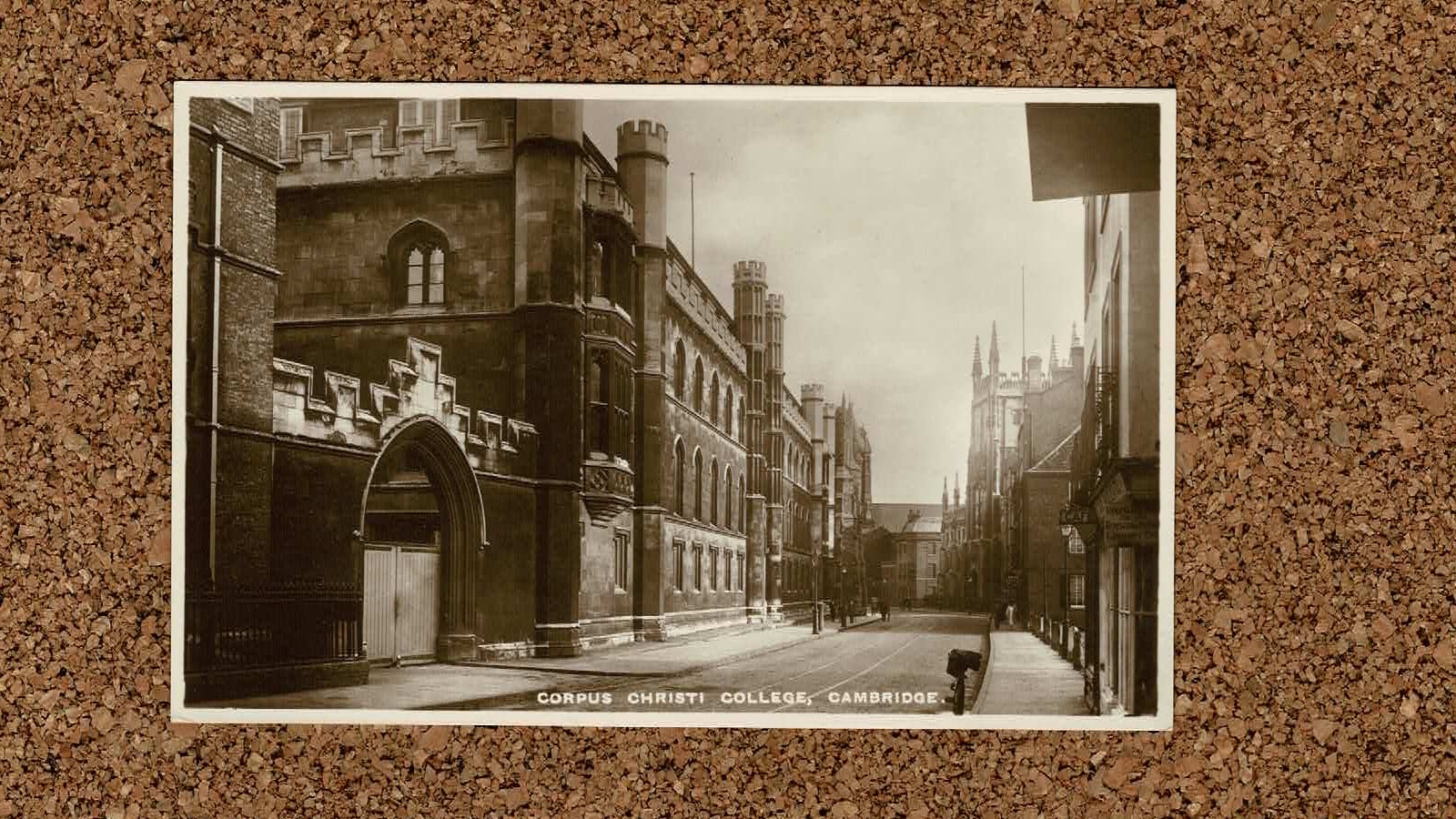
  • Higher education postcard: University of Greater Manchester

    Higher education postcard: University of Greater Manchester

    Greetings from Bolton. Definitely Bolton.

    In 1824, a mechanics’ institute was established in Bolton. Mechanics’ institutes were a new phenomenon – the first was established in Scotland in 1821. They were, in essence, a subscription-based club which provided an opportunity for education, aimed at the better-off members of the working class.

    As the 1857 advert in the Bolton Chronicle shows, it was still going fifty years later.

    You can see the 1857 subscription fees in the advertisement. It’s hard to directly read across into today’s prices, because costs and wage structures change so much over the years. On a straightforward inflation calculation, using the Bank of England calculator, the annual fee would be about £50 today, which is a bit of a bargain. But comparing wages makes this feel different – for example, an average agricultural wage in 1857 was just shy of 11 shillings a week, so the subscription would be a quarter of a week’s wages. (And note also that the annual fee of ten shillings was just the quarterly fee multiplied by four. No discounts here for upfront payment.)

    The curriculum looks good, but elementary: school rather than higher education. And this makes sense – many people would have had minimal schooling. Only about 70 per cent of the population could read and write. And so a good basic education didn’t hurt.

    By the late 1880s there was a groundswell of opinion that Bolton needed better. As reported in the Bolton Evening News of 1 December 1886, the new chairman of the Mechanics’ Institute, Mr John Haywood MA, argued that:

    In Manchester, they are content with one well-equipped technical school; whereas in Bolton we must, forsooth, have three struggling institutions, with the result, as far as the Mechanics’ is concerned, that the progress made is in the direction of increased debt.

    The newspaper continued: “Mr Haywood thinks that Bolton has gone mad on sectarian and political distinctions when its young men cannot even sit on the same form to receive technical education.”

    And so in 1887 the committee of the Mechanics’ Institute agreed to establish a technical school. A committee was established, which raised funds, but found itself short; and an appeal was made to the county council. And in 1891 the Bolton Technical School opened.

    In 1926 Bolton Technical School became Bolton Technical College, and in 1941 a new building opened – that shown on the card – which enabled a broader range of courses to be offered. Engineering was, apparently, the most popular.

    In 1964 the college bifurcated, splitting the lower and higher level education. Bolton Technical College focused on FE, and the Bolton Institute of Technology focused on higher studies.

    A brief aside is now necessary, to introduce another institution, the Bolton Training College. This focused on training teachers for technical subjects and was one of three in the country doing this (the others being in Huddersfield and at Garnett College, in London). I’m afraid I can’t tell you when it was founded, but it is clear that there was a threat to close it in the 1950s, happily averted.

    And in 1982 the Bolton Institute of Technology merged with the Bolton Training College to form the Bolton Institute of Higher Education. This gained taught degree awarding powers in 1992, research degree awarding powers in 1996 and became a university in 2004.

    In December 2024 the university changed its name, becoming the University of Greater Manchester. And in what is becoming a bit of a busy year for the university, in governance terms, it was placed under enhanced OfS monitoring in February and suspended its vice chancellor in May. Let’s see what June and July bring for the university.

    The postcard was sent in October 1961 to Miss Medley in Andover.

    Dear Janet, Today I am going through to Blackpool to see “West Side Story”. The week has flown by, and tomorrow I shall have to return to the quiet South from the lively North. Love Jillian

    And here’s the customary jigsaw – hope you enjoy it. Comment below if you can identify the cars.

    Source link

  • The reconciliation bill cleared the House. Here’s how it would change higher ed.

    The reconciliation bill cleared the House. Here’s how it would change higher ed.

    This audio is auto-generated. Please let us know if you have feedback.

    House Republicans on Thursday narrowly passed a massive tax and spending bill that, if signed into law, would add new financial pressures on U.S. colleges and students while extending the tax cuts instituted in 2017. 

    Backed by President Donald Trump and dubbed the “One Big Beautiful Bill Act,” the proposal includes provisions for dramatically increasing the endowment tax, a risk-sharing policy that would put colleges on the hook for unpaid student loans, and changes to the federal student aid program that critics say would reduce access to higher education. 

    It also includes work requirements to the Medicaid health insurance program, changes to which could impact university hospitals and leave many college students without health insurance.

    The bill is headed to the Senate after it passed the House by one vote, with every Democrat and two Republicans voting against it. Three other Republicans either abstained or did not participate in the vote. 

    The Senate, held by Republicans with a 53-person majority, is widely expected to add changes to the bill.

    Since lawmakers passed the legislation as part of the reconciliation process — a rule allowing the Senate to approve spending-related policies with a simple majority — Republicans can avoid a filibuster that would take 60 votes to break.  

    In a Wednesday letter to House leaders, American Council on Education President Ted Mitchell wrote that the higher ed policy changes would have “a historic and negative impact on the ability of current and future students to access postsecondary education, as well as on colleges and universities striving to carry out their vital educational and research missions.”

    Here is a look at some of the major higher ed provisions:

    Endowment tax

    Today, the richest private colleges — the few dozen with at least 500 students and at least $500,000 endowment assets per student — pay an endowment excise tax set at 1.4%.

    Wednesday’s bill would implement a graduated rate structure, with levels starting at 1.4%, and rising to 7%, 14% and 21% depending on endowment assets per student. Under that tiered system, the wealthiest college would be taxed the same as the current corporate income rate. 

    When House Republicans advanced the endowment tax proposal earlier this month, they decried “woke, elite universities that operate more like major corporations.”

    The lowest tax bracket targets colleges whose endowments are valued between $500,000 and $749,999 per student.

    Endowment taxes would rise to 21% for the nation’s wealthiest private colleges

    Excise tax tiers for private colleges based on endowment funds per student

    Industry experts and insiders worry the tax could hurt colleges’ long-term missions and diminish the resources they rely on to recruit lower-income students. 

    In a statement Thursday, Kara Freeman, president and CEO of the National Association of College and University Business Officers, pointed to research by her organization and Commonfund finding that nearly half of endowment spending went toward student aid in fiscal 2024. 

    This scholarship tax takes funds away from students and makes it less possible for colleges to support them,” Freeman said. 

    Colleges spend the largest share of endowment funds on student financial aid

    Endowment spending distribution by function in fiscal 2024

    Financial aid changes

    The bill eliminates federal subsidized loans for undergraduates and Direct Plus loans for graduate students beginning on July 1, 2026.

    It also limits Parent Plus Loans, capping how much parents can borrow and only allowing them to take out loans if their dependent student has already taken out the maximum in unsubsidized loans. 

    The bill sets an overall lifetime student loan limit of $200,000 for any single borrower across all federal loan types.

    Additionally, it raises the course hours for the full-time student designation needed to receive the maximum Pell Grant from 24 to 30 per academic year, and it changes the formula for Pell eligibility.

    ACE’s Mitchell called the proposed changes to Pell Grants “crippling,” saying some 700,000 students could lose eligibility under the bill. 

    Regarding changes to federal student funding writ large, Mitchell described them as “deep cuts and damaging changes to important federal student aid programs” that would limit access to education. 

    The bill also cuts several student loan repayment programs, consolidating a “litany” of repayment plans into two, according to the House Committee on Education and Workforce.

    Source link

  • Trump Administration Strips Harvard’s SEVIS Certification

    Trump Administration Strips Harvard’s SEVIS Certification

    Amid an ongoing legal showdown with Harvard University, the Trump administration has carried through on a recent threat to halt the private institution’s ability to host international students.

    The move was first reported Thursday afternoon by The New York Times, then subsequently announced on social media by Secretary of Homeland Security Kristi Noem.

    “This administration is holding Harvard accountable for fostering violence, antisemitism, and coordinating with the Chinese Communist Party on its campus. It is a privilege, not a right, for universities to enroll foreign students and benefit from their higher tuition payments to help pad their multibillion-dollar endowments,” Noem wrote in the announcement. “Harvard had plenty of opportunity to do the right thing. It refused.”

    (Though much of the federal government’s recent focus on Harvard has concerned the university’s alleged failure to address antisemitism on campus, the Trump administration has also raised questions about collaboration with foreign researchers, particularly those with ties to the Chinese and Iranian governments.)

    In her statement, Noem wrote that Harvard’s Student Exchange and Visitor Information System certification was being stripped “as a result of their failure to adhere to the law,” which she said should “serve as a warning to all universities” across the U.S.

    Current international students would be required to transfer to maintain their visa status.

    Noem added that Harvard would need to turn over demanded records within 72 hours if it would “like the opportunity of regaining” SEVIS certification “before the upcoming school year.”

    A Harvard spokesperson called the action “unlawful” in an emailed statement.

    “We are fully committed to maintaining Harvard’s ability to host international students and scholars, who hail from more than 140 countries and enrich the University—and this nation—immeasurably,” the spokesperson wrote. “This retaliatory action threatens serious harm to the Harvard community and our country, and undermines Harvard’s academic and research mission.”

    Impact on Harvard

    Harvard enrolled 6,793 international students last fall, according to university data. International students have made up about a quarter of Harvard’s head count over the last decade—a population that could disappear, along with their substantial tuition dollars, if the Trump administration’s directive holds.

    Noem threatened to revoke Harvard’s SEVIS certification last month after the university pushed back on federal government demands to turn over “detailed records on Harvard’s foreign student visa holders’ illegal and violent activities by April 30.” That threat followed Harvard’s refusal to acquiesce to sweeping demands to overhaul its governance, admissions and hiring processes and more in response to allegations of antisemitic conduct. The university then sued the Trump administration over a federal funding freeze and other recent actions.

    Revoking Harvard’s SEVIS certification is the second punch the government threw at the university this week, coming after the Department of Health and Human Services announced the termination of $60 million in multiyear federal grants, which officials attributed to concerns about campus antisemitism.

    Other sources of federal funding are on hold. Altogether, the Trump administration has frozen at least $2.7 billion flowing to the private university, or about a third of Harvard’s federal funds.

    A New Political Cudgel

    The Student Exchange and Visitor Program’s process for revoking universities’ SEVIS status is usually a prolonged and complicated bureaucratic affair, typically preceded by a thorough investigation of the institution and the possibility of appeal.

    Sarah Spreitzer, vice president and chief of staff for government relations at the American Council on Education, told Inside Higher Ed that the manner in which the federal government stripped Harvard’s SEVIS certification was unprecedented.

    “In a normal world, Harvard is supposed to actually get a notice that their SEVIS certification is being revoked, and then there is an appeals process,” Spreitzer said. “It doesn’t seem that DHS is following any of the regular requirements that are included in statute for taking this action.”

    In late March, Trump officials first proposed revoking SEVIS status from institutions that they believed fostered antisemitism on campus, aiming their threats specifically at Columbia and the University of California, Los Angeles, which were home to major pro-Palestinian protests in 2024. In mid-April they threatened Harvard with decertification.

    Clay Harmon, director of AIRC: The Association of International Enrollment Management, told Inside Higher Ed in March that historically, SEVP investigations are conducted when universities are suspected of delivering less-than-bona-fide degree programs, using shady coursework as a way to essentially sell student visas to would-be immigrants who want a fast way to enter the country. 

    “It is the government’s primary way of ensuring that international student visas are not granted for diploma mills, fake institutions or institutions that are not adequately financially supported,” Harmon said. “I’ve never heard of a fully accredited, reputable institution—whether it’s Columbia or Bunker Hill Community College—being subjected to some kind of extraordinary SEVP investigation outside of the standard recertification process.”

    The initial process of certification, Harmon added, is intensive and can take institutions months or even longer to complete, which is one reason why decertification is so rare. Wielding the organization’s oversight powers as a tool for leverage in a larger political battle, he said, would be “a significant departure from past practices and established precedents.”

    “It is clear that the administration is putting forward new interpretations of laws and powers that have not been established through case law or regular practice,” Harmon said.

    In an email to Inside Higher Ed on Thursday, Harmon said the administration’s decision to use decertification against Harvard “imposes real, immediate, and significant harm on thousands of students for reasons outside their control and unrelated to their own actions.”

    “This action may have broad and long-term negative impacts—well beyond Harvard and well beyond 2025—to the educational experience and financial health of U.S. institutions,” he wrote.

    Revocation of Harvard’s SEVIS certification prompted sharp reactions online.

    Aaron Reichlin-Melnick, a senior fellow at the American Immigration Council, wrote on social media that Noem’s actions are “likely illegal” and her letter showed no evidence of Harvard’s violations.

    “Nothing in here alleges ANY specific violation of the Student and Exchange Visitor Program. Nothing. She cites no law violated, no regulation broken, no policy ignored,” Reichlin-Melnick wrote. “I don’t care what you think of Harvard; this is clear weaponization of government.”

    Will Creeley, legal director of the Foundation for Individual Rights and Expression, called the government’s revocation of Harvard’s ability to host international students “retaliatory and unlawful.”

    In a statement posted on X, he assailed the Education Department’s demands that Harvard hand over footage of international students protesting on campus.

    “This sweeping fishing expedition reaches protected expression and must be flatly rejected,” Creeley wrote. “The administration’s demand for a surveillance state at Harvard is anathema to American freedom … This has to stop.”

    But some officials in the MAGA camp celebrated the move.

    “This is a remarkable first step,” Republican senator Ashley Moody of Florida wrote on X. “I applaud the administration for taking a stand to rid our universities of malign foreign influence.”

    Source link