Each summer I make a point of stopping by a first-year orientation session at the University of Virginia, where I have been a professor in the music department for 18 years. The sessions take place in the historic concert hall on the floor below my office. On June 30, members of the Class of 2029 danced their arrival wearing the university’s colors of blue and orange.
Usually, the raw enthusiasm and promise of the students reminds me why, on many days, I love my job. It didn’t work this time. I just couldn’t resolve the dissonance between the fantasy and the reality. The fantasy was of a college education these young people worked so hard to land. In real life, the Department of Justice had just pressured our president, Jim Ryan, into quitting, demanding his resignation to supposedly resolve an investigation into the university’s diversity, equity and inclusion programs.
This is almost old news by now. But it shouldn’t be. There is a direct line between the Jan. 6 insurrection and the 2017 Unite the Right march, when, just days before first-year students started school, a few hundred white nationalists emboldened by the first Trump presidency marched across campus with their torches, chanting, “Jews will not replace us.” The legal historian Farah Peterson, who used to teach here, writes that “an embrace of violence to assert constitutional claims” is baked into our history and that the founders understood violence as a way of making legal arguments.
The charge against UVA by the Department of Justice is being led by two UVA alums. One of them, Harmeet Dhillon, an assistant attorney general who overlapped with Jim Ryan at UVA law school, served as co-chair in 2020 of Lawyers for Trump, which challenged the presidential election results, and represented Trump in a defamation suit involving Stormy Daniels.
The ousting of Jim Ryan was not a surprise. But even after the Trump administration’s relentless siege on universities, it was a gut punch. Those of us who teach here have predicted for months that the Board of Visitors would try to fire Ryan this July, when all of its appointed members would be Gov. Glenn Youngkin’s appointees. We’ve been through that before. In 2012, when the Board of Visitors fired then-president Teresa Sullivan, faculty, students and alumni stood up to resist corporate America infringing on the educational mission of the university, and the board reinstated her.
Youngkin’s newest appointees to UVA’s board include the controversial Ken Cuccinelli, who, when he was the state attorney general, led an assault on academic freedom in the form of a civil investigation targeting five grants held by climate scientist Michael Mann. Youngkin, for his part, has long intended to purge the state’s education system of “divisive concepts”—things like acknowledging the fact that the buildings of Jefferson’s “Academical Village” were built by the enslaved. When the Board of Visitors banned DEI in March of this year, Youngkin gleefully stated, “DEI is done at the University of Virginia. We stand for the universal truth that everyone is created equal, and opportunity is at the heart of Virginians’ and Americans’ future.”
I think we know whom he means by “everyone.”
Beloved by many here, including me, Ryan is perhaps a once-in-a-generation leader. Still, he is so very far from “woke.” As the student satire magazine put it, “Fly high Jim, we’ll never forget the early mornings, late nights, and also the several hundred state troopers you sent to attack students for peacefully protesting.” In May 2024, Ryan did not hesitate to crack down on a very small pro-Palestine encampment. No one at the university cracked down on those tiki torch–bearing white nationalists.
Here is what we are guilty of: believing that our professional duty requires us to openly reflect on our individual and collective responsibilities in a democracy. We do think it’s our job to give our students tools to respond to the world they will inherit. If we were guilty of or capable of “left-wing indoctrination,” I suspect we would have a different governor and maybe different other things, too. Almost 70 percent of our students are from Virginia.
Because we are guilty of believing that history matters, we can’t ignore the wicked irony of a federal and state government killing diversity-related programs and forcing out a president in part by leveraging the equal protection clause of the 14th Amendment, ratified in1868. This amendment, which mandated equal protection for all humans, is now weaponized to protect only white people. The Civil Rights Act of 1964 outlawed discrimination based on race, religion, sex or national origin. It has been similarly weaponized.
Meanwhile, our history also includes these facts: The UVA biology department taught eugenics until 1953. Not only was the institution built by enslaved laborers, but by 1829 it had its very own slave patrol. Indeed, Thomas Jefferson wanted to establish a University of Virginia in part because too many young men went north and learned the evils of abolition. Such thinking amounted to a canker “eating on the vitals of our existence, and if not arrested at once will be beyond remedy.” More recently, the Office for Civil Rights did not approve the commonwealth of Virginia’s plan for desegregating higher education until 1982.
My current and former students have been texting from all over the world since Ryan’s June 27 resignation announcement. Mostly they want to know: Why UVA? Virginia is arguably ground zero for reckoning with the chattel slave system and its intertwining with a flailing fantasy of democracy. “The 1619 Project” made front-page news of it. But you don’t have to go back that far.
Thanks to the summer of 2017, for many Charlottesville now conjures images of burning torches and Nazi slogans. Over the weekend of Aug. 11 and 12, 2017, the sleeping dogs of America’s nasty history rose up from the evidently not dead. Richard Spencer (UVA, Class of 2001) helped orchestrate a torchlit nighttime march across our campus, the marchers barking, “Blood and soil” and “Jews will not replace us.” The university let this happen. In her book about the weekend of Unite the Right and the ideology that inspired it, Deborah Baker writes, “The nature of this awakening appeared to go to the core of who we are and the myths and folklore that have sustained us as a nation.”
Also that weekend of Unite the Right, a young woman was murdered and dozens were injured when a neo-Nazi drove a car into a group of counterprotesters. While the city was still reeling, Trump went on television and claimed there had been “very fine people on both sides.” There was an uproar and a backlash then. And in September 2017, the president had no choice but to sign a congressional joint resolution condemning the violence and domestic terrorist attack in Charlottesville. It is clear that no such condemnation would be forthcoming today.
This administration will not stop with Jim Ryan, and they will not stop with UVA. The miraculous dean who got those first-year students to dance on a hot June day in 2025 will get them dancing at their graduation in May of 2029. But I am very afraid of what this university, and other institutions of higher learning across the country, will look and feel like by then.
Bonnie Gordon is a professor of music at the University of Virginia and vice president of the American Musicological Society.
Research shows that adults often enter college with a goal in mind, such as a career pivot, additional education in their current industry or completion of a degree they previously started. But returning to the classroom can be challenging, particularly for first-generation students or those who haven’t been in school for a while.
In 2024, Wichita State University launched a college bridge program, the Adult Learner Community and Connections Program, to ease the transition for adult and online learners. The program, part of the university’s Shocker Preseason series, offers eight modules of self-paced online content designed to assist them in their first term at the university.
In the most recent episode of Voices of Student Success, host Ashley Mowreader speaks with Brett Bruner, assistant vice president for student success and persistence at Wichita State, about adult learner pedagogy and lessons learned in the first year.
An edited version of the podcast appears below.
Q: Can you introduce us to your adult learner population? Whom do you serve and how does their makeup change how you serve them?
Brett Bruner, assistant vice president for student success and persistence
A: At Wichita State University, our adult learners come from various backgrounds. We know that two-thirds of our adult learners are first-generation college students. And when we think about being the first age friendly [University Global Network]–designated university in the state of Kansas, I think we’re really focused on how do we support learners of all ages, including adult learners of all ages?
When we think about the more than 2,200 adult learners and more than 1,600 online learners at Wichita State, our adult learners are enrolled in on-campus programs and fully online programs. We always approach our adult learners with that mindset of, how do we center this through our first-generation lens, recognizing that two-thirds of them will be first in their families to graduate from college?
Q: I’m also thinking about your orientation program focused on adult learners. I wonder if you can give us some background on, what does a Shocker Preseason look like across the board? And how does this look different for your adult learner populations, given all the backgrounds that you mentioned—first generation, online learners, et cetera.
A: Our Shocker Preseason programs were created from a university standpoint to really focus on building academic resource awareness, providing all our students with the academic skills they need to be successful and helping students make connections with each other. Our Shocker Preseason programs were also created as part of our strategic enrollment management plan, as well as one of our student success priorities.
We’ve grown [the program]; this fall, we’ll now have 20 different Shocker Preseason programs.
Q: Wow.
A: I know, it’s amazing to see growth from even just when I started here two years ago, from six programs now to 20. I think the beauty of our Shocker Preseason programs is this differentiated care. We talk about differentiated care at WSU from a student success standpoint, but it means the program modality—on campus versus online—program length, content, is really driven by each of the individual units that are designing their programs.
In spring of 2024, as the Office of Online and Adult Learning that I get the privilege of working with sat down to really look at career congruence of our adult learners’ transitions, health and well-being emerged as a topic, but really that overall support of, how do we form connections? Because so many times adult learners in the research cite that they aren’t finding peers, they aren’t finding friends, because they feel that they are the one and only older student, returning student or student who didn’t come fresh out of high school to college.
I’m so proud of our team, who said, “Let’s design a Shocker Preseason program, but let’s make it look different to meet the needs of our students.” And so as they rolled out this online format for our Adult Learner Community and Connections program, they really rooted it in health and well-being, because they were able to do that in meaningful ways that may look different from how we talk about health and well-being for an 18- to 22-year-old, but then also building in community and connection opportunities in different ways. Maybe they’re more likely to lean into conversations about how the Ulrich Museum of Art on campus can provide a means for social connection, and maybe that will resonate with our adult learners.
Q: I love that you’re focusing on community and that sense of belonging and engagement on campus. Because I think when we consider online learners’ needs, or adult learners’ needs, oftentimes we think it’s providing services expeditiously. We want them to get through their degree program, we want to get them into a job, which are great priorities to have. But students also want a college experience, and they do want to engage with their peers. And so I wonder if you can speak to that dimension of this, that it’s not just getting them to timely degree completion, but everything else as well.
A: It’s all about finding their people, helping them realize that with 2,200 adult learners across campus, you’re not the only one. So how can we connect you with others who are experiencing similar transitional pieces?
We think about the 83 students who engaged in our optional program last year, but then also the eight peer ambassadors that we hired who had lived these experiences and can bring some insight when we talk about social wellness and why it’s an important part of thriving in college as an adult learner, or financial wellness, or whatever dimension of wellness.
I think that’s the important part, because we’re seeing then these connections continue beyond just this orientation and transition experience. We’re seeing friendships bloom. We’re seeing opportunities to make connections in the classroom. After year one of the program, specifically related to the social wellness connection, students were saying, “I appreciated what you shared about how to make connections, but I want more. I want more about how to build my network. How do I invite people to my network and grow my network?”
And I don’t think that was something that we were intentionally designing. So as we think about the 2.0 version of this program, we’re really deepening the content about networking. Because I think we’re all always striving to build and grow our networks as we move throughout life. That desire for connections, that community, that sense of belonging, was clearly, clearly articulated in our postprogram surveys from the first year of the program.
Q: Can we talk about how the program works logistically for people who might not be familiar and how it’s scaffolded?
A: Our program is designed around the eight dimensions of wellness, and it is an online program. We built it in our learning management system so that it mirrors a lot of the other classes that an adult student is taking, whether they’re taking an online class or an in-person class that has the learning management system component to it. So they’re also getting access to the technology upskilling that we so often see in research about what adult learners want as they transition into college.
They move through the eight modules, which are all rooted in the eight dimensions of wellness. The beauty of the program is it’s self-directed and self-paced, so it doesn’t necessarily build upon one another. We’ve had some adult learners who are like, “I really want to jump in and dive into module five and start talking about physical wellness, or module eight and talking about occupational wellness.” So they can do that, or they can sequentially go module by module.
As a student completes each module, there is an incentive that was provided through the Urban Adult Learner Institute, [Wichita State] being the inaugural winners of an Accelerate Pitch Competition that funded a lot of these incentives. But one of the things that we learned in year one is that incentives are not a motivating factor for our adult learners. We know that adult learners are intrinsically motivated, and so a lot of times we had the extra incentives that they didn’t strive to pick up, but they were completing the modules.
We’ve got campus partners who provide content for the modules. Our Shocker Career Accelerator office is providing content for the module about occupational wellness. And Shocker Financial Wellness staff are providing content for the module about financial wellness. So each module connects individuals to campus resources. It’s providing some actual content and then some reflective experience. The modules open Aug. 1 and they close in December.
So students can move throughout that time however quickly they want, or maybe they just want to complete one module, whatever it may be. And then if they complete all eight modules, we’re able to provide an overall incentive with some merchandise from our Shocker store.
Q: You mentioned it’s self-motivated, and students can really opt in to which sections speak to them. I think it’s interesting that you’ve all chosen to make this optional. It’s an orientation program, but it’s something that they can do throughout their first term. Can you talk a little bit about that decision? Because I think some people might say, “No, you have to make it mandatory and make this something that they must complete before they start classes, because we know that this will be good for them.” What’s that balance of ensuring students are getting this information but letting them do it at their own pace and timing?
A: This program doesn’t replace our in-person or online adult learner orientation, but I think, as someone who spent 10 years as a new student orientation director before moving up, sometimes people say, “We can solve all the world’s problems just by adding five minutes in orientation.” And I like to say, “Sometimes orientation is like drinking from a fire hose,” there’s so much information. And it also doesn’t relate to three words: time, place and manner.
When we think about orientation, we have to know, what do we share with individuals? When do we share it, and especially with our adult learners, as we dive into andragogy [adult learner pedagogy]? And what we know from Malcolm Knowles in 1985, when he developed the six tenets of andragogy, is adult learners need to know what they need to know when they need to know it.
If we’re sharing resources about knowing your values and what’s your why, and we’re sharing that on June 13, when they’re on campus for adult learning orientation, is it really going to sink in and resonate with them versus in August or September, when they’re knee-deep in the semester? Or when we’re talking about intellectual wellness and we’re sharing all of the resources from our 13 different tutoring centers across campus—that may go in one ear and out the other ear in July when they’re here, but maybe they’re going to need it in week five or six, when they’re struggling with a certain class and trying to figure out “where do I go to get connected?”
Our team wanted to keep it optional, much like that kind of aligns with all of our Shocker Preseason programs, because the Shocker Preseason programs never take the place of orientation. They’re an additional element in a student’s transition. But as we lean into some of those core elements of andragogy, we lean into the need to know, and we lean into the readiness to learn that students—adult learners, specifically—when they see a need, that’s when they’re going to be ready to learn. We wanted to provide that in an asynchronous format, but they can still come back to and access those resources throughout the duration of that critical first semester at WSU.
Q: You’ve obviously rooted this program in pedagogy and the best understanding we have of adult learners, but I wonder how you’ve incorporated the student voice from this first season of the Shocker Preseason program and how you’re incorporating it into version two?
A: As we dug into assessment feedback from version one, not only looking at completion rates by each module, we definitely know 86 percent of all students who registered [for the program] and did something completed social wellness. That’s great. Is that because of the concept, is that because it was the first module? We don’t necessarily know.
As we look at the qualitative feedback, I think that’s been the most interesting thing. From the social wellness piece and students saying they appreciate it, but they want to know more about how to network. We think about the intellectual wellness model, and some of the feedback that we receive from that is … “Give us more information, we want all the additional apps, all the additional resources beyond basic technology. What are those apps or things that I need to do to succeed academically?” So we’re diving deep into that.
One of the most interesting things that caught us off guard, in a good way, was that the most popular session by students [who provided qualitative feedback] was the spiritual wellness module, because it was really rooted in helping students articulate, “What is your why?” Whether you’re coming back to school because you’re a career changer, you’re switching career paths in life or you want to finish a degree because you want to climb higher into the occupation that you’re in, but then also, then connecting that why to their values and continuing to drive that forward as a motivation factor.
Then I think we’re also taking some of the other elements of the areas and growth of opportunity. For example, when we think about occupational wellness and adult learners, we learned that we’re serving two very different groups within the adult learner piece: the career changers and the career climbers. And so we need to know, how do we go about approaching occupational wellness from both an individual who’s saying, “I’m going from industry to being a teacher at the age of 50” or “I need a degree to move up in this career path that I’ve been doing for quite some time”? So we have to almost take the differentiated care approach, if that makes sense, especially in that.
Or financial wellness, that was probably one of the most, I wouldn’t say, polarizing, but one we need to think a little bit more about. We got great opportunity for growth feedback that said, “I’ve been doing finances for quite some time” and recognizing the experiences, but the piece of finances that many adult learners said is, “Can you help me figure out where can I find additional scholarships? Where can I find additional ways to pay for all of my educational expenses?” So we need to focus a little bit more on scholarship resources rather than just maybe the general how to budget, how to manage finances that we may think about … our 18- to 22-year-old population.
Q: I think it’s interesting that the feedback you received, it seems to fall into a few categories, like, one, help me navigate the institution better, but two, help me navigate myself as a student better.
It seems like they know how to be an adult, and they know how to manage their own budgets or engage with one another on a social level. But when it comes to that professional networking, or when it comes to understanding what tools they might need to be a learner, again, that’s the piece where they’re really asking for feedback. And I think that’s so unique to our adult learner population at large. It might be our 18-year-olds who need more help figuring themselves out as people, but our adult learners need help figuring themselves out as students.
A: In version 2.0 we’re also trying to be much more intentional about providing some extended podcasts with campus partners. So someone who really wants to embrace the concept of social wellness and wants to engage in a podcast with our Student Engagement and Belonging Team or our Ulrich Museum of Art and really dive deep into those, we’re connecting this to various podcast episodes from our Shockers Learning Out Loud podcast series. It’s been around for quite some time. So how are we just connecting the pieces of the puzzle for students who want to deep dive a little bit more, recognizing that, once again, what we know about adult learners is they’re very problem-focused. And how can we provide those additional asynchronous resources for them to dive much deeper into the concept?
Q: I mean, I think podcasts are the best format ever.
When you talk to your peers in this space, because I know you’ve presented on this topic at conferences and really shared this with others who are working in similar roles, what are you hearing from them? What other ideas are you getting? Or what are some opportunities that you see for others to engage in this work as well?
A: I think the biggest piece that I’ve heard from others is this whole notion of differentiated care, and how can campuses lean in and not just replicate a transition experience that they may have for an 18- to 22-year-old, but they’re recognizing the needs of our adult learners, and we’re centering some of those elements. Adult learners bring a lot of experiences, so how do we harness that? How do we name that? How do we give them the opportunity to own that space and bring that into whatever content we design, whether it’s from a well-being [or] from a career standpoint, bring that into that space and recognize that that looks different? You can’t just copy and paste. You can’t just lift what we’re doing from a first-year, first-time-in-college student and apply that, because that’s doing a major disservice.
I think the other piece that I’m hearing from colleagues as we’re doing this is leveraging and leaning into making this a virtual space, because the lives of an adult learner look very different. You may be an adult learner that’s also a caregiver, and you may only have evenings to hop on and learn, or dive deep because you’re working full-time, trying to go to school full-time, maybe giving care to parents, to children, to partners, to spouses, etc. Or we’ve had some students who are adult learners who are working third shift. You may be available during the workday, but you may have just got off work at 8 a.m., so how are we leveraging technology in new ways? Because going back to that research, one of the biggest pieces that adult learners want in their transition and want from colleges universities is to help them upskill with the technology that they’re going to need to be successful.
I think those two pieces of really leaning into the adult learner needs, leveraging technology and leaning into this notion of differentiated care is needed and is the easy way to start thinking about, how do I take something like this and apply it to the adult learners on my own campus?
Q: As we think about the new age of college students or today’s learners, and how we’re seeing a larger population of adult learners, or more high school students are considering taking a break before going to college, I think this is going to be even more applicable, maybe for a 20-year-old who took a break and was working for a few years, and not just our traditional 25-, 35-year-old who’s coming back to school.
A: Absolutely. I think there are elements of this that can be applied to many facets of today’s learner.
Q: So what’s next for you all as you’re considering launching for the fall?
A: We have been taking all the feedback in from version 1.0 [and] we’re redesigning some of our modules. We’re bringing in new campus partners, which I think has been super exciting.
We’re leaning into this well-being concept, and we know health and well-being is important for all of today’s college learners. You can’t read any article, have a conversation at a conference or go to a meeting on your own campus where the concept of health and well-being of today’s college students is not at the forefront. I think as I’ve continued to share this data, we’ve gained lots of support from various entities across campus, especially those who really are approaching it from a health and well-being lens.
But we’re just really excited as we launch version 2.0 and engage some of those completers of version 1.0 in various peer ambassador roles to support the next generation of ALCC participants.
Q: Can you talk about how this program transitions into larger support on campus and making sure that students aren’t just getting these modules online, but that they’re translating it to in-person experiences or online experiences as it’s relevant?
A: Our peer ambassadors, I think, are great representatives of the Office of Online and Adult Learning, and so they have been a great resource to connect individuals in their small groups to our associate director of student engagement in the Office of Online and Adult Learning or online and adult learning retention specialist who’s providing some additional follow-up pieces. So I think the peer ambassadors have been great representatives to connect the students who are going through this experience with the amazing support staff and the network of individuals through our Office of Online and Adult Learning and across campus who are here to help them be successful, because we want all of our adult learners to successfully complete their first year, that first milestone, and then ultimately graduate with their degree from WSU.
Get more content like this directly to your inbox. Subscribe here.
The Trump administration is holding up hundreds of millions of dollars slated for adult education programs as part of a review of education spending.
The roughly $716 million was supposed to be disbursed to states July 1 and then divvied up among their adult education providers, such as community colleges. But the funding for high school equivalency classes, English as a second language programs and other adult education services never arrived. The news comes as the Trump administration continues to withhold $7 billion from states for K–12 education, including ESL classes and after-school programs, which includes the adult education money.
The freeze is part of a broader “ongoing programmatic review of education funding,” an unnamed spokesperson for the Office of Management and Budget wrote in a statement to Inside Higher Ed.
“Initial findings show that many of these grant programs have been grossly misused to subsidize a radical leftwing agenda,” wrote the OMB spokesperson, citing examples of states and schools using the money to support students in the country without proper documentation as well as for a seminar on “queer resistance in the arts,” though the statement made no mention of adult ed programs.
The fate of the withheld funding remains unclear. “No decisions have been made yet,” the spokesperson said.
Now states and their community colleges, which offer a significant share of adult education programs, are scrambling to figure out how to continue providing adult education services despite staggering funding shortfalls.
“If funding is not provided, there are nothing but bad options for institutions,” said David Baime, senior vice president for government relations for the American Association of Community Colleges. He predicts community colleges would have to reduce adult education services, lay off personnel and vie for funds to fill in the gap from states and other sources. But even so, “the funding is so substantial in a number of places that there’s no immediate source of replacing that money.”
He emphasized that adult education programs have received “broad support from both parties for decades”—and they were already underfunded relative to student need.
Adult basic education is “a core function and a core part of the mission of community colleges across the country,” he said.
Adult education is one of several programs on the chopping back in the Education Department’s proposed budget for fiscal year 2026. Officials wrote in budget documents that states and localities are “best suited to determine whether to support the activities authorized under this program or similar activities within their own budgets and without unnecessary administrative burden imposed by the federal government.”
Higher ed advocates worry other programs like the Child Care Access Means Parents in School program that are on the chopping block could suffer a similar fate.
Concerns Across the Country
Community colleges in red and blue states alike are anxiously waiting for the adult education funds to come through.
Heather Morgan, executive director of the Kansas Association of Community Colleges, said if the pause persists beyond two months with no alternative funding, Kansas’s 19 community colleges will have to make “tough decisions” about laying off or furloughing staff.
She added that college leaders were given no notice, leaving them with no time to prepare.
“Situations where funding doesn’t come as expected are real hardships on small colleges and really leave staff in a position of wondering and not knowing what’s coming next,” she said.
Joe Schaffer, president of Laramie County Community College in Wyoming, said the withheld funds risk hurting high-demand, successful adult education programs in the state.
He noted that, historically, the coal and oil industries in the state offered well-paying jobs that didn’t necessarily require a high school diploma. But now, because of changes in technology and the state’s diversifying economy, many jobs do require at least a high school education. Wyoming workers hit with that realization are coming to adult education programs later in life to earn high school equivalency certificates, commonly referred to as the GED.
And the programs work. Roughly 80 percent of Wyoming adult basic education students get a job or enroll in college after their programs, and 84 percent earn a credential beyond a GED. These programs graduate more people with a high school equivalency than any one high school in the state, making the programs arguably Wyoming’s “largest high school,” he said.
Because the state funds half of these programs, he believes Laramie County Community College can make do without the federal funds and continue to offer these programs for another year, with some belt-tightening measures.
But still, the move to withhold federal funds risks “reducing the flow of high school graduates at a time when the workforce pipeline, the talent pipeline, is a concern of everybody across the nation,” Schaffer said.
Morgan agreed that state economies would suffer if adult education programs took a permanent funding hit.
For many Kansans, “this is their option to get out of poverty and to get into a higher-paying job,” she said. “The ability for them to get skilled up is important, and we have to have the resources to do that, and the uncertainty that’s been injected into the system is not helpful in trying to meet our mission, which is to prepare citizens for the Kansas economy.”
Speaking at the Metascience 2025 conference in London, Maria Leptin said such data is in a “very precarious” position. Since Donald Trump began his second term as U.S. president, researchers have raced to archive or preserve access to U.S.-hosted data sets and other resources at risk of being taken down as the administration targets research areas including public health, climate and fields considered to be related to diversity.
“We’ve heard the situation from the U.S. where some data are disappearing, where databases are being stopped, and this is really a wake-up call that we as a community need to do more about this and Europe needs to do more about it,” Leptin said.
The ERC president highlighted the Global Biodata Coalition, which aims to “safeguard the world’s open life science, biological and biomedical reference data in perpetuity,” noting that the European Commission recently published a call to support the initiative.
“Medical research critically depends on the maintenance and the availability of core data resources, and that is currently at risk. Some of these resources may disappear,” she said. “I really encourage all policymakers and funders to join the coalition.”
“Right now is the worst time to not have access to data in view of the power of AI and the advances in computing, large language models, et cetera,” Leptin told the conference, noting that the Trump administration is not the only threat to accessible data. “The value of the data that are held across Europe is unfortunately massively reduced because of fragmentation, siloing, and uneven access.”
A recent ERC workshop involving researchers, policymakers, industry representatives and start-ups raised some “shocking” concerns about health data, she added. “Even in the same town where researchers wanted to access the huge numbers of data that the hospitals in that town had, it was impossible because the hospitals couldn’t even share data with each other, because they used totally different data formats.”
Boosting access to data will require “a huge effort,” Leptin acknowledged. “We of course need technical, legal and financial frameworks that make this possible and practical, [as well as] interoperable formats and common standards.”
While not a data infrastructure in itself, the ERC “has a role to play” in improving accessibility, she said. “What we try to do is to set expectations around good data practices.”
“We do need European-level solutions,” Leptin stressed. “The scientific questions we face, whether in climate or health or technology or [other fields], don’t stop at national borders—in fact, they are global.”
A group of Texas law school deans is urging the state Supreme Court to uphold American Bar Association accreditation standards for public law schools. The state’s highest court announced in April that it was considering dropping the ABA requirement for licensure, opening a public comment period on the matter that closed July 1.
“We strongly support continued reliance on ABA accreditation for Texas law schools and licensure eligibility,” the deans of eight of the state’s 10 ABA-accredited law schools wrote in a letter to the Texas Supreme Court. “ABA accreditation provides a nationally recognized framework for quality assurance and transparency; portability of licensure through recognition of ABA accreditation by all 50 states, which is critical for graduates’ career flexibility; consumer protections and public accountability through disclosure standards; and a baseline of educational quality that correlates with higher bar passage rates and better employment outcomes.”
Though the Texas justices did not say why they were reviewing ABA accreditation, the law deans’ letter noted that the body has already suspended its DEI standards—a move it announced in February and then extended in May through Aug. 31, 2026. That means “the language of the Standard can be revised in accordance with federal constitutional law and Texas state law that bar certain diversity, equity and inclusion practices at state universities,” the deans wrote.
Of the state’s ABA-accredited law schools’ deans, only Robert Chesney of the University of Texas and Robert Ahdieh of Texas A&M didn’t sign the letter, Reuters reported.
In his own nine-page letter to the state Supreme Court, Chesney urged the justices to look at “alternative” pathways for ensuring law school standards “to help pave the way for innovative, lower-cost approaches to legal education.”
Ahdieh told Reuters that whatever the court decides about ABA accreditation, it’s “critical” that law degrees earned in Texas remain portable.
Higher education stands at an unprecedented inflection point. After decades of incremental change, universities worldwide are grappling with converging forces that are fundamentally reshaping what it means to deliver truly connected digital experiences to students, faculty, and staff.
This disconnect reveals the challenge: traditional approaches to digital transformation in universities focused on digitising existing processes rather than reimagining the entire student experience.
According to Paul Towers, country manager for Liferay Australia, “there’s a clear mismatch between how fast student expectations are evolving and how slow institutions are responding. The next generation of learners have higher expectations than ever for what an optimal student experience looks like.”
Today, four powerful forces are converging to redefine what “connected” truly means in the university context.
Force 1: The consumer-grade expectations revolution
Today’s students are digital natives who don’t differentiate between university services and the consumer applications they use daily. They expect the same personalisation they get from Netflix, the same convenience they experience with Amazon, and the same responsiveness they receive from their banking app.
This convergence of financial pressure, everyday student challenges, and digital nativity creates unprecedented expectations. Universities must deliver consumer-grade personalisation while addressing the complex, multifaceted nature of student success.
It’s no longer enough to have separate portals for academics, student services, and campus life, students expect one unified experience that understands their complete journey and responds to their changing needs.
Force 2: The everything online imperative
The second force reshaping university digital experiences is students’ expectation that anything they can do on campus, they should be able to do online – efficiently and intuitively.
However, recent research reveals an important nuance – while students want digital convenience for routine transactions, they increasingly value in-person interactions for complex, collaborative activities.
“Students don’t think in terms of departments or administrative offices, they think in terms of outcomes. If your digital experience adds friction, you’re making student success harder than it needs to be,” Mr Towers said.
Leading universities embrace ‘digital-first, human-when-it-matters’ models – removing friction from routine tasks while preserving meaningful human connection.
Force 3: The AI acceleration effect
Perhaps no force is reshaping university digital experiences as rapidly as artificial intelligence. The statistics are staggering: 92 per cent of students now use AI in some form, with 88 per cent having used generative AI for assessments.
“AI is no longer a future trend – it’s a present reality in student workflows,” Mr Towers said.
Universities that proactively integrate AI into their connected digital experiences can deliver unprecedented personalisation and support. Leading institutions envision AI-powered learning analytics and improved accessibility for both students and faculty.
The AI revolution in university digital experiences isn’t about replacing human connection – it’s about augmenting it. AI handles routine tasks, supports 24/7, and predicts student challenges early. This frees human staff to focus on the complex, empathetic, relationship-building activities that truly matter in education.
Force 4: Real-time connected experience
These three forces are converging toward a vision of truly connected digital experiences that goes far beyond current university technology implementations. The future of a real-time connected experience includes:
Predictive intelligence: Systems that anticipate student needs before they arise, identifying at-risk students early and proactively connecting them with appropriate support services.
Hyper-personalisation: Modern learners expect flexible, personalised study paths that align with their commitments.
Seamless integration: Rather than forcing students to navigate separate systems for academics, student services, career development, and campus life, connected experiences will provide a unified platform with a single source of truth about each student’s complete university journey.
Accessibility excellence: Universities recognise that AI tools can significantly improve accessibility, creating more inclusive experiences for students with diverse needs and learning preferences.
As Mr Towers outlines, “this future for students is not just digital. It’s intelligent, integrated and deeply personalised. And more importantly it will become what students expect by default.”
What this means for universities
The convergence of these forces is redefining what “connected” means in university digital experiences. It’s no longer sufficient to simply digitise existing processes or provide students with access to multiple systems. True connection requires:
Ecosystem thinking: View university experiences as a unified whole.
Student-centric design: Design around student journeys, not silos.
Proactive engagement: Anticipate needs with data and AI.
Human-digital balance:Use tech to enhance human interaction.
Universities that embrace these principles and invest in truly connected digital experience platforms will be positioned to thrive in an increasingly competitive landscape. Those that continue with fragmented, process-centric approaches risk falling behind as student expectations continue to evolve.
The question isn’t whether these forces will reshape higher education – they already have. The question is how quickly and strategically institutions will adapt to serve their students in this new reality.
The universities that get this right won’t just improve their digital offerings; they’ll transform their ability to support student success at scale while maintaining the human connections that make higher education transformational.
With the AI education market projected to reach $20 billion by 2027, the investment and innovation in this space will only accelerate. The time for universities to reimagine their digital experiences isn’t tomorrow – it’s today.
Universities like Queensland and George Washington are already moving from fragmented systems to unified digital experiences that meet evolving student expectations.
If you’re exploring how to unify your university’s digital ecosystem and create more responsive student experiences, Liferay has the expertise and platform to support your journey.
In the latest volley in the Trump administration’s war with Harvard University, federal agencies told Harvard’s accreditor the university is violating antidiscrimination laws, while Immigration and Customs Enforcement will subpoena Harvard’s “records, communications, and other documents relevant to the enforcement of immigration laws since January 1, 2020.”
The Departments of Education, Health and Human Services, and Homeland Security announced these moves Wednesday in news releases replete with condemnations from cabinet officials. The pressure comes as Harvard still refuses to bow to all of the Trump administration’s demands from April, which include banning admission of international students “hostile to the American values and institutions inscribed in the U.S. Constitution and Declaration of Independence, including students supportive of terrorism or anti-Semitism.” In May, DHS tried to stop Harvard from enrolling international students by stripping it of its Student and Exchange Visitor Program certification, but a judge has blocked that move.
Education Secretary Linda McMahon said in a Wednesday statement, “By allowing antisemitic harassment and discrimination to persist unchecked on its campus, Harvard University has failed in its obligation to students, educators, and American taxpayers. The Department of Education expects the New England Commission of Higher Education to enforce its policies and practices.” (Only the accreditor can find a college in violation of its policies.)
Trump officials said last week that Harvard is violating Title VI of the Civil Rights Act of 1964, which prohibits discrimination based on shared ancestry, including antisemitism. They notified that accrediting agency of the HHS Office for Civil Rights’ finding that Harvard is displaying “deliberate indifference” to discrimination against Jewish and Israeli students.
HHS’s Notice of Violation said multiple sources “present a grim reality of on-campus discrimination that is pervasive, persistent, and effectively unpunished.” Wednesday’s release from HHS said the investigation grew from a review of Harvard Medical School “based on reports of antisemitic incidents during its 2024 commencement ceremony,” into a review of the whole institution from Oct. 7, 2023, through the present.
HHS Secretary Robert F. Kennedy Jr. said that “when an institution—no matter how prestigious—abandons its mission and fails to protect its students, it forfeits the legitimacy that accreditation is designed to uphold. HHS and the Department of Education will actively hold Harvard accountable through sustained oversight until it restores public trust and ensures a campus free of discrimination.”
The Trump administration also notified Columbia University’s accreditor after it concluded Columbia committed a similar violation of federal civil rights law. The accreditor, the Middle States Commission on Higher Education, then told Columbia that its accreditation could be in jeopardy.
DHS’s subpoena announcement is the latest move in its targeting of Harvard over its international students, who comprise more than a quarter of its enrollment.
DHS Assistant Secretary Tricia McLaughlin said in a release, “We tried to do things the easy way with Harvard. Now, through their refusal to cooperate, we have to do things the hard way. Harvard, like other universities, has allowed foreign students to abuse their visa privileges and advocate for violence and terrorism on campus.”
DHS didn’t provide Inside Higher Ed information on what specific records ICE is subpoenaing. It said in its release that “this comes after the university repeatedly refused past non-coercive requests to hand over the required information for its Student Visitor and Exchange Program [sic] certification.”
The release said DHS Secretary Kristi Noem “demanded Harvard provide information about the criminality and misconduct of foreign students on its campus” back in April. The release further said that other universities “should take note of Harvard’s actions, and the repercussions, when considering whether or not to comply with similar requests.”
Harvard pushed back in statements of its own Wednesday. It called the DHS subpoenas “unwarranted” but said it “will continue to cooperate with lawful requests and obligations.”
“The administration’s ongoing retaliatory actions come as Harvard continues to defend itself and its students, faculty, and staff against harmful government overreach aimed at dictating whom private universities can admit and hire, and what they can teach,” one Harvard statement said. “Harvard remains unwavering in its efforts to protect its community and its core principles against unfounded retribution by the federal government.”
If Harvard were to lose its accreditation, it would be cut off from federal student aid. In another statement, Harvard officials say they are complying with the New England Commission of Higher Education’s standards “maintaining its accreditation uninterrupted since its initial review in 1929.”
Neither the Trump administration nor Larry Schall, president of NECHE, provided the letter the administration wrote to the commission. Schall told Inside Higher Ed the commission will request a response from Harvard within 30 days and that, plus the results of the federal investigation, will be presented to the commission at its next regularly scheduled meeting, currently set for September.
“We have processes we follow,” Schall said. “We follow them whether it’s Harvard or some other institution … Our processes are consistent and actually directed by federal regulation.”
Heraclitus once said, “The only certainty in life is change.” I don’t often quote ancient philosophers, but that line feels especially true in the context of higher education.”
We hear a lot about change and change management in higher ed, but we don’t hear enough about how to successfully navigate it and use it as a springboard to propel institutions forward. But change in our industry is no longer episodic; it’s constant. From evolving student expectations to emerging technologies and shifting funding models, institutions are facing wave after wave of disruption. The sheer volume of change within higher education makes effective change management not just important, but essential to success.
Too often, change management in higher education is treated like a checklist: a one-and-done plan that lives and dies with the project at hand. A new technology platform. A revised advising model. A restructured academic department. Each initiative gets a task force, a timeline, maybe a town hall or two. Then it ends.
This reactive, fragmented approach may get things over the finish line, but it can also lead to burnout, resistance, and a lack of long-term adoption. Change fatigue is real, and without a strategic change management plan, it can lead to staff turnover and a revolving door of changes that fail to realize their full potential. Institutions get stuck in a perpetual loop of short-term fixes and long-term frustration.
We can’t continue to treat change management in higher education as a one-time initiative but need to start thinking of it as a core leadership discipline.
Higher ed change management deserves a seat at the table
Higher ed leaders are navigating an environment where agility is essential. Budgets are tighter. Competition is fiercer. Student needs are more complex. And digital transformation is an ongoing reality that will drive constant change.
But too often, higher education views change management as a reactive function, kicking in when something is already in motion, such as implementing a new CRM, redesigning an advising model, or centralizing key functions and departments. The focus is often on damage control: How do we minimize pushback, smooth over disruptions, and reach the finish line without too much friction?
Start by elevating change management to the strategic level, not only giving it a seat at the leadership table, but also providing it with the same structure, dedicated resources, and strategic oversight as any other core function. Schools that do this are better equipped to:
Improve cross-campus alignment
Reduce resistance and increase buy-in
Accelerate the adoption of new systems or models
Minimize disruption to students and staff
Deliver better outcomes, faster
The bottom line? In this climate, the ability to manage change effectively is a competitive advantage. If you want your institution to be resilient, you need to be deliberate about how you manage change.
Build the muscle: 3 strategies for better change management in higher ed
To help get you started, here are three practical ways you can help your institution build confidence, strengthen its change management muscle, and create a culture that’s ready to adapt.
1. Create a change management playbook and use it
Successful change management cannot be ad hoc or reactive. A change management playbook brings clarity and consistency. It outlines the steps, tools, and best practices for managing change from start to finish. When creating your playbook, consider:
Stakeholder mapping: Who are the executive sponsors? Who is affected? Who are the influencers? Who needs to be consulted early and often?
Communication protocols: What do different audiences need to know and when? How will you keep them informed and engaged? How will the messages be delivered? How will we gather feedback?
Training and support: What tools, resources, or guidance will people need to succeed in the new environment?
Having a playbook doesn’t mean every change looks the same. It means every change follows a thoughtful, proactive approach, building institutional memory and contributing to a proven, repeatable model. It also sends a clear signal to your campus community: We take change seriously, and we’re investing in doing it well.
Don’t silo your playbook. Make it a shared resource across IT, academic affairs, student services, and marketing. The more aligned your teams are, the more cohesive your change efforts will be.
2. Appoint change champions across the institution
Change doesn’t stick because a VP says so. It sticks because people at every level understand it, own it, and advocate for it.
That’s why identifying change champions is essential. Change champions are individuals with influence in their peer groups who understand the value of the change and are willing to help others navigate the transition. They can be faculty, staff, or student leaders. When building your network, identify advocates across departments and at all levels.
Empower these individuals with context, talking points, and direct lines of communication to leadership. Let them surface concerns early and share success stories along the way. Peer advocacy goes a long way in building trust, momentum, and reinforcing key messages.
The result? Change doesn’t feel imposed. It feels supported, even co-owned.
3. Make Communication your top priority
Communication is the lifeblood of effective change management in higher education. But too often, it’s treated as an afterthought. You can’t lead change in silence, and exceptional leaders should communicate early and often
Your institution should approach communication with intention and discipline:
Start with the “why” behind the change. People are more likely to support change when they understand its purpose.
Tailor messages to each audience. Faculty care about different things than students or staff. Don’t send one-size-fits-all emails and expect engagement.
Use multiple channels. Email, intranet, in-person forums, social media, video — different people absorb information in different ways.
Be transparent, even when things aren’t going according to plan. Share what you know, when you know it. When things change, explain why.
Clear, frequent communication is one of the most powerful tools you for building trust and reducing resistance. And remember: Communication is a two-way street. Build feedback channels into your plan. Listen actively. Adapt as needed.
Change management as a strategic function
So, what does it look like when an institution treats change management as a true leadership discipline? It looks like this:
A standing change management office or role, reporting into strategy or operations.
A centralized playbook that guides every major initiative.
Regular training and coaching for leaders on how to lead through change.
KPIs and feedback loops that track engagement, adoption, and outcomes.
An inclusive culture where stakeholders are part of the process, not just recipients of it.
In this model, change is no longer a disruption. It’s a capability. Something your institution can do reliably, thoughtfully, and at scale.
Lead like change is the constant
If you take one thing away from this, let it be that change management isn’t a project, it’s a leadership discipline. It deserves the same strategic attention as budgeting, enrollment planning, or accreditation. Because, when done right, it unlocks the potential of your people, your technology, and your mission.
Change will keep coming, and by making change management a core part of how your institution operates every day, you can take control of it and effectively drive your desired outcomes.
Innovation Starts Here
Higher ed is evolving — don’t get left behind. Explore how Collegis can help your institution thrive.
As American colleges and universities spiral deeper into debt, corporatization, and social irrelevance, it is worth asking not just what ideas dominate the landscape—but what ideas have been buried, neglected, or deliberately forgotten. Among the most significant casualties in our intellectual amnesia is Georgist economics, a once-influential school of thought that offered a radical, yet practical, alternative to both capitalism’s excesses and socialism’s centralization. And in today’s extractive academic economy—what Devarian Baldwin calls the “UniverCity”—its insights are more relevant than ever.
The Ghost of Henry George
Henry George, a 19th-century American political economist, is best known for his seminal work Progress and Poverty (1879), in which he argued that while technological and economic progress increased wealth, it also deepened inequality—primarily because the gains were siphoned off by landowners and monopolists. His solution was deceptively simple: tax the unearned income from land and natural monopolies, and use that revenue to fund public goods and social services.
At one time, George’s ideas inspired political movements, policy debates, and even academic curricula. He was considered a serious rival to Karl Marx and a practical philosopher for American reformers, including the early labor movement. Cities like San Francisco saw brief experiments with land value taxation. But today, outside niche think tanks and the occasional urban planning circle, Georgism is a faint echo, barely audible in the halls of economic departments or public policy schools.
The University and the Land
If we look at contemporary higher education through a Georgist lens, what emerges is a sobering picture. Colleges and universities are not merely neutral grounds for the exchange of ideas—they are massive holders of land, beneficiaries of public subsidies, and agents of displacement. Institutions from NYU to the University of Chicago to Arizona State have used their nonprofit status and real estate portfolios to expand into communities, often gentrifying and pricing out working-class and BIPOC residents.
At the same time, these same institutions profit from a credentialing economy built on a foundation of student loan debt. Over 43 million Americans collectively owe more than $1.6 trillion in federal student loans, an economy of indebtedness that props up tuition-driven institutional budgets while shackling generations of graduates. The very students who attend these universities, often in the hope of upward mobility, find themselves trapped in debt servitude—subsidizing administrative bloat, sports franchises, and real estate empires they will never own.
This is where Devarian Baldwin’s work becomes critical. In In the Shadow of the Ivory Tower, Baldwin exposes how universities have become “anchor institutions,” deeply embedded in the urban fabric—not just through education, but through policing, property development, hospital systems, and labor exploitation. These institutions accumulate wealth not by producing new knowledge, but by extracting rents—social, economic, and literal—from their surroundings.
Baldwin and George, though a century apart, are speaking to the same fundamental economic injustice: wealth flowing upwards through property and privilege, at the expense of the many.
Why Georgism Was Forgotten
So why has Georgism disappeared from mainstream education? The answer lies partly in the success of those it sought to regulate. Landowners and financiers, who stood to lose the most from land value taxation, worked diligently to discredit George’s theories. Neoclassical economics, with its abstract models and marginal utility curves, became the dominant language—obscuring the real-world power dynamics of land and labor.
Universities, especially elite ones, adopted this neoclassical framework, increasingly aligning their interests with those of capital. Philanthropic foundations and corporate donors funded economic departments and think tanks that promoted market fundamentalism. Over time, Georgism—radical yet rooted in common sense—was pushed out of the curriculum.
This forgetting wasn’t accidental. It was ideological.
A Forgotten Game with a Forgotten Message
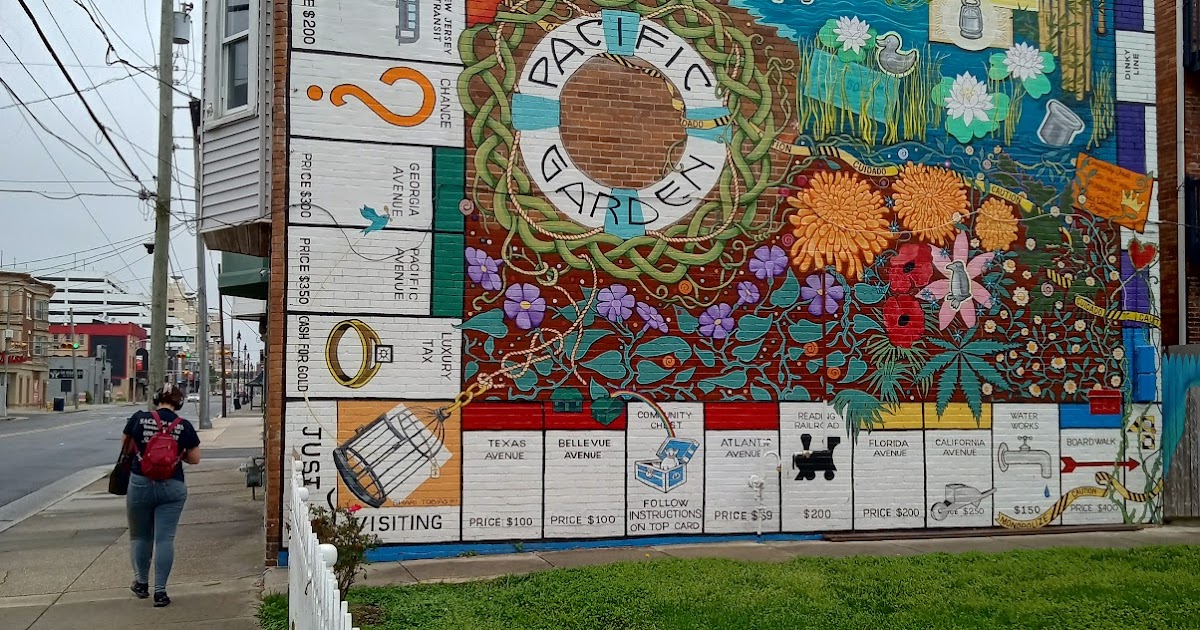
A striking example of Georgism’s cultural erasure lies in the very board game that has taught generations about capitalism: Monopoly. Originally created in the early 20th century by a woman named Elizabeth Magie, the game was first called The Landlord’s Game and was explicitly designed to illustrate Henry George’s ideas. Magie’s intent was pedagogical—she wanted players to see how land monopolies enriched a few while impoverishing others, and to promote George’s remedy of a single land tax.
But over time, the game was appropriated and rebranded by Parker Brothers and later Hasbro, stripped of its Georgist message and recast as a celebration of ruthless accumulation. What began as a cautionary tale about inequality became a glorification of it—a metaphor for how George’s ideas were not just buried but inverted.
In that sense, Monopoly is the perfect symbol for the American university: a system that once had the potential to democratize opportunity but now functions as a machine for privatizing wealth and socializing risk, leaving students and communities to pick up the tab.
What Higher Education Could Learn—and Teach
If the goal of higher education is to educate an informed, critical citizenry, then forgetting Georgist economics is not just an intellectual oversight—it’s a moral failure. Henry George offered a vision of society where value created by the community is returned to the community. In the age of student debt, university land grabs, and deepening inequality, this vision is urgently needed.
Imagine a higher education system where public revenue from land values funds debt-free college. Imagine a world where students no longer mortgage their futures for degrees whose value is increasingly uncertain. Imagine colleges not as engines of gentrification but as stewards of local wealth, investing in community-owned housing and cooperatives. Imagine students learning about economics not just as math problems, but as moral questions about justice, equity, and the public good.
Devarian Baldwin’s scholarship, much like George’s, invites us to interrogate power structures and imagine alternatives. It’s time for a revival of that imagination.
Relearning the Unlearned
Reclaiming Georgist economics in the academy would not be a return to some golden past, but a reckoning with the present. It would mean confronting the rentier logic at the heart of higher education—and the debt-based financing that sustains it—and reorienting our institutions toward justice and common prosperity.
In a moment when so much of American higher ed is collapsing under its own contradictions, perhaps what’s needed is not another billion-dollar endowment or ed-tech unicorn, but an idea long buried: that land—and learning—should belong to the people.
For the Higher Education Inquirer, this is part of an ongoing inquiry into the pasts we forget, the futures we imagine, and the power structures that shape both.
The United States is witnessing an alarming shift in the balance of power. Recent actions by the Supreme Court and Congress have effectively cleared the way for President Donald Trump to exercise authority in ways critics say resemble authoritarian rule.
Central to this shift is the Supreme Court’s decision on July 8, 2025, to allow Trump’s mass federal layoffs to proceed. This ruling overturned a lower court’s injunction that had temporarily blocked the president’s executive order to slash tens of thousands of federal jobs. The layoffs target agencies including the Environmental Protection Agency, the Department of Education, and the Department of Health and Human Services, critical players in addressing climate change, public health, and education.
The court’s decision was unsigned and passed 8–1, with Justice Ketanji Brown Jackson dissenting. Her dissent warned that the ruling emboldens the president to exceed constitutional limits without proper checks.
Just weeks earlier, Congress passed what supporters called the “One Big Beautiful Bill,” a sweeping budget package that enshrined Trump-era tax cuts, eliminated taxes on tips and Social Security income, and drastically reduced funding for social safety net programs like Medicaid and SNAP. The bill also increased Pentagon spending by $125 billion. The legislation passed strictly along party lines, with no Democratic votes.
The atmosphere of intensifying executive authority was underscored on June 14, 2025, when Trump staged a large-scale military parade in Washington, D.C., reminiscent of displays typically seen in authoritarian regimes. The parade featured tanks, fighter jets, and thousands of troops marching through the capital, a spectacle widely criticized as an exercise in pageantry and a troubling signal of militarism. In response, spontaneous “No Kings” protests erupted nationwide, with demonstrators rejecting what they saw as the cultivation of a personality cult and warning against the erosion of democratic norms.
These domestic developments unfold against a backdrop of escalating global crises and geopolitical realignments. The Trump administration has maintained a confrontational stance toward China, imposing new tariffs that have intensified a growing economic cold war. This friction comes as the BRICS coalition — Brazil, Russia, India, China, and South Africa — gains strength, seeking alternatives to the U.S.-dominated financial and diplomatic order.
Meanwhile, the U.S. continues to supply arms and financial support to Ukraine in its conflict with Russia, while simultaneously imposing inconsistent policies that weaken its international credibility, especially regarding the unresolved Palestinian conflict.
At home, the Trump administration’s deregulation of the cryptocurrency market has raised alarms. With minimal oversight, the growing crypto economy faces increased risks of fraud and instability, a symptom of the broader laissez-faire approach that favors corporate interests over public protections.
Adding to domestic turmoil, Trump has controversially pardoned dozens of individuals convicted for their roles in the January 6 Capitol insurrection, framing them as “political prisoners.” Many have ties to extremist groups, and Trump has proposed hiring preferences for them within the federal government’s newly created Department of Government Efficiency, which is leading the controversial federal workforce layoffs.
Legal experts and civil rights organizations argue these actions collectively undermine the constitutional principle of separation of powers. They say the administration’s use of executive orders and politically motivated pardons bypasses Congress and the courts, weakening democratic oversight.
Congress’s role has also been questioned. By passing the partisan budget bill without bipartisan support, critics argue lawmakers have effectively rubber-stamped an agenda that dismantles government functions, cuts vital social programs, and expands military spending.
The Supreme Court’s emergency ruling to lift the injunction against the layoffs further signals the judiciary’s retreat from its role as a check on executive power. By acting swiftly and without a full hearing, the court has allowed a significant reshaping of the federal workforce without thorough judicial review.
Together, these developments mark a troubling trend toward the concentration of power in the executive branch. Observers warn that if left unchecked, these actions could erode the foundations of American democracy and weaken its position in an increasingly multipolar world.
Sources
San Francisco Chronicle, “Supreme Court clears way for Trump to resume mass federal layoffs” (July 8, 2025)