Tag: Higher

  • Federal Funding Uncertainty Halts Construction Projects

    Federal Funding Uncertainty Halts Construction Projects

    Earlier this year the University of North Carolina at Chapel Hill Board of Trustees approved the design of a $228 million research facility that would expand UNC’s work on virology, vaccine development and other areas. But now that project is suddenly on hold.

    UNC Chapel Hill is one of several major research universities pausing construction plans due to financial uncertainty provoked by the Trump administration’s efforts to cap federal research funding reimbursement rates.

    In recent months multiple federal agencies have announced plans to cap research reimbursement rates at 15 percent. (While such rates typically hover just under 30 percent, some institutions have negotiated reimbursement rates upward of 50 percent.) Though court challenges have halted the rate cuts for now, the uncertainty has prompted some institutions to pause certain construction projects—particularly research labs and related facilities.

    Institutions pausing or slowing plans to build new projects include some of the nation’s wealthiest private universities: Yale, Johns Hopkins and Washington U in St. Louis, which posted endowments of $41.4 billion, $13 billion and $11.9 billion, respectively, in the last fiscal year, according to a recent study of endowments. (UNC Chapel Hill is among the nation’s wealthiest public institutions, with a $5.7 billion endowment.)

    In some cases, construction on other facilities, like a new residence hall at UNC Chapel Hill, is moving forward while projects such as research labs have been halted.

    Projects on Hold

    Yale has paused construction on 10 planned projects, according to The New Haven Register.

    “We’re riding out a bad period,” Alexandra Daum, Yale’s associate vice president for New Haven affairs and university properties, said at a local Chamber of Commerce event earlier this month.

    One of those projects is the planned conversion of a street into a pedestrian and cyclist-only plaza, which officials decided in February to delay, Daum told The New Haven Independent, another local news outlet. Yale has not identified the other nine projects it plans to put off.

    Daum pointed to uncertainty about federal funding as the reason for the pause.

    “Like many, Yale is tracking federal funding closely and anticipating there will be impact to projects in the planning pipeline,” Daum wrote in an email to Inside Higher Ed. “We don’t know how much of an impact federal decisions will have on these projects, so we are being prudent.”

    Construction on projects already underway will reportedly continue.

    Johns Hopkins University announced a similar decision in early June. Administrators wrote in a message to campus that the university has experienced “a steady stream of research grant terminations, suspensions, and delays” that created uncertainty, particularly when coupled with the proposals for lower research reimbursement rates. The rate caps could deal the university a loss of more than $300 million a year in federal research funding, officials wrote.

    JHU is taking a number of measures to handle budget concerns, including a staff hiring freeze, as well as pulling back on planned construction projects.

    “Prudence dictates cutting back our ambitions in the near term, and we have decided to reduce our capital construction and renovation plans by approximately 10-20%,” officials wrote. “Final decisions on these reductions will be made over the summer in consultation with the divisions, with an emphasis on continuing mission-critical projects, essential deferred maintenance, and projects that are already far along in the permitting, demolition, and construction process.”

    JHU did not identify what specific projects might be pushed back.

    Washington University halted construction of a new arts and sciences building in April; work was expected to begin earlier this year, according to a news release from last fall.

    WashU officials also cited federal funding concerns.

    “We regret that it’s necessary to take these actions, but in our current climate, it is simply not prudent to continue with these projects as scheduled,” Chancellor Andrew D. Martin said in a news release. “We are always careful stewards of the university’s resources, but at this time, given the uncertainty around federal research funding and other potential government actions, we have to take a careful look at every aspect of our operations. We hope that once we have a clearer sense of the financial picture, we may be able to revisit some of these investments.”

    UNC Chapel Hill offered similar reasons for halting construction on the research lab.

    “Due to ongoing uncertainty surrounding federal research funding, the University has paused plans for the Translational Research Building. We are currently evaluating our research infrastructure, including our research facilities, and will continue to monitor funding trends. Scenario planning is underway to help us remain prepared for future opportunities,” a UNC Chapel Hill spokesperson told Inside Higher Ed in an emailed statement.

    However, the university is moving forward with some projects, including a $93 million residence hall.

    In neighboring Virginia, Republican governor Glenn Youngkin rejected $600 million in funding requests for 10 planned renovation and expansion projects at public universities last month, The Virginia Mercury reported. In a letter to state legislators, Youngkin cited economic uncertainty.

    “I am optimistic about Virginia’s longer-term prospects for Fiscal Year 2027 and Fiscal Year 2028, and beyond, but there are some short-term risks as President Trump resets both fiscal spending in Washington and trade policies that require us to be prudent and not spend all of the projected surplus before we bank it,” Youngkin wrote to state lawmakers in May.

    Some of those planned projects were research-oriented, though many were not.

    The Outlook

    While a few universities have publicly walked back big projects, that doesn’t appear to be happening en masse, experts say. Planned construction is still happening at many colleges.

    “Projects, generally, are moving ahead. There are some larger projects that have been paused. The ones that have been stopped tend to be research-focused projects,” said Chris Purdy, director of higher education at SmithGroup, a design and planning firm that works in the sector.

    Other buildings, particularly those that are student-focused or in high-growth areas such as health sciences and STEM, are also moving ahead, he noted. Purdy pointed out that research labs and related facilities are often highly specialized and therefore the most expensive to build.

    “They’re primed to be under the most scrutiny just because they’re very expensive buildings,” Purdy said.

    He noted that SmithGroup continues to see requests for proposals for campus construction and is optimistic that colleges won’t back off of planned projects throughout the rest of the year. But looking ahead to next summer, or fiscal year 2027, Purdy is less sure about where things will stand, noting the looming economic uncertainty for many institutions.

    “At that point they’re going to have a different outlook on funding for capital projects,” Purdy said.


    Source link

  • How should higher education respond to calls to be relevant?

    How should higher education respond to calls to be relevant?

    In their examination of ten trends that will shape the future of the campus university, Edward Peck, Ben McCarthy and Jenny Shaw set out a compelling account of the factors that will shape English higher education. As a result of these factors, they argue that, in the future, ‘Academic awards will focus as much on the development of employment and generic skills as the acquisition and retention of specific knowledge’. Given that it is co-authored by a long-standing vice chancellor, who will shortly take on the role of the Chair of the higher education regulator, this can be read as an urgent call for higher education to be clear about how it produces graduates who will make important contributions to society.

    While I agree that higher education needs to be open to discussing the value of its education for graduates and society, I do not think a convincing case can be made by focusing on the distinction between generic skills and specific knowledge. Instead, my argument is that higher education needs to develop a much better account of how the knowledge that students engage with through their degrees prepares them to make important contributions to society. There are four elements to this. 

    First, the development of generic skills and the acquisition of specific knowledge are not alternative educational objectives for degree programmes. Rather, they are different elements of a rich educational environment. More fundamentally, the educational power of higher education does not lie in either of these options. What is educationally powerful about higher education is the way in which it offers students access to structured bodies of knowledge. Seeing these bodies of knowledge from the inside gives students and graduates the opportunity to view themselves and the world differently. It is the structure of these bodies of knowledge that allows students and graduates to develop ways of engaging with the world that make use of this knowledge and related skills in a diverse range of contexts. Generic skills and specific knowledge are generated as part of this engagement with structured bodies of knowledge, but they are not where the educational treasure of higher education lies. Indeed, our seven-year international longitudinal study of those who studied degrees in Chemistry and in Chemical Engineering found that those who focused on specific knowledge rather than the ways of engaging with the world they gained from their degrees tended to benefit less from their education. 

    Second, showing that higher education is about gaining access to structured bodies of knowledge explains why it requires programmatic study over the three or four years of a degree. If it were simply about generic skills or specific knowledge, then there would be no need for the systematic and sustained engagement that we currently demand of students. Presenting higher education as about generic skills or specific knowledge risks it appearing very obvious that demanding several years of sustained study is an unnecessary and expensive luxury. It is only by showing the importance of students’ gaining access of bodies of knowledge that we can explain why alternative forms of higher education that are already boxing higher education in, such as micro-credentials, are not up to the job of supporting students to see these bodies of knowledge from the inside and engaging with the world from the perspective of this knowledge.

    Third, understanding the importance of the structured nature of this knowledge helps to highlight the importance of producing graduates from a rich diversity of disciplinary, interdisciplinary and professional subjects, who engage with the world in different ways. Addressing the challenges facing the world will require drawing on the diversity of these perspectives which cannot be gained through being taught generic skills or unconnected stores of specific knowledge.

    Fourth, ensuring that higher education maintains its focus on structured bodies of knowledge is key to challenging educational inequalities. Otherwise, it is entirely predictable that the education offered by ‘elite’ institutions will remain focused on structured bodies of knowledge while ‘mass’ higher education shifts to focus on generic skills. Given that those with the greatest resources are most likely to access elite higher education, the poor will be left with an education that leaves them rooted in the contexts in which they have developed their generic skills whereas the privileged will benefit from the ways in which structured bodies of knowledge support them to move between contexts.

    The great higher education advocate David Watson urged universities and academics to ‘guard your treasure’. The treasure of higher education is the collective structured bodies of knowledge that we are stewards of for society. Our role is to support society and students to understand the power of this knowledge and what it can do in the world. In response to the important questions raised by Edward Peck, Ben McCarthy and Jenny Shaw, we need to develop much more compelling accounts of how access to these structured bodies of knowledge provides an education that is qualitatively different from an education focused on developing generic skills and specific knowledge. We need to show how this qualitative difference is crucial in offering a relevant education that has the potential to change students and society.  If we fail to do this, then we are in great danger of throwing away our greatest treasure.

    Source link

  • Higher education governance needs the conflict between academic and business imperatives to be successful

    Higher education governance needs the conflict between academic and business imperatives to be successful

    The sector’s financial challenges have shone a spotlight on governance effectiveness in higher education in England.

    When the incoming government tasked the Office for Students (OfS) with directing more of its energy towards financial sustainability in the summer of 2024, it was only a matter of months before director of regulation Philippa Pickford put forward the view that the sector needed “a conversation” about governance, specifically about how robustly boards had tested some of the financial projections they had been prepared to sign off.

    That signal of concern about governance has clearly manifested in the corridors of the Department for Education (DfE), if these words from the Secretary of State to the Commons Education Committee in May are anything to go by:

    The government is clear that there needs to be a focus on and improvement in providers’ governance. Planning and strategy development within higher education providers, including financial planning, should be supported by the highest standards of governance to ensure realistic planning, robust challenge and the development of sustainable business models.

    The sector has not been unresponsive to these cues – Advance HE in partnership with the wider sector is (taking the conversation metaphor literally) curating a “big conversation” about governance and the Committee of University Chairs (CUC) has pledged to review the higher education code of governance – which for a large number of institutions acts as a reference document for compliance with OfS’ conditions of registration on governance.

    The implicit underpinning premise from OfS and DfE is fairly stark: the government is disavowing any responsibility it might have to come up with a financial settlement that would shore up higher education finances while retaining the current delivery model; nor is it especially keen to have to deal with institutional bailouts arising from institutional inability to manage the changed funding landscape. The strong signal is that it is up to higher education institutions to work out how to survive in this environment – and if boards are not up to the task of finding the answers then it’s the boards that need reforming.

    Business acumen

    I read this communication as part of a discursive stand off between government and the sector in which the lines between the role of government and role of individual institutions in securing the future of higher education is contested. Within that context, the validity of the implied criticism – that boards are insufficiently businesslike and strategic – needs to be interrogated.

    There was a fascinating piece on The Critic last week by University of Buckingham academic Terence Kealey bemoaning the rise of the managerialist board. In Kealey’s analysis, when the balance of power in governance tilted towards the Senate – the governing body of academics – the institution thrived, as evidenced by strong performance in NSS and a financial surplus. But when the Council flexed its muscles, the university faltered, dropping in the league tables and spending more than it brought in.

    Kealey’s core argument – that academics are best placed to steward the core higher education mission of excellent teaching and research – picks up a longer standing critique of higher education governance that perceives organisational strategic objectives as articulated by institutional boards and executive teams as frequently in opposition to the academic endeavour, being far too concerned with financial efficiency, performance management, reputation/league tables, and capturing market share. Echoes of aspects of this critique appear in the recent Council for the Defence of British Universities’ proposed code of ethical university governance, which urges boards to adhere to high standards of transparent, principled, and public-spirited conduct.

    At the other end of the spectrum, the criticism of higher education governance – including sometimes from governors themselves – is that boards are insufficiently businesslike, fail to articulate long-term strategic objectives that will secure the institution’s sustainability, and have limited entrepreneurial spirit that would allow the institution to adapt to adverse headwinds. A more moderate version of this criticism argues that it is very difficult to convene the diverse skillset that could allow for effective board oversight of the wide range of activities that higher education institutions do.

    Thinking about activities like academic and knowledge exchange partnerships, the creation of new campuses or the erection of new buildings, or civic and international engagement, all of these have the the academic endeavour at their core but are mostly about deploying the knowledge and reputational assets of the institution to generate additional value – and they each carry complicated associated legal and regulatory compliance expectations and reputational risk. It’s not clear that developing those strategies and managing those risks and expectations coheres well with academic professional practice – though some academics will obviously have a keen interest and want to develop knowledge in these areas.

    The worst of both

    There has always been an expectation that higher education institutions need to be simultaneously academically excellent and sufficiently business savvy to make sure the institution remains financially stable. Both academic and institutional governance can fail – the latter often more spectacularly and with greater reputational impact – but the impact of academic governance failure is arguably greater overall both on the long term health of the institution and on the lives of the staff and students affected.

    So you could argue that it’s odd and/or problematic that the sector has witnessed the erosion of the power of senates and academic boards as part of a wider set of trends towards a more executive style of higher education leadership, the rise of metrics, league tables and more managerial approaches to institutional performance, the intensification of regulatory expectations, and the steady withdrawal of direct public funding from the sector. It’s telling that under the current regulatory regime in England institutional boards have had to master new expectations of oversight of academic quality, on the presumption that all institutional accountability should sit in one place, rather than being distributed – suggesting that quality is now seen as part of the wider business imperative rather than a counterweight to it.

    But simply pivoting the balance of power back to senates and the academic community doesn’t necessarily address the problem. It’s possible, I suppose, to imagine a relatively benign or at least predictable funding and regulatory environment in which some of the pressing strategic questions about institutional size and shape, partnerships, or external engagement are answered or moot, and in which knowledge stewardship, academic excellence, and (one would hope) student learning experience are the primary purpose of higher education governance.

    But even if that environment was plausible – I’m not sure it has ever existed – it doesn’t really address the more existential contemporary questions that governments and the public seem to be putting to higher education: how does the country see, and experience the value of all this knowledge stewardship and academic excellence? To realise that value and make it visible in more than an ad hoc way – to be institutionally accountable for the systematic manifestation of public value from academic knowledge – requires knowledge and professional practice beyond individual teaching and research excellence. And, more prosaically but equally importantly, buildings, infrastructure, and systems that create the environment for effective knowledge stewardship. Without a functioning institution there can be no knowledge stewardship.

    There’s a reason, in other words, even if you strip out all the neoliberal value propositions from higher education governance, why higher education institutions need a “business” arm and associated governance structures. And that’s before you confront the actual reality of the current situation where the funding and regulatory environment is neither benign nor predictable – and the need for effective external relationship-building and systematic collaboration is greater than it has been in decades.

    On the other hand, some of the business decisions that are made to secure financial sustainability or long term institutional success put the academic imperative at risk. Rapid growth in student numbers, redundancy programmes, departmental or services cuts or new strategic partnerships can compromise quality, as we have seen in a number of recent cases. There may be mitigations or the impact may be worth the reward, but there can be no meaningful strategic decision without being able to weigh up both.

    Yet where we have ended up, I fear, is in the worst of both worlds – institutional boards that are neither sufficiently academically robust to have a grip of academic excellence nor sufficiently strategic and entrepreneurial to ensure institutions are able to thrive in the current higher education landscape. This is no shade to the immense talent and knowledge of the individuals who take up roles as higher education governors – it is a structural critique.

    Creative tension

    Where I end up is with the question – if there is really an inbuilt tension between the academic and business imperatives of higher education institutions, what would it look like for that tension to be a productive one in higher education governance rather than a source of toxicity?

    I suspect – though I’ve not (yet) asked – many vice chancellors and their executive teams would argue that in their individual experience and team skillset they manifest both academic and business imperatives – that in fact, it is their job to reconcile these two aspects of institutional leadership in their daily practice, decisions, and communications.

    Yet if that reconciliation of two competing imperatives is the job of leadership, arguably it’s not going all that well. While this experience is by no means universal, it’s clear that at times both academic and professional staff can feel sidelined and disempowered in the tug of war for day to day resource – but also at a deeper level for a recognition of their purpose and contribution to the higher education endeavour. Each can feel subordinated to the other in the institutional hierarchy – yet while there are outliers on both sides I’d put money on the majority of individuals on both sides accepting and embracing the value and contribution of the other. Yet at the same time the real tensions and contradictions that manifest in the pursuit of the two parallel imperatives are deeply felt by staff yet not always acknowledged by leadership.

    What if the job of leadership and boards of governors was not to seek to reconcile academic and business imperatives, but to actively manage the conflicts that arise at times? Where strategic questions arise related to either opportunities or risks, boards need to understand the perspective of both “sides” before being able to judge whether the executive team’s decisions are appropriate. And for institutional staff (and students, to the extent they have a role in institutional governance) there needs to be confidence that the governors have the skills and understanding of the value and importance of both imperatives and the relationship between them – so that there is the trust that decisions have been made in the most effective and transparent way possible.

    There might even be a case for institutions to convene internal business strategy boards as part of the governance structure as a counterweight to academic boards – actively empowering both equally as sites of knowledge, expertise and influence – and potentially reducing the strategic burden on institutional boards through creating a more transparent and maybe even more democratic or at least representative forum for internal governance of strategic business development.

    It seems likely that the next academic year will see the higher education sector in England move on from “conversations” about governance into something more systematically developmental, whether that’s via the mechanism of the CUC’s review of the Higher Education Code of Governance, or a policy agenda from one of the sector bodies. This is one of those areas where the sector can help itself with government by taking a lead on reform.

    Yet there’s a risk that the financial pressures on the sector lead to too close a focus on the strategic business imperatives and not enough on the academic excellence imperative. Institutions need both to be successful, and boards and executive teams – as well as any reviewing organisation – need to give deep consideration to how those can – even if not always peacefully – coexist.

    Source link

  • Help us tell the story of how the Trump administration is changing higher education

    Help us tell the story of how the Trump administration is changing higher education

    Since January, President Donald Trump has taken countless steps to transform the nation’s colleges and universities. His administration has cut scientific and medical research, ended efforts to promote diversity equity and inclusion (DEI), introduced newly aggressive policies on loan repayment, revoked visas for international students, and more. While Trump’s battles with Harvard and Columbia have received the most attention, the administration’s actions have had consequences far beyond those two universities.  

    We want to know how the Trump administration is affecting higher education and life on your campus. What, if any, changes are you seeing at your college or university because of federal policy shifts? In what ways do you see higher education changing?

    If you prefer, you can also email us directly at [email protected]. Contact editor Lawrie Mifflin at [email protected] or 212-678-4078. Contact editor Caroline Preston at 212-870-8965, via Signal at CarolineP.83 or on email at [email protected].

    This story about higher education was produced by The Hechinger Report, a nonprofit, independent news organization focused on inequality and innovation in education. Sign up for our newsletters.

    The Hechinger Report provides in-depth, fact-based, unbiased reporting on education that is free to all readers. But that doesn't mean it's free to produce. Our work keeps educators and the public informed about pressing issues at schools and on campuses throughout the country. We tell the whole story, even when the details are inconvenient. Help us keep doing that.

    Join us today.


    Source link

  • RAJ AGNIHOTRI | Diverse: Issues In Higher Education

    RAJ AGNIHOTRI | Diverse: Issues In Higher Education

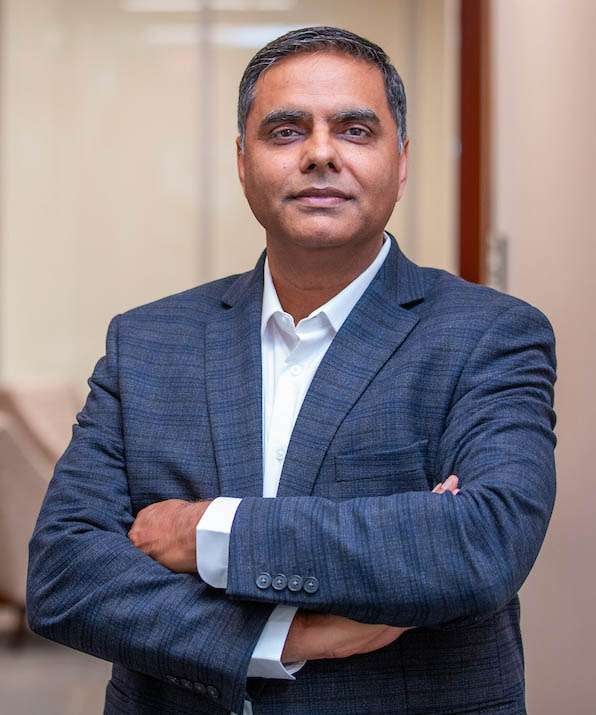
    RAJ AGNIHOTRI has been named the next Raisbeck Endowed Dean of Iowa State University’s Debbie and Jerry Ivy College of Business. He will begin his service July 1, 2025. Agnihotri currently serves in the college as Mary Warner Professor and Morrill Professor of marketing and assistant dean for industry engagement at Iowa State. He has served at Iowa State since 2018, and in his current role as assistant dean since 2024. Prior positions include appointments at the University of Texas-Arlington and Ohio University. Agnihotri earned a bachelor’s degree in engineering from the University of Pune in India, an MBA in management from Oklahoma City University, and a Ph.D. in marketing from Kent State University.

    Source link

  • Education Dept. Agrees to Send Career Ed Programs to Labor

    Education Dept. Agrees to Send Career Ed Programs to Labor

    Before a federal judge blocked its plans, the Education Department reached a deal with the Department of Labor to hand over some of its career, technical and adult education grants, according to court records.

    Under the agreement, reached May 21, the Labor Department would administer about $2.7 billion in grants, including the Perkins Grant program, which funds career and technical education at K–12 schools and community colleges, Politico first reported. But that plan is now on hold, as is an agreement with the Treasury Department regarding student loan collections, according to a status update in New York’s lawsuit challenging mass layoffs at the agency and President Donald Trump’s executive order to dismantle the department.

    The Trump administration has asked the Supreme Court to overturn the lower court’s injunction so officials can proceed with the layoffs and other plans. 

    The department didn’t publicly announce the handover, which appears to be a first step toward Trump’s endgame of shutting down the agency. Education Secretary Linda McMahon has acknowledged repeatedly that only Congress can legally shutter the department, but she’s also made clear that she can transfer some responsibilities to other agencies. In addition to administering the funds, Labor officials agreed to oversee the implementation of career education programs and to monitor grant recipients for compliance. 

    Advance CTE and the Association for Career and Technical Education criticized the plan, saying the agreement “directly circumvents existing statutory requirements” related to the Perkins program and would cause confusion.

    “We strongly oppose any efforts to move CTE administration away from the U.S. Department of Education given the disruption this would cause to the legislation’s implementation and services to students in schools across the country,” they said in a statement released Wednesday evening.

    Source link

  • Judge Releases Harvard Researcher After Four-Month Detention

    Judge Releases Harvard Researcher After Four-Month Detention

    A judge released a Harvard Medical School research associate and Russian native Thursday. She had been held in federal detention for nearly four months after she tried to re-enter the U.S.

    Kseniia Petrova still faces a criminal charge for allegedly trying to smuggle frog embryos into the country through Boston’s Logan International Airport, where Customs and Border Protection detained her, but she’s been freed for now.

    “I hear it’s sunny. Goodbye,” U.S. magistrate judge Judith G. Dein said after approving Petrova’s release, the Associated Press reported.

    The AP wrote that Petrova, standing outside the John Joseph Moakley U.S. Courthouse in Boston, thanked her supporters, saying, “I never really felt alone any minute when I was in custody, and it’s really helped me very much.”

    The court set a probable cause hearing in the case for next Wednesday.

    Despite being detained Feb. 16 and transferred to Immigration and Customs Enforcement custody in Louisiana, it wasn’t until mid-May that prosecutors announced the smuggling charge. One of her lawyers, Gregory Romanovsky, has said that Petrova “was suddenly transferred from ICE to criminal custody” less than two hours after a judge set a hearing on her release.

    On May 28, a U.S. District Court of Vermont judge said that Petrova’s immigration detention was unjustified and granted bail, but that didn’t immediately lead to her release, NBC News reported.

    “It’s difficult to understand why someone like Kseniia needed to be jailed for four months,” Romanovsky said. “She poses no danger and has deep ties to her community. Her case is a reminder that immigration enforcement should be guided by law and common sense—and not deportation quotas.”

    Source link

  • In Reversal, Trump Says Chinese Students Are Welcome

    In Reversal, Trump Says Chinese Students Are Welcome

    President Trump said that Chinese international students would be welcome in the U.S. in a post on Truth Social on Wednesday announcing the terms of a pending trade agreement with China. 

    In exchange for shipments of rare earth metals, the U.S. “WILL PROVIDE TO CHINA WHAT WAS AGREED TO, INCLUDING CHINESE STUDENTS USING OUR COLLEGES AND UNIVERSITIES (WHICH HAS ALWAYS BEEN GOOD WITH ME!),” Trump posted (capital letters his). 

    The about-face comes less than two weeks after Secretary of State Marco Rubio promised to “aggressively revoke” Chinese students’ visas and implement a much stricter review process for nonimmigrant visa applications from the country. 

    That announcement, an escalation of the Trump administration’s campaign to decrease the number of foreign students at American universities, threw higher education into a panic. International enrollment has become a financial lifeline for many institutions, and Chinese students make up nearly a quarter of all international students in the U.S.—around 280,000 in 2023–24, according to the Institute of International Education, more than students from any other country. They make up 16 percent of graduate STEM programs and 2 percent of undergraduate programs.

    Rubio’s visa-revocation announcement also led to distress among Chinese families, whose hopes of sending their children to a prestigious American university seemed to be fading. In May, the Chinese foreign minister called the policy “politically discriminatory” and “irrational.”

    Source link

  • Increased ID Verification for Financial Aid Raises Questions

    Increased ID Verification for Financial Aid Raises Questions

    Photo illustration by Justin Morrison/Inside Higher Ed | michaeljung and robas/iStock/Getty Images

    College financial aid offices and students’ advocates say that a Trump administration plan to crack down on fraud in the federal aid system could burden university staff and hinder access to college programs.

    Although they support fighting fraud as a concept, they particularly worry that real, eligible Pell Grant recipients will get caught up in the detection system and won’t be able to jump through the extra hoops to verify their identity.

    “In general, verification is a little bit of threading the needle between making sure that the right dollars are going to the right students, but also not putting up an inordinate number of barriers, particularly to low-income students, that are insurmountable,” said Karen McCarthy, vice president of public policy and federal relations at the National Association of Student Financial Aid Administrators. “You have to walk a fine line between those two things.”

    Department of Education officials, however, say their plan, announced June 9, is necessary to protect American taxpayers from theft and won’t become a burden for colleges. They aren’t worried about students losing access, either.

    Ultimately, the Trump administration plans to verify the identity of each financial aid applicant with the help of a new system that should be up and running “this fall,” according to the department’s announcement. Before then, the department is planning to screen more first-time applicants for verification—a process that could affect 125,000 students this summer and will be handled by financial aid offices. (About 40,000 students were checked last year, according to a department spokesperson.)

    McCarthy, however, is concerned that if the new system isn’t ready by the fall, “institutions will be assuming this larger burden for a longer, indeterminate amount of time.” The department’s botched launch of the 2024–25 Free Application for Federal Student Aid showed the challenges of standing up new systems quickly, she noted.

    A senior official at the Department of Education told Inside Higher Ed that the Office of Federal Student Aid and the department procurement team are in the process of purchasing an identity-validation product similar to the ones used by financial services companies like banks. The product would be incorporated into the online FAFSA portal.

    If an individual is flagged for potential fraud at any point while filling out the form, a pop-up box would appear with a live staff member on the other side, the official explained. The applicant would then be asked to display a government-issued ID. If that ID is deemed valid, the person could then continue.

    “Once that’s done, the process is over,” the official said. “That’s really as simple as that effort is. I believe rental car companies are using it, too.”

    The official was optimistic that the department could have the system up and running by early September, though that won’t be soon enough to get aid disbursed in time for the fall semester. The official also acknowledged that the timeline means that colleges may have to do some verification in person even in the fall, but that process should not be too much of a burden for the college or the student. Similar to the online process, a student would just need to show a valid ID to a college financial aid administrator, either in person or over a video call. Previously, when identity verifications were conducted, students had to present a Statement of Educational Purpose and submit a notarized copy of their identification document.

    But advocacy groups that work with low-income students worry that even requiring a government-issued ID could give some students a leg up over others when it comes to accessing financial aid and affording to enroll in college.

    “We want to see fraud eliminated as much as anyone else … We just need to make sure that gets balanced with a reasonable process for students,” said MorraLee Keller, a senior consultant for the National College Attainment Network. “A lot of low-economic kids may not have secured, for example, a driver’s license. If they don’t drive, they may not have a driver’s license, and that is probably the primary form of a government-issued valid ID that most people would be able to present.”

    Keller noted that some states may have alternate IDs available for those who do not drive, but even that may take time to obtain if a student doesn’t already possess it.

    “We want to make sure that timing doesn’t interrupt the aid getting credited to their account to pay their bills on time so that they could start classes, get refunds to go get their books and all those kinds of things,” she said. “So one of the questions that we still need answered is, what else would be considered a valid ID?”

    The California Community College system, which has grappled with increasing financial aid fraud, recently considered an application fee to help screen legitimate students from fraudsters. A spokesperson for the system said they are waiting on additional guidance from the department before they can know how big a deal this shift will be.

    “We wouldn’t be able to speculate on the level of concern among students and institutions until the federal guidance is known,” she wrote. But “financial aid fraud is a nationwide trend and additional identification verification processes will help in the fight against it.”

    Source link

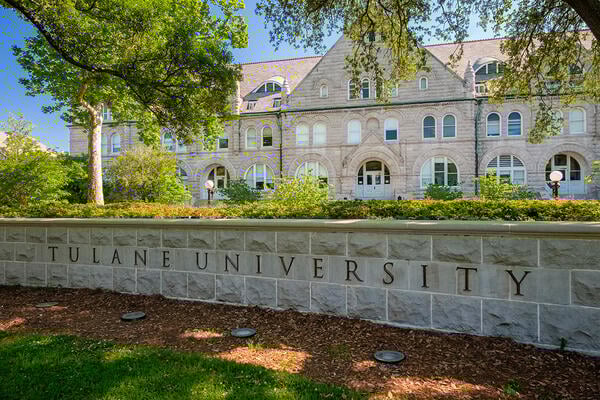
  • Tulane Environmentalist Resigns Amid Research “Gag Order”

    Tulane Environmentalist Resigns Amid Research “Gag Order”

    An environmental researcher at Tulane University resigned Wednesday after accusing campus officials, reportedly under pressure from Gov. Jeff Landry, of issuing a “gag order” that prevented her from publicly discussing her work, which focused on racial disparities in the petrochemical workforce.

    “Scholarly publications, not gag orders, are the currency of academia,” Kimberly Terrell, the now-former director of community engagement at Tulane’s Environmental Law Clinic, wrote in her resignation letter. “There is always room for informed debate. But Tulane leaders have chosen to abandon the principles of knowledge, education, and the greater good in pursuit of their own narrow agenda.”

    Terrell’s resignation comes amid wider efforts by the Trump administration and its allies to control the types of research—including projects related to environmental justice—academics are permitted to pursue and punish campus protesters for espousing messages the president and other public officials disagree with.

    “It started with the pro-Palestinian activism on our campus and others across the country. It’s emboldened a lot of political leaders to feel they can make inroads by silencing faculty in other areas,” Michelle Lacey, a math professor and president of Tulane’s chapter of the American Association of University Professors, told Inside Higher Ed. “That was the catalyst for creating a climate where university administrators are very nervous, especially now as we see the government pulling funding for areas of research they don’t like.”

    Last spring, Landry praised Tulane president Michael Fitts and university police for removing students who were protesting Israel’s attacks on Gaza. Soon after, the Legislature passed a provision creating harsher punishments for protesters who disrupt traffic, which Landry later signed into law.

    Landry, a Republican aligned with Trump, has a history of trying to exert control over the state’s public higher education institutions.

    Last summer, he enacted a law that allows him to directly appoint board chairs at the state’s public colleges and universities. And in November, following Trump’s election, Landry publicly called on officials at Louisiana State University to punish a law professor who allegedly made brief comments in class about students who voted for the president.

    Landry’s office denied to the Associated Press (which first reported on Terrell’s resignation) that it pressured Tulane to silence research from the law clinic. Michael Strecker, a Tulane spokesperson, also told the outlet that the university “is fully committed to academic freedom and the strong pedagogical value of law clinics” and declined to comment on “personnel matters.”

    Strecker added in a statement that Tulane administrators have been working with the law school’s leadership on how the law clinics could better support the university’s education mission.

    “Debates about how best to operate law clinics’ teaching mission have occurred nationally and at Tulane for years—this is nothing new,” Strecker said. “This effort includes most recently input from an independent, third-party review.”

    But Terrell’s account of the events that led to her resignation call the universities’ academic freedom commitments into question, while also implying that Landry—and powerful industry groups—wield some influence over private higher education institutions in the state.

    And it’s not something Tulane, a private university in New Orleans, should tolerate, Lacey said.

    Kimberly Terrell

    “The academic freedom of all university researchers must be unequivocally defended at both public and private institutions,” Lacey wrote in a statement. “This includes the right to conduct and disseminate research that may be unfavorably viewed by government officials or corporate entities. Political demands to stifle controversial research are an affront to the advancement of knowledge and open exchange of ideas, as is the voluntary compliance with such requests by university leadership.”

    The latest controversy at Tulane stems from a paper Terrell published April 9 in the peer-reviewed journal Ecological Economics. Her research found that while Black people in Louisiana are underrepresented in the state’s petrochemical workforce, they are overexposed to toxic pollutants the industry releases into an area of the state between New Orleans and Baton Rouge known as “Cancer Alley.”

    But according to emails obtained by Inside Higher Ed and other outlets, Fitts worried that publicizing Terrell’s research and the clinic’s other work, which includes legal advocacy, could jeopardize funding for the university’s $600 million plan to redevelop New Orleans’ historic Charity Hospital into residential and commercial spaces as part of a broader downtown expansion plan.

    As Terrell explained in her resignation letter, Fitts and other top Tulane executives were at Louisiana’s state capitol on April 16 lobbying for the project when “someone accused the university of being anti–chemical industry” and cited her study, which was receiving media attention after it was published the week prior. According to Terrell, “the story that came down to me through the chain of command was that Governor Landry threatened to veto any bill with funding for Tulane’s Charity project unless Fitts did something about the Environmental Law Clinic.”

    ‘Complete Gag Order’

    After that, Terrell says, she was “placed under a complete gag order,” which the emails appear to confirm.

    “Effective immediately all external communications that are not client-based—that is, directly related to representation—must be pre-approved by me,” Marcilynn Burke, dean of Tulane’s law school, wrote in an April 25 email to law clinic staff. “Such communications include press releases, interviews, videos, social media postings, etc. Please err on the side of over-inclusion as we work to define the boundaries through experience.”

    A week later, on May 4, Burke wrote another email to clinic staff explaining that “elected officials and major donors have cited the clinic as an impediment to them lending their support to the university generally and this project specifically,” referring to Fitts’s plans to redevelop the old hospital. Terrell wrote that when she pleaded her case to Provost Robin Forman, “he refused to acknowledge my right to freely conduct and disseminate research” and also “let slip that my job description was likely going to be rewritten.”

    Terrell described the entire law clinic as being “under siege” and said she would rather leave her position “than have my work used as an excuse for President Fitts to dismantle the Tulane Environmental Law Clinic.”

    Other academics, free speech experts and environmental justice advocates also believe Tulane’s moves to silence Terrell’s work amounts to an attack on academic freedom with implications beyond the campus.

    “The administration of Tulane University, far from standing up for academic freedom, is participating in the effort to suppress free inquiry and the pursuit of knowledge by scientific methods,” Michael Ash, an economics and public policy professor at the University of Massachusetts, said in a statement. “Any effort to reduce academic freedom for Dr. Terrell either by changing her job classification or by redefining whether the protection applies is a blatant and un-American attempt to suppress the type of free inquiry that has made this country great.”

    Joy Banner, co-founder and co-director of the Descendants Project, a community organization that works in Cancer Alley, added that the Tulane Environmental Law Clinic is a vital public health resource.

    Without the clinic, “it would be far more difficult to show the racially discriminatory practices of the industry, from preferential hiring practices to a pattern of concentrating pollution in majority Black neighborhoods,” she said in a statement. “President Fitts must commit to protecting it at all costs.”

    Source link