Tag: Higher

  • Cornell Pres. Nixes Kehlani Concert for “Antisemitic” Remarks

    Cornell Pres. Nixes Kehlani Concert for “Antisemitic” Remarks

    Cornell University’s president announced Wednesday that he’s canceling Kehlani’s campus concert, saying the R&B singer has “espoused antisemitic, anti-Israel sentiments.”

    Kehlani was set to perform May 7 at the annual Slope Day spring festival.

    “For decades, student leaders have taken the helm in organizing this event, hiring performers they hope will appeal to the student body,” Cornell president Michael I. Kotlikoff said in a statement. “Unfortunately, although it was not the intention, the selection of Kehlani as this year’s headliner has injected division and discord into Slope Day.”

    “In the days since Kehlani was announced, I have heard grave concerns from our community that many are angry, hurt, and confused,” Kotlikoff said, adding that the student Slope Day Programming Board agreed “that this selection has compromised what is meant to be an inclusive event.”

    The board didn’t respond to an email Thursday from Inside Higher Ed seeking comment. Kehlani has expressed pro-Palestine views—one of her music videos features the Palestinian flag and the phrase “long live the intifada.” She also said “fuck Israel” and “fuck Zionism” last year.

    Source link

  • Florida’s Own DOGE Is Reviewing Faculty Research, Grants

    Florida’s Own DOGE Is Reviewing Faculty Research, Grants

    Elon Musk’s days with DOGE appear numbered—the unelected billionaire bureaucrat said Tuesday that his time spent leading the agency-gutting U.S. Department of Government Efficiency will “drop significantly” next month. As Tesla’s profits plummet, the world’s richest man faces opposition from both Trump administration officials and voters.

    DOGE’s legacy remains unclear. Lawsuits are challenging its attempted cuts, including at the U.S. Education Department. Musk seems to have scaled back his planned overall budget savings from $1 or $2 trillion to $150 billion, and it’s unclear whether DOGE will achieve even that.

    But something may outlive Musk’s DOGE: all the state iterations it has inspired, with legislators and governors borrowing or riffing off the name. Iowa’s Republican governor created the Iowa DOGE Task Force. Missouri’s GOP-controlled Legislature launched Government Efficiency Committees, calling them MODOGE on Musk’s X social media platform. Kansas lost the reference to the original doge meme when it went with COGE, for its Senate Committee on Government Efficiency.

    But, as with the federal version, the jokey names for these state offshoots may belie the serious impact they could have on governments and public employees—including state higher education institutions and faculty.

    To take perhaps the most glaring example, the sweeping requests from the Florida DOGE team, which is led by a former federal Department of Transportation inspector general, have alarmed scholars.

    Earlier this month, the Florida DOGE asked public college and university presidents to provide an account—by the end of last week—of “all research published by staff” over the last six years, including “Papers and drafts made available to the public or in online academic repositories for drafts, preprints, or similar materials.”

    “If not contained therein, author’s name, title, and position at the institution” must be provided, according to the letters the presidents received. The letters didn’t say what this and other requests were for.

    The Florida DOGE also requested information on all grants awarded to institutions over the last six years, asking for each institution’s policy on allocating grants “for purposes of indirect cost recovery, including procedures for calculation.” Further, it requested an account of “all filled and vacant positions held by any employee with a non-instructional role.”

    By the end of April, Florida’s public institutions must also provide the “Length of research associated” with each research publication, funding sources associated with the research and any “publications about the research” from the researcher or institution. In addition, the state DOGE is requesting funding sources for each institution’s noninstructional positions and the names of the nonstudent employees administering the grants.

    And that may not be the end of the DOGE demands. In a March 26 letter, the state DOGE team told college presidents that it will conduct site visits “to ensure full compliance” with the governor’s executive order that created it, “as well as existing Florida law.” It said it may in the future request various other information, including course descriptions, syllabi, “full detail” on campus centers and the required end of diversity, equity and inclusion activities.

    The requests so far from the Florida DOGE are the latest in a string of state actions that faculty say threaten to infringe on, or have already reduced, academic freedom. Dan Saunders, lead negotiator for the United Faculty of Florida union at Florida International University and a tenured associate professor of higher education, expressed concerns about what he called a “continuation of a chilling effect on faculty in terms of what we research and publish.”

    “The lack of any meaningful articulation as to why they’re looking for this data and what they’re going to do with it just adds to the suspicions that I think the state has earned from the faculty,” Saunders said. “It’s clear that this is part of a broader and multidimensional attack” on areas of scholarship such as women’s and gender studies—part of a “comprehensive assault” on the “independence of the university,” he said.

    “If Florida DOGE is following the patterns of the federal DOGE, then I think we can expect some radical oversimplifications of nuanced data and some cherry picking” of texts that an “unsophisticated AI will highlight,” he said. Noting how much research is published over six years, he questioned “how anyone is supposed to engage meaningfully” with that much information.

    David Simmons, president of the University of South Florida’s Faculty Senate and a tenured engineering professor, said many faculty are “reasonably” concerned that this request is part of an effort to target “certain ideas that are disfavored by certain politicians.” Simmons—who stressed that he’s not speaking on behalf of the Senate or his institution—said such targeting would be “fundamentally un-American and inconsistent with the mission of a public university.”

    “We hope that’s not happening. We hope this is just an inefficient effort to collect data,” Simmons said. He noted that much of the research information that the Florida DOGE is requesting is already publicly available on Google Scholar, an online database with profiles on faculty across the country.

    “Universities are being required to reproduce information that’s already freely available in some cases, and to do that they’re using considerable resources and manpower,” Simmons said. The initial two-week data request was “so large as to be nearly impossible” to fulfill, he added.

    A State University System of Florida spokesperson deferred comment to the DOGE team, which didn’t respond to Inside Higher Ed’s requests for an interview or provide answers to written questions Thursday. A spokesperson for the Florida Department of Education, which includes the Florida College System, deferred comment to Republican governor Ron DeSantis’s office, which responded via email but didn’t answer multiple written questions.

    “In alignment with previous announcements and correspondence with all 67 counties, 411 municipalities, and 40 academic institutions the Florida DOGE Task Force aims to eliminate wasteful spending and cut government bloat,” a DeSantis spokesperson wrote. “If waste or abuse is identified during our collaborative efforts with partnering agencies and institutions, each case will be handled accordingly.”

    ‘DOGE Before DOGE Was Cool’

    When Donald Trump returned to the White House in January and announced DOGE’s creation, he suggested it was an effort to cut the alleged waste his Democratic predecessor had allowed to fester. But DeSantis—who lost to Trump in the GOP presidential primary—launched his own DOGE in a state that he’s been leading for six years.

    “Florida was DOGE before DOGE was cool,” DeSantis posted on X Feb. 24. (His actions in higher education have, in many ways, presaged what Trump is now doing nationally.)

    So, perhaps not surprisingly, DeSantis’s executive order creating the Florida DOGE that day began by saying the state already has a “strong record of responsible fiscal management.” A list of rosy financial stats followed before DeSantis finally wrote, “Notwithstanding Florida’s history of prudent fiscal management relative to many states in the country, the State should nevertheless endeavor to explore opportunities for even better stewardship.”

    “The State of Florida should leverage cutting edge technology to identify further spending reductions and reforms in state agencies, university bureaucracies, and local governments,” DeSantis wrote, echoing, at least in language, the tech-focused approach of the federal DOGE.

    He established the DOGE team within the Executive Office of the Governor, tasking it in part to work with the statewide higher education agencies to “identify and eliminate unnecessary spending, programs, courses, staff, and any other inefficiencies,” including “identifying and returning unnecessary federal grant funding.” The executive order says state agencies must set up their own DOGE teams, which will identify grants “that are inconsistent with the policies of this State and should be returned to the American taxpayer in furtherance of the President’s DOGE efforts.”

    This executive order expires about a year from now. In an emailed statement, Teresa M. Hodge, the statewide United Faculty of Florida union president, said the request for faculty publication records “is not about transparency or accountability; it is about control.”

    “Our members should not be forced to defend their scholarship, or their silence, in a political witch hunt,” Hodge said. “We stand united in ensuring that Florida’s faculty are free to teach, conduct research, and to speak without fear of retaliation.”

    Source link

  • Education Department’s Anti-DEI Guidance Blocked

    Education Department’s Anti-DEI Guidance Blocked

    The Education Department won’t be able to enforce its guidance that declared all race-based programming and activities illegal following two court orders Thursday.

    Federal judges in New Hampshire and Maryland handed down the rulings after finding plaintiffs in the two separate lawsuits were likely to succeed in proving that the Feb. 14 Dear Colleague letter violated procedural standards and the First Amendment. Prior to the orders, colleges and K-12 schools that failed to comply with the letter risked their federal funding.

    “Although the 2025 letter does not make clear what exactly it prohibits, it makes at least one thing clear: schools should not come close to anything that could be considered ‘DEI,’ lest they be deemed to have guessed wrong,” the New Hampshire judge wrote. And since loss of federal grants could cripple institutions, “it is predictable—if not obvious—that [they] will eliminate all vestiges of DEI to avoid even the possibility of funding termination,” regardless of whether it is an example of executive overreach.

    The New Hampshire court’s preliminary injunction, which was issued first, was limited to institutions that are members of the plaintiff association, leaving many colleges and universities vulnerable. But just hours later, a Maryland judge filed her opinion that prevented the letter from taking effect until the case is resolved, which essentially serves as a nationwide injunction.

    The injunctions do not, however, block all of Trump’s attacks on DEI. The Dear Colleague letter was just one aspect of the president’s multipronged strategy.

    In a separate lawsuit from the NAACP challenging the department’s guidance and actions related to DEI, a District of Columbia judge blocked the department from requiring that K-12 schools certify that they don’t have any DEI programs. Thursday, April 24, was the deadline to comply. The department threatened to withhold federal funding from K-12 schools that didn’t meet the certification requirement. The judge ruled that “because the certification requirement conditions serious financial and other penalties on insufficiently defined conduct,” the plaintiffs were likely to succeed.

    Since its release, the Dear Colleague letter has sent K-12 and higher education advocates across the country into an uproar as lawyers and others argued that the document was a prime example of Trump abusing presidential power.

    The Education Department said in the guidance that the Supreme Court’s 2023 ruling in Students for Fair Admissions v. Harvard, which banned race-conscious admissions, also made any race-based programming, resources and financial aid illegal. The department gave colleges two weeks to comply. A few weeks after the letter took effect, the Office for Civil Rights opened dozens of investigations into colleges, accusing them of violating the guidance in the letter.

    Some colleges and universities, in an effort to comply with the letter, began to retract, or at least rebrand, their DEI activities, resources and scholarships. Some institutions, including the Universities of Cincinnati, Pittsburgh and Alaska, responded by scrubbing their websites of words like “diversity” and “inclusion.” Others, including Ohio State University, shuttered DEI offices and changed the eligibility requirements for certain programs entirely. (Those changes were made despite the advice of some academic associations to avoid pre-emptive compliance.)

    On March 3, the Education Department released an FAQ that watered down and provided clarity on some of the letter’s bold orders. But still, higher education groups continued to push back, and by the end of the week, both lawsuits had been filed.

    The one in New Hampshire was led by the National Education Association, the nation’s largest K-12 union, and the other in Maryland was from the American Federation of Teachers, a union that includes many higher education faculty.

    The unions argued that the letter and its threat to cut federal funding violated the First and Fifth Amendments, using vague language that exceeded the Education Department’s statutory authority. They also alleged that the scrubbing of DEI programs as well as the potential funding cuts would weaken schools’ and universities’ ability to act as tools of socioeconomic mobility.

    “This letter is an unlawful attempt by the department to impose this administration’s particular views of how schools should operate as if it were the law. But it is not,” the AFT complaint stated. “Title VI’s requirements have not changed, nor has the meaning of the SFFA decision, despite the Department’s views on the matter.” (Title VI of the Civil Rights Act prohibits discrimination on the basis of race, color or national origin.)

    At a recent hearing in the Maryland case, the Department of Education argued that its letter was merely a reminder that existing civil rights laws protect white children from discrimination just as much as children from a minority group, Maryland Matters reported.

    “It’s highly unlikely that they’re going to go after a school because they taught a certain book,” U.S. attorney Abhishek Kambli said. “All this letter does is just clarify what the existing obligations are under Title VI [of the Civil Rights Act].”

    But the Maryland judge didn’t buy that argument, and she sided with the plaintiffs, as did the New Hampshire judge.

    The New Hampshire judge said the policies outlined in the letter failed to appropriately define DEI and therefore threatened to erode the “foundational principles” of free speech and academic freedom.

    The Maryland judge, on the other hand, approached her case from a perspective of “substantive and procedural legality,” saying the Trump administration’s letter failed to hold its own on that front as well.

    “Plaintiffs have shown that the government likely did not follow the procedures it should have, and those procedural failures have tangibly and concretely harmed the Plaintiffs,” Gallagher wrote. “This case, especially, underscores why following the proper procedures, even when it is burdensome, is so important.”

    And though the orders are just temporary holds and litigation will continue, education stakeholders consider it a win.

    “The nationwide injunction will pause at least part of the chaos the Trump administration is unleashing in classrooms and learning communities throughout the country, and it will provide the time for our clients to demonstrate clearly in court how these attacks on public education are unconstitutional and should be permanently stopped,” said Skye Perryman, president of Democracy Forward, a pro bono legal group that is representing AFT in Maryland.

    AFT president Randi Weingarten added in a statement that “the court agreed that this vague and clearly unconstitutional requirement is a grave attack on students, our profession, honest history, and knowledge itself.”

    For the NEA, the New Hampshire decision was “a victory for students, parents, and educators” that blocked an “unprecedented and unlawful” effort to control American schools.

    “Across the country educators do everything in their power to support every student, ensuring each feels safe, seen, and is prepared for the future,” NEA president Becky Pringle said in a news release. “Today’s ruling allows educators and schools to continue to be guided by what’s best for students, not by the threat of illegal restrictions and punishment.”

    The Department of Education did not respond to Inside Higher Ed’s request for comment prior to the publishing of this story.

    Source link

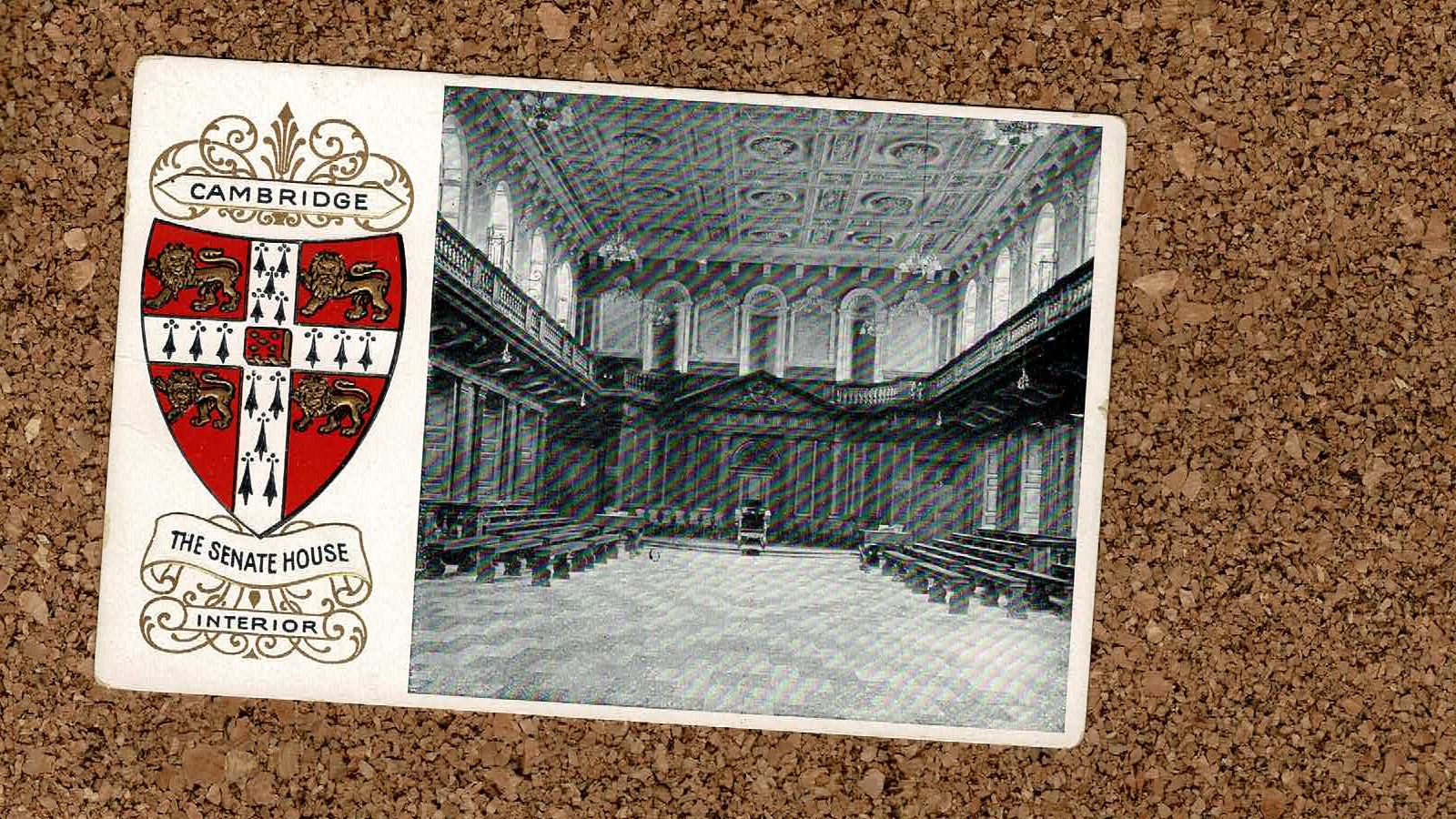
  • Higher education postcard: Grey College, Durham

    Higher education postcard: Grey College, Durham

    It’s 1959, and Durham University is still a federal university, with colleges in Durham and Newcastle. And expansion in Durham was underway. Elvet Hill, just south of the River Wear, had already seen St Mary’s College move in 1952 from its old site; and now a new college was being built.

    The college was to be named Grey College, after Charles Grey, Prime Minister when the university was founded (Grey may also have been the earl who inspired the eponymous tea). The name was subject to some controversy: the alternative was Cromwell College, after regicide and Lord Protector Oliver Cromwell; Grey won by one vote.

    And then on 6 March, catastrophe. There’s lots of detail in the report in the Shields Evening News, but the long and short is that the building was burned out. Notwithstanding the reviving tea that the firefighters were able to get. It was due to admit its first students in the next academic year, just six months later. And it did!

    Clearly a get up and go spirit was needed, and that appears to be what happened. The college opened; the master paid from his own pocket for the hall to be panelled. Felix the Phoenix was adopted as a mascot.

    The college expanded rapidly – this is, of course, in line with the general growth in UK HE at that time. By 1964 it had over 350 students, all men – a sevenfold growth in five years. And in 1966 it became the base for the USSR football team during the world cup. Their group games were played at Ayresome Park in Middlesbrough and Roker Park in Sunderland, so staying in Durham made sense. This was the USSR’s most successful world cup: they made it to the semi-finals, where they lost to Germany. There’s a nice – if somewhat long – telling of the story here.

    Grey admitted its first women students in 1984. The title of its head changed from master to principal when Professor Sonia Virdee was appointed to the role in 2023. Heidi Alexander, at the time of writing Secretary of State for Transport, is an alumna; Nish Kumar, comedian, is also among its alumni.

    And here’s a jigsaw of the card for you.

    Source link

  • Searches Were About Vandalism of Michigan Leaders’ Homes

    Searches Were About Vandalism of Michigan Leaders’ Homes

    The Michigan attorney general’s office revealed Thursday that the police searches Wednesday in Ann Arbor, Canton and Ypsilanti were part of a yearlong investigation into “evidently coordinated” vandalism, including pro-Palestine graffiti and in some cases shattered glass at the homes of the University of Michigan’s president, provost, chief investment officer and one regent, Jordan Acker.

    In a news release, the office of Attorney General Dana Nessel, a Democrat, said there were many “related criminal acts.” It listed 12 locations where incidents—spanning February 2024 to last month—are under investigation, including the four university leaders’ homes.

    “It is currently estimated that the total damage from these incidents is approximately $100,000,” the release said. “In all cases, the crimes were committed in the middle of the night and in one case upon a residence wherein children were sleeping and awoken. In multiple instances windows were smashed, and twice noxious chemical substances were propelled into homes. At every site, political slogans or messages were left behind.”

    No arrests have been made yet.

    Police—including local, state and the FBI—raided five homes connected to university pro-Palestinian activists Wednesday, according to Lavinia Dunagan, a Ph.D. student who is a co-chair of the university graduate student union’s communications committee. She said at least seven people, including at least one union member, were detained but not arrested. All are students, save for one employee of Michigan Medicine, she said.

    The union—the Graduate Employees’ Organization, or GEO—said in a news release Wednesday that “officers also confiscated personal belongings from multiple residences and at least two cars.”

    The state chapter of the Council on American-Islamic Relations said in a release Wednesday that “property damage at residences took place, and individuals were handcuffed without charges during the aggressive raids.”

    The attorney general’s office did say Thursday that “in one instance, an entryway was forcibly breached following more than an hour of police efforts to negotiate entry to satisfy the court-authorized search warrant.”

    Source link

  • Stop Marketing to Yesterday’s Students: A New Era for Higher Ed 

    Stop Marketing to Yesterday’s Students: A New Era for Higher Ed 

    Is your institution’s marketing truly reaching today’s students, or are you shouting into the void? Higher education marketing is undergoing a seismic shift. With rapid changes in student behavior, the rise of AI and mounting constraints on institutional funding, marketing leaders can no longer rely on yesterday’s strategies to meet today’s challenges. Student expectations have evolved. Budgets are tightening. And yet, many institutions are still using outdated strategies that fail to resonate with the Modern Learner.  

    To stay competitive, institutions must embrace the new era of higher education marketing—an era defined by personalized engagement, brand-building and data-driven decision-making. In a world where marketing dollars work must work harder than ever, rethinking your strategy is no longer optional. It is essential to long-term success.  

    Students no longer passively wait for information. They actively seek it across multiple channels, from social platforms to AI-powered search tools. Their behaviors are more self-directed than they were even a decade ago, and the expectations they bring to the table are shaped by instant access, transparency and digital convenience. Modern Learners want institutions that reflect their values and aspirations. As a result, branding plays an even more critical role in decision-making than ever before. Trust, authenticity, and alignment with personal identity all contribute to conversion. Meanwhile AI is accelerating these shifts by analyzing behavior in real time and delivering tailored experiences at scale.  

    These changes are not on the horizon—they are already here. Institutions that fail to adapt risk being left behind.  

    This evolution is shaping the standard of higher education marketing, and redefining what it takes to attract and engage Modern Learners. Today’s students are not yesterday’s prospects. They are savvy, value-driven and self-directed. Marketing strategies must evolve to meet them where they are—not where they used to be.  

    At EducationDynamics, we are not here to maintain the status quo; we are here to challenge it. We rethink, rebuild and drive your institution into a future where growth isn’t just a goal—it’s a guarantee. With solutions designed to empower, we are continually adapting to the evolving needs of our partners to equip them for long-term success.  

    Evolving Student Behavior: Implications for Higher Education Marketing 

    The Changing Search Journey 

    Today’s students are no longer waiting to be guided; they are leading the charge. With a strong sense of autonomy and purpose, Modern Learners navigate the enrollment journey on their own terms. Their decisions are shaped by what EducationDynamics identifies as the Three C’s: cost, convenience, and career outcomes. These components are central to a student’s decision to apply or enroll. The challenge for institutions is not just to deliver value, but to demonstrate that value clearly and quickly in the digital environments that students operate in.  

    The student search journey has undergone a fundamental shift. No longer do students begin with degree or program keywords. Instead, 58 percent of Modern Learners now initiate their search with specific school names, according to EducationDynamics’ 2025 Engaging the Modern Learner Report. If an institution is not top-of-mind, it is already at a disadvantage. 

    Compounding this shift, nearly 60 percent of education-related searches result in no clicks. Students are making faster decisions, often based on AI-generated overviews that appear directly within search results. Currently, 65 percent of education searches trigger these overviews. This marks the rise of zero-click search and the emergence of Generative Engine Optimization (GEO) as a critical strategy.  

    The message is clear: if your institution is not immediately visible and delivering value within the search experience, it risks being excluded from the student’s consideration entirely. 

    Search engines like Google are prioritizing quick, curated answers, reflecting broader shifts in how users engage with content. Education-related searches have become more intricate, with students asking detailed and personalized questions. They are no longer browsing—they are making decisions. A static, cumbersome website is not just outdated; it is actively repelling Modern Learners. Institutions must create digital experiences that are responsive, student-focused and seamlessly accessible across all digital touchpoints. A lack of dynamic, intuitive design is no longer an option; it’s a failure to meet Modern Learners’ expectations. 

    In today’s search environment, visibility alone is not enough. Institutions must deliver relevance, clarity and authenticity across channels that Modern Learners use.  Institutions that want to remain competitive must not only be present at the beginning of the search journey, but also deliver information with the speed, clarity and authenticity that Modern Learners expect. Those that rise to this challenge will earn attention and trust, while those that don’t will fall behind amid competition.  

    The Demand for Authentic and Engaging Content 

    If your institution’s content strategy still leads with rankings, tradition or campus accolades, it is missing the mark. Modern Learners are not making enrollment decisions based on institutional prestige alone. They are looking for evidence of belonging, support and authenticity. Colleges and universities must shift from promotional messaging to content that mirrors the lived experiences of their students. Modern Learners want to see real people, real stories and a real sense of community. 

    Video content, especially in short-form, is now one of the most powerful mediums for delivering the connection that Modern Learners seek. Today’s students are not flipping through text-heavy brochures or watching ten-minute promotional videos. They are forming impressions in literal seconds, with the rise of TikTok, Instagram Reels and YouTube Shorts. These channels are avenues where your institution’s brand can come to life, showcasing content that is concise, compelling and aligned with the pace of student attention. Highlighting faculty, student testimonials, campus culture and day-in-the-life content in thirty seconds or less can drive significantly more engagement than polished but impersonal campaigns.  

    Authenticity is not a trend—it is a requirement for building trust. User-generated content (UGC) plays a critical role in building credibility. When students and alumni share their own stories, they give prospective students a transparent view of your institution’s impact. An honest glimpse into campus life helps cultivate connections and bolster credibility in ways that other marketing mediums cannot achieve. 

    At the same time, social media is no longer just a place for amplification. Increasingly, it is becoming an integral steppingstone in the student research journey. Modern Learners actively use platforms like TikTok, Instagram and Facebook to evaluate how your institution aligns with their lives and goals. Marketing strategies must evolve to include social-first storytelling and platform-specific content that makes the institution feel approachable and relevant. 

    At EducationDynamics, we don’t just help institutions meet the demand; we empower them to exceed it. We deliver Creative Solutions that are not only strategic but deeply human. Our approach centers on compelling storytelling, a student-first mindset and content designed for the channels where prospective students are making key decisions. Whether through video, social campaigns or user-driven narratives, we equip colleges and universities to show up in ways that make real impact and drive measurable results. We help our partners shape the future, rather than follow it.  

    Key Shifts in Higher Education Digital Marketing

    Website Marketing Evolution 

    In today’s higher education environment, your website is not just an accessory to your digital strategy; it is the central nervous system of your brand, the engine behind your reputation and a key driver of student engagement and revenue. With deep expertise in enrollment marketing, our team of experts transforms websites into high-performing conversion machines. Through data-driven UX, advanced SEO, GEO and conversion strategies, we ensure your website continuously evolves to meet the changing demands of the industry. If your institution’s website isn’t delivering results, it’s not just underperforming—it’s limiting your growth potential. 

    To remain competitive, website marketing must shift from static, siloed approaches to dynamic, user-centric experiences. As student behavior changes and new digital platforms emerge, institutions must design websites that can withstand these digital disruptions and provide seamless navigation, personalized content and clear pathways to action.  

    Search engine algorithms are now more sophisticated and volatile, requiring deeper alignment with how students search and engage. Website optimization now requires more than traditional SEO tactics. It demands an integrated approach that combines content marketing, user journey optimization and brand amplification. A seamless student experience is essential, but so is a strategy that ensures your content reaches prospective students across multiple platforms.  

    The role of an institution’s website as the front door of your brand remains as vital as ever. However, the digital space has evolved beyond simply driving traffic through SEO. Today, success hinges on ensuring your content is discoverable across a wide range of digital channels, and understanding how that content is delivered to students within the search engine results pages (SERPs).   

    AI has become a pivotal force in content discovery and visibility within SERPS. Visual shifts in the SERPs now prioritize rich media and first-person expertise, meaning your content must not only reflect relevance but also showcase real-world experiences to stay competitive. First-person expertise, such as student stories, faculty insights and user-generated content, is increasingly favored by search engines, underscoring the growing demand for authenticity. Rich media—images, videos and interactive elements—boost engagement and click-through rates. As visual content continues to dominate SERPs, your strategy must adapt to harness these trends effectively. 

    Looking to 2025 and beyond, SEO will demand a comprehensive, integrated approach that encompasses both on-site and off-site elements. Institutions that focus exclusively on on-page SEO or create content in isolation risk falling short of maximizing their potential. The most successful strategies will seamlessly connect content across multiple digital channels, driving not just visibility but also meaningful engagement. 

    Modern website optimization will be multi-faceted and multi-channel, anchored by four key components: 

    1. SEO: Search Engine Optimization will remain foundational, still being a critical part of driving organic traffic to your website but now must be paired with user-focused content creation. A strategic blend of blog posts, video content, graphics and articles will ensure that your website remains relevant and discoverable in a competitive search environment.  
    2. User Journey Optimization: Understanding the student journey is essential for converting traffic into applications. A data-driven approach that identifies usability roadblocks and tests the optimal path to conversion is key. A/B testing and ongoing adjustments will ensure that every touchpoint on your website drives students to take meaningful actions.  
    3. Brand Amplification: Strong content deserves to be seen. To achieve this, institutions must invest in amplifying their brand through content promotion, social media engagement, local profile optimization and PR. Engaging in user-driven discussions on forums and social media platforms will strengthen your brand’s visibility and credibility, allowing your message to reach broader audiences. 
    4. Content Marketing: The creation of high-quality content is a cornerstone of digital marketing. By producing content that directly speaks to student needs, you reinforce your institution’s position as a trusted authority. Strategic content creation is not just about filling your website but aligning content with student expectations and ongoing digital trends. 

    With these changes, institutions must take the driver’s seat in shaping their digital presence and optimizing web strategies. Meeting the moment requires a proactive approach to evolving digital trends, ensuring that your institution remains competitive, relevant and positioned for long-term success in an increasingly dynamic online environment. 

    The Transformation of Paid Media 

    The transformation of paid media has been just as significant as the evolution in organic search. With AI now playing a central role in optimization, marketers have had to rethink not only where they invest but how they manage campaigns. Gone are the days of manual bids and rigid keyword targeting. In what was once a highly controlled environment, advertisers would apply uniform bids across all matching search queries, rely on static text ads, and build campaigns around exact or phrase match keywords. These strategies offered precision but lacked adaptability and scalability.  

    Today, optimization is driven by automation, data and real-time decision-making. Smart bidding adjusts bids dynamically based on user behavior, intent and context. Responsive search ads tailor messaging to the user’s query, while improved broad match capabilities allow for more relevant and flexible reach. This shift demands a new approach, one away from managing structure and more on shaping signals for AI-based optimization. 

    Performance Max (PMax) campaigns exemplify this change. By consolidating efforts into a single campaign that spans Google’s full inventory, advertisers can let AI optimize toward specific outcomes. Institutions are increasingly shifting towards investments in branded PMax campaigns, using them to drive awareness and conversions across the funnel. Unlocking their full potential, however, requires consideration on inputs such as audience insights, quality creative and defined performance goals.  

    In this environment, marketers must shift their focus. Rather than managing granular campaign structures or keyword-level bids, success depends on a streamlined structure. Over-segmentation is now the enemy of AI—limiting data flow and stalling machine learning algorithms. Instead, consolidation, automation and audience-centric strategies are key to maximizing performance and achieving scale. The more robust your audience signals and creative assets, the more effectively AI can optimize for effective campaigns.  

    The Central Role of Brand in Modern Higher Education Marketing

    Brand as a Differentiator 

    In a competitive and crowded marketplace, brand is your most powerful differentiator. As enrollment pressures intensify and prospective students become more discerning, a clear and compelling brand narrative is not an accessory to success; it is essential for it. Yet many institutions struggle with perceived value leaving prospective students unsure of what truly sets them apart.  

    According to Hanover Research’s 2024 Trends in Higher Education report, 66% of Americans believe colleges are “stuck in the past” and no longer meet the needs of today’s students. This perception gap presents a unique opportunity for institutions to not just rebrand but redefine the role and relevance for higher education in the modern world. 

    Brand marketing plays a transformative role in addressing these challenges. Brand is not merely visual identity or taglines, it is about storytelling that resonates across platforms and inspires connection. With students engaging across an increasingly fragmented digital landscape, institutions must show up consistently across every touchpoint.  

    The emotional connection is especially important today, as higher education faces intense scrutiny from multiple forces. Amid ongoing conversations about cost, access and accountability, there is a pressing need for institutions to reshape the narrative. By investing in brand marketing, institutions can demonstrate their alignment with the needs of Modern Learners, reinforce their commitment to student outcomes and build trust in a time categorized by uncertainty.  

    Brand and reputation go hand in hand. One reflects your promise. The other reflects your proof. When balanced well, they shape a perception that drives enrollment, builds revenue and sustains long term success. 

    Today’s higher education marketers must engage students before they start their search. This requires delivering authentic content across channels that builds trust and awareness over time. The Modern Learner’s journey begins with emotion, not just information. Your brand must be visible, relatable, and memorable. 

    In an era marked by uncertainty and choice overload, institutions must lead with empathy, clarity, and purpose. Showcase a brand that resonates, builds confidence and drives action. 

    Balancing Brand and Performance Marketing 

    In higher education marketing, finding the right balance between brand and performance marketing channels is crucial for long-term success. Historically, higher education institutions have leaned heavily into performance marketing, driven by the immediate need for results like inquiries and applications. However, this strategy is becoming less sustainable in today’s dynamic and competitive landscape. While performance marketing continues to be essential for driving immediate conversions, it cannot be the sole focus. 

    Brand marketing plays an increasingly important role, especially in the upper funnel, where students are still in the process of exploring and considering their options. This phase of the student journey is more about building awareness, shaping perceptions and creating emotional connections, rather than expecting immediate results. Students are making life-changing decisions that require time, research and deep consideration, so brand-building efforts often take longer to produce tangible outcomes. 

    To navigate this, higher education marketers must strategically allocate resources across both brand and performance media. A suggested allocation might be 20-35% for brand marketing, including channels like Connected TV (CTV), OTT streaming video and audio, out-of-home (OOH) ads, display ads, and paid social. The remaining 65-80% can be allocated to performance marketing, focusing on paid search, paid social and website marketing. This balance allows for consistent brand presence while still driving immediate performance goals. 

    However, finding the right mix will depend on your institution’s unique needs and goals. There is no one-size-fits-all approach. It’s important to embrace a testing mentality when allocating your budget, understanding that this is a multi-year investment. Brand marketing’s impact often requires indirect measurement and time to mature, with a holistic cost per enrollment being a long-term goal. 

    By adopting a balanced approach and a willingness to test and iterate, institutions can achieve the right blend of short-term performance and long-term brand growth. 

    Adapting to Thrive in the New Era

    The higher ed landscape is evolving and so are your students. Marketing strategies that once worked are no longer enough. To succeed, leaders must challenge the status quo, evolve their higher education marketing strategies, and fully embrace the behaviors, tools and technologies that are shaping this new era. 

    Now is the time to invest in transformation. Whether that means rethinking your website, shifting your media mix or consolidating campaigns to improve performance, the path forward begins with taking action. 

    The transformation does not have to be navigated alone. A higher education marketing agency can be a vital partner in this evolution. At EducationDynamics, we bring together proprietary research, full-funnel strategy and decades of expertise to help institutions like yours grow with confidence.  

    Let’s shape the future together. Connect with an EDDY expert to assess your current strategies and identify new opportunities for growth.  

    The institutions that succeed will be the ones that are bold enough to evolve—strategically, creatively and with purpose. Now is your opportunity to lead that change.  

    Source link

  • Editorial: 60 Years of the Society for Research into Higher Education

    Editorial: 60 Years of the Society for Research into Higher Education

    by Rob Cuthbert

    Yesterday

    Issue No 60 of SRHE News appears by happy coincidence in the 60th year since the Society for Research into Higher Education was established (“all my troubles seemed so far away”). Reminiscences can often be reinforced by the musical soundtrack of the time, as ours will be. Many readers of SRHE News and Blog weren’t born in 1965, but let’s not allow such small obstacles to deflect us, when everybody knows the tunes anyway. Here are a few reminders of how things were 60 years ago, in 1965.

    (I Can’t Get No) Satisfaction

    As the Rolling Stones sang: “I tried, and I tried, and I tried and I tried, I can’t get no satisfaction”, the message resonated with 30,000 potential HE students who could not get admitted to higher education in UK universities in 1965, with only 50,000 places available. Only about 4% of the rising cohort of 18 year olds won admission to the 25 universities in existence in 1965. Most people left school at 15; the school-leaving age was only raised to 16 in 1971.

    The Robbins Report two years earlier had punctuated, but not initiated, the accelerating expansion of demand and need for more higher education, reflected in the 1960s with the creation of the new plateglass universities, including Kent and Warwick in 1965. Robbins had proposed a new breed of scientific and technological universities but these were not established; development relied instead on the organic growth and expansion of the colleges already in existence. That growth was significantly helped and supported by the new Council for National Academic Awards (CNAA), created in 1965 to begin the validation of degree courses outside universities.

    In a Parliamentary debate in December 1965 Lord Robbins aimed to set at rest the ‘more means worse’ argument championed by Kingsley Amis:

    “On the occasion of our last debate, the two leading issues discussed were the question of numbers and the question of the machinery of government. On the first of these issues, whether the expansion proposed by the Committee on Higher Education involved a lowering of entry standards, I think it may be said that discussion is at an end. Even The Times newspaper, which is not over-given to retraction, has had to admit that its accusations in this respect rested on misapprehension; 1250 and the latest figures of qualified persons coming forward show, without a doubt, what our Committee always emphasised: that its estimates were on the low side rather than on the high.”

    Continuing rapid expansion allowed more and more 18-year-olds to join: “I’m in with the in-crowd, I go where the in-crowd goes”. This was before fees; students had grants they didn’t have to repay, with their real value still rising (they peaked in 1968): boomers could happily sing with The Who about My Generation.

     We Can Work It Out

    The non-university colleges would first become polytechnics, following the 1966 White Paper A Plan for Polytechnics and Other Colleges, written by civil servant Toby Weaver. Secretary of State for Education Tony Crosland promoted the new policy idea of the binary system (“Try to see it my way”) in his seminal Woolwich speech in April 1965, but Crosland had been mainly occupied with the comprehensivisation of secondary schools. DES Circular 10/65 was the first of a series which dealt with the issue of comprehensivisation, as Harold Wilson’s Labour government asked local education authorities to submit plans for reorganising their schools on comprehensive lines. It was the first major schools reform since Butler’s 1944 Education Act under Prime Minister Winston Churchill, who died in 1965.

    Expansion of HE was substantially driven by the colleges, still very much part of the local authority sector. The polytechnics would increasingly chafe at the bureaucratic controls of local authorities but it would be more than 20 years before the 1988 Education Reform Act ripped the polytechnics out of the local authority sector. In 1965 the replacement of the London County Council by the Greater London Council was big news for the expanding HE sector, especially because it entailed the creation of the Inner London Education Authority, responsible for no fewer than five of the 30 polytechnics, and a range of other specialist HE institutions. Nowadays that kind of restructuring would barely merit a mention in Times Higher Education, which itself was not even a glint in the eye of Brian Macarthur, the first editor of the Times Higher Education Supplement, not launched until 1971.

    I Can’t Explain

    The colleges to become polytechnics would soon be calling for ‘parity of esteem’ (“Got a feeling inside – can’t explain”). Although ‘poly’ would eventually be replaced in the vernacular by the execrable but inescapable ‘uni’, some features of the HE system proved extremely persistent. League tables had not yet made an appearance but would soon become not only persistent but pernicious. Some things, like HE hierarchies of esteem, seem to be always with us, just as Frank Herbert’s mediocre scifi novel Dune, first published in 1965, has recently seen yet another movie remake.

    A World of Our Own

    In contrast David Lodge, professor of English Literature at Birmingham University, would go from strength to strength, writing about what he knew best – “we’ll live in a world of our own”. 1965 was before his campus trilogy, rated by some as the best novels ever about university life, but in 1965 he did write about a PhD student, in The British Museum Is Falling Down. In the same year Philip Larkin, still only halfway through his twenty years’ service as Librarian at the University of Hull, was awarded the Queen’s Gold Medal for Poetry.

    It’s Not Unusual

    For those whose memory is punctuated by sporting events there was still a year to wait before England’s triumph in the football World Cup, which sadly was unusual, indeed unique. A more usual hierarchy of football esteem began in 1965 with Liverpool’s first ever win in the FA Cup, and an era ended with Stanley Matthews’ final game in the English First Division. Tom Jones began his own era of success in 1965 with his first No 1 hit, It’s Not Unusual.

    Eve of Destruction?

    US president Lyndon Johnson announced the Great Society in his State of the Union address in January 1965, but Martin Luther King marched in Selma and  Montgomery. The first American troops arrived in Vietnam, and a Students for a Democratic Society demonstration against the war drew 25,000 people in Washington. Student protests, too, are always with us (”The Eastern world, it is exploding”).

    How sweet it is

    Dorothy Hodgkin had won the Nobel Prize for Chemistry just a year earlier, and in 1965 she was made a member of the Order of Merit. The Social Science Research Council was established in 1965. It was later renamed the Economic and Social Research Council in an early skirmish in the culture wars, precipitated by Keith Joseph as Education Secretary under Prime Minister Margaret Thatcher – who had been taught by Dorothy Hodgkin at Somerville College, Oxford.

    Act naturally

    The field of research into higher education was sparsely populated in 1965, but for the founders of the Society for Research into Higher Education it was a natural development to come together. The learned society they created has, in the 60 years since then, grown into an internationally-oriented group of researchers, dedicated to every kind of research into a global HE system which could scarcely have been dreamed of, but would surely have been celebrated, by SRHE’s founders. Let’s hang on, to what we’ve got.

    The Society has planned a range of activities to celebrate its platinum anniversary, including a series of blogs reflecting on changes to higher education during those 60 years. If you would like to contribute to the series (Help! I need somebody) please contact [email protected].

    Rob Cuthbert is editor of SRHE News and the SRHE Blog, Emeritus Professor of Higher Education Management, University of the West of England and Joint Managing Partner, Practical Academics. Email [email protected]. Twitter/X @RobCuthbert.

    Author: SRHE News Blog

    An international learned society, concerned with supporting research and researchers into Higher Education

    Source link

  • How to Lead Through Uncertainty (opinion)

    How to Lead Through Uncertainty (opinion)

    Uncertainty is unavoidable. Whether it relates to relatively minor topics such as today’s traffic and weather or potentially life-altering issues such as our health and employment, coping with an unknown future is part of our daily lives. At the same time, we are living in a moment of extraordinary uncertainty, with numerous changes to the landscape of higher education and increasing economic instability.

    If you are in a leadership role—whether that means leading an academic unit or leading a research lab or classroom—you may be feeling the weight not only of managing uncertainty for yourself, but also of guiding those you lead through uncertain terrain. In doing so, you are likely to encounter situations where those you lead are looking for definitive information around questions that you are not able to answer.

    How do you lead in these situations? I’m a firm believer that leaders can always do something even when it is not the specific thing that people are hoping for. In this case, I propose that even when we can’t provide answers or predict what the future will hold, we can offer something that might be even more valuable—the skills needed to manage uncertainty.

    Empowering others in the face of uncertainty is a complex and nuanced process, and your approach will differ depending on each individual and context. However, some steps that are likely to be helpful are:

    • Acknowledge the challenge. As a leader, you may feel an urge to avoid talking about issues that you’re not able to solve. However, this does not make those issues any less real for those you lead. Start by validating what is at stake for an individual, whether this is job stability, research funding or admission to graduate school. You can also acknowledge the broader challenge that uncertainty brings and how it taxes us mentally and emotionally. Acknowledging challenges does not mean that you are taking the blame for their existence or that you will not advocate to uphold the rights of individuals and shared values of your institution. However, openly recognizing the reality of a situation can go a long way in building trust with those you lead.
    • Reflect on past resilience. Every person you lead is a unique individual with their own way of managing adversity. You can offer some general strategies, such as focusing on purpose and impact and leaning on community for support. Even more helpful is to empower each person by encouraging them to reflect on challenges they have faced in the past and think about what strategies and supports enabled them to manage those situations. Helping someone remember that they have overcome difficult situations in the past provides guidance as to how they can do so again and builds their self-confidence to do exactly that.
    • Focus on what you can control. One of the many things that uncertainty robs us of is our sense of self-determination. A natural response is to place the greatest focus on the areas where we have the least amount of control. Effectively managing uncertainty or adversity can require that we do the opposite. Importantly, our domain of control includes both what we do and how we do it. You can offer guidance to an individual on how to create a plan and take actions that are within their domain of control, while also reinforcing that they are the one in control of the values and ethics that will guide the choice and implementation of those actions.
    • Create space for self-care. When the challenges we face may stretch over weeks, months or even years, self-care is more critical than ever in sustaining ourselves for what is to come. Just as you can help each person you lead reflect on their unique coping strategies, you can help them make a plan for self-care activities that will provide the greatest benefit to their mental health. This might include time spent doing activities they enjoy alongside people they care about. It can also mean checking out for a set time and playing video games or streaming a show where the only value is entertainment.

    Depending on your leadership role, simply managing your current responsibilities may already feel overwhelming. Adding in the task of helping others manage uncertainty may seem impossible. You may also feel unprepared to navigate a topic for which you haven’t received specific training. Those are very real challenges, but they do not have to prevent you from taking action.

    The principles outlined above can be woven into everyday meetings and email discussions and thus reap benefit without increasing workload. You can also lean on existing resources and expertise to disseminate helpful ideas in a time-efficient manner. For example, consider sharing an article or podcast on resilience, uncertainty or self-care with your team and setting aside 15 to 20 minutes at your next meeting to discuss the advice offered by experts. Or for a deeper dive, you can choose a book and work through each chapter together over a monthly sack lunch.

    As a leader, there is always something that you can do. And even when you don’t have all of the answers, you can have a powerful positive impact by mindfully guiding yourself and others through uncertainty.

    Jen Heemstra is the Charles Allen Thomas Professor of Chemistry and chair of the Department of Chemistry at Washington University in St. Louis. Her research is focused on harnessing biomolecules for applications in medicine and the environment, and she is the author of the forthcoming book Labwork to Leadership (Harvard University Press, August 2025)

    Source link

  • Where Is Higher Ed Now and Where Is It Going? The Key

    Where Is Higher Ed Now and Where Is It Going? The Key

     
    In the latest episode of The Key, Inside Higher Ed’s news and analysis podcast, two economists highlight opportunities that college and universities can grab to improve engagement with their local communities, create greater access for first-generation students and increase transparency around pricing.

    David Hummels, professor of economics and dean emeritus, and Jay Akridge, trustee chair in teaching and learning excellence, professor of agricultural economics and former provost, both at Purdue University, are co-authors of a Substack newsletter on higher education, Finding Equilibrium.

    They join Sara Custer, editor in chief of Inside Higher Ed, and this episode’s host, Colleen Flaherty, Inside Higher Ed’s editor for special content, to analyze the findings from the Inside Higher Ed/Hanover Research 2025 Survey of College and University Presidents.

    In response to two-thirds of presidents having some serious doubts about the value of tenure, Hummels cautions that not offering faculty tenure means institutions are “going to have to pay faculty the way they’re paid in industry or you won’t be able to attract anyone.”

    Tenure is similar to executive stock options in the private sector, he argues: “It causes faculty to invest far more than they otherwise would in critical functions—like developing curriculum, hiring, developing and evaluating other faculty—because their tenure is going to be a lot more valuable if they’re part of a thriving institution,” he says.

    Akridge agrees with the 50 percent of survey respondents who say higher ed has a real affordability problem, even if his research shows that the value of college remains high and the debt students take on is overblown.

    “The sticker price and the debt they take on becomes how they think about cost. And that’s real,” he says. “Part of the fear for us is, who hears that message? Students with means and whose parents went to college are going to go to college. The evidence is quite clear that lifetime earnings, wage premiums, quality of life, even life span are better for those that go to college, and these families know that. Students that are first generation, that are maybe lower income, maybe underserved—I think they’re quite susceptible to that message and may write off college as perhaps their ticket to a better life, and that’s concerning from an equity standpoint.”

    A mere 3 percent of surveyed presidents said that higher ed has been very or extremely effective at responding to the diploma divide that is increasingly predictive of voter behavior. In response, Custer encourages colleges and universities to take accountability for, and be responsive to, valid critiques of higher education as a sector, while building on the confidence that many communities retain in their local institutions. She shared an example of a messaging campaign by one regional college that highlighted how graduates are contributing to the local area in everyday but fundamental ways. “‘We are putting really valuable people back into the community who are supporting you and your families and making it possible for you to live here,’” she summarizes.

    Hummels also stresses the importance of making the case for academic research, currently under threat. “Science broadly is essential to the competitiveness of the economy, to our firms and to the success of our students. It’s not just this cute thing faculty do in their spare time. We do it because it is central to who we want to be as a country and what our firms want to become. And I think we have been neglectful about maintaining awareness of how important this is.”

    Listen to the full episode.

    Source link

  • Demands of Harvard Are Blueprint for Repression (opinion)

    Demands of Harvard Are Blueprint for Repression (opinion)

    Harvard University’s courageous refusal to obey the demands of the Trump administration—and its subsequent filing of a lawsuit this week seeking restoration of its federal funding—has inspired praise across academia. But there has been less attention to just how terrible those demands were. No government entity in the United States has ever proposed such repressive measures against a college. By making outrageous demands a condition of federal funding—and freezing $2.2 billion in funds because Harvard refused to obey—the Trump administration is setting a precedent for threatening the same authoritarian measures against every college in America.

    The April 11 letter to Harvard from Trump administration officials proposed a staggering level of control over a private college. Although at least one of the authors reported that the letter was sent in error while negotiations were still ongoing, this mistake didn’t stop the Trump administration from punishing Harvard for refusing to accept its dictates.

    After Harvard rejected the demands, Trump himself posted further threats to Harvard’s tax-exempt status on social media, even though federal law bars presidents from directly or indirectly requesting Internal Revenue Service investigations against specific targets: “Perhaps Harvard should lose its Tax Exempt Status and be Taxed as a Political Entity if it keeps pushing political, ideological, and terrorist inspired/supporting ‘Sickness?’” Of course, if Harvard obeyed the Trump regime’s orders to silence political speech, it would be pushing a right-wing ideological agenda.

    Among the stipulations in the April 11 letter, the Trump administration demanded the power to compel hiring based on political views to, in effect, give almost complete preference to political conservatives: “Every department or field found to lack viewpoint diversity must be reformed by hiring a critical mass of new faculty within that department or field who will provide viewpoint diversity; every teaching unit found to lack viewpoint diversity must be reformed by admitting a critical mass of students who will provide viewpoint diversity.” Since most people who enter academia are liberal, as are most current academics, this demand for ideological balance would effectively ban the hiring of liberal professors in virtually all departments for many years.

    Decisions on how to measure the presence or lack of viewpoint diversity would be made by “an external party” hired by Harvard with the approval of the federal government (meaning Trump). Government-imposed discrimination based on viewpoint would also apply to students, since the letter requires the “external party … to audit the student body, faculty, staff, and leadership for viewpoint diversity, such that each department, field, or teaching unit must be individually viewpoint diverse.” If every department “must be individually viewpoint diverse,” then students with underrepresented viewpoints (Nazis, perhaps?) must receive special preferences in admissions. This concept that every department’s students, faculty and staff must match the distribution of viewpoints of the general population is both repressive and crazy to imagine.

    The Trump administration letter also ordered Harvard to commission a Trump-approved consultant to report on “individual faculty members” who “incited students to violate Harvard’s rules following October 7”—and asserted that Harvard must “cooperate” with the federal government to “determine appropriate sanctions” for these professors. Retroactively punishing professors who violated no rules for allegedly encouraging student protesters is an extraordinary abuse of government power.

    Not to stop there, the Trump administration letter seeks to suppress the right to protest: “Discipline at Harvard must include immediate intervention and stoppage of disruptions … including by the Harvard police when necessary to stop a disruption.” Since the Trump administration seems to regard every protest as a “disruption” (and Harvard itself has wrongly banned silent protests), this could require immediate police intervention to stop a broad range of actions.

    The Trump administration also demanded unprecedented control over Harvard’s disciplinary system to order punishments of student protesters without due process. Among other specific steps, the Trump administration ordered Harvard to ban five specific student groups, including Students for Justice in Palestine and the National Lawyers Guild, and “discipline” all “active members of those student organizations,” including by banning them from serving as officers in any other student groups. And Harvard would be compelled to implement government-imposed punishments by “permanently expelling the students involved in the October 18 assault of an Israeli Harvard Business School student and suspending students involved in occupying university buildings.”

    Shared governance is another target of Trump and his minions. The Trump administration’s demands for Harvard included “reducing the power held by students and untenured faculty” and “reducing the power held by faculty (whether tenured or untenured) and administrators more committed to activism than scholarship.” It’s bizarre to imagine that a university could be forced by the government to determine whether a professor is committed to “activism” before banning them from any position of power such as a department chair or committee member. The letter also demands “removing or reforming institutional bodies and practices that delay and obstruct enforcement [of campus rules governing protests], including the relevant Administrative Boards and FAS Faculty Council.”

    Not surprisingly, the Trump administration’s letter also demands a complete ban on diversity programs: “The University must immediately shutter all diversity, equity, and inclusion (DEI) programs, offices, committees, positions, and initiatives, under whatever name.” This repression not only interferes with the ability of universities to run their own operations, but it is also designed to suppress speech on a massive scale by banning all programs anywhere in the university that address issues of diversity and equity, with no exceptions for academic programs.

    There’s more. Harvard would be forced to share “all hiring and related data” to permit endless ideological “audits.” A requirement that “all existing and prospective faculty shall be reviewed for plagiarism” could be used to purge controversial faculty. Perhaps the most ironic part of the letter to Harvard is its command for ideological control over foreign students: “the University must reform its recruitment, screening, and admissions of international students to prevent admitting students hostile to the American values and institutions inscribed in the U.S. Constitution and Declaration of Independence.” Trump’s regime is undermining the Constitution and shredding the Bill of Rights, while demanding that foreign students prove their devotion to the very documents that the Trump administration is destroying.

    The Trump administration’s letter to Harvard should shock and appall even those conservatives who previously expressed some sympathy with the desire to punish elite universities by any means necessary. This is fascism, pure and simple. It portends an effort to assert total government control over all public and private universities to compel them to obey orders about their hiring, admissions, discipline and other policies. It is an attempt to control virtually every aspect of colleges to suppress free expression, ban protests and impose a far-right agenda.

    It’s tempting to hope that the Trump administration merely wanted to target Harvard alone and freeze its funding by proposing a long series of absurdly evil demands, knowing that no college could possibly agree to obey.

    But the reality is that the letter to Harvard is a fascist blueprint for total control of all colleges in America, public and private. The demand for authoritarian control by the Trump administration is an assault on higher education and free speech in general. If Trump officials can impose repression on any college they target, then private corporations (as the assaults on private law firms have indicated) and state and local governments will soon follow.

    The government repression that began with Columbia University will not end with Harvard or the Ivy League institutions. These are the first volleys in a war against academic freedom, with the clear aim of suppressing free expression on campus or destroying colleges in the battle.

    Source link