Tag: Higher

  • A Logical Gap Behind Attacks on the Humanities (opinion)

    A Logical Gap Behind Attacks on the Humanities (opinion)

    Researchers across the country who had been awarded prestigious grants from the National Endowment for the Humanities recently learned that their awards had been canceled. As Department of Government Efficiency reductions sweep through critical government agencies, higher education has been a clear target—not only through cuts at federal agencies like the NEH, but also through pressure levied on institutions like Columbia and Harvard Universities and, horribly, through Immigration and Customs Enforcement detainments that seem to take aim at politically engaged scholars like Rümeysa Öztürk. This targeting builds on decades of disinvestment—underfunding, fewer faculty lines and program closures—that have left humanities education fragile, and therefore vulnerable.

    But the arguments used to justify both the active dismantling and the long-term disinvestment fundamentally contradict each other. One argument imagines the humanities to be both powerful and dangerous, while the other sees humanities education as irrelevant and a waste of time. Both cannot simultaneously be true. The tension between them reveals the real driver: a pervasive fear of critical thought and the social change it may foster.

    As a humanities scholar who works with institutions nationwide to develop meaningful, equitable programs in higher education, I’ve watched countless colleges and universities grapple with the implications of this fear. Over the past decade, the claim of irrelevance has been used to justify budget cuts and program closures. Last year, Boston University suspended doctoral admissions to the humanities and social sciences. In 2023, West Virginia University eliminated numerous humanities programs and faculty lines—the cuts included all of WVU’s foreign language degree programs—with many other institutions considering similar measures.

    Those who support these actions tend to cite declining numbers of humanities majors as evidence that students don’t care about the subject matter, or that they think a humanities degree is a financial dead end. However, even the economic piece of this argument is not borne out by the data. Recent research from the American Academy of Arts and Sciences shows strong state-by-state employment trends for humanities graduates, with advanced degree holders earning a median salary of about $84,000. Their research shows that a remarkably high 87 percent of all humanities majors feel satisfied with their careers—and that percentage climbs to 91 percent for advanced degree holders.

    The rhetoric may be false, but it is nonetheless dangerous. It is true that humanities majors are trending downward—but why? We know that students do care about humanities topics. Every instructor I talk to reports high levels of student engagement in humanities courses. It’s not lack of interest, or economic realities, but intentional disinvestment that erodes the humanities and leads to program closures. That disinvestment serves as a self-fulfilling prophecy, as students invariably notice which parts of the university landscape are prioritized; it’s visible in buildings, in classroom spaces and in faculty offices. Students may hear messages from parents or from the media that nudge them in other directions. The resulting decreased enrollment fuels legislative actions and budget cuts that undermine the potential of humanistic inquiry and education.

    The other line of argument does not rest on the supposed irrelevance of the humanities, but rather their power—and in doing so, it negates the first argument. This is the logic that leads DOGE to demand that the NEH and other agencies stop funding projects that explore race and gender equity. It’s the logic that leads to the dismantling of the federal Department of Education. It’s the same logic that has led conservative groups like Moms for Liberty to try to get books about LGTBQ+ kids pulled from library shelves, that led state officials like Ron DeSantis to block the teaching of African American studies. Why bother to fight against these projects, books and courses if they don’t hold power? No: In these cases, critics know that exposure to the humanities has the potential to change our individual and collective thinking, to bring new perspectives into the light, and to loosen the hold of dominant perspectives on the social psyche. That, to many, is terrifying.

    The results of these critiques are profoundly damaging. The NEH cuts—paired with similar cuts to the Institute of Museum and Library Services, where the entire staff has been placed on leave—threaten a whole generation of research and community-engaged practice and will leave us with a diminished cultural landscape and limited possibility to interpret what’s left. The Trump administration is already trying to control what is displayed in national museums, particularly those that highlight underrepresented artists. Local libraries and state humanities councils are losing critical operating funds. As books, art and culture disappear, we need scholars trained to ask why—but with humanities programs in shambles, who will be ready to do that work?

    Our cultural heritage is our nation’s portrait; there is power in seeing oneself represented in books, art and music. This is especially true for people who are marginalized in many social structures; broadly representative books on library shelves can be a lifeline for queer kids, trans kids, immigrant kids. Kids with names that white teachers find hard to pronounce. Kids looking for affirmation that, yes, they’re OK. Removing titles because of characters that share these identities is an act of erasure, a way of saying, no, actually, you’re not welcome here. Given that trans kids already have alarming rates of suicidality, the stakes are unspeakably high.

    The far right is correct about one thing: The humanities are powerful. It is through the humanities that we are fighting tooth and nail for democracy—which is why we must defend these institutions and the people who make them work. With a news cycle that is so rapid and confusing as to cause whiplash among even the most savvy readers, historians like Heather Cox Richardson and David M. Perry provide context that extends beyond our current time and place to help us collectively understand the patterns of the present moment—and, more importantly, to envision possible paths out. Artists provide solace and catharsis through pieces that express what words cannot, such as Chavis Mármol’s “Tesla Crushed by an Olmec Head,” which is exactly what it sounds like. These interventions matter deeply when our collective sense of reality is being threatened by outright lies from people at the highest levels of leadership.

    What we’re seeing now are the results of a systematic and structural push that has been slowly unraveling the humanities ecosystem for decades. But it needs to stop. The NEH cuts, the threats to education, the book bans, the program closures—and the rhetoric that brings them about—foreclose opportunities for students and for society. We are in a moment that requires stronger nationwide investment in the humanities, not their diminishment. Former NEH chair Shelly Lowe—the first Native American to lead the organization, unceremoniously pushed out by President Trump in March—urged participants at last year’s National Humanities Conference to find hope in dark times by turning to poetry. Riffing on Seamus Heaney’s “The Cure at Troy,” she urged us to “believe that further shores exist, even if they are out of sight.” Art and culture provide avenues for expression, beauty, understanding and meaning—especially when our world feels like it’s crumbling.

    The right knows the humanities are powerful; it’s time for the left to truly believe in that power, and to call out the hypocrisy driving the right-wing attacks on our shared cultural heritage.

    Source link

  • Tackling accent bias in Higher Education could improve students’ success, sense of belonging, and wellbeing

    Tackling accent bias in Higher Education could improve students’ success, sense of belonging, and wellbeing

    Accent Bias in Higher Education

    UK Higher Education Institutions (HEIs) have a diverse population, encompassing students and staff from numerous linguistic backgrounds. Yet this linguistic diversity is often overlooked in university strategies, discourse, and practices, and students report experiencing accent-based stigmatisation. Worryingly, 30% of university students report having their accent mocked at university and 33% are concerned about their accent affecting their future success.

    Accent bias can have profound negative consequences throughout an individual’s life, affecting their school experience, job opportunities, work performance evaluations, and access to housing. These biases arise because accents trigger stereotypes about the social class, ethnicity, region, nationality, gender (and more) of the speakers. Such stereotypes can lead us to perceive certain speakers as more or less intelligent, competent, or fluent.

    In line with the Government’s mission to “Break Down Barriers to Opportunity”, addressing the negative consequences of accent bias in Higher Education (HE) is essential to ensure equal opportunities for young people to thrive at university and “follow the pathway that is right for them”.

    But what is the hidden impact of accent bias across UK HE? How does it influence students’ academic life, belonging and wellbeing?

    The Hidden Impact

    In our current research (Tomé Lourido & Snell, under review), we conducted an accent bias survey with over 600 students at a Russell Group University in the North of England. It showed that a significant number of students experience accent-based disadvantages that have a lasting negative impact on their academic life. Negative experiences were most frequently reported by students from the North of England, especially from working-class backgrounds, and students who did not grow up speaking English, especially from minoritised ethnic backgrounds. These include:

    • Being marked as different or inferior through negative evaluation, miscategorisation and frequent microaggressions, such as having their accent mimicked, mocked and commented on.
    • Facing barriers to academic engagement and success. Students from these groups report feeling that their contributions in academic settings are not valued because of their accent, which makes them reluctant to participate in class. Some feel pressured to change their accent, adding an additional cognitive burden to in-class participation. These students are disadvantaged because they miss opportunities to develop and refine their thinking through dialogue with others.
    • Impacts on wellbeing and career aspirations: Due to negative past experiences, some students internalise negative perceptions of their accent, affecting their confidence and wellbeing, and making them reluctant to take up new opportunities or follow certain career paths. This can have a knock-on effect on their mental health.   

    The accent-based disadvantages reported by students are not simply representative of wider societal prejudices; for many, the university context was unique in highlighting and amplifying these prejudices. Students also recognised that accent bias intersects with other forms of discrimination – class, race, ethnicity, gender, sexuality and disability – in complex ways.  Thus, we argue that HEIs should turn an analytic lens on themselves and take action to tackle accent bias and related inequities.

    From Awareness to Action: A Collaborative Approach

    There is work to be done for all of us in HEIs to embrace a true multilingual and multicultural ethos and challenge the idea that there is an idealised type of university student. We must “de-normalise” the microaggressions against students with accents perceived as “regional” or “foreign” and ensure that students from all backgrounds are able to participate in the classroom without feeling out of place. We propose four areas of interdisciplinary and collaborative work across the organisation:

    1. Raise awareness of accent bias and its negative consequences in collaboration with students and student unions. Create a communications campaign, provide targeted student and staff training, engage with career offices and employers.
    2. Tackle accent-based inequities by adopting a good practice statement about linguistic diversity and incorporating action into Equity, Diversity and Inclusion (EDI) policy and practice. Include content on linguistic diversity and discrimination in relevant university policies (e.g. mutual respect), strategies, student communications, and training (e.g. induction).
    3. Create a safe report and support route within existing systems for linguistic discrimination, bullying and harassment. Train staff supporting students, including personal tutors, on accent bias and its impact on academic life.
    4. Evaluate the effect of accent bias on students’ success, belonging and wellbeing. Track linguistic diversity. Assess the success of initiatives. 

    In addition to our own work, recent projects highlight the need for HEIs worldwide to address linguistic discrimination and its role in perpetuating existing inequalities. Initiatives led by Walt Wolfram (NC State University, US), John Hellerman and collaborators (Portland State University, US), and Christian Ilbury and Grace Mai Clark (University of Edinburgh, UK) have implemented cross-campus programs within their institutions. However, to effect sector-wide change, many more HEIs need to get involved.

    A Call for HEI Senior Leaders to Lead the Change

    Accent bias remains a largely unaddressed issue in large organisations. HEIs can play a pivotal role in leading a much-awaited societal change.

    Addressing accent bias in Higher Education is about breaking down barriers to opportunity and creating an environment in which all students, regardless of their background, can succeed in their studies, secure jobs, and contribute positively to society. By doing so, HEIs will support the employability of their students, a key metric for prospective students when selecting a university, and contribute to economic growth and social mobility.

    We encourage senior leaders to take proactive steps to tackle the negative consequences of accent bias and foster a more inclusive and equitable Higher Education system where students from all linguistic backgrounds can thrive.

    Source link

  • IRS Plans to Revoke Harvard’s Tax-Exempt Status

    IRS Plans to Revoke Harvard’s Tax-Exempt Status

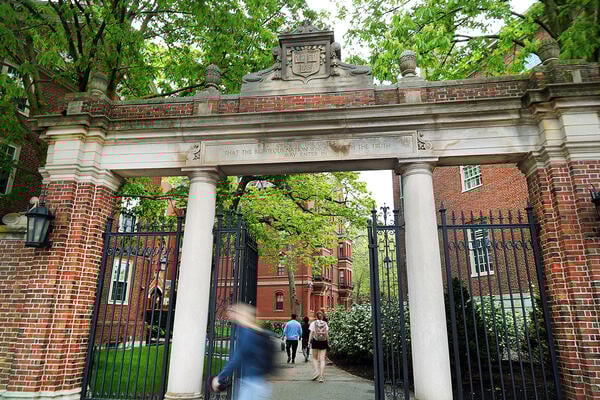
    The Internal Revenue Service is reportedly planning to rescind Harvard University’s tax-exempt status amid its showdown with the Trump administration over academic freedom, CNN reported.

    Citing two anonymous sources, CNN reported that a decision is likely coming soon. If Harvard’s tax-exempt status is revoked, the move would appear to be at the behest of President Donald Trump, who has railed against the private university in posts on his own Truth Social platform.

    “Perhaps Harvard should lose its Tax Exempt Status and be Taxed as a Political Entity if it keeps pushing political, ideological, and terrorist inspired/supporting ‘Sickness?’ Remember, Tax Exempt Status is totally contingent on acting in the PUBLIC INTEREST!” Trump wrote Tuesday.

    In a Wednesday post, the president said that Harvard should “no longer receive Federal Funds” because it “is a JOKE [that] teaches Hate and Stupidity.”

    Harvard is currently in a standoff with the Trump administration, which has demanded a series of wide-reaching changes it says are needed to address alleged antisemitism on campus related to pro-Palestinian protests. Those demands include reforms in admissions, hiring practices, student disciplinary processes and a facultywide plagiarism review, among other changes.

    Harvard, however, rejected Trump’s demands on Monday, calling them an affront to institutional autonomy.

    The Trump administration promptly retaliated, freezing $2.2 billion in federal grant funding and $60 million in contracts.

    Neither the IRS nor Harvard respond to requests for comment from Inside Higher Ed.

    Source link

  • April 17, 2025 National Day of Action for Higher Ed (Higher Ed Labor United)

    April 17, 2025 National Day of Action for Higher Ed (Higher Ed Labor United)

    On April 17, HELU is partnering with the Coalition for Action in Higher Education (CAHE) for the National Day of Action for Higher Education. There are more than 175 events planned in 44 states for April 17. We urge you to join us however you can, either in-person or online.

    As campus workers, students, and community members, we have a
    unique power and responsibility to exercise our collective voice in this
    moment of turmoil. It is our labor and our ideas which sustain higher
    education, and higher education sustains our economy and communities.

    The April 17 National Day of Action for Higher Education asserts our voice and our power, in a myriad of ways that reflect the diversity of our colleges and universities. 

    Learn more and find an action near you
     

    Source link

  • At Least 10 Florida Universities Have Signed ICE Agreements

    At Least 10 Florida Universities Have Signed ICE Agreements

    At least 10 Florida public universities have struck agreements with the federal government authorizing campus police to question and detain undocumented immigrants.

    Inside Higher Ed requested public records from all 12 State University System of Florida institutions related to their agreements with U.S. Immigration and Customs Enforcement. Based on the results, it is clear that at least 10 have signed deals with ICE: Florida A&M University, Florida Atlantic University, Florida Gulf Coast University, Florida International University, New College of Florida, the University of Central Florida, the University of Florida, the University of North Florida, the University of South Florida and the University of West Florida.

    Florida State University and Florida Polytechnic University are in the process of signing the paperwork, according to spokespersons at each institution.

    It is unclear whether any of the 28 members of the Florida College System, which don’t all have sworn police forces, have made similar arrangements with ICE. An FCS system spokesperson did not respond to a request for comment on whether its colleges have also entered such agreements.

    Universities across the state signed memorandums of agreement at the direction of Republican governor Ron DeSantis, who ordered law enforcement agencies to partner with ICE “to execute functions of immigration enforcement,” according to a Feb. 19 news release.

    Legal experts and Florida faculty members note that such agreements are rare and mark a shift away from the typical duties of campus police, which don’t usually include immigration enforcement. They also raised concerns about how such arrangements could create a climate of fear on campuses.

    Enforcers Seeking Partners

    The DeSantis directive came shortly after the governor tapped Larry Keefe, a former U.S. attorney for the Northern District of Florida, to serve as executive director of the nascent State Board of Immigration Enforcement, created by Florida’s Legislature. Keefe is known for helping DeSantis orchestrate flights of migrants from Texas to Massachusetts in 2022.

    Keefe was named to the role on Feb. 17. Eight days later, Jennifer Pritt, executive director of the Florida Police Chiefs Association, sent an email to multiple universities that included a template for a memorandum of agreement with ICE. “Director Keefe is seeking participation from as many municipalities as possible, as soon as possible,” Pritt wrote.

    Most universities, however, offered limited statements about their agreements with ICE. A Florida Board of Governors spokesperson also provided few details.

    “Several police departments at universities within the State University System of Florida are partnering with U.S. Immigration and Customs Enforcement,” Cassandra Edwards, director of public affairs for FLBOG, wrote by email. “We do not maintain these records and recommend contacting individual universities for specific information about the partnerships.”

    Public records show that Florida Poly was hesitant to sign on, apparently due to guidance by Polk County sheriff Grady Judd, who is also on the State Board of Immigration Enforcement.

    “He wants us to hold off and not sign because he’s going to be handling all from Polk and not wants [sic] us to be involved as of now,” Florida Poly police chief Rick Holland wrote in a March 25 email response to questions from administrators at other universities about the agreements.

    Though Florida Poly noted it is still in the consideration process, emails obtained by Inside Higher Ed show another message from Holland indicating that Florida Poly appears willing to sign.

    “Can you send me a signed copy of your MOU as a template to where I need to sign?” Holland wrote in an April 3 email sent to Jennifer Coley, the chief of police at New College of Florida.

    (Florida Poly confirmed after publication that it planned to sign the paperwork Wednesday.)

    The Agreements

    Memorandums of agreement reviewed by Inside Higher Ed show that universities that entered arrangements with ICE will grant their police the authority to perform tasks typically reserved for government officials, such as questioning, arresting and preparing charges for individuals on campus suspected of immigration violations.

    Campus police will be required to undergo mandatory training “on relevant administrative, legal, and operational issues tailored to the immigration enforcement functions to be performed,” according to copies of agreements between universities and ICE reviewed by Inside Higher Ed.

    Universities that signed agreements did not provide a timeline for when the training might begin.

    Michael Kagan, a law professor and director of the University of Nevada, Las Vegas, Immigration Clinic, said such agreements are uncommon at universities, noting that he is unaware of any others. He said they are essentially “force multipliers for ICE that deputize local police agencies to do the work that ICE would normally do itself.”

    Jennifer Chacón, a professor at Stanford Law School, also said that she had not heard of prior agreements between campus police and ICE. Chacón noted that 287(g) agreements, introduced in 1996 to delegate immigration enforcement powers to other law enforcement agencies, have ebbed and flowed over the years, rising under Republican presidents and falling under their Democratic counterparts. Under President Donald Trump, who has made a crackdown on immigration a central part of his policy agenda, such agreements are proliferating.

    “Over the last three months, we’ve seen an explosion in 287(g) agreements under Trump,” Chacón said.

    ‘Designed to Increase Fear’

    Faculty and legal scholars are skeptical and concerned about campus agreements with ICE.

    In a statement to Inside Higher Ed, the Florida International chapter of United Faculty of Florida called for the university to immediately withdraw from the program, which it condemned.

    “We affirm that every member of our university community has a basic right to feel safe on campus—free from profiling, surveillance, and fear of deportation,” members wrote. “FIU’s latest act of anticipatory obedience undermines the rights of our community and jeopardizes the opportunity for all students and faculty to learn from and engage with their non-citizen peers. FIU’s haste to comply with ICE is in direct conflict with its stated vision. These actions distract from our educational mission and erode the inclusive environment FIU claims to foster.”

    The statement added the student body is “majority Hispanic, heavily immigrant, and home to nearly 600 students protected by the Deferred Action for Childhood Arrivals (DACA) program,” calling the agreement a betrayal of FIU’s legacy as a prominent Hispanic-serving institution.

    Faculty at FIU also wrote that they were “equally alarmed to hear about the termination of the F-1 visa status of 18 FIU students.” (As of Tuesday evening, at least 1,234 students at 209 colleges have had their visas revoked, in some cases for participating in campus protests but often for unclear reasons.)

    Legal scholars shared faculty members’ concerns about the fallout of such agreements.

    “It seems like this is designed to increase fear. And whether that’s by design or not, it is likely to increase racial profiling on campus, and it is not at all an effective way to police immigration,” Chacón said.

    Kagan said he would be unsurprised to see similar agreements at universities in other red states.

    “I think that it will accentuate the extremes in terms of how different university systems react to the reality that immigrants are part of their campus life,” he said. “You have one extreme, where Florida is saying, ‘Let’s hunt them down with our own police,’ while you have other university systems that have started programs to be more welcoming to undocumented students.”

    Editor’s note: This article has been updated to reflect that Florida Poly plans to sign an agreement with ICE on Wednesday.

    Source link

  • How a Napkin Sketch Can Unlock Higher Ed Innovation at Your Institution

    How a Napkin Sketch Can Unlock Higher Ed Innovation at Your Institution

    In higher education, it’s easy to feel stuck.

    You know something isn’t working — maybe enrollment processes are clunky, or student support services feel disconnected. You’ve tried new tools, updated systems, created initiatives to create change, and added staff, but the problem persists.  It’s like there’s a giant boulder in your way, and no matter how hard you push, it doesn’t budge.

    It turns out, you don’t need a bulldozer – just a napkin sketch to start building momentum to move the boulder standing in the way.

    It’s a surprisingly simple concept, using visual design thinking exercises to help colleges and universities get unstuck. Not with more tech, or a fancy AI solution, but with more clarity to understand how things work today to create a framework for change tomorrow.

    Because real innovation in higher education doesn’t come from software or a technology — it starts with understanding the systems and the processes you already have so you can visualize what they could be.

    What is a napkin sketch?

    The napkin sketch is exactly what it sounds like: a back-of-the-napkin-style drawing that quickly maps out how a particular process actually works in your institution so it can be reimagined.

    It’s low-tech, but high-impact.

    Think of it as building a gameboard for players to play. Like a Monopoly board, everyone knows the players, the rules, and the steps. It makes the choices that need to be made for each player’s turn clear.  When these choices are laid out visually, it becomes much easier to pinpoint where the real opportunities (and challenges) are.

    What does the napkin sketch exercise entail?

    I usually start these sessions by asking one simple questions with a key follow-up

    • What’s the opportunity for ‘impact’? (What are you trying to accomplish?)
    • What’s preventing progress?

    Then we get to work. Together, we sketch out the entire process: from first interaction to the final outcome. We account for every step, system, and stakeholder that’s involved. We highlight the costs, the tools and technology handoffs, potential delays, and where things might be falling through the cracks.

    We typically conduct the sketch in a virtual drawing space, where we can collaborate in real time to map out the full process. It’s not about polished visuals — it’s about building a shared understanding of how things operate today.

    And in about 60-90 minutes, we always have at least one person in the group say out loud “I didn’t realize that’s how it actually works.” And another will inevitably ask “You’re going to send us this napkin sketch, right? I want to print it out.”

    Ready for a Smarter Way Forward?

    Higher ed is hard — but you don’t have to figure it out alone. We can help you transform challenges into opportunities.

    What can the napkin sketch reveal?

    In our experience working with hundreds of institutions of all shapes and sizes, we’ve found that many face surprisingly similar challenges. This exercise consistently shines a light on hidden opportunities, creating a blueprint for change.

    Common things we uncover include:

    • Manual, repetitive tasks that could be automated or streamlined
    • Workarounds that have become permanent fixtures without anyone questioning them
    • Disconnects between departments, systems, or technologies
    • Operational silos that prevent teams from seeing the full picture or collaborating effectively
    • Missed opportunities to better track, analyze, or act on data
    • Unclear ownership of key steps in the process

    In short, the napkin sketch helps institutions see what’s really going on — and what needs to change to move forward.

    Why does it work?

    Higher ed innovation often stalls because teams are too close to the problem or too deep in their own silo to see the bigger picture. The napkin sketch breaks through that by creating a space for everyone involved to step back and collaborate.

    Here’s why it’s effective:

    • It’s fast — most sessions take an hour or two.
    • It’s visual — helping teams align quickly and clearly.
    • It’s collaborative — bringing together voices from across departments.
    • It’s actionable — revealing next steps that are grounded in reality.

    Most importantly, it shifts the focus away from jumping to solutions and toward understanding the system. Once you understand the system, smart solutions become much more obvious — and effective.

    Real examples of the napkin sketch in action

    Whether it’s enrollment workflows, transcript processing, student communications, or data handoffs between systems or teams, the napkin sketch exercise can help untangle a wide variety of operational challenges. No two institutions are exactly alike, but many face similar complexities — manual processes, siloed teams, and unclear ownership that stall progress.

    Here are a few discoveries we uncovered in recent napkin sketch sessions I’ve led:

    • One institution realized how many steps were involved in processing transcripts — with staff toggling between platforms, uploading the same file in multiple places, and doing manual comparisons. Once the process was mapped, we explored how AI could handle the course match evaluations — saving hours of staff time each week.
    • Another team sketched out their enrollment outreach process and discovered they were sending multiple conflicting messages to students at the same time. The sketch helped them realign their communications and reduce student confusion.
    • A third school wanted to integrate a new tool into their tech stack, but the sketch revealed that the underlying workflow was broken — and that no tool would help until the foundational process was improved.

    In each case, the aha moment didn’t come from buying something new — it came from clearly seeing what was already happening so it could be improved upon.

    What could your napkin sketch uncover?

    If you’re wrestling with outdated processes, disconnected systems, or unclear handoffs — you’re not alone. Many institutions are trying to drive higher ed innovation with limited resources and overwhelming complexity.

    But you don’t need to have all the answers right now. You just need a clearer view of the problem so you can develop a thoughtful solution.

    That’s what the napkin sketch offers: a simple, collaborative way to map your reality, uncover opportunity, and take a smarter next step forward.

    Let’s sketch it out — and see what we find!

    Ready to uncover what’s holding you back?

    Reach out to schedule your own session and take the first step toward smarter solutions.

    Source link

  • Leading in complexity: Are higher education leaders ready for the age of austerity?

    Leading in complexity: Are higher education leaders ready for the age of austerity?

    by Robert Perich, Ladina Rageth, Danya He and Maryna Lakhno

    Higher education is at a crossroads. Across Europe and beyond, higher education institutions (HEIs) face increasing financial constraints, shifting political landscapes, and the growing challenge of digital transformation. In this turbulent environment, leadership is not just about managing institutions – it is about navigating uncertainty and ensuring that HEIs remain resilient, innovative, and globally competitive.

    Yet, are higher education leaders equipped for this challenge? A recent Swiss national study of senior leaders (detailed findings are available here) provides a reality check. Our study, the first of its kind in Switzerland, examined the career trajectories, competency sets, and strategic concerns of 312 leaders from 38 institutions. What it uncovered was both revealing and troubling: senior leaders felt largely unprepared for the mounting financial and structural pressures facing higher education.

    HEIs are no longer just institutions of knowledge – they are complex organisations requiring financial stewardship, strategic foresight, and the ability to manage significant institutional change. And yet, many senior leaders step into their roles with little to no formal management training. In a period where every budget decision can mean the difference between institutional sustainability and decline, this skills gap is more than an inconvenience – it is a challenge.

    Who runs Swiss HEIs today?

    The study reveals a leadership demographic that is surprisingly homogeneous. Despite years of diversity initiatives, Swiss HEI leadership remains overwhelmingly male (68%) and Swiss (80%). The average senior leader is in their mid-50s, has spent nearly 14 years at their institution, and was more likely than not promoted from within. Internal hires outnumber external appointments (55% vs 45%), and critically, almost 40% of senior leaders entered their positions without prior general management experience.

    This reliance on internal promotion, while preserving institutional knowledge, raises an uncomfortable question: Are HEIs prioritising academic credentials and institutional loyalty over strategic and managerial competence? As budget cuts tighten and HEIs are forced to make hard choices, is it enough for leaders to understand academic culture, or must they also master the art of institutional strategy and financial sustainability?

    The gap: what competencies do leaders need – and what are they lacking?

    Swiss HEIs, like their counterparts worldwide, are complex ecosystems requiring a balance of academic credibility and managerial acumen. Yet, when surveyed, senior leaders overwhelmingly ranked leadership and strategic design capabilities as the most essential competencies, both of which require years of cultivation. They also emphasised managing organisational change, a competency that will become even more critical as institutions face increasing financial pressures and demands for efficiency.

    The study highlights a concerning discrepancy between the skills leaders find most important and those in which they feel prepared. Many respondents wished they had received more targeted training in financial management, change leadership, and navigating the political landscape of higher education. Given that nearly half of respondents had never participated in formal leadership training before assuming their roles, it is clear that HEIs have largely relied on a ‘learn on the job’ approach to leadership development.

    The perils of academic self-governance

    One of the study’s most compelling findings is the tension between traditional academic self-governance and the need for growing professionalisation of higher education leadership. Research universities, in particular, still operate on a model where deans and department heads rotate through leadership roles while maintaining their academic careers. While this system ensures academic legitimacy, it creates discontinuity and limits long-term strategic vision.

    By contrast, universities of applied sciences, where leadership positions are more commonly filled through open application processes, exhibit a different pattern: leaders tend to have more professional experience and stronger management backgrounds. This divergence begs an essential question: Is the tradition of academic self-governance still fit for purpose in an era that demands more decisive, financially savvy and agile leadership?

    Budget cuts and the leadership challenge ahead

    Financial sustainability is now the defining challenge of higher education leadership. The study underscores that senior leaders see budget constraints as the most pressing issue their institutions face, followed closely by digital transformation and the rising demand for research excellence and collaboration. While leaders anticipate increasing demands in these areas over the next decade, many institutions lack systematic training programmes to equip their leaders for these challenges. The findings suggest that without structured leadership development – particularly in financial strategy, political negotiation, and crisis management – HEIs risk falling into reactive rather than proactive decision-making.

    Rethinking leadership development in higher education

    The data from Swiss HEIs mirror trends seen globally: while the challenges facing HEIs have evolved dramatically, leadership preparation has remained largely static. The fact that nearly 40% of leaders entered their roles with no formal management experience is a stark indicator that institutions must do more to develop leadership talent early in academic careers.

    Structured executive education programmes, mentorship initiatives, and cross-institutional leadership networks are critical. The study also raises the question of whether Switzerland – and other countries – should consider national leadership training programmes, similar to those in the Netherlands and Sweden, to systematically equip future leaders with the skills they need.

    Indeed, other countries have already taken significant steps in this direction. For instance, the UK has developed a comprehensive suite of leadership development programmes through Advance HE, targeting leaders at various career stages across the higher education sector. Such initiatives provide a valuable model for how leadership can be systematically cultivated, and they underscore the importance of moving beyond ad hoc, institution-specific training efforts.

    The future of higher education leadership: a critical juncture

    HEIs are facing a defining moment. Financial constraints, political pressures, and the complexities of global education demand leaders who are not just respected scholars but also strategic visionaries. The findings from our study highlight the urgent need for HEIs to rethink how they identify, train, and support their leaders. Will higher education rise to this challenge? Or will institutions continue to rely on traditional models of leadership selection, hoping that academic merits alone will make their leaders fit for the complexities ahead?

    Prof Dr Robert Perich is Academic Director, Swiss School of Public Governance SSPG, D-MTEC, ETH Zurich. He was CFO of ETH Zurich for 20 years and, as Vice President for Finance and Controlling, was responsible for financial strategy, budget management, asset management, risk management and the digitalisation of central processes. After completing his studies and doctorate at the University of St. Gallen (HSG), he gained 12 years of experience in various management roles at a major Swiss bank. In addition to earlier teaching activities at the University of St. Gallen, he currently lectures at D-MTEC and the University of Zurich (CHESS). He is also Deputy Chairman of the University Council of the University of Cologne.

    Dr Ladina Rageth is Executive Director, Swiss School of Public Governance SSPG, D-MTEC, ETH Zurich. She is a social scientist with extensive experience in research and project management in the academic, public and private sectors. She completed her Master’s degree in Sociology at the University of Zurich and her PhD at ETH Zurich at the Chair of Educational Systems. Her research focuses on the sociology of education, labour market outcomes and the institutionalisation of education systems, with a current emphasis on the functioning and management of HEIs.

    Danya He is Research Assistant, Swiss School of Public Governance SSPG, D-MTEC, ETH Zurich. She completed her Masters in Media and Communication Governance at the London School of Economics and Political Science (LSE) and worked as a research and teaching associate at the University of Zurich specialising in media and internet governance before joining the SSPG. She brings a wealth of experience in public institutions, media relations and legal affairs and has been recognised for her achievements in educational simulations such as the National Model United Nations.

    Dr Maryna Lakhno is the Programme Coordinator at the ETH Swiss School of Public Governance (SSPG), where she manages the school’s continuing education portfolio and oversees its communication. Maryna also contributes to the design of the curriculum and programme activities and is actively involved in research projects within the school. Her doctorate in Public Policy under the Yehuda Elkana Doctoral Fellowship at Central European University in Vienna focused on integrating the United Nations Sustainable Development Goals within higher education. She was awarded the Swiss Government Excellence Scholarship for Foreign Scholars in 2022/23. She co-authored a comprehensive report for the Global Observatory on Academic Freedom.

    Author: SRHE News Blog

    An international learned society, concerned with supporting research and researchers into Higher Education

    Source link

  • CCRC Loses $12M in Federal Grants

    CCRC Loses $12M in Federal Grants

    The Community College Research Center has lost access to funding from four federal grants collectively worth more than $12 million, the center’s director, Thomas Brock, said in a letter Tuesday. The cut was part of the Trump administration’s broader freeze on $400 million in federal funding at Columbia University over accusations that the institution didn’t do enough to response to antisemitism.

    But Brock argued in the letter that “the terminations did nothing to address perceived problems at Columbia, nor did they challenge ‘woke’ ideology, as our projects were nonideological to begin with.”

    CCRC is based at Teachers College, an education graduate school that became affiliated with the nearby Columbia University in 1898 but was founded independently in 1887 and remains “legally, administratively, and financially separate” from the Ivy League institution, Brock explained.

    Still, when the federal antisemitism task force announced the funding cut, Teachers College, and therefore the CCRC, were affected. All four grants that were cut came from the Institute of Education Sciences. The now-terminated grants supported: 

    • A study on whether work-study programs improve retention, degree completion and employment postgraduation.
    • An analysis of how effective Virginia’s Get a Skill, Get a Job, Get Ahead program has been in helping low-income students access short-term training programs.
    • An apprenticeship program that helps develop the next generation of state-level higher ed policy researchers.
    • A network of six research groups studying ways to reverse post-pandemic enrollment declines.

    It added to the blow CCRC had already experienced in February when the Department of Education canceled 10 contracts with Regional Educational Laboratories, which are also overseen by the IES, saying they were examples of “woke” government spending. The REL Northwest had signed a contract with CCRC to pilot a professional development program for community college faculty members.

    “It is hard to overstate the importance of IES grants and contracts to a research center like CCRC,” said Brock, who was commissioner of the National Center for Education Research at IES from 2013 to 2018.

    CCRC has appealed the decision to terminate the grants.

    “We do not know how long the process will take,” Brock wrote, “but are hopeful that fair minds will rule in our favor.”

    Source link

  • Student Success Podcast: Navigating Students’ Digital Addictions

    Student Success Podcast: Navigating Students’ Digital Addictions

    This season of Voices of Student Success, “Preparing Gen Z for Unknown Futures,” addresses challenges in readying young people for the next chapter of their lives in the face of large-scale global changes. The latest episode addresses how digitization has made it easier for young people to engage in unhealthy habits, including substance abuse, pathological gambling or social media addiction, compared to past generations. 

    Host Ashley Mowreader speaks with Amaura Kemmerer, director of clinical affairs for Uwill, to discuss the role of preventive health measures and how existing research can provide a road map for addressing new challenges. 

    Listen to the episode here and learn more about The Key here.

    Read a transcript of the podcast here.

    Source link

  • Proposed Budget Cuts Could End Fulbright Program

    Proposed Budget Cuts Could End Fulbright Program

    The Trump administration is looking to cut the State Department’s budget by almost half, and educational and cultural exchange programs, like the Fulbright scholarship, could be fully eliminated as a result, The Washington Post reported Monday.

    An internal memo, obtained by the Post, suggested that the department may only have $28.4 billion to spend next fiscal year to cover all of its staffing and operations and to share with the U.S. Agency for International Development, an independent agency that Trump has already tried to eliminate. That’s $27 billion, or 48 percent, less funding than the two groups received in fiscal year 2025.

    The proposed budget cuts would terminate the Fulbright scholarship, a highly selective cultural exchange program established by Congress in 1946, along with the State Department’s other educational and cultural programs. The president has yet to propose his budget for fiscal year 2026 to Congress, though he’s expected to do so later this month, the Post reported. Congress, by law, has the final say about which programs get funding.

    Fulbright funding and operations have already been in flux during the early days of the Trump administration as some participants have struggled to obtain their visas for next academic year and others are waiting on stipend funds that had been promised to get them through the current term, Inside Higher Ed has reported.

    The State Department did not respond to the Post’s request for comment.

    Source link