Tag: Higher

  • Higher Education franchising is not the problem. Rogue providers and regulatory gaps are

    Higher Education franchising is not the problem. Rogue providers and regulatory gaps are

    • By Charlie Tennant, Vice Principal at the London School of Science & Technology.

    Higher education franchising is once more in the limelight for the wrong reasons, as many in the sector again question its benefits, the risks it poses to public funds and the use of it by niche, emerging and/or for-profit higher education providers. However, the stories and discourse miss the key factors that have allowed for abuse of the franchise model. It is gaps in higher education regulation that have led to franchising being scapegoated for what is, at its core, abuse by rogue providers that do not represent the vast majority of those engaged in franchising.

    Franchising is a model through which UK universities have delivered higher education for over two decades. Internationally, this forms part of many forms of Transnational Education (TNE), that as seen in Universities UK International (UUKi)’s Scale of UK Higher Education Transnational Education reports, continues to grow in scale. Locally, providers have adopted the franchise model since the mid-2000s, although since then, the market for many of those providers has changed from international students to local students. This change meant the number of students at these providers who were eligible for Student Loans Company (SLC) funding has grown. The model allows institutions that have found new approaches, differentiated courses, or cold spots of higher education to develop and expand their provision, with a significant portion of them hoping to one day gain their own Degree Awarding Powers (DAPs).

    However, the regulation of domestic franchise provision has not been as robust as it could be. The onus has rightly been put on the universities that are franchising their courses to ensure academic quality and standards of the franchise delivery, although there is currently no direct regulation of higher education franchise providers. Therefore, while some blame can be apportioned to universities engaged in franchising, it can be argued that the Department for Education (DfE) and policymakers’ approach to regulating higher education franchises has led to gaps open to abuse by rogue providers. Furthermore, routes for franchise providers to gain DAPs have been prolonged and made complex by the pause in processing of registration applications by the Office for Students (OfS). Now, the abuse of SLC funding by particular providers of the franchise model, reported by the Sunday Times in an article on 22nd March 2025 and in several articles since then, has brought the reputation of all franchise providers into disrepute, and connected the abuse to use of recruitment agents and the settled Romanian population in the UK.

    In a January 2025 press release for their consultation on franchise provision regulations, the Government outlined the benefits of franchising when done right, and its intention to crack down on rogue higher education providers. Professor Nick Braisby’s HEPI blog published in response to the consultation, rightly welcomes the Government’s new proposals, but asks for the sector to remain critical. This blog therefore proposes three ways in which to ensure the Government and the OfS achieve what they hope to through the crackdown.

    Firstly, the DfE, policymakers and the OfS need to enable quicker routes for franchise providers to join the regulator’s Register. This will allow greater scrutiny at an earlier stage in the lifecycle of an emerging higher education provider (which make up the majority of providers delivering franchised courses) and introduce a focus on their governance structures. Since the set-up of the OfS Register, providers have experienced long lead times for joining the Register, and on top of this, from December 2024, the regulator paused applications for the Register, DAPs and changes of registration category, thus exacerbating the issue of missing opportunities to directly regulate more franchise providers. This is counterintuitive given the OfS’s remarks around the risks associated with an over-reliance by both universities and franchise providers on partnership provision in their Insight Brief regarding subcontractual arrangements in higher education published just two months prior to the pause. The OfS’ Register of providers has the potential to be a great tool for transparency, but the current lead times and design of the approach lead to gaps in regulation that can be exploited by rogue providers.

    Secondly, instead of considering an outright ban, the DfE should implement a robust quality framework for domestic student recruitment agents. As a blueprint, they should draw from the established Agent Quality Framework (AQF) developed by the British Council, Universities UK International (UUKi), and the UK Council for International Student Affairs (UKCISA). As with international student recruitment, the unregulated use of agents for domestic recruitment presents significant risks. By adopting a structured quality framework, the DfE and OfS can mitigate these risks and foster greater transparency and accountability. Agents, when operating under clear ethical guidelines and quality standards, can play a crucial role in widening participation, particularly by reaching communities historically underserved by traditional university outreach, for example, the UK’s settled Romanian population. A tailored framework can help to ensure transparency, effective governance and the establishment of professional standards of agents.

    Finally, the DfE, policymakers and the OfS need to engage more with franchise providers and their university partners jointly. So far, engagements have been disjointed, with either a university or one of their partner franchise providers engaged separately. This creates barriers to collaboration, which would otherwise aid in the pursuit of greater transparency, oversight and the maintenance of academic quality and standards. Bringing both universities and franchise providers together when engaging will enable the Government to find ways to both demonstrate the benefits of franchise provision, as well as develop regulatory approaches and guidance collaboratively with stakeholders. This joint engagement with universities and their partner franchise provider could pave the early steps towards a sector-wide code of practice, an idea discussed in HEPI and Buckinghamshire New University’s Debate Paper on franchising. This could then sit alongside collaboratively developed regulations that would ensure rogue providers cannot abuse regulatory gaps. It will also help to establish a more balanced burden of regulation between universities and their franchise provider partners, and safeguard the reputation of franchise provision.

    Ultimately, effective regulation of the broader higher education student journey, streamlined registration, and collaborative engagement are crucial. By addressing these systemic gaps and promoting transparency, the policymakers, DfE, OfS, and the higher education sector can restore faith in franchising and ensure its legitimate benefits are realised.

    Source link

  • Everything in the immigration white paper for higher education

    Everything in the immigration white paper for higher education

    The Home Office immigration white paperRestoring control over the immigration system – has arrived, and there are some seriously consequential decisions for international students and the higher education sector.

    The graduate route will be cut from two years (for undergraduates and master’s students) to 18 months. A range of new measures that will make visa sponsorship duties more onerous for higher education providers are coming into effect. There are steps to attract “top scientific talent.”

    And most unexpectedly of all, the idea of introducing a levy on international student tuition fees is floated, “to be reinvested into the higher education and skills system.”

    Mood music

    For all that there are some serious, significant changes to student and graduate visas contained within the white paper, the last few years of policy turmoil has demonstrated that much of the impact of migration policy on student recruitment is determined by how changes are interpreted by prospective students weighing up their choices between different destination countries.

    After having spent a couple of months in office making more positive noises about international students – and repeatedly patting themselves on the back about it – Labour has since plunged back into the murky waters of “talking tough on migration”, with students a political football yet again. How much this resonates abroad, and with what tenor the press in key recruiting countries reports on all of this, will probably have the greatest overall effect on what follows for the sector.

    But the white paper itself is pretty bullish on international students – more so than we might have expected. There’s plenty of language that would have not looked out of place in a Conservative policy document, had Rishi Sunak not scrambled for an election instead of providing a proper response to the MAC review. So the Home Office tells us:

    In recent years, we have seen an increase in students staying in the UK following their studies. Alongside this, we have also seen an increase in sponsored study visas for lower-ranking education institutions.

    And that:

    We have also seen a series of problems involving misuse and exploitation of student visas, where visas are used as an entry point for living and working in the UK without any intention to complete the course, and increasing numbers of asylum claims from students at the end of their course, even though nothing substantive has changed in their home country while they have been in the UK.

    Home secretary Yvette Cooper’s introduction even tries to paint the last government as recklessly pro-international recruitment (our bolding):

    Immigration policy during the last Parliament replaced free movement with a free-market experiment which incentivised employers to freely recruit from abroad rather than train at home, allowed education institutions to pursue unlimited expansion of overseas students without proper checks in place, and directly encouraged the NHS and care organisations to bring in far more staff from abroad while still cutting support or training places in the UK.

    The Office for National Statistics’ recent finding that more than half of students arriving in 2020 still held leave after three years gets an airing – a point which those in the sector who have repeatedly been arguing that the vast majority of international students return home after graduating would do well to heed.

    We’d also note that the white paper’s observation that growth in international recruitment has been particularly pronounced in those institutions further down the international rankings (made up as they are in the main of research output and spurious reputation surveys) is particularly inane, and yet another of those examples of the Home Office weighing in on education policy and the size and shape of the sector. It has its roots in the last government’s response to the MAC review, but it’s profoundly depressing to see it taken forward as a stick to beat teaching-intensive universities with.

    The graduate route

    The post-study work visa’s reduction in length will likely generate the most headlines, at home and abroad. Drawing on a new piece of evaluation conducted last spring, the Home Office concludes that:

    Too many graduates allowed to stay in the UK following the successful completion of their studies are not moving into the graduate level roles for which the Graduate visa route was created.

    A survey of just under 3,000 visa holders saw only 30 per cent report being in “professional” occupations, with others either not giving a straightforward answer to the question or (31 per cent) being in occupations whose entry requirements are likely to be A level equivalent or lower.

    The build-up to the white paper’s publication was accompanied by a somewhat ludicrous debate over whether the (non-sponsored) graduate visa would somehow be limited to graduate-level work or salary – regardless of the fact that this would have meant turning it into a completely different visa with a heavy overlap with the skilled worker route.

    Instead, the government has concluded that it should be reduced to 18 months – it appears that this applies only to undergraduate and master’s students, who currently are entitled to two years, rather than PhDs.

    It’s not really spelled out how this new length has been arrived at – the charitable interpretation would be that this is sufficient time to allow graduates who are going to find graduate-level work to indeed find it, while those who are either unable to or were never really serious about doing so (in the government’s eyes) will be obliged to leave sooner.

    This Home Office’s statement of the problem is that “the intention behind the Graduate route was to support the economy.” No mention is made of enhancing the UK’s attractiveness as a study destination, which was also a strategic objective at the route’s launch, and part of the international education strategy. The government no longer seems to want to have this conversation.

    The survey that (in parts) provides the evidence base for the curtailment of the route also notes that 65 per cent of users said that gaining work experience was one of the most important reasons to engage in post-study work. But – as we’ve observed before – this function of the graduate route gets increasingly ignored. The Home Office frames all graduate route holders as needing to acquire graduate-level roles, as quickly as possible, and then disapproves of the contribution to net migration that this begets.

    Diving a bit deeper into the graduate route evaluation that is, in theory, the justification for the changes, we again see the Home Office continuing to divide up the sector in terms of Russell Group and non-Russell Group, despite the fact that DfE under Labour has discontinued this practice in school performance management.

    The majority of Graduate route users graduated from a non-Russell Group university (72%), while a quarter (26%) graduated from a Russell Group university.

    While this finding doesn’t get a mention in the white paper itself, it’s of a piece with the pronouncements elsewhere that too many students seem to be coming through those less prestigious universities for the Home Office’s liking.

    So what’s the upshot? Yet again, the impact modelling deployed in government to assess the effects of visa changes on the higher education sector is pretty pathetic. A student route evaluation published alongside the white paper sees 66 per cent of survey respondents say they were aware of the Graduate route (this gets us down to n = 1,265). Of these, 73 per cent said it influenced their decision. Of these, 29 per cent said they would not have come if it wasn’t available. Blithely multiplying these percentages together leads to an assumption (in the white paper’s technical annex) that 14 per cent of applicants would be put off if the graduate route were abolished.

    Of course, the Home Office didn’t ask about reducing it by six months – it’s almost as if this decision was thrashed out in Whitehall horse-trading rather than a pragmatic example of policy implementation. As they are lopping a quarter of the graduate route, they have – genuinely – divided 14 per cent by four to get 3.5 per cent. This would equate to around 12,000 students a year if by some stroke of dumb luck the assumption turned out to be true. But what really comes across is that they have no idea.

    For international students who are not put off, the result of shortening the route will be either to reduce the amount of time they have to accrue valuable work experience or – for those who are hoping to build a career in the UK – accelerated pressure on the job hunt. Institutions will need to get even more serious about advice, careers support, and evaluation. This is especially the case given all the other wholesale changes to work visas that the white paper detonates – students will need support in navigating a system that each year is a little different to how it was when they started thinking about where to apply.

    Compliance

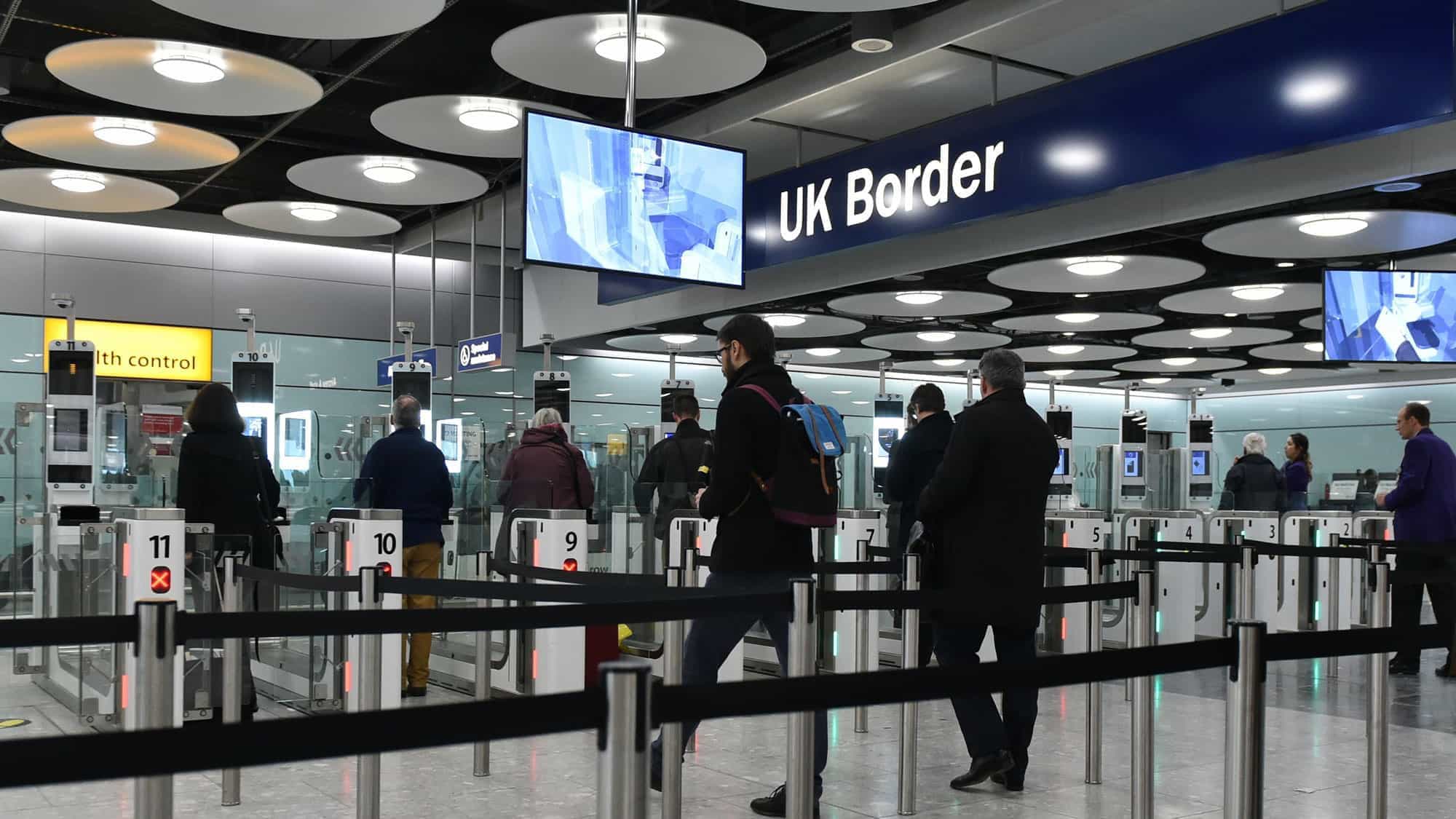
    In a lengthy section entitled “responsible recruitment”, the white paper sets out some serious reforms to how UK Visas and Immigration (UKVI) will manage compliance among those higher education institutions sponsoring students. It’s argued that current thresholds are “too lenient” and “have left the route open to abuse and exploitation.”

    We saw promises to make compliance standards stricter in the last government’s response to the MAC review, so there is a sense that some of what’s proposed in the white paper has been held back over the autumn to be made public here. UKVI has already been subjecting certain institutions to enhanced scrutiny for the last few months – but what’s proposed here goes quite substantially beyond that, and could be extremely challenging for some (especially small) institutions.

    The current metrics used to determine whether a sponsoring higher education provider is fulfilling its duties are – via the annual basic compliance assessment, or BCA – having a visa refusal rate of less than 10 per cent, a course enrolment rate of at least 90 per cent, and a course completion rate of at least 85 per cent.

    The white paper reveals that all of these measures will be made five percentage points stricter. To get an indication of how substantive such changes would be, it is noted that:

    Data from the 2023–24 BCA suggests that 22 HEIs would not have met at least one of the tightened criteria set out in this paper. These institutions sponsored approximately 49,000 students while refusing 400 during their 12-month assessment period.

    The technical annex also assumes that, of these 22, five would not be able to become compliant and therefore lose sponsorship rights, for at least a year. It puts the impact at between 9,000 and 14,000 fewer student visa grants, given that some students will be squeezed out of the system, whereas other genuine applicants will find alternative study destinations. It’s very much a guesstimate though – but the vastly increased requirements will put enormous pressure on higher education institutions to play it extremely safe with recruitment and agent partnerships, and to subject applicants to even more rigorous checks.

    There’s more as well – UKVI will roll out new interventions for sponsors “close to failing metrics”, sign-up to the Agent Quality Framework will be mandated – a measure that has been proposed about a hundred times by this point, and the framework is already widely subscribed to – and a new RAG rating will be used to rate each sponsoring institution’s compliance. On this latter point, it’s mentioned that this will help the public assess institutions’ compliance, raising the intriguing possibility that we are about to get a lot more transparency from UKVI than was ever the case. And massively ramping up the pressure on universities (and, especially, smaller providers) to avoid falling foul of the rules.

    It’s also worth not losing sight of the impact on international students themselves of all this bearing down on compliance – a measurably more bureaucratic study experience and, if not well implemented by providers, one that reinforces a sense of unwelcomeness as they are repeatedly asked to jump through hoops that home students do not face.

    But probably the most important measure contained within the proposals – and, if implemented properly, an extremely welcome one – is obliging a provider who wants to request a larger CAS allocation to “demonstrate that they are considering local impacts when taking its decision on international recruitment.” There’s no further information on what this would look like, but housing must clearly be front and centre of the government’s thinking here – it’s something Yvette Cooper has mentioned on a number of occasions.

    Asylum claims

    In the run-up to the white paper’s publication, leaks to the press made it clear that one area where international higher education was in the Home Office’s crosshairs was over the proportion of asylum claims generated by those who had arrived in the UK on student visas – as we’ve recently written about on Wonkhe, this hit 16,000 in 2024, almost 15 per cent of all claims in the year.

    The white paper says that this number has been increasing “at pace”, and also reveals that the majority of the students claiming asylum “do so as they approach their visa expiry date” – a fact which is ascribed to students making claims to stay in the UK, rather than due to changes in their own country.

    It had been briefed to the media that applications for work and study visas by those deemed most likely to overstay and claim asylum would face higher rejection rates, through some of “pattern spotting” – a predictive measure that would inevitably face legal challenges, it should be noted. The white paper doesn’t, in fact, get too much into the detail here, rather setting out towards the end a “series of further measures” that will be explored.

    One of these seems likely to be the use of international students’ proof of funds as evidence that they should not be eligible for asylum. We also get reference to potential “financial measures, penalties and sanctions” for sponsoring institutions – which would include universities. Detail on all this is going to come at a later point.

    An international student levy?

    When the Australian government commissioned a wholesale review of higher education – the Accord – one of the ideas that generated most pushback from the sector was for a levy on international students. It came out of the Accord commission’s interim report – then education minister Jason Clare said it was analogous to a “sovereign wealth fund” for the sector, and could be spent on infrastructure or research.

    Australia’s research-intensives – the Group of Eight – called it a “damaging international student tax”. It was absent from the Accord’s final recommendations, replaced by a “futures fund” with joint contributions from universities and government. It still wasn’t popular and, like much of the Accord’s long-term thinking, there hasn’t been any sign of policymakers picking it up.

    And yet – completely out of the blue, something similar has cropped up in today’s white paper:

    The Government will explore introducing a levy on higher education provider income from international students, to be reinvested into the higher education and skills system. Further details will be set out in the Autumn Budget.

    The Home Office wants to stress that this is not a final policy position – indeed, it is not something that one government department could move forward with on its own. The technical annex gives the “illustrative” example of a six per cent levy on tuition (and also notes that it would likely be passed on to students in higher fees).

    A six per cent levy would generate something in the order of £570m, if we generously take into account the reductions in recruitment that the Home Office has modelled (the levy’s putative effects are transmogrified into assumptions about changes to student demand based on some work from London Economics that was only focused on students from the EU, but it’s not even worth getting into that).

    There’s no way to reliably say which universities would lose out in terms of paying the levy – the government appears to be assuming that the students that won’t now come are the ones that they don’t want to come, which would likely hit less prestigious providers with more international students. You might imagine that some part of the levy would have to be used to prop up otherwise struggling providers in deprived areas – as we would otherwise lose them.

    What that would amount to is a word we’ve not heard from any government for a good few years – redistribution. Though the idea of the sector as a single set of accounts is familiar among headline writers and UCU campaigners, in practice there’s been little deviation from the idea that the market is the fairest means to distribute resources (“the funding follows the student”) with the exception of a very small amount of funds for “world class” small and specialist providers.

    Of course, by mentioning that the levy would be spent on “higher education and skills” opens the door to the money going elsewhere in the tertiary space. And, as with the apprenticeship levy, there’s no guarantee that the funds would not be top-sliced by the Treasury. There is absolutely no doubt that such a system, in the event that it came to pass, would be the subject of policy instability for many subsequent years, with everyone and their dog coming up with tweaks, fiddles and overhauls in how it should best be deployed.

    We’ve noted that the Home Office vaguely intimates that the cost of the levy would be borne by students (via increased fees) rather than by higher education providers. This may well not be the case. The last decade has shown that providers will set the fees at the level where they think they can recruit, rather than with reference to cost of provision (or home fees). If fees could comfortably go up six per cent, then they already would have. So expect a serious lobbying effort from universities against any further plans to introduce this levy.

    There are also substantial issues around devolution here. International student fees are really not there for the Home Office to grab and claim that they are a reserved matter, in the way that visas are. Presumably what’s being considered here would apply England-only – unless the devolved governments suddenly think this is worth going along with.

    All the other stuff

    Given that higher education is so intimately interconnected with both the visa system and the labour market, there’s barely a page of the white paper that doesn’t have some degree of consequence for the sector. Here’s a rundown.

    Global talent: the one area where there is a commitment to increasing migration is “very high talent routes.” There is talk of simplifying the use of the global talent visa to recruit top scientific talent, as well as possibly doubling the number of overseas universities whose graduates qualify for the high potential individual work visa route. Eligibility here is based on international university rankings, and consequently is a complete mess.

    Student dependants: there will be a new English language requirement for all adult dependants, at A1 on the Common European Framework of Reference for Languages (CEFR). It’s also noted that the intention is to increase this over time.

    Short-term study visas: the government has already increased scrutiny of these visas for students coming on short (six to eleven month) English language courses, but there will also be a review of accreditation bodies, due to a very high refusal rate.

    Immigration skills charge: This charge for companies sponsoring those on skilled worker visas (currently £1,000 a year for medium or large sponsors) will be increased by 32 per cent. It’s one of those things that sounds good on paper – reinvesting visa fees into the skills system – but has never been implemented properly, with money just vanishing into the Treasury. In theory, that’s now going to change, with the spending review to announce “skills funding for priority sectors” paid for out of these funds.

    We should also note that higher education institutions are currently exempt from paying this charge for many categories of scientist, research managers and teaching professionals – so worth keeping an eye on the detail of the changes here when they do appear.

    The Labour Market Evidence Group: this body, which had previously been referred to as “the quad”, is to be made up of the industrial strategy advisory council, the Migration Advisory Committee (MAC), Skills England (and the devolved nations’ skills bodies, to the extent the government will properly involve them rather than dumping policy on them), and the DWP. We don’t learn much that wasn’t in the MAC’s annual report, but this group’s evidence will be used to inform workforce strategies for sectors that have high levels of overseas recruitment.

    The Immigration Salary List: this set of occupations eligible for discounts on skilled worker visa salary premiums is to be abolished. This was until recently known as the shortage occupation list, to give you a sense of how much churn successive governments have instituted in migration policy. Instead, the MAC is going to conduct a review of how discounts are used, with the result that the exact salary requirements for different jobs – which universities may want to recruit onto, or international graduates might want to progress to – are up in the air again. Currently those on student or graduate visas are entitled to a discount in the required salary for sponsorship.

    International education strategy refresh: Nope, no mention of this. The last we heard this was due for “early spring”, and presumably now the white paper has landed the DfE and the business department have a freer hand to get it launched.

    It’s hard to see how some of the original IES targets around diversification can persist, given the increased pressure on compliance (stay out of “risky” markets), potential plans to profile certain nationalities, and the fearmongering about students attending less prestigious institutions. A student number target feels a million miles away from how Labour is trying to position itself politically. And education export objectives, without any detail on what aspects on international activity the government is OK with increasing, are pretty meaningless. So what’s left to be in it?


    Source link

  • Rurality Matters in Evaluating Transfer Outcomes (opinion)

    Rurality Matters in Evaluating Transfer Outcomes (opinion)

    Transfer enrollment rose by 4.4 percent this year, according to recent data from the National Student Clearinghouse Research Center. In total, transfers have grown by 8 percent since 2020, signaling a steady rebound from the sharp declines seen during the pandemic. That’s encouraging news for students seeking affordable, flexible pathways to a degree, as well as for institutions focused on expanding access and supporting completion.

    Less noticed, however, is just how much progress rural students are making. In fall 2023, rural community colleges experienced a 12.1 percent increase in students transferring to four-year institutions. This progress is even more impressive given the historic underinvestment in rural institutions and the well-documented barriers their students face on their path to a four-year degree.

    Many of the country’s small, rural institutions remain on the margins of transfer conversations, partnerships and policy priorities. Here in California, for instance 60 percent of the community colleges with the lowest transfer rates are rural. From low-income students in Appalachia to Latino learners in Texas’s Rio Grande Valley, rural colleges are lifelines for students facing barriers such as poverty, food and housing insecurity, and limited access to transportation and technology. Yet these institutions tend to lack the support, visibility and resources of larger community college systems. They often remain excluded from the design and implementation of transfer initiatives.

    Rural students bring tremendous talent, drive and potential to higher education. Many are the first in their families to attend college. They are often deeply rooted in their communities and, in many cases, seek to use their education to give back and contribute to their local economies.

    Transferring to a four-year institution can dramatically increase the lifetime earnings of these learners, expand their career paths and help meet the growing demand for a highly skilled workforce. Individuals with a bachelor’s degree earn, on average, nearly 35 percent more per year than those with only an associate degree. Four-year degrees open doors to career advancement, civic engagement and personal growth.

    Yet the systemic challenges rural community college students face—from more limited course offerings and degree options to long travel times to campuses to unreliable internet connections—require tailored support and intentional partnership. A one-size-fits-all approach to transfer doesn’t work when rural students are starting from a fundamentally different place than many of their peers.

    For example, rural colleges may not have the staff capacity to manage complex articulation agreements or advocate for their students in statewide transfer initiatives. Their advisers may juggle many roles, serving as counselors, career coaches and transfer liaisons all at once. Meanwhile, students themselves may be unaware of transfer opportunities or discouraged by long distances to four-year campuses, especially when those pathways demand sacrifices they can’t afford to make.

    The health of both our higher education ecosystem and our economy depends on ensuring that all students, regardless of ZIP code, can move easily between two-year and four-year institutions. If efforts to improve transfer overlook rural colleges, they risk deepening existing educational inequities and missing out on a significant segment of our nation’s talent pool.

    Organizations such as the Rural Community College Alliance shine a needed spotlight on how to best collaborate with rural institutions across the country to improve transfer outcomes and better support rural students’ success. Progress starts with listening and taking the time to understand the unique strengths and challenges of rural communities rather than imposing outside solutions.

    The policy landscape will need to evolve to support these efforts. This means increasing investment in rural higher education infrastructure, expanding funding for rural-serving institutions, and creating more flexible transfer frameworks that reflect the realities of rural learners, many of whom are working adults, members of the military, parents, or all of the above. Federal, state and higher education leaders should recognize rurality as a key lens through which to view improving student outcomes, on par with class or race.

    Transfer rates are rising, and more students are finding affordable on-ramps to bachelor’s degrees. But this progress is incomplete unless it reaches every corner of the country, including the small towns and rural communities that are home to millions of students. In a moment when more students are finally moving forward, we can’t afford to leave these learners behind. When rural students succeed, our entire nation benefits.

    Gerardo de los Santos is vice president for community college relations at National University.

    Source link

  • College Programs Support Holistic Student Basic Needs

    College Programs Support Holistic Student Basic Needs

    About three in five college students experienced some level of basic needs insecurity during the 2024 calendar year, according to survey data from Trellis Strategies. Over half (58 percent) of respondents said they experienced one or more forms of basic needs insecurity in the past 12 months.

    Student financial challenges can negatively impact academic achievement and students’ ability to remain enrolled. About 57 percent of students said they’ve had to choose between college expenses and basic needs, according to a 2024 report from Ellucian.

    While a growing number of colleges and universities are expanding support for basic needs resource centers—driven in part by state legislation that requires more accommodations for students in peril—not every campus dedicates funds to the centers. A 2024 survey by Swipe Out Hunger found that of 300-plus campus pantries, two in five were funded primarily through donations. Only 5 percent of food pantries had a dedicated budget from their institution as a primary source of funding.

    Inside Higher Ed compiled four examples of institutions that are considering new or innovative ways to address students’ financial wellbeing and basic needs on campus.

    Penn State University—School Supplies for Student Success

    Previous research shows that when students have their relevant course materials provided on day one, they are more likely to pass their classes and succeed. Penn State’s Chaiken Center for Student Success launched a School Supplies for Student Success program that offers learners access to free supplies, including notebooks, writing utensils and headphones, to help them stay on track academically.

    Students are able to visit the student success center on the University Park campus every two weeks to acquire items, which are also available at two other locations on campus. Learners attending Penn State Altoona and Penn State Hazleton can visit their respective student success center for supplies, as well.

    The program is funded by a Barnes & Noble College Grant program and is sustained through physical and monetary donations from the university community.

    Massachusetts College of Liberal Arts—Essential Needs Center

    The Essential Needs Center was developed from a Service Leadership Capstone course, which required students to complete a community-based service project. One group of students explored rates of basic needs insecurity and established a food pantry to remedy hunger on campus.

    “The program started as a drawer at my desk,” said Spencer Moser, assistant dean for Student Growth and Wellbeing, who taught the course. “Then it grew to fill a shelving unit, a closet and eventually its own space on campus.”

    The center, now a one-stop shop for basic needs support on campus, provides students with small appliances, storage containers, personal care items and seasonal clothing, as well as resources to address housing and transportation needs, including emergency funding grants. Students can also apply for a “basic needs bundle” to select specific items they may require.

    Paid student employees maintain the center but it’s also left “unstaffed” at some hours to address the stigma of seeking help for basic supplies. Between November 2023 and January 2025, over 1,300 students engaged with the center.

    University of New Hampshire—Financial Wellness

    A lack of financial stability can also have a negative impact on student thriving and success. To support students’ learning and financial wellbeing, the University of New Hampshire created an online digital hub that provides links to a budget worksheet, financial wellness self-evaluation, college cost calculator and loan simulator.

    Students can also schedule an appointment to talk with an educator to discuss financial wellness or engage in a financial wellness workshop.

    Roxbury Community College—the Rox Box

    Most colleges operate on an academic calendar, with available hours and resources falling when class is in session. Roxbury Community College in Massachusetts launched a new initiative in winter 2023 to ensure students who were off campus for winter break didn’t experience food insecurity.

    Before the break, staff at the college’s food pantry, the Rox Box, handed out Stop & Shop gift cards and grab-and-go meals, as well as a list of local places students could visit for meals over break.

    Do you have a wellness intervention that might help others promote student success? Tell us about it.


    Source link

  • Higher education can cut through the immigration debate with a focus on quality

    Higher education can cut through the immigration debate with a focus on quality

    The surge for Reform in the recent local elections in England has increased fears in the higher education sector that Labour may feel compelled to focus on driving down immigration at the expense of its other priorities and missions – James Coe has set out the risks of this approach on Wonkhe.

    Vice chancellors are understandably frustrated with the public debate on immigration and do not relish the prospect of rehearsing the same political cycle in the wake of the forthcoming white paper on legal migration. All can reel off data point after data point demonstrating the value of international student recruitment to their regions and communities, which according to the most recent London Economics calculations for the academic year 2022–23 brought £41.9bn a year in economic returns to the UK. That data is well supported by polling that suggests the public is generally pretty unfussed about international students compared to other forms of legal migration. The latest insight from British Future on the public’s attitudes to international students found:

    International students are seen to boost the UK economy, fill skills gaps, improve local economies and create job opportunities for locals and make cities and towns more vibrant and culturally diverse.

    Heads of institution also add that of all the many and varied problems and complaints that arise from engagement with their local communities and regions, international students have never once featured. The problem, they say, is not policy, it is politics. And when politics tilts towards finding any means to drive down overall migration, higher education inevitably finds itself in the position of being collateral damage, despite the economic and reputational harm done – because it’s much easier to reduce student numbers than to tackle some of the more complex and intransigent issues with immigration.

    Standing the heat

    To give the government its due, the signal it wants to send on student visas is not currently about eroding the UK’s international competitiveness as a destination for study, and much more about reducing the use of that system for purposes for which it was never designed, particularly as a route to claiming asylum. Measures proposed are likely to include additional scrutiny of those entering from Nigeria, Pakistan, and Sri Lanka, an approach that may sit uncomfortably as making broad assumptions about a whole cohort of applicants, but at least has the benefit of being risk-based. That nuance may be lost, however, in how the public conversation plays out both within the UK and in the countries where prospective international students and their governments and media pay close attention to the UK international policy landscape and associated mood music.

    The political challenge is not limited to higher education. Recognising the derailing effect of constant short-term reactive announcements in immigration policy, a number of influential think tanks including the Institute for Government, the Institute for Public Policy Research, the Centre for Policy Studies, Onward, and British Future have called on the government to create an annual migration plan. The Institute for Government’s explanation of how it envisages an annual migration plan would work sets out benefits including clarity on overall objectives for the system with the ability to plan ahead, the segmentation of analysis and objectives by route, and the integration of wider government agendas such as those on skills, or foreign policy.

    For the higher education sector, an annual planning approach could make a big difference, creating space for differentiated objectives, policy measures and monitoring of student and graduate visas – something that in many ways would be much more meaningful than removing student numbers from overall published net migration figures, or presenting them separately. It could open up a sensible discussion about what data represents a meaningful measure, what should be adopted as a target and what should be monitored. It could also open up space for a more productive conversation between higher education representatives and policymakers focused on making the most of the connections between international education, regional and national skills needs, and workforce planning.

    In the weeks and months ahead the government is also expected to publish a refreshed international education strategy, which should give the sector a strong steer about what the government wants to see from international higher education. But it will be critical for that strategy to have a clear line of sight to other government priorities on both the economy and the wider immigration picture, to prevent it being siloed and becoming dispensable.

    The fate of the last government’s international education strategy tells an instructive tale about what happens when government is not joined up in its agenda. Three years ago the sector and its champions in Westminster celebrated the achievement of a core objective of that strategy – attracting 600,000 students to the UK – eight years earlier than planned. But that rapid growth provided both unsustainable, as numbers dropped again in response to external shocks, and politically problematic, as students bringing dependents drove up overall numbers and the government responded with another shift in policy. The credibility and longevity of the refreshed strategy will depend on the government’s willingness to back it when the political heat is turned up in other parts of the immigration system.

    Quality is our watchword

    The higher education sector is justifiably proud of its international offer and keen to work with government on developing a shared plan to make the most of opportunities afforded by bringing students to the UK to study. The focus has to be on quality: attracting well-qualified and capable applicants; offering high-quality courses focused on developing career-relevant skills, particularly where there is strategic alignment with the government’s industrial strategy; and further enhancing the global employability of UK international graduates, whether it’s through securing a good job via the Graduate route, or elsewhere.

    The value of international recruitment is not always very tangible to people living in communities in terms of valuable skills and cultural capital – and that breaks down to telling stories in ways that people can connect with. As one Labour Member of Parliament suggested to us, many parts of Britain are in the process of reimagining their collective identities, and part of the job is building a compelling identity connection with the new economy rather than harkening back to an imagined past. That is work that sits somewhat apart from simply explaining the value of international students, but may also turn out to be intimately connected to it.

    Higher education institutions can work with employers, the regional and national policymakers concerned with skills, innovation and growth, and in local communities, to further that agenda, but they need the breathing space afforded by policy stability and a clear plan from government they can trust will be sustainable. To create that space, the sector will need to demonstrate that it has a high standard of practice and will not tolerate abuse of the system. “Abuse” is a loaded word; many of the practices that raise alarm are technically legal, but they put the system as a whole in jeopardy. The sector has a great track record on developing a shared standard of practice through instruments like the Agent Quality Framework, but it may also need to collectively think through whose job it is to call out those who fall short of those standards, to avoid the whole sector being tarred with the brush of irresponsible practice.

    While the landscape is complicated and at times disheartening, UK higher education can cut through the noise by sticking like glue to its quality message. Many universities are bigger and longer standing than Premier League football clubs – but those bastions of community pride have also had to work through challenges with their places and update their practice as the landscape has shifted. There is an opportunity with the forthcoming white paper and international education strategy to get the government and the sector on the same side when it comes to international higher education. Both parties will need to show willing to hear where the other is coming from to avoid another five years of frustration.

    This article is published in association with IDP Education. It draws on a private discussion held with policymakers and heads of institution on the theme of international higher education’s contribution to regional economic growth. The authors would like to thank all those who took part in that discussion.

    Source link

  • Different kinds of value, different kinds of higher education

    Different kinds of value, different kinds of higher education

    If Lionel Robbins – author of the first major review of higher education in 1964 – could have glimpsed the future, he would no doubt have been pleased with much of what he saw.

    Back then, only about five per cent of young people attended university. His ambition was to extend opportunities to all who could benefit from a degree – and much of what he envisioned has come to pass.

    Yet after years of expansion, universities are in a funding crisis, students are struggling with costs, many question the benefit of a degree, and both international and domestic student demand is under threat.

    This is why I now find myself frequently debating how best to measure the value of higher education – for fear we may lose what we have failed to adequately value.

    In research

    The value of university research is perhaps the least disputed aspect. The UK, home to just one per cent of the world’s population, produces six per cent of global research output and over 13 per cent of the most highly cited articles, according to Universities UK. Over 60 per cent of this research involves international collaboration, and a third of academics come from abroad.

    Whether measured by citations, publications, Nobel Prizes, or the ability to attract international talent, UK research performs strongly and is undeniably valuable. At the Leverhulme Trust, we certainly appreciate this. We receive far more outstanding ideas than we can support, and the research produced is extraordinary.

    However, university research is not a standalone activity. In many, though not all, institutions, research and teaching are intertwined – and not only in a financial sense. Research informs teaching, and teaching shapes research.

    Connectedness

    Without a strong flow of talented students, the future of UK research looks bleak. This is why, with our mission to support research, we invest a lot in doctoral students. Calculations of value (and indeed policy) need to take this connectedness into account – tricky with different government departments responsible for research and teaching, and a one-size-fits-all funding model with cross-subsidy of research built in.

    The sector’s status as a major export industry is also undeniable, contributing around £27 billion to national exports. But HE’s contribution to the national accounts does not capture its broader social impact, and I suspect Robbins might have been most heartened by the strides made to widen access.

    Putting a value on this is tricky, but opportunities for individuals from working-class backgrounds to attend university have improved dramatically. Despite setbacks in recent years, it is noteworthy that nearly 30 per cent of students eligible for free school meals now progress to higher education. Remarkably, around half do in London. More than 60 per cent of Black students go on to university. The fact that the system is far more open to all students is of great value and worthy of celebrating.

    Perceptions

    But what about the value for students in this expanded sector? Various metrics have been employed to assess the worth of a degree: student satisfaction surveys, employment rates, job quality and wages. Each of these measures is limited in different ways. However, with taxpayers’ money funding a significant portion of costs, even such imperfect measures of value are necessary and informative.

    On average, graduates earn more than their non-graduate peers, but averages are not helpful in understanding the scepticism among some students about the value of their degree. In regions lacking investment, transport and thriving industries, there is insufficient demand for graduate skills. Therefore, many graduates who are unable to relocate do poorly in the labour market.

    Earnings and employability, particularly measured early in a graduate’s career, do not, of course, capture the full value of a degree. This is perhaps most obvious for those in jobs with high social value, such as nurses, or those in low-paid but creative jobs.

    Demands

    Nonetheless, in repeated surveys, students and graduates report concern about their job prospects. Many are struggling to find graduate jobs.

    At the same time, there continue to be skill shortages in some fields. Skills England has the difficult task of addressing national skills needs, including any mismatch between supply and demand, and this must include consideration of graduate skills. Helping students make informed choices and ensuring that all degrees, irrespective of discipline, equip them with a broad, adaptable skill set is crucial. But we need to acknowledge that even in tough labour markets, this will still not ensure great jobs for all.

    It is in those left behind areas with weak labour markets that assessing the value of universities for their local communities and economies is more difficult but vital. Universities can catalyse local growth – the evidence on agglomeration effects is substantial. Some institutions contribute nationally; others drive local innovation and regeneration.

    In deprived areas, universities serve as social anchors and must help retrain adults for emerging jobs. Some universities in struggling regions have played critical roles not only in equipping students with skills for the modern economy but also in providing a sense of community and purpose during periods of industrial decline and economic hardship.

    Risks

    In the short term, as the UK grapples with its economic challenges and the sector with the funding crisis, we need to be alert to the risks of a shrinking HE system. Loss of teaching capacity will lead to loss of research capacity, and vice versa. If we are to preserve the sector’s strength, we need to recognise the varied roles that institutions play across teaching, research, local development and social mobility.

    Looking forward, universities will continue to make a crucial contribution to economic growth by developing the skills of the workforce, but only if accompanied by other types of investment.

    Above all, with such a diverse sector, a one-size-fits-all approach cannot work. Policy needs to actively shape the system and enable different universities to focus on where they can add the most value.

    Source link

  • Turning Wounds into Wisdom | Diverse: Issues In Higher Education

    Turning Wounds into Wisdom | Diverse: Issues In Higher Education

    Dr. Vicki Patterson DavidsonCongresswoman Jasmine Crockett (D-Texas) delivered a moving speech at Tougaloo College’s commencement ceremony earlier this month. While listening to her speech, I remembered the three times someone called me the ‘N’ word – once as an elementary school student, once as a high school student, and once as a sophomore at Tougaloo College. Each time, the racial epithet was uttered by a white male.

    My family was one of the first to integrate the North Pike School District in Pike County, Mississippi in the 1970s – fifteen years after Brown v. Board of Education in 1954. I knew it was ignorance that drove others to call me the ‘N’ word during the 1980s and 1990s.

    My daughter experienced a similar remark while growing up in central Mississippi in the mid-2000s. A classmate told her during recess that he “did not play with Black girls.” Heartbroken, I shared two quotes and a song with her later that evening. “Nothing in the whole world is more dangerous than sincere ignorance and conscientious stupidity,” by Dr. Martin Luther King, Jr., and one by Oprah Winfrey, a native Mississippian, who told Wellesley College graduates in 1997 to “turn your wounds into wisdom.”

    That evening we listened to “I’m Here” from the Broadway musical, The Color Purple – a song which resonates with so many Black girls and women across our nation. “I’m Here” would later be performed at the 2010 Kennedy Center Honors celebrating Winfrey. My daughter decided to dress like Winfrey during Black History Month that school year. My daughter had turned her wounds into wisdom.

    Mirroring the courage and strength of Fannie Lou Hamer, a prominent activist who frequently visited Tougaloo College during the Civil Rights Movement, Congresswoman Crockett addressed the state of American civil rights and liberties under the Trump administration. Crockett’s commencement speech was not disturbing. Her speech, full of wisdom, rang with relevance as she stood near the historic steps of the Woodworth Chapel below the steeple bell. The cowardly threats and reactions which followed are what continue to ring with prejudice, hatred, and ignorance nearly fifty-four years after Hamer delivered her famous “Is It Too Late?” speech at Tougaloo in the summer of 1971.  

    Known for its educational excellence and activism in higher education, Tougaloo College is no stranger to controversy. A private, historically Black liberal arts college that has hosted and graduated prominent civil rights leaders and politicians for years, Tougaloo is the same institution that educates and prepares future physicians, scientists, lawyers, educators, and researchers who serve Mississippi and the global community.

    Tougaloo College students, faculty, staff, alumni, friends, and community stand together in wisdom without fear. We are not invisible. We are not silent. We are here.

    Dr. Vicki Patterson Davidson is an alumna and an Assistant Professor of Education and Chair of the Department of Education at Tougaloo College. 

    Source link

  • House Republicans Propose Significant Endowment Tax Increase

    House Republicans Propose Significant Endowment Tax Increase

    Efforts to raise endowment taxes are in motion as the House Ways and Means Committee reportedly plans to unveil changes next week that will increase rates and include more colleges.

    Education leaders have worried about such a rate increase for months. Now the GOP-led committee is expected to propose raising endowment excise taxes from 1.4 percent to up to 21 percent, depending on endowment value per student, Punchbowl News, Politico and other outlets reported. 

    The proposed endowment tax would only apply to private institutions, as it does currently.

    Under the proposed formula, institutions with endowments of $750,000 to $1.25 million per student would reportedly be hit with 7 percent excise tax. That number would climb to a 14 percent tax for colleges with endowments valued at $1.25 to $2 million per student. Colleges at the highest level with endowments of $2 million or more per student would pay 21 percent. (Currently, colleges with endowments worth $500,000 per student or more pay the 1.4 percent tax.)

    The specifics of the tax increase aren’t final and could shift before the committee’s hearing Tuesday.

    Republicans are preparing to move forward with endowment tax increases as part of a broader effort known as reconciliation to cut billions in federal spending and pay for President Donald Trump’s priorities. Other House committees have unveiled their proposed cuts for reconciliation, including a sweeping plan to upend the student loan system, but the Ways and Means bill is crucial to this process.

    GOP motivations for the tax increase appear to be twofold in that it would help fund tax cuts and serve as a punitive measure for colleges they believe have gone “woke.” In 2023, a total of 56 universities paid roughly $380 million in endowment excise taxes.

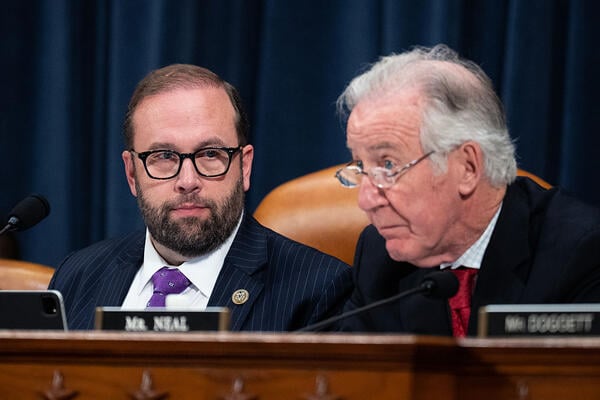
    “Seven years ago, the Trump tax cuts sparked an economic boom and provided needed relief to working families,” committee chairman Rep. Jason Smith, a Missouri Republican, said in a Friday statement. “Pro-family, pro-worker tax provisions are the heart of President Trump’s economic agenda that puts working families ahead of Washington and will create jobs, grow wages and investment, and help usher in a new golden age of prosperity. Ways and Means Republicans have spent two years preparing for this moment, and we will deliver for the American people.”

    The proposal comes amid the president’s full blown attack on higher education, which has seen the federal government clamp down on research funding, go after colleges for alleged antisemitism, take aim at diversity, equity, and inclusion programs, and attempt to deport international students.

    Since the 1.4 percent endowment excise tax was passed in 2017 during the first Trump administration higher education leaders have long worried that the president would raise it in his second term. 

    As universities increased their lobbying efforts in the early days of Trump 2.0, the potential increase to the endowment tax has been a key concern. Recent lobbying reports show that Harvard University, which has the largest endowment, recently valued at more than $53 billion, Princeton University, Northwestern University, and multiple others, have pressed Congress on the issue. (Northwestern’s chief investment officer said last week that the potential increase would be “destructive.”)

    Smaller institutions, some of which had never hired federal lobbyists before 2025, have also raised concerns about how expanding the endowment tax would harm their educational mission.

    According to an analysis from James Murphy, director of career pathways and post-secondary policy at Education Reform Now, only three universities would pay the highest rate at 21 percent – Princeton, Yale University and the Massachusetts Institute of Technology. Another 10 universities, including Harvard, would get hit with the 14 percent rate.

    An analysis published last month by the investment firm Hirtle Callaghan noted that recently proposed changes to the endowment excise tax would “significantly broaden the universe of colleges and universities that pay the tax from large, wealthy institutions to smaller, regional ones.” That analysis warned that such increases “threaten to do irreparable damage to many schools which are significantly weaker financially than the schools paying the current tax.”

    Multiple higher education associations have previously expressed opposition to the increase. 

    Last fall, American Council on Education president Ted Mitchell sent a letter to Congress, co-signed by 19 other associations, calling for the repeal of the existing endowment tax, arguing that “this tax undermines the teaching and research missions of the affected institutions without doing anything to lower the cost of college, enhance access, or address student indebtedness.”

    Source link

  • Higher Education Inquirer : Rutger Bregman

    Higher Education Inquirer : Rutger Bregman


    Higher Education Inquirer : Rutger Bregman – “Moral Ambition” (The Daily Show)


    Rutger Bregman – “Moral Ambition” (The Daily Show)

    Historian and best-selling author Rutger Bregman joins Jon Stewart to unpack his latest book, “Moral Ambition,” which is a call to action for people, especially those with education and privilege, to devote their talent and resources to careers and causes that make the world a better place. He describes how the political left has often made the mistake of placing moral purity above political relevance, and what they can learn from conservatives about building small movements into a larger, results-oriented coalition. Bregman also addresses the problem of what he calls our “inverse welfare society,” in which most high-paying, high-status jobs are inessential, and how his organization, The School for Moral Ambition, aims to reverse that structure by helping people quit their corporate jobs and transition into careers of positive impact.


    Source link

  • Choice, culture and commitment in learning, part two

    Choice, culture and commitment in learning, part two

    As I explored in part 1, the implications of Michael Godsey’s article for higher education are profound, particularly in the way it highlights disparities in student motivation, engagement and academic culture between different types of institutions.

    His observations about the buy-in effect at private K-12 schools—where students and their families actively choose and invest in the educational experience—find a parallel in higher education, where the most selective colleges tend to foster stronger academic engagement, often by self-selecting for motivation as much as talent.

    Selective Colleges and the Culture of Academic Commitment

    Just as Godsey observes that students at private schools like his daughter’s exhibit greater enthusiasm and self-discipline, students at elite colleges and universities often display a higher level of academic investment. This is not necessarily because they are inherently more talented but because they have been filtered through a selection process that prioritizes motivation, work ethic and demonstrated academic dedication.

    • Students at these institutions expect rigorous coursework and embrace the challenge rather than resisting it.
    • Faculty are less preoccupied with maintaining order and more focused on deep intellectual engagement because the students themselves uphold a culture of academic seriousness.
    • The peer effect reinforces engagement—when all students around you are driven, it’s harder to disengage without standing out.

    This dynamic is similar to tracking in K-12 schools, where students deemed more academically capable are placed in advanced or honors programs, shielding them from the distractions of less engaged peers. The difference is that in higher education, this sorting happens through admissions rather than within schools.

    The Motivation Gap Across Different Types of Colleges

    At broad-access institutions, such as regional public universities or community colleges, faculty often encounter a wide spectrum of student engagement—some highly dedicated, others struggling with external obligations and some with little intrinsic motivation for academic work. This presents a challenge similar to what Godsey describes in public high schools:

    • Many students don’t see themselves as having bought in to the academic experience. They may be there out of necessity (to qualify for a better job or a chance to participate in athletics) rather than a deep commitment to intellectual growth.
    • External distractions—jobs, family responsibilities, financial pressures—compete with academic priorities, making it harder to sustain focus and engagement.
    • A culture of disengagement can take hold, just as in the public school classrooms Godsey describes, making it difficult for even motivated students to thrive.

    Should Higher Education Track Students More Explicitly?

    One implicit takeaway from Godsey’s argument is that students benefit when they are surrounded by peers who share their academic enthusiasm. This raises a controversial but important question for higher education: Should colleges do more to track students into different learning environments based on motivation and engagement, rather than simply ability?

    In some ways, this already happens:

    • Honors programs at public universities function as internal selective institutions, grouping together highly motivated students and giving them smaller, discussion-driven courses with top faculty.
    • Gated entry into high-demand majors is widespread, often driven to enhance a particular college’s rankings.
    • Specialized cohorts and living-learning communities create subgroups of engaged students who reinforce each other’s academic commitment.
    • Highly structured programs (such as those in STEM and pre-professional tracks) implicitly filter for motivation by their demanding course sequences.

    Yet, tracking within higher education is far less explicit than in K-12 schools. At many institutions, faculty find themselves teaching classes with highly diverse levels of motivation, which can lead to tensions:

    • Should professors lower expectations to accommodate less prepared or less motivated students?
    • Should they hold firm on rigor and risk alienating or failing a significant portion of their class?
    • How can institutions better cultivate a culture of academic commitment, particularly in settings where students do not automatically arrive with strong buy-in?

    Bridging the Motivation Gap in Higher Education

    Rather than creating rigid tracking systems that could exacerbate educational inequalities, colleges need to find ways to embed buy-in within all types of institutions. Possible strategies include:

    • Creating more cohort-based learning models: Small, high-impact learning communities, similar to honors programs but available to all students, can cultivate shared academic identity and accountability.
    • Rethinking advising and orientation: Encouraging intentional major selection and career goal setting early on can help students see education as a personal investment rather than an obligation.
    • Using pedagogical strategies that reinforce engagement: Active learning, project-based work and immersive real-world applications can encourage students to see their studies as meaningful.
    • Reinforcing faculty-student relationships: At elite institutions, students benefit from close faculty mentorship; replicating this at other colleges through structured faculty-student interactions could increase motivation and accountability.

    The Best Schools Don’t Just Teach—They Create a Culture of Learning

    At first glance, the purpose of education seems straightforward: Schools exist to teach students knowledge and skills. But the most effective institutions do far more than simply deliver content. The best schools create an intellectual culture—a shared commitment to curiosity, critical thinking and lifelong learning.

    This distinction is especially relevant in higher education, where student engagement, institutional culture and faculty mentorship shape not just what students learn, but how they learn and apply knowledge beyond the classroom.

    The Difference Between Teaching and Cultivating a Learning Culture

    This distinction is critical. If universities merely teach, students may approach their studies passively, checking off degree requirements with minimal engagement. But when institutions create a vibrant learning culture, students take ownership of their education. They become active participants in discussions, independent researchers and engaged citizens who seek knowledge not just for grades, but for its intrinsic value.

    How a Learning Culture Manifests in Higher Education

    A learning culture is shaped by many factors, including institutional values, faculty engagement, student expectations and extracurricular opportunities. The best colleges and universities foster this culture in several ways:

    1. High-impact educational practices: Research has shown that certain experiences—such as undergraduate research, study abroad, service learning and collaborative projects—dramatically enhance student learning. Institutions that embed these practices into coursework ensure that students don’t just passively absorb information but engage with real-world applications of knowledge. For example:
      1. Portland State University incorporates service learning into its capstone courses, requiring students to work on community-based projects.
      2. CUNY’s Macaulay Honors College integrates research experiences into its curriculum, ensuring students engage in inquiry-driven learning from their first year.
    2. Faculty as mentors, not just lecturers: At institutions with strong learning cultures, faculty members do more than deliver lectures—they mentor students, involve them in research and challenge them to think critically. Close faculty-student relationships create opportunities for intellectual exchange outside the classroom. Some universities institutionalize this by:
      1. Encouraging faculty-student lunches or informal discussion groups (e.g., the University of Michigan’s M-PACT mentoring program).
      2. Embedding research experiences in first-year courses (e.g., the University of Texas at Austin’s Freshman Research Initiative).
    3. Intellectual curiosity beyond the classroom: The best colleges cultivate a campuswide intellectual atmosphere. This happens through:
      1. Public lectures, symposia and visiting scholar programs that expose students to ideas beyond their coursework.
      2. Student-driven initiatives like debate societies, interdisciplinary discussion groups and maker spaces.
      3. Engagement with the arts and humanities, ensuring that even students in technical fields experience creative and philosophical inquiry.
    4. Challenging, not just accommodating, students. Many institutions focus heavily on student retention and satisfaction, sometimes at the cost of intellectual rigor. A true culture of learning, however, challenges students. The best universities set high academic expectations while providing the support needed to meet them. Examples include:
      1. Honors programs and cohort-based learning communities that create rigorous academic environments within broader universities.
      2. Writing-intensive courses across all disciplines, reinforcing analytical skills that extend beyond students’ majors.
      3. Project-based and interdisciplinary coursework that requires synthesis of ideas rather than rote memorization.

    Implications for Colleges and Universities

    If higher education institutions want to cultivate a true learning culture, it must move beyond simply delivering content and reimagine how it engages students. Some key implications include:

    • Rethinking how we measure success: Universities often emphasize graduation rates, job placement and standardized learning outcomes. While these metrics are important, they do not necessarily reflect a thriving intellectual culture. Institutions should also assess engagement: Are students participating in meaningful discussions? Are they involved in research? Are they developing the habits of lifelong learners?
    • Ensuring high-impact practices are accessible to all students: Many transformative experiences—such as study abroad and research opportunities—are disproportionately available to students at elite institutions. Public universities and community colleges must find ways to embed these experiences into the curriculum, making them accessible to part-time, commuter and first-generation students.
    • Prioritizing faculty-student interaction: Universities must incentivize mentorship by valuing faculty engagement with students in promotion and tenure decisions. Large lecture-based institutions should integrate more small-group learning experiences to facilitate faculty-student connections.
    • Encouraging intellectual risk-taking: A culture of learning is not about teaching students to parrot back information but about encouraging them to take intellectual risks. This means fostering open debate, embracing interdisciplinary inquiry and encouraging creative problem-solving.
    • Creating a campus climate that values inquiry: Universities must ask themselves: Do students feel that intellectual curiosity is encouraged? Are there informal spaces for discussion and debate? Are students challenged to think critically about complex issues rather than being shielded from uncomfortable ideas?

    The University as a Catalyst for Lifelong Learning

    A true learning culture does not end at graduation. The best colleges and universities equip students with the intellectual tools to continue learning throughout their lives. This means fostering habits of critical inquiry, a passion for ideas and the ability to adapt to new knowledge.

    The best schools, like the most impactful professors, don’t just teach; they inspire curiosity, cultivate resilience and shape the way students engage with the world. If higher education is to fulfill its democratic and intellectual promise, it must embrace this mission—not just to produce degree holders, but to create lifelong learners.

    Steven Mintz is professor of history at the University of Texas at Austin and the author, most recently, of The Learning-Centered University: Making College a More Developmental, Experiential and Equitable Experience.

    Source link