Tag: Higher

  • Findlay, Bluffton merger called off

    Findlay, Bluffton merger called off

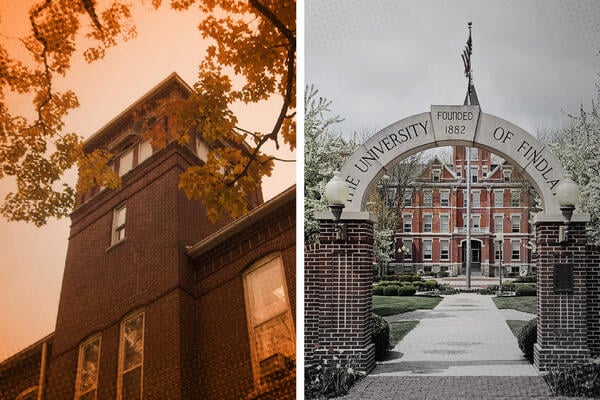
    Almost a year after the University of Findlay and Bluffton University publicly shared plans to merge, the deal is off, both institutions announced last week, citing various challenges.

    The University of Findlay, the larger and financially stronger of the two private, religiously affiliated institutions in northwest Ohio, was the one to call off the merger. Its Board of Trustees voted last week not to move forward with the plan, according to a statement from the university.

    “Some higher education organizations may find mergers the best path forward,” University of Findlay president Katherine Fell said in the statement announcing the decision. “For us, due diligence in this case has demonstrated that partnering in key ways is a better solution.”

    A Sudden Change of Plans

    Sticking points on the deal were college athletics and, relatedly, financial aid.

    When the merger plan was initially announced, both institutions intended to combine operations but maintain certain elements of their identities. For example, Findlay would remain affiliated with the Churches of God, General Conference, and Bluffton would stay with Mennonite Church U.S. Athletics would also stay separate; Findlay planned to compete as the Oilers at the NCAA Division II level, while Bluffton would continue in the NCAA’s Division III under the Beavers moniker.

    But that proved difficult, according to Findlay’s statement, which noted that regulations require a separate process for financial aid distribution “and prohibit the sharing of resources and sports facilities, resulting in fewer synergies in those areas than originally anticipated.”

    The statement said that Findlay will continue to seek strategic partnerships. Asked for more information, Fell told Inside Higher Ed by email that “while Findlay is open to continuing these types of collaborations with Bluffton, we extend that potential for collaboration to other higher education institutions that are looking for creative ways to engage and serve students, employees, and stakeholders.”

    A Bluffton spokesperson said by email that the two universities “do not have any type of formal partnership in the works at this time.”

    In their own statement on the deal being called off, Bluffton officials noted that the due diligence process was beneficial in helping the university move forward, even though the merger did not come to fruition despite a year of work.

    “While the outcome of this vote was not within Bluffton University’s control, we remain confident, optimistic and steadfast in our commitment to the future of our institution,” Cheryl Hacker, chair of the Bluffton University Board of Trustees, said in a statement issued last week.

    Though she acknowledged feeling “a moment of disappointment” in the failed merger, Hacker added that Bluffton “continues to be financially stable, strategically independent, and well-prepared for the future.”

    The move to drop the merger was unexpected; a frequently asked questions page on Bluffton’s website said that the university was “shocked and disappointed by this change in direction.”

    The FAQ page also noted that “Bluffton University is not privy of [sic] the reasoning behind the decision.”

    As Bluffton moves forward in the aftermath of the aborted plan, it will do so without President Jane Wood: she resigned Wednesday, the same day Findlay’s board voted down the merger.

    Financial Imbalance

    On paper, Findlay is the stronger of the two institutions.

    Its endowment was valued at $67.8 million in the latest publicly available audit. Findlay has also stayed in the black, operating with positive revenues generated during its last 10 fiscal years.

    Bluffton’s endowment was valued at $29.3 million in the latest publicly available audit, down from $37.6 million in the previous fiscal year. It has operated at a loss in six of the last 10 fiscal years.

    In terms of enrollment, Findlay is much larger, reporting a head count of 5,057 students in fall 2023, compared to 678 for Bluffton, federal data shows.

    What’s Next?

    Despite the abrupt change of plans, Bluffton officials have sought to dispel speculation that closure is imminent, noting on the FAQ page that it has “a solid foundation, and is well-prepared for future growth and success.”

    Not long ago, both institutions seemed fully on board with the merger.

    In a FutureU podcast interview recorded in January and published last week, the presidents of both universities appeared committed to moving forward, but they noted various frustrations with the effort—particularly the glacial process, which both leaders said they wanted to speed up.

    “We believe in this merger,” Fell said at the time. She noted in the podcast that the two universities were “already setting up shared services, which are going to benefit us tremendously.”

    In her email to Inside Higher Ed, Fell wrote that the two universities “have collaborated to share guest speakers, cover sabbatical leave, offer additional course options for students, fill low-enrolled course sections, host events for our local communities and provide students with joint cross-cultural experiences.” At the same time, she noted, the two institutions have “explored cost sharing of administrative services but have not yet implemented those.”

    On the podcast, Fell expressed impatience with the change of control required for a merger, noting “frustrations embedded in the process,” which could take from 18 months to three years to complete, limiting what the two institutions could achieve before approval. She added the process “will certainly cost us a few hundred thousand [dollars]” but “we have had good fortune in having internal grants and funding sources” to aid with merger costs.

    “There is reason for frustration—not blame,” Fell said on the podcast.

    The proposed merger between Findlay and Bluffton isn’t the only partnership to fall apart in recent years—even in the state of Ohio.

    Last year Notre Dame College, a private Catholic institution, announced it was closing after the strategic partnership it sought with the much larger, public Cleveland State University never materialized.

    Elsewhere, in 2023, Trocaire College scuttled its planned acquisition of nearby Medaille University, in Buffalo, N.Y., leading Medaille to announce its closure the very next week.

    Some colleges have managed to survive independently after reversing course, including the Portland, Ore.-based National University of Natural Medicine and Seattle’s Bastyr University, which called off merger plans in late 2023.


    Source link

  • AGB leader resigns abruptly after six months

    AGB leader resigns abruptly after six months

    Less than a year into the job, Framroze Virjee is out as president and CEO of the Association of Governing Boards of Universities and Colleges.

    Virjee retired, a decision that was effective Saturday, according to an email from Ross Mugler, chair of AGB’s Board of Directors, who has been tapped as acting president and CEO.

    “Fram shared that after working diligently to further the organization’s mission, he determined that the president/CEO role at AGB did not align operationally with his personal and professional goals, and he decided to step down from the organization. The AGB Board of Directors accepted his resignation and offered its appreciation for his accomplishments during his tenure,” Mugler wrote in a Monday email.

    In a message to AGB staff, Virjee wrote, “This was a difficult decision and not one that I made casually, but instead only after careful consideration and thought. As I leave AGB, I remain committed to its mission of supporting excellence in board governance and leadership and remain dedicated to the value of higher education in the lives of students, our communities, and our nation.”

    Virjee, president emeritus of California State University, Fullerton, formally started in mid-August after his predecessor, former AGB president and CEO Henry Stoever, resigned amid plagiarism allegations in late 2023.

    AGB did not respond to a request for comment from Inside Higher Ed on Monday about Virjee’s sudden exit, but the organization’s website has been updated to reflect the leadership change.

    “As a result of this announcement, I have agreed to serve as acting president and CEO while the AGB Board of Directors finalizes details regarding new leadership,” Mugler wrote Monday.

    Mugler recently retired as commissioner of the revenue for Hampton, Va., a post he held for more than three decades. Mugler has been on AGB’s board since 2018 and was appointed five times to Old Dominion University’s Board of Visitors.

    Source link

  • Ramadan should matter to higher education

    Ramadan should matter to higher education

    Ramadan celebrates the revelation of the Islamic holy book, the Qur’an, to the Prophet Muhammad.

    One of the five pillars of Islam is fasting (abstaining from all food and drink) during daylight hours in this holy month.

    In the UK, approximately 321,000 (11 per cent) students identify as muslim, which is the largest religious group after christian students (27 per cent).

    However, in a recent survey of nearly 300 UK educators, almost a quarter of them couldn’t say when Ramadan took place in 2024. A quarter also didn’t know whether they had any muslim students in their classes.

    Only 30 per cent knew the exact dates of Ramadan, and 47 per cent could only guess approximately. Worryingly, 40 per cent of respondents had no idea whether their muslim students were fasting, and despite 56 per cent acknowledging a need for change in teaching practices, only half of them had actually made any adjustments.

    This is concerning – because the practice of Ramadan will undoubtedly impact muslim students’ ability to engage with their studies among those who are able to observe it.

    The ninth month of the Islamic calendar

    Throughout Ramadan, priorities may shift towards personal worship and devotion, as well as family and community.

    They are more likely to require time to pray during the day, and to be absent to celebrate Eid at the end of Ramadan.

    Changes to muslim students’ routines to enable them to take part in pre-dawn meals and night prayers may also impact their learning. The effects of Ramadan will also fluctuate during a given day as well as through the fasting period.

    You can gain an insight into Ramadan from a students’ perspective in this video, produced by Oxford Brookes University.

    A prevalent myth is that staff should avoid eating and drinking in front of fasting students. This is not necessary – muslim students respect the need for others to eat and drink and generally do not expect others to alter their behaviour.

    However, it is considerate to avoid organising social events centred around food and drink during Ramadan.

    Another misconception is the belief that students will automatically request support or adjustments if needed. In reality, students may not be aware of their rights to reasonable adjustments on religious grounds, or they might not feel comfortable making those sorts of requests.

    Staff should openly communicate institutional policies regarding religious observance and encourage students to discuss their needs without fear of judgement or disadvantage.

    Fasting doesn’t affect all students in the same way. Not all muslim students fast – some may be exempt due to health reasons, travel, or other personal circumstances. The effects of fasting can also vary, with some students managing well while others may struggle, particularly during the holiest last ten days of Ramadan.

    Evidence regarding the impact on learning of fasting during Ramadan is mixed. It can have different impacts on cognitive functioning depending on whether students are studying in predominantly muslim countries or not.

    In terms of the impact of disrupted sleep routines and a lack of sleep on learning, the evidence is fairly robust, with multiple studies showing a negative impact. This sleep disruption when observing Ramadan could potentially have a greater impact on students’ learning than fasting itself.

    Unfortunately, the limited guidance available on most institutional webpages in the UK seems to be aimed at muslim students themselves, putting the onus on them to seek support or adjustments. This positioning takes away some of the responsibility of institutions to amend practices and policies to support these students.

    Supporting muslim students

    With these issues in mind, I led a project to find out what educators proactively do to support muslim students.

    Based on our findings, and with contributions from a panel of muslims and other experts, we created a guide containing information and practical support for educators to implement in their classrooms. The guide is available to download from the National Teaching Repository.

    In the guide we have:

    • included an email template (page 9) that you can adapt to send to all students to acknowledge Ramadan
    • included a link to free printable posters about Ramadan to display on campus
    • busted common myths, for example around eating and drinking
    • provided 6 ways to make relatively small changes to learning and teaching practices that could make a big difference. These include 1) Acknowledge Ramadan, 2) Avoid Assumptions and Ask, 3) Adjust Assessment Timings, 4) Offer Asynchronous Learning, 5) Raise Awareness and Celebrate, and 6) Be Inclusive and make Sustainable Change.
    • given some guidance relating to supporting students who are on a work placement

    Supporting muslim students on work placements during Ramadan presents unique challenges and opportunities. The guide encourages conversations with placement coordinators and managers early to explore what accommodations might be available, such as flexible scheduling to allow for prayers or adjusted meal breaks to accommodate Suhoor (pre-dawn meal) and Iftar (meal to break the fast).

    It also highlights the importance of understanding the potential impact of such accommodations not only on students but also on clients, patients, or service users in placement settings, ensuring that any adjustments made are both supportive and practical.

    Organising a three-way meeting between the placement provider, the student, and the academic lead can help surface specific issues and create tailored solutions. And constructing a formal policy for supporting fasting students on placements could serve as a blueprint for sustainable, long-term change.

    More broadly, institutions could formalise their approach by adding “religious observance” as a standing agenda item in relevant committees and planning meetings. This would ensure that religious inclusion is not treated as an afterthought but as an integral part of institutional decision-making.

    Working with university chaplaincies is another recommendation – chaplains often have direct connections with religious student groups and can provide valuable insights into their needs. Ideally the sector would move beyond fixes and towards normalising religious inclusivity, reduce barriers to learning, and demonstrate a genuine commitment to equity and fairness.

    We hope that the guide will make it relatively easy for educators to take some immediate positive action, and that even a small change will make a positive difference by increasing a sense of belonging and mattering to our muslim students.

    Source link

  • Senate vote finalizes Linda McMahon as education secretary

    Senate vote finalizes Linda McMahon as education secretary

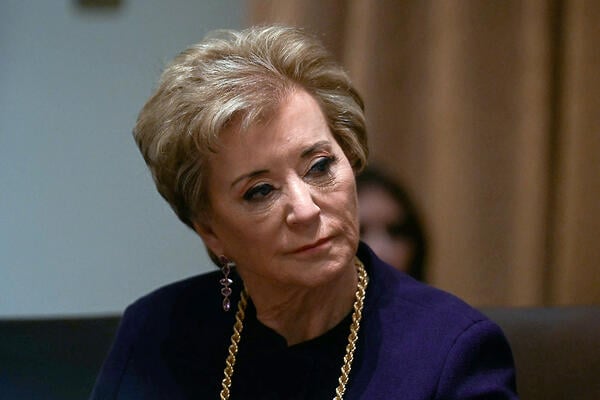
    Linda McMahon was narrowly confirmed along party lines as President Trump’s secretary of education in a 51-to-45 Senate vote late Monday afternoon and sworn in shortly after at the Department of Education building.

    All eyes are now on the White House as educators, policy experts and advocates anxiously wait to see if Trump will sign a controversial but highly anticipated executive order to abolish the very department McMahon has been confirmed to lead.

    The president and his allies have promoted the idea of dismantling the 45-year-old agency since the early days of his campaign for a second term, saying the department has grown too big and interferes in matters best left to local and state authorities.

    But the idea isn’t entirely new, nor would it be easy to implement. It would require legislative support, as the department’s existence is written into statute. Shuttering it would require a majority vote in both houses of Congress.

    “We can expect there to be a bit of a panic when the order comes out,” Emmanual Guillory, senior director of government relations at the American Council on Education, told Inside Higher Ed.

    It remains unclear to observers what mechanisms the Trump administration would use to close the department, however.

    “This will all depend on what dismantling the department truly means,” Guillory said. “I believe that the executive order would be somewhat broad, like we’ve seen [in the case of the diversity, equity and inclusion orders], and it will give the department the opportunity to refine the details.”

    Still, Trump has continued to promote the concept, and red states across the country have backed it. Chatter about the executive order began circling just days after he took office in January, and the plans were confirmed by multiple news sources in early February, though specifics were still unclear.

    Since the plans were leaked, Trump himself has publicly confirmed his intention to dismantle the department, although he did not disclose specific details on how he would do so.

    Guillory believes that much like when Republicans have tried to get rid of the department in the past, they will lack the congressional votes needed to officially do so. But Trump could keep the skeleton of the department and move its core functions elsewhere, he said.

    “Our thinking, because we’ve seen this before, is that likely a lot of the functionality of the department would get placed at other agencies, but we would be curious as to what functions would be terminated entirely,” he said. “That would cause the most concern for our members … Will those things simply be moved to another agency, or will some of those things not?”

    There are certain functions that are protected by the Higher Education Act of 1965, Guillory said. “The department legally would not necessarily be able to just terminate student aid programs, for example.” But he still worries the transition of oversight from one department to another may not be seamless.

    Shortly before the vote began on Monday, the Senate minority leader, Chuck Schumer of New York, made the Democrats’ stance on McMahon’s nomination clear.

    “Before colleagues vote on Linda McMahon’s nomination for secretary of education, they should remember a vote for Mrs. McMahon is a vote for draconian cuts to education … That’s why I am so proud that every Democrat will vote no,” he said.

    Other democratic lawmakers warned during floor comments on Thursday that McMahon’s confirmation, and the major department-level changes she’s backed, could risk the future of the department.

    Senator Gary Peters of Michigan said the country needs a secretary of education “who values and respects public education.”

    “Instead of working to protect funding,” he said, “she’s blatantly supported efforts to dismantle our education system.”

    For more background on what senators have said about McMahon, check out Inside Higher Ed’s live blog from her confirmation hearing, or read the five key takeaways.

    Senator Alex Padilla of California noted the cuts that have already been made to more than 100 departmental research contracts and countless nonpartisan career staff members.

    “They’re making it clear that this is just the beginning,” he said. “We could talk about Linda McMahon’s qualifications, or frankly lack thereof, but I’m not shocked, because President Trump isn’t looking for someone with the background or commitment to public education in America. He’s looking for someone to destroy it.”

    Although no Republicans commented Thursday, they voted unanimously to confirm McMahon in Monday’s vote (Republican senators Shelley Moore Capito of West Virginia and Cynthia Lummis of Wyoming were not present for the vote. Two Democrats were also absent). The majority leader, Senator John Thune of South Dakota, spoke in support of McMahon before the final confirmation.

    “Mrs. McMahon is an accomplished businesswoman and public servant,” he said. “I’m glad that Mrs. McMahon plans to work in a way that empowers those closest to the student, because they are in the best position to do what’s right for that student … I look forward to working with Mrs. McMahon to limit bureaucracy, empower state governments and let good teachers do what they’re best at.”

    Top Agenda Items

    Guillory expects McMahon to pick up accreditation policies as one of the first issues up for discussion.

    He also is expecting the new secretary to prioritize rethinking and potentially amending the financial value transparency and gainful-employment rule, a policy initiated by the Biden administration to better hold higher ed institutions accountable for students’ outcomes. A lawsuit was filed against the regulation in 2023, but federal judgment has been put on pause to allow the new administration’s Education Department to determine its position on the policy.

    It still remains unclear whether Trump will try to protect the gainful-employment rule or repeal it and drop the case, but Guillory has been encouraged by the line of communication between the department and higher ed leaders on the topic.

    “They’ve been really good about listening to and hearing from our members directly on some of the issues that they’ve experienced while they were reporting [financial transparency data] and they are really trying to get feedback on how can we make this better,” he said.

    Other topics of focus for McMahon will likely include expanded details on Trump’s enforcement of Title IX; his diversity, equity and inclusion orders; and the freeze of applications to income-driven repayment plans for student loans, Guillory said.

    Source link

  • Academics should forcefully reject the claim they are “promoting ideology”

    Academics should forcefully reject the claim they are “promoting ideology”

    To the editor:

    Jonathan Eburne calls the National Endowment for the Humanities’ posting of the executive orders regarding the promotion of gender, equity and environmental justice ideology an act of “capitulation” equivalent to “the ideological extension of a political party” (“An Open Letter to the NEH,” Feb. 28, 2025). I share his critical stance toward the executive orders and the spirit driving them. But his accusation against the NEH is unfair and normalizes a dangerous misreading of the scope of the orders that higher education must avoid.

    The NEH chair and staffers are federal employees, bound to obey government directives. To refuse compliance would invite immediate termination of the agency’s talented, experienced staff and call the future of the agency into question. With them would go vital funding and stewardship for the humanities that sustains faculty, students, state humanities councils and members of the public.

    To be clear, these orders apply across the federal government, and nothing in them is specific to the NEH. They do not apply to research and teaching; one (EO 14173) includes a carve-out for institutions of higher education.

    By treating NEH projects as falling under the scope of the orders, Eburne implicitly assents to the notion that research and teaching are equivalent to promoting ideology. This is indeed the guiding belief in Florida, and it is shared by the current administration.

    In fact, “promoting ideology” is not an accurate definition of scholarly or scientific inquiry, including the important work of teaching and doing research on gender, equity and the environment.

    It is crucial that we stand up against attempts to define academics as promoters of ideology and thus as untrustworthy stewards of knowledge, or, as the vice president has put it, dedicated to “deceit and lies, not to the truth.” It’s malicious abuse of language designed to undermine people’s confidence in academia and in expertise in general. The right strategy is not to accept a bad definition—it’s to call out the definition as wrong and reject the labeling while these orders are litigated in the courts.

    Joy Connolly is the president of the American Council of Learned Societies.

    Source link

  • The Changing Landscape of Internships in Higher Education

    The Changing Landscape of Internships in Higher Education

    Title: Internships Index 2025

    Source: Handshake

    The latest research from Handshake reveals a troubling reality in higher education: the internship landscape is becoming both more competitive and less accessible, particularly for students already facing systemic barriers. Based on a November 2024 survey of over 6,400 students and recent graduates, combined with job posting and application data from over 15 million students and 900,000 employers on Handshake, this report highlights key trends shaping the internship experience today.

    Internship listings have fallen by more than 15 percent from January 2023 to January 2025. At the same time, applications have dramatically increased, doubling the competition for each available position. The decline is even more severe in high-paying fields—technology postings dropped by 30 percent, and professional services postings dropped by 42 percent.

    There are persistent participation gaps:

    • First-generation college students (50 percent) lag behind their peers (66 percent) in internship participation.
    • Students at institutions classified as “inclusive” in the Carnegie Classifications (those with less selective admissions) have much lower internship participation rates (48 percent) compared to students at institutions classified as “selective” or “more selective” (70 percent).
    • Students at these inclusive institutions are twice as likely as those at selective schools to cite financial constraints as their main reason for not pursuing internships.

    These disparities are exacerbated by practical realities. More than 80 percent of first-generation students and those at inclusive institutions report struggling to balance internships with coursework or employment. The timing of internship recruitment adds another challenge, with larger employers typically concentrating on hiring in fall and winter while smaller employers tend to recruit later into the spring.

    Yet internships remain transformative experiences when students can access them. Among those who have completed internships, 56 percent report that the experience was essential in making progress toward their career goals and 79 percent say the experience had a moderate or significant impact on their interest in working for that employer. Of students who haven’t yet participated in internships but hope to do so, 59 percent believe internships will be essential to clarifying their career goals.

    Quality of experience matters as much as access to the opportunity itself. Students who felt fairly compensated were more likely to accept a job offer from that employer (82 percent) versus those who felt underpaid (63 percent), and over half (58 percent) report that mentorship had a major influence on their desire to work for their internship employer.

    Internships have long been a critical bridge from college to career, offering more than just a line on a resume. By investing in robust internship programs, we not only nurture individual potential but also cultivate a dynamic, forward-thinking workforce prepared to meet the challenges of tomorrow’s workplace.

    To read the full report, click here.

    —Alex Zhao


    If you have any questions or comments about this blog post, please contact us.

    Source link

  • Income-driven repayment applications on hold for three months

    Income-driven repayment applications on hold for three months

    Student loan borrowers won’t be able to apply for income-driven repayment plans for at least three months, The Washington Post reported.

    The Post obtained a memo sent last week from the Department of Education to student loan servicers directing them to stop processing all income-driven repayment and consolidation applications until at least May. The memo offers more clarity on how the department plans to proceed after a federal appeals court blocked the department from implementing a new income-driven repayment option for borrowers put in place by the Biden administration. That injunction also implicated parts of other income-driven repayment plans.

    Up until this point, all that student aid experts knew was that the department had disabled new online applications. Now, they know that all existing applications have also been included in the freeze.

    The application freeze is a problem for some borrowers who rely on income-driven repayment plans for more affordable payments and to avoid default. Under the plans, borrowers’ monthly payments are based on their disposable income and other factors, and after 20 to 25 years of payment, the remaining balance would be forgiven. But now, millions of borrowers no longer have access to IDR and are left with only the most expensive loan repayment options.   

    Scott Buchanan, executive director of the Student Loan Servicing Alliance, a trade group for loan servicers, told the Post that “there is a lot to clean up.”

    “We will be working for [the Office of Federal Student Aid] to implement that transition once courts clear things up and bring some finality so borrowers can have certainty and confidence in their options now and in the future,” Buchanan said.

    The Education Department has said the pause is necessary under the U.S. Court of Appeals for the Eighth Circuit ruling, but paper applications for loan consolidation will be allowed. 

    “A federal Circuit Court of Appeals issued an injunction preventing the U.S. Department of Education from implementing the SAVE Plan and parts of other income-driven repayment (IDR) plans,” a department spokesperson said. So “The department is reviewing repayment applications to conform with the Eighth Circuit’s ruling.” 

    But legal experts on federal loans have told Inside Higher Ed taking down the applications entirely is not necessary. As the department noted in its statement, the injunction only declares “parts” of the IDR plans—such as the end-of-program loan forgiveness—illegal. It does not ban the use of lessened monthly payments.

    Source link

  • One-day event creates institutional goals for student success

    One-day event creates institutional goals for student success

    Across higher education, identifying stakeholders who are engaging in similar initiatives or working toward mutual student success goals can be a challenge, and this is true at the institutional level as well.

    In a 2024 survey of student success professionals conducted by Inside Higher Ed and Hanover, over half (59 percent) of respondents said they believe their institution is very or extremely effective at making student success an institutional priority.

    Two administrators at DePaul University in Chicago created a one-day event on campus to unite practitioners and leaders who care about student success to identify common goals and challenges.

    “It’s so necessary … to think about the gathering of individuals, because it really elevates what was most important for us, which is student success being everyone’s job,” says Ashley Williams, director of student success initiatives.

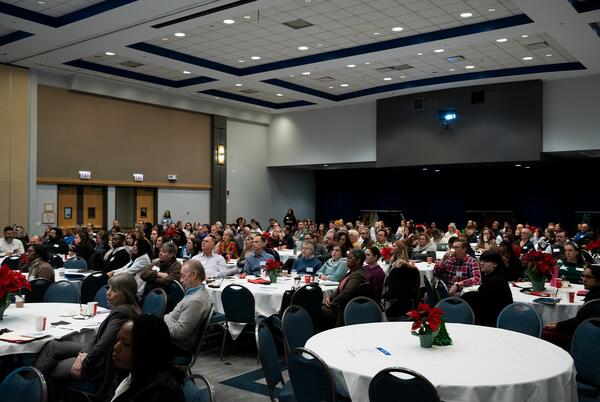
    Gathering together: The inaugural summit took place Dec. 3, 2024, with 350 staff, faculty members and administrators participating. The event featured outside experts, such as Monica Hall-Porter from the University of Texas at Austin as the keynote speaker, and the university president and provost addressed institutional goals for student success and closing achievement gaps.

    The goals for the summit, as outlined by organizers, included defining student success, determining how success is measured, fostering a coordinated culture for student success, charting a road map for enhancing student success and creating awareness of technology, systems and data relevant to student success, as well as sharing of best practices in place at the institution.

    The summit was titled Charting Student Success From Orientation Through Graduation, to reflect the student life cycle and how each practitioner contributes to student success. DePaul, as a Catholic institution, also frames student success through St. Vincent DePaul’s mission.

    Organizers were intentional about selecting individuals from various areas and disciplines across the university to drive creative and diverse conversations, says Michael Roberts, senior assistant dean for student success.

    DePaul’s summit united diverse professionals from a variety of areas and disciplines on campus.

    “I think folks can get … tunnel vision in trying to solve their problems and [trying] to cultivate expertise within their immediate or closest community,” Williams says. “We know there’s a lot of knowledge and strengths that exist across in the institution and in places you may not necessarily [be] thinking about in your day-to-day.”

    Unsiloing the institution and breaking organizational barriers allows for sharing resources, strengths, ideas and innovation through collaboration, Williams says.

    Putting it together: When creating the summit, Roberts and Williams prioritized institutional buy-in and ensuring their work was collaborative and not in competition with the work of others who engaged in student success spaces.

    The organizers engaged with others who were leaders in student success to contribute to planning and guide decision-making to ensure the event could execute goals in the ways they intended, Williams says.

    Partnerships also included identifying internal and external groups that could contribute resources and serve as sponsors to finance and run the event.

    One facet that was important to Roberts was not having the summit be a pep rally to gather enthusiasm, but something that could apply to faculty or staff members’ work directly. “Like, ‘this event is going to matter to me, and I’m going to be able to take something away from this and actually make use of it,’” he says.

    Looking ahead: The inaugural summit had a goal of 50 attendees, so reaching over 300 was a happy surprise, Roberts says. Attendees were a mix of faculty and staff, and feedback was overwhelmingly positive, Williams shares.

    Anecdotally, organizers heard that having a space to discuss topics and be exposed to other work happening across campus was valuable to attendees, as was building community with peers.

    “People felt informed; they walked away enlightened and kind of motivated, inspired to think about how they could lead, how they could pivot some of their work to better fit within a standard model of student success,” Williams says.

    In the future, organizers are looking to implement more programming that allows practitioners to participate in hands-on activities that allow them to engage in work directly.

    What’s being done at your institution to ensure administrators and practitioners in various areas are aware of and using data relevant to student success? Tell us about it.

    Source link

  • Penn State blocks embattled trustee from re-election

    Penn State blocks embattled trustee from re-election

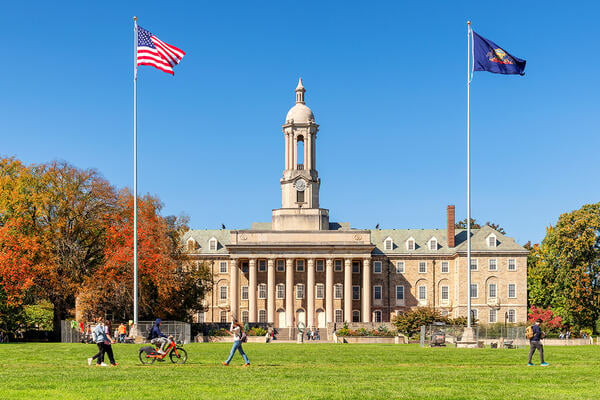
    Embattled Pennsylvania State University trustee Barry Fenchak’s time on the board may be nearing an end: A subcommittee voted Wednesday that he was “unqualified and ineligible” to run again.

    Fenchak is one of nine trustees on the 36-member board who are elected by alumni. His term is set to expire at the end of June. But Fenchak—who is already locked in litigation with Penn State over what he considers its lack of fiscal transparency—plans to fight the decision.

    “This is completely in line with Penn State’s long-standing pattern with regard to trying to maintain their secrecy, and myself and our legal team will be evaluating these recent actions by Penn State and taking the appropriate actions in the court,” Fenchak told Inside Higher Ed.

    The outspoken trustee has been at the center of controversy for nearly a year as he has sought to obtain more details on the university’s rising endowment management fees, even filing a lawsuit for that information. Penn State initially refused to provide the financial details that Fenchak, an investment adviser, said he needed to perform his fiduciary duties; he argued that endowment management fees inexplicably climbed from 0.62 percent in 2013–14 to 2.49 percent by 2018–19. Eventually, as a result of his litigation, he was able to obtain the requested documents, he told Inside Higher Ed.

    His lawsuit is one of two brought against the university last year by trustees alleging a lack of transparency by the board. A local media outlet has also sued for alleged violations of open meetings laws.

    Efforts to Remove Fenchak

    Fellow trustees previously tried to boot Fenchak from the board last fall after he made a crude joke to a female staff member. Paraphrasing the PG-rated Tom Hanks movie A League of Their Own, Fenchak—who is bald and had just received a Penn State baseball cap as a gift at a university event—joked that it made him look like “a penis with a hat on,” according to court records.

    Fenchak’s remark prompted the board to call a meeting in October in an effort to remove him. However, a judge intervened, halting the board’s attempt to oust Fenchak.

    In his opinion granting the preliminary injunction, Centre County Court Judge Brian J. Marshall wrote that while he “is not suggesting that plaintiff should not be sanctioned,” the court had been “presented with credible and, in many instances uncontroverted, evidence that Plaintiff has been subject to ongoing retaliation by Defendants.”

    The judge also noted that Fenchak had sued Penn State just three days before the remark that the board used as justification for his removal.

    Now, months later, the board landed on a new tactic to remove Fenchak: The nine-member nominating subcommittee voted 8 to 1 last week to bar him from running for re-election.

    Daniel Delligatti, vice chair of the subcommittee, argued that Fenchak had been warned multiple times about “inappropriate behavior” and that he failed to live up to the board’s code of conduct.

    Fenchak’s attempt at humor made staff members feel uncomfortable, Delligatti said, and his candidacy for a second term was not in “alignment with Penn State’s mission and values.”

    Trustee Jay Paterno was the sole dissenting vote. He argued that “the process” as he understood it was “outside the scope of our review.”

    Fenchak attended the virtual meeting but was denied an opportunity to speak on his own behalf.

    Deliberations on blocking Fenchak from running for re-election were largely confined to a closed executive session meeting of the nominating subcommittee, which preceded the deciding vote.

    A Legal Fight

    Though a judge halted Penn State’s initial efforts to remove Fenchak, the board and the university’s legal team are again trying to oust him. The same day that the nominating subcommittee shot down Fenchak’s re-election bid, the university filed a motion to dissolve the preliminary injunction that allowed Fenchak to remain on the board as his lawsuit proceeded.

    Fenchak alleges the motion was filed mere minutes after the subcommittee’s decision, which would prevent him from finishing his current term as well as serving another one.

    Penn State officials did not provide a comment on the situation.

    In response to a request for an interview with trustees, Shannon Harvey, assistant vice president and secretary for the board, referred Inside Higher Ed to a video of the subcommittee’s virtual meeting.

    As of publication, Fenchak had not filed a legal response. But he noted one is coming. Beyond the impact on him personally, he also has broader concerns about the board’s process to bar trustees from re-election, which was adopted over the last year as he pressured the university to release financial documents.

    “Forget about my specific situation. This process disenfranchises and essentially steals the vote from our alumni,” Fenchak said. “That’s a right our alumni have had for 150 years, and now we are telling those alumni who they can and who they cannot vote for to represent them on the board. Frankly, that’s unconscionable. As a Penn Stater, it’s heartbreaking.”

    Changes to the way alumni trustees are elected have also caught the attention of state lawmakers.

    At a Feb. 20 Pennsylvania House Appropriations Committee hearing, Republican representative Marla Brown questioned Penn State president Neeli Bendapudi about the change. Brown said she had fielded complaints from constituents and seemed skeptical about the new processes.

    “I can tell you that people are not happy about it, and the optics on it are not good. As I’m sure you’re aware, it looks like a conflict of interest that the board is mainly concerned with picking and choosing the muscle in which the candidates will be serving on the board,” Brown said.

    Asked why Penn State made the change, Bendapudi noted it was a board decision.

    “Did you support the change?” Brown asked.

    “I report to them and I have no say in it one way or the other,” Bendapudi answered.

    Source link

  • Five strategies for improving campus career centers (opinion)

    Five strategies for improving campus career centers (opinion)

    For decades, work-life balance has been seen as the gold standard of career success. The idea suggests that professionals should allocate time and energy evenly between work and personal life, ensuring equilibrium between competing responsibilities. But in reality, balance is often an illusion—an unattainable tightrope walk that leaves individuals feeling guilty, unfulfilled and stretched too thin.

    The workforce of today—and especially the workforce of tomorrow—no longer aspires to a segmented life. Instead, workers seek career and life integration, a holistic approach where career, personal growth and well-being are deeply interconnected. Unlike the concept of work-life balance, which implies a constant trade-off, career and life integration builds synergy between personal and professional aspirations.

    Workday’s Global Workforce Report found that employees who perceive their work as meaningful feel 37 percent more accomplished than those who don’t, even when facing workloads they describe as “challenging.” An Inside Higher Ed Career Advice piece written by a University of Michigan administrator explored the importance of integrating values into the career exploration process. Additionally, research highlighted in the Journal of Personality indicates that young adults’ personal values significantly influence their career-related preferences, suggesting a strong desire for roles that reflect their core values. ​

    If higher ed institutions continue to treat career development as separate from personal well-being, they will fail to meet the evolving needs of students and professionals alike. Career centers must evolve into career and life design labs—hubs of lifelong guidance, personal development and future readiness. This piece outlines five strategic imperatives that institutions must embrace to lead this transformation.

    1. Moving from work-life balance to career and life integration.

    The traditional work-life balance model assumes a strict separation between career and personal life, often emphasizing boundaries rather than synergy. The statistics tell a compelling story:

    • A Deloitte study found that 66 percent of employees report feeling chronically overworked or burned out despite efforts to maintain work-life balance.
    • Research from Gallup indicates that 76 percent of millennials believe a successful career should seamlessly integrate with personal fulfillment rather than be kept separate.
    • A recent Moodle study indicates that job burnout has reached an all-time high of 66 percent in 2025. ​

    Campus career services leaders must reframe their approach. Students need tools to design careers that complement their life aspirations rather than forcing them to choose between professional success and personal fulfillment.

    Most students and alumni struggle with clarity—they pursue careers based on external pressures rather than intrinsic motivations. Career centers must facilitate career and life vision workshops to help individuals align their inner purpose with external opportunities. By integrating career and life design principles into career services, institutions empower students to prototype different pathways, develop adaptability and connect their academic and professional lives with personal meaning.

    By using a reflective, experiential approach, students learn that career development is not a rigid ladder but a fluid, evolving process.

    1. Integrating emotional agility into career coaching.

    One of the greatest barriers to success is not external—it’s internal. It is not a lack of skills. It is a lack of confidence, clarity and emotional agility. Many students enter the workforce grappling with impostor syndrome, career anxiety and fear of failure. A research study titled “The Impostor Phenomenon,” published in the International Journal of Behavioral Science, shows that over 70 percent of people experience impostor syndrome at some point in their lives.

    Institutions must integrate emotional intelligence training into their strategic plans. Students need to learn how to navigate career uncertainty with resilience rather than fear. Instead of merely offering job search strategies, career coaches should incorporate cognitive reframing techniques to help students shift from self-doubt to empowerment. This involves helping students recognize negative thought patterns and replace them with action-oriented mindsets.

    For instance, instead of viewing rejection as a failure, students should be encouraged to see it as an iteration in the career and life design process. Career setbacks, industry changes and professional pivots are inevitable.

    Practical steps for career centers:

    • Train career coaches in cognitive-behavioral coaching techniques to help students recognize and reframe self-limiting narratives.
    • Integrate self-awareness exercises that help students identify core fears (of failure, rejection or inadequacy) and develop action plans to overcome them with emotional strength.
    • Provide group coaching sessions focused on overcoming impostor syndrome, building confidence and developing a growth mindset.
    • Use AI-driven career reflection tools to help students track their confidence growth over time.
    • Incorporate mindfulness practices and journaling into safe spaces and welcoming career and life design studios to help students reframe failure as part of their evolving unique narrative.

    Emotional agility is a core component of career development. Success today isn’t about having the perfect career path—it’s about navigating uncertainty with emotional agility. Career services must equip students with resilience and adaptability to thrive in ever-changing industries.

    1. Merging personal, career and professional development.

    Career and life design should be deeply personal, shaped by self-awareness, curiosity and personal reflection. We mention “personal” first, because we begin with the person.

    Career services has historically focused on résumé reviews, job placement and networking strategies—important elements, but not enough for long-term success. A 2023 report by the National Association of Colleges and Employers found that students who integrate personal development with career planning—through leadership training, mentorship and values-based exploration—are significantly more career-ready upon graduation. Rather than pushing students toward the highest-paying or most prestigious jobs, career centers should help them define success on their own terms.

    Practical steps for career centers:

    • Develop integrated mentorship networks that connect students with professionals who exemplify career and life integration.
    • Help students build personalized business plans that help them take ownership of the story they are both writing and telling.
    • Leverage design thinking principles, encouraging students to experiment with career pathways that embrace uncertainty, adaptability and iterative learning rather than rigid, predetermined plans.

    AI can assist in career trajectory mapping, skills assessment and predictive job market insights, while human coaches focus on deep coaching, the power of stories and career and life integration strategies.

    1. Considering AI-powered hyperpersonalized career coaching.

    While traditional career advising has relied heavily on in-person interactions, the next evolution of career services will be AI-empowered, data-informed and hyperpersonalized. AI-driven career exploration tools can analyze a student’s experiences to offer real-time, customized career insights. AI agents such as the 24-7 virtual Career and Life Design Lab provide personalized career simulations, self-actualization exercises and self-realization insights to help individuals align their career paths with their purpose.

    This mindset shift in career services will blend AI and human coaching. AI can assist in career trajectory mapping, skills assessment and predictive job market insights, while human coaches focus on deep coaching, the power of stories and career and life integration strategies. This synergy allows for scalable yet deeply personalized career services.

    Practical steps for career centers:

    • Integrate AI-driven solutions and experiential learning methodologies.
    • Introduce future-self mapping, where students interview their future selves and map out short- and long-term goals.
    • Use reverse-engineering techniques, working backward from the desired impact to identify the necessary skills, experiences and trajectories.
    • Implement AI-powered career simulations, allowing students to test and refine career decisions in a risk-free environment that tackles limiting beliefs and impostor syndrome.
    1. Scaling lifelong learning beyond graduation.

    The future of work demands continuous upskilling, reskilling and career agility. Institutions must create a culture of lifelong learning, where students and alumni receive ongoing support throughout their careers. Career services must expand their scope to lifelong learning and helping students and alumni develop not résumés, but portfolios of experiences.

    Practical steps for career centers:

    • Create career and life integration circles, where alumni engage in peer coaching, mentorship and accountability partnerships.
    • Offer subscription-based career services, ensuring alumni have access to coaching, upskilling and career reinvention programs throughout their professional lives.
    • Establish annual career and life re-evaluation workshops, helping alumni recalibrate their career and life vision.

    Conclusion: The New Paradigm

    The future of work is not about balance. It is about integration. By embedding the career and life design theoretical framework into institutional frameworks, universities can better equip students for a rapidly changing world. Colleges and universities that fail to adapt will be left behind, while those that embrace career and life design—leveraging both AI and a holistic approach to personal, career and professional development—will supercharge their teams with scale and empower students to craft lives of purpose, adaptability and lasting impact.

    The question is no longer whether career centers should evolve—it is whether they can afford not to.

    Does your career center offer group coaching sessions focused on confidence building, growth mindset or related topics? Tell us about it.

    Source link