Tag: Higher

  • Essay on the panopticon (opinion)

    Essay on the panopticon (opinion)

    Not quite a household word (beyond academia, anyway), “panopticon” nonetheless turns up in news stories with surprising frequency—here and here, for example, and here and here. The Greek roots in its name point to something “all seeing,” and in occasional journalistic usage it almost always functions as a synonym for what’s more routinely called “the surveillance society”: the near ubiquity of video cameras in public (and often private) space, combined with our every click and keystroke online being tracked, stored, analyzed and aggregated by Big Data.

    Originally, though, the panopticon was what the British political philosopher Jeremy Bentham proposed as a new model of prison architecture at the end of the 18th century. The design was ingenious. It also embodied a paranoid’s nightmare. And at some point, it came to seem normal.

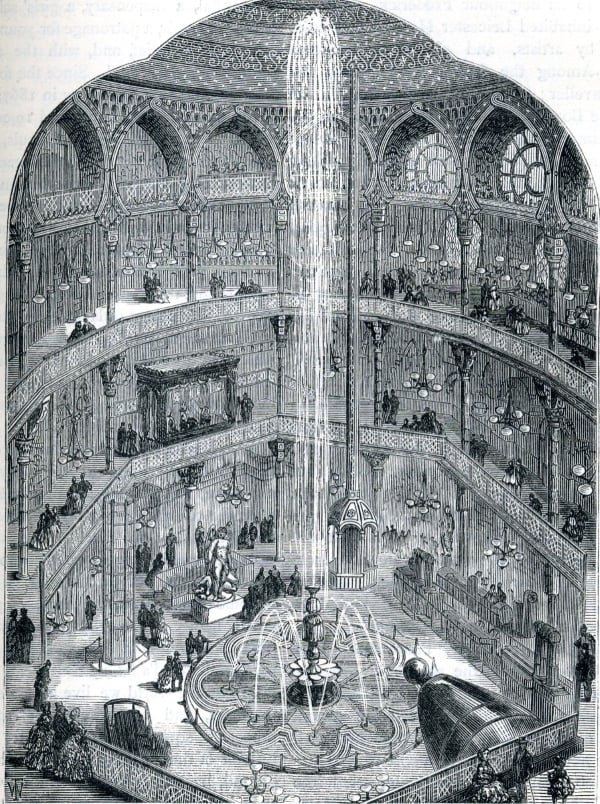
    Picture a cylindrical building, each floor consisting of a ring of cells, with a watchtower of sorts at the center. From here, prison staff have an unobstructed view of all the cells, which at night are backlit with lamps. At the same time, inmates are prevented from seeing who is in the tower or what they are watching, thanks to a system of one-way screens.

    Prisoners could never be certain whether or not their actions were under observation. The constant potential for exposure to the authorities’ unblinking gaze would presumably reinforce the prisoner’s conscience— or install one, if need be.

    The panoptic enclosure was also to be a workhouse. Besides building good character, labor would earn prisoners a small income (to be managed in their best interest by the authorities), while generating revenue to cover the expense of food and housing. Bentham expected the enterprise to turn a profit.

    He had similar plans for making productive citizens out of the indigent. The panoptic poorhouse would, in his phrase, “grind rogues honest.” The education of schoolchildren might go better if conducted along panoptic lines; likewise with care for the insane. Bentham’s philanthropic ambitions were nothing if not grand, albeit somewhat ruthless.

    The goal of establishing perfect surveillance sometimes ran up against the technological limitations of Bentham’s era. (I find it hard to picture how the screens would work, for instance.) But he was dogged in promoting the idea, which did elicit interest from various quarters. Elements of the panopticon were incorporated into penitentiaries during Bentham’s lifetime—for one, Eastern State Penitentiary in Pennsylvania, opened in 1829—but never to his full satisfaction. He was constantly tinkering with the blueprints, to make the design more comprehensive and self-contained. He worked out a suitable plumbing system. He thought of everything, or tried.

    Only in the late 20th century did the panopticon elicit discussion outside the ranks of penologists and Bentham scholars. Even the specialists tended to neglect this side of his work, as the American historian Gertrude Himmelfarb complained in a book from 1968. “Not only historians and biographers,” she wrote, “but even legal and penal commentators seem to be unfamiliar with some of the most important features of Bentham’s plan.” They tended to pass it by with a few words of admiration or disdain.

    The leap into wider circulation came in the wake of Michel Foucault’s Discipline and Punish: The Birth of the Prison (1975). Besides acknowledging the panopticon’s significance in the history of prison design, Foucault treated it as prototypical of a new social dynamic: the emergence of institutions and disciplines seeking to accumulate knowledge about (and exercise power over) large populations. Panopticism sought to govern a population as smoothly, productively and efficiently as possible, with the smallest feasible cadre of managers.

    This was, in effect, the technocratic underside of Bentham’s utilitarianism, which defined an optimal social arrangement as one creating the greatest happiness for the greatest number of people. Bentham applied cost-benefit analysis to social institutions and human behavior to determine how they could be reshaped along more rational lines.

    To Foucault, the panopticon offered more than an effort at social reform, however grandiose. Its aim, he writes, “is to strengthen the social forces—to increase production, to develop the economy, spread education, raise the level of public morality; to increase and multiply.”

    If Bentham’s innovation is adaptable to a variety of uses, that is because it promises to impose order on group behavior by reprogramming the individual.

    From a technocrat’s perspective, the most dysfunctional part of society is the raw material from which it’s built. The panopticon is a tool for fashioning humans suitable for modern use.

    The prisoner, beggar or student dropped into the panopticon is, Foucault writes, “securely confined to a cell from which he is seen from the front by the supervisor; but the side walls prevent him from coming into contact with his companions.” Hundreds if not thousands of people surround him in all directions. The population is a crowd (something worrisome to anyone with authority, especially with the French Revolution still vividly in mind), but incapable of acting as one.

    As if to remind himself of his own humanitarian intentions, Bentham proposes that people from the outside world be allowed to visit the observation deck of the panopticon. Foucault explains, with dry irony, that this will preclude any danger “that the increase of power created by the panoptic machine may degenerate into tyranny …” For the panopticon would be under democratic control, of a sort.

    “Any member of society,” Foucault notes, had “the right to come and see with his own eyes how the schools, hospitals, factories, prisons function.” Besides ensuring a degree of public accountability, their very presence would contribute to the panopticon’s operations. Visitors would not meet the prisoners (or students, etc.) but observe them from the control and surveillance center. They would bring that many more eyes to the task of watching the cells for bad behavior.

    As indicated at the beginning of this piece, nonscholarly references to the panopticon in the 21st century typically appear as commentary on the norms of life online. This undoubtedly follows from Discipline and Punish being on the syllabus, in a variety of fields, for two or three generations now.

    Bentham was confident that his work would be appreciated in centuries to come, but he would probably be perplexed by this repurposing of his idea. He designed the panopticon to “grind rogues honest” through anonymous and continuous surveillance, which the digital panopticon exercises as well—but without a deterrent effect, to put it mildly.

    Bentham’s effort to impose inhibition on unwilling subjects seems to have been hacked; the panoptic technology of the present is programmed to generate exhibitionism and voyeurism. A couple of decades ago, the arrival of each new piece of digital technology was hailed as a tool for self-fashioning, self-optimization or some other emancipatory ambition. For all its limitations, the analogy to Bentham’s panopticon fits in one respect: Escape is hard even to imagine.

    Scott McLemee is Inside Higher Ed’s “Intellectual Affairs” columnist. He was a contributing editor at Lingua Franca magazine and a senior writer at The Chronicle of Higher Education before joining Inside Higher Ed in 2005.

    Source link

  • Florida board approves extensive gen ed overhaul

    Florida board approves extensive gen ed overhaul

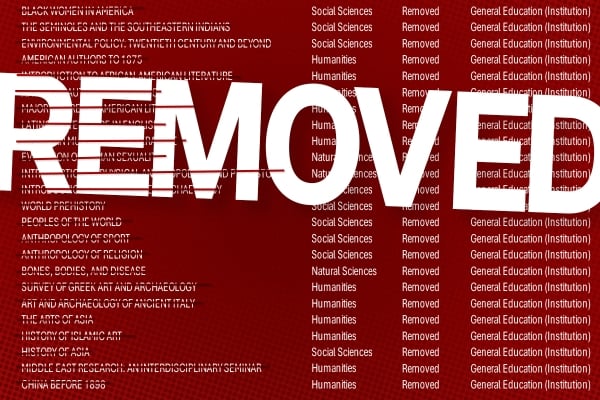
    Students at Florida State University can cheer on the Seminoles across multiple sports, but they can no longer learn about the namesake tribe of Indigenous Americans as part of FSU’s general education offerings after the Florida Board of Governors approved sweeping curriculum changes Thursday.

    Florida colleges have spent months rethinking their general education requirements following a change in state law. Thursday’s vote marked the final step in a contentious and controversial process that brought significant changes to all 12 state universities. Critics accuse the board and system officials of taking a heavy-handed approach and targeting specific topics or courses, while state officials have argued revisions were necessary both to simplify the curriculum and to strip it of “indoctrination.”

    Now, American History 583: The Seminoles and the Southeastern Indians is one of hundreds of courses across Florida’s public universities that will no longer count toward general education credit as part of the extensive overhaul. Neither will Black Women in America or LGBTQ History, both of which were previously included as general education offerings at FSU. Those are just three of numerous courses touching in some way on race, gender or sexuality that institutional boards voted in recent months to drop from general education. All 12 Boards of Trustees then submitted a pared-down list of classes to FLBOG for approval. Three Bible courses remain eligible for general education credit at FSU.

    (An FSU spokesperson noted in an email to Inside Higher Ed that American History 583, which currently has about 150 students enrolled this semester, will now be offered as an elective. Pressed on the rationale for why the course was dropped from gen eds, FSU did not respond.)

    Florida State University’s Board of Trustees dropped a course on Seminole history from the list of general education offerings, but fans can still cheer on the Seminoles.

    Chris Leduc/Icon Sportswire/Getty Image

    State lawmakers required colleges in 2023 to review general education classes in an effort to cut “courses with curriculum based on unproven, speculative or exploratory content,” according to materials shared with the Board of Governors in a presentation for Thursday’s vote.

    The Florida Board of Governors unanimously approved the new suite of gen ed classes Thursday, though some members tried to downplay the notion that the state was trying to limit knowledge.

    “We are not prohibiting universities from offering courses,” Timothy Cerio, chair of the Academic and Student Affairs committee, said at the meeting. Instead, he emphasized that those courses are just being removed from general education curriculum and will remain available as electives.

    State University System of Florida chancellor Ray Rodrigues depicted the vote on general education as stripping indoctrination from curricular offerings. Rodrigues argued that the American public has lost faith in higher education, citing a recent Gallup poll that noted shrinking public confidence in the sector. Among the reasons for that diminished confidence, particularly among Republican respondents, is the belief that colleges push liberal agendas.

    “The general education curriculum that was approved today makes Florida the only state in the nation to address the No. 1 reason why the American people have lost confidence in higher education,” Rodrigues said during the meeting. “We can confidently say that our general education courses that students have to take in order to graduate will not contain indoctrinating concepts.”

    ‘Political Overreach’

    But critics allege administrators have overstepped, as curriculum has traditionally been the faculty’s purview. They also worry that removing courses from general education will cause enrollment in such classes to plummet, limiting the number of students who will be introduced to certain majors like sociology—a discipline state officials have taken aim at for an allegedly liberal tilt—which will subsequently weaken academic departments and potentially decrease staffing levels.

    United Faculty of Florida, a union representing 25,000-plus professors, denounced the move toward scaled-back general education offerings.

    “Florida is at the forefront of an assault against public education, restricting the subjects students can study from K-12 to the colleges and universities,” UFF declared in a news release ahead of Thursday’s vote, casting FLBOG’s actions as “bureaucratic and political overreach.”

    “General education courses are the foundation of critical thinking and informed citizenship, and censoring them limits not only what students can learn but also what they can become. These proposed cuts are an insult to our students and to the world-class faculty that instruct and guide them,” UFF president Teresa M. Hodge said in a Monday webinar ahead of the meeting.

    Hodge argued that the courses being targeted were just “words and numbers on a spreadsheet” to the Florida Board of Governors, but “for the rest of us, they are the future of our students, our jobs, and our democracy” and the “foundation of critical thinking” and “informed citizenship.” She also accused Republican governor Ron DeSantis, who pushed for the legislation that led to the changes, of prioritizing “his personal political ambition” over students.

    Robert Cassanello, a history professor at the University of Central Florida, argued on the call that it was lawmakers—not professors—who were attempting to indoctrinate students.

    “They tell us that classes have to be removed from the curriculum that focus on race, gender and sexuality, but at the same time, they want courses and lessons on the centrality of Western civilization, free-market libertarianism and patriotic histories of this country infused into the general curriculum and life on our campuses,” Cassanello said.

    Students on the call also noted that general education courses set them on career pathways.

    Tessa Barber, a graduate student at the University of South Florida, began college as a biology major but is now working toward a doctorate in politics and international relations. She attributed that change to general education courses in anthropology and political science that pushed her in a different direction. She expressed concern about “political interference” in the education of undergraduates.

    Some speakers at Thursday’s meeting also pushed back on the gen ed overhaul.

    Jono Miller, president of NCF Freedom, a group that has been critical of the state’s conservative takeover of New College of Florida, alleged that the overhaul of its core curriculum was “rushed and chaotic” with “minimal faculty input” and a “lack of transparency.” Miller argued that “telling faculty what to teach translates directly to telling students what to think.”

    Thursday’s vote followed prior action on general education courses from the State Board of Education, which oversees the 28 institutions in the Florida College System. Earlier this month that board removed 57 percent of FCS general education courses, according to state officials.

    Source link

  • Higher education postcard: University of Valladolid

    Higher education postcard: University of Valladolid

    Greetings from old Castile!

    Let’s go back to the thirteenth century, and the Iberian peninsula. The Roman empire had collapsed a few hundred years before; Visigoths had invaded from the north and established kingdoms; the Almohads had invaded from the south; it was a time of political uncertainty, with no peace; but also intellectual ferment.

    Intellectual ferment because universities were being founded across Europe. Universitas – the Latin term – meant a single community, and that’s what made them special. They were sanctioned (mostly) by the Pope, and their members were accountable to the university authorities, not to civil authorities. This was a big deal – it gave freedoms to learn and think, as well as to misbehave and irritate the townsfolk.

    And universities were springing up all over the place (the date in this list is when they were chartered, or gained their papal bull):

    • Bologna, 1158, with origins from 1088, and still going strong
    • Paris, 1200, with origins from 1045
    • Oxford, 1248, but origins from 1096
    • Hilandar, 1198, closed late 1300s, now the Mount Athos monastery
    • Vicenza, 1204–1209
    • Cambridge, 1231, started 1209 by refugees from Oxford
    • Palencia, 1212–1264, and we’ll come back to this
    • Salamanca, 1218, with origins to 1134
    • Padua, 1222, founded by refugees from Bologna
    • Naples, 1224, the first university founded by a monarch, not by the Pope
    • Toulouse, 1229, founded to stamp out heresy
    • Orléans, 1235, teaching law that Paris was forbidden to teach
    • Siena, 1240.

    The Kingdom of Castile – at that time a junior associate of the Kingdom of Leon – was keen to grow and develop. And in 1241 King Alfonso VIII founded the University of Valladolid; his successor Sancho IV granted the university the tax take from the local region, giving it financial security. And in 1346 Pope Clement VI granted a papal bull.

    One account of the foundation of Valladolid has it that scholars leaving Palencia founded the university. It seems that competition closed Palencia: Salamanca had a more successful university, and was nearby, and funds were in short supply. No doubt some of the scholars of Palencia did go to Valladolid after it was founded. At this distance in time, and without documentary evidence, it is mostly conjecture. What is clear is that Valladolid thrived, and Palencia closed. And now Valladolid has a campus in Palencia – the wheel has turned full circle.

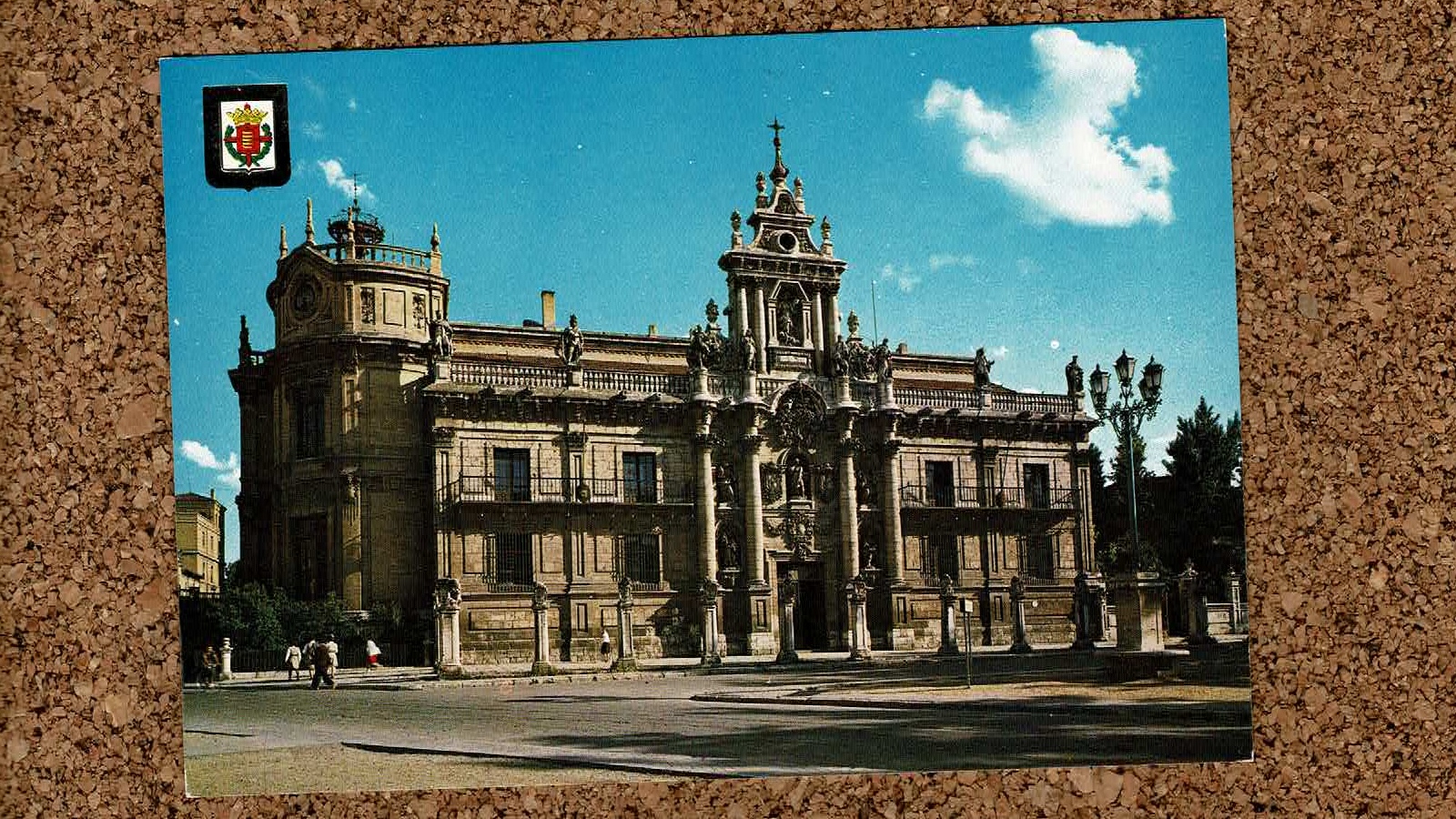
    As the Spanish state developed, and as it began to extract wealth from the lands it conquered in the Americas, its universities thrived. Valladolid expanded, with new faculties, and new buildings. The building on the postcard dates from 1716–18, when the university was embarking on a programme of enlarging its estate.

    It’s a grand façade. The statue framed at the top is of wisdom stepping over ignorance. On the four Corinthian columns are statues of the kings who helped develop the university: Alfonso VIII, Juan I, Enrique III and Felipe II. (It seems harsh that Sancho IV didn’t get a statue, but maybe by then local taxes were small beer compared to silver from South America). The statutes on the balustrade represent, allegorically, the early eighteenth century curriculum: rhetoric, geometry, theology, canonic science, legal science, and wisdom.

    But the buildings reflected a glory that was fading. Spain’s universities had not modernized; student numbers fell. Efforts to reform were stalled by the conservative responses to radical and revolutionary thinking and action in France: universities were places for reaction. Post-Napoleon, and as industrialisation spread, Spain’s universities slowly regained their vigour. Valladolid’s student numbers grew.

    Valladolid the city was firmly nationalist leading up to the Spanish civil war of 1936-1939, and although Valladolid was bombed early in the war, the city itself was far from most of the fighting. After Franco’s death and the restoration of democracy to Spain in 1975, a process of reconstruction took place: new statutes were agreed in 1985. Campuses of Valladolid were established in other Spanish cities – for example Burgos gained a faculty of law in 1985, and in 1994 became a university in its own right. (This appears to be a Spanish model of university expansion, which has the benefit of clear academic oversight early on.) You can read the university’s history on its webpages here – it’s been a useful source in compiling this account.

    Notable alumni of Valladolid include:

    • Trinidad Arroyo – first female ophthalmologist in Spain
    • Manuel Belgrano – hero of Argentinian independence, designed of the Argentine flag and the general after whom the ill-fated warship was named
    • Joaquín González – doctor, one of the drafters of the post-independence Philippines constitution in the late nineteenth century
    • Turibius of Mogrovejo – humane and reformist archbishop of Lima, from the time of Spain’s colonization of South America, made a saint in 1726

    And here is a jigsaw of the card for you.

    Source link

  • Recent Executive Orders and Higher Ed HR’s Role in Creating and Sustaining an Inclusive Campus Community

    Recent Executive Orders and Higher Ed HR’s Role in Creating and Sustaining an Inclusive Campus Community

    by Andy Brantley | January 30, 2025

    In the wake of the recent Executive Orders on DEI, gender identity and immigration, higher ed institutions, like so many other organizations, are assessing the impacts and formulating next steps.

    Amid the inevitable changes that lie ahead, it’s important to remember that the role of HR in creating and sustaining a higher ed workplace that provides access and opportunity for all employees hasn’t changed. The programs, policies, processes and language we use to support this work may need to evolve, but the work and the institutional values it supports remain the same.

    We can still:

    • Promote equitable work and career pathing opportunities and pay for all employees.
    • Cultivate inclusive learning and working communities.
    • Create a workplace culture that embraces respect and civil discourse.
    • Level the playing field for everyone by working to remove bias, reviewing outdated policies, and creating transparency.
    • Reinforce institutional values by ensuring that all employees feel connected and supported.

    However, as we review and evaluate the work we’re doing, we have the opportunity to do so with fresh eyes, reframing it in ways that are both purpose-driven and inclusive. For example:

    • Communities of people with diverse backgrounds and life experiences create opportunities for community members to grow, both personally and professionally. To support a diverse workforce, institutions must explore ways to generate a more diverse applicant pool.
    • Access, opportunity and equitable pay for all employees promote job satisfaction, recruitment and retention. To support access and opportunity, institutions must identify and remove roadblocks to opportunity. To support equity in pay, institutions must ensure their compensation structures support these efforts.
    • A safe and welcoming work environment fosters community and collaboration. To create a work environment that’s welcoming and psychologically safe, institutions must ensure that systems, policies and processes are free from discriminatory practices.

    If you have resources or ideas to share with other CUPA-HR members regarding ways that you and your HR colleagues are refining your approach to creating and sustaining an inclusive campus community, please email them to [email protected]. Your submission will be treated as confidential and, if shared, will be described in terms that will not identify your institution.

    You’re Not Alone

    We know that HR leaders are often caught in the middle as different groups of employees and administrators express strong opinions and feelings regarding changes we must implement. In the coming weeks, CUPA-HR will share guidance and support to help you make changes to programs, policies and procedures and communicate these changes to the campus community.

    We are also hosting webinars focused on the recent Executive Orders, as well as the rollback of the Title IX regulations. And we’ll continue to keep you informed about future Executive Orders and legislation, as well as potential actions we should take as higher education HR leaders.

    The higher ed HR community has proved time and again how strong and resilient it is. Thanks for all the ways you lead and support your organizations, your employees and your CUPA-HR community.


    Source link

  • From Recruitment to Retention: The Impact of AI on Higher Education

    From Recruitment to Retention: The Impact of AI on Higher Education

    Artificial intelligence is influencing every aspect of the higher education experience, from recruitment strategies to long-term student success. Community college, undergraduate, and graduate programs use advanced analytics to predict outcomes, optimize operations, enhance decision-making, and improve the student experience. However, the opportunities and challenges associated with using AI in higher education require careful strategic planning. By understanding AI’s evolving role in enrollment management and retention, higher education leaders can now support students and strengthen institutional outcomes more effectively than ever. 

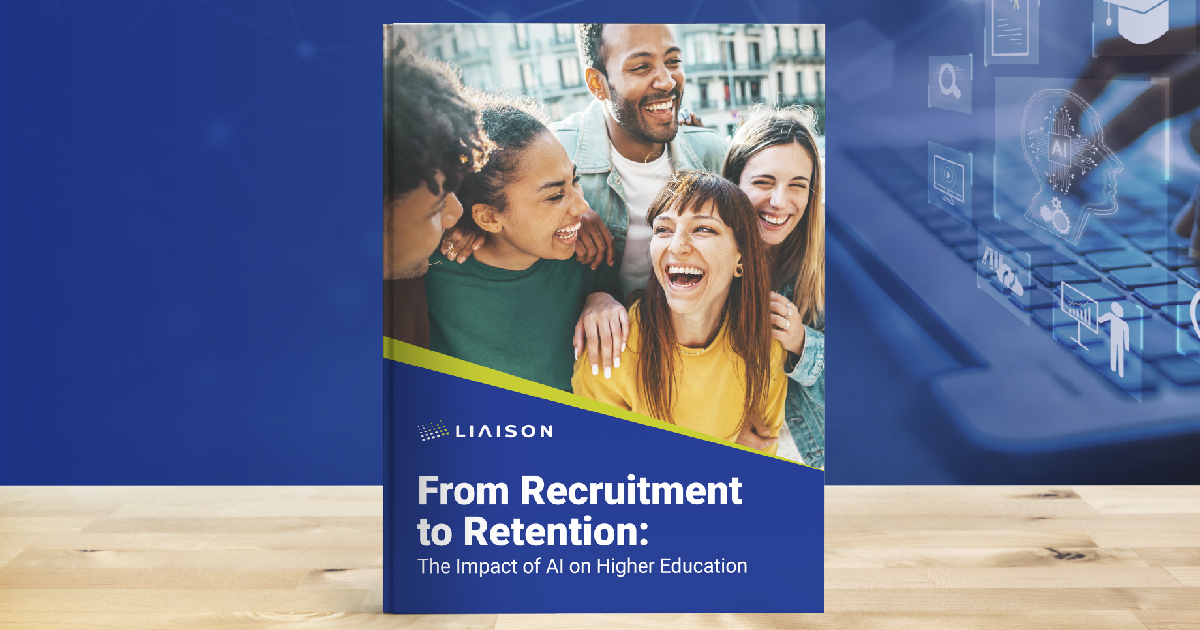
    Is your institution keeping pace or lagging behind when it comes to educational technology? Liaison’s new whitepaper—From Recruitment to Retention: The Impact of AI on Higher Education—will help you answer that question and begin learning to plan for a better future.  

    Insights include practical tips about AI technology, such as: 

    • Applying AI Strategically 

    Institutions that apply AI tools thoughtfully have the ability to improve processes and results in areas including admissions, student success, and retention. From innovative yield strategies to predictive analytics tailored for community colleges and grad schools, AI is already driving better outcomes by providing higher education institutions with roadmaps for achieving institutional goals and improving student outcomes. 

    • Addressing AI Challenges and Ethical Considerations 

    While the widespread adoption of AI tools in higher ed promises advancements in innovation, efficiency, and the management of student data, it also introduces complex challenges and ethical dilemmas that demand attention. From concerns about data privacy and algorithmic bias to questions surrounding accountability and the societal impact of automation, the rapid rise of AI tools in higher education institutions requires thoughtful, responsible oversight. As the whitepaper explains, that involves exploring the nuances of AI development and implementation, examining the ethical principles at stake, and creating frameworks that prioritize fairness, transparency, and the well-being of individual students and the institutions that serve them. 

    • Achieving Data Readiness 

    Data readiness is essential for strategic enrollment management, allowing colleges and universities to harness AI to make informed decisions that drive success. For starters, creating a data-informed institution involves navigating the overwhelming influx of information to uncover actionable insights while building data literacy among every key stakeholder on campus. By achieving data readiness, educators can align their efforts with student learning needs, improve outcomes, and create a sustainable path forward. 

    It seems like everyone is talking about artificial intelligence and its potential to redefine not just student learning, but the future of higher education itself. But how well do you understand and speak the language of AI? Although much of the language that now informs conversations about innovation and success wasn’t familiar to most people just a few years ago, it’s now mission critical for you and your peers to begin learning how to embrace AI literacy. 

    Envisioning the Future of AI in Higher Education 

    As its capabilities and applications grow in the years ahead, AI will continue to provide new opportunities for colleges and universities to enhance decision making, streamline operations, emphasize academic integrity, and provide predictive insights that guide future strategies. The ongoing integration of AI throughout higher education will apply new scientific insights to holistic application evaluation, personalized student communications, and enrollment workflow automation, among other endeavors.  

    The future of AI in education promises even more sophisticated tools to come, which will further personalize and secure the admissions process. Looking ahead, one thing is clear: Today’s higher education leaders have an unprecedented opportunity to foster greater student success and institutional growth by embracing AI as a tool to help inform their decisions.  

    To learn how to get started, download From Recruitment to Retention: The Impact of AI on Higher Education today.  

    Source link

  • Colombia’s Higher Ed Utopia or Illusion? Insights with Javier Botero

    Colombia’s Higher Ed Utopia or Illusion? Insights with Javier Botero

    Latin America sometimes flies below the radar in discussions of global higher education. It’s too poor to have major players in the world-class universities game, but it’s too rich to be among the attention-getting new highfliers like Vietnam. And even within Latin America, not every country gets the same attention. Colombia also kind of flows below the radar, lacking the size of Mexico or Brazil, not punching above its weight like Chile, and not being stark raving tonto like Venezuela. But Colombia actually is pretty special because of the size and shape of its system. It’s actually in the middle of a range of debates going on across the world, making it a kind of miniature of the globe as a whole. A move to gratuidad, like in Chile? Colombia is doing that. Constant pressures on quality assurance, given its 207 public and private institutions? Check. Creating new popular universities on the Mexican model? Yep, that’s happening too. Working out how to improve student loan repayment? Well, ICETEX, the country’s national student loan agency—actually the oldest such agency in the world—is working on that too. In short, this is a country whose thinking on higher education deserves a lot more attention than it usually gets.

    The current government of Colombia, led by left-wing President Gustavo Petro, came to office with big ideas about higher education. But without a majority in Congress, things are not going his way. It’s not clear that he can pay for the gratuidad he promised young voters three years ago during his election campaign.

    With me today is Javier Botero, a lead consultant at the World Bank and formerly the Vice Minister of Higher Education in Colombia. He’s here to walk us through the latest developments in that country around free tuition, student assistance, and an intriguing case of institutional closure at the University of Antioquia.

    This was a fun, fast interview, and I enjoyed it a lot. I hope you do too. So, without further ado, let’s hand things over to Javier.


    The World of Higher Education Podcast
    Episode 3.18 | Colombia’s Higher Ed Utopia or Illusion? Insights with Javier Botero

    Transcript

    Alex Usher (AU): Javier, the last time you were on, we discussed President Petro’s ambitious plans for the higher education sector. One of his goals was to increase enrollment by half a million students. Two years later, have we seen much progress on that promise?

    Javier Botero (JB): Well, really, not as much as one would have expected. Of course, at the very beginning—and I’m sure I said this in that interview—I thought it was far too ambitious, you know, something in the clouds. But I think they’ve achieved about 20–25% of that.

    Mostly, this growth has been in technical education through SENA, this huge public institution that offers free technical education. Very little has happened in private education, where enrollments have actually decreased. Some state universities have increased their enrollments, but much less than what the government expected.

    AU: So it’s as much a shift in enrollments as it is an addition to enrollments.

    JB: That’s right. I mean, it is an addition in some sense because it’s true that some students who would have had difficulty accessing higher education have been able to do so—mainly through technical education or state universities. So there has been an increase in access for students from lower economic sectors of society.

    AU: That’s good. So, late last year—or maybe it was the year before—the president signed a law guaranteeing free tuition at Colombian public universities. Now, we have to be careful about that word because, for instance, in Chile, you have gratuidad, but it only applies to certain students, under specific conditions, like an income cutoff. So, what does the Colombian promise about free tuition consist of? Does it really mean free tuition for everyone?

    JB: Yeah, of course not. But the first thing I’d say is that this isn’t actually a policy of this government—it started under the previous government. What Petro did was clarify some points and widen the scope of the policy. Still—and I’m glad about this—it’s not for everyone. It’s targeted at certain groups, based on income. We have something called estratos, and it’s for the three lowest estratos. There are also other groups included, like Indigenous people, some Afro-descendants, and others who have faced significant disadvantages for years. So, yes, it has restrictions, but this is something Colombia has been working on for about six years now.

    AU: So, it is targeted free tuition, but not just based on income. As you said, there are some ethnic categories involved as well. That’s interesting.

    JB: And not just ethnicity. You all know Colombia has been through a peace process. People involved in or victimized by the violence during that period also qualify for free tuition in public institutions—and there are quite a lot of them.

    AU: All the groups involved in the peace negotiations, or their children, would benefit from this?

    JB: Yeah, and not just them. People who declared themselves victims during the period of violence in Colombia also qualify.

    AU: How much does this commitment cost? I’ve noticed there’ve been stories in the Colombian press about the government losing a tax reform vote just before Christmas, which must make it harder to afford these programs. So what’s the government’s financial ability to keep this promise?

    JB: You know, that’s one of the main issues—and a big question—because no one really knows how much it costs. In Colombia, universities have a lot of autonomy. Each university sets its own tuition, even public ones. So there’s a huge variety in tuition rates.

    Some public universities were almost free for poor students, while others charged tuition based on income, and some had relatively high tuition rates. This diversity makes it very difficult to calculate the cost.

    Chile faced a similar challenge when implementing gratuidad, but I’d say it’s even worse here because of the variation. For example, universities that used to charge very little would continue to receive little funding, while those that charged a lot would get much more. To resolve this, they came up with an average subsidy amount based on factors like the type of university, research output, and number of professors.

    AU: I’s a per-student subsidy based on the institution, not tuition?

    JB: That’s right. That’s the free tuition program.

    AU: I remember in Chile, when they were setting up their policy of gratuidad, they asked a question that made no sense in English: “Where do we set tuition so that tuition can be free?” It was funny, but it made sense in context.

    JB: Exactly, because that determines how much money the university gets from the government per student.

    AU: So I understand that while the government is trying to lower tuition costs, it’s also reducing expenditures on the student loan program, ICETEX. That feels like robbing Peter to pay Paul. What’s the logic behind this—free tuition but lower student aid?

    JB: First of all, free tuition in Colombia is not like in Chile—it’s only for public institutions. Private institutions don’t qualify for free tuition, so they don’t receive any subsidies for it. ICETEX, which is our student loan agency with over 50 years of experience, is mainly used for students attending private universities.

    Your point is valid, though. The logic is mostly ideological—the idea that education should be public and free. The private sector is seen as unnecessary, so the government focuses on public institutions and doesn’t assist students attending private ones.

    But this hasn’t helped at all with the goal of increasing enrollment by 500,000 students. ICETEX’s budget has already been cut, and the situation for 2025 looks critical. Not only because of these ideological choices, but also because of the budget deficit. We’re starting the year already in deficit, and I’m sure ICETEX will face more cuts.

    AU: Javier, I remember that quite early on in his tenure that President Petro seemed to be quite taken by the Mexican model of the Benito Juarez universities in remote locations. Maybe there may be some Venezuelan model he has in mind as well because they’ve opened a lot of new universities too. Has there been much movement on this front in the last two years?

    JB: A little bit, I would say, but also let me add that that’s not a either a new policy either. You know, we did this 20 years ago when I was working with the government with what we called the regional centers of higher education. The idea was to bring higher education to rural and small towns in Colombia because what you see is that for those who can—students from those towns that can go to a university, to higher education—they have to go to the big cities, and most of them stay there. So, it’s actually a brain drain from the small cities to the big cities, and that’s an issue. You really want more equity and homogeneous development in a country.

    So, many countries—Venezuela, at the time we did this, that was 2002 or 2003—were also starting what they called aldeas universitarias, like small-town universities, with the same idea. Mexico did that and has now a big program. But there are still many issues with that. One of them is the academic part—students from these regions have relatively low academic levels, so you have to work a lot to get them to a level where they can actually start a university program.

    The second issue, as with most things, is funding. How do you fund this? Of course, it’s very hard to expect that students will pay tuition to private universities in those regions, and those issues have not yet been resolved.

    AU: Recently—I think it was in September or October—the University of Antioquia in Medellín was the center of some very significant protests, some of which turned a little bit violent. What sparked those demonstrations? Was it something about specific issues at that institution, or was it about wider issues within higher education in Colombia?

    JB: I would say both. It’s wider issues—issues that are common to most universities—but at the University of Antioquia, these issues have brought the institution to a more difficult situation. And it’s really the funding, the financing of the universities. The University of Antioquia was one of those that actually charged very little tuition. Most students paid just a couple of dollars to study a semester, and they increased enrollment numbers significantly. They joined the policy, 10 to 15 years ago, of opening different regional campuses in small towns at very high cost. But they haven’t gotten the money to cover all of that, so they’ve been in a very difficult financial situation.

    Students started asking, “What will happen with this university?” There were delays in paying teachers, especially the type of teachers we have here in Colombia who are not regular faculty but teach specific classes and get paid for those hours. The university delayed those payments, and students and unions joined the protests—particularly the union of those types of teachers. This eventually led to the university closing. The university is now closed, and we are discussing how they will end last year’s final semester. It seems they won’t be able to.

    AU: So, did they close because of the protests, or did they close because they couldn’t make payroll?

    JB: Both. The teachers joined the demonstrations and the strike, so it wasn’t possible to keep the university open. They tried to keep some programs running virtually, using what they had learned from the pandemic, but it’s been very difficult.

    AU: To regain some stability—both there and in the rest of the country—you need a stable government. But the president has never had a majority in Congress. He’s losing key votes on taxes, recently lost a finance minister to a graft scandal, and he’s only about 18 months away from the end of his term. Is there any prospect he regains the initiative and can forge a renewed policy in this area, or is this going to be a really long lame-duck period?

    JB: I think the latter is most probable. It’s been less than three years, and we’ve had three ministers already. It looks like there will be another change in the ministry, so there’s no continuity in policies. The political situation is not getting better—it’s getting worse. As the elections approach next year, it will get even worse. The opposition will polarize further. And President Petro is not the type to try to calm things down; instead, he often throws gasoline on the fire.

    Maybe two years ago, they tried to pass a statutory law on education, but they couldn’t. Now, the minister is talking about passing a law just to change the funding model, which I must say is very archaic. It doesn’t incentivize universities to do much. With free tuition, it pushes them a little to admit more students, but that’s not a good solution because, as we see in Antioquia, it only worsens the problem. I don’t think much will happen in the remaining 20 or 22 months of this administration.

    AU: We’re already seeing the 2026 presidential elections start to take shape. Are any of the leading candidates likely to pursue policies in higher education that are radically different from the current government? You mentioned that, to a large extent, what President Petro is doing is a continuation of the previous government. So, do we expect continuity or change as we head towards those elections?

    JB: I would say there will be very different positions among the candidates. What you said isn’t totally true—Petro kept the free tuition policy, but there are many other aspects behind that. I expect some candidates, like Alejandro Gaviria—who was Petro’s first minister, though only for a few months—will bring higher education to the forefront. Gaviria is already a pre-candidate, and higher education is very popular as an issue because students vote, unlike primary and secondary students.

    Higher education in Colombia needs a deep reform, going far beyond just funding. Funding is an important issue, but the system requires much deeper changes. I expect some candidates will propose strong policies, but we’ll have to wait and see what happens with those proposals and who gets elected. The political situation in Colombia, like in many parts of the world, is very polarized, and in polarized environments, the best choices don’t always get into office.

    AU: Javier Botero, thank you so much for joining us today.

    JB: It was my pleasure. Thank you very much.

    AU: And it just remains for me to thank our excellent producers, Tiffany MacLennan and Sam Pufek, and you—our viewers, listeners, and readers—for joining in. If you have any questions or comments about today’s episode, please don’t hesitate to get in touch at [email protected]. Don’t forget to subscribe to our YouTube channel so you never miss an episode of The World of Higher Education. Join us in one week’s time when our guest will be freelance writer Ben Wildavsky. He and I are going to chat about the 15th anniversary of his influential book, The Great Brain Race. Bye for now.

    *This podcast transcript was generated using an AI transcription service with limited editing. Please forgive any errors made through this service.

    Source link

  • Ideas for navigating editor-reviewer relationships (opinion)

    Ideas for navigating editor-reviewer relationships (opinion)

    An editor or reviewer can have an outsize impact on the career of a scholar, particularly in the early stages. The stakes can be high for an author. A negative review or edit can set back a research plan by months and harm a scholar’s chances for tenure or promotion. This reality creates a power imbalance between an editor or reviewer and an author that can be abused.

    Graduate schools offer few pointers on how to navigate editor and reviewer relationships. Our goal in this essay is to debunk the process and offer suggestions and observations for editors/reviewers and authors on how to approach the task in a more thoughtful and efficient way.

    Understanding the Reviewer and Editor Roles

    First, it is important to note that while reviewers and editors take part in a similar process—assessing the work of an author—the tasks are different. The editor is rarely an expert in the specific subject of an article and necessarily needs to rely on impartial reviewers to place the work in context. Nevertheless, the editor—and, at times, an editorial board—is the decision-maker in this equation. Having a clear and transparent line of communication between the author and the editor is critical.

    The task of the reviewer is to place the work in its scholarly context and to weigh its merit. Is the work breaking new ground? Is it challenging a long-held interpretation within the academy? Are the sources contemporary and the most relevant? Does the work fit the subject area of the journal or press? Can it be revised to make it suitable for publication?

    It is our strong belief that reviewers need to meet the authors where they are—that is, to understand the goal of the author, determine whether the work is suitable for the journal or press in question and, if so, help them reach the promised land of publication. Simply put: The reviewer should weigh the author’s case against the author’s intent.

    Unfortunately, this does not always happen: It is sometimes the case that reviewers stray from this path and insert suggestions that they would like to see addressed but that are not central to the submitted work. The dreaded “reviewer number 2” has become the bane of many an author’s existence. In this sort of review, the reviewer raises so many questions and objections that an author is left to ponder whether the two are reading the same text. And, it must be said, just as on social media, anonymity can at times lead to incivility. Instead of being helpful, sometimes a reviewer is unkind and cruel.

    The role of the editor is to referee between the goals of the author and the desires of the reviewer. Egos and politics often come into play in this process because reviewers in many cases are colleagues of the editor and contributors to the publication in question. Our experience suggests there are two major types of editors. Authors will need to adjust their approach based on which of these two types best describes their editor:

    • Sympathetic editor: This is the ideal. This editor will work with an author to publish a submission if the research is strong and will allow them to keep their own voice. They do not seek to impose their vision on the book or article. They do not allow their personal politics to influence the decision-making process. They are driven by one central question: Does the author accomplish what they set out to do? This type of editor tries to determine whether a reviewer is acting out of hubris by suggesting tangential and substantial changes or whether they are addressing core issues. On the opposite end of the spectrum, they are alert to the two-paragraph, lackadaisical reviewer who read the work over lunch while answering emails.
    • Visionary editor: It may sound counterintuitive, but an editor with their own vision for someone else’s work can mean frustration and ultimately rejection for an author. This type of editor sees someone else’s work as an opportunity to explore an aspect of a topic that interests them. They impose their own vision on someone else’s work rather than determining whether the author has achieved the goal they set for themselves. This typically takes the form of a lengthy response asking an author to fundamentally rethink their piece. The response contains so many critiques that to adhere to the suggestions would amount to writing a completely different piece of scholarship. This editor also tends to extend and even impede the process almost endlessly.

    As an example, upon the death of Fidel Castro in November 2016, the Latin American historian of this writing duo (Argote-Freyre) was asked by a journal editorial board member to author an article comparing the career of Castro with that of the prior dictator of Cuba, Fulgencio Batista. The resulting piece concluded that the two political figures shared more similarities than differences. The editor, although agreeing to the concept, was unhappy with the conclusions reached by the essay. The editor struck out paragraph after paragraph; a lecture on tone and thesis ensued.

    The editor suggested a piece analyzing the revisionist historiography on Batista—a subject outside the contours of the original assignment and one that would take many months to complete. The author made a rookie mistake in assuming that a member of the editorial board was vested with the authority to make assignments. In retrospect, it seems as if the assignment was foisted upon the working editor, who then wanted to steer the piece in a completely different direction. The author withdrew the piece; the only positive was that only a few months were lost in the process.

    The visionary editor is the type who is never satisfied. They forget that the piece is the author’s, not theirs. Yes, the editor is a gatekeeper for the journal or press, but if it is not a good fit, they should say so and move on. This picky editor sends a revision back to a new third (or fourth) reviewer, who is likely to ask for another, different round of revisions. This is nothing other than moving the goalposts. One of us had this occur with an editor who said, “As you know, we often send articles to several rounds of reviewers.” Well, we did not know, because the journal’s website did not say that. Such a process could go on forever and, to our eyes, makes no sense. The editor should decide on his or her own whether the author has revised sufficiently: It is clear from the reader reports what needed to be done, so just check and see. The editor needs to be decisive.

    At the point a work is about to be sent to an additional set of reviewers, an author needs to withdraw the article or book from consideration. Run as fast as you can in search of another editor and publication. Do not let someone waste your time, especially if your clock is ticking for tenure and promotion.

    How to Make Relationships Work— and When to Walk Away

    The author-editor relationship should be a dance, not a duel. An author is not at the mercy of the process; you are a partner. If you are not clicking with the editor, walk away. A bad first date rarely turns into a good second date. This is particularly true when working on a book project, given the many steps and long timeline involved.

    For a revise-and-resubmit, we suggest strongly that you be professionally assertive. Ask about the review of the resubmission before you do it. If the editor says it will go to new readers, withdraw the piece. This never goes well. Editors should be transparent about the steps involved. It is our experience that some editors are hesitant to divulge their process. If that is the case, the author needs to reassess the integrity of that process.

    Being fully transparent allows you to ask for transparency in return, whether you are an editor or an author. If, as we have experienced, two peer reviews come in that are quite opposed, the editor should get a third before returning to the author. If there are two or three reviews, the editor should synthesize them with a memo attached to the reports. The summary should go something like: “All reviewers agree chapter four needs to be revised with this material, but there is disagreement about chapter six.” There is also nothing wrong with asking the author to make the tough call on a contested point of interpretation. Once again, it is the author’s scholarship, not the editor’s, the journal’s or the press’s.

    For authors: Have a conversation with the editor. If it’s a call, follow up with a written summary. When responding to reader reports, especially when they disagree, say what you will and will not do. Do not say you will revise when you disagree—but don’t be stubborn. Give a little to get what you won’t compromise. If you disagree with a reviewer’s suggestion, say why, and ask the editor for approval not to make a specific change suggested in one of the reader reports. Get that approval. If the editor says the revision will go back to one or both original readers instead of making the final call himself, politely insist that the written exchange between the author and editor be sent along, too.

    It may not always work. Recently, one of us did just what we described and the editor said the plan sounded good, only to have the journal reject the revision. The editorial board said a specific change was not made even though the editor agreed that change would not be necessary. Poor communication and coordination between an editor and an editorial board should not penalize an author.

    Finally, we’d like to briefly weigh in on the argument that professors should reject peer reviewing because it is an unpaid task. If you do not want to do it, don’t—but there are compelling reasons to write responsible peer reviews. First, unpaid labor is not without merit. Even if your tenure and promotion committees might not value the task, that does not mean it is not worthwhile. You’re not paid to volunteer at your local food pantry, but you still do it. Second, people do this for you; it is time to be generous in return. Third, reviewing provides insights into the process for your own work. Peer reviewing keeps you current on trends in the field. Editing and peer reviewing make you a better writer and produce better scholarship. Isn’t that what we all want?

    Frank Argote-Freyre and Christopher M. Bellitto are professors of history at Kean University in Union, N.J., with extensive experience with peer review on both sides of the process. Argote-Freyre, a scholar of Latin American history, serves as a frequent peer reviewer and content editor on various book and article projects. Bellitto, a medievalist, is the series editor of Brill’s Companions to the Christian Tradition and academic editor at large of Paulist Press.

    Source link

  • Academic unions should adopt neutrality (opinion)

    Academic unions should adopt neutrality (opinion)

    Institutional neutrality at universities is having its moment in the aftermath of a year of nationwide campus protests over the Israel-Gaza war. The list of universities that have adopted neutrality has grown over the course of the past 12 months. The concept necessarily is expanding to include conversations around university investments. Yet, academic unions have slipped under the radar as purveyors of positions on political issues. They should not be neglected in the push for neutral stances except for those that directly pertain to an institutional mission. In the case of the union, this should be to promote labor interests. Professors from a range of ideologies should be able to find common cause for collective bargaining purposes without being forced into supporting other political positions.

    The lack of neutrality of professors’ unions on non-labor-related issues is a pernicious problem. Federal law and some state laws that pertain to unions work to compel professors’ speech. Under the federal National Labor Relations Act, if a majority of private sector workers voting in a union election choose to unionize, all workers in that bargaining unit must be exclusively represented by that union. New York’s Taylor Law requires the same for public employees. And, if workers want the benefits of membership, like voting for union leadership and contracts, they must pay dues.

    While public employees could choose not to be union members before the Supreme Court’s 2017 Janus v. AFSCME ruling, that case now guarantees their right to not pay agency fees. But even if workers wish to eschew membership and not pay fees, they cannot dissociate entirely. They are required to be represented by a union that speaks via statements at the local, state and national level on many non-labor-related subjects. Therefore, with their veneer of solidarity, unions quash viewpoint diversity and suppress First Amendment rights. They tie one of the only forms of dissent possible (withdrawing dues) to disenfranchisement from the union, the organization that negotiates their wages and labor conditions.

    Professors who do stop paying their dues are often derided as “free riders.” They risk offending union leadership, who have a say in university processes that can impact their employment, like grievances and denial of reappointment. The union is formally required to provide equal advocacy as their exclusive representative. However, even if one believes biases will never prevail against “free riders,” there is still the suppressive impact of professors’ perception that paying dues and keeping quiet is best for their careers.

    And so, professors are forced into a kind of protection racket, paying unions that may endorse positions with which they may disagree. The National Education Association has opined on everything from ending private prisons to climate change, from promoting women-led businesses to helmets for motorcyclists. They have issued statements on the Israel-Gaza conflict, advocated for codifying Roe v. Wade into law and called for Donald Trump’s ouster. They have adopted progressive ideological lenses throughout such statements, arguing for instance that “white supremacy culture” is prevalent in the current U.S., and that “intersectionality must be … addressed … in order to advance the [NEA’s] social justice work.”

    To be clear, I am not arguing that these positions taken by unions are bad. I am not reflecting my own political preferences. I am not highlighting progressive examples to critique only progressive examples: I could find none that can be considered conservative. I am not saying that it’s not possible that a majority of members agree with the statements. I am also not arguing that workers do not have the right to form associations to advocate for political causes.

    What I am arguing is that due to laws making exclusive representation compulsory, unions should adopt neutrality on political issues that do not impact the primary purpose of academic unions: advocating for professors’ interests as workers. This lets ideological diversity exist and prevents coerced speech and dues payments. This neutrality is of paramount importance with public sector unions, where union leadership activities may receive taxpayer-subsidized administrative benefits.

    This neutrality should extend to political endorsements of individual candidates. While there may be some argument to be made that endorsing a pro-union or pro–higher education candidate over their opponent directly pertains to professors’ interests as workers, this carries with it implicit endorsement of a wide slate of other policies. A better approach would be for unions to support (or critique) candidates’ specific policy proposals or voting records. It would also reduce antagonism between unions and candidates they did not endorse, should those be elected.

    Recent examples show the perils of academic unions not having a neutrality standard. In 2018, a University of Maine professor sued his union, noting his opposition to its stances, like endorsing Hillary Clinton for president. More recently, in 2022, six City University of New York professors filed suit against the Professional Staff Congress (PSC), which passed a pro-Palestinian resolution they viewed as antisemitic. They resigned their memberships, along with approximately 263 other professors. But because of the Taylor Law, they are required to be represented by the PSC, which did not give evidence it could be fair in representing them. The PSC called them free riders, claiming their lawsuit was “meritless … funded by the notoriously right-wing National Right to Work Legal Foundation,” and described the “‘Right to Work’ agenda” as “rooted in white supremacy.”

    After lower courts ruled to dismiss their suit, the CUNY professors appealed to the Supreme Court, which just this month declined to hear their case. Yet, while this case could have been a victory for viewpoint diversity and free speech and an impetus for unions to get on the institutional neutrality bandwagon, future such suits will doubtless arise and reach a court favorable to their claims. Academic unions should get ahead of such a court ruling and make union membership attractive to all who may want to participate based on advocacy for improved working conditions, but not for particular solutions to international wars—or for wearing motorcycle helmets.

    Colleen P. Eren is a professor of sociology and criminal justice at William Paterson University and a research fellow at the Segal Center for Academic Pluralism. Her commentaries on higher ed and other topics can be found across a range of publications, including The New York Times, Discourse, Reason, and the Foundation for Economic Education.

    Source link

  • Q&A with a student success dean, Soka University of America

    Q&A with a student success dean, Soka University of America

    As an undergraduate student, Lisa MacLeod wasn’t sure where her career path would take her. She majored in English literature and international relations with the aspirations of being a journalist or a State Department staffer and found herself back in academia not long after.

    Lisa MacLeod, assistant dean of student success at Soka University of America

    Lisa MacLeod/Soka University of America

    Now, as the inaugural assistant dean of student success at Soka University of America since last fall, MacLeod is charged with breaking institutional silos at the California institution to improve student outcomes after graduation, working collaboratively across campus.

    MacLeod spoke with Inside Higher Ed about her time thus far at the institution, a private liberal arts college, and her aspirations in the long-term.

    Inside Higher Ed: What is your new role at Soka and how does it fit into institutional goals for student success?

    MacLeod: One of the most important things [about my role] is that I am housed under the dean of faculty, so I’m not under the dean of students, which is very different from how a lot of schools have done this.

    My top priority, luckily, isn’t getting students to graduate—because we already are doing that very well as an institution … I’m not just new in the job, the position is new at the university—so there’s some room for me to define what the position is.

    I was asked to look specifically at advising. Right now, our program is all faculty individually advising students for academic advising. Career services and internships is the other side of the house, and historically, the two sides of the house don’t talk to each other very well. So looking at how we advise, but also thinking about, are there ways that we can integrate better, because we have lots of good things happening by different people. But do faculty know about that? Do they know enough about it to recommend it to students? Not so much.

    The other thing is starting to integrate career readiness skills into the curriculum. This year, we are rolling out RATE (Reflect, Articulate, Translate, Evaluate), which was developed by the University of Minnesota for their liberal arts students.

    We’re having our first cohort this coming semester—so beginning in February—of faculty fellows who have pledged to develop the RATE system into their existing course, and we’re supporting them with some training and other kinds of activities so that we’re very specific in the application. We’re not asking you to change your course. What we’re asking is that you make it more evident to students how they are developing career readiness skills in addition to academic and subject area knowledge.

    Inside Higher Ed: You were a double major in college. While interdisciplinary learning can be an asset to students, sometimes academic departments can be more focused on helping students on a specific path within their discipline. Do you have any insights based on your experience as a dual major and helping students find their own path?

    MacLeod: At Soka, we don’t have majors—everyone graduates with a major in liberal arts, and then within that, we have concentrations. Students here do have the opportunity to double concentrate, so they’re not taking as many courses as you would for a major, but there’s still some degree of specialty.

    I encourage them to look at the whole course catalog and say, “Take the classes that really attract you, that are interesting, and you’ll figure out how they connect to each other if you look for it,” and to not worry about double concentrations. Or, you know, force yourself to take courses you wouldn’t otherwise.

    Certainly, I encourage students, depending on what their interests are, if you’re going to go to graduate school, yes, take statistics, take a research methodology course. Do these kinds of courses that are skill building [so] you’ll have that [for] the next level of your education; they will have expected you to have that background.

    But beyond that, I’m really focused on having students maybe try something they wouldn’t otherwise. I wish as an undergraduate I had taken an anthropology class, but it never occurred to me; it just wasn’t on my radar. Explore, because you don’t know what you don’t know, and to really find something that drives them, that they’re really excited about doing the coursework and learning more about that area. Because they’ll put more into it, and as they put more into it, they’re going to develop the liberal arts skills in the process. Whereas, if they’re forcing themselves to take a course because they feel they should take this course, they’re not going to have the same level of motivation. They’re not going to get the same out of it.

    Inside Higher Ed: As you said, one of your priorities is advising, which is so important to the student journey. What does quality advising look like to you?

    MacLeod: I think that quality advising really requires time and listening.

    I always ask students to come in with kind of a worksheet: Where are you [in your progress] toward graduation? Where are you in terms of taking required courses? But I also ask them things like, “OK, this is a required course, but you have a selection of five different faculty members that might be teaching that course, and of course, they bring their skills and expertise and kind of personality in each course. Why did you choose that faculty member? If you’re interested in this, maybe this other faculty member—even though it’s the same requirement—might teach that course in a way that you would find appealing?” And directing them to resources, encouraging them to talk to faculty before they enrolled in the course if they have questions or concerns or if they’re not certain about something.

    Then also asking them very blatant questions that I wish someone had asked me when I was an undergraduate. What are your plans after you graduate? What are you doing to achieve that goal? What information do you need to know, and how are you going to get it moving forward?

    I took time off [after graduating] because I’d never had those conversations. Maybe people at the university thought I was having it with my family. My family may have thought I was having it with people at the university. I’m not sure where I lost the memo, but it just didn’t happen. Before, someone had always come along and said, “Apply for this,” and it was a very structured thing. That’s not how life after graduation works at all. So I ask those questions I wish someone had asked me.

    Inside Higher Ed: What is student success to you?

    MacLeod: It’s not for me to define for someone else what success looks like. I have my own ideas, but I think it’s wrong to impose that on other people, because success can look like so many different things.

    In general, I feel that student success is they graduate from the program, and they feel good about that. That there’s not regret that they should have gone someplace else, but also that we’ve equipped them with the skills in their personal and in their professional life to face the challenges that will inevitably come and to be able to surmount them.

    The first couple years after graduation for everyone is hard—that’s just kind of the nature of the beast—but that they are prepared for, that they can get through it, and know that there’s something on the other side. that they are confident in their skills, that they will figure it out and then end up on the other side in a career that they find fulfilling in some manner, being able to contribute to the community, if that’s their goal, in a way that is meaningful to them. And hopefully happy alumni that are talking to our current students that and sharing their experiences.

    Inside Higher Ed: What are your long-term goals in this new role?

    MacLeod: It feels like so much of academic life is keeping your head above water for now.

    I think that in the long term, I’d really like to see a more collaborative campus culture, where faculty members are supporting each other in their endeavors, maybe a bit more. It’s not that my colleagues are unsupportive, but we don’t always ask each other or are aware of the ways in which our research overlaps and we could actually be doing more—whether it’s with our teaching or where we could be drawing more on each other’s skills and knowledge base.

    I’m still really new at this … so I think right now my priority is still listening, rather than planning for the future.

    Seeking stories from campus leaders, faculty members and staff for our Student Success focus. Share here.

    Source link

  • Ducking and covering is no way to protect higher ed

    Ducking and covering is no way to protect higher ed

    This is one of those times I’m glad I’m in charge of only myself. I can’t imagine the pressure of leading an organization—like a higher ed institution—that is dependent on support from the federal government for its literal day-to-day operations.

    Also, I am aware of the old saw about free advice … it’s worth what you pay for it.

    Nonetheless, I’m going to venture some advice for institutions experiencing the assault of the opening 10 or so days of the second Trump presidency.

    Opinions may differ on exactly what is happening, but I’m convinced that New York Times columnist Jamelle Bouie is correct in saying, “Donald Trump is waging war on the American system of government.”

    If you believe this is true, there’s no room for accommodation. Ending democratic governance leaves no room for the kind of higher education that has made the U.S. the envy of the world.

    You’ve got to resist, all of it, actively, with as much countering force as possible. An administration that without notice “pauses” NIH and NSF activities, that even stops disbursement through the Office of Management and Budget, is not merely reorienting the government around the new president’s priorities. It seems clear they either intend to destroy or hobble higher education to make it a vassal state.

    I’ve got myself thinking of a couple of dynamics that I think are important to recognize in the moment.

    One is the problem of “institutional awe,” which I draw from the term “vocational awe,” coined by Fobazi Ettarh from observing the work of librarians such as herself. She calls vocational awe “the set of ideas, values and assumptions librarians have about themselves and the profession that result in notions that libraries as institutions are inherently good, sacred notions, and therefore beyond critique.”

    Ettarh identifies vocational awe as a route to self-exploitation as librarians are called upon to sacrifice their own well-being in order to preserve the operations of the library itself.

    “Institutional awe” is a bit different, and something perpetrated not by the laborers, but by leadership, where it’s judged that the continued operation of the institution is of the utmost importance, no matter the sacrifices required by the individual stakeholders, or the damage to the underlying mission of the institution.

    Under institutional awe, as long as the doors remain open, anything goes.

    There are already some worrying signs of this mentality in terms of some pre-emptive compliance with merely perceived threats from the Trump administration. In some cases, these moves appear to be motivated by a desire for administrations to use Trump policy as a rationale for either seizing more control or silencing dissent that’s causing them headaches. I do not want to think uncharitably of some of the leaders of the nation’s higher education institutions, but “Trump made me do it” appears to be a handy rationale for dodging responsibility.

    In other cases, I think we’re looking at rank cowardice, as in Northeastern University’s decision to purge any public-facing information that even references diversity, equity and inclusion. I suppose this suggests that Northeastern was not particularly committed to these things, as they are setting a land speed record for “obeying in advance.”

    The other big-picture caution I have is something I wrote about recently, to remember that there is always something next, and decisions you make in the present shape what that next thing is going to be.

    It seems clear to me that higher ed institutions are going to be fundamentally different both because of the efforts of Trump and some red state governors to make them over to something that must express fealty to their preferred vision, and simply because we’ve reached an endpoint regarding a prior vision of postsecondary education as something that should be accessible to all.

    A long-standing belief of many conservatives, that too many people go to college—and by too many people they mean women and minority students—that has been simmering under the surface for decades has now come into the open as overt attempts to, in the words of Victor Ray, “resegregate America” under the guise of challenging diversity, equity and inclusion initiatives.

    I understand the urge to treat what’s going on as perhaps elevated but still normal government functioning in line with what happens during any transition from one party to the other holding the White House. Members of the Democratic Party themselves seem to be acting according to this view.

    But how much evidence is necessary to recognize that this is a delusion and that pre-emptive appeasement or ducking and covering while hoping the blows land elsewhere is not going to work?

    While public trust in higher education has declined in recent years—mostly along partisan lines—it does not follow that most Americans would like to see the important work of teaching and research be utterly destroyed.

    As much as possible, institutions should act in solidarity with each other, considering an attack on one institution an attack on all, given that your institution will be next at some point.

    In the words of Alexander Hamilton, as imagined by Lin-Manuel Miranda, “If you stand for nothing, what will you fall for?”

    Source link