Tag: Higher

  • The Governance of European Higher Education: Convergence or Divergence? with Michael Shattock

    The Governance of European Higher Education: Convergence or Divergence? with Michael Shattock

    Higher education is famously isomorphic. Around the world, knowledge is divided into disciplines in almost identical ways. Around the world, students go through a largely similar bachelor’s, master’s, doctorate sequence. And around the world, higher education institutions are heavily stratified, mainly according to their research outputs. Higher education institutions aren’t exactly homogenous. But the systems they live in, what they do, what they cover, et cetera, are substantially similar, except for one thing. Governance.

    Governance can mean a few things in higher education. At the system level, it’s about the relationship between institutions, both individually and collectively, and government. At the institutional level, it’s about the nature of public oversight, if any. These two different varieties of governance vary enormously from one country to another, and I would argue, are at the root of the glorious level of disharmony, individuality, and sheer quirkiness we see across national systems today, despite all the drivers towards isomorphism.

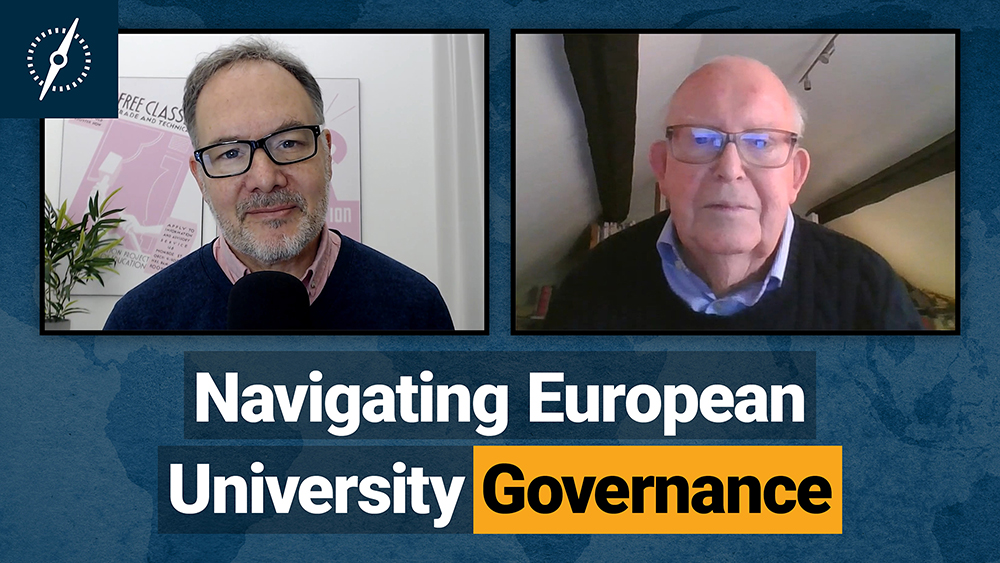
    The person who’s possibly written the most about this topic anywhere, ever, is Michael Shattock. He’s the former Registrar of Warwick University, a visiting professor at the University College of London’s Institute of Education, and an Honorary Research Professor in the Department of Education at Oxford University. He’s the author or co-author of a number of books about university governance around the world, and he joined us for this episode to talk about one of his more recent books, published by Bloomsbury, called The Governance of European Higher Education, Convergence or Divergence, co-authored with Aniko Horvath and Juergen Enders.

    Europe has some very old and deep-seated differences in the ways universities are governed. The French, German, and English systems, to take only three, have completely different ideas about what the relationship between the university and the state should be, not to mention some very contrasting notions about the role of the professoriate in institutional management. What practical impact do these differences have? Well, that’s what Michael and I sat down to chat about a few weeks ago. I hope you enjoy the conversation.


    The World of Higher Education Podcast
    Episode 3.17 | The Governance of European Higher Education: Convergence or Divergence? with Michael Shattock

    Transcript

    Alex Usher (AU): Michael, in your book, you talk about three grand traditions of European governance: the British or Anglosphere model, the French Napoleonic model, and the German Humboldtian model. How do those three styles or forms of governance vary when it comes to the relationship between universities and the state?

    Michael Shattock (MS): Well, I wouldn’t call them grand traditions. I think what they are now is more a set of underlying components of higher education policies.

    The Humboldtian tradition, which started in 1810, had an enormous influence across Europe because it brought research and teaching together into a single model. Around the same time, Napoleon established a single university for all of France, but it focused exclusively on teaching. This approach eventually led to the creation of the Grandes Écoles, which were also focused primarily on training.

    In the Anglosphere, universities were founded by local communities and had no initial relationship with the state. In the UK, for example, universities enjoyed considerable autonomy, which only began to change when they started seeking public funding. This relationship was formalized in 1919 and changed again after World War II in 1946, when the government decided to fully fund universities, which were struggling to recover financially.

    AU: One area where these traditions and these approaches to university-state relations have had a significant impact is in how countries have expanded their higher education systems since World War II. For example, some countries have introduced new universities or specialized institutions like the Fachhochschulen in Germany or the Institut Universitaire de Technologie in France. Does one system handle massification better than the others?

    MS: I think Germany has done particularly well in handling massification. Their success stems in part from the German constitution, which emphasizes homogeneity across the Länder. Another factor is that higher education in Germany is devolved to the Länder, so each of the 16 or 17 Länder has its own higher education system.

    These systems are interconnected and governed through collaboration between the Länder, the Conference of German Rectors, and, to some extent, the federal government through bodies like the Wissenschaftsrat. This framework ensures coordination without creating the competition you might see in more marketized systems.

    However, the German system isn’t without its issues. Following the Humboldtian model, Germany requires all universities to be both research- and teaching-oriented. The Fachhochschulen, which were established after the war, are not allowed to conduct research. As a result, three-quarters of students attend universities, while only one-quarter attend Fachhochschulen.

    Even so, the system is relatively equitable across the country and maintains strong principles of integrating research and teaching.

    AU: Governance isn’t just about university-state relations—it’s also about how institutions govern themselves. How do these three traditions differ in that regard?

    MS: Well, if we start with the Napoleonic tradition—which extends beyond France to Italy, Spain, and Portugal—you’ll see that universities are still under strong state control. In theory, the state is meant to act as a steering body, but in practice, these systems are highly regulated.

    The first issue when it comes to expansion in these systems is whether the state is willing to support growth and allocate resources accordingly. By contrast, in the UK, there’s a tacit belief that anyone with the appropriate qualifications should be able to access higher education. Theoretically, funding follows the students, but in reality, over the past five years, we’ve seen the students come while the funding often doesn’t follow.

    Secondly, there’s been a long-running debate—originating with the Lisbon declaration—about whether continental European universities should aim to match American universities. A series of reports, including excellent research by Professor Aguillon, highlighted a key difference: American universities often have lay-run governing bodies, whereas many European universities do not.

    This principle of having a governing body separate from purely academic leadership has been widely debated across Europe, with each country arriving at different solutions. In Hungary, for instance, the governing body consists of only five members, all from the ruling political party—a move that has faced objections in Brussels. Meanwhile, in Norway, the governing body includes two to five laypeople alongside academics, and they’ve even abolished the Senate, feeling it’s no longer necessary.

    So, there have been significant changes in the governance structures of universities, particularly in how these top-level committees are organized.

    AU:  Michael, you state in your book that European systems have faced three major challenges this century: the Lisbon declaration’s push to make Europe the most innovative society, the Bologna Process, and the rise of international rankings. How have European systems responded to these drivers? Have their responses been uniform, or have they diverged?

    MS: If you recall, my book has a secondary title, Convergence or Divergence. After the Lisbon Declaration, the expectation was that there would be significant convergence across European higher education systems. However, higher education wasn’t part of the Treaty of Rome, meaning the EU has no formal jurisdiction in this area.

    One might have assumed that the Bologna Process, with its establishment of the “3-2-3” model—three years for undergraduate degrees, two years for master’s degrees, and three years for PhDs—would lead to greater alignment in how universities are run. But that hasn’t been the case. In fact, the book strongly argues that divergence has overshadowed convergence, driven by national preconceptions and the varying resources available in different countries.

    Take Portugal, for example. In the book, we use it as a case study for universities in Southern Europe. Historically, Portugal’s universities were concentrated in coastal cities like Lisbon, Porto, and Coimbra, with no significant presence in rural areas. One of the country’s key higher education initiatives has been to establish institutions in the countryside. While not entirely successful, this effort has been an important part of their overall strategy to expand access.

    So, while divergence has often dominated, it’s worth noting that differing starting points can sometimes lead to similar endpoints. In some cases, divergent reactions to challenges may still result in convergence on a single model over time.

    AU: Divergence often happens because systems start from different points. For example, the relationship between research and teaching has been diverging in some systems, especially through institutional stratification. Are we seeing convergence in academic culture around this?

    MS: I wouldn’t describe it as a convergence, but if you think back to Lisbon, there was a strong emphasis on increasing the commitment to research within university systems. This focus has led to significant changes in how higher education systems are structured.

    For example, in the UK, research and teaching are managed by two entirely separate government departments. The Department of Education oversees teaching, while the Department of Industry and Innovation handles research. As a result, universities receive funding from two distinct sources.

    In Portugal, we encountered an unusual situation where the government felt it needed to invest more in research. To address this, they proposed—or perhaps it was the universities’ idea—to move research activities off the main university campuses and into smaller, independent research centers. These centers would allow polytechnic researchers to collaborate with those from established research universities. However, this approach has created unintended consequences. These research campuses have become increasingly autonomous, to the point where university rectors often have little understanding of what’s happening at these off-campus sites. Rather than strengthening the polytechnics, this model has effectively turned university campuses into teaching-only institutions, which I see as a step backward.

    The EU has also become more involved in this area, despite not having a formal role in higher education. Through the Horizon program, the EU has made substantial funding available for academics across member states to compete for. Interestingly, the UK has just negotiated its way back into Horizon following Brexit. This shift suggests that the EU, which had previously focused on undergraduate teaching through initiatives like the Bologna Process, is now channeling its higher education investments almost entirely into research via Horizon.

    As a result, universities across Europe are being pulled in different directions, and the ways these tensions manifest vary significantly from country to country.

    AU: One part of your book I enjoyed was your discussion of student participation in governance. In continental Europe, students often have significant roles in decision-making. How do these roles differ across countries?

    MS: I think the cultures around student participation differ significantly between countries. Let me start with Germany. The German higher education system went through a difficult period of intense student activism in the 1980s and 1990s. What has emerged from that is a system where students now play a significant role in university governance, particularly through their involvement in the Senate.

    This involvement is quite remarkable. For instance, when a candidate for a professorship is presented to the Senate for approval, student members have the same rights as academic members to challenge or endorse the appointment. Students are deeply integrated into the university’s internal negotiations, and rectors often leverage student opinions to balance or counteract the influence of academic groups. In this way, students have become a central element of university governance.

    In Norway and Portugal, the role of students is slightly different. National student organizations in these countries hold substantial influence within government decision-making. Additionally, they take on responsibilities that, in systems like those in Britain or Canada, would typically fall to the universities themselves. These include providing student accommodation, offering career advice, and managing other social services.

    While students in these systems may engage with certain academic issues, their role in the direct governance or operational management of the university is far less pronounced than what we see in Germany.

    AU: This isn’t your first book on university governance. With this new book on Europe, do you see European systems heading in the same direction as the rest of the world, or are they charting a different course?

    MS: The global trend is toward greater state involvement and oversight in higher education. Even in countries like Japan, there has been an attempt to shift from a traditional government-management relationship with universities to what is described as a “steering” relationship. However, in reality, governments still maintain a significant grip on university systems.

    Looking across Europe, you can observe different approaches to state control. Take Hungary, for example. In Hungary, the state has effectively taken over the management of the higher education system. Chancellors, often drawn from other public service sectors, are imposed by the state to sit on university governing bodies alongside rectors, with significant control over finances.

    In contrast, countries like Norway and Germany have a much lighter touch when it comes to state intervention. In these systems, there is a belief—particularly in Germany—that university autonomy is crucial for institutional success. This stands in stark contrast to Britain, where there is a rhetoric supporting university autonomy, but in practice, universities are heavily influenced by external pressures like league tables and global rankings.

    Another interesting shift in recent years has been the growing recognition of universities as “anchors” in their communities. This concept emphasizes the important role universities play, particularly in smaller towns, in contributing to local social and economic well-being. This idea of universities having a broader community impact is relatively new compared to 25 years ago, but it reflects an evolving understanding of the societal role of higher education.

    AU: Let’s look forward 25 years. If you were to write this book again in 2050, would you expect more convergence or divergence?

    MS: Well, I have to admit, I was afraid you would ask me this question, and I’ve given it some thought. To put it simply, I believe that in Europe, divergence will persist. The nation-state, as it currently operates in Europe, will continue to resist attempts by the EU to modernize and harmonize higher education systems. This resistance makes it difficult to achieve the kind of convergence the EU envisions.

    AU: Michael, thank you so much for joining us today.

    MS: Pleasure.

    AU: And thank you to our producers, Tiffany McLennan and Sam Pufek, and to you, our listeners and viewers. If you have any questions about today’s episode or suggestions for future ones, email us at [email protected]. Don’t forget to subscribe to our YouTube channel. Join us next week when our guest will be Javier Botero, discussing developments in Colombian higher education. Bye for now.

    *This podcast transcript was generated using an AI transcription service with limited editing. Please forgive any errors made through this service.

    Source link

  • Dual leadership controversies plague Seton Hall

    Dual leadership controversies plague Seton Hall

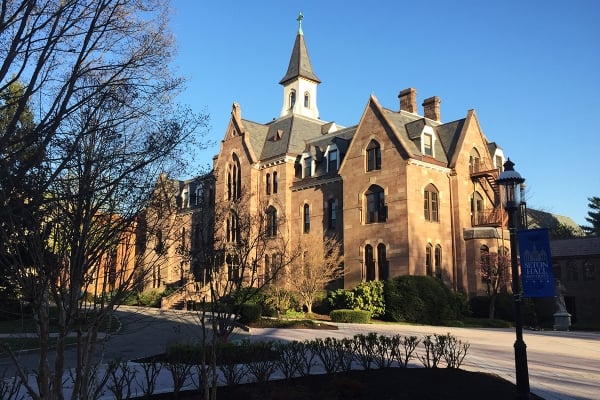
    Seton Hall University president Monsignor Joseph Reilly is facing mounting pressure from public officials and demands for transparency following a report alleging that he looked the other way on sexual abuse cases.

    At the same time, the university is contending with a lawsuit filed last year by former president Joseph Nyre, which alleges retaliation, breach of contract and various other misdeeds by the Board of Regents.

    The regents have remained silent on the Reilly situation and said little about Nyre’s lawsuit, beyond a report issued in July. Now lawmakers are ratcheting up pressure on the private institution to take action, raising questions about how the board is navigating the dual controversies behind closed doors with little public oversight.

    A Bombshell Report

    Reilly, who was hired as president in April, has a long history with Seton Hall.

    The new president earned a psychology degree from the university in 1987; in 2002, he became rector of the College Seminary at St. Andrew’s Hall, the undergraduate seminary of the Archdiocese of Newark, which is part of Seton Hall. A decade later Reilly became rector and dean of the university’s graduate seminary, a position he held until 2022. Then he took a yearlong sabbatical before returning as vice provost of academics and Catholic identity.

    Reilly also served on Seton Hall’s Board of Trustees—one of two governing bodies—during his time as an administrator.

    It was during his time at the graduate School of Theology that Reilly is accused of knowing about sexual abuse allegations that he did not report, according to documents reviewed by Politico. The case is linked to sprawling sexual abuse allegations involving disgraced cardinal Theodore McCarrick, the news outlet reported, who “created a culture of fear and intimidation” and “used his position of power as then–Archbishop of Newark”—which sponsors Seton Hall—“to sexually harass seminarians” for decades, according to a university report released in 2019.

    McCarrick, who sat on both of Seton Hall’s boards, was defrocked by the Vatican after he was found guilty of sexual misconduct in a canonical trial. A criminal case against McCarrick was suspended last year due to his inability to stand trial because of a dementia diagnosis.

    While Seton Hall never released to the public its full report on the abuse McCarrick allegedly committed, Politico’s review of the findings revealed that Reilly knew about the allegations against the cardinal and failed to report to university officials a student complaint about sexual assault by a seminarian. Politico also reported that Reilly dismissed another seminarian in 2012 who had allegedly been sexually abused and that he did not investigate the incident. In another instance, Reilly was allegedly made aware of a 2014 sexual harassment charge and did not report it.

    Politico also reported that Reilly did not fully cooperate with a 2019 investigation into McCarrick’s alleged abuse. A task force set up in 2020 to mete out discipline after the McCarrick scandal reportedly recommended removing Reilly from board and leadership roles.

    As the controversy has unfolded, Seton Hall has said little publicly.

    “As part of the search for the university’s 22nd president, the Board of Regents reviewed several candidates and overwhelmingly selected Monsignor Joseph Reilly to lead Seton Hall in recognition of his decades of effective service and leadership,” a Seton Hall spokesperson wrote in an email to Inside Higher Ed. “The Board of Regents remains unequivocal in its support of Monsignor Reilly and firmly believes in his ability and vision to enhance Seton Hall’s standing as one of the nation’s foremost Catholic universities.”

    The university did not provide a requested interview with regents, but the spokesperson added that following a 2019 review by a law firm, “the board determined that Monsignor Reilly should remain in his role and eligible for future roles at the University.” Seton Hall declined to provide a copy of the report.

    Demanding Answers

    Seton Hall’s silence has not gone unnoticed by Democratic state senator Andrew Zwecker, who chairs the Senate Oversight Committee and is vice chair of the higher education committee.

    “I’m appalled at the fact that they’ve just doubled down at this point without any transparency, just generic statements about values and doing a good job, et cetera,” he told Inside Higher Ed.

    Though Seton Hall is private, Zwecker noted that it receives about $2.5 million in state funding for certain programs. He added that the state could cut those funds—an option he might pursue if the university doesn’t respond transparently to concerns that Reilly ignored sexual abuse.

    “That is a lever that we must absolutely consider to keep the pressure on,” Zwecker said.

    He’s also weighing a public hearing. But Zwecker said he would rather see Seton Hall address the issue and answer questions about what Reilly knew about sexual abuse and whether the Board of Regents ignored those findings when it voted to hire him.

    If regents knew and “voted to install this president anyway, they should resign immediately,” Zwecker said.

    Democratic governor Phil Murphy also weighed in last week.

    “The Governor is deeply concerned by the allegations and believes that Seton Hall University must release the full report,” press secretary Natalie Hamilton told Inside Higher Ed by email.

    The Star-Ledger editorial board has challenged the university on its opacity, publishing an opinion piece on Monday under the headline “Why is Seton Hall hiding this sex abuse report?

    Faculty members at Seton Hall are also pressing for transparency.

    Nathaniel Knight, chair of Seton Hall’s Faculty Senate, noted “considerable concern” among the professoriate and said he wants to see a “greater degree of transparency” from the university.

    Knight said he supported Reilly’s hiring when he was named president, noting he “had the institutional memory” given his years of service and seemed to “embody the spirit of Seton Hall.” But now Knight wants the university to fully explain the concerns around the new president.

    “I support Monsignor Reilly. I supported his hiring. I think he’s a good man, a man of integrity and religious faith, and is someone who brought a promise of bringing the university, the community, together around its core values as a Catholic institution of higher education. Whatever is out there, I’d like to be able to weigh that against the positives that I see with Monsignor Reilly,” Knight said.

    An Explosive Lawsuit

    For Seton Hall, the Reilly controversy comes on the heels of Nyre’s unexpected exit in 2023, which shocked many in the community.

    “It was a surprise. I think we were bewildered. He had been brought in with great fanfare not long before,” Knight said. “He saw the university through the COVID years with a steady hand and was in the process of implementing this strategic plan that he had crafted. We saw no indication that there were any problems in the works. It was out of the blue and had us all scratching our heads.”

    Nyre sued Seton Hall last February, alleging breach of contract and retaliation by the board.

    In the lawsuit, Nyre alleges he was pushed out by the Board of Regents following a clash with then-chair Kevin Marino, whom he accused of micromanagement, improperly inserting himself into an embezzlement investigation at the law school and sexually harassing his wife, Kelli Nyre, among other charges. Marino, who is no longer on the board, was not named as a defendant in the lawsuit despite being at the center of many of the allegations.

    “Our litigation centers on the alleged systemic failures of the Board of Regents and their unwillingness to comply with federal laws, including Title IX, Title VII, and Title IV, as well as university bylaws and policies,” Matthew Luber, an attorney representing Nyre, said in a statement. “As alleged in the Complaint, the Defendants prioritized self-preservation, suppressing dissent and retaliating against individuals like Dr. Nyre who reported misconduct and advocated for meaningful change. As further alleged in the Complaint, the Board of Regents not only neglected their fiduciary responsibilities, but exposed the University and its personnel to significant risk. No matter the outcome, change is urgently needed at Seton Hall.”

    The university has pushed back in court. Officials filed a motion to dismiss last March, alleging that Nyre failed to state a claim and that the terms of his exit agreement barred him from filing a lawsuit against Seton Hall and/or its Board of Regents. Lawyers for Seton Hall wrote in a brief that Nyre’s lawsuit “can best be described as gamesmanship, and at worst sheer dishonesty.”

    University officials did not address the Nyre lawsuit in a statement to Inside Higher Ed, but last July they released a report from an outside law firm rejecting the claims against Marino. Attorneys for the firm, Perry Law, wrote that they “found no evidence to substantiate Mrs. Nyre’s allegations regarding Mr. Marino, despite the purported harassment allegedly occurring in public places in close proximity to numerous other individuals.”

    The Perry Law report was issued July 2, one day after Reilly assumed office. The report did not include interviews with the Nyres, who the authors noted did not participate in the investigation. Witnesses present for the alleged incidents told investigators that they did not see Marino engage in the behavior he is accused of, and the former board chair has denied the claims and blasted the lawsuit as “desperate and pathetic.” And, in a statement to Inside Higher Ed last year, Seton Hall said the claims were without merit.

    As controversies around Seton Hall’s current and former leaders play out, more details are likely to emerge in the Nyre case, barring a dismissal or settlement. But the Reilly review may remain shrouded in mystery as Seton Hall hunkers down, ignoring widespread calls for transparency.

    Source link

  • Probabilities of generative AI pale next to individual ideas

    Probabilities of generative AI pale next to individual ideas

    While I was working on the manuscript for More Than Words: How to Think About Writing in the Age of AI, I did a significant amount of experimenting with large language models, spending the most time with ChatGPT (and its various successors) and Claude (in its different flavors).

    I anticipated that over time this experimenting would reveal some genuinely useful application of this technology to my work as a writer.

    In truth, it’s been the opposite, and I think it’s interesting to explore why.

    One factor is that I have become more concerned about what I see as a largely uncritical embrace of generative AI in educational contexts. I am not merely talking about egregiously wrongheaded moves like introducing an AI-powered Anne Frank emulator that has only gracious thoughts toward Nazis, but other examples of instructors and institutions assuming that because the technology is something of a wonder, it must have a positive effect on teaching and learning.

    This has pushed me closer to a resistance mindset, if for no other reason than to provide a counterbalance to those who see AI as an inevitability without considering what’s on the other side. In truth, however, rather than being a full-on resister I’m more in line with Marc Watkins, who believes that we should be seeing AI as “unavoidable” but not “inevitable.” While I think throwing a bear hug around generative AI is beyond foolish, I also do not dismiss the technology’s potential utility in helping students learn.

    (Though, a big open question is what and how we want them to learn these things.)

    Another factor has been that the more I worked with the LLMs, the less I trusted them. Part of this was because I was trying to deploy their capabilities to support me on writing in areas where I have significant background knowledge and I found them consistently steering me wrong in subtle yet meaningful ways. This in turn made me fearful of using them in areas where I do not have the necessary knowledge to police their hallucinations.

    Mostly, though, just about every time I tried to use them in the interests of giving myself a shortcut to a faster outcome, I realized by taking the shortcut I’d missed some important experience along the way.

    As one example, in a section where I argue for the importance of cultivating one’s own taste and sense of aesthetic quality, I intended to use some material from New Yorker staff writer Kyle Chayka’s book Filterworld: How Algorithms Flattened Culture. I’d read and even reviewed the book several months before, so I thought I had a good handle on it, but still, I needed a refresher on what Chayka calls “algorithmic anxiety” and prompted ChatGPT to remind me what Chayka meant by this.

    The summary delivered by ChatGPT was perfectly fine, accurate and nonhallucinatory, but I couldn’t manage to go from the notion I had in my head about Chayka’s idea to something useful on the page via that summary of Chayka’s idea. In the end, I had to go back and reread the material in the book surrounding the concept to kick my brain into gear in a way that allowed me to articulate a thought of my own.

    Something similar happened several other times, and I began to wonder exactly what was up. It’s possible that my writing process is idiosyncratic, but I discovered that to continue to work the problem of saying (hopefully) interesting and insightful things in the book was not a summary of the ideas of others, but the original expression of others as fuel for my thoughts.

    This phenomenon might be related to the nature of how I view writing, which is that writing is a continual process of discovery where I have initial thoughts that bring me to the page, but the act of bringing the idea to the page alters those initial thoughts.

    I tend to think all writing, or all good writing, anyway, operates this way because it is how you will know that you are getting the output of a unique intelligence on the page. The goal is to uncover something I didn’t know for myself, operating under the theory that this will also deliver something fresh for the audience. If the writer hasn’t discovered something for themselves in the process, what’s the point of the whole exercise?

    When I turned to an LLM for a summary and could find no use for it, I came to recognize that I was interacting not with an intelligence, but a probability. Without an interesting human feature to latch onto, I couldn’t find a way to engage my own humanity.

    I accept that others are having different experiences in working alongside large language models, that they find them truly generative (pardon the pun). Still, I wonder what it means to find a spark in generalized probabilities, rather than the singular intelligence.

    I believe I say a lot of interesting and insightful things in More Than Words. I’m also confident I may have some things wrong and, over time, my beliefs will be changed by exposing myself to the responses of others. This is the process of communication and conversation, processes that are not a capacity of large language models given they have no intention working underneath the hood of their algorithm.

    Believing otherwise is to indulge in a delusion. Maybe it’s a helpful delusion, but a delusion nonetheless.

    The capacities of this technology are amazing and increasing all the time, but to me, for my work, they don’t offer all that much of meaning.

    Source link

  • A troubling moment for public higher ed (opinion)

    A troubling moment for public higher ed (opinion)

    David Kozlowski/Moment Mobile/Getty Images

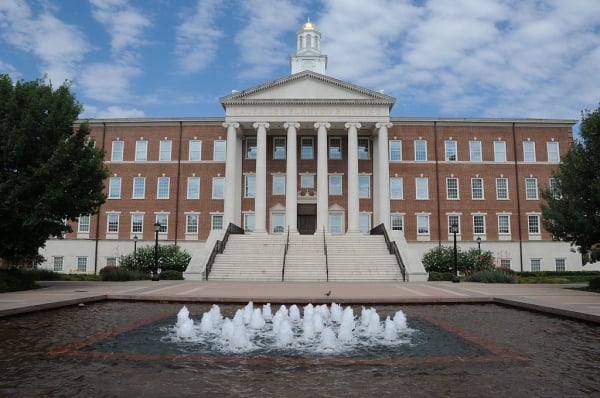
    Earlier this month, my institution, Southern Methodist University, made headlines by hiring President Jay Hartzell away from the University of Texas at Austin, one of the country’s largest and most prestigious public universities. The move surprised many on both campuses and sent shock waves through higher education.

    While I can’t presume to know all the motivations behind President Hartzell’s decision and I don’t speak for SMU, as a faculty member who studies higher education, I believe this moment demands our attention. Many public universities are under serious threat, and private universities need to realize that their future is closely tied to the success of their public counterparts.

    For more than a decade, SMU has been my academic home. The campus boasts smart and curious students, dedicated faculty who care about teaching and research, and strong leadership from the administration and Board of Trustees. We’re in the middle of a successful capital campaign and enjoying both athletic success after our move to the Atlantic Coast Conference and a growing research profile.

    Yet, even as I anticipate the leadership that President Hartzell will bring to SMU, I can’t ignore the broader context that has made such a move more common and deeply troubling.

    Hartzell isn’t the only example of a major public university president leaving for the relative safety of private higher education. His predecessor at UT Austin Greg Fenves left for Emory University. Carol Folt resigned from the University of North Carolina at Chapel Hill before getting the University of Southern California presidency. Back in 2011, Biddy Martin famously left the University of Wisconsin at Madison for Amherst College in one of the early examples of this trend. So, what is going on and why are major public university presidencies less attractive than they once were?

    The Struggles of Public Universities

    Being a public university president in a red state is the toughest job in higher education today.

    Public universities in these politically charged environments are under siege. They face relentless ideological attacks from state legislators and are constantly forced to navigate resource challenges from years of underfunding.

    Politicians attacking public higher education are not simply questioning the budgets or management—they are attempting to dismantle these institutions. Efforts to reduce tenure protections, anti-DEI legislation and restrictions on what can be taught are all part of a broader effort to strip public universities of their autonomy.

    The goal of these attacks is clear: to reduce the influence and authority of public universities and their leaders and undermine the critical role they play in shaping a well-informed and educated workforce and citizenry.

    At the same time, some institutions are adopting policies of institutional neutrality, reducing the ability of presidents to speak out on these issues.

    The cumulative effect of these efforts is to make public universities and their leaders less effective in advocating for their missions, students and faculty.

    The Short-Term Advantages for Private Higher Ed

    In the short term, these challenges facing public universities have opened opportunities for private institutions. With public universities bogged down in political and financial crises, private universities can poach top faculty and administrators, offering them better resources and less political interference.

    I don’t fault private universities for capitalizing on these opportunities—they are acting in their own self-interest and in the interests of their own missions, students and faculty.

    But I fear that this approach is shortsighted and ultimately damaging to the broader higher education community. At a time when trust in higher education is declining, when the value of a college degree is being questioned and when the public is increasingly disillusioned with the academy, it is vital that we don’t allow attacks on public institutions to further erode public faith in all of higher education.

    Why Private Universities Must Stand Up for Public Higher Ed

    Private universities are uniquely positioned to advocate for the broader value of higher education and the critical role public institutions play.

    First, private universities can use their platforms to champion the ideals of higher education. With public universities under attack from state legislatures and special interest groups, private institutions can and should speak out against the politicization of higher education. Whether through research, advocacy or public statements, private universities can be powerful allies in the fight to protect the autonomy of public institutions.

    Second, private universities can advocate for increased public investments in higher education. They can use their influence to urge policymakers to restore funding for public universities and reject anti–higher education policies. At a time of declining public support, private universities can push for policies that ensure all students, regardless of background, have access to high-quality postsecondary education to develop the skills to succeed in today’s economy.

    Third, private universities can help bridge the divide between public and private higher education by forming partnerships with public two- and four-year institutions. These partnerships could include joint research initiatives, transfer and reciprocal enrollment programs, or shared resources to expand access and opportunity.

    The Time for Action Is Now

    In this critical moment for higher education, private universities need to demonstrate leadership—not just for their own interest, but for the interests of the entire industry. If we want to safeguard the unique contributions of both public and private higher education, we need to work together to ensure both sectors thrive.

    Now is the time for all those who believe in the transformational power of higher education to stand up and take action. The future of higher education depends on it.

    Michael S. Harris is a professor of higher education in the Simmons School of Education and Human Development at Southern Methodist University.

    Source link

  • Trump administration allows immigration arrests at colleges

    Trump administration allows immigration arrests at colleges

    The acting secretary of the Department of Homeland Security on Tuesday rescinded guidance that prevented immigration arrests at schools, churches and colleges.

    Since 1993, federal policy has barred immigration enforcement actions near or at these so-called sensitive areas. The decision to end the policy comes as the Trump administration is moving to crack down on illegal immigration and stoking fears of mass deportations. 

    “This action empowers the brave men and women in [Customs and Border Protection] and [Immigration and Customs Enforcement] to enforce our immigration laws and catch criminal aliens—including murders and rapists—who have illegally come into our country,” acting DHS secretary Benjamine Huffman said in a statement. “Criminals will no longer be able to hide in America’s schools and churches to avoid arrest. The Trump administration will not tie the hands of our brave law enforcement, and instead trusts them to use common sense.”

    Advocates for undocumented people have warned that such a policy change was possible, and some college leaders have said they won’t voluntarily assist in any effort to deport students or faculty solely because of their citizenship status, although they said they would comply with the law. On Wednesday, the Justice Department said it would investigate state and local officials who don’t enforce Trump’s immigration policies.

    Source link

  • Building common ground in higher education

    Building common ground in higher education

    Welcome to year four of the “Beyond Transfer” blog on Inside Higher Ed. We’re humbled by and thankful for the lively and passionate community this has become. We continue to be impressed with the levels of readership, the exemplary work that various authors describe, the connections that are made as people respond to one another’s work and the dedication to students that jumps off the page. We begin 2025 feeling truly grateful to all those working hard every day to ensure fair treatment of students and their learning. Thank you for all you do.

    Each year, we kick off the “Beyond Transfer” blog with some reflections on what we’ve learned from you and all our partners on the ground and what that means for the year ahead. We are excited to welcome Sova’s new partner Marty Alvarado to this endeavor. Marty has a long history of leading impactful transfer and learning mobility work, and while she’s new to Sova, her insights have long guided our work.

    In 2024, Sova’s transfer and learning mobility team was far-flung and working deeply in many contexts. As a result, we begin 2025 midstride on a variety of fronts:

    • In states: The Sova team is embedded in truly consequential transfer and learning mobility work in several states. This hard, on-the-ground work includes facilitating state-level, cross-sector leadership tables, providing technical assistance for institutional collaborations, supporting implementation of legislatively mandated reforms and serving as a thought partner to state agencies and system offices in diverse political and governance contexts.

    The new year is a time when people reflect on the year that passed and make commitments for the year ahead. This year, we thought we’d play on that theme by sharing some reflections on the past year and what that means for our team’s commitments in the year ahead.

    You may have heard that Merriam-Webster’s 2024 Word of the Year was “polarization,” which Merriam-Webster defined as “division into two sharply distinct opposites; especially, a state in which the opinions, beliefs or interests of a group or society no longer range along a continuum but become concentrated at opposing extremes.” For anyone who lived through the 2024 U.S. presidential election, the selection of this word of the year probably comes as no surprise.

    This led us to reflect on a hard lesson we have learned through our transfer and learning mobility work, which is that this, too, is a space that can quickly lead to polarization. So often, we hear blame placed on receiving institutions for not taking enough credits or on sending institutions for not preparing students well enough. We see examples of administration pitted against faculty for control over decision-making related to transfer credits. We even see the needs of transfer students held up against the needs of students who started and stayed at an institution. Sound familiar?

    So our first commitment for 2025 is to practice the art of depolarization. What do we mean by that? In many ways, this feels like a recommitment to values we already hold, but (being human) sometimes don’t fully live up to. We will welcome hard conversations. We will actively listen, with the goal of building understanding and empathy. We will begin hard conversations with a reminder to honor the perspectives and expertise of all present. We will focus on the human dimensions of change, which includes recognizing that people bring the beauty of their identities and experiences to the work alongside fear of loss, discomfort with conflict and differing styles. We will actively find ways to include all participants. We will transparently document differing perspectives. We will avoid overgeneralizations and stereotypes. We will remember that we work with educators who care about students and welcome being invited into collaborative problem-solving. And when we fall short of these recommitments, we will be open to others holding us accountable.

    Another commitment we have for 2025 is the work of finding and expanding the common ground. This too flows from an interest in depolarization and our shared conviction that common ground exists but can be easily drowned out amid the din of partisan hostility.

    We know that transfer touches many learners—in fact, likely more learners than we previously thought. New data from a survey of a nationally representative sample of Americans, conducted in a partnership between Public Agenda and Sova for “Beyond Transfer,” found that four in 10 respondents tried to transfer some type of credit toward earning an associate degree, bachelor’s degree or certificate. Moreover, those respondents shared that their credit transfer journeys took many forms, including seeking credit transfer for military experience, work-based learning and dual-credit courses in high school. Despite their different journeys, many shared the common experience of credit loss, with 58 percent of respondents indicating they had lost some number of credits when transferring. These data points demonstrate there is a large and diverse population of mobile learners that we should bring into the conversation to build awareness of the high incidence of transfer and generate support for policy action.

    While there are many contentious issues in higher education—including how to improve affordability and how to address ballooning student loan debt—transfer is an area with bipartisan support that, if we can improve, can generate downstream improvements in other areas, such as completion and affordability.

    In the same Public Agenda survey, respondents of all political backgrounds expressed strong support for a variety of policy ideas intended to improve credit transfer. Credit mobility and transfer might well be an issue around which Republicans, Democrats and Independents prove they are capable of agreement and joint action. Improving transfer stands to offer a triple bottom line for learners, institutions and taxpayers:

    • For learners: Recognizing more of their hard-earned credit is the fair thing to do, and research makes clear it will also advance their success by increasing retention and shortening time and cost to completion.
    • For institutions: Public appetite for transparency and accountability clearly cuts across political identities, and institutions would be well served by paying attention to this growing appetite and its relationship to the ongoing decline of public confidence in the value of higher education.
    • For taxpayers: Maximizing the credits earned for students will ensure taxpayer dollars are used to best effect.

    As we dive into 2025, we’ll keep working to dial down the finger-pointing and blaming, cut across silos and divides of our own making, and expand the common ground that already exists on transfer. We hope you’ll join us in finding ways to come together across multiple fronts—within institutions and systems, with government and policymakers at all levels, with accreditors and associations—to serve our students. They deserve it.

    Want to share your commitments for 2025? Please send your thoughts to [email protected] by Feb. 15. We will synthesize your thoughts and reflect them in an upcoming post.

    Source link

  • The rise of multidisciplinary research stimulated by AI

    The rise of multidisciplinary research stimulated by AI

    AI research tools such as OpenAI o1 have now reached test score levels that meet or exceed the scores of those who hold Ph.D. degrees in the sciences and a number of other fields. These generative AI tools utilize large language models that include research and knowledge across many disciplines. Increasingly, they are used for research project ideation and literature searches. The tools are generating interesting insights to researchers that they may not have been exposed to in years gone by.

    The field of academe has long emphasized the single-discipline research study. We offer degrees in single disciplines; faculty members are granted appointments most often in only one department, school or college; and for the most part, our peer-reviewed academic journals are in only one discipline, although sometimes they welcome papers from closely associated or allied fields. Dissertations are most commonly based in a single discipline. Although research grants are more often multidisciplinary and prioritize practical solution-finding, a large number remain focused on one field of study.

    The problem is that as we advance our knowledge and application expertise in one field, we can become unaware of important developments in other fields that directly or indirectly impact the study in our chosen discipline. Innovation is not always a single-purpose, straight-line advance. More often today, innovation comes from the integration of knowledge of disparate fields such as sociology, engineering, ecology and environmental developments, and expanding understanding of quantum physics and quantum computing. Until recently, we have not had an efficient way to identify and integrate knowledge and perspectives from fields that, at first glance, seem unrelated.

    AI futurist and innovator Thomas Conway of Algonquin College of Applied Arts and Technology addresses this topic in “Harnessing the Power of Many: A Multi-LLM Approach to Multidisciplinary Integration”:

    “Amidst the urgency of increasingly complex global challenges, the need for integrative approaches that transcend traditional disciplinary boundaries has never been more critical. Climate change, global health crises, sustainable development, and other pressing issues demand solutions from diverse knowledge and expertise. However, effectively combining insights from multiple disciplines has long been a significant hurdle in academia and research.

    “The Multi-LLM Iterative Prompting Methodology (MIPM) emerges as a transformative solution to this challenge. MIPM offers a structured yet flexible framework for promoting and enhancing multidisciplinary research, peer review, and education. At its core, MIPM addresses the fundamental issue of effectively combining diverse disciplinary perspectives to lead to genuine synthesis and innovation. Its transformative potential is a beacon of hope in the face of complex global challenges.”

    Even as we integrate AI research tools and techniques, we, ourselves, and our society at large are changing. Many of the common frontier language models powering research tools are multidisciplinary by nature, although some are designed with strengths in specific fields. Their responses to our prompts are multidisciplinary. The response to our iterative follow-up prompts can take us to fields and areas of expertise of which we were not previously aware. The replies are not coming solely from a single discipline expert, book or other resource. They are coming from a massive language model that spans disciplines, languages, cultures and millennia.

    As we integrate these tools, we too will naturally become aware of new and emerging perspectives, research and developments generated by fields that are outside our day-to-day knowledge, training and expertise. This will expand our perspectives beyond the fields of our formal study. As the quality of our AI-based research tools expands, their impact on research cannot be overstated. It will lead us in new directions and broader perspectives, uncovering the potential for new knowledge, informed by multiple disciplines. One recent example is Storm, a brainstorming tool developed by the team at Stanford’s Open Virtual Assistant Lab (OVAL):

    “The core technologies of the STORM&Co-STORM system include support from Bing Search and GPT-4o mini. The STORM component iteratively generates outlines, paragraphs, and articles through multi-angle Q&A between ‘LLM experts’ and ‘LLM hosts.’ Meanwhile, Co-STORM generates interactive dynamic mind maps through dialogues among multiple agents, ensuring that no information needs overlooked by the user. Users only need to input an English topic keyword, and the system can generate a high-quality long text that integrates multi-source information, similar to a Wikipedia article. When experiencing the STORM system, users can freely choose between STORM and Co-STORM modes. Given a topic, STORM can produce a structured high-quality long text within 3 minutes. Additionally, users can click ‘See BrainSTORMing Process’ to view the brainstorming process of different LLM roles. In the ‘Discover’ section, users can refer to articles and chat examples generated by other scholars, and personal articles and chat records can also be found in the sidebar ‘My Library.’”

    More about Storm is available at https://storm.genie.stanford.edu/.

    One of the concerns raised by skeptics at this point in the development of these research tools is the security of prompts and results. Few are aware of the opportunities for air-gapped or closed systems and even the ChatGPT temporary chats. In the case of OpenAI, you can start a temporary chat by tapping the version of ChatGPT you’re using at the top of the GPT app, and selecting temporary chat. I do this commonly in using Ray’s eduAI Advisor. OpenAI says that in the temporary chat mode results “won’t appear in history, use or create memories, or be used to train our models. For safety purposes, we may keep a copy for up to 30 days.” We can anticipate these kinds of protections will be offered by other providers. This may provide adequate security for many applications.

    Further security can be provided by installing a stand-alone instance of the LLM database and software in an air-gapped computer that maintains data completely disconnected from the internet or any other network, ensuring an unparalleled level of protection. Small language models and medium-size models are providing impressive results, approaching and in some cases exceeding frontier model performance while storing all data locally, off-line. For example, last year Microsoft introduced a line of SLM and medium models:

    “Microsoft’s experience shipping copilots and enabling customers to transform their businesses with generative AI using Azure AI has highlighted the growing need for different-size models across the quality-cost curve for different tasks. Small language models, like Phi-3, are especially great for:

    • Resource constrained environments including on-device and offline inference scenarios
    • Latency bound scenarios where fast response times are critical.
    • Cost constrained use cases, particularly those with simpler tasks.”

    In the near term we will find turnkey private search applications that will offer even more impressive results. Work continues on rapidly increasing multidisciplinary responses to research on an ever-increasing number of pressing research topics.

    The ever-evolving AI research tools are now providing us with responses from multiple disciplines. These results will lead us to engage in more multidisciplinary studies that will become a catalyst for change across academia. Will you begin to consider cross-discipline research studies and engage your colleagues from other fields to join you in research projects?

    Source link

  • Q&A with retiring National Student Clearinghouse CEO

    Q&A with retiring National Student Clearinghouse CEO

    Ricardo Torres, the CEO of the National Student Clearinghouse, is retiring next month after 17 years at the helm. His last few weeks on the job have not been quiet.

    On Jan. 13, the clearinghouse’s research team announced they had found a significant error in their October enrollment report: Instead of freshman enrollment falling by 5 percent, it actually seemed to have increased; the clearinghouse is releasing its more complete enrollment report tomorrow. In the meantime, researchers, college officials and policymakers are re-evaluating their understanding of how 2024’s marquee events, like the bungled FAFSA rollout, influenced enrollment; some are questioning their reliance on clearinghouse research.

    It’s come as a difficult setback at the end of Torres’s tenure. He established the research center in 2010, two years after becoming CEO, and helped guide it to prominence as one of the most widely used and trusted sources of postsecondary student data.

    The clearinghouse only began releasing the preliminary enrollment report, called the “Stay Informed” report, in 2020 as a kind of “emergency measure” to gauge the pandemic’s impact on enrollment, Torres told Inside Higher Ed. The methodological error in October’s report, which the research team discovered this month, had been present in every iteration since. And a spokesperson for the clearinghouse said that after reviewing the methodology for their “Transfer and Progress” report, which they’ve released every February since 2023, was also affected by the miscounting error; the 2025 report will be corrected, but the last two were skewed.

    Torres said the clearinghouse is exploring discontinuing the “Stay Informed” report entirely.

    Such a consequential snafu would put a damper on anyone’s retirement and threaten to tarnish their legacy. But Torres is used to a little turbulence: He oversaw the clearinghouse through a crucial period of transformation, from an arm of the student lending sector to a research powerhouse. He said the pressure on higher ed researchers is only going to get more intense in the years ahead, given the surging demand for enrollment and outcomes data from anxious college leaders and ambitious lawmakers. Transparency and integrity, he cautioned, will be paramount.

    His conversation with Inside Higher Ed, edited for length and clarity, is below.

    Q: You’ve led the clearinghouse since 2008, when higher ed was a very different sector. How does it feel to be leaving?

    A: It’s a bit bittersweet, but I feel like we’ve accomplished something during my tenure that can be built upon. I came into the job not really knowing about higher ed; it was a small company, a $13 million operation serving the student lending industry. We were designed to support their fundamental need to understand who’s enrolled and who isn’t, for the purposes of monitoring student loans. As a matter of fact, the original name of the organization was the National Student Loan Clearinghouse. When you think about what happened when things began to evolve and opportunities began to present themselves, we’ve done a lot.

    Q: Tell me more about how the organization has changed since the days of the Student Loan Clearinghouse.

    A: Frankly, the role and purpose of the clearinghouse and its main activities have not changed in about 15 years. The need was to have a trusted, centralized location where schools could send their information that then could be used to validate loan status based on enrollments. The process, prior to the clearinghouse, was loaded with paperwork. The registrars that are out there now get this almost PTSD effect when they go back in time before the clearinghouse. If a student was enrolled in School A, transferred to School B and had a loan, by the time everybody figured out that you were enrolled someplace else, you were in default on your loan. We were set up to fix that problem.

    What made our database unique at that time was that when a school sent us enrollment data, they had to send all of the learners because they actually didn’t know who had a previous loan and who didn’t. That allowed us to build a holistic, comprehensive view of the whole lending environment. So we began experimenting with what else we could do with the data.

    Our first observation was how great a need there was for this data. Policy formulation at almost every level—federal, state, regional—for improving learner outcomes lacked the real-time data to figure out what was going on. Still, democratizing the data alone was insufficient because you need to convert that insight into action of some kind that is meaningful. What I found as I was meeting schools and individuals was that the ability and the skill sets required to convert data to action were mostly available in the wealthiest institutions. They had all the analysts in the world to figure out what the hell was going on, and the small publics were just scraping by. That was the second observation, the inequity.

    The third came around 2009 to 2012, when there was an extensive effort to make data an important part of decision-making across the country. The side effect of that, though, was that not all the data sets were created equal, which made answering questions about what works and what doesn’t that much more difficult.

    The fourth observation, and I think it’s still very relevant today, is that the majority of our postsecondary constituencies are struggling to work with the increasing demands they’re getting from regulators: from the feds, from the states, from their accreditors, the demand for reports is increasing. The demand for feedback is increasing. Your big institutions, your flagships, might see this as a pain in the neck, but I would suggest that your smaller publics and smaller private schools are asking, “Oh my gosh, how are we even going to do this?” Our data helps.

    Q: What was the clearinghouse doing differently in terms of data collection?

    A: From the postsecondary standpoint, our first set of reports that we released in 2011 focused on two types of learners that at most were anecdotally referred to: transfer students and part-time students. The fact that we included part-time students, which [the Integrated Postsecondary Education Data System] did not, was a huge change. And our first completion report, I believe, said that over 50 percent of baccalaureate recipients had some community college in their background. That was eye-popping for the country to see and really catalyzed a lot of thinking about transfer pathways.

    We also helped spur the rise of these third-party academic-oriented organizations like Lumina and enabled them to help learners by using our data. One of our obligations as a data aggregator was to find ways to make this data useful for the field, and I think we accomplished that. Now, of course, demand is rising with artificial intelligence; people want to do more. We understand that, but we also think we have a huge responsibility as a data custodian to do that responsibly. People who work with us realize how seriously we take that custodial relationship with the data. That has been one of the hallmarks of our tenure as an organization.

    Q: Speaking of custodial responsibility, people are questioning the clearinghouse’s research credibility after last week’s revelation of the data error in your preliminary enrollment report. Are you worried it will undo the years of trust building you just described? How do you take accountability?

    A: No. 1: The data itself, which we receive from institutions, is reliable, current and accurate. We make best efforts to ensure that it accurately represents what the institutions have within their own systems before any data is merged into the clearinghouse data system.

    When we first formed the Research Center, we had to show how you can get from the IPEDS number to the clearinghouse number and show people our data was something they could count on. We spent 15 years building this reputation. The key to any research-related error like this is, first, you have to take ownership of it and hold yourself accountable. As soon as I found out about this we were already making moves to [make it public]—we’re talking 48 hours. That’s the first step in maintaining trust.

    That being said, there’s an element of risk built into this work. Part of what the clearinghouse brings to the table is the ability to responsibly advance the dialogue of what’s happening in education and student pathways. There are things that are happening out there, such as students stopping out and coming back many years later, that basically defy conventional wisdom. And so the risk in all of this is that you shy away from that work and decide to stick with the knitting. But your obligation is, if you’re going to report those things, to be very transparent. As long as we can thread that needle, I think the clearinghouse will play an important role in helping to advance the dialogue.

    We’re taking this very seriously and understand the importance of the integrity of our reports considering how the field is dependent on the information we provide. Frankly, one of the things we’re going to take a look at is, what is the need for the preliminary report at the end of the day? Or do we need to pair it with more analysis—is it just enough to say that total enrollments are up X or down Y?

    Q: Are you saying you may discontinue the preliminary report entirely?

    A: That’s certainly an option. I think we need to assess the field’s need for an early report—what questions are we trying to answer and why is it important that those questions be answered by a certain time? I’ll be honest; this is the first time something like this has happened, where it’s been that dramatic. That’s where the introspection starts, saying, “Well, this was working before; what the heck happened?”

    When we released the first [preliminary enrollment] report [in 2020], we thought it’d be a one-time thing. Now, we’ve issued other reports that we thought were going to be one-time and ended up being a really big deal, like “Some College, No Credential.” We’re going to continue to look for opportunities to provide those types of insights. But I think any research entity needs to take a look at what you’re producing to make sure there’s still a need or a demand, or maybe what you’re providing needs to pivot slightly. That’s a process that’s going to be undertaken over the next few months as we evaluate this report and other reports we do.

    Q: How did this happen, exactly? Have you found the source of the imputation error?

    A: The research team is looking into it. In order to ensure for this particular report that we don’t extrapolate this to a whole bunch of other things, you just need to make sure that you know you’ve got your bases covered analytically.

    There was an error in how we imputed a particular category of dual-enrolled students versus freshmen. But if you look at the report, the total number of learners wasn’t impacted by that. These preliminary reports were designed to meet a need after COVID, to understand what the impact was going to be. We basically designed a report on an emergency basis, and by default, when you don’t have complete information, there’s imputation. There’s been a lot of pressure on getting the preliminary fall report out. That being said, you learn your lesson—you gotta own it and then you keep going. This was very unfortunate, and you can imagine the amount of soul searching to ensure that this never happens again.

    Q: Do you think demand for more postsecondary data is driving some irresponsible analytic practices?

    A: I can tell you that new types of demands are going to be put out there on student success data, looking at nondegree credentials, looking at microcredentials. And there’s going to be a lot of spitballing. Just look at how ROI is trying to be calculated right now; I could talk for hours about the ins and outs of ROI methodology. For example, if a graduate makes $80,000 after graduating but transferred first from a community college, what kind of attribution does the community college get for that salary outcome versus the four-year school? Hell, it could be due to a third-party boot camp done after earning a degree. Research on these topics is going to be full of outstanding questions.

    Q: What comes next for the clearinghouse’s research after you leave?

    A: I’m excited about where it’s going. I’m very excited about how artificial intelligence can be appropriately leveraged, though I think we’re still trying to figure out how to do that. I can only hope that the clearinghouse will continue its journey of support. Because while we don’t directly impact learner trajectories, we can create the tools that help people who support learners every year impact those trajectories. Looking back on my time here, that’s what I’m most proud of.

    Source link

  • chief education solutions officer at Michigan

    chief education solutions officer at Michigan

    James DeVaney and the Center for Academic Innovation at the University of Michigan are no strangers to this community. James has a number of titles at U-M, including special adviser to the president, associate vice provost for academic innovation and founding executive director of the Center for Academic Innovation. Today, I’m talking to James about a new leadership role he is recruiting for at CAI, that of the chief education solutions officer.

    Q: What is the university’s mandate behind this role? How does it help align with and advance the university’s strategic priorities?

    A: First of all, thank you for the opportunity to share more about this exciting new position. I’m thrilled about the potential of this role and the chance to welcome a new colleague to the Center for Academic Innovation—an extraordinary organization that I care deeply about—who will join us in shaping the future of education.

    The inaugural chief education solutions officer (CESO) is pivotal to CAI’s mission to collaborate across campus and around the world to create equitable, lifelong educational opportunities for learners everywhere. By helping CAI deliver offerings that are learner-centered, research-driven, scalable and sustainable, the CESO will directly support the University of Michigan’s Vision 2034, particularly the impact area of life-changing education.

    This role is designed for a dynamic leader ready to solve organizational learning and workforce development challenges while driving growth through innovative, impactful solutions. By developing scalable and sustainable educational models, the CESO will ensure U-M remains at the forefront of lifelong learning and talent development on a global scale.

    The CESO is not just about executing current strategies—it’s a leadership role charged with helping to forge a bold new path for education. By addressing emerging trends like workforce transformation, AI and the growing demand for upskilling, this role will help learners and organizations thrive in a rapidly evolving world. The CESO’s work will empower learners and position U-M as a leader in education innovation for generations to come.

    Q: Where does the role sit within the university structure? How will the person in this role engage with other units and leaders across campus?

    A: The CESO will report directly to me in my capacity as the founding executive director of the Center for Academic Innovation and will be an additional key member of the senior leadership team at CAI. This role sits at the intersection of education innovation, strategic partnerships and business development, ensuring seamless collaboration between external stakeholders and CAI’s internal teams.

    The CESO will work closely with units that already engage with industry and organizational partners and schools and colleges across campus that extend their reach through innovative programs and initiatives. Through these collaborations, the CESO will help identify and deliver innovative solutions to meet workforce development needs and support sustainable partnerships with organizations looking to support their current and future employees in a rapidly changing economy.

    For example, the CESO might work with a school to design a custom program for an industry partner, collaborate with units across campus to expand U-M’s impact in key markets, help an organization to effectively utilize Michigan Online offerings or integrate CAI’s expertise into new initiatives that benefit learners and organizations alike. This role is about connecting ideas, people and resources to drive impact. By aligning CAI’s innovative capabilities with partner needs, the CESO ensures U-M’s resources create transformative outcomes both on campus and beyond.

    Q: What would success look like in one year? Three years? Beyond?

    A: Success in this role is all about creating momentum—whether by building early partnerships, driving measurable growth or laying the groundwork for transformative initiatives. Here’s what we envision at each stage of this journey:

    In one year: The CESO will have established a strong foundation for growth by building early partnerships with industry leaders, meeting key growth targets and launching initial programs that deliver measurable value for learners and organizations. This first year is about setting the stage—building relationships, aligning CAI’s capabilities with external needs and creating momentum for the future. Importantly, the CESO will work alongside a really talented senior leadership team. Year one is also about creating strong connections within this group, building trust and finding ways to support each other.

    In three years: The CESO will have significantly scaled CAI’s impact, with a portfolio of partnerships that reflect innovative, sustainable approaches to workforce development and lifelong learning. Internally, we’ll see streamlined systems for managing partnerships, delivering programs and providing exemplary relationship support. Externally, CAI will be recognized as a trusted leader in educational solutions that address real-world challenges through highly relevant programs that build on interdisciplinary breadth of excellence.

    Beyond three years: Long-term success means driving transformative innovation in education—at both the individual and organizational levels. The CESO’s work will have deepened CAI’s reputation for empowering learners everywhere while also positioning U-M as a leader in lifelong learning and workforce development. The legacy of this role will be an ecosystem of partnerships and programs that inspire and uplift learners across the globe.

    At every stage, success in this role is about creating meaningful, lasting impact for learners and partners. That said, I’m looking to hire a colleague who will not only embrace this vision of success but also challenge it—pushing us to explore uncharted possibilities and reach new heights we haven’t yet imagined.

    Q: What kinds of future roles would someone who took this position be prepared for?

    A: The CESO role is an incredible opportunity for someone looking to advance their career in business development, partnership leadership or workforce innovation—whether within higher education or in related industries.

    This role provides direct experience in managing high-impact partnerships, driving revenue growth and designing innovative learning solutions for diverse audiences. It’s a unique combination of strategic thinking, relationship management and educational innovation that builds a strong foundation for future leadership roles.

    The skills developed in this position—including expertise in lifelong learning, workforce transformation and sustainable business growth—are highly transferable to roles in education, industry or even global organizations. Whether leading similar initiatives at another institution or shaping workforce strategies for a global enterprise, the CESO will leave this role with the tools to make an even bigger impact.

    This position enhances vital leadership skills, such as building trust with stakeholders, navigating complex organizational challenges and creating scalable solutions. It’s a perfect launchpad for individuals ready to shape the future of education at the intersection of academia and industry.

    Joining this team means stepping into a vibrant, forward-thinking environment where your contributions will be valued, your ideas will have impact and you’ll have the space to grow, innovate and truly make a difference.

    I’m truly excited to welcome a dynamic new partner to our team—could it be you?

    Source link

  • Laken Riley Act passes Senate

    Laken Riley Act passes Senate

    The House is preparing to take up the Laken Riley Act later this week after the Senate passed the bill Monday, Politico reported.

    Twelve Democrats joined all of the higher chamber’s Republicans to vote for the immigration bill, named for a 22-year-old woman killed by an undocumented immigrant in Georgia last year. Immigration policy experts say the bill could have consequences for international students applying to study in the U.S.

    The bill would primarily force harsher detention policies for undocumented immigrants charged with crimes, but it also expands the power of state attorneys general, allowing them to sue the federal government and seek sweeping bans on visas from countries that won’t take back deportees. 

    The Department of Homeland Security has said the bill would require billions of dollars in additional funding to enforce.

    The legislation now goes back to the House, which passed a similar but not identical bill earlier this month. If it passes the House a second time, it would then land on President Donald Trump’s desk, providing an early win on one of his highest-priority issues, immigration.

    Source link