May 29, 2022 – Higher Ed Without Borders a podcast series dedicated to education professionals worldwide announced its opening guest will be Dr. Ehab Abdel-Rahman, Provost of The American University in Cairo. The series is hosted by co-founders of Edu Alliance Dr. Senthil Nathan in Abu Dhabi, UAE, and Dean Hoke in Bloomington, Indiana. The episode will be available on June 7th.
Each episode is a half-an-hour-long conversation with international thought leaders that will enlighten and provide some new thoughts on critical issues facing higher education globally. You can subscribe to this free podcast series by going to Higher Ed Without Borders or searching for “Higher Ed Without Borders” on your preferred podcast app.
Podcast Guest Dr. Ehab Abdel-Rahman
Dr. Abdel-Rahman is the Provost of the American University in Cairo (AUC). The university founded in 1919 has over 7,000 undergraduate and graduate students from over 60 nations. He is the Chief Academic Officer and provides administrative leadership and oversight for all academic components of the University. As Provost, he has twice led the re-accreditations of AUC by the Middle States Commission on Higher Education (MSCHE) and the National Authority for Quality Assurance and Accreditation of Education “NAQAAE”.
He also spearheaded the development of AUC’s Strategic Plan, and in 2020, AUC’s QS World University Rankings moved up 25 places, placing it amongst the top 1.5% of universities worldwide.
Dr. Abdel-Rahman holds his Bachelor’s and Master’s Degrees in Physics from Helwan University in Cairo and his Ph.D. in Physics from the University of Utah.
Future Guests Include
Dr. Allen Goodman, Chief Executive Officer of the Institute of International Education (IIE)
Dr. Frank Cooley, Chancellor Purdue University Global
Dr. Jim Henderson, President, and Chief Executive Officer of the University of Louisiana System
Dr. Gil Latz, Vice Provost of Global Strategies, and International Affairs for The Ohio State University
Dr. Mariët Westermann Vice Chancellor of New York University, Abu Dhabi
Co-Host Biographies
Dr. Senthil Nathan is Co-Founder and Managing Partner of Edu Alliance Ltd in Abu Dhabi, UAE. Since the founding of the company in 2014, Senthil has been involved in numerous advisory & consulting projects for higher education institutions and investment firms.
After spending a decade in the USA on research and engineering design projects, Dr. Nathan joined the Higher Colleges of Technology in 1993, the largest higher education institution in the UAE. He served in various positions and from 2006-to 2014 was Deputy Vice-Chancellor / Vice Provost for Planning & Administration. Dr. Nathan has been involved in numerous advisory and consulting roles in education/training & development engagements. In 2014 he received the Distinguished Alumni Award from the National Institute of Technology in India. He is the Chairman of the Board of Trustees for Livingston University in Uganda. Dr. Nathan is an accomplished speaker and presents at educational events worldwide.
Dean Hoke is Managing Partner of Edu Alliance Group in the United States and Co-Founder of Edu Alliance Ltd. in the United Arab Emirates. Dean has decades of progressively responsible and visionary leadership roles in higher education, communications & online learning. He has led numerous initiatives that have created innovation & positive change in the higher education & non-profit sector. He has worked since 1974 in senior positions in higher education, broadcasting, and online learning.
He participates in numerous advisory & consulting projects in the fields of international education, branding, business intelligence, and online learning. He is an active speaker and writer in the field of global higher education and distance learning. Dean is a member of the Board of the American Association of University Administrators, the Franklin University School of Education Advisory Board, and is a member of the Board of Advisors for Higher Education Digest.
Edu Alliance
The podcast is a production of Edu Alliance an education consulting firm located in Bloomington, Indiana, and Abu Dhabi, United Arab Emirates. Founded in 2014 Edu Alliance assists higher education institutions worldwide on a variety of mission-critical projects. The consulting team is accomplished leaders who share the benefit of their experience to diagnose and solve challenges. They have provided consulting and executive search services for over 35 higher education institutions in Australia, Egypt, Georgia, India, Kazakhstan, Morocco, Nigeria, Uganda, United Arab Emirates, and the United States.
A special thanks to:
White Rabbit in Bloomington, Indiana is the production partner providing graphics and audio support.
Higher Education Digestis the media partner for Higher Ed Without Borders podcast. The Digest is an independent Higher Education Portal and Magazine.
From creating diversity efforts and development initiatives to leading change, human resources teams and HR practitioners across the country are doing great work every day.
CUPA-HR’s regional Higher Education HR Awards program recognizes some of the best and brightest in higher ed HR and honors HR professionals who have given their time and talents to the association.
Here are this year’s regional award recipients:
HR Excellence Award
Honoring transformative HR work in higher education and recognizing a team that has provided HR leadership resulting in significant and ongoing organizational change within its institution
Office of Human Resources Management, Fordham University (Eastern Region)
Fordham University’s office of human resources management has transformed from a primarily transaction-focused department to a strategic partner that is relied upon throughout the university. The department has demonstrated its strategic strength on multiple fronts including the management of the university’s COVID-19 shutdown and reopening, return-to-work policies, customer service, technology, communication with employees that resulted in increased engagement and trust, anti-bias training, professional development initiatives and the performance management process. Additionally, in keeping with and living Fordham’s Jesuit mission of Cura Personalis, “caring for the whole person,” the office developed and implemented programs to help employees maintain a healthy work-life balance. Some health and wellness services that were developed include back-up childcare support, on-site and virtual physical fitness classes, and behavioral health services, such as a registered dietician available to employees. In doing so, the HR team has distinguished itself as a trusted advisor to employees, managers and senior leaders alike.
University Human Resources, Iowa State University (Midwest Region)
In 2019, Iowa State University implemented a new financial management and human capital management system. In conjunction with the new system, finance and HR service delivery teams were developed, pulling distributed customer-facing finance and HR roles into two centralized teams. University human resources’ performance through this significant and ongoing organizational change has been positive for the entire campus community. The HR delivery model has led to increased consistency and standardization in delivery of services across the university. It has also created a more well-trained and cohesive team of professionals that work together up and down the chain to find creative solutions to HR challenges and opportunities. HR support for leaders across the institution has significantly improved through better access to accurate data, streamlined processes for workforce and position planning, compensation adjustments, support addressing low-preforming employees and behavioral issues, large-scale employee movement and reorganizations, and professional human capital consulting. The new HR delivery systems have resulted in a much more efficient, collaborative and cohesive HR unit that is better equipped to serve employees and supervisors. At the same time, employees and supervisors have benefitted from HR’s reliability, transparency, accountability and consistency in its efforts to support them.
Talent and Culture Department, Broward College (Southern Region)
Recognizing that HR alone cannot create culture but that it plays a critical role in ensuring the infrastructure is in place to support the cultural aspirations of an organization, the talent and culture department at Broward College has worked over the last several years to spearhead significant organizational change. Beginning in 2019, the university launched its three-year culture transformation plan. An integral step in the transformation process was the implementation of information-gathering discussions between the HR leadership team and employee groups comprised of administrators, faculty and professional technical staff, which provided substantive feedback on areas that needed the most attention. This organizational change, led by the talent and culture department, has resulted in more substantive collaboration; stronger relationships among faculty, staff and administrators; and greater trust and communication between employees and their supervisors. It has also served as a catalyst for innovative projects throughout the organization designed to maximize the experience of employees, students and the community. Some major initiative highlights include the creation of talent business partner roles, Leadership 360 Assessments, psychological safety workshops, employee resource groups, employee onboarding, and a leadership development program called BC LEAD that educates and empowers managers at all levels to rise to leadership excellence.
HR Campus Climate Liaisons, The University of Texas Rio Grande Valley (Western Region)
After implementing a strategic action planning process, led by an internal HR workgroup called Campus Climate Liaisons, The University of Texas Rio Grande Valley saw double-digit improvements in climate survey results within three years, all amid a pandemic. The liaison group consists of individuals from various HR areas, such as talent development, organizational development, employee wellness and employee relations/business partners. The group was trained to provide support to assigned departments with result-sharing, action-planning and ongoing progress-reporting. This method ensured that all departments received the same level of support and helped the HR team better track progress toward climate goals. It also helped empower all department leaders to have conversations about campus climate and department climate. The biggest improvements were seen in areas of faculty, administration and staff relations; senior leadership; and facilities. The campus climate liaison model has been so successful that it will continue to be used for future campus climate initiatives and to provide ongoing support to all departments.
Higher Ed HR Rock Star Award
This award recognizes an individual who is serving in the first five years of a higher education HR career who has already made a significant impact.
Audrey Davis, Assistant Director of Personnel, Texas Tech University (Western Region)
With her enthusiasm and inspirational demeanor, Audrey Davis has built strong and trusting relationships with each department she works with, not only within university student housing, but within each auxiliary services area at Texas Tech University. Since taking over the personnel team, Audrey has demonstrated continuous innovation and creative thinking, which has completely changed the way the student housing personnel team operates and provides services. After only two years in her role, she has identified and eliminated major gaps in the onboarding/offboarding processes. She has also developed a collaborative hiring system that allows hiring managers to communicate efficiently with the personnel team to discuss new hires, promotions and terminations. Audrey’s initiatives have resulted in university student housing being named a center for excellence for human resourcing by the assistant vice president for auxiliary services. Audrey continues to make a positive impact with her role and demonstrates her passion through advocacy, by fostering a welcoming work environment and by building confidence in her team to serve as a one-stop shop for personnel services.
CUPA-HR has released its data on overall higher ed pay increases, as well as changes in workforce size for 2021-22.
Higher Ed Pay Increases Have Not Kept Pace With Inflation
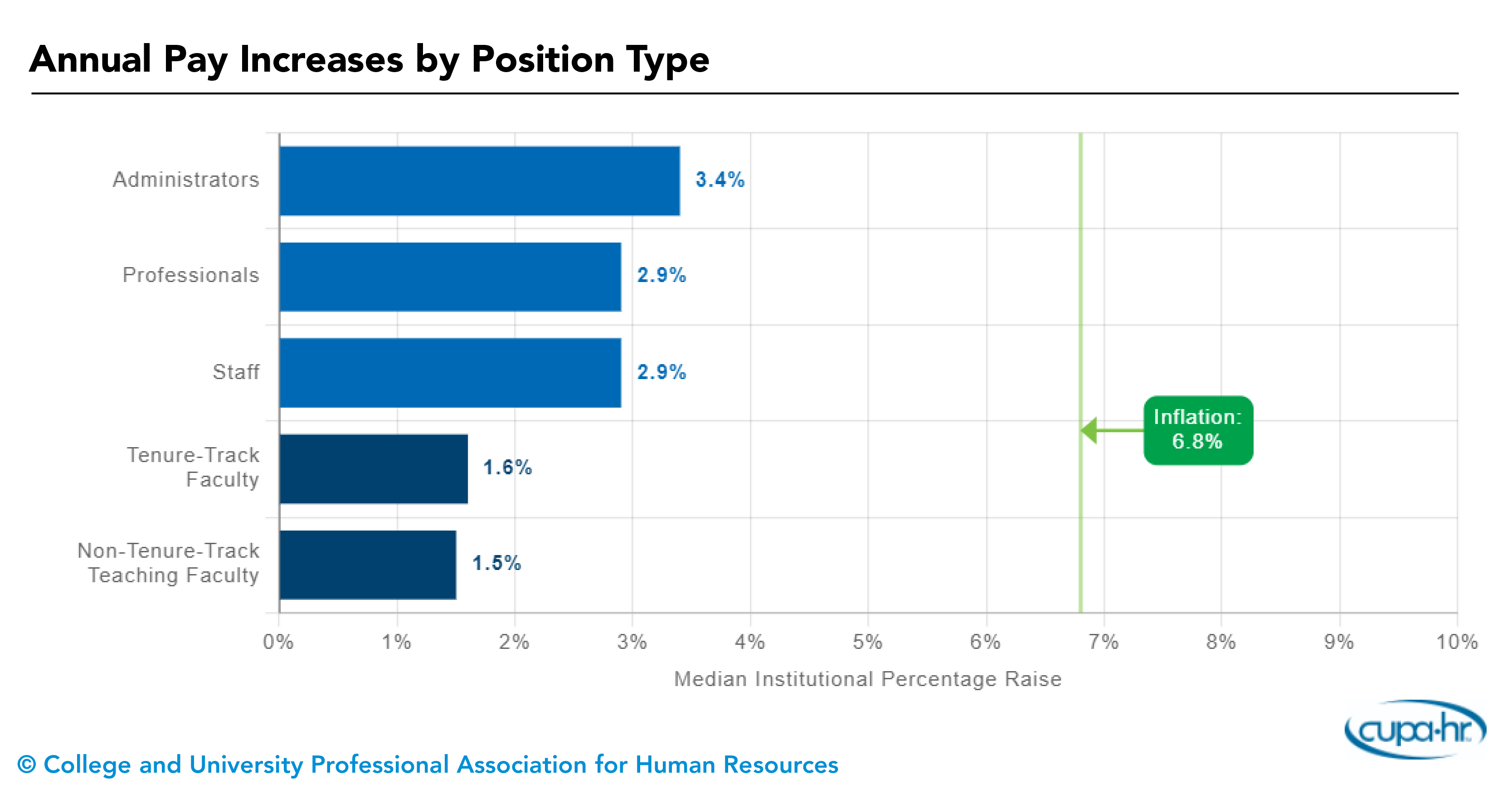
The soaring inflation rate has far outpaced pay increases for the higher education workforce. According to findings from CUPA-HR’s annual workforce surveys for 2021-22, overall median salaries for administrators increased by 3.4%. Professionals and non-exempt staff saw increases of 2.9%, and salaries for tenure-track and non-tenure-track faculty increased by 1.6% and 1.5%, respectively. The inflation rate for 2021 was 6.8% and continues to climb.
This is not the first year that pay increases have not kept up with inflation. Pay increases for administrators, professionals and staff last met or exceeded inflation in 2019-20. Non-tenure-track faculty salary increases last met or exceeded inflation in 2016-17, and tenure-track faculty salary increases have not kept pace with inflation in any of the past six years.
Overall Workforce Size Has Declined in the Wake of the Pandemic
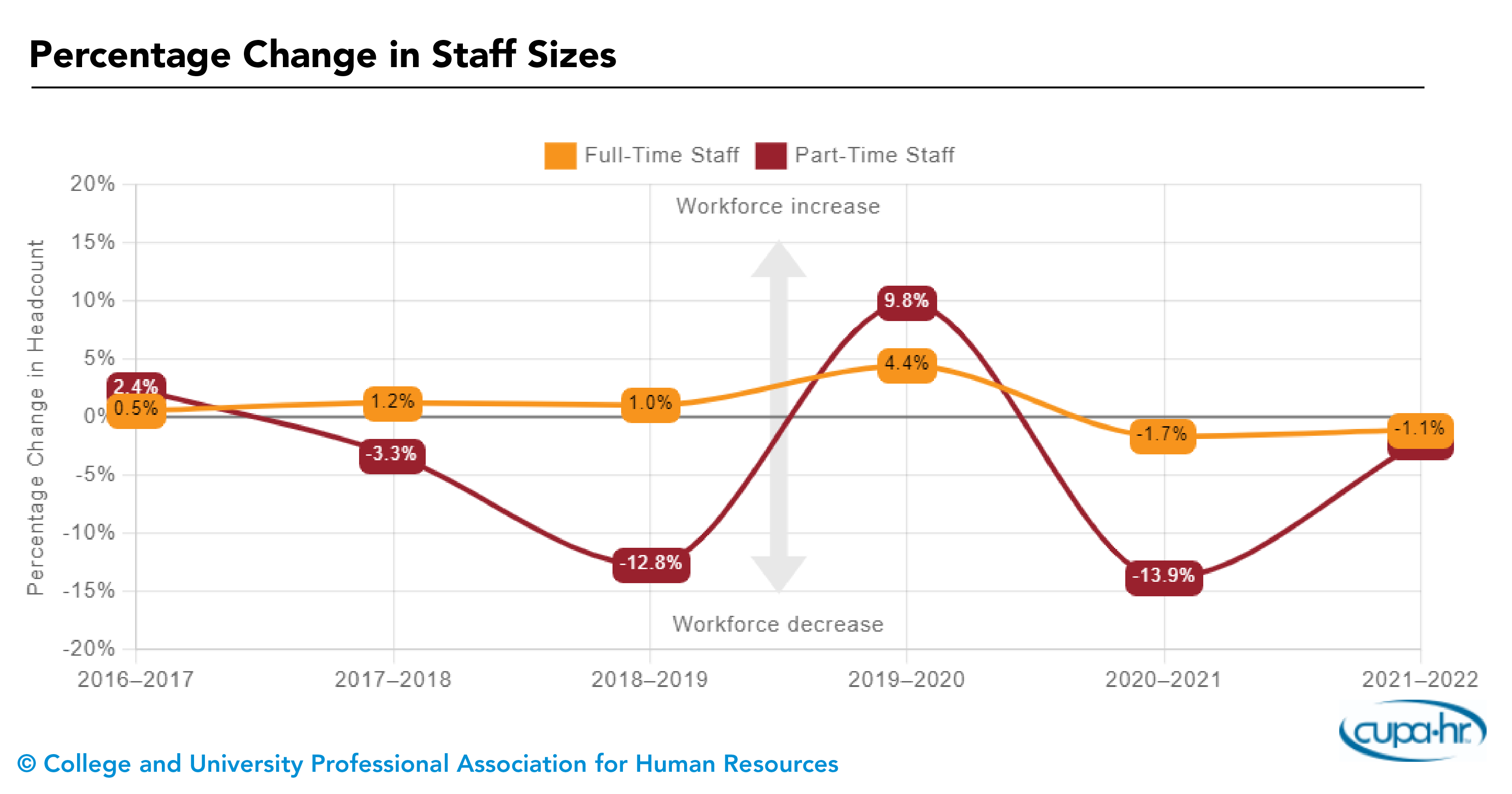
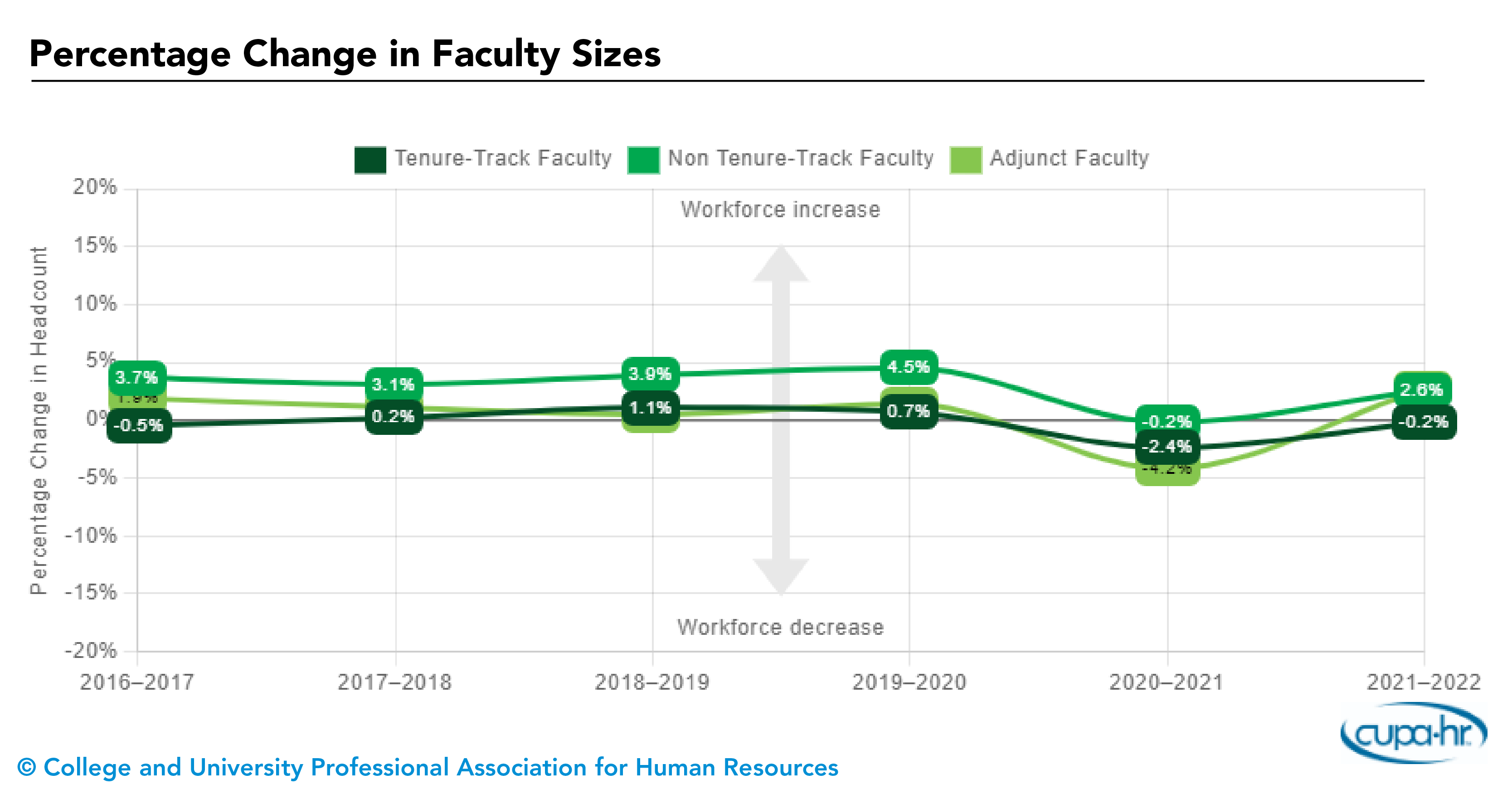
Historically, the overall size of the higher education workforce has increased from year to year. However, colleges and universities are experiencing the same employee recruitment and retention challenges that most U.S. employers have struggled with in the past few years. In both 2020-21 and 2021-22, the size of full-time staff, part-time staff, and tenure-track faculty declined from the prior year.
Two areas of the workforce that saw growth this year were those of non-tenure-track faculty and adjuncts. Although the number of non-tenure-track faculty and adjuncts declined between 2019-20 and 2020-21, those numbers have rebounded in 2021-22.
Sexual violence is a multi-faceted and difficult topic. Higher ed institutions either enter the conversation before an event of sexual violence has occurred or after it has occurred, leaving the institution scrambling for answers to the campus community as to why it happened in the first place.
As part of upcoming Sexual Assault Awareness Month (April), we’re highlighting some CUPA-HR resources that share first-hand experiences from some higher ed institutions and the strategies and trainings they’ve used to respond to and approach the topic of sexual violence on campus.
Strategies to Create a Harassment-Free Workplace
In an article in the spring 2020 issue of Higher Ed HR Magazine, UMass Lowell detailed how they addressed concerns about a sexual harassment complaint the university received several years prior that spurred anger among students, faculty and staff. Questions were raised as to how decisions were made following the violation, whether the sanctions were sufficiently severe and what steps were taken to mitigate risk of recurrence.
In response, the chancellor convened a task force to review the university’s Title IX policies and procedures, educational efforts, culture and climate, and communications on these issues, and to make a set of recommendations to the executive cabinet for future improvements. Read the full article to learn about how the task force practiced transparency, built trust among the community and key themes that emerged in the recommendations from the task force: A Matter of Trust: Strategies for Creating a Harassment-Free Workplace
Impactful, Engaging In-Person Sexual Harassment Training
While training alone isn’t the answer to creating a harassment-free environment, it certainly should be part of an institution’s broader strategy. However, in order to make an impact, the training must be engaging, insightful, interactive and relatable — and sitting at a desk clicking through an online training module or watching a video about workplace harassment is anything but engaging. With an in-person training approach, participants can ask questions, engage one another in dialogue, and connect to the content, making the messaging more likely to stick.
CUPA-HR’s Title IX and Sexual Harassment Toolkit is a great place to check out what other institutions are doing to mitigate sexual harassment and misconduct. The toolkit highlights sexual harassment and reporting policies, trainings and other tools for HR pros.
By tapping into these resources, higher ed institutions can positions themselves as those that prioritize prevention over reaction when it comes to sexual violence on campus.
National Women’s History Month celebrates the contributions and achievements women have made throughout U.S. history. CUPA-HR is fortunate to have had many smart and dedicated women serve on its national, regional and chapter boards and on various committees. In addition to providing leadership at work, they have volunteered their time and shared their know-how — lighting the way for other women in the field.
To celebrate the month, we’re spotlighting some of the many leaders who have transformed higher ed HR and CUPA-HR. Sure to inspire, these articles and podcast episodes offer unique perspectives of higher ed HR, career journeys, struggles, successes and everything in between.
Looking Back to Move Forward
Blazing a Trail: Women Who Paved the Way in Higher Ed HR, from a 2014 issue of Higher Ed HR Magazine, features five CUPA-HR leaders who began their higher ed HR careers in a very different era — when HR was still “personnel,” men dominated the profession and the nature of the work was strictly focused on policies and procedures. These women rose to leadership positions, not only in their departments, but across their institutions. Read about their challenges, their regrets, their successes and a few war stories to boot.
In Episode 2: Growing Through Change, Allison Vaillancourt reflects on some professional advice she received from a CUPA-HR peer that changed her entire approach to HR and helped advance her career and secure several leadership positions.
Lynn Bynum shares how CUPA-HR helped her make the transition from the corporate world to higher ed HR, and Lauren Turner offers insights into how HR can become a recognized leader within the institution and help others become better leaders in Episode 4: Model Behavior.
Jane Federowicz reflects on her unexpected path to HR, starting out as her institution’s accountant and ending up being asked to create an HR department, in Episode 6: When Opportunity Knocks.
In Episode 7: Lifelong Learning, Barbara Carroll dives into some experiences she never thought she would have as an HR leader, including serving on CUPA-HR’s Public Policy Committee and providing a higher ed perspective to a room full of senators and congressional representatives, and Linda Lulli discusses the importance of being a lifelong learner in the HR profession and how to be adaptable and resilient.
Time-Out With Tammi & Tyler is a podcast that explores how higher ed HR careers evolve by interviewing professionals at the top of their HR game, sharing advice they would give professionals climbing the higher ed HR ladder.
In Episode 1, Donna Popovich offers advice for early-career professionals.
Sheraine Gilliam walks through her story of persistence, networking and how to turn negative situations into opportunities for growth in Episode 3.
In Episode 5, Clarity White describes how her Wildfire program experience helped advance her HR career.
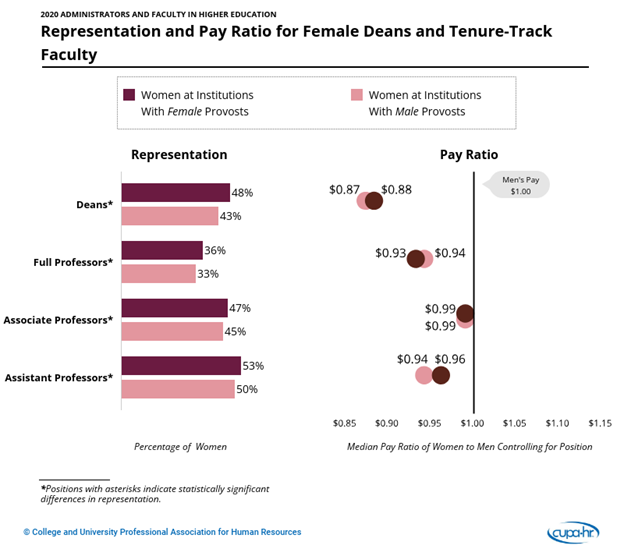
New research by CUPA-HR has found that U.S. colleges and universities with women presidents or provosts have higher representation of women in administrative, dean and faculty positions than institutions led by men. The study also found that colleges and universities with women presidents have higher pay for women in administrative positions than institutions led by men. These positions tend to be pipelines for the senior-most executive positions in higher ed, which underscores the significance of the findings.
Women Administrators Pay and Representation in Institutions With Female Presidents
Findings show that institutions with female presidents have a higher percentage of women in all administrative categories — senior institutional officers, institutional administrators and heads of divisions. Although female administrators are generally paid less than male administrators in the same positions regardless of the sex of the president, female senior institutional officers, institutional administrators, and heads of divisions are paid more equitably at institutions with a female president than at institutions with a male president.
Female Deans and Faculty Pay and Representation in Institutions With Female Provosts
Institutions with female provosts have a significantly higher representation of women in dean positions and in all faculty ranks. Provost sex does not have a strong or consistent impact on pay equity for deans and faculty; however, it is worth noting that better representation at higher faculty ranks and in dean positions has an impact on pay, as these positions make higher salaries.
The representation of women drops with successive faculty ranks (from assistant to associate to full professor). These promotions represent the few times in a faculty member’s career when appreciable salary increases are granted. If women are not being promoted, they are not receiving these pay raises. In addition, those in dean positions are generally promoted from senior faculty ranks. Therefore, if women are not adequately represented in senior faculty, they will not have the same likelihood as men of being considered for a higher-paying dean position.
To sum up the findings, higher ed institutions with female executives have better representation of women throughout their institutions in positions that: a) are paid higher salaries and b) serve as key points in the executive leadership pipeline. Jackie Bichsel, CUPA-HR’s director of research and co-author of the new report, noted that, “In an era where institutions are adapting to shifting workforce expectations, adjusting to continuous decreases in budgets, contemplating changes in enrollment, addressing challenges of recruitment and retention, and rethinking their mission, more openness to change and less tolerance of risk may be just what is needed to navigate this new landscape. Providing more (and more equitable) opportunities for women to advance within higher education seems an obvious path forward in this navigation.”
On December 13, CUPA-HR and ten other higher education associations sent a letter to United States Citizenship and Immigration Services (USCIS) Director Ur Jaddou requesting the Department of Homeland Security (DHS) extend its previously announced flexibilities on Form I-9 compliance requirements through June 30, 2022. The guidance, which has been extended continuously since March 2020 and was amended on April 1, 2021, permits remote inspection of Form I-9 documents in situations where employees work exclusively in a remote setting due to COVID-19-related precautions.
The guidance is currently slated to expire on December 31, 2021. As such, colleges that have used the remote I-9 accommodation will be required to physically inspect the documents of affected employees no later than three business days once normal operations resume — providing a very limited window in which to inspect the documents of potentially large numbers of employees.
As the current expiration date is problematic, the CUPA-HR letter requests DHS to extend the I-9 flexibility guidance through the spring semester. The letter highlights two major reasons to extend the guidance past its current expiration date: the uncertainty posed by the Omicron variant and the current guidance’s expiration date falling between two major federal government holidays and in the middle of most college and university winter breaks. Given the need for predictability and the wind-down of university operations before the expiration date, the letter also encourages DHS to announce the requested extension on or before December 17, 2021.
Please Submit Your Feedback On the I-9 Process
On a related note, CUPA-HR is requesting your feedback to help our Government Relations team respond to DHS’s Request for Public Input on document examination practices for Form I-9 and the guidance for flexibility created in response to the COVID-19 pandemic. To ensure we can provide the most comprehensive feedback to DHS as possible, please make sure someone from your institution responds to CUPA-HR’s Survey by 11:00 p.m. ET on December 15. All responses will help us finalize the comments we submit to DHS.
It’s Employee Learning Week — a great reminder for employers to showcase their commitment to talent development by highlighting development opportunities available to employees. Whether you’re an HR practitioner in search of professional development ideas for yourself and your HR peers, or you’re looking for ideas to engage and develop other employees at your institution, here are several tools, tips and resources to help you take the next step.
Professional Development Tools for the HR Pro
CUPA-HR Learning Framework — A tool that assists in defining HR practitioners’ knowledge, skills and attributes and then helps create an action plan for growth and set developmental goals. Jump start your development by using the quick start guide, then build your skills further by diving deeper into the framework competencies.
Creating Your Individual Development Plan — A must-have for anyone who wants to map out a strategy for career success in higher ed HR. This free CUPA-HR e-learning course provides an introduction to individual development plans (IDPs) and will guide you through the process of creating your plan, discussing your career with your leaders and implementing your strategy for success. CUPA-HR e-Learning is sponsored by PageUp.
Ideas for the Higher Ed Community
Apart from their own professional development, HR pros often create and help facilitate professional development opportunities for employees at their institutions. Here are some jump-start ideas from the article Optimize Your Hybrid or Remote Work Workforce — Considerations for Higher Ed HR Leaders, featured in the fall issue of Higher Ed HR Magazine.
Encourage managers to use an employee’s development plan to guide regular coaching calls.Gallup suggests ongoing coaching conversations — rather than annual performance reviews — can be of great benefit to both the employee and the employer. These meaningful conversations highlight the organization’s commitment to employee engagement, which can help retain employees for the long-haul. Encourage managers to use employees’ development plans during coaching calls as a guide to the conversation. Setting up the right systems and processes to help employees perform their best from any location is a great operational step, but reorienting managers to think about performance and productivity around outcomes instead is an important strategy.
Get creative with your learning and professional development offerings. William Paterson University’s HR team created a university-wide development program so all 600 non-faculty employees had a chance to participate. Their unique approach to talent development demonstrated institutional support for professional development, provided a platform for employees to engage and collaborate, and inspired additional ways to support employees, such as mentorship programs, goal setting and career advancement. Read more about the program in the special awards issue of Higher Ed HR Magazine to learn how the HR team adapted it to a virtual format — a great alternative for employees working in a hybrid or remote setting!
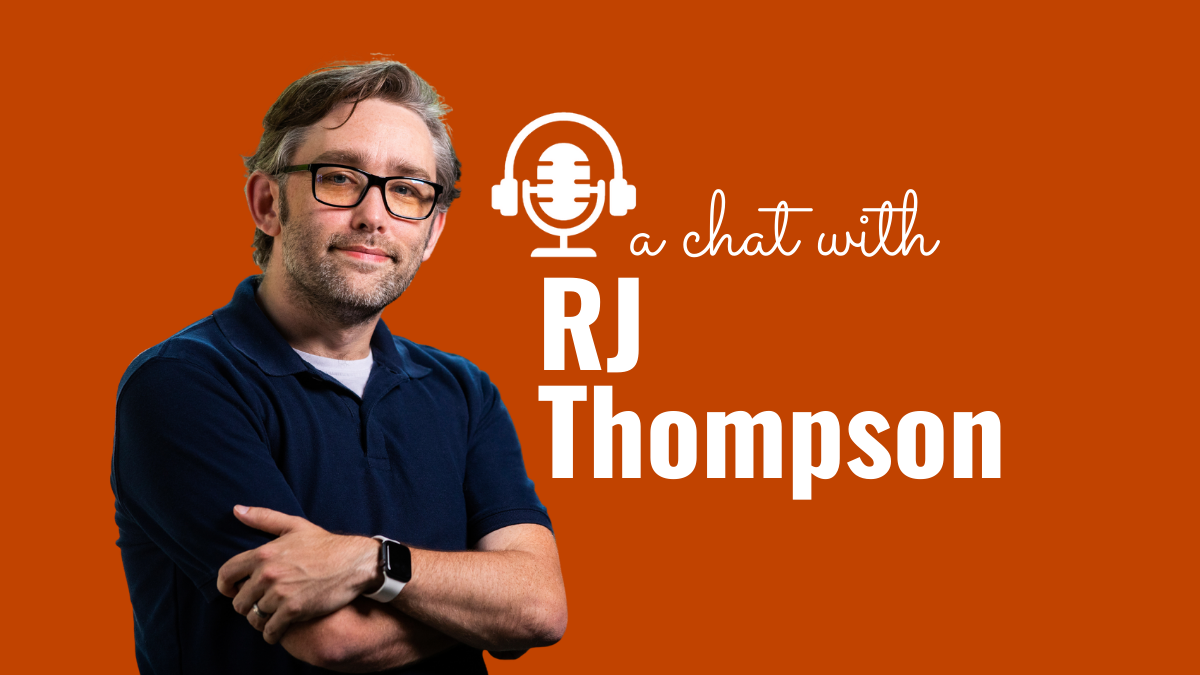
RJ Thompson talks about Higher Education as a professor and marketer
In this featured interview interview, meet RJ Thompson, MFA, the Director of Digital Marketing at the Joseph M. Katz Graduate School of Business and College of Business Administration at the University of Pittsburgh.
Many professors and graduate students aren’t sure what the marketing and communications offices at their universities do. That’s why I invited RJ for this featured interview.
What’s it like to be on the staff side and the faculty side of a university?
Awards and accolades have been helpful for RJ’s career, why to put yourself up for more awards.
Learn how to be more creative, especially if you think you’re not creative at all.
Many professors and researchers have fear or anxiety about sharing their accomplishments.
Do you want to know how to get better students? RJ has a secret to share with you.
RJ’s story is inspiring. From his frankness about what professors can get from being open with university communication teams, to opening up about living with an invisible disability, this featured interview is a can’t miss. Watch, listen, or read the interview below.
Jennifer: Hi everyone, I’m Jennifer van Alstyne. Welcome to The Social Academic. Today we’re recording the new featured interview. Actually this is the last featured interview of 2021. So, welcome RJ Thompson. Could you start us out by introducing yourself?
RJ: Hey, thanks Jen for having me, this is really great! And I’m so glad you saved the best for last.
Yeah, my name is RJ Thompson. I am the Director of Digital Marketing for The Joseph M. Katz Graduate School of Business at the University of Pittsburgh.
And on top of that, I do a number of other things. I do market research. I do graphic design.
I teach graphic design at Point Park University and the Community College of Allegheny County.
And starting next semester, I’ll be teaching in the business school at Pitt, teaching advertising.
So, I’m kind of all over the place.
And if you’re listening or paying attention, you might’ve seen me through the HigherEdSocial group and the Marketing and Communications (MarComm) group by HigherEdSocial. So I’m everywhere.
Jennifer: That’s exactly why I wanted to invite you on this show and why I wanted to feature your interview especially. Because so many professors, grad students, researchers that are connected with universities out there don’t really know what the marketing communications teams at universities do.
And you’re someone who is on both sides of the aisle.
So, could you tell me a little bit about what you do?
What does a higher education marketing and communications professional do?
RJ: Yeah, you know, to your point, it is an unusual divide, especially like between
design and marketing professors
and design and marketing teams
For as many similarities as there are, there’s many differences.
On the staff side, primarily what we do is, we’re a marketing and communications department. Our work includes, promoting
our programs
the business college and its programs to prospective students
so there’s an enrollment piece to that.
There’s also a heavy public relations component where we’re trying to promote the goodwill and works that we’re doing to not just the local, but the greater regional, national and global communities.
And also along with that on the communication side, we’re doing a lot of internal marketing and communications to our students, to the broader university, University of Pittsburgh.
It’s all inclusive. So, if you needed admissions campaign, we’re gonna work with the admissions team to produce that.If it’s for social media, we’re gonna develop out that social strategy plan, but also the ad spends, the ad spend strategy and execution.
If we’re putting together a magazine, alumni magazine, we’ll work with philanthropic and alumni engagement to produce that.
So, we are at the center of all of these deliverables and we collaborate with the different corresponding units to help them get their messaging out and ultimately create value for the students and alumni.
That value manifests as, primarily as
brand reinforcement
brand management
making sure that the reputation of their degree not only maintains but exceeds and grows.
So, that’s really what we do.
And myself as the Director of Digital Marketing, I am responsible for designing and maintaining our web properties be it our primary website, our micro-site, PPC [Pay-Per-Click] campaigns.
I have responsibility to our social media and also our digital advertising. If it’s digital, I own it.
Jennifer: So, it sounds like you’re working with a lot of different teams. You’re working with people across the university and with your own team in order to share good things about the
University
Student
Alumni
Community
And it really takes that kind of all encompassing approach to really communicate the amazing things that universities can do.
RJ talks about leaving his tenured position and how he loves continuing to teach
Jennifer: Now, it’s really interesting that you’re able to do that and also teach. You have this real passion for teaching and really helping students get to the next place in their careers. Let’s talk about your teaching.
RJ: Sure, so the first part of my career, I’ve spent 13 years on the faculty side.
I’ve taught at so many different institutions. The last one that I was at Youngstown State. I was there for seven years. I was tenured faculty.
To make a long story short, the commute from Pittsburgh to Youngstown, it’s about an hour each way. It was really starting to wear down my body.
I missed a lot of time with my daughter who’s six, so, a decent amount of her infancy I missed.
And one of the things that Youngstown is experiencing now is significant brain drain and enrollment decline. If you look at the data, you can kind of sort of see that coming.
So, I got out about in the summer of 2019. That is when I left the university.
HigherEd is my life. It’s where I belong. It’s where I fit. I never want to leave this industry. I always wanna be on the teaching side. I’m loving the staff side.
But unfortunately, when I decided to transition out of Youngstown State University, there weren’t any full time tenure track positions available in Pittsburgh.
I decided to try something new and pursue the staff route and it’s been amazing actually. It lets me do both things, so I get the salary I want with a good work-life balance. As a part of that balance, it also gives me the time to do a lot of
Side teaching
Freelance
Extracurricular stuff.
And, I made this remark to my wife the other day: “I’ve never felt so liberated.”
When you’re on the faculty side, especially when you’re chasing tenure and promotion, you are always doing some kind of peer reviewed research, peer reviewed projects that help you build your reputation, build your bona fides. Those are typically passion projects you don’t necessarily get paid for. They take an extreme amount of time investment. And I felt like I hit a peak at Youngstown State University.
That’s when I switched gears. When I became staff side, I started taking on more practical work, freelance stuff. I started doing more professional development and certifications.
I read a book! Let me be very clear, you would think that that is like, why is that at such an important point? Some faculty don’t have time to read, I never did. I never had time to actually sit down and read a book, be it fiction or non-fiction. So I have time for that now.
And all the other crazy things that I do that you would see on LinkedIn,
getting involved in HigherEdSocial
starting the competitions
painting a mural
being a poll worker
like I’m just checking off the bucket list stuff. And by the way, you’re absolutely allowed to criticize me for having poll worker on my bucket list.
Jennifer: No, I think that’s so exciting and yesterday must have been a good day for you. This interview was recorded live on November 3, 2021, the day after United States elections.
RJ: It was a long. It was long, long day. For sure.
Jennifer: You know, you’ve done so many things and I just, I’m so glad that you came on this The Social Academic to talk about it. Because, even though you’re talking about how much time that took, you’re still teaching. You’re still doing this and keeping this as part of your life.
You’re working with faculty, you’re working with graduate students to tell their stories through some of the marketing work that you do.
I mean, you really are able to do it all.
So, when you talk about liberation, when you talk about the freedom that this job gives you, it sounds like one of the things that you love most is being able to work on all of those things.
Whereas before maybe your focus would only been able to be research as like the main priority.
RJ: Yeah, yeah.
When it comes to liberation, it wasn’t just the ability to do new things and different things, but it was also the ability to explore my creativity in an area that mattered, in something that mattered a lot.
I’ve become disillusioned with freelance work over the past number of years and a lot of it has to do with clients that I call the low hanging fruit. These are typically the clients that want the world on a shoestring budget with a deadline of yesterday. That’s really stressful for a design faculty person chasing tenure and promotion. So I just decided to put that stuff away.
Awards are important to RJ, why to put yourself up for awards too
RJ: When I came to the business school at Pitt, they’ve got such a great marketing team, but they always had limited capacity to really just rip the lid off of it, go for broke and do some really strategic and creative things.
And, they just let me go. That resulted in a profound amount of accolades. Like I was, not to brag, but just to illustrate the point…
The websites I designed for the business school, back-to-back award winner in the Best of American Web Design by GDUSA [Graphic Design USA], which is one of the top…[Jennifer clapping]. Thank you…one of the top periodicals for the design industry.
Being able to meet folks like you and speak at conferences and help #HigherEdSocial build their foundation, it’s just exciting.
Jennifer: Wow, bragging is one thing that I actually wanted to talk with you about because when we first met, you had invited me on onto your podcast and you had mentioned that awards were something that were important to you.
Not only important for you, but important to put your team up for it, to encourage other people to apply for awards.
I love celebrating with you. I see your news on social media, on Facebook, on Twitter. It’s exciting when something good happens to people. I enjoy seeing that and so, I love cheering you on.
Can you tell me more about looking for awards and why that’s important to you?
I’ve been a competitive graphic designer for 25 years
RJ: Yeah, so this is layered.
The first part is, I’ve been a designer for 25 years. I’m 36. I’ve been doing this since I was a kid. And graphic designers tend to be very competitive people.
They need to be because, they’re competing against each other for jobs in industry and industry typically tends to choose the most talented people.
So, I’m fortunate in that I’ve been doing, I’ve been a designer my entire life, and I know all facets of it. I don’t claim to be a master of any of them, but, you need me to animate something, I can do that. You need to do some video, I can do that. I have a Jack of all trades vibe.
Being able to work in the different aspects of design and compete with others is exciting to me.
And what I get out of that is, it’s not necessarily a satisfaction, it’s like a justification. It’s more like, “hey, you know, you said you could do it and you did it.” And you put all of the work in to get to that point.
Accolades were the foundation for RJ’s career
So the Pitt Business website, when I redesigned it, it took 13 months. That’s all I did every day. It was a real labor of love and I was proud of the work. It’s also important to me that when you do a project like that, you don’t ever do it alone.
To reinforce the point that you made about getting people to submit their work, I made sure that my entire marketing team had their names on that project. My marketing team save for my designer, are in their early career. It’s important to get them those accolades because that’s the foundation for the rest of their career.
I would not have been able to get where I am and doing what I’m doing, had I not pursued design competitively. Those accolades got me my next job and my next job and opened up so many opportunities.
It opened up teaching to me, frankly. I won an award for a book I made. A faculty person happened to see it, and they’re like, “you should teach.”
Four months later I got a teaching job.
So, it’s kind of proof positive. There’s the benefits you get from asserting yourself and putting yourself out there as a competitive person, a high performance kind of person. I think that is attractive to a lot of different people.
RJ has cystic fibrosis, an invisible disability
The third part is, I’m a person with an invisible disability. I have a genetic disease called cystic fibrosis.
Had you met me when I was a kid, I was scrawny and frail and sickly. Over the years, I’ve gotten better and now I’m on gene therapy and my symptoms are gone. I’ve made amazing, great strides in my self care.
But I had a doctor tell me once, “you’re not gonna live to see 40.”
I’m 36.
Now, what that doctor doesn’t know is that I’m actually immortal and I’ll never die.
But what that did was that motivated me to shoot for as far and as wide and as fast as towards my goals as I could. I mean, in high school, I was moderate student, average, but when I got to college, I made it a point to like be A’s across the board. I knew that grades would not necessarily matter when I entered the industry. It was more about personal pride and the stakes that I put into performing.
I put all of my effort, all of myself into my work.
Even at the college level, I got awards there that led on to internships at agencies and the like. It’s been a beneficial thing for me.
At the end of my career, I want to be able to say, I didn’t get to everything I wanted to, but the things that I did get to, I did really well at.
And then I can wipe my hands of it and put it away and go build a bird house or something. Whatever retired people do.
I don’t think I’ll retire ever. Even if, you know, once a designer, always a designer, I’ll still be making something.
Building CommCentered, an archive to celebrate Higher Education Marketers
RJ: So, CommCentered is an interesting little story that started with another inventory that I built. One of the things that I like to do is, I like to understand systems comprehensively, holistically, and I like looking at trends and commonalities.
Myself and one of my colleagues, a retired computer science professor, one of the things that we did was we did an inventory of all of the logos of municipalities in America with populations of 10,000 or above.
We collected thousands of logos, thousands, and I put them into an archive. I was able to look at everything and say like, wow, when you look at the 4,000 logos or whatever it is that we found, half of them have a specifically designed brand concept and then the others are municipal seals.
When you start to really narrow the focus, and understand why half was the way that it was,
and the other half, etc, you learn that it came down to a lot of like complex things like
Elected leadership
Municipal governance
Laws
How communities were financed
That was an informative lesson for me because the company I run is called Plus Public. Part of our work is in branding communities. So I wanted to understand why some of these communities don’t have good marketing.
That inventory was very informative with respect to that.
Are you a professor, researcher, or Higher Education staff member communicating publicly for your school? Whether you’re working on marketing and communications at the program, department, college, or university, HigherEdSocial is an amazing professional society you should join. RJ and Jennifer are both official members of the HigherEdSocial Community, join them!
The sense that I was getting was that a lot of these folks did not have a great swell of pride in their work. Even in the little tiny corners of the world that they work, they may not have had a lot of pride in their work because their messaging is very highly overseen.
Their protocols for how to communicate with people and in some cases, especially on the social media side, it’s kind of a thankless job.
I want to celebrate those people. I want to celebrate
The work that they’re doing
How they’re doing it
Why they’re doing it
The concept of having to advertise education is fascinating to me. This is an act that people learn something new every day, whether or not they are trying. That’s just a part of the human experience. So, the fact that we have to advertise it is just really compelling to me.
Taking that concept and then also wanting to be the biggest cheerleader for these people and celebrate their work led to CommCentered.
When you layer in that brand’s inventory for the community brands inventory, I basically did a study where we took all of the institutions, HigherEd institutions in every state and we looked at the commonalities.
Every state has their own set of trends that some correlate to others. Some do not. It’s been really, really informative.
Right now I’m finishing my series of 50 posts on the brands of HigherEd, just for the United States. And I have plans on expanding that globally.
You know, when you told me that this project had suddenly been created, I was shocked because last time we had spoken, you had said that you were gonna be updating your personal website.
We’d actually chatted about it and you had this plan. Then all of a sudden, there was this massive archive, this big website that really can help people around the world understand more about HigherEd Marketing. That can really celebrate their work in a way that the public can see, that each other can see. It was astounding that you’d created this massive project.
And you’re also working on these other things. You have your job, you have your teaching and here you are creating this non-profit project.
I was just so amazed by you. I think my heart grows bigger every time I talk to you, because you’re so generous with what you give to the world.
RJ: Well, thank you for that.
There was one lesson I learned a long time ago is that nothing happens until someone gets excited. Leave it to an advertising guy to say that. But it’s absolutely true, and I believe that wholeheartedly.
Whatever effort I put into something, I hope that it excites people double the effort that I put in.
Fortunately, I kind of have a knack for choosing the right things. Sometimes I don’t, but for the most part I do and it’s always exciting to build community around common threads.
The thing with people in HigherEd, I think most of them would stay and talent would be retained at a higher frequency, at a higher rate, if certain conditions were met relative to just the work, the daily working life and the process and the experience of those types of jobs.
With CommCentered, it was really important to me to not only be a contrast to some of the other HigherEd marketers that you’ll see out there. I didn’t wanna tell people how the work was done. They know how the work is done.
I wanna show them what work was done. The thinking here is a picture’s worth a thousand words.
If you see one logo, or if you see one ad campaign, that’s gonna kick off a spiral of new ideas for the people that are looking at it.
I also have an additional point to that but I think is a propos. On Twitter, on social media, even in the HigherEdSocial groups, there are a ton of people that assert themselves as HigherEd marketing thought leaders. I’ll use the term know-it-alls as positively as possible.
There are a lot of authors that assert their knowledge and wisdom and it’s valuable. But it consistently skews more towards :here’s the roadmap, here’s the foundation, here are some of the strategies. And that’s where it ends.
Okay, well, thank you, I loved reading your 400 page book. The fact that the strategies and the roadmaps are great, but what have people done with it? I wanna see what people have done with it.
CommCentered, I wanna feature the work that people are creating so that they can understand the context or the outputs of those roadmaps and get inspired on their own.
A bad impression of someone else can create something completely original
The last part of this is I love voice actors. This is a really unique hobby of mine. I watch cartoons with my daughter and I’m able to pick out, oh, that’s Rob Paulsen.
Jennifer: You can recognize them.
RJ: I can recognize the voices, even if they are doing a completely different voice. If you listen to some of the podcasts from voice actors, they love their jobs so much because all they do is play. Playing to them is doing a bad impression of someone else. So it’s additive.
For example, if I did…and I won’t do any impressions, I won’t embarrass myself to that degree…But if I did an impression of Christopher Walken, and it was terrible. That’s okay, because I’ve just created a new character, something completely original.
I can intentionally do something bad and create something really good and funny out of it. That was one of the other inspirations behind doing the archive, the logo inventory, featuring, doing assessments on social media ads and all of that stuff.
When I look at your work, or someone else’s work, I judge it. I’m like, damn, that’s a good idea, I really like that. How can I take that idea, if it’s a box, how can I push one side in and rotate it and make it my own? It needs to be malleable.
So, and the last part to that is that concept, that theme is absolutely part and parcel to who I am as a person and how I teach creativity.
That’s kind of the overarching through line of my entire life and career and teaching career too.
Professors and researchers, do you think you lack creativity?
Jennifer: You teach creativity, I really like that. A lot of professors, a lot of graduate students don’t believe they have creativity. It doesn’t matter what field they’re in.
You talk about creativity as something that can be taught. I think that a lot of those people who feel like they don’t have creativity actually do, and maybe they don’t necessarily recognize it in themselves. What do you think about that?
RJ: So there’s kind of an anecdote or a dosh that I share with my students: I can teach you all the software in the world, but if you can’t think creatively, then all of that knowledge is not really useful.
You’re solving problems that are very finite and technical. And dare I say, just kind of binary, yes or no one way or the other.
Creativity is something that can be, you can be born just with this incredible intrinsic creativity, but you have deficits in other areas.
I relay a story to my students where I’ve always been an ambitious, creative person, even when I was like a five-year-old. When I was four or five, I opened up my parents’ typewriter, typewriter, and I made stories. I pinpecked at the keyboard.
Then I moved on to a neighborhood newspaper. Five, six years old doing this. Who does that? I’m sure it does happen. And I’m not saying that I’m special by any means, but it’s at least indicative of how my creativity manifested organically, naturally.
There are some people that feel that they are not creative at all. And to them, I say, you are creative, but you are maybe a different aspect or facet of creativity.
For the most part, the problem is that people don’t understand the steps in which to be creative. One of the things that I teach them is how to solve problems using a creative inquiry. That’s essentially also an aspect of design thinking.
I had mentioned the project, I didn’t tell you what it was that kicked off my teaching career. It was a book called Thompson Design Methodologies. It was all about all about solving problems visually. This is something I deal with with my clients.
If I’m making a logo for you, Jen, what’s one word that you would want your clientele to associate you with? Let’s say, it’s integrity.
What does integrity look like as a box or a shape rather? Is it a rectangle? Is it a triangle?
Is a triangle proportional? Or is it skewed?
If you had to hold it in your hand, how heavy would it be?
What’s the texture?
Ask really abstract questions to fire up the creative parts of their brain and purposely getting them to zag instead of zig
If you’re always zigging on something, you’re always making the same type of choice. If I put you in a box and make you do something different, that is forcing creativity on you, because you don’t know what comes next.
Then as you branch out from there, every decision you make is based on an unknown output. It’s a lot about challenging conventions, challenging your comfort zones. I talk a lot about fear and the boxes of fear and complacency and all that stuff.
Once people start to really understand why they are in the box and they can’t get out of the box, once they start to understand that, they realize that this isn’t like some tried and true foundation for making creativity happen. It’s more of an understanding and recognition of their own hesitancies and character flaws that they perceive that they have to work out of.
It’s more psychological about them as a person and then once you kind of overcome some of those things, solving problems isn’t hard, it’s fun. If you know how to solve those problems, you have a 12 like a step process and your process is built with error and experimentation built into it, then your work becomes more fun.
But the best thing of all is that your work becomes more informed and it’s of a higher quality so much so that you start solving problems unlike anybody else.
When your employer sees help deeply and immersively you understand a problem and how you use that deep immersion to create a unique and amazing and equally immersive solution, they don’t wanna lose you. I could go on and on, but it’s absolutely true.
It’s one of my favorite things about teaching. Seeing people really break out of the box and rise above and into their careers and meeting their self-concept.
This idea of the idealized self-concept. Who are you in your most ideal sense? If you can use these design methodologies, these creative problem solving tactics, you can get closer and closer to that thing.
If your dream for your career has always been to be a director of digital marketing, and then when you get there and it’s like, oh wow, I was able to get there using these tactics and techniques, what do I do next?
Some people may not have envisioned the next thing beyond that ultimate thing. So it’s liberating in that respect too.
Facing backlash from colleagues when sharing good news (and why to share your accomplishments anyway)
Jennifer: One of the things that you brought up while you were just talking was fear and anxiety, and it actually reminded me that I wanted to ask you about that as it relates to awards that you’ve won.
Professors that I work with and people who are in my courses, feel really anxious when talking about their awards on social media, especially sharing it with their department, even internally. There’s a lot of anxiety when it comes to that.
Have you ever experienced any backlash for sharing your awards?
RJ: As a matter of fact, yes. It’s what led me to leave my tenure teaching position. It’s unfortunate that it worked out the way that it did.
One of the things that I dealt with specifically was, I put all of myself into my work. And I believe in my work whole heartedly. When you put me into a position where you basically say, ‘Hey, in order to get tenure and promotion, you have to have peer-reviewed evaluations of your work. Part of that are competitions, juried exhibitions. That’s part of the game. That is the game.’
I made it a point to put all of my effort into playing that game well.
And I did, so much so that I received one of Ohio’s highest honors in art. I received an art award from the governor and I got to meet him and his wife and everything.
What that did was the community that I was in, they celebrated that work. Because the thing that I made that got me that award was ultimately for the Youngstown region. It celebrated them.
But on the faculty level, all that did was breed jealousy and resentment and inferiority complexes shot through the roof. Because I was junior faculty, that was used against me.
Instead of seeing that as an opportunity to build into my energy, collaborate, let’s share our successes together…
Instead what happened was, some of my peer faculty grew resentful. They grew jealous. They use tactics to essentially punish me.
They made sure that my tenure process was hell. On paper I was very tenurable, so, that’s one of the reasons why I got it. But I know that the spirit of celebrating your peers was not there.
A lot of that came back to graphic design was a popular major. The professors that were jealous and resentful of me were not in graphic design. More importantly, they didn’t understand the forest for the trees. I was responsible for bringing a lot of new students to the design program and also those fine art programs.
And I realized that, that summer of 2019, I didn’t wanna leave tenure, I fought so hard for it. But no amount of tenure or promotion was going to be worth the mental stress and anxiety that they would place on me just by virtue of wanting to do my job really well.
Jennifer: Especially when it’s for, in this specific instance, this is for the community, this is something that you were doing for the town of Youngstown.
RJ: Yeah, they basically said I was trying to be a showboat. And I was being obnoxious with…
I’m a marketer.
I understand how branding works. I understand how marketing works. If I’m gonna put all of my effort into something, I wanna make sure that people know about it. There’s nothing wrong with that.
Frankly, for some of the folks that are concerned about, if they’re too timid to promote themselves in their work, I completely get that because of what I went through. And I say to hell with them, rise above it.
If you submit your work to a competition and you get acknowledged, the people in your life, if they’re worth keeping around, they will celebrate your efforts. They will support you.They will champion you. And you will do the same for them in return.
If they don’t do that for you, then you need to consider your place in that community.
Do I want you to leave that community? Absolutely not.
But it is much easier to leave a situation than it is to change an entire community of people that ultimately don’t want you to be successful. They want the successes that you captured for themselves.
And no one wants to be around folks like that. No one grows when resentment breeds eternal like that.
The benefits from an award hopefully exceeds the criticism you get
RJ: If you believe in your work, you put yourself into it completely, and you have some money to spare to put it into a competition or any peer reviewed situation like that, do it. Because the benefits you get from it will hopefully far exceed the criticism that you get.
To give you an example, when I did that work for Youngstown and got the award from the Ohio governor, I had a number of communities knocking on my door saying, we want you to replicate that work here. We’ll pay you a market value for what you do. We’ll defer to your expertise. We just want good work and you’re a proven commodity. Okay, let’s do it, and so we did.
In the case of just to switch gears real quick, in the case of Pitt Business School, it was really important to me that I was given so much freedom and latitude to essentially do what I felt was best from a marketing perspective, from a design perspective. I was able to completely reboot all of our marketing collateral.
I didn’t do it alone, and I wanted people to know in my college that my marketing team, the one I’m on, is the best. We’re the best ones for the job.
I also wanted to tell all the 300 some odd marketers at the University of Pittsburgh that we’re the best marketing team on campus. And we did it two years in a row. When we do that, we say, yeah, we believe in our work enough to do this.
Let us help you. We will do this because we’re colleagues, because we want to see you succeed as well.
So you build a spirit of camaraderie in this community and rising tide lifts all ships. The ultimate goal would be, hey, my marketing team give some advice to all the different colleges at Pitt and maybe they come out with some better looking work and they see increased enrollment and everybody prospers. So, that’s kind of the intent.
Let me just say that, I think for my supervisors, for my marketing team, they like the acknowledgement. It makes them feel good. It builds confidence in their work and it energizes them to do more ambitious work or more involved work.
It’s not just going through the motions anymore, we’re building something. And it’s that paradigm shift that has caused a lot of our success and just good feelings about our jobs.
How professors and researchers can work with universities to better promote their work
Faculty are busy, there are only so many hours in the day
Jennifer: Thanks for sharing that.
Now, I wanted to ask for the professors and researchers out there, what are some ways in which you as a marketing department have collaborated with them to tell their stories?
RJ: You know, I think, I would say first off, and I know many HigherEd marketers can relate to this. There is a perception in a well-founded perception that faculty generally are too busy to participate in marketing efforts. To an extent that is true. And there’s nothing wrong with that because they’re doing their jobs, right? We only have so many hours in the day.
Part of our goal is we want to celebrate our faculty as much as we celebrate the outcomes and career goals of our students. Fortunately, we have very proactive, productive faculty that are doing world changing work. And they understand the value of marketing that, and they work with us to do that. But it doesn’t mean it’s easy,
It’s not often easy to work with your faculty, to get what you need from them.
Build your reputation within the community, faculty, and student body
If you’re a faculty member and you open yourself up to being promoted, the work that you’re doing, you want it to be signal boosted, because that builds your reputation in your
Community
Faculty
Student body
Be open to letting us help you signal boost your work.
We can do some amazing and creative things if you just give us the time of day. Give us a couple hours every week and we will work our asses off for you.
Collaborating with marketing and communication teams takes reciprocal respect
It’s reciprocal and it’s a reciprocal respect and understanding that in order for collaboration to be successful for all stakeholders and all beneficiaries, you gotta put the time in.
And we have a lot of faculty that are writing books, we just won an $800,000 grant from one of our marketing faculty won this massive grant. We wanna put that out into the world, so, let us help you.
If you’re a faculty person, and you’re wondering how to get promoted, work with us. Respect our work. Respect our capabilities. You don’t have to do it alone. We champion our entire community.
I think that is the best way to do it.
And don’t be afraid to shout your accolades from the roof. It’s okay!
Our students want professors that are doing amazing work.
When I was a tenure track, and even still to this day is on the faculty side, I always show real world practical work that I’m doing because it contextualizes the professional experience for my students: “Oh, wow, he’s still doing something. That’s awesome I can learn from him because he’s still in play.”
Let us in, we’ll tell your story and that will create ripple effects all through our marketing.
Learn a secret to getting better students for the classes you teach
There’s also another basic sort of formula here: The more you help us promote you, the better the students you’ll get.
Every faculty person wants better students, every single one. It makes the teaching experience more enriching for them and for us. We don’t necessarily like having to go through the lecture, here’s the homework assignment, go on your merry way. We don’t wanna go through the motions, if we don’t have to. We have a profound amount of knowledge to share.
If we have better students, they’re gonna be more engaged and more interested in learning those little details, those anecdotes from practice or whatever.
It makes faculty feel good about their job and about the work that they do. So, I think that that is an operative sort of thing to think about.
Avoid going through your dean or department chair
Also consider the opposite, you don’t participate, you ignore us. That makes our lives a lot more difficult because we’ve got to track you down. If you don’t respond to us, then we have to talk to the chair or the dean. Then the dean and the chair come down on you. No faculty person really ever wants to talk to their chair or dean. I kid, I kid. But it’s true. It doesn’t have to come to that.
So just work with us and we will do what we can 100%.
Jennifer: I think that’s such an important sentiment. It’s gonna take work on both sides.
You guys have so much expertise, you’re hoping to share with the faculty who wanna promote themselves and promote their research,
I think that’s wonderful. But it sounds like maybe faculty really don’t know what to expect, they don’t know what the potential is for themselves.
So, there are ways for you to celebrate them, but the faculty need to be more open about it in order for you to even be aware of each other.
RJ: So, on that note, one tactic that I’ve taken recently is I’ve added all 125 of our faculty to LinkedIn. I track their profiles because they’re more prone to update their LinkedIn and self-promote versus telling us.
As soon as I see something, it’s going over here, and then I just traffic control the content. And that actually brings in another point where…
Marketing and communication teams what to make it as easy for professors as possible
Hey, faculty, we wanna work with you as much as possible, but guess what? We wanna make the process as easy for you as possible.
If we need you to record a video, we’re gonna script the whole thing, put it on a teleprompter. You come in, spend 10 minutes with us, read it and you’re out.
You have to go teach their classes and depending on your institution and mine, rankings are extremely important. We need our faculty in the classroom, teaching our students well so our rankings go up, so our student body becomes more enriched and we pull in better prospects and everybody wins.
Jennifer: So if faculty are more open about their accomplishments with their marketing teams and more willing to put in some effort, in order to help those marketing teams promote their work, then it can make a big difference for everyone.
The faculty can get better students, the student body can hear more awesome news about their faculty, and it can really reach a larger audience. I see lots of HigherEd posts about professors, about scientists and researchers, being shared with much wider audiences than just the community. It can reach people around the world. So, this is great.
Your university would love if you join Twitter or other social media platforms
RJ: And you know the next step to that is, they see the results and then they decide to be proactive and really participate.
If I could have 125 different Twitter accounts for every single faculty member and they were off and running and doing really well with it, awesome. Oh my God, the marketing ecosystem that would be working with would be profound and huge. And yeah, It would probably be stressful as hell, but we would have 125 of our biggest advocates out there in the world telling other people how good our programs are. You know, and that’s good branding.
But they’re researchers. By virtue of the description of their positions, they’ve gotta be researching. They’ve gotta be teaching and writing grants, and that’s what they do.
Social media doesn’t have to take all of your time. Just a little bit of practice talking about yourself, maybe talking about your research and sharing it publicly is going to make a big difference for you.
“Eventually I hit a wall…this has all been done before,” and persevering through that feeling
Jennifer: RJ, I’m so glad we’ve had all of these conversations. We’ve talked about your work as a director of marketing, we’ve talked about Plus Public, your business. We talked about CommCentered. We talked about what it’s like to be a faculty member at the same time.
Is there anything else that you’d like to share or chat about before we wrap up?
RJ: I’m all over the place with my interests, but they are mostly HigherEd specific. And I walk on both sides of that HigherEd dividing line.
I’m on the staff side and I’m on the faculty. It’s the best place to be as a marketer because it lets me understand what my audiences want. It’s a very organic transition of data and learning. My marketing savvy helps me teach better, because it’s vocal, it’s public speaking, it’s presentation of my PowerPoints and other things.
On the opposite side, I’m learning how to better communicate with my students, but also prospective students, so they they’re mutually beneficial.
With my HigherEd research on CommCentered, now I’m getting some of that research on the faculty side that I can apply to the staff side.
One thing that I’ve been struggling with that I wanted to share was, and maybe some of the faculty listening can understand that. I often say when the muse speaks, listen. It may not always make sense. It may not always be compatible.
I often have these moments where I’ve just got, the gears are turning in my head, it just randomly clicks on and I just start writing ideas down. Like last Saturday, it was a birthday party for one of my daughter’s friends. I was sitting in a Chuck E. Cheese and I’m at a table by myself with a notebook, like a super nerd and ignoring everyone else and I’m writing down pages of notes, just things that are firing through my head. My energy is like, “oh my God, this is so awesome. I think I can do this.”
Then I eventually hit a wall and like, I look at my notes and I’m just thinking like, this has all been done before.
So if you’re out there and like, you feel like you have this energy to like write a book or a series of books or contribute to the knowledge base in a big way, you actually can and you should.
Don’t be afraid of imposter syndrome or that you feel like everything that has been said or done, can be said or done, has already been said or done.
One of the things that I did was, I reached out to a few people and I said, I’ve got this energy, I know what I wanna say and how to say it, but I don’t quite know the format. Alexa Heinrich, our friend in HigherEdSocial, she said, “Everything that can be said or done in accessibility has been said and done.” The difference is her perspective on it. And she recognized that upfront. Learn about making your social media posts more accessible on Alexa’s website.
That was for me really hard to swallow, to accept, because I come from this faculty academic side where original thought is highly coveted and valued, and I just couldn’t quite get there for whatever reason, confidence issues, self-esteem. I just didn’t have a good mentor to help me guide through this process. And Alexa just, she nailed it.
I was feeling really down on CommCentered, because I hadn’t blogged in a while.
And then I talked to Amy Jauman, who’s the Chief Education Officer for the National Institute for Social Media. Who wrote quite literally a book, this thick on social media. And I said, how did you get to that point? She basically said, “oh, I just sat down at the computer and started writing.”
And I’m like screw you, get out of here. I don’t wanna hear it, I don’t wanna hear it.
But she gave me some really great advice, and then I started to turn the gears a little bit and I’m like, okay, CommCentered should be what it already is. It’s a website. It’s active. It’s an archive. It’s the only inventory of HigherEd logos on the internet.
I’ve already checked the boxes, but because of some lack of objectivity or lack of confidence or something, I feel, I felt like it wasn’t original. And sure enough it is.
It’s one of the reasons why you and I connected and we keep circling this conversation.
As I’m starting to get my confidence back…And if, again, if you’re an academic researcher and you hit that wall where you think no one’s gonna care, this is why you have to stay the course and continue on.
Randomly, I got an email from a journalist at the Australian equivalent of The Chronicle of Higher Education. He’s like, ‘Hey, I came across CommCentered, and it is absolutely stunning. No one else, I’ve never seen anyone do anything like this, period.”
All of a sudden my soul left my body and all of the energy that I took from the universe came right back into my body and I started writing those blog posts.
The other parts of his message was, I wanna have you speak on these topics at Australia’s biggest HigherEd conference. And I wanna have you be a panelist. I wanna learn more about that work. So we got the ball rolling. But that’s not where it ends.
Where it ends is to present day where, I looked at his website and all of the articles and I’m thinking, the Marketing and Communications sector of higher education is gigantic. There are over 9,000 universities globally. But there’s no centralized knowledge base for those people.
So now I’m looking at all right, well, CommCentered was just a champion for the work. CommCentered 2.0, can be something else entirely.
What that is just yet, I don’t know, but it could be big on that scale.
So, stay the course, researchers, what you’re doing absolutely has value.
Jennifer: Ah, thank you so much, RJ. I have loved this conversation. Thank you so much for joining me today.
RJ Thompson, MFA is an award-winning marketing and design professional. He is Director of Digital Marketing at the Joseph M. Katz Graduate School of Business and College of Business Administration at the University of Pittsburgh.
Before joining Pitt, RJ was a tenured Assistant Professor of Graphic + Interactive Design in the Department of Art at Youngstown State University. Previous to Youngstown State, RJ taught at Carnegie Mellon University, La Roche University, and Edinboro University of Pennsylvania. Continuing his career in education, RJ has been an Adjunct Professor of Graphic & Interactive Design at Point Park University since 2019 where he was responsible for writing and teaching the interactive design curriculum. In 2020, he began teaching at the Community College of Allegheny County.
Outside of marketing, design, and teaching, RJ is also the Co-Principal and Creative Strategist for +Public, a Pennsylvania-based social enterprise that focuses on cultivating community and economic development impact through the creation of branded communication platforms, creative place-making, and storytelling initiatives for communities-in-revival.
Throughout his career, RJ has received many accolades for his creative works: In 2015, he was one of several recipients of the National Endowment for the Arts “Our Town” grant, valued at $100,000, for the INPLACE (“Innovative Plan for Leveraging Arts & Community Engagement”) project. In 2017, RJ received a “Best of Marketing Award” from the Ohio Economic Development Association for his efforts in rebranding the City of Youngstown, Ohio. In 2018, RJ was accepted into the prestigious Cohort 2 of the National Arts Marketing Project, a program supported by Americans for the Arts and the Pennsylvania Council on the Arts. In 2019, RJ also received a scholarship to join the National Arts Strategies Executive Program in Arts & Culture Strategy through the School of Public Policy at the University of Pennsylvania.
In 2019, RJ was honored with the Ohio Governors Award in the Arts in Community Development, the state of Ohio’s highest recognition in the arts sector. Recently, RJ was the recipient of a certification scholarship from the National Institute for Social Media and received accolades from GDUSA and the University & College Designers Association for “Pitt Business Backstory” and “Business.Pitt.Edu” websites. RJ is presently a board member of the Pittsburgh chapter of the American Marketing Association.
I started producing weekly Teaching in Higher Ed podcast episodes in June of 2014. Since that time, a new episode has aired each week. This is something that I’m both proud of – yet a little horrified that I have got a streak going that may not be sustainable (or make sense) in the long run. As of today (October 2), I also have another streak going… I’ve closed my Apple Watch rings for 334 days straight. That means I’ve done at least 30 minutes of cardio, stood for at least a minute for 12 hours, and burned at least 440 calories during the day. I’m thinking it might be healthy if I were to not focus as much as I have been on maintaining either of these streaks and give myself a bit of a break. But I plan on sticking with them both (if I can) at least until the end of 2021.
A few years ago, Dave and I switched hosting companies for our podcasts. That’s why, instead of this being a list of the top 21 episodes of all time, I’m sticking with the top 21 since 2019. Someday, I might go back and combine the data from before the switch and now. However, for now, I’m keeping it simple.
Top 21 of the Most Listened to Episodes since 2019
Episode 324 – Teaching Effectively with Zoom with Dan Levy (2020)
Episode 309 – Hyflex Learning with David Rhoads (2020)
Episode 263 – Recipes for Effective Teaching with Elizabeth Barkley (2019)
Episode 320 – How to Be Together in Learning Online with Jesse Stommel (2020)
Episode 258 – Paying the Price with Sara Goldrick-Rab (2019)
Episode 316 – Designing for the Uncertain Fall with Maria Andersen (2020)
Episode 254 – Stop Talking, Start Influencing with Jared Horvath (2019)
Episode 291 – Learning Myths and Realities with Michelle Miller (2020)
Episode 314 – Culturally Responsive Online Teaching with Courtney Plotts (2020)
Episode 295 – Online Engagement Through Digital PowerUps with Travis Thurston (2020)
Episode 256 – Creating Wicked Students with Paul Hanstedt (2019)
Episode 296 – Toward Cruelty-Free Syllabi with Matthew Cheney (2020)
Episode 273 – Engaging Learners in Large Classes with Bonni Stachowiak (2019)
Episode 264 – Serving Hispanic Students with Melissa Salazar (2019)
Episode 271 – The Missing Course with David Gooblar (2019)
Episode 269 – Removing Learning Barriers with Universal Design for Learning (UDL) with Jennifer Pusateri (2019)
Episode 290 – The Productive Online and Offline Professor with Bonni Stachowiak (2020)
Episode 282 – Using Challenges to Motivate Learners with Mike Wesch (2019)
Episode 277 – Intentional Tech with Derek Bruff (2019)
Episode 253 – Spaces and Places (and Nudges) with José Bowen (2019)
Episode 259 – Intentional and Transparent Assessment with Natasha Jankowski (2019)
Other Popular More Recent Episodes
Here are some other more recent popular episodes from 2021:

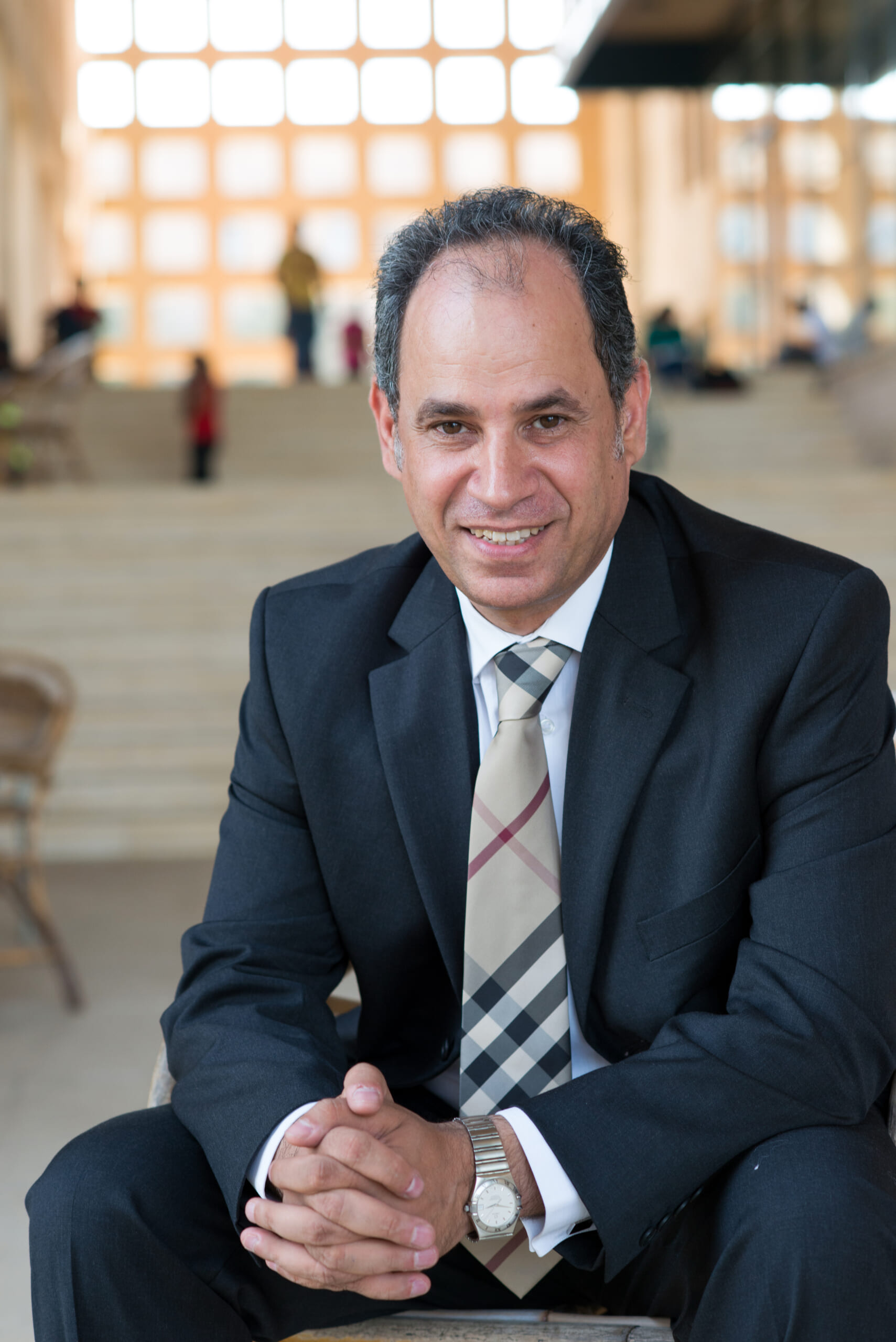

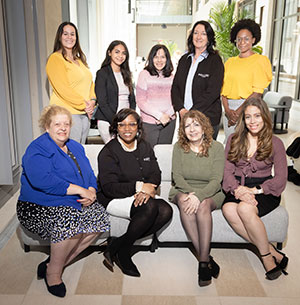 Office of Human Resources Management, Fordham University (Eastern Region)
 University Human Resources, Iowa State University (Midwest Region)
 Talent and Culture Department, Broward College (Southern Region)
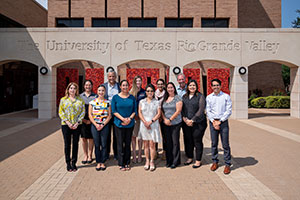 HR Campus Climate Liaisons, The University of Texas Rio Grande Valley (Western Region)
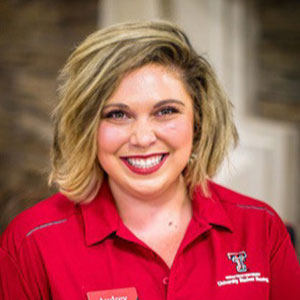 Audrey Davis, Assistant Director of Personnel, Texas Tech University (Western Region)