Anuja Uppuluri used to spend a lot of time scrolling social media apps dictated by algorithms designed to keep users glued to their screens no matter how mind-numbing the content.
“I always had something else that I could be doing or wanted to be doing, but I was choosing to watch TikTok videos for five hours,” said Uppuluri, who completed a bachelor’s degree in information systems at Carnegie Mellon University in May. “And then by the end of it I couldn’t remember anything that I had watched.”
Uppuluri, who now works as a machine learning engineer for Anthropic, sought to become more intentional about the information she consumes and has since scaled back her social media usage. Rather than scroll aimlessly, she wanted to fill her time digesting more research related to her career field, especially about the inner workings and implications of increasingly prevalent generative artificial intelligence tools.
She discovered all types of academic papers, articles and blog posts she wanted to read, but it wasn’t easy to keep organized. “I didn’t know where to put all of this stuff, because there’s no central location for it,” Uppuluri told Inside Higher Ed. “I started thinking about how I want to use my research and what I want to see from other people’s research.”
So Uppuluri developed Paper Trails, which she described as “Goodreads for academic papers” in an X post announcing the website’s launch last week. “I built it because I wanted a place where engaging with research felt fun, beautiful, and personal to you.”
Similar to the book-focused website Goodreads, Paper Trails is designed to help users discover new research and ideas, though it’s not powered by an AI algorithm. It’s a crowd-sourced platform where users can post links to papers from any field, peruse summaries of those papers, create shelves (public reading lists), and comment, review or rate papers.
In the week since its public debut, Paper Trails has grown its users from 10 to 2,200; the number of articles available on the site has increased from 20 to 3,100.
Inside Higher Ed spoke with Uppuluri to hear more about her vision for Paper Trails.
(This interview has been edited for length and clarity.)
Q: What sparked your interest in reading more academic research, especially about computer science and AI?
A: I always thought of a computer scientist as someone who writes code, builds infrastructure and makes sure systems are built to scale. But AI is blurring the line between research and engineering. Every new discovery that comes out of a large language model (LLM) lab is research-oriented.
Understanding why the technology is the way it is can be done by reading papers and understanding the research about large language models. These models are like black boxes—you can’t entirely understand what’s going on inside it—and that’s created all of the research subfields. For example, a subfield called interpretability is about trying to interpret what the models are doing. The more you do with these models, the more you have to read to understand how they work to gain context on how to build things better.
Q: How did your previous experiences reading and writing research papers inform the creation of Paper Trails?
A: A research paper to me used to mean something related to medicine, chemistry or biology. I didn’t understand or realize that it had a place in computer science until a few months before I wrote the only research paper I did in college. For that paper, I wrote the methodology and code, but my co-author, who was doing his Ph.D., helped me structure the paper, write the references and get it through the formatting process. It felt like a high barrier to entry for doing and reading research, which I associated with work instead of fun.
I thought having some type of casual thing like [Paper Trails] to organize research papers would maybe help me read more. But other existing websites I experimented with looked so dated and used software I had to learn. It looked complicated and didn’t seem fun. I also didn’t want to organize my research in a big Google Doc that has 50 links on it that I’m never going to touch again—that looks ugly.
So, I knew I could probably make my own site that looks nice and is easy to use.
At its core, Paper Trails is a tool to put papers and other reading material together in a way that’s pretty and fun. Sometimes that’s what you need to make something feel more like a hobby rather than more work you have to do.
Q: What went into developing the Paper Trails website and how does it work?
A: I coded most of it from scratch, with the exception of pasting in a few codes to fix some bugs.
When I first launched, there were only around 20 papers on the site. Now, there’s around 3,000 just from more people being on the site and adding the things that they want to read.
I chose not to mass import a bunch of stuff at the outset because if people look at it and it’s not something they’re interested in, it’s still there. It’s kind of cool to look at every single paper and know that it’s there because it’s something on someone else’s reading list.
Everything on the main page is organized by publication date. You can also use keywords to search or just click some buttons to see what people are logging. There is no personalized algorithm for users. While there isn’t anything necessarily wrong with a recommendation assistant, it’s also nice when there’s nothing telling you what to look at.
Q: What is the value of Paper Trails for its users?
A: There’s a lot of people who would like to get into research or just reading more. And if you want to spend your time in that way, having a tool to help you do it and encourage you to do makes it a lot easier to follow through on.
There’s also value coming from all the people that make it a collaborative thing. It allows people to explore, kind of like going down a Wikipedia rabbit hole. You can just keep clicking on random links and reading. You don’t know what you’re going to learn at the start of your session but, if you’re interested in it, you can read it.
Q: Now that people are showing interest, what are the next steps for Paper Trails?
A: I was thinking about sending it to some of my old professors, especially if they have Ph.D. students who may be interested in working on it.
There are even more elements that I could add that would improve the user experience. A lot of people have papers that are already saved on another site, so being able to bulk import would be helpful. Or allowing a few people to edit a shelf rather than just one person could make collaboration a little bit better. Or being able to clone somebody’s shelf so that another user can add some of their own stuff to it.
I don’t know exactly what growth looks like. But to me, success means the people using it are happy.
The statewide talent marketplaces should include credential registries, learning and employment records, and skills-based job description generators.
ATHVisions/E+/Getty Images
The Department of Education launched a new $15 million grant competition to promote the development of what it calls statewide “Talent Marketplaces,” or digital systems that track the credentials, employment records and skills of students and graduates.
“Talent Marketplaces give learners, earners, and employers a clearer way to validate skills, opening doors to stackable credentials and stronger recognition of prior learning and work experience,” Nick Moore, the acting assistant secretary for the Office of Career, Technical, and Adult Education said in a Friday news release about the program. “As we expand these systems, we open more pathways into good jobs, support broader participation in the workforce, and help strengthen our Nation’s economy.”
The announcement came just days after the House Education and Workforce Committee held a hearing about expanding access to similar Learning and Employment Records. The goal, according to Republicans in both Congress and the Education Department, is to help institutions better match talent to opportunity and expand access to career pathways with a positive return on investment.
In this first competition, the department will identify up to 10 award winners, each of whom will receive a portion of the $15 million as well as technical assistance in refining and implementing their development plans. It is unclear based on the news release where the funding for this program will come from.
The application will open in January, according to the release.
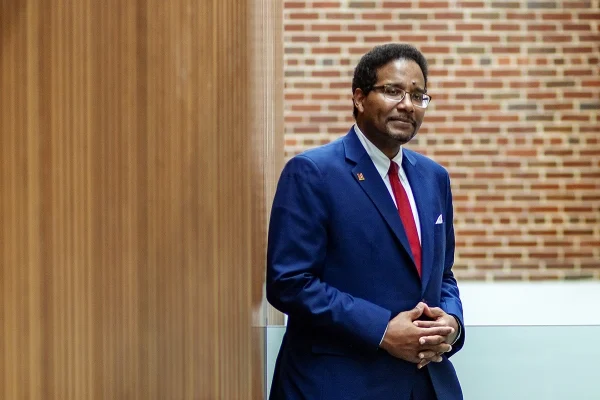
An investigation cleared Pines of academic misconduct.
University of Maryland, College Park
University of Maryland College Park President Darryll Pines did not commit academic misconduct, an investigation determined, clearing him of plagiarism allegations that emerged last September.
A joint investigation that involved both the campus and the University System of Maryland but was led by an outside law firm “found no evidence of misconduct on the part of President Pines,” according to an emailed announcement from College Park and system officials sent on Friday.
Last fall, Pines was accused of lifting 1,500 words from a tutorial website for a 5,000-word paper that he co-authored in 2002, and of later reusing that same text for a 2006 publication, according to the initial allegations against him that first broke in The Daily Wire, a conservative website.
Pines disputed the claims from the start, stating that they had no merit.
However, Joshua Altmann, who wrote the text that Pines was accused of lifting, told Inside Higher Ed last year that “I do consider it to be plagiarism, and not worthy of an academic.”
The investigation, which concluded after more than a year, included three rounds of external reviews and was extended to other articles Pines wrote. While it found no evidence of misconduct, investigators noted attribution errors in some works.
“The committee did determine that the two works highlighted last year contained select portions of text previously published by another author in the introductory sections. In a separate text, a discrepancy in assignment of authorship was made. However, President Pines was not found responsible for the inclusion of such text in any of the three works, nor was he found responsible for scholarly misconduct of any kind,” College Park and system officials announced last week.
Officials also expressed confidence in Pines’s leadership going forward.
Despite more than two decades of legislation to establish equality in education for disabled and or diverse learners, disabled students continue to tell us that university can feel like an obstacle course.
The barriers are rarely spectacular, they are cumulative. A lecture uploaded without captions here, a placement form that cannot be read by a screen reader there, an adjustment agreed in one department but lost somewhere between a registry system and a module leader’s inbox. Committed staff can be found everywhere, but problematic patterns remain unyielding.
That is the core problem our Office for Students-funded project sets out to address: in a mass, complex, data-driven sector, local goodwill and isolated fixes do not add up to equality. The numbers matter, as more students are disclosing disability than ever before, across every discipline and level of study.
Behind those patterns sit familiar barriers: inaccessible learning environments and systems; opaque, slow, or inconsistent processes; siloed responsibilities between academic departments and student services; and a tendency to treat reasonable adjustments as individual fixes rather than signs of institutional design problems. Disabled-led organisations such as Disabled Students UK (DSUK) and Disability Rights UK (DRUK) have been clear in stating that meaningful change needs meaningful collaboration with disabled people, not consultation after the fact.
So why has the sector not moved faster? Because the challenge, as our team have discovered, is ecological not episodic. Individual good practices exist, but without a joined-up approach or student leadership they do not add up to consistent or sustained equality.
Policy and case law have been clear for years about duties to make reasonable adjustments. Yet the practical experience of securing those adjustments and seeing them work consistently, module by module and term by term, lags behind. One reason is structural: student services and academic departments often own different parts of the reasonable adjustment pathway, with digital systems, estates, timetabling and external partners (for example placement providers) making decisions that affect implementation.
When responsibilities are split, accountability can be blurred; when data is siloed, feedback loops break down; when workloads bite, the exception becomes normalised. Our conclusion, based on lived experience, sector evidence and our own work with institutions, is that we have been treating an ecosystem problem with point solutions.
An ecological approach
When considering where disability equality and inequality are located in HE, the spaces, places and experiences we think of are shaped by relationships and meeting points between students, staff, timetables, curricula, estates, timetabling, assessment regulations, digital platforms, suppliers, and external points such as placement providers, funding assessors and employers.
If you change one meeting point, the effects are felt across the whole system, and if meeting points are not communicating or working in joined up ways, they experience limited success in their combined aims and objectives. In this case the equitable access, success and progression of disabled students in HE.
The ecological approach we are developing calls for joined up practices connecting actors, including students, programme teams, services, registry, estates, IT, and external partners to co-diagnose problems and co-design solutions. It works across timescales, from “use tomorrow” fixes (such as alternative formats) to structural shifts (such as assessment policy and data flows). It is transparent and makes accountability visible, sharing data, and providing feedback loops highlighting whether adjustments are timely, effective and equitable. Fundamentally, it centres disabled leadership, qualifying disabled students and staff as co-leaders, users and evaluators throughout, not just consultees.
Three steps for equitable university experiences
Our work is taking three key steps in developing this ecological model for the sector. First, we are mapping where and why barriers persist in the journey from a student disclosing a need to an adjustment being delivered in their teaching context.
That journey is seldom linear. It crosses multiple systems, is hands-offs, and it often requires invisible labour by students themselves to keep things moving. We are documenting these routes with our partners, leading disabled people organisations DSUK and DRUK, so we can co-design fixes that survive real institutional conditions. We are doing this by collecting accounts and experiences through surveys and workshops with disabled students, student services and academics.
Second, we are co-creating continuing professional development that address the needs of module leaders, personal tutors, programme leads, placement coordinators, timetablers, disability advisers and frontline advisers. The content pairs short, practical scenarios with data on timeliness and effectiveness, and prompts teams to move repeated adjustments into course design. By centring lived experience, we are producing “use-tomorrow” learning that is also a lever for upstream redesign.
Third, we are writing university guidelines on reasonable adjustments that bring together responsibilities, timeframes and escalation routes. This is a working pathway, visible to students and staff alike, with shared ownership across academic and professional teams. These resources will be published openly on an OfS-sourced platform to support sector-wide take-up and long-term evaluation.
Why a joined-up and co-created approach matters
There is no shortage of “good practice” lists in the sector. What we do not yet have is a user-led, sector-ready pathway that integrates roles, systems and timescales. Gibson’s user-informed, user-led, user-evaluated approach provides the model of practice behind this project’s work. With its emphasis on partnership, user-leadership and co-creation the model places disabled students and lived expertise at the core and front of the project in design, output and impact evaluation.
This approach reframes the idea of “reasonable”. A reasonable adjustment becomes not only something that can be delivered for an individual, but a signal about programme design and institutional capability. If the same adjustment is needed across a cohort, the reasonable response is to redesign. Staff recognise this logic; many are already pulling in that direction. The ecological approach provides them with a shared language, shared tools and shared accountability.
On that basis, these are our recommendations for the sector:
Swap exceptions for design. Treat repeated adjustments as prompts to redesign curricula, assessments and processes so the need becomes built-in, not bolted on.
Create a single visible pathway. Publish a plain-English route, co-owned by departments and services, for securing, implementing and reviewing reasonable adjustments, with clear timeframes and escalation.
Close the loop with students. Ask disabled students if support was timely and effective, publish the actions you take, and track changes using measures that matter locally (as well as NSS/APP indicators).
A student’s experience should not depend on which member of staff opens their email. In an inclusive ecology, the pathway is transparent and defensible, the systems talk to each other; the same student does not have to re-explain across every module; adjustments are recorded, enacted and reviewed; and the lessons from individual cases migrate into programme-level design.
Our project aims to connect these practices into a pathway any provider can follow, and all the resources will be freely available for sector-wide use on an OfS-hosted platform.
The authors would also like to thank Kathrin Paal, Chloe Webster-Harris, Lucy Bartlett, Arianwen Fox, Lottie Atton, Elena Brake, and Tyrell King for their contributions.
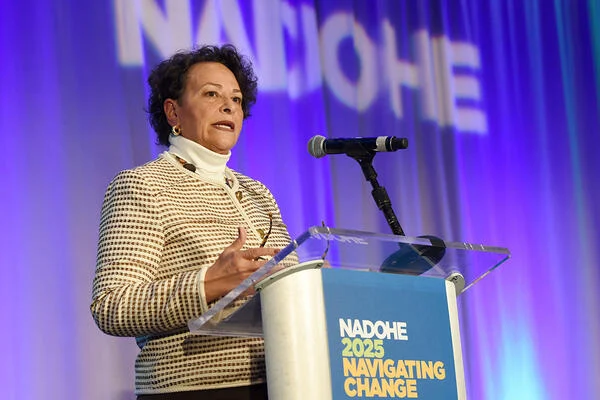
Paulette Granberry Russell is stepping down as president of the National Association of Diversity Officers in Higher Education (NADOHE) after a dramatic and unpredictable five years at the helm.
She represented campus diversity professionals amid the national racial reckoning that accompanied the Black Lives Matter movement, and then through the dizzying years that followed as anti-DEI laws swept the country. She also spent 22 years as a diversity professional at Michigan State University.
Granberry Russell told Inside Higher Ed she never planned to stay at NADOHE longer than five years, so she’s ready to move on and facilitate a “smooth transition and handoff.”
But what a tenure it’s been.
She spoke with Inside Higher Ed about how she navigated the headwinds facing diversity professionals and the future of diversity, equity and inclusion work on campuses. The conversation has been edited for length and clarity.
Q: Over the course of your term, from 2020 to 2025, the landscape for diversity professionals in higher education radically shifted. What has it been like for you to represent DEI professionals then and now?
A: When I came into the role, my goals were to do a few things, which, not only were intended to build on our past successes, but also [to] develop new initiatives that would enhance a few areas, [including] increasing our membership but also providing our support for them. It included, for example, enhancing our industry influence but also sustainability of the organization.
I came into the role in March of 2020, and what happened in March of 2020? The pandemic, which altered much of what was going on in higher education and how we were doing our work, whether that was remotely, but also with threats in terms of both student experiences but also student support. And then, in May of 2020, the murder of George Floyd, and all of the ways in which our institutions were reacting and responding and certain commitments were made to enhance antiracism efforts on our campuses.
When I think about my first few months, it was something very different than what I anticipated. And I’m certain that’s true for higher education as well. I lived in this state of shifting priorities, having to think about ways to best support members who were having to adjust to significant shifts on their campuses. We were also dealing with significant challenges around freedom of speech and disruption on our campuses prior to these more recent experiences.
And the politics are very different. When you shift from an environment of enhanced commitment built on an understanding that our campuses had to deal with issues around race and expanding opportunities more broadly across identity to now pushback—it was causing quite a shift in equilibrium. And that’s true for our members as well as the organization. And because of the evolution of diversity, equity and inclusion in higher education historically, as painful as a lot of this was, I believe we were better prepared than we understood ourselves to be.
Q: You touched on how you started at NADOHE in this moment in 2020, when campuses made commitments and investments in thinking about race and racial inequities, and now campuses are rolling back so much of those efforts in response to anti-DEI legislation. How did these policy shifts change NADOHE’s work and change your work as its leader? How did you have to pivot?
A: Our successes, I think, resulted in some of the pushback. The pushback was evolving. Expanding on opportunities [created by diversity initiatives] beyond race, so that people understood that diversity was more inclusive than they initially understood it to be—we did not do as good a job as we could have and should have.
But [we] are beginning to do [it] now, in broadening people’s understanding that diversity is and should be interpreted very broadly. I think that the narrative was hijacked, meaning it was easy to unfortunately define diversity narrowly on the basis of race, gender and sexuality. And others used that narrative to create fear and apprehension that somehow others were being advantaged, versus understanding that we all have benefited from the ways in which we were adjusting our efforts on campus to broaden access, to broaden opportunities, to increase equitable outcomes, understanding that [it’s] not one-size-fits-all, and we had to tailor and adjust our efforts to accommodate the broad range of interests and identities that presented on our campuses and have always presented on our campuses. What we failed to do well was messaging both the communities impacted by our work and the work that was being done to expand opportunities as well.
Q: How did the backlash shift your priorities, if at all?
A: When we think about the early challenges, some [opponents] would point to critical race theory. I don’t know that they necessarily understood it very well, and [they] were having a difficult time messaging it. But it was easier to talk about diversity, because for many people, that conjures up issues around race, it harkens back to earlier views of affirmative action and I think it became an easier message to divide higher ed both internally as well as externally.
It was important for NADOHE to emphasize—whether it was around academic freedom, First Amendment rights and freedom of speech and freedom of expression—that diversity, equity and inclusion are embedded in those. Freedom of expression cannot be sanitized. Our research, for example, or our curriculum is going to touch on issues that may impact communities broadly—and diverse, marginalized, underserved communities. And the work that we do in higher education as diversity leaders requires evidence-based research that informs our work. In the absence of that, you’re guessing at strategies and interventions that will support all students.
This work is not going to go away. We’re not going to go back to a time when opportunities were constrained, when fairness did not extend to certain communities. That’s unacceptable.”
—Paulette Granberry Russell
And so, I don’t know that it was as much a shift in our priorities as much as it was helping higher ed internally, as well as audiences outside of higher ed, to understand that access and opportunity are not limited to any one demographic or a few demographics. If there was a shift in priorities, it was hopefully helping broader audiences understand that there’s nothing to fear, especially in the ways that diversity, equity, inclusion was being demonized. This work is not intended to grant preferential treatment to some and deny others opportunities.
Q: So, you found yourself having to do a lot of explaining about what’s actually meant when people say “DEI” in a higher ed context.
A: That’s right. And it’s also saying to folks, don’t use the acronym. Because the acronym, unfortunately, supported a very narrow way of defining efforts.
Diversity is not defined narrowly. Equity is intended to reduce barriers that may result in differential impact, and those differential impacts are not limited to any one category. Inclusion doesn’t happen just naturally. We know individuals feeling included allows them to be themselves but also allows them to be more successful. If I don’t feel like I belong, what do I do? I tend to retreat, or I don’t access the resources that are there, resources that may benefit me, resources that are accessible to all, with an understanding that, again, we’re not monolithic. It is helping people differently understand, and hopefully better understand, that there are no threats here. Diversity on our campuses is a reality, period. And it’s not going to change, certainly not as long as organizations like NADOHE are here to defend access and opportunities.
Changes in nomenclature happen. How we define our work, how we label our work, how we tag our work has always changed. If we think historically, going back 20, 30 years, we talked about affirmative action. We talked about multiculturalism. We talked about diversity. We talked about equal opportunity. We talk about fairness. We talk about equity. We talk about belonging. We talk about inclusion. Terminology evolves over time, given how the work itself evolves.
Q: As campuses close centers associated with DEI and get rid of diversity roles, what do you see as the next phase of the work? How do campus diversity professionals move forward from here? And what does the DEI movement look like now and into the future?
A: At least for this moment in time, we need to more closely scrutinize the systems that have been designed that have resulted in barriers to success. And how do we redesign, or how do we begin to design systems that differently support our campuses?
There’s no single office or individual that can do this work alone. Certainly, in my own career at an institution that was a large public land-grant with over 40,000 students at that time and 14,000 faculty and staff, there was no way that a person with two staff was going to be able to dramatically impact change. [Change comes from] working with others and understanding that it’s going to take what I would call a whole-institution approach, which means that our leadership, our policies, budget, people, culture have to be aligned. That also means that we have to take a look at the policies, practices, procedures that we have in place that may be having differential impacts, and how do we make adjustments in those? Not to grant preferential treatment, not to discriminate, but to say, can we design systems that work better?
We’re talking about a systems approach for structural change. When I say a systems approach, this is going to be far more extensive than I think many of us are prepared to do, but I think that it’s the future. [In the past], unfortunately, we didn’t [always] look at connections between the needs of our students, the capacity of faculty to meet those needs, the capacity of staff to meet those needs and connecting our students to potential employers. Things were very siloed. Things are still very siloed. We have to think about the life cycle of a student. And we do that, but it’s not that we are always very deliberate in how we do it.
When I grew up as a child, the expectation was that I would go to college, but my family, by all definitions, was very low income. [When] I got to my undergraduate experience, there were no tools in the way that there are now. There were no interventions. There were no programs that I could access that connected me to all of the resources that would allow me to be successful. I was a low-income Black female who arrived on a campus with no prior experience, not knowing how to navigate the space, not knowing where the resources were, not knowing how to fund my education. I was a person with a dream and a family that really wanted me to be successful, but they didn’t have the tools to provide that. It’s a very different world we live in today.
[The goal is] helping that student understand where the resources are, and then helping faculty understand the differences of those students that come into your classroom, ways that you as faculty can support them, connecting those faculty with the advisory services that those students might need. We have to design [systems] in ways that reduce barriers, that acknowledge the differences that exist and with the goal of those individuals being successful [and] reducing the barriers for faculty to be successful.
Q: After leaving NADOHE, what’s next for you?
A: My entire trajectory, my entire life, I have always been this person who believed in fairness. I always believed in opportunities. I’m always that person who fought for not only myself, but for others to be treated fairly, because I grew up in a family where my history included ancestors who were formerly enslaved.
At 16 years old, I decided I wanted to increase participation in voting. In 12th grade, I remember I had a speech class, and I was that person giving speeches on the slaughtering of baby seals. I was the person who was giving speeches on sexuality and treating people differently based on how they identified. I was that person who gave speeches on the Black Power movement, civil rights, Martin Luther King. And as I reflect now, as I transition, I’m not going to be any different than what I have always been. I will find new ways to [apply] my experiences and my advocacy. Because I have no choice. I realized that about myself.
My time with NADOHE has been to build on the successes of my predecessors. I believe that I have done that. I achieved the goals that I set out to achieve, both for myself and for the organization, whether that is increasing our membership, our influence within higher ed [and] beyond higher ed. We’ve done that.
This work is not going to go away. We’re not going to go back to a time when opportunities were constrained, when fairness did not extend to certain communities. We’re not going back to a time when discrimination on the basis of identity was lawful, certainly in the context of race, gender, sexuality, sexual orientation. That’s unacceptable. We’re not going back.
My next move is, I’m going to breathe. I’m going to take a little bit of time for myself. But I know I will always find my way back to what I have always been committed to, that I want people to be treated fairly. I want people to have opportunities.
Q: Whoever takes over your position is going to face significant headwinds. What would be your advice to them?
A: Bring your passion. Bring your commitment. Coming into this role, it’s going to be exhausting, but you have to decide that there’s no other way forward. Too many lives depend on it. This country, our democracy, depends on it.
Imagine you are the parent of an incoming college student who wants to study theology, ranked among the lowest-paid majors after graduation. You’re proud of their conviction, but also anxious because friends and family keep reminding you that theology is a major for which career prospects are uncertain at best. Then, in the thick of college decision season, you learn that the college your child is considering offers something called “degree insurance”: If your graduate doesn’t earn above a set threshold, the program will step in to cover part of the gap.
Across the country, colleges and universities are rolling out a new suite of financial products targeting undergraduates, marketed as “loan” and “degree” insurance. Loan repayment assistant programs (LRAPs), sometimes also called loan repayment guarantees, are a form of loan insurance that protect students against default: If a graduate doesn’t earn above a certain threshold, their student loan payments are reimbursed to a certain amount. Degree insurance is a mechanism akin to public “wage insurance” programs, where if a graduate makes less than the average income in their field adjusted for regional differences, the insurance would “top up” the difference in wages for a period of time.
These two tools have distinct origins and underlying rationales. Loan Repayment Assistance Programs (LRAPs) originated in Yale Law School in the 1980s, and spread to other law schools, as the rising cost of legal education began to deter graduates from pursuing lower-paying public interest careers. While they began as internal sources of funding, the privatization of LRAP offerings and search for profit have pushed the industry to expand into new markets, namely undergraduate education. Indeed, Ardeo Education Solutions, an early and prominent player in this sector, was founded by Yale Law graduate Peter Samuelson, who himself benefited from Yale’s loan assistance program. Ardeo positions itself as reassuring families about the risks of taking on debt in order to pay for undergraduate education, “increasing access to the life-changing impact of higher education,” and freeing students from having to choose “between their passions and a paycheck.”
Degree insurance products take a different approach. Degree Insurance, which counts Augustana College in Illinois as a client, draws on the cultural cachet of the American dream to market itself as an income equalizer; its flagship product, “American Dream Insurance,” guarantees “equal pay for equal study,” where “no graduate will have to earn less than their peers, regardless of race or gender, because everyone will have the same safety net.” This is insurance against the uncertainties and inequalities of the labor market as well as against individual weaknesses of any particular candidate.
While the current scope and reach of this sector is challenging to assess, Ardeo Education advertises that it’s provided LRAPs to more than 30,000 students at more than 200 American colleges and universities. Participating institutions range from a number of small, faith-based colleges like Lyon College and MidAmerica Nazarene University to a public research university like Eastern Michigan University. Eligibility for repayment assistance usually requires graduation from the offering institution, full-time work (30+ hours/week), and staying below the income cap.
The extension of LRAPs and degree insurance into undergraduate programs represents a new dimension of risk management in higher education, which has gone through several phases since it began in earnest in the late 20th century when colleges and universities started responding to increased personal injury and campus safety litigation. These risk management programs, tailored to protect institutions, eventually expanded to include Title IX, Occupational Safety and Health Administration requirements, environmental regulations, reputation management, crisis communications, cybersecurity and, most relevantly for this topic, financial sustainability. Loan and degree insurance represent the latest iteration of such efforts.
For now, colleges typically pay for these programs, though it is unclear how much of the cost is passed on to students through tuition. How students are selected for inclusion in these programs is also opaque. Institutions are free to determine which students and majors are offered the program. Augustana College’s website, for example, says that it offers degree insurance at no direct cost to the student, but participation is on an invitation-only basis.
There are, of course, reasons to defend these programs. Scrutiny of the student loan system, which has resulted in a student debt crisis, has intensified across the political spectrum, as policymakers from both parties recognize the harm it has caused (even as they disagree on the solutions). LRAPs and degree insurance may decrease the rate of loan default and reassure low-income families who were unable to save for college and are averse to taking on loans to pay for college.
In an environment marked by increasing competition for students, admissions professionals see offering LRAPs and degree insurance as a competitive advantage. Loan repayment and degree insurance plans also encourage students not only to enroll in college in general but to pursue degrees with more challenging career prospects, which are also often the ones at risk of being cut due to low enrollment. This is increasingly relevant given the almost daily news of program closures.
The arrival of these financial instruments is perhaps an understandable response to the rising cost of a college education, increased competition for students, overall wage stagnation and shifting public views about the purpose, value and outcomes of higher education. The adoption of these tools, however, is not simply driven by the current circulation of the idea of college education as a risk; it also further reinforces that view.
These programs are not simply a new and neutral financial option for students. By extending the logics of institutional risk management to the economic futures of students, these tools cement the troubling, and potentially self-defeating, idea that a college degree itself is a financial risk requiring protection rather than the most reliable path to upward mobility and a critical component of our continued economic and cultural prosperity. Their adoption by colleges and universities is a reflection of the “short-termism” that has increasingly marked higher education strategy. As more institutions inevitably adopt these programs, it is unclear how long they will remain a competitive advantage. Furthermore, as the trend spreads, we may see the labor market respond, with employers lowering entry-level salaries even further as they take into account insurance payouts. Indeed, like many aspects of higher education today, it feels like a race to the bottom.
Comparisons between insurance products and other forms of income or employment assurances are difficult to make. Should families prioritize colleges with strong outcomes (e.g., graduation rates upward of 70 percent and reassuring post-graduation employment statistics), robust alumni networks, or loan and insurance programs? It is also too early to tell what the consequences of transferring the risk to third parties, a common higher education risk management strategy, might be for students and institutions in the long term. And, it further financializes education, such that in the process of character formation, managing risk, rather than other values or logics, becomes central to identity.
Colleges and universities might want to ask themselves whether treating college degrees as a risk serves their long-term interests. Loan and degree insurance products may deliver short-term enrollment gains, ease families’ anxieties, and even encourage students to pursue majors often viewed as less “marketable.” In the long-term, however, these strategies relieve the pressure to address underlying structural challenges such as rising costs, stagnant wages and a flawed loan system. Ultimately, they undermine our ability to make the case for higher education as a public good, thus putting the future of the entire endeavor at risk.
Margarita Rayzberg is an assistant professor of sociology and criminology at Valparaiso University.
Under repeated threats to their funding, higher ed institutions began to rebrand or shut down cultural centers, Black student resource centers and LGBTQ+ and women’s programs. Many campus diversity officers lost their jobs or were shuffled off to other offices, barred from doing much of the work they were hired for. Some institutions scrapped celebrated traditions such as affinity graduations and campus residential communities geared toward students of certain racial or ethnic backgrounds. Some student groups, like Esperanza, lost university funding because of their identity-based missions.
In one recent example, the University of Alabama ended two student publications, one focused on women and the other on Black students, citing federal policy concerns. The University of Tennessee at Chattanooga shuttered its Women’s and Gender Equity Center, an LGBTQ center, its Office of Multicultural Affairs, and the Office of Student & Family Engagement, replacing them with a Center for Student Leadership, Engagement and Community. The changes have affected faculty and staff as well as students; earlier this fall, the University of Illinois System banned consideration of race, sex or country of origin not only in financial aid decisions but in hiring, tenure and promotion as well.
“It’s very sad to see a lot of universities fall to their knees,” Luna said. Higher ed institutions “are supposed to be the places where the exchange of ideas happen, where leaders are developed and where you’re just taught about how the world objectively is … It’s a very dangerous sign for the future.”
A Double Attack
State-level anti-DEI laws have proliferated for several years now, but diversity-related programs and services were dealt a double blow this year when Trump took office.
On Feb. 14, the Education Department’s Office for Civil Rights issued a Dear Colleague letter declaring race-conscious student programming and resources illegal, based on an expansive interpretation of the 2023 U.S. Supreme Court decision against considering race in admissions in Students for Fair Admissions vs. Harvard. It gave colleges and universities 14 days to eliminate such offerings or risk losing their federal funding. A month later, ED launched investigations into 51 colleges for ongoing DEI activity. Federal judges struck down the department’s anti-DEI guidance in April, pausing enforcement, but colleges nonetheless scrambled to review and scrub DEI language from their programs and offices or shutter them altogether.
Over the summer, the Department of Justice came out with a sweeping guidance memo declaring an even wider set of practices off-limits, including those that use “potentially unlawful proxies” for race, such as recruiting students from majority-minority geographic areas. In a series of contentious legal battles, the federal government pressured some universities to agree to settlements that included anti-DEI provisions, including bans on race-conscious programs and transgender athletes. For example, the University of Virginia, which the DOJ targeted for DEI practices, recently agreed to quash all DEI programming to maintain federal funding.
I am a person who still believes, and I will forever believe, that it is important to call it diversity, equity, inclusion, anti-racism.”
Shaun Harper, founder and chief research scientist at USC’s Race and Equity Center
All the while, federal agencies have slashed, frozen and stalled billions of dollars in research grants to universities, often for perceived ties to DEI concepts. More than 120 TRIO programs, which support disadvantaged students, also lost their federal funds over alleged DEI connections. And in September, the Education Department abruptly ended grants for many minority-serving institutions, calling such programs—used to fund supports like extra peer mentoring or streamlined STEM programming at colleges with burgeoning minority student populations—“discriminatory” and “unconstitutional.”
States, meanwhile, enacted an unprecedented number of new laws cracking down on DEI: 14 in 12 states, including Arkansas, Indiana, Iowa, Kentucky, New Hampshire, Mississippi, Ohio, Oklahoma, Tennessee, Texas, West Virginia and Wyoming. That’s double the number of states that passed anti-DEI laws last year.
A higher education consultant and lawyer in the Washington D.C. area, who asked to remain anonymous, said campus leaders are increasingly asking, “How do we keep ourselves off the radar? How do we avoid scrutiny from the federal government?” At the same time, they face “increasingly disgruntled and disappointed communities within who are saying, ‘We thought you cared about this issue’,” the source said. University leaders have come under “very real pressure.”
A ‘Loss of Momentum’
Diversity officers and scholars fear that this year’s seismic policy shifts and campus crackdowns on DEI will have ripple effects across academe and beyond.
Kaleb L. Briscoe, associate professor of educational leadership and policy studies at the University of Oklahoma, is concerned that some institutions have responded to DEI bans by limiting what’s taught in the classroom.
For example, Florida colleges removed hundreds of courses related to race, sex and gender from their general education requirement options. Classes at Texas A&M University that “advocate race or gender ideology, sexual orientation, or gender identity” now require approval from the university president. And other Texas universities have undertaken reviews of course syllabi and curricula for anything that runs afoul of state or federal DEI bans.
Curriculum changes that would normally “take years’ worth of processes” are sometimes happening quickly and without appropriate faculty input, Briscoe said. While proponents of DEI bans often call for viewpoint diversity, “by implementing these bans, you are taking away voices and taking away knowledge … which really counters what they are hoping to do.”
She also fears a “blue, red, purple divide of education,” where students have different levels of access to certain subject areas or perspectives depending on where they go to college.
“We are now going to see different people in different states learning and getting access to different things,” she said. “That is horrible because, knowledge-wise, we should be preparing our students to be productive citizens across difference.”
What we’re doing is reducing opportunities.”
Paulette Granberry Russell, president of the National Association of Diversity Officers in Higher Education
Shaun Harper, founder and chief research scientist at the University of Southern California’s Race and Equity Center, said he’s mourning a “loss of momentum” in improving the experiences and outcomes of underrepresented students, a movement that stretches back to the 1960s.
He recently visited a campus where “the Black cultural center still exists in name, but it has no staff. It has no programming. It’s just an empty room,” he said. Harper, who also serves as USC’s Clifford and Betty Allen Chair in Urban Leadership and Provost Professor of Education, Business and Public Policy, said he found a smattering of students still trying to use the space, sitting in the dark and talking. He remembers when the same center was “a light, bright, vibrant space that was rich with culture that had employees … who helped to make it a home away from home.”
To him, the darkened space was a symbol of what’s been lost.
DEI Professionals Under Fire
Harper said he’s been especially disheartened to see DEI professionals lose their jobs.
Institutions dismissed “good, innocent, hard-working people who were expert at bringing campus communities together across racial, religious, ideological and other important divides,” and who pushed for some widely-cared-about issues like pay equity for women and access for students with disabilities, he said. “The loss of those people has been catastrophic to higher education, to the students that they were serving and to those people’s careers.”
A former diversity professional at a public higher ed institution in the South told Inside Higher Ed that DEI officers were wrestling with the “trauma,” “shame” and “humiliation” of suffering such a forceful, nationwide rejection.
The ex-diversity officer, who asked to remain anonymous for fear of career repercussions, spent years working to make their institution a more welcoming place for students of color—and it worked, they said. Over their tenure, faculty diversity increased and the percentage of underrepresented students in the university’s entering class more than doubled.
But you wouldn’t know it from looking at the institution’s website, the former diversity officer said. It makes no mention of the diversity office, which was dissolved. The university stripped any evidence of its work, including videos of events and educational programs, data reports and online community platforms. Unlike many of their co-workers, the former diversity officer retained an unrelated position at the institution, but their former role feels like a “scarlet letter” on campus and in the job market, they said.
They worry not only for their colleagues but also for students and faculty members left unserved.
“I can tell you that students of color who had community, don’t,” they said. “They’re spitting on Black kids, they’re calling them the N-word, and kids don’t know where to go. They don’t know what office is going to support them.”
The former diversity professional believes DEI is officially “dead,” at least as a label.
But “the underlying work of creating welcoming, diverse, inclusive, supportive cultures on campus and communities is not dead,” they said. The “benefits of diversity, of inclusion, those are still there. It just can’t be called that.”
Students in Ann Arbor protested the University of Michigan’s decision last spring to close its DEI offices, putting up posters criticizing President Donald Trump and former UM President Santa Ono.
Bill Pugliano/Getty Images
DEI’s Murky Future
Harper argued that the work can’t really go on without using the term “DEI.” He believes replacement terms like “culture” and ”community” lack specificity in a way that makes them meaningless.
“It’s giving weak sauce,” he said. “I am a person who still believes, and I will forever believe, that it is important to call it diversity, equity, inclusion, anti-racism.” The same goes for “antisemitism, sexism, homophobia and transphobia. It’s important to call those things by their names.”
Whether DEI will continue in some form is an open question currently under debate by current and former DEI officers and researchers. Some retain their optimism; others argue it’s going to take years, even decades, for campus infrastructure to recover from the full extent of this year’s losses—if a comeback is even possible.
The DEI rollbacks mark a retreat from “60-plus years of effort to broaden access and address inequities,” said Paulette Granberry Russell, who’s stepping down as president of the National Association of Diversity Officers in Higher Education in January after five years at the helm. “So, do I see this work coming back? Bouncing back? No.”
Regardless of who wins the next election, she believes federal funding cuts and stymied DEI-related research will cause long-lasting damage. She’s spoken with scholars studying issues related to race and gender who have been doxed and threatened, and who fear continuing the work they’ve done for years.
“What we’re doing is reducing opportunities,” Granberry Russell said. “You’re not going to make that up in two, three, four years.”
But she’s not without hope. She emphasized that a “systems approach” to improving academic outcomes for students—making such work the entire university’s responsibility—could be the next phase of these efforts as diversity offices fade. Doing so would require leaders to express “their commitment, which at least at this point, requires a certain amount of courage, given the very heavy-handed … taking away of resources to bring colleges and universities into line,” she said.
A chief diversity officer who lost their job in a state with a DEI ban but now works in the same role at an east coast institution, said they’re doing a “post-mortem” on where DEI went wrong. They believe the DEI movement might have tried to accomplish too much too fast, without explaining the research behind the practices developed to boost student outcomes.
Practitioners introduced concepts “really new to people” and sometimes “began to cancel people quickly” who didn’t get it, said the CDO, who asked to remain anonymous. But “you can’t run a marathon with people who are not fit. You have to bring them up to where you want them to be. And that requires teaching. It requires patience.”
They noted that the field of DEI grew rapidly in the aftermath of the Black Lives Matter protests in 2020. Scholarship on improving campus climate flourished, and diversity professionals enjoyed a wide berth to try new strategies to close equity gaps. But it was short-lived. Less than a year into the CDO’s role at their previous institution, the anti-DEI movement gained traction in the state. An anti-DEI law ultimately passed, and the diversity office later closed for good.
“That great rebirth or Renaissance” was “like a star that just had its last final flash of wonder—and then the death began,” they said. “We didn’t know at the time that the star was shining brightly to die.”
They believe DEI could be on the brink of a new era, one that rectifies some of its past mistakes and garners more support. “My fear is that we won’t be given the opportunity to do so,” they said. But they’re confident diversity professionals won’t give up on the programs, practices and strategies they believe students need.
“Fear not. Rest up, my friends,” they said. “We will be back.”
The D.C.-based higher education consultant and lawyer believes DEI isn’t dead; it’s just shifting. Campus DEI work has never been unlawful, they argued, so colleges and universities simply need to emphasize that fact, not scale back their work. They encourage campus leaders to state explicitly that cultural centers and programs are open to all, and to train everyone on campus, including student group leaders, how to frame their programming that way—even though the programs didn’t discriminate in the first place.
“Many times, I’m just trying to remove language that I know is going to draw scrutiny and then trying to offer them a way to continue to live out their values,” they said. “There may be ways to thematically describe the intended purpose of a program without using an identity marker that really just is a lightning rod in this moment.”
They acknowledged that “this transition has been really painful” for all invested in diversity, equity and inclusion work.
“But I think people are resilient,” they said. “They’re evolving, and they’re trying to figure out a pathway to make the work of universal access and opportunity evergreen.”
We live in uncertain and unstable times. The job market is contracting due to economic uncertainty, political instability and the increase of AI-driven automation. In my role as a career adviser, I talk to many students and recent graduates who have faced a long and difficult job search. The words and phrases I hear most often in these conversations are “dejected,” “soul-crushing,” or “I feel like I am screaming into the void.” International students face an added challenge, with H-1B visas seeming out of reach as they become more difficult and expensive for employers to process.
All of this uncertainty can lead to feelings of helplessness and hopelessness. What I hear from students, and in particular our international community at Columbia University, is, “What is the point of applying to jobs if no one will hire me?” Such self-defeating thoughts can lead to inaction and feelings of despair. Yet hope is essential to the success of any job search. Having hope or optimism that something willwork out is central to achieving one’s goals.
It is likewise essential that a career coach or adviser have a hopeful, positive attitude. A recent article published by the IZA Institute of Labor Economics describes how when people who were unemployed for a long period of time worked with caseworkers who had “strong confidence in the potential of their clients to find employment,” the relationship led to an increase in the client’s motivation and resilience, and to improved earnings and employment outcomes over time. Thus, our outlook as advisers can impact the students we are working with, so we must manage our own feelings of hopelessness. I find myself returning to Jane Goodall’s The Book of Hope: A Survival Guide for Trying Times for inspiration.
Another source of inspiration I return to is a framework called Career Flow: A Hope-Centered Approach to Career Development, developed in 2011 by Spencer G. Niles, Norman E. Amundson and Roberta A. Neault. In the remainder of this article, I plan to provide career development professionals with an overview of this hope-based career development model and suggestions on how they can implement it to assist their students and graduates.
In the theory, “Career Flow” is an analogy that compares different types of experiences in one’s career to the flow of water. Anyone who has felt “underwater” at work can understand this metaphor. Finding “optimal” flow in a professional setting means that your skills and personality match the tasks and requirements of your role. Below, I outline suggested steps based on the model to help you implement a hope-based approach to career advising.
Step 1: Assessing and Establishing Hope
Start by letting the advisee tell their story and share the challenges that they face. Listen and reflect back what you are hearing. But also start to consider the person’s outlook and demeanor. Many of the people I talk to, including federal workers who were laid off or furloughed, exhibit signs of hope even though they understand the current challenges they are facing and express frustration and sometimes fear. I have been surprised and impressed by people’s resilience and willingness to pivot, which I make sure to point out. That helps them see the strength they are exhibiting even in a moment of crisis.
However, some people will present as mostly frustrated, with little hope. If you are talking to someone who seems particularly hopeless about their situation, it could be helpful to reflect that back to them. You might say, “What you just described to me seems like a very tough situation. I wonder if you might feel a sense of hopelessness?” Sometimes it just takes awareness for someone to realize that they need to shift their mindset. Validate their struggle, then help them reframe their point of view toward one that is more hopeful. For example, you could mention the Career Flow model that shows the positive benefits of having hope in a career search. If a student seems unwilling to shift, you might want to suggest that they seek extra support through family, friends or counseling services.
Step 2: Self-Reflection and Self-Clarity
Self-reflection and self-clarity are essential to any job search, including when it comes to establishing a hopeful approach. If someone is not clear about their own needs and values or has a lack of understanding of their situation and challenges, that person can struggle to succeed in their goals. Therefore, help them gain a greater sense of self-clarity by reflecting any key interests, skills and values you hear them describe in your conversation. At the same time, it is important to ask about possible challenges or obstacles to fully understand their situation and address hurdles standing in the way of their goals.
If a student seems hopeless about succeeding in their goals, advisers can bolster hope by asking about areas of strength or asking them to describe a time they felt they succeeded when faced with a difficult task. Reminding students of past successes and helping to celebrate these wins can increase their sense of agency and help them believe they can overcome future challenges.
Step 3: Visioning
An inherently hopeful exercise, visioning is the ability to brainstorm future possibilities and identify desired outcomes. Sometimes, I talk to a student who is so focused on one goal, such as finding an academic job or postdoc position, that they forget to consider other opportunities where they can apply their skills and expertise. When starting the visioning process, encourage advises to imagine multiple ways of reaching their desired goal. This is also known as “pathways thinking” and, in the Career Flow model, quantity is more important than quality. When an extensive list of possible career paths is identified, the advisee should use self-reflection and self-clarity to narrow their options by selecting a few paths that best align with their interests, skills and values. Pathways thinking also supports advisees in being both flexible and adaptable, traits that are incredibly important in any job search.
However, people who feel hopeless can sometimes lack the capability to consider other options. Help connect them to resources, such as career assessments like ImaginePhD, myIDP or O*Net, where they can gather information to explore different types of employment. Also, help them consider ways they can gain skills or experience through online courses, volunteering, on-campus work or internships.
Step 4: Goal Setting and Planning
Once a student has selected a few possible paths, then focus on setting specific, measurable, attainable, relevant and time-bound (SMART) goals. Students often set lofty or poorly defined goals such as, “I want to find a job.” Help them identify small, realistic steps they can take to achieve their main goal of employment. For example, suggest that they find a job they want to apply to and create a tailored résumé and cover letter for the role and then schedule another career advising session in two weeks to review the documents. Again, consider possible barriers to their goals and how they can overcome them.
Step 5: Implementing and Adapting
As students start to reach their incremental goals they will encounter either positive feedback (e.g. a request for an interview) or a lack of success (silence or rejection emails). As they gather more data, help them revise or relinquish possible paths that are no longer relevant or serving them. Sometimes, you will need to help them accept the fact that a goal might not be achieved. This process is known as radical acceptance, or giving in to your current reality. Help them see that finding employment during a period of uncertainty is difficult and can cause pain, but life can still be hopeful and joyful.
Another approach is to help students see what they have control over. We might not be able to control the economy, but we can control our actions and our outlook, and we can seek out help when we need it or find support in community with others. Overall, be there as a source of support, guidance and encouragement.
In conclusion, it can take substantial effort to choose to be hopeful in periods of uncertainty, but we must maintain hope even in the darkest of times. To quote C. R. Snyder, who writes about the psychology of hope, “in studying hope …, I observed the spectrum of human strength. This reminds me of the rainbow that frequently is used as a symbol of hope. A rainbow is a prism that sends shards of multicolored light in various directions. It lifts our spirits and makes us think of what is possible. Hope is the same—a personal rainbow of the mind.”
So, let us be a rainbow for those we work with and help them to let hope, rather than despair, lead the way.
Francesca Fanelli has 10 years of experience working with graduate-level students and is a licensed mental health counselor in the state of New York. She currently serves as senior associate director of graduate career development at Columbia University’s Graduate School of Arts and Sciences, where she specializes in career advising and event management.
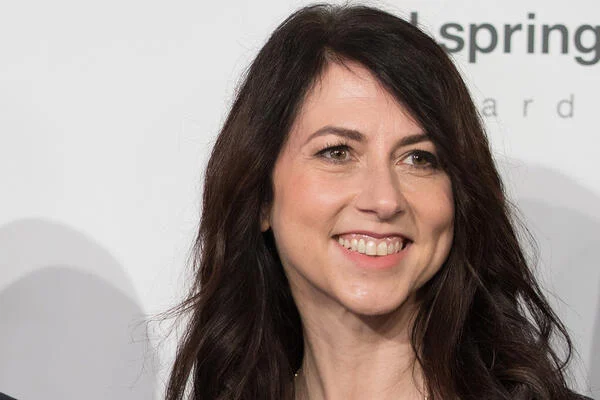
Philanthropist MacKenzie Scott gave more multimillion donations out to colleges.
picture alliance/Getty Images
Philanthropist MacKenzie Scott is at it again with another round of gifts.
Robeson Community College in North Carolina announced a $24 million gift from Scott on Thursday, the single largest contribution in the rural college’s history.
Robeson’s president, Melissa Singler, called the gift “a profound affirmation of our students, our faculty and staff, and the limitless potential of Robeson County.”
“Never before have we been given a gift of this magnitude that affords our team the time, space and freedom to think, dream and plan boldly,” Singler said in a news release.
Scott also gifted Carl Albert State College in Oklahoma $23 million. The college is working on a strategic plan for how to use the funds, focused on “sustainability, academic and career success, innovation, and community engagement,” according to an announcement last week. Connors State College, also in Oklahoma, celebrated a $15 million contribution from Scott, its largest gift ever.
Fond du Lac Tribal and Community College also announced a “multi-million dollar gift” last week, the largest unrestricted gift in its history, but didn’t specify the amount. The tribal college plans to use Scott’s funding to support scholarships and grants for native and non-native students.
Most of the colleges with the largest graduate programs in the country don’t have clear plans for how they’ll deal with new loan caps, set to kick in next July. And if they do, they aren’t taking publicly about it.
For years, students could borrow essentially unlimited funds to pay for graduate education, thanks to a program known as Grad PLUS that capped loans at the cost of attendance. Republicans in Congress and other critics have argued that colleges took advantage of this program and raised their prices, fueling the student debt crisis. Loans for grad students make up nearly half of the federal loan portfolio.
Along the way, colleges have begun to rely on graduate education to fund their university operations, higher ed experts say.
But now that two-decade-old system is ending. Congress eliminated Grad PLUS over the summer and will cap how much students can borrow for graduate education. Lawmakers also limited Parent PLUS loans, which were also previously uncapped and offered families a way to make up the gap and pay for college. Both changes came out of the One Big Beautiful Bill Act.
Beginning next summer, most graduate programs will have a federal loan cap of $100,000, with exceptions for a scaled-down number of professional programs with a limit set at $200,000. Those changes have created uncertainty for graduate schools and students who are navigating a changing landscape with fewer resources. Experts say graduate schools could face enrollment declines and some could shutter, thanks to the new limits.
Even before the loan caps, graduate education was facing a reckoning, particularly after the Trump administration clamped down on federal research funding. Colleges paused graduate admissions for doctoral programs, and sometimes rescinded offers. Meanwhile, colleges are starting to rethink their approaches to humanities doctoral programs, among other shifts in this space.
Planning for Change
To better understand how universities are planning ahead, Inside Higher Ed reached out to 20 of the largest graduate programs in the nation. Most did not respond. Those that did emphasized a mix of increased corporate engagement and expanded loan options, among other measures.
But for the most part, many appear to still be figuring it out.
“We’re spending a lot of time this year looking at diversifying the streams of funding for graduate students,” said Bonnie Ferri, vice provost for graduate and postdoctoral education at Georgia Institute of Technology.
Ferri noted that while Georgia Tech already has corporate partnerships that sponsor projects, which in turn help fund students, the university is doubling down on those efforts this year and “focusing on being more systematic” to spread those dollars across more graduate programs.
At a recent University of Florida Board of Trustees meeting, Vice President and Chief Enrollment Strategist, Mary Parker, said UF will “have to figure out how to fill the gap for our students” as loan options diminish. She noted UF is rolling out Scholarship Universe, a tool to help students find internal and external scholarships. Parker said UF is also “looking at the expansion of our institution loan program” and the university will also help students identify private loan options.
University of Illinois Urbana-Champaign spokesperson Patrick Wade told Inside Higher Ed by email that Illinois is still in the planning process and it is too early to share specific details. But Wade added that university officials “are directing units to begin developing contingency plans and to communicate proactively with current and prospective students, particularly in professionally oriented programs, where we expect recent changes to have the greatest impact.”
Several other institutions said it was too early to share details about how they’ll fill loan gaps.
Grad Enrollment Fallout
Some experts believe the changes to federal loans will leave students scrambling.
“I think when we get to July 1 next year, when these caps are scheduled to go into place, there will be a lot of students who are going to need to come up with another way of paying for graduate school than what’s been true in the past,” Jordan Matsudaira, director of the Postsecondary Education & Economics Research at American University, told Inside Higher Ed.
Research led by Matsudaira projects that programs such as dentistry, osteopathy and medicine will be particularly squeezed by the changes.
And given the many other pressures on university budgets, such as federal research funding challenges, federal efforts to limit international enrollment, and the looming demographic cliff, Matsudaira doesn’t expect universities to lower graduate tuition or significantly increase aid.
“I just think institution budgets are going to be under so much pressure from so many different things that it is just incredibly optimistic thinking, bordering on fantasy, to believe that they’re going to come up with substantial sources of funding to be able to either cut their graduate school prices or be able to fund their own loan program to enroll students,” he said.
(Some experts have suggested that states should get involved by providing low or no-interest loans as the Grad Plus loan option goes away.)
Matsudaira expects a “very rough transition period over this coming year” for students. He also expects graduate enrollment to decline.
“The question is how much does it reduce the number of students pursuing graduate school,” Matsudaira said.
Private loans are one option students are likely to turn to. He believes private loans will surge, with the market growing from around $3 billion a year currently to $10 billion in the near future.
But even private loans may prove difficult to obtain for some students.
“If I had to make predictions, I would guess that private student loan providers will make loans available to students attending programs with a good track record of earnings and loan repayment, but it is less certain whether students in programs that tend to lead to lower earnings and/or worse loan repayment outcomes will be able to access private student loans,” Lesley Turner, an associate professor at the University of Chicago Harris School of Public Policy, wrote by email.
She added private loans will have “fewer protections and less flexibility in repayment terms.”
Turner expects that the fallout of the changes to graduate school funding will not only decrease enrollment but may even prod some institutions to shutter such programs as headcount falls.
Credit rating agencies have also taken a dim view of what the changes will mean.
“Institutions with a greater proportion of graduate students will likely face more pronounced impacts from these policy changes, particularly if they serve disproportionately high levels of aid- and loan-dependent students,” Fitch Ratings concluded in its 2026 sector outlook, which it described as deteriorating. “While private loan providers can fill gaps created by federal limits, private offerings may nevertheless deter students, as private loans will likely be offered with less favorable rates and limited flexibility compared to what was available under federal programs.”