Higher Education institutions are increasingly moving towards an automated age of cloud, mobile, and big data analytics. There are many reasons institutions should implement the strategy of collecting payments through cloud and mobile-based fee management software. It would be desirable for any type of institution to automate billing/fee collection and drive greater revenue while saving greater hours of manual work.
A fee management software solves many problems for higher education and helps parents to keep track of fee payments in real-time. No more manual records or calculations on sheets of paper. Using the fee accounting and financial management software, students and parents can use the latest technology tools to connect various departments such as admission, finance, transport, hostel, library, and more. This will result in wider engagement and improved efficiency in educational institutions with the synchronization of data on fee collections. Student fee collection and unpaid fee details can be accessed on mobile devices including iPhone and Android from anywhere and anytime, beyond the campus.
Key Benefits of Using Fee Management Software
Effortless Payment Integration
Fee management software integrates effortlessly with most of the common payment gateway platforms, allowing students to select the payment options that best suit them, including digital wallets, bank transfers, and credit/debit cards, and pay in a click. To those in the finance team, the software ensures safe cash flow, timely payments, and streamlined financial operations, without spending too much time.
Financial Data at the Fingertips
Real-time financial insights can be obtained through the use of dynamic reporting technologies and real-time analytics of the finance module. Your team including key decision-makers and institutional heads can now make precise, data-driven decisions with this state-of-the-art capability, which guarantees precise financial forecasting and institutional strategic planning that helps you deal with tomorrow.
100% Security on Finances
Improve your institution’s financial security with cutting-edge encryption and AI-driven threat detection that most fee management software comes with. By using the most recent cybersecurity technologies integrated into the fee management systems, you can almost eliminate the risk of data breaches and fraud, providing rock-solid safety and total peace of mind for both the higher ed’s institution and its students.
Personalized Payment Plans
Transform student financial management with fully customizable payment alternatives that meet individual students’ needs. Whether it’s flexible installment plans, financial aid, or delayed payments, these specialized fee solutions increase student satisfaction and retention by giving the financial flexibility, empowerment, and assistance that every student deserves. The Mobile-first approach is another attractive feature of the fee management software that makes it a totally attractive package.
Laborsaving Fee Reconciliation
Turbocharge your financial process with intelligent automation that promptly and accurately aligns invoices and payments, slashing administrative burdens and decreasing human errors so that employees can concentrate on key responsibilities.
Mobile Access
In a world where mobile devices are becoming more and more common, redefine payment management with a strong mobile platform that enables administrators and students to accept payments whenever and wherever they choose.
Personalized Fee Structures
Your higher education can execute a bunch of unique financial models and individualized solutions by utilizing flexible fee structures that are made to meet the unique requirements of different programs, courses, and students.
Effortless Refund Automation
Instill confidence in students with a cutting-edge, automated refund system that ensures rapid and precise disbursements, in no time. This benefit indeed reflects your institution’s dedication to transparency and superior financial stewardship.
Seamless Regulatory Navigation
Using state-of-the-art compliance tools, institutions can easily adhere to local and international financial regulations, protecting your institution from fines and legal trouble while maintaining the greatest levels of honesty and integrity.
Strategic Financial Planning
Make the most of cutting-edge analytics and comprehensive reporting to find insightful financial data, improve the distribution of resources, and create plans for strategic expansion that will help your higher education institution grow and prosper.
Revolutionize Your Finances with Creatrix Fee Management Software Today
In summary, putting in place strong fee management software is not just a contemporary comfort but also a tactical requirement for higher education institutions. Operational efficiency, financial correctness, and student satisfaction can all be significantly increased by integrating automated procedures, real-time financial information, and customized payment plans too!
A recent research demonstrated the transformative power of such technology by showing that institutions that implemented advanced fee management systems witnessed a 75% reduction in administrative workload and a 30% rise in timely payments.
If you wish to be one such institution, Creatrix Campus can help. Find out how the Creatrix Campus Fee Management System can improve security, expedite your billing procedures, and give you the real-time data you require to spur productivity and growth. To find out more and arrange a demo right away, click this link!
Hello Deans, you are crucial in determining how education will develop in the future because you are the designers of your higher ed’s academic vision. Building successful learning environments where faculty and students flourish depends on your leadership. We’ll look at the role of dean in higher education and how deans can foster innovation in higher education institutions, and their creative approaches in this blog that can improve instruction and student participation, turning your classrooms into places where learning happens and ideas are generated.
We’ll also demonstrate how the Creatrix suite can help you at every stage and provide you with the resources you need to have a significant, long-lasting influence. Let’s get started and support your academic community in realizing its greatest potential!
The Role of Dean in Higher Education – Understanding the Dean’s Influence on a Campus
With your influence over all facets of your institution’s learning environment, deans are the beating heart of academic leadership. Your influence greatly influences student outcomes, research, and teaching in addition to administrative tasks. Here is the common role of dean in higher education that demonstrates your impact:
Decide on the priorities and institutional culture.
Take the lead in implementing cutting-edge instructional strategies and technological advancements.
Make certain that the courses adhere to the most recent developments in education.
Motivate and assist educators in investigating novel teaching strategies.
Promote initiatives that increase student involvement and academic performance to increase student engagement.
Faculty and students can flourish in a dynamic learning environment when your vision serves as the cornerstone for educational excellence.
You take the initiative to implement tactics that raise student retention and success and involvement while fostering engaging learning environments.
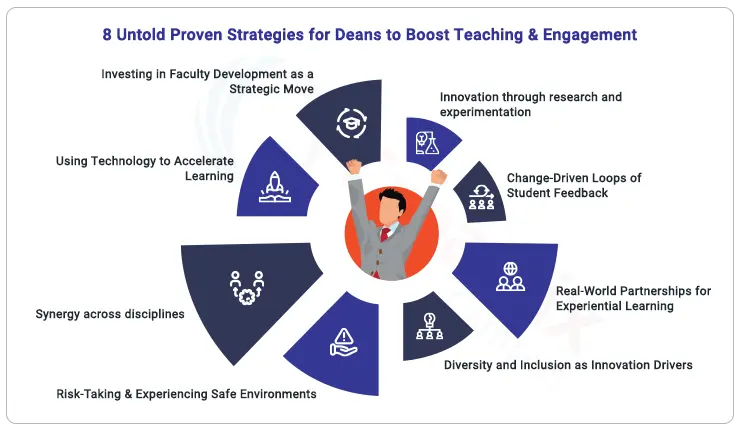
What’s Working Globally: 8 Proven Strategies for Deans to Elevate Teaching & Engagement
While researching how deans can foster innovation in higher education institutions we arrived at a stunning analysis; we discovered how effectively leading deans from all around the world are changing education by pushing the envelope and implementing cutting-edge tactics. And we have documented on what’s working with them and the reasons these strategies are spreading throughout institutions worldwide for you to help you better!
1. Synergy across disciplines
The most progressive deans of today are bringing students from various disciplines together to work together on real-world issues. Students studying business and engineering at the University of Michigan collaborated to develop ground-breaking solutions that enhanced critical thinking and teamwork, an approach that is quickly becoming recognized as a hallmark of academic innovation.
2. Using Technology to Accelerate Learning
Deans from the best universities across the globe are utilizing technology to transform education, from virtual reality to AI-driven tools. We figured out that Virtual reality (VR) and Gamified Learning were implemented at Stanford University recently! The main intention behind these initiatives was to enhance student engagement and understanding in subjects like anatomy and architecture! These technologies indeed allow students to study complex subjects in immersive and interactive ways.
3. Investing in Faculty Development as a Strategic Move
Giving professors the freedom to take the lead in innovation is crucial in the rapidly evolving field of education. At UC Berkeley, deans arranged workshops on active learning strategies, equipping teachers with the means to design more engaging, student-focused classrooms and demonstrating how supportive faculty members contribute to student retention and success.
4. Innovation through research and experimentation
It is also surprising to witness institutions such as Arizona State University provide faculty with resources to experiment with cutting-edge curricula. This is so welcoming indeed. By funding experiential learning projects, deans and decision-makers enable educators to test new models of teaching, and curriculum mapping, resulting in programs that increase student engagement and academic achievement.
5. Change-Driven Loops of Student Feedback
The next best strategy we figured out was that the academic institutions globally are utilizing student feedback to enhance their pedagogical approaches. They throng on 360-degree courses and faculty evaluation tools to listen out students’ opinions for improvement. It has been demonstrated that listening to students can significantly improve the learning experience. Georgia State University’s “Student Engagement Surveys” revealed insightful feedback that resulted in significant improvements in course delivery.
6. Real-World Partnerships for Experiential Learning
Another surprising discovery was this – Through partnerships with industry, top universities are witnessing a thirty percent increase in student engagement. More than 85% of participants at the University of South Florida reported feeling more prepared for the workforce as a result of the tech companies’ collaborative efforts with the university.
7. Diversity and Inclusion as Innovation Drivers.
We do not want to overlook this particular strategy! Institutions that prioritize diversity benefit from both innovation and engagement. At the University of Toronto, deans launched initiatives to bring diverse perspectives into the classroom, resulting in richer discussions, explorations, and new ideas, demonstrating that inclusive environments lead to more creative outcomes and better attainments!
8. Risk-Taking & Experiencing Safe Environments
The last thing we observed was promoting an environment where faculty and students feel comfortable taking chances to learn, adapt, grow, and shine. This strategy will for sure enable the upcoming generation of innovators to push boundaries and fail fearlessly, MIT has established “Innovation Labs,” which provide a creative environment where experimental projects flourish.
The Role of Creatrix Campus Suite in Supporting Deans
To all deans and academic leaders, managing a faculty is no small task, but it doesn’t have to be overwhelming. With Creatrix Campus, it’s easy to foster a culture of teamwork and innovation.
Encourage a Collaborative Culture: Picture professors working together on projects and easily exchanging ideas with one another. Creatrix makes that a reality.
Way to Miss the Admin Stress: Turn in the paperwork to Creatrix so you can focus on helping students succeed—that’s what really counts.
Easy Decisions: With Creatrix’s perceptive analytics, you can easily adjust your strategies to achieve better results by identifying exactly what’s working.
Create an Engaging Learning Experience: The tools aren’t just for management; they’re here to help improve student outcomes. By streamlining how faculty teach and interact, you’ll be building a more engaging and inspiring academic environment.
Creatrix isn’t just another platform—it’s your partner in transforming the way your institution runs, making your job smoother and your faculty more effective.
Case Study: University of Otago – Empowering Deans with Creatrix Campus
But don’t just take our word for it—let’s look at a peculiar student retention and success story from an institution that embraced the Creatrix Suite.
“Creatrix’s curriculum mind mapping based on learning outcomes, competency standards, and graduate attributes is excellent.” — Stephen Duffull, Dean School of Pharmacy, University of Otago
Client Overview
The University of Otago, one of New Zealand’s leading institutions and ranked in the top 1% globally, was looking to innovate its academic management systems to support its pharmacy school. Faced with the complexities of curriculum management, EPA tracking, and faculty workload, they needed a solution that could streamline their academic processes.
Key Challenges
Otago’s Pharmacy Department was juggling:
Complex curriculum mapping: Multiple layers such as LOs, SLOs, EPAs, competency frameworks, and professional standards were difficult to manage manually.
EPA tracking and rotational planning: Managing placements across five hubs required a detailed, integrated system.
Timetabling inefficiencies: Manual scheduling for courses, faculty, rooms, and teaching events slowed operations and led to conflicts.
Faculty workload management: Needed a more transparent and automated way to measure and balance faculty workload.
How Creatrix Empowered Deans
Creatrix helped Otago create a connected digital campus, where Deans like Stephen Duffull could:
Streamline curriculum mapping: A visual mind map that ties in learning outcomes, assessments, and professional competencies, making it easier for Deans to track academic progress.
Automate EPA planning: A dynamic rotational planner for EPA tracking, reducing manual work and ensuring smooth coordination across hubs.
Master Timetable Scheduler: Automated scheduling with alerts for conflicts, integrating seamlessly with Google Calendar.
Faculty Workload Management: Real-time tracking of faculty workloads, helping Deans better allocate teaching, research, and admin duties, with instant visual analysis.
Business Impact
With Creatrix, Otago saw immediate gains:
2X faster implementation times
Seamless onboarding and reduced admin overhead
Greater faculty productivity and balanced workloads
Efficient curriculum and EPA management—all under one system
Deans at Otago now had the tools to lead academic innovation, boost engagement, and drive institutional excellence.
Conclusion: Empowering Deans to Lead Innovation
We know that deans are crucial in shaping the future of higher education. Your leadership drives innovation and boosts student engagement. By exploring the Creatrix suite, you’ll discover tools that can simplify operations and enhance your institution’s academic culture. Take the next step—visit the Creatrix Campus suite of solutions and see how deans can foster innovation in higher education institutions. Let’s make a difference together!
Date: February 12-14, 2025 Location: The Ritz Carlton, New Orleans
EducationDynamics’ InsightsEDU is one of the only higher education marketing and enrollment management conferences focused on the Modern Learner. Every year, InsightsEDU brings together thought leaders, decision-makers, and professionals from colleges, universities, and education-related organizations nationwide. The mission of InsightsEDU is to create a platform for the exchange of ideas, strategies, and innovations that propel higher education forward.
The Council of Independent Colleges’ 2025 Presidents Institute serves as a pivotal gathering amid the shifting higher education environment, offering a space for leaders to address key challenges. The 2025 gathering will provide over 300 college and university presidents, along with nearly 750 participants, the opportunity to explore how strategic community engagement can transform challenges into opportunities. With a focus on critical issues like financial sustainability, legal challenges, DEI and belonging, and federal policy, this event offers timely insights for navigating higher education’s political landscape.
Immerse yourself in four days of unparalleled learning and collaboration at the SXSW EDU Conference & Festival. Designed for education professionals, industry leaders, and policymakers, this pivotal event ignites creativity and fosters innovation in the field of education.
UPCEA’s Annual Conference is one of the most significant assemblies of thought leaders and practitioners today in the field of professional, continuing, and online education. Deans and other senior university leaders, key staff, and teams responsible for the management, administration, and growth of professional, continuing, and online education programs attend every year to gain insights on the most pressing topics in the higher education landscape – including federal policy, finance and operations, marketing and enrollment management, instructional design, noncredit programs, alternative credentialing, and more.
The American Association of Community Colleges (AACC) Annual Conference hosts a premier professional development event for leaders and stakeholders in the community college sector. It features impactful keynote presentations, focused breakout sessions, technology showcases, and peer-to-peer exchanges, all aimed at addressing the most pressing challenges and opportunities in two-year colleges. With a focus on innovation, problem-solving, and extensive networking opportunities, the AACC Annual Conference serves as an essential platform for shaping the future of community college education.
Date: March 30 – April 2, 2025 Location: Seattle, WA
Join a global network of higher education professionals at the AACRAO Annual Meeting, where leaders from various disciplines come together to explore, engage, and advance the field. This event provides an opportunity to discuss the ever-changing landscape of higher education, share valuable insights, and collaborate on practical solutions to real-world challenges. Each year, the AACRAO Annual Meeting tackles emerging issues and trends, offering attendees the chance to deepen their knowledge, expand their network, and contribute to the future of higher education.
The Online Learning Consortium (OLC) is a group of higher education leaders and innovators who work to advance quality digital teaching and learning experiences. OLC Innovate 2025 offers educators of all experience levels to explore, share, and advance digital and blended learning. Themed “The Rhythm of Innovation: Hitting the High Notes in Digital Education,” the conference will reimagine how today’s disruptions shape tomorrow’s classrooms.
HLC’s Annual Conference is geared towards administrators in the higher education community, including administrative professionals, faculty members, CEOs, presidents, and chancellors. Sessions, speakers, and workshops provide opportunities for institutions that seek accreditation and offer information on the latest developments, issues, and best practices in higher education. The 2025 conference will explore how colleges and universities use higher education to address evolving student and societal needs, impart workforce skills, fuel innovation, and tackle today’s most pressing challenges.
The ASU GSV Summit brings together leading thinkers in digital learning and workforce skills to create a future where everyone has equal access to opportunity. It is a community of educators, entrepreneurs, investors, and innovators in the educational technology and higher education industry who are motivated in reshaping society and education through innovation.
Date: April 23-26, 2025 Location: San Francisco, CA
NAGAP’s annual summit unites professionals engaged in every aspect of the graduate enrollment lifecycle—from admissions and recruitment to financial aid, academic affairs, and beyond. As the only professional organization dedicated exclusively to graduate enrollment management, NAGAP provides a unique platform for addressing the specific concerns and challenges faced by those in this field.
Digital University Week, hosted by Inside Higher Ed and Times Higher Education, brings together leaders in higher education’s digital transformation to explore the opportunities and challenges of a digital-first future. The event focuses on overcoming institutional silos, fostering industry collaboration, and maximizing resources while emphasizing a human-centered approach for equitable digital learning. The series offers an intimate setting for impactful conversations, sparking new ideas and building connections to reshape the future of education.
The 2025 North American Career Education Convention is regarded as the largest gathering of private career education professionals nationwide. Featuring renowned keynote speakers, expert-led sessions, and ample opportunities to connect with sector leaders, this conference attracts a diverse audience each year, fostering collaboration and innovation in postsecondary career education.
The Slate Summit, an exclusive event led by the Slate community, provides a deep dive into specific Slate topics through expert-led sessions and offers networking opportunities with like-minded peers in affinity group breakouts. This year’s Summit, tailored for admissions, student success, and advancement professionals, promises to be the most engaging and informative yet, featuring industry experts, interactive workshops, and unparalleled networking opportunities.
The eduWeb Summit is a community of higher education professionals and industry partners who are passionate about advancing their marketing, communications, and digital work. This conference gathers higher education professionals and industry partners from 16 countries and all 50 states. Attendees benefit from enhanced networking opportunities, engaging with peers and potential partners while gaining valuable insights into web and digital experiences, AI and analytics, leadership and innovation, and enrollment marketing.
UPCEA’s DT&L and SOLA+R event combines 2 conferences into 1 seamless experience. It captures all the elements of digital transformation and leadership in a holistic way—from teaching and learning to leadership and administration—preserving the salient issues for two distinct professional communities, while catalyzing dialogue across all facets of the larger field. This event is ideal for key campus leaders – presidents, provost, deans, instructional designers, faculty, and other focused on digital leadership.
UPCEA DT&L and SOLA+R 2025 Conference details have not been released at this time, but you can view last year’s event page for more information.
UNITE, powered by the United Negro College Fund (UNCF), is the nation’s leading annual gathering for Historically Black Colleges and Universities (HBCUs) and Predominately Black Institutions (PBIs). This influential event brings together thought leaders, change agents, and community partners to accelerate institutional transformation, address shared challenges, and celebrate achievements. Through networking, discussions, and celebration, UNITE fosters innovation within higher education and propels institutions towards a brighter future for all students.
UNCF Unite 2025 Conference details have not been released at this time, but you can view last year’s event page for more information.
HashtagHigherEd 2025
Date: TBD Location: TBD
HashtagHigherEd is a dedicated forum of professionals in higher education marketing and communications to converge, fostering the exchange of best practices amidst the complexities of a competitive and ever-evolving landscape. This dedicated forum provides a space for these professionals to collaboratively discuss effective communication, marketing, and branding strategies tailored to the unique challenges of the higher education sector.
HashtagHigherEd US 2025 Conference details have not been released at this time, but you can view last year’s event page for more information.
Date: September 28-October 1, 2025 Location: Online and Grand Rapids, Michigan
Connect with colleagues and explore the impact of digital media on higher education at the HighEdWeb Annual Conference 2025. Designed for professionals across all roles—programmers, marketers, social media experts, managers, designers, and writers—this event offers diverse track sessions, an inspiring keynote, and group discussions. Engage with a vibrant community, gain valuable insights, and address unique digital challenges faced by colleges and universities, all while expanding your network and enhancing your professional development.
Date: September 18-20, 2025 Location: Columbus, OH
The NACAC Conference 2025 will gather over 6,000 dedicated counselors in Los Angeles to exchange best practices, gain inspiration, and explore cutting-edge research in admission counseling. This event provides higher education counselors with the chance to discover innovative strategies, engage with thought leaders and peers, stay updated with the latest research, and connect with a diverse community of professionals.
The UPCEA Convergence conference explores contemporary trends and emerging models within the realm of alternative credentials. This event, a collaborative effort by UPCEA and AACRAO, serves as a platform for key campus figures involved in credential innovation. This includes deans of professional education, chief online learning officers, registrars, and their respective teams. Together, they aim to delineate and refine institutional strategies concerning alternative credentials.
UPCEA Convergence 2025 conference details have not been released at this time, but you can view the 2024 event page for more information.
P3 EDU – Innovation and Public-Private Partnership in Higher Education
Date: TBD Location: TBD
P3 EDU is an invitation-only annual conference that brings together university administrators, government officials, and representatives from foundations and corporations to discuss public-private partnerships in higher education. Attendees will delve into partnership opportunities, share best practices, and address the challenges of implementing successful public-private partnerships in higher education.
P3 EDU 2025 conference details have not been released at this time, but you can view the 2024 event page for more information.
Educause Annual Conference 2025
Date: October 27-29, 2025 Location: Nashville, TN and Online
The Educause Annual Conference is the premier event for higher education technology professionals, connecting the brightest minds in the field. This global gathering brings together individuals from diverse backgrounds within the higher education industry – practitioners, researchers, and solution providers – to share ideas, develop their expertise, and discover innovative solutions to contemporary challenges.
The Educause Annual 2025 Conference details have not been released at this time, but you can view the 2024 event page for more information.
2025 AMA Symposium for the Marketing of Higher Education
Date: TBD Location: TBD
For over 30 years, the AMA Symposium for the Marketing of Higher Education has offered a dynamic glimpse into the ever-evolving landscape of higher education. With a program featuring peer-reviewed content, attendees gain the strategic insights needed to elevate their marketing strategies, enhance their institutional reputation, and ensure financial strength. Beyond the wealth of sessions, the Symposium serves as a vibrant community where knowledge seamlessly transitions into actionable initiatives, making it an invaluable resource for marketers looking to shape the future of higher education, foster growth, and ensure vitality.
The 2025 AMA Symposium Conference details have not been released at this time, but you can view the 2024 event page for more information.
OLC Accelerate 2025
Date: November 17-20, 2025 Location: Orlando, FL
The OLC Accelerate conference showcases groundbreaking research and effective practices in online, blended, and digital learning. It offers a diverse range of sessions and activities designed to support administrators, designers, and educators by addressing the unique challenges and goals of the entire community. This event is a comprehensive resource for staying at the forefront of innovative practices in digital education.
The OLC Accelerate 2025 Conference details have not been released at this time, but you can view last year’s event page for more information.
UPCEA MEMS 2025
Date: TBD Location: TBD
UPCEA MEMS is a must-attend conference for education professionals who want to stay on top of the trends in higher ed marketing. Presented from a variety of perspectives, sessions elevate the conversation about today’s higher education landscape. For over 30 years, MEMS has drawn professionals from institutions of all sizes to showcase thought leadership in higher education and explore trends in adult student recruitment and retention.
UPCEA MEMS 2025 Conference details have not been released at this time, but you can view the 2024 event page for more information.
NAICU’s Annual Meeting & Advocacy Day is the premier policy and advocacy event for private, nonprofit higher education leadership, including college and university presidents, government relations personnel, and executives from state and mission-specific higher education associations. The meeting annually offers briefings on pressing policy issues affecting higher education and focuses advocacy efforts on these critical concerns.
WCET 37th Annual Meeting
Date: October 21-23, 2025 Location: Denver, CO
The WCET Annual Meeting brings together higher education professionals and practitioners to foster critical discussions, share the latest advancements in digital learning, and navigate the evolving regulatory landscape. With a registration limit of 500, the intimate and collegial setting of the WCET Annual Meeting offers unique opportunities for meaningful dialogue and insights, making it a valuable event for leaders and practitioners in digital learning.
WCET 2025 Conference details have not been released at this time, but you can view last year’s event page for more information.
2025 Engage Summit
Date: June 24-26, 2025 Location: Charlotte, NC
The Engage Summit focuses on practical applications of AI, equipping attendees to lead their institutions through AI transformation. Participants will gain insights into the modern student’s mindset—understanding their motivations, interactions, and expectations in today’s digital landscape. This event serves as a great opportunity for educational leaders to prepare their campuses for the evolving future of learning.
The 2025 Engage Summit Conference details have not been released at this time, but you can view last year’s event page for more information.
Conferences offer invaluable opportunities for higher education professionals to stay current with industry trends, discover innovative strategies, and connect with like-minded individuals. Whether you’re seeking to advance your career, enhance your skills, or simply stay informed, attending a relevant conference can be a hugely rewarding experience.
If you see any of our experts at EducationDynamics (EDDY) at one of these events, come and say hello! We’re excited about making new connections with people from all over the world who share a passion for learning more about what it means to understand, find, enroll, and retain adult, online, or non-traditional students.
We look forward to seeing you there; drop us a line if you’re attending any of the conferences above.
The frequently used term “adult students” no longer captures the dynamic, diverse, and evolving population pursuing a degree today. Data from EducationDynamics’ Online College Students and Marketing & Enrollment Management Benchmarks reports show that the average age of learners is decreasing, and that their needs are growing more complex. Whether they are first-generation college students, single parents or veterans seeking to advance their career, these individuals represent what we now define as the Modern Learner. These learners are shaping the future of higher education by driving a demand for flexible, accessible, and affordable learning opportunities that meet their diverse needs. In a recent episode of the EdUp Experience Podcast, Dr. Joe Sallustio, the host of The EdUp Experience, Dr. Melik Khoury, President and Chief Executive Officer at Unity Environmental University and Greg Clayton, President of Enrollment Management Services of EducationDynamics, discuss the trends reshaping higher education and offer insights into how institutions can better serve Modern Learners amidst changing times.
Beyond Traditional Categories
The Modern Learner is not defined by age – it’s a mindset. Gone are the days when “traditional student” and “adult learner” were distinct categories. Today, a diverse range of individuals, from recent high school graduates to seasoned professionals, are seeking education on their own terms. This shift is driven by a fundamental change in how students approach education, influenced by technology, individual aspirations, and an evolving job market.
Modern Learners often juggle busy lives, whether they are working professionals, parents, or recent graduates. Therefore, an education that seamlessly integrates with their personal and career goals has become crucial. They seek learning experiences that fit their unique circumstances, allowing them to pursue their passions and advance their careers.
Regardless of what their circumstances are, Modern Learners are not limited by geographic location or traditional educational barriers. They expect affordable and accessible learning opportunities.
As a result, Modern Learners have redefined the typical adult student profile by prioritizing flexible, career-focused programs that fit into their busy schedules. Traditional models and assumptions about age are no longer relevant, and institutions must adapt to these needs, focusing on providing accessible education that aligns with the personal and professional goals of Modern Learners.
Building a Student-Centric Model
Responding to the needs of the Modern Learner requires higher education institutions to move away from an institution-centric model and embrace a student-centric one. This involves a deep commitment to understanding and addressing the diverse needs of Modern Learners, rather than adhering to outdated practices and structures. Embracing various learning modalities including online, hybrid, and residential programs, while acknowledging the value of each, is paramount. Additionally, by recognizing that online learning is a valuable and equal learning pathway, institutions can provide more flexible, accessible, and relevant educational opportunities that align with the goals and lifestyles of today’s Modern Learners.
We really started to look at each and every one of our subsidiaries for, it didn’t matter how old you were, it was more how did you want to learn?
To fully address these evolving needs, institutions must create personalized learning experiences and adapt program structures to accommodate varying schedules and preferences, which will more effectively engage Modern Learners.
Navigating the Challenges of Change
However, adapting to the needs of the Modern Learner is not without its challenges. Many institutions encounter resistance to change, ingrained practices, and varying levels of awareness about the evolving student landscape.
This resistance often stems from a reliance on traditional models, driven by a fear of disrupting established practices and structures. As a result, institutions may hesitate to adopt online learning, resist new marketing strategies, or cling to familiar, albeit outdated, approaches.
It’s amazing how many universities, if you ask them about the cost of acquisition, they would have no idea…Many institutions don’t even understand the concept of you can’t have a regional recruitment and marketing strategy and hope for a national draw.
Traditional marketing strategies are becoming less effective in reaching the Modern Learner, as this population responds better to online channels, targeted digital marketing campaigns, and social media engagement. Adapting marketing strategies to better connect with this demographic is crucial. Additionally, demonstrating a clear return on investment is equally important, as Modern Learners make quick decisions—often within one or two weeks—based on the immediate value and benefits of their program choices.
The thinking about marketing and how to market to students has to evolve…The amount of time they want to wait is one to two weeks before, so maybe a month. And that’s it.
Successfully meeting the needs of the Modern Learner is rooted in building a culture of innovation and experimentation. This involves a willingness to embrace new approaches, learn from mistakes, and continually refine programs and processes to better serve student needs.
A key aspect of serving the Modern Learner is pivoting to shorter, more skill-focused program offerings. By aligning curricula with industry demands and ensuring flexibility, institutions can better support students in acquiring relevant skills and advancing their careers.
We actually don’t care anymore about majors…my faculty doesn’t identify their value based on our majors, but by the disciplines.
Beyond adapting program design, Modern Learners also require a positive and supportive learning experience. Investing in technology, enhancing student support services, and cultivating a campus culture that fosters engagement and success are essential components of this experience.
Additionally, prioritizing data-driven decision-making is vital to guiding program development and implementation. By using data to assess program effectiveness, track student success, and inform resource allocation and program design, institutions can ensure their strategies are grounded in evidence rather than relying on traditional methods.
Are You Ready to Attract the Modern Learner?
The higher education landscape is changing, and adapting to the needs of the Modern Learner is essential for success. Embracing innovation, moving away from traditional practices, and prioritizing the student experience are critical components for success in today’s learning environment.
Don’t ask me to be innovative and be bound to tradition, be bound to what has come before me, be bound to pedagogy that is tried and true
Flexibility, adaptability, and continuous improvement serve as tenets for institutions successful in meeting the Modern Learner’s needs. Institutions that excel in these areas are more likely to distinguish themselves from the competition. By shifting their governance structures, decision-making processes, and faculty training to encourage innovation and flexibility, they can better meet the evolving expectations of Modern Learners and remain competitive in a rapidly changing higher education environment.
The future of higher education hinges on the ability to adapt. By prioritizing innovation, the student experience, and fostering a culture of continuous improvement, institutions can not only survive, but thrive in this new era of learning. To enter this new era of higher education and elevate your institution’s programs to new heights, reach out to EducationDynamics. Together, we can drive meaningful change and achieve your goals.
Elevate your marketing team with strategic expertise
Does your higher education marketing team have what it takes to capture the attention of right-fit students in a competitive landscape? Marketing budgets can be tight, but without the right mix of talent, increasing your ability to reach and convert key audiences, clearly connect upstream efforts to enrollment outcomes, and producing actionable marketing intelligence will be a constant challenge.
Dive into our latest infographic to uncover the key roles essential for enhancing the student journey and driving a robust return on investment.
If you hired them all, you could spend $1M+ in annual salaries alone. But you don’t need all the roles all the time. Hire the ones you do and outsource the part-time or specialized roles where you can.
Partner with Collegis to expand your marketing approach
Ready to assemble a marketing super team that engages students with personalized, AI-driven experiences at scale? Join forces with Collegis Education to access tailored marketing services that maximize the data, tech, and talent you already have.
On August 6, National Labor Relations Board (NLRB) General Counsel Jennifer Abruzzo issued a memo, “Clarifying Universities’ and Colleges’ Disclosure Obligations under the National Labor Relations Act and the Family Educational Rights and Privacy Act.” The memo was issued to all NLRB regional offices and is meant to provide guidance to institutions of higher education clarifying their obligations “in cases involving the duty to furnish information where both statutes may be implicated.”
The memorandum outlines how institutions can comply with requests by unions representing their student workers for information that may be covered under FERPA, the federal law that protects students’ privacy in relation to their education records and applies to institutions that receive federal education funds. Under the NLRA, employers are required to provide certain information to unions that may be relevant to their representational and collective bargaining obligations, but this requirement can come into conflict with institutions’ obligations under FERPA.
In situations where the employer believes certain records requested by the union may be confidential and covered under FERPA, the memo outlines the steps institutions must take to comply with their disclosure obligations.
“The institution must determine whether the request seeks education records or personally identifiable information contained therein.”
Institutions must be prepared to “explain why and substantiate with documentary evidence, if available, that the student-employee is employed as a result of their status as a student to the union,” as opposed to a traditional employee whose records are not protected by FERPA. The memo specifies that, if the union’s request includes some documents not covered by FERPA, the employer must provide those documents to the union “without delay, even if FERPA applies to other parts of the request.”
“If a request seeks information protected by FERPA, the institution must offer a reasonable accommodation in a timely manner and bargain in good faith with the union toward a resolution of the matter.”
The memo puts the burden to offer an alternative on the employer. The employer cannot “simply refuse to furnish the requested information,” but it must offer a “reasonable accommodation and bargain in good faith toward an agreement that addresses both parties’ interests.”
“If the parties reach an agreement over an accommodation, the institution must abide by that agreement and furnish the records.”
If an agreement is not reached, the memo specifies that the union can file an unfair labor practice charge against the institution. The memo then gives the NLRB the authority to find an appropriate accommodation “in light of the parties’ bargaining proposals.”
Abruzzo also provided a “FERPA consent template” that she advocates institutions provide to student-employees during the onboarding process. The template, if signed by the student employee, “would permit an institution covered by FERPA to disclose to a union, consistent with FERPA, any employment-related records of a student that are relevant and reasonably necessary for each stage of the representation process.” Abruzzo argues the template would help “reduce delay and obviate the need to seek students’ consent at the time a union seeks to represent employees or submits an information request to carry out its representative functions.”
CUPA-HR will keep members apprised of updates following this guidance and other updates from the NLRB.
I am thrilled to share my heartfelt gratitude to the University of Liverpool for offering the Diploma for Go Higher Programme – a remarkable initiative designed to open doors and beacon of hope for those who, due to various reasons, have been unable to pursue their educational goals and have had to suppress their ambitions.
My name is Gary Singh, and I want to share my journey with you, a journey that has been filled with challenges, resilience, and hope. In 2004, my plans to become a solicitor were shattered by the sudden passing of my father. I had to start working, and unfortunately, I faced exploitation by corrupt politicians in India, making it nearly impossible to chase my dreams. Every attempt to resume my education was met with rejection due to the gap in my studies. After seeking asylum in the UK, I reached out to the University of Liverpool, hoping to enroll in a degree program because of the plenty of time available to me. Unfortunately, again, I was told that the gap in my education prevented direct entry into a degree course. However, Go Higher Team introduced me to the Go Higher Diploma program, a pathway that would enable me to pursue a degree. This news reignited my optimism and belief that I could achieve my dream of becoming a solicitor to serve society, just as I had hoped for as a teenager.
I was fortunate enough to receive scholarships from the University of Liverpool, which were specifically designed for destitute students like myself, as I am not permitted to work as an asylum seeker. Even as a mature student, I found the friendly, multicultural atmosphere at the University of Liverpool very welcoming. My classmates, both younger and older, were incredibly supportive. Despite English being my second language and the initial challenge of understanding new accents, I can comprehend about 80% of my tutor’s lectures and make up the rest by utilizing lecture slides and class recordings available on the Canvas site. I started my first assignment with marks well above passing, and with unimaginable support from my tutors, I received an A grade on my last assignment. The dedication of my mentors—James Bainbridge, David Ellis, Barbara Milne, Julia, Sharon Connor, Darryn Nyatanga, Claire Jones, Stephen Kearns, Debbie Hart, and Matthew—along with additional English classes by Will, has been invaluable.
I have encountered challenges on the path to success, but determination and hard work have allowed me to conquer every obstacle. On the day of the Go Higher celebration, something incredible occurred. I was honored with a personal achievement award, which came as a pleasant surprise. Furthermore, I was accepted into the Law with Business program at the University of Liverpool. This achievement has filled me with excitement and hope as I strive to complete my degree and make a positive impact on society. My aspiration is to become so capable and competent that I can assist those in need.
Go Higher education means more to me than just personal advancement; it’s a way to think critically for the betterment of society and individuals. Through my Go higher studies, I learned to see society from a different perspective and took the first step toward progress in civilized society. My message to everyone is this: Don’t let your ambitions die in your heart. Give it a try! If your intentions are good, you will find many opportunities, mentors, and friends who are ready to help you. Believe in yourself and take the first step. The journey may be challenging, but the rewards are immeasurable.
The road home may have been a bit bumpy (thanks, CrowdStrike), but the two days CUPA-HR leaders spent in Kansas City at the annual Association Leadership Program (ALP) were packed with opportunities to smooth the way for higher ed HR in the year ahead.
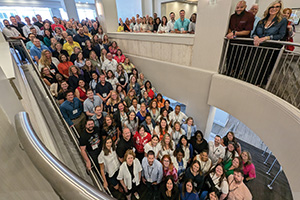
On July 18-19, leaders from CUPA-HR’s national, region and chapter boards; cohorts from the Ignite and Emerging CUPA-HR Leaders programs; team members from the CUPA-HR national office; and key corporate partners gathered to discuss higher ed HR challenges, share successes, learn from one another, and build relationships. Here are some of the takeaways from this year’s event:
To be relevant and effective, higher education HR leaders must partner with their presidents and other campus leaders to connect their work to the institution’s mission and priorities and to understand current and emerging challenges for higher education.
The key to creating and sustaining inclusive campus communities is to focus on processes, policies, and learning opportunities that mitigate bias and promote belonging and civil discourse for all. CUPA-HR resources are available to support this work!
Gender gaps in leadership positionspersist. To expand the pipeline for leadership positions to include more women, start by reviewing promotion processes and criteria to mitigate bias and by training decision makers to recognize bias.
CUPA-HR higher ed workforce data is second to none, and the Research Center is an excellent source of high-level data to support workforce planning.
To promote civility and build authentic relationships in the workplace, speaker Alonzo Kelly emphasized the importance of:
Entering conversations with humility
Keeping in mind that your information may not be wrong, but may be incomplete
Being direct and kind
“A mistake repeated is a decision.”
CUPA-HR leaderslead because they are drawn to service, they are lifelong learners, and they value the friendships they’ve formed and the support they receive from the CUPA-HR community.
You can take CUPA-HR with you wherever you go — especially if you have a Roamin’ Robyn to keep you company. Think “Flat Stanley,” but featuring CUPA-HR’s board chair, Robyn Salvo! (Thanks to Joanne Santarelli for the awesome photo!)
Interested in Taking Your Professional Development Further?
CUPA-HR’s volunteer leaders have committed to advancing the profession and the mission of CUPA-HR. They understand the complexities of higher ed HR, and they want to enhance the knowledge and skills they need to lead their institutions into the future.
Are you ready to take that next step in developing your leadership skills, shaping the profession, and gaining one-of-a-kind access to successful practices and HR professionals from across the country? Then CUPA-HR leadership — in a chapter, at the region level, or even on the national board of directors — might be right for you. Learn more about how you can get involved.
New research from CUPA-HR on the state of the professional workforce in higher education shows that women and people of color are not only being paid less than White men in the same position, but also are less likely to hold higher-paying positions.
CUPA-HR’s research team analyzed data from the Professionals in Higher Education Survey, a comprehensive data source that collects salary and demographic data on more than 293,000 professionals in 409 positions from approximately 985 higher ed institutions, to evaluate representation and pay equity for women and professionals of color from 2016-17 to 2023-24.
The Findings
Women and people of color have lower representation among the highest-paying professional jobs. Women and people of color have lower representation among six-figure (i.e., paid more than $100,000) jobs in comparison to all other professional jobs. White men held 40% of six-figure jobs but held 28% of jobs paying less than $100,000.
Pay equity has improved slightly for women over the past eight years, but women of most races/ethnicities are still paid less than White men. Except for Asian women, women of all other examined races/ethnicities were paid less than White men in 2023-24.
Over the past eight years, the representation of people of color increased among higher ed professionals; the increase in the representation of women of color was more than double the increase in the representation of men of color. The representation of people of color increased from 22% of professionals in 2016-17 to 26% of professionals in 2023-24. During this time, women of color had more than two times the increase in their representation than did men of color (26% increase for women versus 10% increase for men).
Older women experience greater pay gaps than younger women. Women over age 42 had larger pay gaps relative to White men than did women age 42 or younger.
Metacognition plays a critical role in the education process. The concept itself amounts to ‘thinking about thinking.’ When students learn through metacognitive activities before, during and after class, their grades or scores often improve. The reason? Self-awareness, reflection and critical thinking lead to more engagement in the classroom. As such, metacognition is one of the most important strategies that instructors, particularly college-level instructors, can use to help their students succeed.
Metacognition, put plainly, is thinking about one’s thinking. It refers to the processes used to plan, monitor, analyze and assess one’s understanding and performance. In other words, metacognition in the classroom is the act of considering one’s own learning and thought processes to see if those processes produce results. When educators use metacognitive strategies, learning becomes more visible for students. In turn, students gain a better understanding of why a particular strategy will help them solve a problem. Here’s an example: after an assessment, ask your students to reflect on which of the study strategies they used were most effective to plan more strategically for their next assessment to ensure they meet their learning goals on their next assessment.
The word metacognition is an umbrella term: Thinking about and analyzing one’s own thinking and learning processes happen in a number of ways, each contributing to the development of metacognition skills. You could provide students with opportunities for reflection, encourage them to engage critically with course readings or provide real-world case studies to extend learning outside the classroom. Effective educators teach their students how to use a variety of methods to measure and critically reflect on their own learning experiences.
Examples of metacognitive strategies
Practicing metacognition can help students develop the essential skill of self-regulation. In turn, students will have a deeper sense of agency over their learning. Metacognitive strategies are usually categorized into four stages: You, Plan, Do and Review.
The ‘You’ stage is where students reflect on their prior knowledge on a topic
The ‘Plan’ stage is where students develop an action plan for completing a task and determine the metacognitive strategies they’ll use
The ‘Do’ stage is where students carry out a task and monitor their progress along the way
The ‘Review’ stage is where students reflect on their learning paths and identify areas to improve when taking on completing future activities
Dr. Linda Nilson, Director Emeritus of Teaching Effectiveness and Innovation at Clemson University and author of Creating Self-Regulated Learners, highly encourages faculty to tap into metacognitive strategies in the classroom. Dr. Nilson suggests asking students the following questions to help them reflect upon their own learning process. Here’s how she recommends breaking things down:
Planning before a task
Monitoring during a task
Evaluating after a task
What do I already know about the topic?
What material am I having trouble understanding?
Can I see and organize the relationship between topics?
What additional information, if any, will I need before completing this task?
How does what I am learning relate to what I already know?
What can I recall and what do I need to review?
What are my weaknesses and how can I make up for them?
How is my thinking on the topic changing?
What questions do I need to bring to the next class?
The value of metacognition in post-secondary courses
Through metacognitive learning strategies, students don’t just consider how they’re learning—they actually learn to identify their own strengths and weaknesses. This allows them to shore up areas where they feel confident and work more effectively on where they may need to focus future learning efforts.
It is critical for college students to understand how to use metacognitive activities to further their understanding of coursework. Students in higher ed are expected to be able to formulate independent thoughts about the subjects they’re studying. Metacognition is the first step to making this happen. Once students know what they’re thinking about a particular subject, they can make connections between their prior knowledge and the new course concepts they’re learning.
Metacognition also helps students develop a critical eye. According to Vanderbilt University, students who lack metacognition skills may lack the ability to discern the truth of what they see and hear every day—which is crucial as today’s students have more access to information than ever before. As such, the development of metacognitive skills also contributes to the growth of critical judgment skills. For this reason, it’s essential that college instructors give students plenty of opportunities to work on activities to develop metacognitive thinking. It isn’t an exaggeration to say that, for students, learning how to think is just as if not more important than the subjects they’re learning. That’s because developing metacognitive awareness can be useful for students across disciplines and beyond.
When students get a grasp on how to use metacognitive processes, they learn how they learn, and that’s a skill that transfers not only to other classes but to life outside of academia. Once students graduate, knowing how to learn is an immensely useful skill to have. This helps students become more effective learners and obtain new skills more easily, which can help meet academic, personal and professional goals.
Such practices can ultimately help students better master their lives. Students who know how to think about their own thoughts can answer questions like: What does my best life look like? Or what makes me feel good about myself?
8 metacognition strategies to use in college classes
The following eight examples offer instructors some teaching strategies and tools for employing metacognitive activities in the classroom. Each exercise is designed to allow students to think about their thinking in some way.
It’s important for instructors to remember that activities designed to promote metacognitive knowledge should be used regularly in the classroom. Sporadic use of these exercises doesn’t promote the intellectual growth that college-level students need in order to succeed in their advanced studies.
1. Let students know the purpose of in-class questions
Part of getting students on board with the process of metacognition is to help them identify when they are thinking about their thinking. If an instructor is using questions designed to elicit specific outcomes, then it’s helpful for that instructor to point out when those types of questions are being used as a form of explicit instruction. One obvious place to point out the possible use of such questions is in the syllabus.
In other words, if questions are designed to encourage students to think about their own thinking and to spark more engaged discussions, then that should be explicitly acknowledged early on.
2. Consider facilitating a diagnostic assessment
This recommendation goes hand-in-hand with point one above. At the outset of a college course, it is often a good idea for the instructor to test students on their knowledge of a given topic.
A set of ten to 20 questions about the subject gives the instructor an at-a-glance look at what students know at the beginning of the semester. The information from these quizzes can later be compared to student answers at the end of the semester. This helps instructors and students measure growth.
It’s important to let students know that this isn’t graded. Its purpose is to give them and the instructor some information about students’ knowledge of the subject at the beginning of the course. This allows everyone to consider their position and to plan their studies accordingly. For some instructors, this method works so well that they regularly incorporate a version of it into their class instruction, even weekly in some cases.
These exercises don’t have to be a point of stress for instructors, however. Platforms like Top Hat have exercises and learning tasks, such as quizzes and polls, to help students think about their thinking and keep them engaged in their classwork. These types of exercises also allow students to test their thinking and review their learning strategies in real-time because these platforms can grade student responses immediately.
3. Get into the habit of thinking out loud
Many instructors forget that there was a time when they sat in their students’ chairs—when they had their own way of processing the information they were learning.
One way teachers can invite their students into the metacognitive mindset is by thinking out loud in class. It may sound simplistic, but when people think out loud, they’re processing their thoughts about a topic. Instructors who do this in front of students demonstrate metacognition in action.
4. Assign a muddiest point essay
Writing is another example of metacognitive abilities in action. It encourages students to think about what they’re learning and how they’re thinking about it.
In this exercise, the instructor asks the students to either write a short essay or come up with a bulleted list of the main points of the lecture. The instructor can assign this at the end of a class period, giving students ten to 15 minutes to write.
The idea behind this exercise is to help teachers know where students are still having trouble with the material. Once this information is gleaned, these weak points can be addressed in the next class period.
Even if the instructor doesn’t have them write about the muddiest point, regular writing exercises teach students to think about what they’re thinking.
5. Leave plenty of time for class discussion
Speaking and listening activities also give students opportunities to think about their thought processes. As a bonus, students get to learn about the thought processes of others. Classroom discussions promote student engagement. This makes learning more interesting. More interesting learning is a recipe for learning that’s also understood and remembered.
Additionally, the instructor can go a step further by asking students to lead the instruction. For example, the professor can break the topic down into smaller subjects and assign each smaller topic to a student in the class. Students can then lead the discussion, either in front of the whole class or in smaller groups.
6. Post-class self-assessments
There is a reason why so many institutions do end-of-year evaluations. They give educators valuable feedback on student learning.
The same principle applies to asking students to create a self-assessment at the end of a course. They can talk about what they thought was true about the subject compared to what they know to be true now. If the instructor has assigned them journal work, then this assessment can go in the journal.
7. Reflective journaling
Reflective journaling exercises provide students with a forum to monitor their own thinking and their own learning processes. Following a challenging lecture, encourage students to consider which course concepts they are comfortable with and where they could benefit from further review. This can help them plan their future studies or prompt them to reach out to an instructor or TA for extra help.
Self-reflection exercises can also be used following a summative assessment, like a test or exam. Prompt students to respond to questions like: “What about my exam preparation worked well that I should remember to do next time?” or “What did not work so well that I should not do next time or that I should change?”
8. Model metacognitive thinking
To develop a classroom environment rooted in metacognition, consider modeling these practices for your students. By being transparent about how you navigate new developments in your field, tackle complex concepts and relate course content to the world outside your classroom, you show students that metacognition is a lifelong process.
Metacognition in the college classroom
Metacognitive activities seem relatively simple in practice. That’s why it may be easy for instructors and students to overlook how powerful they can be. Activities like quizzes, discussions and real-world case studies all help develop metacognitive skills. Essentially, students can use these activities to examine their thinking processes, including how they learn the materials in class.
However, despite being straightforward to use in your course, the application of metacognitive activities has far-reaching implications that go beyond the confines of successful learning in the classroom. They enable students to make the best use of their lives and to develop good judgment. Once students graduate from their studies, the activities that they have done to develop their metacognition skills are useful on the job and off.
Instructors who wish to use metacognitive activities in the classroom have a full toolbox of activities at their disposal. These activities can be as simple as doing frequent quizzes using active learning platforms like Top Hat.
These activities can also be more involved. They can include lively classroom discussions that are designed to get students engaged in their coursework or even regular journaling activities that students can do throughout the semester.
Finally, it is important for instructors to demonstrate to their students what this type of critical thinking and problem-solving looks like. When they do, they model the proper behavior for students. In this way, students learn to identify critical thinking in action and to mimic it until they fully grasp what it means to employ metacognition in the classroom and out.





 You can take CUPA-HR with you wherever you go — especially if you have a Roamin’ Robyn to keep you company. Think “