Tag: Higher

  • New HEPI Report: Rethinking student voice: how can higher education design effective student governance?

    New HEPI Report: Rethinking student voice: how can higher education design effective student governance?

    Author:
    Darcie Jones

    Published:

    The new report Rethinking Student Voice: How higher education must design effective student governance (HEPI Report 195), written by Darcie Jones exposes a key issue within university governance: the marginalisation of student governors.

    With financial pressures intensifying across the sector, thee stakes for effective governance have never been higher. Yet, despite being core stakeholders within universities, many students on governing boards feel sidelined by opaque processes and exclusive norms. The evidence within this report reveals a persistent gap between symbolic representation and meaningful participation.

    However it’s not all bad news, the report also highlights what is possible when the student voice is taken seriously. Using examples of effective practice it demonstrates the transformation value of empowered student governance.

    Drawing on extensive evidence and sector insights, the report sets out clear, actionable reforms – from accessible governance culture, to improved recruitment, induction and development. They provide a pathway from why student perspectives and voices can be embedded at the heart of decision-making within universities.

    You can read the press release and access the full report here.

    Source link

  • Higher Education Inquirer : Nonprofits and Nothingness: Follow the Money

    Higher Education Inquirer : Nonprofits and Nothingness: Follow the Money

    In the world of higher education and its orbiting industries—veteran-serving nonprofits, student-debt advocacy groups, educational charities, “policy” organizations, and campus-focused foundations—there is a great deal of motion but not always much movement. Press releases bloom, awards are distributed, partnerships are announced, and donors beam from stages and annual reports. Yet too often, the people who most need substantive support—servicemembers, student-loan borrowers, contingent faculty, low-income students, and other working-class communities—receive only fragments of what the glossy brochures promise.

    To understand why, you need only follow the money.

    The Neoliberal Philanthropy Trap

    Over the last four decades, American nonprofit culture has been reshaped and disciplined by neoliberal capital. So-called “impact philanthropy” and “venture philanthropy” introduced a corporate mindset: donors expect brand alignment, flattering metrics, and ideological safety. The result is a nonprofit sector that frequently mimics the institutions it claims to critique.

    Organizations become risk-averse. They avoid structural analysis. They sidestep direct confrontation with the powerful. They produce white papers instead of organizing. They praise the very elite funders who limit their scope.

    The most severe problems facing servicemembers and veterans—predatory for-profit schools, Pentagon-to-college corruption pipelines, GI Bill waste, chronic under-support—rarely get the oxygen they deserve. Advocacy groups that rely on neoliberal donors often focus on “financial literacy” workshops rather than taking on the multi-billion-dollar scams that actually trap servicemembers in debt.

    Student-debt nonprofits, similarly, lean into “awareness campaigns” and technocratic fixes that avoid challenging lenders, profiteering institutions, or federal policy failures. Many will deliver testimonials and infographics, but few will call out the philanthropic class whose own investments are entangled in servicing and securitizing student debt.

    And when it comes to helping working-class people more broadly—those navigating food insecurity, unstable housing, wage stagnation, and the crushing costs of education—the nonprofit sector too often does what neoliberal donors prefer: it performs compassion rather than redistributing power. It focuses on individual resilience rather than collective remedy.
    Appearance Over Impact

    This creates a strange ecosystem in which organizations are rewarded for looking productive rather than for being productive.

    • Events over empowerment.
    • Reports over results.
    • Branding over coalition-building.
    • Strategy sessions over structural change.

    The donor’s name gets its plaque, its press release, its tax receipt. The nonprofit gets to survive another cycle. But the problems—deep, persistent, systemic—remain unchallenged.

    Nonprofits that speak too directly about exploitation in higher education risk alienating the very people who write the checks. Some are nudged away from naming predatory universities. Others are steered toward “innovation,” “entrepreneurship,” or “student success” frameworks that sanitize the underlying issues. Many are encouraged to “partner” with the same institutions harming the people they were formed to help.

    In the end, we get a sector filled with earnest staff but hollowed-out missions—organizations doing just enough to appear active but rarely enough to threaten the arrangement that keeps donors comfortable and inequality intact.

     
    What Could Be—If Nonprofits Were Free

    Imagine a nonprofit sector liberated from neoliberal constraints:
    Organizations could openly challenge predatory colleges instead of courting them as sponsors.
    Veteran-serving groups could expose fraud rather than “collaborate” with federal contractors.
    Debt-advocacy groups could organize mass borrower actions rather than hold polite policy forums.
    Working-class students could find allies who fight for public investment, not piecemeal philanthropy.

    We could have watchdogs instead of window dressing.
    We could have mobilization instead of marketing.
    We could have justice instead of jargon.

    But as long as donor-driven nonprofits prioritize appearance over impact, we’re left with what might be called “nonprofits and nothingness”: organizations whose glossy public-facing work obscures the emptiness underneath.

     
    The Way Forward: Independent, Ground-Up Power

    Real change in higher education—on affordability, accountability, labor rights, and fairness—will not come from donor-managed nonprofits. It will come from independent journalism, grassroots organizing, debt-resistance movements, student-worker coalitions, and communities willing to challenge elite decision-makers directly.

    Those efforts don’t fit neatly into annual reports. They don’t flatter philanthropists. They don’t offer easy wins. But they build the kind of power that higher education, and the country, desperately needs.

    Until more nonprofits break free from the neoliberal donor leash, we should continue to follow the money—and then look beyond it, to the people whose work actually changes lives.

    Sources
    — Eikenberry, Angela. The Nonprofit Sector in an Age of Marketization.
    — Giridharadas, Anand. Winners Take All.
    — Reich, Rob. Just Giving: Why Philanthropy Is Failing Democracy.

    Source link

  • College Students Stress About Cost of Living Postgraduation

    College Students Stress About Cost of Living Postgraduation

    Graduation typically brings feelings of jubilation, but with the high cost of living and a competitive job market facing college graduates, students report feeling more anxious about their future prospects.

    A recent Student Voice survey by Inside Higher Ed and Generation Lab found that nearly one in five college students say their top stressor is affording life after graduation. A similar share worry that they don’t have enough internship or work experience to be successful. 

    The survey, fielded in August, includes responses from over 5,000 college students, including 1,000 two-year and nearly 2,000 first-generation college students. 

    “Stability is really important to this generation of job-seekers,” said Shawn VanDerziel, chief executive officer at the National Association of Colleges and Employers, citing the organization’s own student surveys. “For the last several years, students regularly report to us that, in their first job, the most important thing is stability.”

    That means having a reasonable living standard as well as an employer who provides sufficient benefits, work-life balance and assurances against layoffs, VanDerziel said.

    Christine Cruzvergara, chief education officer of the job board Handshake, said the trend doesn’t surprise her because it mirrors similar data her organization collected earlier this year, which found that AI, changes to federal policy and a competitive job market are among the factors impeding students’ confidence after graduation.

    “The cost-of-living piece is very real,” Cruzvergara said. “That is, anecdotally, something that we do hear from students, even in the four-year space: ‘Everything is so expensive; I don’t know how I’m going to be able to live.’”

    Nationally, the American public is feeling strained financially. A recent McKinsey survey found that 45 percent of consumers said “rising prices or inflation” is their top concern; an additional 24 percent pointed to their “ability to make ends meet,” and 19 percent cited job security and unemployment.

    “I know no one is going to hire me in an economy like this,” one student at New Mexico State University–Dona Ana wrote in the “other” response option on the Student Voice survey.

    The cost-of-living squeeze has pushed more graduates to consider housing and grocery prices when selecting a city to live in.

    “In the past, you may have found other things that have risen to the top, like vibrant nightlife, environmental issues, recreation. All those things are still on the list, but cost of living is No. 1 in the minds of graduates today,” VanDerziel said.

    Handshake has seen more applicants looking toward smaller markets, or “B-list cities,” for their first destination after college, “because you might be able to get a good enough job that you can actually have the quality of life that you’re looking for at the same time,” Cruzvergara said.

    Internships needed: Students’ perception that they lack skills and experience points to a growing need for higher education leaders to provide work-based learning to prepare students for the workforce. Some institutions now guarantee experiential learning or internships as part of their strategic plans, Cruzvergara said.

    “I’m pleased to hear that students are concerned about internship opportunities, because that tells me that they are in tune with what’s happening in the world and the fact that employers see internship experience as being the best of everything,” VanDerziel said.

    Four-year students are more likely to have enrolled in college directly after graduating from high school, which could explain why this group of students is more likely to fret about their lack of work experience, Cruzvergara said.

    “If they didn’t do an internship, or they only did a part-time job in the summer, they might feel as if they’re at a disadvantage because they haven’t been in a more traditional white-collar work environment,” Cruzvergara said. 

    Older students (25 and up) or those who have worked full-time were less likely to cite anxieties over a lack of work or internship experience, despite being statistically less likely to complete an internship while in college. Handshake data from earlier this year found that about one in eight students have not participated in an internship and do not expect to before finishing their degree, in large part due to time constraints caused by other work or homework, or because they weren’t selected for an internship role.

    While some employers value all work equally, others believe it’s important for students to have work experiences specific to their intended professions, VanDerziel said.

    A soft landing: College and university career centers can help address some of students’ anxieties about graduation by connecting them to employers the traditional way at career fairs, Cruzvergara said.

    “In the face of emerging AI in more industries, roles and sectors, I actually find that what’s become really quite popular again for students in order to get a job or an internship is good old-fashioned networking,” Cruzvergara said.

    Attendance at networking and employer-led events hosted on Handshake (either virtual or for registration purposes) has tripled this year, according to the job board’s data.

    “I know it’s not new; career centers have been doing this for a long time, but do we need to do it more? Do we need to do it in a different way?” Cruzvergara said.

    Colleges should also consider their own departments as employers to host interns.

    “The school is a business in and of itself that has all these different functions,” Cruzvergara pointed out. “So how are you creating an internship within your own finance department? How are you creating an internship within your own legal department?”

    Source link

  • Rümeysa Öztürk Returns to Teaching and Research

    Rümeysa Öztürk Returns to Teaching and Research

    Genaro Molina/Los Angeles Times/Getty Images

    Rümeysa Öztürk, a Tufts University Ph.D. student from Turkey who was arrested by immigration officials earlier this year, is returning to teaching and research months after her release from detention, multiple sources reported.

    Öztürk garnered national attention for being one of the first students swept up in the Trump administration’s attack on international students who had expressed pro-Palestinian beliefs; she had co-authored an op-ed in the student newspaper calling on Tufts to condemn Israel’s attacks on Gaza. Though she was released from detention in May, her status in the Student Exchange and Visitor Information System, a digital records system of international student information, was not restored, preventing her from teaching or engaging in research for months.

    U.S. District Judge Denise J. Casper granted Öztürk’s request for a preliminary injunction restoring her SEVIS status on Monday. The judge agreed that the termination of her records had caused “irreparable harm” by preventing her from accessing employment, professional development and doctoral training in the last year of her Ph.D. program.

    Source link

  • Berkeley Suspends Lecturer for Pro-Palestinian Comments

    Berkeley Suspends Lecturer for Pro-Palestinian Comments

    lucentius/iStock/Getty Images Plus

    The University of California, Berkeley, suspended lecturer Peyrin Kao without pay for the spring semester because he made pro-Palestinian political comments during class. 

    Kao, a lecturer in the Electrical Engineering and Computer Science Department, participated in a 38-day hunger strike this fall to protest the use of technology in what he called Israel’s genocide in Gaza. He allegedly told students during class that he was undergoing a “starvation diet” and directed them to his website to learn more about why he was striking. 

    Also, last spring, Kao allegedly made “off-topic” remarks including about “the conflict in Israel and Gaza, an expression of solidarity with a protest happening outside the classroom, Google’s business dealings with Israel, UC’s investment in companies that themselves invest in companies that ‘supply bombs,’ and calls for solidarity with those in Gaza and to ‘Free Palestine,’” executive vice chancellor and provost Benjamin Hermalin wrote in his letter recommending that Kao be suspended. 

    Hermalin ultimately determined that Kao violated a Board of Regents policy requiring that instructors only discuss content relevant to the course in session during class time. With his comments and actions, Kao “misused the classroom for the purpose of political advocacy,” Hermalin wrote. Kao will be suspended for six months, starting Jan. 1. 

    “Mr. Kao drew attention to his hunger strike in class and informed the students how they could find out why he was engaging in it. In addition, the visible physical toll it presumably was taking and the adverse consequences it may have had on the quality of his instruction all represent a form of advocacy, albeit nonverbal,” Hermalin wrote. “In that sense, his actions are no different from those of an instructor who repeatedly wore a t-shirt when teaching that had on it a very visible political symbol or a picture of a political candidate.”

    Kao denied any wrongdoing and plans to appeal the decision. 

    “The timing of my punishment raises serious questions about whether it was a politically motivated decision by the university to appease the Trump administration. My suspension is the latest in a long line of faculty and students disciplined for taking a stance against occupation and genocide in Palestine,” Kao said in a statement distributed by the San Francisco Bay Area Council on American-Islamic Relations, which also denounced Kao’s suspension. “The university is trying to make an example out of me and suppress any conversation about Palestine, because those conversations would expose the university’s investment in genocide. I will not be deterred by this unconstitutional attack on free speech, and I intend to continue exercising my First Amendment right to advocate for a free Palestine.” 

    Berkeley officials declined to answer Inside Higher Ed’s questions about Kao’s suspension.

    “The university does not comment on confidential personnel matters,” a spokesperson wrote in an email. “Speaking generally regarding free speech policy, the university will always take a viewpoint-neutral approach when it comes to supporting freedom of expression and actions that align with policy.”

    Source link

  • Over 1 Million Digital Badges on Offer in the U.S.

    Over 1 Million Digital Badges on Offer in the U.S.

    The number of unique credentials available in the U.S. has hit a whopping 1.8 million, with digital badges making up more than a million of those offerings, according to the latest report from Credential Engine.

    The report, released Tuesday, is the fifth in a series tracking the ever-growing variety of credentials and providers cropping up across the country. Much has changed since the last “Counting Credentials” report came out in 2022. Credential Engine, a nonprofit dedicated to charting the credentialing landscape, improved its data collection and analysis strategies to remove duplicate programs from data samples and include more badge programs, allowing for more accurate counts and estimates, the new report noted.

    Researchers found that 134,491 credential providers—including colleges and universities, online course providers, nonacademic organizations, industry associations, and state governments—are producing 1,850,034 credentials, up from the 1,076,358 they counted in 2022. The report also found that education institutions, federal and state governments, and employers spend $2.34 trillion annually on these programs.

    Credential Engine identified 1,022,028 badges and 486,352 certificates among the total. Degrees, by comparison, made up a smaller fraction of the credentials tallied this year: 264,099 programs. The number of secondary school diplomas and occupational licenses followed behind at 52,948 and 14,331, respectively. Certifications, which require an exam and tend to expire, reached 6,892. And the organization found 3,384 microcredentials, defined by the report as any program offered by a massive open online course provider that embraces the label.

    Scott Cheney, CEO of Credential Engine, said the standout finding to him is “there’s a lot of digital badging being done,” a trend he finds “really exciting.” He believes digital badges, which recognize specific skills and achievements for display online, allow workers to better showcase their learning at a more granular level. For example, badges, whether offered by academic or nonacademic providers, can recognize skill sets ranging from emotional intelligence to mastery of a coding language, or even completion of a class or work project.

    Badges are “being used to recognize smaller and smaller learning activity and skill attainment,” Cheney said. “We’re really seeing a moment when we’re able to actually count all learning,” which helps job applicants “tell their story.”

    He said the digital format not only makes it easier for learners to keep track of everything they’ve achieved but also simplifies sharing that information with employers.

    A companion report, released with the credential count, suggests innovations like digital wallets and learning and employment records, which can house collections of digital credentials, are making badges more shareable and verifiable for employers.

    “The technology is there,” Cheney said.

    He also believes the ascent of skills-based hiring is driving the trend. More than half of states have adopted policies to encourage hiring according to skills, not degrees, and a slew of employers have embraced the approach. He’d like to see more employers with these goals use digital credentials to assess what candidates bring to the table.

    Because of these recent developments, “all of a sudden, we need ways to actually unpack the skills that you have in a traditional degree or certificate or certification” and to offer ways to learn and prove mastery of “a single skill,” he said.

    Though the report doesn’t delve into it, he noted that traditional higher education institutions are increasingly interested in offering nondegree credentials, which he believes is “healthy for them and their relationship with their students” as demand for such programs ramps up.

    But Cheney also understands colleges’ trepidation about entering a nondegree credential landscape that’s crowded, “very chaotic” and “difficult to navigate.” He acknowledged that some academics have healthy concerns about the quality of proliferating nondegree credentials as nonacademic credential providers grow their offerings at fast clip. The trend “does cry out for … a greater need to have reliable outcome data and impact data,” he said. Members of the committee engaged in the negotiated rule-making process for Workforce Pell, a new federal financial aid option for short-term job training programs, are wrestling with such questions about how to ensure credentials’ quality this week.

    Nondegree credentials aren’t “going to be right for every institution, and that’s OK, too,” Cheney said. “We need some that are still going to be very traditional … because the economy needs that as well.” At the same time, higher ed institutions “need to recognize where the marketplace is, where the zeitgeist is in the country and what employers need and what students are calling out for.”

    Source link

  • Clemson President Announces Sudden Retirement

    Clemson President Announces Sudden Retirement

    sbrogan/E+/Getty Images

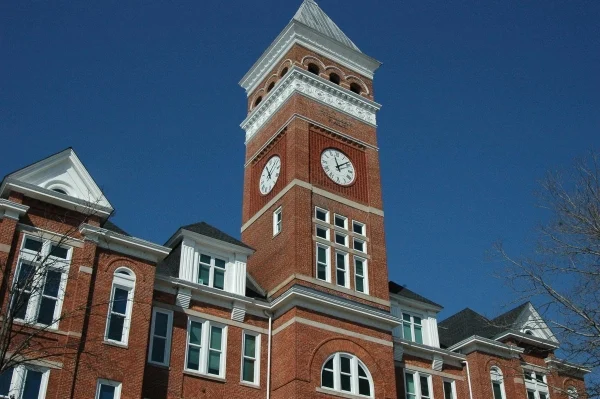
    Clemson University president Jim Clements is retiring at the end of the month, bringing an abrupt end to his 12-year tenure at the helm of the public institution in South Carolina.

    He cited “health and family” as his reasons for stepping down just over a year after he signed a five-year contract extension.

    “Clemson has been my home and passion, yet my greatest love is for my wife, Beth, and our children and grandchildren. Life moves quickly, and I don’t want to miss what truly matters—the major milestones and the quiet, everyday joys,” Clements wrote in a Tuesday message announcing his retirement. “Those are the moments I want to experience and hold close.”

    Clements joined Clemson in 2013 after nearly five years as president of West Virginia University.

    He cited a record number of applications and Clemson’s attainment of Research-1 status under the Carnegie classification system, achieved in 2013, among his accomplishments. Board of Trustees chair Kim Wilkerson also said in her own message that under Clements’s leadership, “Clemson achieved record enrollment and graduation rates, expanded research initiatives and secured historic philanthropic support.”

    More recently, however, Clements courted controversy after the university fired three employees for allegedly making inappropriate remarks about the death of Charlie Kirk. The university appeared to claim in a social media post related to the firings that First Amendment rights do not “extend to speech that incites harm or undermines the dignity of others.”

    Clemson also shut down faculty and staff affinity groups intended to advise leaders on how to support Black, Latino, LGBTQ+ students, veterans and others in September. At the time, Clemson officials claimed, “The commissions have successfully fulfilled their important charge.”

    Now Clemson is expected to name an interim president at an emergency board meeting Wednesday. Provost Bob Jones, who was planning to retire, is expected to be named to the interim role and to “serve until a successor is named,” according to Wilkerson’s statement.

    Source link

  • Facing Criticism, Weber State Says It Will Be “More Nuanced”

    Facing Criticism, Weber State Says It Will Be “More Nuanced”

    Photo illustration by Justin Morrison/Inside Higher Ed | masa44/iStock/Getty Images | rawpixel

    After multiple censorship controversies over the past two months, Weber State University has announced a “revised approach” to how it enforces a sweeping anti–diversity, equity and inclusion law that the Utah Legislature passed in 2024. But it remains unclear exactly how it will change its actions.

    “With help from the Utah Commissioner of Higher Education, Weber State is currently reviewing our existing guidance, and where appropriate, will revise that guidance to be more nuanced in its understanding of where and how learning happens on our campuses,” interim president Leslie Durham wrote in a message to campus Friday. The Salt Lake Tribune reported earlier on the announcement.

    The goal, Durham wrote, “is to uphold the letter and spirit of the law, but also to ensure we remain fiercely committed to free speech, academic freedom, and fostering an environment where everyone at WSU feels welcome to express their thoughts, engage different viewpoints, and learn from one another.” She said that “we are learning from early and well-intentioned efforts at working within this new framework.”

    The university didn’t provide an interview or answer multiple written questions Tuesday. Richard Price, a political science professor, told Inside Higher Ed in an email, “As far as I know, faculty played no role in the creation of the existing approach and I doubt faculty will play a role in this process.”

    The Weber State controversies illustrate how universities have differed in implementing the anti-DEI laws that many red states have passed, and in navigating the Trump administration’s various anti-DEI orders and guidance that impact the whole nation. Shortly after Trump retook the White House, the American Association of University Professors issued a statement saying that “under no circumstances should an institution go further than the law demands.” Since then, state and federal government attacks on diversity programs and restrictions on speech have continued and universities have struggled with how to respond.

    Kristen Shahverdian, director of PEN America’s campus free speech program, has decried what she called “Weber State’s overreach.” But she told Inside Higher Ed Tuesday, “There’s a lot of confusion in how to interpret these bills that are vague and, in some cases, sloppily written.”

    Weber State made national headlines in October for censoring a conference ironically titled, Redacted: Navigating the Complexities of Censorship. A few days before the conference was to start, an official at the public institution ordered a student presenter to remove all references to DEI from their slides.

    Organizers ended up canceling the event after faculty pulled out in protest. The uncertified employee union held a teach-in instead, but it was also censored.

    That wasn’t the end of Weber State’s speech restrictions. Late last month, Apache writer Darcie Little Badger announced on Bluesky she was withdrawing as keynote speaker at the university’s annual Native Symposium because the university sent her a list of 10 prohibited words and concepts, including “bias,” “oppression” and “racial privilege.”

    “I will not humor this censorship,” Little Badger wrote. “It does a disservice to the stories I’m discussing & the audience, who deserve unfettered access to information & conversation.”

    ‘Prohibited Discriminatory Practices’

    Little Badger said the move seemed “to be the university‘s extreme attempt to comply with HB 261,” the same 2024 anti-DEI law the institution cited to censor the censorship conference. House Bill 261 bans Utah’s public colleges and universities from engaging in “prohibited discriminatory practices,” which lawmakers defined in a long list.

    That list includes affirmative action, consideration of “personal identity characteristics” in state financial aid decisions, anything “referred to or named” DEI and programs asserting that “meritocracy is inherently racist or sexist” or that an individual, by virtue of their “personal identity characteristics, bears responsibility for actions committed in the past by other individuals with the same personal identity characteristics.”

    The catalog of what constitutes “prohibited discriminatory practices” echoes the laws banning “divisive concepts” passed by other red states, which appear to borrow language from an anti-DEI executive order Trump signed in his first term.

    HB 261 explicitly says it doesn’t restrict academic research or “academic course teaching in the classroom.” The canceled censorship conference was sponsored by the university’s Student Access and Success division, and the Native Symposium was advertised on the university’s Student Success Center website, so neither might have been deemed “academic.”

    Shahverdian, of PEN America, stressed the difficulty in interpreting such laws.

    “How would a guest speaker be able to know if they’re engaging in any of these prohibited concepts?” she said, adding that it puts them in an “impossible position.”

    But Shahverdian said it’s good that Weber State is, as she put it, “acknowledging that they have not been implementing the law correctly.” In a country where fear is driving university officials to overcomply and leading to canceled speaking engagements, she noted that Little Badger’s refusal to go along appears to have elicited change.

    “In this moment, where we’re seeing so much censorship, it is a nugget of hope,” Shahverdian said.

    Source link

  • University lands: mapping risks and opportunities for the UK higher education sector (Part 2)

    University lands: mapping risks and opportunities for the UK higher education sector (Part 2)

    Join HEPI tomorrow (Thursday 11 December 2025) from 10am to 11am for a webinar on how universities can strengthen the student voice in governance to mark the launch of our upcoming report, Rethinking the Student Voice. Sign up now to hear our speakers explore the key questions.

    This blog, kindly authored by Thomas Owen-Smith, Principal Consultant, William Phillips, Data Analyst, and Pippa Wisbey, Consultant, all of at SUMS Consulting, is part of a three-part mini series on UK universities’ approaches to land use.

    Today’s blog focuses on risks. You can find part one of this series, which introduces the work, here.

    The risk landscape

    Most readers will be familiar with the current conditions for the UK’s universities. Proximate financial risks – potentially existential for some institutions – understandably focus minds on the here and now.

    Whatever system emerges from the current turmoil will need to be more resilient than what it replaces.

    While the gathering risks in the economic and geopolitical theatre are familiar, on longer horizons – and let’s remember that many universities like to emphasise their longevity of foundation and core mission – the greatest risks are those stemming from the disruption to world’s climate and natural systems.

    These risks are generally slow onset. Until they become acute, causing loss, damage and danger to human health and safety.

    Solely the “physical” risks that we have modelled may cause hundreds of millions of pounds of loss and damage to universities each year (estimated at a potential £166.8m annually, based on moderate estimates), as extreme weather becomes more frequent.

    These do not account for “transition risks” and “systemic risks”, which have less direct linkages to physical location and would manifest in disruption to their supply chains, national infrastructure and so on.

    While impacts of extreme weather would likely be spread across multiple institutions, financial impacts of this order are material – particularly for those institutions which are most exposed.

    Climate impacts might manifest not only in damage to buildings and other infrastructure, but also loss of valuable equipment and disruption to critical business – carrying further costs for institutions – and impacts on the health, wellbeing and safety of their staff and students. Insurance costs are also expected to rise, and in the most exposed cases, some assets may become uninsurable.

    Securing future resilience is therefore very much a long-term game.

    Mapping risks

    Physical risksrelate most closely to the location (“exposure”) of assets. As hazards (storms, heatwaves and the like) become more frequent and more severe, loss, damage and costs increase – further exacerbated by institutions’ vulnerabilities.

    Using our mapping tool, institutions can explore both observed patterns of temperature and rainfall at their location, and modelled patterns for 2C and 4C of global temperature rise – both plausible scenarios for the second half of this century.

    They can also explore datasets containing granular local-level data around flood risk and heat islands. While these have not yet been modelled for future climate conditions, it is safe to assume that flooding and extreme heat events will become more frequent and more extreme, as winters become wetter and summers hotter and drier across most of the country.

    Under current conditions, 197.5 hectares (ha), constituting 3.2% of mapped lands are at high or medium risk from flooding, while 4,102.1 ha (or 64.2%) are at high or medium risk of extreme heat stress.

    The instances where floods or extreme heat risk incurring the greatest costs for institutions, is where their built estate is in high-risk areas. By our mapping, 92.1 ha (or 1.4%) of university estates are areas where high or medium flood risk coincides with built environment; and 2,898.6 ha (or 45.4%) are built environment with high or medium heat risk.

    Of course, flood risk and heat islands are not totally independent variables from land cover. Built areas can exacerbate both flood risk by reducing the scope for water absorption, and heat islands due to their high retention of heat compared to non-built surfaces.

    Responding and adapting to risks

    Many institutions have already begun to respond to climate and environmental risks, and sector organisations have developed guidance on adaptation and resilience.

    Those institutions that haven’t yet done so can use our mapping tool as an initial pointer to frame detailed site-specific risk and vulnerability assessments. Following UK Government guidance, we recommend using scenarios of 2C and 4C global temperature rise.

    Better understanding of this picture for the specifics of university sites will also allow for options assessment around adaptation measures (including land-based approaches such as increased areas of non-built space or green infrastructure) to mitigate heat island effects; or if it is unavoidable, manage conditions of high heat through more cooling (which brings increased energy use).

    The same stands for institutions that have a large built area in flood-prone zones. Understanding the current risk (which is likely to be on the radar already for many of these institutions) and how it might develop with the changing climate opens into exploring options for response. Nature-based solutions such as extending wetlands or porous ground surfaces can potentially mitigate flood risks in some areas. That said, institutions may wish to consider relocating valuable equipment, high-use areas or strategic activities if situated at the most risky sites.

    While adaptation will carry upfront costs for institutions, national-level modelling indicates that the projected costs of loss and damage without adaptation will be substantially greater, and most adaptation measures have a high benefit to cost ratio if they are undertaken in good time.

    In other words, spending sooner will save later.

    The bigger picture

    In the big picture, reducing the risks around increased exposure to physical hazards also underlines the necessity for every organisation to reduce its own impacts on climate change and nature loss – the ultimate drivers of the deteriorating risk environment.

    In part 3 of this mini-series, we will explore opportunities that universities’ estates may offer to do that, some of which also offer other benefits to institutions’ financial position and core mission.

    SUMS Consulting will host a webinar from 11:00 to 12:00 on Thursday 22 January 2026. The webinar will include a walkthrough of the report and online tool, and panel discussion featuring Nick Hillman OBE (Director of HEPI). Register here.

    Source link

  • Nicola Rollock: Progress on racial justice and equity in higher education is “artificial”

    Nicola Rollock: Progress on racial justice and equity in higher education is “artificial”

    Nearly seven years ago, in February 2019, UCU published Staying Power, an investigation into the professional experiences of 20 Black woman professors in UK higher education, authored by Nicola Rollock. At the time, the total number of UK Black women professors numbered only 25.

    Against the backdrop of an often highly hierarchical higher education academic culture that assumes capacity for high workloads, and with numerous unwritten codes of conduct, many of Rollock’s respondents documented instances of bullying, racial stereotyping, low-level aggressive behaviour and the constant tacit expectation to prove themselves, leading to feelings of stress, anxiety, exhaustion and burnout. But despite these experiences, they had navigated a career path to professorship, adopting strategies to advance their careers, while absorbing setbacks and blockages strewn in their paths.

    In the intervening years, the conversation about race, equity and higher education intensified. Later in 2019 recent graduates Chelsea Kwakye and Ore Ogunbiyi published Taking up space, which documented their experiences as Black students at the University of Cambridge. In October of that year the Equality and Human Rights Commission published the findings of a national investigation into racial harassment in universities.

    The UK higher education sector was pursuing action on race awarding gaps, and developing the Race Equality Charter to embed anti-racist practice in institutions. Students’ unions campaigned for ethnic and cultural diversity in the curriculum, and for bursaries and additional support to open up pathways for Black students into research careers. Senior appointments were made to spearhead equality, diversity and inclusion, and commitments to change were published. In 2020, Rollock curated Phenomenal women: portraits of Black female professors, a landmark photography exhibition at London Southbank Centre which then went on to be displayed at the University of Cambridge.

    The conversation reached a peak in the wake of the global outcry following the murder of George Floyd in the US in the early months of the Covid-19 pandemic and during the ensuing Black Lives Matter protests. And while it was understood that work on anti-racism was often slow, and under-resourced, there was a sense at the time that some in the sector were prepared both to confront its history and adjust its practice and culture in the present.

    Looking around today, the picture seems much more muted. There’s been political backlash against the Black Lives Matter movement, and against the notion of institutional and structural racism more generally. “Woke” is more frequently heard as a term of criticism rather than approbation. And though 97 institutions have signed up to the Race Equality Charter and work on awarding gaps has been integrated into access and participation policy, the sense of urgency in the national anti-racism agenda has ebbed.

    What lies beneath the cycle

    For Nicola Rollock, who now divides her time between a professorship in social policy and race at Kings College London, and consultancy and public speaking, this cycle is nothing new. Earlier in her career she was commissioned by the Runnymede Trust to investigate the extent to which the recommendations of the Macpherson inquiry (which followed the murder of Stephen Lawrence and the failure of the Metropolitan Police to bring his killers to justice) had been implemented in the decade following its publication.

    Some of the recommendations were relatively straightforward: senior investigating officers (SIOs) should be appointed when there is a murder investigation – tick. Families should be assigned a family liaison officer, when they have experienced a murder – tick,” she says. “But the recommendations pertaining to race – disparities in stop and search, the recruitment, retention and progression of Black and minority ethnic officers – the data had barely moved over the ten year period between 1999 and 2008–9. I was stunned. At the time, I couldn’t understand how that was possible.

    Rollock’s subsequent work has sought to explain why, despite periodic bouts of collective will to action on racism, it persists – and to lay bare the structures and behaviours that allow it to persist even as the white majority claims to be committed to eradicating it. In 2023 she published The Racial Code – a genre-busting tour de force that forensically unpacks the various ways that organisations and individuals perform racial justice in ways that continually fail to achieve a meaningful impact, told through the medium of short stories and vignettes that offer insight into what it feels like to experience racism.

    One story in particular, set in a university committee meeting, at which a Black academic is finally awarded a long-awaited (and inadequate) promotion, and responds in the only way she feels is open to her, offers a particularly forceful insight into the frustration felt by Black women in academia at what can feel like being simultaneously undervalued and expected to be grateful to be there at all. Recurring motifs throughout the book, such as the Count Me In! diversity awards – embraced with enthusiasm by white characters and viewed with deep scepticism by Black ones – demonstrate the ways that while racism may manifest subtle differences across different contexts and industries, it thrives everywhere in shallow and performative efforts to tackle it.

    For Rollock, the choice of fiction as a medium is a deliberate effort to change hearts as well as minds. Though each of the propositions offered in her stories are grounded in evidence; they are, indeed, the opposite of fictional, the story format affords much greater opportunity for fostering empathetic understanding:

    Many of us know the data, we know the headlines, but we don’t know about the people behind the headlines: what is it like to be part of a group that is under-represented? How does it feel to be overlooked for promotion despite possessing the right qualifications and experience? I don’t think we truly understand what it is to fight, to strategise, to manage disappointment predicated on the colour of one’s skin. For me, storytelling is a way of providing that connection. It is a way of giving life to feelings.

    For white readers, The Racial Code offers a glimmer of insight into the experience of marginalisation. And for Black readers, it offers a language and a way of understanding and giving coherence to experiences of racism.

    Where we are now

    Here, Nicola Rollock offers her often sobering reflections on the last six years in response to my prompts – sharing her observations of the same patterns of injustice she has been analysing throughout her career.

    Debbie McVitty: Since 2019–20 we’ve seen a lot of focus on EDI in universities and on racial justice specifically – a number of senior appointments, public commitments, working groups and initiatives. And then, the political backlash, the anti-woke agenda, the attacks on “DEI” – how do you make sense of the period we’ve been through? Has there been “progress”? How should we understand the nature of that progress, if so? And what do we need to be wary of?

    Nicola Rollock: I have long been interested in why change happens at certain moments: what are the factors that enable change and what is the context in which it is most likely to occur. This is largely influenced by my work on the Stephen Lawrence Inquiry when, as a young researcher, I believed that we were at a historic turning point when it came to racial justice only to see, in 2009, political commitment subsequently and deliberately wane.

    In 2020, when George Floyd was murdered, I was simultaneously disturbed by what had happened and attentive to people’s reaction. Many white people described themselves as having “woken up” to the traumas of racism as a result of his death. Books on race and racism rapidly sold out and I couldn’t help but wonder, where on earth have you been, that you’re only waking up now? I – and others who work on these issues – have been sat in meetings with you, in board rooms, universities, in Parliament, have marched on the streets repeatedly making a case for our dignity, for respect, for equity – and it is only now that you decide that you are waking up?

    What happened around Floyd deeply occupied my mind. For a long time, I played with the idea of a film set in a dystopian future where Black communities agree to deliberately sacrifice the life of a Black man or woman every five years to be murdered by a white person in the most horrific of circumstances. The ordeal would be recorded and shared to ensure broad reach and the fact of the crime would have to be unequivocal to ensure that white minds were convinced by the stark racist brutality of what had occurred.

    The aim of the sacrifice? To keep the fact of racism alive in the minds of those who, by and large, have the most power to implement the type of change that racially minoritised groups demand.This dynamic is in itself, of course, perverse: the idea of begging for change that history indicates is unlikely to come in the form that we want. The approach then must be not to beg for change but to enable or force it in some other, more agentic way that centres our humanity, our dignity and wellbeing.

    Moving back to reality, I would argue that there has been a complacency on the part of liberal whites about the prevalence and permanence of racism and how it operates which is why so many were shocked and awakened when Floyd was murdered. This complacency is also endemic within politics. Politicians on the left of the spectrum have not shown sufficient competence or leadership around racial justice and have failed to be proactive in fostering equity and good relations between communities. Those on the right continue to draw on superficial markers to indicate racial progress, such as pointing to the ethnic mix of the Cabinet, or permitting flimsy and dangerous comments about racism or racially minoritised communities to persist.

    Both sets of positions keep us, as a society, racially illiterate and naive and bickering amongst ourselves while the radical right builds momentum with a comparatively strong narrative. We are now in a position where those on the left and the right of the political spectrum are acting in response to the radical right. These are dark times.

    Universities themselves are, of course, subject to political pressure and regulation but even taking account of this, I would argue that the lens or understanding of racial justice within the sector is fundamentally flawed. Too often, universities achieve awards or recognition for equity-related initiatives which are then (mis)used as part of their PR branding even while their racially minoritised staff continue to suffer. Or artificial targets are established as aspirational benchmarks for change.

    This is most evident in the discussions surrounding the representation of Black female professors. In the years following my research, I have observed a fixation with increasing the number of these academics while ignoring their actual representation. So for example, in 2019–20 the academic year in which Floyd was murdered, there were 40 Black female professors in total (i.e. UK and non-UK nationals) within UK universities. They made up just 2 per cent of the Black female academic population. Compared with other reported ethnic groups, Black female academics were the least likely of all female academics to be professors as a proportion of their population.

    Fast forward to the 2022–23 figures which were published in 2024, the most recent year available at the time of this interview. They show that the number of Black female professors increased to 55 but when we look at their representation only 1.8 per cent of Black female scholars were professors – a decrease from 2019–20. And, in both academic years, Black female professors made up the smallest percentage of the female professoriate overall (0.6 percent in 2019-20 and 0.8 percent in 2022-23). In other words, the representation of Black female professors as a group remains relatively static in the context of changes to the broader professoriate. Numbers alone won’t show us this and, in fact, perpetuate a false narrative of progress. It indicates that current interventions to increase the representation of Black female professors are not working – or, at best, are maintaining the status quo – and we are overlooking the levers that really impact change.

    Universities themselves are responsible for this “artificial progress” narrative via their press releases which too many of us are quick to consume as fact. For example, a university will announce the first Black professor of, say, Racially Marginalised Writing and we fall over ourselves in jubilation ignoring the fact that the university and the academic choose the professorial title (it is arbitrary) and, that there is a Black academic at the university down the road who is Professor of Global Majority Writing covering exactly the same themes as their newly appointed peer.

    The same can be said of press releases about appointments of the “youngest” professor within an institution or nationally. We never ask, the youngest of how many or, how do you know, given that official statistics do not show race by age group. Look closely and you may well find that there are no more than say five Black professors at the institution and most were appointed in the last couple of years. Is being the youngest of five a radical enough basis for celebrating advancement? I would suggest not.

    Debbie McVitty: Staying power – like The Racial Code – was powerful in its capturing and articulation of the everyday frustrations and the burdens of being marginalised, but with the clear link to structural and organisational systems that enable those problematic interpersonal relationships and to some extent seem to allow or endorse their hiding in plain sight. How helpful is the concept of “lived experience” as data to prompt institutional change, or in what conditions is it most useful?

    Nicola Rollock: I am fundamentally uncomfortable with the phrase “lived experience.” In the context of race, the term forces underserved groups to pronounce their status – as if for inspection to satisfy the whims of others when the fact is it is those others who are not being sufficiently attentive to inequity. We end up compensating for their failures. My concern with regard to race is that lived experience becomes the benchmark for intervention and standards: it is seen as sufficient that an initiative about race includes or is led by some Black people irrespective of their subject specialism or expertise. The fact that racial justice is a subject specialism is ignored. When we foreground lived experience over subject specialism, the objective is not real change, it is tokenism. I would like to see the subject of racial justice treated with the same degree of rigour and seriousness as we treat, say science or mathematics.

    Debbie McVitty: Another really critical theme across both Staying Power and The Racial Code is agency – the coping tactics and strategies Black women (and men) use to function in what they can often experience as a hostile, toxic cultural environment, whether that’s seeking out allies, being highly strategic and dogged about promotion processes, developing their own analytical framework to help them make sense of their experience, and so on. Covid in particular drove a conversation about work-life balance, wellbeing and compassionate leadership – do you think Black women in academia have been in a position to benefit from any of that? Have the go-to coping strategies changed as a result?

    Nicola Rollock: Universities are not places which foreground well-being. Lunchtime yoga sessions or tips about how to improve work-life balance tend to be rendered meaningless in a context where concerns about financial stability, student numbers, political unrest and national and international performance tables take precedence. So many of us have filled in forms aimed at capturing how we spend our time as academics while being aware that they are performative: they do not reflect the breadth of the activities that really take up our time.

    I find that Black scholars are often contacted to save failed relationships between white supervisors and Black doctoral students or to offer mentorship and support to Black students and junior colleagues. Then there are reference requests from Black scholars from across the globe who you want to support in the spirit of fighting the system and giving back. And this can be on top of the organisational challenges that you yourself are facing. None of this is documented anywhere. We don’t receive time off in lieu or financial bonuses for this work. It often sits casually under the often uninterrogated banner of “service.” In short, if anyone is interested in work-life balance, they should avoid academia.

    Debbie McVitty: One of the things we have unfortunately learned from the past six years is that engagement with racial justice does tend to ebb and flow and is subject to political winds and whims. What can be done to keep institutional leadership focused on these issues and keep working on building more just institutions? How can racial justice work become more sustainable?

    Nicola Rollock: Public and political commitment to EDI or what we might think of more broadly as equity, tends to move in waves and as a reaction to external pressures or pinch points. This is concerning for several reasons not least because it ignores the data and evidence about the persistence of inequity whether by social class, gender, disability.

    Commitment to advancing racial justice varies depending on one’s racial identity and understanding of the issues. Institutions will only engage with it seriously if they are compelled to do so and if there are consequences for not doing so. We saw this with the awarding gap.

    I would also say, perhaps controversially, that we racially minoritised groups need to more readily accept the history and characteristics of racial injustice. For example, if a white senior leader says they refuse to accept institutional racism, my view is that we should not spend our energy trying to convince them otherwise. We only deplete ourselves and waste time. Instead, look for pinch points or strategic points of intervention which might also work to that senior leader’s interests.

    We must also establish accurate and more stringent goals as our ambitions for racial progress and not allow our desperation for change to lessen our standards. For example, I have spent a considerable amount of time recently working in policing. Whenever something goes wrong around race, there are those who demand the Commissioner’s resignation. Why? Do we really think the next person to be appointed is going to offer a miracle transformation on race? And what influence do we really have on the appointment’s process? I am not opposed to calling for anyone’s resignation but it has to be done as part of a carefully thought through, strategic plan as opposed to being an act of frustration. I am aware however that acts of frustration are better meat for newspaper headlines over my efforts to foreground strategy and radical change.

    There is a further point that your question does not speak to which is the need for self-affirmation and self-care. I think we need to be better at working out what we want for ourselves that is not contingent on our arguing with white stakeholders and which holds on to and foregrounds our dignity, well-being and humanity. This is something I wish I had understood before I entered the workplace and specialised in social policy and race. As much as I love research, it would have probably led to my making different career choices.

    One key way in which I believe this work can be sustained is by paying closer attention to our “Elders” – those academics, activists and campaigners who have already fought battles and had arguments from which we should learn and build upon. I would like to see greater integration and connection with what we plan to do today and tomorrow informed by what happened yesterday.


    Source link