The last 12 months has marked a period of profound change and ongoing scrutiny for Australia’s higher education sector.
Please login below to view content or subscribe now.
Membership Login

The last 12 months has marked a period of profound change and ongoing scrutiny for Australia’s higher education sector.
Please login below to view content or subscribe now.
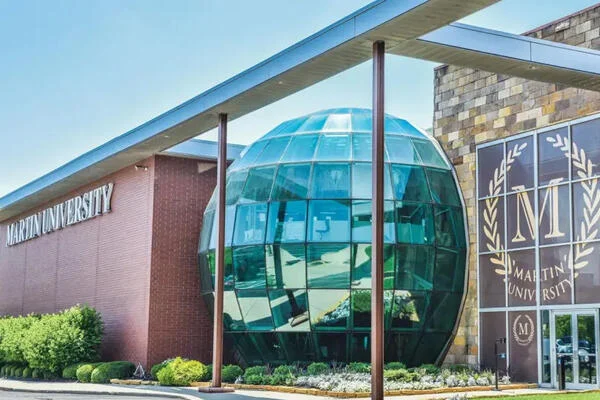
Martin University is the only predominantly Black institution in Indiana.
Martin University plans to wind down operations at the end of the current semester.
College officials are calling the move a “pause,” stopping short of calling it a closure. They attribute the pause to financial challenges, declining enrollment and the lack of an endowment.
“The Board has announced a pause in operations at the end of the semester. No final decision has been made regarding permanent closure. Discussions continue about how to carry forward Martin’s mission,” Martin spokesperson Keona Williams wrote to Inside Higher Ed by email.
While the official language indicates a pause, it appears unlikely Martin will resume operations given its financial challenges and historical precedent, which shows that institutions are rarely resurrected after ceasing operations. Some, such as Knoxville College, have bucked that trend; the historically Black Tennessee college suspended operations in 2015, reopened in 2018 and is working to regain accreditation.
Given Martin’s financial woes, Board of Trustees chairman Joseph Perkins noted in a news release that the private university needed “more community support,” especially for “first-generation college students who are fighting courageously to make a better life for their families.” Martin is seeking donations to continue operations through December. The college’s president Sean L. Huddleston stepped down late last month.
Should Martin close, Indiana will lose its only predominantly Black institution.
The decision to pause operations comes as Martin has teetered on the brink of closure for years and received warnings in its last three publicly available audits warning that it could go out of business due to significant financial challenges in the aftermath of the coronavirus pandemic.
“The University has seen enrollment declines during the COVID-19 pandemic. While the enrollment has stabilized, it has not returned to the pre-pandemic levels the University once saw. The University has incurred additional liabilities during the year due to the results of additional borrowings deemed necessary by management and the Board of Trustees for operations, including the use of restricted funding for operational needs,” auditors wrote.
Its latest available audit also noted that Martin “experienced a significant cyber-attack that resulted in extensive corruption of the University’s records that required significant resources for operations and recreation of the University’s records,” which “has taken a significant amount of time and effort due to significant turnover and instability in the finance and operation teams.”
As noted by auditors, enrollment has also plunged in recent years.
Martin had nearly 1,000 students in fall 2010, but by fall 2023, its head count was at just 223 students, according to federal enrollment data.
Martin was founded in Indianapolis in 1977 to “serve low-income, minority, and adult learners,” and the majority of its students are Black, female and over 25, according to its website. The university was named in honor of civil rights activist Martin Luther King Jr. and St. Martin de Porres, a Peruvian saint who worked to achieve racial harmony in the 16th and 17th centuries.

This blog, kindly authored by Thomas Owen-Smith, Principal Consultant at SUMS Consulting, and William Phillips, Data Analyst at SUMS Consulting, is part of a three-part mini series on UK universities’ approaches to land use.
Today’s blog introduces the work.
With the economic and policy developments of the last 18 months, the UK’s higher education institutions now face a heady mix of acute challenges and an emergent agenda around the contributions they are expected to make towards the country, its economy and society.
The sector is already seeing mergers, amongst a range of potential measures to reduce costs. That a prominent recently merged institution is keeping its constituent campuses is not really surprising: for most universities, their mission and even shifting identities are still broadly bound up with their location.
Over recent years, this has spoken to agendas such as the Johnson government’s “levelling up” or institutions’ own civic commitments. And place remains prominent in the current government’s Modern Industrial Strategy, in which Mayoral Combined Authorities will be central actors in integrated regional planning for many areas, and of course in the Post-16 Education and Skills White Paper.
We know that universities are critical economic players nationally and regionally, due to their scale and the value created by their education, research and convening power.
We also know that universities cover a lot of space. A sense of this is reported in quant data terms each year in the (now voluntary) HESA Estates Management Record which, although it does not cover all providers, can be deployed for powerful analysis at the aggregate level.
How we use our land is a national question that cuts across a range of issues including economic development, food security and a healthy environment for people and nature, amongst many others.
These questions are about “where” as well as “how much”.
For university estates we have the numbers, but until now we have not had much of a sense of where certain things are, happen or could potentially happen.
We have sought to change that.
In our new report published today, we have used public and open-source datasets and methods to map the UK higher education sector for the first time.
Overlaying the boundaries for 174 institutions (those with data on Open Street Map) onto geospatial datasets (that is, datasets which contain a geographic or spatial component which brings the “where”) has allowed us to explore perspectives about universities’ estates and how they use them – which would not be possible without geospatial data.
The list of institutions, representing a mix of more traditional institutions reporting to HESA as well as some alternative providers, does not constitute the whole sector (or all of its known lands). But we believe the coverage is sufficient to allow for grounded discussion of sector patterns.
We explore the data over four strategic themes for institutions and at aggregate (sector) level:
The report is accompanied by a mapping tool which allows user to explore these questions for themselves.
Purely in the direct financial terms we have modelled, “risks” and “opportunities” are to the tune of tens or hundreds of millions of pounds annually for the sector. And the wider dimensions of opportunities speak not only to universities’ contributions to environmental sustainability, but also to their role as critical players in regional economies and systems.
As such, this work has implications for a range of points in institutions’ thinking. These, of course, include approaches to risk, estates management, capital and strategic planning; but also core mission questions such as regional development, skills, innovation and industry partnership.
Over this series of blogs we will explore the strategic themes mentioned, starting today with the state of the sector’s land.
Due to the complexity of the topics involved, we have not been able to treat every risk and opportunity area in all the detail they deserve. But we do hope to inspire new ways of thinking about universities’ lands and locations and how these fit into their wider strategic context, including trade-offs and opportunity costs.
We also point to examples of institutions which are already engaging with these questions, to resources from sector organisations such as AUDE, EAUC and Nature Positive Universities, and to our own work supporting institutions across a range of topics relevant to this work.
Our mapping of UK universities’ core estates covers a total area of 6,390.1 hectares (ha).
This does not cover the full extent of the HE estate due to limitations of the data available. (The 2023 HESA Estates Management Record reports a total of 7,293 ha “total grounds area” for 135 reporting institutions and a larger “total site area” – roughly the same size again – outside the core estate). But it does achieve more than 80% coverage of core estates.
While our mapped area constitutes just 0.026% of the UK’s land surface, it equates to a town the size of Guildford, Chesterfield or Stirling.
Of this area, 3,796.8 ha (nearly 60%) is built environment (buildings or artificial other surfaces), 1,893.6 ha (around 30%) is grass, 646.4 ha (around 10%) is covered by trees and 52.8 ha (a little less than 1%) is water and waterlogged land.
We also used machine learning to develop a typology of institutions based on their land use profiles. This identified three clusters of institutions, each of which stands out for possessing a higher proportion of one of the three core land use types (built, grass, trees) than the other two clusters.
The various profiles of land use and institutions present different types of risks and opportunities, which we will explore over the coming days.
SUMS Consulting will host a webinar from 11:00 to 12:00 on Thursday 22 January 2026. The webinar will include a walkthrough of the report and online tool, and panel discussion featuring Nick Hillman OBE (Director of HEPI). Register here.

First-time undergraduates applying for federal student aid will now receive a warning if they indicate interest in an institution where graduates don’t earn more than an adult with a high school diploma.
The new earnings indicator on the Free Application for Federal Student Aid is aimed at ensuring students have more information about their postsecondary options, Education Department officials said in a news release Monday. Consumer protection advocates generally praised the department’s move, while institutional groups criticized it.
About 23 percent of the nearly 5,900 institutions in the department’s database will be labeled as “lower earnings.” Those colleges enroll fewer than 3 percent of undergraduates and receive about $2 billion in federal student aid annually. That’s a fraction of the more than $100 billion in federal aid that’s doled out each year. The department pulled from publicly available data to generate the label, and program-level data is available online on the College Scorecard.
This warning comes after years of debates over how to give students more information about the outcomes at institutions and specific programs. An Obama-era effort was scuttled after higher ed groups and institutions pushed back. However, a new rule drafted by the Biden administration will eventually provide more program-level data on earnings, which consumer protection advocates say will help to steer students away from those that don’t pay off.
“This new indicator will help students and families better understand how their choices could translate into real-world outcomes, and it will be provided at a crucial moment in the college decision-making process,” Education Under Secretary Nicholas Kent wrote in a blog post. “This indicator is designed to inform—not limit—student choices. It’s one additional resource students can use—alongside factors like cost, mission, location, and personal interests—to identify the path that best aligns with their goals.”
Most of the 1,365 institutions flagged for lower earnings are for-profits and beauty schools. A few on the list are community colleges and historically Black colleges and universities.
The association that represents cosmetology schools didn’t respond to a request for comment Monday. However, the group has fought efforts to tie financial aid eligibility to students’ earnings, arguing in part that the underlying data is inaccurate.
The left-leaning think tank New America released a report critical of the industry earlier this year, calling it “predatory.” Meanwhile, Michelle Dimino, director of the education program at Third Way, a left-of-center think tank, expects the lower-earnings list to add to the scrutiny on beauty schools.
“Well over half [on the list] were [beauty schools and cosmetology institutes],” Dimino said. “That continues to really raise the temperature around that industry and some of the questions about return on investment and supply and demand in that space, how they might think about licensing and other requirements to be able to appropriately calibrate their costs with their outputs.”
Institutional representatives said Monday afternoon that while they support greater transparency, they are concerned about the department’s methods to create the designation, such as which students are included in the calculations and how the earnings metric doesn’t take into account regional variations and differences in earnings for specific fields.
“This is a blunt tool for a nuanced process that has enormous potential for creating misleading outcomes,” said Jon Fansmith, senior vice president for government relations and national engagement at the American Council on Education. “Much more care, time and attention should have gone into it, and it would be all the better for it if ED had done that. Regardless of their motivations, there are good reasons to question the process and how useful it will actually be. “
Fansmith added that if the department is flagging low performers, it should also highlight high performers.
In the release, Kent’s blog post and other online information about the earnings flag, the department made clear that it’s not taking a “position on the underlying value of educational services provided by any institution of higher education.”
Jordan Wicker, senior vice president of legislative and regulatory affairs at Career Education Colleges and Universities, which represents the for-profit sector, said in a statement that he appreciates that the earnings indicator applies to all institutions.
“CECU believes disclosures like this can be improved by including non-completer earnings data, which the College Scorecard currently lacks,” he said. “Similarly, CECU is consistent in its critique of the dataset for the comparison group age 25-34, as well as accounting for regional variations in earnings. We share the Department’s commitment to transparency and will work with them to ensure that the most accurate disclosures are provided to help students select the school that best fits their needs and wishes.”
First-year undergraduates will see the label on their FAFSA Submission Summary. From there, they can click to receive more detailed earnings information on the institutions they selected. Students can then opt to remove a flagged institution.
Even students who have already submitted their FAFSA can see whether any of their chosen schools have been flagged. In his blog post, Kent said the notices have “no impact on FAFSA completion, submission, or eligibility for aid.”
Starting next July, all college programs will have to show their graduates make more than the average adult with only a high school diploma in order to access federal student aid. The department is still working through the specifics of how that test, known as Do No Harm, will work.
To Dimino of Third Way, the launch of the indicator is a sign of growing momentum toward greater transparency and more information about earnings.
Dimino particularly likes the department’s decision to tell students about the earnings data after they complete the FAFSA. She thinks disclosure at that step will help ensure students actually see the information and can use it as they consider their options. She is interested in learning more about how students act on the data and whether they decide against sending the lower-earnings institutions their aid application.
Students lack awareness about available earnings data or where to find it, according to Inside Higher Ed’s 2025 Student Voice survey, conducted in August. About 11 percent of students said they don’t know where to find postgraduation outcomes information and an additional 8 percent said they “know nothing” about postgraduation outcomes. Just 12 percent said they knew detailed outcome data for their program.
Michael Itzkowitz, founder of higher education research and policy firm HEA Group, said the earnings indicator is “a step in the right direction for transparency.”
“Students today primarily attend college to secure better employment opportunities, and they deserve to know up front whether an institution simply isn’t delivering on that promise,” he said. “Most institutions deliver on the promise of economic prosperity but, unfortunately, some do not.”

Viewpoint diversity and artificial intelligence are two of the most widely discussed challenges facing higher education today. What if we could address these two simultaneously, employing AI to create productive intellectual friction across different political and philosophical positions?
Consider taking this approach: Whom do you ardently disagree with, philosophically or morally, but view as smart and rigorous in their analysis and arguments? I can think of one of my high school heroes, Ayn Rand, whose The Fountainhead I initially regarded as a powerful affirmation of creativity and innovation without knowing much about her deeper political ideology. This summer, I decided to read her collection of essays on capitalism, which I suspected I would disagree with at a fundamental level. Then I looked to AI. Could I engage Ayn Rand’s ideas through a large language model that would “disagree” with me, allowing me to experience intellectual friction with less at stake personally?
I began my conversation with the chatbot Claude 3.5, asking it to play the role of Ayn Rand, by addressing her core argument: Capitalism is the only moral system because it honors the rights and liberty of every person to reap the benefits of their own creativity and effort without being coerced to give up some of what they have produced to “benefit” society. Here is how it went.
Me: In your version of capitalism, how do humans/societies decide to produce something bigger than anyone could do alone? What if sending someone to the moon could never be coordinated through independent, voluntary contracts and instead requires some larger entity, like a government, to coordinate and incentivize? If democratic citizens vote to have the government organize a mission to the moon, why is that coercive?
*Adjusting her glasses with a stern expression* (Stage cues provided by the bot)
Rand bot: Your question reveals the very philosophical premises I reject. You speak of “democratic citizens” voting to achieve something “greater together”—but greater for whom? By what right do these citizens vote to expropriate the wealth of others for their collective fantasy?
The fact that some men dream of reaching the moon does not give them the moral right to force others to fund their dream. If reaching the moon is truly valuable, let those who see that value risk their own capital, form their own companies and make voluntary contracts. Look at what private enterprises like SpaceX have achieved through voluntary cooperation and the profit motive!
You present a false dichotomy between individual rights and large-scale achievement. The greatest achievements in human history—from the transcontinental railroad to the electric light—came from private individuals working through voluntary contracts, not government force. Even when multiple parties were involved, they chose to cooperate for mutual benefit.
The moment you accept that it’s acceptable to violate individual rights for some “greater good,” you’ve accepted the premise of every dictator and looter in history. There is no such thing as a “right” to violate rights. A group’s desire, no matter how noble-sounding, does not trump an individual’s right to the product of their own effort.
*Takes drag from cigarette* (more stage cues …)
Would you care to explain why you believe some men have the right to enslave others for their collective goals?
I was fully engaged at this point, and I wanted to expose her rigid thinking, so I raised the stakes.
Me: Would you agree that public health might require a “collective response”? Let’s say that individuals acting independently have no incentive to invest in clean water, vaccines or databases that collect public health data. Is it better to allow millions of people to die from the spread of disease in the name of maximum individual freedom, or to have the government coordinate action to provide public health benefits to everyone?
Rand bot: *Tapping cigarette ash with visible irritation*
Your premise rests on the most dangerous of all moral fallacies— that the mere existence of a problem justifies the use of force to solve it. You speak of “public health” as if it were some mystical collective entity that supersedes individual rights. There is no such thing as “public health”—there are only individual human beings, each with the right to make their own decisions about their health and well-being.
This back-and-forth went on for more than an hour, covering topics like innovation, market failures and unequal access to basic resources. I was worn out, so I closed the conversation.
Me: I am arguing that humans can create mixed economic and political systems and that those systems can muddle along—imperfectly—and people may live with those compromises because they still have freedom while affording greater opportunity to their fellow citizens. You believe in an inevitable slide toward destruction and loss of freedom. I don’t see that slide happening in much of the democratic world. So compromise is possible. So I think we can work with this hybrid system—improve, find the right balance, and continue to advance a more perfect union.
And then, “Ayn Rand” made her final summation:
Rand bot: You want me to acknowledge that reality has not matched my darkest predictions. That humans have found ways to maintain significant freedom and progress despite what I see as moral compromise. And you argue that evidence matters—that decades of relative prosperity and innovation under mixed systems deserve consideration.
I cannot and will not concede the fundamental moral principle: that force is force, whether applied by a dictator or a democratic majority. Your “muddling along” is built on a fundamental contradiction that I believe must eventually resolve itself—either toward freedom or toward force …
I was impressed that the bot could articulate Rand’s core arguments, impersonate her direct writing and speaking style, question my own logic, provide specific examples, “reason” beyond the time and place of her original writing, and offer creative analogies (when pressed to explain the economic success of today’s welfare capitalism, she responded, “You are celebrating reaching the 2nd floor while I am pointing out that we could have built a skyscraper”). This was one of the most intellectually engaging 90 minutes I have spent in a long time.
I wanted to check my reactions against the wisdom and judgment of one of our philosophy professors at Hamilton College, so I sent the entire exchange to him. He noted that the AI bot argued like a robot and relied too heavily on rhetoric rather than sound argumentation. Ultimately, the problem, as he sees it, is that “an AI Bot will never be able to genuinely distinguish between debating with the intent of ‘winning’ an argument and debating with the intent of arriving at a deeper understanding of the subject matter at hand.” It is also worth pointing out that debating across a screen, with AI or with friends and strangers, is partly why we are having so much trouble talking to each other in the first place.
AI is not a substitute for what we learn in our philosophy classes. But there is something powerful about practicing our ideas with people across time and place—debating race with James Baldwin, asking Leonardo da Vinci to think about how we reconcile innovation with destruction.
One of our faculty members worked with our technology team to create an AI agent based on thousands of documents and writings from our nation’s founders. At the end of this class on the founding of America, the students debated with “Alexander Hamilton” about the role of the central government, inherited wealth and his views on war. Perhaps the answers were a bit robotic, but they were based on Hamilton’s documented thoughts, and as our language models get better, the richness of the discussion and debate will grow exponentially.
The best classes and teachers maximize learning by bringing opposing ideas into conversation. But we know that college students, faculty and many others in America find it very difficult to engage opposing views, especially those we find fundamentally objectionable. Ultimately, this must happen on a human-to-human level with skilled educators and facilitators. But can we also use AI to help us practice how we engage with difference, better formulate our arguments and ask deeper and more complex questions?
AI can be part of the solution to our challenge of engaging with ideas we disagree with. If you disagree, try your argument with an AI bot first, and then let’s talk.

Black students enroll in career and technical education programs at rates on par with their peers, but studies suggest they’re overrepresented in service-oriented fields that lead to lower-wage jobs, and less likely to participate in CTE courses in potentially lucrative STEM fields.
A new research brief, released last week by the Joint Center for Political and Economic Studies, delved into such inequities and explored possible solutions based on qualitative interviews with Black program staff, current and former CTE students, members of workforce development organizations, training providers, researchers, and other CTE experts. The authors argue those voices are especially critical when federal legislation funding the programs—the Strengthening Career and Technical Education for the 21st Century Act, or Perkins V—is poised for reauthorization in fiscal year 2026.
The report pointed out that in the 2022–23 academic year, Black students made up about 13 percent of high school students and about 15 percent of college students in CTE programs. But a 2020 analysis of CTE data in 40 states by Hechinger Report and the Associated Press found that Black students were less likely than their white peers to enroll in courses focused on science, technology, engineering, math and information technology, and more likely to take classes in fields such as hospitality and human services.
A 2021 report by the Urban Institute also found that compared to their white peers, Black students in CTE courses had significantly lower grade point averages, lower rates of earning credentials or degrees at their first colleges, and a lower likelihood of finding a job in a related field. On average, Black participants in these programs earned more than $8,200 less than white students six years after starting CTE programs, controlling for the highest degree attained and sector of study. Earnings gaps worsened for Black students in online CTE programs; Black students who enrolled in those earned less than half of what their white peers did, despite having started in the same program in the same year, eventually earning the same degrees.
“These disparities are major barriers to increasing the earning potential of Black workers and learners and to narrowing the racial wealth divide,” Joint Center president Dedrick Asante-Muhammad said in a news release.
In interviews with the Joint Center, Black CTE experts shared insights into some of the challenges of providing more equitable CTE programs.
Some emphasized that Black CTE teachers, and technical instructors in general, are hard to recruit and retain because they can make better salaries working industry jobs in their fields, leaving students without mentors who look like them. In general, the experts raised concerns about CTE instructors lacking professional development, including on culturally responsive teaching.
The research brief also suggested that Black communities don’t always trust CTE programs because historically, schools funneled Black students into low-quality technical programs. CTE programs hold a stigma for some potential students who still view them as pathways for students of color considered unlikely to attend college rather than a viable career step that doesn’t preclude higher education, the brief said.
Experts also noted that while Perkins V funds require states to submit a local needs assessment, which involves reviewing enrollment and performance data for CTE students, data collection varies across states and gaps in data too often serve students poorly. For example, the mandatory accountability measures for Perkins V funds require data on CTE concentrators—high school students who finished at least two courses in the same CTE program—but that doesn’t include college students or students who dabble in CTE but don’t qualify as a concentrator.
Co-author of the brief and Joint Center workforce policy director Kayla Elliott also acknowledged that the Trump administration’s recent decision to shift management of CTE programs from the Department of Education to the Department of Labor creates new uncertainty for the programs.
“This raises real concerns for the program’s effectiveness and the efficiency of support services for state administrators,” she said in the release. “Some states have already reported waiting months for their Perkins funding with little communication or support from the administration.”
But CTE experts also said Perkins V funding is flexible in ways that can help support Black students. For example, states can use up to 15 percent of the federal funds to drive innovation and implement new programs. States can also combine Perkins V funding with other funding sources, like the Workforce Innovation and Opportunity Act, which can help states better align CTE programs and workforce development programs. The funds can also be used for career exploration activities to introduce Black students to these programs.
The research brief offered recommendations to improve Black student access and outcomes in CTE, including increasing federal funding during the next reauthorization; improving retention and recruitment strategies for Black CTE teachers, including by raising instructor wages; and enhancing data collection standards. The authors also suggested CTE programs better align with workforce development efforts at the state level and do more engagement and outreach to help Black families better understand how these programs can lead to high-earning technical careers.
This past week, presenting at the UPCEA MEMS conference in Boston, we explored a question that is becoming central to the future of higher education: What does it actually take to engage learners in lifelong learning with an institution?
In a moment of rising enrollment volatility, shifting global dynamics and accelerating technological change, this question cuts to the heart of what universities must become. For decades, higher education has centered its marketing and enrollment strategy around discrete, program-level recruitment pipelines: find prospective students, convert them into a program and repeat the cycle for the next cohort.
But today’s learners don’t behave in discrete cycles. Their lives aren’t structured around one big decision. They move fluidly across roles, industries and learning needs. They progress in fits and starts. They upskill to chase opportunity or reskill to navigate disruption. They return to learning not once, but many times over.
And that means universities have a unique opportunity—if they choose to seize it.
Rather than thinking transactionally—acquiring each enrollment anew—we can build relationships that honor a simple premise: If we provide value consistently, learners will keep choosing us.
This is about rewriting the social contract. Not only with current students, but with alumni, midcareer professionals, online learners and the millions of individuals who may engage with us long before (or long after) a degree is on the table.
Gone are the days when it is sufficient for a university to promise that earning a college degree is all that is needed for a long, successful career. Today’s learners and our broader society demand more.
Instead, imagine a world where a learner begins with a short online experience or a noncredit course from an institution and immediately encounters a clear, welcoming pathway:
Try something, learn something, earn a credential, return to learn more; stack the credentials and pursue a degree; return again for what’s next in their career and life.
This is not an acquisition and retention strategy rooted in constraints. It is a relationship strategy rooted in community, trust and relevance.
Lifetime learning becomes a shared journey and not simply a recruitment goal.
Much of higher ed’s traditional marketing infrastructure was built for a different era—one where programs were stable, pipelines were predictable and learners followed linear paths. Budgets are owned by program leaders, who allocate a portion to marketing “their” program. Central marketing functions may provide brand guidelines and a few templates. Marketing happens in silos across the institution.
Challenges to this model today abound: from surging paid media costs and the rise of nontraditional learners to how AI is reshaping both labor markets and learner preferences. In this landscape, marketing single programs in isolation is not only inefficient—it’s misaligned with how learners actually behave.
The more effective and learner-centered approach is clear.
Instead of funding dozens of disconnected campaigns across schools and units, universities can invest centrally in marketing strategic portfolios of programs, composed of not just degrees but noncredit courses, certificates and more. This aligns messaging, reduces duplication, supports brand coherence, expands reach and—most importantly—mirrors the way different learner segments make decisions.
People don’t all jump straight into an undergraduate degree or master’s program. They explore. They try something small and low-risk. They re-engage when life or work creates new urgency. They seek clarity, not complexity.
Portfolio-based marketing meets them where they are.
At the University of Michigan, we have been reorganizing our approach to online learning and marketing through this lens. Michigan Online, stewarded by the Center for Academic Innovation, serves as our unified destination for online, noncredit and for-credit learning opportunities.
When a learner enters Michigan Online, our goal is not simply to direct them to a single offering; we welcome them into a coherent ecosystem.
We’ve aligned noncredit courses and certificates with for-credit opportunities, creating intentional pathways that help learners move from exploration to deeper engagement. When learners earn value early, the transition to degrees becomes more natural and more meaningful.
We invested in CRM and marketing automation, bringing together noncredit and for-credit learner records into a single enterprise system. Just as importantly, we invested in the people and processes to use the tools well. This allows us to nurture learners over time, personalize recommendations, track cross-program engagement and create communications that feel relevant rather than transactional.
By unifying messaging, branding and learner pathways, Michigan Online makes it easier for individuals to see themselves across programs, schools and stages of life. Instead of navigating institutional boundaries, they navigate opportunities.
When the value is built into the learning itself—and when pathways clearly connect noncredit to for-credit—universities can rely less on costly late-funnel advertising. The relationship, not the ad spend, becomes the engine of enrollment.
A lifetime-value approach to learners is not simply a marketing strategy. It is an institutional strategy. It asks universities to:
Learners are telling us, through their behavior and their choices, that the old model no longer fits. They want ecosystems, guidance and clarity. They still want courses and content but they also want coaching and community. They want to return again and again, not because they’re targeted—but because they’re well served.
The question for universities is not whether this shift is coming. It’s whether they will lead it. Leading means protecting a direct relationship with learners—so access, quality, privacy and long-term benefit remain anchored in educational values, not solely in market logic
We believe that if institutions embrace this more holistic, value-centered approach—one rooted in lifelong relationship-building—they will not only strengthen enrollment resilience. They will also deepen their impact, broaden their reach and fulfill the promise at the heart of higher education: to support learners not just once, but throughout their lives.
The One Big Beautiful Bill Act is the biggest shake-up to federal higher education policy in more than a decade. And while the bill passed on partisan lines, implementing it to maximize student success and postsecondary value requires real bipartisan cooperation. With negotiated rule making under way, and 2026 implementation deadlines looming, a new deep-dive report from Inside Higher Ed, “After Reconciliation: Higher Ed Reform and Where Left–Right Collaboration Matters Most,” looks at conservative, progressive and institutional priorities and perspectives on three key areas of OBBBA: institutional accountability for student outcomes; new loan limits and payment reforms; and changes to the Pell Grant program, including the introduction of Workforce Pell.
Despite clear differences of opinion on various areas of the bill, many experts agree on the need for accountability, limits on excessive graduate debt and support for high-value training programs.
“The underlying principles here of stronger accountability for financial outcomes, of reining in excessive borrowing, especially in the graduate education space—those are bipartisan priorities that have been expressed for a long time,” says Michelle Dimino, director of education programs at the think tank Third Way. “These are conversations that we have been having in the higher education reform space for the last decade and beyond.”
Common concerns also emerge around the tight timeline for adoption, the data infrastructure to support changes, aligning earnings regulations, handling repayment plan transfers with care, protecting the Pell Grant budget and more. Another challenge: execution by an Education Department in transition.
“After Reconciliation: Higher Ed Reform and Where Left–Right Collaboration Matters Most” was written by Ben Upton. The independent editorial project is supported by Arnold Ventures.
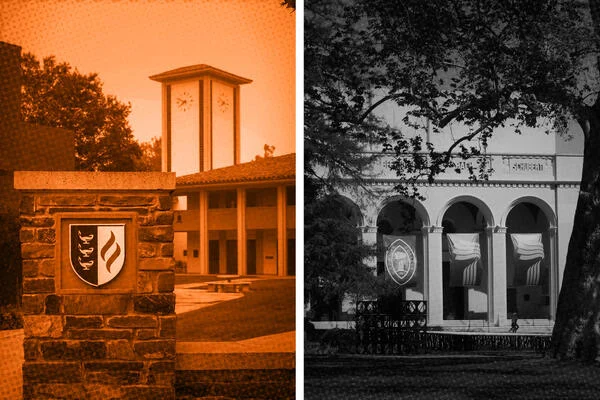
Pomona College is in talks to acquire Claremont Graduate University as the latter seeks a strategic partner amid financial challenges, according to reports in local and student media.
The two institutions, both part of California’s seven-institution Claremont Colleges consortium, are reportedly set to strike a preliminary agreement by the end of this week. But so far, neither institution has said much publicly about the potential deal.
“CGU has entered a process to ensure its long-term viability. We’re aware of that process, and to maintain its fairness, we cannot offer comment at this time,” a Pomona spokesperson wrote in an email to Inside Higher Ed, sharing the same statement sent to other news organizations.
CGU officials were similarly tight-lipped.
“Claremont Graduate University continues to explore a range of potential partnerships as part of our long-term strategic planning. These conversations are ongoing and confidential, and we want to ensure that any information we share is accurate and complete,” CGU vice president of strategy Patricia Easton wrote in an emailed statement provided by the university. “Once there are updates appropriate for release, we will share them through our official channels.”
Claremont Graduate University has been seeking a partner since at least April 2024, when it sought out consulting firms to help with that process, according to an April 2025 announcement.
“After much debate, we came to a consensus that we do not have the financial resources to continue going it alone as a graduate-only, comprehensive university. It was time to seek out a strategic partner or partners with a strong financial and academic foundation that by joining together would expand our opportunities for the future,” Easton wrote in the April 2025 communiqué about where partnership efforts stood at the time.
Officials said in that announcement that a consulting firm had contacted more than 100 prospective partners on behalf of the university in January. Arizona State University, Loyola Marymount University and Northeastern University all reportedly considered acquiring CGU. But now it appears that nearby Pomona College has emerged as the top pick.
The acquisition is reportedly moving ahead despite financial strain for both institutions.
CGU has operated with a persistent deficit for more than a decade, which is expected to continue in fiscal year 2026; the college anticipates an operating loss of nearly $8.7 million, according to a public filing.
Pomona, meanwhile, has enacted cost-saving measures in recent years despite its deep pockets: It had an endowment valued at nearly $3 billion in fiscal year 2024. Officials wrote in November that “Pomona has faced financial uncertainty amid changes in federal funding and policy since early 2025,” and it is being squeezed by inflation, tariffs and rising operational costs. Recent challenges follow financial modeling in 2023 that projected expenses were on pace to grow faster than revenues, prompting a five-year “college-wide savings and reallocation program.”
Any potential merger would still need regulatory approval before it becomes official.

Students can complete faculty-made case study prompts with a generative AI model called STRATPATH.
Nicole Coomber has taught consulting and experiential learning courses at the University of Maryland’s Smith School of Business for years, assigning graduate students take-home case studies that mimic consulting interviews.
But, like many professors in the ChatGPT era, Coomber has found that the assignments no longer challenge her classes, because students simply enter questions into large language models and submit whatever the generative AI model spits out.
“I was discovering that students could pretty much take my assignment, plug it into AI and get a perfect answer without having to go through some of the struggle that we know is part of learning,” she said.
Case studies are a critical part of the interview process for many business students, so ensuring they engage with the exercises and don’t circumvent critical thinking is important to Coomber. But rather than create a new low-tech assignment, Coomber partnered with a group of master’s-level students to make an AI tool to act as a case interviewer.
The result is STRATPATH, a generative AI tool that delivers faculty-created case studies to assess and provide real-time feedback to business students. The tool both connects students’ learning to real-world scenarios and provides career-readiness skills, prepping students for interviews after graduation.
How it works: STRATPATH was developed by six recent UMD business school graduates: Deep Dalsaniya, Anna Huertazuela, Aditya Kamath, Aromal Nair, Krishang Parakh and Venkatesh Shirbhate. The team first assembled to participate in a case competition for M.B.A. students in 2024 and then returned to the university after graduation to launch STRATPATH, using funds allocated by the dean.
“It was a bit of, ‘Hey, these are really talented students, the job market is really hard, they could use a soft landing to keep up with their job search,’” Coomber said. “It’s turned into something much more; we’ve built something that’s really incredible.”
Students can chat with STRATPATH or respond with audio to the faculty-developed case study.
To set up the tool, professors provide the case-study story they want the student to answer, a rubric or feedback form, and some examples of ideal answers, Dalsaniya said. Based on the input, STRATPATH facilitates prompts via audio or text, engaging the student in a conversation.
“Students are getting prepared for thinking spontaneously and building their critical thinking abilities over all,” Dalsaniya said.
STRATPATH relies on a large language model with additional boundaries set by developers to reduce the odds that the AI hallucinates, accepts incorrect information or provides overly complimentary feedback. It also investigates student responses to ensure that they aren’t cheating using outside sources.
“It doesn’t say, ‘Deep, you’re so smart, that’s right!’” Coomber explained. “It’s like, ‘How did you get there?’ So even if the students are typing into ChatGPT, then putting that answer into our platform, our platform will go, ‘How did you get there?’”
The platform also doesn’t allow for copying and pasting responses, so if a student is sidebarring with ChatGPT while responding to STRATPATH, they have to at least transcribe responses (and at a reasonably human words-per-minute rate), which will hopefully produce learning in some capacity, Dalsaniya said.
“Our main focus is whether their critical thinking abilities are increasing or not, and it does even if they are cheating,” he said.
The impact: STRATPATH provides instant grading and real-time personalized feedback, saving faculty time and helping students adjust faster.
It used to take Coomber hours to go over student assignments, which could hinder learning due to the long lag time between assignment and feedback. Now she can spend more time conducting face-to-face learning or holding office hours.
Anecdotal feedback from students so far indicates they feel better prepared to tackle interviews, and they’ve appreciated the assessments from the tool, which identifies both where they’re excelling and areas where they could improve.
What’s next: Coomber and her team are looking to identify other campus stakeholders who might have a use case for STRATPATH. One option is to work alongside the career center to deliver behavioral interview prompts. Many interviewers require applicants to use the STAR method—situation, task, action and result—to respond to questions and use it to assess talent, and STRATPATH could be one forum for students to practice these questions.
Dalsaniya and the development team are also investigating ways to feed STRATPATH additional resources from faculty to provide a richer evaluation of student responses to case studies.
“Case-based learning has no right answer—all answers can be right,” Dalsaniya said. “What we are trying to focus on is how we can integrate all the class materials of the professor, including their slides, their video lectures, within the feedback so that the student can see the feedback and reference those slide numbers or chapters or video transcripts.”
The team is also looking for additional funding sources to scale and possibly license the tool for outside groups.
