Tag: Higher

  • ED Pushes Workforce Readiness as a Priority

    ED Pushes Workforce Readiness as a Priority

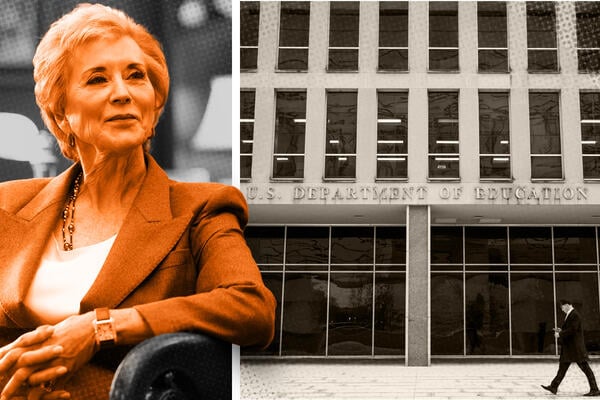
    The U.S. Department of Education is doubling down on its emphasis on workforce development. Education Secretary Linda McMahon recently proposed adding career pathways and workforce readiness to her list of priorities for discretionary grant funding, possibly guiding how the department spends billions of dollars.

    “After four years of the Biden Administration pedaling [sic] divisive ideology and racial preferencing, the Trump Administration will prioritize discretionary grants to education programs that actually improve student outcomes by using evidence-based strategies for instruction and creating pathways to high-demand fields,” U.S. Secretary of Education Linda McMahon said in a statement late last month. “The department looks forward to empowering states to close achievement gaps and align education with the evolving needs of the workforce.”

    McMahon’s plan would channel federal funds toward efforts to align workforce-development programs with state economic priorities. The department proposed supporting projects dedicated to identifying and promoting strong industry-recognized credentials, building tools for students to compare costs and earnings of different educational pathways and growing work-based learning opportunities, like apprenticeships and pre-apprenticeships. It also encouraged support for skilled trades and the development of talent marketplaces, digital platforms run by states to connect job seekers and potential employers based on skills.

    “For decades, the dominant ‘college for all’ narrative has led to a narrow focus that often leaves students with degrees and debt but limited job prospects,” the grant priority proposal reads. “By expanding the range of options so that a broader array of education providers can access existing funding in a manner that aligns outcomes with the demands of today’s workforce, the government can foster both economic mobility for students and sustained competitiveness for the nation.”

    McMahon has named other grant priorities since becoming secretary as well, including mathematics education, evidence-based literacy education, education choice, patriotic education and returning education to the states. The Education Department takes its priorities into account and can give them extra weight when approving discretionary grant awards.

    The department’s workforce-readiness proposal mirrors other plans from the Trump administration to put workforce development center stage. An April executive order, for example, charged federal officials with better addressing the nation’s workforce needs, including by reaching, and surpassing, one million new active apprenticeships. The One Big Beautiful Bill Act, signed into law in July, established workforce Pell, allowing Pell Grants, starting next year, to flow to low-income students in short-term programs.

    The Department of Labor also came out with a report outlining “America’s talent strategy” in August and is moving forward with a controversial interagency agreement with the Department of Education for a more “coordinated federal education and workforce system.” (The agreement would move administration of career and technical education programs to the DOL.)

    Education and workforce advocates say the new grant priority—open for public comment until Oct. 27—is a welcome win for causes they’ve long championed, but their celebration is tempered by some questions and concerns. Some argue ED’s workforce goals could be disrupted by other Trump administration policies. Others worry the department’s focus on nondegree pathways could lead to an underinvestment in traditional higher ed. And while some are cautiously optimistic about the proposed plan, they’re waiting to see how it works in practice.

    “When we look at this functionally, in theory, all of this looks like things that we like,” said Jennifer Stiddard, senior director of government affairs for Jobs for the Future, an organization focused on the intersection between education and the workforce. “Career-connected learning … creating better pathways for students, creating better opportunities to learn about careers—these are all things that are included in here. Where we always have pause is understanding how all of this is going to be applied.”

    Hopes and Worries

    The proposal has sparked hope for workforce development wonks, as some of their long-held goals are becoming national priorities.

    Erica Cuevas, director of education policy at Jobs for the Future, said she’s still reviewing the grant priority language, but she’s heartened to see the administration using its “bully pulpit and its discretionary grant authority to promote career-connected learning within the broader K–12 educational ecosystem,” beyond career and technical education programs, which reach a limited number of students.

    Katie Spiker, chief of federal affairs for the National Skills Coalition, a research and advocacy organization focused on workforce training, said it’s clear the Education Department is focused on aligning education offerings with workforce needs, fostering industry partnerships and expanding work-based learning opportunities. She also applauded the department for its focus on forging connections between high school programs, apprenticeships and other workforce development programs, which “really reflects how the work is done on the ground,” as a “holistic effort across education and workforce.”

    But she also worries that the Trump administration is simultaneously pushing policies that don’t serve these goals. For example, the president’s budget for fiscal year 2026 proposed zeroing out funding for adult education, which she views as critical for training adults in basic skills so they can fill workforce gaps.

    “The funding conversations and the massive shifts and reductions in investments that we’ve seen both from the House appropriations process and from the president’s budget request are really incongruent with these important priorities that they’re setting out in this document,” Spiker said.

    She also emphasized that the proposed grant priority doesn’t put any focus on “reaching and engaging with communities that have not traditionally had access” to certain high-demand jobs, including women, communities of color and workers with disabilities. She believes filling workforce shortages will require actively recruiting, and building up supports for, workers underrepresented in industries with workforce gaps.

    Businesses “are scrambling to try and build broader pipelines of folks, both because of job openings that they have today, as well as those that they are projecting for next year, five years from now and into the future,” Spiker said.

    In a similar vein, Lynn Pasquerella, president of the American Association of Colleges and Universities, said she found it “frustrating” that McMahon’s announcement of the grant priority described workforce readiness and diversity, equity and inclusion efforts as at odds.

    “We know that employers are insisting that their employees be able to speak across differences, work in diverse teams and engage in cross-cultural understanding,” based on surveys AAC&U conducts with employers, Pasquerella said.

    She supports aligning education programs with workforce needs and offering students more experiential learning opportunities. But she believes liberal arts education is also a part of training students for the workforce and fears such offerings could be sidelined in the department’s vision for supporting workforce readiness.

    “The risk is always that if we focus too narrowly on career preparation—without recognizing that career preparation must involve skills, competencies and dispositions central to a liberal education—that we will have a group of students who are narrowly technically trained without the capacity to grapple with the grand challenges that will confront us in the future,” she said. “We shouldn’t create a false dichotomy between career preparation and liberal education.”

    John Colborn, executive director of Apprenticeships for America, believes the proposed grant priority is over all a “positive development” for learners.

    “I think it brings some more balance to the educational enterprise, which has been overwhelmingly focused on getting everyone into college,” he said. “I think we’ve realized the limitations of that particular approach.”

    But while he favors exposing K–12 students to a broader range of career pathways, including apprenticeships, he also wants to make sure career-focused programs prepare students for both careers and college. He said one of the problems with vocational training in high schools in the past was that students too often were “constrained into a particular pathway.”

    “We don’t want to go down that road or repeat some of those mistakes,” he said.

    He noted that the partnership between the Education Department and the Department of Labor raises these types of concerns, because the DOL has less of an academic focus. But he believes stronger ties between the agencies is a net positive.

    The long-term effects of the proposal, and other workforce-development plans, “is really going to turn on whether or not that nuance can be represented in the grant making and priority setting for the department,” Colborn said.

    Source link

  • Tapping Alumni to Be Career Mentors for Students

    Tapping Alumni to Be Career Mentors for Students

    For students at Gettysburg College in Pennsylvania, alumni mentors are becoming embedded in their experience. A recently launched mentorship program pairs each rising junior with a graduate from the college to provide advice and encouragement as they finish their last two years of college.

    The initiative, part of Gettysburg’s reimagining of career development, helps students build a professional network before they leave college and hopefully eases the transition into life after graduation, said Billy Ferrell, director of external relations in Gettysburg’s Center for Career Engagement.

    What’s the need: Professional mentors can be an asset for early-career professionals, offering insights into navigating the workforce and their specific industry, as well as personal support and encouragement. But a majority of Americans say they don’t have a mentor, according to a 2023 survey by the University of Phoenix, and one-third of respondents said a lack of mentorship has held them back in their careers.

    Within higher education, many students are asking their institutions for assistance in identifying role models.

    A spring 2024 Student Voice survey by Inside Higher Ed found that 29 percent of students believe their college or university should focus more on connecting students to alumni and other potential mentors. And a 2023 student survey found that 45 percent of students think their career center should help them find a professional mentor.

    However, only a fraction of students have participated in a formal mentoring program, either through their college or outside the institution, according to a 2021 survey by Inside Higher Ed.

    How it works: Gettysburg’s Alumni Mentoring Program launched this fall with the Class of 2027, who coincidentally were the first class to participate in the college’s guided co-curricular pathways, Ferrell said.

    Students could opt to add an alumni mentor to their advising team, which already includes a faculty adviser, career adviser and co-curricular adviser, who coaches students on their pathway. Alumni advising is focused on the student’s career but could include job exploration, the postcollege transition, networking and industry-specific trends, Ferrell said.

    The goal is for students to learn “real world” skills to navigate life after college, according to the college’s website.

    Students will meet with their mentor at least once a month starting in October and conclude in March, Ferrell said.

    Gettysburg recruited mentors through email campaigns, social media posts and the alumni magazine, Ferrell said. Interested alumni signed up through connectGettysburg, the college’s career networking platform, and completed a short intake survey. Students completed a similar questionnaire and a computer algorithm made the mentor match, Ferrell said.

    Mentors participated in an online training module to prepare them to take on an advising role. Additionally, the college established a handbook for mentor pairs to outline expectations for the relationship and offer topical sessions for students to choose from to guide conversations with mentors.

    These resources can address a common barrier to mentorship for students: a lack of awareness of what the relationship entails. A 2021 survey by Inside Higher Ed found that among students who lacked a mentor, 45 percent didn’t know what they would ask a mentor and 27 percent didn’t know what they would do with one.

    What’s next: Eighty-one juniors and alumni are participating in the initial program, and Gettysburg will survey students and alumni throughout the term to gauge the effectiveness of the initiative and ensure students are getting the kind of support they’re looking for, Ferrell said.

    Next year, Gettysburg will expand the program to junior and senior-level students.

    Source link

  • Higher Education must help shape how students learn, lead and build the skills employers want most

    Higher Education must help shape how students learn, lead and build the skills employers want most

    For the first time in more than a decade, confidence in the nation’s colleges and universities is rising. Forty-two percent of Americans now say they have “a great deal” or “quite a lot” of confidence in higher education, up from 36 percent last year.  

    It’s a welcome shift, but it’s certainly not time for institutions to take a victory lap. 

    For years, persistent concerns about rising tuition, student debt and an uncertain job market have led many to question whether college was still worth the cost. Headlines have routinely spotlighted graduates who are underemployed, overwhelmed or unsure how to translate their degrees into careers.  

    With the rapid rise of AI reshaping entry-level hiring, those doubts are only going to intensify. Politicians, pundits and anxious parents are already asking: Why aren’t students better prepared for the real world?  

    But the conversation is broken, and the framing is far too simplistic. The real question isn’t whether college prepares students for careers. It’s how. And the “how” is more complex, personal and misunderstood than most people realize.  

    Related: Interested in innovations in higher education? Subscribe to our free biweekly higher education newsletter. 

    What’s missing from this conversation is a clearer understanding of where career preparation actually happens. It’s not confined to the classroom or the career center. It unfolds in the everyday often overlooked experiences that shape how students learn, lead and build confidence.  

    While earning a degree is important, it’s not enough. Students need a better map for navigating college. They need to know from day one that half the value of their experience will come from what they do outside the classroom.  

    To rebuild America’s trust, colleges must point beyond course catalogs and job placement rates. They need to understand how students actually spend their time in college. And they need to understand what those experiences teach them. 

    Ask someone thriving in their career which part of college most shaped their success, and their answer might surprise you. (I had this experience recently at a dinner with a dozen impressive philanthropic, tech and advocacy leaders.) You might expect them to name a major, a key class or an internship. But they’re more likely to mention running the student newspaper, leading a sorority, conducting undergraduate research, serving in student government or joining the debate team.  

    Such activities aren’t extracurriculars. They are career-curriculars. They’re the proving grounds where students build real-world skills, grow professional networks and gain confidence to navigate complexity. But most people don’t discuss these experiences until they’re asked about them.  

    Over time, institutions have created a false divide. The classroom is seen as the domain of learning, and career services is seen as the domain of workforce preparation. But this overlooks an important part of the undergraduate experience: everything in between.  

    The vast middle of campus life — clubs, competitions, mentorship, leadership roles, part-time jobs and collaborative projects — is where learning becomes doing. It’s where students take risks, test ideas and develop the communication, teamwork and problem-solving skills that employers need.  

    This oversight has made career services a stand-in for something much bigger. Career services should serve as an essential safety net for students who didn’t or couldn’t fully engage in campus life, but not as the launchpad we often imagine it to be. 

    Related: OPINION: College is worth it for most students, but its benefits are not equitable 

    We also need to confront a harder truth: Many students enter college assuming success after college is a given. Students are often told that going to college leads to success. They are rarely told, however, what that journey actually requires. They believe knowledge will be poured into them and that jobs will magically appear once the diploma is in hand. And for good reason, we’ve told them as much. 

    But college isn’t a vending machine. You can’t insert tuition and expect a job to roll out. Instead, it’s a platform, a laboratory and a proving ground. It requires students to extract value through effort, initiative and exploration, especially outside the classroom.  

    The credential matters, but it’s not the whole story. A degree can open doors, but it won’t define a career. It’s the skills students build, the relationships they form and the challenges they take on along the way to graduation that shape their future. 

    As more college leaders rightfully focus on the college-to-career transition, colleges must broadcast that while career services plays a helpful role, students themselves are the primary drivers of their future. But to be clear, colleges bear a grave responsibility here. It’s on us to reinforce the idea that learning occurs everywhere on campus, that the most powerful career preparation comes from doing, not just studying. It’s also on us to address college affordability, so that students have the time to participate in campus life, and to ensure that on-campus jobs are meaningful learning experiences.  

    Higher education can’t afford public confidence to dip again. The value of college isn’t missing. We’re just not looking in the right place. 

    Bridget Burns is the founding CEO of the University Innovation Alliance (UIA), a nationally recognized consortium of 19 public research universities driving student success innovation for nearly 600,000 students. 

    Contact the opinion editor at [email protected]. 

    This story about college experiences was produced by The Hechinger Report, a nonprofit, independent news organization focused on inequality and innovation in education. Sign up for Hechinger’s weekly newsletter. 

    The Hechinger Report provides in-depth, fact-based, unbiased reporting on education that is free to all readers. But that doesn’t mean it’s free to produce. Our work keeps educators and the public informed about pressing issues at schools and on campuses throughout the country. We tell the whole story, even when the details are inconvenient. Help us keep doing that.

    Join us today.

    Source link

  • Chatbots in Higher Education: Benefits, Challenges, and Strategies to Prevent Misuse – Faculty Focus

    Chatbots in Higher Education: Benefits, Challenges, and Strategies to Prevent Misuse – Faculty Focus

    Source link

  • UNC Professor Accused of Advocating Political Violence Reinstated

    UNC Professor Accused of Advocating Political Violence Reinstated

    Marin Herold/iStock/Getty Images Plus

    Dwayne Dixon, a professor at the University of North Carolina at Chapel Hill, was reinstated Friday after the university performed a “thorough threat assessment,” Dean Stoyer, vice chancellor for communications and marketing, said in a statement. 

    Dixon was placed on leave Monday following allegations that he was an advocate for political violence.

    “The Carolina Behavioral Threat Assessment and Management Team consulted with the UNC System security office and with local law enforcement, undertaking a robust, swift and efficient review of all the evidence. We have found no basis to conclude that he poses a threat to University students, staff, and faculty, or has engaged in conduct that violates University policy,” Stoyer said in a statement. “As a result, the University is reinstating Professor Dixon to his faculty responsibilities, effective immediately.”

    Dixon is a teaching associate professor of Asian and Middle Eastern studies at UNC Chapel Hill, and he’s been active at counterprotests to alt-right rallies, including at the Unite the Right rally in Charlottesville, Va., in 2017. He’s also a strong advocate for gun rights and used to be a member of the Silver Spring Redneck Revolt, a chapter of the now-disbanded antifascist, antiracist, anticapitalist political group Redneck Revolt. Andrew Kolvet, a spokesperson for the late Charlie Kirk’s Turning Point USA, called for Dixon to be fired in an X post because of these affiliations.

    Source link

  • Texas Tech Clarified Anti-Trans Policies in FAQ—Then Removed It

    Texas Tech Clarified Anti-Trans Policies in FAQ—Then Removed It

    Photo illustration by Justin Morrison/Inside Higher Ed | menonsstocks/E+/Getty Images | snorkulencija/iStock/Getty Images

    After a confusing week, Texas Tech University officials offered the first written clarification on new university policies that prohibit faculty members from speaking or teaching about transgender identity. On Sunday, the provost’s office posted a lengthy frequently asked questions page that, among other things, addressed the definition of “noncompliant language,” explained how the new policies impact research and answered whether faculty can write on their syllabi that they are an ally to transgender people.

    But after three days, the FAQ was taken down. Faculty have not been told why the information was removed, and health-care instructors are concerned students will not be trained in care for transgender patients, as required by certification exams.

    A university spokesperson did not respond to Inside Higher Ed’s questions on the matter. Some faculty suspect that Brandon Creighton, who was officially named the Texas Tech system’s next chancellor on Tuesday, may have orchestrated the removal of the FAQ. Creighton was the lead author of the Texas Senate’s sweeping ban on diversity, equity and inclusion in 2023, and of the recent bill giving control of faculty senates to university presidents and boards. He will assume the chancellor role on Nov. 19.

    While it was the first and most comprehensive written guidance Texas Tech has posted on its anti-trans policies, the FAQ left a lot of questions unanswered. The word “transgender” wasn’t included in any of the written answers. In one answer, officials wrote that noncompliant language “refers specifically to outdated or inaccurate syllabus content (i.e., COVID-era statements or statements referring to offices or units that no longer exist at Texas Tech.),” but said nothing about gender identity.

    In response to a question about academic freedom, officials wrote, “Faculty may include course content that is relevant to a student’s program of study and post-graduation opportunities, including workforce and additional education. Faculty are encouraged to be thoughtful about including content that is described in the Chancellor’s memo.”

    The new directives do not impact research, the FAQ clarified. Officials advised against including a “personal statement of student support” or a statement professing LGBTQ allyship, writing that “such a statement could attract unwanted attention.” They also wrote that faculty could include a preferred name policy on their syllabi, but that “until further clarification is available, it is advisable to omit personal pronoun language.” When relevant, instructors are permitted to facilitate classroom discussions in which students examine the state’s position on gender alongside other views, but the instructor may not advocate for any particular view.

    In a later question about government censorship and faculty retention, officials wrote, “We recognize that faculty recruitment and retention may be affected. At present, the issued guidance applies only to instructional activities, not a faculty member’s independent research.”

    The Texas conference of the American Association of University Professors has pushed back on the anti-trans policies at Texas Tech and other public universities in the state.

    “Colleges and universities have an obligation to develop campus policies that protect the constitutional rights of their faculty to teach and research the subjects in their areas of expertise without intimidation or censorship,” said Brian Evans, president of the Texas conference of the AAUP. “By ensuring that teachers can speak freely, campus administrators should enable students to explore and learn the widest set of topics for civil engagement and successful careers. Campus policies related to academic freedom and free speech should be devised with the full participation of faculty in the spirit of a shared commitment to excellence.”

    The FAQ—as short-lived as it was—only applied to Texas Tech’s flagship campus. The four other campuses in the public system, including Angelo State University, where faculty have received a profusion of conflicting verbal information, were not included.

    A faculty member at the Texas Tech University Health Sciences Center who asked to remain anonymous for fear of retribution confirmed to Inside Higher Ed that faculty at their campus have been told not to use certain terms in their course content, including “transgender”; “gender-affirming care”; “diversity, equity and inclusion”; and “affirmative action.” Health Sciences Center faculty have not received any written guidance, and the deans don’t have clarifying information, either, the faculty member said. It is an especially troubling policy to enforce for health-care students, because care for transgender patients is included in some certification exams students must pass to be licensed, they said.

    “There are certainly many things that our government has [outlawed] … but I can’t think of another thing that we’ve been told we can’t talk about,” the faculty member said. “Sex trafficking is illegal, but we can talk about how to care for people who have been victims of sex trafficking. Drunk driving—there’s about a million examples.”

    It is unclear how much information students have about these new policies, according to the faculty member. Some students are bringing up transgender care in classroom discussions, and instructors are unsure how to respond.

    Source link

  • Mike Gavin Resigns to Lead DEI Defense Coalition

    Mike Gavin Resigns to Lead DEI Defense Coalition

    Mike Gavin, the founder of Education for All, a grassroots group of community college administrators fighting legislative attacks on diversity, equity and inclusion, will step down as president of Delta College in January. He has been in the post since 2021. 

    Gavin informed the Delta College Board of Trustees last week that he would resign to lead a national coalition focused on defending equity in higher ed. 

    “My whole career has been focused on equity and how higher ed is situated in the democratic experiment, so when I was asked to do the next thing, I felt compelled to do it,” Gavin told Inside Higher Ed

    “I was not looking for a job. Delta has been amazing. The faculty and staff are some of the most insightful and student-centered I’ve ever seen,” he said. 

    More information about the coalition, including its priorities and funding model, will be released soon, he added. 

    Since the early days of the second Trump administration, Gavin has been a leading voice in defending DEI work in higher ed, especially at community colleges. Participation in Education for All surged at the beginning of the year as college leaders sought advice on protecting programs and navigating compliance with Trump administration mandates. 

    “My scholarship rests on the great thinkers of our past, from Benjamin Franklin to James Baldwin. It is also grounded in the belief that our country depends on a higher education sector that must be free from partisan interference, in order to democratize higher education for all,” Gavin wrote in a letter to the Delta College community.  

    Delta College trustees said they will begin the process of appointing Gavin’s successor in the coming weeks. 

    Source link

  • Judge Upholds Biden-Era Gainful Employment Rule

    Judge Upholds Biden-Era Gainful Employment Rule

    A federal judge rejected an effort to overturn the gainful-employment rule, which was put in place during the Biden administration.

    In an opinion issued Thursday, Judge Reed O’Connor from the Northern District of Texas sided with the Education Department on every point. One of the plaintiffs, a trade association representing cosmetology schools, had argued in its lawsuit that the regulations jeopardized the “very existence” of cosmetology schools and used flawed measures to determine whether graduates of career education programs are gainfully employed.

    Under the rules, for-profit and nondegree programs have to prove that their graduates can afford their loan payments and earn more than a high school graduate. Those that fail the tests in two consecutive years could lose access to federal financial aid. The regulations also included new reporting requirements for all colleges under the financial value transparency framework. 

    The lawsuit started under the Biden administration, and Trump officials opted to defend the regulations in court and urged the judge to keep the rules in place. 

    Similar gainful-employment rules survived a legal challenge in 2014 but were ultimately scrapped by the first Trump administration. However, in recent years, lawmakers on both sides of the aisle have become more interested in finding ways to hold colleges accountable for their students’ career outcomes. Under legislation that Congress passed this summer, most college programs will have to pass a similar earnings test. How the Education Department carries out that test will be subject to a rule-making process set to kick off later this year.

    Jason Altmire, president and chief executive officer of Career Education Colleges and Universities, which represents the for-profit sector and opposed the Biden rule, said in a statement that he looks forward to revisiting the issue during the rule-making process.

    “We are confident the Biden Gainful Employment Rule will be revised to incorporate a fairer accountability measure that will apply equally to all schools, ensuring all students can benefit,” he said. “We look forward to a full consideration of these issues during the months ahead.”

    Dan Zibel, vice president of the legal advocacy group Student Defense, applauded the court ruling in a statement. 

    “Higher education is supposed to offer students a path to a better life, not a debt-filled dead end,” he said. “The 2023 Gainful Employment Rule reflects a common-sense policy to ensure that students are not wasting time and money on career programs that provide little value.”

    Source link

  • We Don’t Need to Retreat From the Challenge of AI in Schools

    We Don’t Need to Retreat From the Challenge of AI in Schools

    One of the chief pleasures of traveling to schools and campuses to talk about More Than Words: How to Think About Writing in the Age of AI and my approaches to how we should approach the teaching of writing is getting the chance to see what other places are doing with the challenge of working in a world of generative AI technology.

    My travels so far this semester have been very encouraging. It seems clear that we are in a new phase of reasoned consideration following on an earlier period of worry and uncertainty. I never saw outright panic, but there was a whiff of doom in the air.

    There may be a selection bias in terms of the institutions that would invite someone like me to come work with them, but there is a clear impulse to figure out how to move forward according to institutional values, rather than being stuck in a defensive posture.

    As I declared way back in December 2022, “ChatGPT can’t kill anything worth preserving.” The work of what must be preserved and how is definitely underway.

    I want to share some impressions of what I think is working well at the institutions that are moving forward, so others may consider how they might want to do this work on their own campuses.

    Going on Offense by Living Your Values

    One clear commonality for successfully addressing the current challenges is by identifying the core institutional values and then making them central to the ongoing discussions about how instruction and institutional operations must evolve.

    As one example, at my recent visit to Iona University, I was introduced to their framework of agency, expression and responsibility.

    “Agency” is one of my favorite words when talking about learning, period, and in this case it means communicating to students that it is ultimately the students themselves who must choose the path of their own educations, including the use of AI technology. I’ve recently been speaking more and more about AI in education as a demand-side issue, where students need to see the pitfalls of outsourcing their learning. Agency puts the responsibility where it belongs: on students themselves.

    Expression represents a belief that the ultimate goal of one’s education is to develop our unique voice as part of the larger world in which we work and live. Writing isn’t just producing text but using the tools of expression—including text—to convey our points of view to the world. Where LLMs use substitutes for or obscure our personal expression, they should be avoided.

    Responsibility is related to agency in the “with great power comes great responsibility” sense. Students are encouraged to consider the practical and ethical dimensions of using the technology.

    At other stops I’ve seen similar orientations, though often with wrinkles unique to local contexts. One common value is rather than retreating to assessments that can be monitored in order to prevent cheating, the goal is to figure out how to give life to the kinds of educational experiences we know to be meaningful to learning.

    If you start with the values, things like policy can be evaluated against something meaningful and enduring. The conversations become more productive because everyone is working from a shared base.

    I know this can be done, because I’ve been visiting institutions working on this problem for more than 18 months, and the progress is real.

    Collective Spirit and Collaborative Action

    Another common sign of progress is institutional leadership that communicates a desire to take a collective approach to tackle the issues and then puts specific, tangible resources behind this call to make collaborative action more possible and effective.

    Several institutions I’ve visited have carved out spots for some version of AI faculty fellows, where these fellows are given freedom to explore the technology and its specific implications to their disciplines, before coming back to a group and institutional setting where this learning is shared.

    To work, these must be more than groups tasked to figure out how to integrate AI technology into the university. I have not visited any institution that has done this—they are unlikely to invite someone like me—but I have been corresponding with people whose institutions are doing this who are looking for advice, and it seems like a sure route to a divided institution.

    At my Iona visit, they took this approach to the next level by putting on a one-day conference and inviting community educators from all walks to hear not just yours truly, but also the AI fellows and other faculty discuss a variety of issues.

    These conferences don’t solve every problem in a day, but simply demonstrating to the broader public that you’re working the problem is deeply encouraging.

    Room and Respect for Difference

    One of my favorite parts of my visits is the chance to talk with the faculty on a campus who have been wrestling with the same challenges I’m spending my time on. At the base level, we share the same values when it comes to what learning looks like and the importance of things like agency and transparency to achieving those things.

    But when it comes to the application and use of generative AI technology to achieve these outcomes, there are often significant differences. I share my perspective, they share theirs, and while I don’t think we necessarily change each other’s minds, a great appreciation for a different perspective is achieved.

    It’s a model of what I always based my courses in, the academic conversation, where the goal of writing and speaking is to gradually increase the amount of illumination on the subject at hand. We’re having a discussion, not a “debate.”

    I am far more skeptical and circumspect about the utility of generative AI when it comes to teaching and learning than many. I often point out that anyone who is using the technology productively today established a whole host of capacities (or what I call a “practice”) in the absence of this technology, so it stands to reason that we should still be educated primarily without interacting with or using the technology.

    But I’ve also seen tangible demonstrations of integrating the capacities of generative AI tools in ways that seem to genuinely open potential new avenues. These people need to keep experimenting, just as those of us who want to find ways to do our work in the absence of AI should be empowered to do so.

    Do More Than ‘Doing School’

    Maybe this belongs as part of the first point of “going on offense,” but the successes I’ve seen have come from a willingness to fundamentally question the system of schooling that has resulted in students primarily viewing their educations through a transactional lens.

    In many cases, generative AI outputs satisfy the transaction of school in ways that mean students learn literally nothing. We’ve all read the viral articles about students using AI for everything they do.

    But I can report from my visits to many different institutions and talking to people working at many more that this is not universally true. Many students are eager to engage in activities that help them learn. It then becomes the responsibility of schools and instructors to give students something worth doing.

    Retreating to analog forms because they can be policed is a missed opportunity to rethink and redo things we know were not working particularly well.

    There is not endpoint to this rethinking. Frankly, I find this energizing, and it’s clear lots of others do, too. This energy is something we can use to help students.

    Source link

  • Indian Students Look Elsewhere After H-1B Visa Price Shock

    Indian Students Look Elsewhere After H-1B Visa Price Shock

    The new $100,000 fee for H-1B visas could prove to be the final straw for Indian students’ plans to study in the U.S., with other destinations set to benefit as a result.

    The move by the Trump administration—the latest in a long list of restrictions affecting international students—is set to impact Indians the most, given they account for more than 70 percent of H-1B recipients.

    Many students enroll in courses with a view to progressing on to the visa, working in industries such as Silicon Valley.

    “The sentiment among prospective … students is pretty dismal after this announcement,” said Sonya Singh, founder of SIEC, an education consultancy.

    “The queries and applications for U.S. universities have seen a significant drop, and students are considering alternatives. Destinations such as the U.K., Germany and Australia are being explored, and Canada is proposing a dedicated work permit for current and potential U.S. H-1B holders. All these initiatives and policy changes are sure to bring about a massive shift in demand for the U.S. as a destination.”

    Sagar Bahadur, executive director for Asia at international education consultancy Acumen, said the debate has created “a lot of talk, anxiety and perception-building” among prospective students.

    He noted that students are increasingly deferring study plans, exploring alternative destinations or considering “transnational pathways” that allow them to start degrees elsewhere before moving to the U.S. if conditions improve.

    Pankaj Mittal, secretary general of the Association of Indian Universities, said the fee hike was “shaking things up for Indian students eyeing the U.S. for education and careers.”

    With uncertain job prospects and shifting policies, she argued, parents may no longer be willing to pay high tuition fees.

    “Countries like Germany, Canada, Australia, U.K., Singapore and Malaysia may gain traction due to stable policies, work opportunities and affordability,” Mittal said, highlighting Germany’s free or low-cost tuition and work allowances as a growing draw for Indian students.

    She also warned of wider repercussions for international collaboration. “This decision may impact partnerships with U.S. institutions as Indian universities explore alternatives and strengthen ties with European, Canadian or Australian institutions. STEM and health-care sectors may be particularly affected due to high H-1B dependency.”

    Early signs of a shift are already emerging. Narender Thakur of the University of Delhi noted declining interest in short U.S. master’s courses in computing and engineering, fields closely tied to H-1B pathways.

    He suggested that students may increasingly consider other global destinations or branch campuses in India, while research partnerships with U.S. institutions could slow. Opportunities in entrepreneurship and remote work may also appeal to students deterred from U.S. employment.

    Andrew Morran, head of politics and international relations at London Metropolitan University, said the policy would “particularly hit Indian students, who last year made up 71 percent of international student applications, according to U.S. government statistics.”

    He described the move as part of a broader trend restricting access to U.S. universities and warned it could make study in the U.S. “even more the preserve of the elite and the wealthy” while undermining classroom diversity.

    “It will also impact the student experience, as diversity is undermined and the shared experience of a global classroom is weakened further,” Morran said. Universities might seek students elsewhere, he added, but the hostile political climate and attacks on immigration could blunt recruitment.

    “Talent gaps cannot be filled overnight. Meanwhile, the rest of the world will take every opportunity it has to steal these students,” he said.

    Source link