Tag: Higher

  • Berkeley Law Dean Urges SCOTUS to Be “Guardrail” for Democracy

    Berkeley Law Dean Urges SCOTUS to Be “Guardrail” for Democracy

    Carlos Avila Gonzalez/The San Francisco Chronicle/Getty Images

    PHILADELPHIA—The final speech at the Association of Public and Land-grant Universities’ annual conference this week dissected the Trump administration’s “financial assault” on universities and urged the Supreme Court to be a check on a president whom Congress hasn’t reined in.

    Erwin Chemerinsky, dean of the University of California, Berkeley, School of Law and a constitutional scholar, also told the attendees of the APLU meeting that their institutions should be united against the administration’s attacks on higher ed.

    “The one thing we all learned on the playground is if you give in to a bully, it only makes it worse in the long term,” Chemerinsky said Tuesday, adding—to applause—that “it’s so important that institutions of higher education stand together at this moment and stand together for our shared missions.”

    The speech comes after multiple prominent universities, including a few public ones, refused to sign Trump’s proposed “Compact for Academic Excellence in Higher Education,” which asked them to give up significant autonomy in exchange for an unspecified edge in competitions for federal funds.

    It also follows legal victories against the administration’s grant cancellations. Litigation by UC researchers against Trump, the Department of Government Efficiency and other federal agencies and officials has restored more than $500 million in federal research grants, which the administration cut at UCLA after the Justice Department accused it of tolerating antisemitism during a spring 2024 pro-Palestinian protest encampment. Chemerinsky, who is Jewish, is representing the researchers in that litigation.

    Asked for comment, a White House official told Inside Higher Ed in an email, “UC Berkely clearly needs to make some changes – violence broke out on UC Berkeley’s campus just last night and they have failed to police antisemitism by tolerating an ‘unrelenting’ steam of antisemitic harassment toward Jewish students and faculty.”

    Even before the latest cuts, Chemerinsky estimated the Trump administration had already slashed close to $1 billion in funding for faculty and researchers across the UC system, a figure that he said was much higher than DOGE’s tally. The UC system didn’t confirm or deny this estimate or provide a more recent estimate Tuesday, saying the system was closed for Veterans Day.

    “I think the termination of grants that we’ve seen, whether it’s to researchers and faculty or to universities, is clearly illegal,” Chemerinsky said. But when it comes to “nonrenewal of grants in the future and funding in the future,” he added, the “government has far more discretion, and there it’s going to be much harder to bring legal challenges.”

    Chemerinsky also said federal funding cuts are just one of four financial vulnerabilities the administration has identified in universities: “they’re very dependent” on federal money, tuition, philanthropy and foreign students. Using his own institution as an example, he said Berkeley Law has an L.L.M., or master of laws, degree program that’s exclusively for foreign students and represents $20 million in its annual budget.

    He then expressed concern about how the Supreme Court has ruled on the administration’s actions, even beyond higher ed.

    “By my count, 39 matters have come to the Supreme Court since [Inauguration Day] Jan. 20, challenging actions of the Trump administration,” he said. “All are instances where the lower courts ruled against the Trump administration, and in 36 of 39, the Supreme Court has ruled in favor of the Trump administration.”

    Noting eight of the nine justices graduated from the law schools at either Harvard or Yale Universities (Amy Coney Barrett graduated from the University of Notre Dame), he said, “My optimistic self believes that the United States Supreme Court will stand up for higher education.” Chemerinsky added that since Congress hasn’t served as a check on the president, it’s up to the federal judiciary to uphold the laws and the Constitution.

    Fittingly, his speech took place at a Philadelphia hotel about a 15-minute walk from where the founders adopted the Constitution. APLU said more than 1,300 people attended this week’s three-day conference.

    “Ultimately, I believe the guardrail of our democracy has to be the courts and the Supreme Court,” Chemerinsky said. “If there is going to be a check on a president who has authoritarian impulses, it’s going to have to be from the restraints of the Constitution—and the only way we can enforce those is the courts.”

    Chemerinsky noted that “one characteristic of every authoritarian—or would-be authoritarian—rule is the way they go after universities. What we’ve seen in the last nine and a half months is unprecedented in American history.”

    He compared Trump’s actions to McCarthyism, the 1950s-era political persecution of faculty, government employees and others. But Chemerinsky pointed out that back then, “it wasn’t the president of the United States leading the attack on higher education,” and “there wasn’t the financial assault on universities.”

    “But the one thing that the McCarthy era should say to all of us is that history will judge us,” he said. “Twenty, 30, 50, 75 years from now, people will look back on us the way we look at university officials in the McCarthy era, and they will judge us as to whether we capitulated or whether we had courage.”

    Source link

  • The higher education “market” still doesn’t work

    The higher education “market” still doesn’t work

    When I was prepping up for Policy Radar in October, I gave some brief thought as to how students are positioned and imagined in the Post-16 Education and Skills White Paper.

    And if you’re not a fan of the student-as-consumer framing that has dominated policy for over a decade, I have bad news.

    “Good value for students” will be delivered through “quality” related conditional fee uplifts, and better information for course choice.

    Ministers promise to “improve the quality of information for individuals” so they can pick courses that lead to “positive outcomes” – classic consumer-style transparency, outcome signalling and value propositions.

    And UCAS is leaned on as the main choice architecture for applicants, promising work to improve the quality, prominence and timing of information that applicants see.

    I won’t repeat here why I don’t think that student-as-consumer is anything like as damaging as some do. It was the subject of the first thing I ever wrote for this site, and the arguments are well-rehearsed.

    What I am interested in here is the extent to which the protections that are supposed to exist for students as consumers are working. And to do that, I thought I’d take a little trip down memory lane.

    Consumers at the heart of the system

    Back in 2013, when reforms were being implemented in England to triple tuition fees to £9,000, there had been a very conscious effort in the White Paper that underpinned those changes to frame students as consumers.

    HEFCE was positioned as a “consumer champion for students” tasked with “promoting competition”, we learned that “putting financial power into the hands of learners makes student choice meaningful” and a partnership with Which? was to improve the presentation of course information to help students get “value for money”.

    The “forces of competition” were to replace the “burdens of bureaucracy” in driving up the quality”, the system was to be designed to be “more responsive to student choice” as a market demand signal, the National Student Survey was positioned as a tool for consumer comparison, and the liberation of number controls that had previously “limit[ed] student choice” was to enable students to “vote with their feet”.

    Students were at the heart of the system – as long as you imagined them as consumers.

    The Office for Fair Trading (OfS) wasn’t so sure. The Competition and Markets Authority’s predecessor body had been lobbied by NUS over terms in student contracts that allowed academic sanctions for non-academic debt – and once that was resolved, it took a wider look at the “market” (for undergraduate students in England) to see whether it was working.

    It was keen to assess whether the risks inherent in applying market mechanisms to public services – information asymmetries, lock-in effects, regulatory gaps, and race-to-the-bottom dynamics – were being adequately managed.

    So it launched a call for information, and just before it got dissolved into the CMA, published a report of its findings with recommendations both for the successor body and government.

    Now, given the white paper has done little to change the framing, the question for me when re-reading it was whether any of the problems it identified are still around, or worse.

    The inquiry was structured around four explicit questions – whether students were able to make well-informed choices that drive competition, whether students were treated fairly when they get to university, whether there was any evidence of anti-competitive behaviour between higher education institutions, and whether the regulatory environment was designed to protect students while facilitating entry, innovation, and managed exit by providers.

    On that third one, it found no evidence of anti-competitive behaviour, and in the White Paper, the CMA is now said to be working with the Department for Education (DfE) to clarify how collaboration between providers can happen within the existing legal framework. It’s the others I’ve looked at in detail below.

    Enabling students to make informed choices

    The OFT’s first investigation area was whether students could make the well-informed choices that the marketisation model relied upon.

    The theoretical benefits of competition – providers competing on quality, students voting with their feet, market forces driving standards – were only going to work if consumers could assess what they were buying. Given education is a “post-experience good” that can’t be judged until after consumption, this was always going to be the trickiest part of making a market work.

    As such, it identified information asymmetry as one of three meta-themes underlying market dysfunction. Students were making life-changing, debt-incurring decisions with incomplete, misleading, inaccessible or outdated information – potentially in breach of Consumer Protection from Unfair Trading Regulations and rendering the entire choice-and-competition model built on sand.

    On teaching quality indicators, students couldn’t find basic information about educational experience. Graham Gibbs’ research had identified key predictors – staff-to-student ratios, funding per student, who teaches, class sizes, contact hours – yet none were readily available. Someone reviewing physics courses couldn’t tell whether they’d get eleven or 25 hours weekly.

    By 2014, the National Student Survey (NSS) was prominent but only indirectly measured teaching quality. Without observable process variables, institutions faced weak incentives to invest in teaching and students couldn’t exert competitive pressure. For OfT, the choice mechanism was essentially decorative.

    On employment outcomes, career prospects were the major decision factor, yet DLHE tracked employment only six months post-graduation when many were in temporary roles. The 40-month longitudinal DLHE had sample sizes too small for course-level statistics – students couldn’t compare actual career trajectories. It was also worried about value-added – employment data didn’t control for intake characteristics. Universities taking privileged students looked advantageous regardless of what they actually contributed – for the OfT, that risked perverse incentives where institutions were rewarded for cream-skimming privileged students rather than adding educational value.

    It was also worried about prestige signals like entry requirements and research rankings crowding out quality signals. Presenting outcomes without contextualising intake breached a basic market principle – for the OFT, consumers should assess product quality independent of customer characteristics. And on hidden costs, an NUS survey had found 69 per cent of undergraduates incurred additional charges beyond tuition – equipment hire, studio fees, bench fees – many of which were unknown when applying, raising legal concerns and practical affordability questions.

    The OFT recommended that HEFCE’s ongoing information review address coverage gaps around the learning environment including contact hours, class sizes and teaching approaches; that HEFCE and the sector focus on improving quality and comparability of long-term employment and salary data; that employment data account for institutions taking students with different backgrounds and abilities, acknowledging significant methodological challenges around controlling for prior attainment, socioeconomic background and subject mix; and that material information about additional costs be disclosed to avoid misleading omissions.

    A decade later, things are much worse. DiscoverUni replaced Unistats but core Gibbs indicators remain absent. Contact hours became a political football – piloted as a TEF metric in 2017, abandoned as unworkable, then demanded by ministers in 2022 with sector resistance fearing “Mickey Mouse degrees” tabloid headlines. Staff ratios, class sizes and teaching qualifications still aren’t standardised. The TEF provides gold/silver/bronze ratings but doesn’t drill down to process variables or subject areas predicting actual experience.

    On employment outcomes, things are marginally better but inadequate. Graduate Outcomes tracks employment at 15 months rather than six, but there’s still no standardised long-term earnings trajectory data at course level. On value-added, the situation is virtually unchanged. OfS uses benchmarks in regulation but these aren’t prominently displayed for prospective students. IFS research periodically demonstrates dramatic differences between raw and adjusted outcomes, but this isn’t integrated into official student-facing information.

    The Russell Group benefits enormously from selecting privileged students whose career prospects would be strong regardless of institutional quality. Students can’t distinguish educational quality from privilege – arguably worse given increased marketing of graduate salary data without the context that would make it meaningful. And on hidden costs, the picture is mixed and hard to assess. There is no standardised disclosure format, no regulatory requirement for prominence at application, and a real mess over wider participation costs. The fundamental issue persists.

    Most importantly, well-informed choices pretty much rely on the idea that information is predictive – whether you’re talking about higher education’s experience outputs or its outcomes, what a student is told is supposed to signal what they’ll get. But rapid contraction of courses (and modules within courses), coupled with significant changes in the labour market, all mean that prediction is becoming increasingly futile. That’s a market that, on OfT terms, doesn’t work.

    The student experience at university

    Back in 2013, the OFT identified lock-in effects as the second of three meta-themes undermining the market model.

    Once enrolled, students were effectively trapped by high switching costs, weak credit transfer, financial complications and social costs. For the regulator, that fundamentally broke the competitive mechanism that the entire reform package relied upon. If students couldn’t credibly exit poor provision, institutions faced weak pressure to maintain quality after enrolment. The threat of exit – essential to making markets work – was largely hollow. That enabled institutions to change terms, raise fees and alter courses with relative impunity.

    It found only 1.9 per cent of students switched institutions nationally. While around 90 per cent of institutions awarded credits in theory, there was no guaranteed right to transfer them with assessment happening case by case. Information about credit transfer was technical and non-user friendly. Students faced multiple barriers including difficulty assessing credit equivalence, poor information, financial complications and high social costs of relocating. And students leaving mid-year had to wait until next academic year to access funding again, particularly trapping disadvantaged students in unsuitable courses.

    On fees and courses changing mid-stream, the OFT received reports of fees increasing mid-way through courses, particularly for international students – 58 per cent of institutions didn’t offer fixed tuition for international students on courses over one year. That contravened principles requiring students to know total costs upfront and potentially constituted aggressive commercial practices by exploiting students’ constrained positions.

    Course changes posed similar problems – locations changing, modules reduced, lectures moved to weekends, content changing, modules unavailable. Terms permitting key features to change without valid reason were potentially unfair.

    On misleading information, the OFT heard concerns about false or misleading information about graduate prospects, accreditation, qualification type, course content and facilities, breaching Consumer Protection from Unfair Trading Regulations. Institutions also failed to inform students of potential fee increases, course changes and mandatory additional charges – material omissions affecting informed decisions.

    On complaints and redress, while resolution times were improving from 20 per cent taking over a year in 2009 to 5 per cent, still 12 per cent took six-plus months. Students often graduated before complaints were resolved. A power imbalance between students and institutions required accessible, clear pathways – yet students reported difficulty finding complaint forms, fear of complaining and being put off by bureaucratic processes. Many were unaware of the OIA or how to access it. There was no public data on complaints handled internally by institutions, meaning systemic problems remained hidden and students couldn’t make informed choices between institutions.

    The OFT didn’t make formal recommendations on credit transfer, noting that difficulties arose partly from inevitable variations in how institutions structure degrees, but highlighted that institutions appeared to lack processes for assessing credit equivalence. It implied that fees and course terms needed greater transparency and stability, that misleading information must be eliminated, that academic sanctions should only apply to academic debt, that complaint processes needed to be faster and more accessible with transparency about complaint volumes, that OIA coverage should be comprehensive, and that the structural barriers to price competition needed addressing.

    A decade later, the picture is bleak. Credit transfer has worsened substantially – despite being crucial to the Lifelong Learning Entitlement, it remains one of those old chestnuts where the collective impulse is to explain why it cannot happen. Multiple government attempts have been unsuccessful, and recent OIA complaints show students still don’t realise until too late that transferring will significantly impact loan funding or bursaries.

    On fees and courses changing, the problem persists and legal standards have tightened considerably with both Ofcom and the CMA now viewing inflation-linked mid-contract price increases as causing consumer harm. The 2024 increase to £9,535 exposed widespread non-compliance with many institutions lacking legally sound terms.

    Unilateral course changes without proper consent remain endemic. The CMA secured undertakings from UEA in 2017, and recent OfS and Trading Standards interventions have identified unreasonably wide discretion in terms, and this summer when I looked, less than a third had deleted industrial action from force majeure clauses.

    On misleading information, the DMCC Act has tightened requirements but enforcement is patchy and two-tier with new providers facing enhanced scrutiny while registered providers don’t face the same requirements. Students still cannot bring direct legal claims for misleading omissions.

    On complaints, in 2021 the OIA closed 2,654 complaints but failed to meet its KPI of closing 75 per cent within six months, and the OIA’s influence seems to be waning – with providers implementing good practice recommendations on time dropping from 88 per cent in 2018 to just 60 per cent recently – significantly worse than 2014. Provider websites still include demotivating language about the OIA having no regulatory powers, and there’s still no public data on internal complaints.

    Almost every problem identified has persisted or worsened. Credit transfer remains a policy aspiration without practical implementation. Mid-course changes have intensified under financial pressure. Complaints resolution has deteriorated. Price competition remains absent. Students remain locked into courses with weak protections against opportunistic behaviour by institutions under financial strain.

    The regulatory environment

    The OFT identified regulatory-market misalignment as the third meta-theme. A framework designed for a government-funded sector was governing a student-funded market. As funding shifted, areas without direct public funding fell outside regulatory oversight, creating gaps in student protection and quality assurance. The regulatory architecture hadn’t caught up with the marketisation it was supposed to facilitate.

    It found a system that relied on ad hoc administrative arrangements on decades-old frameworks, lacking democratic legitimacy and a clear statutory basis. Multiple overlapping responsibilities created extreme complexity – the Regulatory Partnership Group produced an Operating Framework just to map arrangements.

    The OFT’s recommendations were implicit – comprehensive reform with primary legislation, simplified structures, reduced uncertainty, accommodation of innovation, competitive neutrality, independent quality assurance, clear exit regimes and quality safeguards.

    Later in the decade, HERA 2017 provided primary legislation establishing the Office for Students (OfS) with statutory frameworks, attempting to address the funding model misalignment. But complexity has arguably worsened dramatically – and beyond OfS, providers and their students are supposed to navigate DfE, UKVI, HESA, QAA, OIA, EHRC, employment law, charity law, Foreign Influence Registration, Prevent and more.

    Crucially, from a student perspective, enrolling is now riskier. Student Protection Plans exist but in sudden insolvency required funds are unlikely protected. OfS has limited teach-out quality monitoring. Plans are outdated and unrealistic – significantly worse than 2014. With financial pressures, there’s evidence of quality degradation – staff leaving, class sizes dwindling, any warm body delivering modules – yet OfS has no meaningful monitoring.

    Survival strategies involve cutting contact hours, study support, module choices and learning resources. Quality floor enforcement remains weak. OFT’s predicted race to the bottom may be materialising.

    What the OFT didn’t see coming

    The 2014 report identified market failures within domestic undergraduate provision but couldn’t anticipate how internationalisation would create entirely new categories of consumer harm. The report barely addressed international students – who by 2024 would represent over 30 per cent of the student body at many institutions.

    International student recruitment spawned multiple interlocking problems. International postgraduate taught students face hefty non-refundable deposits. When students discover agents pushed unsuitable courses or accommodation falls through they lose thousands, creating a regulatory dead-end where CMA refers complaints to OfS, OfS can’t update on progress and OIA says applicants aren’t yet students. UK universities pay agents 5-30 per cent of first-year tuition yet BUILA and UUKi guidelines advise against publishing commission fees. A BUILA survey found significant proportions of recruitment staff believe agents prioritise higher commission over best-fit programmes. A model where these “vulnerable consumers” are only around for a year and whose immigration status is managed by the university is not an ideal breeding ground for consumer confidence when something goes wrong.

    Fee transparency has also emerged as a distinct problem the OFT couldn’t anticipate. Universities’ fee increase policies fail to comply with DMCC drip pricing requirements, using vague language like “fees may rise with inflation” without specifying an index, amount or giving equal prominence. The DMCC Act Section 230 strengthens requirements around total cost presentation – yet widespread non-compliance exists with no enforcement.

    Time for a re-run

    David Behan’s 2024 review of OfS argued that regulating in the student interest required OfS to act as a consumer protection regulator, noting the unique characteristics of higher education as a market where students make one-off, life-changing choices that cannot easily be reversed.

    He recommended OfS be given new powers to address consumer protection issues systematically, including powers to investigate complaints, impose sanctions for unfair practices and require institutions to remedy harm.

    The Post-16 Education and Skills White Paper contains no sign of these powers. Instead, OfS has developed something called “treating students fairly” as part of its regulatory framework, which applies only to new providers joining the register, and exempts the 130-plus existing providers where the problems concentrate.

    The framework doesn’t address CAS allocation crises, agent commission opacity, accommodation affordability, the mess of participation costs information, mid-contract price increases, clauses that limit compensation for breach of contract to the total paid in fees, under and over-recruitment, restructures that render promises meaningless, a lack of awareness of rights over changes, weak regulation on disabled students’ access, protection that doesn’t work and regulator that hopes students have paid their fees by credit card. The issues the OfT identified in 2014 have not been resolved – they have intensified and multiplied alongside entirely new categories of harm that never appeared in the original review. And in any case, OfS only covers England.

    There are also so many issues I’ve not covered off in detail – not least the hinterland of ancillary markets that quietly shape the “purchase”. Accommodation tie-ins and exclusive nomination deals that funnel applicants into PBSA on university letterheads. Guarantor insurance and “admin fees by another name”. Pressure-selling tactics at Clearing. Drip pricing across compulsory materials, fieldwork and resits with no total cost of ownership up front.

    International applicants squeezed by CAS timing, opaque visa-refusal refunds and agent commission structures the sector still won’t publish. And in the franchising boom, students can’t tell who their legal counterparty is, Student Protection Plans don’t bite cleanly down the chain, and complaints ping-pong between delivery partner, validator and redress schemes.

    Then there’s invisible digital and welfare layers that a consumer lens keeps missing. VLE reliability and service levels that would trigger service credits in any other sector but here are just “IT issues”. Prospectuses that promise personalised disability or welfare support without disclosing capacity limits or waiting times. Placements and professional accreditation marketed as features, then quietly downgraded with “not guaranteed” microprint when markets tighten.

    And the quiet austerity of mid-course “variation” – fewer options, thinner contact, shorter opening hours, more asynchronous delivery – with no price adjustment, no consent and no meaningful exit. If this is a market, where are the market remedies?

    What’s needed ideally is a bespoke set of student rights that recognise the distinctive features of higher education as an experience – the information asymmetries, the post-experience good characteristics, the lock-in effects, the visa and immigration entanglements and the power imbalances between institutions and individuals.

    But if that’s not coming – and the White Paper suggests it isn’t – then the market architecture remains, and with it the need for functioning regulation.

    The CMA should do its job. It should re-run the 2014 review to assess how the market has evolved over the past decade, expand its coverage to include the issues that have emerged, and use the powers that the DMCC Act has given it. By its own definitions, the evidence of harm is overwhelming.


    Source link

  • Regis University Partners with Collegis Education to Modernize IT Infrastructure and Strengthen Denver’s Higher Ed Innovation Footprint

    Regis University Partners with Collegis Education to Modernize IT Infrastructure and Strengthen Denver’s Higher Ed Innovation Footprint

    Multi-year collaboration to strengthen cybersecurity, streamline systems, and drive operational innovation across campus.

    DENVER, Colo. — [November 11, 2025]Regis University today announced a new five-year partnership with Collegis Education, a nationally recognized provider of higher education technology and data solutions, to modernize and strengthen the university’s IT infrastructure. The collaboration marks a major step in Regis’ ongoing digital transformation strategy, designed to enhance cybersecurity, improve data integration, and deliver more efficient, 24/7 technology services across campus.

    In the fall of 2023, Regis launched a comprehensive assessment of its IT infrastructure. The results made clear that gaps in existing systems limited the university’s ability to serve students, faculty, and staff efficiently. Addressing these challenges required reimagining how technology services are delivered to ensure systems are reliable, responsive, and aligned with the needs of a modern learning environment.

    “Technology is foundational to how we teach, learn, and work, and this partnership represents a major investment in Regis University’s future,” said Stephanie Morris, Vice President and Chief Financial Officer of Regis University. “Partnering with Collegis allows us to modernize our IT operations, strengthen security, and provide a more unified and responsive experience for our community, all while maintaining our commitment to operational excellence and fiscal responsibility.”

    Regis selected Collegis through a competitive RFP process, following staff recommendations based on prior positive experiences with the company at other institutions. Throughout the evaluation, Collegis distinguished itself by demonstrating a deep understanding of universities’ operational complexities and by recognizing the central role technology plays in supporting teaching, learning, and student success. 

    As part of the partnership, Collegis will help Regis integrate core systems, including Colleague, Salesforce, and Workday, to create a more seamless experience for students, faculty, and staff.  This will allow Regis to improve efficiencies, access diverse levels of expertise, provide 24/7 service availability, and improve system integrations. 

    The collaboration will provide Regis with access to a broad range of higher education IT expertise and scalable resources. Collegis’ team will collaborate closely with Regis leadership to deliver high-performing systems, improved uptime and reliability, and integrated data systems that strengthen university operations and inform decision-making.

    “We are proud to partner with Regis University, an institution with a deep commitment to innovation and service,” said Kim Fahey, CEO of Collegis Education. “Our role is to help Regis leverage technology to empower its mission to support a secure, connected, and efficient digital ecosystem that enhances the student experience and strengthens institutional resilience.”

    Under the agreement, Collegis will assume management of day-to-day IT infrastructure operations, while Regis will continue to oversee technology strategy and governance. Faculty, staff, and students will continue to access support through familiar channels—including the online self-service portal and ITS help desk—with the added benefit of 24/7 availability and expanded system monitoring.

    The transition will take place over the coming year, with listening sessions and open forums held throughout the process to ensure transparency, collaboration, and feedback from the Regis community.

    “Partnership success is realized when operational excellence, trust, and shared purpose combine to deliver reliable technology services; improved faculty, staff, and student experiences; and measurable value to the university’s mission,” said Morris. “With Collegis as a strategic partner, we will be able to evolve to meet changing institutional needs and empower our faculty to teach, our students to learn, and our community to thrive.”

    About Regis University

    Established in 1877, Regis University is a premier, globally engaged institution of higher learning in the Jesuit tradition that prepares leaders to live productive lives of faith, meaning and service. Regis University, one of 27 Jesuit universities in the nation, has two campus locations in the Denver metro area and extensive online program offerings with more than 6,000 enrolled students. It is a federally designated Hispanic-Serving Institution. For more information, visit www.regis.edu.

    About Collegis Education

    As a mission-oriented, tech-enabled services provider, Collegis Education partners with higher education institutions to help align operations to drive transformative impact across the entire student lifecycle. With over 25 years as an industry pioneer, Collegis has proven how to leverage data, technology, and talent to optimize institutions’ business processes that enhance the student experience. With strategic expertise that rivals the leading consultancies, a full suite of proven service lines —including marketing, enrollment, retention, IT —and its world-class Connected Core® data platform, Collegis helps its partners drive impact and generate revenue, growth, and innovation. Learn more at CollegisEducation.com or via LinkedIn.

    Media Contacts:

    Collegis Education

    Alyssa Miller

    [email protected]

    973-615-1292

    Regis University

    Sheryl Tirol

    [email protected]

    Source link

  • Higher Education Inquirer : Divestment from Predatory Education Stocks: A Moral Imperative

    Higher Education Inquirer : Divestment from Predatory Education Stocks: A Moral Imperative

    Calls for divestment from exploitative industries have long been part of movements for social and economic justice—whether opposing apartheid, fossil fuels, or private prisons. Today, another sector demands moral scrutiny: the network of for-profit education corporations and student loan servicers that have turned higher learning into a site of mass indebtedness and despair. From predatory colleges to the companies that profit from collecting on student debt, the system functions as a pipeline of extraction. For those who believe education should serve the public good, the issue is not merely financial—it is moral.

    The Human Cost of Predatory Education

    For decades, for-profit college chains such as Corinthian Colleges, ITT Tech, the University of Phoenix, DeVry, and Capella targeted low-income students, veterans, single parents, and people of color with high-pressure marketing and promises of career advancement. These institutions, funded primarily through federal student aid, often charged premium tuition for substandard programs that left graduates worse off than when they began.

    When Corinthian and ITT Tech collapsed, they left hundreds of thousands of students with worthless credits and mountains of debt. But the collapse did not end the exploitation—it simply shifted it. The business model has re-emerged in online form through education technology and “online program management” (OPM) firms such as 2U, Coursera, and Academic Partnerships. These firms, in partnership with elite universities like Harvard, Yale, and USC, replicate the same dynamics of inflated costs, opaque contracts, and limited accountability.

    The Servicing of Debt as a Business Model

    Beyond the schools themselves, student loan servicers and collectors—Maximus, Sallie Mae, and Navient among them—have built immense profits from managing and pursuing student debt. Sallie Mae, once a government-sponsored enterprise, was privatized in the 2000s and evolved into a powerful lender and loan securitizer. Navient, its spinoff, became notorious for deceptive practices and aggressive collections that trapped borrowers in cycles of delinquency.

    Maximus, a major federal contractor, now services defaulted student loans on behalf of the U.S. Department of Education. These companies profit directly from the misery of borrowers—many of whom are victims of predatory schools or structural inequality. Their incentive is not to liberate students from debt, but to sustain and expand it.

    The Role of Institutional Investors

    The complicity of institutional investors cannot be ignored. Pension funds, endowments, and major asset managers have consistently financed both for-profit colleges and loan servicers, even after repeated scandals and lawsuits. Public sector pension funds—ironically funded by educators—have held stock in Navient, Maximus, and large for-profit college operators. Endowments that pride themselves on ethical or ESG investing have too often overlooked education profiteering.

    Investment firms like BlackRock, Vanguard, and State Street collectively hold billions of dollars in these companies, stabilizing an industry that thrives on the financial vulnerability of students. To profit from predatory education is to participate, however indirectly, in the commodification of aspiration.

    Divestment as a Moral and Educational Act

    Divesting from predatory education companies and loan servicers is not just an act of conscience—it is an educational statement in itself. It affirms that learning should be a vehicle for liberation, not a mechanism of debt servitude. When universities, pension boards, and faith-based investors divest from corporations like Maximus, Navient, and 2U, they are reclaiming education’s moral purpose.

    The divestment movement offers a broader civic lesson: that profit and progress are not synonymous, and that investment must align with justice. Faith communities, student debt activists, and labor unions have made similar stands before—against apartheid, tobacco, and fossil fuels. The same principle applies here. An enterprise that depends on deception, coercion, and financial harm has no place in a socially responsible portfolio.

    A Call to Action

    Transparency is essential. Pension boards, university endowments, and foundations must disclose their holdings in for-profit education and student loan servicing companies. Independent investigations should assess the human consequences of these investments, particularly their disproportionate impact on women, veterans, and people of color.

    The next step is moral divestment. Educational institutions, public pension systems, and religious organizations should commit to withdrawing investments from predatory education stocks and debt servicers. Funds should be redirected to debt relief, community college programs, and initiatives that restore trust in education as a public good.

    The corporate education complex—spanning recruitment, instruction, lending, and collection—has monetized both hope and hardship. The time has come to sever public and institutional complicity in this cycle. Education should empower, not impoverish. Divestment is not merely symbolic—it is a declaration of values, a demand for accountability, and a reaffirmation of education’s original promise: to serve humanity rather than exploit it.


    Sources:

    • U.S. Department of Education, Borrower Defense to Repayment Reports

    • Senate HELP Committee, For Profit Higher Education: The Failure to Safeguard the Federal Investment and Ensure Student Success (2012)

    • Consumer Financial Protection Bureau (CFPB) enforcement actions against Navient and Sallie Mae

    • The Century Foundation, Online Program Managers and the Public Interest

    • Student Borrower Protection Center, Profiting from Pain: The Financialization of the Student Debt Crisis

    • Higher Education Inquirer archives

    Source link

  • Faculty Lead AI Usage Conversations on College Campuses

    Faculty Lead AI Usage Conversations on College Campuses

    Since the launch of ChatGPT in 2022, higher education as a sector has grappled with the role large language models and generative artificial intelligence tools can and should play in students’ lives.  

    A recent survey by Inside Higher Ed and Generation Lab found that nearly all college students say they know how and when to use AI for their coursework, which they attribute largely to faculty instruction or syllabus language.

    Eighty-seven percent of respondents said they know when to use AI, with the share of those saying they don’t shrinking from 31 percent in spring 2024 to 13 percent in August 2025.

    The greatest share of respondents (41 percent) said they know when to use AI because their professors include statements in their syllabi explaining appropriate and inappropriate AI use. An additional 35 percent said they know because their instructors have addressed it in class.

    “It’s good news that students feel like they understand the basic ground rules for when AI is appropriate,” said Dylan Ruediger, principal for the research enterprise at Ithaka S+R. “It suggests that there are some real benefits to having faculty be the primary point of contact for information about what practices around AI should look like.”

    The data points to a trend in higher education to move away from a top-down approach of organizing AI policies to a more decentralized approach, allowing faculty to be experts in their subjects.

    “I think that faculty should have wide latitudes to teach their courses how they see fit. Trusting them to understand what’s pedagogically appropriate for their ways of teaching and within their discipline” is a smart place to start, Ruediger said.

    The challenge becomes how to create campuswide priorities for workforce development that ensure all students, regardless of major program, can engage in AI as a career tool and understand academic integrity expectations.

    Student Perspectives

    While the survey points to institutional efforts to integrate AI into the curriculum, some students remain unaware or unsure of when they can use AI tools. Only 17 percent of students said they are aware of appropriate AI use cases because their institution has published a policy on the subject, whereas 25 percent said they know when to use AI because they’ve researched the topic themselves.

    Ruediger hypothesizes that some students learn about AI tools and their uses from peers in addition to their own research.

    Some demographic groups were less likely than others to be aware of appropriate AI use on campus, signaling disparities in who’s receiving this information. Nearly one-quarter of adult learners (aged 25 or older) said they don’t  know how or when to use AI for coursework, compared to 10 percent of their traditional-aged peers. Similarly, two-year college students were less likely to say they are aware of appropriate use cases (20 percent) than their four-year peers (10 percent).

    Students working full-time (19 percent) or those who had dropped out for a semester (20 percent) were also more likely to say they don’t know when to use AI.

    While decentralizing AI policies and giving autonomy to faculty members can better serve academic freedom and AI applications, having clearly outlined and widely available policies also benefits students.

    “There is a scenario here where [AI] rules are left somewhat informal and inconsistent that ends up giving an advantage to students who have more cultural capital or are better positioned to understand hidden curricular issues,” Ruediger said.

    In a survey of provosts and chief academic officers this fall, Inside Higher Ed found that one in five provosts said their institution is taking an intentionally hands-off approach to regulating AI use, with no formal governance or policies about AI. Fourteen percent of respondents indicated their institution has established a comprehensive AI governance policy or institutional strategy, but the greatest share said they are still developing policies.

    A handful of students also indicated they have no interest in ever using AI.

    In 2024, 2 percent of Student Voice survey respondents (n=93) wrote in “other” responses to the question, “Do you have a clear sense of when, how or whether to use generative artificial intelligence to help with your coursework?” More than half of those responses—55—expressed distrust, disdain or disagreement with the use of generative AI. That view appears to be growing; this year, 3 percent of respondents (n=138) wrote free responses, and 113 comments opposed AI use in college for ethical or personal reasons.

     “I hate AI we should never ever ever use it,” wrote one second-year student at a community college in Wyoming. “It’s terrible for the environment. People who use AI lack critical thinking skills and just use AI as a cop out.”

    The Institutional Perspective

    A separate survey fielded by Inside Higher Ed and Generation Lab found that more than half of student success administrators (55 percent) reported that their institution is “somewhat effective” at helping students understand how, when and whether to use generative AI tools in academic settings. (“Somewhat effective” is defined as “there being some structured efforts, but guidance is not consistent or comprehensive.”)

    More than one-third (36 percent) reported their institution is not very effective—meaning they offer limited guidance and many students rely on informal or independent learning—and 2 percent said their institution is “very effective,” or that students receive clear guidance across multiple channels.

    Ithaka S+R published its own study this spring, which found that the average instructor had at least experimented with using AI in classroom activities. According to Inside Higher Ed’s most recent survey of provosts, two-thirds of respondents said their institution offers professional development for faculty on AI or integrating AI into the curriculum.

    Engaging Students in AI

    Some colleges and universities have taken measures to ensure all students are aware of ethical AI use cases.

    Indiana University created an online course, GenAI 101, for anyone with a campus login to earn a certificate denoting they’ve learned about practical applications for AI tools, ethical considerations of using those tools and how to fact-check content produced by AI.

    This year the University of Mary Washington offered students a one-credit online summer course on how to use generative AI tools, which covered academic integrity, professional development applications and how to evaluate AI output.

    The State University of New York system identified AI as a core competency to be included in all general education courses for undergraduates. All classes that fulfill the information literacy competency requirement will include a lesson on AI ethics and literacy starting fall 2026.

    Touro University is requiring all faculty members to include an AI statement in their syllabi by next spring, Shlomo Argamon, associate provost for artificial intelligence, told Inside Higher Ed in a podcast episode. The university also has an official AI policy that serves as the default if faculty do not have more or less restrictive policies.

    Source link

  • UNC Chapel Hill Won’t Sign Compact

    UNC Chapel Hill Won’t Sign Compact

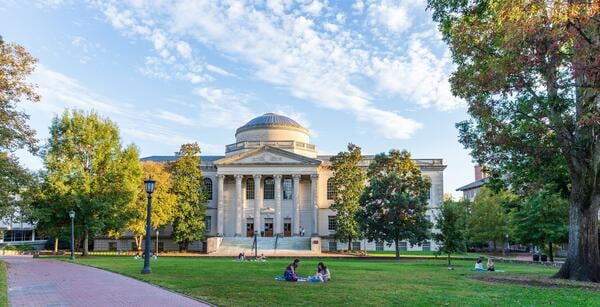
    The University of North Carolina at Chapel Hill made clear Friday that it won’t sign the federal “Compact for Academic Excellence in Higher Education” that has been extended to all institutions after seven of the original nine universities invited rejected the offer, WRAL reported

    Last month the Trump administration floated a plan for preferential treatment on federal funding in exchange for universities overhauling admissions and hiring practices, freezing tuition for five years, capping international enrollment at 15 percent, and making various other concessions that many critics have warned will undermine academic freedom.

    UNC Chapel Hill chancellor Lee Roberts said Friday that while the university has not received a formal invitation from the Trump administration, he is not interested in the arrangement.

    “There are some parts of the compact that we are already doing and there are some parts that would be difficult or impossible,” Roberts said in a faculty council meeting, according to WRAL. “There’s no way we can sign the compact as written and we don’t plan to.”

    Invitations to the compact were initially sent to Brown University, Dartmouth College, the Massachusetts Institute of Technology, the University of Arizona, the University of Pennsylvania, the University of Southern California, the University of Texas at Austin, the University of Virginia and Vanderbilt University. All but two declined—Vanderbilt said it would provide feedback and Texas has yet to offer a public response.

    Multiple others also announced pre-emptive rejections after the initial invitation went out, including Emory University, Pennsylvania State University, Syracuse University and the University of Kansas. So far, only two institutions have announced intentions to sign the compact: New College of Florida and Valley Forge Military College in Pennsylvania.

    Source link

  • 3 Questions for MIT’s Luke Hobson

    3 Questions for MIT’s Luke Hobson

    Luke Hobson does it all. He is not only assistant director of instructional design for MIT xPRO and a lecturer at the University of Miami’s School of Education and Human Development, but Luke also writes books, hosts a podcast, blogs, publishes a newsletter, creates videos on YouTube and seems to know everyone in our field.

    I asked if Luke would be willing to step away from all these commitments and projects to answer my questions, and he graciously agreed.

    Q: How did your career progress from an individual learning design contributor to advancing into a leadership role at your institution, as well as a thought leader and creator in the learning, technology and design space? What advice do you have for others in our field looking to increase their campus and national impact?

    A: I have a bit of an obsession within our field. I still find it remarkable that, for a living, I get to care about designing learning experiences. Funny enough, I had no idea this field even existed until I met an instructional designer back in 2013. As soon as I learned that this was a career, I went all in. That obsessive mentality stayed with me when I became a contributor at Northeastern University and later at MIT. I wanted to find every possible way to create the most effective and meaningful kinds of courses and programs.

    Through all of my seldom successes and many, many failures, I learned a thing or two along the way, and I decided to start sharing these stories online. It began with answering questions in Facebook groups, which eventually turned into a blog, a podcast, a YouTube channel, a book and more. What I discovered through sharing these moments is that I developed a love for teaching about instructional design. This led me to pursue a leadership role at MIT and to build a team of instructional designers. It also led me to teach in the University of Miami’s online Ed.D. program. Being able to teach future leaders in learning science has been an incredibly rewarding experience.

    The best piece of advice I can give is to share. Share everything. Share your wins. Share your losses. Share your moments of glory. Share the times you fall flat on your face. People appreciate transparency. That’s how I built my brand online and my presence at MIT. I didn’t realize how much of an impact I was having until multiple faculty members mentioned following me on LinkedIn and asked how they could hire an instructional designer for their team. It’s been amazing to see the growth of IDs here from when I first started to now.

    Another step you can take today is to build your network. Dig the well before you’re thirsty. You mentioned how it seems like I know everyone in our field and I chuckled, thinking back to when I didn’t know a soul in instructional design. The pandemic opened my eyes: Everyone was stuck at home and on Zoom, so I took advantage of that. I reached out to people on LinkedIn for virtual coffee chats, invited them on my podcast, gave webinars for universities and companies, and more. All of this was to get to know people. If you want to make an impact, you can’t do it alone. You need the support of others, and there is no better community than the learning nerds.

    Q: Your Ed.D. is in educational leadership. Please tell us about your program and how completing a terminal degree in this field has impacted your career. For our community of nonfaculty educators—learning nerds—what are your recommendations around pursuing a doctorate while working?

    A: I’m thankful that I had a truly fantastic Ed.D. experience. I have to give all the credit in the world to Dr. Peg Ford for what she built at Southern New Hampshire University. I was on the fence about pursuing this degree, but after speaking with current students at the time, I felt like it was the right place for me. The program was built on a core foundation of a cohort-based model and forging strong bonds with fellow members. Dr. Ford understood the perils and curve balls life throws your way when you’re pursuing a doctorate and how easily those challenges can land you in A.B.D. limbo. It didn’t take long to see she was absolutely right. Our cohort faced major life events—losing loved ones, taking on new roles, having children, relocating to new cities and more. Through it all, we stuck together.

    What I appreciated most about my Ed.D. in educational leadership was the range of educators I met. From business professors to special education teachers, from deans to superintendents, I had the opportunity to hear a wide variety of perspectives on education and what it means to support students and fellow educators. I was introduced to the good, the bad and the ugly. By taking in all of those voices, I was able to apply their teachings and life lessons to my own learning experiences. That program shaped me into the educator I am today.

    What I find most surprising is that I now teach in an online Ed.D. program in applied learning sciences at the University of Miami. I often share with my students the same message about sticking together as a cohort and how those bonds will carry them through. While Dr. Ford is no longer associated with SNHU’s program, my dissertation chair, Dr. Audrey Rodgers, is now leading it. I recently had the chance to speak with current students, and it’s amazing to see how much the program has grown since I graduated.

    Here’s what I wish I knew before pursuing a doctorate: It’s absolutely possible to do, but it will be the hardest thing you’ve ever done. There’s a reason why only a small fraction of the population holds the title of doctor. No matter which school you attend, it’s going to be difficult. But in my opinion, it’s worth it. I knew I wanted to work in academia, and after speaking with a few colleagues, they all advised me to go back to grad school. Every role I wanted in the future required either an Ed.D. or a Ph.D., so it was the logical choice.

    With all that said, the first step in your journey as a working professional should be finding the right program for your needs. Not all programs are created equal. After all, you’re about to commit at least three to seven years of your life to this institution, so it’s important to choose wisely. Do your due diligence. Contact the institution and ask as many questions as you want. Watch program webinars. Find currently enrolled students on LinkedIn and ask for a quick chat about their experience. Connect with faculty and administrators. Read online reviews. Go the extra mile before starting this journey.

    Once you’ve found the right program for your goals, my best advice is to set up a system that works for your life. Your schedule has to shift to make space for classwork, research, lectures, readings and everything else. For me, this meant starting my days earlier. I found myself constantly distracted during the day, so I decided to wake up before everyone else. Surprisingly, it worked. Once you find a system that fits, it needs to become sacred and a top priority. I also relied heavily on the Pomodoro technique to stay focused and on track. If you haven’t used the “study with me” videos on YouTube, you’re missing out. Whatever helps you get into a state of flow is going to be key.

    And I know your question was about going back to school while working, but honestly, work wasn’t the hardest part of my academic journey. For me, it was family and my social life. Work will always be there. But when you start missing family functions, birthdays and social events, it’s tough. I essentially became a hermit during the final stretch of my dissertation. That was the only way I could stay focused and meet my goals.

    Q: The growth of online programs has increased the demand for learning designers. There is concern within our profession that in the (near) future, AI will be able to do much of the work that learning designers have traditionally done. How worried should learning designers be and what can they do to ensure they are not replaced by AI?

    A: Ah yes, the million-dollar question. What’s funny is that I’ve been designing AI courses long before the generative AI boom, and I could’ve never predicted that AI would find its way into our space. In health care, medication discovery or 3-D printing? Sure. But instructional design? That thought never crossed my mind. Yet here we are.

    Let’s break down your question a bit, starting with the concern around AI. You’re going to see this come in waves. A new breakthrough will happen, there will be mass pandemonium online and, within a few weeks, it fades. AI tools will continue to evolve and become more helpful, but someone still has to drive the bus. AI can’t do everything for you. I think that’s where many decision-makers are getting confused. Everyone is trying to add AI into their products, but do people actually want those features? The answer is often no.

    AI can be helpful for kick-starting ideas. But if you’re a student and you find out that your entire course was generated by AI and not created by a human, you’d likely be furious.

    A great source of insight on this is Reddit. You’ll find post after post from students deeply concerned about how AI is being used, whether by classmates or even by professors. LLMs tend to have a certain tone and style. It’s hard to describe exactly, but the writing often feels off. Unnatural. AI isn’t magical, even though that’s exactly how marketers are presenting it. LLMs work by predicting patterns based on data and trying to say the next most probable thing to please the user. In many cases, this doesn’t add up.

    Now, on to the second part of your question: What can instructional designers do to ensure they’re not replaced?

    We do what we’ve always done. We learn. Become the most knowledgeable person on your team when it comes to the ins and outs of AI. For many, AI still feels like a black box, and that’s understandable. But if you know which tool serves which purpose and how to use these tools to enhance your designs, ensure accessibility, create flexible learning pathways, transform content into different formats and generate compelling visuals, you’ll be far ahead of the curve.

    As you experiment, you’ll also encounter the limits of these tools. And when you see where AI stumbles, you’ll feel much more secure about your place in this evolving landscape. It’s not there yet. And getting an entire industry to adopt something at scale, especially something as complex as AI, is a massive undertaking.

    Source link

  • Trump Gutted ED’s Civil Rights Office. Could States Step Up?

    Trump Gutted ED’s Civil Rights Office. Could States Step Up?

    The Education Department’s Office for Civil Rights, which is supposed to protect students from discrimination based on race, ethnicity, sex, age and disability status, isn’t what it once was.

    The Trump administration laid off nearly half the staff in March, shuttered seven of its 12 regional offices, shifted the hollowed-out agency’s focus to new priorities (including keeping transgender women out of women’s sports) and then reportedly terminated more employees amid the ongoing shutdown.

    Philadelphia was among the cities that lost its OCR regional office in the first round of layoffs. Lindsey Williams, a Pennsylvania state senator who serves as minority chair of the Senate Education Committee, said the region’s cases now go to Atlanta, “where they may or may not be heard.”

    To fill this void, Williams, a Democrat, announced she will file legislation to establish an Office of Civil Rights within the Pennsylvania Department of Education. The bill has yet to be written, but Williams said she wants to “create new authorities for the Pennsylvania Department of Education to investigate and enforce federal civil rights violations.” She noted, “There may be opportunity as well to strengthen our state laws in this regard.”

    “We’re looking at all of it to see what we can do,” she said, “because we haven’t been here before.”

    Students facing discrimination across the country now have far fewer staff in the federal Education Department OCR who can respond to their complaints. The agency had a large backlog of cases even before President Trump retook office, and then it dismissed thousands of complaints in the spring. Some advocates have expressed particular concern about OCR’s current capacity to process complaints of disability discrimination.

    And those left at OCR appear to be applying a conservative interpretation of civil rights law that doesn’t recognize transgender students’ gender identity. The Trump-era OCR has actively targeted institutions for allowing trans women in women’s sports. It’s also focused on ending programs and practices that specifically benefit minorities, to the exclusion of whites.

    Civil rights advocates are calling for states to step up.

    “We cannot stop what is happening at the federal level,” Williams said. “There’s plenty of lawsuits that are trying … but, in the meantime, what do we as a state do?”

    One of those ongoing suits, filed by the Victim Rights Law Center and two parents in April, alleges that shrinking OCR harms students from protected classes. It argues that the federal OCR cuts left “a hollowed-out organization incapable of performing its statutorily mandated functions,” adding that “without judicial intervention, the system will exist in name only.” But that intervention may not work in students’ favor—judges have issued preliminary injunctions, but the Supreme Court has, so far, allowed the Education Department layoffs to continue.

    Shelby Chestnut, executive director of the Transgender Law Center and a Pennsylvania resident, said, “States need to be picking up some of the slack.”

    “If more states with Democratic leaders started to propose such offices or legislation or money, it would likely create a bigger conversation,” Chestnut said.

    He noted that during the Obama administration, the federal government sued North Carolina over its controversial law banning trans people from using bathrooms matching their gender identity. But that’s not something the Trump administration would do. Chestnut said some states are now saying—and more should be saying—“OK, you won’t do your job, so we’ll do your job for you.”

    Beth Gellman-Beer, who was director of the Philadelphia regional office of the federal OCR before the Trump administration laid her off, said she doesn’t know of other states creating a new state-level agency like the one that’s been proposed in Pennsylvania. Even there, Republicans control the state Senate, and the legislation isn’t certain to pass. She said other state legislatures “should be really thinking about this and taking immediate steps to build out some kind of civil rights unit to help students in their state.”

    Some states already have their own agencies that protect civil rights in higher ed, Gellman-Beer said, including the existing Pennsylvania Human Relations Commission. But she said these entities “are traditionally severely understaffed and don’t have the resources and relied heavily on OCR.”

    Chad Dion Lassiter, executive director of the Pennsylvania Human Relations Commission, agreed with Gellman-Beer’s assessment of commissions like his. Lassiter said he feels “sheer exuberance” over the proposed legislation—which he said would be even greater if the new Office of Civil Rights were created in his agency.

    “Give us 20 additional staff and we’ll do the work,” Lassiter said. Ideally, 15 would be investigators in his agency’s education division and five would be attorneys, he said.

    “Each state that has a human relations commission should have an educational component,” he said. “Fund these commissions.”

    Gellman-Beer said the only true fix is to restore a federal OCR—because even if some states do step up, students’ rights will be contingent on where they live.

    “It used to be, under the model prior to this administration, that the promise for equal educational opportunity was across the board,” she said.

    Unequal Rights Across States

    For a student going before a state-level OCR in a state that doesn’t recognize their identity, the process could be as fruitless as seeking help from the Trump-era federal OCR. The Movement Advancement Project, which advocates for LGBTQ+ rights, says 27 states have laws banning trans students from participating in sports matching their gender identity. Such laws don’t all affect postsecondary students, but they often do, the organization said.

    Nicholas Hite, a senior attorney at Lambda Legal, which advocates for LGBTQ+ people in court, said the federal OCR was supposed to provide a single, consistent application of federal legal protections. Now, he said, “that just isn’t happening—they’re just refusing to do it.”

    “If we’re relying on states to be the enforcement mechanism, we’ve created this patchwork where each state is going to take their own approach,” Hite said.

    Universities in states with laws recognizing trans students’ rights have to decide whether to comply with those laws or with the Trump administration’s approach. The administration, using massive cuts to federal research funding, forced concessions from the University of Pennsylvania for allowing a trans woman to compete in women’s sports. But Scott Lewis—a co-founder of the Association of Title IX Administrators and managing partner of TNG Consulting, which advises higher ed institutions on civil rights issues—said so far he’s seen blue-state universities handling discrimination complaints like they did before Trump retook office.

    Lassiter, of the Pennsylvania Human Relations Commission, said, “It’s important for people to know you still have protections under the state.” But protections for trans students can be unclear.

    His agency enforces state laws protecting students against discrimination based on gender identity, but wouldn’t directly answer whether that means it would order a university to allow a trans woman to play on a woman’s sports team. Lassiter said his agency avoids “cultural wars.”

    Students facing discrimination of all sorts can still sue under federal civil rights law in lieu of seeking help from the federal OCR or any state version of that agency. But personal lawsuits can be expensive.

    Williams, the Pennsylvania state senator, noted that lawsuits may also not wrap up by the time a student graduates. Gellman-Beer, the former federal OCR employee, said they also often lead to individual remedies for a victim, rather than “systemic interventions to make sure that the problem doesn’t occur again for other students.” That was the kind of broad solution the federal OCR could achieve, she said.

    Hite welcomed people whose rights are being infringed, or who are concerned about others’ rights, to reach out to Lambda Legal. He noted the federal OCR did much of its work through negotiating with universities to fix issues, rather than pursuing litigation. If the federal OCR is no longer doing these negotiations, the burden is placed on students and parents to sue to uphold their own rights—while an added cost of litigation is also placed on universities, he said.

    Lewis said that if the Trump administration continues its trajectory, people who don’t feel they’re being served at the federal level will go to the state level.

    “If the federal government won’t do it,” he said, “the states are going to be left to do it.”

    Source link

  • Federal Policy Changes Impact Student Veterans (opinion)

    Federal Policy Changes Impact Student Veterans (opinion)

    Every year on Veterans Day, we pause to honor those who have served our country—but our gratitude must extend beyond a single day of reflection. One of the most powerful ways to repay veterans’ service is through education, a goal long supported by the general public and Republican and Democratic administrations alike. Student veterans bring leadership, discipline and unique experiences to college campuses; their postsecondary success strengthens both our communities and economies.

    Yet despite their proven academic potential and deep motivation to earn a degree, too many veterans face unnecessary barriers to completing college. At Ithaka S+R, we’ve reported on the value of enrolling and supporting student veterans and the unique challenges these students face in getting to and through higher education, for several years running. From underresourced institutions to opaque transfer processes and predatory recruitment practices, these obstacles result in lower bachelor’s degree attainment among veterans compared to their civilian peers.

    Right now, policy and appropriations decisions (including the current government shutdown) could undermine the progress the country has made in providing educational opportunities for our veterans. As we celebrate Veterans Day, it’s time for higher education leaders and policymakers to renew their commitment to supporting those who’ve served. Here are three developing situations that we’re monitoring for their potential impact on student veterans.

    Cuts to Veterans Upward Bound

    Veterans Upward Bound is a federally funded TRIO program focused on precollege, college transition and college success support for veterans. Started in 1972, the program now supports more than 8,000 veterans looking to enroll in or return to college by providing academic instruction, tutoring and counseling. There are 60-plus programs nationally, run by individual colleges and universities. The programs have proven highly effective: Participants are 42 percent more likely than their peers to earn a bachelor’s degree within six years.

    There is significant uncertainty about whether the federal government will sustain the current and future funding for these Veterans Upward Bound programs. The federal government delayed payment for the majority of TRIO programs this fall, including all Veterans Upward Bound programs. The funding delay came on the heels of proposals to decrease, or even eliminate completely, TRIO programs in next year’s federal budget. The Department of Education got a head start this year, canceling many thousands of dollars in already-allocated funding for TRIO programs, including for VUB programs, in mid-September. Although some of that funding has since been restored, the uncertainty leaves many programs struggling to plan for the year ahead.

    VA Staffing Cuts and GI Bill Processing Times

    Enrolled student veterans rely on the federal government for the processing of their GI Bill funds. The combination of staffing cuts at the Department of Veterans Affairs and the recent federal government shutdown has created delays, confusion and, ultimately, financial stress for student veterans.

    This summer, student veterans and campus advisers reported that benefit eligibility determinations and payments for the GI Bill took three times longer than previously because of understaffing and increased administrative errors. This meant that housing and textbook payments were delayed, which led to some student veterans missing the start of classes (and, in more severe cases, dropping or stopping out).

    The situation has worsened since the federal government shut down on Oct. 1. Although education benefits themselves are primarily funded through advance appropriations and thus can continue to be paid out, critical support services have ceased operation during the shutdown. The VA’s GI Bill phone hotline, which many rely on for questions about eligibility, payments and school certification, is closed. Regional VA offices, which normally handle in-person assistance, are also closed. Not only do these closures create challenges in the current moment, but resulting processing delays will result in a backlog even after the government reopens.

    For student veterans on fixed schedules, with tight budgets and in transitional life phases, the time and energy to deal with unsettled paperwork add up to real risks for academic progress and financial stability.

    Measuring Student Veteran Success

    The uncertainty of federal support for student veterans comes at a time when there is shrinking programmatic and rhetorical support for students that higher education has historically struggled to welcome. Veterans are increasingly more likely to belong to other underrepresented groups, such as racial minorities and adult learners, so the challenges they face in accessing and affording higher education may be multiplied.

    The states, systems and institutions interested in continuing to serve student veterans are also facing immense challenges as they confront federal policy changes that have downstream financial impacts, such as changes to graduate student loans and the decline in international student enrollment. While these challenges make it even more imperative for institutions to enroll a wider range of students, including student veterans, there is simultaneously increased difficulty in doing so.

    Investing in veteran-specific admissions strategies and academic advising, providing efficient credit transfer mechanisms, and tracking postcollege outcomes are initiatives that can help boost student veteran success. The full scope of that success, however, remains elusive, as the data landscape for student veterans remains fragmented and incomplete. Alongside institutional efforts to ensure success, regional and national efforts are needed to more fully understand how many new veterans could benefit from enrolling in higher education each year and in what degree programs they are most interested. To truly understand the scope of the impact of the federal budget and staffing cuts and how other parts of higher education can help fill that breach and prioritize veterans’ enrollment, it is essential to know more about the size and scope of the potential student veteran population we are looking to serve.

    Conclusion

    As federal uncertainty grows, from cuts to Veterans Upward Bound programs to delays in GI Bill processing, and the shutdown drags on, student veterans risk being left behind just when they need institutional support most. At the same time, colleges face shrinking budgets and shifting demographics that make it harder to serve those who’ve already given so much.

    But these challenges also present an opportunity for stakeholders throughout higher education to refocus on veterans. By investing in veteran-specific recruitment, advising and data collection efforts, institutions, states and veteran-serving organizations can open doors to a new generation of leaders ready to contribute to their campuses and communities.

    The promise of higher education for veterans should not only depend on bureaucratic stability or federal budget cycles; it requires a collective effort from within and beyond the field of higher education. This Veterans Day and every day after, let’s recommit to ensuring that those who served our nation have every chance to succeed in the classroom and beyond.

    Emily Schwartz is a principal of bachelor’s attainment at the nonprofit Ithaka S+R, which conducts research and offers strategic advice on student access and success, among other topics related to higher education and research. Michael Fried is a senior researcher and Daniel Braun is senior development and operations specialist, both at Ithaka S+R.

    Source link

  • AI in Higher Education: Academic Thought Leadership

    AI in Higher Education: Academic Thought Leadership

    How Faculty Expertise Boosts AI Search Results in Higher Ed

    Many higher education enrollment teams assume that the key to growth is spending more on paid leads. It feels logical: increase visibility, boost inquiries, fill the pipeline. Yet, too often, they end up paying for quantity, not quality — resulting in higher budgets that fail to yield students who are a good fit. They see short-term spikes in inquiries, followed by low conversion rates and retention challenges from mismatched students. 

    Achieving sustainable enrollment growth doesn’t have to mean spending more. What’s needed instead is smarter strategies that enable institutions to attract the right students earlier in the decision process — when they’re still exploring their options, defining their goals, and forming impressions of institutions’ credibility. 

    Shifting the focus of enrollment strategies from paid acquisition to earned attention — building organic visibility, authority, and trust with prospects before they fill out an application form — is the key to true growth. This approach is increasingly important as more and more students use artificial intelligence (AI) to navigate their higher education journey. 

    Building Organic Demand with AI and GEO 

    AI is reshaping how students discover institutions and their programs. While Google used to dominate prospective students’ search efforts, they are increasingly using AI-powered search assistants such as ChatGPT and Gemini to find, summarize, and compare higher education offerings. A 2025 study by the Online and Professional Education Association (UPCEA) found that roughly 50% of prospective students use AI tools at least weekly to research programs, including about 24% who use them on a daily basis. 

    As AI’s role in higher education marketing expands, institutions have begun to adopt generative engine optimization (GEO) strategies to improve their visibility in AI-driven search results. Unlike standard search engine optimization (SEO) — which focuses on keywords and backlinks — GEO prioritizes structured, authoritative content that AI systems can easily understand, cite, and incorporate into their responses. 

    When institutions feed these systems with content featuring faculty-driven subject matter expertise and clearly structured information, they train the AI algorithms to view them as authoritative and credible, and to surface them in students’ search results more often. This makes it easier for these institutions to engage high-intent students earlier in their enrollment journey.

    The Role of Faculty in Building Authority 

    No one conveys academic quality and institutional credibility better than the people who embody them. Faculty members represent some of an institution’s most trusted — yet often underutilized — marketing assets. Their expertise not only validates the institution and its programs but also humanizes them. 

    When faculty voices appear in thought leadership articles, Q&A features, or explainer videos, they do more than share knowledge — they strengthen confidence in the institution among both prospective students and their families. 

    Leveraged strategically, faculty expertise can enhance multiple facets of an institution’s marketing ecosystem:

    • Public relations: Faculty insights can position schools as trusted commentators in media coverage on industry trends. 
    • Search: Content that highlights subject matter expertise is seen as more credible by both traditional search engines and AI assistants, improving the content’s organic rankings and GEO performance. 
    • Enrollment marketing: Faculty-driven content that targets prospective students — such as video Q&As, informative blog posts, and interactive webinars — can help bridge the gap for these prospects between aspiration and application.

    When institutions center faculty in their marketing efforts, they connect academic storytelling with enrollment strategy, transforming their outreach from promotion into education.  

    Improving Efficiency and Results

    Today, higher ed enrollment growth depends on smarter strategy — not higher spending. Institutions can achieve greater success by balancing their paid and organic channels, building durable content engines, and aligning their marketing spend with actual enrollment outcomes.

    Balance Paid and Organic Marketing               

    Paid campaigns still have great value. But overreliance on them can drive up cost-per-enrollment (CPE) while producing prospective students who are a weaker fit. According to data from UPCEA, the average cost per enrolled student is more than $2,800. By mixing organic channels — faculty thought leadership pieces, GEO-friendly content — with paid efforts, institutions can achieve lower long-term costs while improving the fit and retention of their prospects.

    Create a Long-Term Content Engine               

    Temporary campaigns can deliver short-term boosts, but real authority that leads to sustainable enrollment growth stems from consistent, faculty-led content. Building a content engine anchored in faculty expertise and optimized for AI and GEO is essential, allowing institutions to maintain their visibility and credibility. Over time, this strategy can lower acquisition costs, boost engagement, and support retention.

    Align Marketing Spend With Enrollment Outcomes               

    Too often, marketing dollars are funneled toward maximizing the volume of leads rather than focusing on actual outcomes. True budget efficiency comes from aligning spend with each stage of the student life cycle — supporting strategies that move prospects from application to enrollment to persistence. When institutions’ budgets prioritize quality, engagement, and long-term fit over volume, they can strengthen both their conversion rates and their retention outcomes. 

    Key Takeaways

    • More leads don’t always translate to real growth. Sustainable enrollment comes from reaching the right students — not just more of them. 
    • By embracing GEO, leveraging AI in their higher education marketing strategy, and elevating faculty expertise, institutions can deliver content that builds organic authority and attracts qualified prospects earlier in their decision journey. This approach reduces institutions’ reliance on paid efforts, improves their cost efficiency, and enhances their credibility. 
    • Schools that invest in faculty-led content strategies can gain stronger conversions, better retention, and enduring brand trust — the foundation of meaningful, measurable enrollment growth.

    Drive Enrollment With Faculty Voices

    At Archer Education, we partner with accredited institutions to help them leverage AI and faculty thought leadership to build their credibility and drive their enrollment growth. Contact our team to learn how our tech-enabled marketing and enrollment solutions can help your institution attract the right students more efficiently. 

    Sources

    Association to Advance Collegiate Schools of Business, “Greater Impact Through Faculty Thought Leadership”

    Online and Professional Education Association, “AI Tools Are Driving Prospective Student Decisions, UPCEA and Search Influence Research Shows”

    Online and Professional Education Association, “How Higher Education Marketing Metrics Help You Boost Enrollment”

    Source link