Tag: Higher

  • I Can See Clearly Now The Frogs Are Here – Teaching in Higher Ed

    I Can See Clearly Now The Frogs Are Here – Teaching in Higher Ed

    This post is one of many, related to my participation in  Harold Jarche’s Personal Knowledge Mastery workshop.

    Sometimes we think we need experts, sure. But we shouldn’t dismiss the power of finding fellow seekers. There are times when an expert might help us, but also times they leave us behind or otherwise are unable to contribute to our growth. They may not have sufficient beginner’s mind or childlike curiosity. We may need the empathy and lack of judgement that can be possible with someone who is still wrestling through these same ideas, themselves.

    I’ve often tried to coach students in showing them the ways that they can help their professors, when they often think their only possible role is as one being the receiver of help. Similarly, when we are in a seeking role, we aren’t able to see the ways we can add value to the learning process for ourselves and others. We can wrestle with trying to give the appearance of competence versus staying in the seeker’s mindset and focusing on curiosity and wonder. This hesitance at potentially looking foolish to others in our incompetence can not only hold us back from learning, but also cause us to feel alone. It is vital to connect with other seekers and experience the benefits of those roles within our networks.

    Jarche writes:

    Your fellow seekers can help you on a journey to become a Knowledge Catalyst, which takes parts of the Expert and the Connector and combines them to be a highly contributing node in a knowledge network. We can become knowledge catalysts — filtering, curating, thinking, and doing — in conjunction with others. Only in collaboration with others will we understand complex issues and create new ways of addressing them. As expertise is getting eroded in many fields, innovation across disciplines is increasing. We need to reach across these disciplines.

    I sure hope Harold is right about cross-disciplinary innovation expanding, as we need that more than ever. In Range: Why Generalists Triumph in a Specialized World, David Epstein instructs:

    Compare yourself to yourself yesterday, not to younger people who aren’t you. Everyone progresses at a different rate, so don’t let anyone else make you feel behind. You probably don’t even know where exactly you’re going, so feeling behind doesn’t help. Instead… start planning experiments.

    The Value of Experiments

    What are experiments? Epstein describes them by introducing physicist Andre Geim and his “Friday night experiments” (FNEs). It was through these endeavors that Geim won not a fancy Nobel Prize, but an Ig Nobel (which Geim shares with collaborator M V Berry via their Of Flying Frogs and Levitrons piece, available through the Internet Wayback Machine). The Ig Nobel is bestowed on those who at first seem like they’re doing something ridiculous. From Wikipedia:

    The Ig Nobel Prize (/ˌɪɡ noʊˈbɛl/) is a satirical prize awarded annually since 1991 to promote public engagement with scientific research. Its aim is to “honor achievements that first make people laugh, and then make them think.” The name of the award is a pun on the Nobel Prize, which it parodies, and on the word “ignoble”.

    A serious researcher, Geim is (as of 2025) the only person to both win a Nobel and an Ig Nobel prize. Those who are in line to potentially win an Ig Nobel are first informed, such that they can determine if the satirical nature of the designation might be detrimental to their research careers. For his FNEs, Geim was experimenting with levitating frogs with magnets and was awarded the satirical prize for that less “serious” work. Through another FNE, Geim wound up developing “gecko tape,” which was based on the properties of geckos’ feet. These less serious experiments contributed to his more “serious” research, which ultimately led to his prestigious receipt of a Nobel Prize.

    A lump of graphite, a graphene transistor, and a tape dispenser.

    This 2010 image of a lump of graphite, a graphene transistor, and a tape dispenser, items that were given to the Nobel Museum by researchers Andrew Geim and Konstantin Novoselov to reflect their Nobel research. Before their discoveries, it was believed to be impossible to create material that could conduct electricity in such thin layers as graphene is now able to, which has opened up even more possibilities in both material science and electronics.

    In his first-person narrative from his 2010 Nobel Prize, he describes how his Russian literature tutor critiqued his writing for trying too hard to parrot experts vs trusting his own intuition. Geim writes:

    My tutor said that what I was writing was good but it was clear from my essays that I tried to recall and repeat the thoughts of famous writers and literature critics, not trusting my own judgement, afraid that my own thoughts were not interesting, important or correct enough. Her advice was to try and explain my own opinions and ideas and to use those authoritative phrases only occasionally, to support and strengthen my writing. This simple advice was crucial for me – it changed the way I wrote. Years later I noticed that I was better at explaining my thoughts in writing than my fellow students.

    I once was able to interview a recipient of the Ig Nobel for Teaching in Higher Ed: Episode 591 – Rethinking Student Attendance Policies for Deeper Engagement and Learning with Simon Cullen and Danny Oppenheimer. Danny is the one of these two collaborators with this great honor. Take a look at the incredible title of the piece that won him the Ig Nobel: Consequences of Erudite Vernacular Utilized Irrespective of Necessity: Problems with Using Long Words Needlessly, by Daniel M. Oppenheimer Imagine how bummed I was that despite me being so excited to ask him more about it, my nerves got the best of me and I entirely forgot to ever mention it during our conversation for the podcast.

    Researching Versus Searching

    Epstein describes in Range the ways in which the novice mindset gets weaved together with the expert mindset in such transformative ways. He reveals how us being willing to be vulnerable in our not knowing and early experimentation through an art historian’s description of how Geim is emblematic of this willingness to stay in the not knowing longer. Epstein tells how:

    Art historian Sarah Lewis studies creative achievement, and described Geim’s mindset as representative of the “deliberate amateur.” The word “amateur,” she pointed out, did not originate as an insult, but comes from the Latin word for a person who adores a particular endeavor. “A paradox of innovation and mastery is that breakthroughs often occur when you start down a road, but wander off for a ways and pretend as if you have just begun,” Lewis wrote.

    My friend, Naomi, and I always joke with each other about our “rabbit trail” emails back and forth to each other. I often wish there were a better expression that more precisely evokes the delight that can come from a diversion. Two years before he won the Nobel, Geim was asked to explain his research process. He described how instead of always going deep, he likes to stay in the shallow and move around. He described:

    I don’t want to carry on studying the same thing from cradle to grave. Sometimes I joke that I am not interested in doing re-search, only search.

    Seeking as Doing

    Jarche illustrates how when trust is low that doers, connectors, and catalysts can address the limitations of credibility that exist in the roles of professors, stewards, and experts. He asserts: We Need Less Professing and More Doing. He describes how someone like Zeynep Tukekci can be not a medical professional herself, but so gifted at weaving “knowledge from many disciplines into a coherent narrative.”

    Jarche stressing the doing part made me think of Mike Caulfield, who says that novice fact checkers need not to solely focus on critical thinking, but he would rather we all get far better at teaching critical doing skills. I’ve been having a blast following Mike’s own critical doing skills as he documents his experiments with in what ways AI may be able to help with critical thinking/doing. He is in the process of learning out loud, as he identifies the less helpful approaches for trying to use AI for fact checking and where he sees promise for achieving better results than most people would be able to come up with, themselves.

    In a lot of ways, I’m seeing Harold Jarche’s Personal Knowledge Mastery Workshop as my own set of small experiments. In Dave’s recent Coaching for Leaders Episode 747, he interviews Laure Le Cunff, author of Tiny Experiments: How to Live Freely in a Goal-Obsessed World. Le Cunff explains how:

    The secret to designing growth loops is not better knowledge or skills, but your ability to think about your own thinking, question your automatic responses, and know your mind.

    Sounds a lot like PKM to me… Until next time. For now, it is dinnertime around here and we ordered Cheesecake Factory. It’s good to be back home. In the meantime, here’s for our individual and collective ability to see clearly now, as we practice PKM together.
    Source link

  • Network Weaving as an Antidote to Imposter Syndrome – Teaching in Higher Ed

    Network Weaving as an Antidote to Imposter Syndrome – Teaching in Higher Ed

    I’ve been traveling this week, so got a bit behind on my reflections on Harold Jarche’s Personal Knowledge Mastery (PKM) workshop. The other thing that is a bit frustrating, is that I haven’t been disciplined about my typical sensemaking habits and practices and seem to have lost the notes I took on a video he shared about something new to me: network weaving. At some point, maybe my reflections will resurface (my digital inboxes are overflowing, at the moment, and search seems no use to me if I can’t even find the haystack that the needle may be hiding in with those notes). That’s all just to say, I’m all over the place right now.

    Network Weaving

    I stubbornly don’t want to rewatch the video at this exact moment. I’m sitting in an airport, next to an outlet with all my devices happily charging until it is time to get on my first of two flights for the day. To say that I am a person with battery anxiety is an understatement. Here’s what I remember about watching Networks: Weaving People, Ideas and Projects, though, mixed with the connections I found with other ideas I’ve encountered in the past.

    June Holley describes network weaving as connecting people, ideas, and projects. Hearing her describe the generosity and intentionality involved in network weaving had me reflecting on Coaching for Leaders Episode 279 with Tom Henschel: How to Grow Your Professional Network. Prior to listening to that conversation between Dave and Tom, I had thought about networking more as something I was never very good at, but tolerated, since I knew it was necessary in most professions.

    Tom described different types of networking and it was then that I realized I actually loved it and did it all the time; just that I hadn’t thought of what I enjoy doing falling under the category of networking. I enjoy meeting someone new and then identifying who else I know that is into the same stuff that they’re into. I think what Tom was describing is a lot like June Holley’s description of network weaving. Jarche shares this short Network Weaving 101 article from Valdis Krebs, which describes how this process is all about “closing triangles.” Krebs writes:

    A triangle exists between three people in a social network. An “open triangle” exists where one person knows two other people who are not yet connected to each other — X knows Y and X knows Z, but Y and Z do not know each other. A network weaver (X) may see an opportunity or possibility from making a connection between two currently unconnected people (Y and Z). A “closed triangle” exists when all three people know each other: X-Y, X-Z, Y-Z.

    This makes so much sense to me, instantly. Some of the other content that Jarche has shared has been challenging for me to take in (which I appreciate, as he’s stretching me and helping me grow). But this one, I feel like I get on a more instinctive level. Like I’ve been doing something for much of my life, without having a word for it, yet experiencing such joy each time it happens.

    Imposter Syndrome

    I’m also realizing that one of the ways I try to calm my nerves when preparing to do a keynote or workshop may very well be embodied by the idea of network weaving. The lizard part of my brain starts to tell myself that I have nothing to offer (this gets exasperated by being in a hotel room in an unfamiliar city, after sitting too long on airplanes all day). One of the best listener emails I ever received came from Itamar Kastner in Scotland. He said that he knows I’m a fan of music and thought I might enjoy Grace Petrie, and English Folk singer-song writer “in the protest singer tradition of Billy Bragg and Woody Guthrie,” he explained over email. Yes, indeed, Itamar was spot on in recommending Grace Petrie’s Nobody Knows That I’m a Fraud:

    To thwart the less sophisticated parts of my brain that make me wonder what I’m doing in a hotel room, preparing for the next day’s adventures, I work to shift my focus away from how I am feeling and what I might like people to experience in the session with me. I even try to shrink it down more than a bunch of nameless faces and think about a single person and where they may be struggling and potentially feeling alone or like a failure in some way. What sorts of imposter syndrome symptoms might otherwise be relieved through my vulnerability in not having everything figured out, yet learning out loud, anyway? How might that posture provide fertile ground for others to do the same?

    The second half of how I can calm my nerves is to remember that my job isn’t to talk about what I do in my own teaching, necessarily. Rather, I get to share these incredible stories and point people back to the source of inspiration that I’ve found through the podcast across all these years. This feels very much like what I now understand to be a form of collective network weaving (as in connecting many people to new ideas, people, and projects. The last eleven and a half years, I’ve been fortunate to get to talk to people from all over the world who love teaching and learning (just like me). The stories within those conversations are limitless sources of hope, practice, and feelings of solidarity.

    Jackie Shay offers the final piece of the puzzle for unraveling those feelings of insecurity that can be present for so many of us, by the way. I realize that last sentence mixed at least two metaphors at once, but give me a break. I’m sitting in an airport, remember? 😂 On Episode 571: Overcoming Imposter Syndrome Through Joyful Curiosity, Jackie asks:

    Why can’t we recognize that these different types of intelligences have just as much value as intellectual intelligence?

    I’m not supposed to ever be even close to the smartest person in the room. Not even close. But curiosity and connection? Those are two pursuits I’ve enjoyed my whole life and are forms of intelligence to be valued and cultivated in ourselves and others. As we prepare to share our sensemaking process with others, how about we stop trying to out-perform the imaginary room of intelligent people we’ll be talking at and start working on creating conversations that spark imagination?

    Jackie Shay is tremendously good at getting people curious and engaged. I remember so vividly talking to Jackie about my memories of camping with my family in Joshua Tree as a little girl and getting swept away in all the specifics that flooded into my mind. Then, I felt like I should pull back and joked about revealing a bigger focus on capitalism than I had hoped for a conversation about nature/science. My brother and I used to have a whole economy we had built out of the various elements in the desert back then, like the quartz crystals and different types of plants.

    Jackie laughed with me, but also let me know that sorting and categorizing things (as we had done with the different elements there in the desert) was actually a big part of science. We were doing science, even though I didn’t have a word for that at the time (and clearly didn’t in my embarrassment feeling like no one wanted to hear about my childhood memories until she pointed out to me that we had been doing science, without realizing it). I recalled Alexis Pierce Caudell recommending Categories We Live By: How We Classify Everyone and Everything, by Gregory L. Murphy on Episode 527. While I wish I had finished reading it by now, but it sits in the virtual pile of books I’ve started but have yet to complete. It’s not a science book, though, well… except maybe the varieties related to library science and information technology. I obviously need to read the book before I should be commenting on what it is and isn’t. Sigh.

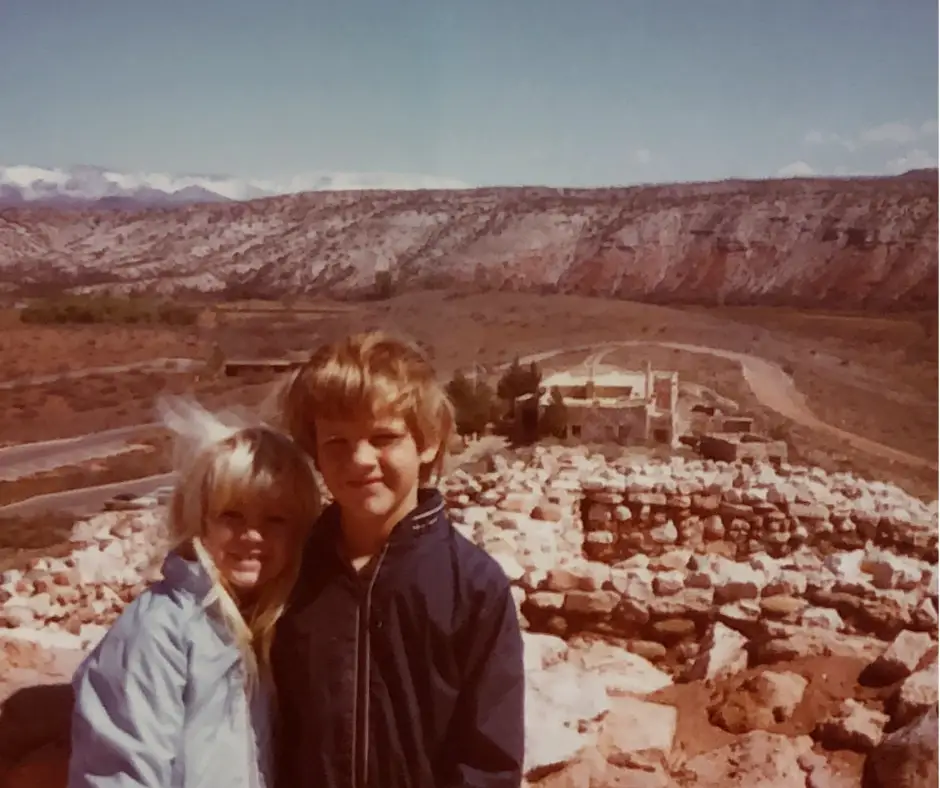
    Two young kids about the age of six and eight stand in front of hills in the background and stone structures in the foreground. The stones make up the shape of walls and other structures.

    I don’t think at all that this picture of my brother and I was actually taken in Joshua Tree. I’m going to have to see if I can find one in the photo albums I haven’t quite gotten to scanning yet. But it reminds me of our imaginative life that we had when our family would take trips together.

    Closing Triangles

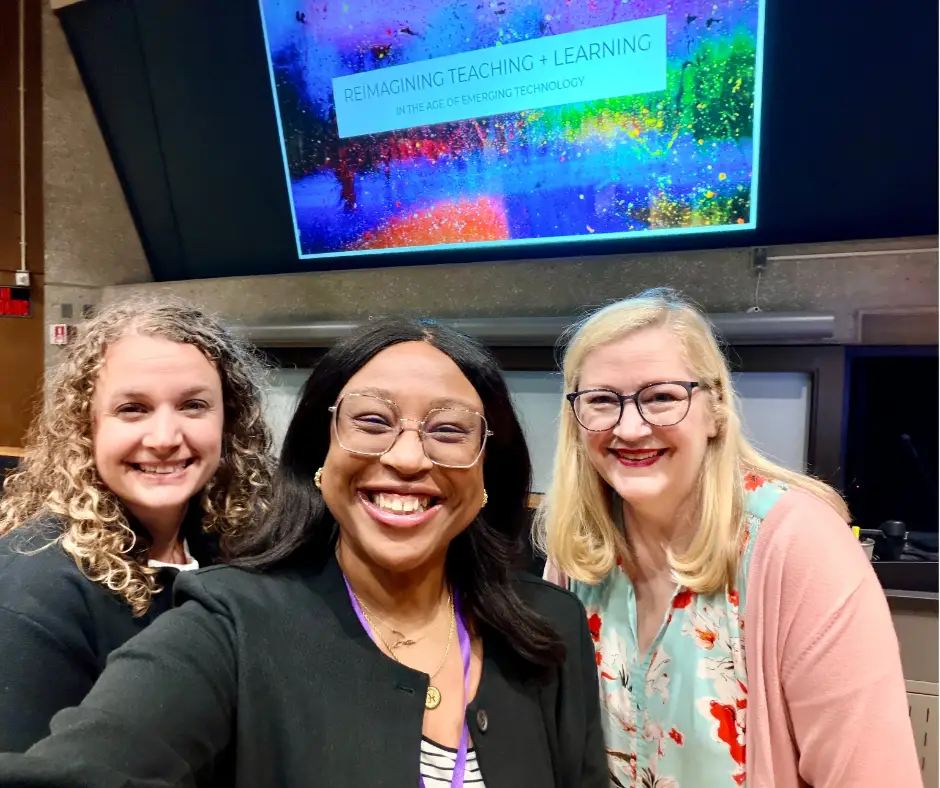
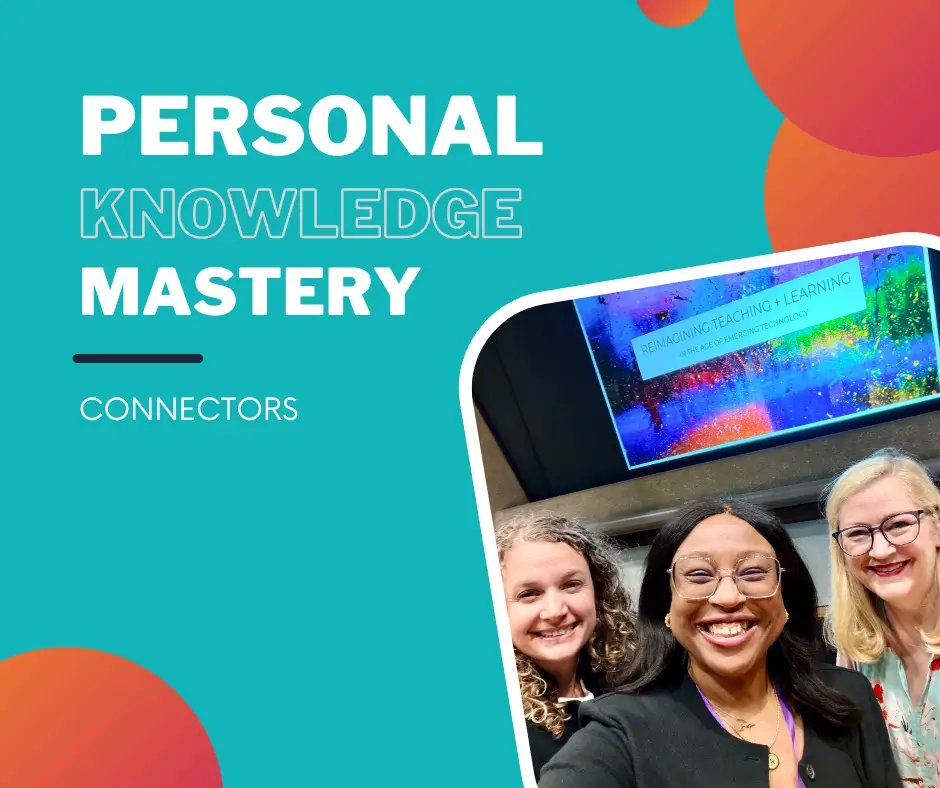
    As Valdis Krebs described, network weaving is all about closing triangles. At the keynote I gave for the ETOM conference today, I didn’t exactly close a triangle. However, I got to spend some time with a couple of past Teaching in Higher Ed podcast guests. Christina Moore discussed Inclusive Practices Through Digital Accessibility on Episode 293 and Mobile-Mindful Teaching and Learning on Episode 456. VaNessa Thompson helped us discover How to Engage on Social Media on Episode 416.

    Three women stand at the front of a large lecture hall in front of a colorful presentation slide

    VaNessa and Christina already know each other and I know them. Still, this memory we now share tightens the bond between us and now creates a triangular relationship between the three of us. Again, not necessarily closing triangles here. But certainly doing something new with going from one-on-one relationships and now having this shared triangle to remember and potentially strengthen in the future.


    PS. My talk was aligned with the conference theme (innovation). I had some fun with alliteration and divided the talk into: 1) innovation 2) imagination and 3) imitation (which was kinda like curation, but I just couldn’t break the alliteration streak I was on there). In my reading for the topic of connectors, I just saw a quick reference in Beth Kanter’s piece that Jarche shared about how helpful network weaving can be when we’re “stumbling through the fog of innovation.” I like that phrase “fog of innovation” and only wish I had come across it before today’s keynote. 🤦‍♀️🫠

    Source link

  • Cornell Settles With the Trump Administration

    Cornell Settles With the Trump Administration

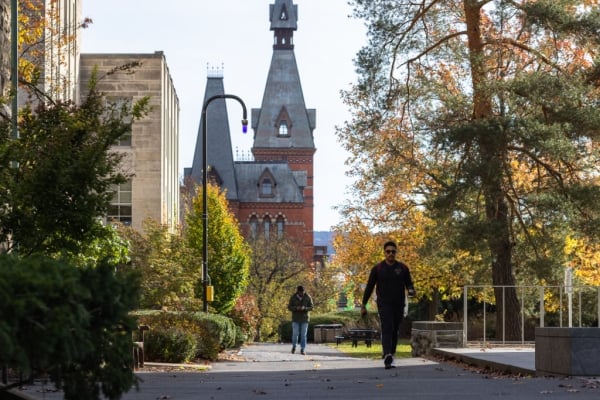
    Cornell University has reached a deal with the Trump administration to pay the government a $30 million settlement—and invest another $30 million in agricultural research—in exchange for having its frozen federal research funding restored.

    The agreement, announced Friday, makes Cornell the latest institution to strike a deal with the federal government in an effort to settle investigations into alleged civil rights violations. The settlement follows similar arrangements at the University of Pennsylvania, Columbia University, Brown University and the University of Virginia. Concessions varied by university, with Columbia making the biggest payout at $221 million.

    Collectively, those institutions were targeted for a range of alleged violations, including allowing transgender athletes to compete on women’s sports teams, failing to police campus antisemitism amid pro-Palestinian protests and operating supposedly illegal diversity, equity and inclusion practices as the Trump administration cracked down on DEI initiatives.

    Now the university will see roughly $250 million in frozen federal research funding immediately restored. The federal government will also close ongoing civil rights investigations into Cornell.

    While some institutions, including Columbia, have given tremendous deference to the federal government and agreed to sweeping changes across admissions, hiring and academic programs, the deal at Cornell appears to be relatively constrained, despite the $30 million payout.

    Under the agreement, Cornell must share anonymized admissions data broken down by race, GPA and standardized test scores with the federal government through 2028; conduct annual campus climate surveys; and ensure compliance with various federal laws. Cornell also agreed to share as a training resource with faculty and staff a July memo from U.S. Attorney General Pam Bondi barring the use of race in hiring, admissions practices and scholarship programs. And in addition to paying the federal government $30 million over three years, Cornell will invest $30 million “in research programs that will directly benefit U.S. farmers through lower costs of production and enhanced efficiency, including but not limited to programs that incorporate [artificial intelligence] and robotics,” according to a copy of the agreement.

    Cornell leaders cast the deal as a positive for the university.

    “I am pleased that our good faith discussions with the White House, Department of Justice, and Department of Education have concluded with an agreement that acknowledges the government’s commitment to enforce existing anti-discrimination law, while protecting our academic freedom and institutional independence,” Cornell president Michael Kotlikoff said in a statement shared with Inside Higher Ed. “These discussions have now yielded a result that will enable us to return to our teaching and research in restored partnership with federal agencies.”

    Education Secretary Linda McMahon also celebrated the deal in a post on X.

    “The Trump Administration has secured another transformative commitment from an Ivy League institution to end divisive DEI policies. Thanks to this deal with Cornell and the ongoing work of DOJ, HHS, and the team at ED, U.S. universities are refocusing their attention on merit, rigor, and truth-seeking—not ideology. These reforms are a huge win in the fight to restore excellence to American higher education and make our schools the greatest in the world,” she wrote.

    Some outside observers, however, excoriated the settlement as capitulation to authoritarianism.

    “The Trump administration’s corrupt extortion of higher ed institutions must end. Americans want an education system that serves the public good, not a dangerously narrow far right ideology that serves billionaires,” American Association of University Professors President Todd Wolfson said in a statement, which also urged colleges to fight intrusion by the federal government.

    This is a breaking news story and will be updated.

    Source link

  • Congress Accuses GMU President of Lying About DEI Efforts

    Congress Accuses GMU President of Lying About DEI Efforts

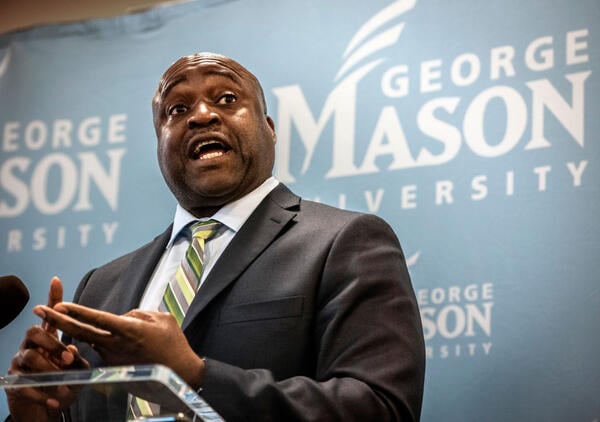
    House Republicans have accused George Mason University President Gregory Washington of lying to Congress about diversity practices at his institution, ratcheting up pressure on the president to step down.

    The Republican-led House Judiciary Committee alleged in a report released Thursday night that Washington made “multiple false statements to Congress” in testimony about diversity, equity, and inclusion efforts at GMU. The public university has been under fire for months over allegedly illegal DEI practices as the Trump administration has sought to crack down on such initiatives, claiming they are discriminatory and violate federal civil rights law. The Judiciary Committee report also alleged that the university “likely violated federal civil rights law by discriminating based on race in its hiring practices to advance Dr. Washington’s diversity, equity, and inclusion initiative.”

    Washington has denied breaking the law through efforts to diversify GMU’s faculty and staff, telling Congress that the university did not practice illegal discrimination under his leadership.

    The report is the latest salvo from Republicans who have launched federal investigations into GMU over its hiring policies, including demands that the embattled president apologize for allegedly discriminatory practices, which he has refused to do as he denies any wrongdoing.

    What’s in the Report

    The House Judiciary Committee’s report zoomed in on an effort by GMU, launched shortly after Washington took office in July 2020, to diversify employee ranks. The Anti-Racism and Inclusive Excellence initiative the president introduced aimed to make faculty and staff “mirror student Demographics” at GMU, which is among the most diverse institutions in the country. As part of that effort, GMU tasked schools and departments with hiring more underrepresented individuals.

    But in Congressional testimony, Washington denied the initiative was a strict mandate.

    “These are overall goals and they’re aspirational in focus,” Washington said, according to a transcript of his Sept. 17 interview released by the House Judiciary Committee Thursday.

    Though the Anti-Racism and Inclusive Excellence initiative stemmed from his office, Washington told Congress that faculty in each department developed plans for their unit. He also cast the creation of such plans as optional, telling Congress “if units did not want to develop a plan, they did not have to.”

    But the House Judiciary Committee claimed Washington lied about that.

    “Documents and testimony obtained by the Committee … show that Dr. Washington and his deputies actively sought to punish schools that did not comply with his racial discrimination mandates,” the committee report states. “A senior GMU official told the Committee that GMU financially punished any school that resisted Dr. Washington’s unconstitutional initiative.” 

    Congress pointed to testimony from Ken Randall, the dean of George Mason University’s Antonin Scalia Law School, as evidence that Washington lied about the plan being optional.

    “You’d get fired if you didn’t have a plan,” Randall said, according to an interview transcript.

    Washington also denied the administration formally reviewed plans to diversify faculty hiring. Republicans accused him of lying about that, too, pointing to internal remarks from then-vice president of Diversity, Equity, and Inclusion Sharnnia Artis (who now has a different title), in which she said the DEI team “consistently reviewed, monitored, and supported” such plans.

    “Again, the evidence contradicts Dr. Washington’s testimony,” the report states.

    However, Douglas Gansler, a lawyer representing the GMU president sharply disrupted claims that his client lied to Congress, which he accused of carrying out a “political lynching” in an emailed statement to Inside Higher Ed.

    “The political theater of the politicians accusing Dr. Washington of misrepresenting anything to them is unadulterated nonsense. Dr. Washington has never discriminated against anybody for any reason and did not utter one syllable of anything not verifiably completely true,” Gansler wrote.

    What Happens Next

    The GMU Board of Visitors has said little in the immediate aftermath of the report.

    “Today, the Board of Visitors received an interim staff report from the U.S. House of Representatives Committee on the Judiciary. We are reviewing the report and consulting with University counsel and counsel for Dr. Washington,” board members wrote in a brief statement. “The Board remains focused on serving our students, faculty and the Commonwealth, ensuring full compliance with federal law and positioning GMU for continued excellence.”

    While the board is reviewing the report, it appears unlikely members would be able to take action against Washington. GMU’s board, which is stocked with GOP donors and political figures appointed by Republican Governor Glenn Youngkin, is currently without a quorum after Virginia Democrats blocked multiple appointments in recent months. Now a legal battle over those blocked appointments is slowly winding its way through the judicial system. While the Virginia Supreme Court heard arguments in the case last month, it has yet to issue a ruling on the matter. In the meantime, with only six of its 16 seats filled, GMU’s board is hobbled.

    Youngkin’s office did not immediately respond to a request for comment from Inside Higher Ed.

    The George Mason chapter of the American Association of University Professors offered a fiery defense of Washington, arguing in a statement the committee was carrying out a politically motivated attack designed to erode institutional autonomy and impose partisan control over the public university.

    “The Committee’s unfounded accusations, dependence on clearly compromised sources, and selective presentation of ‘evidence’ represent an unprecedented abuse of congressional power—designed not to find the truth, but to silence leadership that refuses to yield to political pressure,” the GMU-AAUP chapter wrote in an emailed statement to Inside Higher Ed.

    GMU students, employees and community members rallied in support of president Gregory Washington earlier this year, amid concerns the board would fire him.

    With Washington under pressure from Congress, state and national Democrats have rallied to his defense, accusing the GOP of waging an ideological war on universities and hypocrisy by focusing on the GMU president’s alleged dishonesty while federal officials brazenly lie in court.

    “In Donald Trump’s Gangster State, they pick the target first and figure out the charges later,” House Judiciary Democrats wrote on X. “Today’s target: GMU President Gregory Washington. The Trump Education Department failed to find evidence of employment discrimination at GMU. So [House Judiciary committee] Chairman [Jim] Jordan opened his own investigation. When that one only confirmed Dr. Washington followed Virginia law, Jordan pivoted and conjured up an absurd and convoluted criminal referral based on an alleged lie that takes 8 pages to explain.”

    Representative James Walkinshaw—a Democrat in Virginia’s 11th district, which includes GMU—called Washington “an exemplary leader” in a biting statement posted on Bluesky.

    “Make no mistake, this is an attack on free speech and academic freedom,” Walkinshaw wrote. “It’s cancel culture at its worst and the American people are tired of right-wing snowflakes like Jim Jordan trying to silence anyone who doesn’t bend the knee to their bizarre MAGA ideology.”

    Source link

  • Billions of Aid Dollars Go to High-Income Students

    Billions of Aid Dollars Go to High-Income Students

    A new report from the Century Foundation found that state and institutional grant aid too often flows to higher-income students who don’t need it, while low-income students continue to struggle with unmet need.

    The analysis, released Thursday, shows that more than half of students from the top income quartile, 56 percent, receive grants that surpass their financial need, compared to a mere 0.2 percent of students from the bottom income quartile. That means that top income quartile students were 280 times more likely to receive grants that exceeded their level of need than their lowest income peers. The share of white students that receive grants beyond their needs (19 percent) far exceeds the share of Black of Hispanic students who receive such grants (5 percent).

    Part of the issue is that the share of state grants that are merit-based jumped 17 percentage points between 1982 and now, according to the report. Over all, about 10 percent of grant aid—at least $10 billion annually in state and institutional aid—exceeds students’ financial need.

    The analysis also found that state grants disproportionately go to students at highly selective public colleges versus students at open-admission public four-year institutions—$3,693 and $842 on average, respectively. And at four-year public colleges over all, students with an Expected Family Contribution of zero were less likely than students with higher EFCs to receive aid from their institution.

    “What people think about as a pillar of the financial aid system in higher education has become a windfall for wealthy students that leaves working families paying the bill for tuition increases,” Peter Granville, the report’s author and a fellow at the Century Foundation, said in a news release.

    Source link

  • Talladega College Sells Off Murals

    Talladega College Sells Off Murals

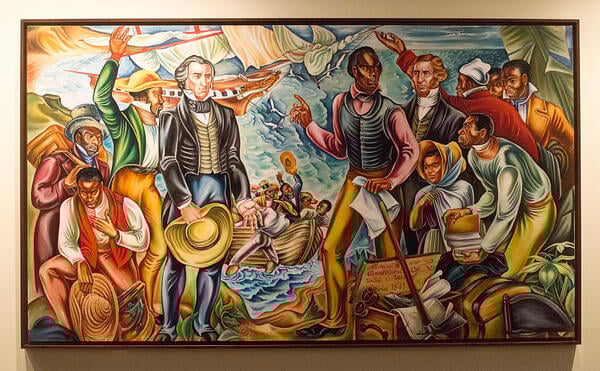
    Talladega College, a historically Black college in Alabama, is selling murals by artist Hale Woodruff to shore up its finances and keep the art publicly accessible.

    The Toledo Museum of Art bought one mural, and three others were jointly acquired by the Terra Foundation for American Art and the Art Bridges Foundation. Two murals that depict the founding of the college and its library will remain on campus, under the college’s ownership. The murals will be reunited at Talladega, likely every six to eight years, and their connection to the college will be highlighted in future exhibitions, The New York Times reported. Art experts estimate the sales are worth about $20 million, a boon for an institution with a $5 million endowment that’s faced recent financial crises, struggling to make payroll in spring 2024.

    The goal of these new arrangements is “to ensure a vibrant future for Talladega by creating a meaningful financial opportunity that better prepares our students for an evolving world,” Rica Lewis-Payton, chair of Talladega’s Board of Trustees, said in a news release from the college. Officials also hope to “expand the profile of Alabama’s first private Historically Black College” and “increase the visibility of Hale A. Woodruff’s extraordinary paintings.”

    Source link

  • U.K. University Apologizes to U.S. Scholar Over Publication Ban

    U.K. University Apologizes to U.S. Scholar Over Publication Ban

    Sheffield Hallam University has apologized to a professor whose research into alleged human rights abuses was blocked from publication after political pressure from the Chinese security services.

    In late 2024, a study by Laura Murphy, an American professor of human rights and contemporary slavery at Sheffield Hallam, into forced labor practices Uyghur Muslims allegedly face was refused publication by her institution after a campaign of harassment and intimidation from Beijing, The Guardian and BBC News reported.

    Sheffield Hallam staff working in offices in mainland China faced visits from intelligence officials over the research, while access to the university’s websites was blocked for more than two years, hampering student recruitment, officials say.

    In an internal email from July 2024 obtained by Murphy using a subject access request, university officials said “attempting to retain the business in China and publication of the research are now untenable bedfellows.”

    After taking a career break to work for the U.S. government, Murphy returned to Sheffield Hallam in early 2025 and says she was told by administrators that the university was no longer permitting any research on forced labor or on China, prompting her to start legal action.

    Her solicitor, Claire Powell, of the firm Leigh Day, said that Murphy’s “academic freedom has been repeatedly and unlawfully restricted over the past two years.”

    “The documents uncovered paint an extremely concerning picture of a university responding to threats from a foreign state security service by trading the academic freedom of its staff for its own commercial interests,” Powell added.

    Murphy, who claimed her university failed to protect her academic freedom, has now received an apology and the institution has told her it “wish[ed] to make clear our commitment to supporting her research and to securing and promoting freedom of speech and academic freedom within the law.”

    “The university’s decision to not continue with Professor Laura Murphy’s research was taken based on our understanding of a complex set of circumstances at the time, including being unable to secure the necessary professional indemnity insurance,” a spokesperson for the university added.

    These circumstances relate to a defamation case brought by a Hong Kong garment maker which initiated a libel case against Sheffield Hallam after its name was included in a report into forced labor published in December 2023. A preliminary rule at the High Court in London found the report had been “defamatory.”

    The apology comes months after new free speech laws came into effect in England in August, with the Office for Students’ free speech champion Arif Ahmed warning the regulator would take action if universities bowed to pressure from foreign governments regarding contentious areas of research.

    A U.K. government spokesperson said, “Any attempt by a foreign state to intimidate, harass or harm individuals in the U.K. will not be tolerated, and the government has made this clear to Beijing after learning of this case.

    “The government has robust measures in place to prevent this activity, including updated powers and offenses through the National Security Act.”

    The Chinese Embassy in London told the BBC that the university had “released multiple fake reports on Xinjiang that are seriously flawed.”

    “It has been revealed that some authors of these reports received funding from certain U.S. agencies,” the embassy added.

    Murphy told the BBC she has received funding over the course of her career from multiple U.S. research agencies, including the U.S. National Endowment for Humanities for work on slave narratives, the U.S. Department of Justice for work on human trafficking in New Orleans, and more recently from USAID and the U.S. State Department for her work on China.

    The Chinese Embassy said the allegations of “forced labor” in her reports “cannot withstand basic fact-check.”

    Source link

  • Report: Sticker Prices Inch Up

    Report: Sticker Prices Inch Up

    Photo illustration by Justin Morrison/Inside Higher Ed | Rawpixel

    College sticker prices rose slightly across all sectors for the 2025–26 academic year, according to the College Board’s Trends in College Pricing and Student Aid report, released Wednesday.

    For the 2025–26 academic year, the average published price for tuition and fees at public four-year institutions for in-state students is $11,950, a 2.9 percent increase before inflation over 2024–25 prices. For out-of-state students, public four-year institutions are charging an average of $31,880, up 3.4 percent from 2024–25. Public two-year colleges charge in-district students an average of $4,150, up 2.7 percent from the previous year—though notably, full-time students at community colleges have been receiving enough grant aid to cover their tuition and fees since the 2009–10 academic year. The average published price at private four-year colleges is $45,000, up 4 percent from 2024–25.

    Inflation-adjusted prices at public institutions have been on the decline for a while. Between the 2015–16 and 2025–26 academic years, the average inflation-adjusted tuition and fees at public four-year colleges fell 7 percent, and at public two-year institutions, the average fell 10 percent. At private nonprofit four-year colleges, average inflation-adjusted tuition and fees rose by 2 percent during the same ten-year timeframe.

    Net prices are also down as average student aid packages rise. The average net tuition and fees paid by first-time, full-time students at private nonprofit four-year institutions declined from $19,810 (in 2025 dollars) in 2006–07 to $16,910 in 2025–26. At public four-year institutions, the average net price fell from a high of $4,450 in the 2012–13 academic year to $2,300 for the 2025–26 academic year.

    When the maximum Pell grant award increased from $6,895 in 2022–23 to $7,395 in 2023–24, so too did the number of Pell Grant recipients. Between 2022–23 and 2024–25, the total number of Pell Grant recipients increased by 22 percent to 7.3 million, and total Pell Grant expenditures increased by 32 percent to $38.6 billion after adjusting for inflation.

    Other notable findings include:

    • Total annual student and parent borrowing is up slightly in 2024–25, to $102.6 billion, following a 38 percent decline between 2010–11 ($163.9 billion) and 2023–24 ($101.4 billion).
    • Institutional grant aid for undergraduates increased by 22 percent between the 2014–15 and 2024–25 academic years.
    • As of June 2025, 32 percent of borrowers owed less than $10,000 in federal loan debt. Another 21 percent of borrowers owed between $10,000 and $20,000 in federal loan debt. These groups held 4 percent and 8 percent of the total outstanding federal loan debt, respectively.

    Source link

  • Florida DOGE Finds Disproportionate Spending at New College

    Florida DOGE Finds Disproportionate Spending at New College

    Photo illustration by Justin Morrison/Inside Higher Ed | Thomas Simonetti/The Washington Post/Getty Images

    Nearly three years into a conservative overhaul of New College of Florida, costs are adding up as the operating expenses per student dramatically outpace other State University System of Florida members.

    Data presented at Thursday’s Florida Board of Governors offers the clearest breakdown so far of what New College is spending per student compared to 11 other system members. NCF spent $83,207 per student in fiscal year 2024, the highest among state universities.

    The University of Florida, a major research institution, was the next highest at $45,765 per student, while the lowest was the University of Central Florida at $12,172 per student, according to data compiled by the Florida Department of Government Efficiency.

    New College and UF also had the highest number of administrators per 100 students. New College had 33.3 administrators per 100 students while UF had 26.9. Others in the system ranged from a low of 4.6 administrators per student at UCF to 12.6 at the University of South Florida.

    Silence on Spending

    Now, despite support from Republican governor Ron DeSantis—who appointed a slate of conservative trustees in early 2023 and tasked them with reimagining the small liberal arts college—NCF is facing growing scrutiny over soaring operating expenses from alumni and other community members. But the Florida Board of Governors, which is appointed by DeSantis, had little to say when presented with the numbers at Thursday’s meeting.

    Eric Silagy, who has been the board member most critical of NCF’s spending and has previously pressed college leadership on the matter, was the only one to offer remarks about the disparity. In limited comments, Silagy thanked Ben Watkins, director of the Florida Division of Bond Finance, for the presentation, which he said made university spending clear.

    Now, Silagy said, “there can be no question anymore about what the numbers really are.” He added that Florida’s DOGE data will allow the Board of Governors to “address outliers where it’s not working” and determine how to reach “better outcomes for the students and the taxpayers.”

    Silagy had clashed with NCF President Richard Corcoran, a former Republican lawmaker, on how much New College spends per student in past meetings. Silagy had estimated NCF spent $91,000 per student, while Corcoran initially said the number was closer to $68,000 per head. Corcoran later backtracked, agreeing the figure was between $88,000 and $91,000 per student.

    That spending has ticked up even as critics in the community and state legislature are growing, and as the college saw its place in U.S. News & World Report rankings fall nearly 60 spots since the takeover. The rankings are highly valued by Florida lawmakers and system officials.

    Asked about DOGE’s findings, a New College spokesperson said issues preceded current leadership.

    “Thanks to Governor DeSantis and the Florida Legislature making a bold move to appoint new leadership with clear goals, the impact of New College’s revitalization is already visible with enrollment surpassing 900 students for the first time in history,” New College spokesperson James Miller wrote in an emailed statement to Inside Higher Ed. “As enrollment growth continues to skyrocket, cost-per-student and cost-per-graduate metrics will be one of the lowest of all top liberal arts schools in the country.”

    Other Meeting Notes

    Thursday’s board meeting also included an update from UCF President Alexander Cartwright, who told FLBOG members that the Higher Learning Commission (HLC) had approved the university for initial accreditation, amid an effort to switch accreditors that had been underway since 2023.

    UCF, like other state institutions, sought to switch from Southern Association of Colleges and Schools Commission on Colleges to another accreditor, following a change to state law in 2022 that mandated the switch after state officials clashed with the organization over various issues.

    Cartwright said he received the news from HLC just hours earlier during the meeting.

    State University System of Florida Chancellor Ray Rodrigues credited Cartwright for his work on the effort and criticized the Biden administration for allegedly slow-walking the process.

    Rodrigues argued that the Biden administration “did not want to see reform in the area of accreditation” and “put up barriers and obstacles to states like Florida and universities like UCF” who were seeking to change accreditors while following Department of Education guidelines.

    The Florida Board of Governors also approved a policy change that will now require professors at all state universities to publicly post course materials. The policy will require “universities to post current syllabi for all courses and course sections offered for the upcoming term” at least 45 days before the first day of class. Those materials will then remain online for at least five years.

    That policy change, which has been the subject of recent media coverage highlighting faculty concerns about being targeted for course content, was passed as part of the consent agenda with no public discussion. No faculty members spoke about the policy change during the public comment portion of the meeting despite concerns expressed by professors in recent coverage.

    The board did not take action or discuss a directive from DeSantis late last month to “pull the plug” on hiring workers on H-1B visas at state universities amid concerns that such hires are taking jobs that could otherwise be filled by Floridians. (However, critics have noted such jobs are often highly specialized and hard to fill.) The board plans to consider that directive in January.

    Source link

  • Congress Tackles College Cost Transparency

    Congress Tackles College Cost Transparency

    Bill Clark/CQ-Roll Call, Inc/Getty Images

    After passing a sweeping higher ed overhaul in the One Big Beautiful Bill Act, Congress now has its sights set on reforming college cost transparency. In a hearing Thursday, members of the Senate Committee on Health, Education, Labor and Pensions questioned experts on how to make college pricing—and how costs compare to student outcomes—more understandable to families.

    “You don’t buy a car without comparing prices, quality and finance options. The same is true for buying a home. Why can we not do this for higher ed?” asked Sen. Bill Cassidy, the Louisiana Republican who chairs the committee and recently issued a request for information about the cost of higher education.

    The hearing follows a House hearing in September on the same topic—and including one repeat witness, Justin Draeger, senior vice president of affordability for Strada Education Foundation.

    Cost transparency has long been a pain point for both students and institutions, who have attempted to clarify via marketing campaigns, improved price calculator tools and tuition resets that their costs of attendance are often lower than their sticker price would indicate. Students, meanwhile, struggle to find reliable information about the costs of their prospective institutions, leaving them without the financial information they need to decide what institution to attend.

    Now, Congressional Republicans are taking notice—and are tying efforts to improve affordability and cost transparency in with their existing focus on the return on investment for students and taxpayers.

    At Thursday’s hearing, lawmakers and witnesses alike stressed how little information is available to students about the price of college, with research showing that most students overestimate the price of a public college education. Witnesses also brought up parents’ and families’ confusion about aid offer letters, which the Government Accountability Office has found often understate or fail to include the net price students will actually be paying.

    Cassidy stressed the need for transparency as it relates to outcomes and return on investment. Students should be able to compare graduation rates and projected incomes of earning a degree at two different institutions, he said, to give families an accurate picture of what they’re paying for when they pay tuition.

    The two Democratic witnesses, meanwhile, argued that college cost transparency is ineffective without also focusing on college affordability—something that is being worsened not only by increasing tuition costs but also by the larger cost-of-living crisis. Nontuition costs, said Mark Huelsman, Director of Policy and Advocacy at The Hope Center for Student Basic Needs, make up the bulk of the cost of attendance. He added that if student aren’t able to afford food or housing, that can severely impact their ability to succeed in college.

    “I urge this committee not just to find ways to increase clarity, but to do everything in its power to lower the price that students pay,” he said.

    Bipartisan Solutions?

    Legislators pointed toward several potential legislative solutions that they said had support on both sides of the aisle. That list included Cassidy’s College Transparency Act, a bill that would provide more detailed information on costs, academic outcomes and career outcomes of specific programs and majors. Cassidy has championed the bill for years, alongside Sen. Elizabeth Warren, CTA’s other lead author, but Rep. Virginia Foxx opposed the measure when she led the House education committee. Foxx, who ultimately proposed her own effort to track students’ outcomes, resisted CTA due to privacy concerns. Cassidy noted during the hearing that the bill includes strict data security standards.

    Meanwhile, Sen. Jon Husted, an Ohio Republican, also touted his bill with fellow Republican Sen. Tommy Tuberville of Alabama—the Debt, Earnings, and Cost Information Disclosure for Education Act—which would make changes to the Department of Education’s College Scorecard. It would require the resource to include information on average loan amounts in a given academic program, as well as default rates, how long it takes graduates to pay off their loans and how that debt compares to their earnings.

    That information would help prospective students “know exactly what they’re getting themselves into before they make a decision to make a huge, huge investment,” Husted said.

    Witnesses enumerated their own cost transparency wish lists.

    Draeger said, among other things, that the federal government should regulate financial aid offers to use straightforward and standardized language. Huelsman, on the other hand, argued that the “simplest way, and the most powerful way” to make college costs transparent is to make college tuition- or debt-free. He also said that the Trump administration appears to be working against, not toward, cost transparency in higher ed.

    “Many of the bipartisan reforms being discussed today require staffing capacity at the Department of Education that frankly, at this moment, do not exist, including at the Institute for Education Sciences,” he said. “Meanwhile, the Trump administration has worked to dismantle the CFPB, which provides oversight and essential information to borrowers, and conducts essential research on the student loan market. Sadly, the One Big Beautiful Bill Act takes us in the wrong direction on both affordability and transparency.”

    Source link