Tag: Higher

  • CUNY Plans to Buy Manhattan Campus

    CUNY Plans to Buy Manhattan Campus

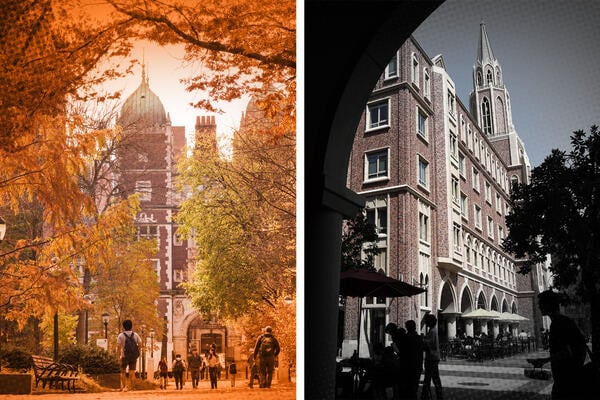
    Cash-strapped Metropolitan College of New York is planning to sell its Manhattan campus to the City University of New York for $40 million, a regulatory filing first reported by Bloomberg shows.

    The two institutions signed a letter of intent on Monday, according to the regulatory filing, which notes that proceeds will be used to pay off a portion of MCNY’s $67.4 million outstanding debt. 

    MCNY agreed to sell the site last year as part of a forbearance agreement with bondholders.

    Metropolitan College of New York has struggled to keep up with debt in recent years and failed to maintain the agreed-upon ratio of liquid assets, according to a regulatory filing from July. The small college enrolled fewer than 500 students, according to the latest state data, and posted a deficit of more than $7 million in fiscal year 2023, publicly available financial data shows.

    CUNY is purchasing 101,542 square feet across three floors in the shared building, which officials told Bloomberg they intend to use as a temporary site for the Hunter-Bellevue School of Nursing amid ongoing construction projects. The sale will require approval from bondholders as well as Metropolitan College’s accreditor, the Middle States Commission on Higher Education.

    Source link

  • Lake-Sumter Hires GOP Lawmaker as President

    Lake-Sumter Hires GOP Lawmaker as President

    Lake-Sumter State College named GOP lawmaker John R. Temple as its president Thursday, making him the latest politician to helm a state institution, the Orlando Business Journal reported.

    Temple, an ally of Republican governor Ron DeSantis, breaks with many of his fellow politicians who have become college presidents in that he does have administrative experience in higher education. Temple was hired as the college’s associate vice president for workforce in 2023. Previously he was a teacher and administrator in K–12 schools.

    Other recent political hires include former lieutenant governor Jeanette Nuñez at Florida International University, lobbyist and DeSantis ally Marva Johnson at Florida A&M University, and former education commissioner Manny Diaz Jr. in an interim role at the University of West Florida. 

    Multiple others have been hired across the state college system. A recent analysis by Inside Higher Ed found at least a dozen executive hires with ties to the Republican Party or DeSantis since 2022. Multiple others donated thousands of dollars to GOP candidates and causes.

    Another state institution, North Florida College, is also considering a political candidate for its next president. Mike Prendergast, former Citrus County sheriff and chief of staff for Rick Scott, the Republican governor–turned–U.S. senator, is one of several finalists for the North Florida job.

    The University of Florida also hired an interim president last week, tapping for the job Donald Landry, a former Columbia University Medical School administrator with ties to conservative academic organizations. Landry was hired after the Florida Board of Governors rejected former University of Michigan president Santa Ono for the UF job for his past support of diversity, equity and inclusion initiatives, which he sought to distance himself from amid his candidacy.

    Source link

  • Serving to Lead: The Transformative Role of Servant Leadership in Higher Education – Faculty Focus

    Serving to Lead: The Transformative Role of Servant Leadership in Higher Education – Faculty Focus

    Source link

  • Serving to Lead: The Transformative Role of Servant Leadership in Higher Education – Faculty Focus

    Serving to Lead: The Transformative Role of Servant Leadership in Higher Education – Faculty Focus

    Source link

  • How Do We Rebuild Public Trust in Higher Education? Together

    How Do We Rebuild Public Trust in Higher Education? Together

    A recent Lumina–Gallup poll offers a rare piece of good news: public confidence in higher education has ticked up from a recent low of 36% to 43%. While the rebound is modest, it breaks a years-long narrative of decline, and it’s worth asking: What is driving renewed trust?

    Drs. Julie Posselt and Adrianna Kezar Respondents pointed to three factors: quality of education, opportunities for graduates, and innovation. In other words, the public is telling us that when we deliver tangible value—educational excellence, new opportunities, and forward-looking ideas—trust grows.

    At the USC Rossier School of Education, this belief is guiding our next chapter. This month, we are merging the Pullias Center for Higher Education and the Center for Enrollment Research, Policy and Practice. Working collectively under the Pullias banner thanks to the generous bequest of the Earl and Pauline Pullias family, we are coming together to propel learning across decades of experience in research-practice partnerships. 

    The teams in our centers work with community colleges, school districts, nonprofits, businesses, government agencies, state higher education systems, and national associations. Though we love theory work as much as the next professors, we know theory’s greatest power is realized when tested and applied in the real world, in partnership with the communities we serve.

    Take the USC College Advising Corps. Through partnerships with public high schools across Los Angeles County, we place nearly 40 trained college advisers per year, most of them recent college graduates from across Southern California, into underresourced high schools. The result has been to support 10,000 high school seniors annually, with more than 88,000 first-generation, low-income, and underrepresented students helped since the program began more than a decade ago. This is the kind of scale, innovation, and equity-driven practice that the public recognizes and values.

    Our work to date and going forward will be defined as much by our approach. We partner with communities, connecting research directly to policy and practice to innovate on the systems that shape student access and success, from high school through graduate education and into the workforce. This work often means capacity building, institutional improvement, and student-centered design—not in theory alone, but in practice, in partnership, and at scale.

    Look around and you’ll find many more examples of people and organizations who inspire not just through individual excellence but also by deepening wells of mutual support and mutual investment. There are longstanding national examples such as Campus Compact, which brought together college presidents across the country to sign a declaration and create an organization focused on civic engagement; they have sponsored collaborative responses to crises and offer faculty development. That kind of solidarity is not typical, but to our minds it is increasingly valuable.

    Benjamin Franklin warned at the signing of the Declaration of Independence, “We must all hang together, or most assuredly we shall all hang separately.” His words are as relevant to higher education today as it was to the Continental Congress. Our sector’s future depends on resisting the pull toward isolation and polarization, and instead modeling connection, mutual support, and shared purpose. 

    In a year certain to bring challenges, higher education must lead not from the top of the ivory tower, but from within networks of trust we build with the communities around us—of professionals and publics. For us, merging our centers is just one example of the belief that we are stronger together—intellectually, financially, and in service of the public good. We welcome connecting with you through your stories and examples of the same. 

     ____________

    Drs. Julie Posselt and Adrianna Kezar are Co-Directors of the Pullias Center for Higher Education at University of Southern California.

    Source link

  • 6 higher education trends to watch for in the 2025-26 academic year

    6 higher education trends to watch for in the 2025-26 academic year

    This audio is auto-generated. Please let us know if you have feedback.

    This year has already brought big challenges to the higher education sector, from major shifts in federal policy to massive cuts in government research funding. 

    As college leaders gear up for the 2025-26 academic year, they’re staring down even more change ahead.

    The U.S. Department of Education is undertaking massive regulatory changes, the Trump administration is ramping up investigations into colleges, and Republican lawmakers are continuing their crackdown on diversity, equity and inclusion. 

    Below, we’re rounding up six trends we’re keeping tabs on.

    Trump and Republicans usher in a new era of financial retrenchment

    Last year, colleges slashed spending on staff, faculty, programs and more in response to difficult enrollment realities and rising costs. The budget pressures have only intensified for many in the higher education world since President Donald Trump took office in January. 

    The Trump administration has targeted about $3.3 billion in grant funding for termination at public and private universities nationwide — about $206 per student — according to an analysis by the Center for American Progress. 

    In addition to contractions in research spending, institutions are juggling myriad changes to federal policy by Trump and congressional Republicans that could have significant effects on institutional budget planning. This includes a more fraught environment for international students, cuts to federal student lending and a higher endowment tax, to name just a few. 

    As they brace for a painful new era of higher ed, institutions of all kinds — from Stanford University to the University of Nebraska — are freezing hiring, offering buyouts, laying off faculty and staff, and pulling back on capital projects.

    The new legal minefield

    The Trump administration’s legal and financial warfare against Harvard University has grabbed an outsized share of headlines, and arguably for good reason. Harvard is the richest and oldest college in the U.S. If the administration succeeds in a multi-agency, omnidirectional attack on the institution, where does that leave the rest of the nation’s colleges? 

    Facing this question, some institutions have already made deals with the Trump administration as they attempt to maintain their federal funding and stay out of legal battles. Others are reported or confirmed to be in negotiations with the federal government. And many colleges are facing a difficult balancing act between mission and compliance.

    In its attacks on colleges, the Trump administration has introduced novel and aggressive readings of civil rights laws and U.S. Supreme Court cases, as well as threatened vast sums of funding for colleges it considers out of compliance with federal statute. 

    For instance, the Education Department deemed the University of Pennsylvania in violation of civil rights law for prior policies allowing transgender women to play on sports teams aligning with their gender identity. Penn became one of the first colleges to strike a deal with the administration rather than risk the sort of multi-agency attack — complete with prolonged litigation — being deployed against Harvard. 

    Meanwhile, federal agencies suspended nearly $600 million in funding from the University of California, Los Angeles over allegations that it violated civil rights law because it didn’t do enough to respond to a pro-Palestinian protest encampment on its campus in spring 2024. Police cleared the encampment at the university’s request after less than a week. 

    Among other legal risks under Trump, policies meant to support transgender students or diversity programs can now potentially prompt prosecution of a college under the False Claims Act, a federal law dealing with fraud in government contracting. That’s according to a May message from Deputy Attorney General Todd Blanche introducing the Civil Rights Fraud Initiative that specifically listed colleges as potential False Claims Act targets.

    New regulations coming down the pike

    The Education Department has its work cut out for it over the next year. That’s because the agency must craft regulations to carry out the higher education-related provisions of the sweeping domestic policy bill passed by Republican lawmakers this summer. 

    The changes under the One Big Beautiful Bill Act — which has been slammed by many higher education advocates — are vast. 

    Source link

  • When Majors Matter

    When Majors Matter

    I’ll admit a pet peeve when writers set out two extreme views, attributed vaguely to others, and then position themselves in the squishy middle as the embodiment of the golden mean. It seems too easy and feeds the cultural myth that the center is always correct.

    So, at the risk of annoying myself, I’ve been frustrated with the discourse recently around whether students’ choice of majors matters. It both does and doesn’t, though that may be more obvious from a community college perspective than from other places.

    “Comprehensive” community colleges, such as my own, are called that because they embrace both a transfer mission (“junior college”) and a vocational mission (“trade school”). The meaning of a major can be very different across that divide.

    For example, students who major in nursing have the inside track at becoming nurses in a way that students who major in, say, English don’t. Welding is a specific skill. HVAC repair is a skill set aimed squarely at certain kinds of jobs. In each case, the goal is a program—sometimes a degree, sometimes a diploma or certificate—that can lead a student directly into employment that pays a living wage. In some cases, such as nursing, it’s fairly normal to go on to higher degrees; in others, such as welding, it’s less common. Either way, though, the content of what’s taught is necessary to get into the field.

    In many transfer-focused programs, the opposite is true. A student with the eventual goal of, say, law school can take all sorts of liberal arts classes here, then transfer and take even more. Even if they want to stop at the bachelor’s level, the first two years of many bachelor’s programs in liberal arts fields are as much about breadth as about depth. Distribution requirements are called what they’re called because the courses are distributed across the curriculum.

    At the level of a community college, you might not be able to distinguish the future English major from the future poli sci major by looking at their transcripts. They’ll take basic writing, some humanities, some social science, some math, some science and a few electives. And many receiving institutions prefer that students don’t take too many classes in their intended major in the first two years. Whether that’s because of a concern for student well-roundedness or an economic concern among departments about giving away too many credits is another question.

    Of course, sometimes the boundary gets murky. Fields like social work straddle the divide between vocational and transfer, since the field often requires a bachelor’s degree. Similarly, a field like criminal justice can be understood as police training, but it also branches into criminology and sociology. And business, a perennially popular major, often leads to transfer despite defining itself as being all about the market.

    The high-minded defense of the view that majors don’t matter is that student interest is actually much more important than choice of major. I agree strongly with that. I’d much rather see a student who loves literature study that than force herself to slog through an HVAC program, hating every moment of it. The recent travails of computer science graduates in the job market should remind us that there are no guaranteed occupations. Students who love what they study, or who just can’t stop thinking about it, get the most out of it. And after a few years, most adults with degrees are working in fields unrelated to their degrees anyway. To me, that’s a strong argument for the more evergreen skills of communication, analysis, synthesis, research and teamwork: No matter what the next hot technology is, people who have those skills are much more likely to thrive than people who don’t. A candidate’s tech skill may get them the first job, but their soft skills—not a fan of the term—get them promoted.

    I want our students to be able to support themselves in the world that actually exists. I also want them to be able to support themselves in the world that will exist 20 years from now. Technological trends can be hard to get right. Remember when MOOCs were going to change everything? Or the Segway? In my more optimistic moments, I like to think that bridging the divide between the liberal arts and the vocational fields is one of the best things community colleges can do. Even if that feels squishy and centrist.

    Source link

  • Embracing Transparency After a Rankings Scandal

    Embracing Transparency After a Rankings Scandal

    It’s college rankings season again, a time of congratulations, criticism and, occasionally, corrections for institutions and the organizations that rate them.

    Typically U.S. News & World Report, the giant of the college rankings world, unranks some institutions months after its results are published over data discrepancies that are usually the result of honest mistakes. But in rare instances, erroneous data issues aren’t mistakes but outright fraud. And when that happens, it can result in soul-searching and, ideally, redemption for those involved.

    That’s what happened at Temple University, which was rocked by a rankings scandal in 2018, when it became clear that Moshe Porat, the dean of Temple’s Richard J. Fox School of Business and Management, had knowingly provided false data to U.S. News for years in a successful effort to climb the rankings. Temple’s online master of business administration soared to No. 1—until the scheme was exposed. U.S. News temporarily unranked the program, the U.S. Department of Education hit Temple with a $700,000 fine and Porat was convicted of fraud.

    Since then, Temple has worked hard to restore its reputation. In the aftermath of the scandal, officials imposed universitywide changes to how it handles facts and figures, establishing a Data Verification Unit within the Ethics and Compliance Office. Now any data produced by the university goes through a phalanx of dedicated fact-checkers, whether it’s for a rankings evaluation or an admissions brochure.

    A Culture Shift

    Temple’s Data Verification Unit was introduced in 2019 amid the fallout of the rankings scandal.

    At first, it gave rise to “friction points,” as university officials were required to go through new processes to verify data before it was disseminated, said Susan Smith, Temple’s chief compliance officer. But now she believes the unit has won the trust of colleagues on campus who have bought in to more rigorous fact-checking measures.

    “It’s been an incredibly positive thing for Temple and I think for data integrity over all,” Smith said.

    Initially, Temple partnered with an outside law firm to verify data and lay the groundwork for the unit. Now that is all handled in-house by a small team that works across the university.

    While Smith said “the vast majority of mistakes” she sees “are innocent,” her team is there “to act as a sort of backstop” and to “verify that the data is accurate, that there’s integrity in the data.”

    The Data Verification Unit also provides training on best practices for data use and dissemination.

    University officials believe placing the Data Verification Unit under the centralized Office of Compliance and Ethics—which reports directly to Temple’s Board of Trustees—is unique. And some say the process has created a bit of a culture shift as they run numbers by the unit.

    Temple spokesperson Stephen Orbanek, who joined the university after the rankings scandal, said running news releases by the Data Verification Unit represented a “total change” from the way he was accustomed to operating. And while it can sometimes slow down the release of certain data points or responses to media requests, he said he’s been able to give reporters more robust data.

    He also noted times when Temple has had to pull back on marketing claims and use “less impressive” statistics after the Data Verification Unit flagged issues with materials. As an example, he cited a fact sheet put out by the university in which officials wanted to refer to Temple as a top producer of Fulbright scholars. But the Data Verification Unit insisted that a caveat was needed: The statistic pertained only to the 2022–23 academic year.

    Ultimately, Orbanek sees the Data Verification Unit as a boon for a more transparent campus culture.

    “The culture has just kind of shifted, and you get on board,” Orbanek said.

    Other Rankings Scandals

    Other universities have been less forthcoming about fixing their own data issues.

    In 2022, a professor called out his employer, Columbia University, for submitting inaccurate data to U.S. News, which responded by unranking the institution for a short time. Following the scandal and accusations of fraud by some critics, Columbia announced the university would no longer submit data to U.S. News. Officials argued that the rankings have outsize influence on prospective students but don’t adequately measure institutional quality.

    Yet Columbia still publishes large swaths of data, such as its Common Data Set. Asked how the university has acted to verify data in the aftermath of the rankings scandal, a spokesperson wrote by email that data is “reviewed by a well-established, independent advisory firm to ensure reporting accuracy” but did not respond to a request for more details on the verification processes.

    The University of Southern California also navigated a rankings scandal in 2022. USC provided faulty data to U.S. News for its Rossier School of Education, omitting certain metrics, which helped it rise in the rankings, according to a third-party report that largely blamed a former dean.

    U.S. News temporarily unranked Rossier; graduate students sued the university, accusing officials of falsely advertising rankings based on fraudulent data. That legal battle is ongoing, and earlier this year a judge ruled that the case can proceed as a class action suit.

    Officials did not respond to a request from Inside Higher Ed for comment on whether or how USC has changed the way it verifies data for use in rankings or for other purposes.

    U.S. News also did not respond to specific questions about if or how it verifies that information submitted by institutions to be used for ranking purposes is accurate. A spokesperson told Inside Higher Ed, “U.S. News believes that data transparency and internal accountability practices by educational institutions are good for those institutions and good for consumers.”

    Source link

  • Mary Baldwin President Suddenly Resigns

    Mary Baldwin President Suddenly Resigns

    Liz Albro Photography/iStock/Getty Images

    Mary Baldwin University president Jeff Stein resigned Tuesday after two years in the role, The News Leader reported. Fall classes at the formerly all-women private university in Staunton, Va., started Monday. 

    A university spokesperson told Inside Higher Ed that Stein resigned for personal reasons, and the university has not shared any other information about his departure.

    Stein was the first male president at Mary Baldwin since 1976 and assumed the role in 2023 after former president Pamela Fox retired. The university’s Board of Trustees appointed Todd Telemeco, who was the vice president and dean of Mary Baldwin’s Murphy Deming College of Health Sciences, as Stein’s permanent replacement. 

    “We thank Dr. Stein and his wife, Chrissy, for their two years of service to the University, and we wish them the best in their future endeavors. We are especially grateful for Dr. Stein’s ability to reinvigorate the connection between the University and our alumni,” board co-chairs Eloise Chandler and Constance Dierickx wrote in a statement. “This renewed energy in alumni relations has also contributed to significantly higher alumni giving rates.”

    Prior to becoming president at Mary Baldwin, Stein served as vice president for strategic initiatives and partnerships and an associate professor of English at Elon University in North Carolina.

    Source link

  • “Happiness Effect” of Higher Ed “Fades in Richer Places”

    “Happiness Effect” of Higher Ed “Fades in Richer Places”

    In recent decades, the extra money that graduates earn has been touted as a good reason to attend university. But that has recently come under scrutiny with evidence suggesting the graduate premium has fallen.

    And now two separate papers have found that another supposed benefit of higher education—increased lifetime happiness—is also not quite as straightforward as thought.

    A new study, which analyzed data from 36 countries, reveals that both higher education graduates and the rest of the population experience a steady increase in well-being as a country’s social and economic prosperity gradually improves.

    However, the well-being gains associated with higher education were found to “level off” when a country becomes more economically developed.

    Therefore, the paper argues that graduates in countries with lower GDP per capita experience greater relative gains in terms of economic security, social mobility, higher social status and life satisfaction—leading to a higher sense of well-being.

    In contrast, the “happiness advantage” of a university degree in countries with a higher GDP per capita is less pronounced.

    The paper suggests that stress and dissatisfaction can be caused by rising expectations, increased competition and a “relentless emphasis on achievement,” particularly among highly educated individuals.

    “Highly educated individuals in more prosperous countries are generally much happier than their counterparts in less prosperous countries, although they may be less happy than less educated individuals within their own country,” writes author Samitha Udayanga, a doctoral candidate at the University of Bremen.

    This suggests that the happiness derived from higher education tends to weaken in wealthier countries, he adds.

    A separate study published in June found that the level of happiness associated with completing college has quadrupled since the mid-1970s.

    The study of over 35,000 people in the U.S. showed that higher education has shifted over this time from contributing to happiness through occupations to improving wages.

    The “happiness return” of higher education increased over the 45 years of the study and remains higher than the happiness linked to not studying for a degree.

    But the researchers discovered it “nosedived” in 2021–22 during the COVID-19 pandemic. And satisfaction linked to postgraduate degrees has stalled since the 2000s.

    “University graduates in contemporary America have a certain chance of gaining monetary rewards [by] bypassing occupations, resulting in a relatively higher probability of feeling happy,” they said. “Meanwhile, the same mechanism rarely operates for advanced degree holders, whose happiness largely depends on their occupational attainment.”

    The paper concludes that the overall happiness premium for higher education at both the undergraduate and postgraduate level may “vanish once their economic rewards become less pronounced.”

    Source link