Earlier this week the presidents of three of the formerly regional accreditors—Middle States, SACSCOC and WASC—hosted a webinar on AI and transfer credit. I watched, as did several colleagues; both topics are important, and since we’re covered by Middle States, it’s useful to know where its policies and expectations are heading. Credit loss upon transfer is a chronic issue on which accreditors have historically been muted; serious attention would be welcome.
It was … frustrating My colleagues and I tried afterward to isolate actual concrete changes and came away befuddled. It reminded me a bit of “strategic plans” that say things like, “We will achieve excellence.” OK, but that’s neither a strategy nor a plan. At best, it’s an intention.
Heather Perfetti, the president of MSCHE, stated that she doesn’t want accreditors to be seen as barriers to credit transfer; if anything, they’re urging a shift in the burden of proof for credit transfer from yes to no. That’s good, as far as it goes, but the key word is “urging.” Urging is not requiring. Kay McClenney famously noted that “students don’t do optional.” I’ve seen too many cases of universities not doing optional when it comes to accepting credits in transfer.
The stated reason is usually something about standards; the real reason is economic self-interest. Departments don’t want to “give away” any more credits than they have to, so they don’t. That changes only when orders come down from above—say, from a provost’s office because the college is desperate for enrollment, or from a State Legislature that got sick of shenanigans and passed a law, like MassTransfer in Massachusetts. Accreditors could conceivably play that role—it would be naïve to think that outcomes assessment would have gained the momentum it did without pressure from accreditors—but they’d have to put some force behind it. I didn’t catch any mention of that.
To be fair to the accreditors, that’s much harder now that they’ve lost their de facto regional monopolies. The regional accreditors are membership-driven organizations whose imprimatur opens up access to federal financial aid. Membership-driven organizations aren’t normally tough on their members, but the unusual combination of regional monopoly and access to federal financial aid gave them the leverage to push their members harder than they otherwise could. That didn’t always work out ideally—some colleges went bankrupt having recently satisfied accreditors that they were financially sound—but the structure made it at least possible for the accreditors to carry real weight.
The first Trump administration broke the regional monopolies and opened the door to alternative accreditors. Now there’s an entirely new body emerging in SACS’s territory, and colleges are empowered to shop around. When members can shop around for more lenient or ideologically aligned accreditors, it becomes more difficult for the legacy accreditors to issue mandates.
The new preference—I can’t call it a mandate or a policy—seems to mean that colleges should “default to yes” on credit transfer, in the absence of evidence that they shouldn’t. It wasn’t immediately clear what would constitute evidence that they shouldn’t. Lack of regional accreditation isn’t supposed to be dispositive in itself. Over time, a college could track success rates of students in Calc II who transferred in Calc I from College X, and if the rate were low enough, they could cite that. But that would require first allowing everything in for several years to build a track record; after that, the politics of saying no would be more complicated.
The connection to AI, as near as I could tell, was that it would allow colleges to assess transcripts and issue transfer decisions much more quickly at scale. That would actually help. As one of the presidents put it—I should have written it down, but alas—the current system works like trading in a car for a new one but not being told the value of your trade-in until you’ve had the new one for a few months. It’s not consumer-friendly at all. If transfer credit decisions could be issued at the same time as admission and financial aid decisions, students would be much more able to make informed decisions. I have concerns about AI hallucinations in this context (and many others), but if defaulting to yes is built in, it might work at least as well as the current system.
So, I’ll give this shift a cheer and a half out of three. The direction is positive; I just hope they can find a way to move from an intention to a plan.
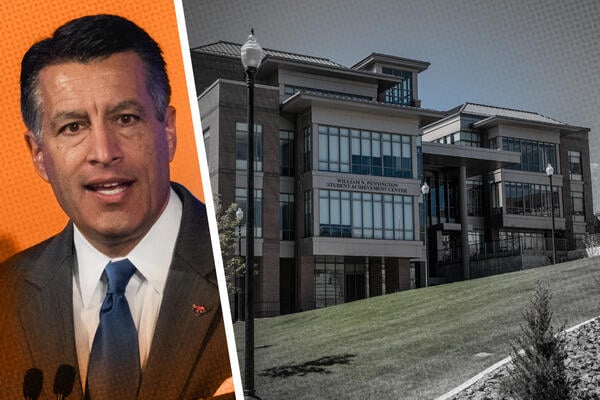
Brian Sandoval, former Republican governor and president of University of Nevada at Reno, is standing up for the university’s undocumented student support program, despite threats of an investigation from the federal government.
Photo illustration by Justin Morrison/Inside Higher Ed | Cheriss May/NurPhoto/Getty Images | Brycia James/iStock/Getty Images
Centers and programs for undocumented students are caught in a politically precarious moment after the Department of Justice called for an investigation of the University of Nevada at Reno’s undocumented student services. Immigrant students’ advocates say the move marks an escalation in the Trump administration’s ongoing crackdown on higher ed benefits for these students. And they worry campus programs supporting undocumented students might pre-emptively scale back or close altogether.
In a letter late last month, DOJ officials directed Education Secretary Linda McMahon to investigate the Nevada university over UndocuPack, its support program for undocumented students.
According to the letter, the DOJ had received reports of the university’s “efforts to assist illegal immigrants” by providing referrals to on- and off-campus resources, student aid, and academic and career support, including helping students find “career opportunities that do not require applicants to provide a Social Security Number.”
“We are referring this matter to the Department of Education to investigate whether UNR is using taxpayer funds [to] subsidize or promote illegal immigration,” the letter read.
The U.S. Department of Education did not respond to a request for comment; Inside Higher Ed received an automatic out-of-office message citing the government shutdown.
But UNR is pushing back. Brian Sandoval, a former Republican governor of Nevada and the university’s first Hispanic president, responded with a forceful defense of the program.
He stressed to students and staff that the UndocuPack program offers supports to all students, regardless of citizenship status, and uses no federal funds. He also emphasized that several state-funded scholarships don’t take immigration or residency status into account; the university doesn’t dole out state or federal aid to anyone ineligible.
“The University has remained in compliance with federal and state law, as well as the Nevada and United States Constitutions regarding adherence to federal and state eligibility requirements for undocumented students for federal aid and scholarships,” Sandoval wrote. “In addition, we have made good, and will continue to make good on our commitment in ensuring a respectful, supportive, and welcoming environment on our campus where all our students have access to the tools they need for success.”
He said the university plans to respond to the proposed investigation “through the appropriate legal channels.”
A ‘Test Case’
The threat to UNR brings fresh worries for undocumented students’ advocates, who say it’s the latest in a string of federal efforts to curb public higher ed benefits for such students.
The Justice Department has already sued five states over policies allowing undocumented students to pay in-state tuition, successfully quashing state laws in Texas and Oklahoma after their attorneys general swiftly sided with the federal government. Over the summer, the Education Department announced it would investigate five universities for offering scholarships intended for undocumented students, claiming such programs violated civil rights law. The department also ended Clinton-era guidance that allowed undocumented students to participate in adult and career and technical education programs in response to Trump’s February executive order demanding that “no taxpayer-funded benefits go to unqualified aliens.”
Diego Sánchez, director of policy and strategy at the Presidents’ Alliance on Higher Education and Immigration, said going after UNR’s UndocuPack program is “part of a broader effort by the administration to intimidate colleges and universities that seek to serve undocumented students.” But it also takes the campaign a step further, “targeting any form of campus support for undocumented students,” including academic and career services. “It’s definitely a pattern of escalating attacks via different avenues of law.”
The DOJ’s letter cites the Personal Responsibility and Work Opportunity Reconciliation Act of 1996, which bars undocumented immigrants from many public benefits, but Sánchez maintains that “no court has ever interpreted PRWORA to bar universities from offering support offices, mentoring resource centers for undocumented students.”
Those kinds of supports for undocumented students exist at colleges and universities across the country. A 2020 study found at least 59 undocumented student resource centers on campuses nationwide, mostly in California but also in other states including Arizona, Colorado, Florida, New Jersey, Oregon, Texas, Utah and Washington.
Sánchez worries that colleges and universities could modify or scrap perfectly lawful programs out of fear after seeing the DOJ chide UNR for such common supports. He also expects the Trump administration to target more programs like UndocuPack.
UNR feels like “a test case,” he said.
Gaby Pacheco, president and CEO of TheDream.US, a scholarship provider for undocumented students, said other colleges and universities with undocumented student supports are already weighing what to do in response to the developments in Nevada.
“Do we duck and hide and lay low so that we don’t get picked on, or do we stand together with others and potentially become a target of this? It’s a question that a lot of people and institutions … are asking themselves,” Pacheco said.
She worries canceling or minimizing undocumented student support programs will send those students a message—“that they don’t belong.” And she doesn’t believe trying to lie low or scale back programs will deflect federal attention.
“This is just month nine into this administration. We still have a full three more years to go,” she said. And the administration seems like it plans to “continue full force until, in essence, there are no policies left where undocumented students have access to higher education.”
As the Supreme Court begins its new term this week, legal experts predict that higher education will be a frequent subject for the justices. Yet only two college-related cases—both of which center on transgender rights—are currently listed on the main docket.
That’s in large part because of a less formal but increasingly popular second list of cases known as the shadow docket.
Historically, the shadow docket, also called the emergency docket, was used on rare occasions for just that—emergencies. In situations when the lack of a ruling from the highest court could lead to immediate, irreversible consequences, this alternate route allowed the justices to move quickly and issue an interim decision without going through traditional processes such as briefings, oral arguments or written opinions. But over the course of the past threeadministrations, use of this secondary docket has skyrocketed, creating a lack of predictability and an immense sense of uncertainty for the public.
Normally, it can take months for a case’s petition to be processed, and then once a case is on the docket it can take even longer for it to be heard and ruled upon. This leaves the parties directly involved—and all who may be affected by the decision—time to prepare and create contingency plans for the potential outcomes. But when the shadow docket is used, cases can be introduced and receive a ruling in a matter of weeks, if not days, often without any explanation.
“Some of these are existential issues about whether universities can continue to function in the way in which they functioned for the past half century,” said former Brandeis University president Fred Lawrence, a higher education legal expert and distinguished lecturer at Georgetown Law. “If erring on the side of caution means shutting down your research operation, then you are unrecognizable to yourself. So it creates a very, very difficult situation for higher education to function.”
While it remains unclear how and when various cases will reach the Supreme Court, Lawrence and others say they have a fairly good idea of what those cases will likely concern. Issues including visa policies for international students and scholars, First Amendment rights, academic freedom, and federal funding are likely to be on the line.
Here’s a quick summary of the cases—on and off the main docket—that experts say colleges and universities should keep a close eye on.
Transgender Athletes
On the first day of his second term in office, President Donald Trump signed an executive order banning “gender ideology” and declaring that the government would only recognize two sexes, male and female. Less than a month later, he signed a second order banning transgender women from participating in women’s sports.
For now, both declarations—and their implications for collegiate sports—are up for consideration by the highest court through two cases, West Virginia v. B.P.J and Little v. Hecox.
Though the former concerns a transgender girl in high school and the latter a transgender woman at Boise State University, the cases are otherwise largely the same. Both involve runners who attempted to participate in track and cross-country but were barred from doing so by state law. And up until a little over a month ago, both were set to be heard before the court at some point this term.
But on Sept. 2 Hecox filed a motion urging the Supreme Court to dismiss her case. In the six-page filing, Hecox’s lawyers explained that due to illness, her father’s recent passing and the “negative public scrutiny” stemming from the litigation, she no longer wished to participate in women’s sports, rendering the case moot.
Still, given the court’s conservative supermajority and their penchant for siding with the Trump administration, some wonder if Hecox’s plea to the court is an attempt to avoid an unfavorable final decision. (Hecox won her case at both the district and circuit court levels.)
Jill Siegelbaum, a former assistant general counsel at the Department of Education and now a partner at Sligo Law Group, said that she understands both the theoretical idea that Hecox could be fearing a loss and the more personal rationale for dismissing the case.
“Every single attorney involved in that case is well aware of who is sitting on the court and the decisions that the court has recently made in the area of transgender rights,” she said. “But I can also say that on its own, simply the fear for her emotional, physical and mental health that would come from further publicity about this case … would certainly be, in my opinion, a reasonable basis for withdrawing.”
So far, it’s unclear whether the court will respect Hecox’s request. But even if the case were dismissed, Siegelbaum and others said, West Virginia v. B.P.J., will almost certainly remain, eventually leading to a ruling on the same overarching issue—interpreting Title IX’s equal protection clause.
Sarah Hartley, a partner and co-chair of the higher education team at BCLP, a law firm headquartered in St. Louis, stressed that regardless of the outcome, the ruling’s implications for colleges and universities could be influenced by what questions the justices ask and how they write their opinions.
“Depending on how the decision is worded, it could have broader impacts than just sport. It could address bathrooms, locker rooms—any number of different things that Title IX and other antidiscrimination laws historically have protected,” she said.
Hartley added that in her view, lack of access to even recreational activities could be a major blow to the mental health of an already “highly marginalized community.”
“Imagine it affecting your club sports at universities or in high schools, or in gym class when there’s any sex segregation,” she said. “As someone who’s particularly concerned with the access to sport because of all the positive impacts it can have, I think the trickle-down effect … will be a big deal.”
Shadow Docket
Higher education legal experts are also keeping a close eye on the shadow docket, as well as on cases that were already addressed on the emergency docket, were sent back to the lower court and now are steadily working their way back up to the Supreme Court for a final merit ruling.
Jessica Ellsworth, a partner at Hogan Lovells and adviser for the American Council on Education, said she thinks the shadow docket cases are the ones that have a “real impact” on higher education.
She added that multiple stays have already been granted on issues like Trump’s ability to terminate congressionally appropriated funds, slash government agencies’ staffs and tighten immigration policies that affect college enrollment. In doing so, the Supreme Court blocked injunctions from the lower courts, allowing the Trump administration to carry out policies before the justices have fully analyzed the facts of the case, considered friend-of-the-court briefs or heard the arguments of each party.
Moving forward, “I suspect that we will see First Amendment challenges make their way to the court related to ongoing efforts by the administration to force changes across universities and use threats of cutting off funding to compel those changes,” Ellsworth said. “As a result, it’s important for higher education to keep an eye on both the merits and emergency docket for the foreseeable future.”
Hartley from BCLP noted that transgender rights issues are also on the shadow docket through the case Trump v. Orr, which weighs a transgender or nonbinary individual’s ability to obtain a passport that matches their gender identity. If this ruling is interpreted to extend to IDs beyond passports, it could lead to all kinds of inconsistency between gender presentation and government identification, creating significant hurdles for many university operations, she said.
“You could see complaints that a student who’s male presenting is living in a female dorm, which could then give rise to invasive investigations and force a student to disclose things that they might want to make otherwise private,” she explained.
And while any number of these cases could eventually make it back to the Supreme Court for a final ruling, Lawrence from Georgetown said it’s too soon to predict what will make the cut; just a week into the new term, “the Supreme Court has barely put together its docket for the year,” he said.
But even if these issues do make it back for a full merit review, he added, it may be too late. So far, the Supreme Court has struck down the injunctions blocking Trump from carrying out his policies on every higher ed case that has reached the shadow docket. And in many cases, he said, doing that is like allowing a development company to tear down a historic home before a court has ruled on whether it sits on protected land. Even if the court eventually rules that the property should have been shielded, once the house is gone, it will be impossible to restore.
“If you don’t provide that temporary remedy, then there may be no point to a remedy at all,” Lawrence explained.
In a year already defined by polarization and violence, the assassination of Charlie Kirk at Utah Valley University plunged higher education into crisis. The killing of one of the nation’s most prominent conservative activists on a college campus has been weaponized by political factions, prompting administrative crackdowns and faculty firings. What were once familiar battles in the campus culture wars have escalated into something more dangerous: a struggle over the very conditions of inquiry, where violence, scandal and political pressure converge to erode academic freedom. And now, a proposed “compact” with higher education institutions would seek to condition federal funding on requirements that colleges ensure a “broad spectrum of viewpoints” in each academic department and that they abolish “institutional units that purposefully punish, belittle, and even spark violence against conservative ideas.”
At the center of this struggle lies a persistent illusion: that the university should provide a platform for “every perspective.” Critics claim campuses suppress conservative voices or silence dissenting students, arguing institutions should resemble open marketplaces where all viewpoints compete for attention. Enticing as this rhetoric may be, the expectation is both unworkable and misguided. No university can present every possible outlook in equal measure, nor should it. The mission of higher education is more demanding: to cultivate, critique and transmit knowledge while attending to perspectives that have shaped history and public life. The contrast between an endless marketplace of opinion and the rigorous pursuit of knowledge is crucial to understanding what universities are for.
Karl Mannheim once distinguished between ideology and knowledge, cautioning against their uncritical conflation. That warning remains essential. Universities are not platforms for unchecked ideology but institutions dedicated to showing how knowledge emerges through observation, interpretation, critique and debate. Perspectives matter, but exposure alone is insufficient; they must be contextualized and weighed against evidence. Free speech and academic freedom overlap but are not the same. Free speech protects individuals from state repression in public life. Academic freedom protects scholars in their pursuit of inquiry and ensures students gain the tools to test claims critically. The distinction is central: The university has an obligation not to amplify all voices equally, but to cultivate discernment.
This does not mean shielding students from offensive or discredited ideas. On the contrary, a serious education requires grappling with perspectives that once commanded influence, however abhorrent they may now appear. Students of American history must study the intellectual justifications once advanced for slavery—not because they deserve validation, but because they shaped institutions and legacies that continue to structure society. Students of religious history should encounter theological controversies that once divided communities, whether or not they resonate today, because they explain enduring traditions and conflicts. To include such perspectives is not to offer them equal standing with contemporary knowledge, but to illuminate their historical weight and consequences.
Confusing exposure with endorsement—or opinion with knowledge—risks leaving students adrift in noise. Universities are not megaphones for any thesis but arenas where students learn how to evaluate sources, test claims and trace the consequences of ideas over time. Academic freedom does not mean a free-for-all. Instead, it allows scholars to curate, critique and contextualize knowledge—including ideas that are controversial, even offensive or (as in the study of slavery or fascism) historically consequential. Education that multiplies opinions without cultivating methods of judgment undermines critical capacity; education that fosters discernment equips students to enter public debates wisely and responsibly.
Recent events in higher education reveal how fragile these principles have become. Violence itself intimidates expression, but administrative and political overreaction magnifies the threat. Faculty have been disciplined for social media posts. In Texas, a lecturer was dismissed for teaching about gender identity. In California, University of California, Berkeley administrators released to federal authorities the identities of more than a hundred students and faculty whose names appeared (as accused, accuser or affected party) in complaints about antisemitism. Faculty watch colleagues punished unjustly, while students—especially international and marginalized ones—face surveillance and potential charges. Across the country, dissent is mistaken for hate, controversial speech treated as threat and scandal avoidance prioritized over defending expressive rights.
Academic freedom has long enjoyed special constitutional protection, granting professors wide latitude in teaching and research. But this protection depends on public trust: the sense that higher education fosters critical inquiry rather than partisan indoctrination. When professors behave as ideologues or exercise poor judgment in public, that trust erodes. Yet the greater danger comes not from individual missteps but from capitulating to the demand that every perspective deserves equal standing—or from letting violence and political pressure set the boundaries of what may be said. Higher education should not resemble a bazaar of endless opinion but a community dedicated to the disciplined creation, transmission and critique of knowledge. By training students not to hear every voice equally but to weigh evidence and evaluate claims, universities preserve both their scholarly mission and their democratic role. Institutions that cave to intimidation, or that mistake neutrality for abdication, abandon their responsibility to defend inquiry.
Equally important, universities serve as legitimating institutions. To place a perspective within their walls signals that it merits serious study, that it has crossed the threshold from private belief to public knowledge. This conferral of legitimacy makes curatorial responsibility critical. Treating perspectives as interchangeable voices distorts the university’s purpose, but so does admitting or excluding them solely under political pressure. Both compromises undermine credibility. External actors understand this and exploit universities’ legitimating authority, pressing institutions to provide platforms that elevate discredited or dangerous views into claims of scholarly validation. The responsibility of the university is not to magnify every claim in equal volume but to steward the line between ideas worth engaging and those demanding correction or refusal. Only in this way can institutions preserve their academic mission and their democratic contribution.
The way forward is neither unbounded opinion nor fearful silence. It is the principled defense of creating, critiquing and reimagining knowledge through inquiry guided by evidence and protected from violence and censorship. To retreat from this responsibility is to weaken not only higher education but democracy itself.
Gerardo Martí is the William R. Kenan Jr. Professor of Sociology at Davidson College.
Kim Richey recently served as a senior chancellor in the Florida Department of Education.
Senate Health, Education, Labor and Pensions Committee
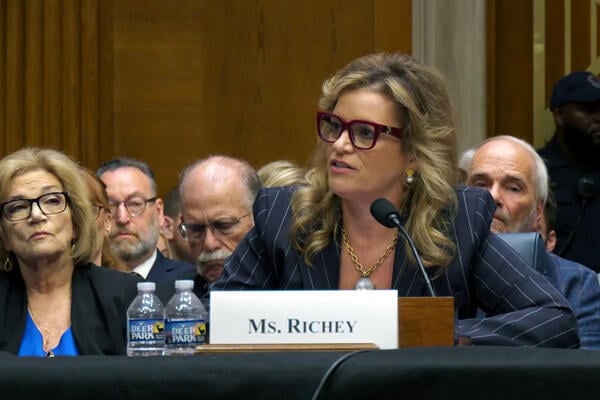
The Senate voted this week to confirm Kimberly Richey as the Education Department’s assistant secretary for civil rights—returning her to a role she held in an acting capacity from August 2020 until November 2021, spanning the end of President Trump’s first term and the start of President Biden’s. Richey also worked in the department during the George W. Bush administration.
The vote was 51 to 47 along party lines, with Democrats and Independents all voting nay.
Over the past few years, Richey worked in state positions as a senior chancellor in the Florida Department of Education and a deputy superintendent in the Virginia Department of Education. She now returns to the federal government to lead a greatly diminished Office for Civil Rights—the Trump administration laid off nearly half the OCR staff in March—with a significant case backlog.
The administration is using what’s left of the office as an arm of its campaign against transgender rights, programs aimed at helping minorities and allegations of antisemitism. The OCR has been investigating both K–12 school districts and universities over these issues. Richey told senators during her June confirmation hearing that she’s committed to pursuing cases related to antisemitism and trans women playing on women’s sports teams.
According to a résumé published by government watchdog American Oversight, Richey has also worked with conservative organizations to draft education legislation and policies. Those policy proposals mostly centered on K–12 and included promoting school choice and banning critical race theory (although the topic is not taught in K–12 schools). A 2022 receipt American Oversight uncovered indicated that Richey’s consultancy, RealignEd LLC, was paid $10,000 to “provide subject matter expertise, review and evaluation, and policy advice related to inherently divisive topics and other provisions” shortly after Virginia governor Glenn Youngkin signed an executive order prohibiting “the use of inherently divisive concepts, including critical race theory,” in schools.
Craig Trainor, the principal deputy assistant secretary for civil rights, has led the office as acting secretary since Trump took office earlier this year. In that post, he sent out controversial guidance banning race-based programming and activities, which was later blocked by the courts. He’s now moving to Department of Housing and Urban Development, where he’ll be the assistant secretary for fair housing and equal opportunity.
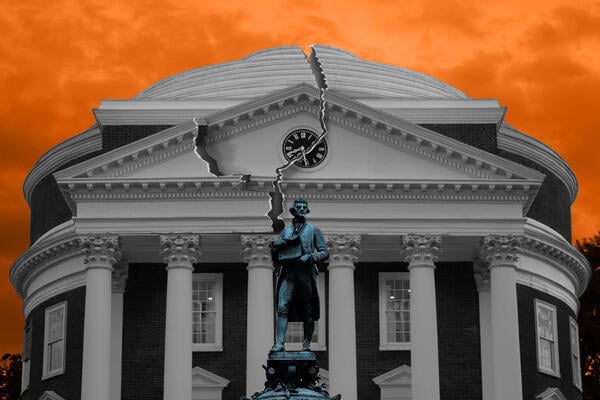
Months after Jim Ryan stepped down as University of Virginia president, state Sen. Creigh Deeds is still waiting for answers on whether political interference and external pressure played a role.
Ryan resigned in late June, citing pressure from the federal government amid Department of Justice investigations into diversity, equity and inclusion initiatives at the public university. Although the Board of Visitors voted to shutter its DEI office in March, conservative critics accused UVA of failing to dismantle such efforts. The DOJ subsequently launched seven investigations, two of which have been closed. The status of the other five remains unclear.
Deeds, a Democrat who represents Charlottesville and the surrounding area, has been seeking answers since Aug. 1 through a series of letters sent to the Board of Visitors and a far-reaching Freedom of Information Act request. But so far, university lawyers have largely refused to answer the state lawmaker’s questions, citing ongoing investigations. Faculty members have also said they can’t get straight answers from the university or face time with the board.
And complaints over an alleged lack of transparency at UVA are piling up as state lawmakers are applying additional pressure over how the university will respond to an invitation to sign on to the proposed “Compact for Academic Excellence in Higher Education” that the Trump administration sent to UVA and eight other universities last week.
Trading Letters
In office since 2001, Deeds has a long relationship with the university. But for the first time in 20-plus years, the senator said, he’s being shut out by a Board of Visitors that refuses to talk to him.
“We’re just trying to get to the bottom of what role the federal government, the Justice Department, the president’s office, the governor, the [state] attorney general played in the decision that Jim Ryan made to resign,” Deeds told Inside Higher Ed in an interview.
Deeds has sent several inquiries to UVA since Ryan resigned. The first letter included 46 questions related to Ryan’s resignation, the DOJ investigations and whether the UVA Board of Visitors “operated within the bounds of its legal and ethical responsibilities.”
But so far, Deeds says, he’s been given “partial answers” and “gobbledygook.”
In a series of letters to Deeds from two law firms (Debevoise & Plimpton and McGuireWoods), the outside legal counsel offered little insights into Ryan’s resignation, arguing in an Aug. 15 response that UVA is “is currently focused on navigating an unprecedented set of challenges,” which includes the ongoing DOJ investigations.
Some information included in the responses is already in the public sphere, such as how the board voted to shutter DEI initiatives, and details on the presidential search committee, which Deeds had also asked about. UVA also included letters sent by the DOJ to the university when it closed two investigations; while the DOJ referenced “appropriate remedial action” by the university, it did not offer specifics. But the focus across several letters sent to Deeds by university lawyers was mostly on why UVA can’t respond.
“Counsel handling the discussions with the Department of Justice has indicated that providing a substantive response to the August 1 letter while negotiations are ongoing would be inconsistent with the need for confidentiality. Counsel has therefore requested that the Board refrain from doing so until a resolution with the Department of Justice is finalized,” wrote David A. O’Neil, an attorney with Debevoise & Plimpton.
UVA lawyers also repeatedly took issue with Deeds’s characterization of the events surrounding Ryan’s resignation.
In an Aug. 29 response, O’Neil wrote that the board “would like to correct a number of inaccurate premises and assumptions in your letter” but was “duty-bound to place the University’s interests above all else” and honor its “fiduciary obligation to the University.” However, UVA legal counsel did not specify what, if anything, was inaccurate.
O’Neil also asked the senator not to “draw conclusions or promote unfounded speculation.”
Deeds responded in a Sept. 4 letter that he was “surprised and concerned” that the Board of Visitors “felt the need to secure outside counsel to respond to a legislative request.” He added that he was equally troubled by the failure to fully answer any questions.
Frustrated by UVA’s response, Deeds filed a FOIA request Sept. 18, seeking a trove of documents related to Ryan’s resignation and the DOJ investigations. UVA has not yet fulfilled the FOIA request but did send Deeds a $4,500 bill to process the information, which he plans to pay.
Deeds then followed up in a Sept. 29 letter, pressing the university on what it agreed to in exchange for the DOJ closing two investigations and for more details on where the other five currently stand.
To date, Deeds is still seeking answers.
UVA spokesperson Brian Coy told Inside Higher Ed by email that the university has offered “as much information as possible at the time” in its multiple responses to Deeds. However, he said, the university is constrained by “active discussions with the Department of Justice regarding several investigations, and publicly disclosing information that relates to those investigations could hamper our ability to resolve them in a way that protects the institution from legal or financial harm.” He added that UVA is processing Deeds’s FOIA request in accordance with state law.
Coy did not address several specific questions sent by Inside Higher Ed asking about potential political interference, remedial action for closed investigations or the status of the active DOJ investigations.
Mounting Pressure
Deeds isn’t the only one struggling to get answers from UVA’s Board of Visitors.
Jeri Seidman, UVA Faculty Senate chair, said the board has declined to answer faculty questions about Ryan’s resignation and DOJ investigations. She added that the board has been less responsive since the Faculty Senate voted no confidence in the Board of Visitors in July.
“We have not had interactions with the rector or the vice rector since July 11,” Seidman said, adding that the board had declined an invitation to address the Faculty Senate last month.
Seidman credited UVA interim president Paul Mahoney with being accessible, though, she noted, he and other leaders have also declined to answer faculty questions due to DOJ investigations.
“We appreciate his willingness to come and answer questions. Those questions are never gentle. But it’s disappointing that the rector has not acknowledged any [faculty] resolutions or requests for information, even if the response were simply to say that now is not the right time,” Seidman said.
Recent Faculty Senate resolutions include demands for an explanation on Ryan’s resignation, the no-confidence vote and calls for UVA leadership and the board to reject the proposed “Compact for Academic Excellence in Higher Education.” The compact would require changes in admissions and hiring and a commitment to institutional neutrality, while simultaneously suppressing criticism of conservatives, among other demands. In exchange, the administration says signatories would receive preferential treatment from the federal government on research funding, though the document also threatens the institution’s funding if it doesn’t sign or comply.
Virginia Democrats have also opposed the compact and threatened to restrict funding to the university if it signs on. That threat comes as lawmakers are ratcheting up pressure on UVA and waging a legal battle to block Republican governor Glenn Youngkin’s board appointments.
The letter, sent Tuesday by Senate majority leader Scott Surovell, expressed “grave concern” over the compact and referenced Ryan’s resignation, which, he wrote, was “forced” by the DOJ via alleged “extortionate tactics—threatening hundreds of millions of dollars in federal funding and the livelihoods of employees, researchers, and students unless he stepped down.”
Surovell warned that “the General Assembly will not stand by while the University surrenders its independence through this compact” and that there would be “significant consequences in future Virginia budget cycles” for UVA should the Board of Visitors agree to the arrangement.
Board leadership and Mahoney replied to Surovell’s letter Wednesday with a noncommittal reply shared with Inside Higher Ed that did not indicate whether the university intended to sign on to the proposed compact or not. They wrote in part that UVA’s “response will be guided by the same principles of academic freedom and free inquiry that Thomas Jefferson placed at the center of the University’s mission more than 200 years ago, and to which the University has remained faithful ever since.”
At all institution types, students living off campus reported a 16 percent higher sense of belonging than those living on campus.
Daniel de la Hoz/iStock/Getty Images Plus
A new study from the American Indian College Fund and National Native Scholarship Providers found that Indigenous students report a stronger sense of belonging on campus when their college provides “perceptions of a sense of acceptance, inclusion and identity.”
They call this “institutional support,” and it’s the primary predictor of belonging, trailed by peer support, campus climate and tribal support, the study showed.
The “Power in Culture Report,” released Wednesday, examined Indigenous students’ sense of belonging at the institutional and state level. NNSP surveyed more than 560 students enrolled at 184 institutions across multiple sectors, including tribal colleges and universities, predominantly white institutions, Hispanic-serving institutions, and other minority-serving institutions. The survey was conducted between March and April of 2024.
Unsurprisingly, tribal colleges foster a greater sense of institutional belonging among Indigenous students than other institution types. At nontribal institutions, Indigenous students must create belonging via “informal networks and cultural resilience amid institutional neglect or performative inclusion.” Indigenous students at nontribal campuses also report experiencing more microaggressions and cultural isolation. Students at institutions with larger populations of Indigenous students report a 14 percent higher sense of belonging than those at schools with fewer Native peers.
When looking at Indigenous student belonging at the state level, students attending college in states with larger tribal populations actually report a lower sense of belonging and say they feel less supported than students in states with smaller tribal populations, “suggesting that population size alone does not equate to meaningful support,” the study noted. Students in states with a tribal college or university reported an 18 percent lower sense of belonging than students in states without a tribal institution.
At all institution types, students living off-campus reported a 16 percent higher sense of belonging than those living on-campus.
The report includes several policy recommendations to bolster Indigenous student belonging, including recruiting Indigenous faculty and staff, funding Native language revitalization courses, and establishing meaningful relationships with local tribal nations.
As public skepticism about the value of a college degree persists, the number of students who expect to earn one is also on the decline.
Between 2002 and 2022, the percentage of students surveyed who said they expected to earn a bachelor’s degree or higher fell from 72 percent to 44 percent, according to a research brief the Pell Institute for the Study of Opportunity in Education published Tuesday.
During the same time frame, the percentage of first-generation students who aspired to earn a degree fell from 60 percent to 33 percent; among students with at least one college-educated parent, degree aspirations dropped from 83 percent to 53 percent.
“The decline in college aspirations among first-generation students is deeply concerning,” Kimberly Jones, president of the Council for Opportunity in Education, which oversees the Pell Institute, said in a news release. “These students have long faced systemic barriers to higher education, and this data underscores the urgent need for renewed investment in outreach, support, and affordability—including through programs like TRIO and the Pell Grant.”
But in his quest to shrink the size of the federal government, President Donald Trump has proposed cutting funding for TRIO—a set of federally funded programs that support low-income, first-generation college students and students with disabilities as they navigate academic life.
Major cuts to the federal government also mean it will be harder to produce reports like the one the Pell Institute released this week. That’s because such studies rely on data from now-discontinued longitudinal surveys that were administered by the National Center for Education Statistics; the Trump administration fired all but a handful of NCES employees earlier this year.
“Without the continuation of these programs, it will be much harder to track the progress of high school, first-generation, and college students and to learn how to improve education outcomes,” Sean Simone, vice president of research at COE, said in the news release.
The Sorbonne is undoubtedly one of the most recognised university names in the world. But to what does it refer? Well, there’s a story. Consider this a first instalment – there’s more than I can do justice to in one post.
Let’s go back to twelfth century Paris. The cathedral of Saint Etienne (which was near to what is now Notre Dame) had a school attached. And associated with this cathedral school in 1150 or thereabouts was a collective of teachers and students, organising themselves in the way that medieval teachers and students did. One Lotario de’ Conti di Segni completed his studies there in 1182, and in 1200 King Philip II issued a charter declaring it a universitas. In 1215 Lotario de’ Conti di Segni, who by now was Pope Innocent III, also recognised it.
The university was organised into four faculties: arts, medicine, law and theology. Students had to graduate in the faculty of arts before they could begin study in any of the other faculties. Was this an early example of a foundation course, or was it the first stirrings of the STEAM agenda? Discuss.
The university also had some colleges, like Oxbridge – by 1305 there was the College of the Eighteen, the College of the Sorbonne, and the College of Navarre. The College of the Sorbonne was founded in 1257 by Robert de Sorbon, chaplain to King Louis IX, focusing on theology. Students were also organised into nations, depending on their nationality, and these nations also provided accommodation: nation and college seemed like overlapping concepts.
And for the next few hundred years the university did what universities do, going through ups and downs with good and bad relationships with kings and emperors and popes. A highlight: when the Spanish invaded during the reign of Louis XIV, crossing the Somme and threatening Paris, the university agreed to award the Master of Arts degrees without further ado to any scholar who presented a certificate of service in the King’s army. Academic standards, you see.
And then came 1793, and the mother of all upheavals: the French Revolution. On 15 September the National Convention decreed that education beyond primary level was to be organised differently, and by 1 November the universities were no more.
If this were a TV miniseries, this point is definitely the cliffhanger. What will happen next? Well, a LOT of history happened in the next few years, but for the purpose of this blog, we’ll skip to the start of the next season. Napoleon Bonaparte, in 1806, re-established the University of France with a single faculty. (All staff, I think, were members of this faculty and working in a particular site. But I may be wrong. France is very different, and very confusing. Vive le difference!) And in 1808 expanded this to have five faculties.
And as France had new republics, so it seems that France made tweaks to its university system, of which Paris and the Sorbonne was a part. So in 1870 the number of faculties was again changed, and the types degrees students could get and the curriculum for them. Women were admitted from the 1860s onwards (which is about fifteen years ahead of the UK).
In 1968 France almost had another revolution. Unrest started in universities, as students firstly complained about the failure of the state to provide enough good quality spaces as universities expanded. The protests then expanded to become anti-Vietnam war and generally anti-government protests. Workers joined in – nine million were on strike by 22 May 1968. De Gaulle called a referendum, the striking workers and students burned the Paris Bourse. De Gaulle fled to a military base in Germany, but returned when assured of military support, and slowly the individual strikes were broken up.
By 1970 De Gaulle had increased his majority at a general election, and the government dissolved the University of Paris. It was broken up into thirteen universities – which is why you see places referred to as Paris 3, or Paris 11 and so on. Professors were, it seems, allowed to choose the university they were assigned to. The Sorbonne became Paris IV, which later merged with Paris VI (Pierre and Marie Curie University) to become the Sorbonne University, and also now includes INSEAD.
And this is where the question, to what does the Sorbonne refer, becomes real. In addition to the Sorbonne University (Paris IV and VI), it might mean (if you look at the Wikipedia disambiguation page):
the building which housed the Sorbonne, and is now used by multiple universities
the Sorbonne chapel
the University of Paris up to 1970
the chancellery of the Sorbonne, which administers the Sorbonne estate
Panthéon-Sorbonne University (Paris I)
Sorbonne Nouvelle University
Sorbonne Paris North Université (Paris XIII)
Sorbonne-Assas International Law School (Paris II)
As I say, they do things differently in France. And it is confusing.
The card itself was not sent, but looks to date from the 1910s or 1920s, and is evidently in a biology lab. Here’s a jigsaw of the card – enjoy!
The economics of higher education are tricky. It’s a labour-intensive industry, and generally speaking the cost of producing labour-intensive goods will always increase faster than the price of producing capital intensive goods, because the latter have more scope for increasing productivity. That’s not a problem if you are a public institution in a country with bottomless pockets, or if you are a prestigious private institution with almost unlimited ability to raise prices. If you’re among the other 99 percent of the world’s institution, though, you have to find ways to balance rising costs with new sources of income. But every money-making scheme comes with problems…and costs! So which one to choose?
Today’s guest is Joshua Travis Brown, from Johns Hopkins University’s School of Education. He’s the author of a new book called Capitalizing on College: How Higher Education went From Mission-Driven to Margin-Obsessed, which follows the fortunes of a number of institutions who try out different strategies to try to keep themselves afloat. Some try to double-down on a historic place-based residential mission and charge higher fees; others try to find ways to generate revenue that can cross-subsidize their historic place-based activities. But what’s particularly intriguing about this book is that his subject institutions are all religious institutions. Not only does that mean no core public funding: it means that decisions about how to find new business lines all really have to pass a test of God vs. Mammon.
This really is one of the best higher education books of the year and I was so pleased we could get Josh on the show. I won’t spoil the fun any more: here’s Josh.
The World of Higher Education Podcast Episode 4.6 | Capitalizing on College: Mission, Money, and Survival in Higher Ed with Joshua Travis Brown
Transcript
Alex Usher (AU): Josh, your book is one of my favorite kinds of higher education books—lots of real, if disguised, institutional case studies. I get the impression that what you were trying to do was look at different financial strategies to cope with the phenomenon of ever-rising costs in higher education—Baumol’s disease, basically. How did you choose those eight institutions for your case studies? And why did you focus only on religious institutions, which I thought was a really intriguing choice?
Joshua Travis Brown (JTB): Thanks, Alex. That’s an excellent question to open with. I was looking around at the world, and a lot of what we in higher education base our norms on are the best practices maintained by elite institutions—those that accept only about five to nine percent of applicants. But then there’s the other ninety-one to ninety-five percent of institutions that don’t have those kinds of resources, and their world looks radically different.
One group I focused on are what we call tuition-driven institutions in the American sector. That’s actually a very diverse set of schools that, I’d argue, form the backbone of American higher education—at least in terms of its diversity. These include Hispanic-serving, minority-serving, HBCUs, predominantly Black, religious, women’s, Asian American, vocational, and regional colleges, among others.
Within that really rich and diverse group, the largest by far are the religious colleges and universities in the United States. There are roughly a thousand of them—Protestant, Catholic, some Buddhist, Mormon, Muslim, and Jewish institutions as well. I chose to sample primarily from the Protestant group. And the reason for that choice is that I was interested in behavior, not belief.
The perspective I argue is most valuable is one that looks at behavior that cuts across institutional types, rather than staying within silos and making what I’d call an erroneous assumption that, “This sector operates this way, and that sector operates that way.” I argue instead that everyone is in competition with one another—and to truly understand the sector, you have to look at behavior across all types.
AU: Based on your work at these institutions, you developed a four-part typology with four types of institutions. You call them those following a Traditional Strategy, a Pioneer Strategy, a Network Strategy, and an Accelerated Strategy. How did you come up with those four? Were they in the back of your mind when you selected the cases, or did they emerge organically from the research?
JTB: This is purely grounded theory—straight from the data. What I’m arguing here is that I’m looking within what I call the “missing middle.”
A lot of higher education research tends to focus on what I call the bookends—students on one end, and government or the state on the other. But we don’t do a great job, as researchers, of really diving in to hear the voices of those actually running and leading the institutions.
So as I started to look at the data, pull out themes, and group them into buckets, these four strategies emerged. There was even a fifth one beginning to appear, which I called Accelerated Networks—where the accelerated institution was trying to crack the code to move to the next level of market-oriented behavior. So yes, they surfaced organically from the research.
AU: Let’s talk about that Traditional Strategy. What does it entail? What kind of resources does it take to implement? And how easy is it to, you know, for lack of a better word, win using this strategy?
JTB: The Traditional Strategy is your typical higher education institution that values prestige. They’re constantly looking to the elites.
There’s a whole sector of “little Ivys,” “public Ivys,” and “mini Ivys” that sit just below the Ivy League institutions, and they’re really trying to leap forward into that group. These institutions not only value prestige, but they also operate under the assumption of an in-person education. As one president told me, “You come to a tradition.” He repeated that phrase several times. These institutions rely heavily on building their brand, climbing the rankings, ensuring their athletics are top-notch, and gaining national exposure through sports. They want to become household names.
The problem for traditional institutions—and really, for all institutions—is that the residential, on-campus, in-person model of higher education in the United States operates at a deficit. It must be subsidized.
For the traditional institutions, that subsidy comes primarily from endowments—the spinoff revenue that supports the residential model. And the key takeaway from the book, across all these strategies, is that everyone is trying to subsidize the residential core. What differs is how they do it.
The traditional model depends on philanthropists, wealthy donors, and the prestige that fills their sails. They can call on endowments of two, three, four, five, six, even eight hundred million dollars—and the revenues those spin off—to make their operations sustainable. Or at least, so they think.
AU: Tell us about the second strategy then. You’ve got a Pioneer Strategy. What does that mean—and where do those subsidies come from, if we can put it that way?
JTB: From this point forward in the book, everything turns entrepreneurial. These institutions no longer look to endowments—because they don’t have them. So, for the next six schools in the book, every president is basically saying, “I don’t have an endowment. I need to find margins—and I need to find them somewhere.”
And what they do is turn to students. That’s where they find their margins.
In the Traditional Strategy, as I mentioned earlier, the assumption was that you come to the institution for the tradition—to receive it, to be inculcated into it. The Pioneer Strategy turns that idea on its head. These institutions ask, what if we took the classroom to the students?
That’s the innovation here. Every one of the next strategies has some kind of innovation at its core. In many ways, this book is a story—or a playbook—of innovation. That’s what I hope readers take away: not just the strategies, but the innovative practices themselves.
So, these institutions took classrooms to hotels. They took classrooms to schools and high schools, to shopping malls, to military bases. They went to where the customer was. The classroom became reconceived—portable. And they picked a type.
I take readers through three different types in that chapter, and then show how they replicate it. Whatever region they’re in, what you end up seeing is a giant branch campus model built around that one specific type.
You’ve got multiple sites, but all following the same formula. And all of the revenue—say, a 20% profit margin—from those branch campuses flows back to the core institution. That’s how they rebuild the core.
Over the course of a decade, they can raise anywhere from two hundred to five hundred million dollars—and they use that money to physically transform and rebuild the residential campus.
AU: But all those markets you’re talking about—it’s really just mature students, right? Are there other pioneer markets you can go to besides mature students?
JTB: The principle here is that these institutions were first movers. They were the first movers in adult education at the time.
For readers today—if I’m a leader picking up this book and asking, “What’s the takeaway here?”—I’d say: think badgification, think microcredentials. Think of some new market that’s just about to spin off or is moments away from being spun off.
Anyone who goes all in on that kind of emerging market would be a pioneer institution. They’d be adopting the Pioneer Strategy for that new market—just as these institutions did about a decade ago.
AU: Does it work? I mean, it takes money to make money, right? You’ve got to rent the hotel rooms, pay the professor to go there and teach. It sounds like you have to be extremely margin-conscious—and at a certain point, it’s easy to overshoot, to overcommit to these kinds of things. So how many of the institutions you looked at actually managed to reinforce the residential core?
JTB: They did—but by the time I arrived on campus, the folks in the Traditional bucket were saying, “Oh my gosh, we need a new strategy.”
Meanwhile, the folks at the Pioneer institutions were saying, “Hey, this has worked for about five to seven years, but the competition is so intense it’s eating into our margins. Other institutions are moving into our space. It’s getting really hard to recruit. We need to add a new market.”
And that’s the principle behind the Network Strategy. Rather than having one type, they add multiple types. That’s the big difference between the two: the Pioneer Strategy has one type with multiple sites, while the Network Strategy has multiple types, multiple sites—and it’s global.
AU: Let’s talk now about that Network Strategy. Just as you were finishing there, I think you were saying the difference between the Pioneer and Network strategies is how many new markets you go after. Is it more than that, or is that really the key distinction between the two?
JTB: No, that’s the big difference—because again, what we’re really trying to figure out here is: how are you subsidizing your residential model? It never makes enough money on its own. So where are you finding those margins? And those margins always come from the periphery.
For the Network Strategy, one of the presidents I interviewed described what he called his tabletop strategy for running the institution. He said, “The residential core is the tabletop. All of my peripheral markets—whether online, international, transfer, or adult education—those are the legs. And I’m constantly looking for new legs, new sources of revenue, to support this tabletop.” He went on to say that the tabletop—the residential core—is what gives legitimacy to the entire model. You can’t do this without the tabletop.
And that’s the key difference between the Network Strategy and something like the University of Phoenix. Phoenix was essentially one giant leg. What they lacked—and what people criticized them for—was legitimacy. They didn’t look like a traditional college, and they weren’t serving typical students.
That’s why this book and this perspective are so valuable: when nonprofit institutions start going after the same students or adopting some of the same practices as for-profit institutions like Phoenix, the lines begin to blur. To really understand what’s happening, you have to look across types and sectors—and focus strategically on the behavior itself.
AU: Is that an easier strategy to pull off than the Pioneer one? I mean, it sounds harder to me—but it might also have bigger rewards, since it spreads the risk across different types of markets.
JTB: That’s absolutely key, Alex. One of the presidents I interviewed put it exactly that way. He said, “I’m trying to build a stock portfolio of enrollment. If one sector goes down, I still have another three or four sectors over here, so a drop in one leg isn’t going to sink the ship.” What they were striving for was balance. But both institutions, in their enthusiasm for adding new legs, made a critical mistake—they actually ended up creating a second tabletop.
They either absorbed another institution or built a massive campus overseas—in one case, in Asia. And instead of funneling all of their margins back to the residential core, they had to start directing them to these peripheries, to that second tabletop.
It became really complex. Morale declined. And by the time I arrived on campus, they were looking for a new kind of market—something they could take to scale. And that’s what the next school managed to crack.
AU: Let’s talk about that last strategy—the one you call the Accelerated Strategy. It’s an amazing case study, especially because it’s a religious institution. As you put it, it’s where God and Mammon really start to duke it out.
This is an institution that seems to have crossed the line from being merely margin-conscious to acting like a full-on for-profit college. And that’s wild for a faith-based organization. Tell us about this institution—and how going down this route changes a university.
JTB: You know, what’s crazy is that I changed all the names of the actual schools in the book—but when a school named its competitors, I left those in.
So as I’m interviewing the leaders at the accelerated institution, they’re saying, “Hey, we’re like ASU. We’re like Penn State. We’re like the Maryland system. We’re like Western Governors, UCF, Florida, Southern New Hampshire University.” And they viewed that entire group of schools as their competitors. The way they took their model to scale was through process and product innovation.
I was sitting across from the provost, and he told me, “I had a vision. I pictured an old country store. Down one side of the store was one product, and down the other side was another product—and that’s all we had to sell.” Those two products were an MBA and an interdisciplinary studies degree. At that time, if you wanted to earn a degree online from this institution, those were your only two options. But then he had this transformative idea. Over the course of a single summer, he took roughly 35 to 80 residential courses and converted them for online delivery. Within three to six months, that old store suddenly had 35 different products on the shelves.
And here’s the key innovation: everyone else at the time was selling online classes. This institution became one of the first—outside of Phoenix—to sell online degrees. They fundamentally shifted the product, and that move blew up their market. Virtually overnight, they went from 8% to 42% growth.
AU: Wow. But surely it changed the culture of the campus?
JTB: It did. People talked about the tension between the residential and online sides of the institution. The student population ballooned so dramatically that it went from being majority residential to, essentially, for every ten online students, there was one residential student. It radically transformed the institution. They were able to hold costs flat.
Now, the other entrepreneurial schools I studied were funneling their margins back into overhauling the residential campus. That’s what I call margin capitalization. Instead of looking for donors or venture capitalists, they turned to students.
This particular school made so much money—just north of two hundred million dollars a year—that they were not only able to completely rebuild their campus, but also to put hundreds of millions into their endowment.
What this institution effectively invented is a new form of philanthropy that I call margin philanthropy. Instead of relying on alumni—graduates who go out into the world and eventually give back—you’re leveraging the loans of students who are currently enrolled. They become your new philanthropists.
The risk of construction and the growth of the endowment aren’t borne by the institution anymore; they’re borne by the students themselves—who walk away with a degree in one hand and a student loan, anywhere from fifty to a hundred thousand dollars, in the other.
AU: The problem of ever-rising costs—Baumol’s disease, basically—is one that plagues every educational institution. Only by spending more money every year can you hope to stay in place. But achieving that means raising more money every year.
And I read your book as being fairly pessimistic about any institution’s ability to sustain that in the long run. Right? You can have all the strategies you want to increase revenue, but they all require hiring more staff, becoming more complicated—and then Baumol just reappears further down the line. Is that a fair summation? Do you think one of these strategies is actually more promising than the others? Or does Baumol’s law come for all of us eventually, no matter what?
JTB: I think one of the big takeaways from the book is that this sector is constantly marching upward in its market behavior.
When I arrived on these campuses, everyone was saying, “We’ve got to sustain. We need more. We need more revenue. We need more margins.”
Now, while Baumol, as an economist, has one way of looking at the world, I don’t think it’s entirely accurate. He was, after all, an economist from several generations ago. What’s spun out of economics since then is the field of strategy and management, which focuses more on the agency of actors within organizations.
Those working in strategy and management began to explore that agency—to explain the world in a more nuanced way. And that’s where this book differs from Baumol’s framework: it’s grounded in organizational theory, strategy, and management.
What you end up seeing—and what the book focuses on—is this: we often hear about public policies, particularly from the Federal Reserve in the U.S., that are based on the idea that if you increase competition and give students choice, the natural outcome will be higher quality. As institutions compete, quality should improve—at least in theory.
But what this book shows is that when you incentivize students to be more self-interested and to make market-based choices, you also incentivize institutions to be more self-interested.
That’s why we see institutions going after student loans and seeking margins from students—they’re also operating in a highly competitive market.
So, what this book illustrates are the trade-offs between mission and money that college leaders are forced to make when we choose to design a national education system based on market principles of competition. And that, I’d contend, is a challenge much bigger than Baumol himself.
AU: You’ve focused obviously on one group, the non–research-intensive private institutions, and a particular sub-sector within that. How much can you generalize from this book to other types of institutions—secular ones or public ones?
JTB: That’s a great question. The reason I narrowed the focus so tightly is that, in case studies, what you want to do is control for noise. So rather than mixing all types of tuition-driven institutions together, I chose one type and looked at the behavior across those cases.
But I would contend that because I’m really examining a single phenomenon—tuition—and specifically two questions: how do students get their money, and what do institutions do with it?—this framework is broadly applicable. And honestly, in the last six months especially, I think everyone is becoming tuition-driven.
We’re seeing decreases in research funding revenues, decreases in endowment revenues because of higher taxes. This morning’s headline from the Secretary of Commerce said they want to go after 50% of all patent revenue. And just yesterday, it was announced that all MSI funding would be decreased. The only stable thing left is tuition revenue.
What Capitalizing on College offers is a roadmap for how these institutions managed to survive in a highly competitive environment—and now everyone is entering that same space. So yes, I believe it’s highly generalizable, because this is the roadmap forward. This is the environment we’re heading into.
AU: Joshua Travis Brown, thank you so much for joining us today.
JTB: Thanks. A pleasure being here.
AU: And that just leaves me to thank our excellent producers, Sam Pufek and Tiffany MacLennan—and of course, you, our listeners and readers, for joining us.
If you have any comments or questions about today’s podcast, or suggestions for future episodes, please don’t hesitate to get in touch at [email protected].
Join us next week when our guest will be Luiz Augusto Campos, professor of sociology and political science at the Instituto de Estudos Sociais e Políticos at the State University of Rio de Janeiro. He’s the co-author of a new book on the effects of racial quotas in Brazilian universities. Join us next week. Bye for now.
*This podcast transcript was generated using an AI transcription service with limited editing. Please forgive any errors made through this service.Please note, the views and opinions expressed in each episode are those of the individual contributors, and do not necessarily reflect those of the podcast host and team, or our sponsors.