Tag: Higher

  • Adriel A. Hilton | Diverse: Issues In Higher Education

    Adriel A. Hilton | Diverse: Issues In Higher Education

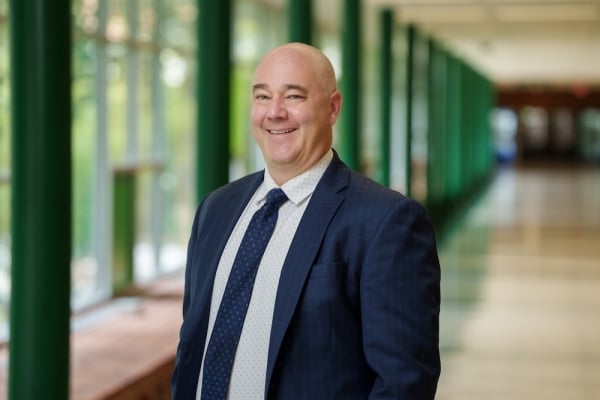
    Dr. Adriel A. HiltonAdriel A. Hilton has been named Vice President of Institutional Strategy and Chief of Staff at Columbia College Chicago. Most recently, he served with Washington State’s Department of Children, Youth, and Families and previously led strategic student affairs and enrollment initiatives at Southern University at New Orleans. 

    Hilton holds a BA in Business Administration (Finance) from Morehouse College, a Master of Applied Social Science in Public Administration from Florida A&M University, an MBA from Webster University, and a PhD in Higher Education Administration from Morgan State University.

    Source link

  • Beware the sharing issue in the depths of the higher education iceberg

    Beware the sharing issue in the depths of the higher education iceberg

    If you’re a proper Eurovision Song Contest loser like me, you look forward each year to the crowdsourced fansourced compilation of the season’s Iceberg.

    On the surface is the stuff you figure that “normal” casual Saturday night viewers will notice – like the considerable coverage afforded to Malta’s entry this year, which involved its artist Miriana Conte attempting to argue that her song “Serving Kant” really meant “serving song”.

    Then several layers below sea level there’s things like the news that Sasha Bognibov – who has entered the Moldovan selection several times with a series of increasingly creepy entries – had died of a heart attack, only to come back alive a few days later.

    “Icebergs of ignorance”, as they’re officially known, were originally invented by a Japanese management consultant in the 80s. Sidney Yoshida’s keynote at the 1989 International Quality Symposium in Mexico had described his research on a car manufacturer named Calsonic – where he’d found that senior managers at the firm only saw about 4 percent of the issues, with the bulk hidden at lower levels.

    And like an iceberg, most of the danger lies beneath the surface – with supervisors and frontline staff far more aware of the everyday challenges. In theory it all highlights the need for stuff like open communication, feedback loops and genuine staff voice – so decision-makers aren’t steering blind.

    Under the surface

    I’ve long been fascinated by the way the concept might apply in a university. Plenty of senior leaders might take the view that the cultural (and now regulatory/legal) protection afforded to academic staff saying critical things on social media on everything from workload to the travel booking system means very little is below the surface – but my guess is that that can breed complacency about the things that people don’t say out loud.

    From a higher education sector and public perception point of view, we might interpret new research from the Policy Institute at King’s and HEPI in a similar way – an iceberg of misunderstanding where the surface-level chatter obscures the submerged reality.

    The public apparently overestimate graduate regret, assumes that nearly half of graduates feel crushed by debt when only 16 per cent say so, and underestimate higher education’s economic heft. And like Yoshida’s managers, the danger isn’t so much ignorance of the big headlines as it is the quiet accumulation of false assumptions beneath the surface – gaps in knowledge that, if unchallenged, steer the national conversation off course.

    But it’s the big financial crisis in the sector where I keep thinking most about the Iceberg. Above the surface, to the extent to which the issue is “cutting through”, it’s the prospect of a provider going under that the press seem really keen to report on. Every other day one of us at Team Wonkhe will get a message from journo or other asking us who might be on the brink, presumably because stories like this in the i Paper (“At least six unis at risk of going bust before 2025 freshers finish their degrees”) get clicks.

    Just below the surface (for me at least) is what’s happening to student demand (or, more accurately, supply) – a process that seems to be converting “high”, “medium” and “low” tariff group categories into “medium”, “low” and “has a pulse” as each day of Clearing 2025 goes on.

    The next level down for me is redundancy rounds and telegraphed cuts. They definitely sound bad – especially if a course closes. But if they result in 24 hour library becoming a 15 hour one, or the optional electives on an undergraduate degree being slashed, they seem be harder to pin down and understand – and often aren’t being picked up and protected by consumer law, complaints or Student “Protection” Plans.

    The worst of all of that, at least so far, has been down the bottom end of the league tables – although journos hoping for an actual collapse may find that the realities of processes like endless cost-cutting remain buried at the bottom of the iceberg because of the amount of debt that everyone’s in.

    A small provider like Spurgeon’s can fall over because the banks aren’t expecting millions to be repaid on shiny buildings – big universities extended in that way are likely to be able to renegotiate because banks like being paid back, albeit in a way that effectively surrenders the already shaky illusion that the Board of Governors is in control to a shadow board of bankers insisting on deeper and deeper cuts to students with the least social capital and confidence to complain about them.

    We need a shrink

    What then manifests is the scourge of shrinkflation. You know the idea – when the Quality Street tubs appear in the supermarket in September, you’re only minutes away from a national newspaper pointing out that there’s two fewer toffee pennies in this year’s tub of 525g than last year. I mean have you seen how small a Freddo is these days?

    The problem for students is that this stuff is hard to spot and even harder to enforce rights over. It is simply not possible to lose the number of academic staff that the sector has lost over the past two years and for providers to not be in breach of contract – promises have either been broken, or the contract itself gives a university too wide a discretion to vary, or it doesn’t and the risks of not making the cuts are greater than the risks of a handful of students having the energy to complain.

    And when the big red flags from the Office for “Students” are about financial sustainability with the odd askance murmur about finding efficiencies in a way that protects the student experience, it’s not as if the regulatory environment is doing anything other than egging on the shrinkflation. You’re only going to get inspected on the provision by OfS if your outcomes are terrible, and it seems to have all but given up doing inspections anyway.

    Will a student enrolling onto a three year degree get the course they were promised in two years time? I’ve no idea, and all OfS can offer in protection terms is “let’s hope you paid your fees on a credit card because you might be able to get the credit card company to do a chargeback”.

    Every year I get taken in by a fresh promise that OfS will actually enforce the stuff about broken promises. Almost a year ago to the day Director for Fair Access and Participation John Blake turned up at an SU staff conference to declare that he’d heard students worried about being promised one thing and getting another loud and clear. What he didn’t say was that a full year on, its new definitions of “fairness” will only apply to students in newly registered providers – with no sense of when “fairness” might be a thing for everyone else.

    Deep down

    But the temptation would be to assume that the harms of where we are are exclusively in those layers already mentioned. For me, right down at the bottom of the Iceberg – for the public, regulators and students themselves – is the sharing problem.

    I often lament that being in a university library in certain weeks of the year is like being on a short-formed Cross Country train with no air con on a Bank Holiday Monday when the service before it has been cancelled. There’s nowhere to sit, everyone is very tense, and there’s a real sense that an actual fight might break out between two otherwise polite members of the public over a seat reservations issue.

    There’s always an idiot with their bag on a seat, the catering trolley can’t get through, and the wheelchair user finds themselves yelling at those with suitcases because they’ve been plonked in the space for chairs at the end of the carriage. It’s carnage.

    Over the years, I’ve often skim-read commentary from financial and management consultant types that “one less international PGT means needing to recruit two home students”, as if the only thing that matters is the overall financial target rather than having enough of everything for the students being recruited.

    What I (almost certainly naively) never expected is that it pretty much is panning out like that at the top end of the tables – and while there’s debates to be had about acquisition costs, suitability for a course and/or culture, market instability and the loss of “local” options and choice, the thing that worries me most of all is the sharing thing.

    Let’s imagine – hopelessly simplistically, I know – that some universities are indeed setting a financial target regardless of the number of students that would involve recruiting. As part of that, let’s imagine that these are universities more likely to recruit students living away from home. If 1 x PGT becomes 2 x UG, are there enough bed spaces in the city?

    Enough is enough

    Enough books in the library? Enough marking capacity to hit the 2 week turnaround pledge? Enough sockets for laptops when everyone’s in at once? Enough spaces in seminar rooms to avoid students sitting on the floor? Enough counselling staff to cope when that extra intake tips more students into crisis? Enough careers support to avoid queues that make the whole thing feel tokenistic rather than transformative?

    Enough quiet corners for those who can’t concentrate in noisy shared flats or packed libraries? Enough placements to go around when professional courses all need them at the same time of year? Enough personal tutor appointments to avoid the system becoming decidedly impersonal? Enough contact with actual academics rather than a carousel of casualised staff? Enough eduroam bandwidth when every lecture, seminar, and social is streaming at once? Enough student housing that isn’t mouldy, miles away, or eye-wateringly expensive?

    “Enough” is already pretty subjective – and itself subject to wild differences between subject areas on campus in a way that makes it hard to not always spot someone (probably an international PGT in the Business School) who’s worse off. Even if they knew they could and even if they were minded to, it’s pretty hard for a student to argue that something that is still there and was always shared is being stretched a little too thinly now.

    And this sort of thing almost always manifests in conflict between students rather than pinning the blame tail on the university donkey – see our dismal debates about things like NHS access and immigration for a classic example.

    It’s not even as if the regulator doesn’t understand. John Blake again, a year ago:

    When the 2012 number controls were abolished, there are institutions that literally doubled in size overnight… I don’t know that the answer is us saying, no, you can’t have your students, or you have to do this. But I think there’s definitely scope for us thinking about what the obligation of institutions is to have discussions with their local community about where their students are going to go, because it’s clearly not sustainable for every institution to double itself overnight in small places.

    See also everything else about a university experience that, by definition, involves sharing things.

    Swear words

    It remains the case that it’s almost as bad to sing the uncensored version of Miriana Conte’s Eurovision entry in a church as it is to even gently propose some student number controls. And even though one of the least publicly resisted immigration rules is not a cap but a “if you want more CAS, you have to think about whether you have the capacity” (maybe because it’s never been meaningfully or publicly enforced by UKVI), people even seem to be nervous about suggesting something like that for home students.

    I’ve said it before and I’ll say it again – higher education is an endeavour that is profoundly unsuited to very rapid expansion and very rapid contraction at programme, subject and institutional level. But the biggest mistake of all would be to focus on the end of the league tables where the impacts of contraction are closest to the Iceberg’s surface.

    Cramming tens of thousands more students into the cities of the (not so) high tariffs may well be just as damaging, all while the tone of their recruitment relationship – “you’re lucky to be here” – reduces the chances of students doing anything other than the HE equivalent of putting your head down, crouching next to the toilet and staring at your phone for three gruelling hours. Or, in HE’s case, years.

    It’s really not hard this one. You want to expand your student numbers by more than 5 per cent in a subject area? Publicly consult on how you’ll do it – including the results of conversations with staff, students, the local community and local providers, and you’re on. Imagine suggesting out loud that doing some planning to ensure more students doesn’t mean a worse experience would represent a regulatory “burden”.

    Source link

  • Higher Education Inquirer : College Meltdown Fall 2025

    Higher Education Inquirer : College Meltdown Fall 2025

    The Fall 2025 semester begins under intensifying pressure in U.S. higher education. Institutions are responding to long-term changes in enrollment, public funding, demographics, technology, and labor markets. The result is a gradual disassembly of parts of the postsecondary system, with ongoing layoffs, program cuts, and institutional restructuring across both public and private sectors.

    In a stunning turn, the U.S. Department of Education has undergone a massive downsizing, slashing nearly half its workforce as part of the Trump administration’s push to dismantle the agency entirely. Education Secretary Linda McMahon framed the move as a “final mission” to restore state control and eliminate federal bureaucracy, but critics warn of chaos for vulnerable students and families who rely on federal programs. With responsibilities like student loans, Pell Grants, and civil rights enforcement now in limbo, Higher Education Institutions face a volatile landscape. The absence of centralized oversight has accelerated the fragmentation of standards, funding, and accountability—leaving colleges scrambling to navigate a patchwork of state policies and shrinking federal support.

    AI Disruption: Academic Integrity and Graduate Employment 

    Artificial Intelligence has rapidly reshaped higher education, introducing both powerful tools and profound challenges. On campus, AI-driven platforms like ChatGPT have become ubiquitous—92% of students now use them, and 88% admit to deploying AI for graded assignments. This surge has triggered a spike in academic misconduct, with detection systems struggling to keep pace and disproportionately flagging non-native English speakers Meanwhile, the job market for graduates is undergoing a seismic shift. Entry-level roles in tech, finance, and consulting are vanishing as companies automate routine tasks once reserved for junior staff. AI-driven layoffs have already claimed over 10,000 jobs in 2025 alone, and some experts predict that up to half of all white-collar entry-level positions could be eliminated within five years. For recent grads, this means navigating a landscape where degrees may hold less weight, and adaptability, AI fluency, and human-centered skills are more critical than ever.

    Unsustainable Student Loan Debt and Federal Funding 

    A recent report from the American Enterprise Institute (AEI) highlights the depth of the crisis: more than 1,000 colleges could lose access to federal student aid based on current student loan repayment rates—if existing rules were fully enforced. The findings expose systemic failures in accountability and student outcomes. Many of these colleges enroll high numbers of low-income students but leave them with unsustainable debt and limited job prospects.

    Institutional Cuts and Layoffs Across the Country

    Job losses and cost reductions are increasing across a range of universities.

    Stanford University is cutting staff due to a projected $200 million budget shortfall.

    University of Oregon has announced budget reductions and academic restructuring.

    Michigan State University is implementing layoffs and reorganizing departments.

    Vanderbilt University Medical Center is eliminating positions to manage healthcare operating costs.

    Harvard Kennedy School is reducing programs and offering early retirement.

    Brown University is freezing hiring and reviewing academic offerings.

    Penn State University System is closing three Commonwealth Campuses.

    Indiana public colleges are merging administrative functions and reviewing low-enrollment programs.

    These actions affect not only employees and students but also local communities and regional labor markets.

    Enrollment Decline and Demographic Change

    Undergraduate enrollment has fallen 14.6% since Fall 2019, according to the National Student Clearinghouse Research Center. Community colleges have experienced the largest losses, with some regions seeing more than 20% declines.

    The “demographic cliff” tied to declining birth rates is now reflected in enrollment trends. The Western Interstate Commission for Higher Education (WICHE) projects a 15% decline in high school graduates between 2025 and 2037 in parts of the Midwest and Northeast.

    Aging Population and Shifts in Public Spending

    The U.S. population is aging. By 2030, all baby boomers will be over 65. The number of Americans aged 80 and older is expected to rise from 13 million in 2020 to nearly 20 million by 2035. Public resources are being redirected toward Social Security, Medicare, and elder care, placing higher education in direct competition for limited federal and state funds.

    State-Level Cuts to Higher Education Budgets

    According to the State Higher Education Executive Officers Association (SHEEO), 28 states saw a decline in inflation-adjusted funding per student in FY2024.

    The California State University system faces a $400 million structural deficit.

    West Virginia has reduced academic programs in favor of workforce-focused realignment.

    Indiana has ordered cost-cutting measures across public campuses.

    These reductions are leading to fewer courses, increased workloads, and, in some cases, higher tuition.

    Closures and Mergers Continue

    Since 2020, more than 100 campuses have closed or merged, based on Education Dive and HEI data. In 2025, Penn State began closing three Commonwealth Campuses. A number of small private colleges—especially those with enrollments under 1,000 and limited endowments—are seeking mergers or shutting down entirely.

    International Enrollment Faces Obstacles

    The Institute of International Education (IIE) reports a 12% decline in new international student enrollment in Fall 2024. Contributing factors include visa delays and tighter immigration rules. Students from India, Nigeria, and Iran have experienced longer wait times and increased rejection rates. Graduate programs in STEM and business are particularly affected.

    Increased Surveillance and Restrictions on Campus Speech

    Data from FIRE and the Electronic Frontier Foundation (EFF) show increased use of surveillance tools on campuses since 2023. At least 15 public universities now use facial recognition, social media monitoring, or geofencing. State laws in Florida, Texas, and Georgia have introduced new restrictions on protests and diversity programs.

    Automated Education Expands

    Online Program Managers (OPMs) such as 2U, Kaplan, and Coursera are running over 500 online degree programs at more than 200 institutions, enrolling more than 1.5 million students. These programs often rely on AI-generated content and automated grading systems, with minimal instructor interaction.

    Research from the Century Foundation shows that undergraduate programs operated by OPMs have completion rates below 35%, while charging tuition comparable to in-person degrees. Regulatory efforts to improve transparency and accountability remain stalled.

    Oversight Gaps Remain

    Accrediting agencies continue to approve closures, mergers, and new credential programs with limited transparency. Institutions are increasingly expanding short-term credential offerings and corporate partnerships with minimal external review.

    Cost Shifts to Students, Faculty, and Communities

    The ongoing restructuring of higher education is shifting costs and risks onto students, employees, and communities. Students face rising tuition, fewer available courses, and increased reliance on loans. Faculty and staff encounter job insecurity and heavier workloads. Outside the ivory tower, communities will lose access to educational services, cultural events, and local employment opportunities tied to campuses.

    The Higher Education Inquirer will continue to report on the structural changes in U.S. higher education—grounded in data, public records, and the lived experiences of those directly affected.

    Sources:

    National Student Clearinghouse Research Center, Western Interstate Commission for Higher Education (WICHE), U.S. Census Bureau, State Higher Education Executive Officers Association (SHEEO), Institute of International Education (IIE), Foundation for Individual Rights and Expression (FIRE), Electronic Frontier Foundation (EFF), Government Accountability Office (GAO), The Century Foundation, Stanford University, University of Oregon, Penn State University System, Harvard Kennedy School, Vanderbilt University Medical Center, Education Dive Higher Ed Closures Tracker, American Enterprise Institute (AEI).

    Source link

  • Ty Hawkins | Diverse: Issues In Higher Education

    Ty Hawkins | Diverse: Issues In Higher Education

    Dr. Ty HawkinsTy Hawkins has been named associate dean for academic programs at Oklahoma State University. He most recently held the position of director for the University of Central Arkansas’ School of Language and Literature.

    In his new role, Hawkins will be responsible for overseeing curriculum development, program assessment and accreditation processes for OSU’s largest academic college. 

    A native of Missouri, Hawkins earned degrees in English and Spanish from Saint Louis University and Westminster College. He is a scholar of American literature who specializes in 20th- and 21st-century texts.

    Source link

  • More Barriers on the Horizon for International Students

    More Barriers on the Horizon for International Students

    Photo illustration by Justin Morrison/Inside Higher Ed | tarras79/iStock/Getty Images

    The Trump administration is planning to limit how long international students can remain in the U.S., likely mirroring a plan proposed at the end of Trump’s first term with the same name, advocacy groups and immigration attorneys say.

    The regulations are expected to replace “duration of status,” a 1991 rule that allows international students to remain in the country as long as they are enrolled at a college or university. In 2020, the administration proposed limiting that time to just four years—a period shorter than most Ph.D. programs and shorter than the average student takes to complete a bachelor’s degree—though it would have allowed students to apply for extensions. Students from certain countries, including those the administration said were state sponsors of terrorism and those with high overstay rates, would have been afforded just two years.

    That rule was withdrawn after President Joe Biden entered office. But the Trump administration is poised to propose it once again, based on a submission to the Office of Management and Budget. The Department of Homeland Security has yet to release details about the potential change, but a pending rule change with the same name as the 2020 proposal was sent to OMB in late June and approved Aug. 7. However, according to OMB’s website, the rule is now under review once again for unknown reasons. Neither OMB nor DHS responded to Inside Higher Ed’s request for comment. Until OMB signs off, DHS can’t publicly release the plan and take public comments.

    The anticipated proposal comes amid the Trump administration’s ongoing attacks on international students, which included the sudden and unexplained terminations of students’ records in the Student Exchange and Visitor Information System, the database that tracks international students, in March and April. The administration has also taken steps to make it more difficult for prospective students to receive F-1 visas, including reviewing all applicants’ social media profiles.

    Incoming international students, meanwhile, are struggling with long delays for visa interviews as a result of federal layoffs and a pause in student visa appointments this spring, leading to concerns that international enrollment could drop this fall semester. Changing duration of status, advocates say, would only gum up the works even more, giving international students another hoop to jump through and further burdening consulates and U.S. Citizenship and Immigration Services.

    “This is not just one particular proposed rule or change in policy; it fits within a number of policy changes that we’ve experienced throughout the past eight months that the administration has been in control,” said Jill Allen Murray, deputy executive director for public policy at NAFSA, the association for international education professionals. “Many of those interact with each other and make it much more difficult for international students to take the steps that are necessary to come to the United States and study, and this would be yet another challenge for students.”

    A ‘Regulated Population’

    Why is the administration looking to eliminate duration of stay? If its reasoning is the same as in 2020, it is aiming to reduce fraud and visa overstays.

    International students are indeed one of very few nonimmigrant categories allowed to stay in the U.S. indefinitely, giving them special flexibility so they can finish their studies. But Samira Pardanani, associate vice president of international education and global engagement at Shoreline College, argued that doesn’t mean there’s any reason to believe duration of status leads students to be more likely to overstay.

    “This is a very, very regulated population … there’s a lot of follow-up schools do with regards to helping students maintain their status, and there are a lot of record-keeping and reporting requirements for schools,” Pardanani said. “Duration of status is something that has been, in my opinion, working well.”

    Murray also noted that the F-1 visa overstay rate reported by the government is not necessarily reliable, by DHS’s own admission.

    Another policy aimed at streamlining the visa process for nonimmigrant visitors, including international students, is also on the chopping block. On Sept. 2, the Trump administration will end interview waivers for many nonimmigrant groups, including international students. Those waivers, which started during the COVID-19 pandemic, allow certain individuals whose visas have expired but who have maintained their lawful nonimmigrant status to renew their visas without an in-person consular interview.

    The duration of a visa depends on the country and can range from a few months to several years. Thanks to interview waivers, an international Ph.D. student whose visa had expired could visit home in the summer, easily renew their visa without an in-person appointment and return the next semester without issue. But now, they would have to return to the consulate in their country even for a routine visa renewal.

    Pardanani said she did not think the elimination of interview waivers was inherently problematic, but “right now, when there’s already a lot of visa backlogs and students are not getting visa appointments … it’s going to have a deeper impact in students and on universities and colleges.”

    Source link

  • No One Is Gaslighting You

    No One Is Gaslighting You

    In response to my column last week about “the myth of antisemitism at Harvard,” I received an email claiming, “Your argument is deeply antisemitic and morally bankrupt,” and adding, “Accusing victims of fabricating their own abuse to serve hidden agenda [sic] is gaslighting.”

    When I call antisemitism a “myth” at Harvard, I’m not denying the real, terrible experiences some people have. The myth of antisemitism—like the “Myth of Political Correctness” I wrote about decades ago—means that the bigger stories told are often based on real incidents but still promote a false, simplistic narrative. There are too many real cases of antisemitism, just as there are too many real cases of anti-Palestinian or Islamophobic bias. But universities are not guilty of antisemitic discrimination if they allow free expression of hateful ideas.

    However, I don’t want to repeat my arguments about what institutional discrimination means and why Harvard isn’t guilty of it. Instead, I want to focus on the common abuse of the term “gaslighting” to denounce our enemies.

    The truth is, no one is gaslighting anybody. No one is trying to drive you crazy with lies. No one cares enough about you to do that. And the more we see “gaslighting” everywhere around us, the weaker our intellectual arguments will become.

    “Gaslighting” is a term that comes from the world of fiction. It’s a fantasy—first a play in 1938 by British playwright Patrick Hamilton, then two movies in the early 1940s. The Victorian-era plot of Gaslight involves an evil husband trying to steal from his wife (Ingrid Bergman) by driving her crazy—dimming the gas lights and denying that anything is wrong.

    The term “gaslight” was fairly obscure until the 2010s, but it exploded in popularity, becoming Merriam-Webster’s word of the year in 2022 and a popular word for a culture swimming in conspiracy theories. When you gaslight, you’re not just getting debatable facts wrong. You’re not even intentionally lying to win an argument. No, gaslighting refers to someone who is trolling us, telling an outlandish lie so outrageous that it’s designed to drive us crazy.

    “Gaslighting” is a term that turns us all into villains or victims and discourages intellectual discourse. The concept of gaslighting also encourages people to hide in their ideological silos. After all, if a gaslighter is just trying to drive you crazy with lies, the solution is to refuse to listen to them. Any engagement with a gaslighter is giving them what they want.

    Gaslighting is also an outgrowth of our therapeutic culture, using this term for interpersonal psychological manipulation to describe intellectual debates. But it has a destructive impact when translated to universities and intellectual life.

    So is gaslighting ever real? Perhaps the most famous example of gaslighting theory is what Steve Bannon once admitted: “The real opposition is the media. And the way to deal with them is to flood the zone with shit.” But even Bannon’s technique falls short of gaslighting. Bannon ultimately doesn’t care if he drives liberals crazy (even if he enjoys it)—he’s adapting an old tactic of competitive debate where you make so many claims that you win because your opponent can’t respond to every one of them. Overloading a media system of fact-checking with an endless parade of lies has become a key technique of Donald Trump’s presidency. But the goal is distraction, not gaslighting. The true target is the gullible mark in the middle who can be manipulated, not the progressive who is driven crazy by watching reality denied on a daily basis as democracy dims.

    Our intellectual discussions will suffer when we assume that everyone we encounter is a political hack like Bannon, intent on lying to win. When we insult our critics rather than engaging with their arguments, everybody suffers.

    When we imagine gaslighting behind every argument, we begin to develop the same sense of paranoia as Ingrid Bergman’s character. Debates are no longer sincere exchanges of ideas, but battles with gaslighting enemies who want to destroy you. When someone is out to get you, paranoia is an understandable response. In intellectual debates, the paranoia of seeing gaslighting everywhere has a deeply corrosive effect.

    Using the term “gaslighting” is an extreme type of ad hominem argument. Instead of refuting claims, you dismiss your opponent as intentionally lying for purely evil motives. It’s time for us to stop dismissing our opponents for “gaslighting” and to start engaging with and analyzing the merits of their arguments.

    John K. Wilson was a 2019–20 fellow with the University of California National Center for Free Speech and Civic Engagement and is the author of eight books, including Patriotic Correctness: Academic Freedom and Its Enemies (Routledge, 2008), and his forthcoming book The Attack on Academia. He can be reached at [email protected], or letters to the editor can be sent to [email protected].

    Source link

  • Strike Failed to Pressure Rochester Into Non-NLRB Election

    Strike Failed to Pressure Rochester Into Non-NLRB Election

    For a month this spring, the University of Rochester Graduate Labor Union, a group of Ph.D. student workers, staged a strike. Workers walked off the job, demanding that the university host a private unionization election so they could vote and win recognition of the union—all without having to go through the Trump-era National Labor Relations Board.

    But after workers protested during the May 16 commencement ceremony, GLU representatives told them that organizing committee members had voted unanimously to “pause” the strike. And, with fall semester classes starting Monday, the organizers say they have no plans to rekindle it.

    “We didn’t achieve what we wanted, which was them giving us a fair process for an election,” said Katie Gregory, a seventh-year environmental sciences Ph.D. worker. But, she said, “none of us consider the fight here to be over in terms of support for a union.”

    George Elkind, a fourth-year visual and cultural studies Ph.D. worker, said, “We intend to continue fighting for a fair election process.”

    The strike was both a carryover from an intense period of grad student union activity during the Biden administration—roughly 38 percent of grad student workers are unionized, according to a report from last August—and an indication of how President Trump’s return to the White House has raised concerns that the NLRB has become less favorable to unions.

    Last year, during Biden’s presidency, University of Rochester officials and GLU organizers discussed plans for a private election, which both parties were amenable to. If they had reached an agreement, the NLRB—which usually handles unionization votes at private nonprofit institutions such as Rochester—wouldn’t have been involved.

    But after Trump retook the White House in January—and fired a Democratic NLRB member and the agency’s general counsel—the university changed its tune. In February, a university lawyer told student organizers the institution no longer wanted a private election, citing multiple reasons, according to a document that Ph.D. student workers provided to Inside Higher Ed. Instead, the lawyer wrote, they could pursue an election with the Trump-era NLRB.

    Taking that route would be risky—not just for their own prospective union’s chances of winning recognition, but also for the continued rights of grad workers across the country to unionize. Some union supporters worry an NLRB dominated by Trump appointees might use a grad student unionization case such as Rochester’s to overturn the 2016 Columbia University precedent establishing that private nonprofit university grad workers can unionize through the NLRB.

    If that precedent were overturned, student workers could continue to unionize at public universities in the states that allow such action, but those at private institutions would have no other path than to seek voluntary recognition from their universities.

    So far, GLU hasn’t succeeded in pressuring the University of Rochester once again to back a private union vote that would circumvent the NLRB. Gregory and Elkind both said the outcome of the strike might have been different if more Ph.D. workers had withheld their labor.

    The union would have represented more than 1,400 students, Elkind said. About 300 withheld at least a day of work, Gregory said, but having 1,000 strike on day one would’ve sent a very different message.

    Elkind said a “more sweeping strike with bigger numbers … would have had [university leaders] at the table within days.”

    Both said the Trump administration’s attempts to remove international students from the U.S. had a “chilling effect” on strike participation. Elkind, who said about half of grad students at the university are international, called it “a horror show of a national environment.”

    They also pointed to the university’s announcement of “attestation” forms that asked workers to indicate how much they were working—allowing the university to cut off pay for strikers if it wished.

    “Clearly, a tactic to impact the strike participation,” Gregory said. The university didn’t move forward with requiring the forms; in an email, Sara Miller, a university spokesperson, said it “never implemented an attestation form and denies any allegation of ‘scare tactics.’”

    University representatives also “refused to acknowledge the union as an entity,” Gregory said. For instance, they responded to organizing committee members’ communications as if they were merely students, offering them help with issues such as registration.

    “It was a real slap in the face,” she said.

    In their May 18 email calling off the strike, GLU members noted the semester was ending, writing that “many grads only have 9-month stipends and do not have labor to withhold during the summer.”

    But Elkind and Gregory both said organizing is continuing. And the provost, in a Friday memo, announced new, universitywide minimum stipends for “full-time, full tuition remission PhD students”: $25,000 for nine-month stipends and $34,000 for yearlong stipends.

    “I think they’re trying to curb labor organizing and unrest,” Elkind said.

    Miller, the university spokesperson, wrote in an email that “the recent stipend update marks another step in implementing the University’s long-standing plans to enhance our graduate programs and was not related, in any way, to students’ prior organizing and/or protest activity.”

    In recent years, Miller said, Rochester has expanded support for full-time Ph.D. students to include “subsidized health, dental and vision insurance; childcare benefits; raising stipends, and enhanced access to mental wellbeing and counseling services.”

    And again, she said, “the students continue to have and have always had access to the National Labor Relations Board (NLRB).”

    Source link

  • 6,000 Student Visas Revoked

    6,000 Student Visas Revoked

    Photo illustration by Justin Morrison/Inside Higher Ed | gradisca and Uladzimir Zuyeu/iStock/Getty Images

    The State Department has revoked 6,000 student visas so far this year, Fox News reported along with The Washington Post.

    Of that group, 4,000 were revoked due to crimes, including assault, driving under the influence and burglary. However, a department spokesperson told the Post that the students whose visas had been revoked “either faced arrest or charges,” but the spokesperson didn’t specify whether they were convicted.

    The spokesperson also said that between 200 and 300 visas were revoked due to “support for terrorism.” President Donald Trump has previously labeled pro-Palestinian student protesters as terrorist sympathizers and has targeted international students over their pro-Palestinian activism.

    The Post article does not address whether these students will have to stop their studies and leave the U.S. A visa—the stamp that permits an individual to enter the U.S.—is different from one’s nonimmigrant status, which refers to whether they are lawfully in the country, something immigration experts stressed amid a slew of student visa revocations in March and April.

    Source link

  • Complaints About Federal Student Aid Office Rise Sharply

    Complaints About Federal Student Aid Office Rise Sharply

    Photo illustration by Justin Morrison/Inside Higher Ed | Marvin Joseph/The Washington Post/Getty Images | MauMyHaT/iStock/Getty Images | subtik/E+/Getty Images

    Complaints about the Office of Federal Student Aid’s operations have increased significantly over the past few months, according to the latest edition of a survey from the National Association of Student Financial Aid Administrators. Challenges that were once just kinks behind the scenes are evolving to become student-facing issues on the front line, the association says.

    The share of institutions reporting disruptions to communication, responsiveness or processing timelines rose from 59 percent in May to 72 percent in July. Meanwhile, the share of aid offices reporting student confusion about the process increased from 32 percent to 51 percent.

    The report, which is based on responses from financial aid officers at more than 500 NASFAA member institutions across the country, builds upon a similar survey conducted in May. It shows rising frustration with the FSA, despite the agency’s attempt to rehire about 50 of the more than 300 employees laid off earlier this year.

    “I wasn’t overly surprised” by the data, said NASFAA president Melanie Storey. “But it was largely a disappointment that the trajectory is moving in the wrong direction.”

    She added that the new loan caps and repayment plan changes detailed in President Trump’s One Big Beautiful Bill Act could compound the damage, creating long-term consequences for college attainment rates.

    Given the “fissures and cracks around trust in higher education, we need to eliminate barriers and support students clearly and consistently—and that includes helping them figure out how they’re going to finance their higher education,” Storey said. “If this trajectory continues, I’m really concerned about the decisions that students and families are going to be able to make to enroll in postsecondary education.”

    An Education Department official called the NASFAA report inaccurate and accused the organization of “peddling a false narrative to preserve the status quo.”

    “It is an embarrassment for NASFAA to release a ‘survey’ that blatantly parrots falsehoods and is not representative of the higher education community nor the American people’s overwhelming charge for change,” deputy press secretary Ellen Keast said in an email to Inside Higher Ed. “While NASFAA stands idly by ready to see us fail, the Trump Administration has just launched the earliest FAFSA form ever, which they are well aware of and decided to ignore.”

    Storey responded that NASFAA has tried repeatedly to partner with the administration in their “shared goal of serving students,” applauding efforts such as FAFSA beta testing.

    But to dismiss the survey results as “fabricated or political undermines the expertise of those working directly with students every day, eager to deliver on the promise of postsecondary education, and shows that the administration is not interested in working with experts in the field to achieve the best results for students; instead, it is focused on advancing its own agenda,” she said.

    Worsening Outcomes

    It’s been an eventful few months for the FSA. Mass layoffs throughout the department, first announced in March, quickly faced legal challenges; in May, a district court temporarily blocked the executive action. But any hopes that the staffing shortage would be resolved were squashed when the Supreme Court overturned the lower court’s ruling in July. And while the justices have yet to hear the full case or issue a final ruling, the order allows Education Secretary Linda McMahon to proceed with the pink slips.

    Storey said that some of the increased frustration and concern higher ed officials expressed in the survey may be related to timing; the district court ruling spurred cautious optimism in May, which had largely tanked by July. Similarly, the repercussions of staffing shortages were not necessarily evident in May but are now becoming clear. She also noted that the mounting discontent could simply be a reflection of the cyclical nature of student aid and the imminent start of the new academic year.

    Either way, the survey suggests that FSA operations are flagging, and many NASFAA members say it’s preventing them from properly processing aid. For example, 63 percent of institutions that have submitted their E-App—a form that must be completed and approved in order to receive federal aid—said their submission had yet to be processed in July.

    Department officials argue that this data is biased due to NASFAA’s survey method. They point specifically to the sample size, saying that the 500 institutions represented are predominantly nonprofit or public institutions, reflecting only a sliver of the more than 5,000 that FSA works with—and are the ones most likely to harbor anti-Trump sentiments.

    The department also described the survey’s questions as biased toward the negative and said it was conducted just as the department finished updating its Partner Connect Portal to address various complaints, meaning the results don’t accurately reflect the new changes.

    But Storey stood by her view that most of the challenges financial aid offices face today are the same as those they reported in May, only worse, and with longer delays in response time.

    For example, previous Inside Higher Ed reporting shows that when students hit a wall and cannot log in to the FAFSA application portal, college advisers struggle to reach the central processing system that manages user IDs. While a department spokesperson said all help lines remain fully open, multiple college and NASFAA representatives say they have been unable to get through at certain times.

    The latest survey shows this is still a major problem. More than half of institutions reported issues with federal call centers, and more than 40 percent cited problems with the National Student Loan Data System. In addition, over a third flagged disruptions with student loan servicing. Collectively, the NASFAA report said, these failures affect colleges’ ability to resolve aid issues for students in real time.

    Once the delays start to hit students—which is happening more and more often, according to NASFAA’s report—it could leave them without access to loans and therefore unable to pay their bills and stay enrolled. Although colleges can grant students extensions for tuition payments or on-campus housing fees, they can’t change when off-campus rent or childcare payments are due. Situations like these often force students to take a job and attempt to pay off their debt with some college but no degree.

    So unless FSA addresses its shortcomings, Storey said, the impact could be far-reaching.

    “It’s a compounding of issues and uncertainties that I think could have a long-lasting and significant impact on postsecondary enrollment and financing,” she said.

    Source link

  • How to Be Interim Dean and Make an Impact (opinion)

    How to Be Interim Dean and Make an Impact (opinion)

    A little more than a year ago, I was appointed interim dean of my college. My predecessor had left us abruptly, and as a former school chair and senior associate dean, I was a predictable choice. Here are some recommendations based on this unexpected journey.

    Before You Even Begin

    Ask your provost to add the option of applying for the dean position to your appointment letter, just in case. I did but soon determined I would not be a candidate. I had become too much of an insider over the prior 13 years to be the improvement agent I thought my college needed. In my experience, external hires are better at bringing about critical change because they arrive without a set reputation and entrenched expectations. The fact that several colleagues encouraged me to apply for the position made clear to me that many people wanted things to stay the same. Many of them seemed to say, “We know you, and we know you won’t rock the boat.”

    Seek the Fellowship of Staff

    As an interim dean, more so than a full-term dean, you quickly need to earn the respect and goodwill of the college staff, associate deans, chairs and directors. I received buy-in by acknowledging that the continued success of the college didn’t depend on me as “decider in chief,” but on the hands-on collaboration from everyone. Send clear signals that “it’s the team, not the dean.”

    ‘Not All Those Who Wander Are Lost’

    I participated in a formal orientation for new administrators by the University System of Georgia about legal, organizational and leadership matters. Other than that, I was mostly left to my own devices, especially when it came to prioritizing among the numerous events and meetings to which a dean gets invited. I ended up wandering into events at which I was the only dean, but ironically this earned me much fortuitous appreciation. When requesting a meeting with a newly elected Faculty Senate leader, they told me my kind of outreach was unheard-of. We had a great convo over a double espresso, and I learned loads about faculty concerns and hopes.

    Seek the Fellowship of Other Deans

    Deans operate at the intersection between senior leadership and department chair, and being wedged in the middle makes for good collegial collaboration. My fellow deans communicated swiftly and reliably and shared draft documents, and we often managed to speak with a common voice on issues. I reciprocated their support by creating a fancy name (“Veritable Decanalia”) for our monthly social gatherings at a hotel bar.

    Don’t Be Interim

    Don’t think of yourself as a placeholder who just keeps the trains running. You are, in fact, the dean, and it’s OK to improve upon your predecessor’s strategies. While you should think twice about too many radical changes (for example, to your college’s reporting structure), feel free to add your own signature. In my case, the signature moves had to do with a focus on student success. For example, two months after taking charge, I adjusted existing budget priorities based on recent data and moved 40 percent of new funding to support graduate education. I also convinced the college advisory board members to become a “giving board” and help fund additional need-based dean’s scholarships for undergraduate students.

    Finally, I surprised everyone by organizing a Year of the Liberal Arts at my STEM-focused university. Such activities can amplify your college’s reputation, and more so when nobody expects this level of activity while an interim person is dean. And they signal to prospective dean candidates that your college is a vibrant place they might want to join.

    And: Be Interim

    Does that sound contradictory? Well, the temporary nature of your appointment can increase the success of your successor if you take care of essential housekeeping items before they arrive. Your successor should not, as one of their first actions, be obliged to impose a spending freeze on a department whose chair overspent by several hundred thousand dollars, and they should not have to press a unit into a memorandum of understanding to return to their contractually mandated (but clandestinely lowered) teaching load. It’s easier for you to repair such matters, and the new dean can begin their work without turning into Draco, the enforcer.

    Over all, heed Gandalf’s advice from The Lord of the Rings for your interim appointment: “All we have to decide is what to do with the time that is given to us.” If being constantly reminded of the limited nature of the position bothers you, don’t go for this kind of job. My appointment as interim dean was announced at the same time as the timeline and details for the search committee to replace me; the search process ran simultaneously with my daily work, and an eager staff member changed the nameplate outside my office door two weeks before I moved out. So it goes.

    If you enjoy, for a window of six months to one year, improving the conditions within which students, staff and faculty may thrive, jump at the chance. Your rewards include a steep learning curve and a better understanding of your own institution and higher education in general.

    Of course, while you are on this exhilarating journey of servant leadership, start planning early on for the time after your appointment ends. I admit to having a momentary feeling of relief about moving out of a position that included, especially since January 2025, more political and budgetary emergencies than I had bargained for. But I was just as swiftly persuaded to support my new dean by remaining part of the college leadership team, albeit in an appointment that honored what I had recently learned.

    Richard Utz is senior associate dean for strategic initiatives in the Ivan Allen College of Liberal Arts at Georgia Tech.

    Source link