Nearly 3,800 respondents took the College and University Professional Association for Human Resources Higher Education Employee Retention Survey.
About a quarter of nonfaculty higher ed employees told an April survey that they were likely or very likely to look for new jobs in the next year—a drop from the third of such workers who indicated in 2023 they would go job hunting.
The College and University Professional Association for Human Resources released this week the results of its latest Higher Education Employee Retention Survey, which had nearly 3,800 respondents, 96 percent of whom said they’re full-time employees and 75 percent of whom said they’re overtime-exempt workers. The respondents hailed from 505 different colleges and universities.
Greater rates of nonsupervisors, men and employees of color reported they were seeking to change jobs compared to their counterparts. And, out of the various types of offices—such as academic affairs and admissions, enrollment and financial aid—the CUPA-HR report says “external affairs appears to be the most stable area, with nearly two-thirds (62%) of employees indicating they are unlikely or very unlikely to look for a new job.”
Employees who are eyeing new jobs aren’t necessarily seeking to leave academe, or even their current employers. Around 72 percent of those who said they intend to job hunt said they plan to look at other colleges or universities. Nearly half want to explore new roles at their current institutions. The same share plan to look at non–higher ed nonprofits, while 60 percent are eyeing private, for-profit companies. (Respondents who say they are job hunting could pick multiple options.)
Why are they seeking new jobs? Around 70 percent ranked higher pay in their top three reasons for leaving, a far higher percentage than any other impetus. The next most common reason was seeking promotion, at 39 percent, followed by desiring a different workplace culture and reducing stress, each around 33 percent. Then came remote work opportunities, at 28 percent, and job security concerns, at 26 percent.
Job security concern “was particularly pronounced among employees in research and sponsored programs/institutional research,” the report says.
Despite employees’ wishes for more money, the report says feelings of belonging and of purpose in work, along with senses of being valued by others at work and engaged with work, “are stronger predictors of retention than is the perception of fair pay.”
Over the past three years, the number of high school students taking college courses has increased more than 20 percent, making them a growing share of all undergraduates, according to data from the National Student Clearinghouse Research Center.
Dual enrollment can help high school students get a head start on their college degree. In addition to expediting the amount of time it takes to complete a two- or four-year degree, concurrent-enrollment courses may be cheaper or subsidized for high school students, reducing the costs associated with a college degree.
A recent study by Tyton Partners investigates why students participate in dual enrollment and how the experience shapes their perceptions of college.
Students say: A majority of surveyed students participating in dual enrollment were high school seniors (76 percent); 24 percent were juniors.
Most high schoolers took only one or two college courses (58 percent); just 19 percent were enrolled in four or more. While one-third of students took courses online, two-thirds attended in person at a local college.
The primary motivation for students to engage in dual enrollment was to get ahead on college credits and reduce tuition costs (51 percent). One in five students said they were looking for more advanced coursework.
The data also pointed to dual enrollment’s role as a pipeline to higher education. Three in five students said they strongly agree with the statement “My dual-enrollment experience is preparing me for college,” and a similar share indicated they feel like they belong at their college.
Dual-enrollment students worry about affordability in higher education; one in five said they do not feel they have the resources to pay for college. Research shows that dually enrolled students are more likely to receive grants and scholarships when they attend college, compared to their peers who are not concurrently enrolled.
Over half of dual-enrollment students said the experience made them more motivated to attend college (57 percent), while one-third said their interest in higher education remained unchanged; 6 percent said the experience was a turnoff that made them less interested in college.
One notable trend was that dual-enrollment participants who later enrolled in college full-time were more likely to pursue natural and physical sciences compared to the general undergraduate population. Thirty-seven percent of current college students who had taken college courses while in high school said they were studying natural and physical sciences, compared to 29 percent of their peers without concurrent-enrollment credits. Conversely, non-dual-enrollment students elected humanities and social science majors at higher rates (37 percent) than their dual-enrollment peers (31 percent).
“While this may reflect the interests of students who opt into dual enrollment, it also highlights the potential of dual enrollment pathways to attract and support learners aiming for more technical or science-focused careers,” according to the report.
Looking ahead: More colleges have implemented or expanded dual-enrollment offerings since 2020, in part to reverse flagging enrollment numbers, but also to expand access to higher education. However, equity gaps still persist in terms of who is aware of or participating in concurrent enrollment.
In a survey of academic advisers and administrators, 45 percent of respondents said they expect their institution to increase resources for dual enrollment support over the next three years.
College staff and leaders identified college transition programs (28 percent) and academic planning tailored to future degree pathways (28 percent) as the most impactful supports for dual-enrollment students.
Arizona State University police assisted in arranging the violent arrest of a staff member by Department of Homeland Security officials earlier this week, The Phoenix New Times reported.
The ASU chapter of the National Lawyers Guild alleged in an Instagram post that ASU police officer James Quigley arranged a meeting with a staff member, who was not named, “under the pretense of discussing a ‘concern’ about a social media post.” After a brief meeting, the employee was then arrested by multiple plainclothes Immigration and Customs Enforcement agents, according to the group.
A purported video of the encounter was later posted on X. The video shows several men with badges, one of whom identifies himself as “a special agent with Homeland Security” twisting an individual’s wrist before kneeing him in the back. In the video, the arrested individual, who is the employee in question, according to the post, asks, “What did I do?” as he is arrested.
The employee was later released, according to the newspaper.
In the aftermath of the arrest, the ASU chapter of the National Lawyers Guild called on the university and President Michael Crow to publicly denounce the incident, end all cooperation with ICE and enact policies “to prevent future targeting and harm” to community members.
“ASU must protest the safety and dignity of its staff and students—not partner with agencies that terrorize them,” the organization wrote online.
ASU spokesperson Jerry Gonzalez told Inside Higher Ed that the U.S. Secret Service and Department of Homeland Security had questioned an employee after receiving an anonymous tip.
“In order to remain informed about a matter involving an ASU employee, an ASU police officer accompanied a DHS investigator to a meeting with the employee at a coffee shop off campus,” Gonzalez wrote.
He confirmed that the employee was later released.
(This article has been updated with a comment from ASU.)
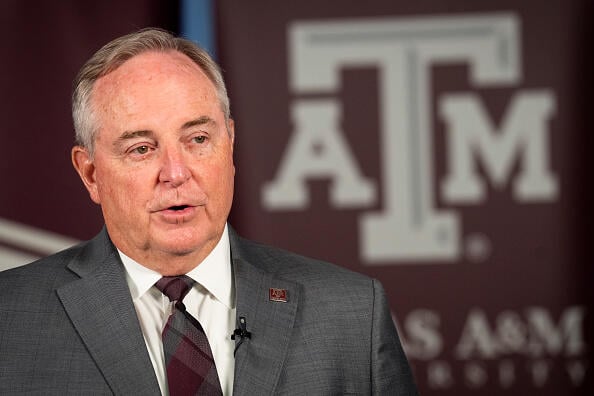
Texas A&M University president Mark Welsh stepped down abruptly Thursday under mounting pressure from state lawmakers over how he handled a recent incident in which a student clashed with a professor over a lesson on gender identity, prompting him to dismiss the instructor.
Earlier this month, Welsh fired Melissa McCoul, who taught English, after a student taking her children’s literature class objected to the professor’s statement that there are more than two genders. Welsh also removed two administrators from their duties because they “approved plans to continue teaching course content that was not consistent” with the course’s description, he said.
The incident prompted fury from state lawmakers, some of whom called on the Texas A&M Board of Regents to terminate Welsh. But on Thursday, system officials announced he had resigned.
The case also raised serious questions about academic freedom at Texas A&M and prompted pushback from faculty members who argued that McCoul’s termination was unnecessary and unjust. The American Association of University Professors also released a statement arguing that the “firings set a dangerous new precedent for partisan interference in Texas higher education.”
Welsh’s resignation is effective Friday at 5 p.m., system officials noted in a statement.
“President Welsh is a man of honor who has led Texas A&M with selfless dedication. We are grateful for his service and contributions,” Texas A&M system chancellor Glenn Hegar, a former GOP lawmaker, said in a statement Thursday. “At the same time, we agree that now is the right moment to make a change and to position Texas A&M for continued excellence in the years ahead.”
Others took a victory lap, including Brian Harrison, a Republican lawmaker and Texas A&M alum who has accused the university of funding “leftist [diversity, equity and inclusion] and transgender indoctrination.”
Last week Harrison posted a video that the student had taken of her confrontation with McCoul, in which the student claims that teaching material related to gender identity and transgender people is illegal and violates one of President Trump’s executive orders, which are not laws. Harrison called for the board to fire Welsh and other senior officials.
“WE DID IT! TEXAS A&M PRESIDENT IS OUT!!” Harrison wrote on social media Thursday, adding that “as the first elected official to call for him to be fired, this news is welcome, although overdue.”
Welsh’s resignation comes despite the backing of notable faculty members, such as Texas A&M’s Executive Committee of the University Distinguished Professors, who wrote a letter of support for the president to the Board of Regents ahead of Thursday’s meeting.
Welsh, a four-star general who served as chief of staff of the U.S. Air Force, was previously dean of the Bush School of Government and Public Service before he was initially tapped as interim president in July 2023 when his predecessor, Kathy Banks, resigned following a hiring scandal. Welsh was named to the job on a permanent basis in December 2023.
Welsh’s exit now means the last two Texas A&M presidents have been felled by scandal and neither lasted more than two years in the job.
Texas A&M did not immediately name an interim upon announcing Welsh’s resignation, but system officials noted in a statement that it will appoint someone to the position “in the coming days” and “initiate a national search for a permanent president” following Welsh’s resignation.
During this reign the memorable preacher Wyclif collected together a curious set of men known as the Lollards or Dullards, because they insisted on walking about with their tongues hanging out and because they were so stupid that they could not do the Bible in Latin and demanded that everyone should be allowed to use an English translation. They were thus heretics and were accordingly unpopular with the top men in the Church who were very good at Latin and who liked to see some Dullards burnt before every meal.
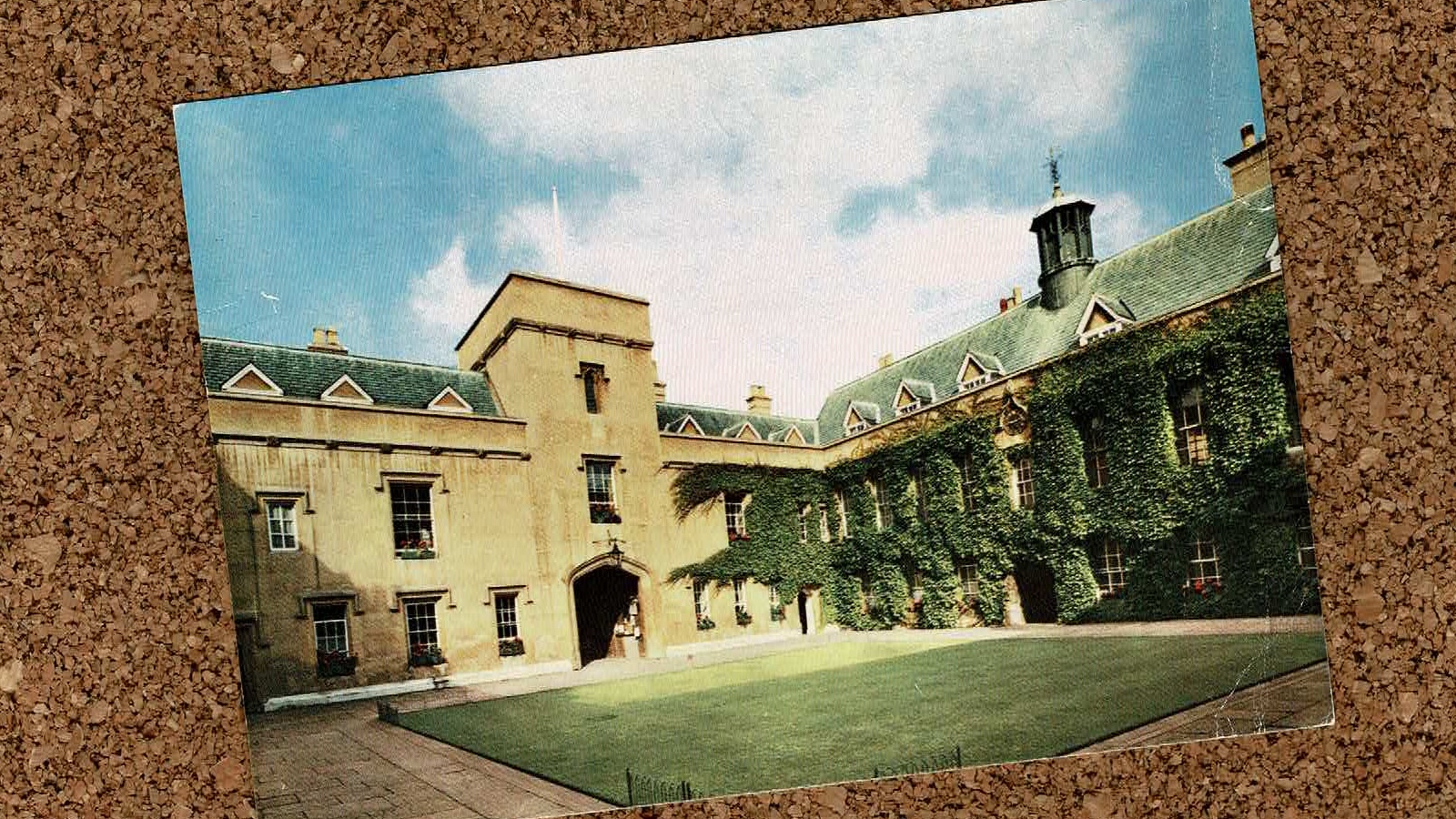
Anyway, Lollardy was considered a problem by the church, and in 1427 Richard Fleming, Bishop of Lincoln, founded a college in Oxford as, apparently, “a little college of true students of theology who would defend the mysteries of Scripture against those ignorant laymen who profaned with swinish snouts its most holy pearls.”
Benefactions in 1436 and 1437 enabled the nascent college to establish a physical base in Oxford, with a chapel, a library, a hall, a kitchen, rooms and, in 1465, rooms for the college’s master. In 1478, a second Royal Charter was granted, at the prompting of Thomas Rotherham, Bishop of Lincoln and later Lord Chancellor and Archbishop of York, who was the college’s visitor. (We’ll cover the role of the visitor another time, when I have the right postcard!)
By this stage we’ve got in place the necessities of a college, and a few more elements – leasing the Mitre Inn, gaining a coat of arms – followed in the next hundred years. And the college continued to add buildings and the like, in the way that medieval Oxford colleges did. The interesting parts of our story now are people.
Let’s fast forward to 1726, when John Wesley was elected a fellow of Lincoln. Discussions within the college set the scene for the establishment of Methodism. Having started as a college to counter heretical beliefs, the college had now enabled a significant branch of non-conformist Christianity to be born.
In 1882 the first Jewish fellow of an Oxford college was elected at Lincoln. This followed the Universities Tests Act, passed in 1871, which removed religious barriers to participation in university life at Oxford, Cambridge and Durham. The fellow in question was Samuel Alexander, who later became a professor at Owens College, Manchester, and whose work focused, as best as I can tell, on questions of the nature of space and time. He’d have answered Zeno’s paradox, I suspect, by denying the reality of incrementally smaller units of time. But I may be wrong!
In 1925 Theodor Seuss Geisel enrolled as a graduate student at Lincoln, having completed undergraduate studies at Dartmouth College, USA. We know him better as Dr Seuss. He didn’t, it seems, complete his postgraduate work. Maybe he’d have been a better writer if he had, maybe not – who knows?
In 1952 another notable writer began his studies at Lincoln. This was David Cornwall, who is similarly better known by his pen-name: John le Carré. Cornwall graduated in 1956; it is thought that he was working for MI5 while at the college, and he certainly became an intelligence agent afterwards, continuing until 1964, when the fall-out from Kim Philby’s spectacular betrayal of many British agents means that he left the secret service. Fortunately for him, his writing enabled him to make an alternative living.
Other notable Lincoln names include Rishi Sunak, former PM; Edward Thomas, WW1 poet; and physician John Radcliffe, after whom many Oxford buildings, including the hospital, the camera and the observatory, were named.
Women were admitted to Lincoln for the first time in 1979.
Lincoln College’s full name – reserved for Sunday best – is the College of the Blessed Mary and All Saints, Lincoln. It’s only called that by the monarch and by the university when it has been naughty, I imagine. The college has a very good page on its history – including some shot films – here. There’s more than I could reference in this piece.
The card itself was unposted but has a message written on the back.
Dear Mr Smithies, Great pleasure to talk to you – thanks for your kind offer of support.
Back in late 2023, a little known libertarian by the name of Javier Milei was elected President of Argentina with a strong mandate to conquer that country’s hyperinflation. His strategy for doing so was pretty straightforward — freeze public spending, which would mean a big loss in real terms until inflation came down, and then let the free market do the rest.
That was easier said than done. Milei lacked a majority in Congress and all of the legacy parties had some reason to try and preserve the status quo, but more or less, Milei got his way and the public sector, including public universities, have had to shrink enormously as a result. Falling budgets, cratering salaries, the lot.
But now the opposition is starting to gain strength. Over the northern summer, Congress passed a bill meant to roughly double state spending on public higher education. Last week, predictably Milei vetoed the law. We can probably expect a season of protests and strikes to ensue.
Returning to the show today to discuss all this is Marcelo Rabossi of the Universidad Torcuato Di Tella in Buenos Aires. He joined the podcast 18 months ago at the outset of Milei’s term to discuss what the President’s agenda was likely to have in store for the higher education sector. Today he’s with us to talk about how the system is surviving what amounts to a massive cut in real pesos, and what the next few months look like as tensions mount between the President and the opposition.
Of particular interest, I think, is where we talk about how, despite Milei’s affinity to the US hard right, he’s avoided Trumpian tactics, like targeted cutbacks through research rescissions and outright institutional extortion.
The World of Higher Education Podcast Episode 4.3 | Crisis or Reform? Higher Education in Milei’s Argentina with Marcelo Rabossi
Transcript
Alex Usher (AU): Marcelo, when we last spoke in January 2024, Javier Milei was newly elected president at the head of La Libertad Avanza. He didn’t have a majority in Congress—still doesn’t. He was elected on a mandate to stop hyperinflation, but his appeal wasn’t just about tighter money. He was a libertarian who wanted to shrink the size of government enormously, which is, in some ways, quite a revolutionary idea in Argentina. Generally speaking, how has his first year and a half in office gone? Is inflation down? Has the size of the government shrunk?
Marcelo Rabossi (MR): From the very beginning, even during his campaign, Milei promised radical changes to literally crash hyperinflation. He aimed to do this by reducing government spending and opening the economy. Inflation has dropped substantially. For example, in December 2023, monthly inflation peaked at 25% and now it’s around 2% for three consecutive months. This is largely due to Milei’s aggressive austerity measures and a very tight monetary policy. He significantly cut federal spending and restored market dynamics.
It’s also true that poverty has declined, from 54% in early 2024 to about 32% in early 2025. On the other hand, economic activity has stagnated, and retirees have lost much of the purchasing power of their pensions. That’s the dark side of Milei’s economic plan.
AU: How has he been able to achieve his agenda without a majority in Congress? What’s the dynamic there? Does he strike deals with conservative parties, or does the presidency give him some ability to rule by decree? How do you get things done when you’re a minority president?
MR: That’s a great question, because I think this is the first party in power with a minority in both chambers of Congress. Milei has relied on emergency executive decrees to bypass legislative opposition or blockages and to implement deep reforms.
Early on, he also struck strategic deals with conservative parties, particularly PRO—the party of former President Macri—and the Radical Civic Union. These strategies helped him pass the “Ley de Bases” in 2024, which was a foundational reform to deregulate the economy.
However, this approach had its limits. He’s now facing growing resistance, even from former allies. Internal divisions and shifting loyalties have made these alliances fragile.
By mid-2025, even some conservative legislators began distancing themselves from Milei’s more extreme measures and aggressive behavior. So I’d say he has governed through a mix of executive power, tactical alliances, and public pressure—but he’s losing that advantage.
AU: My understanding is that Milei’s approach to reducing expenditure and inflation has been simply to freeze spending on government departments. Inflation is lower now than it was two years ago, but it’s still reasonably high, so inflation just erodes the value of that spending.
How has this affected higher education? How big has the cut been to higher education in real terms—that is, after inflation? And is higher education different from other social sectors? Presumably you’d see the same dynamics with hospitals and other services. Is higher education being targeted for bigger reductions, or no?
MR: You’re absolutely right. Spending freezes across all public areas—education, health, infrastructure—have been his primary tool to fight inflation. But as you noted, when inflation remains high, even if it’s slowing, frozen budgets imply reductions in real terms.
Regarding higher education, let me give you some numbers. In 2024, funding for Argentina’s public universities fell by around 30% in real terms and by 2025, the projected university budget is about 35–36% lower than in 2023. According to my analysis, around 80% of higher education spending in Argentina goes to salaries, and those dropped by about 30–35%. Capital expenditures for infrastructure have also collapsed.
But it’s not only university funding. Overall, education has suffered a real decrease of more than 30% between 2023 and 2025. For example, teacher training and technology programs are down 40%, and early childhood education infrastructure is down 60%. Scholarships for low-income students have also decreased by about 40%. I should add that schools are funded at the provincial level, so national cuts didn’t have as large an impact there. But universities, which are funded nationally, were hit hard. Overall, higher education has been one of the hardest-hit sectors.
So, this “freeze strategy,” as I call it, has helped Milei achieve fiscal surpluses and reduce inflation—but it has come at the cost of shrinking real investment in the country’s future.
AU: The president is sometimes seen as Argentina’s Trump—that’s sort of his international reputation. He certainly has admirers on the U.S. far right. Elon Musk even copied him with the chainsaw routine, attacking public finances.
I don’t get the sense that Milei is a friend of higher education. He rants about “woke intellectuals” and that kind of thing, which lines up with the American right. But I don’t get the sense he’s copied Trump in terms of silencing particular lines of research or picking fights with individual universities.
So apart from the financial cuts, which can maybe be defended purely on anti-inflationary grounds, what has the relationship been between Milei and the higher education sector?
MR: Unlike Trump, Milei hasn’t gone after specific research areas or individual institutions. He hasn’t interfered with academic freedom—there have been no restrictions on curricula, no attacks on gender studies or climate research, and no attempt to control university governance.
His approach has been more structural than targeted at specific institutions. That said, the University of Buenos Aires—the largest and most important in the system—has been his main target, simply because it’s the most visible.
I should add that some of his early ideas, like replacing direct public funding of universities with vouchers, have remained more like theoretical provocations than serious proposals. They have no real support and no chance of being implemented.
So while Milei’s stance toward higher education is hostile, it’s not close to institutional repression. His obsession is with the economy and controlling inflation.
AU: A moment ago, you talked about roughly a 30% decline in real terms for university support—maybe a bit higher if you compare the end of 2025 to the end of 2023. How does a university deal with a cut of 33%? What kinds of decisions do they have to make to keep the doors open in conditions of austerity like that? And what have been the consequences of those decisions?
MR: First, universities reacted in order to survive. I would say they are operating in survival mode. In this scenario, universities have had to freeze salaries, delay infrastructure repairs, and cut back on research funding. They’ve also shortened semesters, reduced course offerings, and postponed new programs. Some campuses, like the University of Buenos Aires, have even merged departments or cut non-essential services.
To give you an idea of why these fiscal restrictions have hit so hard: between 80% and 90% of universities’ total income comes from national government funds. Remember, undergraduate education in Argentina is tuition-free, and undergraduates represent more than 90% of a total student body of over 2 million enrolled in national institutions. On the other hand, historically Argentina’s public universities haven’t had a strong tradition of fundraising. Some institutions are beginning to move in that direction, collecting money from private donors, but it’s still very limited.
AU: Surely those kinds of cutbacks would make private universities in Argentina more attractive, right? Argentina doesn’t have a huge private sector—it’s not like Chile or Brazil. I think about 80% of students are in the public system. But have private universities seen an opportunity here? Are they taking advantage of these cuts to tout the benefits of paying tuition and offering something more complete than the public sector?
MR: As I always say, in Argentina the private sector is more tolerated than stimulated, unlike in Brazil or Chile. There are about 60 private universities in the country with around 400,000 undergraduates. Historically, they’ve largely avoided political confrontations and remained neutral. Politics tends to play out in the public sector, so unlike national institutions, private universities haven’t been cast as ideological enemies or targets. This has allowed them to operate with less social and political confrontation.
On the financial side, the private sector largely depends on tuition fees—on average, 90% of their income comes from that source. So decreases in public funding haven’t been an issue for them, since they don’t rely on public subsidies or loans. Recently, however, there have been rumors about public scholarships for students at private universities.
Financially speaking, they’re in reasonably good shape. They’ve been able to maintain operations, salaries, and infrastructure. In a way, they look relatively resilient. And you’re right—while public universities are cutting programs, freezing salaries, and facing potential strikes, private universities now appear more stable and predictable for students and families. For those who can afford tuition, private institutions may seem like a real option.
AU: The public universities have obviously been fighting back over the past year and a half. I’ve lost count of the number of strikes, protests, and demonstrations of public opposition.
What’s interesting is that just in the past few months—during the Northern Hemisphere summer, your winter—Congress considered a bill to stabilize university finances. If I understand correctly, they mandated a funding floor tied to a certain percentage of GDP. That law passed about a month ago. What was this bill, and how did it pass? Because it seems to get back to the question of the president losing allies, since some of his conservative partners voted for it.
MR: Right. The goal of this law was to increase Argentina’s university budget from around 0.4% of GDP to 1.5% in the next five years. That’s a big jump. Beginning in 2026, funding will rise to 1% of GDP.
Historically, public spending on universities has been around 0.6% of GDP, peaking at 1% but usually closer to 0.8%. So this proposal represents a significant increase. It’s intended to replace the funding law passed by the government in 2024.
The bill was introduced in Congress by the rectors of Argentina’s 56 national universities, with support from unions and student organizations. It also proposes updating budget allocations for accumulated inflation in 2023–2024 and reinforcing faculty salaries starting in December 2023, with monthly updates tied to the consumer price index.
AU: Let’s talk about what happens politically here. Both houses of Congress passed the law, and Milei vetoed it on September 10th, I think. How does this get resolved at this point? What happens politically to the bill from here on in?
MR: You’re right about the veto—it’s his main political tool, given that he has no majority in either chamber. University unions, students, and education advocates have already staged protests and strikes, and more demonstrations are expected, especially around Congress.
The veto will escalate tensions between Milei and the education sector, and it’s becoming a rallying point for the opposition. In my view, the next few weeks will be critical. If Congress can’t override the veto, universities will remain under severe financial strain, and political pressure on Milei will intensify.
Either way, this is more than a budget fight. The opposition says it’s a battle over the future of public education in Argentina.
AU: President Milei has another two years and three months left in his mandate. What’s your best guess about higher education? How is it going to fare between now and then? What does the Argentinian system look like at the end of 2027?
MR: Yes, you’re right—we have two years ahead. It’s difficult to predict the future in Argentina, although some would say: expect a new crisis and you’ll probably be right.
As we’ve said, despite lacking a congressional majority, Milei has pushed through major reforms via executive decrees. That’s been his political tool. His confrontational style has kept him in the spotlight but also sparked resistance from traditional parties, the far left, conservatives, and even moderate liberals.
Whether this initial economic stabilization translates into long-term growth—and consequently, political support—remains the big question. If he wins in the next legislative elections this October, he will likely maintain his firm stance, continue vetoing, and I don’t see major changes. If the economy grows, there may be some money to calm the situation, but not enough to achieve what the vetoed law proposed: doubling university funding in relative terms in the short or medium term. That’s a kind of utopia, even if the country emerges from its depression.
But if Milei loses by a wide margin, the pressure will be enormous, creating a vicious circle that prevents Argentina from escaping economic stagnation. Keep in mind: the only way for universities to receive more funding is for the country to grow. If conflict increases, investors will postpone decisions, and in such a scenario, there are no winners.
Again, public universities in Argentina are more than just educational institutions—they are symbols of social mobility and national pride. Milei’s veto of the bill to increase university funding and staff salaries will likely trigger widespread outrage, uniting students, faculty, unions, and the political opposition. In fact, new public demonstrations are already underway and may continue for weeks, months, or even the next two years until his mandate ends.
AU: Lots to keep an eye on. Marcelo Rabossi, thank you so much for being with us today.
MR: It’s my pleasure. Thank you so much.
AU: And it just remains for me to thank our excellent producers, Sam Pufek and Tiffany MacLennan, and you—our listeners and readers—for joining us once again. If you have any questions or comments about today’s episode, or suggestions for future ones, please don’t hesitate to write to us at [email protected].
Join us next week when our guest will be Yale University’s Zach Bleemer, professor of economics, who has just co-written a fascinating new paper, Changes in the College Mobility Pipeline since 1900. We’ll be talking about some of that report’s surprising findings. Bye for now.
*This podcast transcript was generated using an AI transcription service with limited editing. Please forgive any errors made through this service.Please note, the views and opinions expressed in each episode are those of the individual contributors, and do not necessarily reflect those of the podcast host and team, or our sponsors.
With national attention already focused on campus free speech, the assassination of Charlie Kirk at Utah Valley University has intensified a fractious moment for higher education. Voices on the right have blamed colleges for Kirk’s death, calling them “indoctrination camps” and comparing them to “madrassas that radicalize jihadis.”
Though the suspect is not a student, Kirk’s killing has intersected with concerns that students are increasingly unable or unwilling to engage with dissenting views. Critics have cited the most recent FIRE College Free Speech Rankings survey, which shows that one in three students thinks it’s acceptable to use violence to stop a speaker.
Colleges did not cause Kirk’s death, but leaders cannot ignore the finding that a third of students support using violence against a speaker. Though most students will never resort to violence, the possibility forces colleges to reassess campus security. UVU’s police chief admitted more than half his force of 15 officers wasn’t able to secure the crowd of 3,000 people at the Kirk event. Security experts noted that stopping a shooting from the top of a building hundreds of feet away requires Secret Service–style sweeps. The incident raises questions about bringing outside speakers to campuses. With so many budget problems in higher ed, who will cover the costs of keeping them safe?
Yet on the ground at UVU, life on campus looked far different from critics’ portrayals. In the hours after the shooting, the student newspaper, The UVU Review, reported that professors reached out to students to offer resources and reprieves from coursework. Students called everyone in their phone to tell them they were safe. Strangers hugged each other and students offered a ride home to anyone who needed it. They put aside their differences to grieve together. “It feels like life stopped for us,” said one student. “But it kept going for everyone else. I’m ready for life to start again, no matter how changed it’ll be.”
Given Kirk’s prominence, students across the country will feel like this incident has changed their lives, too. With more than 850 campus chapters, Turning Point USA is an organization where conservative students have found community. And even for students who disagreed with Kirk he inspired them to engage with political issues and debate their ideas.
But the reactions to Kirk’s death reveal that the ideological fissures on campus have only deepened. At least 15 faculty and staff members have been fired for appearing to condone the shooting on social media, many after online campaigns called for their dismissal. Meanwhile, at a candlelit vigil at the University of North Carolina at Chapel Hill—a campus that has faced its own tragedy—student Walt Wilson told The Daily Tarheel he was mourning Kirk even though he disagreed with him. “Getting killed over debate and fostering free speech, especially in a place like a university where that is supposed to prosper, is a real tragedy and shows an issue of communication and reconciliation,” he said.
Free speech survives only if protected in practice. This moment will test higher education’s resolve: Will political pressure drive colleges to retreat, or will they recommit to free expression as a path through turmoil?
A few days ago, someone mentioned how nice it would be if students could have their tuition level held steady after enrollment, so they could plan. It got me thinking.
The usual version of that proposal assumes that students enroll full-time at a given tuition level, then sail through, full-time, unimpeded, until their on-time graduation. The benefit to the students (and their families) is obvious, both in terms of absolute amounts of money and in terms of predictability. As a parent who has been paying out-of-state tuition since 2019, I get the appeal.
Of course, the rest of the economy doesn’t freeze costs for years at a time, and college employees live in that economy. So annual tuition increases would still have to happen, but they could only be inflicted upon new students. In any given year, freshmen would pay more than sophomores, who would pay more than juniors and so on. The first year that happened, the increase for freshmen would have to be pretty dramatic to ensure that future years would generate enough revenue. Or, theoretically, states could make up the difference.
That doesn’t seem likely.
For example, Pennsylvania hasn’t even passed its budget yet for this year. You know, the one that we’re several months into. Uncertainty rolls downhill; asking us to guarantee years in advance when we don’t even have this year’s figure yet isn’t realistic. In its defense, the state is dealing with a federal funding situation that could be described as mercurial. Higher ed funding at the state level competes with other priorities, such as the state versions of Medicaid.
Now, if the promise of fixed tuition led to a more rational federal budgeting process …
OK, OK. Seriously, though, using variable revenues to cover fixed costs is a dangerous game. Very elite private schools often have the option of using endowment returns to provide predictable operating funds, which, in turn, could lead to more predictable tuition charges. But those of us at the mercy of annual (and frequently late) state allocations don’t have that option.
Even allowing for all of that, though, I can’t help but wonder about the student that the model assumes. It’s essentially the IPEDS model: first-time, full-time, degree-seeking, supported by family. In the community college world, that describes a small minority of the student body.
Here, students move into and out of full-time status from semester to semester. Sometimes life happens and they step out for a bit (or longer), then decide to return years later. They usually work for pay, often full-time, while they’re taking classes. Stop-start patterns of enrollment make predictable tuition harder to define. They also necessarily lead to higher increases for those who come back, since the entire increase for any given year is visited upon new students, rather than being spread evenly across classes.
Free community college would have solved this, of course, by setting a figure of zero and leaving it there. As long as operating support increased with costs, that would be sustainable, and it’s admirably simple. But that doesn’t appear to be on the table at the federal level, and states can’t deficit spend during recessions, which is usually when demand for other services increases and tax revenues drop.
If we could set public funding in a way that covers fixed costs, leaving only the variable costs to be covered by tuition, then there could be a real possibility for a (clearly defined) tuition freeze. Or at least the levels would be low enough that annual increases wouldn’t hurt so much. Until that happens, though, it’s just untenable. As a parent, that bothers me, but the blame should be placed where it actually belongs.
On Sept. 10, a public lecture at Utah Valley University became the site of a nightmare when the political commentator Charlie Kirk was killed before thousands of students. Whatever one thinks of Kirk’s politics, the trauma endured by those young witnesses will last far longer than the news cycle. For adolescents, such moments do not fade when the cameras leave. They etch themselves into the brain—literally. Witnessing violence, even indirectly, negatively impacts brain development.
At the University of Southern California’s Center for Affective Neuroscience, Development, Learning and Education (CANDLE), our colleagues recently studied how violence exposure shapes young people. Again and again, the evidence is stark: When adolescents witness or hear about violence in their communities, their developing brains bear the burden. The anterior cingulate cortex—a region critical for processing stress and pain, emotional regulation, motivation, learning, and social connection—has a greater decrease in gray-matter volume in adolescents exposed to more community violence. This pattern of gray-matter volume decrease has been seen in ground troops deployed to war and in people affected by post-traumatic stress disorder. It has been linked to anxiety, depression and difficulty sustaining attention.
Yet neuroscience also points to a path forward. Our newest research, published this year in the Journal of Research on Adolescence, offers a striking counterpoint: Adolescents are not passive victims of their environments. They have within them the capacity to buffer these harms, within themselves and within society. That capacity is what we call transcendent thinking.
Transcendent thinking is the ability to move beyond the immediate details of an event and consider the complexities that characterize a diverse society, to explore perspectives that differ or conflict with one’s own and to contemplate the bigger picture: What does this mean for me, for my community, for justice and fairness? When teenagers reflect in these ways, they are not escaping reality but engaging it more deeply. They are searching for meaning, considering multiple perspectives and placing their experience in a larger human story. This, in turn, helps them imagine how things might be different, and how they might contribute to the change.
In our study of 55 urban adolescents, those who more frequently engaged in transcendent reflection about social issues showed a greater increase in gray-matter volume in the anterior cingulate cortex two years later—the very brain region seen to be most vulnerable to violence exposure. In other words, transcendent thinking didn’t erase the negative effects, but it appeared to give young people’s brains some scaffolding to adapt and heal.
This has profound implications for how we respond to political and community violence. The instinct, understandably, is to shield young people from harsh realities. But shielding won’t work. Adolescents are already encountering violence—whether on the street, online or in lecture halls. What they need are the tools to make sense of it, to weave their experiences into narratives of purpose and agency rather than despair. And for this, they need curiosity about the experiences of others and safe opportunities to think across difference.
Fortunately, transcendent thinking is not rarefied or inaccessible. It is something every young person can do and likely already does spontaneously. The challenge is to nurture it deliberately and thoughtfully. Schools and colleges can make space for students to grapple with complex social issues and to connect classroom learning with ethical and civic questions. Families and communities can invite adolescents into intergenerational storytelling, where young people see how others have wrestled with hardship and injustice. Education that emphasizes civic reasoning and dialogue can strengthen not only academic outcomes but also neurological resilience and long-term well-being.
This is both a scientific and a civic imperative. Neuroscience is showing us that meaning making changes the brain. We need support for educators to find ways to translate that science into daily practices that help young people transform tragedy into purpose. Our vision is to illuminate the capacities that empower adolescents to question their and others’ beliefs, to engage across difference, to imagine futures and work to create the world they want to live in.
The tragedy at Utah Valley University underscores how high the stakes have become. America’s young people are coming of age amid rising polarization and public acts of violence. We cannot protect them or shield them from it, but we can equip them to counter its developmental impacts.
Transcendent thinking is not a cure-all. But it is a proven developmental asset that can buffer the effects of witnessing community violence on the brain. It is also a civic skill we urgently need: the ability to see beyond the present conflicts and tragedies to the larger questions of justice, community and meaning.
If we want to safeguard both adolescent development and democratic life, we must equip schools, colleges, families and communities with the tools to cultivate transcendent thinking.
Mary Helen Immordino-Yang is the Fahmy and Donna Attallah Professor of Humanistic Psychology and a professor of education, psychology and neuroscience at the University of Southern California and founding director of the USC Center for Affective Neuroscience, Development, Learning and Education.
More than two years after the Supreme Court ruled that colleges and universities could no longer consider race in admissions decisions, the Trump administration has launched a crusade to ensure institutions are abiding by that decision. Government officials have demanded colleges submit detailed data on the racial makeup of their admitted students, cast suspicion on so-called proxies for race in the admissions process and required some universities to reform their admissions practices—without specifying what, exactly, needed changing. (The administration has also used the decision as justification to call for the cancellation of other diversity, equity and inclusion initiatives, from scholarships to student lounges.)
Then again, according to Angel Pérez, a longtime admissions dean and the CEO of the National Association for College Admission Counseling, it’s never not a trying time to be an admissions dean.
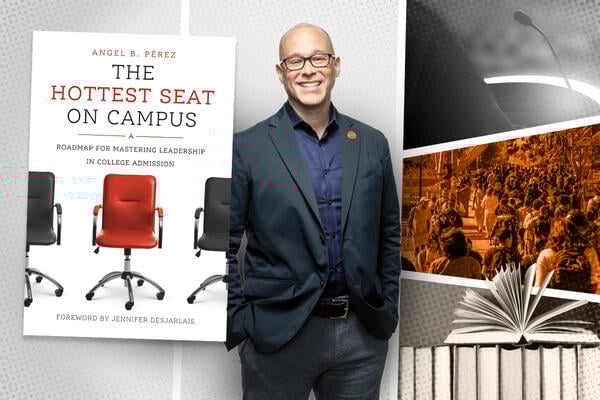
Hence the title of his forthcoming book, The Hottest Seat on Campus (Harvard Education Press), which he admits freely to have borrowed, albeit subconsciously, from a 2014 Chronicle of Higher Education feature. Admissions deans are incredibly visible, he said in a recent interview with Inside Higher Ed; their failures and successes are known to all—and have consequences well beyond their own offices.
Now, as these leaders grapple with the new challenges the Trump administration has brought—and as the first day of NACAC’s annual conference kicks off in Columbus, Ohio—Pérez hopes his book, which is built upon interviews with dozens of admissions leaders from across the country, will prove an important resource for others struggling to navigate the hot seat. Inside Higher Ed spoke with him over the phone about his advice for admissions deans and the changing landscape of higher education.
The interview has been edited for length and clarity.
Q: I wanted to start off by asking about your personal story. What made you interested in holding an admissions role yourself?
A: I think my story is actually very typical of most people who go into the admissions profession. I still call myself an accidental admissions dean—this is not what I was supposed to be doing for a living.
So many people go into the admissions profession by actually being involved on their college campus, as was I. I was involved in student activities, I was a residence hall director, I dabbled in tour guiding. The dean of students at Skidmore [College], Dean Joe Tolliver, who has now retired but is still very active in student affairs, said to me, “You’d be really great in higher education. You should consider a job in higher education.” And to be honest, I didn’t think that those were real jobs, on a college campus. So, I didn’t take it very seriously until someone in the admissions office, Roslyn Estrada, said to me, “Angel, there’s going to be an opening in the admissions office. You should apply. You’d be really good.”
And eventually I said yes to applying because I thought I would go and do that for one year until I found a real job. And many, many years later, here I am, and [I am] delighted that I took that calling.
So, it was really the taps on the shoulders. But I will say—it’s one of the reasons I’ve written the book—that I think we need to change that paradigm and I think we need to change that pathway. I want to create much more intentional pathways into the profession and I want to create much more intentional pathways into leadership.
Q: What would that look like? Do you guys have any initiatives currently underway that are trying to create more intentional pathways?
A: [NACAC has] launched a program called NEXT, where we work with admissions counselors who are one to three years in to basically help them understand what growth in the profession can look like, what a pathway can look like.
The second thing is that, thanks to the support of Strada Education Foundation, we are actually going to be launching a brand new dean’s fellowship, starting in 2026. This is in order to support brand-new deans who are moving into these chairs and cultivate them into leadership. In the book, in the spirit of me being the accidental dean, I write about the fact that one day I was the director of admissions, and the next day, my boss retired and said to me, “The president would like to speak to you.” And then, all of a sudden, I was the vice president for enrollment, and my job was so fundamentally different. That happens to so many people—it’s kind of like sink or swim. What we want to do at NACAC in the future is create much more intentional leadership growth for deans.
One thing that I aspire to do—we’re not there yet; I’m still looking for the funding—is actually to create a program where those tour guides on college campuses and student interviewers, I would like to actually create a NACAC fellowship for them to learn about what it’s like to go into the profession, to give them a mentor as they’re applying for their first job out of college, into the admissions profession, and then make them a part of the NACAC community.
Q: I enjoyed the section of the book where you were talking about admissions deans as storytellers. Could you describe how that storyteller role differs from others on campus and also how effective storytelling translates to outcomes for the admissions office?
A: I always have believed that that admissions deans are chief storytellers of an institution. The reason I say that is because they have such a large constituency. They’re not just telling stories on their campus; they’re also telling the story of the institution outside of campus, right? They’re talking to high school counselors. They’re talking to students. They’re talking to people like you, for example, in the media who are trying to understand the complex admissions world that we have built.
What I have seen in my experience is that so many admissions deans fail in the role because they did not embrace the role of storytelling. A big part of their job is to actually educate the community about the challenges of enrollment, to educate the community about the fact that enrollment is all about trade-offs; in the environment that we’re living in, everybody’s not going to get what they want on campus.
A: These are really the messages that I took away from the teams that I interviewed. One is, during both of those crises—but I would argue any crisis—the importance of communication. I mean, we were just talking about storytelling, right? The importance of bringing your staff along, your constituents, making sure that people are feeling informed, even during incredible uncertainty. We’re living that again right now, so the book is very timely.
I think the other thing that stands out for me—something that, again, was highlighted through these amazing deans I interviewed in the book—is the importance of building teams and making sure that you rely on those team members and not carry the weight of leading in crisis by yourself. I think the leaders who crashed and burned during COVID, during the FAFSA debacle and during all of the different crises that we face, these are individuals who try to do it all by themselves. The reality of the matter is none of us can do it by ourselves. If you can put together a really diverse team who thinks differently, who complements each other in different diverse ways, you’re going to be set up for a lot more success. And obviously empowering them is going to be a big part of that as well.
Q: On a similar note, this book was written before the series of crises that we’re going through with the Trump administration’s attacks on higher education. Is there any piece of advice you would add to the book if you could about navigating this current moment?
A: I think so much of the advice [in the book] actually is very much translatable to what’s happening today. The difference is, the level of change is coming so much faster than ever before, even faster than COVID, even faster than FAFSA, because every day the Trump administration could say something that fundamentally upends how we do our work. I think that’s what’s different.
So if I could have a whole other chapter in the book, I would actually focus on how to lead in an era of uncertainty, and the skill sets that you need, personal and professional, to actually navigate change that’s coming faster than ever.
One of the quotes [that] I use in every presentation I do right now is from Justin Trudeau, and this quote just blows me away. He said it at the World Economic Forum: “The pace of change has never been this fast and it will never be this slow again.” To me, that is our new reality. And so I think I would focus a lot on, how do you keep organizations stable when the news cycle is changing every single day?
The other thing that I would focus on is actually how to be unresponsive. What I mean by that is oftentimes we’re so wired to jump at the crisis of the day. One of the things the dean said to me really recently last week was “You know what? Every time news comes out now, I just sit and I wait, because it might be different tomorrow.” And so there’s also this skill set that I think people need to build of not overreacting when the news cycle is breaking every single day. It’s tough. We’re living in tough times.
Q: If you could go back in time to when you were first starting in admissions, what is one piece of advice that you would give yourself, either from the book or just off the dome?
A: I think I would say to myself, “Enjoy this moment.” And the reason I would say that is because so many young admissions counselors are so eager to rise in the ranks very quickly. As you saw in the book, I talk about it: The faster you rise up the ranks, it becomes a lot messier and murkier and sometimes painful. As a dean, there were many more days that I longed for the simplicity of being on the road, recruiting students, spending my days in high schools and then going back home and reading applications from kids all over the world. It was such a beautiful job with not a ton of pressure.
But then, obviously, I was an eager beaver, and I climbed the ranks actually very quickly; I became a dean in my early 30s. I now wish that I had said to myself, “Slow down, enjoy this moment, and don’t be too quick to rise, because those pressures are going to be very, very different.”