Tag: Higher

  • AI in the University From Assistant to Autonomous Agent

    AI in the University From Assistant to Autonomous Agent

    We have become accustomed to generative artificial intelligence in the past couple of years. That will not go away, but increasingly, it will serve in support of agents.

    “Where generative AI creates, agentic AI acts.” That’s how my trusted assistant, Gemini 2.5 Pro deep research, describes the difference. By the way, I commonly use Gemini 2.5 Pro as one of my research tools, as I have in this column, however, it is I who writes the column.

    Agents, unlike generative tools, create and perform multistep goals with minimal human supervision. The essential difference is found in its proactive nature. Rather than waiting for a specific, step-by-step command, agentic systems take a high-level objective and independently create and execute a plan to achieve that goal. This triggers a continuous, iterative workflow that is much like a cognitive loop. The typical agentic process involves six key steps, as described by Nvidia:

    1. User or Machine Request
    2. The LLM: Understanding the Task

    The LLM acts as the brain of the AI agent. It interprets the user’s prompt to understand the task requirements.

    1. Planning Module: Task Breakdown

    The planning module divides the task into specific actions.

    1. Memory Module: Providing Context

    The memory module ensures context is preserved for efficient task execution.

    1. Tool Integration: Performing the Task

    The agent core orchestrates external tools to complete each step.

    1. Reasoning and Reflection: Improving Outcomes

    Throughout the process, the agent applies reasoning to refine its workflow and enhance accuracy.

    An early version of a general agent was released last week by OpenAI to their paid subscribers of ChatGPT. The message accompanying the release explains the potential for power and productivity as well as the care one must take to ensure privacy:

    “ChatGPT agent allows ChatGPT to complete complex online tasks on your behalf. It seamlessly switches between reasoning and action—conducting in-depth research across public websites, uploaded files, and connected third-party sources (like email and document repositories), and performing actions such as filling out forms and editing spreadsheets—all while keeping you in control. To use ChatGPT agent, select ‘Agent mode’ from the tools menu or type /agent in the composer. Once enabled, just describe the task you’d like completed, and the agent will begin executing it. It will pause to request clarification or confirmation whenever needed. You can also interrupt the model at any time to provide additional instructions … When you sign ChatGPT agent into websites or enable connectors, it will be able to access sensitive data from those sources, such as emails, files, or account information. Additionally, it will be able to take actions as you on these sites, such as sharing files or modifying account settings. This can put your data and privacy at risk due to the existence of ‘prompt injection’ attacks online.”

    I tried the new agent for an update on an ongoing research project I have been conducting this year. It was faster than the ChatGPT-o3 deep research product I have used previously. The report was more concise but included all the data I expected for my weekly update. It also condensed and formatted relevant material in tables. I was careful with the way in which I handled sharing personal information with the agent. Over time, I am confident that more secure ways will be found to protect users and their privacy.

    Inherently, the agentic AI is different from the generative AI. Generative AI is like a brilliant but rather passive research assistant that requires constant, explicit direction. You must provide a series of precise, individual prompts to get it to complete your real objective. Agentic AI, on the other hand, functions more like an experienced project leader. You provide it with a high-level, strategic objective such as “Prepare a report for the provost that outlines the potential of offering a number of relevant new online AI certificate programs this fall targeted to large regional corporations.”

    The agent then autonomously deconstructs this goal into a multistep workflow. It will search for relevant topics and targets, identify potential programs, compare and contrast current and potential offerings with those at competing institutions, generate a ROI over time analysis, synthesize the findings, draft the briefing document, access the provost’s calendar, identify available meeting times, and send a calendar invitation with the briefing attached.

    That’s just one example. Agentic AI will be useful in many aspects of the university operation. It will promote efficiency, accuracy and save significant money through its round-the-clock productivity. Here are some key areas where agentic AI may be useful in the year ahead.

    • Student recruitment, admissions and support: We are already seeing agentic AI transforming recruitment from a high-volume, nonpersonalized process into a deeply individualized and proactive process. Engaging prospective students 24-7 across multiple communication channels, agents tailor their outreach with the promise of personalized learning that has been a central goal of educational technology. Agentic AI is poised to make this vision a reality at scale.
    • Teaching and learning: At last, agentic AI can personalize the learning process. These systems function as autonomous, 24-7 AI tutors that adapt to each student’s unique learning pace and style. The agentic tutor can assess a student’s understanding of a concept, identify any knowledge gaps and adapt the materials for each learner to create a personalized learning path. By employing techniques such as Socratic questioning, an agent can guide a student through a problem-solving process, adapting to the learner’s understanding of the topic and prompting them to think critically, rather than simply providing the correct answer. This can lead to mastery learning, where all learners master the key concepts of a class before they are awarded credit. No learner is left behind.
    • Administrative support: Agentic AI can create enhanced, annotated grade books and continuously updated, enhanced course plans for faculty; predictive analytic reports for deans and directors; individualized retention and advancement recommendations; marketing and public relations materials and plans; library recommendations for acquisitions and student engagement; and many more functions across the spectrum of administration.

    AI agents will offer the next level of artificial intelligence to higher education. We can anticipate embodied agents becoming available in a year or so. Meanwhile, I encourage us all to experiment with agentic AI as it becomes available. In doing so, we can begin to create our own personalized, proactive, professional assistant that can anticipate our needs and implement our preferences.

    Who at your university is leading the move to agentic AI? Perhaps you may be in a position to model the efficiency and professionalism of AI agents.

    Source link

  • 3 Questions for Higher Ed Market Researcher Scott Jeffe

    3 Questions for Higher Ed Market Researcher Scott Jeffe

    We have a long history of working with Scott Jeffe during his time as the VP of research at RNL. Recently, Scott moved on from RNL to begin working as an independent higher ed market research consultant and adviser to universities. To learn more about the work that Scott does and to hopefully gain some insight into where things may be going with online and graduate programs, we asked Scott the following questions.

    Q: Tell us about what it means to be an independent higher ed market researcher. What sort of projects do you work on? How does what you do for universities differ from the services available from traditional consulting firms?

    A: In higher education, the best market research means more than just gathering data—it means showing up as a consultant. That’s something I’ve really learned throughout my career. Too often, I see research reports that are, frankly, hard to interpret or apply. The data might be sound, but it’s overly complex, the visualizations are unclear or the recommendations are disconnected from the realities of how colleges and universities actually operate.

    I’ve had those moments—looking at a data visualization and spending several minutes just trying to figure out what it’s supposed to say. And I know that no dean, provost or president has the time to do that. I’ve also read plenty of conclusions that are technically accurate but completely impractical in the real-world context of higher ed. That’s the kind of disconnect that leads campus leaders to quietly shelve the report, walk away and think, “Well, that was a waste of money.”

    That is exactly what my work today seeks to avoid. My research and consulting prioritize being more direct, actionable and grounded in higher ed’s current challenges. My work now spans both institutional consulting and national research, and I think that balance is part of what makes my approach effective. For example, I’ve recently completed national studies on graduate student expectations and mentorship, which give me insight into broader trends that I can then bring into highly tailored campus-level work.

    Over the past six months, I’ve developed four core services designed specifically for this moment in higher ed—politically, economically and culturally. They’re affordable, practical and fast to implement. I don’t believe in one-size-fits-all solutions, but I do believe institutions deserve work that respects their time, their context and their need to move quickly on what matters.

    That’s ultimately the difference between what I offer and what many vendors often provide. I’m not just delivering a report—I’m helping institutions make real decisions, grounded in both the data and the dynamics of higher ed today.

    Q: What are the most significant challenges and opportunities for universities wanting to grow graduate and/or online enrollment today?

    A: At the graduate level, one of the biggest looming challenges is the likely decline in international enrollment, which has quietly propped up graduate enrollment growth for the past several years. Under the Biden administration, we saw international graduate enrollment rise by more than 117,000 students—reaching over 500,000 total. Just last year, international students made up a full one-third of new graduate enrollments in the U.S., and over 200 institutions reported that international students represented more than 30 percent of their total graduate population.

    But we have to be clear-eyed: Not only is that level of growth not sustainable, but decline is coming. Whether due to shifting geopolitics, visa policy changes or growing global competition, institutions will need to refocus their efforts on the domestic graduate market—and fast.

    That said, there’s opportunity in the challenge. In fact, the current job market will likely nudge more adults to consider graduate study as a buffer or springboard during economic uncertainty. The catch? Institutions are now facing unprecedented competition. By some counts, we’re adding 800 new master’s programs each year. To grow—or even maintain—enrollment, institutions must have an acute understanding of what today’s graduate students expect. That means building a blueprint rooted in student preferences and behaviors and then aligning everything—program design, marketing, recruitment and support—around those insights.

    That’s where much of my work comes in. Over the last two decades, I’ve helped institutions do exactly this through tools like my Scorecard and Playbook and the Audience Alignment Study, which zero in on how to position programs for today’s increasingly selective learners.

    Now, on the online education side, the landscape is a bit more favorable at the moment—particularly due to the regulatory environment calming down. The Biden administration’s push to more heavily regulate online programs—particularly around OPMs and state reciprocity—has largely been shelved. That’s good news for smaller institutions, where online offerings often represent the best path to enrollment stability or growth. Interestingly, one of the unintended effects of that regulatory scrutiny is that OPM contract terms are now much more favorable than they were a few years ago. Institutions have more leverage.

    In terms of opportunity, there are two major areas I’m watching closely. First, the long-discussed but rarely well-executed effort to serve the 30 to 40 million U.S. adults with some college and no credential is almost entirely an online opportunity. However, most institutions struggle to fully serve this group. The barriers tend to fall into three key areas: restrictive credit transfer policies, pricing models that remain out of reach and a misplaced assumption that these students will return to campus for their courses. Institutions that succeed here build fully online programs with wraparound support—advising, tech help, financial aid guidance—specifically designed for students who haven’t set foot on a campus in years. And when they do that, it doesn’t just help this population—it improves online education quality for everyone.

    The second opportunity is more subtle but just as important: the increased demand from traditional undergraduates for access to online courses. While this isn’t online program growth in the classic sense, it presents a major advantage. A robust online course infrastructure doesn’t just support distance learners—it makes the entire campus experience more flexible, more attractive and more resilient. For institutions, that’s a strategic win across multiple audiences.

    Q: How can universities better choose which programs to start and invest in and then grow enrollments to financially sustainable numbers?

    A: At all levels, I think most institutions are doing a much better job now of integrating market data into their program decision-making. There’s a pretty direct line between the era when those insights were missing and the wave of program cuts we’re seeing now. For instance, Inside Higher Ed recently reported that Indiana’s public institutions have combined or eliminated over 400 programs that weren’t meeting fairly modest graduation thresholds. That’s a clear example of the consequences of earlier decisions made without solid market alignment.

    When I work with institutions on program strategy, my role is really to facilitate a conversation that balances market data and institutional strengths. I bring the external perspective—labor market demand, competitor analysis, growth trends—and they bring the internal knowledge of what they’re truly good at. The goal isn’t just to chase hot programs, but to find areas where there’s strong or emerging market demand and where the institution already has expertise, capacity and visibility. That combination is where real opportunity lives.

    Why take that approach? Because institutions need quick wins. We’re often working with limited time and resources and pressure to show results. If you can build momentum by improving or reconfiguring an existing program—something that already has a foundation—you get to impact faster and more cost-effectively. In fact, across dozens of program prioritization studies I’ve been involved in, I’ve rarely seen a proposed new program with more short- or midterm market potential than several underperforming existing ones. That’s why I usually recommend a 3-to-1 or 4-to-1 investment ratio favoring existing programs over net-new launches.

    Once we identify the right programs to focus on, differentiation becomes key—especially in the online space, where commodification is a real concern. Institutions need detailed competitor intelligence, not just high-level benchmarking. We’re looking at how programs are positioned, how they’re structured and what messages they’re putting in front of students. That kind of granularity allows us to develop a true blueprint for differentiation—one that goes beyond clichés like “small class sizes” or “personalized attention” and speaks to what really sets a program apart.

    And finally, with federal regulations increasingly focused on graduate outcomes and return on investment, it’s more important than ever to bake those metrics—job openings, wage growth, projected earnings—into the program planning process from the beginning. We’re entering a new phase where programs will be judged not just on academic merit or enrollment numbers, but on how they impact students’ long-term economic success.

    So to me, the smartest institutions are those that align their strengths with market needs, invest in what they already do well and differentiate with purpose—grounded in real data.

    Source link

  • International Student Enrollment Could Drop 15% by Fall

    International Student Enrollment Could Drop 15% by Fall

    Photo illustration by Justin Morrison/Inside Higher Ed | Getty Images

    New international enrollments in the U.S. could drop by as many as 150,000 students in the next year, according to scenario modeling by NAFSA, the association of international educators, and JB International.

    Based on a 30 to 40 percent decline in new students, the research projects that colleges and universities could see a 15 percent drop in overall international student enrollments in the next academic year, resulting in $7 billion in lost revenue and 60,000 fewer jobs.

    “This analysis … should serve as a clarion call to the State Department that it must act to ensure international students and scholars are able to arrive on U.S. campuses this fall,” said Fanta Aw, executive director and CEO of NAFSA, in a press release. “For the United States to succeed in the global economy, we must keep our doors open to students from around the world.”

    The modeling is based on data from the Department of Homeland Security’s SEVIS By the Numbers and State Department’s Bureau of Educational and Cultural Affairs Annual J-1 Exchange Visitor Report, as well as State’s Monthly Nonimmigrant Visa Issuance Statistics, available through May 2025.

    NAFSA attributes the projected decline to recent changes to international student visa processing under the Trump administration.

    The State Department paused student visa interviews between May 27 and June 18, during peak issuance season, and then implemented vetting protocols for students’ social media accounts, which may have impeded some students’ ability to receive a visa.

    NAFSA member institutions have also reported there are limited or no appointments available for their international students in China, India, Japan and Nigeria, which are among the top countries of origin for international students studying in the U.S.

    On June 4, President Trump signed an executive order restricting visitors from 19 countries, but visa issuances for students from those countries had already begun to drop. F-1 visa issuances declined 150 percent and J-1 issuances declined 105 percent in May compared to last year, according to an Inside Higher Ed analysis of State Department data.

    Over all, F-1 and J-1 visa issuance dropped 12 percent from January to April 2025 and an additional 22 percent year over year in May. NASFA’s report estimates that June 2025 F-1 visa issuances will decline as much as 90 percent under the new policies.

    NAFSA is urging Congress to direct the State Department to provide expedited visa appointments for F-1, M-1 and J-1 visa applicants as well as exempt international students from travel restrictions.

    The projection does not reflect increasing anxieties among international students interested in studying in the U.S.; a May survey by Study Portals reported student interest in studying in the U.S. has dropped to its lowest point since COVID-19, with students considering other English-speaking nations like the U.K. or Australia instead.

    Current visa projections only account for fall 2025 enrollment. In a July interview with Inside Higher Ed, Rachel Banks, senior director of public policy and legislative strategy at NAFSA, noted some colleges and universities are anticipating international students will be unable to make the start of classes in the fall but may be able to come to campus later in the term or in the winter.

    Source link

  • Can Western New Mexico U Recover a Golden Parachute?

    Can Western New Mexico U Recover a Golden Parachute?

    Western New Mexico University is looking to claw back $1.9 million in severance already paid to former president Joseph Shepard, who stepped down in January following a spending scandal.

    Shepard, who led the university for nearly 14 years, resigned late last year in the aftermath of media reports that found he spent university funds to upgrade the president’s house with lavish furniture. Critics also raised questions about costly recruiting trips to Greece, Spain and Zambia that yielded very few enrollments from those countries. The Office of the State Auditor determined in November that Shepard “engaged in the waste of public funds” and found instances where his travel appeared to be “unrelated to official university business.”

    But in December, after the damning details came to light, board members—some of whom had joined the president on international trips—gave Shepard nearly $2 million in severance, plus additional fringe benefits and a five-year faculty contract that required him to teach six credit hours a year, though he had the option to do so online. Shepard’s annual faculty salary is set at $200,000, down from the base salary of $365,000 he was making as president.

    The agreement prompted outrage at WNMU, which is located in one of the nation’s poorest states and has many low-income students. Democratic governor Michelle Lujan Grisham subsequently demanded the resignation of the board, who complied, and has since appointed new members.

    Last week, the new board voided Shepard’s separation agreement and terminated his teaching contract, arguing that the regents who struck the deal did so improperly and in violation of New Mexico’s Open Meetings Act. State officials have made similar arguments in a related lawsuit.

    A Board Reversal

    WNMU regents took up Shepard’s contract and separation agreement at a Thursday meeting.

    John V. Wertheim, one of the new regents appointed by the governor in recent months, argued that the prior board failed to provide proper notice of the action items at the December meeting where they approved Shepard’s contract. Given the alleged failure of compliance with New Mexico’s Open Meetings Act, Wertheim argued that the board’s approval of the deal was invalid.

    In two separate motions, the board unanimously agreed to invalidate the deal and terminate Shepard’s teaching contract. Board Chair Steven Neville said the agreement is now “in limbo.”

    Wertheim noted that while WNMU’s board hired special counsel to advise them on the matter, there are outstanding questions, many of which he said regents would not be able to answer immediately due to both the legal complexity of the issue and because it is a personnel matter.

    “I’m sure both the press and the public are going to have a lot of questions, and all I ask is that there be patience … because all of these detailed questions, we don’t necessarily have the answers today to give everyone, but we will, in due course,” Wertheim said at the meeting.

    Following the vote, Shepard accused WNMU in an emailed statement to Inside Higher Ed of orchestrating a smear campaign against him.

    “After serving 14 exemplary years of advancing the university, it’s troubling that this new, Governor-appointed Board has chosen this path. This is a matter before the courts. The Board’s desire to attempt to circumvent the legal process is telling in that they know they can’t win where facts matter and are doing all they can to prevent the truth from being shared,” Shepard wrote, calling the move an effort to destroy his reputation and career.

    But the state’s governor praised the board’s decisions as the “right thing.”

    “They recognized that public dollars must serve the public good, not pad executive pockets during difficult transitions,” Lujan Grisham wrote on social media. “This decision represents exactly the kind of fiscal responsibility and accountability New Mexicans deserve from their public institutions. Our students and their families work too hard and sacrifice too much to see their tuition dollars and taxpayer investments squandered on excessive golden parachutes.”

    What’s Next?

    WNMU declined to provide a comment to Inside Higher Ed, noting the situation was a personnel matter. But according to board members’ remarks, a legal fight with Shepard is expected and a settlement remains a possibility.

    Complicating the matter are two lawsuits brought by the state.

    New Mexico attorney general Raúl Torrez filed a lawsuit earlier this year in an effort to void the contract and recover severance payments. Torrez argued regents breached their fiduciary duty by approving the costly agreement and violated open meeting laws at December’s meeting.

    Torrez brought the initial complaint in January and amended it in February. While he initially attempted to block the payment, that effort was unsuccessful, as the funds had already been disbursed. The legal fight in that case is ongoing.

    Then, in late June, the New Mexico State Ethics Commission also sued Shepard, accusing him of violating the Governmental Conduct Act, which applies to state employees. In addition to the prior complaints of lavish spending, the commission accused him of diverting $177,404 intended for an ADA-compliant walkway and ramp to instead construct a walkway and patio “for the purpose of hosting events related to his daughter’s wedding” held on campus.

    (Shepard has denied that university funds were used to help pay for his daughter’s wedding.)

    The lawsuit also alleges that as president, “Shepard had a practice of authorizing university expenditures from which he benefited that were only loosely connected to university purposes.”

    The commission is seeking financial penalties and for Shepard to reimburse WNMU for the construction of the originally planned ADA-compliant ramp and walkway, which were not built.

    Back at the university, board members say they are open to some financial compensation for the former president. Had Shepard been fired for cause, he would have received no severance. Had he been fired without cause, he would have received less than $600,000, per the contract he previously negotiated with the board in 2022.

    Wertheim indicated at Thursday’s meeting a desire to reach a settlement.

    “The best resolution for everyone is to get this in front of a retired judge or justice of the New Mexico Supreme Court to hammer out a fair, negotiated settlement,” he said at the meeting.

    Before Thursday’s vote, Shepard was reportedly scheduled to teach two online classes this fall, including one on business ethics. However, Interim president Chris Maples told The Silver City Daily Press that he and other officials plan to meet to determine what will happen with those courses. And with the semester starting Aug. 15, they’ll need to make a decision soon.

    “Whatever we do, we’ll do the best job we possibly can for our students,” he told the newspaper.

    Source link

  • With Grant Cuts, Trump Pressures UCLA to Make Deal

    With Grant Cuts, Trump Pressures UCLA to Make Deal

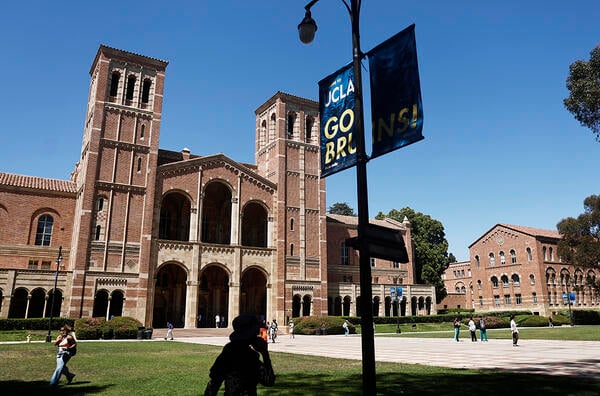
    The Trump administration announced last week it was freezing federal grants for another prestigious research university. But this time, it wasn’t a private institution.

    It was the University of California, Los Angeles, and if the UC system doesn’t make a deal with the federal government, campuses across one of the nation’s largest public higher education systems might incur the administration’s further punishment. State leaders condemned the funding freeze, and faculty at UCLA are urging university administrators to fight. But the university has said little about how it plans to respond to the administration.

    The Department of Justice has been investigating the University of California system for months—looking into alleged antisemitism, alleged use of race in admissions and “potential race- and sex-based discrimination in university employment practices.” The agency’s investigations into the broader UC system are still ongoing, but last week, the DOJ told system officials it had made a finding regarding one campus and demanded a quick response.

    “The Department has concluded that UCLA’s response to the protest encampment on its campus in the spring of 2024 was deliberately indifferent to a hostile environment for Jewish and Israeli students in violation of the Equal Protection Clause and Title VI,” the letter said. (Title VI of the Civil Rights Act of 1964 prohibits universities that receive federal funding from discriminating based on shared ancestry, including antisemitism.)

    The letter didn’t specifically say what the Trump administration wants UC to do now about its alleged failure to handle a pro-Palestine encampment that ended more than a year ago, and that UCLA itself dismantled a week after its creation. The DOJ didn’t provide Inside Higher Ed further information Monday, but U.S. attorney general Pam Bondi’s news release accompanying the DOJ letter suggests the Trump administration wants significant concessions.

    “Our investigation into the University of California system has found concerning evidence of systemic anti-Semitism at UCLA that demands severe accountability from the institution,” Bondi said. “This disgusting breach of civil rights against students will not stand: DOJ will force UCLA to pay a heavy price for putting Jewish Americans at risk and continue our ongoing investigations into other campuses in the UC system.”

    Just hours before the DOJ’s announcement, UCLA had announced that it was paying $6.45 million to settle a lawsuit from Jewish students over reported antisemitism associated with the encampment. But that wasn’t enough to assuage the federal government.

    The DOJ letter said the department “seeks to enter into a voluntary resolution agreement with the university to ensure that the hostile environment is eliminated and reasonable steps are taken to prevent its recurrence.” It asked the UC officials to contact a special counsel by today if they were “interested in resolving this matter along these lines,” providing an email address and a nonfunctional nine-digit phone number for them to contact. The agency is prepared to sue by Sept. 2 “unless there is reasonable certainty that we can reach an agreement.”

    That July 29 letter wasn’t the end of it. In the week between then and today’s deadline for UC to contact the DOJ, multiple federal agencies said they’re cutting off grants to UCLA. The total amount is unclear—other media have reported numbers exceeding $300 million.

    It’s reminiscent of what happened at Columbia and Harvard Universities. But unlike with those private institutions, the Trump administration hasn’t published an overarching demand letter for how it wants UCLA to change its ways, whether in admissions, student discipline or otherwise.

    A spokesperson for the Department of Health and Human Services, which includes the National Institutes of Health, responded to Inside Higher Ed’s requests for information on how much in NIH grant funding has been canceled and why with a two-line response attributed to an unnamed HHS official: “We will not fund institutions that promote antisemitism. We will use every tool we have to ensure institutions follow the law.”

    A National Science Foundation spokesperson wrote in an email that the NSF “informed the University of California, Los Angeles that the agency is suspending awards to UCLA because they are not in alignment with current NSF priorities and/or programmatic goals.” The spokesperson didn’t specify which priorities or which goals, and his email didn’t mention antisemitism.

    The Department of Energy went beyond allegations of antisemitism in its letter to UCLA, saying that “UCLA engages in racism, in the form of illegal affirmative action” and UCLA “endangers women by allowing men in women’s sports and private women-only spaces.”

    Mia McIver, executive director of the national American Association of University Professors, said what’s happening is the “Trump administration is extending its pattern of attacking higher education faculty, staff and students more broadly outward from the Ivy League universities into the public sector.” McIver, who taught at UCLA for a decade, said the administration intends to “exercise pervasive control over colleges and universities in every region of every different sort of institution.”

    “It is the federal government using levers of power that are completely unrelated to the underlying allegations,” McIver said. “Cutting off research for diabetes, cancer, heart disease will not improve the safety of Jewish faculty and students on campus and will not address antisemitism.”

    ‘Enough Is Enough’

    What does the UC system plan to do? A spokesperson deferred comment to UCLA, which also didn’t provide interviews Monday or answer written questions. The UC system spokesperson did forward a statement Friday from system president James B. Milliken, who started in his new job Aug. 1—just after the grant freezes. 

    Milliken called “the suspension this week of a large number of research grants and contracts” at UCLA “deeply troubling,” though “not unexpected.”

    “The research at UCLA and across UC more broadly saves lives, improves national security, helps feed the world, and drives the innovation economy in California and the nation,” he said. “It is central to who we are as a teaching and learning community. UC and campus leadership have been anticipating and preparing for the kind of federal action we saw this week, and that preparation helps support our decisions now.”

    He didn’t, however, say what the decisions would be.

    Also Friday, California governor Gavin Newsom, a potential 2028 presidential candidate and an ex officio member of the UC Board of Regents, released a statement calling it “a cruel manipulation to use Jewish students’ real concerns about antisemitism on campus as an excuse to cut millions of dollars in grants that were being used to make all Americans safer and healthier.”

    “This is the action of a president who doesn’t care about students, Californians, or Americans who don’t comply with his MAGA ways,” Newsom said.

    UCLA chancellor Julio Frenk said in a video on X Friday that “we share the goal of eradicating antisemitism. It has no place on our campus or in our society.” He said his wife is the daughter of a Holocaust survivor, and his paternal grandparents left Germany in the 1930s after being “driven out of their home by an intolerable climate of antisemitism and hate.”

    “These experiences inform my own commitment to combating bigotry in all its forms, but a sweeping penalty on lifesaving research doesn’t address any alleged discrimination,” Frenk said. He said, “We have contingency plans in place,” though he didn’t elaborate.

    In a petition, the UCLA Faculty Association’s Executive Board criticized UCLA administrators for their past “anticipatory obedience” to the federal government, which it said “has not prevented Trump administration attacks.”

    “UCLA’s anticipatory obedience has put itself in a place of weakness and we must instead choose to stand up,” the association wrote. “We do not have to bend to the Trump administration’s illegitimate and bad-faith demands. UCLA is a state university, with the financial backing and moral support of the fourth-largest economy in the world.”

    The association demanded that UC “demonstrate our strength as the world’s largest university system and reject the malicious demands of the Trump administration,” adding that “each university that falters legitimates the Trump administration’s attacks on all of our institutions.”

    It called for UC to fight the administration in court, to use unrestricted endowment funds to “help keep our university’s mission intact” and to work with Newsom and state lawmakers to get financial support. The petition ended with a call for university administrators to not “sacrifice our strengths and our community, deeply nurtured and protected for over 100 years, to a deeply callous and unfair federal administration that will only ask for more.”

    Meanwhile, Faculty for Justice in Palestine at UCLA said in a statement that “Israel continues to tighten its US-enabled siege of Gaza, where the calculated denial of humanitarian assistance is causing mass starvation amid ongoing aerial bombing. The theatrics of the Trump administration, echoed by UCLA, are part of a larger attempt to cover up this genocidal catastrophe in which all of us, and our university, are complicit.”

    McIver urged the UC system not to cut deals like Columbia and Brown Universities have.

    “There are always alternatives,” she said, “and every deal that is cut makes it harder for those who are downstream of the deal to continue resisting these attacks.”

    “The Trump administration is aiming to control colleges and universities at all levels in all states, and every settlement that is reached basically contributes to that goal,” she said. “And so there has to be a point at which everyone across the country stands up and says, ‘Enough is enough, we’re not going to tolerate this extortion, you can’t hold our campuses hostage and we’re not going to take it anymore.’”

    Source link

  • So, Did I Miss Anything?

    So, Did I Miss Anything?

    My erstwhile wise and worldly readers will remember that I wrote this column for many years, trying to shed light on the inner workings of public higher education in hopes of making things better.

    In 2023, my career took an unexpected turn, and I found myself working at a public policy think tank in another part of the country. Though I’m proud of the work we did there, ultimately, it just wasn’t me. I’ve returned to the world of community colleges, this time as VPAA at Westmoreland County Community College, near Pittsburgh. Being back in public higher education feels right, and being within driving distance of family again makes a difference.

    So, in the two years away, did I miss anything?

    When I stepped away, the public discourse around higher education involved deciding how much of it should be free and how much student debt should be forgiven. Colleges proudly trumpeted their commitments to diversity and inclusive student success. Harvard and its counterparts enjoyed massive public prestige and had more money than they knew what to do with. (I was known to comment that Harvard was wildly unrepresentative of American higher education, which is still true.) Debates around academic integrity tended to focus on whether it was reasonable to use detection software to figure out if students plagiarized from existing websites. The president of the United States openly lauded community colleges, and not only because his wife worked at one.

    Hmm. I might need to update a few things.

    I regularly included stories about family, partly because they’re fun to share, but mostly to make the point that men, too, need to own the implications of being working parents. I’m happy to report that the main characters are still around, and thriving. The Wife and I had our 26th wedding anniversary this year. The Boy (!) is 24, living in New York City, working in a clinical research lab and applying to medical schools. The Girl (!) is 21, a rising senior in college, and writing papers that earn effusive praise from her professors. Even Penny, our dog, is still around, making new friends wherever she goes.

    The new job started before we found a house in Pennsylvania, so we’ve been staying in an apartment. Our previous houses had sliding doors that led to the backyard, so Penny learned that when she needed to go outside, she’d stand by the sliding door. In the apartment, the sliding door opens onto a second-floor balcony; the first time Penny stepped out there, she looked confused and even a little betrayed.

    Since then, we’ve found a house, so we’ll be moving over the next few weeks. It has a backyard, so sanity will be restored to Penny’s world.

    I’m unspeakably grateful to WCCC for letting me back into the world I’ve spent much of my adult life trying to help. And I’m grateful to Sara Custer at Inside Higher Ed for letting me unretire the jersey and bring “Confessions” back to life. Inspired by Jon Stewart’s example, I’m setting a goal of posting twice a week, as opposed to the four or five posts per week from before.

    So, to my longtime readers: It’s great to see you again! And to new readers: Welcome! I hope we can make some sense of what has abruptly become a much more complicated field. The students, as always, are worth it. And as before, reader questions are welcome at deandad (at) gmail (dot) com. See you soon!

    Source link

  • What to Do When Your Job Search Stalls (opinion)

    What to Do When Your Job Search Stalls (opinion)

    Graduating into a tight job market can feel very daunting. You’ve invested years into your education and training, built strong skill sets, and followed the advice given by mentors and peers to make yourself competitive. So why aren’t the offers coming?

    If you find yourself in this situation, it’s normal to feel discouraged, demoralized or unsure of what to do next. Below are some steps you can take to help jump-start your job hunt by evaluating what’s working and identifying what might need adjusting so you can move forward and maintain momentum.

    Step 1: Evaluate Your Job Search Strategy

    Before making any major changes, start by examining your current approach.

    Are you submitting lots of job applications but not hearing back? This could be a sign that your application materials need refinement. Ask yourself: Are my CV or résumé and cover letter polished and tailored to each role? Am I clearly highlighting how my skills align with the job description? If you’re unsure, reach out to a professional in your field, mentor or career coach to review these materials and provide feedback.

    Are you getting interviews but not progressing to the next round or receiving final offers? This may signal that your interview approach needs improvement. Using structured interview methods, such as the STAR method (situation, task, action, result), can help you learn how to better organize your responses to highlight your experiences in a more focused manner. Practicing with a mentor or even a peer can help you identify gaps in preparation or missteps in how you present yourself. Many universities offer free career services, including mock interviews, to their students and alumni.

    In a competitive market, job searching also requires proactive strategies beyond submitting applications. I often see job seekers hyperfixate on tweaking applications that are already strong when their time would be better spent networking. Reach out to professionals, schedule informational interviews and make connections that help you uncover hidden opportunities and potentially receive internal referrals. These conversations can also help you better understand your target roles and the broader job landscape.

    Step 2: Broaden Your Search Strategically

    If networking and refining your materials isn’t enough, it may be time to broaden the types of jobs you’re considering. This doesn’t mean giving up on your long-term career aspirations; instead it means exploring bridge or adjacent roles that can help you stay on track while you continue to grow professionally. While bridge roles may not be your first choice, they can support future career moves by helping you gain relevant work experience, build new skills and expand your professional network.

    One way to identify bridge roles is to explore LinkedIn profiles of alumni and professionals in your field. Examining the positions they held after graduating and where they are now can help expand your list of possible bridge roles. Take this a step further during informational interviews by asking professionals about their knowledge of bridge roles. For example, a person targeting a medical science liaison role might ask an MSL in an informational interview, “I have been applying to MSL roles without any success; what other roles could help me work toward this path?” They might learn of opportunities in medical communications, clinical research or technical sales, positions that develop many of the same skills valued in MSL roles and often done by professionals before landing an MSL position.

    Bridge jobs can also provide financial stability while allowing you to build your skills. For example, I work with many students who aim to move directly into industry as scientists. However, if the job search stalls, an academic postdoc can be a strategic choice, especially when it aligns with building specific skills and provides much-needed income. One graduate I advised discovered through informational interviews that he would need additional expertise in advanced sequencing techniques to be competitive for the R&D roles he was targeting. He chose to take a two-year academic postdoc with a clear plan to build those exact skills, positioning himself for a stronger transition into industry while providing financial stability for his family. A postdoc can offer time to deepen your technical expertise, build a more competitive research portfolio and prepare for roles in biotech, R&D or other sectors.

    If you pursue a postdoc as a bridge role, be transparent with the postdoc mentor about your intentions. Take the earlier example of the graduate pursuing industry R&D roles. He was clear in communicating both the specific skills he needed to gain (RNA sequencing) and the time frame he would commit (two years). That kind of clarity helps establish shared expectations and ensures the postdoc experience is mutually beneficial for both you and the lab.

    Another important strategy for broadening your job search is to reflect carefully on your needs versus preferences. Needs are the nonnegotiables, such as visa requirements, caregiving responsibilities or a two-income household situation. A person’s preferences might include living in a specific city, having a certain job title or starting at a particular salary. While all of these are important to consider, being flexible on preferences can help you uncover new possibilities. Ask yourself: Are there geographic areas I’ve ruled out that might be worth reconsidering? Could I shift my salary expectations temporarily to get a foot in the door? Widening your criteria doesn’t mean compromising your goals; it’s a strategic step in reaching them.

    Step 3: Know When to Pivot

    If you’ve been searching consistently and not gaining traction, it may be time for a bigger strategic shift. Sometimes we become so focused on our initial ideas about our career that we overlook other options that could be equally or more fulfilling. Ask yourself: Could there be paths that better match my strengths or allow me to grow in ways my original plan didn’t? Have I overlooked opportunities that may better align with my values, interests or lifestyle goals as they are now?

    In the book Designing Your Life: How to Build a Well-Lived, Joyful Life (Knopf, 2016), authors Bill Burnett and Dave Evans suggest that being stuck can be a powerful launchpad for creativity and personal growth. They encourage readers to approach career planning as a design problem that benefits from curiosity, experimentation and iteration. One recommended exercise to stimulate curiosity is to brainstorm multiple career paths for yourself. Once you have your list of possible futures, you can then explore the most promising options through research and conversations with professionals in those roles.

    If you need help identifying new directions, the individual development plan can be a useful tool. Platforms such as myIDP or ImaginePhD offer exercises and assessments to help you identify your skills, interests and values and pinpoint career paths aligned with your results. These platforms also include resources to guide you toward researching and setting goals to reach a new path.

    Importantly, pivoting doesn’t mean giving up. It means recognizing that there are many viable paths available and you may end up at a better destination than originally planned.

    Managing the Emotions of Job Searching

    Job searching can take a real emotional toll, especially when it feels like you’re doing everything right and not seeing results. Many students feel intense pressure to secure a job after graduation, and when that doesn’t happen quickly, feelings of inadequacy can creep in. These feelings can make it harder to ask for help, reach out for support or even acknowledge how difficult the process has been. When the process feels overwhelming, shift your focus to what you can control. Set small, achievable goals each week to keep your momentum going during a slow-moving search. For example, set a goal of applying to a defined number of jobs, completing a short online course to build a new skill or attending a virtual or local networking event in your field.

    One trend I’ve noticed is that some students reach a point in which they are tempted to pay someone to “fix” the problem. If you are considering investing in paid career coaching, do your homework first. This should be a thoughtful decision, not an emotional reaction driven by frustration. Some paid coaches and services are legitimately helpful, but others overpromise results and prey on frustrated job seekers. Ask about outcomes, get referrals and make sure that their services align with your goals.

    Take Your Next Steps

    After reading this, you may have several new ideas or directions you are considering. To avoid feeling overwhelmed, start by writing down one microgoal you can complete in the next few days that is simple but still meaningful. For example, you might set up a meeting with a mentor, revise a section of your résumé or research a new role. Choose something that is doable and aligned with where you want to go. Small steps like these can really jump-start your progress.

    Even if it’s not going according to your original timeline, remember that the job search is a dynamic process. By keeping an eye on your long-term goals but remaining flexible, you’ll be open to the roles and experiences that can help you get there. Most importantly, give yourself credit for working the problem, pushing forward and continuing to put yourself out there.

    Raquel Y. Salinas is the assistant dean of career and alumni engagement at the University of Texas MD Anderson Cancer Center UTHealth Houston Graduate School of Biomedical Sciences. She is a member of the Graduate Career Consortium, an organization providing an international voice for graduate-level career and professional development leaders.

    Source link

  • Don’t Wait for Permission to Write for the Public

    Don’t Wait for Permission to Write for the Public

    Welcome to the first installment of my monthly column, “The Public Scholar,” in which I invite academics and other experts to step forward—thoughtfully, clearly and with purpose—to help shape public conversations that matter. In this space, I’ll offer practical, field-tested strategies for turning academic expertise into public impact, including how to know if an idea is op-ed–worthy, how to turn a classroom anecdote into publishable prose, how to know when it’s time to query a literary agent about your book idea and more.

    I’m Susan D’Agostino, a mathematician whose stories have been published in The Atlantic, the BBC, Scientific American, The Washington Post, The Financial Times, Wired, Quanta and other leading publications. (You may recall that I wrote with some frequency about math and technology for Inside Higher Ed a couple of years ago.) My last book, How to Free Your Inner Mathematician (Oxford University Press, 2020), won the Mathematical Association of America’s Euler Book Prize for an exceptionally well-written book with a positive impact on the public’s view of math. My next book, How Math Will Save Your Life, to be published by W. W. Norton, makes the case for harnessing mathematical thinking in the face of personal and global crises.

    But none of that came easily or automatically. A decade ago, I was a tenured mathematics professor who had spent years honing proofs and lectures. Yet amid lagging public math literacy, I felt an unshakable urge to reach beyond the walls of academia and write for the public. Still, I hesitated. Was my voice or expertise welcome outside of peer-reviewed journals? Did I have the authority to write for readers I could not picture in a seminar room? Did I even know how?

    That transition—from academic to public scholar—was bumpy. I made mistakes. I received more rejections than I care to count. (Stay tuned for a future column about all those rejections!) I had to unlearn some academic habits and relearn how to communicate with clarity for broad audiences. But step by step, I found my way.

    You don’t need to leave higher ed to write for the public. And you certainly don’t need permission. Academia often trains scholars to seek approval—through grants, press offices and peer-reviewed publications. But the reality is that institutional support often follows after a scholar gains visibility. You already have the credentials to write for the public in your area of expertise. Now you need the courage and practical tips for doing so.

    Maybe you’re a historian who sees how your field illuminates today’s political divides. Or a scientist concerned about climate change, misinformation or public health. Or an artist reflecting on what the arts can—and do—offer society. Or a literary scholar exploring how stories shape our moral imaginations. Or an educator with hard-won insights into what learning looks like in today’s classrooms. If you feel the tug to engage beyond campus gates, this column is for you.

    Many academics assume that public writing takes time away from scholarship. But making your work accessible to a wide audience forces you to think harder, not less. How can you distill the central argument of your research so that an intelligent friend with no training in your field can understand? Why should they care? Honing translation skills is an art. Your goal is to show up with clarity and generosity.

    As a bonus, crafting the occasional op-ed can energize your research and teaching—not distract from it. You can clarify your ideas and receive real-time feedback on your argument and may even attract collaborators. Public writing can also be personally restorative. It reconnects you with the real-world questions that made you fall for your field. Your op-ed may even catch the eye of a literary agent or editor who’s interested in discussing book ideas. Also, your willingness to be a novice again may offer credibility among students, as that’s what many are wrestling with in your classroom.

    When I began writing in public-facing newspapers and magazines, I felt newly connected to issues that mattered beyond academia. While campus conversations are vital and intellectually rich, I found that engaging the broader public offered a different kind of clarity and urgency—to respond to a moment unfolding in real time and to make research relevant to people’s lives.

    Scholars across disciplines have watched with rising unease as the Trump administration has terminated research grants, dismissed government scientists without cause and wielded funding as a cudgel against universities. In this atmosphere, it can be tempting to self-censor or to wait for more hospitable times.

    But the cost of silence must be weighed against the consequences of inaction. Public conversations—about health care, history, science, democracy, libraries, public art and education—unfold every day, with or without scholars who can offer nuance, evidence and context.

    “Opinions are most malleable before they are fully formed,” wrote Lisa Fazio, a psychology professor at Vanderbilt whose federal grant for misinformation research was terminated. “We must not shy away from the spotlight.”

    Fazio’s warning is especially resonant now, as academics face mounting pressure from funding threats to political scrutiny. These pressures are real, and they are unevenly distributed. As University of Washington computer scientist Kate Starbird, also a target for her work on misinformation, told Science magazine, “I never had the option of keeping my head down.”

    And yet: Sharing knowledge, humanizing data and contextualizing history are profound acts of public service in consequential times. The OpEd Project puts it plainly: “If you say things of consequence, there may be consequences. The alternative is to be inconsequential.”

    Here’s some good news: Editors at newspapers and magazines want academic voices in the mix, and they’re often willing collaborators in helping your ideas rise above the noise. Editors want assurance that you are trained in your area of expertise, but they are less concerned with titles or tenure than your academic colleagues. Whether you’re a graduate student, an adjunct, new on the tenure track or a full professor, what matters is your voice, your argument and your ability to meet the moment.

    Ready to begin? Here are a few prompts to spark your first (or next) op-ed:

    • What’s one thing people misunderstand about your field, and why does it matter?
    • What recent news headline made you think, “If only they understood this about my field …?”
    • What conversation is already happening in the news, online or in your community that your research can help reframe, complicate or clarify?
    • What’s one counterintuitive idea from your work that could shift how people think?
    • Has your research or teaching ever changed how you see the world, and could it do the same for others?
    • Where is your field falling short in meeting a public need, and what would it take to change that?

    You don’t need to have all the answers. Often, a strong op-ed starts with one sharp insight, thoughtfully delivered and timed to the news cycle.

    Try drafting a few notes in your phone during your commute, between classes or even while multitasking in that faculty meeting (I won’t tell). Write as if you’re talking to a smart, curious friend. Make it clear, specific and real. Proofread like your reputation depends on it, because for the editor you’re pitching, it does. Make it short, too! Aim for 800 words max.

    And if you’d like more help along the way, sign up for my monthly newsletter. You’ll get notice of each new article in “The Public Scholar,” practical writing tips, behind-the-scenes insights from my work and inspiration from other academics finding their voice in public spaces. Your expertise is hard-won. What might happen if you shared what you know more broadly?

    Susan D’Agostino is a mathematician whose stories have been published in The Atlantic, the BBC, Scientific American, The Washington Post, Wired, The Financial Times, Quanta and other leading publications. Her last book, How to Free Your Inner Mathematician (Oxford University Press, 2020) won the Mathematical Association of America’s Euler Book Prize for an exceptionally well-written book with a positive impact on the public’s view of math. Her next book, How Math Will Save Your Life, will be published by W. W. Norton. She has been a journalism fellow at Oxford University’s Reuters Institute, Columbia University’s Graduate School of Journalism and the Mila-Quebec AI Institute. For notice of each new article in Susan’s Inside Higher Ed column, “The Public Scholar,” practical writing tips, behind-the-scenes insights from her work and inspiration from other academics finding their voice in public spaces, sign up for her free, monthly newsletter here.

    Source link

  • 4 Initiatives for Graduate Student Success

    4 Initiatives for Graduate Student Success

    Ivant Weng Wai/E+/Getty Images

    Graduate student success has been a growing priority for institutions of higher education; national data points to a lower return on investment for some programs, leaving students saddled with debt. Nationally, only 58 percent of students who enter graduate programs complete their degree within six years.

    The elimination of Grad PLUS loans, included in the recently passed One Big Beautiful Bill Act, may further impede students’ ability to pay for graduate degrees, threatening enrollment and persistence in some programs.

    Graduate students can also struggle with basic needs insecurity; 12.2 percent of students pursuing a graduate degree experience food insecurity and 4.6 experience homelessness, according to the U.S. Department of Education’s National Center for Education Statistics.

    Inside Higher Ed compiled four examples of institutions that are devoting resources toward boosting graduate students’ financial and personal well-being.

    1. Texas Christian University: Suits for M.B.A. Students

    Campus leaders at Texas Christian University’s Neeley School of Business created a program to provide M.B.A. students with free professional clothes, helping low-income enrollees dress for success.

    Through a partnership with suit maker Reveal Suits, eligible students receive a custom suit with a TCU-branded lining that includes their name. Thanks to donations, they can also receive shoes and a shirt and tie if needed.

    To receive a suit, students submit an application detailing their career goals and a brief statement of financial need, which university leaders use to select recipients.

    By the Numbers

    Master’s of business administration degrees are among the most popular graduate programs in the U.S.; over 205,000 students earned an M.B.A. in 2021–22, according to data from the National Center for Education Statistics. However, affordability remains a top barrier to students looking to advance their careers.

    Nearly half of students say the cost of an M.B.A. program is one of the top barriers to their pursuit of additional education, according to the 2025 GMAC Prospective Students survey.

    The survey also found that the average candidate plans to fund their degree using more financial aid and less support from their parents, compared to pre-pandemic.

    1. Wichita State University: Mental Health Course

    To emphasize the importance of well-being to executive M.B.A. students, Wichita State University faculty designed a mandatory course that teaches wellness as a leadership skill.

    The course, Mental Wellness as a Business Strategy, launched in fall 2024 and focuses on integrating mental health initiatives into company culture as a way to gain a competitive advantage. Students learn to build psychologically safe teams, incorporate mental health policies into leadership practices and drive business success using well-being.

    1. California State University, Fullerton: Mentorship and Education

    Project upGRADS, short for Utilizing and Promoting Graduate Resources and Access for Disadvantaged Students, provides advising, mentorship and scholarships to students enrolled at CSUF. The program has supported nearly 7,000 students from all levels of higher education since 2019; Excelencia in Education recently recognized it as a model of innovative support for Latino students, according to a university press release.

    The program provides information about the benefits of graduate school, how to navigate the admissions and financial aid processes, and the advantages of participating in faculty mentorship and professional networking.

    Through Project upGRADS, graduate students can ask to be matched with a faculty member who provides support for research, career development and overcoming impostor syndrome. Students can also opt into GRAD 700, a Canvas community that offers deadlines and guidelines for thesis writing in addition to a workshop calendar and upcoming events database.

    1. Ohio State University: Mental Health Resources

    In 2024, Ohio State University bolstered on-campus and online mental health resources for graduate students.

    The university invested in training peer mental health ambassadors, providing teletherapy services and developing online mental health modules for self-paced learning and preventative care.

    Ohio State also extended on-campus services to ensure students who need after-hours care on the weekends or evenings can continue to receive support.

    If your student success program has a unique feature or twist, we’d like to know about it. Click here to submit.

    Source link

  • In Columbia’s Deal, More Gaslighting (opinion)

    In Columbia’s Deal, More Gaslighting (opinion)

    Columbia University president Claire Shipman would have us believe she snatched academic freedom from the flames of Trump’s higher education dumpster fire, but this is more of the same gaslighting we’ve endured for almost two years. Beginning with the first university administrator’s response to the first campus protest against the war in Gaza, university administrations everywhere repeatedly decried antisemitism while rarely naming what the students were actually calling for—namely, for the harm to the Palestinian people to stop, not for harm to come to the Jewish people.

    The words “Palestine” and “Gaza” almost never appeared in university administrators’ statements. That they also don’t appear in Shipman’s announcement of the agreement Columbia reached with the federal government to settle allegations of antisemitism is one tell that protections for academic freedom were not “carefully crafted” over the course of the negotiations but that they were abandoned instead. (For a thorough analysis of the settlement’s many failures that goes beyond the focus of this article, see “An Agreement That Settles Nothing,” by the Columbia chapter of the American Association of University Professors.)

    On CNN, Shipman claimed that the resolution “protects our academic integrity,” calling that a “red line” for Columbia. In her announcement, Shipman offers as evidence of this integrity a sentence in the settlement that reads, “No provision of this agreement, individually or taken together, shall be construed as giving the United States authority to dictate faculty hiring.” She glosses this by adding, “The federal government will not dictate … who teaches.”

    When reading the official document, one is startled, then, to find that faculty hiring is dictated by its terms:

    “13. Columbia shall, consistent with its announcement on March 21, 2025, appoint new faculty members with joint positions in both the Institute for Israel and Jewish Studies and the departments or fields of economics, political science, or SIPA [the School of International and Public Affairs].”

    The government should not be determining which programs Columbia chooses to invest in. I suspect that the slippage in Shipman’s statement from “faculty hiring” (the government cannot dictate faculty hiring) to “who teaches” (the government cannot dictate who teaches) is purposeful. She can always say that no member of the multiagency Task Force to Combat Anti-Semitism that had her by the throat will be personally reviewing candidate files, so Columbia retains control over the who of who teaches. But this is a distinction without substance when the ideological viewpoint of candidates is guaranteed in advance.

    The Institute for Israel and Jewish Studies “is dedicated to the academic study and discussion of Israel and Jewish Studies,” we learn from its webpage. “The Institute for Israel and Jewish Studies supports the State of Israel’s right to exist and to flourish,” its webpage also tells us. Can an academic department be a kind of lobbying organization at the same time? And can an academic department on Israel exclude some of the best thinking on its formation, that of anti-Zionist Jewish scholars? Isn’t this combination of the academic and the ideological a bit like the nonsensical liberal platitude calling Israel a Jewish and democratic state? The conjunction “and” does a heck of a lot of spackling work.

    By sharing the hires in the Institute for Israel and Jewish Studies as joint appointments with other departments, the work performed by phrases like “Israel’s right to exist” is amplified. In this way, the settlement seeks to multiply a particular, pro-Israel point of view in the university, potentially helping to shield Israel from criticism at the very moment it most needs to be criticized. This is not institutional neutrality. This is an intentional tilting of an already painfully tilted playing field.

    If anyone doubts that this tilt is precisely what the settlement seeks to secure, they need only consult No. 12 in the agreement, which stipulates that “the Senior Vice Provost, acting with the authority of the Office of the Provost, will conduct a thorough review of … the Center for Palestine Studies; the Institute for Israel and Jewish Studies; Middle Eastern, South Asian, and African Studies; the Middle East Institute; the Tel Aviv and Amman global hubs; the School of International and Public Affairs Middle East Policy major; and other University programs focused on the Middle East.”

    This person will “make recommendations to the President and Provost, in accordance with academic procedures, about any necessary changes, academic restructuring, or investments.” We already know which program on this list will find its fortunes soon improved. It’s not hard to imagine which ones might find themselves impoverished under the heading “necessary changes” or “academic restructuring.”

    Columbia did negotiate something wise. As Shipman wrote, “We have agreed on a robust dispute resolution process that includes a mutually agreed upon independent monitor and arbitrator as neutral third parties, rather than ceding authority to the government or a court.” Without this provision, Columbia would face a future of potentially endless arbitrary civil rights investigations.

    As more journalists report on the transformation of the federal civil service from a body of mostly nonpartisan experts into one evaluated on loyalty to the president, and as more stories expose the illegitimate tactics and methodologies used to levy accusations of antisemitism, this caveat providing for a third-party arbiter will be one that every institution will want to negotiate before discussing anything else. Columbia’s saga is, after all, only one of the first of many likely to come—last week, Brown University became the second institution to strike a deal with the Trump administration, and Harvard University is reportedly making progress toward one). After the Columbia settlement was announced, Trump posted on Truth Social, “Numerous other Higher Education Institutions that have hurt so many, and been so unfair and unjust, and have wrongly spent federal money, much of it from our government, are upcoming.”

    But this third-party provision holding out the hope that saner heads than those in the federal government will adjudicate going forward—a provision that will have to be negotiated individually by each institution—isn’t good enough, is it? Each institution, in this scenario, stanches its own bleeding, but not one of them directly challenges the federal administration’s use of antisemitism as a weapon of intimidation. It’s a rational calculation for each institution, I suppose, but a disastrous one taken as a whole.

    “For months,” Shipman says, “Columbia’s discussions with the federal government have been set up as a test of principle—a binary fight between courage and capitulation. But like most things in life, the reality is far more complex.” No doubt Shipman has in mind the real tragedies that would have resulted from a show of courage that might have cost Columbia its federal funding—critical research halted, jobs lost, students’ lives derailed, perhaps even the end of Columbia’s continued existence. The stakes were very high for Columbia, as they remain very high for all but the most financially insulated universities and colleges.

    And I suppose the compromises to academic freedom our institutions make, with no end in sight, in order to keep doors open and funds flowing might be forgivable, were it not for the 60,000 people and counting who are now dead—18,500 of them children. Were it not for the “worst-case scenario of famine” now unfolding. Were it not for the “war crimes in plain sight.”

    When the presidents of our universities and colleges compromise our academic freedom, they are doing so by playing along with a narrative of widespread antisemitism that they know is a pretext and a deflection. By going along with this narrative rather than challenging it, they co-create with the federal government a culture of fear that makes us scared to use our voices as professors to name and discuss a genocide. When we hesitate to openly address what is morally undeniable, the world begins to wobble. Yes, the reality is more complex than “a test of principle,” because we do not lose an abstract principle when we lose academic freedom; we slowly but surely lose our ability to tell right from wrong.

    Jennifer Ruth is a professor in the School of Film at Portland State University. She is co-author, with Michael Bérubé, of It’s Not Free Speech: Race, Democracy, and the Future of Academic Freedom (Johns Hopkins Press, 2022); coeditor, with Ellen Schrecker and Valerie Johnson, of The Right to Learn: Resisting the Right-Wing Attack on Academic Freedom (Beacon, 2024); and co-director, with Jan Haaken, of the film The Palestine Exception: What’s at Stake in the Campus Protests?

    Source link