Tag: Higher

  • Columbia “Incorporating” IHRA Antisemitism Definition

    Columbia “Incorporating” IHRA Antisemitism Definition

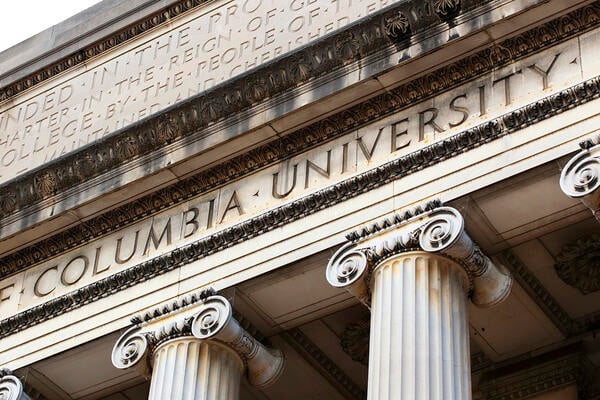
    Columbia University’s acting president says the institution is incorporating the controversial International Holocaust Remembrance Alliance definition of antisemitism into the Office of Institutional Equity’s work. That office investigates discrimination complaints against students and employees.

    “Formally adding the consideration of the IHRA definition into our existing anti-discrimination policies strengthens our approach to combating antisemitism,” Claire Shipman said in a statement Tuesday announcing “additional commitments to combatting antisemitism.”

    The IHRA, which calls its definition a “working definition,” says antisemitism “might include the targeting of the state of Israel, conceived as a Jewish collectivity. However, criticism of Israel similar to that leveled against any other country cannot be regarded as antisemitic.”

    It also says antisemitism might include “comparisons of contemporary Israeli policy to that of the Nazis” or “claiming that the existence of a State of Israel is a racist endeavor.”

    Columbia’s leaders, like those at Harvard University, have been negotiating with the Trump administration to restore funding the federal government said it froze over alleged campus antisemitism. Harvard announced in January that it would start using the IHRA definition when evaluating complaints of antisemitic harassment or discrimination—before its public war with the Trump administration began.

    In a statement, Afaf Nasher, executive director of the Council on American-Islamic Relations’ New York chapter, called Columbia’s move “an attack on free speech” and a “shameless weaponization of antisemitism in order to stifle the ability of students to speak out against the ongoing genocide of Palestinians by the Israeli government.”

    Shipman also announced that Columbia would not “recognize or meet with the group that calls itself ‘Columbia University Apartheid Divest’ (CUAD), its representatives, or any of its affiliated organizations. Organizations that promote violence or encourage disruptions of our academic mission are not welcome on our campuses and the University will not engage with them.”

    Source link

  • F-1, J-1 Student Visa Issuances Dropped in May

    F-1, J-1 Student Visa Issuances Dropped in May

    The U.S. Department of State issued 12,689 fewer F-1 visas in May 2025 compared to the May before, which could forecast a decline in international students able to attend U.S. universities this fall.

    Recently published data from the State Department shows a 22 percent drop in F-1 visas issued across the world and a 13 percent decline in J-1 visas.

    While visa issuances can help predict international student enrollment trends, they don’t tell the full story, said Rachel Banks, senior director for public policy and legislative strategy at NAFSA, the association of international educators. Still, the trend line isn’t positive.

    “We’re not really going to know until we get through September to know everyone who arrives, to know what the enrollment really looks like,” Banks said. “But it’s certainly not encouraging.”

    Over the past few months, President Donald Trump has cracked down on international students via arrests, travel bans and revocations of legal status. Those moves and other executive orders could affect the number of F-1 and J-1 visas issued.

    In May, the administration said it would revoke visas from Chinese nationals who have ties to the Chinese Communist Party. The number of Chinese nationals issued a F-1 visa in May declined by 15 percent (or about 2,578 students). The State Department also paused visa interviews in late May while the agency developed a policy to screen international students’ social media profiles. Interviews resumed in June once the policy was in place.

    The interview pause may have contributed to but cannot fully explain the decline in visa issuances, said Finn Reynolds, head of market research at Lawfully, a legal tech start-up focused on immigration.

    The State Department doesn’t publish the number of visa applications or interviews it engages in, which means the decline could be tied to a decreased demand or slower processing by the department, Reynolds added. A May 27 survey by Study Portal found student interest in studying in the U.S. has dropped to its lowest point since COVID-19, with fewer students interested in U.S. programs and instead considering other English-speaking nations such as the U.K. or Australia.

    Additionally, the State Department doesn’t share daily visa issuance numbers, meaning the drop could be tied solely to the pause in the final week of May, Banks said. The connection, over all, is unclear.

    The data also points to the effect of travel restrictions on students from certain nations. The Trump administration banned visitors from 12 countries and implement heightened restrictions for seven other countries in June. The May numbers show a nearly 150 percent decline in F-1 visa issuances (or 451 visas) and a 105 percent decline in J-1 issuances (157 visas) to citizens from the impacted nations, even before the ban took place.

    One factor not reflected in the data is the number of students returning to their institutions who already hold visas. Students don’t need to receive a new visa if they remain in the U.S.; they only need one when traveling in and out of the country. Given the disruption to Student Exchange and Visitor Information System statuses in April, many students chose to remain in the U.S. over their summer break, Banks said.

    Reynolds expects to see a further drop in visa issuances for June and July, because social media vetting procedures result in fewer appointment slots.

    Students in China, Ghana, India, Japan, Niger and Nigeria have had the most trouble getting appointments, according to NAFSA members.

    “We’re halfway through July, and there’s still students who are struggling to get an appointment; that’s troubling,” Banks said.

    Future policies could also bottleneck the visa pipeline for international students. A proposed rule at the Office of Management and Budget would end duration-of-stay policies and instead implement a fixed date for how long students can remain in country on their visa.

    “We’re very concerned that if that were to go through, that sort of adds to further disruptions and hurdles that students have to jump over, that then gives students more reason to say, ‘You know, this seems like a hassle, this seems like I’m not welcome, I’m going to find another opportunity to pursue,’” Banks said.

    Enrollment Declines Loom

    Colleges and universities are already anticipating declines in their international student populations. The Institute of International Education found that 40 percent of institutions projected declines in their undergraduate population of international students, and 49 percent anticipated a drop in graduate student populations.

    A NAFSA survey of about 150 members institutions this summer found 78 percent of institutions predict a decline in both undergrad and graduate international students.

    Each year, institutions enroll 1.1 million international students, about 6 percent of all college students in the U.S.

    Calculations by The Financial Times, published last week, found that a decline of even 10 percent in international student enrollment would cost U.S. colleges and universities $3 billion in revenue. A significant portion of this loss would be in tuition revenue; a 10 percent drop would result in a $900 million decrease in tuition dollars.

    Source link

  • Wins and Losses of the Reconciliation Bill

    Wins and Losses of the Reconciliation Bill

    Kevin Dietsch/Getty Images

    It’s been six months since the second Trump administration took office, and in that time it has radically changed the policy around federal student loans, grants and college accountability. With the One Big Beautiful Bill Act now signed into law, Inside Higher Ed’s editor in chief, Sara Custer, spoke with news editor Katherine Knott about what’s in the bill and the outcome of the sector’s efforts to influence the massive piece of legislation. 

    In a recent episode of The Key, Inside Higher Ed’s news and analysis podcast, they also checked in on Harvard and Columbia’s negotiations with the administration and shared what they’ll be looking out for in the next six months. 

    Source link

  • China “Will Blow Us Away” if Trump Destroys U.S. Universities

    China “Will Blow Us Away” if Trump Destroys U.S. Universities

    The first Nobel Prize–winning scientist to join a White House cabinet, Steven Chu made history when he became Barack Obama’s energy secretary in 2009. But his move to Washington cost him an incredible $300 million.

    “I joined the Nvidia board in 2004, before the company took off, but I had to sell my shares in 2009 when I joined government,” Chu said about his early involvement in the microchip firm that recently became the world’s most valuable company with a $4 trillion capitalization.

    “At the time Nvidia was a small graphics company, but there were rules about conflict of interest so I had to sell,” he told Times Higher Education. With Nvidia’s stock rising 22,000 percent in the past decade alone, Chu’s stake would be worth $300 million, he said.

    Nvidia’s astonishing rise has amazed the stock market in recent years, but Chu, who won the Nobel Prize in physics in 1997, felt the company had huge promise when he joined.

    “When Jenson Huang [Nvidia’s founder] told me about developing this high-level chip, I said, ‘If you do that, this computer will be at the heart of every supercomputer in the world.’ And he did it,” recalled Chu.

    Sanguine about his lost wealth, Chu’s main takeaway from Nvidia is not his own misfortune. Instead, he worries that this American success story—co-created by a Taiwanese-born Stanford graduate, employing foreign-born engineering talent—might not have been able to happen today given the double whammy faced by U.S. academia: massive cuts to federal science budgets and an immigration crackdown deterring many students, particularly from China, from applying to U.S. institutions.

    “Trump wants to cut science budgets by half or more and reduce the number of foreign postdocs—particularly from China,” explained Chu, speaking earlier this month at the annual Lindau Nobel Laureate Meeting in southern Germany.

    “That’s a problem because if you go to any major research university, you’ll find about a third of researchers are East Asian.”

    Chu’s own parents—born and educated in China before moving to the Massachusetts Institute of Technology in the 1940s—are a good example of how this brain gain has worked in America’s favor. “When the Communists took over, they couldn’t go back, but this is how America got many of its best scientists and engineers—as refugees from Germany, Italy and China.”

    “That’s true for business, too—many of America’s captains of industry, from Jenson Huang to [ex-Intel boss] Andy Grove and Alexander Graham Bell, were immigrants,” he said.

    Reflecting on how America “didn’t become a scientific superpower until World War II,” Chu said he believes the 1930s are instructive in other ways. “In this era America took what was innovative and applied it to industry. That allowed places like Ford to take what Volkswagen and Peugeot was doing but do it cheaper, but good enough to work,” he said.

    “That is what China is doing to America now—for instance, taking the electric car and making it cheaper and now better. What we did to Europe, China and now Korea are doing to us,” he said.

    Traditionally, the U.S. has been able to stay ahead thanks to its education system, in particular its generously funded world-leading research universities. With that system under attack, however, that advantage is weaker, he said. “Something magical happens at Ph.D. level in U.S. universities—we teach creativity. China is trying to learn this … and then apply it to their industrial sector. When they do, they will blow us away.”

    Without America’s outstanding universities and with its foreign talent pool diminished, China’s path to global dominance will be immeasurably easier, predicted Chu. “Trump is perfectly willing to destroy institutions that any country in the world would give its eyeteeth for,” he said.

    Unusually for a Nobel laureate, Chu’s prize did not mark the peak of his scientific achievements. He led a committee that recommended the creation of ARPA-E, a science agency that has funded more than $4 billion in battery, nanotech and other types of energy research since 2009, generating spin-out companies worth more than $22 billion.

    Meanwhile, his time as energy secretary saw further investment, including the funding of an experimental $1 billion carbon-capture plant in Louisiana—a stark contrast to the “drill, baby, drill” priorities of the current administration. Obama also credited his expertise as a major reason why the cleanup after the Deepwater Horizon disaster in 2010—the biggest oil spill in history—was successful.

    And there are his brushes with some of the 21st century’s biggest tech companies, even if Nvidia wasn’t the only big fish he missed out on. “I knew [financier] Richard Blum, who said he could get me on the board of Apple— I didn’t say yes because I had a lot of nonprofit activities, but that was 2006, the year before the iPhone was launched,” he reflected.

    Not that he thinks the money would have made much difference. “If I was worth a couple of hundred million dollars, would I have stopped doing science and just bought sports cars and houses? I hope not.”

    Source link

  • Americans Recognize Nuances of Higher Ed’s Value

    Americans Recognize Nuances of Higher Ed’s Value

    While the Trump administration has painted a bleak picture of the higher education sector as a costly enterprise that burdens taxpayers and pushes leftist ideologies, new survey data shows that most Americans—regardless of their political leanings—still value it.

    “Increasingly, higher ed is being cast as elite, expensive and not connected with everyday Americans,” said Sophie Nguyen, senior policy manager with the higher education team at New America, the left-leaning think tank that published its annual Varying Degrees survey on Wednesday. “There’s a significant disconnect in the narrative about what higher ed is” and how it’s perceived.

    Capturing the American public’s views on the purpose of higher education drove many of the questions Nguyen and her colleagues asked 1,631 respondents in March for the ninth iteration of the survey.

    After reaching a low point last year, the data shows that satisfaction with higher education is on the rise: 40 percent of respondents—including 42 percent of both Republicans and Democrats—reported that higher education is “fine as it is,” compared to 36 percent who said the same last year.

    “We see a lot of alignment between Democrats and Republicans, something we haven’t heard a lot about,” Nguyen said, describing such data points as “the common ground” colleges can tap into when defending their worth to both consumers and lawmakers.

    New America’s findings are in line with a poll Gallup also released Wednesday in partnership with the Lumina Foundation, which shows that 42 percent of Americans surveyed said they have a “great deal” or “quite a lot” of confidence in higher education, compared to a low of 36 percent in 2024 and 2023—though it’s still far from the nearly 60 percent confidence peak in 2015. The share of people who reported “very little” or no confidence is also on the decline, falling from 32 percent last year to 23 percent this year. Although Democrats reported much higher confidence in higher education institutions, Republican confidence in both four- and two-year colleges rose by 11 and 12 percentage points, respectively, compared to last year.

    Data visualization of change in confidence in four- and two-year colleges, by political party.

    Respondents cited the economic and social benefits of higher education, its standing at the forefront of innovation, the quality of education and training—both for jobs and exposure to different viewpoints—as drivers of the uptick in their confidence.

    The Trump administration’s war on higher ed may have played a role, said Courtney Brown, Lumina’s vice president of impact and planning.

    “It is possible that we are seeing people in support of the sector because they see so many attacks,” she said. Whatever the reason, she said the new data is positive, and if institutions want to restore confidence to 2015 levels they should consider “how they can build on this moment and show up for students and ensure they’re getting value.”

    Like Gallup’s report, New America’s survey revealed partisan divides as well as agreements. Sixty percent of Republicans said colleges are having a negative impact on the country, while 75 percent of Democrats said they’re having a positive impact. But respondents from both parties were much more aligned on questions about specific aspects of higher ed’s value and purpose.

    While Republican lawmakers pressure universities into proving their return on investment, the vast majority of Americans, including both Republicans and Democrats, believe higher education should function as more than a transaction. They say it should not only equip students with the skills and knowledge to succeed in their chosen fields (97 percent of Democrats; 98 percent of Republicans), but also help students become informed citizens (97 percent of Democrats; 89 percent of Republicans) and critical thinkers (97 percent of Democrats; 92 percent of Republicans).

    “The rhetoric coming from Washington tends to be a caricature of what are some real issues facing college campuses and the sector in general,” Beth Akers, a senior fellow at the right-leaning American Enterprise Institute who focuses on the economics of higher education, said at a media briefing about New America’s survey. While “there’s room for improvement … it’s unfortunate that the rhetoric is empowering misinformation about what institutions are doing.”

    Bar chart of responses to the question "How important do you think it is for colleges and universities to do the following?" Responses are detailed earlier in thes tory.

    Even as Trump and his political allies move to dramatically cut federal funding for university research—which advocates say will devastate university budgets, local economies and progress toward lifesaving research—88 percent of Republicans and 97 percent of Democrats believe it’s important to some degree that colleges and universities conduct research to expand understanding in various subjects.

    Despite political rhetoric that suggests otherwise, American higher education has delivered an array of personal and societal benefits for decades, Lynn Pasquerella, president of the American Association of Colleges and Universities, said during a news briefing on the report.

    “Higher ed continues to be the single most powerful socioeconomic catalyst in America, which is associated not only with higher earnings, but longer productive lives, better physical and mental health, resilience, adaptability, and personal development and fulfillment,” she said. “At the societal level, education drives long-term economic growth for local communities and the nation.”

    More broadly, it “strengthens our democracy,” because it “tends to mitigate or tame authoritarian tendencies” and “reduces individuals’ sensitivities to potential triggers by providing them with psychological protection in the form of self-esteem, personal security and autonomy,” she said. “It fosters a moral imagination—imagining what it’s like to be in the shoes of another, different from oneself—and interpersonal trust.”

    Despite the Trump administration and its allies’ attacks on diversity, equity and inclusion initiatives, the survey data shows that an overwhelming majority of Republicans and Democrats agree that higher education should create an environment where students of all backgrounds feel supported, provide a platform for exploration of diverse ideas and foster cross-cultural understanding.

    Bar chart showing responses to the question "How important do you think it is for colleges and universities to do the following" including "create an environment where students of all backgrounds feel supported" and "provide a platform for exploration of diverse ideas."

    Although New America’s survey suggests that most Americans recognize the layered value of higher education, Republican lawmakers have increasingly focused on both controlling the subjects colleges can teach and research and making it harder for students and colleges to access federal funding.

    The sweeping policy bill Trump signed into law earlier this month requires colleges to show that their graduates earn more than an adult with only a high school diploma or risk losing access to federal loans. Trump has also proposed billions of dollars in cuts to education funding, including eliminating all federal support for college-access programs that have long helped low-income, first-generation and students with disabilities navigate higher education.

    While Republicans and Democrats are divided on who they think should be primarily responsible for paying for college—76 percent of Democrats believe the government should; 67 percent of Republicans believe students should—respondents from both parties cited cost as the single biggest barrier to enrolling in or finishing college.

    At the same time, 75 percent of respondents over all (91 percent of Democrats and 58 percent of Republicans) said the federal government should spend more on making college more affordable.

    Hironao Okahana, vice president and executive director of the Education Futures Lab at the American Council on Education, said this data offers a ray of optimism for the higher education sector navigating an onslaught of partisan attacks from Republican policymakers.

    “The public is seeing higher education as a sector beyond some of the sound bites we’re hearing,” he said. “They’re seeing that it has more nuance and texture, and that there’s not just one way higher education can contribute to society.”

    Source link

  • Reflections on the demand for higher education – and what UCAS data reveal ahead of Results Day 2025

    Reflections on the demand for higher education – and what UCAS data reveal ahead of Results Day 2025


    This HEPI blog was kindly authored by Maggie Smart, UCAS Director of Data and Analysis

    As we pass the 30 June deadline for this year’s undergraduate admissions cycle, UCAS’ data offers an early view of applicant and provider behaviour as we head into Confirmation and Clearing. It also marks a personal milestone for me, as it’s my first deadline release since rejoining UCAS. I wanted to take a deeper look at the data to reflect on how much things have changed since I worked here 10 years ago.

    Applicant demand has always been shaped by two key elements: the size of the potential applicant pool, and their propensity to apply. Since I last worked at UCAS in 2016, these two factors have continuously interchanged over the better part of the past decade – sometimes increasing or decreasing independently but often counterbalancing each other. Let’s take a look at how things are shaping up this year.

    Overall, by the 30 June there have been 665,070 applicants (all ages, all domiciles) this year, compared to 656,760 (+1.3%) in 2024. This is an increase in applicants of over 64,000 since UCAS last reported in January, although the profile of these additional applicants is very different. At the January Equal Consideration Deadline (ECD), over half of the total number of applicants were UK 18-year olds, who are the most likely group to have applied by that stage in the cycle. They represent just 8% of the additional applicants since January, among a much larger proportion of UK mature and international students.

    As we saw at January, the differences in demand for places between young people from the most advantaged (POLAR4 Quintile 5) and most disadvantaged (POLAR4 Quintile 1) areas at June remain broadly the same as last year – with the most advantaged 2.15 times more likely to apply to HE than those from the least advantaged backgrounds, compared to 2.17 last year.

    UK 18-year-old demand

    Demand for UK higher education (HE) has long been shaped by the 18-year-old population – the largest pool of applicants. Despite the well-known challenges facing the HE sector at present, at the 30 June deadline we see record numbers of UK 18-year-old applicants, with 328,390 applicants this year – up from 321,410 (+2%) in 2024. This trend was almost entirely locked in by the January deadline, given the vast majority of UK 18-year-old applicants have applied at this stage in the cycle.

    During my previous tenure at UCAS, the size of the UK 18-year-old population had been falling year on year but from 2020, it began to increase. This continued growth drives the increase in UK 18-year-old applicant numbers we have observed in recent cycles. But when we look at their overall application rate to understand the strength of demand among this group, the data shows a marginal decline again this year – down to 41.2% from 41.9% in 2024. The historically strong growth in the propensity of UK 18-year-olds to apply for HE, which we’ve observed across the last decade, has clearly plateaued.

    This could be due to a range of factors, such as young people choosing to take up work or an apprenticeship, or financial barriers. We know that cost of living is increasingly influencing young people’s decisions this year, with pre-applicants telling us that financial support – such as scholarships or bursaries – ranks as the second most important consideration for them (46%), followed closely by universities’ specific cost-of-living support (34%).

    Interesting to note is the number of UK 19-year-old applicants. When separating the data to distinguish 19-year-olds applying for the first time (as opposed to those reapplying), there has been a decent increase – from 46,680 last year to 48,890 this year (+4.7%). For many years, the number of first-time UK 19-year-old applicants had been falling year on year, but since 2023 this trend has started to reverse. This suggests that demand among young people may be holding up as they decide to take a year out before applying to university or college.

    Mature students

    For UK mature students (aged 21+), the picture looks very different. The number of mature students applying to university or college ebbs and flows depending on the strength of the job market, so since I was last at UCAS, we have typically seen applications decrease when employment opportunities are strong and vice versa. Alongside fluctuations linked to the employment market, rising participation at age 18 means there is a smaller pool of potential older applicants who have not already entered HE. The falling demand from mature students continues in 2025, although in recent years there have been small but significant increases in the volume of mature applicants applying after the 30 June deadline and directly into Clearing. 

    As of this year’s 30 June deadline there have been 86,310 UK mature (21+) applicants, compared to 89,690 (-3.8%) in 2024, meaning a fall in demand compared to the previous year at this point in the cycle for the fourth year in a row. However, whereas at the January deadline mature applicants were down 6.4% compared to the same point last year, at June the figure is only 3.8% down showing some recovery in the numbers. This is another indication that mature students are applying later in the cycle. While it remains too early to say whether we will see continued growth in mature direct to Clearing applicants in 2025, last year 9,390 UK mature students who applied direct to Clearing were accepted at university or college, an increase of 7.4% on 2023 and 22.7% higher than 2022.

    International students

    When looking at the UCAS data through the lens of international students, the landscape has changed significantly since 2016. Brexit led to a sharp decline in EU applicants, offset by strong growth elsewhere, the pandemic caused disruption to international student mobility, and we’ve seen intensified global competition, shifting market dynamics and geopolitics which are increasingly influencing where they choose to study. This year we’re seeing growth once more, with 138,460 international applicants compared to 135,460 in 2024 (+2.2%) – although this stood at +2.7% at January. It should be noted that UCAS does only see a partial view of undergraduate international admissions (we tend to get a more complete picture by the end of the cycle) and we don’t capture data on postgraduate taught and research pathways.

    Interest among Chinese students in UK education has held firm since my time at UCAS, and this year we’re seeing a record number of applicants from China – 33,870, up from 30,860 (+10%) in 2024. This year’s data also shows increases in applicants from Ireland (6,060 applicants, +15%), Nigeria (3,170 applicants, +23%) and the USA (7,930 applicants, +14%). 

    Offer-making

    We are releasing a separate report on offer-making this year, alongside the usual data dashboard for applications. This additional data covers offers and offer rates over the past three years, from the perspective of applicants according to their age and where they live, and from the perspective of providers by UK nation and tariff group.

    What we’re seeing as the natural consequence of increased applications this year is an uplift in offers. Universities have made more offers than ever before this year, with 2.0 million main scheme offers to January deadline applicants overall, largely driven by the rise in UK 18-year-olds applicants (who are the most likely to use their full five choices while applying). This record high surpasses the previous peak of 1.9 million offers set last year (+3.8%).

    While the main scheme offer rate has increased across all provider tariff groups, the most notable uplift is for higher tariff providers – up 3.2 percentage points to 64.4% this year.  Despite the increase in offer rates, higher tariffs do still remain the lowest, partly due to being the most selective institutions. Offer rates by medium and lower tariff providers have also increased, by 0.9 percentage points to 77.0% among medium tariff providers, and by 1.5 percentage points to 81.7% among lower tariff providers. This means that, among those who applied by the Equal Consideration Deadline in January, 72.5% of main scheme applications received an offer this year, also a record high, and 1.8 percentage points higher than in 2024.

    It’s worth noting that we’ll be updating our provider tariff groupings in time for the 2026 cycle, to reflect changes in the higher education landscape.

    Looking ahead

    For students who are intent on going to university or college, it makes this a very good year, with more opportunities than ever before. A record 94.5% of students who applied by the January deadline will be approaching the critical summer period having received at least one offer. High levels of offer-making by universities and colleges typically translates into more acceptances, which should give applicants plenty of confidence heading into results day. 

    I’m delighted to be back at UCAS, and my team will continue to dig further into the data as Confirmation and Clearing draws nearer to see how demand translates into accepted places come results day.

    UCAS

    UCAS, the Universities and Colleges Admissions Service, is an independent charity, and the UK’s shared admissions service for higher education.

    UCAS’ services support young people making post-18 choices, as well as mature learners, by providing information, advice, and guidance to inspire and facilitate educational progression to university, college, or an apprenticeship.

    UCAS manages almost three million applications, from around 700,000 people each year, for full-time undergraduate courses at over 380 universities and colleges across the UK.

    UCAS is committed to delivering a first-class service to all our beneficiaries — they’re at the heart of everything we do.

    Source link

  • Jessica Berger | Diverse: Issues In Higher Education

    Jessica Berger | Diverse: Issues In Higher Education

    Jessica BergerJessica Berger has been appointed Executive Vice President and Chief Advancement Officer at Chapman University.

    Berger brings nearly two decades of advancement and fundraising leadership experience across multiple institutions. Most recently, she served as vice president for university advancement and executive director of the foundation at California State University, San Marcos (CSUSM), where she led a team of nearly 50 professionals across fundraising, alumni and donor relations, marketing and communications, events and government relations.

    Prior to CSUSM, Berger spent seven years at Harvey Mudd College, rising to the role of assistant vice president for development. Earlier in her career, Berger contributed to fundraising efforts at Polytechnic School in Pasadena during a $93 million campaign, raised private support for a children’s home in Kenya and served in the U.S. House of Representatives as a congressional staff member focused on constituent advocacy.

    Berger earned a Master of Social Work from Cleveland State University and a Bachelor of Arts in Psychology from Wittenberg University, both with honors.


    Source link

  • Editorial: The Society for Research into Higher Education in 1985

    Editorial: The Society for Research into Higher Education in 1985

    by Rob Cuthbert

    In SRHE News and Blog a series of posts is chronicling, decade by decade, the progress of SRHE since its foundation 60 years ago in 1965. As always, our memories are supported by some music of the times (which had improved somewhat after the nadir of 1975).

    In 1985 Ronald Reagan became the US President, which seemed improbable at the time, but post-Trump now appears positively conventional – that joke isn’t funny any more. Reaganomics fuelled the present US multi-$trillion national debt; it was the era of supply-side economics. President Reagan was of course popular with UK Prime Minister Margaret Thatcher. She was by then at her peak after the 1982 Falklands War restored her own popularity, helping her in 1985 to bring an end to the miners’ strike and to ride out riots in Handsworth in Birmingham and Broadwater Farm in London.

    Vodafone enabled the first commercial mobile phone call in the UK; the BBC micro was the computer of choice for schools. Beverley Hills Cop was one of the top movies in 1985, with Eddie Murphy featured by the Pointer Sisters as they sang “I don’t wanna take it any more”, a 1980s theme song for some in universities. Globalism was in vogue; everybody wants to rule the world. International pop stars came together to sing We are the world in January and then perform at the Live Aid concert at Wembley in July with Queen’s legendary showstopping performance. Nintendo prepared to conquer the world with the launch of Super Mario, but global multinationals took a hit with one of the biggest marketing blunders ever, as Coca-Cola changed its formula, released New Coke in April, then went back to the original less than three months later.

    Higher education in 1985

    Global HE had its own marketing and governance issues after what Guy Neave (then UCL, now Twente) described as a period of consolidation from 1975 to 1985:

    “ … it was during this decade … that these systems assumed the level of dealing with mass higher education … By the late 1980s or 1990s … there are certain countries which anticipate participation rates in higher education of over 30% (Neave, 1984a). Highest amongst them are Denmark and Finland with 40% of the appropriate age group, the Federal Republic with 35% and France with 33%. … In effect, transition to mass higher education gave rise to additional bodies to control, monitor and hold accountable a sector of increasing significance in government social expenditure. Such intermediary agencies stand as a response to the advent of mass higher education, not an anticipation of it.”

    This was prescient: who’s gonna tell you things aren’t so great? Later Paul Windolf (Heidelberg) would take a very long view in his comparative analysis of Cycles of expansion in higher education 1870-1985 in Higher Education (1992:23, 3-19): “For most countries the data confirm the theory of ‘status competition’ (perverse effects): universities expand particularly fast during times of an economic recession … The human capital theory is not confirmed by this longitudinal analysis.” However human capital theory dominated policy thinking in many parts of the world, especially the UK, as Adam Matthews (Birmingham) argued in his blog for Wonkhe on 12 June 2024:

    “Despite so much adversarial and ideologically polarised politics in the 1980s domestically and internationally, we do find consensus around higher education and universities. Growth was still on the agenda. As the country found itself economically struggling, teaching and research was seen as the solution rather than the problem, particularly around research findings being applied to real world issues.”

    UK HE in 1985: a ferment of planning

    In that decade of consolidation after 1975, in the UK no new universities were created until the 1980s. By 1985 there were just two: the University of Buckingham and the University of Ulster. Expansion of UK HE in the 1980s was driven by the polytechnics, especially after the UGC’s unevenly distributed and dramatic financial cuts of 1981. The universities and UGC had tried and failed to protect the so-called ‘unit of resource’, the level of funding per full-time equivalent (FTE) undergraduate student, and the UGC’s established pattern of quinquennial funding had been reluctantly abandoned. Neave noted that:

    “Strictly speaking, university finance in the United Kingdom did not involve change to the basic unit of resource, an issue raised only under dire economic pressure in the period following the 1981 reductions in university budgets. Nor was the abandonment of quinquennial funding a response to mass higher education per se, so much as to the country’s parlous economic status.”

    The UK economy and HE were in Dire Straits: there was no money for nothing. The rapid expansion of the polytechnics, driving down costs, was the dominant influence on policy. A National Advisory Body for Local Authority Higher Education (NAB) had been set up on 1 February 1982 to advise the Secretary of State for Education and Science on matters relating to academic provision and the approval of advanced courses, reconstituted as the National Advisory Body for Public Sector Higher Education (PSHE) from 1 February 1985. In 1985 there were 503,000 students in PSHE in Great Britain, of whom 214,000 were part-time. Universities had 291,000 full-time and 114,000 part-time students. PSHE in England included 29 polytechnics, 30 major colleges, 21 voluntary colleges, and 300 others. In Wales there was one polytechnic, 7 major colleges and 16 others. The Further Education Act 1985 gave more powers to local authorities, who still governed the whole of PSHE, to supply goods and services, especially teaching and  research, through educational institutions.

    Clive Booth, principal private secretary to the Secretary of State for Education and Science since 1975, later to become Director of Oxford Polytechnic, foretold government policy in 1987, reviewing HE planning since 1965 in Higher Education Quarterly:

    “The development of a planning body for public sector higher education in England has created the potentiality for an integrated planning approach to university and non-university higher education.”

    Booth had been involved in the production of a series of significant DES papers: the 1978 Report of the Working Group on the Management of Higher Education in the Maintained Sector (the Oakes Report); in 1981 Higher Education in England outside the Universities: Policy, Funding and Management, a consultative document; and finally the 1985 Green Paper The Development of Higher Education into the 1990s. We saw the present, he saw the whole of the Moon.

    The Green Paper followed the notorious Jarratt Report of 1985, which sent shock waves through the university sector. Paul Greatrix (Nottingham), a long-serving Registrar and Secretary, wrote on his Wonderful (and Frightening) World of HE blogmuch later that:

    “Looking back from 2015, some of these observations and recommendations do seem quite tentative. But in 1985 they were dynamite. After the extraordinary and unprecedented cuts of 1981 and Keith Joseph’s unsuccessful approach to introduce fees in 1984 this seemed like another attack on universities.”

    The widespread view in UK HE at the time was, in the words of the Style Council, “You don’t have to take this crap”, but the policy walls did not come tumbling down. Greatrix cited Geoffrey Alderman’s acerbic review of Malcolm Tight’s 2009 book Higher education in the United Kingdom since 1945 for Times Higher Education:

    “… to my mind one of the most damaging inquiries into higher education over the last half-century was the Jarratt report … a mischievous and malevolent investigation (which, inter alia, popularised if it did not invent the notion that students are “customers”, which foisted on the sector the delusion that factory-floor “performance indicators” are entirely suited to a higher-education setting, and which led to the abolition of academic tenure and the concomitant triumph of managerialism in the academy) … Jarratt was self-inflicted. The inquiry was not a government creation. It was established by the Committee of Vice-Chancellors and Principals. … Jarratt was betrayal from within.”

    For Greatrix:

    “Looking back these do not look like the proposals filled with malevolence or mischief. Many of these changes were inevitable, most were long overdue, a lot would have happened in any case. … From today’s viewpoint it looks more like that what Jarratt offered were some pointers and directions in this strange new terrain.”

    With the benefit of hindsight it can be argued that in 1985 UK universities were unduly concerned, perhaps even obsessed, with what might have been lost from a supposed ‘golden age’ of autonomy. But nothing is so good it lasts eternally. The wreckage of the Titanic was finally located in 1985, another lost cause once assumed unsinkable. Universities were, like Bonnie Tyler, holding out for a hero, but Tina Turner was right, after the 1981 cuts: “Out of the ruins, out from the wreckage, can’t make the same mistake this time”.

    The Green Paper, still Green and not White, announced by Secretary of State Keith Joseph in May 1985, came as the preliminary conclusion to this ferment of planning. He said in Parliament that “… it is vital for our higher education to contribute more effectively to the improvement of the performance of the economy. This is not because the Government place a low value on the general cultural benefits of education and research or on study of the humanities.” But HE mostly heard only the first sentence, and thought we were on the road to nowhere, rather than seeing the opportunities. The Thatcher White Paper Higher Education: Meeting the Challenge would not appear until 1987, and NAB and the UGC would  survive only until 1988. REO Speedwagon captured the mood: Can’t fight this feeling any more.

    SRHE and research into higher education in 1985

    The chairs of SRHE from 1975-1985 included some great names: Lewis Elton (Surrey) 1977-78, Gareth Williams (Lancaster, later London Institute of Education) 1978-80 (and 1986-88), Donald Bligh (Exeter) 1980-82, David Warren-Piper (London Institute of Education) 1982-84, and Michael Shattock (Warwick, later London Institute of Education/UCL) 1984-86. The outstanding highlight of the decade was a major review into higher education organised by the Society. As Gareth Williams wrote:

    “With the help of a substantial grant from the Leverhulme Trust, the Society for Research into Higher Education set up a comprehensive programme of study into the future of higher education which I directed. The aim of the programme was not to undertake new research but rather to focus recent research findings and the views of informed people on the major strategic options likely to be available to higher education institutions and policy making bodies in the 1980s and 1990s.”

    The programme ran from 1980 to 1983 and led to nine themed reports, an overall review and a final report. SRHE had, in Michael Shattock’s words:

    “… established itself as an important voice in policy. It was addressed by higher education Ministers (William Waldegrave 1982, Peter Brooke 1983), at an SRHE/THES Conference on the Green Paper by Sir Keith Joseph the Secretary of State, in 1985. Most unusually it received a visit from the former Prime Minister, Edward Heath, in February 1983 who wished to seek the Society’s advice about higher education.”

    SRHE might have hoped like Madonna to be Into the Groove policywise, but the Prime Minister had a list of questions which were more about living in a material world:

    • To what extent (if any) has the balance between disciplines been inappropriate for Britain’s economic needs?
    • How far should the labour market determine the shape of higher education?
    • Are research and teaching indivisible in higher education if standards are to be maintained?
    • Is it better to have a few research institutions or many, given financial constraints?
    • Is the binary line appropriate?
    • Are the links between HE and industry poor by comparison with other major countries?
    • What are the merits of shorter courses – two years liberal arts followed by two years vocational?”

    Shattock observed:

    “The interest of these questions is both the extent to which the issues were addressed and answered in the Leverhulme Programme and the fact that their underlying assumptions formed the basis of the 1985 Green Paper. It was clear that the Society was at the sharp end of discussions about the future policy.”

    The Leverhulme findings were perhaps just too balanced for the times – can’t get there from here. Shattock as SRHE chair initiated an Enquiry on ‘Questions of Quality’ which became the theme of SRHE’s 1985 annual conference, and one of SRHE’s founders, Graeme Moodie (York), edited a 1986 bookStandards and Criteria in Higher Education. Shattock also established the influential SRHE Policy Forum, a seminar involving leading academics, civil servants and HE managers which met five times a year under the alternate chairmanship of Michael Shattock and Gareth Williams. 

    Nevertheless it was not long after 1985 that a special meeting of SRHE’s Council at the FE Staff College received a report, probably from its administrator Rowland Eustace, saying: “general knowledge and understanding of the Society remains relatively low in higher education despite attempts over recent years to give the Society a higher profile”. Perhaps still a little out of touch, hoping for glory days, still running up that hill, hoping or even believing that things can only get better.

    Rob Cuthbert is editor of SRHE News and the SRHE Blog, Emeritus Professor of Higher Education Management, University of the West of England and Joint Managing Partner, Practical Academics. Email [email protected]. Twitter/X @RobCuthbert.

    Author: SRHE News Blog

    An international learned society, concerned with supporting research and researchers into Higher Education

    Source link

  • Confidence in higher education increases for the first time in a decade

    Confidence in higher education increases for the first time in a decade

    This audio is auto-generated. Please let us know if you have feedback.

    Dive Brief:

    • Americans’ confidence in higher education has increased for the first time in a decade, according to research released Wednesday by Gallup and the Lumina Foundation.
    • Among those surveyed, 42% of adults expressed “a great deal” or “quite a lot” of confidence in the sector, compared with 36% in 2023 and 2024. The percentage of respondents with little to no confidence declined from 32% last year to 23% in 2025.
    • However, the share of adults with high confidence in higher education is still well below 57%, the share who held those views when Gallup first posed the question in 2015.

    Dive Insight:

    Along with breaking a decadelong trend, Wednesday’s findings are noteworthy because they come amid increasing conservative attacks on the sector and continued questioning of the value of college.

    Researchers polled just over 1,400 adults via phone from June 2 to 26.

    When asked to explain their responses, 30% of participants confident in higher education pointed to the value of being educated. And 24% said colleges provide good training, with some respondents citing learning to think for oneself and others citing the ability to appreciate different viewpoints.

    Other reasons were named more frequently than they were in previous years. Last year, 5% of surveyed adults cited the innovations higher education fosters as inspiring confidence. This year, that share jumped to 15%. And 14% said U.S. colleges are some of the best in the world, up from 7% last year.

    In contrast, the share of respondents who pointed to the strength of college instructors and administrators declined from 7% last year to 4% in 2025. And just 1% of adults said college is available to anyone who wants to further their education, down from 2% the previous year.

    More than a third of respondents who said they lacked confidence in higher ed, 38%, cited concerns about political agendas, up from 28% in 2024. Those who had little confidence in the sector also expressed concerns about the cost of college and institutions not focusing on and teaching the “right things,” though mentions of both reasons declined from 2024 to 2025.

    When researchers asked all participants what would increase their confidence in higher education, they said colleges could focus more on practical job skills, lower their costs, and remove politics from the classroom.

    Confidence increased among respondents across the political spectrum, researchers found. But Republicans — who drove much of the decline in confidence in the sector over the past decade — continue to hold more negative views of higher education.

    Among Democrats, 61% expressed confidence in higher ed, up from 56% last year. By comparison, 26% of Republicans said the same, an increase from 20% in 2024. 

    About 2 in 5 respondents who identified as politically independent, 41%, expressed confidence in higher ed. That’s up from 35% last year. 

    Republicans are more likely to express confidence in two-year colleges than four-year colleges, the research found. Almost half of surveyed adults in the party, 48%, expressed confidence in two-year institutions, while just over a quarter, 26%, said the same of four-year colleges.

    A majority of surveyed Democrats had high confidence in both institutional types.

    Source link

  • Mixed Findings on Community Colleges’ Shared Governance

    Mixed Findings on Community Colleges’ Shared Governance

    A new report, released by the American Association of University Professors Tuesday, found mixed results when it comes to community colleges’ shared governance practices.

    The report used data from the AAUP’s inaugural survey of community colleges, conducted in partnership with the Center for the Study of Community Colleges. In the first survey of its kind, faculty leaders at 507 community colleges were asked to assess their institutions’ shared governance practices in 26 different decision-making areas; faculty senate chairs and governance officials responded at 59 colleges.

    The institutions excelled in some areas and proved lackluster in others. For example, at most institutions surveyed, especially those with tenure systems, faculty had an AAUP-recommended level of authority over decisions about curricula, salary policies, teaching assignments, faculty searches and evaluations, and tenure and promotion standards. But when it came to other decision-making areas—like budgets, provost selection, buildings and strategic planning—faculty were given little say, according to the report.

    Community college professors also participated less than faculty at four-year institutions in most academic and personnel-related decisions, though they played more of a role in decisions about salary policies. The report speculated that the prevalence of community college faculty unions may account for the difference. At higher ed institutions where faculty engage in collective bargaining, faculty tend to have more authority in salary policies and teaching loads. At community colleges, unionized faculty are also more engaged in decisions about full-time, non-tenure-track faculty promotion.

    “Community college–based faculty members and administrators can use the tools described in this report to assess governance practices at their institu­tions and compare those practices with national trends to identify areas where levels of faculty authority might be strengthened,” the report says. “Given the current political climate, economic uncertainty, demographic changes, and chronic underfunding of US higher education, now is the time for community colleges to identify and correct weaknesses in their own shared governance practices.”

    Source link