
Tag: Highest

  • Funding high-quality teacher preparation programs should be the highest priority for policymakers

    Funding high-quality teacher preparation programs should be the highest priority for policymakers

    by Sharif El-Mekki and Heather Kirkpatrick, The Hechinger Report
    November 25, 2025

    By dismantling the Department of Education, the Trump administration claims to be returning control of education to the states. 

    And while states and local school districts are doing their best to understand the new environments they are working in, they have an opportunity amidst the chaos to focus on what is most essential and prioritize how education dollars are spent.  

    That means recruiting and retaining more well-prepared teachers with their new budget autonomy. Myriad factors affect student learning, but research shows that the primary variable within a school’s control is the teacher. Other than parents, teachers are the adults who spend the most time with our children. Good teachers have been shown to singularly motivate students.  

    And that’s why, amidst the chaos of our current education politics, there is great opportunity. 

    Until recently, recruiting, preparing and retaining enough great teachers has not been a priority in policy or funding choices. That has been a mistake, because attracting additional teachers and preparing them to be truly excellent is arguably the single biggest lever policymakers can use to demonstrate their commitment to high-quality public schools. 

    Related: Interested in innovations in higher education? Subscribe to our free biweekly higher education newsletter. 

    Great teachers, especially whole schools full of great teachers, do not just happen. We develop them through quality preparation and meaningful opportunities to practice the profession. When teachers are well-prepared, students thrive. Rigorous teacher preparation translates into stronger instruction, higher K-12 student achievement and a more resilient, equitable education system

    Teachers, like firefighters and police officers, are public servants. We rightly invest public dollars to train firefighters and police officers because their service is essential to the safety and well-being of our communities. Yet teachers — who shape our future through our kids — are too often asked to shoulder the costs of their own preparation. 

    Funding high-quality teacher preparation should be as nonnegotiable as funding other vital public service professions, especially because we face a teacher shortage — particularly in STEM fields, special education and rural and urban schools.  

    This is in no small part because many potential teaching candidates cannot afford the necessary education and credentialing. 

    Our current workforce systems were not built for today’s teaching candidates. They were not designed to support students who are financially vulnerable, part-time or first-generation, or those with caregiving responsibilities.  

    Yet the majority of tomorrow’s education workforce will likely come from these groups, all of whom have faced systemic barriers in accumulating the generational wealth needed to pursue degrees in higher education. 

    Some states have responded to this need by developing strong teacher development pathways. For example, California has committed hundreds of millions to growing the teacher pipeline through targeted residency programs and preparation initiatives, and its policies have enabled it to recruit and support more future teachers, including greater numbers of educators from historically underrepresented communities. 

    Pennsylvania has created more pathways into the education field with expedited credentialing and apprenticeships for high school students, and is investing millions of dollars in stipends for student teachers. 

    It has had success bringing more Black candidates into the teaching profession, which will likely improve student outcomes: Black boys from low-income families who have a Black teacher in third through fifth grades are 18 percent more interested in pursuing college and 29 percent less likely to drop out of high school, research shows. Pennsylvania also passed a senate bill﷟HYPERLINK “https://www.senatorhughes.com/big-win-in-harrisburg-creating-the-teacher-diversity-pipeline/” that paved the way for students who complete high school courses on education and teaching to be eligible for career and technical education credits. 

    At least half a dozen other states also provide various degrees of financial support for would-be teachers, including stipends, tuition assistance and fee waivers for credentialing.  

    One example is a one-year teacher residency program model, which recruits and prepares people in historically underserved communities to earn a mster’s degree and teaching credential.  

    Related: Federal policies risk worsening an already dire rural teacher shortage 

    Opening new pathways to teaching by providing financial support has two dramatic effects. First, when teachers stay in education, these earnings compound over time as alumni become mentor teachers and administrators, earning more each year.  

    Second, these new pathways can also improve student achievement, thanks to policies that support new teachers in rigorous teacher education programs

    For example, the Teaching Academy model, which operates in several states, including Pennsylvania, New York and Michigan, attracts, cultivates and supports high school students on the path to becoming educators, giving schools and districts an opportunity to build robust education programs that serve as strong foundations for meaningful and long-term careers in education, and providing aspiring educators a head start to becoming great teachers. Participants in the program are eligible for college scholarships, professional coaching and retention bonuses.  

    California, Pennsylvania and these other states have begun this work. We hope to encourage other state lawmakers to seize the opportunities arising from recent federal changes and use their power to invest in what matters most to student achievement —teachers and teacher preparation pathways. 

    Sharif El-Mekki is founder & CEO of the Center for Black Educator Development in Pennsylvania. Heather Kirkpatrick is president and CEO Alder Graduate School in California. 

    Contact the opinion editor at [email protected]. 

    This story about teacher preparation programs was produced by The Hechinger Report, a nonprofit, independent news organization focused on inequality and innovation in education. Sign up for Hechinger’s weekly newsletter. 

    This <a target=”_blank” href=”https://hechingerreport.org/opinion-funding-high-quality-teacher-preparation-programs-should-be-the-highest-priority-for-policymakers/”>article</a> first appeared on <a target=”_blank” href=”https://hechingerreport.org”>The Hechinger Report</a> and is republished here under a <a target=”_blank” href=”https://creativecommons.org/licenses/by-nc-nd/4.0/”>Creative Commons Attribution-NonCommercial-NoDerivatives 4.0 International License</a>.<img src=”https://i0.wp.com/hechingerreport.org/wp-content/uploads/2018/06/cropped-favicon.jpg?fit=150%2C150&amp;ssl=1″ style=”width:1em;height:1em;margin-left:10px;”>

    <img id=”republication-tracker-tool-source” src=”https://hechingerreport.org/?republication-pixel=true&post=113500&amp;ga4=G-03KPHXDF3H” style=”width:1px;height:1px;”><script> PARSELY = { autotrack: false, onload: function() { PARSELY.beacon.trackPageView({ url: “https://hechingerreport.org/opinion-funding-high-quality-teacher-preparation-programs-should-be-the-highest-priority-for-policymakers/”, urlref: window.location.href }); } } </script> <script id=”parsely-cfg” src=”//cdn.parsely.com/keys/hechingerreport.org/p.js”></script>
    Source link

  • From Small-Town Roots to National Honor: SC Native Receives State’s Highest Award

    From Small-Town Roots to National Honor: SC Native Receives State’s Highest Award

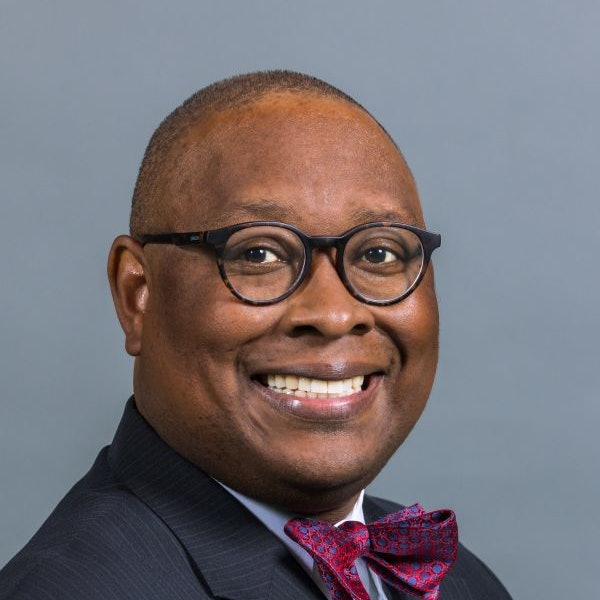
    From the small town of Lyman, South Carolina, Dr. James L. Moore’s journey to success is one he attributes to the steadfast support of his mother and the historical Dr. James L. Moore IIItrailblazers whose influence shaped his path to distinction.

    On Saturday, Jan. 25, Moore—a Distinguished Professor of Urban Education at The Ohio State University (OSU) and executive director of the Todd Anthony Bell National Resource Center—was awarded the Order of the Palmetto—South Carolina’s highest civilian honor established in 1971. The prestigious award is presented by the governor to individuals who have demonstrated extraordinary lifetime achievement, service, and contributions of national or statewide significance.

    “To be honored and to receive the highest honor to a civilian of South Carolina is so humbling,” said Moore in an interview with Diverse. “Service to humanity is the hallmark of philosophy, and in many ways, it shaped who I am and what I’m about in my day to day. All that I am and that I hope to be, has been shaped by my experience growing up in South Carolina.”

    Moore follows in the footsteps of other legendary leaders from South Carolina who’ve received the honor, many of whom broke down barriers throughout history, paving the way for him and others to succeed. Moore said that it’s not lost on him that he’s in the tradition of a long line of South Carolina humanitarians.

    “The state has a complex history, some of which is painful to reflect on, but it is where my family, some of whom arrived as enslaved Africans, created community from the most difficult of circumstances,” he said. “They built opportunities for people like me. South Carolina is special to me, not only for its rich and sometimes painful history, but because 10% to 15% of all Black Americans can trace their roots here.” 

    The state, he said, has produced a legacy of excellence, from singer James Brown and tennis great Althea Gibson to educator Mary McLeod Bethune. 

    “I just want to make sure that I forever acknowledge and recognize the contributions and the giants that I stand on their shoulders,” said Moore, who pointed to the late Dr. Benjamin Elijah Mays—the former president of Morehouse College—as a model for educational and humanitarian excellence.

    A nationally recognized education expert and leader, Moore has had a distinguished career in higher education and has been applauded for his work promoting educational excellence and access for all. Throughout his fabulous career, he has won numerous international and national accolades. 

    His research spans multiple disciplines, including school counseling, urban education, and STEM education. He has co-authored seven books and more than 160 publications, secured nearly $40 million in funding, and delivered more than 200 scholarly presentations globally. Moore’s contributions to education have earned him recognition, including being named one of Education Week’s 200 most influential scholars in the U.S. since 2018.

    Dr. Jerlando F.L. Jackson, Dean of the College of Education and Foundation Professor of Education at Michigan State University, praised Moore’s impact, citing the ripple effect his leadership has created within the American education system.

    “Dr. Moore’s influence extends far beyond his own accomplishments,” said Jackson, who has known Moore since their days as graduate students and have collaborated with him on a number of initiatives and projects, including the International Colloquium on Black Males in Education. “Through his leadership, he is empowering educators, policymakers, and community leaders to reimagine what is possible with South Carolina in mind,” Jackson said.  

    Moore’s focus on education access, preparation, innovation, and opportunities “has not only improved outcomes for today’s students but has also laid the foundation for a brighter future for generations to come,” Jackson added. “He is the kind of leader who sees potential in everyone, and he works tirelessly to help others realize their dreams, regardless of their backgrounds. Whether mentoring a young scholar or speaking at a community event, Dr. Moore connects with people in ways that are deeply inspiring and transformative.”

    Moore’s work has focused on closing opportunity gaps, increasing access to quality education, and addressing disparities that disproportionately affect educational vulnerable student populations. Through his research and leadership, Jackson said that Moore has not only informed policy, but also directly influenced educational practices that all have benefited from, including South Carolina.

    Dr. Eric Tucker, President & CEO of The Study Group, agrees.

    “His tireless dedication to inclusive excellence proves that one visionary can unite and uplift entire communities, sparking transformative educational change at the secondary and postsecondary levels,” said Tucker, who lauded Moore’s efforts to help undergraduate scholars secure prestigious fellowships, including the Rhodes and Truman Scholarships. As executive director of the Todd Anthony Bell National Resource Center on the African American Male, he reimagined OSU’s Early Arrival Program, offering mentorship and leadership opportunities to support young Black men and boys in their pursuit of higher education.

    “From a small-town upbringing to a national and international stage, Dr. Moore has used his expertise to bring fresh opportunities and shape educational transformation across the United States and other parts of the globe,” said Tucker. “His leadership and forward-thinking approaches demonstrate how determination can unite communities and open new doors for students in all zip codes, regions, and jurisdictions,” he added.

    And no matter how many times you ask Moore about his own influences and success, he never forgets his family and the village who raised him. As one of three siblings, he remembers his late mother Edna, whose sacrifices and love shaped her children’s lives in South Carolina.

    “My mother did everything for her three kids, and my mother was an inspiration to not only me, but for those who knew her,” Moore said. “And even though she’s not here with me, she lives inside me, and she always told me that ‘family lives inside of you, and everywhere you go, son, take family with you,’ So I can hear her. She was the best coach I ever had. This is for her,” he said.

    Source link

  • Which MBA Specialization will offer Highest Paying Jobs After MBA in India for 2025-2027 ?

    Which MBA Specialization will offer Highest Paying Jobs After MBA in India for 2025-2027 ?

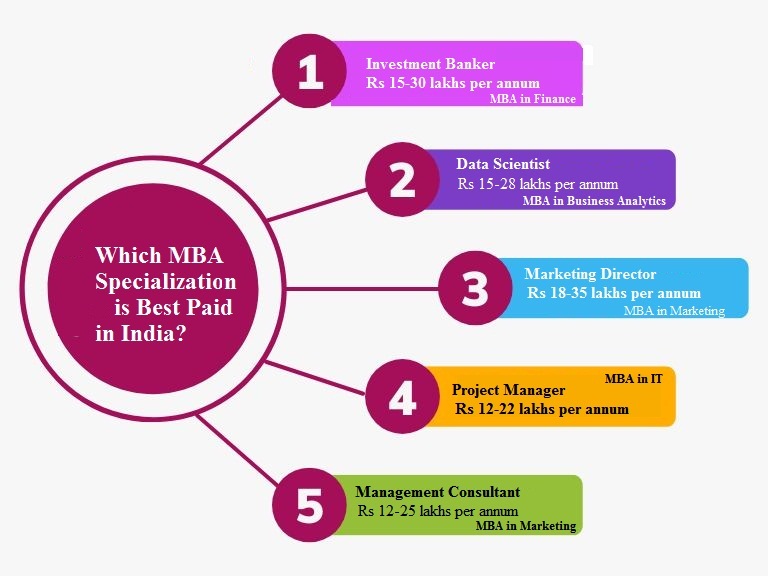
    1.MBA in Finance : Finance has consistently been one of the best-paying MBA specializations in India. Graduates with this specialization can pursue roles such as investment banker, financial analyst, or portfolio manager. The core subjects include financial planning, corporate finance, risk management, and investment analysis.

    Why it pays well: The financial services sector is always in high demand, and firms are willing to offer premium salaries to candidates who can manage financial risks and maximize profits.

    Average Salary: Rs 10-15 lakhs per annum for fresh graduates, which can escalate significantly with experience.

    2. MBA in Marketing : Marketing is another specialization known for its high-paying jobs. Professionals in this domain work on brand building, customer engagement, and sales strategies. Key subjects include consumer behavior, brand management, digital marketing, and advertising.

    Why it pays well: Companies are always looking for innovative ways to capture market share, and they invest heavily in marketing experts to promote their brands.

    Average Salary: Rs 8-12 lakhs per annum, with potential for higher earnings in senior roles such as Chief Marketing Officer (CMO).

    3.MBA in Business Analytics: As companies become more data-driven, the demand for business analytics experts is skyrocketing. This specialization focuses on data analysis, machine learning, and predictive modeling, helping businesses make informed decisions.

    Why it pays well: Data is the new currency, and firms need analytics experts to turn large datasets into actionable insights.

    Average Salary: Rs 10-14 lakhs per annum, with senior roles in analytics and data science fetching even higher pay.

    4.MBA in Information Technology (IT) : With the rise of digital transformation, IT management is one of the most in-demand MBA branches in India. Subjects covered include information systems, project management, and IT strategy.

    Why it pays well: Technology drives innovation, and IT managers play a critical role in leading this transformation, which is highly valued across industries.

    Average Salary: Rs 9-13 lakhs per annum for IT management graduates.

    5.MBA in Human Resource Management (HRM) : While not traditionally considered among the highest-paying specializations, HRM is growing in demand due to the focus on talent acquisition, employee relations, and organizational development.

    Why it pays well: Companies recognize the value of efficient human capital management, especially in competitive industries, and offer attractive salaries to top HR professionals.

    Average Salary: Rs 7-11 lakhs per annum for HR professionals

    Source link