Tag: Highlights

  • New research highlights the importance and challenges of K-12 student engagement

    New research highlights the importance and challenges of K-12 student engagement

    This press release originally appeared online.

    Key points:

    While there is wide agreement that student engagement plays a vital role in learning, educators continue to face uncertainty about what engagement looks like, how best to measure it, and how to sustain it, according to a new study from Discovery Education

    Education Insights 2025–2026: Fueling Learning Through Engagement captures prevailing attitudes and beliefs on the topic of engagement from 1,398 superintendents, teachers, parents, and students from across the United States. Survey data was collected in May 2025 by Hanover Research on behalf of Discovery Education

    Discovery Education conducted the Education Insights report to gain a deeper understanding of how engagement is defined, observed, and nurtured in K-12 classrooms nationwide, and we are thankful to the participants who shared their perspectives and insights with us,” said Brian Shaw, Discovery Education’s Chief Executive Officer. “One of the most important findings of this report is that engagement is seen as essential to learning, but is inconsistently defined, observed, and supported in K-12 classrooms. I believe this highlights the need for a more standardized approach to measuring student engagement and connecting it to academic achievement. Discovery Education has embarked on an effort to address those challenges, and we look forward to sharing more as our work progresses.” 

    Key findings of the Education Insights 2025–2026: Fueling Learning Through Engagement report include: 

    Engagement is broadly recognized as a key driver of learning and success. Ninety-three percent of educators surveyed agreed that student engagement is a critical metric for understanding overall achievement, and 99 percent of superintendents polled believe student engagement is one of the top predictors of success at school. Finally, 92 percent of students said that engaging lessons make school more enjoyable. 

    But educators disagree on the top indicators of engagement. Seventy-two percent of teachers rated asking thoughtful questions as the strongest indicator of student engagement. However, 54 percent of superintendents identified performing well on assessments as a top engagement indicator. This is nearly twice as high as teachers, who rank assessments among the lowest indicators of engagement. 

    School leaders and teachers disagree on if their schools have systems for measuring engagement. While 99 percent of superintendents and 88 percent of principals said their district has an intentional approach for measuring engagement, only 60 percent of teachers agreed. Further, nearly one-third of teachers said that a lack of clear, shared definitions of student engagement is a top challenge to measuring engagement effectively. 

    Educators and students differ on their perceptions of engagement levels. While 63 percent of students agreed with the statement “Students are highly engaged in school,” only 45 percent of teachers and 51 percent of principals surveyed agreed with the same statement.  

    Students rate their own engagement much higher than their peers. Seventy percent of elementary students perceived themselves as engaged, but only 42 percent perceived their peers as engaged. Fifty-nine percent of middle school students perceived themselves engaged in learning, but only 36 percent perceived their peers as engaged. Finally, 61 percent of high school students perceived themselves as engaged, but only 39 percent described their peers as engaged. 

    Proximity to learning changes impressions of AI. Two-thirds of students believe AI could help them learn faster, yet fewer than half of teachers report using AI themselves to complete tasks. Only 57 percent of teachers agreed with the statement “I frequently learn about positive ways students are using AI,” while 87 percent of principals and 98 percent of superintendents agree. Likewise, only 53 percent of teachers agreed with the statement “I am excited about the potential for AI to support teaching and learning,” while 83 percent of principals and 94 percent of superintendents agreed. 

    Latest posts by eSchool Media Contributors (see all)

    Source link

  • New Research Highlights Both the Importance and Challenges of Student Engagement in K-12 Education

    New Research Highlights Both the Importance and Challenges of Student Engagement in K-12 Education

    A new study reveals that while there is wide agreement that student engagement plays a vital role in learning, educators continue to face uncertainty about what engagement looks like, how best to measure it, and how to sustain it. Education Insights 2025–2026: Fueling Learning Through Engagementcaptures prevailing attitudes and beliefs on the topic of engagement from 1,398 superintendents, teachers, parents, and students from across the United States. Survey data was collected in May 2025 by Hanover Research on behalf of Discovery Education, the creators of essential PreK-12 learning solutions used in classrooms around the world. 

    Discovery Education conducted the Education Insights report to gain a deeper understanding of how engagement is defined, observed, and nurtured in K-12 classrooms nationwide, and we are thankful to the participants who shared their perspectives and insights with us,” said Brian Shaw, Discovery Education’s Chief Executive Officer. “One of the most important findings of this report is that engagement is seen as essential to learning, but is inconsistently defined, observed, and supported in K-12 classrooms. I believe this highlights the need for a more standardized approach to measuring student engagement and connecting it to academic achievement. Discovery Education has embarked on an effort to address those challenges, and we look forward to sharing more as our work progresses.” 

    Key findings of the Education Insights 2025–2026: Fueling Learning Through Engagement report include: 

    • Engagement is broadly recognized as a key driver of learning and success. 93% of educators surveyed agreed that student engagement is a critical metric for understanding overall achievement, and 99% of superintendents polled believe student engagement is one of the top predictors of success at school. Finally, 92% of students said that engaging lessons make school more enjoyable.
    • But educators disagree on the top indicators of engagement. 72% of teachers rated asking thoughtful questions as the strongest indicator of student engagement. However, 54% of superintendents identified performing well on assessments as a top engagement indicator. This is nearly twice as high as teachers, who rank assessments among the lowest indicators of engagement.
    • School leaders and teachers disagree on if their schools have systems for measuring engagement. While 99% of superintendents and 88% of principals said their district has an intentional approach for measuring engagement, only 60% of teachers agreed. Further, nearly 1/3 of teachers said that a lack of clear, shared definitions of student engagement is a top challenge to measuring engagement effectively.
    • Educators and students differ on their perceptions of engagement levels. While 63% of students agreed with the statement “Students are highly engaged in school,” only 45% of teachers and 51% of principals surveyed agreed with the same statement.
    • Students rate their own engagement much higher than their peers. 70% of elementary students perceived themselves as engaged, but only 42% perceived their peers as engaged. 59% of middle school students perceived themselves engaged in learning, but only 36% perceived their peers as engaged. Finally, 61% of high school students perceived themselves as engaged, but only 39% described their peers as engaged.
    • Proximity to learning changes impressions of AI. Two-thirds of students believe AI could help them learn faster, yet fewer than half of teachers report using AI themselves to complete tasks. Only 57% of teachers agreed with the statement “I frequently learn about positive ways students are using AI,” while 87% of principals and 98% of superintendents agree. Likewise, only 53% of teachers agreed with the statement “I am excited about the potential for AI to support teaching and learning,” while 83% of principals and 94% of superintendents agreed. 

    A complete copy of Education Insights 2025–2026: Fueling Learning Through Engagementcan be downloaded here.  

    On Wednesday, October 8 at 2:00 PM ET, Discovery Education is hosting a special, town hall-style webinar during which education leaders from across the nation will share their thoughts and insights on this report and its findings. Find more details and register for this event here

    For more information about Discovery Education’s award-winning digital resources and professional learning solutions, visit www.discoveryeducation.com, and stay connected with Discovery Education on social media through LinkedIn, Instagram, TikTok, and Facebook.       

    About Discovery Education   
    Discovery Education is the worldwide edtech leader whose state-of-the-art, PreK-12, digital solutions help educators engage all students and support higher academic achievement. Through award-winning multimedia content, instructional supports, and innovative classroom tools that are effective, engaging, and easy to use, Discovery Education helps educators deliver powerful learning experiences. Discovery Education serves approximately 4.5 million educators and 45 million students worldwide, and its resources are accessed in over 100 countries and territories. Through partnerships with districts, states, and trusted organizations, Discovery Education empowers teachers with essential edtech solutions that inspire curiosity, build confidence, and accelerate learning. Learn more at www.discoveryeducation.com.   

    Latest posts by eSchool News Contributor (see all)

    Source link

  • New Data Highlights Demographic Shifts in College Admissions Prior to Enrollment

    New Data Highlights Demographic Shifts in College Admissions Prior to Enrollment

    Title: College Enrollment Patterns Are Changing. New Data Show Applicant and Admit Pools Are Too.

    Authors: Jason Cohn, Bryan J. Cook, Victoria Nelson

    Source: Urban Institute

    Since 2020 the world of higher education has changed drastically. Higher education has seen the effects of COVID-19, the end of race-conscious admissions, significant delays in student awards from the new FAFSA, and changing federal and state policy towards DEI.

    The Urban Institute, in collaboration with the Association of Undergraduate Education at Research Universities, University of Southern California’s Center for Enrollment Research, Policy, and Practice, and in partnership with 18 institutions of higher education aimed to fill data gaps seen in potential shifts in racial demographic profiles of students who applied for, were admitted to, and enrolled in four-year IHEs between 2018-2024.

    The data analysis found that trends in applicant, admit, and enrollee profiles varied greatly by race and ethnicity. Despite differences in data trends, all IHEs found an increase in the number of students who chose not to disclose their race or ethnicity in 2024.

    The analysis found substantial changes to Black applicant, admit, and enrollee data. Among Black students at selective institutions (defined by an acceptance rate of below 50 percent) there were differences between 2023 and 2024 of the share of applicants (8.3 percent to 8.7 percent) and admits (6.6 percent to 5.9 percent). This is contrasted further due to the differences between the share of Black applicants and admits between 2021 to 2023, which stayed relatively consistent.

    The analysis took note of a change in trends for White students as well. White students represented the only student group that consistently made up a larger share of admits than applicants (six to nine percentage points larger); despite the fact that White students demonstrated a consistent decrease in applicant, admit, and enrollee groups since 2018.

    The analysis concludes that ultimately more data is needed at every point in the college admissions process. Enrollment data gives limited insight into the very end of the process and if more data is gathered throughout a student’s journey to college, then we can better grasp how all different types of students are interacting with higher education.

    Read the full report here.

    —Harper Davis


    If you have any questions or comments about this blog post, please contact us.

    Source link

  • Report highlights growing movement to elevate student voice in school communications

    Report highlights growing movement to elevate student voice in school communications

    Key points:

    As K-12 leaders look for ways to strengthen trust, engagement, and belonging, a growing number of districts are turning to a key partner in the work: their students.

    A new national report from the National School Public Relations Association (NSPRA) and SchoolStatus reveals that districts that incorporate student voice into their communication strategies–through videos, messaging, and peer-created content–are seeing real results: stronger family engagement, increased student confidence, and more authentic school-community connection.

    The report, Elevating Student Voice in School Communications: A Data-Informed Look at Emerging Practices in School PR, is based on a spring 2025 survey, which received 185 responses from K-12 communications professionals. It includes real-world examples from school districts to explore how student perspectives are being incorporated into communication strategies. It highlights the growing use of first-person student storytelling, direct-to-student messaging, and student internships as strategies to build trust, improve engagement, and strengthen school-community relationships.

    “School communicators do more than share information. They help build connection, trust, and belonging in our communities,” said Barbara M. Hunter, APR, Executive Director of NSPRA. “Elevating student voice is not just a feel-good initiative. It is a powerful strategy to engage families, strengthen relationships, and improve student outcomes.”

    Key findings include:

    • Video storytelling leads the way: 81 percent of districts using student voice strategies rely on video as their primary format.
    • Direct communication with students is growing, but there is room for improvement in this area: 65 percent of districts report at least some direct communication with students about matters that are also shared with families, such as academic updates, behavioral expectations or attendance
      • However, just 39 percent of districts copy students on email messages to families, and just 37 percent include students in family-teacher conferences, allowing them to be active participants
    • Internships on the rise: 30 percent of districts now involve students as interns or communication ambassadors, helping create content and amplify student perspectives
    • Equity efforts around student storytelling vary significantly. While some districts say they intentionally recruit students with diverse perspectives, fewer encourage multilingual storytelling or provide structured support to help students share their stories

    Early results are promising: Districts report improved engagement, stronger student confidence, and more authentic communication when students are involved.

    • 61 percent of districts that track comparisons report student-led content generates higher engagement than staff-created communications
    • 80 percent of respondents observe that student voice positively impacts family engagement
    • A majority (55 percent) said direct communication with students improves academic outcomes

    Building Inclusive Student Voice Strategies
    The report outlines a three-part approach for districts to strengthen student voice efforts:

    • Start with student presence by incorporating quotes, videos, and creative work into everyday communications to build trust and visibility
    • Develop shared ownership through internships, ambassador programs, and student participation in content creation and feedback
    • Build sustainable systems by aligning student voice efforts with district communications plans and regularly tracking engagement

    The report also highlights inclusive practices, such as prioritizing student consent, offering mentorship and support for underrepresented students, featuring diverse stories, involving student panels in review processes and expanding multilingual and accessible communications.

    “When districts invite students to take an active role in communication, it helps create stronger connections across the entire school community,” said Dr. Kara Stern, Director of Education for SchoolStatus. “This research shows the value of giving students meaningful opportunities to share their experiences in ways that build trust and engagement.”

    The report also explores common challenges, including limited staff time and capacity, privacy considerations and hesitancy around addressing sensitive topics. To address these barriers and others, it offers practical strategies and scalable examples to help districts start or expand student voice initiatives, regardless of size or resources.

    This press release originally appeared online.

    eSchool News Staff
    Latest posts by eSchool News Staff (see all)

    Source link

  • New Research Highlights the Power of Access Work — and the Tools We Need to Evaluate It 

    New Research Highlights the Power of Access Work — and the Tools We Need to Evaluate It 

    • This blog was kindly authored by Dr Anna Anthony, director of HEAT. HEAT provides a collaborative data service enabling higher education providers, Uni Connect partnerships and Third Sector Organisations to show the impact of their equality of opportunity delivery through a shared, standardised data system. By aggregating data from across the membership, HEAT can publish national-level impact reports for the sector. 

    It has never been more important for providers across the sector to show that access and participation activities have an impact. With resources stretched, we need to know the work we are doing is making a measurable difference. New research from HEAT reveals a series of powerful findings: 

    1. Intensive outreach boosts HE entry by up to 29% – Students who received at least 11 hours of intensive outreach were up to 29% more likely to enter higher education (HE) than matched peers receiving minimal support. 
    1. Disadvantaged students see the biggest gains – Free school meal (FSM) eligible students were up to 48% more likely to progress to HE when engaged in intensive outreach. 
    1. Uni Connect makes a difference – The largest relative increases in HE entry were observed in FSM-eligible students who participated in Uni Connect-funded activities, further demonstrating the importance of impartial outreach delivered collaboratively. 
    1. Access to selective universities improves – Intensive outreach from high-tariff providers increased the chance of progressing to a high-tariff university by 19%. 
    1. Sustained support across Key Stages is vital – Outreach delivered across both Key Stages 4 and 5 had the greatest impact, highlighting the need for long-term, multi-stage interventions throughout secondary education. 

    These findings provide compelling evidence that the work being done across the sector to widen participation is not only reaching the right students but changing trajectories at scale. Crucially, this latest research includes previously unavailable controls for student-level prior attainment — adding new rigour to our understanding of outreach impact. You can read the full report on our website

    What’s next for national-level research? 

    Our ability to generate this kind of national evidence is set to improve even further thanks a successful bid to the Office for Students (OfS) Innovation Fund. Through a collaboration with academics at the Centre for Education Policy and Equalising Opportunities (CEPEO) at the UCL Institute of Education, HEAT will lead on the development and piloting of a pioneering new Outreach Metric, measuring providers’ broader contribution to reducing socio-economic gaps in HE participation. More details about this project can be found here, and we look forward to sharing early findings with the sector in 2026. 

    Local-level evaluation is just as important 

    While national analyses like these are essential to understanding the big picture, the OfS rightly continues to require providers to evaluate their own delivery. Local evaluations are critical for testing specific interventions, understanding how programmes work in different contexts, and learning how to adapt practice to improve outcomes. Yet robust evaluation is often resource-intensive and can be out of reach for smaller teams. 

    This is where use of a sector-wide system for evaluation helps – shared systems like HEAT provide the infrastructure to track student engagement and outcomes at a fraction of the cost of building bespoke systems. Thanks to a decade of collaboration, we now have a system which the sector designed and built together, and which provides the tools necessary to deliver the evaluation that the OfS require providers to publish as part of their Access and Participation Plans (APP).  

    We’re also continuing to improve our infrastructure. Thanks to a second successful bid to the OfS Innovation Fund we are building system functionality to support providers to use their tracking data when evaluating their APP interventions. This includes an ‘automated comparator group tool’ that will streamline the process of identifying matched participant and non-participant groups based on confounding variables. By reducing the need for manual data work, the tool will make it easier to apply quasi-experimental designs and generate more robust evidence of impact. 

    Next steps – sharing through publication 

    With all these tools at their disposal, the next step is to support the sector to publish their evaluation. We need shared learning to avoid duplication and siloed working. HEAT is currently collaborating with TASO to deliver the Higher Education Evaluation Library (HEEL), which will collect, and share, intervention-level evaluation reports in one accessible place for the first time. By collating this evidence, the HEEL will help practitioners and policymakers alike to see what works, what doesn’t, and where we can improve together. 

    If we want to continue delivering meaningful progress on access and participation, we need both meaningful, critical local evaluation and powerful national insights. Centralised data tracking infrastructure can give the sector the tools it needs to do both. 

    Source link

  • FIRE highlights artistic freedom with launch of new YouTube interview series featuring heavy metal and punk’s biggest stars

    FIRE highlights artistic freedom with launch of new YouTube interview series featuring heavy metal and punk’s biggest stars

    Today the Foundation for Individual Rights and Expression presents a new video series — “Fire with FIRE” — featuring some of the biggest and up-and-coming names in heavy metal and punk rock.

    Throughout the summer, FIRE will drop a new conversation every other week on our YouTube channel with the likes of:

    Artists can be the canaries in the coalmine. Too often, they are the first to be censored, or worse — much, much worse. 

    In Nazi Germany, the regime destroyed and banned certain art, particularly Jewish art, and labeled it “degenerate.” Jewish artists like Charlotte Salomon — who some argue created the first graphic novel — were sent to death camps and murdered by Adolf Hitler’s thugs.

    The Soviets were no better. Artists who rebelled against the confines of the state-approved artform of “Socialist Realism” were blacklisted, sent to the gulag, or executed. (After the Soviet Union’s fall, Russian dictator Vladimir Putin revived the old regime’s repression of artists, most famously targeting the punk rock and performance art collective Pussy Riot. Most members now live in exile after criticizing Russia’s brutal invasion of Ukraine.)

    In 1973, the military dictatorship of Gen. Augusto Pinochet tortured and murdered Chilean artist and folk singer Víctor Jara for his music and political activism. His murderers pumped him full of bullets and then dumped his body on a public road. Message sent. 

    After the Islamic Revolution engulfed Iran, the ultra-religious government banned Western heavy metal and punk music. The Iranian regime has persecuted, arrested, and thrown in prison musicians daring to play such music. In 2015, for example, the members of the Iranian death metal band Confess were sentenced to years in prison and 74 lashes for blasphemy, disturbing public opinion, and anti-government propaganda. They fortunately escaped to Norway. 

    America isn’t immune to such crackdowns on creative expression either.

    During the McCarthy era of the late 1940s into the 1950s, artists like director, actor, and writer Orson Welles; screenwriter and novelist Dalton Trumbo of “Spartacus” and “Johnny Got His Gun” fame; folk singer Pete Seeger; and many others were blacklisted because of their left-wing politics and Communist ties, real or imagined. 

    In the 1960s and 1970s, the FBI surveilled artists associated with the Civil Rights and antiwar movements. The bureau maintained files on John LennonThe Monkees, and the proto-punk band MC5. Even the soul and gospel singer Aretha Franklin had a 270-page FBI file, with G-men monitoring her because of her connections to the Civil Rights movement and “Black extremists.” 

    During the 1980s, the Parents Music Resource Center — co-founded by future Vice President Al Gore’s wife Tipper — created a moral panic around heavy metal, punk, and pop artists like Twisted Sister, the Dead Kennedys, and Prince. The PMRC’s crusade led not only to “Parental Advisory” stickers on albums but also to what is arguably Glenn Danzig’s best composition ever, “Mother.” 

    Enter the “Fire with FIRE” interview series. 

    Every two weeks, FIRE will release conversations with six of the biggest metal and punk artists in music right now about their inspirations, their influences, and why free expression not only makes life worth living, but is also essential to a free society. 

    First up: Spencer Charnas of Ice Nine Kills. What a bloody mess this interview is. Our host Ryan J Downey slices into Spencer’s musical inspirations, why horror movies infest his music and art, and how Disney censored Ice Nine Kills — with Spencer getting the last howling laugh. 


    Like it. Share it. Tell us what you think in the YouTube comments. And let us know who you’d love us to interview in the future!

    Source link

  • Highlights From 2025 Commencement Speeches

    Highlights From 2025 Commencement Speeches

    Commencement this year comes at a time of uncertainty for graduates, who find themselves entering a polarized country steeped in political and economic tumult. It’s a scenario many graduation speakers confronted head-on; actress Jane Fonda told the Class of 2025 that “the world has never faced anything like the challenges we face today.”

    Much like 2024, this year’s commencement season has been marked by controversy, including at least two instances where student speakers were penalized for talking about the war in Gaza. Graduates also protested right-wing commencement speakers, including President Donald Trump himself, who spoke at the University of Alabama—which doesn’t traditionally invite guest speakers to commencement—and at the U.S. Military Academy at West Point, where his hourlong, meandering speech went viral.

    But for many graduates, commencement went on as expected, with speakers doling out advice about how to survive—and even thrive—in these difficult times. Here’s what they had to say.

    On the Current Political Climate

    “Ignorance works for power. First, make the truth seekers live in fear. Sue the journalists and their companies for nothing, then send masked agents to abduct a college student who wrote an editorial in her college paper defending Palestinian rights and send her to a prison in Louisiana, charged with nothing. Then, move to destroy the law firms that stand up for the rights of others. With that done, power can rewrite history with grotesque false narratives. They can make criminals heroes and heroes criminals. Power can change the definition of the words we use to describe reality. ‘Diversity’ is now described as illegal. ‘Equity’ is to be shunned. ‘Inclusion’ is a dirty word. This is an old playbook, my friends. There’s nothing new in this. George Orwell, who we met on the street in London, 1949, he warned us about what he called ‘newspeak.’ He understood that ignorance works for power. But then it is ignorance, isn’t it, that you have repudiated every single day here at Wake Forest University? … Can the truth win? My friends, nothing else does.”

    —Scott Pelley, veteran CBS reporter, May 19 at Wake Forest University

    “I could never have imagined 55 years [after I graduated college] that a young woman would write her truth in your paper and find herself kidnapped and arrested for speaking her truth, somehow. And be put in jail. I could not have imagined that, 55 years later. But let me tell you that all of America salutes your president and Tufts University for supporting that student, Ms. Öztürk. It’s so important, and there’s the point when you think about Rümeysa. She said something recently. She said, ‘I still believe in this country and the right to free speech and to due process.’ … And so I can tell you when you say, ‘Oh, we’re going down the tubes.’ No, we are not. I believe in this country. As Rümeysa said, ‘We believe in the people.’ In you. This country will be OK.”

    —Freeman Hrabowski III, education advocate and former president of the University of Maryland Baltimore County, May 18 at Tufts University

    On Persistence

    Maggie Rogers, pictured here in 2024, spoke at her alma mater, NYU, this month.

    “My career arrived overnight. It’s this Cinderella story of a video—maybe you’ve seen it, maybe it was force-fed to you. If you haven’t seen it, I play a song for Pharrell Williams, he really likes it, his reaction goes on YouTube—ta-da, I’m famous. What people saw in that video was this moment of alignment; they saw a past life or the universe or whatever you want to call it come along and hold my hand to the flame. But no one saw all the hard work or all the times I almost quit. They never heard the songs that didn’t work or the shows that were just bad … I don’t know any artist that hasn’t considered quitting. But you didn’t get here because you wanted to do something easy; you got here because you wanted to do something great.”

    —Maggie Rogers, singer-songwriter, May 16 at New York University’s Tisch School of the Arts

    “There’s a saying from one of America’s most practical minds, Benjamin Franklin, that I’ve used almost every day of my life: ‘Little strokes fell great oaks.’ It’s simple, it’s old, it’s absolutely true … I did run for governor in 1994 and lost, and one of the reasons I lost, I think, is I didn’t show my heart. I had five-point plans to cure every ailment in the state, but I didn’t really connect at a human level with people.

    “So, in 1998, when I ran again, I vowed to campaign differently. For example, I went to visit 260 schools in a matter of a year. Back then, my views on education were considered pretty radical, so in essence I went into the lion’s den over and over and over again, trying to dehorn myself, I guess, with people that were skeptical of the ideas that I was advocating. I listened and learned, I shared my passion, I told stories of the challenges that teachers had. And I believe I became governor in 1998 because I was doggedly determined to show my heart. It’s easy to look at the world and believe that success happens overnight. We live in a world of immediate gratification, don’t we? Social media, movies, headlines often highlight the moments of triumph without showing the years of work, sacrifice and persistence that came before.”

    —Jeb Bush, former governor of Florida, May 6 at Nova Southeastern University

    On the Value of Community

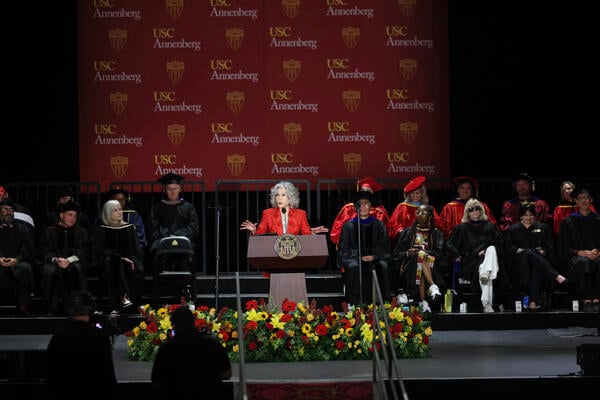
    “Don’t let anxiety or depression or hopelessness cause you to isolate. On the contrary, grow yourself a deep, solid community of people who share your values, have each other’s backs, check up on each other regularly, and be intentional about this. You know, in these uncertain times, we need to strengthen our ties to community, to our colleagues, our friends and family, because, more and more, we’re going to need this support for safety, for love, for help, for fun—let’s not forget fun—and for survival. You may not be aware of this, but since the 1980s, there’s been a concerted effort to promote individualism. You know, ‘I’m here for me and mine.’ And this shift to individualism is no accident; it’s being driven by people who want us disempowered. The myth of the rugged individual who needs no one is just that: It’s a myth created by stories through culture, told through culture, and the kinds of things that you all are going to be doing. So graduate students working with words and images—do the reverse. Encourage community versus individualism.”

    —Jane Fonda, actress and activist, May 16 at the University of Southern California Annenberg School for Communication and Journalism

    On Overcoming a Negative Mindset

    Henry Winkler, an older man with white hair, smiles at the camera. He is wearing a white button-up shirt and a brown jacket.

    Henry Winkler, pictured here in 2024, gave the commencement address at Georgetown University.

    Harmony Gerber/Getty Images

    “I was a negative thinker. I wanted to beat the system. ‘I can’t, I won’t, I’ll never, oh, she won’t go out with me.’ So, I tried to find the answer to negative thinking. I found Gurdjieff. He’s an Armenian philosopher who wrote a gigantic book. But he doesn’t want you to finish the book unless you understand him—so I didn’t. ’Cause I didn’t know what the hell he was talking about. And I found a disciple of his, Ouspensky—also a big book. I got one sentence. OK, so, you’re walking to your dream. Never let your dream out of your brain. And when you decide what it is you want to do, just know it without a doubt, know it without ambivalence. So you’re walking to your dream, and you have your dream in your brain, and all of a sudden a negative thought comes in. Your shoulders drop, your head drops and then that negative thought, it blooms into a thesis of negativity. A negative thought comes into your mind—you say out loud, you say out loud, ‘I am sorry, I have no time for you now.’

    “Yes, people will look at you very strangely, but it doesn’t matter, because it becomes your habit. A negative thought comes into your mind, you move it out, you move a positive in. For me, it is a Bundt cake with melty chocolate chips—no icing—and all of a sudden your shoulders fly back, your head flies up and you continue your dream. And then you get to stand here and talk to you.”

    —Henry Winkler, actor, May 17 at Georgetown University

    “[I was] sitting in a doctor’s office, facing one of the most difficult decisions I’ve ever had: continue living my life in pain, or consider having my leg amputated. In that moment, something clicked. I stopped letting the reality of my present circumstances dictate the potential of my future. I stopped coming from a place of victim mentality and realizing that everything happens for a reason and something bigger was going on. That shift in perspective gave me the courage to move forward, to make the decision to have my leg amputated and hope of a better future.

    “Since then, I’ve come to realize something. Experiencing pain doesn’t disqualify you from discovering your purpose. It prepares you for it. The reality is, every single person here has lost something at some point, a dream, a loved one, a friend. You see, the promise in [James 1:2–3] wasn’t that trials would go away; it was that endurance would grow. That’s what trials do. They forge something in us that comfort never could. They teach us to keep going when nothing makes sense to believe, when hope feels distant, to see ourselves, not by what we’ve lost, but by who we’re becoming. That’s the hidden gift in pain, because it’s the journey, not the destination that shapes us the most. So if you’re in the middle of something broken, don’t run from it. Embrace it. Life is hard, but the journey is worth it.”

    —Jarryd Wallace, four-time Paralympian, May 9 at the University of Georgia

    On the Importance of HBCUs

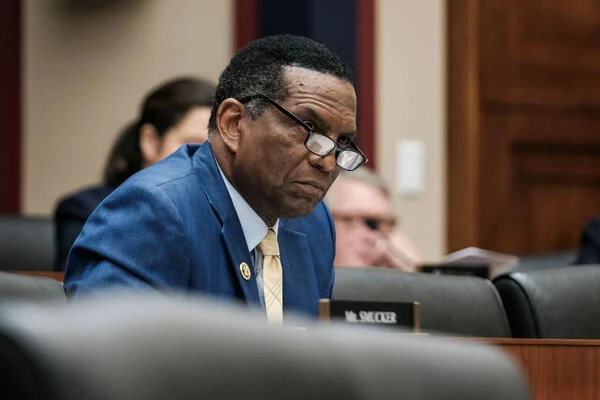
    Jasmine Crocket, a Black woman with long black hair, is seen here wearing thick black glasses and a bright yellow-green suit.

    Rep. Jasmine Crockett spoke at the Southern University of New Orleans, an HBCU in Louisiana.

    “I will start by saying your existence as a graduate of this HBCU alone is and will be seen as a resistance. Let me break it down this way: They never wanted us to be educated. This isn’t false. It is absolutely a fact. I know y’all know the history, but there is something special in this moment in time to be allowed to tell the story in the midst of the many haters and agitators being elevated to the highest positions of power and trying to use an old-school eraser—emphasis on old-school. You know, the old pink one? They want to use that old-school eraser to erase us. They have no idea that this big pink eraser can’t erase what was written in blood. Blood that was shed by the many who bled so that brighter days like this could come.

    “Much like the creation of this school, nothing in this life will be given to you. You will always walk into spaces due to your meritocracy. And even the spaces they seek to disallow you from, just know that they fear your greatness. You see, in 1956, Act 28 of the Louisiana Legislature established SUNO, but only after local African American leaders in the ’40s pushed for public college for Black students during segregation. Turn to your neighbor and say, ‘SUNO wasn’t created out of generosity.’ [graduates repeat] ‘It was created out of segregation.’ [graduates repeat] You see, they sought to build barriers. But SUNO built beginnings.”

    —Jasmine Crockett, U.S. representative from Texas’s 30th congressional district, May 10 at Southern University at New Orleans

    On Finding Who You Are in College

    “So, you might wonder why I’m speaking here instead of at the business school. Well, it’s because the business school got Snoop Dogg. Hard to compete with Snoop. Even though I did later go to business school, I could not have navigated the business world the way I did without the liberal arts education I earned right here. USC is where I discovered what I liked and what I didn’t. I did not, for example, like writing. That’s ironic for the CEO of a publishing company, I know. Eventually I came around.

    “Physics, though, that hooked me right away … Physics instilled something in me that was more valuable than equations and theories. It gave me confidence. It became second nature to think, ‘I don’t know how to solve this problem, but I do know that I will figure out how to solve it.’ And that, Trojans, is what your USC education is giving you. More than a degree, more than a line on a résumé. It’s equipped you with a way of thinking. You now know how to distinguish between fact and fiction, how to analyze and approach problems, how to craft arguments, and how to lead. And whether you know it or not, whether you study law or literature, physics, philosophy, political science or the lab-based kind of science, and whether it took you, like me, an extra year to finish quantum mechanics—that’s a true story—you now have the confidence to navigate the unknowns of life.”

    —Roger Lynch, CEO of Condé Nast, May 16 at the University of Southern California Dornsife College of Letters, Arts and Sciences

    “The artist de Kooning said, ‘The problem with being poor is that it takes up all your time.’ I came here as a scholarship kid, first-gen, loaded up with Pell Grants, work-study, which is actually quite isolating. I never went on a spring break. I never studied abroad. I never had an unpaid internship. I needed all my time to be billable. I was privileged to look like a rich girl, a city girl, a girl who had ridden in a yellow taxi and should rush Tabard. But no, I had, in fact, never ridden in a yellow taxi and should be a Tri Delt. I found a rusted 10-speed bike in the basement of a frat house, tuned it up, rode it around for three years, and left it unlocked on 40th and Irving the day I graduated. Why was I in the basement of a frat house? You know why.

    “The point is, I didn’t come to Penn to pursue a career in the arts. I came here to use the best tool for class migration that’s ever existed: higher education. And that was it. It was a low bar: be employable, hopefully well-paid. When people ask me when I knew I wanted to be an actor, my answer is, when I got paid for it. Was I passionate about it? Sure. Did it bring me self-esteem and joy? It did. But I was practical, pragmatic. But during my time here, I began to think differently. I was in control of my life, and I was working hard to build the confidence, the life skills, the connections and the grit to believe success at anything I devoted myself to was possible.”

    —Elizabeth Banks, actress, May 19 at the University of Pennsylvania

    Source link

  • Campuswide Showcase Highlights Student Learning, Achievement 

    Campuswide Showcase Highlights Student Learning, Achievement 

    On Wednesday, April 30, the University at Albany’s campus buzzed with energy as students, faculty and staff bounced between poster fairs, musical performances, student presentations and other exhibitions. Showcase Day, a newer campus tradition, reserves one day in the spring term to celebrate various student achievements from the year, including dance performances, internship experiences and scientific research.

    In addition to boosting campus engagement, the initiative highlights the important work of the University at Albany and invites outside groups to partner with the institution, Provost Carol Kim said.

    The background: Kim was inspired to create Showcase Day after kick-starting a similar initiative at her previous institution, the University of Maine. After a few delays due to COVID-19, the University at Albany launched Showcase Day in 2023.

    “Post-COVID, our campus felt an ennui,” Kim said. National research shows decreased levels of student participation in campus activities, including faculty-led research, since 2020. “How do we energize or develop more engagement on campus, get people excited again? This event has made a huge difference.”

    Many colleges and universities host research symposia in the spring to honor and demonstrate student achievement throughout the academic year, typically in STEM courses or faculty-led research.

    UAlbany’s event, however, engages undergraduate and graduate students across colleges, exposing students to opportunities within their discipline and beyond, as well as in graduate studies. Around 37 percent of UAlbany students are first generation, and they may be unaware of the various avenues of experiential learning or research at the institution, Kim said.

    The initiative also breaks disciplinary silos, exposing individuals to different kinds of academic work in ways that build campus culture, Kim said. “It’s natural for many faculty, staff and students to stay in their college, in their departments, and many times they don’t know what their colleagues and peers are doing.”

    How it works: Showcase Day is a one-day event that unites various student presentations, including posters, artistic performances and demonstrations, under one umbrella.

    The day is integrated into the calendar as a no class academic day, which means that while classes are not canceled, professors typically assign students work related to Showcase Day. That could include a review of a theatrical demonstration or a summary of a poster presentation.

    One of the most important elements of establishing a campuswide symposium was getting buy-in from campus leadership and the University Senate, Kim said. The event requires the support of hundreds of volunteers, making outside support through sponsorships and community partners another essential element.

    This year, 2,200 students participated in the event, with over 1,300 unique presentations delivered to an audience of faculty, staff, prospective students, donors, legislators and industry leaders, as well as middle and high school students.

    Student projects ranged from research presentations on air quality and native plants to an orchestra performance and robotics demonstration. Many colleges assign an end-of-term project within courses or majors that lend themselves to a Showcase presentation, Kim said; others are student-prompted creations such as internship work experience reflections.

    Showcasing Student Success

    Other innovative approaches colleges and universities have taken to highlight student achievement include:

    • At the University of Dayton, an interdisciplinary partnership between graphic design and biology students produces high-quality research posters.
    • A centralized hub breaks barriers for students interested in experiential learning and research opportunities to identify open positions and engage at San Francisco State University.
    • A statewide research journal for undergraduate students in Florida provides greater opportunities for learners to share their research beyond institutional journals.
    • A research festival at Tennessee Tech University celebrates student work in English composition courses.

    What’s next: Since Showcase Day launched in 2023, hundreds of students have participated in the event. Student and staff feedback shows that the event has been a positive influence on campus culture, inspiring pride in the participants and the work being done at the institution, Kim said.

    “From facilities to student affairs and academic affairs, they’re very proud of their part in contributing to this showcase,” Kim said.

    In the future, university leaders would like to see more engagement with potential employers, embedding career development or engagement as a piece of the event. Kim also sees potential in extending the event to multiple days, allowing campus members to participate in a greater number of activities.

    Do you have an academic intervention that might help others improve student success? Tell us about it.

    Source link

  • Best Highlights of the Season

    Best Highlights of the Season

    Reading Time: 8 minutes

    It’s the most wonderful time of the year! The holiday season represents the perfect time to reflect on all that your school community has accomplished and celebrate it. What better way to reflect on the past year with your staff, students, and families than a highlight video?

    For years now, we’ve been compiling lists of our favorite holiday highlight videos from schools, sharing fun and compelling ideas that you can try to connect with your audience. Keep reading to discover the benefits of creating and distributing a holiday highlight video for your school and get inspiration from our list. Let’s get started! 

    Why Create a Holiday Highlight Video for Your School?

    Creating a holiday highlight video for your school this year can be a fun project but also a strategic way to strengthen your connection with your community, showcase your school’s unique culture, and leave a lasting impression during the festive season. Here’s why it’s worth the effort. 

    1. Build Stronger Community Connections

    A holiday highlight video allows you to bring your entire school community together. You highlight the collective spirit that defines your school by capturing moments from seasonal events, concerts, classroom celebrations, or volunteer initiatives. 

    Sharing these moments with parents, alumni, and local supporters creates a sense of belonging and pride, reinforcing that your school is a vibrant, supportive learning environment for students. 

    2. Showcase Your School’s Values and Culture

    What better way to showcase what makes your school unique than through a professionally crafted holiday highlight reel? A holiday video can encapsulate those values in action whether your school emphasizes creativity, inclusivity, or academic excellence. 

    It’s an opportunity to demonstrate how your students and staff embody the spirit of giving, kindness, and celebration during the holidays, making your school stand out to prospective families and partners.

    3. Engage Your Audience in a Memorable Way

    Videos are one of the most engaging forms of content, especially on social media. A holiday highlight video captures attention far more effectively than static posts or written updates. 

    By combining visuals, music, and heartfelt moments, your video can evoke emotion, spark joy, and encourage viewers to share it with others, amplifying your school’s reach and impact.

    4. Celebrate the Achievements of the Year

    The holiday season is a perfect time to reflect on the milestones your school has reached throughout the year. 

    A holiday highlight video can showcase achievements from sports teams, academic competitions, or memorable events. This celebrates success and motivates students, staff, and families to look forward to the opportunities ahead.

    5. Create a Lasting Keepsake

    A holiday highlight video can become a keepsake that students, parents, and staff can look back on for years. 

    These videos preserve memories of special moments that might otherwise be forgotten, becoming a cherished reminder of the holiday magic your school creates every year.

    6. Boost School Spirit and Morale

    For students and staff, a holiday highlight video can be a source of pride, reinforcing the positive energy and teamwork that make the school a great place to learn and work. It’s a morale booster that helps everyone end the year on a high note.

    Investing in a holiday highlight video this season isn’t just a creative endeavour—it’s a meaningful way to connect, celebrate, and share the heart of your school with your community. Whether you’re looking to attract new families, strengthen existing relationships, or simply spread holiday cheer, a video is the perfect way to make your school’s message resonate this holiday season.

    Wondering how to take your school’s digital marketing strategy to the next level with video content? Reach out to learn about our customized services. 

    How to Create a Holiday Highlight Video

    Now, you might be wondering: how do I create a holiday video? Be sure to check all of these boxes: 

    • Remember to plan ahead 
    • Involve your school community in the process
    • Use high-quality visuals and audio
    • Add a festive, celebratory touch 
    • Edit for quality and interest 
    • Share your school’s holiday video on multiple platforms

    What platforms are best for sharing a holiday video? Or, if we’re thinking of cost efficiency, what is the best app to create holiday videos for free? YouTube and TikTok are favorites among schools looking to use video content to communicate with their existing student body and boost enrollment due to their huge audiences and ease of use. 

    By planning thoughtfully, fostering collaboration, and putting a creative twist on your school’s holiday celebrations, you can create a video that delights your community and leaves a lasting impression. Now, for what you’ve been waiting for. Let’s see what schools all over the world have come up with.

    The University of Louisville – Get the Whole Community Involved 

    The University of Louisville created a standout holiday video that resonated with its community. The star of the show? Their mascot Louie the Cardinal handed out Christmas cards to several members of the school community (Get it? Louie… Cardinal? We love a good pun!) The video wrapped up with a heartfelt holiday message from a school administrator, reflecting on the year’s achievements and sharing an inspiring outlook for 2025.

    The key to an impactful school holiday video is involving as many members of your community as possible. Why is that? First of all, the holiday season is all about coming together. Including students, staff, and faculty members is both an excellent way to celebrate and an effective way to showcase your close-knit community to current and prospective students. 

    Remember that a strong school community garners trust and credibility, and encourages online engagement which in turn broadens your reach, humanizes your brand, and instills a sense of pride. 

    YouTube videoYouTube video

    Source: University of Louisville | YouTube

    GSU Arts – Add a Creative Touch With Animation and Editing 

    True to its identity as an art school, Georgia State University College of the Arts has delighted its viewers with a festive animation project created by its own students and alumni.

    Your holiday video highlight does not have to be complicated–just a joy to watch. It’s an excellent idea to leverage the talent within your student body, providing students with the opportunity to add something to their resumes and encouraging them to do their best work. 

    YouTube videoYouTube video

    Source: GSU | YouTube

    University of Vermont – Foster Inspiration, Gratitude, and Excitement for the New Year

    This year, the University of Vermont went for a reflective, meaningful message, highlighting the positive impact that each department has on the planet. 

    Your school community members like to know that they are a part of something bigger than themselves. Give them a sense of belonging by reminding them of all the amazing things they can accomplish now as your students and in the future as graduates. 

    YouTube videoYouTube video

    Source: University of Vermont | YouTube

    Trent University – Remember to Infuse Some Holiday Magic!

    Trent University’s holiday video is full of holiday magic starring students and faculty members across various departments who open an enchanted book that sparkles brightly, creating a whimsical visual effect. 

    The use of a powerful slogan  – “Bright minds gather at Trent University” fits perfectly with the theme of the simple yet festive subject matter within the video. Remember that a little bit of effective video editing can create a magical holiday feel.

    YouTube videoYouTube video

    Source: Trent University | YouTube

    University of Toronto – Provide Some Needed Support During Exam Season

    Though holiday cheer is in the air, so is the stress of exam season. Here, the University of Toronto acknowledges this stress and provides a solution! This TikTok video features fellow students assembling Exam Ready Kits for stress-free studying.

    A video like this, particularly for post-secondary institutions, showcases a caring, supportive learning environment, which is appealing at any time of the year. Show how you care for the needs of students in your holiday highlight video. 


    @uoftstudentlife We’re stuffing, sorting, and prepping your FREE #ExamReadyUofT study kits to help you de-stress and thrive this exam season! Look out for our pop-up booths across campus starting next week 💙📚☕✏️ uoft.me/examreadyuoft Get ready to tackle your exams with everything you need in hand! [Text Description: Getting for exams? We’ve got you! Assembling your FREE Exam Ready Study Kits. Made with Care. Ready for you! Good luck on your exams!] #ExamReadyKit #uoft #uoftstudentlife #studentlife #universityoftoronto #lifeatuoft #uoftlife #utsg #uoftsg #uoftstgeorge #examseason #studyessentials #examde-stress #university ♬ Happy with ukeleles – Royaltyfreemusicforvideos

    Source: University of Toronto| TikTok

    Glenbard North High School – Share Highlights From Holiday Spirit Week

    Leading up to the holiday break, many schools, particularly K-12, invite staff and students to participate in holiday-themed spirit weeks. 

    Glenbard North made a short, fun TikTok video where students and a staff member introduced the themes of each day: cozy, candy cane coloured, family photo themed, Grinch vs. Whos, and festive. How fun! Try fun short videos like this on TikTok to create excitement. 

    @north.panthers Coming next week! #holidayseason #winterspiritweek #schoolpride #gift #santa ♬ original sound – Glenbard North

    Source: Glenbard North High School | TikTok

    University of Michigan – Highlight Holiday Events for a Good Cause

    The University of Michigan shared heartwarming highlights from their annual tree lighting ceremony. The guests of honour were the C.S. Mott Children’s Hospital’s ‘calendar kids’ who enjoyed special guest appearances from Batman and Captain Marvel. 

    Think about how your school gives back to the community and showcase that to demonstrate your commitment to making a positive impact as an institution. How fitting for the season of giving. 

    YouTube videoYouTube video

    Source: University of Michigan | YouTube

    McTavish High School – Give Students Something to Look Forward To! 

    The holidays are a time for celebration! Many schools host dances and events around this time. Make a fun video providing the details of your upcoming winter celebrations to give students something to look forward to. 

    In their video, McTavish High School provides essential event details in the video content and the description and creates hype around the upcoming dance with a high-energy mini-skit performed by students. 

    @mctavishstudentcouncil Marauders, we are having a Winter Wonderland Dance on December 5th 2024 from 7-9pm at École McTavish! Make sure to register and sign up for your friends from other schools in the learning commons before December 2nd! #studentcouncil #winterwonderland #fyp #trending #winterformal #emhs #schooldance ♬ original sound – McTavish Student Council

    Source: McTavish High School| TikTok 

    University of Bristol – Show off Your Holiday Decorations 

    Just the sight of a well-lit tree can elicit excitement for lovers of the holiday season. Have you been decorating on campus? If so, why not show it off? 

    This simple video by the University of Bristol puts their beautiful tree on display and encourages students to stop and appreciate the beauty of their campus in the winter time. Your holiday highlight video is the perfect opportunity not only to display your decorations but also to show off amenities on campus. Take advantage of this! 

    @uwebristol First snow on campus 🥹 #university #takeabreakfromscrolling #christmas2024 #snowday #campuslife #unicampus ♬ Im In Love Im Obsessed Rihanna x Casa Di Remix – CasaDi

    Source: University of West England Bristol | TikTok 

    University of Essex – Showcase the Diversity Within Your Community

    One of the most beautiful parts of the holiday season is learning about the many traditions kept across the world. 

    Particularly as a diverse school community like the University of Essex, highlighting the diversity of your student body can be a heartwarming and interesting way to celebrate as an institution. Try an authentic interview-style video like this one to learn more about the individuals that make your community special. 

    @uniofessex How are you celebrating Christmas or the New Year? Our students share a snippet of their traditions #UniversityofEssex #StudentLife #Traditions #Celebrate ♬ original sound – University of Essex

    Source: University of Essex | TikTok 

    The holiday season offers schools a unique opportunity to celebrate their community, showcase their values, and engage with their audiences in meaningful ways. Whether through heartfelt messages, creative animations, or exciting event highlights, a holiday video can capture the essence of your school while fostering pride and connection. 

    By drawing inspiration from the examples we went through and tailoring your approach to reflect your school’s spirit, you can create a memorable and impactful holiday highlight video that resonates with your students, staff, and families. Here’s to celebrating our achievements and setting the stage for another bright and inspiring year ahead! 


    Source link

  • CUPA-HR Data Highlights Trends in Representation and Pay Equity in the Higher Education Workforce, and the News Is Mixed – CUPA-HR

    CUPA-HR Data Highlights Trends in Representation and Pay Equity in the Higher Education Workforce, and the News Is Mixed – CUPA-HR

    by CUPA-HR | March 1, 2023

    When it comes to representation and pay equity for women and people of color in the higher education workforce, colleges and universities have frequently struggled to make meaningful progress. Through several new interactive graphics representing years of research, CUPA-HR shines a light on the progress that has been made and the disparities that persist. These graphics represent data from CUPA-HR’s four signature higher ed workforce surveys — Administrators, Faculty, Professionals, and Staff — through 2022.

    Administrators

    While the proportion of people of color in higher ed administrator positions has grown steadily over the last 10 years, these increases have not kept pace with the rate at which minorities are obtaining graduate degrees. In 2022, people of color made up 18.2 percent of administrators, up from 12.9 percent in 2012.

    The data also show that pay gaps for women administrators of all races/ethnicities are consistent across the past 10 years and notably wide. Pay inequity is particularly egregious for women administrators of color (with the exception of Asian women). Men of color, on the other hand, have been paid salaries equitable to or greater than those of White men in recent years.

    The Administrators in Higher Education Survey collects data on administrator positions that manage a higher ed institution or a division within it.

    See the Administrators Composition and Pay Equity by Gender and Race/Ethnicity interactive graphics, as well as data broken out by CEO, provost and chief HR officer.

    Faculty

    There are two notable findings in faculty composition. First, more women are represented in non-tenure-track than in tenure-track faculty. Second, for each tenure status and with each increase in rank, the proportions of women and faculty of color decrease. This means that women are over-represented in the lowest-paying and lowest-ranking positions. This remains the case despite the fact that the proportion of women and faculty of color have increased slightly at each rank over the past five years.

    Pay gaps for women faculty, regardless of tenure status or rank, continue to persist, particularly at the rank of professor. These gaps are most notable for women of color. Pay gaps at other ranks have narrowed over time, particularly for tenure-track faculty. Importantly, the factor that most impacts faculty pay is promotion to a higher rank. Often, the only significant increases in salary happen with these promotions. These data show that the only group that has greater representation with each increase in rank is that of White male faculty, and this pattern has persisted over time.

    The Faculty in Higher Education Survey collects data on tenure-track faculty positions and non-tenure-track teaching faculty positions.

    See the Faculty Composition and Pay Equity by Gender and Race/Ethnicity interactive graphics.

    Professionals

    Women’s representation has increased across all professionals’ positions since 2017, and in 2022, women represented more than 60 percent of higher ed professionals. This change is due to slight increases in representation of women of color since 2017. In 2022, representation of people of color was 24 percent overall, with the highest percentage among human resources professionals (34 percent) and diversity and equal opportunity professionals (33 percent).

    In 2022, women were consistently paid less than White men, a pattern that has worsened since 2017. However, men of color were paid more equitably in 2022 compared to previous years.

    The Professionals in Higher Education Survey collects data on positions in specific functional areas in higher ed institutions, such as academic or student services, that usually require a baccalaureate degree.

    See the Professionals Composition and Pay Equity by Gender and Race/Ethnicity interactive graphics.

    Staff

    Staff employees have a higher representation of people of color than any other higher ed employee group. This is notable in that these are the lowest-paying positions in higher ed. In 2022, women of color represented about 19 percent of all higher ed staff, and men of color represented about 13 percent of all higher ed staff. These numbers have increased since 2017, though modestly. Skilled craft employees were the least racially diverse group, as 80 percent were White men, a finding that has persisted across the past six years. Notably, skilled craft staff are among the highest-paid staff positions.

    Since 2017, women in staff positions have been paid consistently and considerably less than White men in staff positions, a pattern that has worsened over time, particularly for women in office and clerical positions. Men of color were paid more equitably in 2022 when compared to 2017.

    The Staff in Higher Education Survey collects data on positions that are generally non-exempt and do not require a college degree.

    See the Staff Composition and Pay Equity by Gender and Race/Ethnicity interactive graphics.

    CUPA-HR Research

    CUPA-HR is the recognized authority on compensation surveys for higher education, with its workforce surveys designed by higher ed HR professionals for higher ed HR professionals and other campus leaders. CUPA-HR has been collecting data on the higher ed workforce for more than 50 years, and we maintain one of the largest workforce databases in existence. CUPA-HR also publishes numerous research publications and interactive graphics highlighting trends and issues around higher ed workforce planning, pay equity, representation of women and racial/ethnic minorities and more. Learn more about CUPA-HR research.


    Source link