Tag: Hire

  • UC Can Hire Undocumented Students

    UC Can Hire Undocumented Students

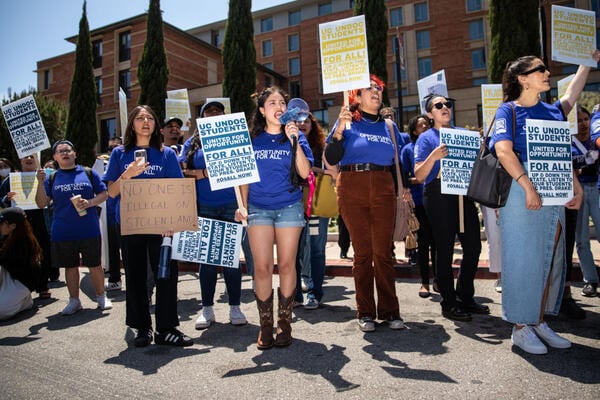
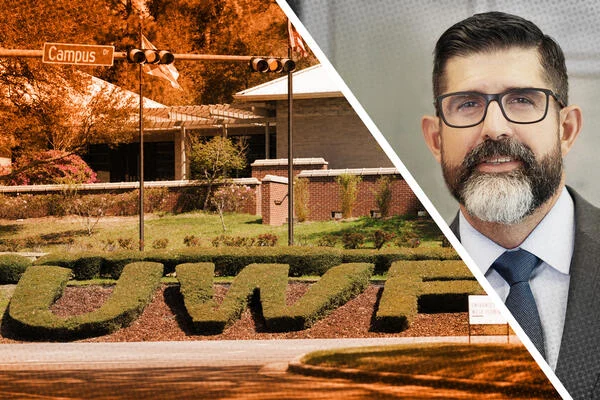
    The California Supreme Court chose not to review a lower court’s decision that concluded the University of California system is discriminating against undocumented students by not allowing them to work in on-campus jobs. As a result, the lower court decision stands, the Los Angeles Times reported.

    The California Supreme Court’s move not to take up the case is the latest development in a lawsuit filed by a University of California, Los Angeles, alumnus and lecturer last year. The plaintiffs are represented by attorneys from Altshuler Berzon LLP, UCLA’s Center for Immigration Law and Policy, and the National Day Laborer Organizing Network.

    Undocumented students, backed by a legal theory developed by scholars at the Center for Immigration Law and Policy, have argued that state entities, such as the public university system, are permitted to hire undocumented individuals. But the UC Board of Regents rejected the idea last year.

    A three-judge panel for the Court of Appeal for the First District ruled in August that the UC system’s employment policy “facially discriminates based on immigration status and, in light of applicable state law, the discriminatory policy cannot be justified.” The ruling asked the system to reconsider its hiring policy. But the UC Board of Regents appealed that decision two months ago.

    UC spokesperson Rachel Zaentz said in a statement that the California Supreme Court’s decision “creates serious legal risks for the University and all other state employers in California.”

    But undocumented students and their advocates are celebrating. Iliana G. Perez, a plaintiff and former UCLA lecturer, said as a formerly undocumented immigrant, she’s seen how employment restrictions can hold immigrant students back.

    “The California Supreme Court’s decision not only reaffirms that discriminating against undocumented immigrants from accessing on-campus employment cannot continue to be tolerated, but it also gives the UC the clarity to finally unlock life-changing opportunities for the thousands of immigrant students who contribute to its campuses, and to the state’s economy and workforce,” Perez said in a news release from the Center for Immigration Law and Policy.

    Source link

  • Florida Finalizes Interim President Hire

    Florida Finalizes Interim President Hire

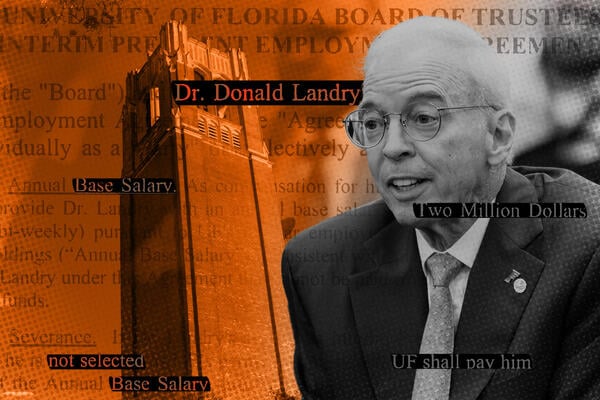
    The Florida Board of Governors unanimously approved Donald Landry on Thursday as interim president of the University of Florida, three months after it rejected Santa Ono for the job in a split vote.

    Landry, who has a lengthy academic résumé but has never been a college president, will now be among the top-paid campus leaders in the country, with a base salary of $2 million and the potential to earn an additional $500,000 in bonuses. But the one-year contract also includes an unusual caveat: Landry will earn $2 million in severance pay if he is not selected for the permanent job.

    Such a guarantee is an anomaly for an interim president, one expert said.

    The Interview

    Landry’s interview with the Board of Governors Thursday was much less contentious than Ono’s.

    The board grilled Ono, who resigned as president of the University of Michigan to pursue the top job at UF, for almost three hours, mostly over his past support of diversity, equity and inclusion initiatives, which he sought to distance himself from ahead of the interview.

    But on Thursday, it was clear from the outset that board members liked what they saw in Landry.

    Prior to the vote, University of Florida Board of Trustees chair Mori Hosseini ticked off Landry’s accomplishments, noting he is a celebrated physician and academic. Hosseini also highlighted his various roles, such as chair emeritus of the Department of Medicine at Columbia University and president of the American Academy of Sciences and Letters, as well as his prior experience on the President’s Council on Bioethics during the George W. Bush administration, among other achievements.

    “We are excited to see what UF can accomplish under his leadership,” Hosseini told the board.

    The statewide Board of Governors also seemed excited about the candidate, approving his hire after an interview of around 30 minutes, which included more complimentary remarks from members praising Landry for his leadership in the health field and for filing an amicus brief supporting Florida and Texas officials in a Supreme Court case last year. In that brief, Landry argued against content moderation efforts on social media platforms, which he cast as censoring alternative perspectives and “suppressing dissent on a host of scientific questions.”

    Paul Renner, a former Republican lawmaker and current gubernatorial candidate, told Landry, “In addition to your remarkable academic record, it strikes me as unique that I don’t know anyone else in academia that’s filed an amicus brief to the Supreme Court in defense of free speech.”

    Renner also asked how Landry would defend free speech at UF.

    Landry answered that beyond academic freedom and free speech, there “is a right to teach and a right to learn.” He said he would prevent disruptions to “the teaching functions of the university” by emphasizing time, place and manner restrictions “as significant as necessary but as small as possible” to balance free speech with UF’s mission. Landry also emphasized the importance of inculcating a culture of civility and the need for UF students and faculty to buy in.

    At another point in the interview, Landry expressed concerns about “ideological pressure” to “not speak to certain topics,” specifically referring to climate change. He argued that climate activism has suppressed the free discussion of science, which Landry said “is not settled in that area.”

    The Contract

    One expert noted that several parts of Landry’s contract stand out as unusual—starting with severance pay if he’s denied the permanent job in a year.

    “I’ve never seen a guarantee of any type given to an interim,” said Judith Wilde, a research professor at George Mason University who studies presidential searches and contracts.

    The salary itself is also quite substantial, especially for an interim president, she said. Ono was set to make around $3 million a year, which Wilde suspects the next permanent president will also get.

    “Given the way that Santo Ono was treated in Florida, they may have been fearful that it would be difficult to get anybody to come. So they’ve advertised, in a sense, that they are still willing to give a big salary,” Wilde said. “Whoever steps into that job will probably get at least $3 million.”

    Wilde also said that the key duties and responsibilities listed in Landry’s contract are highly prescriptive compared to other contracts, which don’t spell out specifics to the same level of detail. Among other duties, Landry is directed to appoint a permanent provost, fill interim dean positions and other vacant leadership roles, and “accelerate efforts” to encourage “Jewish students who feel threatened or harassed at other institutions to apply for admission.”

    He is also instructed to “work with Florida and Federal [Department of Government Efficiency] to eliminate waste, fraud, and abuse”—a provision that has appeared in other presidential contracts. (While Ono’s contract also included that provision, it was less prescriptive over all.)

    Several of the key duties and responsibilities, including certain hiring decisions, require the approval of UF’s board chair, which Wilde said would grant significant power to Hosseini.

    “In essence, it makes him a co-president,” Wilde said.

    Source link

  • City College of SF Announces Chancellor Hire, Then Backtracks

    City College of SF Announces Chancellor Hire, Then Backtracks

    City College of San Francisco announced last week that it had hired a new chancellor—but never voted to approve the candidate and later deleted the news release, leaving the process in limbo.

    The San Francisco Chronicle reported that City College posted a news release on Tuesday announcing that it had selected Carlos O. Cortez as its next chancellor, pending approval at a Board of Trustees meeting on Thursday. However, the board spent several hours in a closed executive session before ultimately deciding not to make a decision on the candidate.

    Trustees did not explain their inaction on the search, according to a review of the meeting. The board agenda shows trustees were also set to consider approval of a contract for Cortez, with an annual base salary of $350,000, but removed that action item after punting on the search.

    Multiple speakers at the meeting expressed support for Cortez.

    In the Tuesday news release that was later deleted, Anita Martinez, the Board of Trustees president, lauded the candidate for his “proven track record of success in academic innovation, fundraising, student success, and community engagement.”

    His hire even prompted congratulatory posts on LinkedIn before the move was walked back.

    Cortez was previously chancellor of the San Diego Community College District from July 2021 to May 2023 before he stepped down suddenly, a move he attributed to the need to take care of his ailing parents in Florida. Since then he has emerged as a finalist for six jobs at the chancellor or president level, including SFCC. Five of those jobs were in California and one was in Wisconsin.

    The San Francisco Chronicle also reported that Cortez was arrested in Florida on suspicion of driving under the influence in January 2024 and later pleaded no contest to reckless driving. Cortez told the newspaper the charge was “due to a mixture of prescription medicine.”

    Cortez told the San Francisco Chronicle last week that he didn’t know where his candidacy stands. He did not respond to a request for comment from Inside Higher Ed sent via LinkedIn on Monday.

    City College officials also did not respond to a request for comment from Inside Higher Ed.

    Source link

  • UF Board Votes Unanimously to Hire Ono

    UF Board Votes Unanimously to Hire Ono

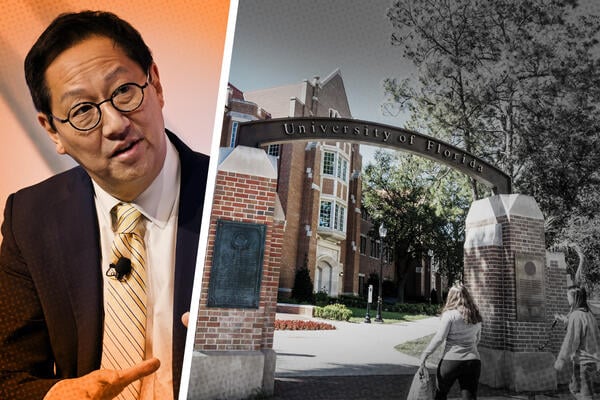
    Despite mounting conservative criticism over Santa Ono’s stance on diversity, equity and inclusion, the University of Florida Board of Trustees on Tuesday overwhelmingly voted to hire the former University of Michigan president as its next leader.

    Ono, who held three prior presidencies, was named the sole finalist for the top job at Florida in early May. As a traditional academic, Ono marks a break from the norm at Florida’s public universities, where the emphasis in the past few years has been on hiring former Republican lawmakers and others with political connections.

    But his candidacy faced heavy criticism from conservative critics such as anti-DEI activist Chris Rufo, Heritage Foundation president Kevin Roberts and several Florida lawmakers, including Republican U.S. senator Rick Scott, who called for an investigation into the search that yielded Ono due to his past remarks on DEI. Some critics have claimed that Ono is a radical liberal academic who made an about-face on DEI due to careerist ambitions.

    Ono, who made more than $1.3 million a year at Michigan, where he was under contract until 2032 before he stepped down to pursue the Florida job, could earn up to $3 million a year at UF, according to the salary range.

    Ono’s Evolution on DEI

    Rufo has led the charge among Ono’s conservative critics.

    “Woke is threatening a return to power,” Rufo declared in an opinion piece in the conservative City Journal in which he argued that Ono’s noted past support of DEI policies was disqualifying.

    (Although Rufo argued that Ono’s presidency would threaten to undo changes to education in the state driven by Republican Ron DeSantis, the governor has defended the pick.)

    Prior to Tuesday’s meeting, Rufo circulated various videos of Ono speaking in favor of DEI policies and against systemic racism. While those videos gained traction on social media, the posts did not sway the UF Board of Trustees, which voted unanimously to hire Ono.

    But Ono’s changing stances on DEI did hang over much of Tuesday’s meeting, popping up in multiple questions where Ono discussed his evolution on the issue and noted that he dismantled DEI initiatives at the University of Michigan after his perspective began to shift in late 2023.

    “I did not come to bring DEI back; I came to make sure it never returns,” Ono told UF trustees.

    Ono argued that while he initially agreed with the aims of DEI programs, while president of the University of Michigan he came to see that such initiatives were divisive and diverted resources from student success, leading to his decision to shutter the DEI office there earlier this year.

    He argued that “large DEI bureaucracies” stifle open dialogue and erode trust on campus and that “it became clear to me through experience, not theory, that something had gone wrong.”

    Ono sought to distance himself from his prior statements, arguing that what matters “is not what I said two to six years ago,” as depicted in the videos, but rather what he has done in the last 18 months, which includes winding down the DEI office at Michigan before he resigned last month. Although the move came after increased criticism of DEI spending at Michigan, Ono cast it as a move that grew out of conversations he began having in late 2023 in which he questioned the efficacy of such initiatives.

    He also stressed again how his vision aligns with the goals of UF and DeSantis.

    “I understand and support what Florida’s vision for higher education represents: a decisive move away from ideological bias and activist-driven culture that has come to define too many colleges and universities in this country and abroad,” Ono said. “The goal is not to replace one orthodoxy with another. It is to restore balance, to protect the pursuit of truth and create a university environment where all students can thrive, regardless of their viewpoint. Florida is showing the nation that it’s possible to elevate academic excellence without ideological indoctrination.”

    While issues like faculty recruiting and retention, post-tenure review, college athletics, and other aspects of running the university were addressed in an almost three-hour public interview, much of that time, and the board’s questions, centered on DEI and campus protests.

    For instance, Ono was asked multiple times about concerns of rising antisemitism on campus.

    He responded that antisemitism is “a persistent threat, especially on college campuses” that “too often hides behind the language of political critique” and has been “normalized in the name of activism.” Ono also emphasized a commitment to keeping Jewish students safe at UF.

    Asked about his decision to allow a pro-Palestinian encampment to remain at Michigan for 30 days, Ono said that the university did not want to escalate the situation and create an atmosphere of unrest close to commencement. He added that he spoke with Jewish students who were worried about how removing the encampment might disrupt commencement. Ono also said that Michigan subsequently updated its time, place and manner policies to prevent future encampment protests.

    A Looming Battle?

    Although the UF Board of Trustees approved the Ono hire, it’s not a done deal, as the Florida Board of Governors has the final say.

    That board will meet in either mid-June or at a special meeting to consider Ono. That could provide another opportunity for Ono’s conservative critics to derail the hire if the Board of Governors comes out against the selection.

    Florida representative Greg Steube, a Republican, immediately called for the board to block the hire.

    “The @UF Board of Trustees has made a grave mistake. Today, Dr. Ono gave it his best ‘college try’ walking back his woke past, claiming he’s now ‘evolved.’ But I’m not sold. This role is too important to gamble on convenient conversions,” Steube wrote on social media Tuesday.

    At least one member of the Board of Governors noted over the weekend that concerns about Ono will be addressed.

    “The UF Board of Trustees is responsible for vetting the issues raised by concerned stakeholders, which their fiduciary obligations require they do, and which they need to do before making a decision. If/when the BOT acts, it will come to the Board of Governors, where the Board of Governors must agree to confirm the candidate for President of UF. The BOG takes this responsibility seriously, and issues will likely be fully reviewed and discussed publicly,” FLBOG member Alan Levine wrote in a Sunday social media post before Ono was hired.

    While the Board of Governors does have the power to derail Ono’s selection, members could have done so earlier—and behind closed doors—if they had concerns. Under a policy established last year, the Board of Governors must sign off on a list of presidential finalists identified by search committees before those candidates can be considered by individual boards. So the board could’ve wielded that veto power of sorts to remove Ono before he was named as a sole finalist.

    If confirmed, Ono will replace interim president Kent Fuchs, who came out of retirement after then-president Ben Sasse stepped down last July, weeks before a spending scandal emerged.

    Elsewhere in the state, the University of West Florida tapped former Republican lawmaker and current Florida commissioner of education Manny Diaz Jr. as its interim president in a process some trustees argued was rushed and lacked transparency. As the fifth president hired to lead a public university in Florida this year (including those serving in an interim capacity), Ono is the only one who is not either a former Republican lawmaker or connected to the governor’s office.

    Source link

  • Conservatives Clash Over Ono Hire at UF

    Conservatives Clash Over Ono Hire at UF

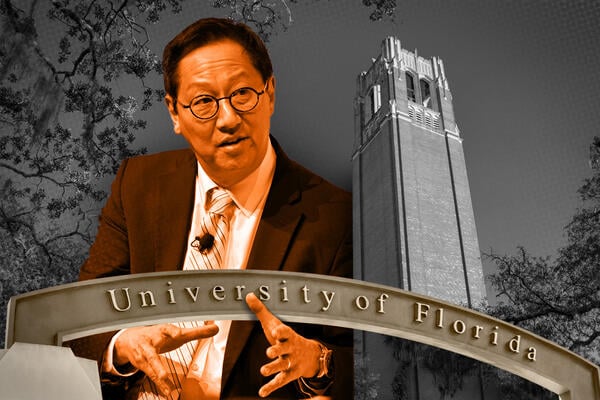
    Less than a year after former president Ben Sasse resigned abruptly, the University of Florida has gone in the opposite direction for its next presidential pick, announcing Santa Ono as the sole finalist.

    Ono, who stepped down from the University of Michigan presidency last week after less than three years on the job, brings a wealth of academic and research experience: He also served in the top jobs at the University of Cincinnati and the University of British Columbia.

    Sasse, a Republican U.S. senator from Nebraska when he was hired in late 2022, previously served as president of Midland University, a small institution in his home state. Despite a lack of experience overseeing a massive research enterprise like UF, Sasse fit a profile in demand in Florida, where GOP lawmakers have ascended to presidencies at multiple universities. But his time at UF was short-lived; after less than 18 months on the job, he stepped down amid a spending scandal. At the time, he cited his wife’s deteriorating health as his reason for leaving.

    Ideology has regularly trumped experience in recent Florida presidential hires. Multiple former lawmakers, all Republicans, are at the helm of various state institutions. They include former lieutenant governor Jeanette Nuñez at Florida International University, Adam Hasner at Florida Atlantic University and Richard Corcoran at New College of Florida, among others.

    Considering those recent hiring trends, Ono is an outlier—a traditional higher ed candidate in a state where Republican governor Ron DeSantis and the Florida Board of Governors, most of whom he appoints, have taken active roles in presidential searches.

    And while many faculty members have celebrated the selection of a candidate with strong research and leadership credentials, some conservative figures are pushing back on Ono.

    Now a public battle appears to be brewing over who will lead the University of Florida.

    Opposition Emerges

    When UF announced Ono as the sole finalist for its presidency on Sunday, many observers were shocked that he was leaving his plum job at Michigan so soon. In October, Ono signed an eight-year contract extension with a $1.3 million base salary to keep him at Michigan long term. (Though UF’s compensation package has not yet been released, Ono could earn as much as $3 million a year, according to a salary range set by trustees.)

    But almost seven months later, Ono resigned when his candidacy at UF was announced.

    Given the trend of DeSantis’s involvement in presidential searches across the state, it seems unlikely Ono would have emerged without the governor’s blessing. But other conservative figures have publicly objected to Ono’s candidacy over concerns about diversity, equity and inclusion programs at Michigan, which has been scrutinized for its significant spending on such efforts.

    Chris Rufo, a trustee at New College of Florida who has championed anti-DEI efforts nationwide, strongly opposed the pick and called for UF to reverse course on the hire. Rufo has been a regular critic of DEI at UM.

    “The finalist for the University of Florida presidency is a left-wing administrator who recently declared his support for ‘DEI 2.0’ and claimed that ‘the climate crisis is the existential challenge of our time.’ Florida deserves better than a standard-issue college president,” Rufo wrote on X.

    Congressman Byron Donalds, who represents Florida’s 19th Congressional District and is the expected front-runner to replace DeSantis as governor at the end of his term, has also voiced concerns: “Florida cannot afford to inject wokeness into our flagship university. This selection must be blocked and the search committee must start over,” Donalds wrote in a social media post.

    DeSantis Defends the Pick

    But DeSantis defended the selection in a Wednesday press conference.

    Though he said he was “not involved” with the search and had not talked to Ono, he emphasized that he has faith in UF’s trustees—most of whom he appointed—guiding the pick. He added that the expectations for higher education in Florida were clear, noting the state’s opposition to DEI and what he called a rejection of “woke indoctrination” at state institutions.

    “I don’t think that a candidate would have been selected who is not going to abide by those expectations, and I think that you will likely see that will be very clear in this instance. I will let the process play out, but we have put a real serious stake in the ground on this,” DeSantis said.

    The governor boasted that Florida “led the efforts” to take down diversity initiatives, which he said the Trump administration has since followed on a national level.

    DeSantis also noted that Ono eliminated the University of Michigan’s DEI office in recent months.

    “I don’t think that anyone would want to come to the University of Florida if your goal was to pursue a woke agenda. You’re going to run into a brick wall here in the state of Florida,” DeSantis said.

    If the governor disapproved, he could blow up the search, as he did last month when UF’s College of Liberal Arts and Sciences tried to hire a new dean. In that case, DeSantis ordered the search restarted after his office took issue with DEI statements from candidates. Allowing UF’s hiring effort to proceed seems to suggest at least tacit approval from DeSantis.

    Some members of the Florida Board of Governors have also thrown their support behind Ono, pushing back on criticism. Their support is critical, considering that board has the power to upend presidential searches, which it has done in past searches, such as at FAU in 2023.

    Florida Board of Governors member Alan Levine has taken to social media to urge fellow conservatives, including Rufo, to give Ono a chance and hear him out through the process.

    “Chris, let’s give @SantaJOno a chance to tell his whole story,” Levine wrote in response to Rufo. “He eliminated the DEI office at Michigan. He faced threats and vandalism for standing up to the pro-palestinian/anti-israel/anti-US movement on campus. There seems to be more to Dr. Ono’s actions, and we need to let him tell his story. No candidate is without things they need to explain. I’m open to giving him the chance to do that, particularly given his total body of work.”

    The University of Florida declined to comment on critiques of the candidate.

    Ono Explains

    As Ono exits Michigan, he leaves several controversies in his wake.

    The outgoing president has faced criticism for his handling of pro-Palestinian protests in the aftermath of the Oct. 7, 2023, attacks by Hamas on Israel and the brutal retaliatory offensive by the Israeli military. Several former employees alleged they were fired for engaging in pro-Palestinian protests, prompting a lawsuit against the university, Ono and others, filed earlier this month.

    Michigan has also navigated a series of athletic scandals during Ono’s tenure. Most recently, a former Michigan football coach was accused of hacking the digital accounts of more than 2,000 NCAA athletes and downloading “personal, intimate digital photographs and videos,” according to the U.S. Department of Justice. Matt Weiss, an assistant at UM from 2021 through early 2023, was charged with 14 counts of unauthorized access to computers and 10 counts of aggravated identity theft in March. The incident also prompted multiple lawsuits against the university.

    And Ono shut down Michigan’s DEI office in March, despite objections from constituents.

    But in an op-ed shared exclusively with Inside Higher Ed, Ono made no mention of the lawsuits and avoided most other controversies. Instead, he focused on the potential at the University of Florida, emphasizing his belief “in Florida’s vision for higher education” and UF’s leadership.

    “The passion I’ve seen for this institution—including during my visit to campus earlier this week to meet its students, faculty and administrators—is infectious, and the alignment between the Board of Trustees, the Board of Governors, the governor and the Legislature is rare in higher education. This alignment signals seriousness of purpose, and it tells me that Florida is building something truly exceptional. I’m excited to be part of that,” Ono wrote in the op-ed Thursday.

    Ono echoed themes championed by both DeSantis and Rufo as he argued that universities must reject “ideological capture” and renew “emphasis on merit.” He also sought to distance himself from DEI efforts.

    “Like many, I supported what I believed to be the original intent of DEI—ensuring equal opportunity and fairness for every student. That’s something on which most everyone agrees,” he wrote. “But over time, I saw how DEI became something else—more about ideology, division and bureaucracy, not student success. That’s why, as president of the University of Michigan, I made the decision to eliminate centralized DEI offices and redirect resources toward academic support and merit-based achievement. It wasn’t universally popular, but it was necessary.”

    Ono added that he would bring “that same clarity of purpose to UF.”

    Source link

  • FIU expected to hire Florida lt. governor as president

    FIU expected to hire Florida lt. governor as president

    Another Florida Republican is reportedly destined for a college presidency. 

    Florida International University is expected to name Lieutenant Governor Jeanette Nuñez as interim president at a meeting Friday, The Miami Herald reported. Nuñez, who earned undergraduate and master’s degrees at FIU, is expected to resign from her position Friday to take the job.

    Nuñez, who has served as lieutenant governor since 2018, was previously an adjunct professor at FIU but does not appear to have prior administrative experience in higher education. As a member of Florida’s House of Representatives, Nuñez pushed for legislation to allow undocumented students to pay in-state tuition but has backed off on her support for that idea in recent years.

    If hired, it seems Nuñez will step into the job right away.

    One anonymous source told the newspaper that the board is seeking to act quickly on the appointment so Nuñez is in place before the Florida legislative session begins on March 4. The thinking behind the move, that source said, was that she can extract more state dollars for FIU.

    FIU is currently led by Kenneth Jessell, who was named interim in January 2022 after then-president Mark Rosenberg resigned amid allegations of sexual harassment. The interim tag was later lifted, and Jessell is on a three-year contract that is set to expire in November.

    If hired, Nuñez will be one of several Republican former lawmakers tapped to lead a Florida university in recent years. Others include Ben Sasse, a U.S. senator from Nebraska—who briefly served as president of the University of Florida but resigned abruptly last fall and has been dogged by questions about his spending—and former state lawmakers Richard Corcoran at New College of Florida, Fred Hawkins at South Florida State College and Mel Ponder at Northwest Florida State College. Ray Rodrigues, another former lawmaker, was hired as chancellor of the State University System of Florida in 2022 following a search that yielded eight applicants.

    Another Republican former lawmaker, Adam Hasner, was recently named as a finalist for the Florida Atlantic University presidency. That search was scuttled by state officials who raised concerns about “anomalies” after FAU did not hire Republican lawmaker Randy Fine last year.

    Florida International University did not respond to a request for comment from Inside Higher Ed.

    Source link

  • Hire Academic Writer [MBA, 10Yrs Exp]

    Hire Academic Writer [MBA, 10Yrs Exp]

    You can download project topics and share that with us to prepare your synopsis format and final year project report.

    Our Team have 10 year+ extensive and in-depth professional background with strong research skills in academic writing, content writing, articles, research papers, mba project making, clinical training related dissertation, nursing or Healthcare Industry projects. 

    We also offer free revision until you are satisfied with our writing service and offer personalized support with project mentor to guide you for your academic success till your university approve the report from anywhere in the world.

    Source link