Tag: History

  • Howard University Makes History as First HBCU to Achieve Top Research Status

    Howard University Makes History as First HBCU to Achieve Top Research Status

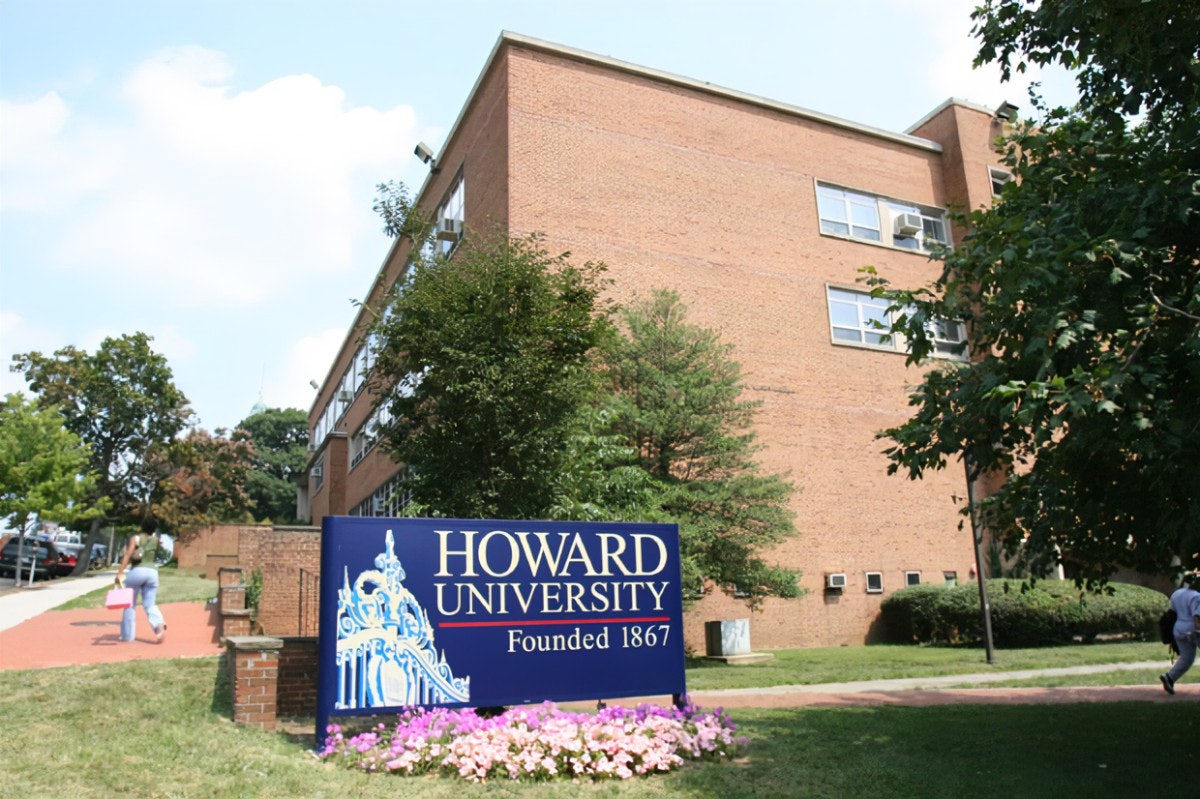
    In a groundbreaking achievement that marks a significant milestone for historically Black colleges and universities (HBCUs), Howard University has become the first HBCU to receive the prestigious Research One (R1) Carnegie Classification, placing it among the nation’s most elite research institutions.

    The announcement from the American Council of Education (ACE) on Thursday, recognizes Howard’s designation as an institution of “very high research spending and doctorate production,” a status that fewer than 150 universities nationwide have achieved. This accomplishment not only highlights Howard’s commitment to academic excellence but also represents a historic moment in the evolution of HBCUs in American higher education.

    According to ACE’s stringent criteria, universities must demonstrate exceptional research capabilities through substantial financial investment and doctoral program success. The minimum requirements include at least $50 million in annual research spending and the production of at least 70 research doctorates. Howard University has significantly surpassed these thresholds, showcasing its commitment to advancing knowledge and fostering innovation.

    Dr. Bruce A. Jones, Howard University’s senior vice president for research, provided specific details about the university’s achievements. “In Fiscal Year 2023, the most recent evaluation year in the classification cycle, the University’s productivity was significantly higher than the R1 base criteria, recording just under $85 million in research expenditures and awarding 96 doctorates in an array of fields,” Jones said. “This includes the highest number of doctorates awarded to Black students at any college or university in America.”

    The impact of such a designation has broader implications beyond Howard, said Dr. Robert T. Palmer, chair and professor in the Department of Educational Leadership and Policy Studies at the university.

    “Howard reaching R1 status is phenomenal. This status will help Howard to attract more highly competitive research grants and talented faculty and students,” said Palmer, who added that the university’s status as an R1 will also help to position itself as a premier institution “and help to amplify the great work being done by faculty, staff, and students, alumni”

    Palmer noted that there are other HBCUs, including his alma mater, Morgan State University that is currently seeking R1 status.

    “It would be great for HBCUs seeking R1 status to form a coalition and work collectively to support each other towards this goal,” he added.

    University President Dr. Ben Vinson III emphasized the broader implications of this achievement for both Howard and the communities it serves.

    “Howard University’s achievement of R1 status demonstrates our research capacity and reaffirms our deep commitment to tackling society’s most pressing questions through cutting-edge scholarship and technological innovation,” Vinson said. “As a leader in the evolution of next generation HBCUs, we are dedicated to ensuring that the benefits of discovery and progress reach all communities, including those historically overlooked and underrepresented.”

    Vinson noted that the university’s research portfolio showcases its comprehensive approach to addressing critical societal challenges. For example, Howard hosts one of only fifteen U.S. Department of Defense University Affiliated Research Centers (UARC) in the nation, focusing on tactical autonomy, human-machine teaming, and artificial intelligence through its Research Institute for Tactical Autonomy.

    In the medical field, Howard’s pioneering spirit is evident in its Center for Sickle Cell Disease, which was the first center in the nation devoted to studying and treating the disease. The university’s Cancer Center holds the distinction of being the only such facility at an HBCU providing comprehensive cancer treatment services while training future oncology professionals and researchers.

    The university’s commitment to preserving and studying Black history and culture is exemplified by the Moorland-Spingarn Research Center, which stands as the nation’s largest and most comprehensive repository of materials on the global Black experience. Additionally, Howard’s Center for African Studies holds the unique position of being the only comprehensive National Resource Center at an HBCU, as designated by the U.S. Department of Education.

    Higher education experts point out that Howard’s R1 designation represents not just an achievement for Howard University but a significant advancement for the entire HBCU community, potentially paving the way for other institutions to follow. As Howard continues to expand its research capabilities and influence, its impact on American higher education and scientific advancement promises to grow even stronger.

    “I think it’s incredibly exciting that Howard University — a powerhouse for decades in research — is being recognized as a Research 1 institution,” said Dr. Marybeth Gasman, who is the Samuel DeWitt Proctor Endowed Chair in Education and University Distinguished Professor at Rutgers University. An expert on HBCUs, Gasman added that the important research contributions across disciplines at Howard have significantly impacted students, communities (regional, national, and international), and leaders.

    “I’m excited to see what the institution does to build on this recognition as it progresses,” she said. “As a Research 1, it will be vital to ensure that all tenure-track faculty are supported through reduced course loads (4 courses a year max), research start-up funds across the disciplines, ample conference travel funding, and that Ph.D. students are supported with fully funded fellowships and assistantships.”

    Source link

  • the-authors-of-new-titles-in-the-major-problems-series – The Cengage Blog

    the-authors-of-new-titles-in-the-major-problems-series – The Cengage Blog

    Reading Time: 3 minutes

    Cengage authors dedicate themselves to producing high-quality content, while also prioritizing a functional learning experience for students, equipping them with background information and tools necessary to analyze the important topics covered in their courses. We’re happy to introduce you to the authors of two first edition titles, and one upcoming fifth edition title, within the Major Problems Anthology series, which familiarizes students with important topics in U.S history, world history and western civilization.

    Ready to meet these authors and learn about their titles? We can’t wait for you to get to know them all.

    Jackson J. Spielvogel and Kathryn Spielvogel ― authors of Major Problems in Western Civilization, Volume I and Volume II, 1e 2025

    “Major Problems in Western Civilization,” 1e includes a variety of supporting materials and historical prose, guiding a carefully curated set of primary and secondary source selections. This text preps instructors and students so they can engage primary sources at the highest level.

    Jackson J. Spielvogel is Associate Professor Emeritus of History at The Pennsylvania State University. He received his Ph.D. from The Ohio State University, where he specialized in Reformation history. His work has been supported by fellowships from the Fulbright Foundation and the Foundation for Reformation Research. He is the author of  “Western Civilization,” now in its 12th edition, as well as co-author (with William Duiker) of “World History,” now in its 10th edition. Professor Spielvogel has won five major university-wide teaching awards.

    Kathryn Spielvogel earned a B.A. in history, and M.A. in art history from The Pennsylvania State University. She continued her graduate studies in history at the University at Buffalo, SUNY, before working as a research editor on history textbooks for the past fifteen years. Passionate about historic preservation and economic development, Kathryn volunteers for several non-profit organizations while renovating historic homes and commercial buildings throughout Pennsylvania.

    Read Kathryn Spielvogel’s blog article about this first edition title: “Why the Study of Western Civilization Still Matters”

    William J. Duiker, author of Major Problems in World History, Volume I and Volume II, 1e 2025

    “Major Problems in World History,” 1e is a comprehensive source for documents and secondary essays dealing with a broad sweep of world history. Each chapter begins with a short introductory essay providing historical context for that period of history.

    William J. Duiker is Liberal Arts Professor Emeritus of East Asian studies at The Pennsylvania State University. He earned a Ph.D. in East Asian history at Georgetown University in 1968. A former foreign service officer with assignments in Taiwan and South Vietnam, he is the author of several books on East Asia. He is also co-author with colleague Jackson Spielvogel of “World History,” 10e. He has traveled widely and was awarded a Faculty Scholar Medal for Outstanding Achievement in 1996.

    Plus a new fifth edition

    Elizabeth Cobbs, Edward J. Blum and Vanessa Walker ― authors of Major Problems in American History, Volume I and Volume II, 5e 2025

    “Major Problems in American History” includes both primary sources and analytical essays on important U.S history topics, with an overall goal towards helping students refine their critical thinking skills.

    Elizabeth Cobbs is a Professor and Dwight E. Stanford Chair in American Foreign Relations at San Diego State University and has won literary prizes for both history and fiction, including the Allan Nevins Prize and Stuart Bernath Book Prize. She earned her Ph.D. in American history at Stanford University. She has served on the jury for the Pulitzer Prize in History and on the Historical Advisory Committee of the U.S. State Department. She has received awards and fellowships from the Fulbright Commission and other distinguished institutions. Her essays have been published in the New York Times, Jerusalem Post and Los Angeles Times, among others. Her current project is a history of women soldiers in World War I.

    Edward J. Blum is a Professor of History at San Diego State University. He received his B.A. from the University of Michigan and his M.A. and Ph.D. from the University of Kentucky. He is the author and co-author of several books on United States history and the winner of numerous awards, including the Peter Seaborg Award for Civil War Scholarship and the Gustave O. Arlt Award in the Humanities.

    Read Professor Blum’s blog article about this fifth edition: “The Importance of Discussion in American History”


    Vanessa Walker is the Gordon Levin Associate Professor of Diplomatic History at Amherst College, where she teaches classes on U.S. politics, foreign relations and human rights. She received her B.A. from Whitman College and her M.A. and Ph.D. from the University of Wisconsin-Madison. She is the recipient of fellowships from the Miller Center for Public Affairs at the University of Virginia, the George Mosse Program at the Hebrew University of Jerusalem and the Stanton Foundation Applied History Program.

    Read: “Q&A With Vanessa Walker, Co-Author of Major Problems in American History”


    Did these Major Problems titles pique your interest? Explore them all and decide which one is right for your history course.

    Source link

  • More college students report history of suicidal behaviors

    More college students report history of suicidal behaviors

    PeopleImages/iStock/Getty Images Plus

    Over the past two decades, suicide rates in the U.S. have increased 37 percent, according to data from the Centers for Disease Control. Fifteen percent of all deaths by suicide are among individuals ages 10 to 24 years old, making it the second leading cause of death for this age group.

    This heightened risk has pushed colleges and universities to invest in preventative measures to address the complex issues that impact student well-being.

    A January report from Pennsylvania State University’s Center for Collegiate Mental Health (CCMH) finds that students with a history of suicidal or self-injurious behaviors report lower levels of distress after engaging with counseling center services, but they remain at higher levels of distress over all compared to their peers.

    Methodology

    The report includes data from the 2023–24 academic year, beginning July 2023 and closing June 2024. Data was collected from 213 college and university counseling centers, including 173,536 unique students seeking care, 4,954 clinicians and over 1.2 million appointments. The data is not representative of the general student population, only those accessing mental health services.

    By the numbers: The number of students reporting previous suicidal or self-injurious behavior (S/SIB) histories jumped four percentage points from 2010–11 to 2023–24, according to CCMH data.

    “While counseling centers have historically treated a considerable segment of students with heightened suicide risk, ongoing questions remain about the complexity of co-occurring problems experienced, the scope of services they utilize, and whether gaps in care exist,” according to the report.

    Compared to their peers without a history of S/SIB, these learners had higher levels of self-reported distress, particularly in symptoms of generalized anxiety, general distress and depression. They were also more likely to report a history of trauma or past hospitalization.

    Students had a higher likelihood of continuing to demonstrate self-injurious thoughts or behaviors, compared to other students, but the overall rates remained low, with only 3.3 percent of students with past S/SIB reporting it during college counseling.

    They were 14.3 times more likely to engage in self-injury and 11.6 times more likely to attempt suicide during treatment, and more than five times more likely to be admitted or referred to a hospital for a mental health concern. This, again, constituted a small number of students (around one in 180) but researchers noted the disproportionate likelihood of these critical case events.

    Ultimately, students with suicidal or self-injurious behavior history saw similar benefits from accessing services compared to their peers, with data showing less generalized distress or suicidal ideation among all learners between their first and final assessments. However, they still had greater levels of distress, even if slightly lower than initial intake, showing a need for additional resources, according to researchers.

    “The data show that students with a history of suicidal or self-injurious behaviors could benefit from access to longer-term and comprehensive care, including psychological treatment, psychiatric services and case management at counseling centers, as well as adjunctive support that contributes to an overall sense of well-being, such as access to disability services and financial aid programs,” said Brett Scofield, executive director for the CCMH, in a Jan. 28 press release.

    Future considerations: Researchers made note that while prior history of suicidal behaviors or self-harm are some of the risk factors for suicide, they are not the only ones, and counseling centers should note other behaviors that could point to suicidal ideation, such as substance use or social isolation.

    Additionally, some centers had higher rates of students at risk for suicide, ranging from 20 to 50 percent of clients, so examining local data to understand the need and application of data is critical, researchers wrote.

    The data also showed a gap in capacity to facilitate longer-term care, such as case management or psychiatric services available, which can place an additional burden on clinicians or require outsourcing for support, diluting overall quality of care at the center. “Therefore, it is imperative that colleges and universities invest in under-resourced counseling centers to ease the burden on counseling center staff and optimize treatment for students with heightened suicide risk,” according to the report.

    Investing in on-site psychological treatment or psychiatric care and finding creative solutions to work alongside outside partners can help deliver more holistic care.

    Other trends: In addition to exploring how college counseling centers can address suicidality in young people, CCMH researchers built on past data to illustrate some of the growing concerns for on-campus mental health service providers.

    • Rates of prior counseling and psychotropic medication usage grew year over year and are at the highest level since data was first collected in 2012. A 2023 TimelyCare survey found six in 10 college students had accessed mental health services prior to entering college, and CCMH data echoed this trend, with 63 percent of students entering with prior counseling history.
    • The number of clients reporting a history of trauma remains elevated, up eight percentage points compared to 2012, though down slightly year over year, at 45.5 percent, compared to last year’s 46.8 percent.
    • Anxiety is the most common presenting concern, with 64.4 percent of clients having anxiety, as assessed by clinicians.
    • In-person counseling services have rebounded since the start of the COVID-19 pandemic in 2020, with 63.7 percent of clients receiving exclusively in-person counseling and 13.5 percent receiving only video care.

    We bet your colleague would like this article, too. Send them this link to subscribe to our weekday newsletter on Student Success.

    If you or someone you know are in crisis or considering suicide and need help, call the 988 Suicide & Crisis Lifeline by dialing 9-8-8, or contact the Crisis Text Line by texting HOME to 741741.

    Source link

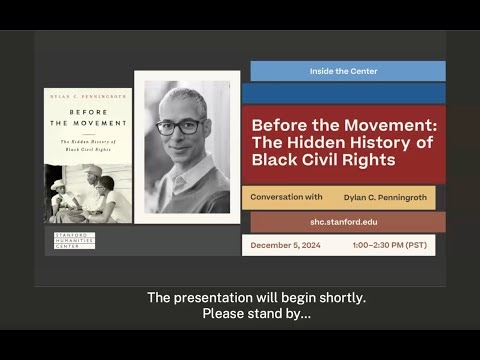
  • The Hidden History of Black Civil Rights (Dylan C. Penningroth)

    The Hidden History of Black Civil Rights (Dylan C. Penningroth)

    From the Stanford Humanities Center: 

    As part of our online Inside the Center series, Dylan C. Penningroth, a 2013–14 SHC fellow, discusses his latest book, “Before the Movement: The Hidden History of Black Civil Rights.” Joining him in conversation is historian and Stanford professor James T. Campbell. Through an empirically rich historical investigation into the changing meaning of civil rights, “Before the Movement” seeks to change the way we think about Black history itself. Weaving together a variety of sources—from state and federal appellate courts to long-forgotten documents found in county courthouse basements, from family interviews to church records—the book tries to reveal how African Americans thought about, talked about, and used the law long before the marches of the 1960s. In a world that denied their constitutional rights, Black people built lives for themselves through common law “rights of everyday use.”

    Source link

  • The Importance of Discussion in American History

    The Importance of Discussion in American History

    Reading Time: 3 minutes

    Psychologists call it choice paralysis. For me, it’s more like choice defeat. When confronted with too many options, I shut down. I still remember the first time this happened. I went to the mall for some new clothes (it was the ’90s and there was no internet). Almost immediately, my entire emotional world seemed to collapse. I was overwhelmed and had to leave. So, I drove home in my awesome Subaru Justy (I had a white one!)

    The choices are endless

    Fast forward 30 years, and the same thing happens to me when I’m selecting textbooks and primary sources for my United States history survey. There are so many amazing history textbooks. Each one has so much information with many broad points, specific examples, charts, maps, and student learning outcomes.

    Then, there’s the availability of primary sources, with millions upon millions of available documents. I’m thankful for resources like, Chronicling America and books.google.com, but still struggle. I feel awash in a sea of too many options.

    Major Problems in American History takes a different approach

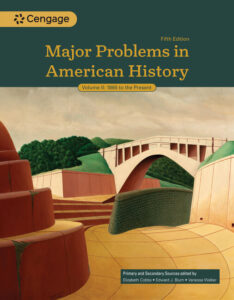
    Major Problems in American History, Volume I

    I approached our new edition of “Major Problems in American History, Volume I and Volume II” to help educators like me. Instead of offering more content, I tried to offer better direction. I hoped that reading this text would be less like going to the mall for new apparel and more like receiving a curated clothing box. This new fifth edition of “Major Problems in American History” offers clear direction for students in various ways.

    Chapter structure

    Each chapter begins with succinct introductions (two–four pages) that invite students to explore the major themes and issues of a historical era. A timeline with about 10 key moments follows. Together, the short introduction and timeline don’t overwhelm the reader, but rather invite them to engage with the text. This quickly sets the stage for the primary sources later to come.

    Selection of primary sources

    The primary sources revolve around one or two central problems from each era. For example, the chapter on so-called “Jacksonian Democracy” asks: why did some Americans revere Andrew Jackson while others despised him? This fundamental issue, or “major problem,” determines which sources I included and how I ask students to approach them. By looking at sources related to the Indian Removal Act and its consequences, debates about state nullification of federal laws, and every high school teacher’s beloved Bank War, instructors can analyze with a purpose.

    Major Problems in American History, Volume II cover image
    Major Problems in American History, Volume II

    The purpose of secondary sources

    The primary sources and the major problem they address then take center stage in secondary sources where historians offer differing perspectives on the fundamental issue students are analyzing. Students follow how professional historians have dealt with the main problem, what sources they examine, and how they make meaning of the sources. In this way, the historical scholarship becomes a teaching tool. Secondary sources help teach students differing approaches to analysis.

    In the chapter on early English colonizing of North America, historians and source authors, Rachel Herrman and Rachel Winchcombe examine the “starving time” of Jamestown. Herrman looks at reports from this time to understand how the English continued to market colonization as reports of scarcity – and even cannibalism – became widespread. Winchcombe uses archeological evidence and even bone analysis to uncover what the people of Jamestown actually ate to understand how this experience of colonization influenced approaches to dietary behaviors. As students read the primary and secondary sources, they can reflect upon the major problem framed in each chapter, and hopefully embrace the complexities of the past and begin the challenging process of drawing their own conclusions about it.

    This edition of “Major Problems in American History” is for the instructors and students who want to maximize their time interpreting, discussing, and sinking their teeth into fundamental issues from the past. The goal is to avoid overwhelming amounts of content and data, and instead let students wrestle with issues from the past, many of which continue to impact people today.


    Written by Edward J. Blum, Professor of history at San Diego State University and co-author of “Major Problems in American History, Volume I and Volume II,” 5e


    Interested in learning more about “Major Problems in American History” by Edward J. Blum, Elizabeth Cobbs and Vanessa Walker? Check out Volume I and Volume II for your history course, coming later this spring, 2025, and browse other history titles on our discipline page. 

    Source link

  • Why the Study of Western Civilization Still Matters

    Why the Study of Western Civilization Still Matters

    Reading Time: 4 minutes

    When my father, Jackson Spielvogel, first wrote the textbook, “Western Civilization,” now in its 12th edition, he hoped to craft a singular narrative that organized the complexities and contradictions of a vast historical legacy. Decades of teaching large survey courses at Penn State University led my father to value the power of primary sources in stimulating the imagination and critical faculties of his students. Today, over thirty years since the first edition of Spielvogel’s best-selling text, we launch “Major Problems in Western Civilization,” a new, first edition designed to enhance our understanding of Western Civilization at a time when its significance and relevance is being reevaluated.

    Why study Western Civilization?

    With the advent of globalization, many have questioned the usefulness of historical models centered on the “West” — which often translates to Europe and the United States. While today’s scholars rightly emphasize global connections and diversity to combat historical biases and colonialist (imperialist) mindsets, the centrality of Western Civilization as a foundational model for human development cannot be overstated. The people, writings, and culture that formed the core of the “Western tradition” laid the foundation for many of today’s institutions and contemporary efforts to reshape them. The value in studying Western Civilization includes understanding the development of our current systems — political, judicial, economic, educational, religious, scientific, and cultural — and how they shape our lives, both in the United States and across the globe.

    Western ideals

    The legislative systems of the United States and European nations are governed by the rule of democracy, ideals formed to challenge historic power structures and hierarchies. New concepts of sovereignty were proposed during the Enlightenment and American and French revolutions, particularly the right of the people to govern themselves. The idea that a nation, itself a new concept in the nineteenth century, should be governed by the people and not by a divinely ordained hereditary kingship, and that individuals owned the right to participate in choosing who led their government, were radical ideas. These Western ideals led to the formation of nations supporting democratic norms, free and fair elections, capitalist economies, robust educational systems, freedom of speech and the press, fair judicial processes, religious tolerance, and open cultural expression.

    However, despite the promise of freedom, many under the rule of European and American governments were forced to support the needs of the country, often suffering subjugation at the hands of racist ideologies and colonial networks. The provisional governments held by Western leaders in Southeast Asia, Asia, Africa, the Middle East, and Latin America further attest to the complexity of the Western Civilization narrative and problems inherent when freedom is not accessible to all.

    Major Problems in Western Civilization: a complex and diverse first edition

    In “Major Problems in Western Civilization,students will explore the words of those who built these systems and institutions. They will learn to place people and places within historical contexts by reading first-hand accounts of those who shaped, and were shaped by, Western influence. Students will encounter poetry and art that portray the human condition, religious relics and structures embodying spiritual devotion, and texts and artworks that challenged political regimes and social norms. Letters to loved ones, tales of heroic feats, law codes and novels all capture the spirit of the age. This text introduces students to these primary sources, providing a greater understanding of how history has been crafted while stimulating a nuanced consideration of its legacy.

    As students dive into this diverse narrative, they will be met by the contradictions of history. For example, while technology can advance humanity, it can also destroy it. Albert Einstein’s work on the atom revolutionized the way we viewed the world, but it also led to our greatest potential weapon, the atomic bomb. The Industrial Revolution of the eighteenth and nineteenth centuries gave us the combustible engine, allowing us to more easily travel and produce goods that have enriched many people’s lives. This economic system of mechanized production developed into a capitalist financial system that has dominated not only the West, but the entire planet.

    The student takeaway

    What has been the cost of these developments on the environment, global economy, and public health? Western advancements in production, consumption, transportation, and communication have fueled globalization. However, we cannot understand the impact of these developments, or our current perspectives, without considering their origins. Similarly, the democratic ideals noted above represent attempts to ensure freedom from the tyranny that too often plagued human history.

    Yet the idea of sovereignty remains contested today, and the importance of studying Western Civilization stems from its relevancy, particularly during a time when ideas of nationhood are constantly revised. What freedom looks like remains an open question for today’s students, and their role in defining freedom can only be accomplished by understanding the systems and factors that bore its very premise. “Major Problems in Western Civilization” aims to help students take a purposeful step towards reaching this goal.


    Written by Kathryn Spielvogel, M.A. Pennsylvania State University, co-author of “Major Problems in Western Civilization,” 1e. 

    Kathryn Spielvogel earned a B.A. in history, and M.A. in Art History from The Pennsylvania State University. She continued her graduate studies in history at the University at Buffalo, SUNY, before working as a research editor on history textbooks for the past fifteen years. Passionate about historic preservation and economic development, Kathryn volunteers for several non-profit organizations while renovating historic homes and commercial buildings throughout Pennsylvania.


    Interested in this first edition text for your history course?  Keep an eye out for Volume I and Volume II of “Major Problems in Western Civilization”, coming later this spring, 2025.

    Source link

  • Q&A with Vanessa Walker – The Cengage Blog

    Q&A with Vanessa Walker – The Cengage Blog

    Reading Time: 5 minutes

    We recently had the opportunity to talk with Vanessa Walker, new co-author of “Major Problems in American History, Volume I,” 5th edition. In this Q&A, Professor Walker discusses her background, why she’s thrilled to be a part of the “Major Problems” series and what sets this text apart from the crowd.

    Tell us a little bit about yourself and your background. 

    I am the Gordon Levin Associate Professor of Diplomatic History at Amherst College where I teach classes on US foreign relations, politics, social movements and the history and politics of human rights. I became interested in these topics as an undergraduate student at Whitman College, where I wrote my thesis on Carter’s human rights policy, a subject that became my dissertation topic at the University of Wisconsin-Madison. I published my first book, “Principles in Power: Latin America and the Politics of US Human Rights Diplomacy” with Cornell University Press in 2020, and have written several articles on the Carter administration’s foreign policy and the role of nongovernment activists in influencing high level diplomacy. I live in Western Massachusetts with my husband, who is also a historian, and our two kids. I love to spend a lot of time outdoors hiking, skiing and swimming in lakes, especially in Vermont.

    Why were you excited to join the Major Problems in American History series as a co-author?

    I was excited to join the “Major Problems” series because I have used these volumes in the classroom, both as a student and as an instructor. As a student, I remember using them in my college history courses, relying on the competing perspectives in classroom debates, and combing through the documents and essays when writing my papers. When I began teaching, I turned to them again as a way to introduce my students to the ways historians think, and to help me curate and frame the core themes and ideas I wanted to integrate into my class. These volumes reflect the way I approach my teaching and learning, so I was excited to shape that for another generation of students and faculty.

    History encompasses such a vast array of topics. In what ways does your textbook offer something truly unique and differentiating to the field?

    I think one of the distinctive features of “Major Problems in American History” is in its name. Rather than synthesizing debates and interpretations, or offering a consensus position on a topic, this edition highlights the scholarly conversation and raw materials that comprise the fabric of producing historical knowledge. The text does not attempt to be comprehensive. Instead, by focusing on core debates within the field, it allows students to develop their own interpretations, and for teachers to challenge dominant or singular narratives and perspectives on complex topics and issues.

    Given the ever-evolving nature of history, how does your textbook discuss the complexities of current events and modern issues to remain relevant and impactful for students, and what are they?

    This edition engages with the creation of modern America. By studying its foundations and evolution, students unavoidably confront how many of the issues and debates we think of as contemporary problems have much deeper roots. The study of history is inherently one that involves change over time. Highlighting themes of gender, race, economic security and democratic inclusion, this volume invites students to consider major inflection points and persistent dynamics that have defined the modern United States.

    How do you see this textbook deepening students’ understanding of history and fostering a more active engagement with its core concepts?

    “Major Problems in American History,” by design, demands that students move away from the idea that history is the practice of memorizing names and dates. This text instead involves them in the process of integrating and prioritizing competing interpretations and arguments. Each chapter invites students to explore how different figures viewed critical moments and ideas, and really think about the assumptions and experiences that might give rise to divergent interpretations.

    With learners from diverse academic backgrounds, how does Major Problems in American History accommodate both those majoring in history and those encountering it through general education?

    Interpretation of sources—both primary and secondary—depends on a basic knowledge to frame and contextualize the issues at play. To support students regardless of their expertise, we have expanded the introductory essays to each chapter. We also provide a timeline for each chapter, highlighting key events and relevant dates. Additionally, we situate the secondary sources within broader themes and scholarly debates central to the chapter’s topic. These elements, together, empower students to explore primary and secondary sources, so they can become aware of their broader settings and the important dynamics at play.

    What do you hope instructors will take away from this textbook that will enhance their teaching?

    With this edition, we’ve given more focus to the idea of one or two “major problems” to shape the conversations around each chapter’s historical moment or theme. We hope this will provide instructors with the ability to go deeper into crucial topics, while also bringing in their own areas of expertise to broaden out the themes and ideas highlighted in each chapter. We’ve also included more primary sources that capture voices outside of government, which are often harder to find. Additionally, we’ve also increased the number of images to provide greater diversity of primary source materials.

    Lastly, what do you hope is the most significant takeaway students will carry with them after using your textbook?

    I hope that students will come away with an awareness that history, fundamentally, is about the ability to take in and explore different peoples’ perspectives, which might be radically different than their own. I believe that exercising critical thinking about the past can shed new light on assumptions and biases attached to current problems and issues. I believe that grappling with debates presented in the text will help students develop the skills and awareness necessary to apply these same approaches beyond their study of history. Additionally, I hope it will allow them to productively engage those who hold fundamentally different opinions, and use that as a foundation for pursuing their interests outside of the classroom.


    Vanessa Walker is the Gordon Levin Associate Professor of Diplomatic History at Amherst College, where she teaches classes on U.S. politics, foreign relations and human rights. She received her B.A. from Whitman College and her M.A. and Ph.D. from the University of Wisconsin-Madison. She is the author of “Principles in Power: Latin America and the Politics of U.S. Human Rights Diplomacy” (Cornell University Press, 2020), and co-author of “Major Problems in American History, Volume I” 5e. She is currently working on a project exploring U.S. domestic human rights campaign as a response to the decline of the liberal state in the 1970s.


    Interested in learning more about “Major Problems in American History”? Explore this new edition for your history course.


    Source link

  • Article for History UK on what’s next for English HE

    Article for History UK on what’s next for English HE

    Enter your email address to subscribe to this blog and receive notifications of new posts by email.


    Join 379 other subscribers

    Source link