When my father, Jackson Spielvogel, first wrote the textbook, “Western Civilization,” now in its 12th edition, he hoped to craft a singular narrative that organized the complexities and contradictions of a vast historical legacy. Decades of teaching large survey courses at Penn State University led my father to value the power of primary sources in stimulating the imagination and critical faculties of his students. Today, over thirty years since the first edition of Spielvogel’s best-selling text, we launch “Major Problems in Western Civilization,” a new, first edition designed to enhance our understanding of Western Civilization at a time when its significance and relevance is being reevaluated.
Why study Western Civilization?
With the advent of globalization, many have questioned the usefulness of historical models centered on the “West” — which often translates to Europe and the United States. While today’s scholars rightly emphasize global connections and diversity to combat historical biases and colonialist (imperialist) mindsets, the centrality of Western Civilization as a foundational model for human development cannot be overstated. The people, writings, and culture that formed the core of the “Western tradition” laid the foundation for many of today’s institutions and contemporary efforts to reshape them. The value in studying Western Civilization includes understanding the development of our current systems — political, judicial, economic, educational, religious, scientific, and cultural — and how they shape our lives, both in the United States and across the globe.
Western ideals
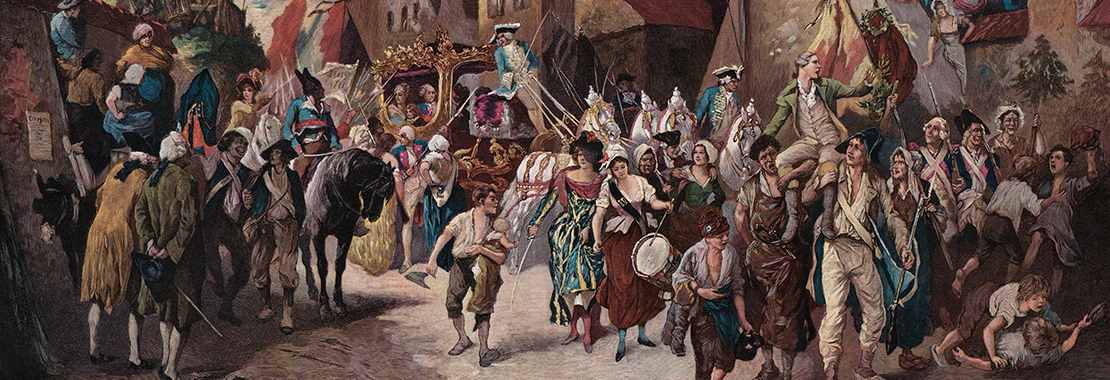
The legislative systems of the United States and European nations are governed by the rule of democracy, ideals formed to challenge historic power structures and hierarchies. New concepts of sovereignty were proposed during the Enlightenment and American and French revolutions, particularly the right of the people to govern themselves. The idea that a nation, itself a new concept in the nineteenth century, should be governed by the people and not by a divinely ordained hereditary kingship, and that individuals owned the right to participate in choosing who led their government, were radical ideas. These Western ideals led to the formation of nations supporting democratic norms, free and fair elections, capitalist economies, robust educational systems, freedom of speech and the press, fair judicial processes, religious tolerance, and open cultural expression.
However, despite the promise of freedom, many under the rule of European and American governments were forced to support the needs of the country, often suffering subjugation at the hands of racist ideologies and colonial networks. The provisional governments held by Western leaders in Southeast Asia, Asia, Africa, the Middle East, and Latin America further attest to the complexity of the Western Civilization narrative and problems inherent when freedom is not accessible to all.
Major Problems in Western Civilization: a complex and diverse first edition
In “Major Problems in Western Civilization,” students will explore the words of those who built these systems and institutions. They will learn to place people and places within historical contexts by reading first-hand accounts of those who shaped, and were shaped by, Western influence. Students will encounter poetry and art that portray the human condition, religious relics and structures embodying spiritual devotion, and texts and artworks that challenged political regimes and social norms. Letters to loved ones, tales of heroic feats, law codes and novels all capture the spirit of the age. This text introduces students to these primary sources, providing a greater understanding of how history has been crafted while stimulating a nuanced consideration of its legacy.
As students dive into this diverse narrative, they will be met by the contradictions of history. For example, while technology can advance humanity, it can also destroy it. Albert Einstein’s work on the atom revolutionized the way we viewed the world, but it also led to our greatest potential weapon, the atomic bomb. The Industrial Revolution of the eighteenth and nineteenth centuries gave us the combustible engine, allowing us to more easily travel and produce goods that have enriched many people’s lives. This economic system of mechanized production developed into a capitalist financial system that has dominated not only the West, but the entire planet.
The student takeaway
What has been the cost of these developments on the environment, global economy, and public health? Western advancements in production, consumption, transportation, and communication have fueled globalization. However, we cannot understand the impact of these developments, or our current perspectives, without considering their origins. Similarly, the democratic ideals noted above represent attempts to ensure freedom from the tyranny that too often plagued human history.
Yet the idea of sovereignty remains contested today, and the importance of studying Western Civilization stems from its relevancy, particularly during a time when ideas of nationhood are constantly revised. What freedom looks like remains an open question for today’s students, and their role in defining freedom can only be accomplished by understanding the systems and factors that bore its very premise. “Major Problems in Western Civilization” aims to help students take a purposeful step towards reaching this goal.
Written by Kathryn Spielvogel, M.A. Pennsylvania State University, co-author of “Major Problems in Western Civilization,” 1e.
Kathryn Spielvogel earned a B.A. in history, and M.A. in Art History from The Pennsylvania State University. She continued her graduate studies in history at the University at Buffalo, SUNY, before working as a research editor on history textbooks for the past fifteen years. Passionate about historic preservation and economic development, Kathryn volunteers for several non-profit organizations while renovating historic homes and commercial buildings throughout Pennsylvania.
Interested in this first edition text for your history course? Keep an eye out for Volume I and Volume II of “Major Problems in Western Civilization”, coming later this spring, 2025.
We recently had the opportunity to talk with Vanessa Walker, new co-author of“Major Problems in American History, Volume I,” 5th edition. In this Q&A, Professor Walker discusses her background, why she’s thrilled to be a part of the “Major Problems” series and what sets this text apart from the crowd.
Tell us a little bit about yourself and your background.
I am the Gordon Levin Associate Professor of Diplomatic History at Amherst College where I teach classes on US foreign relations, politics, social movements and the history and politics of human rights. I became interested in these topics as an undergraduate student at Whitman College, where I wrote my thesis on Carter’s human rights policy, a subject that became my dissertation topic at the University of Wisconsin-Madison. I published my first book, “Principles in Power: Latin America and the Politics of US Human Rights Diplomacy” with Cornell University Press in 2020, and have written several articles on the Carter administration’s foreign policy and the role of nongovernment activists in influencing high level diplomacy. I live in Western Massachusetts with my husband, who is also a historian, and our two kids. I love to spend a lot of time outdoors hiking, skiing and swimming in lakes, especially in Vermont.
Why were you excited to join the Major Problems in American History series as a co-author?
I was excited to join the “Major Problems” series because I have used these volumes in the classroom, both as a student and as an instructor. As a student, I remember using them in my college history courses, relying on the competing perspectives in classroom debates, and combing through the documents and essays when writing my papers. When I began teaching, I turned to them again as a way to introduce my students to the ways historians think, and to help me curate and frame the core themes and ideas I wanted to integrate into my class. These volumes reflect the way I approach my teaching and learning, so I was excited to shape that for another generation of students and faculty.
History encompasses such a vast array of topics. In what ways does your textbook offer something truly unique and differentiating to the field?
I think one of the distinctive features of “Major Problems in American History” is in its name. Rather than synthesizing debates and interpretations, or offering a consensus position on a topic, this edition highlights the scholarly conversation and raw materials that comprise the fabric of producing historical knowledge. The text does not attempt to be comprehensive. Instead, by focusing on core debates within the field, it allows students to develop their own interpretations, and for teachers to challenge dominant or singular narratives and perspectives on complex topics and issues.
Given the ever-evolving nature of history, how does your textbook discuss the complexities of current events and modern issues to remain relevant and impactful for students, and what are they?
This edition engages with the creation of modern America. By studying its foundations and evolution, students unavoidably confront how many of the issues and debates we think of as contemporary problems have much deeper roots. The study of history is inherently one that involves change over time. Highlighting themes of gender, race, economic security and democratic inclusion, this volume invites students to consider major inflection points and persistent dynamics that have defined the modern United States.
How do you see this textbook deepening students’ understanding of history and fostering a more active engagement with its core concepts?
“Major Problems in American History,” by design, demands that students move away from the idea that history is the practice of memorizing names and dates. This text instead involves them in the process of integrating and prioritizing competing interpretations and arguments. Each chapter invites students to explore how different figures viewed critical moments and ideas, and really think about the assumptions and experiences that might give rise to divergent interpretations.
With learners from diverse academic backgrounds, how does Major Problems in American History accommodate both those majoring in history and those encountering it through general education?
Interpretation of sources—both primary and secondary—depends on a basic knowledge to frame and contextualize the issues at play. To support students regardless of their expertise, we have expanded the introductory essays to each chapter. We also provide a timeline for each chapter, highlighting key events and relevant dates. Additionally, we situate the secondary sources within broader themes and scholarly debates central to the chapter’s topic. These elements, together, empower students to explore primary and secondary sources, so they can become aware of their broader settings and the important dynamics at play.
What do you hope instructors will take away from this textbook that will enhance their teaching?
With this edition, we’ve given more focus to the idea of one or two “major problems” to shape the conversations around each chapter’s historical moment or theme. We hope this will provide instructors with the ability to go deeper into crucial topics, while also bringing in their own areas of expertise to broaden out the themes and ideas highlighted in each chapter. We’ve also included more primary sources that capture voices outside of government, which are often harder to find. Additionally, we’ve also increased the number of images to provide greater diversity of primary source materials.
Lastly, what do you hope is the most significant takeaway students will carry with them after using your textbook?
I hope that students will come away with an awareness that history, fundamentally, is about the ability to take in and explore different peoples’ perspectives, which might be radically different than their own. I believe that exercising critical thinking about the past can shed new light on assumptions and biases attached to current problems and issues. I believe that grappling with debates presented in the text will help students develop the skills and awareness necessary to apply these same approaches beyond their study of history. Additionally, I hope it will allow them to productively engage those who hold fundamentally different opinions, and use that as a foundation for pursuing their interests outside of the classroom.
Vanessa Walker is the Gordon Levin Associate Professor of Diplomatic History at Amherst College, where she teaches classes on U.S. politics, foreign relations and human rights. She received her B.A. from Whitman College and her M.A. and Ph.D. from the University of Wisconsin-Madison. She is the author of “Principles in Power: Latin America and the Politics of U.S. Human Rights Diplomacy” (Cornell University Press, 2020), and co-author of “Major Problems in American History, Volume I” 5e. She is currently working on a project exploring U.S. domestic human rights campaign as a response to the decline of the liberal state in the 1970s.
National Women’s History Month celebrates the contributions and achievements women have made throughout U.S. history. CUPA-HR is fortunate to have had many smart and dedicated women serve on its national, regional and chapter boards and on various committees. In addition to providing leadership at work, they have volunteered their time and shared their know-how — lighting the way for other women in the field.
To celebrate the month, we’re spotlighting some of the many leaders who have transformed higher ed HR and CUPA-HR. Sure to inspire, these articles and podcast episodes offer unique perspectives of higher ed HR, career journeys, struggles, successes and everything in between.
Looking Back to Move Forward
Blazing a Trail: Women Who Paved the Way in Higher Ed HR, from a 2014 issue of Higher Ed HR Magazine, features five CUPA-HR leaders who began their higher ed HR careers in a very different era — when HR was still “personnel,” men dominated the profession and the nature of the work was strictly focused on policies and procedures. These women rose to leadership positions, not only in their departments, but across their institutions. Read about their challenges, their regrets, their successes and a few war stories to boot.
In Episode 2: Growing Through Change, Allison Vaillancourt reflects on some professional advice she received from a CUPA-HR peer that changed her entire approach to HR and helped advance her career and secure several leadership positions.
Lynn Bynum shares how CUPA-HR helped her make the transition from the corporate world to higher ed HR, and Lauren Turner offers insights into how HR can become a recognized leader within the institution and help others become better leaders in Episode 4: Model Behavior.
Jane Federowicz reflects on her unexpected path to HR, starting out as her institution’s accountant and ending up being asked to create an HR department, in Episode 6: When Opportunity Knocks.
In Episode 7: Lifelong Learning, Barbara Carroll dives into some experiences she never thought she would have as an HR leader, including serving on CUPA-HR’s Public Policy Committee and providing a higher ed perspective to a room full of senators and congressional representatives, and Linda Lulli discusses the importance of being a lifelong learner in the HR profession and how to be adaptable and resilient.
Time-Out With Tammi & Tyler is a podcast that explores how higher ed HR careers evolve by interviewing professionals at the top of their HR game, sharing advice they would give professionals climbing the higher ed HR ladder.
In Episode 1, Donna Popovich offers advice for early-career professionals.
Sheraine Gilliam walks through her story of persistence, networking and how to turn negative situations into opportunities for growth in Episode 3.
In Episode 5, Clarity White describes how her Wildfire program experience helped advance her HR career.
“Black History Month is an opportunity to understand the stories of Black Americans as something more than a history of racism and strife. It’s a time to recognize their undeniable impact on our country and culture.” – BestColleges.com
Since 1976, U.S. presidents have officially designated February as Black History Month. This month-long celebration of the historic contributions of the Black community is the legacy of historian and scholar Carter G. Woodson, who worked tirelessly to reform the way Black history is taught in schools.
Today, higher ed institutions recognize and honor Black History Month in myriad ways, but the work required to create and sustain equality, an inclusive workplace culture and a sense of belonging on our campuses is ongoing.
The CUPA-HR resources listed below provide insights and tools to help individuals and institutions build on their understanding of the issues and take action to bring about change. The current 21-Day Equity Habit Building Challenge, in particular, offers a one-of-a-kind opportunity to learn from institutions that are making meaningful strides in this work.
Participate in a 21-Day Challenge. The concept of the 21-day challenge was introduced several years ago by diversity expert Eddie Moore, Jr. to create greater understanding of the intersections of race, power, privilege, supremacy, oppression and equity. There are several challenges to choose from:
Watch the on-demand webinar, Measurements That Matter: Using HR Data to Advance DEI Goals. In this webinar, presenters from the USC Race and Equity Center shared their insights and strategies for increasing diversity in campus workforces. You’ll learn what types of data to collect, how to use that data to get a better sense of your institution’s workforce diversity gaps and how to provide equitable responses to any issues uncovered.
Add DEI resources to your toolbelt. Explore the Diversity, Equity and Inclusion Toolkit (CUPA-HRmembers-only resource). Here you’ll find resources, trainings, policies, forms and templates, and much more to help support your institution’s DEI efforts.
Watch the recording of the virtual town hall, Partners in Justice, We Will Not Be Silent!This discussion features voices from our higher ed HR community and explores what it means to move beyond existing DEI initiatives to create real systemic and cultural change at our colleges and universities.
Throughout the month, take time to dive into one or more of these resources (individually or with a group) and explore new ways to take action now and throughout the year.
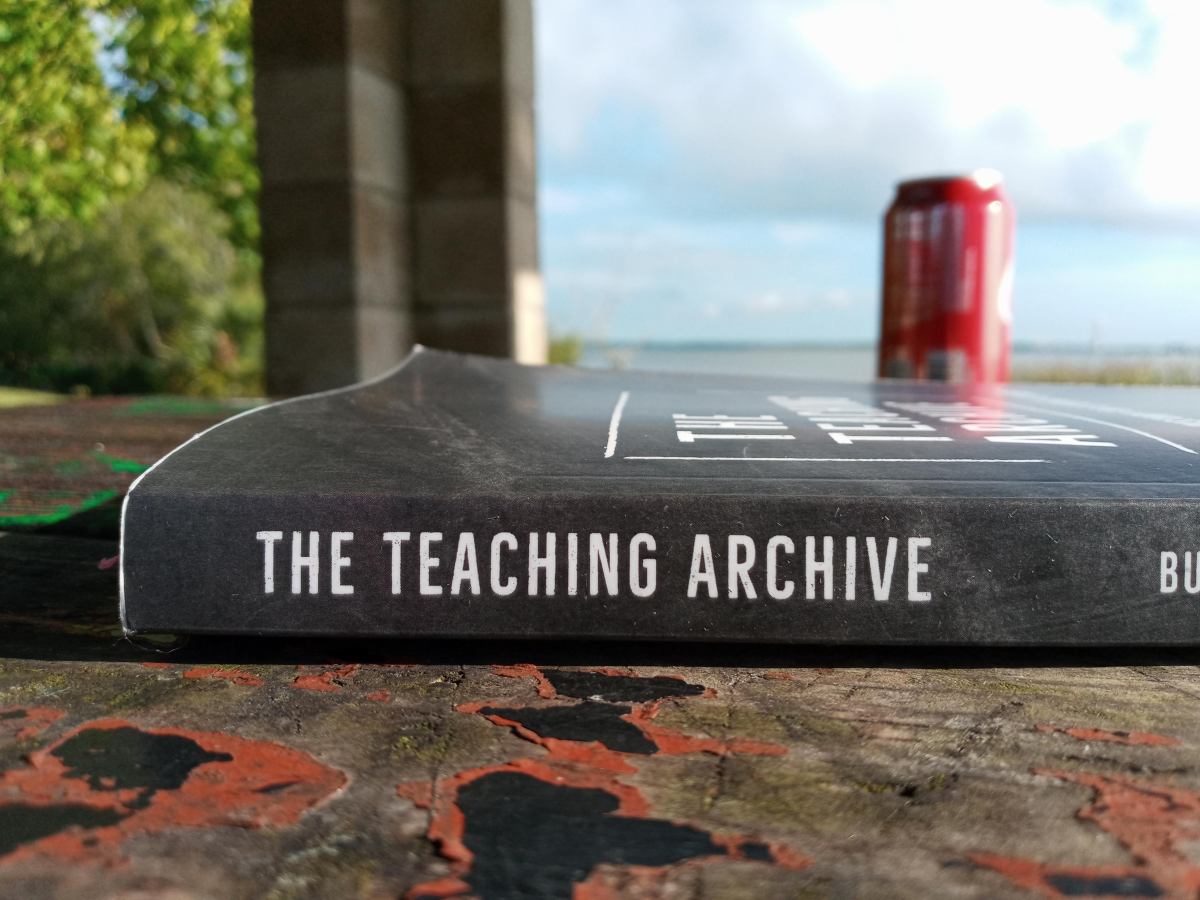
In The Teaching Archive: A New History for Literary StudyDr. Rachel Sagner Buurma, Associate Professor of English at Swarthmore College, and Dr. Laura Heffernan, Associate Professor of English at the University of North Florida, turn to archives from the actual classrooms of major literary critics of the past century to see what the available course documents tell about the history of the teaching of literature. This approach contrasts with existing histories, such as Gerald Graff’s Professing Literature, which are based on archives of published works about teaching rather than archives of teaching itself. While this book will naturally interest literature teachers most, I think that Buurma and Heffernan’s methods and findings have wider implications across academia. Every discipline has a pedagogical past to learn from and a future to archive for. One of the most surprising findings in the book is that landmark works of literary scholarship often had tangible roots in classrooms. Seeing this documented helps us better appreciate that the classroom is a site of disciplinary scholarship in its own right. I’m grateful to Buurma and Heffernan for this fascinating historical work and for responding to my questions over email.
CORRIGAN: I’m interested in the origin of the project. What prompted you to turn to archives of actual classrooms? What gave you the idea that you might find a different history of literary study there than what has previously been found based on archives of scholarly publications?
BUURMA & HEFFERNAN: Well, the project really began as an attempt to investigate how the New Critics actually taught. We had both heard New Critical pedagogy invoked over and over again as the foundation for how literary scholars teach, even if they are practicing historicism in their scholarship. And mentioning the New Criticism immediately brought to mind the familiar image of a professor leading students in a close reading of a single poem on a page. But what, we wondered, was this imaginary of the New Critical classroom predicated upon? New Critics wrote *about* teaching in their major works: Cleanth Brooks’s The Well Wrought Urn, for example, begins with a classroom scene in which the student senses the aesthetic value of Wordworth’s Westminster Bridge sonnet but needs to have that native critical judgment nurtured and amplified and modeled by the teacher through practices of closely attending to not just what the poem says but how he says it. But how did Brooks actually teach?
So we started there, and luck had it that Brooks’s papers at the Beinecke Library at Yale included transcriptions of not just his lectures but his students’ comments and questions from his Modern Poetry course (he had planned to publish a book of his lectures, and these complete transcripts were to be the basis). So, we were able to get a real sense of the ups and downs of his classroom hour; the kinds of unexpected queries he fielded from students; the historical facts he included or even misreported; and the ways that the sheer time that he spent on certain poems (like Marianne Moore’s “Poetry,” which he deemed a “failure”) belied a different kind of literary valuation at work than his stated theoretical account of what makes good poems good.
From there, we saw that there was a lot to be learned—indeed a whole other disciplinary narrative—by witnessing how scholars taught alongside what they wrote. We went to see, in the same spirit, how other foundational formalist critics including Eliot and Richards taught in their classrooms. But we also began to wonder and investigate what kinds of teaching were happening in other kinds of institutions in these same moments. Scholarly publications—particularly those manifestoes or arguments over how we should teach or read or research—tend to overrepresent figures at elite institutions. So looking at teaching instead gives us back a sense of the much bigger field of practice in these eras.
CORRIGAN: Early in the book, you stress that your book is a history of teaching—not an endorsement of how the particular teachers in your study taught (p. 17). But as I read, I kept finding things these teachers were doing really creative and interesting, such as Edith Rickert having her students create visual representations of elements of style in a text (p. 99). Were there times in your research where you thought, “Oh, that is good teaching” or even “I’m going to use that in my classroom”?
BUURMA & HEFFERNAN: Yes—and we think it’s actually a testament to how creative and interesting and maybe above all experimental literature teaching has been—we weren’t looking for model practices or assignments, but so much of what we came across seems worth stealing for our own classrooms, even though we try hard in the book to point out that we’re not holding up these figures as examples of Great Teachers or—what would be even less useful—suggesting that somehow teaching in the past used to be better and that we need to return to some previous, unfallen state of literature teaching! Because we don’t think that at all. In fact, one of the things that prompted us to write the book in the first place was knowing how hard we were working to learn to teach well in our own classrooms, how much time we were spending inventing new courses and assignments and little strategies for solving problems we ran into in the classroom, and how we saw that—despite omnipresent messages in higher ed about how bad college and university teaching is!—most of our colleagues and friends in the profession were working hard at being engaged, effective teachers and were often using really inventive methods to help their students learn. And we realized that no matter how many professors of literature were doing that, somehow engaged, effective teaching was always being framed as exception or unusual, and not the norm—and the norm, despite what we saw in our everyday professional lives, was always framed as this boring unengaged research who hating being in the classroom and just droned on to a lecture hall of bored students. So we thought that it was likely that if the present of teaching looked very different than official stories about it, there was a good chance that the past of teaching would look very different as well, if we could figure out how to find it.
And like you, other people also seem to have found the practices we document in the book useful. In his review of the book, Ben Hagen writes that:
The Teaching Archive is not a “How To” guide, yet Buurma and Heffernan acknowledge that “some of the past teaching [they] describe seems new and exciting now” (17). I can confirm that reading and rereading The Teaching Archive is pedagogically generative. This past semester (Spring 2021), inspired by the example of Spurgeon, I asked graduate students to create personal indexes of The Norton Anthology of Theory and Criticism. As we learn in chapter one, Spurgeon’s 1913 Art of Reading course did not conclude with an academic research paper but led students “just [up to] the point where [they] would begin to write a research paper,” working slowly through a process of studying, note taking, and “coordinat[ing] information into knowledge” (30, 31). Index-making, according to Spurgeon, is far from a “banal scholarly practice[]”; it is, rather, a “thoughtful” activity that “encode[s]” the values and perspectives of any given indexer—“recording this and not that, subordinating one point to another” (36). Building an index of a text, or an anthology, reveals networks of ideas as well as chains of citations and references, “set[s] of strands that you can reorder and reconnect” (36). This research emphasis on note taking and indexing—not paper writing—encourages students to make something and also to acquire a personal hold on obscure or difficult material; moreover, this activity leaves students (including mine, I hope) with a surviving record of what mattered to them in their studies, an organized set of data that they can “then recompose . . . into the shapes of [later] interpretations and arguments” (37).
CORRIGAN: One practical takeaway from your book might be an encouragement for teachers to more carefully archive our teaching materials. You mention, for instance, how rare it was to have “meticulously preserved” teaching notes like those of Caroline Spurgeon (p. 25). Do you document your own teaching any differently now that you’ve written this book?
BUURMA & HEFFERNAN: Haha, no! We should but we don’t, really. We always mean to take good notes about a class—what worked and what didn’t—but fail to do so nearly every term. (Josephine MIles, one of the poet-scholar-teachers we write about, jotted a very short and charming version of this end-of-term notes-for-next-time in one of her English 1A notebooks, which simply read: “Kill error + model style / Rouse C’s / Personal confs before midterms.”) Our teaching documents themselves are well stored because they’ve been made in word processors from the beginning. And of course, that big archive is keyword searchable—we’ve both had the uncanny experience of discovering a document of teaching notes on a relatively obscure text that we were looking up to cite or read for the first time (no kidding!).
CORRIGAN: On a related note, it strikes me that, just as your book was coming out, the pandemic forced so many teachers to do some pretty intensive archiving by making all aspects of our courses available electronically in various online, remote, and hybrid formats. Of course, intentionally online courses existed before the pandemic. But the scale we just saw was unprecedented. Do you have any thoughts on what this past year or so of teaching under these conditions might mean for cultivating “the teaching archive” going forward?
BUURMA & HEFFERNAN: Well, one thing we worry about is how much of that archive now exists within Learning Management Systems. Canvas, for example, is set up to encourage you to build out your “How to Revise a Thesis” handouts or your introductory notes on a novelist within the platform itself rather than linking to or embedding external documents. Feedback, too, often happens within the LMS. Laura, for example, has had to be really mindful about all of this because she saw how much of her own teaching record was disappearing from her personal computer—she’d go to write a recommendation letter for a former student and realize she had no record of the students’ work or her feedback on it to access. And another thing we worry about is the extent to which universities have tried to capture intellectual property in individual instructors’ courses in the chaos of everything going remote; we probably don’t even yet know to what extent this has happened at various universities. That’s an issue that faculty and faculty unions are paying more and more attention to, we think, but there aren’t really uniform practices or policies around this yet—and of course, many people don’t have a union and then advocacy for faculty around this issue can end up getting lost, or happening in piecemeal ways.
But you’re right that all of those issues and attendant dangers aside, there are a lot of exciting possibilities for what we might be able to know about teaching during this moment because of how much of it was happening remotely and has left more traces than usual—video recordings and transcripts and probably millions of hours of voicethreads and video assignments and blog posts and text chats. And we also noticed that more instructors were entering into the classrooms of instructors at other institutions. The two of us, for example, recorded lectures together, podcast style, for one of Laura’s UNF classes earlier this year, and we saw many other visits and guest lectures being organized on social media during that time. This kind of growing awareness of what’s going on not just within your colleagues’ classrooms but across different kinds of institutions seems really, really promising to us because it could serve not just as a foundation for stronger subfield scholarship but potentially also a foundation for the kind of cross-institutional labor organizing that disciplinary formations will need to nurture more and more.
CORRIGAN: Your history of literary study focuses on the teaching of “major literary scholars” (p. 3), in part so that you can contrast their writing about the discipline with their teaching of the discipline and in part (I’m imagining) because major scholars are the ones most likely to have their papers archived. But I’m curious, do you have any guesses about how different your history might look if it had been possible or practical to look at an even broader range of teachers—especially the great majority who are not major literary scholars, not well known at all?
BUURMA & HEFFERNAN: Yes—we focus on major literary scholars for exactly the reasons you describe, but part of what we found is that research is happening in tandem with teaching for everyone, whether they are writing major critical monographs, editing important collections, and publishing widely read public writing or not. This is partly because teaching itself requires research—when we prepare to teach classes, most of us find ourselves reading scholarly articles, tracking down new sources and texts, and searching out how peers past and present have taught a given text, topic, or course. All of that is literary studies research, even though we might not always recognize what we do when we prepare classes as research, and even though there’s no way to put that work down as research on a cv or make it count as research in an annual review. So we’re hopeful that we’ve written a history that opens up to the work of the great majority you mention.
CORRIGAN: I love your observation that most of literary studies takes place in classrooms. You write, “literary value seems to emanate from texts, but is actually made by people. And classrooms are the core site where this collective making can be practiced and witnessed” (p. 6). When we teach, we’re not transmitting literary studies to students for later. We’re doing literary studies with them right now. That feels revolutionary. What might change, would you guess, if more of us who teach literature consciously adopted this stance—that our courses are not about the discipline, they are the discipline?
BUURMA & HEFFERNAN: We’ve thought about this question a lot. We think it’s an insight that a lot of teachers understand, in a tacit way, through their practice. For example, there’s a line in our introduction just past what you quote here that reads, “The answer to the question, ‘Did I miss anything last week?’ is ‘Yes, and you missed it forever’” that REALLY resonated with readers. People shared that excerpt on Twitter more than any other part of the book. Because we all do know that what we’re doing in these classrooms is much more than content transfer—we’re creating knowledge!—but it’s relatively rare to see that insight ratified within the institutions in which we work, and so it’s difficult for teachers to really keep hold of it as a conscious insight about our everyday work. And if we could really hang on to the fact that we are actually creating literary value in our classrooms, we think we’d not only see new differences AND new connections to the work of other disciplines, but we’d also have a better sense of how literary studies is in some ways distinct—and so perhaps we’d be more consistent at describing and claiming the expertise we exercise in our teaching, and thus better equipped to advocate for the conditions we need in order to do that teaching well.
Because if it’s rare for the institutions in which we work to ratify (or even be able to get out of the way of) that insight, it’s even rarer to have the kind of labor this teaching entails valued by those institutions. In her “Money on the Left” podcast appearance about her book, The Order of Forms, Anna Kornbluh pointed to just this section of The Teaching Archive:
But people need time for teaching. And that means that they need small class sizes, they need workable loads, and they need the ability to have preparation that involves reading new things and changing their course syllabi all the time and like genuinely encountering and making ideas happen in the classroom. There’s this line in Rachel Buurma and Laura Heffernan’s book, The Teaching Archive, about how like in the humanities you deal with students saying like, “I couldn’t make it to class, what did I miss?” And they say, “You missed everything and you missed it forever.” Because we make the knowledge happen in that haptic, collaborative, and dynamic moment of mutual determination of meaning. That is what you missed. So I think we need time for research driven teaching and research generative teaching. And what we also know is that it is just emphatically and empirically good for students, about small class sizes, about a lot of individual attention, about a lot of dynamic kind of evolution of what’s on the syllabus, and a lot of in-person collective work.
We are very fortunate at AskMyClass. Besides helping teachers create a positive classroom experience, we’re also connected to some of the most forward-thinking educators across the country, including a few trailblazers exploring the potential of voice technology and AI.
We’re excited to introduce you to one of those trailblazers, Rebecca Dwenger. With more than 21 years of teaching experience and a passion for cutting edge technology, Rebecca works with teachers and administrators to improve their productivity and learning. Her fields of expertise include instructional design, voice assistants for education, and differentiation.
AMC: Where you always into technology? especially for education?
Rebecca: I’ve always been interested in technology. In my classroom I was always the first one to try out anything and everything… I watched as technology in my classroom became a game changer for many of my students. That experience led me to pursue the job I am in presently.
AMC: How did you get started with voice technology?
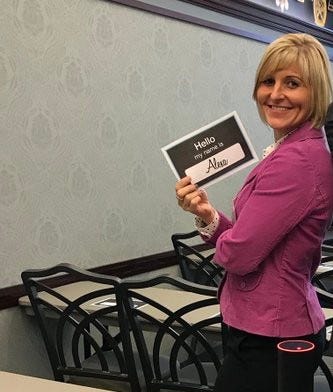
Rebecca: During the 2016–2017 school year I took a risk and introduced Alexa as a classroom tool during our monthly Technology Leadership Council at Hamilton County Education Service Center in Cincinnati, Ohio. I was a little ahead of the Alexa wave and didn’t gain much traction until August of 2017. My colleague Joe and I gained interest in our area after he introduced Alexa to a room full of curriculum leaders around the Cincinnati area. Our professional development integrating Alexa into the classroom took off and the rest is history. Joe and I presented on Alexa at ISTE in 2018, OETC (Ohio’s Tech Conference), and will be back at ISTE this year. I created the hashtag #Alexa4Edu because I want educators and voice leaders to be able to learn from each other and contribute to a shared vision. I also am finishing up an Alexa pilot of six preschool classrooms measuring student engagement.
AMC: What was that lightbulb moment that this was going to be a very valuable tool in the classroom?
Rebecca: I’ve had Alexa in my home since 2015. My youngest son Grayden has some attention and language challenges associated with Epilepsy. After school one day he asked Alexa the definition of a word while he was reading instead of asking me. I was like “whoa” and the rest is history. It has made a world of difference since he doesn’t have to stop his reading or working to get help. In this moment I knew Alexa and voice speakers would be a helpful classroom tool.
AMC: How have you promoted the use of Alexa?
Rebecca: I promote Alexa as a tool for teacher productivity, student engagement, many student benefits, and more recently as a student creation tool. Teachers have a lot on their plate and showing them how to set reminders, alarms, and routines wins them over! The Ask My Class transitions and body breaks help teachers not waste precious class time searching yet gives students a quick engaging activity. Student engagement equals increased learning. Students aren’t just engaged the first time they use Alexa it continues, and I have yet to see it wain.
Students aren’t just engaged the first time they use Alexa it continues, and I have yet to see it wain.
One consistent benefit I have seen firsthand and received feedback on is how student’s speech and language improves as they interact with Alexa. Artificial Intelligence awareness and use has skyrocketed lately. Students today will be solving future problems using this technology so why not begin now. I promote student voice creation since their future jobs will use voice technology.
AMC: What has surprised you the most?
Rebecca: I have to tell this story! This year I am supporting a teacher at a high school for autistic students that is using Alexa in her classroom. This teacher shared with me that one of her students that has been mute for some time started talking to Alexa! I mean doesn’t that just give you a warm feeling inside? Those stories (I have many) keep me super passionate about Alexa in education.
Those stories (I have many) keep me super passionate about Alexa in education.
AMC: Favorite skill?
Rebecca: This is a hard question. I have so many favorites. If I have to pick just one it is Akinator. You think of a real or fictional character and it asks you questions until it is ready to guess your character. This skill can be used in most content areas and grade levels. I just love it for It’s simplicity and versatility. Students love trying to stump it. Engagement=Learning
AMC: What’s missing? What skill would you like to see?
Rebecca: Oh, I have so many ideas…. I’d want to see a skill that would help a weakness I see in my practice as an instructional technology coach, reflection! So, what about a skill that helps teachers or even students reflect on their day, lesson, or activity… Reflection is so important, yet our teachers don’t get the time. So, Alexa could ask questions about your lesson or activity. Basically, guide them through reflection.
AMC: What’s your prediction for voice technology 5 years from now?
Rebecca: I predict voice technology will be in nearly all types of applications within five years. I even read an article recently about it replacing our keyboards. Jobs that require writing for voice technology will infiltrate businesses and education. Voice technology in education specifically will become more personalized.
More about Rebecca Dwenger
Rebecca’s educational background includes a Master’s degree in Instructional Design & Technology from Miami University, a bachelor’s degree in education, an Ohio Department of Education Technology Endorsement on her license, and is an ISTE Certified Educator.
Her most recent work includes creating and launching an online micro-credential ecosystem for professional development, integrating voice activated devices into the classroom, instructional technology coaching, and managing a district G Suite Console. She has presented at ITIP Google Summit, Learn21, High Aims, 4Cs Conference, OETC, 2018 & 2019 ISTE conferences, and recently completed ISTE’s Artificial Intelligence Course.