The tertiary education union will this week ask staff whether they are confident in the leadership of University of Technology Sydney (UTS) vice-chancellor Andrew Parfitt.
Please login below to view content or subscribe now.
Membership Login


The tertiary education union will this week ask staff whether they are confident in the leadership of University of Technology Sydney (UTS) vice-chancellor Andrew Parfitt.
Please login below to view content or subscribe now.

Senators Bernie Sanders (I-Vt.), Edward Markey (D-Mass.), Jeff Merkley (D-Ore.), Chris Murphy (D-Conn.), Tina Smith (D-Minn.), Elizabeth Warren (D-Mass.), Peter Welch (D-Vt.) and Chris Van Hollen (D-Md.) will hold a press conference to “discuss the Trump administration’s refusal to use a $5 billion emergency Supplemental Nutrition Assistance Program (SNAP) fund.”
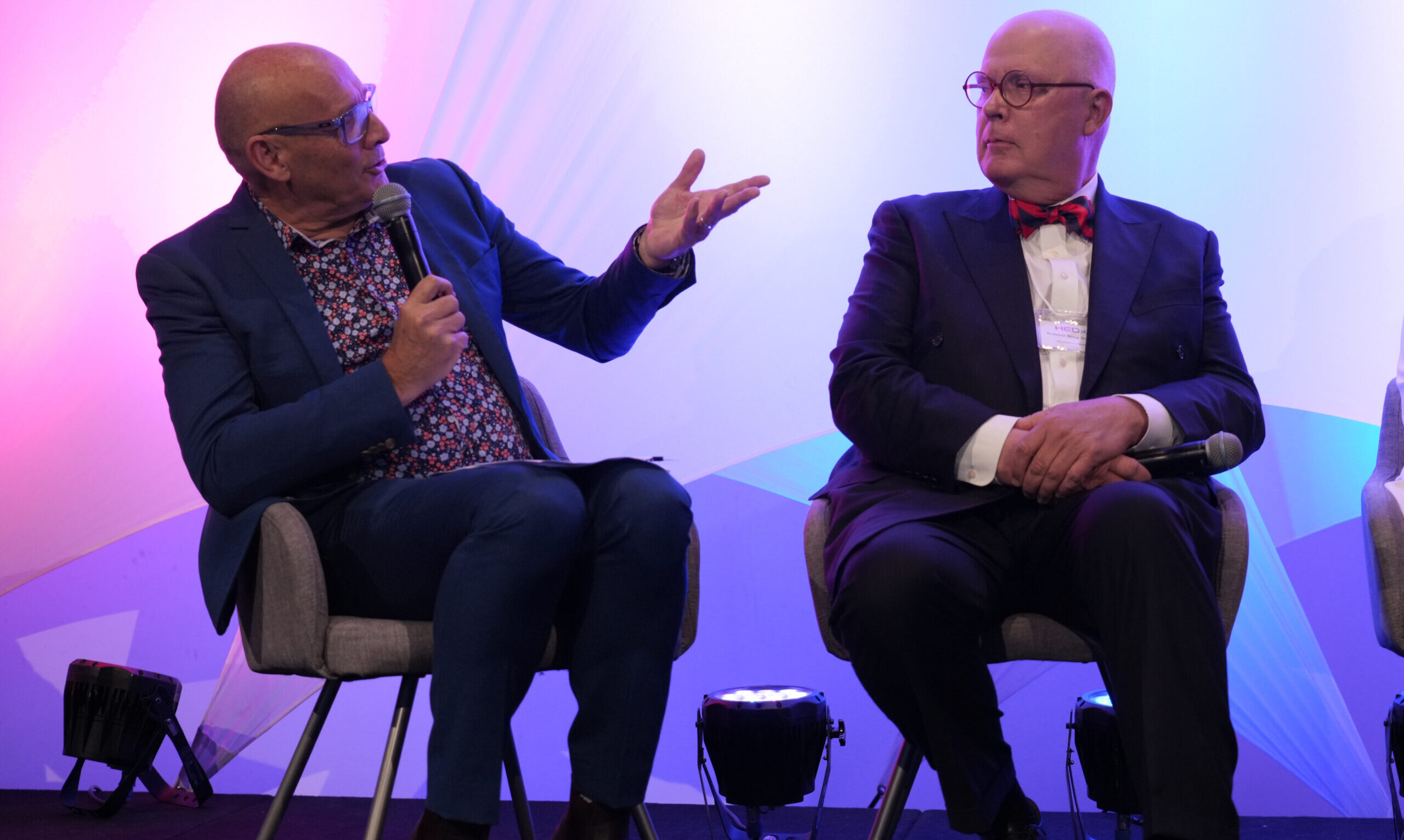
It’s been five years since our first podcast episode was released on September 9, 2020. Our aim was high: to launch a platform seeking to change higher education for good.
Please login below to view content or subscribe now.
Eveline McPhee, a 39-year-old mother of two, has been a dental assistant in northern Massachusetts for nearly 15 years. And while she’s long aspired to upgrade that title to dental hygienist, for most of her career that goal seemed unattainable.
With a full-time job, managing classes seemed arduous, and without a job she and her husband wouldn’t be able to afford day care and after-school programs.
But that all changed last year when an admissions officer at Mount Wachusett Community College told McPhee about Child Care Access Means Parents in School, or CCAMPIS—a $75 million federal grant program designed to help low-income parents in college pay for childcare both on and off campus. McPhee enrolled last fall and is on track to graduate in 2026.
“I have a 9-year-old son, and they paid for him to go to camp this summer so that I can take an intensive course in the dental hygiene program,” McPhee said. “I definitely would not have been able to go back to school without CCAMPIS.”
Now the future of the program is cloudy.
Applications for this year’s CCAMPIS grants—which typically open in May and close by the end of July—have yet to be announced, leaving thousands of student parents in limbo.
Multiple think tank fellows and student advocacy representatives said they’ve been reaching out to the Trump Department of Education for more information since the spring, but the response is always “We’ll open it soon.” Similar circumstances have been reported for other basic needs programs included under FIPSE, the Fund for the Improvement of Postsecondary Education.
Neither the Department of Education nor Republican committee chairs in the House and the Senate responded to Inside Higher Ed’s request for comment.
With the new academic year quickly approaching, the lack of funds leaves many colleges and universities with major budget gaps.
Until last month, Mount Wachusett’s childcare finances looked grim; CCAMPIS funding was set to run out on Sept. 30. But Ann Reynolds, the student support adviser who runs the program, had seen all the headlines about the Trump administration’s funding freezes and anticipated the delay. (Last year, the Biden administration chose not to open the grant to new applicants, but it sent out a clear notice in advance and allowed existing awardees to reapply.) She reached out to a local philanthropy and secured $94,000 to carry McPhee and about a dozen other student parents through graduation.
“We could see the writing on the wall, so to speak,” Reynolds said. “And it’s lifted a great weight from my student parents’ shoulders.”
Not all colleges were so forward-thinking. Many students, including future enrollees at Mount Wachusett, will have to take out additional loans—or drop out and try to repay the loans they already have without a college degree.
“We’re seeing a lot of students raising children coming to school now, so our need is greater,” Reynolds said. “But we can’t take in new students.”
Without the grants, which have had bipartisan support in Congress for years, historically underfunded institutions, including community colleges and minority-serving institutions, will be cash-strapped. Some may be forced to cut staffing or eliminate services entirely.
“Given all the other funds from the U.S. Department of Education that have been frozen or subject to political games in the last few months, the community is right to worry,” said Bryce McKibben, senior director of policy and advocacy at Temple University’s Hope Center for Student Basic Needs. “This doesn’t serve anyone—certainly not taxpayers. The administration should announce a competition or award continuation grants immediately.”
Most experts speculate the delay is occurring for one of two reasons: Either the department lacks the capacity to meet this statutory requirement since it laid off half its staff in March, or it is intentionally withholding the dollars as part of a broader effort to claw back education funding through a process known as rescission.
The latter option would require congressional approval. But the president already won enough votes to pass one rescission package earlier this month, and policy analysts say it’s likely he’ll try to do it again. (Trump’s proposed budget for fiscal year 2026 axes CCAMPIS and FIPSE completely.)
Either way, Theresa Anderson, a senior education and labor fellow at the Urban Institute, a nonpartisan think tank, said the delay symbolizes a larger restriction on college access.
This is a “well-documented agenda pattern and strategy” of the Trump administration, she explained. “It represents further disinvestment and disinterest in helping people access the necessary training, education and credentialing programs that states recognize are necessary to development of the workforce.”
Tanya Ang, executive director of the Today’s Student Coalition, an adult learner advocacy group, described the situation as putting the leaders of critical student support services “up against a brick wall.”
“If students are going to school, we want them to finish, because that’s going to ensure they can get a job and start a long-term career that will provide a strong return on investment,” Ang explained. Cutting off access to childcare “creates a vicious cycle that will hurt not just them and their children as individuals but, honestly, our economy.”
Critics have long argued that CCAMPIS is a duplicate program, suggesting that the Child Care and Development Block Grant, which is run by the Department of Health and Human Services, fulfills a similar purpose. But higher education experts say that’s simply not the case.
CCDBG, they say, supports broad, state-level childcare subsidies, predominantly allocated to parents who work full-time. CCAMPIS, on the other hand, is more targeted and serves student parents, many of whom can’t meet the work requirements attached to the block grant.
“CCAMPIS was really important to not only be able to fill childcare needs in a way that was very flexible for colleges, but also to allow for additional wraparound supports that are incredibly important to support persistence,” Anderson said. It helps student parents “build meaningful community connections, not only with staff of the college, but also with each other.”
At Mount Wachusett, Reynolds said student parents who participate in the CCAMPIS program have one of the highest completion rates among any demographic, at 73 percent. So she hopes that even a sliver of the current operation will survive past its current end date in 2027.
When asked what she would tell the Trump administration if she had the chance, McPhee said she was worried people were losing the opportunity to get ahead.
“I wanted to do better for my family, and this allowed me to do that,” she said. “To not be able to provide that for people moving forward, it’s just not what this country is about. It’s wrong, and I don’t really understand why they would do it.”

More than a week after the Senate education committee released its draft plan to overhaul the federal student aid system, higher education leaders across the sector are still breathing a sigh of relief over key provisions concerning how to hold colleges accountable for student outcomes.
The high chamber’s proposal, which ties a university’s access to federal loans to how much their students earn after graduation, is simpler and more productive than the House proposal, known as risk-sharing, which would require colleges to pay an annual penalty based on their students’ outstanding loan balances, they say.
“More than any other factor, a program having low earnings is the thing that is most connected with the prevalence of students defaulting or struggling to pay down their loans,” said Jordan Matsudaira, director of the Postsecondary Education and Economics Research Center at American University. “This is a serious and sensible proposal to establish what I think of as a very necessary accountability in the higher education space.”
The Senate plan seems to be based on an existing regulation known as gainful employment, which uses students’ earnings and debt to measure whether for-profit and non-degree programs adequately prepare their students for the workforce. But Republicans who sponsored the bill and expanded its reach to all degree programs have been wary of drawing attention to the overlap, as lawmakers have avoided calling it anything like “gainful employment 2.0” or “gainful for all.”
Republicans have historically opposed the Democratic policy, which was first put in place during the Obama administration, saying it unfairly targeted for-profit programs and that a free market would be the best way to regulate the quality of academic programs. (The first Trump administration rescinded the policy, and then the Biden administration enacted a stricter version that remains in place today.)
But now, as congressional Republicans grow increasingly concerned about student debt and skeptical of higher education, some have started to change their tune.
Some say the Senate’s proposed earnings test is likely to succeed and become law, as it’s the lesser of two evils and aligns more with a conservative federalist ideology when compared to the House’s plan. But others view this new accountability measure as just that—new.
“They’re not looking at the Biden gainful-employment rules and saying, ‘Oh, this was a good thing. Let’s do it like they did.’ They’re taking a different approach,” said Jason Altmire, president of Career Education Colleges and Universities, the national trade association representing for-profit institutions, which criticized the Biden regulations. He also noted that including all types of colleges is “a huge difference from the way the two last Democratic administrations approached gainful employment.”
Either way, the provision is now up for consideration as part of a broader legislative package—the One Big Beautiful Bill Act—that would cut spending in order to finance Trump’s tax cuts and immigration policies. The House bill passed by a one-vote margin last month; now, senators are aiming to pass their version by July 4.
Since lawmakers are using a process known as reconciliation, they only need 51 votes to pass the bill in the Senate, down from the typical 60 votes. But it also means the legislation has to adhere to a specific set of rules.
Some policy experts question whether the Senate’s accountability measure for colleges will pass the sniff test. If it does, they expect the proposal to be included in the final bill.
The crux of the Senate’s accountability measure is tracking the median earnings of students program by program and comparing them to the average earnings of adults ages 25 to 34 with only a high school diploma. If students don’t earn more than adults without a college degree for two out of three consecutive years, then the program would lose access to federal loans for at least two years.
Earnings for baccalaureate degree programs will be measured four years after a student leaves the program regardless of age—a time frame that some experts say is too short to truly gauge a program’s value. Meanwhile, the median income of high school graduates would not be evaluated until they hit at least 25 years old, or seven years after the typical high school graduation. Some higher ed lobbyists say that comparison isn’t fair.
“You’re comparing a 23-year-old, let’s say, cosmetology graduate just getting started with her book of business to a 34-year-old flight attendant who’s been on the job for 16 years who only has a high school diploma,” Altmire said.
A similar process would be used for graduate and professional programs, except the income level would be compared to adults with a bachelor’s degree and earnings will be evaluated further out from when the student left the program.
The Senate hasn’t released any data on its plan, but studies on the Biden gainful-employment rule offer some insights into which types of college programs could be affected most.
Data collected by the Department of Education in 2022 showed that about 1.3 percent of programs not currently subject to gainful employment would fail. About half of the programs failed because of the earnings test, according to an Inside Higher Ed analysis of department data.
Other studies show that of those programs, the ones most impacted will likely be graduate studies and for-profit bachelor’s degrees. For example, about 20 percent of students in each of these sectors failed the Biden earnings test, said Matsudaira, who worked for the Department of Education during the Biden administration and is very familiar with gainful employment. That’s compared to only about 4 percent of nonprofit bachelor programs.
Altmire, from CECU, however, disagreed. He pointed to a 2023 study conducted by Monroe College, a for-profit institution, which showed that nearly 90 percent of the undergraduate degree programs that would fail the earnings test are at public and private nonprofit colleges.
But just because more nonprofit colleges fail doesn’t mean they have a high rate of failure proportionally, Matsudaira responded.
“About 90 percent of enrollment is in the nonprofit sector, and only 10 percent of enrollment is in the for-profit sector, so of course, that should tilt in the direction of the nonprofit sector,” he said. “I would think about it a little bit more within each one of those sectors.”
The Senate plan does keep the current gainful-employment rules in place while House Republicans want to repeal them. The Trump administration is currently defending the regulations in federal court, but a judge could throw them out.
Still, policy experts cautioned against thinking of the Senate proposal as an add-on to Biden’s version of gainful employment.
“I think it would be inaccurate to say the Senate took the Biden gainful-employment rules and tinkered around the edges,” Altmire said. “They took one concept from the Biden rules but then did a lot of other things that greatly improved that concept and made it more fair across all schools.”
Beyond covering all degree programs, the Senate plan doesn’t specifically include credential programs, which currently fall under gainful employment. That’s a change that some experts say is a mistake, especially when the Senate is looking to expand the Pell Grant to cover some of these credentials. However, that plan comes with its own guardrails.
“Certificates, beyond any other type of program, are most typified by extremely low earnings, and having those low earnings leads to a lot of loan defaults over all. So the fact that the Senate proposal ignores the certificate space altogether is baffling,” Matsudaira said.
The Senate also changed the test itself. This version only measures a student’s earnings, while the Biden rule measures both income and whether students can pay off their loans. Furthermore, the Senate’s calculation includes all program enrollees, regardless of whether they completed their degree. The current gainful-employment regulations only count completers.
Of these changes, the most debated has been whether to include in the earnings calculation students who stopped out before completing their degrees.
Some policy experts argue that it’s fair to hold colleges accountable only for the earnings of students who complete their degree programs. If the goal is also to increase degree completion, that’s great, they say, but it should be handled through a separate provision than the one focused on return on investment.
“If the goal is to actually measure the ROI, we should be looking specifically at those who earned a degree,” said Craig Lindwarm, senior vice president for governmental affairs at the Association of Public and Land-grant Universities. “There are a lot of other ways of supporting efforts to boost college completion, like investment in the Postsecondary Student Success Grant program.”
But others say it is entirely fair.
“You shouldn’t be rewarded when a student chooses your school, takes a bunch of financial aid, doesn’t complete the program,” said Altmire from CECU. “That makes no sense.”
That said, higher education leaders from all sectors of the industry are generally pleased with the proposal and say it shows that the Senate has been listening to their concerns.
“We’re encouraged that the Senate is heading down a more productive path,” one collegiate lobbyist said. “This is a much fairer, simpler and [more] effective approach to accountability.”

Ask a student who their guide to college was, and the answer depends a lot on their background. For some—especially those from higher-income families or with college-educated parents—the process might not involve a school counselor at all. But for students without those built-in supports, counselors can be the critical link to higher education—if they’re able to get help.
The problem is, in many lower-income or rural schools, counselors are stretched so thin that some students never get the guidance they need. The numbers show just how vital counselor guidance can be for those who receive it—and how much is at stake when that support isn’t available.
According to the forthcoming 2025 E-Expectations report, 86% of students said they used information from their high school counselor during their college search, and 84% found that information helpful. That trend holds across every subgroup:
Counselors are the thread running through the entire college-bound student experience. For those without a family roadmap, they’re often the only guide through applications, financial aid, and deadlines.
School budgets are shrinking. Counselors are juggling massive caseloads. But many colleges are stepping up—recognizing that if they want to reach students, especially the ones who need it most, they must reach counselors first.
From the latest 2025 Marketing and Recruitment Practices for Undergraduate Students survey:
It’s not just a private college trend. Two-year institutions, public universities, and regional schools are embracing relationship-based outreach as well. Direct mail and newsletters still play a role—but only when the content is timely and relevant.
For first-gen, rural, and underserved students, counselors are often the only bridge to college. They’re the ones who demystify financial aid, flag key deadlines, and identify opportunities a student might otherwise miss.
When colleges make it easier for counselors to get the right info, they’re not just supporting professionals. They’re opening doors for the students who need it most.
A counselor who’s in the loop about your new rural student program or local scholarship can be the difference between a student applying and a student giving up.
According to the 2025 Marketing and Recruitment Practices for Undergraduate Students, the most effective strategies aren’t flashy. They’re personal, relational, and respectful of counselors’ time. To make these strategies even more impactful, here are some key considerations:
In many communities, especially those served by community colleges, Early College (EC) programs create additional layers of partnership between high school counselors and college admissions offices. Some colleges employ dedicated EC counselors who work directly with high school students, while others rely heavily on high school guidance counselors to help students and families navigate EC benefits, processes, and policies. Admissions teams should ensure that their outreach strategies are coordinated not only with high school counselors but also with their institution’s EC staff. This helps avoid confusion and ensures clarity in messaging, especially regarding dual enrollment, direct admissions, and transition pathways. A unified approach strengthens the relationship with the high school and better supports students and families.
Admissions offices often experience higher staff turnover compared to other departments, which can disrupt relationships built over time with high school partners. To sustain trust and continuity, new admissions counselors should intentionally acknowledge the existing relationship between the college and the high school when introducing themselves. If appropriate, referencing the name of the previous counselor or the date of the last visit provides context and reassurance that the institution values the ongoing partnership. This small gesture helps counselors feel recognized as key partners and makes the transition from one representative to another feel seamless, keeping the focus where it belongs: on supporting students in their college journey.
If your institution wants to reach students, especially those who need college planning guidance and help the most, start by valuing their counselors.

The data is clear. The student voices are loud. Counselors are the backbone of college access. Supporting them isn’t just good practice, it’s the smartest move you can make.
Don’t make counselors an afterthought. Make them the center of your strategy. The future of college access runs right through their office, so knock on their door and bring something valuable to the table.
To learn more about the most impactful enrollment and marketing strategies, download our report.

Ohio University has postponed its annual Black alumni reunion weekend while it reviews the event in light of the Office for Civil Rights’ Feb. 14 Dear Colleague letter, which declared illegal virtually all race-based activities at public institutions.
While the Black alumni reunion “has always been open to all individuals who have an interest in the event,” read a statement from the university, “based on OCR’s recent guidance related to Title VI compliance, some of the programming historically included in the event may need to be reimagined. The University is obligated to follow OCR’s guidance in order to protect our access to critical federal funding, including students’ continued access to federal financial aid.”
The statement also cited the impact of “proposed State of Ohio legislation,” without specifically mentioning SB 1, a bill the Senate has passed that calls for the elimination of DEI statements, offices and trainings.
“Without question, should this bill pass the House in its current form and be signed into law by the Governor, it will bring changes for all of us,” university president Lori Stewart Gonzalez wrote in an earlier message to the campus community. “However, to define today the specific changes we might make would preempt the legislative process on a bill that is not finalized.”
Still, all signature events planned for Black alumni reunion weekend, which was scheduled for April 10–13 in Athens, were canceled.
“While this is difficult news to share, we remain committed to honoring the legacy and accomplishments of Ohio University’s Black alumni,” said planning committee co-chairs Terry Frazier and Jillian Causey in the statement. “We will continue working with the University to develop a plan that aligns with evolving federal and state guidelines while preserving the significance of this gathering.”
Student loan borrowers won’t be able to apply for income-driven repayment plans for at least three months, The Washington Post reported.
The Post obtained a memo sent last week from the Department of Education to student loan servicers directing them to stop processing all income-driven repayment and consolidation applications until at least May. The memo offers more clarity on how the department plans to proceed after a federal appeals court blocked the department from implementing a new income-driven repayment option for borrowers put in place by the Biden administration. That injunction also implicated parts of other income-driven repayment plans.
Up until this point, all that student aid experts knew was that the department had disabled new online applications. Now, they know that all existing applications have also been included in the freeze.
The application freeze is a problem for some borrowers who rely on income-driven repayment plans for more affordable payments and to avoid default. Under the plans, borrowers’ monthly payments are based on their disposable income and other factors, and after 20 to 25 years of payment, the remaining balance would be forgiven. But now, millions of borrowers no longer have access to IDR and are left with only the most expensive loan repayment options.
Scott Buchanan, executive director of the Student Loan Servicing Alliance, a trade group for loan servicers, told the Post that “there is a lot to clean up.”
“We will be working for [the Office of Federal Student Aid] to implement that transition once courts clear things up and bring some finality so borrowers can have certainty and confidence in their options now and in the future,” Buchanan said.
The Education Department has said the pause is necessary under the U.S. Court of Appeals for the Eighth Circuit ruling, but paper applications for loan consolidation will be allowed.
“A federal Circuit Court of Appeals issued an injunction preventing the U.S. Department of Education from implementing the SAVE Plan and parts of other income-driven repayment (IDR) plans,” a department spokesperson said. So “The department is reviewing repayment applications to conform with the Eighth Circuit’s ruling.”
But legal experts on federal loans have told Inside Higher Ed taking down the applications entirely is not necessary. As the department noted in its statement, the injunction only declares “parts” of the IDR plans—such as the end-of-program loan forgiveness—illegal. It does not ban the use of lessened monthly payments.
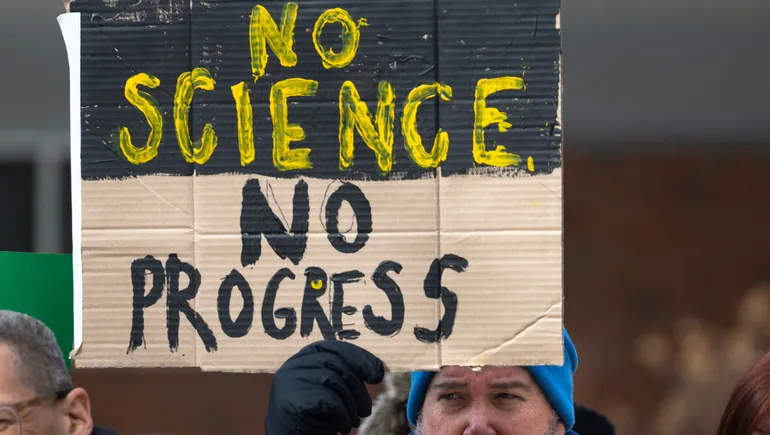
A federal judge extended an emergency restraining order Friday against the National Institutes of Health, temporarily preventing the agency from making massive cuts to indirect research funding.
The restraining order bars NIH from implementing a 15% cap on indirect cost reimbursement and requires the agency to file regular status reports confirming disbursement of funds. U.S. District Judge Angel Kelley, a Biden appointee, is considering a more permanent injunction against NIH’s plan after nearly two hours of oral arguments Friday.
NIH unveiled the new policy earlier in February. Historically, institutions negotiate their own indirect cost reimbursement rates with the agency, with an average of 27% to 28%. The change was met swiftly with multiple lawsuits, including by higher education groups and 22 state attorneys general. The cases were considered together at the hearing Friday.
Several universities have already frozen hiring and taken other budgetary measures amid the NIH funding uncertainty, despite Kelley’s initial pause on the funding cap.
The funding for indirect costs — also known as facilities and administrative, or F&A, costs — covers a wide array of staffing and infrastructure for research activity.
“Indirect costs are the backbone of IHEs [institutions of higher education] research programs and cover everything from utilities to facilities and equipment maintenance to payroll for faculty and staff to compliance programs, hazardous waste disposal, and more,” 22 state attorneys general said in their original request for a temporary restraining order on NIH. “They quite literally keep the lights on.”
Brian Lea, an attorney for NIH, said at Friday’s hearing that money saved by cutting and capping F&A funding would be “ploughed into” funding for research costs. However, in a Feb. 7 post from the agency on the social media site X, NIH said the funding cap “will save more than $4B a year effective immediately.”
Asked by Kelley about the post, Lea said that it was “at best a misunderstanding” of NIH’s guidance.
Plaintiffs attorneys argued that the F&A cap violates federal laws and regulations, pointing out that Congress passed an appropriations bill during President Donald Trump’s first term that prohibits modifications to NIH’s indirect cost funding.
Lea maintained that NIH’s guidance was compliant with regulations and statutes and within the “broad discretionary power of the executive branch” to allocate funding.
Attorneys for the plaintiffs further argued that an injunction was necessary to prevent “immediate and irreparable” harm, pointing to numerous universities that have detailed how their research, budgets and infrastructure would suffer from the cap. An official at Yale University, for example, said in court papers that the NIH rate cap could threaten the viability of many of its ongoing clinical trials for medical research.
“It is not hyperbole to say that, absent immediate injunctive relief, Plaintiff States’ IHEs will face catastrophic financial consequences, which could result in layoffs and furloughs, research program closures, financial defaults, and disruptions to clinical trials, potentially jeopardizing people’s lives and health,” the attorneys general said in their motion, filed earlier in February.
Lea questioned whether harms such as funding losses were irreparable, suggesting that they could be undone later through private funding or operational adjustments.
As the case winds on, NIH has laid off more than 1,000 employees, according to press reports.
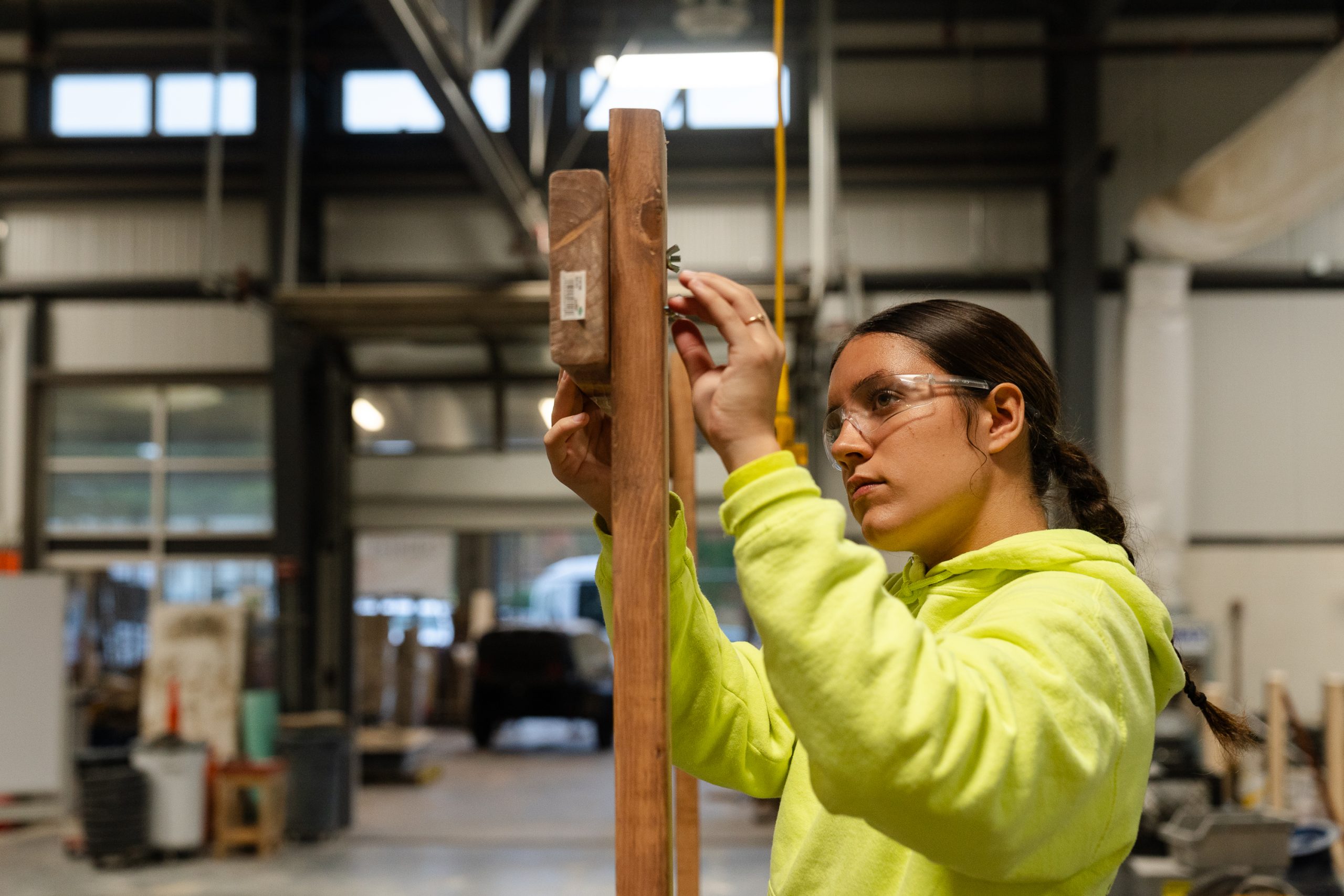
DANVERS, Mass. — It’s a rainy fall day in New England, but that doesn’t stop a group of students at Essex Tech North Shore Agricultural & Technical High School from donning work boots and hard hats and getting to work building a vegetable wash station on campus. This afternoon, they are installing wire mesh and prepping for a concrete pour under the watchful eye of Laborers’ Local 22 member Chris Moore, their teacher. “Hard hat hair don’t care,” reads the sticker on the hat worn by a young woman in the program.
The construction craft laborers track at Essex Tech, which Moore helps lead, is one of only a few high school-based programs in Massachusetts co-sponsored by a trade union. Students are initiated in union norms and expectations early on. Two Essex Tech teachers in the program are Local 22 members, with the New England Laborers’ Training Academy, which runs the laborers’ apprenticeship, paying Moore’s salary. As seniors, students can attend union meetings. And after graduation, many of them go straight into a union apprenticeship, fast tracked to a journeyman’s license. For all these reasons, Owen Paniagua, a 16-year-old junior, described the program as “a golden ticket to job security,” noting that he has learned everything from carpentry and concrete work to excavation and masonry.
“We feel as laborers that we should be in the schools,” said Lou Mandarini Jr., the retired business manager of Local 22 who now helps run the union’s school partnerships. “This is where your workforce is … If you treat young kids with respect, once they buy into your program, they are dead loyal.”
In several states, including Massachusetts, Maryland and Louisiana, trade union leaders have forged similar, groundbreaking partnerships with high school CTE programs in recent years, ponying up their own resources for the efforts. There’s also been an uptick in training alliances between trade unions and community colleges. In a 2023 brief, AFL-CIO leadership encouraged these partnerships. “No one knows better how to do a job than someone who does the job,” the brief stated.
Whether more unions decide to embrace this advice likely will play a large role in determining the long-term health and vibrancy of both career and technical high schools, and the trades themselves.
Related: A lot goes on in classrooms from kindergarten to high school. Keep up with our free weekly newsletter on K-12 education.
Twin trends are fueling some of the efforts: rapidly declining trade union membership, particularly in the Midwestern states; and up to $850 billion in infrastructure investment under the Biden administration (though some of that is in limbo because of an executive order from President Donald Trump), including designated funding for partnerships between education and labor.
Yet progress has been piecemeal and halting. And it’s too early to tell whether isolated partnerships across the country will translate into widespread change, said Taylor White, the director of postsecondary pathways for youth at the Center on Education and Labor at the think tank New America. “Schools and unions speak very different languages,” she noted. The same, she added, is true of employers and schools.
The longstanding dearth of partnerships says a lot about the history of America’s trade unions, which traditionally have operated as insular, sometimes parochial institutions, preferring to maintain tight control over their membership pipeline, and their training. In some communities, such as Milwaukee, that insularity kept unions predominantly white and male for generations. “Historically a lot of the high-paying skilled trades were handed down from father to son,” said Lauren Baker, a former education director in the printers’ union who also led Milwaukee Public Schools’ career and technical education program between 2002 and 2012. “That kept the trades looking a certain way.”
Mandarini, the retired union leader, said that in the past, “old timers didn’t help the young people.” But increasingly, he said, he hopes that mentality will become an anomaly.

For decades, many vocational school students have been held back by a lack of meaningful partnerships with both unions and employers at their schools, often leaving them without relevant training or clear pathways into jobs. “There’s skepticism from unions and employers that high school kids are ready for real training and real work,” said White, of New America.
There’s also been a longstanding desire on the part of many unions to maintain tight control over who can access often coveted apprentice slots.
Until recent years, most trade union apprenticeships in the Milwaukee area had admissions criteria that shut out many women, low-income, and Black and Hispanic city residents. “They were such closed communities, and it was a long process of breaking down some of those walls,” Baker said.
Related: Apprenticeships are a trending alternative to college but there’s a hitch
Back in the mid-1990s, Baker was the first woman to run a printing apprenticeship program for the union. In part to open up the field to as diverse a pool as possible, Baker abolished a requirement that apprentices had to be high school graduates. “Pretty much all a high school diploma told me was that they sat in a chair for four years,” she said, pointing out that many of the apprentices came from the academic bottom of their graduation classes. “I caught holy hell from the apprenticeship community for doing that,” she said.
While the SATs and other college entrance exams have at times been accused of being biased toward privileged white students, Baker said some of the apprenticeship admissions exams were challenging for anyone who hadn’t grown up in the home of someone already working in a specific trade. A question might presume that an applicant had experience helping fix their family’s car, for instance, something that young men were far more likely to have done — and those growing up in urban areas, where fewer households own cars, were far less likely to have done.
For decades, those tests contributed to keeping the construction trade unions, in particular, predominantly white and male. Only two of 16 Milwaukee area construction unions enrolled at least 20 percent Black apprentices in 2007, according to a report from researchers at the University of Wisconsin-Milwaukee. Two of the unions, glazing and tile setters, had no Black apprentices in a city where, at that time, nearly 40 percent of the residents were Black.
Much of that bias and insularity continues in some Boston-area construction trade unions, said Travis Watson, who serves as a commissioner of the Boston Employment Commission and has critiqued some of the unions for their lack of racial diversity, citing specific practices that make it harder for prospective Black members to get a foothold. “If you look at every big downtown project in Boston, there are very few Black people who are working on union construction projects,” he said.
Some of the local unions have made changes to their admissions process to become more accessible to applicants from diverse backgrounds, said Danyson Tavares, who worked for several years in leadership positions at YouthBuild Boston, a pre-apprenticeship program that helps prepare young people of color in the city for jobs in the construction and design industries. But other unions might take applications only once a year or remain secretive about their standards and curriculum. “The electrical union is the one we really want to have more relationships with, there’s such a demand for that workforce,” Tavares said. “We’ve slowly started to penetrate but it’s a lot more work than I expected.”
One 25-year-old who recently finished his pre-apprenticeship in carpentry at YouthBuild said he got an interview with the union but was turned down for an apprenticeship for reasons that he said weren’t entirely clear. “I kind of felt like I wouldn’t get in,” said Keyshawn Kavanaugh. He found a non-union job easily at a company that he likes a lot, but he acknowledges that “the union is the best place to work,” at least from the standpoint of benefits and pension.
In Milwaukee, Baker said she’s seen some positive changes since she ran the printers apprenticeship, with more local unions developing inclusive and transparent admissions. “The trades themselves began to realize that they needed to look beyond their natural base in order to fill jobs,” she said. “It became more apparent that there is a vast opportunity out there with women and people of color.”
Related: States bet big on career education but struggle to show it works
The idea that Massachusetts laborers should invest time and money in local schools originated over 20 years ago, when Mandarini and other Local 22 leaders decided they were neglecting a potential asset: kids. Mandarini proposed a pilot partnership to the vocational school in Medford, Massachusetts, just outside of Boston, which started in 2002. It wasn’t easy at first. “How do you adapt to a public school?” he said. “There was a lot of learning that we had to do on both ends.”
The union had to fight against a perception that a four-year college degree was the only path to a stable, rewarding career, Mandarini said. It helped with recruiting to explain to prospective students that, at that time, union laborers could expect to retire with an annuity of about $1.2 million, he added. (In Massachusetts, laborers typically earn between $90,000 and $100,000 annually, and that annuity is now more than $2 million, Mandarini said.)

Over the years, the partnership model has spread to eight career and technical schools in Massachusetts. At some, the union pays a teacher’s salary, and at others it does not, Mandarini said. “We want to be in every vocational school in Massachusetts,” he said, “and hopefully every vocational school in New England. That’s where our workforce is coming from.”
In rural western Louisiana, it was a private company that encouraged a local trade union to partner with public high schools. The company, CapturePoint, which sells carbon storage services, reached out in March 2023 to the local branch of the United Association of Journeymen and Apprentices of the Plumbing and Pipefitting Industry, asking if the union would help build out a new career and technical track at the Vernon Parish School District.
To make it happen, the company paid for the electricity, classroom equipment and furniture to help turn an old woodworking shop at one of the district’s high schools into an updated welding shop. CapturePoint also took on several ongoing costs, paying for student transportation — the students can come from nine different high schools — and some administrative expenses. The union paid for some reconstruction and all the tools, and provided an instructor. The school offers the space and enrolls 30 students, who can skip their first year of apprenticeship if they join the union after graduating, thereby starting at a higher pay rate. “All of us have skin in the game,” said Lance Albin, who led the partnership for the union.
At high schools with trade union partnerships, there’s no shortage of interested students. Isabella Gonzalez, 17, creator of the “hard hat hair don’t care” sticker, said she hopes to move straight into an apprenticeship with Local 22 when she graduates in a year and a half. Aspiring laborers learn more diverse skills than students in related tracks like plumbing and electrical, she said, opening up the possibility of a greater variety of work.
That day last fall, juniors in the program practiced using a compactor to prep the ground for installation of a patio floor, part of the final stages in rebuilding a large cottage on campus. The construction students have been involved in the project since they poured the cement for the foundation in the summer of 2020, wearing masks during the pandemic’s early days, even outdoors.
By afternoon, the students had transitioned to another work in progress: the vegetable wash station by the greenhouse, where they needed to install enough wire mesh and rebar to do the concrete pour early the next week. “Put your hard hat on and help out,” their teacher Moore reminded a group of students holding back as the rain hardened. “No … statues here.”

Students say the partnership with Local 22 provides them increased career security and the confidence that they are learning relevant, up-to-date skills: Moore until recently worked part time in the field, including on Boston’s project to restore the tunnel to the city’s Logan Airport.
Paniagua, the 16-year-old student in the program, said he can command a higher pay rate than most of his peers at a part-time carpentry and landscaping job because of the expertise he has gained in the Essex Tech program. He’s used the extra money to buy two new trucks. The union partnership has also allowed him to make more thoughtful, informed choices about career steps, he added. Leaning on his teachers as mentors, Paniagua said he decided to continue studying at a specialized welding school in Wyoming after graduation to maximize his future earning potential. “We know what we want to do here and get on it,” Paniagua said, noting that it’s a stark contrast to some of his friends who are conflicted about the value of a four-year college degree. “We’re not lost,” he said, “or wasting money.”
Former President Joe Biden was exceptionally supportive of the labor movement, and specifically of partnerships between unions and schools. Some labor experts expect some of that support might continue in the new Trump administration. “We’re seeing indications of a Trump administration that might not be as hostile to unions as you might think,” said Shalin Jyotishi, founder and managing director of the Future of Work and Innovation Economy Initiative at New America. He cited Trump nominee Lori Chavez-DeRemer, opposed by many in the business community, for Labor secretary, and the president’s support of the longshoremen’s union over their anti-automation stance.
In any event, “these bottoms-up innovations are already happening locally,” Jyotishi said. “Federal decisions can help or hurt … odds of success, but the proof-of-concept is already out of the bag.”
Related: For some students, certificate programs offer a speedy path to a job
A bigger question mark may be whether there is the will to expand capacity significantly on the ground. Some of the existing programs have not yet reached students in the most underserved communities who could potentially benefit most from a fast track into a union apprenticeship.
In Massachusetts, for instance, many of the high schools the laborers work with have become increasingly selective in admissions. Students from low-income homes were 30 percent less likely to be accepted at the state’s vocational schools in 2023 and 2024 than those from wealthier households, according to an analysis by the Boston Globe. Similar disparities existed for students receiving special education services and English learners.
The laborers have yet to expand their partnership model to Boston’s Madison Park Technical Vocational High School, where nearly all of the students are Black or Hispanic, about 85 percent come from low-income households, and 92 percent are identified as “high needs” — an umbrella term in Massachusetts that includes students with disabilities, English learners and low-income students, among other groups.
Madison Park, part of the city’s public school district, has some partnerships and many strong programs and instructors, said Bobby Jenkins, an alum and long-time advocate of the school. But the chronic turnover of both superintendents and school leaders in recent years has hindered progress in undertaking some more ambitious partnerships.

Mandarini agreed that political and bureaucratic obstacles have made it more challenging to partner with Madison Park. But the union has made it a priority and is in promising talks with city officials about partnering with the school when a proposed new facility might be completed.
“When I was part of the building trades, I used to say, ‘I don’t understand why you aren’t taking more kids, especially in the city of Boston,’” Mandarini said. “Every single trade should be in (Madison Park).’”
For now, that attitude has not spread to all union leaders. It will take a cultural shift from trade union groups to expand their school partnerships beyond scattered, boutique programs. Among other things, they will need to prioritize flexibility and the learning and growth of young people more than they are accustomed to, said White, of New America.
She noted that many union leaders seem aware that they have a pipeline and recruitment issue but remain unsure what to do about it. More school-based partnerships could help not only with that challenge but also with reenergizing and selling unions to future generations of workers — and voters, White added. “All of the polling suggests that young people are pretty pro-union,” she said. “There’s a missed opportunity on the part of unions if they don’t capitalize on that.”
Contact editor Nirvi Shah at 212-678-3445 or [email protected].
Reporting on this story was supported by the Higher Ed Media Fellowship, where Carr was a fellow in 2024. This year, Carr has a fellowship from New America to report on early childhood issues.
This story about trade unions was produced by The Hechinger Report, a nonprofit, independent news organization focused on inequality and innovation in education. Sign up for the Hechinger newsletter.