Have you attended a research seminar that managed to deepen faculty members’ understanding of the topic, while also encouraging trainees new to the field to engage with the speaker? When you hosted your last career panel, were you able to intentionally moderate conversations with professionals from different fields while also allowing serendipitous tangents inspired by audience questions?
Higher education is filled with gatherings intended to engage various audiences and deepen understanding of diverse topics. Hosting and facilitating these gatherings (be they large-scale conferences, interactive workshop discussions or weekly team meetings with office staff) is no easy feat and rarely comes with a guidebook.
Priya Parker’s The Art of Gathering (Riverhead, 2018) is that guidebook. Reading it has influenced how I think about organizing and facilitating seminars, events and group meetings for graduate students and postdocs.
Reflecting ahead of time on defining the event’s purpose, inviting with intention, understanding your role as a host and ending well can elevate professional gatherings and make even a simple seminar more meaningful.
Establish the Purpose
An alum is coming to visit your department: The first idea you have is, “They should give a department seminar!” I’ve done this, too, but it’s not the starting point. When picking the type of event to have, don’t conflate its classification with its intention.
Applying the purpose filter to your event planning will help dictate the format to best serve your specific goal. If an occasion requires many goals to be met, consider creating multiple avenues to address these different purposes and audiences. If your intent is too broad, no one will feel like the event is for them.
Maybe an alum visiting is a great chance for graduate students to learn about alternative career paths. With this purpose in mind, a roundtable discussion could be a more effective format. Maybe the alum is a star in the field and the faculty will want to learn about their research. In this case, a seminar would be best. Maybe the alum has made it big in the business world and the department is looking for a new donor. Perhaps a lab or building tour and one-on-one meetings can serve this goal.
Make the Invite Clear
No event can please everyone, and that shouldn’t be the goal. We should not be discriminatory in our invitations, but instead think of protecting those who are attending. In the above example, if the purpose of an alum visiting the department is for career development programming and to expose trainees to unique career paths, the invites and advertising should be consistent with that purpose.
Intentional invitations can start even earlier when contacting guest speakers or panelists. If you’ve decided a department symposium should be focused on allowing trainees to share their research, inviting an alumnus of the department to talk about their current research could enhance this intention. Carefully considering and reaching out to potential guests requires an understanding of the purpose first.
Another element of the invite is physical logistics: the number of people attending, where it is, the setup of the venue. Again, these should be influenced by the goals of the gathering. A roundtable discussion limited to 20 people could be more conducive to trainees learning about the career journey of an alum. In contrast, if the speaker is giving a groundbreaking research talk, a large lecture hall with a high capacity would suit better.
As Parker writes, “Gatherings that please everyone occur, but they rarely thrill. Gatherings that are willing to be alienating—which is different from being alienating—have a better chance to dazzle.” Anyone can see a seminar poster hanging in the hall and decide to come. The content, however, should be clear, and the invite specific enough, so the guests understand whom the seminar is intended for.
Be an Intentional Host
I have been organizing events, outside and inside higher ed, for many years. But only recently have I understood the power and influence that the host can have. For years, I strove to have oversight of all logistics and ensure an airtight planning timeline—but once the event started, I took a hands-off approach so as to not interfere with the guest’s experience. I have come to realize that abdicating host power in an attempt to be easygoing is actually counterproductive.
The host sets the stage, from the first announcement email to when people enter the room. Rules and limitations are necessary and appreciated. Having a generous authority lets people know what to expect early on. This can be achieved by finding the right balance of warmth and order—by developing a method to confidently run a gathering and steer the ship, while selflessly protecting the guest’s connection and experience. The host isn’t controlling the situation but is responsible for creating a container for the experience to expand into.
With seminars and panel discussions, the host is crucial for orchestrating the flow of conversation. If multiple people are on a panel, being clear whom your question is addressed to and directing the order eases the speakers and creates less tension. It may feel uncomfortable having this power, but this is not the time to relinquish it.
When moderating a Q&A or panel discussion, listen carefully to the speakers and be perceptive of the audience and energy flow. Summarizing and synthesizing what was said, transitioning to new topics, and keeping the momentum is tricky when all eyes are on you.
It is vulnerable to be a host, and it’s a responsibility from start to finish.
Finish Strong
People often remember the beginning and end of something (a movie, a speech, an event) the most. Finishing strong means making the event memorable. As a host, you’ve constructed this container for others to learn and connect. You’ve thought of all the logistical details and brought the speakers and audience through a journey. Now it’s time to be mindful about how you end by facilitating looking inward and turning outward.
Looking inward is about asking the guests to reflect on what they’ve learned or experienced. If you’ve been moderating a panel discussion, pose a final question that requires reflection. Ask the speakers to reiterate the one thing they hope everyone takes away from the session. Technology has made it easier to request interaction from the audience. Ask everyone to share one lesson learned, or how they’re feeling now. This can be typed in the chat box for an online event or submitted using programs such as Slido. The goal is to make space for synthesis.
Turning outward involves encouraging everyone to take the experience back out into the world. Ask the audience, “What is one action you plan to do following this?” Or ask the speakers to suggest the next small step someone can take. Help the audience bring what they learned to others outside of the event. Remind everyone what the purpose of the gathering was, what was achieved and where they can go from here.
After an event ends, there are ways to continue the inward and outward response. Follow up thank-you notes and feedback forms can be methods to encourage participants to look inward and offer ideas for the future. Providing any resources or content from the event can help the audience turn outward and use their learnings in the real world.
When you build in time to define a gathering’s purpose, incorporate intentional invitations and pay attention to your influence as a host, you can shape the event from beginning to end and revolutionize how we connect. These are the first steps to take a program or event from routine to meaningful.
What’s one upcoming gathering that you can apply even one of these four principles to?
Anne Meyer-Miner is the manager of graduate and postdoctoral affairs in the Faculty of Pharmacy at the University of British Columbia. She holds a Ph.D. in molecular genetics from the University of Toronto and is an active member of the Graduate Career Consortium—an organization providing an international voice for graduate-level career and professional development leaders. The views expressed here are Anne’s alone.
Good call. A well-run open house can be one of the most powerful tools in your enrollment and engagement strategy. Whether you’re welcoming new elementary parents, high school prospects, or college hopefuls, this is your chance to make an unforgettable first impression. An open house in school is important because it helps build a sense of community, foster parent involvement, and drive enrollment.
But a memorable open house doesn’t happen by accident. It requires careful planning, creative ideas, and attention to detail. From initial promotions to day-of execution and follow-up, every step counts.
So, how do you make it count?
Let’s walk through ten practical (and proven) tips to take your school’s open house from good… to exceptional.
Struggling to stand out in a crowded market?
Boost enrollment with tailored open house strategies!
1. Start Planning Early And Promote Like a Pro
Here’s the truth: If no one shows up, nothing else matters.
That’s why promotion is the first step, and it’s a big one. First, get clear on your goals. Are you looking to boost applications? Showcase new facilities? Strengthen relationships with current families? Your goals will shape everything from the schedule to who you invite.
How do you prepare for an open house at school? Start by setting clear goals and selecting a date that works for your audience. Plan the schedule, secure staff and student volunteers, and prepare promotional materials. Promote the event across multiple channels (website, email, social media), tidy up the campus, and organize signage, welcome tables, and printed resources to ensure a smooth, welcoming experience.
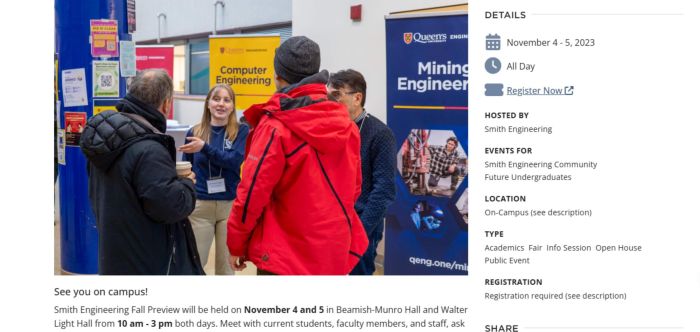
Example: Queen’s University (Canada) demonstrated advanced planning by creating a dedicated “Fall Preview” Open House webpage months ahead. The page provided key details (date, schedule, location) and prominently featured a call-to-action for prospective students to register, ensuring maximum visibility and early sign-ups.
Then, plan your outreach. Don’t wait until the last minute. Get your date on the calendar months in advance, and begin promoting it strategically across various online channels:
A dedicated landing page on your school’s website (with RSVP).
A short email series to build awareness and excitement.
Countdown posts, teaser videos, and stories on social media.
Text reminders or personal phone calls to those most likely to attend.
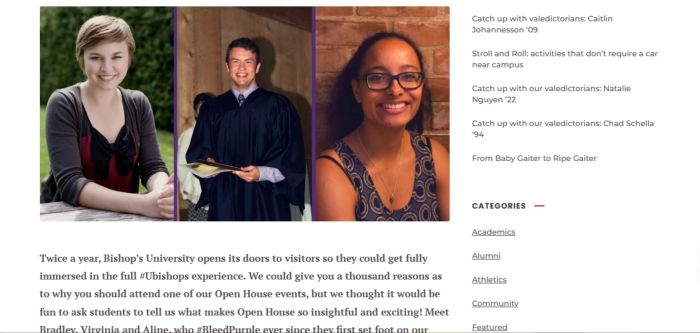
Example: Bishop’s University (Canada) boosted promotion by publishing a blog post prior to their Open House that walked readers through what to expect at the event. This preview-style post generated excitement and informed prospective students and parents about the Open House experience in detail.
Still want more attendees? Consider offering a virtual option. Whether it’s a livestream, a digital campus tour, or a short webinar, giving families more than one way to experience your school expands your reach.
2. Make Arrival Smooth and the Welcome Unforgettable
Let’s face it, no one enjoys showing up somewhere and feeling lost.
That’s why the moment guests arrive at your open house, the experience should feel seamless and friendly.
Start with signage. Make sure every guest knows exactly where to park and where to go. Have greeters ready: staff, student leaders, or enthusiastic parent volunteers. A welcome table with a map, a friendly smile, and a short overview of what’s ahead can work wonders.
Example: University of Oxford (UK): For its 2023 undergraduate Open Days, Oxford enlisted staff volunteers as greeters and guides. These volunteers welcomed visitors, helped with directions around campus, and served as friendly points of contact at entrances and info tables, ensuring guests felt comfortable and never lost.
Don’t stop there. Decorate with banners, student art, or a slideshow of school activities. Create a warm and exciting vibe the moment families step inside. You’re not just showing them the campus, you’re showing them the community they could be a part of.
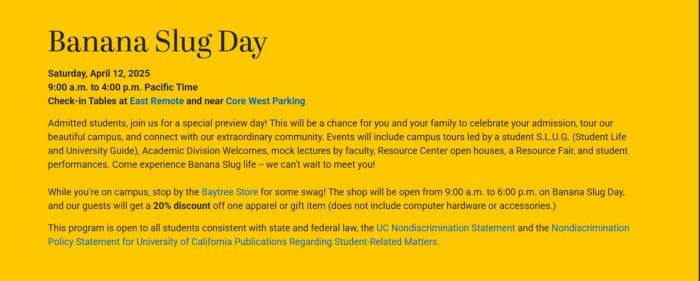
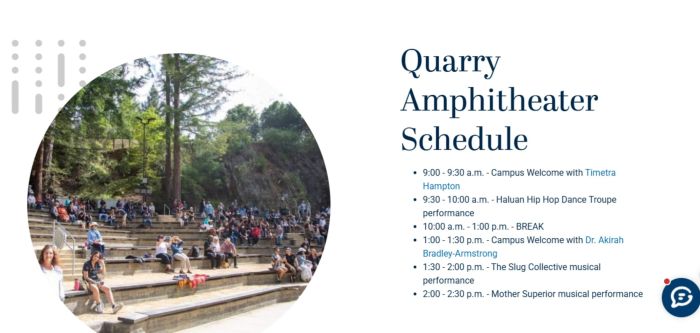
Example: UC Santa Cruz (USA): At its “Banana Slug Day” admitted-students open house in 2025, UC Santa Cruz set up check-in tables at key parking areas and deployed student guides (the “S.L.U.G.” ambassadors) throughout campus. Visitors were greeted at these welcome points and guided by the student ambassadors, making navigation easy and the arrival experience warm and organized.
3. Spotlight the People Who Make Your School Special
The facilities are nice. Programs are great. But what really wins hearts?
Your people.
That’s why teachers, support staff, coaches, and counselors need to be front and center during the open house. Make sure they’re not just present but prepared. Equip them with key talking points and FAQs so they feel confident answering questions and reinforcing your school’s values.
What should teachers do for open house? Teachers should prepare a welcoming classroom with student work on display, provide a brief overview of their curriculum, and have handouts with contact information and expectations. During the event, they should greet families warmly, answer general questions, and encourage follow-up meetings for individual concerns.
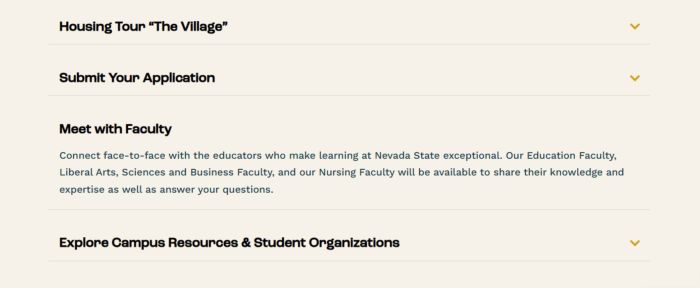
Example: During Nevada State’s Open House, faculty participation was a centerpiece. The event agenda included “Meet with Faculty” sessions where professors from various departments (Education, Liberal Arts & Sciences, Nursing, etc.) were on hand to chat and answer questions. This gave visitors a chance to connect face-to-face with the educators and get a feel for the academic community.
Encourage classroom displays that show what day-to-day learning looks like. And while teachers should be warm and approachable, remind them this isn’t the time for parent-teacher conferences. Keep it general, upbeat, and informative.
Want to go the extra mile? Kick off the event with a welcome from your school leader, followed by a quick intro to the key staff attendees. Let families know who’s who, and who they can talk to about specific interests like arts, athletics, or academics.
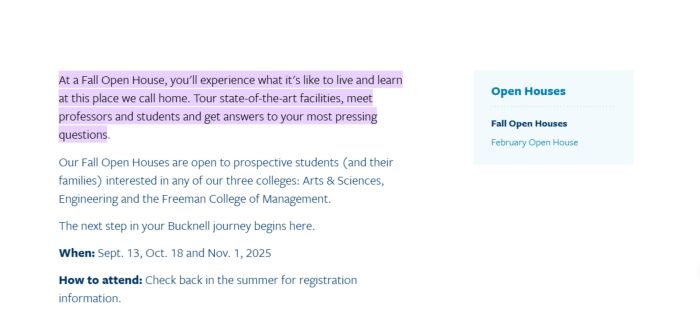
Example: Bucknell’s Fall Open House actively involved faculty and staff in mingling with prospects. Visitors could tour facilities and meet professors and current students to ask questions about programs and campus life, rather than only hearing formal presentations. This personal professor-student engagement at Open House helped put a human face on the university’s academics.
Your current students and parents are your school’s best spokespeople. Hearing about the school’s strengths from an administrator or teacher is valuable, but hearing it from a peer can be even more persuasive. In marketing terms, it’s social proof, and it carries a lot of weight. In fact, one study found that 93% of people trust recommendations from friends and family, while only 38% trust advertising.
Applying this to an open house, a prospective student is likely to trust the words of a current student, and parents will trust the perspectives of other parents, more than any brochure or formal presentation.
That’s why student ambassadors and parent advocates are some of your most valuable open house lead generation assets.
Hand-pick current students who represent the best of your school; friendly, positive, and articulate. Let them lead tours, greet visitors, or share their experience during a short panel. Their enthusiasm is contagious. As one education marketing expert put it, hearing directly from current students and parents can be one of the most powerful ways to engage prospective families.
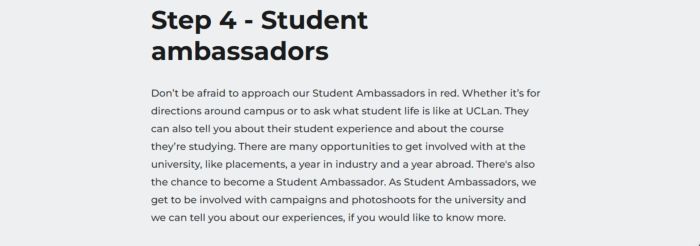
Example: University of Central Lancashire (UK) : At UCLan’s Open Days, current students act as official ambassadors (identifiable in special red attire). These student ambassadors welcome visitors at entrances, give campus directions, and share honest insights about student life and their courses. Attendees are encouraged to approach them with any questions, making the experience peer-guided and relatable.
Similarly, invite a few involved parents to chat with prospective families. Their personal stories, why they chose the school, how their child has grown, carry a weight that even the best marketing can’t match.
You’re not just saying, “We’re great.” You’re showing it.
5. Make the Event Fun, Interactive, and Memorable
Let’s be honest: No one wants to sit through a two-hour lecture.
So here’s your mission: Turn your open house into an experience.
How do you make an open house at school fun? Incorporate interactive elements like hands-on activities, themed scavenger hunts, live demonstrations, or student performances. Offer refreshments, set up a photo booth, and keep presentations short and engaging. The goal is to create an energetic, memorable experience that showcases school spirit.
Instead of a long presentation, create a rotating itinerary. Let families move through classrooms, labs, and activity spaces at their own pace. Throw in a scavenger hunt or “passport” that gets stamped at each stop. Offer a prize at the end for completing the journey.
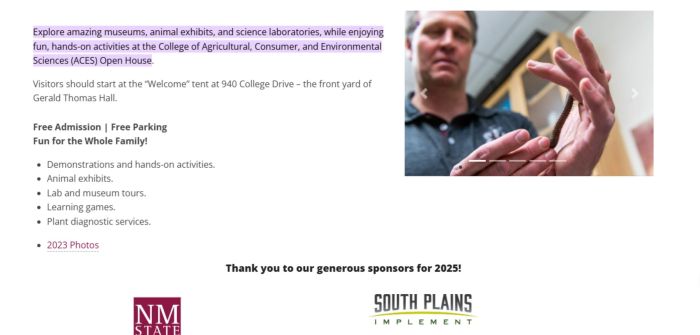
Example: New Mexico State (USA): The College of ACES Open House 2025 at NMSU was designed as a family-friendly, interactive event. Visitors could roam through animal exhibits, science labs and museums with hands-on demonstrations and learning games at each stop. From petting zoo stations to chemistry experiments, attendees of all ages were invited to actively engage, making the Open House both educational and fun.
What else works? Hands-on demos. Let students try a science experiment, play with robots, sample the art room, or participate in a music warm-up. The more your visitors can do, not just see, the more they’ll remember.
Don’t forget the snacks. Coffee, cookies, or treats from the culinary class add comfort and create natural mingling moments. Bonus points if they’re decorated with school colors or logos.
And yes, music, performances, or even a visit from your mascot can energize the space and give families that “wow” moment.
Example: UC Santa Cruz (USA): The Banana Slug Day Open House combined campus exploration with fun activities. Prospective students and families joined student-led tours, watched student performances, visited a resource fair, and even sat in on mock mini-lectures by faculty. These interactive elements (plus chances to snag some UC Santa Cruz swag at the bookstore) turned the day into an immersive campus experience rather than a passive info session.
You’ve got a lot to say, but that doesn’t mean you should say it all at once.
Keep any formal presentations concise and dynamic. Ten to fifteen minutes max is ideal. Focus on the core message: What makes your school stand out? What are the values driving your mission?
Break up speeches with visuals; videos, photos, and student voices make everything more relatable. If you can, include a current student or alum to co-present. Their stories add authenticity and emotion.
Whatever you do, rehearse in advance. A confident, polished delivery makes all the difference.
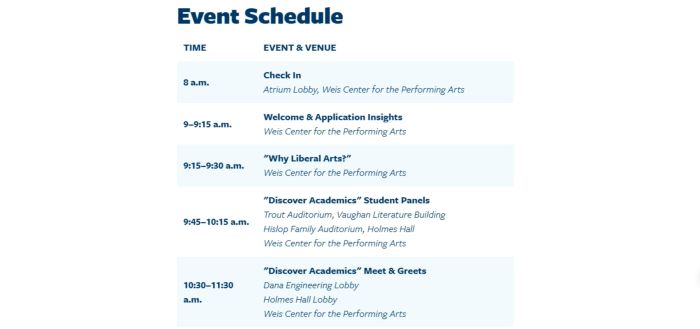
Example: Bucknell keeps Open House presentations brief and purposeful. Its Fall Open House schedule is broken into short sessions: for example, a 15-minute welcome and admissions overview followed by a 15-minute “Why Liberal Arts?” talk. Instead of long lectures, Bucknell offers multiple bite-sized talks and student panels, which keep visitors engaged and allow them to sample various topics without fatigue.
Before the event, ask registrants about their interests: academics, sports, arts, etc. Use this intel to tailor their visit. Match them with the right teacher, program head, or club coordinator. Let them know you were expecting them.
Even on the fly, personalization is powerful. Train ambassadors and staff to ask questions and respond accordingly: “You’re interested in robotics? You’ve got to meet Mr. Jackson. Let me introduce you.”
Name tags, interest-specific packets, or a simple, “Hi Sarah, we’re so glad you’re here,” can go a long way in helping families feel seen.
And yes, be mindful of accessibility needs, language support, and dietary restrictions. Every thoughtful detail adds up.
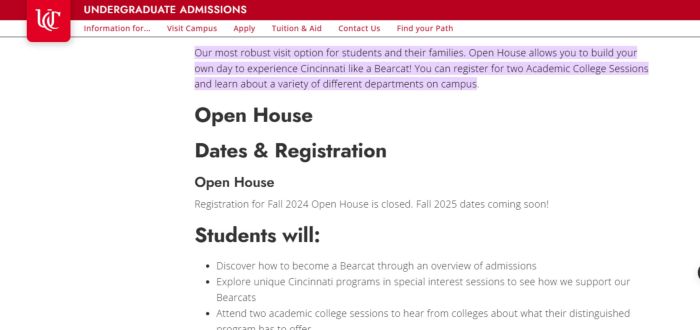
Example: University of Cincinnati (USA): Cincinnati’s Open House model allows each guest to “build your own day.” Attendees register for the specific academic sessions and special topics that interest them most. For example, a student could choose two different college info sessions (say, Engineering and Business) and several niche interest workshops. The itinerary is flexible – with options like honors program talks, campus tours, residence hall tours, etc. – so each visitor crafts a personalized schedule aligned with their goals.
Before families leave, hand them something to take home, whether that’s a branded folder with your materials, a printed photo from a photo booth, or even just a small keepsake like a sticker or magnet.
More importantly, give them the info they need to take the next step. Include your admissions contact, an FAQ sheet, key dates, and a personalized thank-you letter from the principal.
A friendly goodbye, a handshake, and a “We hope to see you again soon” can seal the deal emotionally. People remember how you made them feel. Make it good.
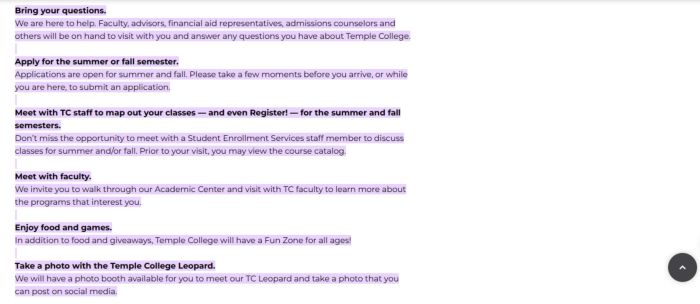
Example: Temple College (USA): This community college makes sure guests leave with smiles (and photos). At its Open House, Temple College set up a fun photo booth with their mascot, “TC Leopard.” Students and families could snap pictures with the mascot – a keepsake to post on social media – and even win prizes. This lighthearted closing activity gave attendees a lasting memory and positive vibe to associate with the school.
Send a thank-you email the next day. Personalize it if you can. Include links to the application page, upcoming deadlines, and photos from the event. Invite further questions and make it easy to get in touch.
If a family asks about something specific, say, learning support or scholarship details, make sure someone follows up with a personalized message.
Want to keep the momentum going? Enroll attendees in a short email series spotlighting your programs, alumni, or events. Nurturing that relationship can turn a visitor into an applicant.
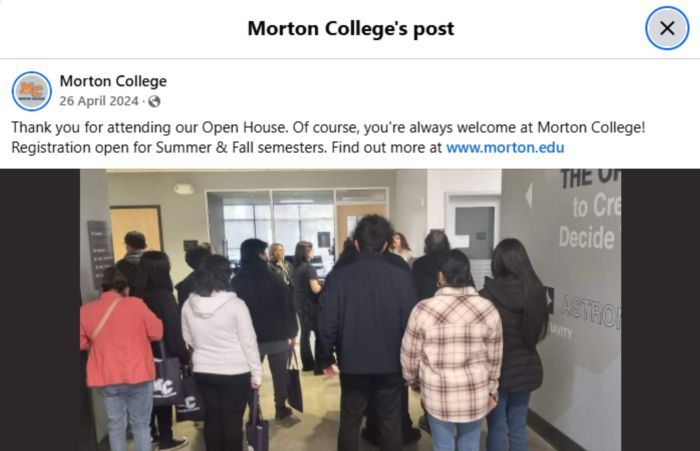
Example: Morton College (USA): After the Open House, Morton College immediately followed up with attendees and the broader community on social media. They posted a thank-you message to everyone who came, reinforcing that visitors are always welcome on campus. Importantly, the message included a next-step call-to-action, a reminder that registration was open for upcoming semesters, nudging interested students to take the next practical step toward enrollment.
10. Debrief, Reflect, and Get Ready to Do It Even Better Next Time
One last tip, and it’s a game changer.
After the event, take time to evaluate. Meet with your team and ask: What worked? What didn’t? What feedback did families share?
Review your numbers: RSVPs, attendance, applications started. Be sure to look for patterns. Did most families come from a certain neighborhood? Were particular sessions packed while others lagged?
Use this insight to adjust your strategy for next time. Update your checklists. Refine your flow. Keep evolving.
Oh, and don’t forget to celebrate your wins. Share event highlights in a post or newsletter. Thank your team. Show appreciation.
Final Thoughts
An open house is more than just an event, it’s an invitation.It’s your chance to say, “Here’s who we are. Here’s why we care. Here’s how your family fits in.”
When you plan with intention, create moments of connection, and follow through with heart, your open house becomes more than a tour. It becomes a story families want to be part of.
So get planning, and get ready to make your next open house your best one yet.
Would you like to receive tailored open house school ideas for your institution?
Contact Higher Education Marketing for more information.
Struggling to stand out in a crowded market?
Boost enrollment with tailored open house strategies!
Frequently Asked Questions
Question: How do you prepare for an open house at school?
Answer: Start by setting clear goals and selecting a date that works for your audience. Plan the schedule, secure staff and student volunteers, and prepare promotional materials. Promote the event across multiple channels (website, email, social media), tidy up the campus, and organize signage, welcome tables, and printed resources to ensure a smooth, welcoming experience.
Question: What should teachers do for open house?
Answer: Teachers should prepare a welcoming classroom with student work on display, provide a brief overview of their curriculum, and have handouts with contact information and expectations. During the event, they should greet families warmly, answer general questions, and encourage follow-up meetings for individual concerns.
Question: How do you make an open house at school fun?
Answer: Incorporate interactive elements like hands-on activities, themed scavenger hunts, live demonstrations, or student performances. Offer refreshments, set up a photo booth, and keep presentations short and engaging. The goal is to create an energetic, memorable experience that showcases school spirit.