
Tag: hours

  • NZ warns against exploitation as working hours for int’l students rise

    NZ warns against exploitation as working hours for int’l students rise

    As part of its plan to grow the international education sector — which includes doubling its contribution to $7.2 billion and increasing international enrolments to 119,000 by 2034 — New Zealand has introduced new immigration changes.

    The changes extend in-study work rights to all tertiary students on approved exchange or study abroad programs and clarify that most students who change providers or lower their study level will need a new visa.

    Apart from these, eligible tertiary students in post-school education, such as universities and polytechnics, and secondary students in Years 12-13 can now work up to 25 hours a week. Secondary students will continue to require parental and school approval for in-study work.

    The increased limit applies to all new visas granted from November 3, even if the application was submitted earlier.

    Moreover, students already holding visas with a 20-hour work limit will need to reapply, either through a variation of conditions or by obtaining a new study visa, to access the increased allowance.

    Stakeholders have noted the importance of making sure that the relaxed rules do not result in students being exploited for low-paid or exploitative work.

    The increase to in-study work rights comes at a time when New Zealand has 40,987 study visa holders eligible to work, with 29,790 of those visas expiring on or before 31 March 2026 and 11,197 after.

    The New Zealand government says the change will make the country “more competitive globally” and improve the overall student experience, at a time when international student satisfaction remains strong at 87%.

    “International students make a significant contribution to the economy, with each student spending around $45,000 on average in 2024 – supporting local businesses, tourism, and job creation,” Jeannie Melville, deputy COO for immigration at the Ministry of Business, Innovation and Employment, told The PIE News.

    “As part of the International Education Going for Growth Plan, changes were announced to immigration settings to support sustainable growth and enhance New Zealand’s appeal as a study destination. These changes aim to maintain education quality while managing immigration risk.”

    International students have the same minimum employment rights as any other worker, including being paid at least the minimum wage and working within visa conditions
    Jeannie Melville, Ministry of Business, Innovation and Employment

    The rise in working hours is a “confidence signal” that will help with living costs and shows that New Zealand is welcoming, according to Frank Xing, director of marketing and operations at Auckland-based Novo Education Consulting.

    But authorities are still expected to keep a close eye on the changes amid past concerns of international students working long hours for below-minimum wages, being denied sick leave, and struggling to find jobs.

    The New Zealand government has taken steps to address workplace exploitation in the past, including launching the multilingual Introduction to Your Employment Rights module to help migrant workers understand their agreements and rights.

    “International students have the same minimum employment rights as any other worker, including being paid at least the minimum wage and working within visa conditions. Exploitation, such as underpayment or forcing excessive hours, is a criminal offence under the Immigration Act and we do act against employers who exploit workers.

    “Immigration New Zealand (INZ) has strengthened protections for migrant workers, including the Worker Protection Act that took effect in January 2024,” Melville said, adding that this allows authorities to issue infringement notices, publish the names of non-compliant employers, and stop them from supporting migrant visa applications for a period.

    “We have also tightened visa settings and improved monitoring to reduce exploitation risks.”

    According to ex and current international students The PIE spoke with, employers often pushed them to work beyond the weekly hour limit, and while students tried to balance extra hours by reducing them later or carrying them into holiday periods, any overtime during term time was usually unpaid until the breaks.

    Some students also alleged mistreatment or harsh behaviour at their workplaces, though experiences varied by employer.

    Despite these concerns, Melville noted that students can report any instances of exploitation by calling Crime Stoppers on 0800 555 111, which she described as “a confidential and safe way to make a report”.

    According to Xing, the changes in working hours don’t replace core factors like academic fit, career pathways, and post-study visas that drive student applications but they will help international students avoid situations where they can be taken advantage of.

    “Extending legal working hours should also reduce the temptation to accept low-paid, cash-in-hand jobs. Of course, vigilance is still needed,” he said.

    He called for better student education on their employment rights, as well as stronger penalties for employers who break the rules and easier reporting channels for students.

    “It’s early days since the rule took effect – around 10 days – but we’re already seeing more enquiries mentioning ‘25 hours’ alongside programme and city choice, especially as other destinations tighten settings,” Xing added, noting that current international students have also requested help from their Licensed Immigration Advisers to apply for a variation of conditions to move from 20 to 25 hours.

    It’s early days since the rule took effect – around 10 days – but we’re already seeing more enquiries mentioning ‘25 hours’ alongside programme and city choice, especially as other destinations tighten settings
    Frank Xing, Novo Education Consulting

    The increase to 25 hours per week isn’t limited to students. New Zealand has also extended part-time work rights to dependent child visitor visa holders and skilled Migrant Category Interim visa holders.

    The move comes as a record number of New Zealanders leave amid a weakening economy, with relaxed migrant work rules seen as a way to fill workforce gaps and support students’ transition into future employment.

    “In certain professions, like healthcare, the number of hours of relevant work experience is a very important factor – it can directly affect your employability and career progression,” stated Vijeta Kanwar, director of operations, New Zealand Gateway.

    “For example, some job vacancies specify that a candidate must have 100 or even 500 hours of work experience. In that context, gaining five extra hours a week over a year can significantly increase the total experience a student has, enhancing their opportunities when pursuing post-study work.”

    “We’ve seen more enthusiasm from students, especially those looking to gain international work experience. They’re quite excited because, in many professions, the number of hours of work experience you gain, especially if it’s linked to your intended career, has huge importance.”

    Just in June this year, New Zealand announced that degree holders from countries including India, France, Germany, Italy, Sri Lanka, Singapore, South Korea, Sweden, and Switzerland can now bypass the qualification assessment process for certain immigration categories.

    Subject to New Zealand’s cabinet discussions, the government is also set to introduce a new short-term work visa for some vocational graduates and streamline visa processes, according to INZ.
    Source link

  • ICE apprehends parent during morning student drop-off hours

    ICE apprehends parent during morning student drop-off hours

    This audio is auto-generated. Please let us know if you have feedback.

    Dive Brief:

    • Immigration enforcement officers apprehended a parent during morning student drop-off hours in California’s Chula Vista Elementary School District on Wednesday — marking at least the third known time Immigration and Customs Enforcement officers have arrested family members during school pick-up or drop-off time.
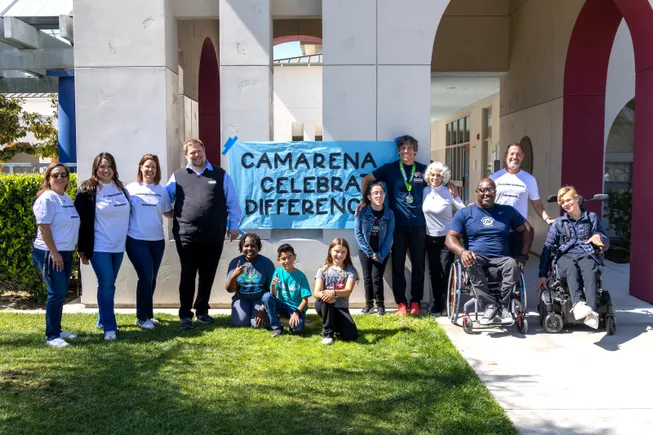
    • While the arrest was not on public school grounds, it took place near school property, outside of the district’s Enrique S. Camarena Elementary School. CVESD Superintendent Eduardo Reyes told families and staff in a community message after the incident that the district serves all students “regardless of citizenship or immigration status.” 
    • In addition, Reyes said the district has “strong protocols in place to prevent unauthorized access to our schools.” The superintendent said the protocols include limiting access for law enforcement, who aren’t allowed to interact with students “unless there is an immediate threat to school safety, such as an active emergency or a signed warrant by a judge.”  

    Dive Insight:

    “The district remains committed to reassuring families that CVESD remains a safe space for all students,” Giovanna Castro, communications director for the district, said in a statement after the ICE arrest, as reported by local Fox 5 News.

    Under a January policy change from the Trump administration, ICE can conduct raids on school grounds, among other sensitive locations, which were previously protected from immigration enforcement. Districts have said the new U.S. Department of Homeland Security policy is impacting student attendance and stoking anxieties among their immigrant families. 

    While DHS clarified to K-12 Dive in June that such immigration enforcement activity on school grounds would be “extremely rare,” there have been a handful of incidents on elementary school grounds and during school pick-up and drop-off hours in recent months. 

    The Aug. 6 incident outside of Camarena Elementary was related to a July 15, 2022, deportation order from a San Diego judge, according to ICE.

    “The arrest was part of ICE’s ongoing enforcement efforts and was resolved promptly, safely and not on the school grounds,” said Patrick Divver, field office director for ICE Enforcement and Removal Operations San Diego, in an emailed statement on Friday. 

    “The school was not involved in the incident, and there was no impact on students, staff or the school premises,” Divver said. “We remain steadfast in our commitment to ensuring the safety and security of our communities.”

    Chula Vista City Councilmember Michael Inzunza told a local news outlet, KPBS, that two children were in the car at the time of the arrest.

    Last month, a lawsuit challenging the administration’s ICE policy included an account of immigration enforcement apprehending a man dropping his granddaughter off at a church’s school in Downey, California, a predominantly Latino suburb of Los Angeles. 

    Earlier in May, ICE activity in Charlotte, North Carolina, disrupted a church’s preschool pickup time, according to a local report by WCNC.

    And in April, ICE agents attempted to enter two public elementary schools in the Los Angeles Unified School District, where school building administrators denied officers entry. That appeared to be one of the first confirmed attempts of immigration enforcement seeking to enter public schools since the change in federal policy.

    At the time, DHS said it was conducting “wellness checks on children who arrived unaccompanied at the border.”

    Source link

  • 60% of Teachers Used AI This Year and Saved up to 6 Hours of Work a Week – The 74

    60% of Teachers Used AI This Year and Saved up to 6 Hours of Work a Week – The 74


    Get stories like this delivered straight to your inbox. Sign up for The 74 Newsletter

    Nearly two-thirds of teachers utilized artificial intelligence this past school year, and weekly users saved almost six hours of work per week, according to a recently released Gallup survey. But 28% of teachers still oppose AI tools in the classroom.

    The poll, published by the research firm and the Walton Family Foundation, includes perspectives from 2,232 U.S. public school teachers.

    “[The results] reflect a keen understanding on the part of teachers that this is a technology that is here, and it’s here to stay,” said Zach Hrynowski, a Gallup research director. “It’s never going to mean that students are always going to be taught by artificial intelligence and teachers are going to take a backseat. But I do like that they’re testing the waters and seeing how they can start integrating it and augmenting their teaching activities rather than replacing them.”

    At least once a month, 37% of educators take advantage of tools to prepare to teach, including creating worksheets, modifying materials to meet student needs, doing administrative work and making assessments, the survey found. Less common uses include grading, providing one-on-one instruction and analyzing student data.

    A 2023 study from the RAND Corp. found the most common AI tools used by teachers include virtual learning platforms, like Google Classroom, and adaptive learning systems, like i-Ready or the Khan Academy. Educators also used chatbots, automated grading tools and lesson plan generators.

    Most teachers who use AI tools say they help improve the quality of their work, according to the Gallup survey. About 61% said they receive better insights about student learning or achievement data, while 57% said the tools help improve their grading and student feedback.

    Nearly 60% of teachers agreed that AI improves the accessibility of learning materials for students with disabilities. For example, some kids use text-to-speech devices or translators.

    More teachers in the Gallup survey agreed on AI’s risks for students versus its opportunities. Roughly a third said students using AI tools weekly would increase their grades, motivation, preparation for jobs in the future and engagement in class. But 57% said it would decrease students’ independent thinking, and 52% said it would decrease critical thinking. Nearly half said it would decrease student persistence in solving problems, ability to build meaningful relationships and resilience for overcoming challenges.

    In 2023, the U.S. Department of Education published a report recommending the creation of standards to govern the use of AI.

    “Educators recognize that AI can automatically produce output that is inappropriate or wrong. They are well-aware of ‘teachable moments’ that a human teacher can address but are undetected or misunderstood by AI models,” the report said. “Everyone in education has a responsibility to harness the good to serve educational priorities while also protecting against the dangers that may arise as a result of AI being integrated in ed tech.”

    Researchers have found that AI education tools can be incorrect and biased — even scoring academic assignments lower for Asian students than for classmates of any other race.

    Hrynowski said teachers are seeking guidance from their schools about how they can use AI. While many are getting used to setting boundaries for their students, they don’t know in what capacity they can use AI tools to improve their jobs.

    The survey found that 19% of teachers are employed at schools with an AI policy. During the 2024-25 school year, 68% of those surveyed said they didn’t receive training on how to use AI tools. Roughly half of them taught themselves how to use it.

    “There aren’t very many buildings or districts that are giving really clear instructions, and we kind of see that hindering the adoption and use among both students and teachers,” Hrynowski said. “We probably need to start looking at having a more systematic approach to laying down the ground rules and establishing where you can, can’t, should or should not, use AI In the classroom.”

    Disclosure: Walton Family Foundation provides financial support to The 74.


    Get stories like these delivered straight to your inbox. Sign up for The 74 Newsletter

    Source link

  • Academics working 9 hours a day, 365 days a year – Campus Review

    Academics working 9 hours a day, 365 days a year – Campus Review

    Workforce

    Funding challenges, promotion issues and heavy workloads are linked, a separate survey found

    A survey has found academics are working 3,256 hours a year, about double the Australian average, and are suffering worse anxiety and depression as a consequence.

    Please login below to view content or subscribe now.

    Membership Login

    Source link