Tag: House

  • House Republicans Accuse Truman Scholarship of Liberal Bias

    House Republicans Accuse Truman Scholarship of Liberal Bias

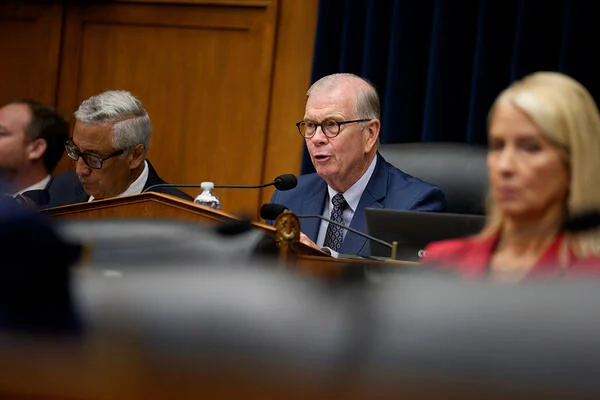
    House Republicans held a hearing Wednesday broadcasting long-standing conservative allegations of a left-wing bias in the small, prestigious Truman Scholarship program. Witnesses called by the GOP said the winners disproportionately espouse causes such as promoting racial justice and fighting climate change—and wind up working for Democrats and left-leaning organizations—while few recipients profess interest in conservative aims.

    But rather than counter the allegations, Democrats and their invited witness largely called the proceedings a distraction from the issue of college unaffordability, which they accused the GOP of exacerbating.

    The Subcommittee on Higher Education and Workforce Development hearing reflected a trend in conservative criticism of higher ed: allegations of favoritism toward liberals and left-leaning thought within very exclusive programs, including certain Ivy League institutions. The Trump administration’s sweeping research funding cuts for particular universities—and the congressional grillings of university presidents during antisemitism hearings before Trump retook the White House—have targeted institutions that only a fraction of Americans attend.

    “The Truman Scholarship represents an appropriation of $3 million a year, and directly impacts just 50 to 60 students annually,” said Democratic witness Ashley Harrington, senior policy counsel for the NAACP Legal Defense Fund. “The cuts to the higher education safety net made in the One Big Beautiful Bill are of far greater consequence to the millions of Americans who have never even heard of the Truman Scholarship.”

    “I hope today’s conversation can shift toward making our entire higher education system more affordable and accessible for all students,” Harrington said, “instead of having a narrow, partisan dialogue about the very few who receive this elite scholarship.”

    Republicans and their witnesses—one from a conservative-leaning media outlet and two from conservative-leaning think tanks—didn’t take her up on that invitation. Jennifer Kabbany, editor in chief of The College Fix, said her outlet has been researching liberal bias in the Truman Scholarship for 10 years and argued that its recipients hold a lot of sway.

    “They’re lobbying, they’re working for lawmakers, they’re consulting, they’re working for very influential, liberal-leaning law firms,” Kabbany said. “And so they’re having a big influence on our nation’s conversation and what legislation is brought forth. This isn’t just a $3 million scholarship—this is the direction of our country.”

    The scholarship, which provides junior undergraduates up to $30,000 for a “public service–related” graduate degree, was founded as a memorial to the namesake Democratic president. Congress passed legislation creating it in 1974, and Republican president Gerald Ford signed the bill into law the next year.

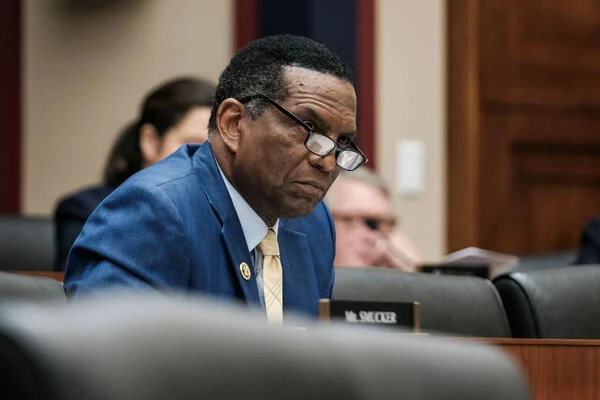
    Lawmakers didn’t invite anyone from the Harry S. Truman Scholarship Foundation to testify. Rep. Burgess Owens, the Utah Republican who chairs the subcommittee, told Inside Higher Ed he didn’t know why no one from the foundation appeared. Audra McGeorge, communications director for the Education and Workforce Committee, said the full committee chooses witnesses.

    “We provided an opportunity for the Truman Scholarship program to respond to the Committee’s concerns” outlined in a letter last year citing a report on the program from the American Enterprise Institute, McGeorge said. “Since they chose not to engage with us on those issues, we did not see a productive path in repeating the outreach. So we sought out researchers who have examined this issue fairly.”

    The minority Democratic party gets to choose only one witness. Raiyana Malone, a spokesperson for the committee’s Democrats, said, “We really wanted to focus on the Big Ugly Bill cuts to higher education,” so they chose Harrington.

    The report from AEI, a conservative-leaning think tank, said that, of the 182 Truman winners between 2021 and 2023, just six espoused interest in a traditionally “conservative-leaning” cause. While numerous winners cited an interest in topics such as immigrants’ rights or racial justice, none professed interest in protecting the rights of the unborn or defending the Second Amendment, the report said.

    Frederick Hess, AEI’s director of education policy studies and co-author of the report, said the Truman Foundation began hiding past news releases and reduced the amount of biographical information on its website to prevent the replication of such studies. In an email, Tara Yglesias, the foundation’s deputy executive secretary, said its 2025 scholar listing had returned to a format used in the early 2000s partly because “scholars, particularly those working in national security and similar areas, had made requests that we not post their biographical information publicly. Additionally, significant staff time was required to keep the biographies current, even for the short time they were visible.”

    Rep. Suzanne Bonamici, an Oregon Democrat, criticized the fact that the report’s other author, Joe Pitts, didn’t disclose in the report that he was a failed applicant for the scholarship. Bonamici called Pitts “disgruntled,” which Pitts rebutted on X.

    The scholarship foundation didn’t provide Inside Higher Ed an interview Wednesday or answer some specific emailed questions. Terry Babcock-Lumish, its executive secretary, wrote in an email that while no one from the foundation was invited to testify, “We welcome Members of Congress’s assistance in raising awareness of our opportunity and hope they will encourage the colleges and universities in their districts to nominate qualified candidates.” She said it’s “a merit-based scholarship program committed to identifying aspiring leaders throughout the United States, regardless of ideology.”

    “Unless candidates apply, we cannot select them,” she wrote.

    While the Republican witnesses shared their specific issues with the program’s recruitment and selection process—including not seeking out candidates from traditionally conservative campuses—they and the Republican subcommittee members also traced the alleged liberal bias to the left-leaning nature of academe in general.

    “On the campus level, those that are deciding who gets put to the regional committees, I mean, they’re professors,” said Kabbany, of The College Fix. “And we all know, 30 to one, professors are liberals, so they’re obviously going to advance candidates who have beliefs and pet causes that they love … It’s really systemic.”

    A few Republicans, including Owens, said Congress should end the program.

    “The Truman committee and this entire process is anti-conservative,” Owens said in his closing remarks. He said, “This has been a pipeline for Democrats, no question about it … I don’t think it’s fixable.”

    Rep. Mark Harris, a North Carolina Republican, said, “It’s deeply ironic to me that taxpayers who also never attended college, just like [President] Truman himself, are now forced to fund elite postgraduate degrees for a handpicked few. In my opinion, the federal government has no business running a scholarship program at all.” (According to the Truman Library, Harry S. Truman attended a business college for one year before dropping out to help with his father’s business.)

    Two Republicans—current New York gubernatorial candidate Elise Stefanik and Rep. Randy Fine, a staunchly pro-Israel Florida Republican who has said, “We have a Muslim problem in America”—accused the program of fostering antisemitism. “This, to me, is beyond liberal bias,” Fine said. “This is a flat-out embrace of Muslim terror and [represents] the fact that U.S. taxpayer dollars are being used to fund terrorists.”

    Fine, who is Jewish, said, “I have zero desire to reform the Truman fellowship. I’m not interested in borrowing $3 million from my children and grandchildren to give it to people who would like to kill them, so I believe we should shut down the program.” (Fine also made a point to say he wasn’t asking questions of Adam Kissel, a Republican witness, because of Kissel’s connection to the Heritage Foundation, which many conservatives accuse of tolerating antisemitism.)

    Stefanik, who is on the scholarship foundation’s board, cited a 2025 Truman scholar who “publicly espoused support for Hamas,” adding, “We need to address this rise in antisemitism with some of the recipients.”

    Eva Frazier, the Truman recipient whom Stefanik has publicly named in the past, told Inside Higher Ed in an email, “Congresswoman Stefanik’s comments followed a long pattern of politicians attempting to scare students into silence for speaking out about the Palestinian cause, but we refuse to be intimidated by such attacks.”

    Rep. Tim Walberg, a Michigan Republican and chair of the Education and Workforce Committee, said the alleged Truman Scholarship issues are “illustrative of so much that goes on.”

    “We’re seeing a bias in opposition to the American idea,” he said. “That isn’t liberal or conservative—it’s American.”

    Source link

  • GMercyU Unveils Crime Scene House for Student Investigations

    GMercyU Unveils Crime Scene House for Student Investigations

    Inside an unoccupied house, a student gingerly pushes open a creaky door and takes a wary step into a dark room—only to find the walls completely splattered with blood.

    It sounds like the cliché climax in a horror movie, but for students in the criminal justice program at Gwynedd Mercy University, it’s a regular class assignment.

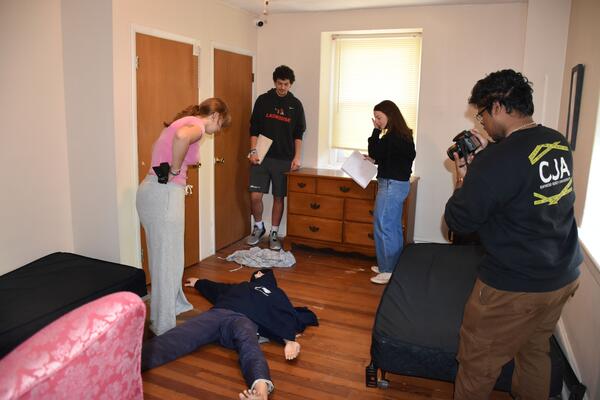
    This fall, Gwynedd Mercy unveiled a new Crime Scene House, a three-story home that features various staged rooms for experiential learning in forensic science. Students now have a space for simulated criminal investigations, with each room configured to resemble a different crime scene they might encounter, including the blood spatter room.

    Gwynedd Mercy is one of a dozen-plus colleges across the country that turn houses into mock crime scenes; West Virginia University claims the title for largest hands-on training complex in the U.S., boasting four crime scene houses, a vehicle processing garage, a ballistics test center and designated grounds for excavation.

    The not-so-haunted houses are designed to give students a safe, supervised space to immerse themselves in a crime scene. Plus, it’s a great enrollment draw for students who get a thrill out of murder mysteries.

    “We’re very excited about the opportunity to have students come into our program and learn the how-to, so then they walk out of here and they say, ‘This is what I want to do,’” said Patrick McGrain, associate professor of criminal justice and the program director at Gwynedd Mercy. “It really is for the benefit of creating a more professional law enforcement community.”

    From convent to crime scene: McGrain and university leaders aspired to open a crime scene house on campus for years. In July, the dream became a reality when the Catholic university’s administrators identified an older building that used to house the Sisters of Mercy. The building was in disarray, and when McGrain was offered the opportunity to revamp it for students, he jumped at the chance.

    The Crime Scene House holds a variety of staged rooms to practice different investigations including a kitchen, a bathroom, two bedrooms and an office. In addition, the house features spaces for other simulated experiences, including an interrogation room, an evidence area to analyze fingerprints and a model “flophouse,” or a low-rent motel room used for drugs. And of course, the blood spatter room.

    “We’re going to teach students how to analyze blood splatter, the analysis of the trajectory,” McGrain said.

    Every element of the house is available for students to manipulate and investigate, even the flooring.

    “We have carpet laid down that they cut out pieces, use luminol and then take it over to the lab, well, what is it that we have?” McGrain explained. “Is it feces, it is urine, is it semen, is it blood? What is it that we’re looking at and what do you think happened in this room?”

    Faculty can track students’ progress solving the investigations through cameras mounted in each of the rooms.

    While the home at times may resemble an escape room, with CCTV cameras and a mystery to solve, “the only person locked in is the one who’s been kidnapped, and that’s been planned, and it’s a dummy,” McGrain said.

    The university allocated a small budget for furniture, but a significant number of items came directly from campus community members, who donated household items or clothing.

    “I even had two students who found a couch on the side of the road, grabbed it, put it in their trunk and brought it in,” McGrain said. “It is now the couch that sits in the living room.”

    Because the house is designed to be ransacked and torn up by “criminals,” the university also keeps backup furniture and wall decor.

    “If we want to break something, if we need to tear something, we do,” McGrain said. “The hands-on learning knows no limits.”

    Experiential learning: Other academic programs, including nursing, psychology and social work, have simulation labs integrated into the curriculum to allow students to practice their skills. In the same way, the house gives criminal justice students a chance to gain career skills.

    Before the Crime Scene House was established, Gwynedd Mercy faculty would set up a classroom to resemble the crime scene.

    “It’s not nearly as detailed,” McGrain said. “You don’t have the furniture. You don’t have the fake drugs or guns.”

    The facility has also served as a resource for law enforcement to train new detectives on how to use tech tools, such as digital photography and indoor drones.

    Jerome Mathew, a junior criminal justice student, said having the Crime Scene House is a game-changer—especially for getting incoming students amped about studying criminal justice.

    “They were really thrilled about seeing all the different fake drugs, money, different rooms, the cameras and how monitored everything was,” Mathew said.

    Gwynedd Mercy has plans to grow the criminal science major and launch a forensic science minor. The Crime Scene House will be an integral piece of that, McGrain said. “We’re expecting to see a spike in applications and a spike in admissions.”

    Source link

  • US Chamber sues White House to block ‘plainly unlawful’ H-1B visa fee

    US Chamber sues White House to block ‘plainly unlawful’ H-1B visa fee

    This audio is auto-generated. Please let us know if you have feedback.

    Dive Brief:

    • President Donald Trump’s proclamation placing a $100,000 fee on new H-1B visas is a “plainly unlawful” expansion of executive authority that violates the Administrative Procedure Act and federal immigration laws, the U.S. Chamber of Commerce alleged in a lawsuit Thursday.
    • Chamber of Commerce v. U.S. Dept. of Homeland Security, et. al. is at least the second such lawsuit against the fee proclamation, following a separate filing earlier this month by plaintiffs in California. The Chamber claimed the fee would “inflict significant harm on American businesses” and render the H-1B program economically unviable for many.
    • The Chamber asked the U.S. District Court of Appeals for the District of Columbia to enjoin the fee requirement and vacate any agency actions taken to implement it. A White House spokesperson did not respond to a request for comment.

    Dive Insight:

    The lawsuit is an immediate follow-up to the Chamber’s statement last month calling on the Trump administration to withdraw its fee proclamation. In that statement, the organization said Trump’s move could impede economic growth as well as domestic job creation by incentivizing employers to move some business functions overseas.

    A Chamber press release Thursday reiterated those concerns. Neil Bradley, the organization’s executive vice president and chief policy officer, credited the administration with “securing our nation’s border” while warning of the need for H-1B visas to support growth and attract global talent.

    The fee caught employers by surprise when it was announced in September, particularly so for those in the technology sector, where H-1B visas are routinely sought to staff highly-skilled positions in mathematics, computer science and similar fields. But the fee’s effects could be felt in other fields, including higher and K-12 education, plaintiffs in the California lawsuit alleged.

    New guidance from U.S. Citizenship and Immigration Services issued Monday appeared to give the higher education sector some relief, however. It said that the new fee wouldn’t apply to those who are inside the U.S. and “requesting an amendment, change of status, or extension of stay.” That means international students who recently graduated and have H-1B sponsorship wouldn’t be subject to it, Bloomberg Law reported

    Trump has touted the fee — which applies prospectively only to H-1B visa petitions filed on or after Sept. 21, 2025, — as a necessary measure to combat “systemic abuse” of the program by employers in an effort to artificially suppress wages while reducing job opportunities for U.S. citizens.

    The Chamber directly addressed this point in its lawsuit, conceding that while abuse of the H-1B program is a serious issue, Congress considered this problem when creating the program and authorized the executive to take certain measures to prevent and remediate such abuse.

    For example, the Chamber noted that Congress twice imposed a temporary $4,000 surcharge fee on certain employers with a high proportion of H-1B visa holders. It also implemented a regulatory framework, the Labor Condition Application, requiring employers seeking H-1B employees to certify that the positions offered to such candidates meet criteria outlined by Congress. The legislature gave the president the authority to enforce such requirements by issuing fines as well as bans on filing future H-1B petitions.

    “What Congress did not authorize is disincentivizing the use of the program by imposing a fee many times the amount of fees set by Congress,” the Chamber said.

    Separately, the organization echoed an argument used by the California plaintiffs in alleging that the fee is arbitrary and capricious and was not submitted to notice-and-comment rulemaking as required under the APA.

    The lawsuits against the fee add to employers’ confusion in the aftermath of the proclamation. Sources previously told HR Dive that businesses have since been left to parse just how to pay the fee or how it will apply to visa petitioners who are already physically present in the U.S.

    Editor’s note: Natalie Schwartz, senior editor at Higher Ed Dive, contributed to this story. 

    Source link

  • Dartmouth Joins Growing List of Elite Universities Rejecting White House Academic Compact

    Dartmouth Joins Growing List of Elite Universities Rejecting White House Academic Compact

    Dartmouth CollegeFile photoDartmouth College has declined to sign the Trump administration’s “Compact for Academic Excellence in Higher Education,” becoming the latest prestigious institution to prioritize institutional autonomy over preferential federal funding access.

    In a statement released Saturday, Dartmouth President Dr. Sian Beilock firmly articulated the college’s position ahead of Monday’s deadline, emphasizing that governmental oversight—regardless of political affiliation—represents an inappropriate mechanism for directing the mission of America’s top research universities.

    “I do not believe that the involvement of the government through a compact—whether it is a Republican- or Democratic-led White House—is the right way to focus America’s leading colleges and universities on their teaching and research mission,” Beilock stated.

    The compact, extended to nine select institutions, promised enhanced access to federal research dollars in return for compliance with several administration policy mandates. These requirements included adopting the administration’s gender definitions for campus facilities and athletics, eliminating consideration of race, gender and various demographic factors from admissions decisions, and restricting international student enrollment.

    Despite rejecting the compact’s terms, Beilock expressed openness to dialogue, indicating her willingness to explore how to strengthen the traditional federal-university research partnership while maintaining higher education’s focus on academic excellence.

    The decision followed significant campus pressure, with nearly 500 Dartmouth faculty members and graduate students signing a petition advocating for rejection, according to the Valley News.

    In her statement, Beilock emphasized the fundamental principle at stake: “Universities have a responsibility to set our own academic and institutional policies, guided by our mission and values, our commitment to free expression, and our obligations under the law.”

    She framed institutional independence as essential to rebuilding public confidence across political lines and preserving American higher education’s global preeminence.

    Dartmouth’s decision aligns with rejections announced last week by peer institutions including the Massachusetts Institute of Technology, Brown University, the University of Pennsylvania and the University of Southern California, suggesting a coordinated defense of academic autonomy among elite research universities.

    Source link

  • White House to Meet With Universities Regarding Compact

    White House to Meet With Universities Regarding Compact

    Brendan Smialowski/AFP/Getty Images

    After four universities rejected the Trump administration’s compact for higher education, the White House is planning to meet Friday afternoon with the remaining five that have yet to respond.

    A White House official confirmed plans of the meeting to Inside Higher Ed but didn’t say what the purpose of the gathering was or which universities would attend. Nine universities were asked to give feedback on the wide-ranging proposal by Oct. 20.

    The virtual meeting will likely include May Mailman, a White House adviser, and Vincent Haley, director of the White House’s Domestic Policy Council, according to a source with knowledge of the White House’s plans. Mailman, Haley and Education Secretary Linda McMahon signed the letter sent to the initial nine about the compact.

    So far, the Massachusetts Institute of Technology, Brown University, the University of Pennsylvania and the University of Southern California have publicly rejected the deal. Dartmouth College, the University of Arizona, the University of Texas at Austin, the University of Virginia and Vanderbilt University haven’t said whether they’ll agree to the compact. Trump officials have said that the signatories could get access to more grant funding and threatened the funding of those that don’t agree.

    After USC released its letter rejecting the proposal, Liz Huston, a White House spokesperson, told the Los Angeles Times that “as long as they are not begging for federal funding, universities are free to implement any lawful policies they would like.”

    Following the first rejection from MIT last Friday, President Trump posted on Truth Social that all colleges could now sign on. The White House has said that some institutions have already reached out to do so.

    The source with knowledge of the White House’s plans said that the meeting “appears to be an effort to regain momentum by threatening institutions to sign even though it’s obviously not in the schools’ interest to do so.”

    The Wall Street Journal reported that Arizona State University, the University of Kansas and Washington University in St. Louis were also invited. According to the Journal, the goal of the meeting was to answer questions about the proposal and to find common ground with the institutions.

    Former senator Lamar Alexander, a Tennessee Republican and trustee at Vanderbilt, wrote in a Wall Street Journal op-ed that the compact was an example of federal overreach akin to previous efforts to impose uniform national standards on K–12 schools.

    “Mr. Trump’s proposed higher education compact may provoke some useful dialogue around reform,” he wrote. “But the federal government shouldn’t try to manage the nation’s 6,000 colleges and universities.”

    Inside Higher Ed reached out to the remaining five institutions as well as the new invitees, but they haven’t responded to a request for comment or to confirm whether they’ll attend the meeting.

    Source link

  • White House Meets With Universities Regarding Compact

    White House Meets With Universities Regarding Compact

    After four universities rejected the Trump administration’s compact for higher education, the White House met Friday with some universities about the proposal. 

    A White House official confirmed plans of the meeting to Inside Higher Ed but didn’t say what the purpose of the gathering was or which universities would attend. Nine universities were asked to give feedback on the wide-ranging proposal by Oct. 20.

    The virtual meeting planned to include May Mailman, a White House adviser, and Vincent Haley, director of the White House’s Domestic Policy Council, according to a source with knowledge of the White House’s plans. Mailman, Haley and Education Secretary Linda McMahon signed the letter sent to the initial nine about the compact.

    So far, the Massachusetts Institute of Technology, Brown University, the University of Pennsylvania and the University of Southern California have publicly rejected the deal. Dartmouth College, the University of Arizona, the University of Texas at Austin, and Vanderbilt University haven’t said whether they’ll agree to the compact. UVA said late Friday afternoon that it wouldn’t agree to the proposal.

    The Wall Street Journal reported that Arizona State University, the University of Kansas and Washington University in St. Louis were also invited. According to the Journal, the goal of the meeting was to answer questions about the proposal and to find common ground with the institutions.

    Inside Higher Ed reached out to the universities, but none confirmed whether they attended the meeting.

    The nine-page document would require universities to make a number of far-reaching changes from abolishing academic departments or programs that “purposefully punish, belittle, and even spark violence against conservative ideas” to capping international undergraduate enrollment at 15 percent. Institutions also would have to agree to freeze their tuition and require standardized tests for admissions, among other provisions.

    Trump officials have said that the signatories could get access to more grant funding and threatened the funding of those that don’t agree. The Justice Department would enforce the terms of the agreement, which are vague and not all defined.

    After USC released its letter rejecting the proposal, Liz Huston, a White House spokesperson, told the Los Angeles Times that “as long as they are not begging for federal funding, universities are free to implement any lawful policies they would like.”

    Following the first rejection from MIT last Friday, President Trump posted on Truth Social that all colleges could now sign on. The White House has said that some institutions have already reached out to do so.

    The source with knowledge of the White House’s plans said that the meeting “appears to be an effort to regain momentum by threatening institutions to sign even though it’s obviously not in the schools’ interest to do so.”

    Former senator Lamar Alexander, a Tennessee Republican and trustee at Vanderbilt, wrote in a Journal op-ed that the compact was an example of federal overreach akin to previous efforts to impose uniform national standards on K–12 schools.

    “Mr. Trump’s proposed higher education compact may provoke some useful dialogue around reform,” he wrote. “But the federal government shouldn’t try to manage the nation’s 6,000 colleges and universities.”

    A Joint Warning

    The American Council on Education and 35 other organizations warned in a joint statement released Friday that “the compact’s prescriptions threaten to undermine the very qualities that make our system exceptional.”

    The organizations that signed requested the administration withdraw the compact and noted that “higher education has room for improvement.” 

    But “the compact is a step in the wrong direction,” the letter states. “The dictates set by it are harmful for higher education and our entire nation, no matter your politics.”

    The letter is just the latest sign of a growing resistance in higher ed to the compact. Faculty and students at the initial group of universities rallied Friday to urge their administrators to reject the compact. According to the American Association of University Professors, which organized the national day of action, more than 1,000 people attended the UVA event. 

    And earlier this month, the American Association of Colleges and Universities released a statement that sharply criticized the compact. The statement said in part that college and university presidents “cannot trade academic freedom for federal funding” and that institutions shouldn’t be subject “to the changing priorities of successive administrations.” Nearly 150 college presidents and associations have endorsed that statement.

    The joint statement from ACE and others, including AAC&U, was a way to show that the associations, which the letter says “span the breadth of the American higher education community and the full spectrum of colleges and universities nationwide,” are united in their opposition.

    “The compact offers nothing less than government control of a university’s basic and necessary freedoms—the freedoms to decide who we teach, what we teach, and who teaches,” the statement reads. “Now more than ever, we must unite to protect the values and principles that have made American higher education the global standard.” 

    But not everyone in the sector signed on. 

    Key groups that were absent from the list of signatories include the Association of Public and Land-grant Universities, the Association of American Universities, the American Association of State Colleges and Universities, the National Association of Independent Colleges and Universities, Career Education Colleges and Universities, and the American Association of Community Colleges.

    Inside Higher Ed reached out to each of those groups, asking whether they were invited to sign and, if so, why they chose not to do so. Responses varied.

    AAU noted that it had already issued its own statement Oct. 10. AASCU said it was also invited to sign on and had “significant concerns” about the compact but decided to choose other ways to speak out.  

    “We are communicating in multiple ways with our member institutions and policymakers about the administration’s request and any impact it might have on regional public universities,” Charles Welch, the association’s president, said in an email.

    Other organizations had not responded by the time this story was published.

    Jessica Blake contributed to this article.

    Source link

  • White House Floats Compact for Preferential Treatment

    White House Floats Compact for Preferential Treatment

    The Trump administration has asked nine universities to sign on to a proposed compact, mandating certain changes in exchange for preferential treatment on federal funding.

    First reported by The Washington Post and confirmed, with additional details, by The Wall Street Journal, the proposal seeks an agreement with nine institutions that are being asked to commit to a 10-point memo referred to as the “Compact for Academic Excellence in Higher Education.”

    Among the various conditions, institutions are reportedly being asked to:

    • Ban consideration of race or sex in hiring and admissions processes
    • Freeze tuition for a five-year period
    • Limit international undergraduate enrollment to 15 percent of the student body
    • Commit to institutional neutrality
    • Require applicants to take standardized tests, such as the SAT or ACT
    • Clamp down on grade inflation
    • Ensure a “vibrant marketplace of ideas on campus” 
    • Restrict employees from expressing political views on behalf of the institution
    • Shut down departments that “punish, belittle” or “spark violence against conservative ideas”
    • Anonymously poll students and employees on compact compliance and publish the results

    Another requirement mandates that signatories “deploy their endowments to the public good,” such as by not charging tuition to students “pursuing hard science programs (with exceptions, as desired, for families of substantial means)” for universities with more than $2 million per undergraduate student in endowment assets. Universities would also be required to post more details about graduates’ earnings and refund tuition to those who drop out in their first semester.

    After leveraging funding freezes and other tactics to pressure colleges to make changes, the compact reflects a different approach from the administration while still geared toward the same goal—remaking higher education in Trump’s image. May Mailman, a Trump adviser, hinted at the plan in a New York Times interview a week before the proposal emerged, saying it could be a way for universities to affirm they are “doing the right things.”

    “The Trump administration does not want to be all Whac-a-Mole or all negative, but these are the principles that universities and the Trump administration and, frankly, private donors can ascribe to to say, ‘This makes a great university,’” she told the Times.

    Institutions reportedly invited to join are: Brown University, Dartmouth College, the Massachusetts Institute of Technology, the University of Arizona, the University of Pennsylvania, the University of Southern California, University of Texas at Austin, the University of Virginia and Vanderbilt University.

    Those that agree will receive “multiple positive benefits,” including “substantial and meaningful federal grants,” according to a copy of the memo published by The Washington Examiner.

    But failure to comply with the agreement would come with steep consequences. Noncompliant universities would “lose access to the benefits of this agreement” for a year. Subsequent violations would lead to a two-year punishment. And the federal government could claw back “all monies advanced by the U.S. government during the year of any violation.” Private donations would also be required to be returned, upon request.

    The Department of Justice would be tasked to enforce the agreements.

    Institutional Responses

    Most universities did not respond to requests for comment from Inside Higher Ed. But Texas officials seem eager to sign on, sharing a statement indicating their enthusiasm for the compact.

    University of Texas system Board of Regents chairman Kevin P. Eltife wrote in the statement that the flagship was “honored” to be among the institutions “selected by the Trump Administration for potential funding advantages” under the proposed compact, which it is currently reviewing.

    “Higher education has been at a crossroads in recent years, and we have worked very closely with Governor [Greg] Abbott, Lt. Gov. [Dan] Patrick and Speaker [Dustin] Burrows to implement sweeping changes for the benefit of our students and to strengthen our our [sic] institutions to best serve the people of Texas,” Eltife wrote. “Today we welcome the new opportunity presented to us and we look forward to working with the Trump Administration on it.”

    University of Virginia spokesperson Brian Coy told Inside Higher Ed by email that interim president Paul Mahoney “created a working group under the leadership of Executive Vice President and Provost Brie Gertler and Executive Vice President and Chief Operating Officer J.J. Davis to advise him” on UVA’s response to the letter but has not yet made a decision to sign or not.

    USC simply said in a statement, “We are reviewing the Administration’s letter.”

    Both the White House and the Department of Education initially responded to requests for comment with automatic replies because of the federal government shutdown, which began Wednesday. A press office official later responded only to confirm The Wall Street Journal’s reporting.

    Outside Perspectives

    News of the proposal prompted a flurry of criticism within academic circles.

    American Association of University Professors president Todd Wolfson blasted the idea in a Thursday statement and called on governing boards to reject it.

    “The Trump administration’s offer to give preferential treatment to colleges and universities that court government favor stinks of favoritism, patronage, and bribery in exchange for allegiance to a partisan ideological agenda. This compact is akin to a loyalty oath. Adherence by university administrations would usher in a new era of thought policing in American higher education,” Wolfson wrote.

    The executive committee of Penn’s AAUP chapter also opposed the proposal.

    The Foundation for Individual Rights and Expression also criticized it in a post on X, writing that “the compact includes troubling language” specifically pointing to the call to eliminate academic departments critical of conservative ideas, which it cast as undermining free speech.

    “A government that can reward colleges and universities for speech it favors today can punish them for speech it dislikes tomorrow. That’s not reform. That’s government-funded orthodoxy,” FIRE officials wrote.

    Trinity Washington University president Pat McGuire called the proposal “political extortion.”

    Brendan Cantwell, a higher education professor at Michigan State University, told Inside Higher Ed there are multiple issues with the proposal, including vague language about political speech that could allow universities or the federal government to single out faculty members for publicly discussing topics within their expertise. He added that “enforcement is so vague” that it would be easy for the federal government to declare universities out of compliance with the agreement.

    Cantwell suggested, “This is probably a bigger deal than the Columbia [settlement] because it’s creating an incentive structure” that spurs universities to go along or opens them up to retaliation from the federal government, making it risky whether a university signs on or not.

    (Columbia agreed to far-reaching changes to admissions, hiring, disciplinary processes and more in July, including a $221 million fine, when it reached a deal with the federal government to settle over findings that it failed to properly police antisemitism on campus. Columbia did not admit to wrongdoing, but administrators have acknowledged the need for reforms.)

    Brian L. Heuser, a Vanderbilt professor and long-standing member of the university’s Faculty Senate, urged fellow senators and other faculty colleagues to organize against the idea in an email shared with Inside Higher Ed. Heuser called the compact “a dangerous departure from the core values that should underpin our institutions—namely, free inquiry, open debate, and institutional autonomy” and argued that it endangers academic freedom, among other concerns.

    But some conservatives have lauded the idea and want ED to push harder.

    “Secretary [Linda] McMahon deserves credit for working to disincentivize the use of race or sex in college admissions,” U.S. Sen. Todd Young, an Indiana Republican, wrote in a social media post. “We must go further—federally accredited institutions should eliminate ALL preferences grounded in ancestry, such as legacy status, or other factors unrelated to merit.”

    Why These 9?

    While it is unclear how the federal government landed on the nine schools as candidates for the proposal, one official told The Wall Street Journal the Trump administration believed they would be “good actors.” But contextual clues offer insights into why some may have been picked.

    Of the nine, only five presidents signed on to a letter published earlier this year by higher education organizations pushing back on government overreach and political interference, which ultimately gathered 662 signatures. Of those five presidents, one has since resigned: Jim Ryan at UVA, who faced pressure from the Trump administration after it claimed the university failed to fully dismantle diversity, equity and inclusion programs.

    Two institutions—Brown and Penn—previously struck deals with the federal government.

    Others have drawn attention for political reasons. At Vanderbilt, Chancellor Daniel Diermeier has emerged as a leading voice advocating for institutional neutrality and has clashed with other campus leaders, arguing that higher education is in desperate need of reform, agreeing with frequent conservative criticisms of the sector. And Texas—one of three public institutions on the list—has an overwhelmingly conservative board, and both the system and flagship are led by former Republican elected officials.

    Source link

  • GOP-led House panel proposes 15% cut to Education Department

    GOP-led House panel proposes 15% cut to Education Department

    This audio is auto-generated. Please let us know if you have feedback.

    Dive Brief: 

    • House Republicans on Monday proposed a 15% cut to the U.S. Department of Education’s budget for the 2026 fiscal year, in line with President Donald Trump’s own plan to deeply reduce funding to the agency. 

    • The plan would advance several of Trump’s key budget proposals, including deep cuts to the Education Department and certain federal student aid programs. However, the plan would reject some of the Trump administration’s proposals, including by preserving the maximum Pell Grant at $7,395

    • House lawmakers will need to eventually square their proposals with the Senate, which is considering a different proposal that would largely maintain the Education Department’s current level of discretionary funding. Lawmakers face a government shutdown if they don’t fund the government or pass a stopgap budget measure by Oct. 1. 

    Dive Insight: 

    The House Appropriations Committee’s education subcommittee will mark up the proposal Tuesday evening. Robert Aderholt, an Alabama Republican who chairs the subcommittee, framed the proposal as being in line with the priorities of the Trump administration. Trump has pitched deep spending cuts at the Education Department with the ultimate goal of closing the agency.

    Even last year, we were dedicated to getting government spending under control,” Aderholt said in a Monday statement. “But now, it’s particularly encouraging to have a partner in the White House that shares this commitment.”

    The House panel’s plan would reduce funding for the Education Department to $67 billion. That’s in line with Trump’s own budget proposal, which critics argued would reduce access to college. 

    Like Trump’s proposal, the House plan would eliminate all funding for the Federal Supplemental Educational Opportunity Grant program, according to committee Democrats, who have slammed the proposal. FSEOG, which provides need-based financial aid to undergraduate students, was allocated $910 million in fiscal 2025. 

    It would similarly make deep cuts to the Federal Work-Study program, which provides part-time jobs to college students who demonstrate sufficient financial need. The federal government currently pays up to 75% of students’ wages, while employers pay the remainder. 

    The plan would reduce funding to the program to $779 million, $451 million less than 2025 levels, according to committee Democrats. The Trump administration has proposed even deeper cuts, calling for the program to receive only $250 million in the 2026 fiscal year. 

    The House Appropriations Committee’s plan would also embrace Trump’s proposal to cut funding to the Office for Civil Rights, which investigates discrimination, harassment and sexual violence complaints on college campuses. Under the proposal, OCR would receive $91 million, a decrease of $49 million. 

    And it would zero out funding for several grant and fellowship programs administered by the Education Department, including those that support teacher preparation, campus-based childcare for students and foreign language instruction. 

    However, House Republicans rejected some of the Trump administration’s proposals. For instance, the plan would preserve the maximum Pell Grant, in contrast with the White House’s plan to reduce it by roughly 23% to $5,710

    The plan would also keep funding level for TRIO and Gear Up, two programs that help low-income and other disadvantaged students prepare for and complete college. Trump has proposed eliminating the nearly $1.6 billion in funding allocated for TRIO and Gear Up in fiscal 2025, raising concerns from both Democratic and Republican lawmakers. 

    The House Appropriations Committee would also cut funding to the National Institutes of Health. It would allocate $47.8 billion to the agency, a $456 million drop from 2025 levels, according to committee Democrats. Trump’s plan, in contrast, called for a nearly $18 billion funding reduction to the agency. 

    Additionally, the plan seeks to rename Workforce Pell Grants, which will provide funding for programs as short as eight weeks, following Republicans’ recent passage of a massive domestic policy bill. Under the proposal, the awards would be renamed Trump Grants “to reflect the President’s commitment to growing the American workforce and expanding opportunities for American workers,” according to a bill summary.

    The Senate Appropriations Committee advanced its own budget proposal in July. It would keep funding largely level for the Education Department at $79 billion for fiscal 2026. 

    That would include maintaining funding levels for TRIO, Gear Up, Federal Work-Study and FSEOG. It would also maintain OCR’s current funding level and provide support for teacher preparation grants.

    Source link