Dr. Karsonya “Kaye” Wise WhiteheadThe Association for the Study of African American Life and History (ASALH) has issued a forceful condemnation of the White House’s directive calling for a comprehensive review of Smithsonian Institution museums, warning that the move represents an attempt to “erase or distort” Black history.
The directive follows President Donald Trump’s social media post attacking the Smithsonian museums as “OUT OF CONTROL,” claiming they focus only on “how horrible our Country is, how bad Slavery was, and how unaccomplished the downtrodden have been.” The White House subsequently ordered a full review of all archival materials to determine alignment with Executive Order 14235, aimed at “Restore Truth and Sanity to American History.”
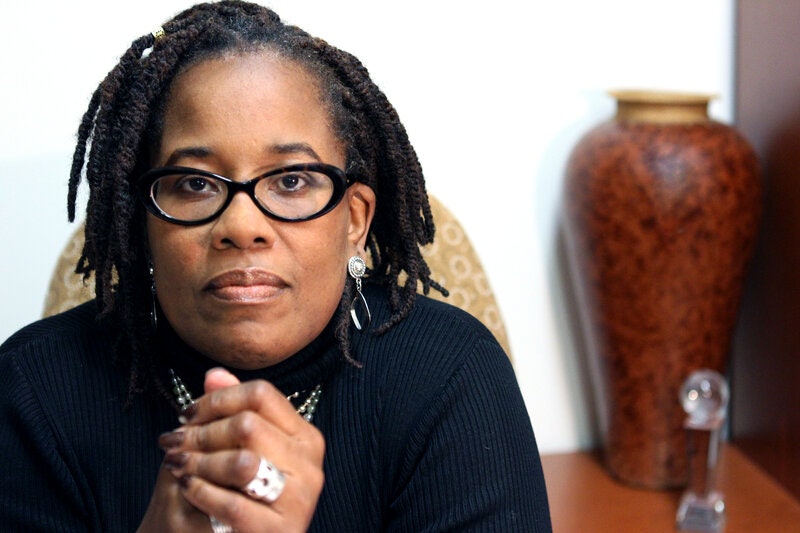
“ASALH stands in fierce opposition to this latest directive and all efforts to erase or distort our history, to silence our voices, and to minimize our story,” said ASALH President Dr. Karsonya “Kaye” Wise Whitehead.
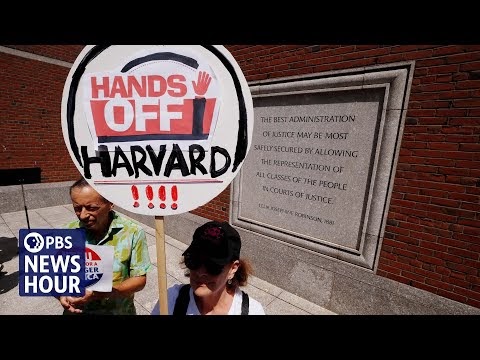
The 110-year-old organization, which founded Black History Month, partnered with the African American Policy Forum to co-lead a “Hands Off Our History” rally at the Smithsonian’s National Museum of African American History & Culture in Washington, D.C.
Whitehead characterized the museum review as part of a broader pattern of attacks on diversity and inclusion efforts. She cited the 2023 banning of over 10,000 books, many featuring people of color, and recent executive orders eliminating Diversity, Equity, and Inclusion programs in higher education, medicine, and K-12 history courses.
“These steps are veiled attempts to rewrite and distort the narrative by removing any mention of the racist actions, words, and deeds that have shaped American history,” Whitehead added.
The ASALH president described the current moment as part of an escalating campaign that began with what she termed the “whitelash election” of 2017, followed by increased white supremacy after George Floyd’s murder, and culminating in current efforts to “defund libraries, whitewash history curricula, zero-base the Department of Education.”
ASALH, founded in 1915, positions itself as a bridge between scholars and the public in preserving and promoting Black history. The organization is preparing for its annual conference in Atlanta, scheduled for September 24-28, 2025, which Whitehead said will serve as an opportunity to “organize and prepare ourselves to counter his next steps.”
The controversy highlights ongoing tensions over how American history is taught and presented in educational and cultural institutions, with particular focus on narratives involving slavery, civil rights, and systemic racism.
Whitehead added that the organization’s resistance draws inspiration from historical figures including Dr. Carter G. Woodson, Dr. W.E.B. Du Bois, and Harriet Tubman, stating: “Our work as truth seekers obliges us to ‘speak the truth to the people’ and demands that we stay ready.”
The Smithsonian Institution has not yet responded to requests for comment regarding the White House directive.
President Donald Trump issued an executive order in April promising to “elevate the value and impact” of the country’s historically Black colleges and universities—in part by selecting an executive director for the White House Initiative on HBCUs and a President’s Board of Advisors on HBCUs.
But four months later, eight months into his second term, these roles remain unfilled.
Some HBCU advocates say months-long waits are business as usual for these positions, and they remain confident in Trump’s support for HBCUs. Others worry that HBCUs lack their most direct line of communication to the White House at a time of rapid-fire higher ed policy changes.
Since the 1980s, the executive director of the HBCUs initiative, established by President Jimmy Carter, has been responsible for advocating for HBCUs’ federal policy interests. The President’s Board of Advisors offers guidance to government officials about how to better support and strengthen these institutions.
Appointees serve as HBCUs’ “in-house advocates,” said Ivory A. Toldson, a professor of counseling psychology at Howard University and editor in chief of The Journal of Negro Education. He served as deputy director of the White House Initiative on HBCUs from 2013 to 2015 and as executive director from 2015 to 2016 under former president Barack Obama. The director and board have historically sought out federal funding and partnership opportunities for these institutions and “made sure that executive-level priorities were shaped in a way that understood the needs of HBCUs.”
Toldson said there are likely to be “missed opportunities” for HBCUs during the limbo period before an executive director is chosen. He said it’s easy for federal agencies, like the National Science Foundation or the National Institutes of Health, to overlook smaller HBCUs for grants when no one is there to champion them.
“By them not having representation within the federal government, it becomes difficult for them to advocate effectively for their needs,” he said.
Robert Palmer, chair of the education department at Howard, said he worries HBCUs don’t have their “earpiece” to the Trump administration at a time when policy shifts, such as upcoming changes to the student loan program, will affect HBCU students.
The unfilled roles are “quite concerning,” Palmer said. “It almost makes you wonder, is it a priority for him? Because that’s what it signals—that it’s not a priority.”
Mixed Views
Other HBCU advocates don’t see a problem. Lodriguez Murray, vice president of public policy and government affairs at the United Negro College Fund, which represents private HBCUs, said he isn’t troubled by the wait because organizations like his have still been able to have “high-power and high-level discussions” with the White House and Department of Education.
“We’ve been able to get every concern addressed. We’ve been able to get every email returned. We’ve been able to get every meeting request handled,” he said. “The house is not burning down for us. And I have seen no lack of continuity and engagement on our issues at the highest levels.”
He said it’s more meaningful to him that Trump issued an executive order reaffirming the White House Initiative on HBCUs within his first 100 days and fully funded HBCUs in his proposed budget. He’d also rather the administration take its time to pick “the right individuals” to fill these roles.
“There have been many individuals who have had the role of executive director of the White House initiative on HBCUs [who] have fallen below what the expectations are of this community,” Murray said. “And so, if the White House is attempting to find the right person to meet a moment and to meet expectations, that’s fine with me.”
Trump’s pick for executive director during his first term, speaker and consultant Johnathan Holifield, was met with mixed reactions by HBCU supporters because of his lack of prior experience with these institutions. Former president Obama also received criticism for some of his executive director choices, including multiple interim appointments between permanent directors.
Murray said he’s hoping for someone “with the president’s confidence” who can help bring Trump’s plans to support HBCUs to fruition and who can simultaneously “speak truth to power and express to the president the concerns of HBCUs.”
For Toldson, “institutional knowledge of HBCUs” and an “apolitical” approach will be critical to a new executive director’s success to avoid HBCUs getting mired in the anti-DEI crusade besieging other higher ed institutions.
“Regardless of who’s in office, we need representation, and I think that the right representation would be able to balance the needs of the HBCU community with the broader direction of the government,” Toldson said.
Mounting Anticipation
Harry Williams, president and CEO of the Thurgood Marshall College Fund, which represents public HBCUs, said the amount of time it takes for presidents to fill these roles has varied historically. HBCUs have often waited months for these appointments, so the current timeline isn’t out of the ordinary, he said. Former president Joe Biden didn’t officially name an executive director until February 2022, a little over a year after his inauguration.
Still, a long wait “creates uncertainty, and it creates anxiety,” Williams said.
“We’ve gotten good information that this is something that will happen, but the timing of it has always been the challenge,” he added. TMCF is reassuring campuses that the administration plans to fill these positions, “but we don’t know exactly when.”
David K. Wilson, president of Morgan State University, said he and other HBCU presidents are eager to get started on making the promises in Trump’s executive order a reality. They were glad to see the order call on federal agencies, businesses and foundations to partner with and invest more in HBCUs.
Wilson said he hopes to see these positions filled soon “so that we can begin to express directly to the White House what some of the opportunities are for continued investment in these institutions.”
“All of them will return unbelievable dividends to the nation,” he added.
Wilson noted that Howard University recently regained Research-1 status, the coveted Carnegie Foundation classification for universities with very high research activity. Other HBCUs, including Morgan State, are poised to follow in the coming years. He wants to see appointees in place who can help maintain that momentum.
“We can’t wait to see now what this next era of HBCU investments under the Trump administration will look like,” he said. “We were on a roll, and now the question is, can we roll faster?”
As the 2026 midterm elections approach, efforts to manipulate congressional district boundaries—under the guise of redistricting—pose a serious threat to representative democracy in the United States. These efforts are not simply a matter of partisan politics; they represent a calculated attack on the principle of one person, one vote, and on the fragile trust working Americans place in democratic institutions.
Across multiple states, redistricting maps are being drawn to favor incumbents and dominant political parties, most often through a practice known as gerrymandering. While both major parties have been guilty of gerrymandering, the recent wave of redistricting efforts has intensified in key battleground states, particularly following the 2020 Census and court rulings that rolled back federal oversight.
Some of the most blatant manipulations are unfolding in Southern and Midwestern states, where legislatures have redrawn districts to dilute the voting power of Black, Latino, and low-income communities. In states like Alabama, Georgia, Louisiana, North Carolina, and Ohio, courts have intervened—only to be ignored, delayed, or overruled by higher courts, including the U.S. Supreme Court. The result: districts that favor white conservative voters while silencing diverse urban and working-class voices.
These distortions in representation aren’t merely political—they have real consequences for education policy, healthcare, labor rights, and civil rights. When working families and students find themselves in districts designed to neutralize their votes, their needs are less likely to be met by elected officials. Funding for public education, protections for contingent workers, and relief from student loan debt are often neglected in favor of corporate interests and ideological agendas.
The U.S. Supreme Court’s 2019 Rucho v. Common Cause decision paved the way for even more aggressive gerrymandering, ruling that federal courts could not adjudicate claims of partisan gerrymandering. That decision effectively gave state legislatures a green light to draw lines with political intent, even when the result undermines basic democratic principles. And with the Voting Rights Act gutted in Shelby County v. Holder (2013), many communities of color no longer have a legal shield against discriminatory maps.
In a just system, redistricting would be handled by independent commissions. In some states, this is happening—California, Michigan, Arizona, and a handful of others have taken steps toward fairer maps. But in most of the country, the party in power controls the process and uses sophisticated data tools—often developed by private firms with little transparency—to fine-tune districts down to the household level. This isn’t democracy. It’s data-driven voter suppression.
For students, low-income voters, and working-class Americans, the implications are profound. A House of Representatives that does not reflect the electorate cannot be expected to act on behalf of its needs. Adjunct professors, student debtors, gig workers, rural teachers, and public librarians already operate on the margins. When their political voices are diluted, they are pushed even further to the periphery.
These redistricting battles also have an educational cost. In states where partisan gerrymandering has secured one-party rule, legislatures have targeted curriculum content, attacked diversity and inclusion programs, cut higher education funding, and undermined faculty tenure—all without meaningful opposition. Political disempowerment leads directly to institutional decay.
The Higher Education Inquirer calls attention to these developments not only because they distort elections, but because they warp the social and economic future of the country. The 2026 House elections may be won or lost not at the ballot box but on a redistricting map drafted behind closed doors in state capitals.
The right to vote is hollow if the outcome is predetermined. The promise of representative government collapses if districts are engineered to deny equal voice. Without public awareness and pressure, these efforts to undermine democracy will go unchecked.
It’s time to speak plainly: Unless there is a national movement to restore fairness to the process, the House of Representatives in 2026 will be even less representative of the people it claims to serve.
Sources:
Brennan Center for Justice. “The Redistricting Landscape, 2023–2026.”
ProPublica. “How Politicians Use Redistricting to Lock in Power.”
NPR. “Supreme Court Ruling Lets Partisan Gerrymandering Stand.”
Southern Coalition for Social Justice. “Voting Maps and Racial Disenfranchisement.”
ACLU. “Gerrymandering: How It Works and Why It Harms Democracy.”
U.S. Census Bureau. “Apportionment and Redistricting Data.”
This audio is auto-generated. Please let us know if you have feedback.
The Trump administration will release the remaining fiscal year 2025 K-12 grant funds that it had frozen — nearly $5 billion — to states and districts, the Office of Management and Budget confirmed Friday.
The funding for student academic supports, English learners, immigrant students and teacher training was supposed to be available July 1, but was not released pending a “programmatic review” by OMB, the White House’s budget arm.
That review was to ensure the grants align with Trump administration policies and priorities, OMB told K-12 Dive earlier this month. The office had said initial findings showed “many of these grant programs have been grossly misused to subsidize a radical leftwing agenda.”
On Friday, a senior administration official told K-12 Dive in an email, “Guardrails are in place to ensure these funds will not be used in violation of Executive Orders or administration policy.”
Earlier this week, OMB began releasing $1.3 billion it had withheld for after-school and summer programming under the 21st Century Community Learning Centers grant, according to the Afterschool Alliance.
The remaining funds to be released are:
$2.2 billion for Title II-A for professional development.
$1.4 billion for Title IV-A for student support and academic enrichment.
$890 million for Title III-A for English-learner services.
$375 million for Title I-C for migrant education.
Education officials, Republican and Democratic lawmakers, education organizations, parents and nonprofits had all urged OMB to release the funds that were approved by Congress in an appropriations bill that President Donald Trump signed in March. They said the weekslong delay in accessing the money was already causing “budgetary chaos” for schools, which began cancelling contracts, laying off staff and eliminating programs when the funds didn’t arrive as scheduled.
A survey by AASA, the School Superintendents Association, found that nearly 30% of districts said they needed access to the withheld funds by Aug. 1 to avoid cutting programs and services for students. By Aug. 15, survey respondents said they would have to notify parents and educators about the loss of programs and services. The survey was conducted earlier this month and drew responses from 628 superintendents in 43 states.
On Friday, David Schuler, AASA’s executive director, said in a statement that he was pleased the “critical” funds would now be available to schools.
Sen Patty Murray, D-Wash., vice chair of the Senate Appropriations Committee, said in a statement Friday, “There is no good reason for the chaos and stress this president has inflicted on students, teachers, and parents across America for the last month, and it shouldn’t take widespread blowback for this administration to do its job and simply get the funding out the door that Congress has delivered to help students.”
Randi Weingarten, president of the American Federation of Teachers, addressed the news during a keynote speech Friday at the Together Educating America’s Children conference in Washington, D.C., according to a press release.
“Today, they backed down: our lobbying, our lawsuits, and our advocacy for why these funds matter to kids, it worked.” Weingarten said.
Becky Pringle, president of the National Education Association, said in a Friday statement, “These reckless funding delays have undermined planning, staffing, and support services at a time when schools should be focused on preparing students for success.”
The agency received $9.06 billion in fiscal year 2025 but could lose $2 billion under the House plan.
National Science Foundation
House Republicans want to cut the National Science Foundation’s funding by about $2 billion, according to budget documents released Monday.
The House proposal shows Republicans’ priorities as funding talks for the coming fiscal year ramp up. Congress has until Sept. 30 to reach an agreement on a budget, which is made up of 12 appropriations bills, or else the government could shut down. The House appropriations committee has released several proposal bills, while its Senate counterpart is just getting started.
Still, funding for NSF is already one point of disagreement between House and Senate appropriators. Last week, Senate Republicans indicated that they would cut only about $16 million from NSF, leaving the agency with just over $9 billion.
The House plan, which would give NSF about $7 billion, is just a proposal and doesn’t go as far as President Donald Trump’s proposed budget for fiscal year 2026, which cuts more than $5 billion from the agency.
A House appropriations subcommittee will review the spending bill at 12 p.m. July 15—a key step before the full committee and entire House can consider the legislation. The National Science Foundation’s budget is just one piece of the bill, which also includes spending plans for the Justice and Commerce Departments and other science agencies. Since the Senate and House have to agree on the bills, the 23 percent cut is likely not the final figure.
This audio is auto-generated. Please let us know if you have feedback.
Dive Brief:
A Republican-led House committee is pushing seven research universities to cut ties with a scholarship programsponsored by the Chinese government.
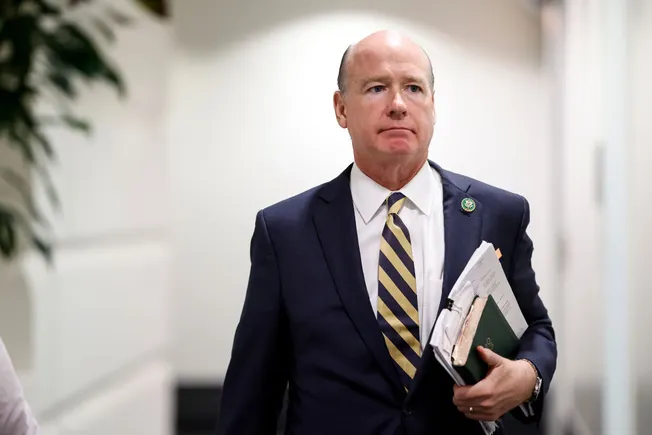
In four-page letters Tuesday, Republican Rep. John Moolenaar, chair of the Select Committee on the Chinese Communist Party, decried the China Scholarship Councilas “one of the nefarious mechanisms” the Chinese government uses to advance its technologies and urged each college involved with the council to “reconsider its participation.”
Moolenaarfurther set a July 22 deadline for college leaders to provide his committee with extensive documentation on their institutions’ work with the council from May 2020 to May 2025.
Dive Insight:
The China Scholarship Council, a program funded by the Chinese Communist Party, partners with colleges in other countries and sponsors both Chinese students studying abroad and international students studying at Chinese universities.
Participating Chinese students must return to China after graduating and work for at least two years.
In Moolenaar’s letters to college officials Tuesday, he announced that the House committee on the Chinese government is conducting a “systematic review” of “the China Scholarship Council’s infiltration of U.S. colleges.”
“CSC purports to be a joint scholarship program between U.S. and Chinese institutions,” he said. “However, in reality it is a CCP-managed technology transfer effort that exploits U.S. institutions and directly supports China’s military and scientific growth.”
About 7% of Chinese citizens studying abroad — some 65,000 students — are sponsored by the China Scholarship Council,according to a 2020 analysis by Georgetown University’s Center for Security and Emerging Technology.
A relatively small minority of them end up in the U.S. In 2024, the council announced plans to sponsor up to 240 students to study at seven U.S. colleges this year, the South China Morning Post reported.
The seven participating institutions, all of which received a letter from Moolenaar on Tuesday, are Dartmouth College, Temple University, the University of Tennessee,the University of Notre Dame andthree campuses in the University of California system — Davis, Irvine and Riverside.
The number of sponsored students and the length of their studies in the U.S. vary by college. For example, the University of California, Davis co-sponsors up to 10 Ph.D. candidates, while Temple co-sponsors up to 60 graduate students, according to Moolenaar’s letters.
However, a Dartmouth spokesperson said the college cut ties with China Scholarship Council well before receiving Moolenaar’s letter, making the decision last academic year,per the college’s student newspaper.The spokesperson told the publication that the college’s partnership with the council led to the enrollment of fewer than 10 participants over the last decade.
Likewise, the University of Notre Dame this week told The Associated Press that it began to cut ties with the council earlier this year.
Moolenaar noted that all the institutions rely on “significant federal funding” for their research, citing research funding levels from years before Trump retook office. And China has “a history of exploiting the openness of the American higher education and research system to enhance its technological competitiveness and military capabilities,” he said.
A 2020 proclamation from President Donald Trump, made during his first term, restricted certain Chinese researchers and graduate students from gaining visas to study in the U.S.The goal, Trump wrote at the time, was to prevent Chinese nationals from attempting to “acquire and divert foreign technologies.”
Several months after Trump issued the proclamation, the University of North Texas cut off ties with the China Scholarship Council, abruptly forcing more than a dozen Chinese researchers participating in the program to leave the country.
Former President Joe Biden continued to enforce the proclamation during his term.
“It is imperative to assess how the UCD-CSC joint scholarship program — explicitly designed to develop [Chinese] talent in cutting edge technology at graduate levels — serves U.S. interests,” Moolenaar said in his letter to the chancellor of the University of California, Davis. He echoed the line in his letters to the heads of the other six colleges.
Among his document requests, Moolenaar called for colleges to list if any Chinese students participating in the program switched to a STEM major after initially declaring a non-STEM major and if any participating students worked on federally funded research. Officials should also justify how supporting the development of participating students advances U.S. interests, he said.
US House Minority Leader Hakeem Jeffries (D-NY) gives a marathon speech, calling out the destructive path that House Republicans are going down. This is a Bill that undermines the United States of America and its national security. It is also a threat to democracy. Folks should listen to every minute of this historical speech.
I’ve told elsewhere the story of how the Imperial Institute was founded following the Great Exhibition of 1851, and how the South Kensington site became a hub for colleges, museums and culture. And naturally, where there are students, there is a need to house students.
And one group of students, in particular, exercised the Victorian imagination: women. Let’s take a look at The Era, of July 5, 1884:
It’s clearly no use training the girls to be high class governesses, if you can’t keep them safe from the predations of that London.
Step forward, Francis Cook. He was a rich man – head of Cook, Son and Co, traders in fabric and clothes – and became one of Britain’s richest men. He gave £40,000 to fund the construction of a hall of residence for women studying in South Kensington, which meant, at that time, at the Royal College of Art, the Royal College of Music, or the Royal College of Science. (It’s also worth noting another fact or two relating to Cook. His second wife, Tennessee Celeste Claflin was an American suffragist, clairvoyant and medium, who with her sister was one of the first women to open a Wall Street brokerage firm. The sister – Victoria Woodhull – was the first woman to run for the presidency of the United States, in 1872.)
The hall was to provide 100 bedrooms, each two connected by a shared sitting room. Plans included a concert hall, gymnasium, library and common room. The concert hall would be used by the Royal College of Music, and there were music practice rooms and art studios too. A truly magnificent residence. There are images on the Queen Alexandra’s House website.
It was named for Alexandra of Denmark, then Princess of Wales, who had taken a keen interest in the project. After the death of her husband King Edward VII, Alexandra became the Queen Mother, and suggested in 1914 that Alexandra House be renamed Queen Alexandra’s House.
Also in 1914, a little scandal took place. Here’s a clipping from the Daily Chronicle of February 6 that year:
The Ulster Volunteers were a paramilitary force, established in 1912, dedicated to the overthrow of Home Rule for Ireland. (And not to be confused with the unionist Ulster Volunteer Force which was active between 1966 and 2007, although they clearly shared a lot of aims and values!)
As “Imperial Student” wrote, “I have known Irish women, Roman Catholics, Jewesses, Non-conformists there, and can safely say that all shades of opinion have been sheltered there. Are they expected to support such an entertainment as is to be held next Monday?” (To be clear, the scandal was the support for the Ulster Volunteers, not for the Student Christian Movement.) The correspondent continued:
One feels sure that Queen Alexandra has no knowledge of the fact that an entertainment is to be held there in support of a hospital for volunteers armed to fight the forces of the Crown. It is to be hoped that this may be called to her Majesty’s attention and that she may intimate her disapproval of such a proceeding.
I am sure you will be relieved to know that the Bucks Advertiser and Aylesbury News reported on 14 February that “the unfortunate incident at Queen Alexandra’s House has passed without causing trouble in Court of other circles.”
Queen Alexandra’s House continues to serve today as when it was founded; it is an independent charity, still providing residential accommodation for female students, in a very desirable part of London.
It’s royal connection continues; as shown in this February 1963 photograph in the Illustrated London News. I think that the Princess Alexandra in the photograph is the great granddaughter of the Alexandra after whom the House is named.
The postcard was sent on 13 September 1914 – not long after the outbreak of World War I, to Miss Bates in Horsted Keynes, Sussex.
Dear Winnie, Just a card of our house – no such houses at Horsted Keynes. Write soon, love from Gladys.
On May 22, the U.S. House of Representatives passed H.R. 1, titled the “One Big Beautiful Bill Act.” Notably, the reconciliation “megabill” includes a provision to implement President Trump’s campaign pledge on “no tax on overtime,” among various legislative priorities for Republicans.
The “No Tax on Overtime” Proposal
The overtime proposal creates a temporary above-the-line deduction from gross income for overtime pay required under the Fair labor Standards Act (FLSA). The bill does not set a cap on the amount of overtime pay that can be deducted, but it limits the application of the provision to employees who earn less than $160,000 per year, and it does not extend the deduction to independent contractors. If signed into law, the deduction will be available for tax years 2025 through 2028, and employers would be required to report overtime compensation on workers’ W-2 forms during this time.
The proposed deduction only applies to workers’ federal income taxes and overtime pay as required by the FLSA, raising some compliance concerns for employers in states with different overtime pay requirements than those required under the FLSA and for employers whose overtime pay requirements are set by a collective bargaining agreement (CBA) with overtime pay that differs from the FLSA requirements. These employers will likely need to track both the FLSA-mandated overtime hours and pay to ensure workers’ W-2s are accurate and in compliance with the law while also ensuring they are tracking the overtime hours and pay in a manner that also complies with the more stringent state or CBA obligations.
While CBA requirements vary case-by-case, there are five states with overtime pay requirements under their state wage and hour laws that differ from the requirements under the FLSA:
Alaska requires 1.5 times workers’ regular rate of pay for hours worked beyond 8 in a day or 40 in a workweek;
California requires 1.5 times an employee’s regular rate of pay for hours worked more than 8 in a day, 40 in a workweek, or the first 8 hours on a seventh consecutive day of work in a workweek. The state also requires double an employee’s regular rate of pay for any hours worked over 12 in a day or for all hours worked over 8 on a seventh consecutive day of work in a workweek;
Colorado requires overtime pay after 12 hours worked in a day or 40 hours in a workweek;
Nevada requires overtime pay for any hours worked beyond 8 in a day if the employee earns less than 1.5 times the state minimum wage; and
Oregon has industry-specific daily overtime rules that apply to hospitals, canneries and manufacturers.
Looking Ahead
The reconciliation bill is still early in the legislative process. For now, the “no tax on overtime” provision is only included in the House version of the bill. The Senate is currently drafting its version of the reconciliation bill, and they may choose to alter the no tax on overtime proposal — possibly including language of the Overtime Wages Tax Relief Act that was introduced earlier this year by Senator Roger Marshall (R-KS). CUPA-HR will continue to monitor for further developments on this issue.
Good call. A well-run open house can be one of the most powerful tools in your enrollment and engagement strategy. Whether you’re welcoming new elementary parents, high school prospects, or college hopefuls, this is your chance to make an unforgettable first impression. An open house in school is important because it helps build a sense of community, foster parent involvement, and drive enrollment.
But a memorable open house doesn’t happen by accident. It requires careful planning, creative ideas, and attention to detail. From initial promotions to day-of execution and follow-up, every step counts.
So, how do you make it count?
Let’s walk through ten practical (and proven) tips to take your school’s open house from good… to exceptional.
Struggling to stand out in a crowded market?
Boost enrollment with tailored open house strategies!
1. Start Planning Early And Promote Like a Pro
Here’s the truth: If no one shows up, nothing else matters.
That’s why promotion is the first step, and it’s a big one. First, get clear on your goals. Are you looking to boost applications? Showcase new facilities? Strengthen relationships with current families? Your goals will shape everything from the schedule to who you invite.
How do you prepare for an open house at school? Start by setting clear goals and selecting a date that works for your audience. Plan the schedule, secure staff and student volunteers, and prepare promotional materials. Promote the event across multiple channels (website, email, social media), tidy up the campus, and organize signage, welcome tables, and printed resources to ensure a smooth, welcoming experience.
Example: Queen’s University (Canada) demonstrated advanced planning by creating a dedicated “Fall Preview” Open House webpage months ahead. The page provided key details (date, schedule, location) and prominently featured a call-to-action for prospective students to register, ensuring maximum visibility and early sign-ups.
Then, plan your outreach. Don’t wait until the last minute. Get your date on the calendar months in advance, and begin promoting it strategically across various online channels:
A dedicated landing page on your school’s website (with RSVP).
A short email series to build awareness and excitement.
Countdown posts, teaser videos, and stories on social media.
Text reminders or personal phone calls to those most likely to attend.
Example: Bishop’s University (Canada) boosted promotion by publishing a blog post prior to their Open House that walked readers through what to expect at the event. This preview-style post generated excitement and informed prospective students and parents about the Open House experience in detail.
Still want more attendees? Consider offering a virtual option. Whether it’s a livestream, a digital campus tour, or a short webinar, giving families more than one way to experience your school expands your reach.
2. Make Arrival Smooth and the Welcome Unforgettable
Let’s face it, no one enjoys showing up somewhere and feeling lost.
That’s why the moment guests arrive at your open house, the experience should feel seamless and friendly.
Start with signage. Make sure every guest knows exactly where to park and where to go. Have greeters ready: staff, student leaders, or enthusiastic parent volunteers. A welcome table with a map, a friendly smile, and a short overview of what’s ahead can work wonders.
Example: University of Oxford (UK): For its 2023 undergraduate Open Days, Oxford enlisted staff volunteers as greeters and guides. These volunteers welcomed visitors, helped with directions around campus, and served as friendly points of contact at entrances and info tables, ensuring guests felt comfortable and never lost.
Don’t stop there. Decorate with banners, student art, or a slideshow of school activities. Create a warm and exciting vibe the moment families step inside. You’re not just showing them the campus, you’re showing them the community they could be a part of.
Example: UC Santa Cruz (USA): At its “Banana Slug Day” admitted-students open house in 2025, UC Santa Cruz set up check-in tables at key parking areas and deployed student guides (the “S.L.U.G.” ambassadors) throughout campus. Visitors were greeted at these welcome points and guided by the student ambassadors, making navigation easy and the arrival experience warm and organized.
3. Spotlight the People Who Make Your School Special
The facilities are nice. Programs are great. But what really wins hearts?
Your people.
That’s why teachers, support staff, coaches, and counselors need to be front and center during the open house. Make sure they’re not just present but prepared. Equip them with key talking points and FAQs so they feel confident answering questions and reinforcing your school’s values.
What should teachers do for open house? Teachers should prepare a welcoming classroom with student work on display, provide a brief overview of their curriculum, and have handouts with contact information and expectations. During the event, they should greet families warmly, answer general questions, and encourage follow-up meetings for individual concerns.
Example: During Nevada State’s Open House, faculty participation was a centerpiece. The event agenda included “Meet with Faculty” sessions where professors from various departments (Education, Liberal Arts & Sciences, Nursing, etc.) were on hand to chat and answer questions. This gave visitors a chance to connect face-to-face with the educators and get a feel for the academic community.
Encourage classroom displays that show what day-to-day learning looks like. And while teachers should be warm and approachable, remind them this isn’t the time for parent-teacher conferences. Keep it general, upbeat, and informative.
Want to go the extra mile? Kick off the event with a welcome from your school leader, followed by a quick intro to the key staff attendees. Let families know who’s who, and who they can talk to about specific interests like arts, athletics, or academics.
Example: Bucknell’s Fall Open House actively involved faculty and staff in mingling with prospects. Visitors could tour facilities and meet professors and current students to ask questions about programs and campus life, rather than only hearing formal presentations. This personal professor-student engagement at Open House helped put a human face on the university’s academics.
Your current students and parents are your school’s best spokespeople. Hearing about the school’s strengths from an administrator or teacher is valuable, but hearing it from a peer can be even more persuasive. In marketing terms, it’s social proof, and it carries a lot of weight. In fact, one study found that 93% of people trust recommendations from friends and family, while only 38% trust advertising.
Applying this to an open house, a prospective student is likely to trust the words of a current student, and parents will trust the perspectives of other parents, more than any brochure or formal presentation.
That’s why student ambassadors and parent advocates are some of your most valuable open house lead generation assets.
Hand-pick current students who represent the best of your school; friendly, positive, and articulate. Let them lead tours, greet visitors, or share their experience during a short panel. Their enthusiasm is contagious. As one education marketing expert put it, hearing directly from current students and parents can be one of the most powerful ways to engage prospective families.
Example: University of Central Lancashire (UK) : At UCLan’s Open Days, current students act as official ambassadors (identifiable in special red attire). These student ambassadors welcome visitors at entrances, give campus directions, and share honest insights about student life and their courses. Attendees are encouraged to approach them with any questions, making the experience peer-guided and relatable.
Similarly, invite a few involved parents to chat with prospective families. Their personal stories, why they chose the school, how their child has grown, carry a weight that even the best marketing can’t match.
You’re not just saying, “We’re great.” You’re showing it.
5. Make the Event Fun, Interactive, and Memorable
Let’s be honest: No one wants to sit through a two-hour lecture.
So here’s your mission: Turn your open house into an experience.
How do you make an open house at school fun? Incorporate interactive elements like hands-on activities, themed scavenger hunts, live demonstrations, or student performances. Offer refreshments, set up a photo booth, and keep presentations short and engaging. The goal is to create an energetic, memorable experience that showcases school spirit.
Instead of a long presentation, create a rotating itinerary. Let families move through classrooms, labs, and activity spaces at their own pace. Throw in a scavenger hunt or “passport” that gets stamped at each stop. Offer a prize at the end for completing the journey.
Example: New Mexico State (USA): The College of ACES Open House 2025 at NMSU was designed as a family-friendly, interactive event. Visitors could roam through animal exhibits, science labs and museums with hands-on demonstrations and learning games at each stop. From petting zoo stations to chemistry experiments, attendees of all ages were invited to actively engage, making the Open House both educational and fun.
What else works? Hands-on demos. Let students try a science experiment, play with robots, sample the art room, or participate in a music warm-up. The more your visitors can do, not just see, the more they’ll remember.
Don’t forget the snacks. Coffee, cookies, or treats from the culinary class add comfort and create natural mingling moments. Bonus points if they’re decorated with school colors or logos.
And yes, music, performances, or even a visit from your mascot can energize the space and give families that “wow” moment.
Example: UC Santa Cruz (USA): The Banana Slug Day Open House combined campus exploration with fun activities. Prospective students and families joined student-led tours, watched student performances, visited a resource fair, and even sat in on mock mini-lectures by faculty. These interactive elements (plus chances to snag some UC Santa Cruz swag at the bookstore) turned the day into an immersive campus experience rather than a passive info session.
You’ve got a lot to say, but that doesn’t mean you should say it all at once.
Keep any formal presentations concise and dynamic. Ten to fifteen minutes max is ideal. Focus on the core message: What makes your school stand out? What are the values driving your mission?
Break up speeches with visuals; videos, photos, and student voices make everything more relatable. If you can, include a current student or alum to co-present. Their stories add authenticity and emotion.
Whatever you do, rehearse in advance. A confident, polished delivery makes all the difference.
Example: Bucknell keeps Open House presentations brief and purposeful. Its Fall Open House schedule is broken into short sessions: for example, a 15-minute welcome and admissions overview followed by a 15-minute “Why Liberal Arts?” talk. Instead of long lectures, Bucknell offers multiple bite-sized talks and student panels, which keep visitors engaged and allow them to sample various topics without fatigue.
Before the event, ask registrants about their interests: academics, sports, arts, etc. Use this intel to tailor their visit. Match them with the right teacher, program head, or club coordinator. Let them know you were expecting them.
Even on the fly, personalization is powerful. Train ambassadors and staff to ask questions and respond accordingly: “You’re interested in robotics? You’ve got to meet Mr. Jackson. Let me introduce you.”
Name tags, interest-specific packets, or a simple, “Hi Sarah, we’re so glad you’re here,” can go a long way in helping families feel seen.
And yes, be mindful of accessibility needs, language support, and dietary restrictions. Every thoughtful detail adds up.
Example: University of Cincinnati (USA): Cincinnati’s Open House model allows each guest to “build your own day.” Attendees register for the specific academic sessions and special topics that interest them most. For example, a student could choose two different college info sessions (say, Engineering and Business) and several niche interest workshops. The itinerary is flexible – with options like honors program talks, campus tours, residence hall tours, etc. – so each visitor crafts a personalized schedule aligned with their goals.
Before families leave, hand them something to take home, whether that’s a branded folder with your materials, a printed photo from a photo booth, or even just a small keepsake like a sticker or magnet.
More importantly, give them the info they need to take the next step. Include your admissions contact, an FAQ sheet, key dates, and a personalized thank-you letter from the principal.
A friendly goodbye, a handshake, and a “We hope to see you again soon” can seal the deal emotionally. People remember how you made them feel. Make it good.
Example: Temple College (USA): This community college makes sure guests leave with smiles (and photos). At its Open House, Temple College set up a fun photo booth with their mascot, “TC Leopard.” Students and families could snap pictures with the mascot – a keepsake to post on social media – and even win prizes. This lighthearted closing activity gave attendees a lasting memory and positive vibe to associate with the school.
Send a thank-you email the next day. Personalize it if you can. Include links to the application page, upcoming deadlines, and photos from the event. Invite further questions and make it easy to get in touch.
If a family asks about something specific, say, learning support or scholarship details, make sure someone follows up with a personalized message.
Want to keep the momentum going? Enroll attendees in a short email series spotlighting your programs, alumni, or events. Nurturing that relationship can turn a visitor into an applicant.
Example: Morton College (USA): After the Open House, Morton College immediately followed up with attendees and the broader community on social media. They posted a thank-you message to everyone who came, reinforcing that visitors are always welcome on campus. Importantly, the message included a next-step call-to-action, a reminder that registration was open for upcoming semesters, nudging interested students to take the next practical step toward enrollment.
10. Debrief, Reflect, and Get Ready to Do It Even Better Next Time
One last tip, and it’s a game changer.
After the event, take time to evaluate. Meet with your team and ask: What worked? What didn’t? What feedback did families share?
Review your numbers: RSVPs, attendance, applications started. Be sure to look for patterns. Did most families come from a certain neighborhood? Were particular sessions packed while others lagged?
Use this insight to adjust your strategy for next time. Update your checklists. Refine your flow. Keep evolving.
Oh, and don’t forget to celebrate your wins. Share event highlights in a post or newsletter. Thank your team. Show appreciation.
Final Thoughts
An open house is more than just an event, it’s an invitation.It’s your chance to say, “Here’s who we are. Here’s why we care. Here’s how your family fits in.”
When you plan with intention, create moments of connection, and follow through with heart, your open house becomes more than a tour. It becomes a story families want to be part of.
So get planning, and get ready to make your next open house your best one yet.
Would you like to receive tailored open house school ideas for your institution?
Contact Higher Education Marketing for more information.
Struggling to stand out in a crowded market?
Boost enrollment with tailored open house strategies!
Frequently Asked Questions
Question: How do you prepare for an open house at school?
Answer: Start by setting clear goals and selecting a date that works for your audience. Plan the schedule, secure staff and student volunteers, and prepare promotional materials. Promote the event across multiple channels (website, email, social media), tidy up the campus, and organize signage, welcome tables, and printed resources to ensure a smooth, welcoming experience.
Question: What should teachers do for open house?
Answer: Teachers should prepare a welcoming classroom with student work on display, provide a brief overview of their curriculum, and have handouts with contact information and expectations. During the event, they should greet families warmly, answer general questions, and encourage follow-up meetings for individual concerns.
Question: How do you make an open house at school fun?
Answer: Incorporate interactive elements like hands-on activities, themed scavenger hunts, live demonstrations, or student performances. Offer refreshments, set up a photo booth, and keep presentations short and engaging. The goal is to create an energetic, memorable experience that showcases school spirit.