Tag: House

  • Higher Education Inquirer Investigating White House, DOGE Communications

    Higher Education Inquirer Investigating White House, DOGE Communications

     
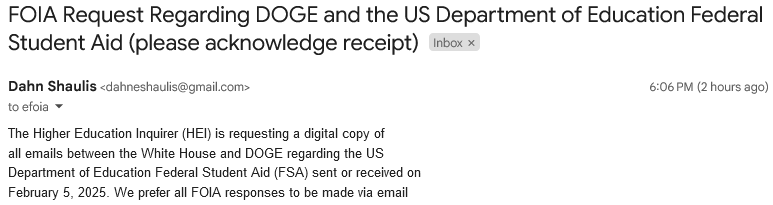
    The Higher Education Inquirer (HEI) is investigating email communications between the White House and DOGE regarding the US Department of Education Federal Student Aid (FSA).  HEI has been using FOIA responses for a number of years to expose corruption in the US higher education business. The White House has 20 days to acknowledge receipt. We will let you know if and when we get any responses from the White House.  

    Source link

  • Ban on trans women in women’s sports passes the House

    Ban on trans women in women’s sports passes the House

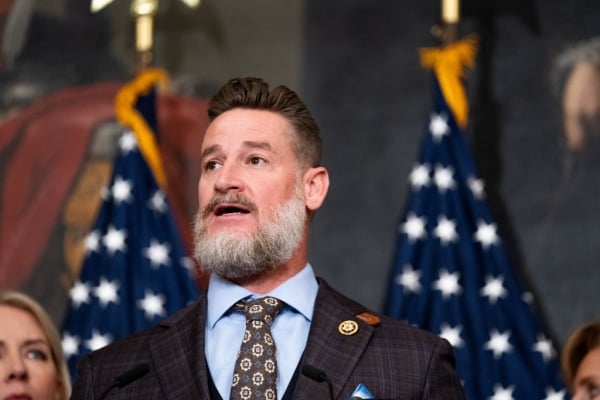
    Representative Greg Steube, a Florida Republican, speaks at a press conference following the passage of his Protection of Women and Girls in Sports Act in the House of Representatives.

    Allison Robbert/AFP via Getty Images

    The House of Representatives voted 218 to 206 to pass a bill that would unilaterally ban trans women from competing in women’s sports Tuesday. The votes were nearly split along party lines, but two Democrats, Henry Cuellar and Vicente Gonzalez, both from Texas, voted for the bill.

    Sponsored by Representative Greg Steube, a Florida Republican, the legislation dubbed the Protection of Women and Girls in Sports Act, is the latest attempt in Congress to keep trans women off women’s sports teams and builds on efforts in the states to restrict the participation of transgender students in sports that align with their gender identity. Last Congress, identical legislation from Steube passed the House but didn’t move forward in the Democratic-controlled Senate.

    Now, Republicans hold the majority in both the House and the Senate, making it far more likely that this iteration will be more successful. In nearly half of the country, trans women are banned from playing women’s sports at the K-12 or higher education level, but the legislation would take those bans nationwide.

    Passing the bill was a top priority for House Republican leadership, who included it on a list of 12 pieces of legislation to be considered first when the new session of Congress kicked off earlier this month. Its place of prominence seems to indicate that Republican leadership will prioritize rolling back or restricting the rights of transgender people, whom Republicans have often put at the center of a culture war.

    Republicans and President-elect Donald Trump have criticized the Biden administration’s effort to amend Title IX of the Education Amendments of 1972 to prevent blanket bans that prohibit transgender students from participating in sports consistent with their gender identity. Last month, the Biden administration scrapped that proposal.

    Under the bill, institutions that receive federal funding would be prohibited from allowing “a person whose sex is male to participate in an athletic program or activity that is designated for women or girls.” It defines sex as being based on “a person’s reproductive biology and genetics at birth,” though it doesn’t expound upon how an institution would tell. The bill does not prevent trans men from playing on men’s teams.

    Anti-trans activists argue that allowing individuals assigned male at birth to play on women’s sports teams opens cis women athletes up to being injured by athletes who are more naturally powerful due to their physiques. There is sparse research on if this is true; however, the few studies that do exist haven’t backed up the idea that trans women retain significant advantage over athletes assigned female at birth.

    Supporters of the legislation—including some cis female athletes, like Riley Gaines, who have competed alongside and against trans athletes at the collegiate level—also argue that trans women take spots on women’s teams, going against Title IX’s promise of equal opportunity, and that it is uncomfortable for cisgender female athletes to share close quarters, like locker rooms, with individuals assigned male at birth.

    Representative Tim Walberg, the Michigan Republican who chairs the House Education and the Workforce Committee, echoed these sentiments in his argument on the House floor Tuesday.

    “Mr. Speaker, kicking girls off sports teams to make way for a biological male takes opportunities away from these girls,” he said. “This means fewer college scholarships and fewer opportunities for girls. It also makes them second-class citizens in their own sports and puts their safety at risk.”

    Some people who agree that trans women should not play on women’s teams say they broadly support transgender individuals but see it as unfair for them to take spots on women’s teams. But Steube took a different approach. When he announced the bill earlier this month, he quoted President-elect Donald Trump’s promise that “under the Trump administration, it will be the official policy of the United States government that there are only two genders—male and female.”

    Meanwhile, Democrats and LGBTQ+ advocates argue that trans women should have the opportunity to play sports—which have been shown to improve outcomes and mental health for youths across the board—on the team that matches their gender.

    “Transgender students—like all students—they deserve the same opportunity as their peers to learn teamwork, to find belonging and to grow into well-rounded adults through sports,” said Representative Suzanne Bonamici, an Oregon Democrat, on the House floor. “Childhood and adolescence are important times for growth and development, and sports help students form healthy habits and develop strong social and emotional skills. Sports provide meaningful opportunities for kids to feel confident in themselves and learn valuable life lessons about teamwork, leadership and communication. Teams provide a place for kids to make friends and build relationships.”

    Bonamici and other democrats dubbed the bill the “Child Predator Empowerment Act” and argued it wouldn’t make schools safer for students. In fact, she said that the vague language in the bill about what defines the male sex could lead to invasive examinations.

    “There is no way this so-called protection bill could be enforced without opening the door to harassment and privacy violations. It opens the door to inspection, not protection, of women and girls in sports,” she said. “Will students have to undergo exams to prove they’re a girl? We are already seeing examples of harassment and questioning of girls who may not conform to stereotypical feminine roles; will they be subject to demands for medical tests and private information? That’s intrusive, offensive and unacceptable, especially from a party of limited government.”

    Source link

  • Overtime Rule Blocked for Public Institutions in Texas; House Advances Legislation Aiming to Block Overtime Rule – CUPA-HR

    Overtime Rule Blocked for Public Institutions in Texas; House Advances Legislation Aiming to Block Overtime Rule – CUPA-HR

    by CUPA-HR | July 1, 2024

    Update: On November 8, the federal judge from the Eastern District of Texas is set to hold a hearing on summary judgement in the business community’s challenge to DOL’s overtime final rule. While it is unknown how soon after we could get a decision on the validity of the rule, the judge could rule from the bench or quickly after the hearing. CUPA-HR will send out updates on the rulings as soon as we know.

    On June 28, a federal judge in the Eastern District of Texas Court granted a narrowly scoped preliminary injunction for the overtime rule in the state of Texas, blocking the Department of Labor’s overtime final rule from taking effect on July 1, 2024. The judge only blocked enforcement for employees of the state of Texas (i.e., public institutions), so private institutions in Texas and all other institutions outside of Texas will still need to comply with the overtime rule beginning July 1, 2024.

    The motion for a preliminary injunction was filed by the state of Texas alongside a lawsuit challenging the validity of the final rule in its entirety. At least two other lawsuits are currently pending before the Eastern District Court of Texas. The preliminary injunction will block the final rule from taking effect on July 1 for public employers and employees in Texas until a later decision is issued on the lawsuits challenging the validity of the final rule.

    As a reminder, the final rule implemented a two-phase approach to increasing the minimum salary threshold under the Fair Labor Standards Act overtime regulations. The first increase was expected to take effect on July 1, increasing the minimum salary threshold from the current level of $684 per week ($35,568 per year) to $844 per week ($43,888 per year). The second increase is set to take effect on January 1, 2025, and it would increase the minimum salary threshold again to $1,128 per week ($58,656 per year). The final rule also adopted automatic updates to the minimum salary threshold that would occur every three years.

    Given the judge’s narrow decision granting the preliminary injunction, private institutions in Texas and all institutions outside of Texas are still required to implement adjustments to comply with the July 1 minimum salary threshold until a later decision is made on the validity of the rule as a whole. CUPA-HR will be monitoring the pending cases closely.

    House Appropriations Subcommittee Bill

    On June 26, the House Appropriations Subcommittee on Labor, Health and Human Services, and Education released their fiscal year 2025 funding legislation for the Department of Labor (DOL) and other related agencies, which included a provision to prohibit any funding provided to DOL under the bill from administering, implementing or enforcing the overtime final rule. The Subcommittee passed the legislation out of Committee during a markup on June 27. It will now be sent to the floor for a vote, where House Republicans have a slim majority and could pass the bill along partisan lines. The fate of the overtime provision appears uncertain in the Senate, however, as the Democrat-controlled chamber is unlikely to include such language in their appropriations bill. CUPA-HR will continue to keep members apprised of any updates on the status of the overtime final rule.


    Source link

  • White House Approves Title IX Final Rule — Rule Release Imminent – CUPA-HR

    White House Approves Title IX Final Rule — Rule Release Imminent – CUPA-HR

    by CUPA-HR | April 12, 2024

    On April 10, the White House Office of Information and Regulatory Affairs (OIRA) announced it had concluded review of the Department of Education’s (ED) final rule to amend Title IX. OIRA review is the final step in the regulatory process, and we expect the ED will issue the final rule any day now. We will send another alert as soon as ED publishes the final rule.

    The ED released the text of the proposed rule on June 23, 2022, though the Federal Register did not officially publish the proposal until several weeks later on July 12, 2022. The agency received over 240,000 comments in response, including CUPA-HR comments seeking clarification on the overlaps between the ED’s proposal with institutions’ existing obligations to address employment discrimination. CUPA-HR also joined comments led by the American Council on Education.

    The Federal Government’s Fall 2022 Regulatory Agenda had set the target release date of the final rule for May 2023, but the Department had to further delay that timeline to review all comments submitted in response to the proposed rule and address them in the final rule. Most recently, the ED indicated a March 2024 release of the final rule in the Fall 2023 Regulatory Agenda.

    CUPA-HR plans to hold a timely webinar on the final rule after publication. In the meantime, CUPA-HR will keep members apprised of additional updates on the Title IX final rule, including completion of the review and publication of the rule.


    Source link

  • White House Approves DOL Overtime Rule – Rule Release Imminent – CUPA-HR

    White House Approves DOL Overtime Rule – Rule Release Imminent – CUPA-HR

    by CUPA-HR | April 11, 2024

    On April 11, 2024, the White House Office of Information and Regulatory Affairs (OIRA) announced it had concluded review of the U.S. Department of Labor’s (DOL) final overtime pay rule. The rule is expected to increase the minimum salary threshold for the executive, administrative and professional (EAP or white collar) employee exemptions to overtime pay requirements under the Fair Labor Standards Act (FLSA) regulations. OIRA review is the final step in the regulatory process, and we expect DOL will release the final rule any day now. We will send another alert as soon as the final rule is released.

    On April 4, 2024, CUPA-HR’s president and CEO, government relations team and board members met with officials from DOL and OIRA to express our concerns with the September 2023 proposed rule. The proposal sought to increase the threshold from its current level of $35,568 annually to $60,209 — a nearly 70% increase. DOL also proposed increasing the salary threshold automatically every three years to the 35th percentile of weekly earnings of full-time salaried workers. Finally, DOL proposed that all employers would need to implement these changes within 60 days of the final rule’s release.

    During our OIRA meeting, CUPA-HR reiterated the concerns that were addressed in our comments submitted in November 2023. The comments made the following four recommendations for DOL to consider prior to issuing a final rule:

    1. DOL should not update the salary threshold at this time.
    2. If DOL implements an increase, it should lower the proposed minimum salary threshold and account for room and board.
    3. DOL should not implement automatic updates to the salary threshold.
    4. DOL should extend the effective date of any final rule implementing a higher salary threshold.

    We expect lawsuits challenging the final rule are forthcoming. CUPA-HR will keep members apprised of all updates related to the overtime regulations. Once the new regulations are released, we will plan and share registration information for a webinar. We will also provide an update for members who attend the spring conference in Minneapolis next week.


    Source link

  • House Education and Workforce Committee and Senate HELP Committee Set for 118th Congress – CUPA-HR

    House Education and Workforce Committee and Senate HELP Committee Set for 118th Congress – CUPA-HR

    by CUPA-HR | February 7, 2023

    After a month in session, the U.S. House of Representatives and Senate are finalizing their committee and subcommittee membership rosters. Of particular significance are the House Education and the Workforce Committee and Senate Health, Education, Labor and Pensions (HELP) Committee, which have jurisdiction over higher education and many labor and employment issues, including overtime, paid leave, occupational safety and health and employment-based discrimination.

    House Education and the Workforce Committee and Subcommittees

    The House Education and the Workforce Committee will be comprised of 25 Republicans and 20 Democrats with Rep. Virginia Foxx (R-NC) serving as chairwoman and Rep. Bobby Scott (D-VA) serving as ranking member of the full committee. Both Foxx and Scott served as their party’s committee leader in the previous Congress when Democrats held the majority, but Foxx was notably able to secure a waiver granting her exemption from House Republican-imposed committee leadership term limits that would have prohibited her from serving a fourth consecutive term as Republican leader on the committee.

    Foxx has publicly stated her priorities for the committee, citing oversight of the Biden administration, Department of Labor and Department of Education as a top concern for the committee. Having previously taught at two institutions of higher education and served as president at Mayland Community College, Foxx also has a particular interest in higher education. With divided control of Congress and Democrat control of the Senate, however, it is unlikely that Foxx will be able to pass any meaningful legislation that would garner support from the Senate and the president.

    In addition to the full committee roster, the Education and the Workforce Committee has also finalized their subcommittee rosters.

    Subcommittee on Workforce Protections

    The Subcommittee on Workforce Protections has jurisdiction over issues relating to wages, hours of workers and overtime, including the Fair Labor Standards Act (FLSA); workers’ compensation, including the Family and Medical Leave Act (FMLA); issues relating to immigration and employment; and occupational safety and health, including the Occupational Safety and Health Administration (OSHA).

    Freshman Rep. Kevin Kiley (R-CA) will serve as chairman of the subcommittee and Rep. Alma Adams (D-NC) will serve as ranking member after serving as chair of the subcommittee last Congress. The subcommittee will made be up of six Republicans, including Glenn Grothman (R-WI), James Comer (R-KY), Mary Miller (R-IL) and Eric Burlison (R-MO), all who did not serve on the subcommittee in the previous Congress; and four Democrats, all who served on the subcommittee in the last Congress.

    Subcommittee on Higher Education and Workforce Development

    The Subcommittee on Higher Education and Workforce Development has jurisdiction over the following areas: postsecondary student assistance and employment services, and the Higher Education Act; postsecondary career and technical education, apprenticeship programs, and workforce development; and science and technology programs.

    Rep. Owen Burgess (R-UT) will serve as chairman of the Subcommittee on Higher Education and Workforce Development, while Rep. Frederica S. Wilson (D-FL) will serve as ranking member of the subcommittee after serving as chair of the subcommittee in the 117th Congress. The makeup of the subcommittee will include 13 Republicans, including Reps. Glenn Thompson (R-PA), Lloyd Smucker (R-PA), Nathaniel Moran (R-TX), John James (R-MI), Lori Chavez-DeRemer (R-OR), Erin Houchin (R-IN) and Brandon Williams (R-NY) as new members; and 11 Democrats, including Reps. Lucy McBath (D-GA), Gregorio Kilili Camacho Sablan (D-Northern Marina Islands) and Alma Adams (D-NC) as new members.

    Subcommittee on Health, Employment, Labor and Pensions

    The Subcommittee on Health, Employment, Labor and Pensions’ jurisdiction involves “matters dealing with relations between employers and employees,” including to the National Labor Relations Act (NLRA) and employment-related health and retirement security, such as pension, health and other employee benefits and the Employee Retirement Income Security Act (ERISA).

    The subcommittee will see Rep. Bob Good (R-VA) serve as chairman and Rep. Mark DeSaulnier (D-CA) serve as ranking member after previously serving as chair in the 117th Congress. The subcommittee will be composed of 12 Republicans, including Reps. James Comer (R-KY), Lloyd Smucker (R-PA), Michelle Steele (R-C), Aaron Bean (R-FL), Eric Burlison (R-MO), Lori Chavez-DeRemer (R-OR) and Erin Houchin (R-IN) serving as new members; and 10 Democrats, including Reps. Pramila Jayapal (D-WA), Jahana Hayes (D-CT), Ilhan Omar (D-MN) and Kathy Manning (D-NC) serving as new members.

    Senate Health, Education, Labor and Pensions Committee

    The Senate HELP Committee is the Senate counterpart to the House Education and the Workforce Committee. Chair Bernie Sanders (I-VT) will be replacing former Chair Patty Murray (D-WA), who is now the chair of the Senate Appropriations Committee, and Ranking Member Bill Cassidy (R-LA) will be replacing former Ranking Member Richard Burr (R-NC), who retired at the end of the 117th Congress. Democrats will have 11 members and Republicans will have 10 members on the committee. Subcommittees have not yet been finalized, though we expect to see membership lists soon.

    Sanders staffers have stated that, as chair, he will “focus on universal healthcare, lowering the cost of prescription drugs, increasing access to higher education and protecting workers’ rights on the job.” As previously mentioned, however, the divided Congress and Republican control of the House will likely prevent meaningful legislation from moving to President Biden’s desk for his signature.

    CUPA-HR will be monitoring committee activity and will keep members apprised of any major hearings or updates that come out of the committees.


    Source link

  • DOL Secretary Testifies in House and Senate Committee Hearings – CUPA-HR

    DOL Secretary Testifies in House and Senate Committee Hearings – CUPA-HR

    by CUPA-HR | June 22, 2022

    On June 14 and 15, the House Education and Labor Committee and Senate Appropriations Committee’s Subcommittee on Labor, Health and Human Services, Education, and Related Agencies held hearings on policies and priorities of the U.S. Department of Labor (DOL), as well as President Biden’s Fiscal Year 2023 Budget Request for DOL. In both hearings, Secretary of Labor Marty Walsh testified and answered questions about DOL’s regulations and actions, as well as potential future funding for programs under DOL.

    In both hearings, Walsh pointed to the accomplishments DOL has achieved during the Biden administration. He discussed efforts to increase the minimum wage for federal contractors to $15 and to protect workers’ organizing rights as some of the highlights of the department’s work during the Biden administration thus far. In addition to these accomplishments, he also called for increased funding and investments for workforce training and development.

    During the House committee hearing, Walsh was asked several questions about the anticipated overtime regulations. Rep. Mark Takano (D-CA) began his question period by restating his request for DOL to increase the minimum salary threshold to $82,732 by 2026, and asked Walsh his opinion on the current level and whether it was too high or low. Walsh responded saying he had no opinion on where the current level stands at this time, but that the department recently concluded listening sessions to hear from stakeholders about their opinions on updating the salary threshold. Additionally, Takano asked Walsh if there was a timeline of when the anticipated Notice of Proposed Rulemaking (NPRM) would be released for the overtime regulations, but Walsh responded that there was no set timeline at the time of the hearing.

    Many representatives and senators also discussed DOL’s workforce development and training programs. In the Senate hearing, Walsh explained that the current disconnect between youth and job openings is an opportunity for DOL to reach out and connect with those workers, better preparing them for the jobs available. Walsh also expressed his support for a wide range of apprenticeships in different, untraditional industries, and he stated DOL should partner with community colleges, existing workforce development programs, and other organizations to expand apprenticeships.

    CUPA-HR will keep members apprised of any developments that arise as a result of these hearings.


    Source link

  • CUPA-HR Participates in Hill Meetings With House Ways and Means Committee Member Offices – CUPA-HR

    CUPA-HR Participates in Hill Meetings With House Ways and Means Committee Member Offices – CUPA-HR

    by CUPA-HR | May 10, 2022

    Over the last month, CUPA-HR’s government relations team joined the American Council on Education (ACE) and other higher education organizations in virtual Capitol Hill meetings to discuss tax priorities for the higher education community. Meetings have been held with staffers of Members of the House Ways and Means Committee to advocate for tax policies and proposals to alleviate various burdens placed on students, employees and institutions alike.

    Specifically, the meetings have allowed the higher education community to encourage members’ action on the following issues:

    • Supporting the extension and expansion of the universal, non-itemizer charitable deduction;
    • Repealing the taxability of scholarships and grant aid, specifically for the Pell Grant and other scholarships for graduate and medical students;
    • Enhancing higher ed tax credits like the American Opportunity Tax Credit and the Lifetime Learning Credit;
    • Repealing the endowment tax;
    • Expanding and modernizing tax-free employer-provided educational assistance as granted under Section 127 of the Internal Revenue Code (IRC);
    • Reinstating advance refunding of tax-exempt bonds and expanding debt issuance with a Direct Pay Bonds program;
    • Creating “lifelong learning and training accounts” to provide workers and employers the opportunity to make tax-free contributions to pay for future training and credentials; and
    • Repealing the unrelated business income tax “basketing” provision.

    In June 2021, ACE sent a letter to House Ways and Means Committee and Senate Finance Committee leadership requesting these proposals and others be included in the American Jobs and American Families Plans. CUPA-HR signed onto this letter, along with several other higher education groups.

    CUPA-HR joined the most recent meetings specifically to advocate for the Section 127 expansion and modernization. Section 127 of the IRC is an educational assistance program that allows employers to pay or reimburse an employee tuition or student loan repayments on a tax-free basis up to $5,250. CUPA-HR previously advocated for the program to include student loan repayments, which was granted under the 2020 CARES Act and the Consolidated Appropriations Act of 2021, as well as to increase the annual exclusion cap of $5,250 to an amount closer to $12,000, to expand coverage to employee’s partners and dependents, and to expand coverage to gig workers and independent contractors, all of which were a focus during the meetings.

    CUPA-HR will continue to participate in these meetings and will keep members apprised of any legislative proposals that result from these meetings.


    Source link

  • House Passes Bipartisan Retirement Savings Bill – CUPA-HR

    House Passes Bipartisan Retirement Savings Bill – CUPA-HR

    by CUPA-HR | April 4, 2022

    On March 29, the U.S. House of Representatives passed H.R. 2954, the Securing a Strong Retirement Act of 2021, by an overwhelmingly bipartisan vote of 414-5. The bill includes many provisions to boost individual retirement savings and expand coverage to better access retirement savings programs.

    The bill includes several provisions that would impact employer-sponsored retirement programs. Notably, the bill would make enrollment in newly created 401(k) and 403(b) plans mandatory for eligible employees beginning in 2024. Employers with 10 or fewer employees or those that have been in business for fewer than three years would be exempt from this requirement, and employees would be able to opt out of the program. Additionally, the bill requires employers to allow part-time employees to participate in 401(k) plans if they work at least 500 hours per year after two years working for the employer — a decrease from the previously required three years.

    The bill will also allow employers to make matching contributions to the 401(k), 403(b) or SIMPLE IRA account of employees who are paying off student loans and do not contribute enough to their accounts to receive a full employer match.

    In addition to the provisions related to employer plans, the bill also has provisions for individual workers. The bill allows older workers to make bigger contributions to their retirement accounts than is currently allowed. Specifically, individuals aged 62-64 would be able to contribute an extra $10,000 for 401(k) plans and other programs and $3,000 for SIMPLE plans per year to such accounts beginning in 2024. These “catch-up” contributions would be required to be made after taxes.

    The bill now heads to the Senate where it will need to pass with 60 votes to overcome the filibuster. Given the bipartisan support in the House, the bill could receive similar support from both parties, but it is unclear when and how the Senate will vote.

    CUPA-HR will keep members apprised as this bill moves through the Senate.


    Source link

  • White House Announces Actions to Attract STEM Talent – CUPA-HR

    White House Announces Actions to Attract STEM Talent – CUPA-HR

    by CUPA-HR | February 7, 2022

    On January 21, President Biden announced several agency programs at the Department of State (DOS) and Department of Homeland Security (DHS) to help international STEM students and researchers access certain non-immigrant visas to allow them to study and work in the United States. The programs aim to admit and retain more international scholars to help advance STEM competitiveness in the U.S.

    Department of State

    The first announced program was DOS’s Early Career STEM Research Initiative. The initiative will facilitate engagement between J-1 visa recipients coming to the U.S. to participate in STEM research with host organizations, including businesses. Additionally, the department also announced new guidance to allow J-1 visa recipients in STEM fields to obtain up to 36 months of optional practical training. According to the announcement, the guidance will be applicable for exchange students in the 2021-2022 and 2022-2023 academic years, so long as the students meet certain academic training requirements.

    Department of Homeland Security

    Of significance, the president’s announcement also included a decision by DHS to add 22 new fields of study in the STEM Optional Practical Training (OPT) program through the Student and Exchange Visitor Program (SEVP). The program permits F-1 students earning bachelors, masters and doctorate degrees in certain STEM fields to remain in the United States for up to 36 months to complete OPT after earning their degrees. DHS issued a notice in the Federal Register announcing the specific fields of study added to the designated list of STEM fields.

    Additionally, the United States Customs and Immigration Services (USCIS) issued guidance “to clarify how USCIS evaluates evidence to determine eligibility for O-1A non-immigrants of extraordinary ability, with a focus on persons in science, technology, engineering or mathematics (STEM) fields, as well as how USCIS determines whether an O-1 beneficiary’s prospective work is within the beneficiary’s area of extraordinary ability or achievement.”

    CUPA-HR will keep members apprised of any further updates to these programs and any additional policies and guidance documents impacting student visas as released by President Biden and Congress.


    Source link