Faculty must sign the memo by Feb. 10, but no one will be punished if they decline to do so.
JasonDoiy/iStock/Getty Images
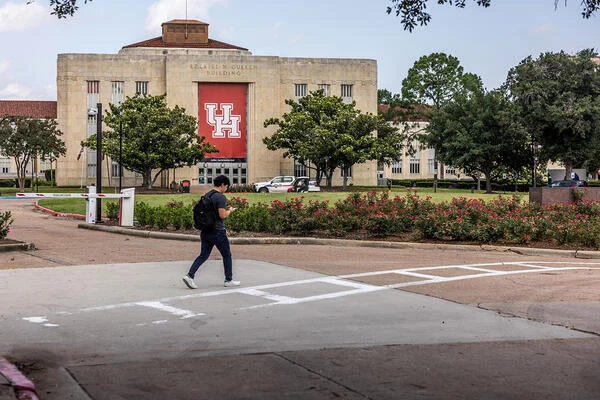
Faculty members in the University of Houston’s College of Liberal Arts and Social Science were asked to sign a three-page memo pledging not to “indoctrinate” their students, the Houston Chronicle reported.
In a November email to faculty, Houston president Renu Khator wrote that the university’s responsibility is to “give [students] the ability to form their own opinions, not to force a particular one on them. Our guiding principle is to teach them, not to indoctrinate them.” The recent memo, sent by college dean Daniel O’Connor, asks faculty to “document compliance” with Khator’s note. It’s a way to ensure all faculty members are compliant with Texas’s Senate Bill 37, O’Conner told associate English professor María González in a meeting. The law mandates regular reviews of core undergraduate curriculum but does not address indoctrination or what material can or cannot be taught.
By Feb. 10, faculty must signal their agreement with the following five statements: “A primary purpose of higher education is to enhance critical thinking;” “Our responsibility is to give students the ability to form their own opinions, not to indoctrinate them;” “I understand the definition and attributes of critical thinking;” “I design my courses and course materials to be consistent with the definition and attributes of critical thinking;” and “I use methods of instruction that are intended to enhance students’ critical thinking.”
Faculty immediately pushed back. The University of Houston American Association of University Professors chapter encouraged faculty members to use proposed “conscientious objector” language in response, which states, in part: “The premise of this assertion is a straw man, and I am concerned that my signing of this letter could serve as some admission of guilt concerning these false accusations. As such, I request that you accept this letter, in which I am asserting that I have never engaged in indoctrination and that I take offense, as a scholar, at such insinuations.”
González said O’Conner told her that “no punitive actions will be directed at anyone” who doesn’t sign the acknowledgement form, but that he will have to review the syllabi of any faculty member who doesn’t sign the form. González refused to sign the acknowledgement or even click the link, she said.
Many years ago, around 2010, I attended a professional development program in Houston called Literacy Through Photography, at a time when I was searching for practical ways to strengthen comprehension, discussion, and reading fluency, particularly for students who found traditional print-based tasks challenging. As part of the program, artists visited my classroom and shared their work with students. Much of that work was abstract. There were no obvious answers and no single “correct” interpretation.
Instead, students were invited to look closely, talk together, and explain what they noticed.
What struck me was how quickly students, including those who struggled with traditional reading tasks, began to engage. They learned to slow down, describe what they saw, make inferences, and justify their thinking. They weren’t just looking at images; they were reading them. And in doing so, they were rehearsing many of the same strategies we expect when reading written texts.
At the time, this felt innovative. But it also felt deeply intuitive.
Fast forward to today.
Students are surrounded by images and videos, from photographs and diagrams to memes, screenshots, and, increasingly, AI-generated visuals. These images appear everywhere: in learning materials, on social media, and inside the tools students use daily. Many look polished, realistic, and authoritative.
At the same time, AI has made faking easier than ever.
As educators and school leaders, we now face urgent questions around misinformation, academic integrity, and critical thinking. The issue is no longer just whether students can use AI tools, but whether they can interpret, evaluate, and question what they see.
This is where visual literacy becomes a frontline defence.
Teaching students to read images critically, to see them as constructed texts rather than neutral data, strengthens the same skills we rely on for strong reading comprehension: inference, evidence-based reasoning, and metacognitive awareness.
From photography to AI: A conversation grounded in practice
Recently, I found myself returning to those early classroom experiences through ongoing professional dialogue with a former college lecturer and professional photographer, as we explored what it really means to read images in the age of AI.
A conversation that grew out of practice
Nesreen: When I shared the draft with you, you immediately focused on the language, whether I was treating images as data or as signs. Is this important?
Photographer: Yes, because signs belong to reading. Data is output. Signs are meaning. When we talk about reading media texts, we’re talking about how meaning is constructed, not just what information appears.
Nesreen: That distinction feels crucial right now. Students are surrounded by images and videos, but they’re rarely taught to read them with the same care as written texts.
Photographer: Exactly. Once students understand that photographs and AI images are made up of signs, color, framing, scale, and viewpoint, they stop treating images as neutral or factual.
Nesreen: You also asked whether the lesson would lean more towards evaluative assessment or summarizing. That made me realize the reflection mattered just as much as the image itself.
Photographer: Reflection is key. When students explain why a composition works, or what they would change next time, they’re already engaging in higher-level reading skills.
Nesreen: And whether students are analyzing a photograph, generating an AI image, or reading a paragraph, they’re practicing the same habits: slowing down, noticing, justifying, and revising their thinking.
Photographer: And once they see that connection, reading becomes less about the right answer and more about understanding how meaning is made.
Reading images is reading
One common misconception is that visual literacy sits outside “real” literacy. In practice, the opposite is true.
When students read images carefully, they:
identify what matters most
follow structure and sequence
infer meaning from clues
justify interpretations with evidence
revise first impressions
These are the habits of skilled readers.
For emerging readers, multilingual learners, and students who struggle with print, images lower the barrier to participation, without lowering the cognitive demand. Thinking comes first. Language follows.
From composition to comprehension: Mapping image reading to reading strategies
Photography offers a practical way to name what students are already doing intuitively. When teachers explicitly teach compositional elements, familiar reading strategies become visible and transferable.
What students notice in an image
What they are doing cognitively
Reading strategy practiced
Where the eye goes first
Deciding importance
Identifying main ideas
How the eye moves
Tracking structure
Understanding sequence
What is included or excluded
Considering intention
Analyzing author’s choices
Foreground and background
Sorting information
Main vs supporting details
Light and shadow
Interpreting mood
Making inferences
Symbols and colour
Reading beyond the literal
Figurative language
Scale and angle
Judging power
Perspective and viewpoint
Repetition or pattern
Spotting themes
Theme identification
Contextual clues
Using surrounding detail
Context clues
Ambiguity
Holding multiple meanings
Critical reading
Evidence from the image
Justifying interpretation
Evidence-based responses
Once students recognise these moves, teachers can say explicitly:
“You’re doing the same thing you do when you read a paragraph.”
That moment of transfer is powerful.
Making AI image generation teachable (and safe)
In my classroom work pack, students use Perchance AI to generate images. I chose this tool deliberately: It is accessible, age-appropriate, and allows students to iterate, refining prompts based on compositional choices rather than chasing novelty.
Students don’t just generate an image once. They plan, revise, and evaluate.
This shifts AI use away from shortcut behavior and toward intentional design and reflection, supporting academic integrity rather than undermining it.
The progression of a prompt: From surface to depth (WAGOLL)
One of the most effective elements of the work pack is a WAGOLL (What A Good One Looks Like) progression, which shows students how thinking improves with precision.
Simple: A photorealistic image of a dog sitting in a park.
Secure: A photorealistic image of a dog positioned using the rule of thirds, warm colour palette, soft natural lighting, blurred background.
Greater Depth: A photorealistic image of a dog positioned using the rule of thirds, framed by tree branches, low-angle view, strong contrast, sharp focus on the subject, blurred background.
Students can see and explain how photographic language turns an image from output into meaningful signs. That explanation is where literacy lives.
When classroom talk begins to change
Over time, classroom conversations shift.
Instead of “I like it” or “It looks real,” students begin to say:
“The creator wants us to notice…”
“This detail suggests…”
“At first I thought…, but now I think…”
These are reading sentences.
Because images feel accessible, more students participate. The classroom becomes slower, quieter, and more thoughtful–exactly the conditions we want for deep comprehension.
Visual literacy as a bridge, not an add-on
Visual literacy is not an extra subject competing for time. It is a bridge, especially in the age of AI.
By teaching students how to read images, schools strengthen:
reading comprehension
inference and evaluation
evidence-based reasoning
metacognitive awarenes
Most importantly, students learn that literacy is not about rushing to answers, but about noticing, questioning, and constructing meaning.
In a world saturated with AI-generated images, teaching students how to read visually is no longer optional.
It is literacy.
Author’s note: This article grew out of classroom practice and professional dialogue with a former college lecturer and professional photographer. Their contribution informed the discussion of visual composition, semiotics, and reflective image-reading, without any involvement in publication or authorship.
Nesreen El-Baz, Bloomsbury Education Author & School Governor
Nesreen El-Baz is an ESL educator with over 20 years of experience, and is a certified bilingual teacher with a Master’s in Curriculum and Instruction. El-Baz is currently based in the UK, holds a Masters degree in Curriculum and Instruction from Houston Christian University, and specializes in developing in innovative strategies for English Learners and Bilingual education.
Latest posts by eSchool Media Contributors (see all)
I was at a gathering recently, and a Silicon Valley person who had transitioned into education was talking about how he approaches personnel decisions—basically using data: replacing lowest-performers each year. Essentially, the idea is that it’s a coin flip, but if your selection process is genuinely reliable, the odds will be in your favor.
A more traditional education person in the conversation had a host of questions—about support, counseling, and various other things.
The exchange was fascinating to watch because they were talking past each other and quite literally didn’t understand one another or what was being said. It was a real Mars–Venus culture clash.
We have to figure out how to talk the same language because we’re staring down a serious problem. The past few days have seen a flurry of articles from writers who are not traditional characters on the education beat. And they point up a culture clash that isn’t R and D, left or right—it’s more about who thinks we have a serious problem and who thinks the erosion of standards isn’t a big deal, or is acceptable in service of other goals.
What these three recent stories have in common is stark takes calling attention to an issue that doesn’t get enough attention: it’s not only poor, Black, or Hispanic students struggling in schools. Subpar learning is widespread.
She followed it up with a look at what this is actually about and why, despite howls of protest from people who are OK with the status quo, no one is saying everyone will be an engineer, we’re talking about pretty low-level skills that can be universal. And what no one seems to be talking about is the skilled part of skilled trades, you have to be able to do math to be successful if you chose to do something besides college. Actually more. Technical jobs require more math than sociology.
All three articles are worth reading, and all three point up a real problem whether you approach it from the vantage point of personal agency, freedom, and choice—or American competitiveness.
The only thing missing? Political traction to address it in too many places. As Tom Kane notes in the New York Magazine article:
What’s stunning is just how much professionals tolerate—and, in some cases, contribute to—obfuscation as a matter of course. We’ve discredited measurement, transparency, and the idea that performance matters, and we’ve baked it into the political price.
Perhaps that’s why political traction for such an obvious, and real, problem is so elusive?
*That’s a misquote. The actual statement from the damaged Apollo 13 was, “we’ve had a problem.” You can listen here.
Friday Fish Porn
Here’s Bellwether’s managing partner Rebecca Goldberg with a nice one in the Roaring Fork Valley of Colorado (from a few weeks ago when it was warmer, if you missed the context clues). Good time to point you toward Bellwether’s new strategic plan for the next several years, learn more here.
This picture is part of this one of a kind archive with hundreds of pictures of education types and their relatives with fish from rivers, lakes, and streams all over the world. Send me yours.
Houston Independent School District laid off 160 uncertified teachers and 54 staff members as part of “staff leveling” efforts “to align teachers with student enrollment,” according to a district announcement on Monday. Additionally, 232 teachers were reassigned to unfilled positions.
The district’s student enrollment data for the 2025-26 school year has yet to be released, though Houston ISD said in a February board meeting that it was conservatively budgeting for a decrease in enrollment of about 8,000 students, which would lead to a loss of $67 million in revenue.
At the same meeting, the district said it would consider a proposal this fall to close some schools in the 2026-27 school year. It cited a 30,000 student decline in Houston ISD’s enrollment over the last decade.
Dive Insight:
The major staffing shift for Houston ISD “is a standard process that ensures the most effective teachers are leading our classrooms,” said Trey Serna, a district spokesperson, in a Monday video announcement.
When staffing adjustments are needed, Texas’ largest school district primarily considers a teacher’s performance and certification, Serna said.
The move comes as the district has recently reported early successes during a state takeover aimed at turning around low-performing schools. Superintendent Mike Miles, who was appointed by the state in June 2023, reported a sharp increase in A- and B-rated schools in the 2024-25 school year and has promised that all Houston ISD schools will fall into A- and B-rated categories by 2027.
Adjustments to budgets and staffing due to enrollment declines are a challenge many public schools are facing nationwide.
If declining enrollments persist, education economics researchers foresee more layoffs and hiring freezes for districts moving forward. This, they said, could lead to a broad reversal in teacher shortages.
Education finance experts have suggested that while districts increasingly consider teacher layoffs, they should focus on firing ineffective and uncertified educators first.
In September, Florida’s Orange County Public Schools announced mass teacher reassignments as it faces a sharp, unexpected decline in enrollment this school year. Because Orange County Public Schools had 157 vacancies due to a hiring freeze, Superintendent Maria Vazquez said she was hopeful the district could retain most of its instructional staff.
Texas’ Austin Independent School District is also moving ahead with plans to consolidate some of its schools amid ongoing enrollment declines. Superintendent Matias Segura said in a Wednesday Instagram video that the district will publish its first draft for consolidation and boundary changes by Friday evening.
“It won’t be perfect, and it isn’t final,” Segura said of the draft plan. “Our goal is the same one our community shares: every family deserves an excellent neighborhood school that is vibrant, well-resourced, and ready to meet each child’s needs.”
The district plans to collect community feedback and refine the plan before the school board votes on Nov. 20.
Texas teachers may be increasingly fed up with their job, but they’re still staying in school.
State data shows Texas public school educators continue to return to the classroom at somewhat similar rates as years past, despite multiple surveys showing the large majority of them have contemplated quitting the profession.
While teacher turnover has slightly increased over the past decade, state data show there hasn’t been a large exodus of experienced teachers. In fact, the average years of experience for Texas public school teachers hasn’t notably changed since 2014-15, nor has the share of first-year teachers hired by districts.
The numbers run counter to years of warnings that Texas teachers are primed to bolt en masse out of frustration with the job. At the same time, Texas does still face widespread issues with morale, as well as big challenges in finding certified teachers and filling several types of positions, including special education educators and bilingual teachers.
Steady hands in schools
While much has changed in Texas classrooms over the decade, students continue to be educated by mostly veteran teachers. The average tenure for Texas teachers has held steady during that stretch, ranging from 10.9 to 11.2 years of experience.
The state did see a slight dip in the share of first-year teachers — who, on average, have less positive impact on student achievement than other educators — during the late 2010s, then a slight uptick over the past few years. Still, novice teachers account for fewer than 1-in-10 Texas educators.
A small rise in turnover
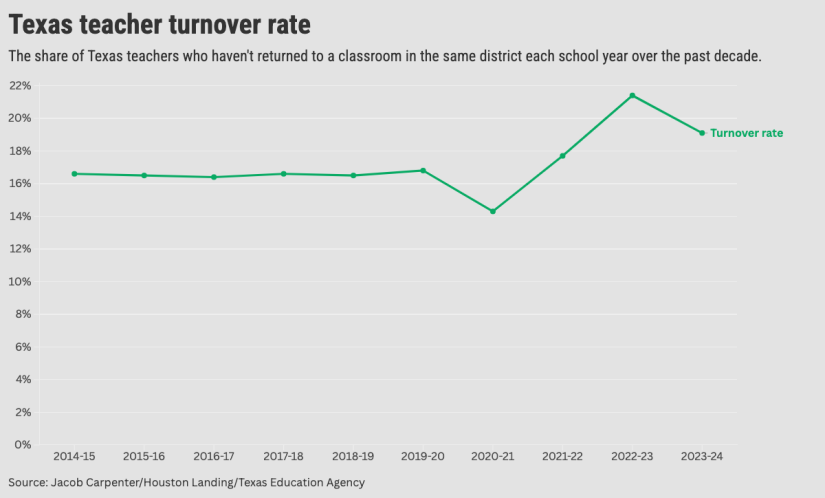
Teacher turnover, a measure of how many educators don’t return to teach in the same district each year, has ticked higher since the pandemic. While it once hovered near 16 percent, it’s reached roughly 20 percent over the past two years.
Ultimately, a 4 percentage point difference equates to about 15,000 more teachers who aren’t returning to a classroom in their district. However, state data shows teachers of all experience levels are leaving at similar rates.
Still stressed
Teachers might be sticking with their jobs, but that doesn’t mean they’re happy about it.
A 2024 poll of 1,100 Texas teachers by the Charles Butt Foundation, an Austin-based education advocacy nonprofit, found nearly four-fifths of educators surveyed had seriously considered quitting the profession in the past year. Pay, quality of campus leadership and a sense of feeling valued ranked among the biggest factors in whether teachers had considered quitting.
Texas education leaders also are worried about the state’s ability to retain teachers and hire tough-to-fill positions. A state panel convened by the Texas Education Agency examined the issues and made numerous recommendations in 2023, though few of its proposals have been put into action.