Tag: huge

  • As Feds Crack Down on Huge Ed Tech Data Breach, Parents and Students Left Out – The 74

    As Feds Crack Down on Huge Ed Tech Data Breach, Parents and Students Left Out – The 74

    School (in)Security is our biweekly briefing on the latest school safety news, vetted by Mark KeierleberSubscribe here.

    The Federal Trade Commission announced this month plans to crack down on technology company Illuminate Education over a massive 2021 data breach. The move added to a long list of government actions against the firm since hackers broke into its systems and made off with the sensitive information of more than 10 million students.

    Three state attorneys general have also now imposed fines and security mandates on the company following allegations it misled customers about its cybersecurity safeguards and waited nearly two years to notify some school districts of the widespread data breach.

    The ones that haven’t made progress in their efforts to hold Illuminate accountable are parents and students.

    Their pursuit hit a wall in September when the Ninth Circuit Court of Appeals dismissed a federal lawsuit filed by the breach victims. The court, ruling on a case filed in California, found that the theft of their personal data — including grades, special education information and medical records — didn’t constitute a concrete harm.


    In the news

    Students walkout of East Mecklenburg High School in protest of U.S.Border Patrol operations targeting undocumented immigrants on Nov. 18 in Charlotte, North Carolina. (Getty Images)

    The latest in President Donald Trump’s immigration crackdown: In many cities across the country, from New Orleans to Minneapolis, resisting federal immigration enforcement means keeping kids in school. | The 74

    • Trump’s mass deportation effort has had a particularly damaging effect on the child care industry, which is heavily reliant on immigrant preschool teachers — most of them working in the U.S. legally — who have found themselves “wracked by anxiety over possible encounters with ICE.” | The Associated Press
    • ‘Culture of fear’: Immigrant students across the country have increasingly found themselves targets of bullying since the beginning of Trump’s second term, according to a new survey of high school principals. | The Guardian

    A Kansas middle school will no longer assign Chromebooks to each student: Computers have had “a wonderful place in education,” the school’s principal said. But schools have “simply immersed students too much in technology.” | KWCH

    A Florida middle school went into lockdown after an automated threat detection system was triggered by a clarinet. A student was walking in the hallway “holding a musical instrument as if it were a weapon.” | News6

    Sign-up for the School (in)Security newsletter.

    Get the most critical news and information about students’ rights, safety and well-being delivered straight to your inbox.

    ‘Got what he deserved’: A California teacher has filed a federal First Amendment lawsuit against her school after she was suspended for a Facebook post calling right-wing political activist and Turning Point USA founder Charlie Kirk a “propaganda-spewing racist misogynist” a day after he was murdered. | NBC News

    • In Florida, two teachers have filed separate First Amendment lawsuits after they were punished for social media posts critical of Kirk after his death. | First Coast News
    • Texas Gov. Gregg Abbott announced a partnership with Turning Point USA to create local chapters of the group at every high school campus in the state, vowing “meaningful disciplinary action” against any educators who stand in the way. | The Texas Tribune
    • Kirk’s wife, Erika Kirk, will field questions from “young evangelicals, prominent religious leaders and figures across the political spectrum” during a live town hall Saturday on CBS News moderated by its new editor-in-chief, Bari Weiss. | CBS News
    • ICYMI: The Trump administration’s First Amendment crackdown in the wake of the activist’s violent death has left student free speech on even shakier ground. | The 74
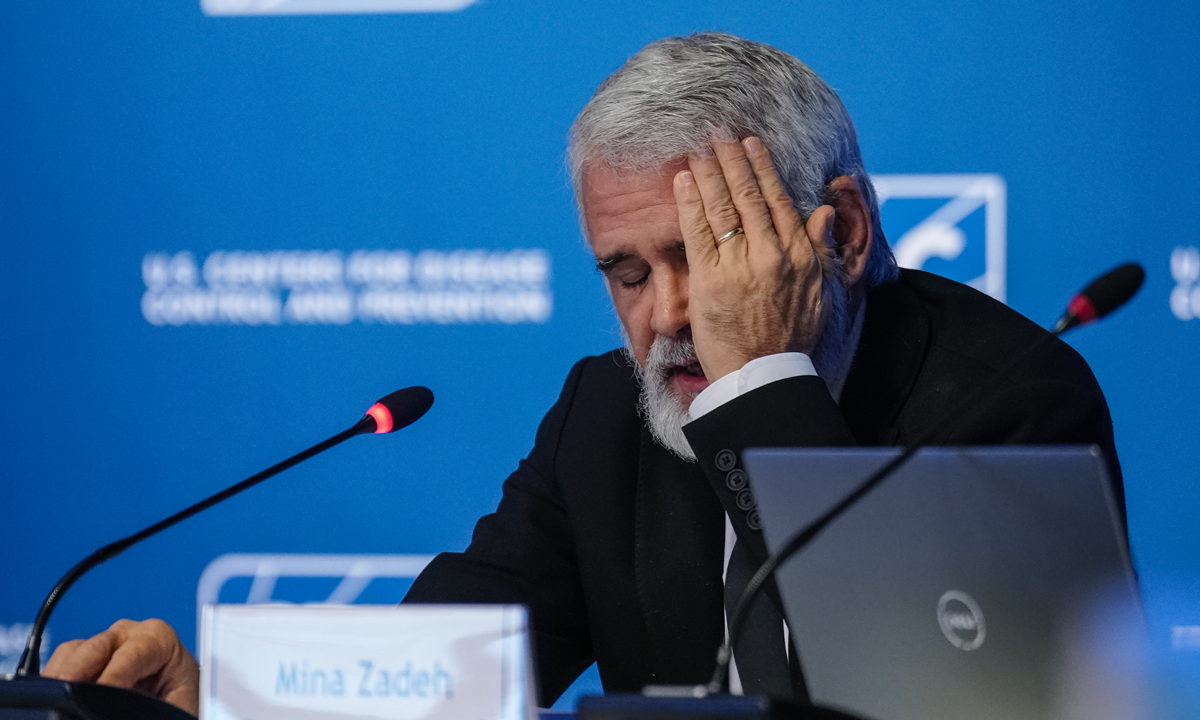
    Vice chair Robert Malone during a meeting of the CDC Advisory Committee on Immunization Practices on Dec. 5 (Getty Images)

    Following a shakeup in its ranks by vaccine skeptic and Health and Human Services Secretary Robert F. Kennedy Jr., a Centers for Disease Control and Prevention advisory committee voted to overturn a decades-long recommendation that newborn babies be immunized for hepatitis B — a policy credited with decimating the highly contagious virus in infants. | The 74

    • A measles outbreak in South Carolina schools is accelerating, with some unvaccinated students in a second 21-day quarantine since the beginning of the academic year. | NBC News  

    A photo that circulated online depicted California high school students lying in the shape of a swastika on the grass of a football field. Chaos ensued. | The Guardian

    ‘It feels nasty. It’s gross.’: Controversy has come to a head at a California high school after an adult film producer rented out the campus gym for a raunchy livestream. “The first thing I see is a full-grown adult, an adult man wearing a baby costume and being fed milk from a baby bottle,” one student observer noted. | NBC San Diego

    Two Texas teenagers allegedly conspired to carry out a school shooting at their high school but the plot was thwarted after classmates reported text messages with their plans to school police. “Don’t come to school on Monday,” one of the messages warned. | KHOU


    ICYMI @The74

    To Ease Civil Rights Backlog, McMahon Orders Back Staff She Tried to Fire

    A GOP push to limit public borrowing by graduate students could exclude many nursing students, as well as those training for several other professions. (Glenn Beil/Getty Images)

    Nurses, Social Workers Face ‘Bad Situation’ Under Proposed Loan Limits

    In New Mexico, Grandparents Caring for Grandkids Can Also Get Free Child Care Now(Co-published with The 19th)


    Emotional Support


    Did you use this article in your work?

    We’d love to hear how The 74’s reporting is helping educators, researchers, and policymakers. Tell us how

    Source link

  • Excluding Level 7 modules from the LLE is a huge, missed opportunity

    Excluding Level 7 modules from the LLE is a huge, missed opportunity

    Ahead of a House of Lords debate on the topic of lifelong learning later this week, today’s blog features two posts on the topic.

    Elsewhere on the site, Professor Harriet Dunbar-Morris, Pro Vice-Chancellor Academic and Provost at The University of Buckingham, highlights what is, in her view, a critical flaw in the LLE: the unfair funding gap facing students on accelerated two-year degree programmes, despite their clear benefits for employability and skills development. You can read that piece here.

    And below, Dr. Michelle Morgan explores the gaps in the Government’s Lifelong Learning Entitlement (LLE), questioning why postgraduate taught courses have been left out and what this means for students, universities, and businesses.

    So the Government has announced that the Lifelong Learning Entitlement (LLE) will come into effect in September 2026.

    The government is arguing that the LLE will allow people to develop new skills and gain new qualifications at a time that is right for them. The LLE will focus on:

    • full courses at level 4 to 6, such as degrees, technical qualifications, and designated distance learning and online courses
    • modules of high-value technical courses at levels 4 to 5.

    It is argued that it will help drive sustained economic growth, break down barriers to opportunity broaden access to high-quality, flexible education and training, and support greater learner mobility between institutions.

    However, yet again the sector’s postgraduate taught (PGT) provision has been ignored. By excluding this level of study, the ambitions of the Government will not be as great as they could be, and it is a huge, missed opportunity for higher education and this is why.

    The first problem: Declining PGT participation of UK-domiciled students

    In the past 10 years, the higher education sector has increasingly relied on international master’s students to fund itself.  EU and non-EU PGT students are nearly all undertaking master’s degrees, whereas for UK-domiciled students, a master’s degree only constitutes around 55% of those on PGT courses. Taught courses include master’s, postgraduate certificates, diplomas, and institutional credits and postgraduate certificates in education.

    For Master’s participation, 2019/20 was a pivotal year as non-EU participation surpassed UK-domiciled for the first time. In each year since 2021/22, UK-domiciled Master’s enrolments have declined (see Table 1). Although we do not have Higher Education Statistics Agency (HESA) return data to view for 2022/23 and 2023/24, there is a strong sense across the sector that we will see a decline in master’s participation, especially among international students.

    Source: Who’s studying in HE? | HESA

    The decline is the same pattern that occurred leading up to 2010/11. The only reason why master’s participation continued to increase then was due to non-EU enrolments. The response by the Government to re-energise the UK-domiciled market after the Higher Funding Council for England’s (HEFCE, which was then the regulator) Phase 1 and 2 of the Postgraduate Support Scheme was to bring in the Postgraduate Loan. As soon as this happened, you could hear an audible sigh of relief across the sector, and there was an attitude of ‘that will solve the problem so let’s just focus on growing the master’s market’. The sector did not consider the demand for master’s qualifications by business and industry, especially small and medium enterprises (SMEs).

    Employer demand for Master’s graduates

    There are disciplines where a master’s is required for career progression such as professional accreditation. However, as the 11 University Postgraduate Experience Project found, which was one of 20 projects funded as part of the HEFCE Phase 1 Postgraduate Support Scheme, many SMEs did not need master’s graduates. Most useful to them was for higher education to provide short courses and modules that provided their staff with advanced skills in key areas such as Business and IT and emerging ones such as Generative AI. According to the Department for Business and Trade’s report on Business population estimates for the UK and regions in 2024, there were 5.6 million UK businesses in 2024 of which 5.5 million were SMEs, accounting for 99.8% of all businesses. By ignoring the needs of business and industry, we are losing an opportunity to engage with a critical market.

    Funding and repayment

    As soon as the Postgraduate Loan was introduced, most universities immediately raised their fees. The aim of the £10,000 loan was to cover fees and some maintenance. Although the loan for September 2024 English starters is now £12,471, for many this will not come close to covering their costs. What is also not factored into any discussion is that someone who has both an undergraduate and a postgraduate loan must pay them back concurrently. This equates to 9% for the undergraduate loan and 6% for the postgraduate, or 15% of someone’s salary on top of tax, National Insurance and any other employee-related costs. Although employers’ national insurance contributions are increasing next year, if there is any tax or National Insurance increase for the individual next year, this will further reduce their disposable income.

    The Postgraduate Loan also differs between UK countries. In England, the loan does not cover stand-alone postgraduate certificates and diplomas, unlike in Scotland, where non-master’s postgraduate taught course participation is 56% compared to 44% in England. If they were included, then maybe the LLE as it stands would not be quite as restricted. The English loan system is not agile enough to support engagement in short or non-master’s courses, and English universities plan their finances for master’s enrolments and anticipated completions. A student should not have to register and enrol on a master’s if they only want or need to do a postgraduate certificate or diploma. If an individual needs a master’s for professional accreditation, this will not stop them from doing a master’s. In fact, we may see an increase in integrated degrees being undertaken where a master’s is incorporated into the undergraduate degree as a result.

    Additionally, we have just had the announcement that undergraduate loans are slightly increasing, but no announcement has been made for postgraduate loans. The current system hinders engagement. It also adopts a deficit model approach, as these qualifications are deemed exit qualifications if someone fails to achieve the Master’s.

    Ability to participate in master’s study

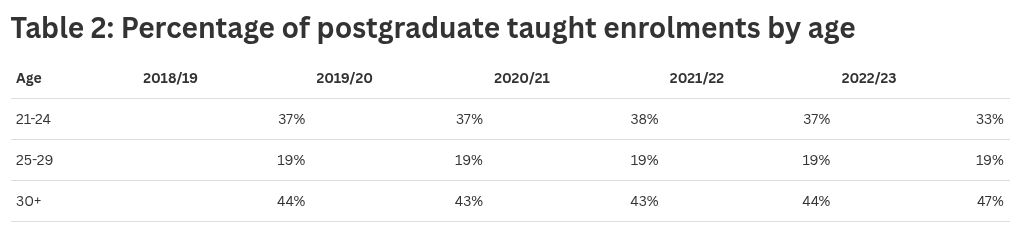
    What is also overlooked in discussions are the debt levels of undergraduate alumni and how this could explain the decreasing number of UK-domiciled 21-24-year-old participants. The majority of PGT enrolments are for the age group of 30 years and over.

    table visualization

    Source: Who’s studying in HE? | HESA

    When the Postgraduate Loan was introduced in 2016, only one cohort had graduated under the £9,000 a year fee regime introduced in 2012.  We now have 10 cohorts who graduated under that regime. It is maybe not a surprise therefore that the largest group investing in postgraduate taught study are those with the smallest amount of undergraduate debt.

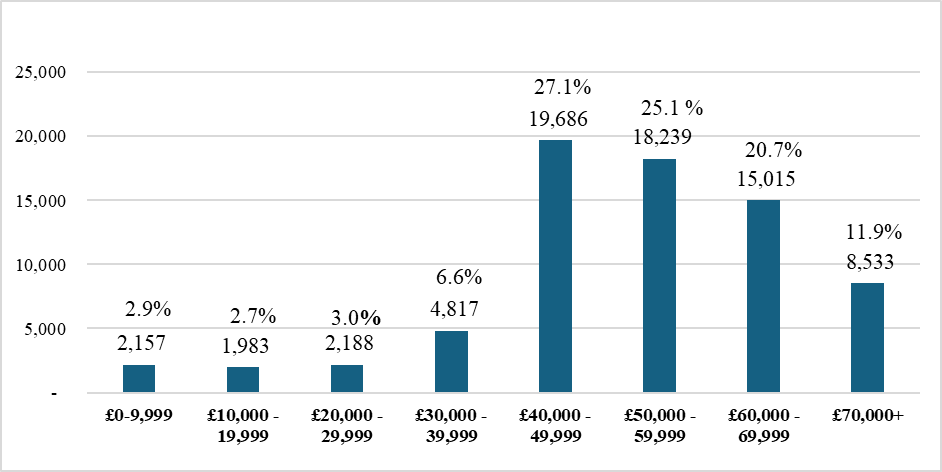
    Last year, I got the results of a Freedom of Information request from the Student Loan Company regarding the debt levels for English-domiciled recipients entering postgraduate Master’s study in 2021/22 (see Figure 1). Of the 72,618, 74.8% had debt in excess of £40,000 and 11.9% over £70,000. This debt will include any repeated years as well as longer length undergraduate courses such as integrated degrees with placements. With the recent announcement that fee levels will rise by £285 to £9,535 in 2025/26, this will increase individual debt.

    Figure 1: Debt levels of 72,618 English-domiciled master’s students who also have an undergraduate loan (fee and maintenance) in 2021/22 only 

    The recent Times and Sunday Times showed how parental financial support differs by student groups and universities. The universities where parents pay the most – up to £30,000 – are mainly Russell Groups. And when you explore postgraduate taught participation by ethnicity,  66% are White. How will the factors highlighted above enable widening participation at the postgraduate level which delivers advanced skills, competencies and knowledge?

    We need a rethink

    The LLE that will be introduced will not super-proof the pipeline for longevity of postgraduate taught study nor provide the advanced skills that are accessible, meaningful and needed for the individual, society or business and industry.

    So we need to start thinking now about the long-term implications of student debt, and social and economic needs so we can develop policy, strategy and practice. To do this though, the sector needs to start thinking about how we can reimagine and do things differently, Government needs to listen to key stakeholders, and we must proactively work together and not against one another.

    Source link