Tag: Idaho

  • New Watchdog Report Reveals ‘Loopholes,’ Lack of Oversight of Idaho Virtual School Finances – The 74

    New Watchdog Report Reveals ‘Loopholes,’ Lack of Oversight of Idaho Virtual School Finances – The 74


    Get stories like this delivered straight to your inbox. Sign up for The 74 Newsletter

    Some families enrolled in the Idaho Home Learning Academy public virtual charter school used state funding to pay for virtual reality headsets, hoverboards, hunting equipment, video games and video game controllers, paddleboards, smart watches, admission tickets to water parks and subscriptions to streaming services like Netflix and Hulu, according to a new state watchdog report released Tuesday.

    The nonpartisan Idaho Office of Performance Evaluations, which is commonly referred to as OPE, released the 129-page Idaho Home Learning Academy evaluation report Tuesday at the Idaho State Capitol after the release was authorized by the Idaho Legislature’s Joint Legislative Oversight Committee.

    OPE released the evaluation report after multiple Idaho legislators signed a March 5 letter requesting the office study the Idaho Home Learning Academy’s finances, expenditures, policies, contracts and student achievement results.

    The Idaho Home Learning Academy, or IHLA for short, is a rapidly growing public virtual charter school authorized by the small, rural Oneida School District.

    There were about 7,600 online students enrolled at Idaho Home Learning Academy during the 2024-25 school year, many of which do not live within the traditional geographic boundaries of the Oneida School District.

    New report raises questions about how supplemental learning funds are used by some families

    As part of Idaho Home Learning Academy’s contract, its education service providers administer supplemental learning funds of $1,700 to $1,800 per student to families enrolled in IHLA that were paid for by Idaho taxpayer dollars, the report found. The money is intended to help pay families for education expenses, and the OPE evaluators found that the largest share of the funds were spent on technology expenses, such as computers, printers and internet access. Other significant sources of supplemental learning fund expenses went for physical education activities and performing arts expenses, the OPE report found.

    However, OPE evaluators found that some families used their share of funding for tuition and fees at private schools and programs. Some families also used their funds for noneducational board games, kitchen items like BBQ tongs, cosmetics, a home theater projector screen, video games, Nintendo Switch controllers, a Meta Quest virtual reality headset, movie DVDs, weapons, sights lasers, shooting targets, remote controlled cars, hoverboards, action figures, smartwatches, water park tickets and the cost of registering website domain names, the OPE report found.

    Families with students enrolled at Idaho Home Learning Academy are able to access the funds though both direct ordering programs and reimbursements. The OPE report found that Idaho Home Learning Academy’s three service providers (Braintree, Home Ed and Harmony) spent about $12.5 million providing supplemental learning funds for IHLA families during the 2024-25 school year. Service providers said that some families did not spend any or all of their supplemental learning funds, and the money was retained by the service providers, not returned back to the state or school district, the OPE report found.

    Idaho governor, superintendent of public instruction respond to OPE report’s findings

    Idaho Gov. Brad Little called the report’s findings “troubling” in a letter released with the report Tuesday.

    “We also have an obligation to be responsible stewards of taxpayer dollars,” Little wrote. “The OPE report on IHLA is troubling, especially as it pertains to supplemental learning fund expenses, academic performance, supplemental curriculum and the funding formula that enables virtual programs to receive more funding than brick-and-mortar public schools. The OPE report reveals that statutory safeguards are insufficient, oversight is inconsistent and accountability measures have not kept pace with the fast expansion of the IHLA program.”

    The OPE evaluation report findings come at a time when every dollar of state funding in Idaho is being stretched further amid a revenue shortfall. All state agencies outside of the K-12 public school system are implementing 3% mid-year budget holdbacks, and the state budget is projected to end fiscal year 2026 and fiscal year 2027 in a budget deficit, the Idaho Capital Sun previously reported.

    Idaho Superintendent of Public Instruction Debbie Critchfield said the report raised concerns for her as well.

    “(The OPE report) also raises important questions about whether direct and indirect payments to families are a proper and legal use of funds appropriated for public schools,” Critchfield wrote in a Nov. 26 letter to OPE leadership.

    The OPE evaluation report found that limited oversight and accountability create uncertainty about how supplemental learning funds paid for with state taxpayer dollars are used and whether students’ curriculum choices align with state standards and transparency requirements.

    Idaho state laws and administrative rules do not specifically allow or prohibit the use of supplemental learning funds, the OPE report found. That finding was one of several “policy gray areas” that the OPE evaluation report documented.

    Little concluded his letter by saying he is ready to work with the Idaho Legislature, the Idaho State Department of Education and the Idaho State Board of Education to restore meaningful accountability for the use of taxpayer dollars.

    “I have carefully reviewed the recommendations provided in this report and strongly encourage the Legislature to address the loopholes in state statute,” Little wrote.

    Oneida School District superintendent stresses Idaho Home Learning Academy did not break state law

    In response to the OPE report, Oneida School District Superintendent Dallan Rupp, who is also a member of the Idaho Home Learning Academy School board, emphasized that the report did not find that IHLA was guilty of any misconduct.

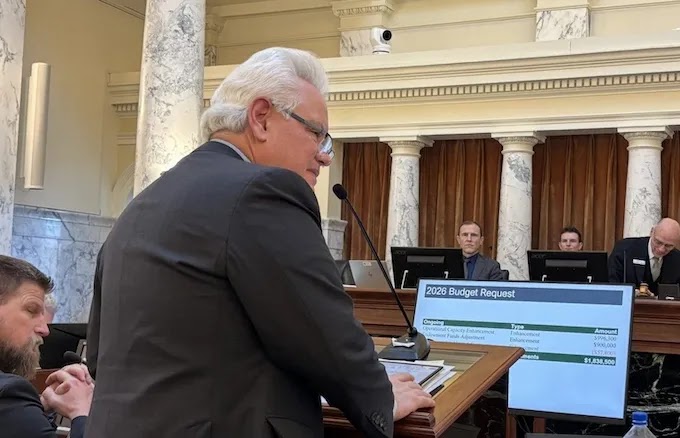
    “Importantly, the OPE report did not identify any misconduct at IHLA,” Rupp said during a meeting Tuesday at the Idaho State Capitol in Boise. “This outcome underscores the effectiveness of Oneida School District’s oversight and reflects IHLA’s consistent compliance with Idaho’s laws, statutes, rules, regulations and procedures, as well as its cooperative relationship with the Idaho State Department of Education. We remain fully committed to operating within all established guidelines, just as we have in the past.”

    Idaho Sen. James Ruchti, D-Pocatello, said it was beside the point that the school didn’t break any laws.

    “I’m extremely concerned,” Ruchti said during Tuesday’s meeting at the Idaho State Capitol in Boise. “This is public money – public taxpayer money – and we have an obligation to make sure that it’s spent appropriately and with oversight. And so, yes, it may not have violated any statutory requirements at this point. But what I’m saying is that what I saw in that presentation caused me serious concerns about how IHLA and other online teaching institutions are able to spend public dollars in a way that was not intended.”

    Idaho watchdog report found most online virtual teachers were part-time employees

    OPE also found that most Idaho Home Learning Academy teachers were part-time, unlike traditional schools, and the Idaho Home Learning Academy spends much less on salaries and benefits than it receives from the state’s salary apportionment formula.

    The report found IHLA was able to use the savings it realized in state funding provided to pay for staff salaries and health benefits to instead use at IHLA’s discretion or to pay its education service providers.

    The OPE report found that most of IHLA’s teachers are part-time employees and do not provide full-time direct instruction to students. Instead, the report found that Idaho Home Learning Academy’s kindergarten through eighth grade instructional model relied heavily on parent-directed learning and that IHLA teachers typically offered feedback and oversight instead of direct instruction.

    According to the report, IHLA reported $46.3 million in total expenditures from state funds during the 2024-25 school year. While traditional brick-and-mortar public schools’ largest expenditures are for staff salaries and benefits, the report found that only 36% of IHLA’s expenditures went to staff. A larger portion – 45% of IHLA’s total expenditures, or $20.6 million – went to paying education service providers.

    The OPE report also found that Idaho Home Learning Academy’s students lagged behind statewide averages for scores on Idaho Standards Achievement Test, or ISAT. The OPE report found 42% of IHLA students were proficient in English language arts during the 2024-25 school year, compared to the statewide average of 52% of Idaho students.

    The report also found just 25% of IHLA students were proficient in math during the 2024-25 school year, compared to the Idaho statewide average of 43%.

    However, the OPE report highlighted that some IHLA families interviewed for the report said they do not believe statewide standardized tests are a good measure of student learning. The report also noted that many Idaho Home Learning Academy families identified themselves as homeschoolers and said they were using IHLA by choice because they were unhappy with the quality of education in traditional brick-and-mortar schools or felt that their child’s educational needs were not being met by more traditional public schools.

    Idaho Capital Sun is part of States Newsroom, a nonprofit news network supported by grants and a coalition of donors as a 501c(3) public charity. Idaho Capital Sun maintains editorial independence. Contact Editor Christina Lords for questions: [email protected].


    Did you use this article in your work?

    We’d love to hear how The 74’s reporting is helping educators, researchers, and policymakers. Tell us how

    Source link

  • Murderer of 4 University of Idaho Students Sentenced to Life

    Murderer of 4 University of Idaho Students Sentenced to Life

    An Idaho judge Wednesday sentenced the murderer of four University of Idaho students to life in prison without possibility of parole, various media outlets reported.

    Judge Steven Hippler of the state’s 4th Judicial District sentenced Bryan Kohberger to four consecutive life sentences.

    Kohberger pleaded guilty June 30 to the 2022 killings of seniors Kaylee Goncalves and Madison Mogen, both 21; junior Xana Kernodle, 20; and freshman Ethan Chapin, 20. As part of Kohberger’s plea deal, prosecutors agreed to not pursue the death penalty.

    Authorities said the four University of Idaho students were sleeping at an off-campus home in Moscow, Idaho, when Kohberger—then a criminology graduate student at nearby Washington State University—stabbed them to death. He declined to speak during his sentencing hearing, and his motive remains unknown.

    Source link

  • Idaho legislators accuse Boise State of flouting DEI ban

    Idaho legislators accuse Boise State of flouting DEI ban

    Lawmakers in Idaho accused Boise State University officials of skirting a statewide ban on diversity, equity and inclusion during a House education committee meeting Tuesday, according to reporting from Idaho Education News

    Republican legislators questioned Boise State president Marlene Tromp about a sociology certificate program in DEI advertised on the university’s website as well as its Institute for Advancing American Values, the latter of which is described as encouraging “respectful dialogue” about “the issues and values that have shaped America and Americans from all walks of life.”

    One representative remarked that the institute “sounds like a continuation of DEI under different labels.”

    Tromp said the university had “absolutely not moved something under another name” but added that she’d have to investigate the certificate program more closely. 

    In December, the Idaho State Board of Education passed a resolution prohibiting “central offices, policies, procedures, or initiatives … dedicated to DEI ideology” at public higher ed institutions. Boise State shuttered two of its student equity centers a week before the vote.

    Source link

  • U of Idaho President Seems To Temper His Cheerleading for U of Phoenix Purchase (David Halperin)

    U of Idaho President Seems To Temper His Cheerleading for U of Phoenix Purchase (David Halperin)

    In testimony Monday before a joint committee of the Idaho
    legislature, University of Idaho president C. Scott Green seemed a
    little less committed to the deal he has relentlessly touted for more
    than a year and a half — for his school to buy, for $685 million, the
    huge for-profit University of Phoenix from private equity giant Apollo
    Global Management.

    According to Idaho Education News, Green said the next move was Apollo’s. “We’re waiting to hear what they would like to do,” Green said.

    Green’s plan has been thwarted again and again, with negative votes in the Idaho legislature, a successful court challenge by the state’s attorney general, criticism from the state treasurer, and sharp scrutiny from news outlets in the state.

    The Green school deal has assumed that operation of Phoenix would
    bring millions in new revenue to fund his university. But it ignores
    that running a for-profit college, one that has repeatedly gotten in trouble with law enforcement,
    would be a tremendous challenge: If Green pushed to end Phoenix’s
    predatory practices and improve student outcomes, it probably would
    start losing money, because predatory practices, coupled with high
    prices and low spending on education, have made up the school’s secret
    sauce. But if Green allowed the deceptive conduct to persist, the school
    could face more legal peril. And, whatever route he took, Green’s
    school might end up assuming massive liability for student loan debt the
    government has cancelled based on past abuses at Phoenix.

    At its peak, Phoenix was the largest for-profit college in the
    country and got upwards of $2 billion a year in federal student aid,
    while boasting dismal graduation rates and high levels of loan defaults.

    Last summer, the University of Idaho and Apollo agreed to a one-year extension of their purchase deal. That arrangement expires June 10. Meanwhile Apollo has the right to talk with other potential buyers.

    Apollo already has sent Idaho $5 million to cover the school’s
    high-priced legal and consulting fees in connection with the deal, and
    it has agreed to pay up to $20 million to Idaho if the deal falls
    through.

    Green told the legislature that $20 million would cover his school’s
    costs with perhaps $2 to $3 to spare. “I think we’re well-protected,” he
    boasted.

    Kind of. Green, whose background is in corporate management and
    finance, could potentially walk away without losing money for the
    school. But he has tied up state university, executive, legislative, and
    judicial resources for many hundreds of hours jousting over an effort
    that would keep alive a predatory school that has buried thousands of
    graduates in debt they can’t afford to repay, while wasting billions in
    federal taxpayer dollars, when that time could have been focused on the
    real challenges of state higher education.

    If Idaho can’t work out a deal, Apollo may run out of options to dump
    the school, and this taxpayer-funded multi-billion dollar disgrace may
    at last be put down.

    [Editor’s note: This article originally appeared on Republic Report.] 

    Source link

  • North Idaho College awaits its fate

    North Idaho College awaits its fate

    After years of scrutiny over governance issues that included violations of open meetings laws and other infractions, North Idaho College will soon learn whether it will keep or lose accreditation.

    The Northwest Commission on Colleges and Universities will convene Tuesday through Friday for its January meeting. Commissioners will determine whether NIC adequately resolved outstanding concerns driven by a former board majority that emphasized culture war issues at the rural Idaho college, tried to push out its president and hired personnel with political connections to board members.

    A decision on the college’s accreditation status will be delivered within 30 days of the meeting.

    College officials hope the commissioners see the progress they say NIC has made over the last year, resolving various governance issues raised by NWCCU as it sought to comply with accreditation standards after a flurry of warnings that culminated in a show-cause status in February 2023, meaning the college must “present evidence why its accreditation should not be withdrawn.” The sanction highlighted multiple governance issues driven by an exceptionally erratic board.

    Years of Conflict

    North Idaho’s clash with its accreditor came as a result of thorny governance issues marked by bitter clashes on its five-member elected Board of Trustees, with meetings that occasionally devolved into name-calling and appeared at times to be fueled by personal and ideological agendas.

    The high drama began at the small college in Coeur d’Alene in 2021 with allegations of abuse and aggressive behavior toward employees and others by then-chair Todd Banducci. The firing of former president Rick MacLennan without cause that same year prompted a successful lawsuit against the college, and the resignation of three board members (one amid residency questions) in 2022 prompted the state to temporarily appoint three new trustees who served out the remainder of their predecessors’ terms.

    While the reconstituted board managed to hire a new president in 2022, membership was reshuffled after elections that year. Two members who often voted together—Banducci and Greg McKenzie—were joined by Mike Waggoner, all of whom had ties to the Kootenai County Republican Central Committee, a group some considered far-right even for rural Idaho. With a new board majority in place, governance issues at NIC escalated rapidly in 2023.

    The new majority seated after Election Day in 2022 began by hiring Art Macomber as the college’s attorney in a surprise move that the board would later admit violated open meetings laws. The college’s prior attorney, Marc Lyons, had resigned after the election, writing that his services were “no longer desired” by the board majority. Macomber, who has since resigned, had political connections to the board majority.

    The board’s next act was to sideline President Nick Swayne, placing him on administrative leave in December after he cautioned trustees that they had violated open meetings and procurement law by abruptly picking Macomber without public notice or a bidding process. In Swayne’s place, the board hired an interim president while Macomber conducted a nebulous investigation into Swayne’s hiring by the prior board. (The interim president was given a contract that paid him more than $235,000 a year, $5,000 more than Swayne’s annual salary.) However, Swayne was reinstated in March 2023 after a successful legal challenge to the board’s attempted ouster.

    Amid the volatility, NWCCU issued a series of escalating warnings.

    The accreditor first contacted North Idaho leadership in April 2021 in response to complaints about alleged noncompliance with nondiscrimination, governing board and academic freedom standards. The accreditor then raised further concerns about governance standards in December 2021 related to MacLennan’s firing. (The Idaho State Board of Education also raised concerns about “the current trajectory” of NIC that same month.) In April 2022, NWCCU officially sanctioned NIC with a warning letter about noncompliance with governance and institutional integrity standards. In December of that year, after Swayne was temporarily sidelined, the accreditor threatened NIC with show-cause status. By February 2023, NWCCU followed through, slapping NIC with a show- cause sanction that was later extended in July of that year.

    In a May 2023 report, accreditors wrote that “NIC’s governing board’s actions over the past two years have created risks to institutional quality and integrity.” Among their concerns were “multiple lawsuits resulting from Board actions” and violations of open meetings laws; high leadership turnover, including having two presidents under contract; the hiring process for Macomber; and multiple votes of no confidence in the board by faculty and staff that trustees had not responded to.

    When NWCCU extended NIC’s show-cause status in July, it called on the board to address the no-confidence resolutions and “resolve current litigation, governance, and accreditation issues that have had a current and immediate impact” on college finances, among various other issues.

    Swayne, in an interview with Inside Higher Ed, noted that the issues fell on the governance side, which is also reflected in NWCCU’s findings. Academics at the college, he said, are strong.

    An Optimistic Outlook

    As the concerns about the loss of accreditation continued—often becoming a heated focal point in public comments at board meetings—NIC hired outside consultants, such as the Association of Community College Trustees to help develop board policies and interpersonal relationships.

    While that process seemed to help, Swayne doesn’t believe a lack of training was the issue.

    “I don’t want to discount the value of the consulting, but two years of consulting to try to teach board members, adults—well-educated adults—how to behave properly in a board meeting doesn’t make a lot of sense,” Swayne said. “So there was something else going on. I can’t tell you what that was—I don’t know.”

    The notion of something sinister underlying the actions of the former board majority has been a common theme at meetings in recent years, with speakers questioning the trustees’ motives. Local residents often demanded the board majority explain their motivations and offered theories of their own, sometimes tinged with conspiracy, including speculation that the three trustees aimed to shut the college down in order to free up prime real estate for development.

    Swayne suggested there was a “hangover from COVID” at play given that opposition to masks and vaccines was a “main issue” for the majority bloc of trustees until the coronavirus pandemic waned. Emboldened trustees, he suspects, were in search of another cause after that fight ended. And some, like Banducci, had alleged the existence of a liberal “deep state” at the community college, particularly among faculty.

    After some employees voiced support for the Black Lives Matter movement, Banducci claimed on a podcast that “those agendas are being woven into the curriculum. And, you know, who controls the kids, who controls their minds, who controls the college student, you know, controls the voter of the future and controls the populace.” Banducci also allegedly berated MacLennan’s wife for being a Hillary Clinton support, according to a former trustee who called for Banducci to step down in 2021.

    But with increasing accreditor scrutiny, there appeared to be a softening of the board, starting with Waggoner, who often sided with Banducci and McKenzie but later emerged as a swing vote.

    Swayne said he noticed the change around May 2024. And once Waggoner’s voting patterns shifted, Banducci and McKenzie fell in behind him. Meetings, which had often stretched on for hours due to heated public comment periods and legal wrangling, became shorter, more cordial and nonconfrontational.

    Last fall, Banducci and Waggoner decided not to run for re-election and McKenzie lost his bid for another term, putting an end to the board majority that was behind many of the decisions that prompted scrutiny from accreditors as three new trustees were seated. (McKenzie and Banducci did not respond to requests for comment from Inside Higher Ed. Waggoner could not be reached.)

    Swayne said there were “seven months of relatively normalized meetings with the old board.” And now, with a reconfigured board, he believes NIC’s governance issues have been resolved.

    If NIC does lose accreditation over governance issues, it would be an anomaly. Typically, accreditation is stripped due to severe financial or academic issues, which NWCCU has not found. Governance concerns are typically met with warnings, which NWCCU issued in multiple cases before taking further action.

    NWCCU president Sonny Ramaswamy wrote by email that it would be “inappropriate to speak about any decisions the Board of Commissioners will make [on] North Idaho College, before they have acted” and noted that the process will follow an established accreditation actions policy.

    While Swayne declined to predict the outcome, he believes the college has made significant progress on accreditation concerns and “started meeting the standards back in May of 2024.” He’s hopeful that a room full of more than two dozen commissioners will see it the same way.

    Source link

  • College of Western Idaho Boosts Enrollment and Retention with Data-Driven Solutions

    College of Western Idaho Boosts Enrollment and Retention with Data-Driven Solutions

    In late 2021, the College of Western Idaho (CWI) needed to address a consistent enrollment decline and improve student retention. With an ambitious vision to improve and optimize its technological infrastructure and student outreach, CWI sought to build a best-in-class system to enhance student engagement and elevate enrollment strategies. To ensure that data and technology were aligned with CWI’s growth objectives, the college partnered with Collegis Education to analyze their combined impact. Were its data and tech aligned for impact, or were gaps hindering progress and creating unnecessary burdens across the team?

    Key Takeaways

    • Six consecutive terms of YoY enrollment growth
    • Experienced the highest YoY increase in persistence in history of the college from Fall 2022 to Fall 2023
    • Consistent improvement in term-over-term retention

    CHALLENGES:

    • Declining enrollment
    • No established retention strategy
    • Lack of CRM
    • Underutilized LMS
    • Siloed technology and data systems

    SOLUTIONS:

    • Connected Core®
    • Advanced analytics + business intelligence
    • LMS support
    • Website optimization
    • Data-driven outreach and support for students identified as at-risk

    Strategy

    Collegis Education and CWI began collaborating on building a best-in-class student journey from the point of initial inquiry through graduation.

    A comprehensive evaluation of existing CWI systems allowed Collegis to assess the college’s digital readiness, technology infrastructure, and enrollment ecosystem to understand how they aligned with its growth objectives. The partnership quickly proceeded from consultation to implementation.

    Collegis prescribed a set of solutions to enhance student engagement from first contact and elevate the school’s enrollment strategies:

    • Connected Core® to unite siloed systems, data sets, and other enrollment technologies, providing more accurate, actionable, unified institutional intelligence with clear visualizations to support data-enabled decision-making at all levels.
    • Website optimization to improve conversion and deliver a student-centric digital experience that supports the objectives, goals, and mission.
    • Prospective student nurturing campaigns with a messaging protocol designed to drive conversion and prospective student engagement with CWI.

    Collaborating closely with CWI, Collegis developed a well-defined student retention strategy that established meaningful student-advisor relationships early on, ensuring students felt supported from their first interaction onward.

    • Enrollment conversation training gave student-facing staff the tools to drive positive experiences for CWI learners while embracing a liaison approach to student engagement.
    • Collegis student success coaches conducted proactive outreach to engage students while leveraging an at-risk alert system to drive intervention. This early alert system flags students needing support based on learning management system (LMS) data on attendance, current grades, and assignment completion.

    Results: Average YoY growth each semester since our partnership began has averaged 5%

    By working with Collegis, CWI could focus on its student journey and how it could better use data and technology to deliver superior student engagements and reach its growth targets. This has helped not only stop, but reverse historical enrollment declines. In 2024, CWI projected year-over-year growth for the sixth consecutive academic term. The school has achieved an average year-over-year term growth of 5%, with a trendline for fall 2024 of over 9% growth.

    “Our partnership with Collegis has provided expertise, speed, and flexibility in areas where we, as an institution of higher education, have been unable to improve so nimbly.  Where most consultants provide an analysis and leave, Collegis follows through with ‘and this is how we’ll make that happen for you’.  Trusting their recommendations is easy because I know they are signing themselves up to do the work with me.”

    Tyler Brown, Associate Vice President Enrollment & Student Services, College of Western Idaho

    Value-based conversations with prospective students have resulted in increased applications. Further, pre-start engagement from the advising and student success coaching teams has increased registrations from admitted students.

    By fostering a culture of meaningful interaction and support for students, CWI paved the way for improved student retention. The LMS-based at-risk model has driven 19,000+ proactive student engagements and interventions in one academic year.

    Within just one year of implementing these targeted strategies, CWI witnessed a remarkable in retention rates, all while alleviating the workload on faculty and staff.  Similar retention strategies deployed by other Collegis partner institutions have yielded term-over-term retention rates exceeding 90%, underscoring the effectiveness of our approach.

    Whenever we want to try something new or have a challenge we need help with, my first thought now is let’s call Collegis and see if this is something they can help us with.”

    Denise L. Aberle-Cannata, Provost, College of Western Idaho

    With a proven retention strategy and access to a proactive model, CWI can now build out its internal retention capabilities and plans to take over the student success coaching function.

    The Future

    CWI’s commitment to embracing change and being agile is demonstrated by the school’s evolving partnership with Collegis to exceed industry best practices and realize sustained growth. Ongoing services and incremental work are targeting LMS initiatives to stabilize, standardize, optimize, and transform CWI’s instance of Blackboard Learn and redesign its new student orientation, among other things.

    Source link