Tag: Ideas

  • Probabilities of generative AI pale next to individual ideas

    Probabilities of generative AI pale next to individual ideas

    While I was working on the manuscript for More Than Words: How to Think About Writing in the Age of AI, I did a significant amount of experimenting with large language models, spending the most time with ChatGPT (and its various successors) and Claude (in its different flavors).

    I anticipated that over time this experimenting would reveal some genuinely useful application of this technology to my work as a writer.

    In truth, it’s been the opposite, and I think it’s interesting to explore why.

    One factor is that I have become more concerned about what I see as a largely uncritical embrace of generative AI in educational contexts. I am not merely talking about egregiously wrongheaded moves like introducing an AI-powered Anne Frank emulator that has only gracious thoughts toward Nazis, but other examples of instructors and institutions assuming that because the technology is something of a wonder, it must have a positive effect on teaching and learning.

    This has pushed me closer to a resistance mindset, if for no other reason than to provide a counterbalance to those who see AI as an inevitability without considering what’s on the other side. In truth, however, rather than being a full-on resister I’m more in line with Marc Watkins, who believes that we should be seeing AI as “unavoidable” but not “inevitable.” While I think throwing a bear hug around generative AI is beyond foolish, I also do not dismiss the technology’s potential utility in helping students learn.

    (Though, a big open question is what and how we want them to learn these things.)

    Another factor has been that the more I worked with the LLMs, the less I trusted them. Part of this was because I was trying to deploy their capabilities to support me on writing in areas where I have significant background knowledge and I found them consistently steering me wrong in subtle yet meaningful ways. This in turn made me fearful of using them in areas where I do not have the necessary knowledge to police their hallucinations.

    Mostly, though, just about every time I tried to use them in the interests of giving myself a shortcut to a faster outcome, I realized by taking the shortcut I’d missed some important experience along the way.

    As one example, in a section where I argue for the importance of cultivating one’s own taste and sense of aesthetic quality, I intended to use some material from New Yorker staff writer Kyle Chayka’s book Filterworld: How Algorithms Flattened Culture. I’d read and even reviewed the book several months before, so I thought I had a good handle on it, but still, I needed a refresher on what Chayka calls “algorithmic anxiety” and prompted ChatGPT to remind me what Chayka meant by this.

    The summary delivered by ChatGPT was perfectly fine, accurate and nonhallucinatory, but I couldn’t manage to go from the notion I had in my head about Chayka’s idea to something useful on the page via that summary of Chayka’s idea. In the end, I had to go back and reread the material in the book surrounding the concept to kick my brain into gear in a way that allowed me to articulate a thought of my own.

    Something similar happened several other times, and I began to wonder exactly what was up. It’s possible that my writing process is idiosyncratic, but I discovered that to continue to work the problem of saying (hopefully) interesting and insightful things in the book was not a summary of the ideas of others, but the original expression of others as fuel for my thoughts.

    This phenomenon might be related to the nature of how I view writing, which is that writing is a continual process of discovery where I have initial thoughts that bring me to the page, but the act of bringing the idea to the page alters those initial thoughts.

    I tend to think all writing, or all good writing, anyway, operates this way because it is how you will know that you are getting the output of a unique intelligence on the page. The goal is to uncover something I didn’t know for myself, operating under the theory that this will also deliver something fresh for the audience. If the writer hasn’t discovered something for themselves in the process, what’s the point of the whole exercise?

    When I turned to an LLM for a summary and could find no use for it, I came to recognize that I was interacting not with an intelligence, but a probability. Without an interesting human feature to latch onto, I couldn’t find a way to engage my own humanity.

    I accept that others are having different experiences in working alongside large language models, that they find them truly generative (pardon the pun). Still, I wonder what it means to find a spark in generalized probabilities, rather than the singular intelligence.

    I believe I say a lot of interesting and insightful things in More Than Words. I’m also confident I may have some things wrong and, over time, my beliefs will be changed by exposing myself to the responses of others. This is the process of communication and conversation, processes that are not a capacity of large language models given they have no intention working underneath the hood of their algorithm.

    Believing otherwise is to indulge in a delusion. Maybe it’s a helpful delusion, but a delusion nonetheless.

    The capacities of this technology are amazing and increasing all the time, but to me, for my work, they don’t offer all that much of meaning.

    Source link

  • 22 ideas for department chair merit badges (opinion)

    22 ideas for department chair merit badges (opinion)

    A running joke with my department chairs, when I was a dean, involved the awarding of merit badges for the accomplishment of a particularly thorny task that the outside world (outside of academia, that is) would not otherwise have known about. Generals rising in the ranks of the military accumulate ribbons. Why shouldn’t there be a similar accumulation of ceremonial badges for accomplishments on the way up the academic leadership ladder?

    The granting of ribbons or merit badges will be ever more important in the AI era, in which leaders cannot simply speak about something but rather demonstrate and present the knowledge physically. As the Boy Scouts Merit Badge Hub states, “If it says ‘show or demonstrate,’ that is what you must do. Just telling about it isn’t enough. The same thing holds true for such words as ‘make,’ ‘list,’ ’in the field,’ and ‘collect,’ ‘identify,’ and ‘label.’”

    For example: Consider details of just two of the 12 areas Scouts must master to earn the Boy Scout Bird Study Merit Badge:

    Demonstrate that you know how to use a bird field guide. Show your counselor that you are able to understand a range map by locating in the book and pointing out the wintering range, the breeding range, and/or the year-round range of one species of each of the following types of birds:

    1. Seabird
    2. Plover
    3. Falcon or hawk
    4. Warbler or vireo
    5. Sparrow

    Observe and be able to identify at least 20 species of wild birds. Prepare a field notebook, making a separate entry for each species, and record the following information from your field observations and other references.

    1. Note the date and time.
    2. Note the location and habitat.
    3. Describe the bird’s main feeding habitat and list two types of food that the bird is likely to eat.
    4. Note whether the bird is a migrant or a summer, winter, or year-round resident of your area.

    When scouts earn a Bird Study merit badge, you will know they know what they’re talking about and feel comfortable with those scouts running a birding outing. You will feel confident putting matters in their hands.

    Wouldn’t this approach be helpful for showing department chair expertise as well?

    The Basic Badges: Survival Skills for New Chairs

    I propose the list below as standard merit badges any department chair should be working toward. Following the Bird Study merit badge model, the specific tasks involved in earning the first badge are listed in detail. Follow this model and logic if you decide to document and award any or all of these badges at your institution.

    Meeting Management Merit Badge (for mastering the art of running efficient faculty meetings while maintaining collegiality and reaching actual decisions)

    1. Show that you are familiar with the terms used to describe meetings by doing the following:
      1. Sketch or trace a meeting room and then label 15 different aspects of a meeting.
      2. Draw up a meeting agenda and label six types of agenda items.
    2. Demonstrate that you know how to properly follow an agenda, use the AV equipment in the room and use the hybrid camera, plus monitor for virtual attendees:
      1. Explain what the Roman numerals mean on an agenda.
      2. Show how to present a PowerPoint to both present and virtual members.
      3. Show how to see, in a timely manner, when a virtual hand is up.
      4. Describe how to bring a latecomer up to speed on an agenda item already discussed.
    3. Demonstrate that you know how to use Robert’s Rules of Order. Show your dean that you are able to understand each chapter in the book, pointing out the debate rules, the tabling-a-motion rules and the majority requirements for each of the following types of votes:
      1. Motion to accept minutes.
      2. Motion to object.
      3. Motion to suspend consideration of an item.
      4. Motion to call the question.
      5. Motion to take up matter previously tabled.
      6. Procedure to select a second when everyone’s hand is up.
    4. Observe and be able to identify at least 20 types of meetings. Prepare a field notebook, making a separate entry for each species of meeting, and record the following information from your field observations and other references:
      1. Note the date and time.
      2. Note the location and room capacity.
      3. Describe each attendee’s main feeding habitat and list two types of food that the attendees are likely to eat.
      4. Note whether the attendee is a tenure-line professor, career-line or part-time/adjunct resident of your department.
    5. Successfully defuse at least three of these common meeting scenarios:
      1. The Filibuster Professor who “just has a quick comment” that turns into a 20-minute monologue.
      2. The Side Conversation Insurgents who start their own parallel meeting.
      3. The “Actually …” Interrupter who must correct every minor detail.
      4. The Passive-Aggressive Email Sender who “just wants to follow up on some concerns.”

    Do you not feel comfortable with any department chair who has earned a Meeting Management merit badge running a meeting? Following are some additional basic badges that one can earn for adept engagement in the everyday and more occasional department chair work.

    Budget Detective Merit Badge (for successfully tracking down and reallocating mysterious fund transfers and finding hidden resources)

    Schedule Tetris Merit Badge (for fitting 47 course sections into 32 available time slots while satisfying everyone’s preferences)

    Diplomatic Relations Merit Badge (for mediating between feuding faculty members without taking sides or losing sanity)

    Paperwork Expedition Merit Badge (for successfully navigating a minor curriculum change through six committees and three levels of administration)

    Assessment Survival Merit Badge (for completing a program review cycle without uttering the phrase “this is meaningless”)

    Email Endurance Merit Badge (for maintaining inbox zero while receiving 200-plus daily messages during registration week)

    Faculty Development Sherpa Merit Badge (for successfully guiding junior faculty through the tenure process wilderness)

    Student Crisis Navigation Merit Badge (for handling everything from grade appeals to mental health emergencies with grace—and documentation)

    Accreditation Archive Merit Badge (for creating and maintaining the sacred assessment documents for the next site visit)

    Interdepartmental Peace Treaty Merit Badge (for negotiating shared resources and cross-listed courses without starting a turf war)

    Conference Room Warrior Merit Badge (for surviving 50 consecutive hours of committee meetings in a single semester while maintaining consciousness)

    The Advanced Badges

    As department chairs move toward the “seasoned category,” akin to Eagle Scouts’ level of capability, these are the advanced merit badges department chairs should be moving toward:

    Everyone Remained Seated Merit Badge (for successfully hosting a controversial speaker event where the Q&A didn’t require campus police, no one stormed out, everyone actually asked questions instead of making speeches, and the dean didn’t have to issue a statement the next day)

    Viewpoint Diversity Navigator Merit Badge (for successfully resolving ideological tensions between the “universities are too woke” faculty member and the “universities aren’t woke enough” faculty member, while keeping both the university counsel office and the campus newspaper uninterested in your department)

    Social Media Firefighter Merit Badge (for managing department communications after a faculty member’s tweet goes viral, while upholding both academic freedom and institutional reputation)

    Soft Landing Merit Badge (for compassionately guiding a struggling graduate student toward alternative career paths while avoiding lawsuits, maintaining departmental reputation for mentoring, preventing faculty infighting about “standards” and ensuring the student leaves with dignity and future options intact)

    Side Hustle Tackler Merit Badge (for successfully filling out outside employment forms for a professor simultaneously consulting for Google, running a resale textbook start-up and offering expert testimony, while ensuring university compliance, managing jealous colleagues and preventing the local newspaper from running a “professors don’t work” exposé)

    Advanced Curriculum Shepherding Merit Badge (for successfully shepherding an interdisciplinary, multimodal, study abroad–required curriculum through 17 different committees without having it transformed into “just add one elective to the existing major”)

    Bonus points for maintaining revolutionary elements like “required internships,” “community-engaged capstone” and “two semesters abroad” through final approval, while fielding questions like “but how will student athletes do this?” and “what exactly do you mean by ‘transdisciplinary’?” and “have you checked with Risk Management?” and “will this impact our parking situation?”

    Fresh Blood Without Bloodshed Merit Badge (for successfully integrating an outside chair into a department that has been “led” by the same three faculty trading the position since 1987; includes surviving the “but that’s not how we do it” phase, the “well, in my day as chair” phase and the “I’ll just CC the dean on this email to help you understand our culture better” phase)

    Special recognition for preventing the emeritus faculty from creating a shadow government in the department’s second-floor conference room.

    The King Has Voluntarily Left the Building Merit Badge (For masterfully orchestrating the graceful exit of a chair who has held the position since before email existed, memorized every bylaw and has an office containing 27 years of irreplaceable paper files organized in a system only they understand; successfully convince them that spending more time on research is a promotion, not a demotion, while ensuring they actually hand over the department credit card and graduate student admissions spreadsheet before leaving)

    Bonus points if the outgoing chair willingly shares the password to the department’s social media accounts and reveals where they’ve been hiding the good coffee maker.

    The “Reply All” Survivor Merit Badge (for maintaining composure during the dreaded accidental reply-all chain that encompasses the entire college)

    And, finally (drum roll) the Ultimate Achievement: The Phoenix Chair Merit Badge (for successfully completing a term as chair and willingly agreeing to serve again)

    This highest honor requires:

    1. Completing all previous merit badges
    2. Still believing in the mission of higher education
    3. Retaining enough optimism to sign up for another term

    Note: This badge has only been awarded twice in recorded higher education history.

    Hollis Robbins is professor of English and former dean of humanities at the University of Utah.


    Source link

  • College Recruitment Strategies and Ideas to Boost Enrollment

    College Recruitment Strategies and Ideas to Boost Enrollment

    Student Recruitment Ideas for Better Enrollment Marketing

    College recruitment strategies have undergone a seismic shift in recent years with the rise of an always-on digital audience and the growing accessibility of online programs. Fewer geographical constraints and heightened competition have fueled this realignment, prompting institutions to craft student recruitment strategies that are as dynamic as the students they aim to enroll. 

    In the modern, digital-first landscape of higher education, recruitment season is no longer confined to the traditional August to December window. Students are applying and enrolling year-round, and your institution must constantly assess which strategies are driving results and which are falling flat. 

    By embracing smarter, data-driven marketing tactics, you can stand out in the crowded landscape of online education, uniting students under the shared mission of your institution. 

    The Importance of Student Recruitment Strategies 

    You’ve been working in higher education for over a decade, but recently, student recruitment seems harder. You’re not alone. Prospective students are going in less traditional directions and finding cheaper, faster ways to become qualified for the workforce through modalities such as online certificates and boot camp programs. Inflation isn’t helping either. 

    But through a realignment of strategy to meet digital native consumers, you can meet students where they are and capitalize on projected enrollment growth

    Don’t get scared into sticking with outdated ways of reaching prospective students. Instead, rise to the challenge, get a better understanding of the landscape you’re working with, and refresh your enrollment marketing strategy. 

    3 Student Recruitment Strategies

    We won’t tell you that all traditional marketing strategies are outdated, but we do want to make it crystal clear that students are online. They’re surfing the web on their smartphones and discovering new universities and programs through (mostly mobile) online journeys. If your enrollment strategy isn’t rooted in this reality, you’re at risk of losing more than half of your potential students. 

    1. Meet Them Where They’re At (On Their Phones!)

    With 91% of the U.S. residents owning a smartphone, it’s no surprise prospective students are surfing the web from their mobile devices. In fact, a recent report by Oberlo tells us that over 60% of all internet traffic comes from mobile devices. 

    Most of the time, however, our web developers, brand managers, and marketing professionals are viewing and building websites on their desktop computers. While working from a computer is convenient, it’s imperative that every single UX/UI change made to your university/program website is tested on both desktop and mobile. 

    Don’t lose out on prospects just because you didn’t consider both desktop and mobile website views in your design process. It may seem obvious, but plenty of colleges and universities aren’t considering this important strategic detail. 

    2. Consider Utilizing Paid Media

    Now that you’ve cleaned up your mobile site, you’re ready to start pushing students from other platforms to your program pages through a key college recruitment strategy: paid media. While paid media isn’t the cheapest option, it’s often one of the most effective. Google Ads, LinkedIn, and Facebook provide fairly straightforward ways to spend for clicks. 

    We recommend starting with PPC (pay per click) campaigns to attract prospective students to your site. These campaigns help the most with bringing in entirely new audience members whom you may not have been able to reach through organic efforts. The internet is vast, and it’s not always easy to track down potential candidates without some extra help. 

    After bringing in new prospects from platforms like Google and LinkedIn, your job is to create a journey where they’ll sign up for your newsletter or respond to a survey so you can effectively follow up and make their click worthwhile. It may seem pricey at first, but once the leads start coming in and you’re able to connect with them well after that first click, you’ll see the return on investment. 

    PPC campaigns can also help speed up the process if you’re finding yourself behind on your goals this quarter.

    3. Tap Into Popular Platforms and Their Users

    If paid media feels a bit too far out of reach, some high-growth organic options can help your student recruitment strategy. 

    Use Instagram to Engage With Students

    Most institutions now have a presence on LinkedIn and Facebook, but university marketers may be missing a huge opportunity with Instagram. A recent article from RivalIQ cited higher ed’s impressive average engagement rate of 2.43% on Instagram, compared with the median across all industries of 0.43%. 

    Instagram should be used in a completely different way than Facebook and LinkedIn, which can be deterring for content teams, but clearly prospective students are interested in engaging there. Be sure to connect with them and provide tailored content.

    Harness the Power of Testimonials

    When you hear the words “influencer marketing,” you may think of famous teenagers with millions of followers dancing their hearts out to a 15-second song. While plenty of those influencers are out there, so are users who share their educational journeys, financial tips and tricks, and personal stories about their lives and experiences. 

    With the number of graduates, administrators, and staff members your school has on social media, you’re sure to find some influential users who are willing to share their satisfaction with your program on their channels. It doesn’t require millions of followers either. 

    Nano influencers (influencers with a following between 1K and 10K) are “everyday people” who come across as more authentic and with much more enthusiasm than the players in the big leagues (micro/macro influencers). According to a recent study from Matter Communications, 69% of consumers depend on recommendations from influencers, family members, and friends over information provided by brands. That means two of every three consumers want to read reviews from online personalities they see as trustworthy sources — an amplified version of word-of-mouth marketing.

    Use Short-Form Video to Reach New Audiences

    Short-form video is an important college recruitment strategy for engaging with students. Though the style of content may seem daunting and the editing may seem like a lot of work, recent studies have indicated that Gen Z users prefer TikTok for search over Google — making it an indispensable part of your strategy. 

    Although prospective student demographics look different across universities, your target students are likely on TikTok. And more importantly, they’re using it as a source of information. The hashtag #LearnOnTikTok had over 360 billion views as of 2024, according to The Leap

    Think of the reasons users visit your website — and the questions they have — and use that insight to inform the kinds of content you can provide to educate prospective students. 

    We Can Help Build Your Online College Recruitment Strategies

    The higher-ed landscape is still undergoing unexpected shifts at a faster rate than most of us are ready for. Some days, you might feel like you’ll be playing catch-up for ages, and evolving marketing tactics might make that race feel even harder. It’s a lot to manage a robust omnichannel college recruitment strategy, but you don’t have to do it all internally. 

    At Archer Education, we partner with colleges and universities to create effective messaging that will illuminate your brand’s strengths and unique values to attract and convert high-quality students. Our experts are always in the know, employing tech-enabled, modern enrollment tactics to attract prospective students’ attention, drive engagement, and facilitate action. Don’t overstretch your team members — let us help. Contact us today for more information.

    Source link

  • 5 School Advertising Ideas: Top Dos and Don’ts

    5 School Advertising Ideas: Top Dos and Don’ts

    Reading Time: 10 minutes

    Do you need more school advertising ideas? Today, we’re providing you with the inspiration you need. As a marketing agency with over 15 years of experience in educational marketing, we at HEM understand that school administrators and marketers face unique challenges when promoting their institutions. Traditional advertising methods may no longer yield the same results, and creative approaches are necessary to make a lasting impact. 

    Before we get the strategy, it’s important to define our goals. Though every institution has different objectives, generally, school advertising serves a unique purpose. What is the role of advertisement in education? Educational advertisements are crucial in creating awareness and attracting prospective students by effectively showcasing your educational institution’s unique features, values, and opportunities.

    It helps your school to share your programs, campus life, and success stories, making you more accessible and appealing to a diverse audience. By utilizing targeted advertising strategies, you can reach students who align with your offerings, thus enhancing enrollment rates and fostering a more engaged student body. Additionally, advertising builds a school’s brand and reputation, helping to differentiate it from competitors in an increasingly crowded educational market. In this guide, we’ll walk you through five school advertising ideas, focusing on what works—and what to avoid—so that your marketing efforts are as effective as possible.

    Looking to increase student enrollment?

    Our inbound marketing services can help your school attract and enroll more students!

    Idea 1: Virtual Campus Tours and Interactive Content

    With the increasing reliance on online learning, offering prospective students a virtual tour of your campus has become a highly effective school advertising tactic. This strategy enables you to create an engaging experience that leaves a lasting impression. A static, pre-recorded tour might offer a different personal touch than students are looking for, so consider an interactive experience that allows them to explore your campus on their own terms.

    Do make your virtual tour dynamic and customizable. It lets users choose their path, allowing them to click on different areas of the campus to explore further. This gives prospective students a sense of control and personalization, which is especially important if they cannot visit in person. You should also include interactive elements, like videos that feature current students or faculty members describing life on campus.


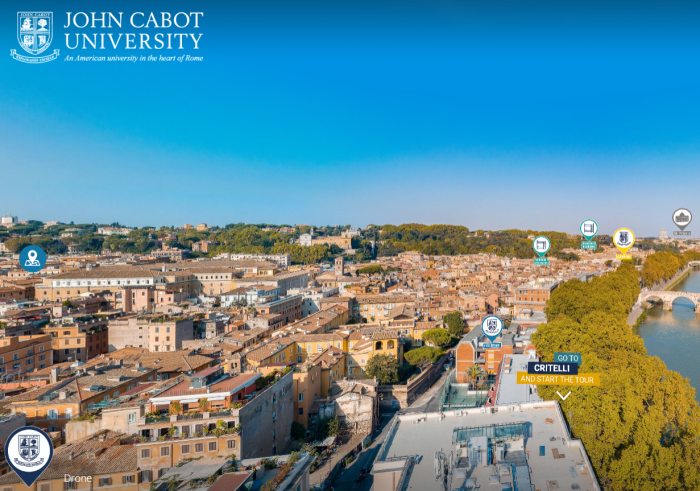
    Example: Here, John Cabot University in Rome showcases its unique location and stunning campus in a virtual tour. Visitors can click on different parts of the campus, zoom in for a closer look, and zoom out for a view of the Eternal City.

    JCUJCU

    Source: John Cabot University 

    However, pay attention to the importance of high-quality production. A virtual tour riddled with poor-quality video, muffled sound, or outdated visuals will do more harm than good. Investing in professional video production ensures the user experience is smooth and engaging. Also, make the tour shorter. Prospective students, especially younger ones, often have shorter attention spans, so aim to keep the tour concise but informative.

    If you could use more school advertising ideas, contact HEM here

    Idea 2: Personalized Email Campaigns

    Email marketing has long been a reliable channel for reaching potential students, but its effectiveness hinges on personalization. A well-crafted email that speaks directly to students’ interests can do wonders for engagement rates. The key is to use your collected data wisely and create highly targeted email campaigns that resonate with specific student personas.

    Personalize your emails based on the prospective student’s interests, location, and stage in the admissions funnel. Use their first names, reference the programs they have shown interest in, and offer tailored information about how your school can meet their needs. You could include information about extracurricular activities, scholarships, or campus events that align with their interests. Personalization can also extend to automated follow-up emails, keeping your school top-of-mind for students who may not have decided.

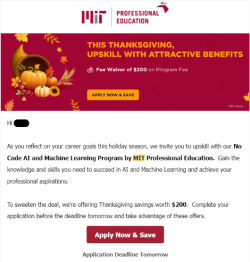
    Example: Here, MIT targets a warm lead – someone already interested in a specific program. It uses the prospect’s name, states their program of interest, and provides an attractive but time-sensitive call to action at the end. When creating personalized email campaigns, use segmentation to ensure each email goes to the right individual. Email segmentation is the process of dividing an email list into smaller, targeted groups based on specific criteria such as demographics, behavior, or interests. This allows for more personalized and relevant email marketing, improving engagement and overall campaign effectiveness.

    MITMIT

    Source: MIT | Gmail 

    On the other hand, don’t rely on generic, one-size-fits-all emails. Mass emailing without personalization is an outdated approach that can turn off prospective students, making them feel like just another number. Additionally, avoid sending too many emails too frequently. 

    Bombarding your prospects with irrelevant or repetitive content could cause them to unsubscribe or mark your emails as spam. Finding the right balance between engagement and oversaturation is key.

    Idea 3: Social Media Takeovers and Student-Generated Content

    Social media remains one of the most powerful platforms for schools to engage with prospective students, especially when using platforms like Instagram, TikTok, and LinkedIn for graduate programs. One creative way to leverage social media is through student takeovers. Handing over your social media channels to current students for a day or even a week can offer an authentic look at what life is like at your school. Prospective students are more likely to trust the words and experiences of their peers than a polished marketing message.

    Encourage students to share genuine, unfiltered content that represents their daily lives, whether that’s a behind-the-scenes look at classes, clubs, or dorm life. User-generated content can also effectively highlight diverse voices and experiences, allowing prospective students from all walks of life to see themselves reflected in your school’s culture. User-generated content showing real students living out their passions and making the most of their education can be a powerful marketing tool.

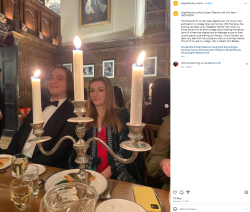
    Example: This student takeover by Oxford University showcases a unique aspect of the school’s culture – formals! Student takeovers are an excellent school advertisement tactic for targeting students who view their learning experience as an opportunity to earn new certifications and make memories.

    englishfacultyenglishfaculty

    Source: Oxford University English Faculty | Instagram 

    However, don’t lose control over your brand’s messaging. While student-generated content should be authentic, it’s important to provide guidelines so that the content stays in line with your school’s values and branding. Avoid situations where inappropriate or irrelevant content is on your official platforms. Striking the right balance between authenticity and professionalism is crucial for this strategy’s success.

    Idea 4: Search Engine Marketing (SEM) with a Focus on Long-Tail Keywords

    Search engine marketing (SEM) is another essential strategy when advertising for schools. While general keywords like “best universities” or “top colleges” are incredibly competitive and expensive, long-tail keywords can help your school reach a more specific audience. For example, keywords like “best nursing programs in Ontario” or “liberal arts colleges with study abroad options” are more likely to attract students who are already well-informed in their decision-making process.

    Do optimize your campaigns by focusing on long-tail keywords that match the unique aspects of your school’s programs. Conduct thorough keyword research to identify phrases that align with what makes your institution special. Additionally, ensure that your ads lead to well-designed landing pages relevant to the search query. If prospective students click on an ad about your nursing program, for example, they should be taken directly to a page with information on that program, not a generic landing page.

    Example: In the metadata of Randolph-Macon Academy’s blog, the title and meta description have been optimized using the long-tail keyword ‘military boarding school’. Be sure to use specific and relevant keywords that fit your target audience.

    rma coderma code

    Source: Randolph-Macon Academy 

    But don’t overspend on highly competitive keywords unlikely to yield significant results. Budgeting for SEM can be tricky, especially for schools with limited resources, so avoid the temptation to compete with bigger institutions on broad, expensive terms. Also, don’t neglect mobile optimization. Many students will be researching schools on their phones, so your SEM efforts should consider mobile-friendly landing pages and a seamless user experience across devices.

    Idea 5: Influencer Partnerships and Micro-Influencers

    The rise of influencer marketing has opened up new opportunities for schools to reach younger audiences, particularly through platforms like Instagram, YouTube, and TikTok. While partnering with mega-influencers can be costly and may not yield the desired results, working with micro-influencers—those with a smaller but highly engaged following—can be an excellent way to build trust with prospective students. These influencers, often niche content creators or even current students, can offer authentic endorsements of your school.

    Do choose micro-influencers who align closely with your school’s values and the interests of your target audience. For instance, if you’re promoting a nursing program, you might partner with a healthcare-related influencer who can speak authentically to the value of your school’s education. Establish clear objectives for the partnership, whether increasing applications, building brand awareness, or driving traffic to your website.

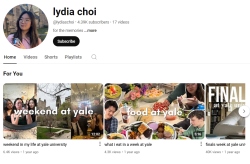
    Example: This is an excellent example of influencer content your school can use to reach prospects organically. Particularly when it comes to colleges and universities, students worldwide use the experiences of creators like Lydia, who are both relatable and aspirational, providing honest, helpful information about academics and student life. A small audience like Lydia’s is more likely to be trusting and have a very specific or niche interest in various subjects related to your school. Lydia’s YouTube channel posts authentic vlogs of her experience at Yale University, making her content perfect for any student considering enrollment there. You can launch an organic, effective, and cost-efficient school advertising campaign by partnering up with an influencer like her.

    yale youtube videosyale youtube videos

    Source: Lydia Choi | Youtube  

    However, don’t choose influencers solely based on follower count. Engagement rates and the influencer’s connection to your target audience matter much more. Also, avoid overly scripted partnerships that come off as inauthentic. The power of influencer marketing lies in its relatability, so the content produced should feel organic and aligned with the influencer’s usual style.

    Effective school advertising is about blending traditional marketing methods with creative, student-focused approaches such as the digital marketing tactics we’ve explored. You may have heard plenty of buzz around digital marketing, but you may still wonder: Do schools need digital marketers? Schools benefit from digital marketers to effectively reach and engage prospective students online, leveraging platforms like social media, search engines, and email to attract the right audience. Digital marketers use targeted campaigns and data-driven strategies to boost enrollment, enhance the institution’s visibility, and build a positive brand image in an increasingly competitive education landscape. 

    Idea 6: Video Advertising for Maximum Engagement

    Video content is one of the most powerful tools in advertising. When it comes to promoting educational institutions, it offers an engaging way to communicate your school’s values, culture, and opportunities. Platforms like YouTube, Instagram, and TikTok provide an ideal space for reaching prospective students, allowing you to tell compelling stories that resonate emotionally. A well-crafted video can showcase your school’s strengths, provide testimonials from current students, and highlight campus life in a way that static images simply cannot.

    Do make use of authentic storytelling in your video ads. Feature real students and staff sharing their experiences, whether about academic achievements, extracurricular activities, or campus culture. A relatable story goes a long way in building a genuine connection with your audience. It’s also important to tailor the content to the platform—short, catchy videos work great on TikTok, while longer, more in-depth content can thrive on YouTube. Keep your audience engaged by adding subtitles since many users watch videos on mute.

    Don’t create overly promotional or staged content. Today’s students can easily spot a scripted advertisement that lacks authenticity. Avoid focusing only on flashy visuals without providing meaningful information; remember, the goal is to attract students genuinely interested in what your school offers. Monitoring your campaigns and understanding which video styles or narratives resonate with your audience is also essential.

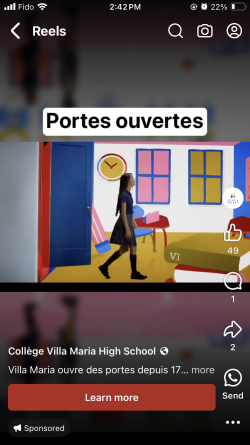
    college villacollege villa

    Source: Collège Villa Maria High School | Instagram

    Example: Villa Maria High School uses an engaging video ad to share useful information regarding an open house. Use your advertising to guide prospects to the next desired outcome. 

    To help schools navigate the intricacies of video advertising and other digital campaigns, Higher Education Marketing offers specialized paid advertising services. Our team can help improve your school’s reach in crucial regions, target specific audiences effectively, and strategically remarket to existing leads. With a free consultation, we analyze your paid advertising strategy and identify areas for improvement, ensuring that you get the best return on your investment.

    Whether you’re exploring virtual campus tours or into influencer partnerships, the key to success is connecting with your audience. Your school can stand out in a competitive market by focusing on high-quality, personalized, engaging content. Avoid pitfalls like impersonal messaging, poor production value, or misaligned partnerships. With these strategies, you’ll be well on your way to capturing the attention and interest of prospective students.

    Looking to increase student enrollment?

    Our inbound marketing services can help your school attract and enroll more students!

    FAQs

    What is the role of advertisement in education?

    Educational advertisements are crucial in creating awareness and attracting prospective students by effectively showcasing your educational institution’s unique features, values, and opportunities.

    Do schools need digital marketers?

    Schools benefit from digital marketers to effectively reach and engage prospective students online, leveraging platforms like social media, search engines, and email to attract the right audience.

    Source link

  • 15 Inspiring & Fun Teacher Desk Setup Ideas (2024)

    15 Inspiring & Fun Teacher Desk Setup Ideas (2024)

    Looking to refresh your workspace with a fun and inspiring teacher desk setup? Whether you’re in a classroom or teaching from home, your desk can be a creative hub that fuels productivity and positivity. From colorful organizers to cozy lighting, the right setup can transform your space into one that sparks joy.

    Check out these inspiring desk ideas to give your teaching environment a fresh new vibe!

    Teacher Desk Setup Inspiration

    15.

    Teacher Desk

    14.

    Teacher Desk

    13.

    Teacher Desk

    12.

    Teacher Desk

    11.

    Teacher Desk

    10.

    Teacher Desk

    9.

    Teacher Desk

    8.

    Teacher Desk

    7.

    Teacher Desk

    6.

    Teacher Desk

    5.

    Teacher Desk

    4.

    Teacher Desk

    3.

    Teacher Desk

    2.

    Teacher Desk

    1.

    Teacher Desk


    Chris

    Dr. Chris Drew is the founder of the Helpful Professor. He holds a PhD in education and has published over 20 articles in scholarly journals. He is the former editor of the Journal of Learning Development in Higher Education. [Image Descriptor: Photo of Chris]

    Source link

  • Top 12 Marketing Project Ideas

    Top 12 Marketing Project Ideas

    What are the benefits of working on MBA marketing projects?

    MBA marketing projects let students use their book knowledge in real business situations. They learn skills like market research, data analysis, and strategy making. Plus, they make professional contacts that could help their careers later.

    What are some popular topics for MBA marketing projects related to branding and positioning strategies?

    Popular topics include checking brand value and making strategies for changing or refreshing a brand. Students also work on creating marketing plans to improve a brand’s image and stand out in the market.

    How can MBA marketing projects help students understand consumer behavior and develop effective retention strategies?

    These projects look into what makes customers loyal and how they make buying decisions. They focus on managing customer relationships, improving customer happiness, and making a brand stand out from others.

    What are some emerging trends and innovative strategies that MBA marketing projects might explore?

    Projects might look into digital marketing, using artificial intelligence in marketing, and how social media fits into marketing plans. They also cover using games in marketing and how data changes marketing strategies.

    Where can MBA students find inspiration for their marketing project topics?

    Students can get ideas by looking at industry trends, studying case studies, and doing market research. Talking to professors, industry experts, or going to marketing events can also give them new ideas and insights.


    Source link

  • 10 Budget-Friendly Meal Prep Ideas For Busy College Students

    10 Budget-Friendly Meal Prep Ideas For Busy College Students


    10 Budget-Friendly Meal Prep Ideas For Busy College Students


    Source link