Tag: Immigrants

  • ICE Fears Put Pregnant Immigrants and Their Babies at Risk – The 74

    ICE Fears Put Pregnant Immigrants and Their Babies at Risk – The 74

    In the lead up to her son’s birth, Jacqueline made plans to call 911 for an ambulance to pick her up from her North Florida home and transport her to a hospital about an hour away.

    The second-time mom and Guatemalan immigrant, who has lived in the country for a decade, would have relied on her husband to drive her to the hospital. But a few months ago he was deported, leaving Jacqueline and her daughter without the family’s primary source of income, transportation and support.

    One morning in March, Jacqueline said, her partner was pulled over on his way to work when law enforcement officials discovered he didn’t have a valid driver’s license. Jacqueline’s pregnancy was in its early stages. Her husband fought his case from detention for three months before U.S. Immigration and Customs Enforcement (ICE) removed him to Guatemala.

    “He was deported and I was left behind, thinking, ‘What am I going to do?’” said Jacqueline, who requested that her last name not be published because she lacks permanent legal status. The couple shares an 8-year-old daughter who was born in, and is a citizen of, the United States.

    This summer, as she entered the later stages of this pregnancy amid the Trump administration’s turbocharged immigration enforcement, Jacqueline found herself so fearful of being detained that she avoided leaving her home. Her husband’s car sits in the driveway, but there are no signs of him in the small room Jacqueline shares with her daughter. His belongings — tools, clothes, even personal photos — are with him in Guatemala. The only family pictures Jacqueline has are on her phone.

    Her partner was the family’s main provider, rotating between picking strawberries or watermelon and packing pine needles for mulch, depending on the season.

    Jacqueline struggled to get the most basic items to welcome a baby: Someone gifted her a used carseat and crib, which sit in the packed room along with onesies and other clothing items she’s collected inside a large plastic bag. She’s hoping that a federal assistance program will cover the cost of formula. A baby tub is still on her list.

    Medical care in her rural area has been possible only because a small nonprofit organization nearby that provides prenatal care services offered to pay for Ubers so she could continue regular check-ups. Even if she wasn’t behind the wheel, Jacqueline says that just the act of leaving her home feels risky since her husband’s deportation.

    “Things got really complicated. He paid our rent — he paid for everything,” she said. “Now, I’m always worried.”

    At her home in North Florida, Jacqueline looks at a photo of her husband and daughter on her phone. The only family pictures she has are on her phone; her husband’s belongings — tools, clothes, even personal photos — are with him in Guatemala. (Michelle Bruzzese for The 19th)

    Medical care and support essential to a healthy pregnancy have become harder for people like Jacqueline to obtain following President Donald Trump’s inauguration. Many patients — nervous about encountering immigration officials if they leave their homes, drive on public roads or visit a medical clinic — are skipping virtually all of their pregnancy-related health care. Some are opting to give birth at home with the help of midwives because of the possible presence of ICE at hospitals.

    Across the country, medical providers who serve immigrant communities said fewer patients are coming in for prenatal or other pregnancy-related care. As a result, patients are experiencing dangerous complications, advocates and health care providers told The 19th.

    “Fear of ICE is pushing my patients and their families away from the very systems meant to protect their health and their pregnancies,” said Dr. Josie Urbina, an OB-GYN in San Francisco.

    In January, Trump rescinded a federal policy that protected designated areas including hospitals, health clinics and doctors’ offices from immigration raids. ICE has recently targeted patients in hospital maternity wards and on their way home from prenatal visits.

    A majority of Americans believe ICE should not be carrying out immigration enforcement at health centers. A new poll from The 19th and SurveyMonkey conducted in mid-September found that most Americans don’t think ICE should be allowed to detain immigrants at hospitals, their workplace, domestic violence shelters, schools or churches.

    Women are more likely to oppose enforcement in these spaces than men. More than two-thirds of women said ICE shouldn’t be allowed to detain immigrants in hospital settings.

    Enforcement is only expected to grow as the administration works to meet its ambitious deportation goals. The federal government is pouring more than $170 billion over the next four years into expanding immigration enforcement, the result of Trump’s signature tax-and-spending bill. About $45 billion has been directed to expanding detention facilities; $29.9 billion is to increase ICE activity.

    That expansion could put even more births at risk. Approximately 250,000 babies are born every year to immigrants without permanent legal status. Already, research has shown these immigrants, who have higher uninsured rates, are less likely to seek prenatal care and are at risk of worse birth outcomes.

    Major medical groups, including the American College of Obstetrics and Gynecologists, World Health Organization and the Centers for Disease Control and Prevention (CDC) recommend regular prenatal and postpartum care as a key tool to combat pregnancy-related death and infant mortality.

    According to the federal Office of Women’s Health, infants born to parents who received no prenatal care are three times more likely to have a low birth weight and five times more likely to die than those born to parents who received regular care.

    A CDC analysis published last year found infant mortality rates went up the later families began prenatal care: 4.54 deaths per 100,000 live births for families whose prenatal care began in the first trimester, compared with 10.75 in families whose prenatal care began in the third trimester or who did not receive any at all.

    “A lot of patients aren’t going to get help,” said Yenny James, the founder and CEO of Paradigm Doulas in the Dallas-Fort Worth metro.
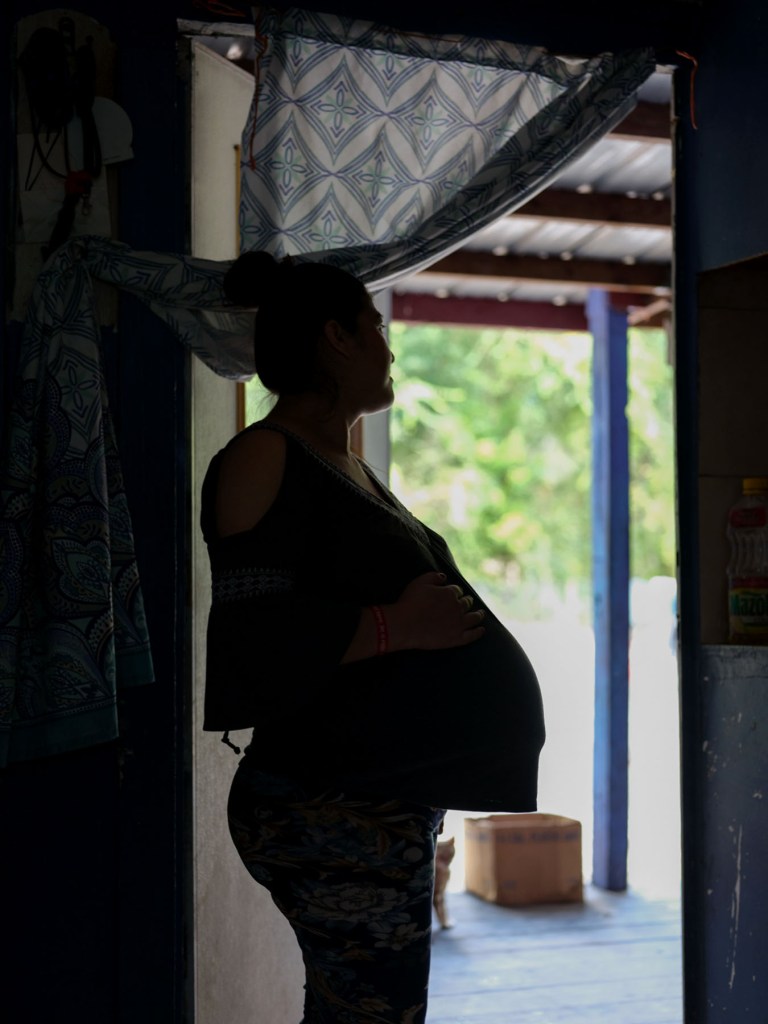
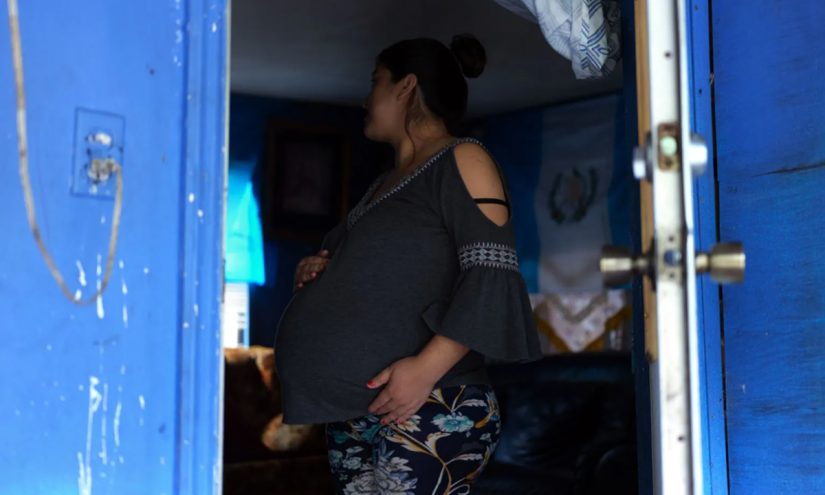
    A pregnant woman stands in silhouette inside a dark doorway, holding her belly and looking outside toward the sunlight and trees.
    After her husband’s deportation, Jacqueline became so fearful of being detained that she avoided leaving her home. “He was deported and I was left behind, thinking, ‘What am I going to do?’” she said. (Michelle Bruzzese for The 19th)

    James said she’s seeing an increasing number of emergency cesarean sections  because of untreated gestational diabetes, or preeclampsia — a deadly pregnancy complication — that went unnoticed because of lacking prenatal care.

    In Denver, OB-GYN Dr. Rebecca Cohen has delivered multiple babies this year for women who have told her that, because they fear endangering themselves or their families, they have received no prenatal care. Several have given birth to babies with fatal fetal anomalies that were never diagnosed because the women did not receive prenatal ultrasounds.

    “They were willing to forgo care — their own health care — but to find out that something was devastatingly wrong with their child is when they feel like maybe they should have risked it,” Cohen said. “There’s a sound of a mother’s wail that anybody who has worked labor and delivery has known, and it will haunt you for the rest of your life. To hear that when it could have been prevented, it is just absolutely devastating.”

    Early in her pregnancy, Jacqueline received free care at a local clinic. Shortly after her husband’s detention, she called the office to let them know she likely wouldn’t make her next appointment.

    “I told them that I probably wouldn’t be able to make my appointments anymore, well, because I’m really afraid given what happened to my husband. And they offered to help,” she said.

    Jacqueline and the nonprofit clinic worked out an arrangement: The day of her appointments, someone at the clinic called an Uber to her home, paid for by the clinic, and let her know when it would arrive so she could be ready.

    Many people in her small town have come to rely on a single person who does have a valid driver’s license for transportation. That driver recently brought Jacqueline to an appointment with the local office that manages the Special Supplemental Nutrition Program for Women, Infants and Children (WIC), which she is relying on for baby formula and food. There were no guarantees that this driver would be available to take her in whenever she goes into labor.

    The Biden administration directed ICE not to detain, arrest or take into custody pregnant, postpartum or breastfeeding people simply for breaking immigration laws, except under “exceptional circumstances.” The Trump administration has not formally reversed that policy. But despite the directive, reports from across the country confirm that ICE has detained numerous pregnant immigrants since Trump took office.

    James said that until the Biden guidance is formally rescinded, she will continue to encourage pregnant immigrants to print it out and carry it with them.

    “I told my doulas — have them print out this ICE directive, have them keep it with them, so that they know and these agents know that we know our rights, our clients know their rights,” James said.
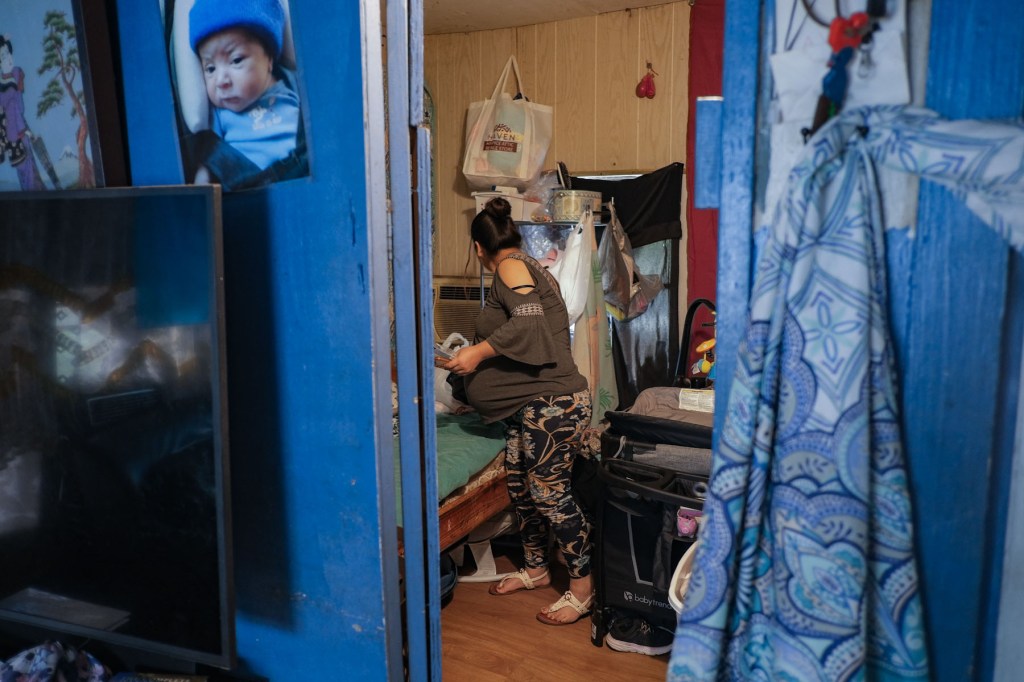
    A pregnant woman bends over a bed, sorting through baby items in a small, crowded bedroom with blue-painted door frames.
    Jacqueline prepares for the birth of her second child in the room she shares with her daughter. Someone gifted her a used car seat and crib, which sit among the few items she’s collected inside a plastic bag to welcome the baby. (Michelle Bruzzese for The 19th)

    It’s unclear exactly how many pregnant immigrants are being detained by ICE, or have been arrested by the agency. A May report from the office of Democratic Sen. Dick Durbin found 14 pregnant women in a single Louisiana detention facility at the time of staff’s visit.

    Another report out of the office of Democratic Sen. Jon Ossoff published in late July found 14 credible reports of mistreatment of pregnant women in immigrant detention. The report cited an anonymous agency official who said they saw pregnant women sleeping on floors in overcrowded intake cells. The partner of a pregnant woman in federal custody said that she bled for days before she was taken to a hospital, where she miscarried alone. A pregnant detainee who spoke to Ossoff’s office said she repeatedly asked for medical attention and was told to “just drink water.” The office received several reports of clients waiting weeks to see a doctor, and that sometimes scheduled appointments were canceled. ICE has disputed the report.

    “Pregnant women receive regular prenatal visits, mental health services, nutritional support, and accommodations aligned with community standards of care. Detention of pregnant women is rare and has elevated oversight and review. No pregnant woman has been forced to sleep on the floor,” ICE said in a statement posted on their website.

    ICE did not respond to a request for comment.

    Fear of being detained is a major contributor of stress for pregnant immigrants. Research shows that even when pregnant patients do receive medical care, prenatal stress puts many at greater risk of complicated births and poor outcomes, including premature birth and low infant birth weight. Babies born after an immigration raid are at a 24 percent higher risk of low birth weight, according to one study.

    Monica, 38, is expecting her fourth child in November. The Tucson resident, who requested that her last name not be published out of fear of being detained, has lived in the United States for two decades but has no legal immigration status.

    This pregnancy has been unlike the others, she said: While Monica has continued with her prenatal care appointments, her anxiety levels about her immigration situation have colored her experience. Her other children, who are in their teens, are U.S. citizens but grappling with the stress of their parents’ situation. Her husband also doesn’t have authorization to live in the country.

    “We try to be out and about much less, and to take precautions,” she said. “Whenever we do leave the house, we have it in the back of our minds.”

    Monica said she has seen reports of ICE being allowed inside hospitals, and she is worried about facing immigration officers while or following her birth. Her plan is to have her partner and a group of friends at the hospital to make sure she’s never alone.

    “My biggest fear is going to the hospital,” she said.

    Stress like Monica’s makes pregnancy more dangerous.

    A close-up of a hand holding a white bottle labeled “Prenatal Tablets” over a bag filled with baby bottles and other supplies.
    Jacqueline holds a bottle of prenatal vitamins at her home in North Florida. A small nonprofit clinic nearby has been paying for Ubers so she can continue her prenatal check-ups. (Michelle Bruzzese for The 19th)

    “In our hospital, every doctor I’ve talked to — and these are doctors that have been there 20 years — all are saying these past six months they’ve seen worse obstetrics outcomes than ever in their career,” Dr. Parker Duncan Diaz, a family physician in Santa Rosa, California, whose clinic mostly cares for Latinx patients. That’s included more preterm labor and more pregnant patients with severe hypertension.

    “I don’t know what’s causing it, but my bias is that it is the impact of this horribly toxic stress environment,” he added, specifically noting the stress caused by the threat of immigration enforcement.

    In recent months, Dr. Caitlin Bernard, an Indiana-based OB-GYN, has seen a number of pregnant patients seeking emergency attention who have not received any prenatal health care. One was 31 weeks, approaching the end of her pregnancy. Another was more than 20 weeks pregnant when she came to Bernard’s office, having developed complications from a molar pregnancy — a rare condition that means a healthy birth is impossible and that without early treatment can result in vaginal bleeding, thyroid problems and even cancer.

    “Anytime you’re not able to access that early prenatal care, we do see complications with that,” she said. “And many of these things can absolutely be life-threatening for both the moms and the babies.”

    Dr. Daisy Leon-Martinez, a maternal-fetal medicine specialist in San Francisco, said she now regularly cares for patients in her labor and delivery ward who have been transferred to her hospital because of newly developed pregnancy complications. These are often their first doctors’ visits since becoming pregnant. Many of those patients have told her that they did not want to seek prenatal care for fear of encountering immigration officials.

    During regular visits, she added, she has advised people with pregnancy complications that they would be best served by a hospital stay — only to be told that her patients no longer feel safe going to the hospital.

    The current enforcement environment is challenging immigrant advocates, who are continuing to encourage immigrants to seek appropriate medical care while acknowledging that doing so is increasingly risky.

    Lupe Rodríguez, the executive director of the National Latina Institute for Reproductive Justice, said her organization is urging pregnant immigrants to seek the health care that they need, and to be proactive about making plans for themselves and their families in the event that they are detained.

    “We can’t know for certain about any given [health care center] whether or not it’s going to be safe. One of the things that we’ve been seeing is leadership at some of these health centers — big hospitals and clinics — have said that they will provide the kind of protection that folks need, that they don’t want folks to be afraid of care,” Rodriguez said.

    While those statements signal the intentions of a hospital’s leadership, Rodriguez said, “we still know that there are individuals within some of those care centers that are part of the reporting mechanism or are intimidating people.”
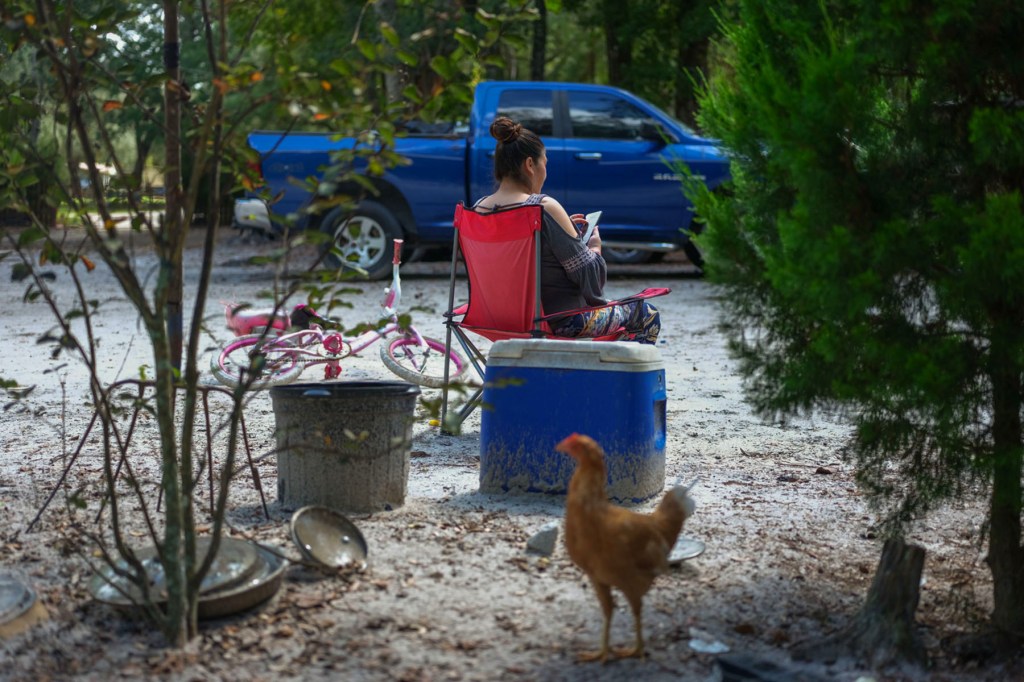
    A pregnant woman sits in a red folding chair outdoors near a blue truck, with a chicken walking in the foreground and trees around her.
    Outside her home in North Florida, Jacqueline sits in a red chair as a chicken wanders nearby. (Michelle Bruzzese for The 19th)

    Jacqueline approached the last days of her pregnancy hopeful that the place she had chosen — a large university hospital that workers at her local clinic recommended — would be a safe place for her to give birth.

    One night at the end of September, when labor pains grew too intense, she called for an ambulance and made it to the hospital. When she got there, she asked her providers if there were any ICE agents near the building. She had heard of a man at a local hospital being detained after having surgery. They told her there were none they were aware of.

    She went on to deliver her baby under general anesthesia after a long, difficult labor. “I didn’t even hear him cry when they pulled him out,” she said. Her only relative left in the area was taking care of her daughter, so she recovered alone at the hospital for five days before heading home in an Uber that a social worker procured for her and her son.

    “If my husband was here, he would have been there with me at the hospital,” Jacqueline said while recovering at home. “He would be here taking care of me, of us. I wouldn’t be worried about the things I still want to get for the baby.”

    This story was originally reported by Mel Leonor Barclay and Shefali Luthra of The 19th. Meet Mel and Shefali and read more of their reporting on gender, politics and policy.


    Get stories like these delivered straight to your inbox. Sign up for The 74 Newsletter
    Source link

  • Will Trump Try to Ban Immigrants from Public Schools? – The 74

    Will Trump Try to Ban Immigrants from Public Schools? – The 74


    Get stories like this delivered straight to your inbox. Sign up for The 74 Newsletter

    This story was originally published by CalMatters. Sign up for their newsletters.

    Funding cuts. Raids near campuses. Exclusion from programs like Head Start and career training. For months, the Trump administration has been chipping away at the rights of students without legal status in public schools.

    Could the administration take away those students’ right to free public school entirely? Experts say that may be the next step.

    “People have worried about this for a couple decades, but this is different,” said Patricia Gándara, education professor and co-director of the Civil Rights Project at UCLA. “Right now we have to be extremely vigilant. These people will stop at nothing.”

    A 1982 U.S. Supreme Court ruling, Plyler v. Doe, guarantees all students, regardless of immigration status, the right to a free public education in K-12 schools. But last year the conservative Heritage Foundation called for the Supreme Court to overturn the ruling and for states to charge tuition to immigrant families, even if their children are U.S. citizens. The rationale is that schools spend billions of dollars educating those students — money that instead should be spent on students who, along with their parents, are native-born U.S. citizens.

    Project 2025, also published by the Heritage Foundation, echoes that vision.

    Such a policy would have an outsized impact in California, where nearly half of the state’s children have at least one immigrant parent, according to the Public Policy Institute of California.

    “This would have tremendous negative impacts,” said Megan Hopkins, chair of the education department at UC San Diego. “For starters, we’d have a less educated, less literate populace, which would affect the economy and nearly every other aspect of life in California.”

    Tuition for noncitizens

    Plyler v. Doe stemmed from a case in Texas in the early 1980s. The state had passed a law allowing schools to charge tuition to students who weren’t citizens. The Tyler Independent School District in Tyler, Texas, a small city about 100 miles southeast of Dallas, was among the districts that tried, triggering a lawsuit that eventually brought the case to the Supreme Court.

    The Supreme Court ruled in favor of the plaintiffs, arguing that children who aren’t citizens are entitled to equal protection under the law. Still, the ruling was close — 5 to 4 — even though the court was more liberal than it is today.

    Since then, the ruling has been mostly forgotten. But there have been occasional attempts to restrict immigrants in schools, in California and elsewhere. In 1994 California voters passed Proposition 187, which banned immigrants living illegally in the U.S. from receiving public benefits, including access to public schools. A federal court blocked it before it went into effect.

    In 2011, Alabama passed a law requiring schools to collect students’ immigration status. That law was later blocked by a federal court. In 2022, Texas Gov. Greg Abbott said he’d favor revisiting Plyler v. Doe and that states should not have to pay to educate students without legal status.

    Since the Heritage Foundation published its report, about a half-dozen states have attempted to pass laws that would allow schools to charge tuition to noncitizens. None passed last year, but advocates said they plan to keep trying.

    Route to Supreme Court

    They’re likely to have a sympathetic supporter in President Donald Trump, who’s so far followed many of the policies put forward by Project 2025. In the past few months, his administration has amped up immigration arrests and said it would no longer honor schools as safe havens from enforcement. It also cut (although later reinstated after states sued) funding for migrant students and barred students without legal status from Head Start, adult education and career and technical education.

    The issue could land before the Supreme Court in at least two ways. A state could pass a law allowing public schools to charge tuition, leading to a lawsuit which could end up before the Supreme Court. Or Trump could issue an executive order that could also trigger a lawsuit.

    Erwin Chemerinsky, dean of the UC Berkeley Law School, said some of Trump’s actions, such as barring children without legal status from Head Start, is already a violation of Plyler.

    “There’s no doubt that the Trump administration has increased pressure on Plyler,” Chemerinsky said. “Certainly, what Trump is doing could lead to cases that would get to the Supreme Court. Could this court overturn Plyler? Of course they could. … all it would take is five justices wanting to overrule it.”

    Even if it’s not overturned, the current policy shifts have had a chilling effect on schools and immigrant families, said Hopkins, at UC San Diego. School attendance has dropped in communities experiencing immigration crackdowns, which has caused academic repercussions for some students and widened the achievement gap between Latino students and other groups. A recent report by Policy Analysis for California Education found that Latino students and English learners fared worse in math and English in the wake of immigration arrests in their communities, and reported a significant increase in bullying at school.

    Hopkins also said the policies aren’t especially effective. If the goal is to encourage immigrants to return to their home countries voluntarily, research has shown that doesn’t often happen. After Alabama passed its anti-immigrant law in 2011, many families simply moved to Mississippi.

    ‘Our biggest fear’

    In Monterey County, the new policies have led to widespread fear and confusion among immigrant families, said Monterey County Office of Education Superintendent Deneen Guss. Attendance has dropped not only in schools, but at community events as well.

    To support families, schools have been hosting “Know Your Rights” information nights (in-person and virtually), encouraged parents to submit child care plans to schools in case a parent is arrested, given out booklets in Spanish on how to help children experiencing anxiety, and provided a wide array of legal and other resources.

    But when the Trump administration announced it was barring students without legal status from Head Start, “that gave me pause,” Guss said. “That made me think they really were going after Plyler. That’s our biggest fear.”

    She worries about the impact that would have on families, as well as school staff who would suddenly be responsible for checking students’ citizenship paperwork. Currently, schools don’t ask for students’ immigration status.

    “Educators’ jobs are hard enough,” Guss said. “Our job is to give children the best possible education. Don’t make us become immigration officers. It’s a position we do not want.”

    She’s been urging parents, and the public, to stay informed and speak out. Regardless of whether the Supreme Court overturns Plyler, anti-immigrant policies are almost certain to continue, with devastating consequences for students.

    “You can’t sit back and pretend everything is going to be OK,” Guss said. “People need to ensure their voices are heard. And we have to fight for our kids.”

    This article was originally published on CalMatters and was republished under the Creative Commons Attribution-NonCommercial-NoDerivatives license.


    Get stories like these delivered straight to your inbox. Sign up for The 74 Newsletter

    Source link

  • LAWSUIT: FIRE challenges unconstitutional provisions Rubio uses in crusade to deport legal immigrants over protected speech

    LAWSUIT: FIRE challenges unconstitutional provisions Rubio uses in crusade to deport legal immigrants over protected speech

    • The First Amendment trumps the statutes that the government is abusing to deport people for speech alone
    • This lawsuit seeks a landmark ruling that the First Amendment forbids the government from deporting lawfully present noncitizens for constitutionally protected speech
    • FIRE attorney: ‘In a free country, you shouldn’t have to show your papers to voice your opinion’

    SAN JOSE, Calif., Aug. 6, 2025 — Today, the Foundation for Individual Rights and Expression sued Secretary of State Marco Rubio, challenging two federal immigration law provisions that give him unchecked power to revoke legal immigrants’ visas and deport them for protected speech.

    “In the United States of America, no one should fear a midnight knock on the door for voicing the wrong opinion,” said FIRE attorney Conor Fitzpatrick. “Free speech isn’t a privilege the government hands out. Under our Constitution it is the inalienable right of every man, woman, and child.” 

    But since March, Rubio and the Trump administration have waged an assault on free speech, targeting foreign university students for deportation based on bedrock protected speech like writing op-eds and attending protests. Their attack is casting a pall of fear over millions of noncitizens, who now worry that voicing the “wrong” opinion about America or Israel will result in deportation.

    Noncitizens in the United States have First Amendment rights. Despite that, Rubio is wielding two provisions of the Immigration and Nationality Act to target lawfully present noncitizens for their opinions.

    • The first allows the secretary of state to initiate deportation proceedings against  any noncitizen for protected speech if the secretary “personally determines” the speech “compromises a compelling foreign policy interest.”
    • The second enables the secretary of state to revoke the visa of any noncitizen “at any time” for any reason. 

    As FIRE’s lawsuit explains, the provisions are unconstitutional when used to revoke a visa or deport someone for speech the First Amendment protects. 

    The Trump administration is proudly using the provisions to revoke the visas of and deport lawfully present noncitizens for their speech if the government deems it anti-American or anti-Israel. Rubio used the first provision to target Columbia University student Mahmoud Khalil for protected pro-Palestinian speech and the second to target Tufts University student Rümeysa Öztürk for coauthoring an op-ed.

    Rubio and the Trump administration claim — as all censors do — that this time is different. They claim that this political speech comes from noncitizens, which therefore warrants setting aside America’s protection of free speech.

    That’s wrong. America’s founding principle is that liberty comes not from the government, but is an inherent right of every individual. Every person — whether they’re a U.S. citizen, are visiting for the week, or are here on a student visa — has free speech rights in this country.

    “Two lawful residents of the United States holding the same sign at the same protest shouldn’t be treated differently just because one’s here on a visa,” said FIRE Legal Director Will Creeley. “The First Amendment bars the government from punishing protected speech — period. In our free country, you shouldn’t have to show your papers to speak your mind.”

    Plaintiffs in FIRE’s lawsuit represent the wide range of groups and individuals whose speech is threatened by the continued assault on noncitizens’ protected speech:

    • The Stanford Daily, the independent, student-run newspaper at Stanford University, where writers with student visas are declining assignments related to the conflict in the Middle East, worried that even reporting on the war will endanger their immigration status
    • Jane Doe and John Doe, two legal noncitizens with no criminal record who engaged in pro-Palestinian speech and now fear deportation and visa revocation because of their expression

    “There’s real fear on campus and it reaches into the newsroom,” said Greta Reich, editor-in-chief of The Stanford Daily. “I’ve had reporters turn down assignments, request the removal of some of their articles, and even quit the paper because they fear deportation for being associated with speaking on political topics, even in a journalistic capacity. The Daily is losing the voices of a significant portion of our student population.”

    There’s also historical context that should give the government pause. Congress passed the Alien and Sedition Acts 225 years ago. One of those acts allowed President John Adams to deport noncitizens if he thought they posed a “danger” to the country. It was one of the most unconstitutional laws in our nation’s history and died a quick death two years later, after the acts contributed to Adams’ resounding loss in the 1800 presidential election to Thomas Jefferson. 

    FIRE aims to stop the government’s use of the two provisions that stand counter to our ideals as a nation: Provisions that — in their expansive scope and unchecked authority — are more at home in countries like China and Russia than in a free America. By defeating these provisions, no administration of any party will be able to weaponize them against individuals for expression disfavored by the government.

    FIRE moved for a preliminary injunction to stop the government from abusing the visa provision while the case is ongoing.

    Marc Van Der Hout, Johnny Sinodis, and Oona Cahill at Van Der Hout LLP are serving as local and advisory counsel on the case.

    From today’s lawsuit: “Our First Amendment stands as a bulwark against the government infringing the inalienable human rights to think and speak for yourself.”

    The Foundation for Individual Rights and Expression (FIRE) is a nonpartisan, nonprofit organization dedicated to defending and sustaining the individual rights of all Americans to free speech and free thought — the most essential qualities of liberty. 

    CONTACT:

    Daniel Burnett, Senior Director of Communications, FIRE: 215-717-3473; [email protected]

    Source link

  • America’s child care system relies on immigrants. Without them, it could collapse

    America’s child care system relies on immigrants. Without them, it could collapse

    ALBUQUERQUE, N.M. — Maggi’s home in a suburban neighborhood here is a haven for local families. It’s a place where after just a few weeks in Maggi’s family-run child care program this spring, one preschooler started calling Maggi “mama” and Maggi’s husband “papa.” Children who have graduated from Maggi’s program still beg their parents to take them to her home instead of school.

    Over the past few months, fewer families are showing up for care: Immigration enforcement has ramped up and immigration policies have rapidly changed. Both Maggi and the families who rely on her — some of whom are immigrants — no longer feel safe. 

    “There’s a lot of fear going on within the Latino community, and all of these are good people — good, hard-working people,” Maggi, 47, said in Spanish through an interpreter on a recent morning as she watched a newborn sleep in what used to be her living room. Since she started her own child care business two years ago, she has dedicated nearly every inch of her common space to creating a colorful, toy-filled oasis for children. Maggi doesn’t understand why so many immigrants are now at risk of deportation. “We’ve been here a long time,” she said. “We’ve been doing honest work.”

    Immigrants like Maggi play a crucial role in home-based child care, as well as America’s broader child care system of more than 2 million predominantly female workers. (The Hechinger Report is not using Maggi’s last name out of concern for her safety and that of the families using her care.) Caregivers are notoriously difficult to find and keep, not only because the work is difficult, but because of poverty-level wages and limited benefits. Nationwide, immigrants make up nearly 20 percent of the child care workforce. In New York City, immigrants make up more than 40 percent of the child care workforce. In Los Angeles, it’s nearly 50 percent. 

    The Trump administration’s far-reaching war on immigration, which includes daily quotas for immigrant arrests, new restrictions on work permits and detainment of legal residents, threatens America’s already-fragile child care system. Immigrant providers, especially those who serve immigrant families, have been hit especially hard. Just like at Maggi’s, child care providers nationwide are watching families disappear from their care, threatening the viability of those businesses. In America, 1 in 4 children under the age of 6 has at least one foreign-born parent. Some kids who could benefit from experienced caregivers are now instead at home with older siblings or elderly relatives, losing out on socialization and kindergarten preparation. Some immigrant workers, regardless of status, are too scared to come to work, exacerbating staffing shortages.  And in recent days, the administration announced that it would bar undocumented children from Head Start, the federally funded child care program for children from low-income families.

    Related: Young children have unique needs and providing the right care can be a challenge. Our free early childhood education newsletter tracks the issues. 

    “Anti-immigrant policy can and will weaken our entire caregiving infrastructure,” said Karla Coleman-Castillo, senior policy analyst at the National Women’s Law Center. Home-based programs in particular will feel the squeeze, she said, since they tend to serve more immigrant families. “Anything that threatens the stability of families’ ability and comfort accessing early childhood education — and educators’ comfort entering or remaining in the workforce — is going to impact an already precarious sector.”

    For Maggi, the fallout has been swift. In February, just a few weeks after the first changes were announced, her enrollment dropped from as many as 15 children each day to seven. Some families returned to Mexico. Others became too nervous to stray from their work routes for even a quick drop off. Some no longer wanted to give their information to the state to get help paying for care.

    Maggi plays with a child in the back yard of her child care program. Maggi runs one of a few child care programs that provides 24/7 care in her town. Credit: Jackie Mader/The Hechinger Report

    By May, only two children, an infant and a 4-year-old, were enrolled full time, along with six kids who came for before- or after-school care. She accepts children who pay privately and those who pay with child care subsidies through the state program for low-income children. She brings in about $2,000 a month for the infant and preschooler, and a couple hundred more each week for after-school care — down significantly from the $9,000 to $10,000 of late 2024. For parents who don’t receive a state subsidy, she keeps her rates low: less than $7 an hour. “They tell me that I’m cheap,” Maggi said with a slight smile. But she isn’t willing to raise her rates. “I was a single mom,” she said. “I remember struggling to find someone to care for my children when I had to work.” 

    Related: 1 in 5 child care workers is an immigrant. Trump’s deportations and raids have many terrified

    Like many child care providers who emigrated to the United States as adults, Maggi started her career in an entirely different field. As a young mother, Maggi earned a law degree from a college in Mexico and worked in the prosecutor’s office in the northern Mexico state of Coahuila. Her job required working many weekends and late evenings, which took a toll on her parenting as a single mother. “I really feel bad that I was not able to spend more time with my daughters,” she added. “I missed a lot of their childhood.” 

    For a year when her girls were in elementary school, Maggi enrolled them in a boarding school, dropping them off Sunday nights and picking them up Friday afternoons. On some weekends, she took the girls to her office, even though she knew it wasn’t a place for children. Maggi longed for a different job where she could spend more time with them. 

    She started thinking seriously of emigrating about 15 years ago, as violence escalated. Her cousin was kidnapped and police officers she worked with were killed. Maggi received death threats from criminals she helped prosecute. Then one day, she was stopped by men who told her they knew where she lived and that she had daughters. “That’s when I said, this is not safe for me.”

    In 2011, Maggi and the girls emigrated to America, bringing whatever they could fit into four suitcases. They ended up in El Paso, Texas, where Maggi sold Jell-O and tamales to make ends meet. Three years later, they moved here to Albuquerque. Maggi met her husband and they married, welcoming a son, her fourth child, shortly after. 

    In Albuquerque, Maggi settled into a life of professional caregiving, which came naturally and allowed her to spend more time with her family than she had in Mexico. She and her husband went through an intensive screening process and became foster parents. (New Mexico does not require individuals to have lawful immigration status to foster.) Maggi enrolled her youngest in a Head Start center, where administrators encouraged her to start volunteering. She loved being in the classroom with children, but without a work permit could not become a Head Start teacher. Instead, after her son started elementary school, she started offering child care informally to families she knew. Maggi became licensed by the state two years ago after a lengthy process involving several inspections, a background check and mandatory training in CPR and tenets of early childhood care.

    It didn’t take long for Maggi to build up a well-respected business serving an acute need in Albuquerque. Hers is one of few child care programs in the area that offers 24/7 care, a rarity in the industry despite the desperate need. The parents who rely on her are teachers, caregivers for the elderly and people answering 911 calls.  

    In Maggi’s living room, carefully curated areas allow children to move freely between overflowing shelves of colorful toys, art supplies parked on a miniature table and rows of books. Educational posters on her walls reinforce colors, numbers and shapes. She delights in exposing the children to new experiences, frequently taking them on trips to grocery stores or restaurants. She is warm, but has high expectations for the children, insisting they clean up after themselves, follow directions and say “please” and “thank you.”

    “I want them to have values,” Maggi said. “We teach them respect toward animals, people and each other.” 

    By the end of 2024, Maggi’s business was flourishing, and she looked forward to continued growth. 

    Then, Donald Trump took office.

    Related: Child care centers were off limits to immigration authorities. How that’s changed

    Data has yet to be released about the extent to which the current administration’s immigration policies have affected the availability of child care. But interviews with child care providers and research hint at what may lie ahead — and is already happening. 

    After a 2008 policy allowed Immigration and Customs Enforcement to check the immigration status of people taken into custody by local police, there was a marked decline in enrollment in child care among both immigrant and non-immigrant children. There was also a decrease in the supply of child care workers. Even though women were the minority of those deported, researchers found the policy sparked fear in immigrant communities, and many pulled back from their normal routines.

    In the child care sector, that’s problematic, experts say. Immigrants in the industry tend to be highly educated and skilled at interacting with children positively, more so even than native workers. If a skilled portion of the workforce is essentially “purged” because they’re too afraid to go to work, that will lower the quality of child care, said Chris Herbst, an associate professor at Arizona State University who has studied immigration policy’s effect on child care. “Kids will be ill-served as a result.”  

    Home-based programs like Maggi’s are among the most vulnerable. Children of immigrants are more likely to be in those child care settings. In the decade leading up to the pandemic, however, the number of home-based programs declined by 25 percent nationwide, in part due to financial challenges sustaining such businesses

    Related: Trump’s deportation plan could separate millions of families, leaving schools to pick up the pieces 

    On a recent morning, Maggi stood in her living room, wearing white scrubs adorned with colorful cartoon ladybugs. Last year, the room would have been buzzing with children. Now, it’s quiet, save for chatter from Kay, the sole preschooler in her care each day. (The Hechinger Report is not using Kay’s full name to protect her privacy.) While Kay sat at a table working on a craft, Maggi cradled the infant, who had just woken up from a nap. The baby’s eyes were latched onto Maggi’s face as she fawned over him. 

    “Hello little one!” she cooed in Spanish. He cracked a smile and Maggi’s face lit up. 

    As one of her daughters took over to feed the newborn, Maggi followed Kay outside. The preschooler bounced around from the sandbox to the swings to a playhouse, with Maggi diligently following and playing alongside her.

    Advocates and experts say upticks in immigration enforcement can cause stress and trauma for young children. In America, 1 in 4 children under the age of 6 has at least one foreign-born parent. Credit: Jackie Mader/The Hechinger Report

    Finally Kay came to a standstill, resting her head against Maggi’s hip. Maggi gently patted her head and asked if she was ready to show off her pre-kindergarten skills. The pair sat down at a small table in the shade and Kay watched eagerly as Maggi poured out small plastic trinkets. Kay pulled three plastic toy turtles into a pile. “Mama, look! They’re friends!” Kay said, giggling. 

    Kay came to Maggi’s program after her mother pulled her out of another program where she felt the girl wasn’t treated well. Here, Kay is so happy, she hides when her mom comes back to get her. Still, a key aspect of the child care experience is missing for Kay. Normally, the girl would have several friends her own age to play with. Now when she is asked who her friends are, she names Maggi’s adult daughters.

    Maggi worries even more about the children she doesn’t see anymore. Most are cared for by grandparents now, but those relatives are unlikely to know how to support child development and education, Maggi said. Many are unable to run around with the children like she does, and are more likely to turn to tablets or televisions for them.

    She has seen the effects in children who leave her program and come back later having regressed. “Some of them are doing things well with me, and then when they come back, they have fallen behind,” she said. One child Maggi used to care for, for example, had just started to walk when the mother pulled them out of full-time care earlier this year, at the start of the immigration crackdown. In the care of a relative, Maggi found out they now spend much of the day sitting at home. 

    Related: They crossed the border for better schools. Now some families are leaving the US 

    Before the second Trump administration began, the child care landscape looked bright in New Mexico, a state with a chronically high child poverty rate. In 2022, New Mexico started rolling out a host of child care policy changes. Voters approved a constitutional amendment guaranteeing a right to early childhood education, with sustained funding to support it. The state now allows families earning up to 400 percent of the federal poverty level, or nearly $125,000 a year, to qualify for free child care. That includes the majority of households in the state. Among the other changes: Providers are now paid more for children they enroll via the state’s assistance program. 

    The increase has been helpful for many providers, including Maggi. Before the pandemic, she received about $490 a month from the state for each preschooler enrolled in her program, compared to $870 a month now. If she enrolls infants who qualify for child care assistance, she gets paid $1,100 a month, nearly $400 more than pre-pandemic. She needs children enrolled to get the payments, however. Running her program 24 hours a day, seven days a week helps. She earns extra money from the state when caring for children evenings and weekends, and she is paid monthly to cover the cost of housing foster children.

    Child care advocates in New Mexico are concerned that immigration policy will affect the industry’s progress. “I am worried because we could be losing early childhood centers that could help working families,” said Maty Miranda, an organizer for OLÉ New Mexico, a nonprofit advocacy organization. “We could lose valuable teachers and children will lose those strong connections.” Immigration crackdowns have had “a huge impact emotionally” on providers in the state, she added. 

    State officials did not respond to a request for data on how many child care providers are immigrants. Across the state, immigrants account for about 13 percent of the entire workforce. 

    Many local early educators are scared due to more extreme immigration enforcement, as are the children in their care, Miranda said. They are trying to work regardless. “Even with the fear, the teachers are telling me that when they go into their classrooms, they try to forget what’s going on outside,” she added. “They are professionals who are trying to continue with their work.”

    Maggi said she’s so busy with the children who remain in her care that there is no extra time to work an additional job and bring in more income. She won’t speculate on how long her family can survive, instead choosing to focus on the hope that things will improve.

    Maggi’s biggest fear at the moment is the well-being of the children of immigrants she and so many other home-based providers serve. She knows some of her kids and families are at risk of being detained by ICE, and that interactions like that, for kids, can lead to post-traumatic stress disorder, disrupted brain development and behavior changes. Some of Maggi’s parents have left her with emergency numbers in case they are detained by immigration officials. 

    Many of the children Maggi cares for after school are old enough to understand that deportation is a threat. “They show fear, because their parents are scared,” Maggi said. “Children are starting to live with that.” 

    Amid the dizzying policy changes, Maggi is trying to keep looking forward. She is working on improving her English skills. Her husband is pursuing a credential to be able to help more in her program. All three of her daughters are studying to become early childhood educators, with the goal to join the family business. Eventually, she wants to serve pre-K children enrolled in the state’s program, which will provide a steady stream of income. 

    In spite of all the uncertainty, Maggi said she is sustained by a bigger purpose. “I want them to enjoy their childhood,” she said on a sunny afternoon, looking fondly at Kay as the girl flung her tiny pink shoes aside and hopped into a sandbox. It’s the type of childhood Maggi remembers from her earliest days in Mexico. Kay giggled with delight as Maggi crouched down and poured cool sand over the little girl’s feet. “Once you grow up, there’s no going back.” 

    Contact staff writer Jackie Mader at 212-678-3562 or [email protected]

    This story about immigrants in New Mexico  was produced by The Hechinger Report, a nonprofit, independent news organization focused on inequality and innovation in education. Sign up for the Hechinger newsletter.

    The Hechinger Report provides in-depth, fact-based, unbiased reporting on education that is free to all readers. But that doesn’t mean it’s free to produce. Our work keeps educators and the public informed about pressing issues at schools and on campuses throughout the country. We tell the whole story, even when the details are inconvenient. Help us keep doing that.

    Join us today.

    Source link

  • Immigrants Keep Lining Up to Learn English as City Hall Cuts Support – The 74

    Immigrants Keep Lining Up to Learn English as City Hall Cuts Support – The 74


    Get stories like this delivered straight to your inbox. Sign up for The 74 Newsletter
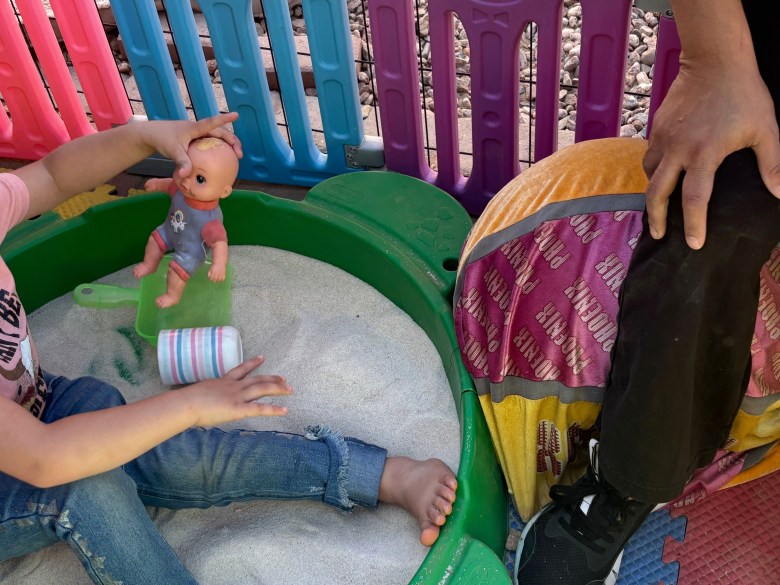
    Inside a classroom at the Center for Family Life in Sunset Park on a recent Monday morning, teacher Julian Colón was busy setting out notebooks, folders, pens and crayons on a table. Outside in the hallway, a sign taped to a wall reads “CLASES DE INGLÉS POR ESTE CAMINO” — English classes this way.

    It was the first day of the spring semester in this predominantly Latino corner of the Brooklyn neighborhood, where Colón was expecting about 30 students in class.

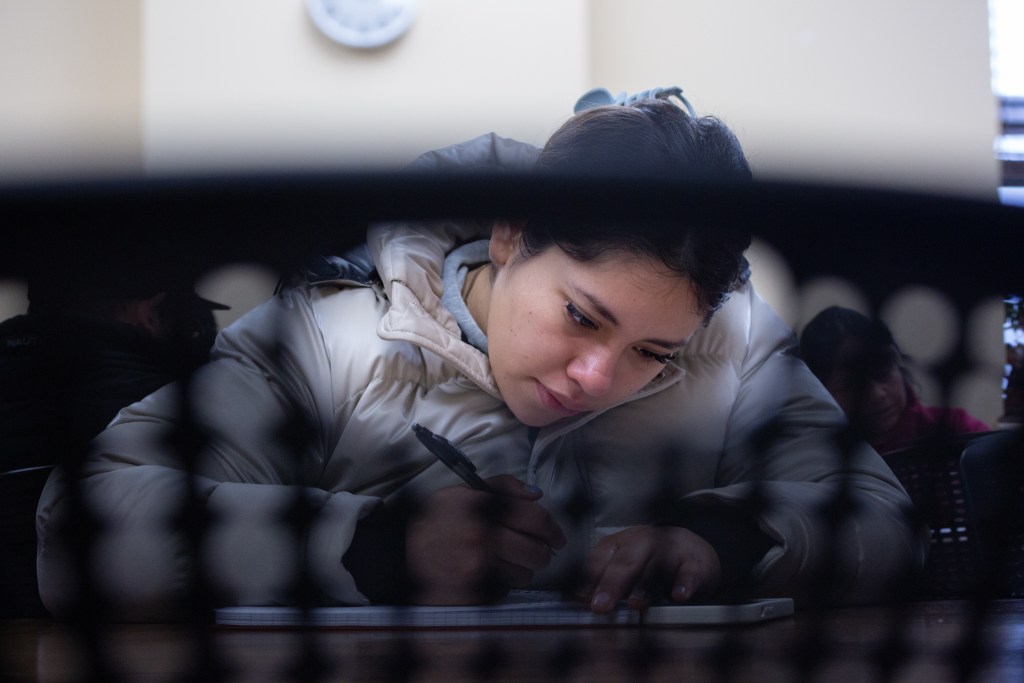
    Julian Colón teaches an English as a Second Language class at the Center for Family Life in Sunset Park, Brooklyn, April 7, 2025. (Ben Fractenberg/THE CITY)

    But not everyone who wanted a seat at the table was there. More than 400 students are now on the center’s waitlist, according to Maria Ferreira, its adult employment program director.

    “I sit right by the reception, and every single day we get inquiries about ESOL,” Ferreira told THE CITY, using the acronym for English for Speakers of Other Languages. “Every day we’re adding people to the waiting list.”

    Demand for English classes has increased with the influx of migrants that began in 2022, according to a new report by United Neighborhood Houses, which represents 46 settlement houses that help serve immigrant populations, even as City Hall has slashed funding.

    At Flatbush-based social services giant CAMBA, program manager Jude Pierre said more than 700 prospective students are now waiting to get into one of its 10 city-funded ESL classes, which collectively accommodate about 200 students.

    “With the migrant crisis…we ended up getting a lot of individuals coming here to register for classes to the point where we basically had to stop taking registrations,” Pierre told THE CITY. “We got to the point where it didn’t make any more sense to have thousands of people on a waiting list, knowing we would never get to most of them. We started saying, ‘Sorry, we can’t do this, because it’s not fair to you,’ and trying to refer them to other places.”

    Last year, the Department of Youth and Community Development reduced funding for literacy classes by nearly 30% to $11.9 million from $16.8 million, the report noted. Many long-time providers in areas where migrant shelters were clustered also lost out on DYCD dollars after the agency adjusted its funding eligibility formula,” as THE CITY previously reported.

    An immigrant student takes an English as a Second Language class at the Center for Family Life in Sunset Park, Brooklyn.
    An immigrant student takes an English as a Second Language class at the Center for Family Life in Sunset Park, Brooklyn, April 7, 2025. (Ben Fractenberg/THE CITY)

    According to the report, many classes now depend entirely on discretionary dollars from the City Council, which increased its funding to $16.5 million in fiscal year 2025 from roughly $6.5 million in recent years to back organizations DYCD left behind.

    Several providers, however, told THE CITY that compared to DYCD’s multi-year contracts, Council funding, which requires annual reconsideration, makes it difficult to plan ahead and maximize offerings.

    And for some, like CAMBA, Council funding was not enough to cover the losses from DYCD with the group reducing the number of students it serves by 174 and closing its waitlist, Pierre said.

    So far, providers say, demand among new arrivals has remained steady even as the Trump administration’s mass deportation efforts have led many new arrivals fearful of working or sending kids to school or even walking the streets.

    “Ideally, these programs would be supported by a robust, baselined program managed by DYCD that offered students and providers stability with year-over-year funding,” the report says. “However, until DYCD revisits its unnecessarily restrictive stance…it is crucial that the City Council continue this support to make sure that adult learners continue to have access to quality classes.”

    ‘I Understand People Now’

    While fewer than 3% of the 1.7 million immigrants in need of English classes are able to access it through city-funded programs, according to the report, students who were able to find their way into a class told THE CITY improved English has helped with their daily lives — and their job prospects.

    Currently, two-thirds of New Yorkers with limited English proficiency earn less than $25,000 a year, according to American Community Survey data cited in the report.

    Rosanie Andre, 42, came to New York City from Haiti in 2023, and said she started taking English classes at CAMBA last year after three months on a waitlist. Since then, she’s been able to get a job serving food at Speedway while also delivering packages for Amazon per diem.

    “When I did my interviews, you have to speak in English with the manager. And it helped me a lot because I understand people now,” Andre, a native Haitian Creole and French speaker, said in English.

    Learning English has also helped Andre communicate with her 6-year-old — who only started speaking after their move to New York City.

    “And she started to speak English — English only. She knows nothing in Creole,” Andre said. “I try to listen to my daughter and speak to her English-only.”

    With her English improving, Andre said she is better able to help her daughter with her homework.

    “I try to explain her how to do it in English,” Andre said. “If no CAMBA, I have difficulty to understand. Cuz when I come here, I don’t understand nothing. When people speak, I smile because I understand nothing.”

    Roodleir Victor, 29, saw English classes as an essential stepping stone in furthering his education. He had completed his college coursework for an economics degree in his native Haiti, he said, though he ultimately fell just short of obtaining a degree because it would have required him to stay in the country’s capital, which has been embroiled in political turmoil and gang violence. 

    He started taking English classes when he moved to the city in 2023, he said, in hopes of continuing his studies here. For four days a week, he attended English classes in Flatbush from 1 to 4 p.m. before heading to Long Island to work at a pasta factory on a 5 p.m. to 5 a.m. overnight shift.

    Victor is now enrolled in a GED class, he said, and hopes to study computer programming after that.

    “I would like to study at a university which I can learn technology. But it’s difficult for me, because I don’t have the support I need to go there,” Victor said in English. “But for me personally, I believe in my capacity to adapt.”

    ‘It’s Not Impossible’

    Back in Sunset Park, a 55 year-old asylum seeker was patiently waiting to enter the room half an hour before class started at 9 a.m.

    “I’m just eager to learn,” the native of Ecuador  said in Spanish. “It’s important because I want to communicate with others for a job.”

    The mother of five arrived in New York City three months ago, she said, after seeking asylum at the Mexico-California border then being detained there for three months. She’s cleaning homes to help make ends meet, but hopes to land a job with steadier income soon.

    “Whatever I can get I pick up, but those jobs come and go,” she said. “I was in a workforce development program but the curriculum was in English so I started looking for classes.”

    Oscar Lima rolled into English class with his e-scooter just after class started at 9:30 a.m. The 34-year-old is now in his second semester of classes, he said, which he makes time for in between catering gigs, food deliveries and a third job as a barback.

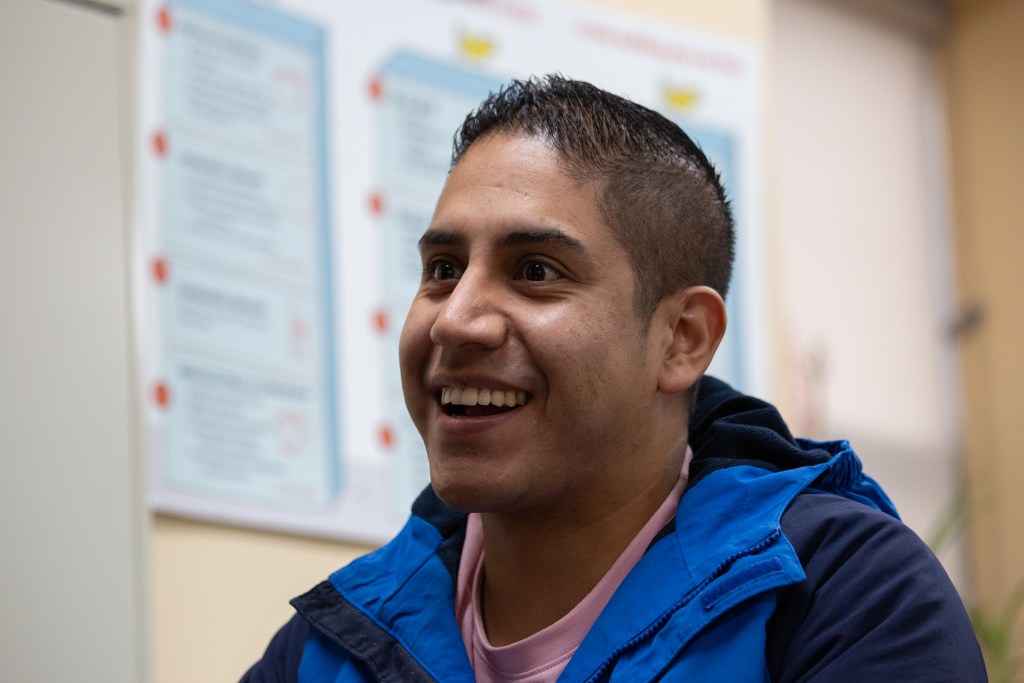
    Columbian immigrant Oscar Lima says learning English will help him work in the food service industry.
    Columbian immigrant Oscar Lima says learning English will help him work in the food service industry, April 7, 2025. (Ben Fractenberg/THE CITY)

    “My bosses told me, ‘You’re a good worker, but you need to learn English,’” Lima said. “And I decided that I didn’t want to learn English myself.”

    Lima and other students now settled into their seats, turning their attention to Colón.

    “Everybody, are we ready? Listos?” Colón asked.

    “Yes,” the class responded timidly.

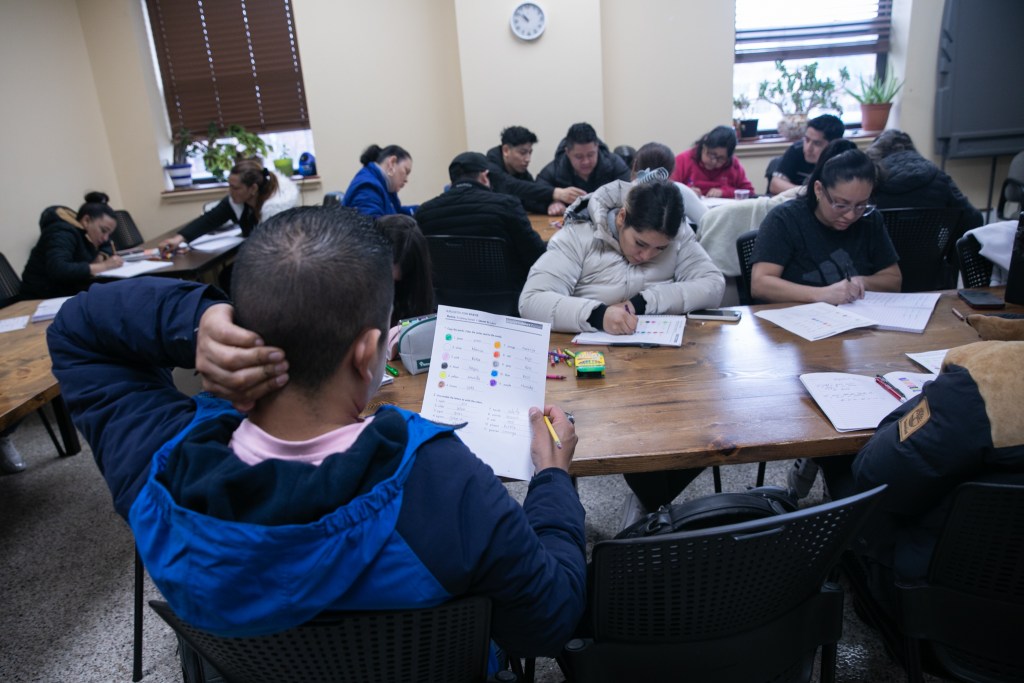
    Students practice learning the names of colors at an English as a Second Language class in Sunset Park, Brooklyn.
    Students practice learning the names of colors at an English as a Second Language class in Sunset Park, Brooklyn, April 7, 2025. (Ben Fractenberg/THE CITY)

    Colón then began presenting ground rules on a digital whiteboard: Try to arrive within the five-minute grace period after the class start time, and come prepared with books, papers and pencils.

    “The most important rule,” Colón continued, before repeating himself in Spanish. “Please don’t be afraid to participate and make mistakes.”

    At break time, Lima shared how he, his wife and his two sons had arrived in the city from Colombia about three years ago. While the family had started off at a shelter, Lima said, they’re now able to afford an apartment of their own. His two kids — seven and ten years old — quiz him about names of objects around the house, he said, and often encourages him to learn English alongside with them.

    “New York, it poses many challenges. It’s difficult at the beginning, but it’s not impossible,” Lima said in Spanish. “My American Dream is my sons…I want my children to perhaps have what I didn’t have, but at the same time I want to show them how to earn it, and how to work like good people.”

    The story was originally published on THE CITY.


    Get stories like these delivered straight to your inbox. Sign up for The 74 Newsletter
    Source link