by Alexandra Villarreal, The Hechinger Report
January 23, 2026
NEW HAVEN, Conn. — “They took her, they took her, they took her.”
Those were some of the words Assistant Principal Cora Muñoz could discern while on the phone with the guardian of one of her students. As the caller sobbed and struggled to speak, Muñoz realized that immigration enforcement agents had detained a kid from Wilbur Cross, the high school she helps lead.
Again.
There was a reason why Muñoz was a go-to contact for the student and her guardian: She — and New Haven public schools more broadly — have worked hard to earn the trust of immigrant families in their diverse district, even as the second Trump administration has made it easier for immigration officers to enter schools and launched a mass deportation campaign.
The district’s teachers and administrators have nurtured deep relationships with immigrant-serving organizations and helped kids access resources — attorneys, social workers, food — when needed. They’ve hosted sessions to inform students about their rights, and sent home cards with legal information in case of an encounter with immigration officers. And when the worst has happened — when someone’s child or parent has been detained, which has occurred over and over in recent months — they have taken immediate action, writing letters in support of the family member’s freedom and raising money alongside a larger coalition of advocates trying to bring that person home.
“In these moments where it’s hard, you show up,” said Muñoz, “and you do what you can.”
Yet nothing has been able to entirely snuff out the fear of deportation inside the city’s schools, say students and educators. That may have contributed to a decline this October in the number of English language learner students enrolling; their numbers dropped by more than 2,000, or nearly 3.8 percent, across Connecticut between fall 2024 and fall 2025, and by hundreds — or 7.3 percent — in New Haven, with many immigrant families who were expected to return to school simply disappearing.
Chronic absenteeism rates fell in New Haven during the 2024-25 academic year. But after President Donald Trump took office, students said their families told them to skip extracurriculars or early college courses at a university campus in case immigration enforcement was around. For some, a college degree has started to feel more out of reach, as they adjust their dreams to fit within a new anti-immigrant reality. Teachers have seen kids stop participating in class after friends have been detained and they wonder if they could be next.
“I live with fear,” said Darwin, an 18-year-old student from Guatemala who has lived in New Haven for two years. His last name, like those of others in this story, is being withheld for safety reasons. “Sometimes I don’t even want to attend school because it makes me afraid to go out of the house.”
In many school districts around the country, immigrant enrollment is down, as far fewer asylum seekers are able to reach the United States and some immigrants have chosen to self-deport to avoid the specter of detention. That said, the consequences of Trump’s mass deportation campaign on immigrants’ education vary greatly depending on the community, its demographics and the level of enforcement activity there, said Julie Sugarman, associate director for K-12 education research at the D.C.-based Migration Policy Institute’s National Center on Immigrant Integration Policy.
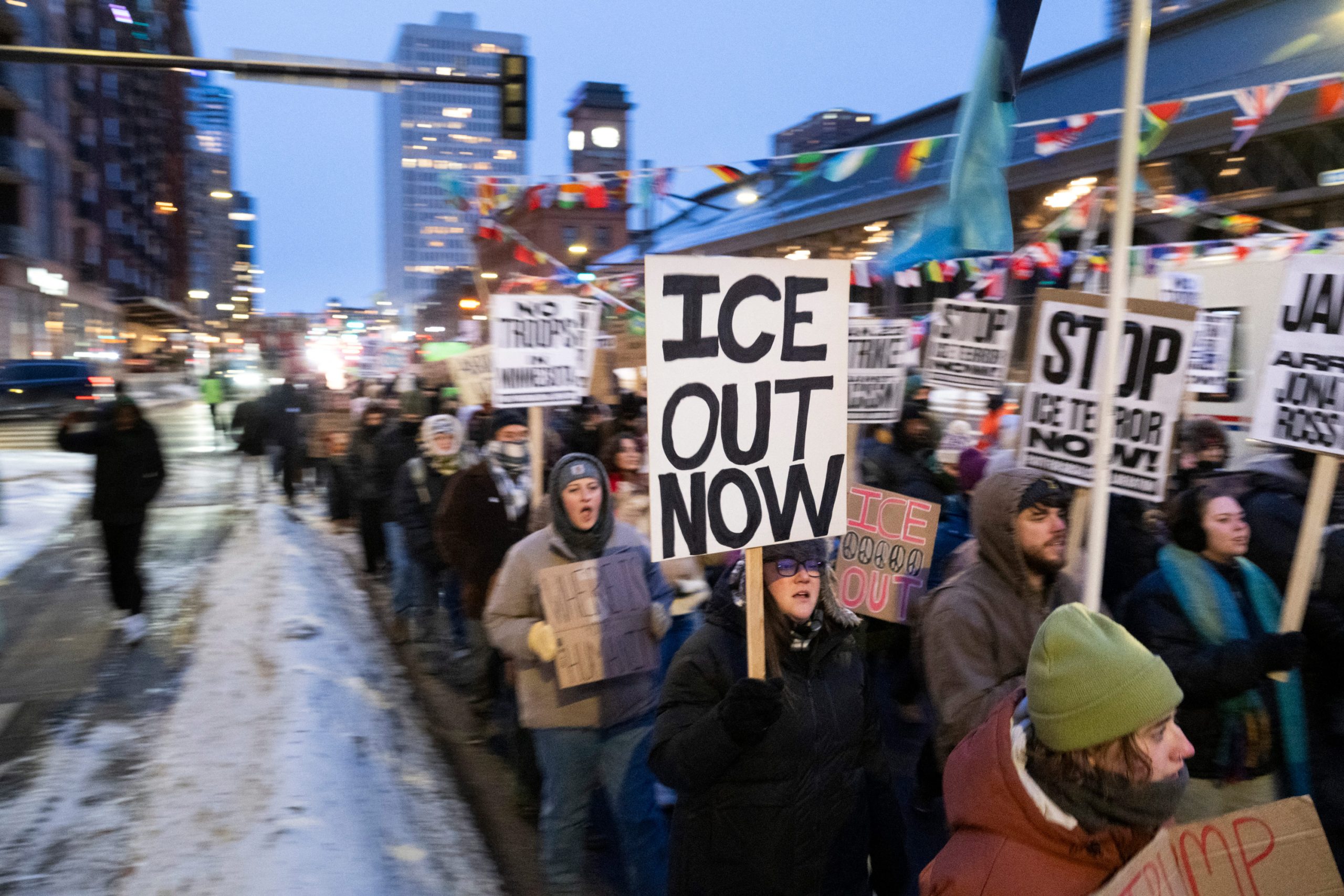
In the Minneapolis area, for instance, where a federal officer shot and killed Renee Good after she dropped off her 6-year-old child at school, districts are offering a virtual learning option for the many kids who are staying home in fear.
“We are definitely hearing anecdotally that there are kids not going to school,” Sugarman said. “Obviously, losing a whole year of education or however long they’re not in school, they are missing out on opportunities to develop their content knowledge, to learn literacy, to develop English, and also to develop academic skills in their native language.”
Related: Become a lifelong learner. Subscribe to our free weekly newsletter featuring the most important stories in education.
With seven institutions of higher learning in the area, New Haven is known as a college town. But it is also a city of immigrants: More than one in six New Haven residents are foreign-born, a statistic that underscores a point of pride for many who welcome the city’s diversity. Families in the public school system speak more than 70 languages.
At the Roberto Clemente Leadership Academy, a K-8 school with around 430 students, notices go home in English, Spanish, Pashto and Arabic. The school’s front doors have welcome signs posted in multiple languages. And on a bright red poster in the hallway, photos of beaming children surround a message: “We all smile in the same language.”
When Trump, who has argued that immigrants are “poisoning the blood of our country,” nixed guidance in January that had generally restricted U.S. Immigration and Customs Enforcement from going into schools to arrest people, New Haven Public Schools Superintendent Madeline Negrón was prepared. Ahead of Trump’s inauguration, her team reviewed how the district had protected students during his first term and in what ways they could fortify their response. They developed a district-wide policy on how to act if ICE officers sought to enter their buildings. It involves a series of steps — including legal counsel’s verification of a valid warrant — before immigration agents would ever be allowed in.
“Without that, nobody, no one, is going to walk through my doors. Because my obligation is to keep every single one of my children safe,” said Negrón, who also shared the policy in a letter to parents.
Negrón led an effort to train all administrators in the protocol, and then those staff helped to train all 2,900 district employees — including custodians, cafeteria workers, teachers, security guards and secretaries.
Some schools went even further, holding know-your-rights presentations for students and their families. “Things like a judicial versus administrative warrant — you know, I wish that no kid in New Haven needed to know that,” said Ben Scudder, a social studies teacher at High School in the Community. “But we live in a world where they do, and their families do, and so we’re gonna make sure that they get the training they need to do that.”
Related: Immigration enforcement is driving away early childhood educators
So far, ICE hasn’t tried to enter New Haven’s public schools. But outside of the classroom, arrests and family separations abound.
In June, a mother and her two children — an 8-year-old boy and a 13-year-old girl, both U.S. citizens — were in their car going to school when vehicles on the street surrounded them and men in ski masks approached. The kids watched, crying, as the immigration agents handcuffed their mom and led her away.
Staff members at the Roberto Clemente Leadership Academy, which the kids attend, fundraised for gift cards to grocery stores and delivery services to help their two students. They wrote support letters for the mother’s immigration case, asking for her release. But around a month later, she was deported to Mexico.
Now, whenever the younger sibling sees someone in uniform at school — a security guard, a police officer — he asks them why they took his mom, said Adela Jorge, Clemente’s principal.
“He’s not able to understand what happened,” Jorge said. “All he knows is that his mother was taken.”
Soon after that, two Wilbur Cross students were nabbed one after the other. First was an 18-year-old named Esdras, arrested at his summer job, shuffled to detention facilities around the country, and almost put on a removal flight to Guatemala.
After more than a month — with the help of advocacy groups, his attorney, the teachers union, government officials and school employees who came together during summer break — Esdras was released. When he returned to Wilbur Cross, he told staff members all he wanted was to be normal, a request they have tried to honor by quietly reintegrating him into classes.
Then, shortly after the start of the new academic year, another student — the one whose guardian had called Muñoz in a panic — was detained.
“At first I thought she was mad at me or something,” said 17-year-old Melany, recalling when her friend suddenly stopped responding to phone messages. “But when she didn’t come to school, it really scared me. And I asked the teachers, but they couldn’t tell me anything.”
Her friend was eventually freed, too. But teachers and administrators say they’re fed up that their students keep being targeted and treated so poorly.
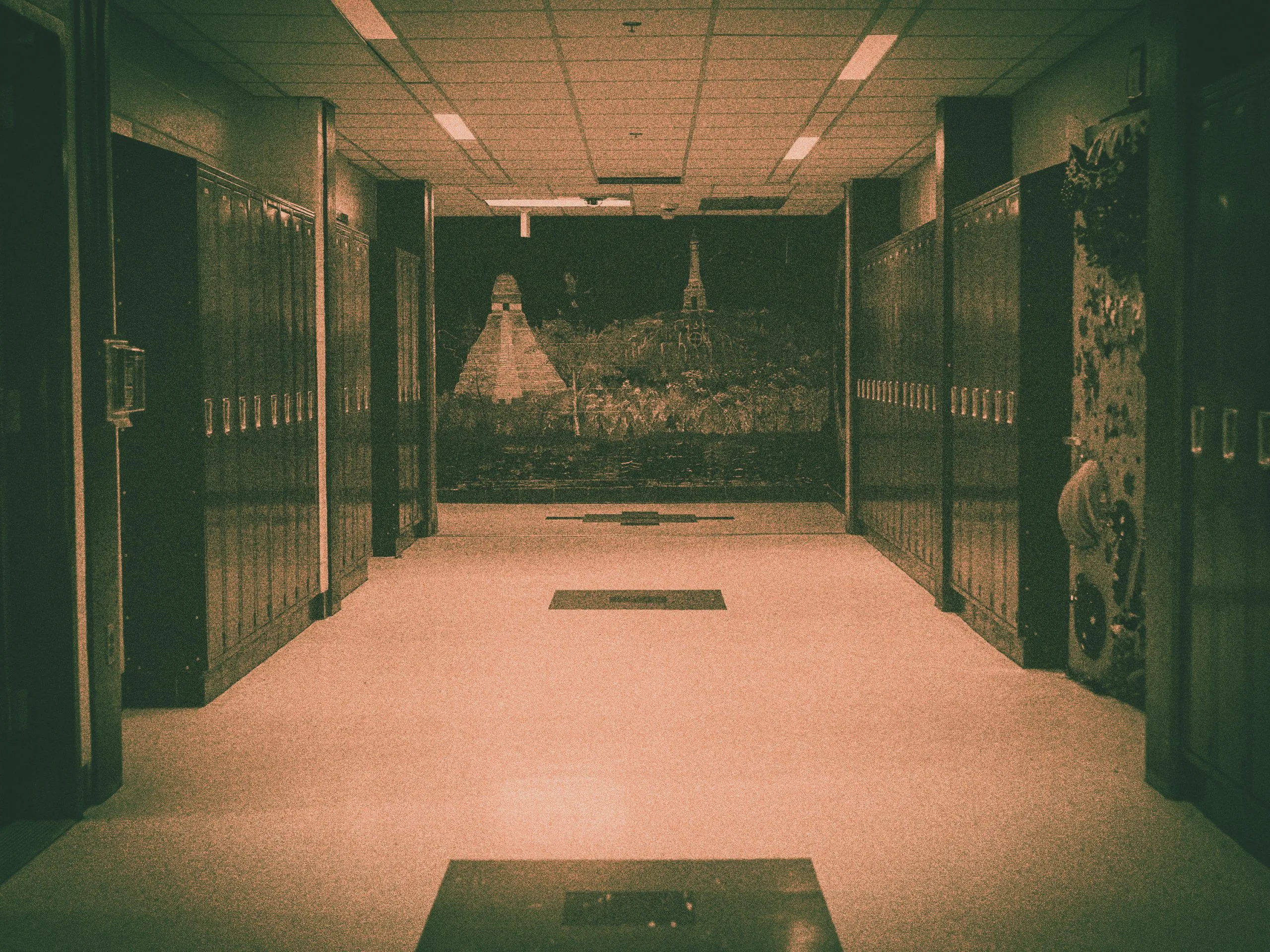
“They’re our kids, and they’re being detained in these cages. And the day before, they were eating pizza in our cafeteria,” said Matt Brown, the Wilbur Cross principal.
Rumors and fears at times disrupt learning. One day in mid-October, around 10:20 a.m., immigration agents in tactical gear were seemingly staging in a park near a New Haven area college, setting off concerns that students were their targets. But about twenty minutes later, the agents instead hit a car wash in Hamden, Connecticut, arresting its workers.
“I don’t know what rights they had in those moments. It didn’t seem like they had any. There were no rights there,” said Laurie Sweet, a state representative whose district includes Hamden. “I think the intention is to cause chaos and make people feel destabilized, and that definitely is what happened.”
ICE took eight people into custody that day, some of them parents of school-aged children. Tabitha Sookdeo, executive director of Connecticut Students for a Dream, said her organization searched school records for the kids, trying to ensure they were okay. But no one could find them.
“We just hope and pray to God that they were able to have someone to pick them up from school,” Sookdeo said.
Related: What’s happened since Texas killed in-state tuition for undocumented students
Teachers say all of this has made immigrant students quieter, more reserved, more observant — and more hopeless. Kids who used to exchange greetings with their teachers in the halls now trudge around like the walking dead, or ask for passes to leave the classroom more often.
“I’ve seen a lot more sadness, and I’ve seen a lot more students who are good students skipping classes. And it’s for no reason except that they just, you know, they have too much going on emotionally to make them go to their classes,” said Fatima Nouchkioui, a teacher of English as a second language at Wilbur Cross’ International Academy.
Sookdeo has noticed a drop in students at her organization’s college access program, as they question why they would try to get a college degree when they don’t know whether they’ll be in the U.S. tomorrow.
“You’re sitting next to them,” she said of the high schoolers she works with. “And they’re literally shaking.”
Many of the kids already have a pile of pressures to navigate. In some cases, they are living in the country by themselves, balancing school with jobs that allow them to send money home to parents and siblings. Darwin, for example, came to the U.S., leaving behind his mom and three younger siblings, and lives in New Haven alone — all to give his family members who remain abroad a better life.
And then there’s always the next arrest, constantly looming.
“Do we anticipate having kids detained again?” said Brown. “I haven’t seen anything that would make me think we shouldn’t.”
Contact editor Caroline Preston at 212-870-8965, via Signal at CarolineP.83 or on email at [email protected].
This story about fear of deportation was produced by The Hechinger Report, a nonprofit, independent news organization focused on inequality and innovation in education. Sign up for the Hechinger newsletter.
This <a target=”_blank” href=”https://hechingerreport.org/know-your-rights-new-haven-school-district-ice/”>article</a> first appeared on <a target=”_blank” href=”https://hechingerreport.org”>The Hechinger Report</a> and is republished here under a <a target=”_blank” href=”https://creativecommons.org/licenses/by-nc-nd/4.0/”>Creative Commons Attribution-NonCommercial-NoDerivatives 4.0 International License</a>.<img src=”https://i0.wp.com/hechingerreport.org/wp-content/uploads/2018/06/cropped-favicon.jpg?fit=150%2C150&ssl=1″ style=”width:1em;height:1em;margin-left:10px;”>
<img id=”republication-tracker-tool-source” src=”https://hechingerreport.org/?republication-pixel=true&post=114453&ga4=G-03KPHXDF3H” style=”width:1px;height:1px;”><script> PARSELY = { autotrack: false, onload: function() { PARSELY.beacon.trackPageView({ url: “https://hechingerreport.org/know-your-rights-new-haven-school-district-ice/”, urlref: window.location.href }); } } </script> <script id=”parsely-cfg” src=”//cdn.parsely.com/keys/hechingerreport.org/p.js”></script>