Tag: important

  • Higher education’s civic role has never been more important to get right

    Higher education’s civic role has never been more important to get right

    As the £4.3 million National Civic Impact Accelerator (NCIA) programme draws to a close in December, universities across the country are grappling with a fundamental question: what does sustainable civic engagement actually look like?

    After three years of momentum building and collective learning, I find myself observing the sector at a crossroads that feels both familiar and entirely new. The timing feels both urgent and opportune.

    The government’s renewed emphasis about universities’ civic role – most notably through Bridget Phillipson’s explicit call for institutions to “play a greater civic role in their communities” creates opportunity and expectation. Yet this arrives at a challenging time for universities, with 43 per cent of England’s institutions facing deficits this year.

    Despite this supportive policy context, I still find myself having conversations like, “but what exactly is civic?”, “is civic the right word?” or – most worryingly – “we can’t afford this anymore.”

    As universities face their most challenging financial circumstances in decades, we need to be bolder, clearer, and more precise about demonstrating our value to places and communities, across everything we do.

    Determination

    Instead of treating place-responsive work as a competition on some imagined league table or trying to redefine the term to fit the status quo, we need to come together to demonstrate our value to society collectively. But perhaps most importantly, we need to commit to reflect and do better despite the financial challenges.

    This isn’t about pinning down a narrow, one-size-fits-all definition and enforcing uniformity. Instead, it’s about recognising and valuing the diversity of place-responsive approaches seen across the country. From the University of Kent’s Right to Food programme to Anglia Ruskin University’s co-creation approach to voluntary student social impact projects. From Dundee’s Art at the Start project to support infant mental health and address inequalities, to how Birmingham City University is supporting local achievement of net-zero ambitions through their climate literacy bootcamps.

    Sometimes, it means making tough choices to reimagine how these valuable ways of working can be embedded across everything we do. Sometimes it means making this work visible, using a shared language to bring coherence – and crucially – committing, even in tough times, to honest reflection on our practice and a determination to keep improving.

    The waypoint moment

    I’ve found it helpful to describe civic engagement as an expedition. Most of us can imagine some kind of destination for our civic ambitions – perhaps obscured by clouds – with many paths before us, lots of different terrains, and a few hazards on the trail.

    Through the NCIA’s work – led by Sheffield Hallam University in partnership with the National Coordinating Centre for Public Engagement (NCCPE), the Institute for Community Studies, City-REDI, and Queen Mary University of London – we’ve distilled three years of intensive evidence gathering and experimentation into fourteen practical “waypoints” for civic engagement, now launching as part of our Civic Field Guide (currently in Beta version).

    These aren’t just statements – they’re navigation signals based on well-trodden paths from fellow explorers. They come with a bespoke set of tools, ideas and options to deal with the terrain ahead.

    You can think of them like those reassuring signs on coastal walks. Helping you understand where you are and what direction you’re heading but giving you freedom to explore or take a detour.

    Take our waypoint on measuring civic impact. It encourages universities to develop evaluation systems that can document progress quantitatively, alongside the rich narratives that illustrate how civic initiatives transform real lives and strengthen community capacity. It draws on examples from universities that have tried to tackle this challenge, acknowledging both their successes and the obstacles they’ve encountered, whilst offering practical tools, frameworks and actionable guidance. But it deliberately avoids prescribing a one-size-fits-all measurement approach. Because every place has different needs, ambitions and challenges. Both the civic work itself and how we measure it must be tailored to the unique character of our places and communities.

    Our waypoints cover everything from embedding civic engagement as a core institutional mission to navigating complex policy landscapes. They address the “passion trap” that many of us might recognise, where civic work is reliant on a few individual champions rather than an institutional culture. They tackle issues of partnership development, cultivating active citizenship, and contributing to regional policymaking.

    Perhaps most importantly, they recognise that authentic civic engagement isn’t about universities doing things to or even for their places, it’s about embracing other anchor institutions, competitors, businesses and communities as equal partners throughout the entire process of identifying needs, designing solutions, and implementing change.

    This often means decentring the university from the relationship. Some of the strongest partnerships start with universities asking not “what can we do for you?” but “what are you already trying to achieve, and how might we contribute?”.

    The embedding challenge

    James Coe’s recent thoughts on how to save the civic agenda challenged us all to think about how universities move beyond “civic-washing” to genuine transformation. The NCIA’s evidence suggests the answer lies in weaving civic responsibility into everything we do, not just the obvious.

    Being civic means thinking about procurement policies that support local businesses. It means campus facilities genuinely accessible to community groups. It means research questions shaped by community priorities, not just academic curiosity. It means student placements that address local challenges whilst developing skills and confidence.

    Such as at the University of Derby. Their CivicLAB supports academics, students and the community to share insights on research and practice through a place-based approach to knowledge generation. Located centrally within the university, this interdisciplinary group cuts across research, innovation, teaching, and learning. Established in late 2020, CivicLAB has already created civic opportunities for over 14,600 staff, students and external stakeholders and members of the public.

    The civic question also means responding to the sceptics with evidence: demonstrating how place-based engagement creates richer contexts for research and more meaningful experiences for students; showing how equitable partnerships, far from distracting from core academic work, can actually enhance teaching and scholarship; and providing examples of how civic engagement has strengthened global excellence, helping local communities connect their priorities and assets to broader movements and opportunities.

    The future of civic engagement

    At CiviCon25 – our national, flagship conference which took place in Sheffield last month – we brought together civic university practitioners, engaged scholars, senior leaders and community partners to wrestle with the challenges that will shape the next decade of civic engagement.

    Our theme of “where ideas meet impact” captured something fundamental about our work: too often in higher education, brilliant ideas never quite make it into practice, or practice develops in isolation from the best thinking. We sometimes get stuck reinventing the wheel, endlessly debating definitions instead of delivering for our communities.

    But something different is happening now. A new generation of determined, ambitious civic universities are leading this movement forward, and I’ve been privileged to witness their journeys first-hand. They’ve been extraordinarily generous. Sharing what’s worked, being honest about setbacks, and helping others navigate the same challenges many of them faced alone. It’s their insights, experiments, and wisdom that have shaped the NCIA’s fourteen waypoints.

    As the NCIA draws to its scheduled conclusion, there’s something bittersweet about this moment. The infrastructure exists. The evidence is compelling. The policy environment has never been more supportive. But whatever happens next, we need to demonstrate our value to society collectively and commit to reflect and do better despite the financial challenges.

    The civic trail will always have its hazards. We’ve learned that much. But with good maps, experienced guides, and companions who share the commitment to reach the destination, these hazards become navigable challenges rather than insurmountable barriers.

    The fourteen waypoints offer the higher education sector a map and compass. Not every university need follow this path, but those that choose civic engagement as core mission must commit fully to the patient work of institutional change, equitable partnership building, and community-led impact.

    The trail is well marked now. The question is: who else will join the journey?

    Source link

  • Learning to debate is an important facet of education, but too often public school students are left out 

    Learning to debate is an important facet of education, but too often public school students are left out 

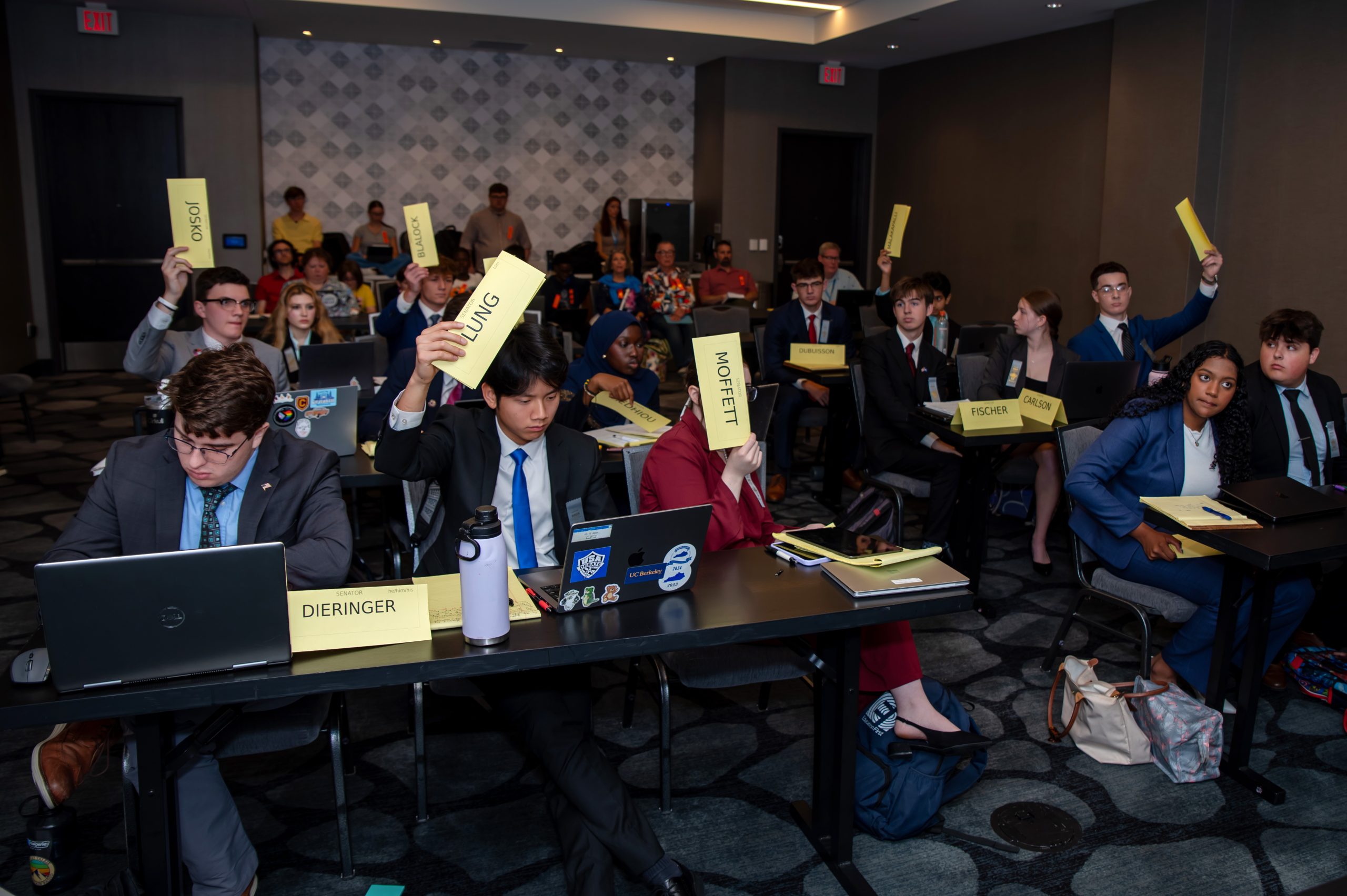
    Ever since I first stepped onto the debate stage, I have been passionate about speech and debate. For the last three of my high school years, I have competed and placed nationally at major tournaments in Dallas, Los Angeles, Chicago, Atlanta and Las Vegas, among many others. Debate demands an incredible amount of research, preparation and practice, but those aren’t the biggest challenges for me.  

    I attend a public high school in California that lacks a formal debate program or coach, which has forced me to choose between quitting an activity I love and competing independently without any school support.  

    I chose the latter. And that means I prepare alone in the dark, navigate complex registration processes and, most importantly, pay hefty fees. 

    As many of us know, debate is an effective way to strengthen students’ comprehension, critical thinking and presentation skills. Debate allows students to explore ideas in a myriad of topics, from biotechnology to nuclear proliferation​​​​, and find their unique passions and interests. 

    Yet for many students, a lack of school support is a major entry barrier. It has turned debate into another private-school-dominated space, where private-school students receive access to higher quality research and on-the-spot coaching on argument structure and prose, like a football coach adjusting strategy on the sidelines. Additionally, most prestigious tournaments in the U.S. prohibit non-school-affiliated debaters like me from competing altogether.  

    Related: A lot goes on in classrooms from kindergarten to high school. Keep up with our free weekly newsletter on K-12 education.  

    These circumstances de facto prevent lower-income debaters from becoming successful in the activity. And that is why I believe that all schools should incorporate speech and debate classes into their core curriculums. Existing history and English teachers could act as debate coaches, as they do in many private schools. School districts could even combine programs across high schools to save resources while expanding access (Mountain View High School and Los Altos High School in California have pursued this strategy).  

    Over the past two decades, the debate community has engaged in efforts to democratize access to speech and debate through the creation of new formats (for example, public forum), local debate associations and urban debate leagues, among others.  

    However, many of these initiatives haven’t been successful. These newer formats, initially intended to lessen the research burden on debaters, have shifted toward emphasizing strict evidence standards and complex debate jargon. This shift has made debate less, not more, accessible, and led to more students from private schools — who were quickly able to ​​​​out-prepare those from public​​ schools — entering and dominating the competition.  

    Local debate associations and​​​​ competitive leagues for neighboring schools have provided more students with opportunities to participate. Still, debate via these organizations is limited, as they don’t provide direct coaching to member schools or rigorous opportunities for students, and prohibit certain students and programs from competing.  

    Similarly, urban debate leagues (for example, the Los Angeles Metropolitan ​​​​Debate League) have been incredibly successful in expanding debate access to lower-income and minority students; however, these programs are concentrated in major metropolitan cities, face opposition from some school districts and rely on donor funding, which can be uncertain.  

    In my debate rounds, I have analyzed pressing social problems such as global warming and economic inequality through a policymaking lens; in some rounds I defended increased wealth taxes, and in others I argued against bans on fossil fuels. Without debate, I wouldn’t be so conscious of the issues in my community. Now, as I enter college, I’m looking forward to continuing debate and leveraging my skills to fight for change.  

    Related: High school students find common ground on the debate stage 

    Speaking of college, in the competition for admission to the most selective colleges, extracurricular involvement can be a deciding factor, and debate is an excellent way to stand out, at least for those students with proper support.  

    However, when students from rural and low-income communities lack access to the same opportunities as students from more metropolitan and higher-income communities, we risk exacerbating the educational achievement gap to our collective detriment.  

    In the meantime, debate tournaments should reduce entry barriers for nontraditional debaters and for students from public schools without coaches and extra support.  

    Without these initiatives, too many rural and low-income students will be excluded from an amazing activity, one that is especially important in today’s polarizing and divisive climate.  

    Aayush Gandhi is a student at Dublin High School. He is an avid writer and nationally ranked Lincoln-Douglas debater.  

    Contact the opinion editor at [email protected].  

    This story about debate programs was produced by The Hechinger Report, a nonprofit, independent news organization focused on inequality and innovation in education. Sign up for Hechinger’s weekly newsletter.  

    The Hechinger Report provides in-depth, fact-based, unbiased reporting on education that is free to all readers. But that doesn’t mean it’s free to produce. Our work keeps educators and the public informed about pressing issues at schools and on campuses throughout the country. We tell the whole story, even when the details are inconvenient. Help us keep doing that.

    Join us today.

    Source link

  • Can you tell compelling stories about important things?

    Can you tell compelling stories about important things?

    A journalist is the eyes and ears of the public. Given the time, skills and tools needed, journalists go out into the world to ask questions, observe what is happening and gather factual information to report it all to the public. 

    They tell this information through stories in written publications or in other ways like podcasts or videos. The public can access these stories on news sites, or on podcast and video platforms. Sometimes they are free and sometimes they are behind “pay walls” — they require payment fees or subscriptions before you can read or download them.

    Journalists tell stories in different ways:

    News stories inform the public about current events or issues. They report important facts and provide readers with the context to make sense of them. A reporter gathers information for a news story by doing research and conducting interviews. 

    Investigative reports and feature stories go deeper and are based on interviews and research. What distinguishes them from news stories is their purpose, and often their length. Rather than simply informing the public about current events, investigative stories expose an issue — like corruption, corporate wrongdoing, or systemic problems — that affects the public in some way, while feature stories go deeper into a topic and explore a new angle. 

    Opinion stories are written from one person or group’s perspective, so while they can be interesting and spark debate in a community, they do not include the “objectivity” that is central to regular journalism. We often call this advocacy journalism. 

    Native advertising is advertising that resembles journalism in style, tone and format so to sell readers on an idea, product or service without readers realizing that there is a commercial agenda behind the message. By making an ad seem like the news organization’s editorial content, readers are more likely to accept the ad’s claims as true.

    Helping people make sense of the world

    Good quality news and investigative stories are accurate, authoritative and balanced and they help readers make sense of events. To tell these stories, journalists must first make sense of events themselves and they do that by asking questions that people have and getting answers to those questions. Sometimes that means asking questions that seem basic or seem to come from ignorance. In other words, journalists often ask the questions many people might be embarrassed to ask themselves.

    But that’s the way they end up with an informative story that is well reported. Here are some ways to tell if a journalist has succeeded in doing that: 

    ● They use authoritative and clearly identified sources that enable readers to have confidence in a story’s accuracy. 

    ● They use quotes to bring a story to life and give it balance

    ● They provide readers with enough context to help them make sense of the event in question. 

    ● If a story portrays a some person or organization in a negative way, it should be clear they were given an opportunity to comment

    Using sources and quotes and providing context and opportunity for comment allows a journalist to tell the truth, be fair and serve the public.

    Take climate stories. When journalists cover the environment, the first truth is that climate change is happening

    Facts versus truth

    Telling the truth of what and whom climate change is impacting and why it is important means that a journalist must use facts, provide a source’s quotes in context and explain what the data says. 

    But what are facts? Facts are information that can be verified through data that is collected scientifically rather than based purely on opinion. When stating facts, a journalist should be able to back up those facts with data from a verifiable source and let you know when they can’t do that. They should also tell you the source of all the information in the story and what makes the source credible — their record of expertise or experience on the matter. 

    How do you know if a journalist has been fair? 

    In any story produced by a journalist, there are stakeholders — these are the people affected by a problem or involved in a story. To be fair, the journalist gives all the major stakeholders — the perpetrators and victims — a voice in the story.

    At the same time, the journalist should hold stakeholders accountable for their actions.

    The victims should be given the chance to tell their stories but the journalist should explain the context — why someone might believe what they do or have acted in the way they did so that the audience can form an understanding of the stakeholders and their actions.

    Journalists and the public they serve

    Ultimately journalism should serve the public. The journalist should provide news consumers with enough information to form an educated opinion, without being swayed by a journalist’s bias. To do that, the information should be easily understood and accessible — not bogged down with jargon or made overly complicated. 

    A story also needs to be newsworthy. It must be worth a person’s time to read or listen to or view it. That doesn’t mean that it has to be about an event that happened today or yesterday, but it should be relevant or interesting to the news consumer in some way. In journalism we call this “compelling.” Maybe what makes a story compelling is that it is about an event that has just happened or is about to happen. Maybe it is about something happening near your audience. 

    Or maybe what is happening or happened is significant — it will affect people in important ways. 

    But even if the story is about something happening now, is important and affects people in significant ways, the audience for it won’t find it compelling if it is told in a boring way.

    Telling stories worth hearing

    Journalists often look for three things to make an important story compelling:

    Human interest: The story focuses on the emotional or personal aspects, evoking empathy, compassion, or curiosity. 

    Conflict: There are people who are for and against something happening or have competing claims on something. We often see this in stories about politics. 

    Novelty: Something makes the story new or different. 

    How can all this help you find and tell compelling stories? Let’s take a look at possible environmental stories. 

    Ask yourself: What types of things are happening around you regarding the weather, the air you breathe, the water around you, the land you live on and the food your region or country grows and eats? Are any of these things threatened? Do you know of any communities suffering? 

    Do you know of any individuals or organizations who are standing up against these impacts? What are they doing and why? And have there been any big successes in terms of climate change that you can think of? Have you heard of any good news about the environment in your area? 

    You can think about your neighbors, your school, your friends, your family, or anyone you know! It doesn’t have to be something that seems big and someone can be an expert without a fancy title.

    Why tell true stories?

    Storytelling is the way that journalists can convey complex information in a manner that is relatable and accessible to an audience. 

    Ultimately, good journalism is not only about gathering information that is verifiable, it is also about telling stories about what is happening in a way that is relatable and accessible to its audience.

    If a journalist shines light on a problem or reports on an event, they can show through storytelling why it is important, who is affected, what solutions are out there and who the solutions benefit and what is delaying the solutions. 

    It is the quilt of these stories, sewn by the audience’s understanding, that forms the blanket of our reality. Like any good quilt, it includes the light and the dark, the details and the bigger picture, patterns and contrast. 

    Storytelling is the context that gives a journalistic product meaning and purpose. 


    Questions to consider:

    1. Why might an important story put someone to sleep?

    2. What does it mean to make a story “compelling”?

    3. In what ways do journalists serve the public?



    Source link

  • Most adults say higher education is important but want colleges to stay out of politics

    Most adults say higher education is important but want colleges to stay out of politics

    This audio is auto-generated. Please let us know if you have feedback.

    Dive Brief:

    • Nearly 4 in 5 surveyed Americans, 78%, said a college education is somewhat or very important to a young person’s success, according to a new poll from researchers at Vanderbilt University.
    • Despite increasing polarization around higher ed, a significant majority of both Democrats and Republicans — 87% and 68%, respectively — said a college education was at least somewhat important.
    • The broadly favorable public sentiment comes amid the federal government’s allegations of “violations, shortcomings and biases” at colleges, John Geer, head of the nonpartisan Vanderbilt Project on Unity & American Democracy, said in a Wednesday press release.

    Dive Insight:

    The Trump administration has increasingly targeted higher education, decrying colleges as hubs of liberal indoctrination and wastes of federal funding. Against this backdrop, Vanderbilt researchers polled 1,030 adults in English and Spanish from Sept. 5 to Sept. 8.

    “Higher education has undoubtedly been a primary concern for President [Donald] Trump’s administration,” Geer said. “Certainly, people expressed areas of concern and viewed certain institutions as more problematic than others, but support for colleges and universities remains substantial, even in the midst of these many criticisms from Washington,” he said.

    Nearly two-thirds of respondents, 65%, said colleges have a positive effect on society. A large majority of Democrats agreed with this statement, as did most of the “traditional” Republicans surveyed, according to the Wednesday release. 

    A deeper schism emerged from Republican respondents who identified with the Make America Great Again movement. Among those supporting MAGA ideology, 65% said colleges have a negative effect on the U.S. 

    In a February poll, Vanderbilt found that a majority of Republicans surveyed, 52%, identified with the MAGA movement — though slight, it was the first majority since researchers began asking the question in June 2023.

    The September survey also found a broader skepticism of some aspects of higher education that transcended political divides. Among the overall respondent pool, 67% said ideological or political bias is at least somewhat of a serious problem at colleges. Within that share, 35% said bias is a problem at most institutions.

    However, the respondents who said political bias exists on campuses did not broadly fault academic instruction. About 2 in 5, or 43%, blamed administrative decisions, while 16% cited what is being taught in the classroom.

    Nearly three-quarters of respondents, 71%, said colleges should not “take official positions on controversial political issues.” Broken down by political party, 83% of Republicans and 59% of Democrats concurred with that statement. 

    “That mix of skepticism and expectation underscores how difficult it will be for colleges to persuade the public that they are neutral arbiters in a polarized environment,” Vanderbilt said.

    The public showed mixed opinions on different types of institutions, the poll found. 

    For instance, 70% of respondents expressed confidence in community colleges. Vanderbilt researchers noted that community colleges “have largely avoided the controversies embroiling larger, wealthier institutions.”

    But that confidence level dropped sharply for Ivy League institutions. Less than half of those surveyed, 48%, expressed a somewhat or very favorable opinion of those eight universities. 

    What’s more, respondents’ view of the Ivies varied significantly by their political party. Among Democrats, 72% approved of Ivy League universities, compared to just 33% of Republicans.

    Other colleges earned a similar approval rating as the Ivies but with a smaller political divide.

    Just 2 in 5 respondents expressed overall confidence in colleges in the Southeastern Conference, which includes the University of Georgia, the University of Tennessee and Mississippi State University among its 16 members.

    About half of Republicans, 51%, expressed a favorable opinion of those institutions, as did 33% of Democrats.

    Source link

  • Fewer Young People See Math Skills as Very Important in Work

    Fewer Young People See Math Skills as Very Important in Work

    Higher education stakeholders have noted that math anxiety can hold students back from pursuing some disciplines or major programs, but a new analysis from Gallup finds that young Americans over all place less importance on math skills compared to the general population.

    While over half of all Americans rate math skills as “very important” in their work (55 percent) and personal (63 percent) lives, only 38 percent of young people (ages 18 to 24) said math skills are very important in their work life and 37 percent in their personal life, according to a December survey of 5,100 U.S. adults.

    The survey highlights generational divisions in how math skills are perceived, with adults older than 55 most likely to see math as very important compared to younger adults, and Gen Z least likely to attribute value to math skills.

    To Sheila Tabanli, a mathematics professor at Rutgers University, the low ratings point to a lack of perceived connection between math skills and career development, despite the clear correlation she sees.

    Tabanli said it can be hard to convince many Gen Z and Alpha students that math content is necessary for their daily lives, in part because access to information is so convenient and they can perform calculations on their phones or online.

    “We need to transition from focusing too much on the concept, the domain, the content—which we do love as math people, otherwise we wouldn’t be doing it for a living—but students don’t see that connection [to employable skills],” Tabanli said.

    When asked how important math skills were for the majority of the U.S. workforce, 40 percent of young adults rated having math skills as very important—the lowest rating of nine skills evaluated, including reading, language, technology and leadership, according to Gallup.

    Young people also rated the importance of math skills for the general workforce, as compared to their own lives, the lowest of all age cohorts. Adults ages 55 to 64 (71 percent) and 65 and older (68 percent) were most likely to say math is a very important skill for the general workforce.

    Most career competencies that colleges and universities teach, such as those by the National Association for Colleges and Employers, focus on broader skills—including critical thinking, leadership, communication and teamwork—as essential for workplace success. Math can teach students how to solve problems and engage with difficult content, which Tabanli argues are just as important for an early-career professional.

    One reason a young adult might not rate math skills highly is because many students face undue math anxiety or a skepticism about their own ability to do math, falling into the belief that they’re not “math people,” Tabanli said.

    In response, Tabanli believes professors should help students apply computational skills to their daily lives or link content to other classes to encourage students to invest in their math learning. While this may be an additional step for a faculty member to take, Tabanli considers it a disservice to neglect this connection.

    Professors can also strive to make themselves and the content more human and approachable by sharing information about their lives, their careers and why they’re passionate about the subject, Tabanli said.

    Source link

  • How important could one court be?

    How important could one court be?


    A polarized electorate

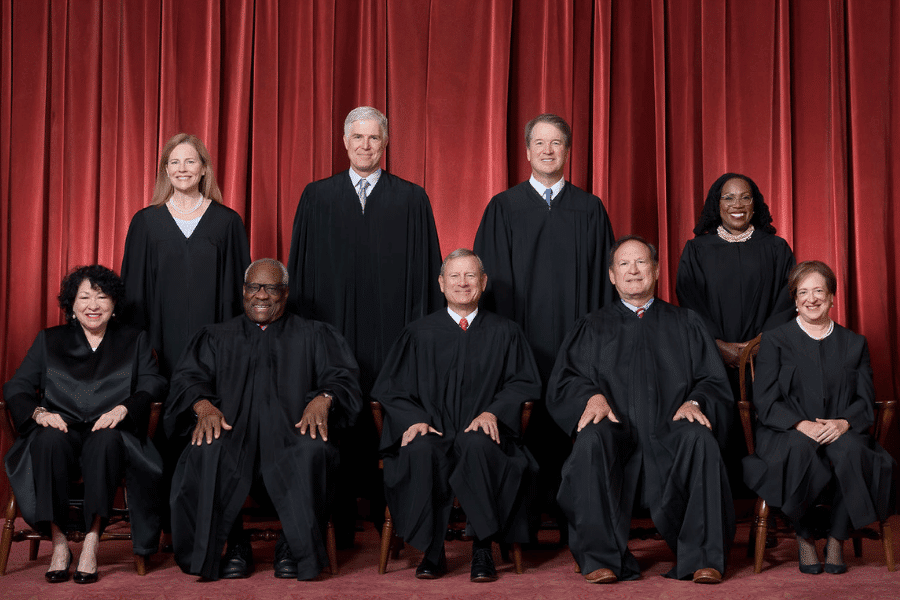
    The first Italo-American to serve on the Supreme Court, Scalia had been appointed by Ronald Reagan, a Republican president. Of the eight remaining justices, four were appointed by Republican presidents and four by Democrats.

    Both parties recognize that Scalia’s successor could tip the scales in close votes. Cases currently before the Court involve climate change, affirmative action, abortion, unions, immigrants and contraception — issues where the electorate is deeply divided.

    Although the Constitution stipulates that the president nominates Supreme Court justices, Republican candidates for the presidency have said the choice of Scalia’s successor should be left to whoever succeeds Barack Obama in the White House next January. Obama, a Democrat, has said he will send a nomination to the Senate in due course.

    That partisan split can be explained by the weight of the Court’s decisions and the polarization of the U.S. electorate.

    Whereas historically the two major parties have been able to agree, sometimes begrudgingly, on the choice of justices, the process has become far more partisan and divisive in recent decades.

    Unfavorable opinions

     The gaping ideological split in the current Congress and an increasingly vitriolic presidential campaign ensure a bitter fight in coming months.

    The political acrimony was reflected in a nationwide poll conducted last year by the Pew Research Center.

    Following recent Supreme Court rulings on Obamacare and same-sex marriage, unfavorable opinions of Court have reached a 30-year high, the survey found. And opinions about the court and its ideology have never been more politically divided.

    “Republicans’ views of the Supreme Court are now more negative than at any point in the past three decades,” it said. Little wonder that Republican presidential candidates are keen to put a conservative in the vacant seat.

    While the Supreme Court is an independent branch of government, its composition is not — and has never been — immune from politics. The nomination of justices is part of the system of checks and balances.

    But at the end of the day, the system requires the willingness of voters and their representatives to adhere to laws, executive orders and court rulings, however deep the political divide. If that faith ever crumbled, the U.S. experiment in democracy would be under threat.


    Source link

  • Higher Education Inquirer : IMPORTANT INFO for Sweet v Cardona (now Sweet v McMahon) CLASS

    Higher Education Inquirer : IMPORTANT INFO for Sweet v Cardona (now Sweet v McMahon) CLASS

    Just dropping this IMPORTANT INFO from the DOE for Sweet v Cardona (now Sweet v McMahon) peeps who are CLASS – DECISION GROUPS and POST-CLASS.

    Edited To Add

    Decisions Class are streamlined R and R submissions.

    Post-class denials MUST ask the DOE for a reconsideration, which allows you to add additional evidence.

    Orginial Post:

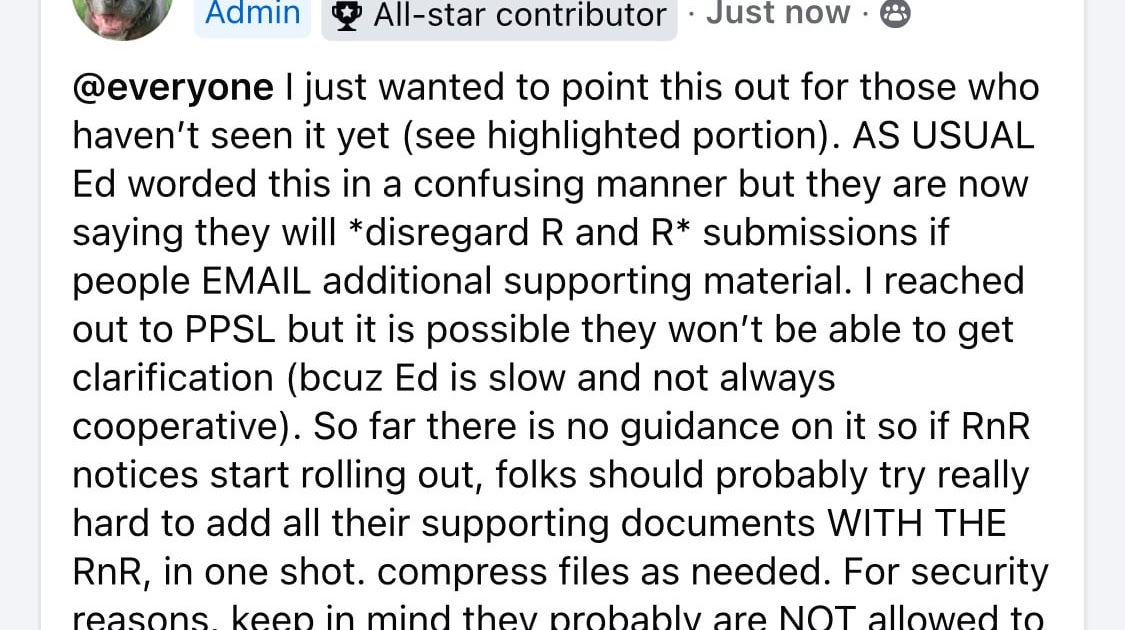
    For REVISE and RESUBMITS (R and R) notices, the DOE is now saying that they WILL “disregard R and R*”* submissions if you EMAIL additional supporting documents or material. You CANNOT email the R and R back.

    You MUST submit a NEW BDTR APPLICATION and INCLUDE your previous BDTR application number which can be fund on the Denial letter.

    YOU HAVE 6 MONTHS TO RE-SUBMIT FROM THE RECEIPT OF THE R AND NOTICE (Here: https://studentaid.gov/borrower-defense**/

    **)

    The DOE states, “If you email supplemental information to the DOE or attempt to update your existing application, you will be treated as having failed to Revise and Resubmit”.

    ALSO, If you are still trying to add more evidence to your BDTR application this late in the game, you may want to wait for the decision letter to come out. We are reaching Group 5 Decision deadline, and Post-Class is 6 months after that. If you feel uneasy about your evidence, START collecting it now!

    Follow all DIRECTIONS on anything you get from the DOE relating to BDTR (except demanding payment, they can pound sand LOL).

    In Solidarity!!!

    Source link

  • What Is IT Governance and Why Is It So Important in Higher Ed?

    What Is IT Governance and Why Is It So Important in Higher Ed?

    Technology can be one of the most powerful tools an institution has to advance its mission. But without clear, strategic guidance, that same technology can quickly become a source of frustration, inefficiency, and risk. That’s where IT governance comes in.

    Today’s colleges and universities are navigating rising cybersecurity threats, tighter budgets, and an expanding ecosystem of platforms and tools. In this environment, IT governance isn’t just an operational necessity — it’s a strategic imperative.

    In this article, I’ll define what higher ed IT governance is, why it matters more than ever, and how institutions can build a framework that aligns technology investments with institutional priorities.

    What is IT governance in higher ed?

    Put simply, IT governance is the structure that ensures every technology investment and decision supports the institution’s goals and strategies. While IT management focuses on maintaining day-to-day systems — like patching servers or updating networks — IT governance answers a different set of questions, such as:

    • Which projects should we prioritize?
    • How do we allocate limited resources for the greatest impact?
    • Who needs to be involved in shaping these decisions?

    A thoughtful approach to IT governance isn’t just a collection of policies. It’s an intentional structure that fosters transparency, collaboration, and accountability across the entire institution.

    When done well, governance clarifies how decisions are made, who is responsible for making them, and what criteria determine success. This clarity reduces confusion, builds trust, and ensures that technology investments consistently support the institution’s mission and priorities.

    An effective governance framework typically includes:

    • Decision-making structures such as IT governance committees with representation across academic and administrative areas
    • Policy development that guides how technology projects are evaluated and approved
    • Risk management and compliance oversight to keep pace with evolving regulations and security requirements

    When institutions embrace governance as a shared responsibility, technology becomes a strategic asset rather than a departmental concern.

    Why higher ed IT governance matters more than ever

    The complexity of higher ed technology ecosystems has grown exponentially. Many institutions now rely on cloud platforms, ERP and student information systems, learning management systems, and emerging tools like AI.

    Without governance, it’s easy for tech investments to become siloed or redundant — especially when departments act independently. This fragmentation can lead to:

    • Financial waste due to functional redundancy
    • No clear system of record/unclear data access policies
    • Missed opportunities for collaboration and efficiency

    External pressures are also intensifying. Regulatory requirements such as FERPA and GLBA have expanded. Accrediting bodies increasingly expect transparent, documented technology processes. And stakeholders — from faculty to students — demand seamless, secure digital experiences.

    In an era of constrained budgets, institutions can’t afford to treat IT governance as an afterthought.

    Ready for a Smarter Way Forward?

    Higher ed is hard — but you don’t have to figure it out alone. We can help you transform challenges into opportunities.

    The risks of poor or nonexistent IT governance

    When governance isn’t in place, institutions face serious consequences that extend far beyond the IT department. Gaps in oversight and alignment can ripple across every facet of the organization, undermining financial stability, operational efficiency, and stakeholder confidence. Over time, these issues can erode the very foundation of an institution’s mission and reputation.

    Some of the most common (and costly) problems include:

    • Financial inefficiency and wasted resources: With shrinking enrollments and limited funding, institutions can’t afford investments that fail to deliver measurable value or duplicate existing capabilities.
    • Missed opportunities to maximize impact: When IT resources are spread thin across too many projects, even high-priority initiatives can stall or underperform.
    • Increased security vulnerabilities: Technology risks are growing faster than most budgets. Without clear governance to prioritize spending on solutions that mitigate the most critical threats, institutions are more exposed to breaches and compliance failures.
    • Resistance to change: If end users feel excluded from decisions, adoption suffers—and so does return on investment.
    • Reputational damage: Failed implementations and security incidents can erode trust with students, staff, and stakeholders.
    • Inability to scale or innovate effectively: Disconnected systems and uncoordinated efforts make it harder to keep pace with evolving needs.

    We’ve seen this firsthand, where IT leadership at institutions make major platform decisions without involving departmental leaders. The result was widespread resistance and a perception that technology was imposed rather than collaborative. When people don’t have a seat at the table, they’re far less likely to champion change.

    “When people don’t have a seat at the table, they’re far less likely to champion change.”

    What effective higher ed IT governance looks like

    Good governance is intentional, inclusive, and transparent. It doesn’t happen by accident — it requires clear structures and a shared commitment to align technology decisions with institutional goals. When these elements come together, colleges and universities create an environment where technology can thrive as a strategic asset rather than a siloed expense.

    To build this kind of foundation, governance should include:

    • Cross-functional committees: Cabinet members typically designate representatives from key areas (e.g., academic affairs, enrollment, finance) to ensure diverse perspectives.
    • Clear processes: Policies that define how projects are proposed, prioritized, and evaluated.
    • Defined success metrics: Criteria for measuring whether investments deliver the intended impact.
    • Regular reviews: Governance frameworks should be revisited at least annually to keep pace with evolving needs and regulations.

    Moving forward: IT governance as a strategic imperative

    IT governance in higher ed isn’t just about compliance or risk avoidance. Done well, it empowers colleges and universities to:

    • Use technology as a force multiplier
    • Align financial and technology resource investments with strategic goals
    • Build a culture of collaboration and shared accountability

    As institutions navigate emerging priorities — from AI policies to hybrid learning environments — governance will only grow more critical. If you haven’t assessed your governance framework recently, now is the time.

    Ready to strengthen your IT governance?

    At Collegis, we help institutions develop and operationalize IT governance models that balance innovation with accountability. Our team brings decades of expertise with deep experience aligning technology strategy with institutional vision.

    If you’re ready to move beyond reactive technology decisions and build a governance model that drives lasting success, let’s connect!

    Innovation Starts Here

    Higher ed is evolving — don’t get left behind. Explore how Collegis can help your institution thrive.

    Source link

  • Survey of 1500 Kids Suggests School Phone Bans Have Important but Limited Effects – The 74

    Survey of 1500 Kids Suggests School Phone Bans Have Important but Limited Effects – The 74


    Get stories like this delivered straight to your inbox. Sign up for The 74 Newsletter

    In Florida, a bill that bans cellphone use in elementary and middle schools, from bell to bell, recently sailed through the state Legislature.

    Gov. Ron DeSantis signed it into law on May 30, 2025. The same bill calls for high schools in six Florida districts to adopt the ban during the upcoming school year and produce a report on its effectiveness by Dec. 1, 2026.

    But in the debate over whether phones should be banned in K-12 schools – and if so, howstudents themselves are rarely given a voice.

    We are experts in media use and public health who surveyed 1,510 kids ages 11 to 13 in Florida in November and December 2024 to learn how they’re using digital media and the role tech plays in their lives at home and at school. Their responses were insightful – and occasionally surprising.

    Adults generally cite four reasons to ban phone use during school: to improve kids’ mental health, to strengthen academic outcomes, to reduce cyberbullying and to help limit kids’ overall screen time.

    But as our survey shows, it may be a bit much to expect a cellphone ban to accomplish all of that.

    What do kids want?

    Some of the questions in our survey shine light on kids’ feelings toward banning cellphones – even though we didn’t ask that question directly.

    We asked them if they feel relief when they’re in a situation where they can’t use their smartphone, and 31% said yes.

    Additionally, 34% of kids agreed with the statement that social media causes more harm than good.

    And kids were 1.5 to 2 times more likely to agree with those statements if they attended schools where phones are banned or confiscated for most of the school day, with use only permitted at certain times. That group covered 70% of the students we surveyed because many individual schools or school districts in Florida have already limited students’ cellphone use.

    How students use cellphones matters

    Some “power users” of cellphone apps could likely use a break from them.

    Twenty percent of children we surveyed said push notifications on their phones — that is, notifications from apps that pop up on the phone’s screen — are never turned off. These notifications are likely coming from the most popular apps kids reported using, like YouTube, TikTok and Instagram.

    This 20% of children was roughly three times more likely to report experiencing anxiety than kids who rarely or never have their notifications on.

    They were also nearly five times more likely to report earning mostly D’s and F’s in school than kids whose notifications are always or sometimes off.

    Our survey results also suggest phone bans would likely have positive effects on grades and mental health among some of the heaviest screen users. For example, 22% of kids reported using their favorite app for six or more hours per day. These students were three times more likely to report earning mostly D’s and F’s in school than kids who spend an hour or less on their favorite app each day.

    They also were six times more likely than hour-or-less users to report severe depression symptoms. These insights remained even after ruling out numerous other possible explanations for the difference — like age, household income, gender, parent’s education, race and ethnicity.

    Banning students’ access to phones at school means these kids would not receive notifications for at least that seven-hour period and have fewer hours in the day to use apps.

    Phones and mental health

    However, other data we collected suggests that bans aren’t a universal benefit for all children.

    Seventeen percent of kids who attend schools that ban or confiscate phones report severe depression symptoms, compared with just 4% among kids who keep their phones with them during the school day.

    This finding held even after we ruled out other potential explanations for what we were seeing, such as the type of school students attend and other demographic factors.

    We are not suggesting that our survey shows phone bans cause mental health problems.

    It is possible, for instance, that the schools where kids already were struggling with their mental health simply happened to be the ones that have banned phones. Also, our survey didn’t ask kids how long phones have been banned at their schools. If the bans just launched, there may be positive effects on mental health or grades yet to come.

    In order to get a better sense of the bans’ effects on mental health, we would need to examine mental health indicators before and after phone bans.

    To get a long-term view on this question, we are planning to do a nationwide survey of digital media use and mental health, starting with 11- to 13-year-olds and tracking them into adulthood.

    Even with the limitations of our data from this survey, however, we can conclude that banning phones in schools is unlikely to be an immediate solution to mental health problems of kids ages 11-13.

    Grades up, cyberbullying down

    Students at schools where phones are barred or confiscated didn’t report earning higher grades than children at schools where kids keep their phones.

    This finding held for students at both private and public schools, and even after ruling out other possible explanations like differences in gender and household income, since these factors are also known to affect grades.

    There are limits to our findings here: Grades are not a perfect measure of learning, and they’re not standardized across schools. It’s possible that kids at phone-free schools are in fact learning more than those at schools where kids carry their phones around during school hours – even if they earn the same grades.

    We asked kids how often in the past three months they’d experienced mistreatment online – like being called hurtful names or having lies or rumors spread about them. Kids at schools where phone use is limited during school hours actually reported enduring more cyberbullying than children at schools with less restrictive policies. This result persisted even after we considered smartphone ownership and numerous demographics as possible explanations.

    We are not necessarily saying that cellphone bans cause an increase in cyberbullying. What could be at play here is that at schools where cyberbullying has been particularly bad, phones have been banned or are confiscated, and online bullying still occurs.

    But based on our survey results, it does not appear that school phone bans prevent cyberbullying.

    Overall, our findings suggest that banning phones in schools may not be an easy fix for students’ mental health problems, poor academic performance or cyberbullying.

    That said, kids might benefit from phone-free schools in ways that we have not explored, like increased attention spans or reduced eyestrain.

    This article is republished from The Conversation under a Creative Commons license. Read the original article.


    Get stories like these delivered straight to your inbox. Sign up for The 74 Newsletter

    Source link

  • Harvard: Indoor air quality even more important in early childhood

    Harvard: Indoor air quality even more important in early childhood

    This audio is auto-generated. Please let us know if you have feedback.

    Indoor air pollution has especially powerful effects on babies and young children, not only due to more time spent indoors but because they breathe more rapidly and inhale more air relative to their body size than adults, according to a working paper by the Center on the Developing Child at Harvard University.

    Most spend more than 90% of their time in enclosed buildings, where air pollutants can be two to five times higher than outdoor levels due to poor ventilation, say the researchers, citing estimates from the U.S. Environmental Protection Agency. 

    During early childhood, the amount of time spent inside is also due to the additional time spent in childcare facilities, schools, community centers, summer camp buildings, offices and homes, according to the paper. Elevated levels occur for those during pregnancy as well, the researchers say. 

    One example of volatile organic compounds, or VOCs, commonly found inside children-focused locations stems from the frequent use of cleaning products — particularly scented spray products — that result in a higher risk of wheezing in early childhood and the development of asthma and lower respiratory tract infections in childhood, the researchers say. 

    The paper notes that actionable solutions to improve indoor air quality exist. These range from policy and regulation to pollutant-free cleaners, healthier housing and furniture materials, new building technologies and “simply maintaining and using ventilation systems with high-quality filters.” 

    The EPA defines indoor air quality management as the control of airborne pollutants, introduction and distribution of adequate outdoor air and the maintenance of acceptable temperature and relative humidity. Key pollutants present in children’s environments that can cause serious harm when exposure occurs include VOCs; pesticides, phthalates, forever chemicals and flame retardants; particulate matter; wildfire smoke; germs, viruses, bacteria and allergens; gases; and heat, according to the Harvard research paper. 

    A balanced approach to cleaner indoor air means three approaches: protection, adaptation and prevention, the paper says. Facility managers can protect occupants by monitoring indoor air quality, switching to safer cleaning products, using hooded kitchen exhaust fans that vent to the outside, and utilizing portable, room-based air purifiers with HEPA filters, according to the paper. 

    Adaptation includes the reduction and absorption of emissions by creating vegetation barriers, transitioning to less polluting appliances and by making buildings healthier. According to the Healthy Buildings Program at the Harvard T.H. Chan School of Public Health, an approach to improving air quality includes the use of ventilation that controls indoor sources of pollutants, providing regulation maintenance of ventilation systems and implementing an integrated pest management plan. This plan should focus on preventative measures, such as sealing entry points, preventing moisture buildup and removing trash, according to the paper. 

    Operators should also install and maintain adequate ventilation and filtration systems in schools located in low-income neighborhoods and verify that building systems are operating as designed. The researchers noted that proper maintenance and use of these systems is “surprisingly rare,” citing a California study of schools with recently retrofitted HVAC systems that found only 5% of classrooms met minimum ventilation rates due to improperly selected equipment, incorrect fan control settings and maintenance issues. 

    Prevention measures include policy interventions and the development of health-based regulatory standards for indoor air quality, researchers say.   

    The EPA’s IAQ Tools for Schools program is one resource that operators can use to implement these strategies, including a framework for effective school IAQ management, guidance documents and an IAQ assessment mobile app that can be used to address critical building-related environmental health issues.

    Source link