Tag: Improving

  • Improving Community College Transfer in California

    Improving Community College Transfer in California

    California has established significant goals for postsecondary attainment, with the stated aim of having 70 percent of working-age adults hold a credential of value by 2035. To meet this goal, the state has invested time and resources into the community college system and upward transfer processes, seeking to create affordable and accessible pathways in and through higher education.

    A recently published report by the Public Policy Institute of California Higher Education Center found that a large share of community college students are applying to and enrolling in state universities to complete a bachelor’s degree, but equity gaps persist among certain demographic groups.

    The data highlights the importance of focusing on early benchmarks of academic progress—including credit completion rates, GPA and the stated goal of transfer—to help students succeed in making the transition to a four-year university. The report also underscores that some transfer students are willing to pay more and travel farther to attend a more selective institution.

    The background: California’s public higher education system is the largest and most diverse in the country, the report authors note. The California Community College system includes 116 institutions enrolling over 2.1 million students, and the California State University system consists of 22 institutions educating nearly half a million students. Within the state, the system is the top destination for upward transfer, with 58 percent of community college students going on to enroll at a CSU campus.

    Over the past decade, the two college systems have partnered to streamline transfer opportunities. One innovation is the associate degree for transfer (A.D.T.), a group of 40 academic pathways that guarantee admission to students who complete 60 credits toward a bachelor’s degree in a specific major. Another is the CSU Transfer Planner, which provides insights for students to navigate transferable credits, degree programs and campus requirements for transfer.

    The report looks at student demographic information, academic progress and participation in transfer pathways such as A.D.T. to identify success indicators in the transfer pipeline.

    Methodology

    Researchers analyzed data from the CSU Application and Admission Dashboard and longitudinal student-level data from fall 2018 and fall 2023.

    In the sample, 48 percent of transfer applicants were Latino, 26 percent white, 15 percent Asian and 4.5 percent Black. A majority were 24 years old or younger, and 75 percent received a California Promise Grant or a Pell Grant while in community college.

    The data: The average student spends nine semesters at a community college before applying to a CSU institution, researchers found.

    Students are required to complete 60 credits to transfer with junior-level standing, but the median student completed 71.5 credits. Only half of applicants had earned an A.D.T. before applying, and 22 percent earned a local associate degree, meaning about 30 percent of students applied for transfer without a credential.

    Researchers noted that students who made significant progress in their first year of community college were more likely to transfer. Those who successfully completed transfer-level math in their first year applied to CSU after seven terms on average, whereas student who didn’t applied after 10 community college terms.

    Students who were 25 or older, Black or financial aid recipients were less likely to meet early milestones and therefore less likely to transfer. Conversely, students with high GPAs were more likely to transfer.

    The data also indicated a gap between students eligible for admission at a CSU and those who actually applied. One in five students who completed an A.D.T. never applied to CSU despite having guaranteed admission. Of those, 43 percent enrolled at a different university, many in the University of California system.

    In total, 87 percent of A.D.T. recipients declared a transfer goal while at community college, but approximately 20 percent of them didn’t continue on to a bachelor’s degree program.

    A majority (92 percent) of all transfers were eventually admitted to at least one CSU, and 63 percent of all transfers enrolled. Three in 10 applied more than once, and almost half of them (47 percent) had their application denied the first time.

    “It is possible that these students were initially rejected from the campus of their choice (or to all campuses), took more community college classes, and then gained admission,” researchers wrote. On the flip side, a large share of those whose transfer applications were rejected applied only once (88 percent), and to only one campus (61 percent).

    Admissions data also revealed the importance of academic benchmarks early in the student’s community college career. Admission rates for students who took transfer-level math or English in their first year were higher compared to their peers who did not; similarly, students who earned 24 transferable credits were more likely to gain admission to a CSU. Unsurprisingly, students who stated a transfer goal, completed the A.D.T. or had a GPA of 3.25 or higher also had high admittance rates.

    One trend researchers noted is that students who were admitted to a CSU but chose to enroll at a different institution were more likely to select a college that was farther away or more expensive, indicating that cost and proximity are not deciding factors. Transfers also enrolled at more selective colleges compared to their peers who opted to enroll at CSU, though some students selected universities with lower graduation rates than CSU.

    Over all, transfer students had high graduation rates. Among the incoming fall 2020 cohort, 76 percent graduated with their bachelor’s degree in four years, and 69 percent completed it in three years. About 19 percent of students left the CSU system without graduating three years after enrolling, and these students were more likely to be Black, Latino, male or older or have financial need.

    Recommendations: Based on their findings, researchers identified three opportunities for improvement:

    1. Invest in the student’s first year. Interventions including dual enrollment, corequisite English and math courses, proactive advising, and flexible scheduling can promote early momentum and academic success for community college students.
    2. Collect additional data on enrollment decisions. While system data showed that some students opt out of a four-year degree program, researchers emphasized the need for student voices to understand why those admitted would not enroll at CSU. Researchers also noted a need for campus-specific data, “because there is high variation across individual CSUs in both acceptance and enrollment rates.”
    3. Create space at selective campuses and in high-demand majors. “Some of the students who were never admitted to CSU were competitive applicants, but they applied to the most in-demand campuses,” the authors wrote. To increase capacity for these students, researchers suggest flexible course scheduling options, co-locating campuses or expanding online degree programs.

    Source link

  • Improving Academic Supports for Incarcerated Students

    Improving Academic Supports for Incarcerated Students

    In 2023, Congress reinstated use of Pell Grants for students in prison, expanding their access to higher education.

    One of the stipulations was that colleges would provide them with the same access to resources that on-campus students have, including academic supports, career advising, tutoring, mental health resources and study halls. However, a recently published report from the University of Puget Sound finds that this provision has been difficult to fulfill, in part because of prison systems, but also because of the overly bureaucratic processes at higher ed institutions themselves.

    The report identifies existing barriers, as well as opportunities to better serve incarcerated students.

    What’s the need: Higher education programs in prisons can help incarcerated individuals improve their educational attainment and career opportunities upon release, as well as increase socioeconomic mobility for affected individuals and their families.

    Providing education to incarcerated individuals, however, can be a challenge due to their lack of access to technology and learning materials, restrictions on when they can participate and policies like lockdowns that impede learning opportunities.

    “Prison rules and staff often limit the ability to study, work together, possess books and supplies in cells, and meet outside the classroom,” according to the report. Students can also lack access to faculty outside of the classroom.

    Students often are unaware of or unable to access traditional campus resources such as research databases, learning management systems, disability and mental health resources, and tutoring.

    The findings: Puget Sound’s report includes survey data from alumni of higher education in prison (HEP) programs and faculty. Researchers also relied on in-depth interviews with 25 stakeholders involved in such programs, as well as any affiliated teaching and learning center staff members. Interviews were conducted between August and November 2024.

    In conversations with faculty, researchers learned that silos often exist between teaching and learning centers and HEP programs, which can leave professors without sufficient resources or supports to be effective instructors. Even at the national level, pedagogical or student success–oriented conversations often don’t take into account incarcerated students.

    For instructors, working with incarcerated students can be demanding because it’s not part of their regular teaching load, they have long commutes or they have to adapt their materials and syllabi to a low- or no-tech teaching environment, according to the report. Some professors reported feeling isolated from peers or unable to share or receive feedback about their teaching.

    Keep Reading

    The University of Puget Sound compiled resources from higher education in prison programs to improve teaching and learning, including trainings, sample faculty and student handbooks, models for mental health support, and more.

    See the full guide here.

    What can help: The researchers identified a variety of innovative programs to enhance incarcerated students’ learning and educational outcomes.

    Some HEP programs, including those at Rutgers University and Scripps College, established peer tutoring opportunities among incarcerated students, in which graduates provide feedback on writing, research, time management and study skills.

    “The implementation of peer-to-peer tutoring does not just help the students receiving support. It builds professional development skills, volunteer or employment histories, and confidence for the tutors themselves as they continue their learning journeys,” the report says.

    The University of Utah Prison Education Program pays incarcerated students about $600 per month to provide peer support in a one-stop location. Student employees offer homework assistance, help organize events and educate their peers on health and wellness topics.

    The report also advocates for developing college prep and student success courses for incoming incarcerated students to help them get familiar with resources and technology that they may not know about. Tufts University Prison Initiative of Tisch College offers a two-semester foundation of academic success course, for example.

    Incarcerated students may also have mental health needs or disabilities that require extra intervention from the institution. Loyola University in Chicago’s HEP program employs a social worker who meets with students individually to understand their needs and connect them with support.

    Administrators can also institutionalize support for instructors of these programs by counting teaching in prison settings as a part of a regular course load or providing training for such programs during new faculty orientations. Learning communities, course development stipends and certifications can also incentivize effective teaching practices among instructors who teach in prisons.

    Connecting campus staff, particularly those in teaching and learning centers, with HEP faculty and students can also break down silos between campus and incarcerated students and ensure learners are being best served, according to the report.

    In the future, researchers hope to establish a national learning community for pedagogy in prison and a convening of stakeholders in this space to share resources.

    Source link

  • McMahon Calls for Improving Efficiency, Civilizing Discourse

    McMahon Calls for Improving Efficiency, Civilizing Discourse

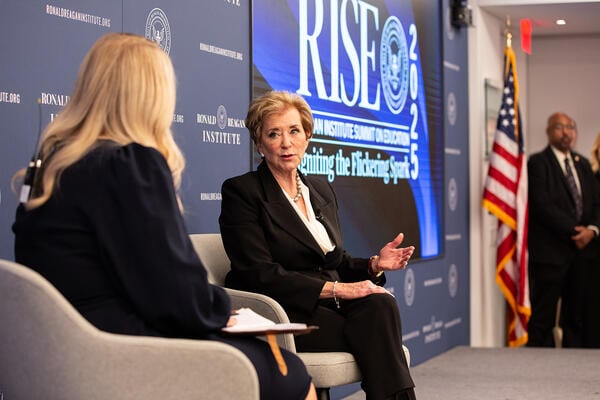
    Connor McLaren for the Ronald Reagan Institute

    Washington, D.C.—Education Secretary Linda McMahon made clear at a series of policy summits this week that while she remains committed to one day shuttering her department, there’s still much work left to be done.

    “You don’t just shut off the lights and walk out the door if you are trying to return education to the states,” McMahon said at one event Wednesday, adding that offices like Civil Rights and Federal Student Aid can’t simply be eliminated. “Really, what we’re trying to do is to show how we can move different parts of the Department of Education to show that they can be more efficient operating in other agencies.”

    Throughout her remarks at both events—the Education Law and Policy Conference hosted by the Federalist Society and the Defense of Freedom Institute on Wednesday and the Reagan Institute Summit on Education on Thursday—the secretary stressed that a key way to test this concept is by moving workforce development programs to the Department of Labor.

    “Let’s be sure that we are not moving hastily, but that we are taking the right steps at the right pace for success,” McMahon told the Federalist Society audience. “And if we show that this is an incredibly efficient and effective way to manage these programs, it is my hope that Congress will look at that and approve these moves.”

    However, some advocates for students, institutional lobbyists, Democrats in Congress and left-leaning policy analysts have taken issue with the plan to move adult, career and technical education programs to the Labor Department, arguing that it’s illegal and will create more headaches for the providers who rely on the money.

    Regardless, the Trump administration is moving forward with its plans. ED signed an interagency agreement with the Department of Labor earlier this spring and has more recently moved many of its staff members to the DOL office. (Funding for the salaries of these employees and the programs they lead, however, will still come from the Education Department budget.)

    On Thursday at the Reagan Institute, McMahon noted that the combined staff is working on a new learning and employment report as well as a “skills wallet” that will help show employers what students have learned and students what employers are looking for.

    “It’s an exciting time in labor development in that country, but it’s a challenge and a real responsibility for us to not get stuck,” she said.

    Aside from career and technical education and some of her other priorities, such as cracking down on alleged campus antisemitism and racial preferencing, much of the conversation both days was centered around the recent shooting of conservative figurehead Charlie Kirk at Utah Valley University and how to prevent political violence on campus.

    McMahon was quick to describe the Turning Point USA president’s death as a travesty and to charge colleges with the responsibility of promoting more healthy civic discourse. At both events, she cited Kirk himself as a prime example of what such debate looks like, saying that while his approach was at times “aggressive,” he was always “very polite” and “civil.”

    “He wasn’t antagonistic, but he was challenging. And there’s a clever art to being able to do that,” she said. “I don’t think that we show our students how to do that enough.”

    Thursday, she denounced the faculty, staff and students who appeared to have been apathetic toward or allegedly celebrated Kirk’s death, building upon comments she made in a social media video earlier this week. But just as she suggested condemning certain individuals for crossing an “ethical line,” she added that “if you shut down the speech of one side to allow the freedom of speech for another, you’d have actually compromised the entire principle, and that we cannot have.”

    She closed on Thursday by urging educators to foster their students’ compassion.

    “We’ve lost a little of our humanity,” she said. “Let’s make sure we grab that back in peace and show it through leadership.”

    Source link

  • If we are serious about improving student outcomes, we can’t treat teacher retention as an afterthought

    If we are serious about improving student outcomes, we can’t treat teacher retention as an afterthought

    In the race to help students recover from pandemic-related learning loss, education leaders have overlooked one of the most powerful tools already at their disposal: experienced teachers.

    For decades, a myth has persisted in education policy circles that after their first few years on the job, teachers stop improving. This belief has undercut efforts to retain seasoned educators, with many policymakers and administrators treating veteran teachers as replaceable cogs rather than irreplaceable assets.

    But that myth doesn’t hold up. The evidence tells a different story: Teachers don’t hit a plateau after year five. While their growth may slow, it doesn’t stop. In the right environments — with collaborative colleagues, supportive administrators and stable classroom assignments — teachers can keep getting better well into their second decade in the classroom.

    This insight couldn’t come at a more critical time. As schools work to accelerate post-pandemic learning recovery, especially for the most vulnerable students, they need all the instructional expertise they can muster.

    That means not just recruiting new teachers but keeping their best educators in the classroom and giving them the support they need to thrive.

    Related: A lot goes on in classrooms from kindergarten to high school. Keep up with our free weekly newsletter on K-12 education.

    In a new review of 23 longitudinal studies conducted by the Learning Policy Institute and published by the Thomas B. Fordham Institute, all but one of the studies showed that teachers generally improve significantly during their first five years. The research review also found continued, albeit slower, improvement well into years 6 through 15; several of the studies found improvement into later years of teaching, though at a diminished pace.

    These gains translate into measurable benefits for students: higher test scores, fewer disciplinary issues, reduced absenteeism and increased postsecondary attainment. In North Carolina, for example, students with highly experienced English teachers learned more and were substantially less likely to skip school and more likely to enjoy reading. These effects were strongest for students who were most at risk of falling behind.

    While experience helps all teachers improve, we’re currently failing to build that experience where it’s needed most. Schools serving large populations of low-income Black and Hispanic students are far more likely to be staffed primarily by early career teachers.

    And unfortunately, they’re also more likely to see those teachers leave after just a few years. This churn makes it nearly impossible to build a stable, experienced workforce in high-need schools.

    It also robs novice teachers of the veteran mentors who could help them get better faster and robs students of the opportunity to learn from seasoned educators who have refined their craft over time.

    To fix this, we need to address both sides of the equation: helping teachers improve and keeping them in the classrooms that need them most.

    Research points to several conditions that support continued teacher growth. Beginning teachers are more likely to stay and improve if they have had high-quality preparation and mentoring. Teaching is not a solo sport. Educators who work alongside more experienced peers improve faster, especially in the early years.

    Teachers also improve more when they’re able to teach the same grade level or subject year after year. Unfortunately, those in under-resourced schools are more likely to be shuffled around, undermining their ability to build expertise.

    Perhaps most importantly, schools that have strong leadership and which foster time for collaboration and a culture of professional trust see greater gains in teacher retention over time.

    Teachers who feel supported by their administrators, who collaborate with a team that shares their mission and who aren’t constantly switching subjects or grade levels are far more likely to stay in the profession.

    Pay matters too, especially in high-need schools where working conditions are toughest. But incentives alone aren’t enough. Short-term bonuses can attract teachers, but they won’t keep them if the work environment drives them away.

    Related: One state radically boosted new teacher pay – and upset a lot of teachers

    If we’re serious about improving student outcomes, especially in the wake of the pandemic, we have to stop treating teacher retention as an afterthought. That means retooling our policies to reflect what the research now clearly shows: experience matters, and it can be cultivated.

    Policymakers should invest in high-quality teacher preparation and mentoring programs, particularly in high-need schools. They should create conditions that promote teacher stability and collaboration, such as protected planning time and consistent teaching assignments.

    Principals must be trained not just as managers, but as instructional leaders capable of building strong school cultures. And state and district leaders must consider meaningful financial incentives and other supports to retain experienced teachers in the classrooms that need them most.

    With the right support, teachers can keep getting better. In this moment of learning recovery, a key to success is keeping teachers in schools and consciously supporting their growing effectiveness.

    Linda Darling-Hammond is founding president and chief knowledge officer at the Learning Policy Institute. Michael J. Petrilli is president of the Thomas B. Fordham Institute, a visiting fellow at the Hoover Institution and an executive editor of Education Next.

    Contact the opinion editor at [email protected].

    This story about teacher retention was produced by The Hechinger Report, a nonprofit, independent news organization focused on inequality and innovation in education. Sign up for Hechinger’s weekly newsletter.

    The Hechinger Report provides in-depth, fact-based, unbiased reporting on education that is free to all readers. But that doesn’t mean it’s free to produce. Our work keeps educators and the public informed about pressing issues at schools and on campuses throughout the country. We tell the whole story, even when the details are inconvenient. Help us keep doing that.

    Join us today.

    Source link

  • Removing Credit Transfer Barriers Key to Improving Higher Ed Completion Rates

    Removing Credit Transfer Barriers Key to Improving Higher Ed Completion Rates

    Dr. Andrew J. SeligsohnHigher education in the United States has come under increasing scrutiny — but not always for the right reasons. Critics claim that colleges and universities award degrees with little economic value, limit ideological expression on campus, and operate primarily for their own financial interests, rather than as institutions of shared public value. While much in this narrative is false, it nonetheless affects the public’s attitude toward higher education and individuals’ decisions about pursuing a postsecondary degree, which may be detrimental to their economic interest.

    When these critiques are made in bad faith, we should counter them with facts about the value of college attainment. It remains true for example, that a college degree is likely to yield a significant boost in earnings. Nonetheless, anyone who cares about higher education must also ask why these arguments resonate so deeply with the public. Where real frustrations are fueling legitimate skepticism, addressing those concerns can both improve higher education’s reputation and enhance its value for students, families, and society. Since the experiences that give rise to frustration and receptivity to attacks on higher education are personal experiences, it pays to drill down into the particulars to figure out what’s going on.

    In that spirit, Public Agenda, in partnership with Sova and the Beyond Transfer Policy Advisory Board, set out to deepen our collective understanding of learner experiences with the credit transfer process. We knew from research on enrolled students that transfer was a source of pain for many learners. But we didn’t know how many people were affected, how much it mattered to them, and how it shaped their views of higher education more broadly. With support from ECMC Foundation, we fielded a national survey of adult Americans that interrogates transfer experience and outcomes. 

    Dr. Lara CouturierDr. Lara CouturierThe findings were striking, and they should serve as a call to action for institutions of higher education. Nearly 4 in 10 respondents reported that they had tried to transfer credit toward a college degree or credential. This included credits earned at a previous college or university, as well as credits earned from nontraditional sources. In fact, more than a third attempted to transfer credits earned from workplace training, military experience, industry certification, vocational or trade school, or other prior learning. With more households feeling the cost of inflation and needing to upskill to survive in this economy, and more higher education institutions facing enrollment declines, we should be finding ways to develop more on-ramps and clear the path to a college degree.

    Unfortunately, the survey revealed that Americans who attempt to transfer encounter convoluted paths, often losing credit hours, money, and motivation along the way. One in five respondents reported having to repeat a class they had already taken because their credits didn’t transfer. Thirteen percent reported running out of financial aid as a result of having to repeat courses. And, most concerning, 16% reported that they gave up on pursuing a college degree or credential because the process of transferring was so difficult. It’s clear difficulties with transfer are not only inconveniences — they’re significant financial burdens and barriers to completion.

    We also sought to understand how these direct experiences shape individuals’ broader attitudes toward higher education. We found it profoundly troubling that 74% of respondents who had tried to transfer credit agreed with the statement that two- and four-year higher education institutions care more about making money than about educating students. In fact, respondents who had tried to transfer credit were more likely to hold this jaded view than those who had attended college but had not transferred or those who had no prior experience with higher education. So while some of the current attacks on higher education may be in bad faith, it should not be surprising that they find a receptive audience among so many Americans who recall feeling personally misled. 

    We know, then, that credit transfer needs reform — but what exactly does that look like? Public Agenda also surveyed Americans about potential interventions, and the results are promising. First, when asked what should happen to a college with a track record of not accepting many credits for transfer, Americans felt public accountability would be more helpful than heavy-handed punitive approaches. Fifty-four percent of Democrats and 47% of Republicans agreed that institutions should have to make a plan to improve credit transfer rates. Conversely, just one-third of Republicans and Democrats thought colleges should lose their funding. But what might go into a plan for improvement? Our survey found broad support among Republicans, Democrats, and independents for a variety of policies intended to make it easier for students to transfer credits. Support is notably strong for requiring that students have free and easy access to their transcripts, credentials, and degrees; requiring institutions to create public databases with transfer information; and requiring that prospective transfer students are quickly told how many credits will be accepted. 

    The benefits of a better transfer process are clear and compelling. Students would face fewer obstacles to completing their degrees, leading to higher graduation rates, better individual economic outcomes, and broader prosperity. Just as importantly, higher education would rebuild trust with the public by showing that institutions are committed to serving students—not just collecting tuition dollars. And the benefits of this renewed trust extend beyond the higher education system. The perception that public institutions don’t care about ordinary Americans is a key element of the challenge our broader democracy is facing. Since the education system is a direct way many people interact with our government, restoring confidence that higher education works for all Americans can further inspire faith in public institutions.

    If we ignore issues like the broken credit transfer system, skepticism about higher education will continue to fester. Worse, more students may give up on college altogether, missing out on opportunities for personal and professional growth—all of which ultimately erodes our democracy. Pushing back against misinformation isn’t the only way to defend higher education; we must acknowledge and address the real barriers students face. Credit transfer is an experience shared by many with cross-partisan support for reform—now is the time to act. Reforming the transfer process won’t solve every challenge facing higher education, but it’s a clear and necessary step toward improving the system for the good of both students and institutions themselves.

    Dr. Andrew J. Seligsohn is president of Public Agenda, a national research-to-action organization. Dr. Lara Couturier is a partner at Sova, a higher ed advocacy organization.

    Source link

  • Improving State Longitudinal Data Systems

    Improving State Longitudinal Data Systems

    Title: Powering Potential: Using Data to Support Postsecondary Access, Completion, and Return on Investment
    Source: The Data Quality Campaign

    To make decisions about when and where to pursue their next educational credential, students and their families need to be able to understand the full picture of pursuing further education. They need access to real-time program information, which includes data on enrollment and completion, program performance, financial aid availability, employment, and return on investment.

    A new publication from the Data Quality Campaign highlights the current landscape and challenges of state data systems for postsecondary education and offers recommendations to align state and institutional data systems.

    Key findings include:

    How the existing postsecondary and workforce data landscape varies

    According to the report, nearly all states have agencies that oversee postsecondary institutions and collect some student or programmatic data within postsecondary student unit record systems (PSURSs). However, the authors note that agency-specific data are often disconnected from other sectors’ data. As a result, student information cannot connect with postgraduation outcomes, as is possible with statewide longitudinal data systems.

    Education and workforce data systems differ greatly across states. Sixty-eight percent of PSURSs connect to workforce data, but only 11 percent identify the industry and general occupation that individuals are employed in.

    States collect a variety of postsecondary data from institutions through a variety of methods, but the report emphasizes that states identify many common uses of the data, such as in supporting workforce alignment.

    Data challenges that states are facing

    The report observes that federal funding for states to develop data systems has been increasingly siloed, with different grant programs focusing on the development of data systems that each have a narrow focus (e.g., workforce and K–12 data).

    Education and workforce data systems identify students using different methods, making connecting individuals’ data and tracking their pathways difficult. However, the authors note that some states are making changes to improve matching accuracy.

    Recommendations for states to proactively use data in cooperation with postsecondary institutions

    The report recommends that states ensure data are used in collaboration with postsecondary institutions to inform policy and practice. This includes creating guided pathways and aligning institutions’ educational offerings with their states’ workforce needs. By evaluating trends in postsecondary completion, employment outcomes, and employment needs, policymakers can refine programs that guide students into pathways with high completion and high-paying careers.

    Institutions collect a variety of information about students, including enrollment demographics and course grades. According to the report, given many institutions’ limitations to do robust analysis, this information should be integrated with statewide data systems.

    States can use data to make the admissions and financial aid application processes easier for students and to streamline the process of enrolling in high-demand educational offerings. States and institutions can also leverage their shared data to identify students at higher risk of not completing their postsecondary program and tailor financial support, emergency aid, and academic supports to provide on-time interventions to these students.

    To read the full report from the Data Quality Campaign, click here.

    —Austin Freeman


    If you have any questions or comments about this blog post, please contact us.

    Source link

  • Improving Transfer Based on Success Stories

    Improving Transfer Based on Success Stories

    A new transfer playbook, released by the Aspen Institute and the Community College Research Center, offers strategies for improving outcomes for transfer students by examining higher ed institutions with the best records.

    The playbook notes that, for a decade, fewer than a fifth of community college students have successfully transferred and earned bachelor’s degrees, though many aspire to reach that goal. But the playbook stresses that better outcomes are possible. At colleges with the best overall transfer outcomes—those in the top 10 percent for all institutions—at least 52 percent of students transfer and at least 61 percent of transfer students earn bachelor’s degrees, far exceeding national averages. If all community colleges achieved these kinds of results, they could double the bachelor’s degree attainment rates for community college students from 16 percent to 32 percent, the playbook concludes.

    Based on interviews with college leaders, students and staff members at campuses with successful transfer pathways and partnerships, the playbook’s authors offer three core strategies for improving transfer, with examples of relevant practices and case studies.

    First, they recommend that executive leadership spearhead partnerships between community colleges and universities so improvements to transfer can be made at scale. They also suggest working toward more timely bachelor’s degree completion rates within majors by better aligning curriculum and instruction with transfer pathways. Lastly, they recommend tailoring advising and other supports for transfer students in ways that “foster trust and engagement.” For example, the playbook encourages community colleges to ensure transfer advising is offered to all students and occurs before, during and after the transfer process, with outreach to prospective students about transfer options as early as high school.

    “There is immense potential in the dreams and ambitions of bachelor’s-intending community college students—and the many who may have counted themselves out but have the ability to complete a bachelor’s and expand their career horizons,” the foreword to the playbook reads.  

    Source link

  • Five strategies for improving campus career centers (opinion)

    Five strategies for improving campus career centers (opinion)

    For decades, work-life balance has been seen as the gold standard of career success. The idea suggests that professionals should allocate time and energy evenly between work and personal life, ensuring equilibrium between competing responsibilities. But in reality, balance is often an illusion—an unattainable tightrope walk that leaves individuals feeling guilty, unfulfilled and stretched too thin.

    The workforce of today—and especially the workforce of tomorrow—no longer aspires to a segmented life. Instead, workers seek career and life integration, a holistic approach where career, personal growth and well-being are deeply interconnected. Unlike the concept of work-life balance, which implies a constant trade-off, career and life integration builds synergy between personal and professional aspirations.

    Workday’s Global Workforce Report found that employees who perceive their work as meaningful feel 37 percent more accomplished than those who don’t, even when facing workloads they describe as “challenging.” An Inside Higher Ed Career Advice piece written by a University of Michigan administrator explored the importance of integrating values into the career exploration process. Additionally, research highlighted in the Journal of Personality indicates that young adults’ personal values significantly influence their career-related preferences, suggesting a strong desire for roles that reflect their core values. ​

    If higher ed institutions continue to treat career development as separate from personal well-being, they will fail to meet the evolving needs of students and professionals alike. Career centers must evolve into career and life design labs—hubs of lifelong guidance, personal development and future readiness. This piece outlines five strategic imperatives that institutions must embrace to lead this transformation.

    1. Moving from work-life balance to career and life integration.

    The traditional work-life balance model assumes a strict separation between career and personal life, often emphasizing boundaries rather than synergy. The statistics tell a compelling story:

    • A Deloitte study found that 66 percent of employees report feeling chronically overworked or burned out despite efforts to maintain work-life balance.
    • Research from Gallup indicates that 76 percent of millennials believe a successful career should seamlessly integrate with personal fulfillment rather than be kept separate.
    • A recent Moodle study indicates that job burnout has reached an all-time high of 66 percent in 2025. ​

    Campus career services leaders must reframe their approach. Students need tools to design careers that complement their life aspirations rather than forcing them to choose between professional success and personal fulfillment.

    Most students and alumni struggle with clarity—they pursue careers based on external pressures rather than intrinsic motivations. Career centers must facilitate career and life vision workshops to help individuals align their inner purpose with external opportunities. By integrating career and life design principles into career services, institutions empower students to prototype different pathways, develop adaptability and connect their academic and professional lives with personal meaning.

    By using a reflective, experiential approach, students learn that career development is not a rigid ladder but a fluid, evolving process.

    1. Integrating emotional agility into career coaching.

    One of the greatest barriers to success is not external—it’s internal. It is not a lack of skills. It is a lack of confidence, clarity and emotional agility. Many students enter the workforce grappling with impostor syndrome, career anxiety and fear of failure. A research study titled “The Impostor Phenomenon,” published in the International Journal of Behavioral Science, shows that over 70 percent of people experience impostor syndrome at some point in their lives.

    Institutions must integrate emotional intelligence training into their strategic plans. Students need to learn how to navigate career uncertainty with resilience rather than fear. Instead of merely offering job search strategies, career coaches should incorporate cognitive reframing techniques to help students shift from self-doubt to empowerment. This involves helping students recognize negative thought patterns and replace them with action-oriented mindsets.

    For instance, instead of viewing rejection as a failure, students should be encouraged to see it as an iteration in the career and life design process. Career setbacks, industry changes and professional pivots are inevitable.

    Practical steps for career centers:

    • Train career coaches in cognitive-behavioral coaching techniques to help students recognize and reframe self-limiting narratives.
    • Integrate self-awareness exercises that help students identify core fears (of failure, rejection or inadequacy) and develop action plans to overcome them with emotional strength.
    • Provide group coaching sessions focused on overcoming impostor syndrome, building confidence and developing a growth mindset.
    • Use AI-driven career reflection tools to help students track their confidence growth over time.
    • Incorporate mindfulness practices and journaling into safe spaces and welcoming career and life design studios to help students reframe failure as part of their evolving unique narrative.

    Emotional agility is a core component of career development. Success today isn’t about having the perfect career path—it’s about navigating uncertainty with emotional agility. Career services must equip students with resilience and adaptability to thrive in ever-changing industries.

    1. Merging personal, career and professional development.

    Career and life design should be deeply personal, shaped by self-awareness, curiosity and personal reflection. We mention “personal” first, because we begin with the person.

    Career services has historically focused on résumé reviews, job placement and networking strategies—important elements, but not enough for long-term success. A 2023 report by the National Association of Colleges and Employers found that students who integrate personal development with career planning—through leadership training, mentorship and values-based exploration—are significantly more career-ready upon graduation. Rather than pushing students toward the highest-paying or most prestigious jobs, career centers should help them define success on their own terms.

    Practical steps for career centers:

    • Develop integrated mentorship networks that connect students with professionals who exemplify career and life integration.
    • Help students build personalized business plans that help them take ownership of the story they are both writing and telling.
    • Leverage design thinking principles, encouraging students to experiment with career pathways that embrace uncertainty, adaptability and iterative learning rather than rigid, predetermined plans.

    AI can assist in career trajectory mapping, skills assessment and predictive job market insights, while human coaches focus on deep coaching, the power of stories and career and life integration strategies.

    1. Considering AI-powered hyperpersonalized career coaching.

    While traditional career advising has relied heavily on in-person interactions, the next evolution of career services will be AI-empowered, data-informed and hyperpersonalized. AI-driven career exploration tools can analyze a student’s experiences to offer real-time, customized career insights. AI agents such as the 24-7 virtual Career and Life Design Lab provide personalized career simulations, self-actualization exercises and self-realization insights to help individuals align their career paths with their purpose.

    This mindset shift in career services will blend AI and human coaching. AI can assist in career trajectory mapping, skills assessment and predictive job market insights, while human coaches focus on deep coaching, the power of stories and career and life integration strategies. This synergy allows for scalable yet deeply personalized career services.

    Practical steps for career centers:

    • Integrate AI-driven solutions and experiential learning methodologies.
    • Introduce future-self mapping, where students interview their future selves and map out short- and long-term goals.
    • Use reverse-engineering techniques, working backward from the desired impact to identify the necessary skills, experiences and trajectories.
    • Implement AI-powered career simulations, allowing students to test and refine career decisions in a risk-free environment that tackles limiting beliefs and impostor syndrome.
    1. Scaling lifelong learning beyond graduation.

    The future of work demands continuous upskilling, reskilling and career agility. Institutions must create a culture of lifelong learning, where students and alumni receive ongoing support throughout their careers. Career services must expand their scope to lifelong learning and helping students and alumni develop not résumés, but portfolios of experiences.

    Practical steps for career centers:

    • Create career and life integration circles, where alumni engage in peer coaching, mentorship and accountability partnerships.
    • Offer subscription-based career services, ensuring alumni have access to coaching, upskilling and career reinvention programs throughout their professional lives.
    • Establish annual career and life re-evaluation workshops, helping alumni recalibrate their career and life vision.

    Conclusion: The New Paradigm

    The future of work is not about balance. It is about integration. By embedding the career and life design theoretical framework into institutional frameworks, universities can better equip students for a rapidly changing world. Colleges and universities that fail to adapt will be left behind, while those that embrace career and life design—leveraging both AI and a holistic approach to personal, career and professional development—will supercharge their teams with scale and empower students to craft lives of purpose, adaptability and lasting impact.

    The question is no longer whether career centers should evolve—it is whether they can afford not to.

    Does your career center offer group coaching sessions focused on confidence building, growth mindset or related topics? Tell us about it.

    Source link

  • Improving the Student Experience – Archer Education

    Improving the Student Experience – Archer Education

    Attract and Retain the Right Students for Your Institution

    Choosing a higher education program is often a defining moment in a person’s life. Whether it’s a teenager deciding on a traditional, on-ground undergraduate program, or someone in their late 30s selecting an online master’s program — it’s a big decision, and one that can be heavily influenced by the experiences they have with the institutions they’re considering. 

    Your students don’t just deserve a great experience, they expect it. Which is why identifying opportunities to enhance the student journey at your institution is essential. 

    In the competitive world of higher ed enrollment, the ability to attract and retain students goes beyond offering picturesque campus views or flexible online scheduling. It hinges on understanding and navigating the complexities of the process a student goes through, from their initial awareness of your program all the way through to their graduation, and identifying where students can get stuck, or worse, drop off. 

    When it comes to enhancing the student journey, I’m often asked, “Where is the best place to start?” To that end, this article dives into some of the most common areas for improvement. Focus on these areas and you’ll be on your way toward delivering a stand-out student experience. 

    This article explores:

    Common Bottlenecks in the Student Journey 

    Institutions aiming to enhance the overall student experience need to understand where students tend to get stuck. By pinpointing these bottlenecks, your university can devise strategies that streamline the journey and boost student engagement and retention. Some common points of friction in the enrollment process include: 

    Top of the Funnel: Driving Awareness               

    Every student journey begins with awareness, but getting potential students to visit your institution’s website to gain awareness of its programs can be a stumbling block. Many universities face challenges due to poor audience targeting, ineffective creative strategies, or a lack of investment in organic channels like websites and content strategies. 

    If your awareness efforts are falling short, your potential students won’t land on your university’s digital doorstep. This means opportunities to engage and inform them go untapped, which sets the stage for a cascade of engagement issues downstream. 

    It’s called an enrollment funnel for a reason — if you don’t attract enough qualified traffic at the top, the bottom of your funnel will fall short of your goals. 

    Mid-Funnel: Generating Interest

    Let’s say your awareness efforts are working, and your brand, story, and program marketing tactics are finding prospective students. Once these prospects are aware of your institution and have visited your site, the next challenge is to convert them into active inquirers. In other words, getting them interested enough to raise their hand by filling out a form, contacting an enrollment advisor, or even starting their application. 

    This stage often suffers from two main issues: 

    If your paid ads told one story and your website tells a totally different one, it can be a turnoff for prospective students. If the content does not resonate with potential students’ academic aspirations, they are less likely to take the next step. If you’re not highlighting what makes an education at your institution truly unique or how it connects to your target audience, it’s likely that your content won’t resonate, even if you did identify the right audience. 

    Bottom of the Funnel: Growing Application Submissions

    What’s every enrollment leader’s least favorite word? Melt. Even after marketing to the right audience and generating inquiries, there’s often a drop-off before the application stage — commonly known as the application melt. 

    This is a delicate phase, where bad strategy moves and overly clunky processes can cause big problems. This could include generic follow-up communications that fail to engage the interests of prospective students, a lack of personalized experiences that can make students feel valued, or insufficient time spent nurturing and managing these warm leads. Each of these factors can lead to a significant reduction in the number of completed applications.

    Methods to Identify Student Experience Bottlenecks 

    Now that we’ve covered the most common bottlenecks, let’s talk about how to identify where these bottlenecks are showing up in your student experience. Once you identify them, you can target improvements effectively and efficiently. Methods to identify bottlenecks include: 

    Benchmarking               

    A powerful starting point for identifying pain points is benchmarking your institution’s performance against your peers or similar programs. Benchmarking involves a comprehensive comparison of your processes, outcomes, and student satisfaction levels to those of other institutions. 

    By evaluating where you stand in relation to your peers, you can identify specific areas where you lag behind. Benchmarking provides a clear, external perspective on your institution’s relative strengths and weaknesses, guiding you toward the most impactful areas for enhancement.

    Leveraging Internal Data

    Once you understand the external picture, you can dive in internally. Your internal data is an invaluable resource for tracking the effectiveness of changes in the student experience. By analyzing metrics such as enrollment rates, drop-off points, and student feedback before and after implementing changes, you can gauge their impact. 

    This approach helps you identify which efforts are helping the student experience and which aren’t, allowing you to make data-driven decisions. It also enables you to adapt your strategies dynamically, continuously improving the student journey as students’ needs continue to evolve. 

    Intuition and User Testing

    As we all know, data alone isn’t enough. Intuition and direct feedback play a crucial role in creating the full picture of your student experience. Conducting user testing sessions in which potential or current students navigate your enrollment process can reveal obstacles that data might not capture. This can be as simple as a conversation or as intricate as a survey.

    Additionally, personally walking through each stage of the student journey yourself can provide you with insights into the emotional and practical challenges prospective students face. Think of it as acting like a secret shopper — fill out an inquiry form and see what happens. This method helps you uncover hidden roadblocks that might not be evident from quantitative data alone, adding a human element to your analysis.

    Fixing Bottlenecks With ICE Scoring 

    Now that you’ve got a list of bottlenecks to fix, you need a system to prioritize them. This next critical step ensures that you properly allocate your time and resources. The ICE scoring framework, which stands for impact, confidence, and effort, is a structured approach to evaluating potential fixes and deciding which ones to tackle first. 

    Impact              

    The first step, impact, involves evaluating how much a potential fix could enhance the student experience. 

    Fixes that address issues at the top of the funnel, such as increasing awareness and initial engagement, often get a high score because they can influence the largest number of prospective students. The more qualified prospective students you can get into your enrollment funnel, the more you’re likely to enroll. 

    By prioritizing high-impact fixes, you can see substantial improvements in overall student engagement and satisfaction.

    Confidence

    Confidence measures how certain your institution is about the effectiveness of a proposed fix. This assessment is based on evidence from user testing, adherence to best practices, personal experience, and insights from experts in the field. 

    For example, if you get a large volume of inquiries outside of business hours, you can give a high confidence score to an effort that would engage students at any hour, like Onward or a chatbot. 

    A high confidence score indicates a strong belief that the fix will achieve the desired outcome, reducing the risk associated with resource allocation. You are more likely to succeed when you base your decisions on robust, tested solutions.

    Effort

    The final component of the ICE framework is effort, which estimates the time, financial investment, and organizational energy required to implement a fix. This step also considers the level of internal buy-in necessary to move a project forward. 

    Effort scoring helps you understand the resource demands of each potential fix, allowing you to consider its feasibility against its expected benefits. Implementing a new learning management system (LMS) is a huge project that requires organization-wide input and execution. This equals a high effort score. Refreshing your creative assets? Much less effort. 

    Prioritizing fixes that require reasonable effort but offer significant impact can lead to more sustainable and effective improvements.

    Implementation and Iteration in the Student Experience 

    Improving the student experience is not a one-time thing. It’s an ongoing process that demands continuous attention and optimization. As your institution implements changes,  you’ll need to monitor the effects and iteratively refine your efforts based on the outcomes. 

    Monitoring Results

    The first step after implementing any change is to closely monitor the results. Key performance indicators (KPIs), such as cost per lead, application melt, enrollment numbers, student retention rates, and satisfaction scores, are a gold mine. Continuous monitoring validates the effectiveness of new strategies and highlights areas that may require further attention. 

    Rinse and Repeat

    Once the initial results are known, the next step is to apply the ICE framework again — this time to any new bottlenecks or existing issues that were deprioritized in earlier rounds. This iterative approach ensures that your resource allocation remains dynamic and responsive to the evolving needs of your students and your institution. 

    Ready to Improve Your Institution’s Student Experience

    At Archer Education, we understand the transformative power of full-funnel data visibility when you’re improving your student experience. Our commitment to transparency and knowledge sharing drives our partnerships with colleges and universities, helping higher ed leaders and marketers exceed their online learning growth and enrollment goals. 

    Our experienced team is adept at identifying and addressing the bottlenecks that can hinder student journeys, utilizing strategies like those outlined in this article to maximize impact. By applying the ICE framework, we help institutions prioritize and implement improvements that significantly enhance the student experience. 

    If you’re ready to transform your student journey and achieve remarkable outcomes, contact our team today, and explore how our offerings can bring your educational goals to fruition.

    Subscribe to the Higher Ed Marketing Journal:

    Source link