
Tag: Incarcerated

  • Improving Academic Supports for Incarcerated Students

    Improving Academic Supports for Incarcerated Students

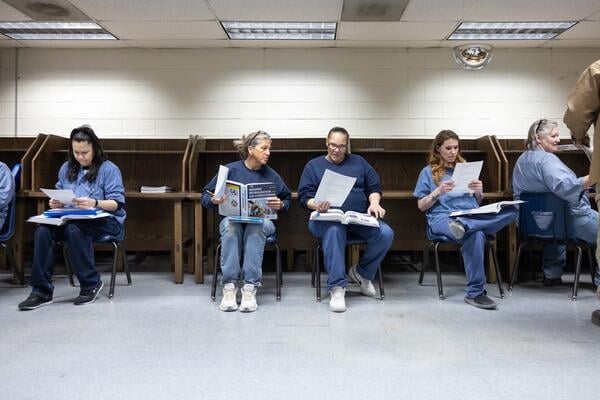
    In 2023, Congress reinstated use of Pell Grants for students in prison, expanding their access to higher education.

    One of the stipulations was that colleges would provide them with the same access to resources that on-campus students have, including academic supports, career advising, tutoring, mental health resources and study halls. However, a recently published report from the University of Puget Sound finds that this provision has been difficult to fulfill, in part because of prison systems, but also because of the overly bureaucratic processes at higher ed institutions themselves.

    The report identifies existing barriers, as well as opportunities to better serve incarcerated students.

    What’s the need: Higher education programs in prisons can help incarcerated individuals improve their educational attainment and career opportunities upon release, as well as increase socioeconomic mobility for affected individuals and their families.

    Providing education to incarcerated individuals, however, can be a challenge due to their lack of access to technology and learning materials, restrictions on when they can participate and policies like lockdowns that impede learning opportunities.

    “Prison rules and staff often limit the ability to study, work together, possess books and supplies in cells, and meet outside the classroom,” according to the report. Students can also lack access to faculty outside of the classroom.

    Students often are unaware of or unable to access traditional campus resources such as research databases, learning management systems, disability and mental health resources, and tutoring.

    The findings: Puget Sound’s report includes survey data from alumni of higher education in prison (HEP) programs and faculty. Researchers also relied on in-depth interviews with 25 stakeholders involved in such programs, as well as any affiliated teaching and learning center staff members. Interviews were conducted between August and November 2024.

    In conversations with faculty, researchers learned that silos often exist between teaching and learning centers and HEP programs, which can leave professors without sufficient resources or supports to be effective instructors. Even at the national level, pedagogical or student success–oriented conversations often don’t take into account incarcerated students.

    For instructors, working with incarcerated students can be demanding because it’s not part of their regular teaching load, they have long commutes or they have to adapt their materials and syllabi to a low- or no-tech teaching environment, according to the report. Some professors reported feeling isolated from peers or unable to share or receive feedback about their teaching.

    Keep Reading

    The University of Puget Sound compiled resources from higher education in prison programs to improve teaching and learning, including trainings, sample faculty and student handbooks, models for mental health support, and more.

    See the full guide here.

    What can help: The researchers identified a variety of innovative programs to enhance incarcerated students’ learning and educational outcomes.

    Some HEP programs, including those at Rutgers University and Scripps College, established peer tutoring opportunities among incarcerated students, in which graduates provide feedback on writing, research, time management and study skills.

    “The implementation of peer-to-peer tutoring does not just help the students receiving support. It builds professional development skills, volunteer or employment histories, and confidence for the tutors themselves as they continue their learning journeys,” the report says.

    The University of Utah Prison Education Program pays incarcerated students about $600 per month to provide peer support in a one-stop location. Student employees offer homework assistance, help organize events and educate their peers on health and wellness topics.

    The report also advocates for developing college prep and student success courses for incoming incarcerated students to help them get familiar with resources and technology that they may not know about. Tufts University Prison Initiative of Tisch College offers a two-semester foundation of academic success course, for example.

    Incarcerated students may also have mental health needs or disabilities that require extra intervention from the institution. Loyola University in Chicago’s HEP program employs a social worker who meets with students individually to understand their needs and connect them with support.

    Administrators can also institutionalize support for instructors of these programs by counting teaching in prison settings as a part of a regular course load or providing training for such programs during new faculty orientations. Learning communities, course development stipends and certifications can also incentivize effective teaching practices among instructors who teach in prisons.

    Connecting campus staff, particularly those in teaching and learning centers, with HEP faculty and students can also break down silos between campus and incarcerated students and ensure learners are being best served, according to the report.

    In the future, researchers hope to establish a national learning community for pedagogy in prison and a convening of stakeholders in this space to share resources.
    Source link

  • L.A. County’s Failure to Educate Incarcerated Youth is ‘Systemic – The 74

    L.A. County’s Failure to Educate Incarcerated Youth is ‘Systemic – The 74


    Get stories like this delivered straight to your inbox. Sign up for The 74 Newsletter

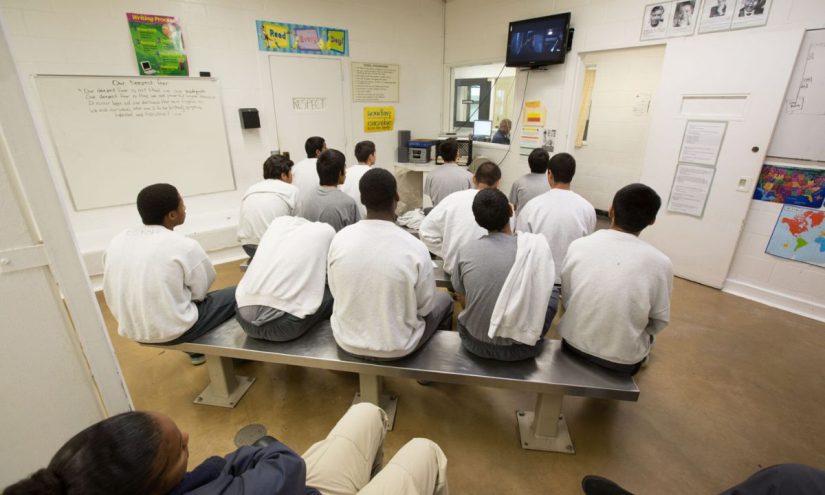
    Local government agencies in charge of youth violated the educational and civil rights of students in Los Angeles County’s juvenile justice facilities for decades by punting responsibility and inaction, according to a report released Wednesday.

    Who has the power? Chronicling Los Angeles County’s systemic failures to educate incarcerated youth” blames the disconnected, vast network of local and state agencies — from the board of supervisors to the local probation department to the county office of education and more — that play one role or another in managing the county’s juvenile legal system, for the disruption in the care and education of youth in one of the nation’s largest systems.

    “This broken system perpetuates a harmful cycle of ‘finger-pointing,’ often between Probation and Los Angeles County Office of Education, which hinders the resolution of issues that significantly affect the education of incarcerated youth,” wrote the Education Justice Coalition, authors of the report.

    The coalition includes representatives from Children’s Defense Fund-California, ACLU of Southern California, Arts for Healing and Justice Network, Disability Rights California, Youth Justice Education Clinic at Loyola Law School, and Public Counsel.

    The authors listed three demands for the board of supervisors, including reducing youth incarceration by way of implementing the previously approved Youth Justice Reimagined plan, providing access to high-quality education, and adopting transparency and accountability measures.

    Decades of documented rights violations

    A timeline outlines repeated student rights violations, some of which have resulted in class-action lawsuits and settlements requiring the county to be monitored by the federal and state departments of justice for years at a time.

    Since 2000, the timeline notes that Los Angeles County has faced:

    • A civil grand jury report calling on the board of supervisors to “improve collaboration” between the probation and education departments in order to address unmet educational needs
    • An investigation by the federal Department of Justice — and subsequent settlements — found significant teacher shortages, lack of consistency in daily instruction, and issues with support for students with special needs
    • A class action lawsuit against the county office of education and the probation department
    • An investigation by the state Department of Justice, followed by settlements, found excessive use of force and inadequate services
    • Multiple findings by a state agency of L.A. County juvenile facilities being “unsuitable for the confinement of minors”

    Most recently, the state attorney general has requested receivership, which would mean full state ownership of the county’s juvenile halls.

    The Los Angeles Board of Supervisors, the probation department, and the Office of Education did not immediately respond to a request for comment.

    The lasting impact of academic disruptions

    Dovontray Farmer experienced the mismanaged system when he entered Los Padrinos Juvenile Hall a second time as a 10th grader. Now 24 and serving as a youth mentor with the Youth Justice Coalition, Farmer said that his time in L.A. County facilities “played a major role in not being able to get properly educated — I felt betrayed, honestly.”

    Returning to school after being released was difficult, he said, because he quickly realized he was several grade levels below his classmates at his local high school.

    He’d also been part of his school’s football team before his detention at Los Padrinos when he was 17, and said he tried returning to the team once released but wasn’t allowed back.

    He said the disruption to his education and participation on the football team, which he saw as a positive influence, affected how he viewed his life.

    “There was nothing I really could do, so I was really giving up,” he said. “Like, everything that I really cared for was already gone.”

    The environment at the juvenile facilities didn’t help matters. 

    Los Padrinos recently came under fire after a video published by the Los Angeles Times showed probation officers standing idle as detained youths fought. Thirty officers have been indicted on criminal charges for encouraging or organizing gladiator-style fights among youths.

    Farmer said he was put through those same types of fights when he was at Los Padrinos as a teenager.

    “A lot of the coverage recently has been about the recent gladiator fights in 2023, but clearly this is a very systemic issue that even when a problem is resolved in the short term, we’re uncovering that it’s really indicative of a larger systemic problem,” said Vivian Wong, an education attorney and director of the Youth Justice Education Clinic at Loyola Law School, whose recent clients have included Los Padrinos students.

    Education data across several years backs Farmer’s experiences while detained.

    The most recent state data available when Farmer was detained at Los Padrinos is from 2018, when 39% of students were chronically absent, less than 43% graduated, and 12% were suspended at least once.

    That same year, the state’s average was 9% for chronic absenteeism, 83.5% for graduation, and 3.5% for suspension.

    Ongoing education concerns

    The report’s authors note that students across several facilities have lost thousands of instructional minutes, with a “lack of transparency and concrete planning to ensure that the missed services are adequately made up for, leaving students at risk of falling further behind educationally.”

    While compensatory education has typically been used to resolve instructional minutes owed, “I am not sure that’s the most realistic way to remedy the injustice that young people face, because they have endured so much abuse in these facilities,” said Wong. “It’s much more than just a loss of instruction.”

    A more appropriate response to the loss of instructional time would be a consistent investment in avoiding detention and keeping young people in their communities to maintain school stability, she added.

    Past attempts at reform have often been “done without community input or leadership, both in the design and in the implementation of those reforms,” Wong said.

    The new report, she added, is meant to be a tool toward implementing Youth Justice Reimagined, or YJR, a model against punitive measures that was largely developed with input from community organizations to restructure the local juvenile legal system.

    Three demands

    Youth Justice Reimagined, approved by the Los Angeles County Board of Supervisors in November 2020 to reform the local juvenile legal system, would move the county away from punitive approaches, such as detention, and toward rehabilitative support through counseling, family and vocational programming, small residential home placements, and more.

    Youth detention results in “severe disconnection from and disruption to their education trajectory,” wrote the report’s authors, as they urged the board to address abysmal educational access and achievement by fully funding and implementing YJR.

    The disconnect, they added, is exacerbated by delayed school enrollment when detained and upon release, the constant presence of probation officers, and turnover of educators and classmates.

    These common experiences are particularly difficult for students with learning disabilities or a history of trauma, they wrote.

    “After more than a decade of incremental reform, it is time for the County to truly reimagine youth justice,” wrote Supervisors Sheila Kuehl and Mark Ridley-Thomas in their November 2020 motion to approve YJR. “In the same way that the Board has embraced a care first, jail last approach to the criminal justice system, it is incumbent upon the Board to embrace a care first youth development approach to youth justice.”

    Despite the approval, a report published in August 2024 by the state auditor found that less than half of the YJR recommendations had been implemented by mid-2024.

    To address the high rates of chronic absenteeism, poor testing results and instructional minutes owed, the Education Justice Coalition’s second demand is to adapt educational opportunities “to address the unique and significant needs of the court school population.”

    They listed 18 actions the county probation and education departments should work together on, including:

    • Appropriate education support for students with disabilities 
    • Access to A-G approved courses for every student in a juvenile facility
    • Classrooms led by educators, rather than probation officers
    • Appropriately credentialed and culturally competent educators
    • Education access that is not disrupted due to probation staffing issues

    The coalition’s third demand centered on transparency and accountability measures by providing families with access to education planning for their children and establishing work groups that include community members.

    This story was originally published on EdSource.


    Get stories like these delivered straight to your inbox. Sign up for The 74 Newsletter

    Source link