
Tag: Incoming

  • Summer Courses to Help Incoming College Students Adjust

    Summer Courses to Help Incoming College Students Adjust

    National data suggests today’s college students are less prepared to succeed in college than previous cohorts, due in part to the COVID-19 pandemic and remote instruction. Students lack academic and socio-emotional readiness, administrators say, prompting colleges to implement new interventions to get them up to speed.

    For years, Mount Saint Mary’s University in California has offered a summer bridge program for students who may be less prepared to make the transition to college, such as first-generation students.

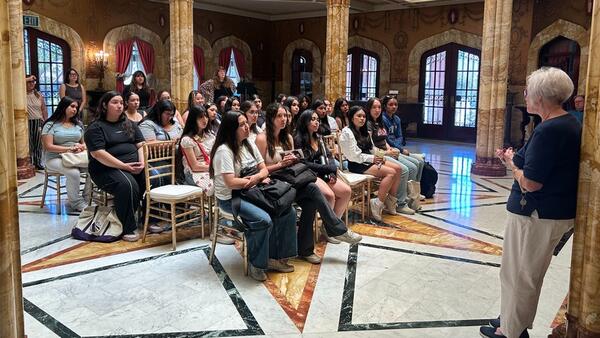
    This summer, MSMU launched Summer Pathways, which is designed for all incoming students to get a head start on college. They complete two college courses for free and are able to connect with peers and explore campus before starting the term.

    “We felt the earlier we can engage students, the better,” said Amanda Romero, interim assistant provost.

    How it works: Summer Pathways is a six-week, credit-bearing experience that takes place in the middle of the summer, after orientation in June but before classes start in August.

    During the program, students complete a Summer Pathway seminar and one additional introductory course, choosing among sociology, English and mathematics.

    Students take classes Mondays, Wednesdays and Fridays; on Tuesdays and Thursdays they participate in workshops about managing their time, dealing with impostor syndrome or maintaining well-being.

    “We’ve invited the whole campus community to come in, meet with our students in person, talk about their careers, their offices, how they ended up at the Mount, what their hopes and aspirations are for the future,” said Elizabeth Sturgeon, interim assistant provost and director for Summer Pathways.

    The goal is to make students aware of campus resources and connect them with faculty and staff early in their college careers.

    The program also takes students on fun excursions around Los Angeles, including to the ballet, the Hollywood Bowl and the Getty Museum.

    The experience is free, and students are given a $250 stipend to help pay for gas and food. They can also pay $3,000 to live in a residence hall for the six-week program if they don’t want to commute to campus each day.

    A community approach: While many faculty work on eight-month contracts and have the summers off, Sturgeon and Romero said it wasn’t difficult to get professors engaged and on campus for the program.

    “We had departments that had never participated in Summer Pathways before, never knew what it was about, opting in and coming down in person to present to our students,” Sturgeon said.

    “It’s important for our core faculty to get in front of students, and this is a great opportunity to do just that,” Romero said.

    Returning students also stepped up to serve as peer mentors for new students.

    The program has paid off thus far, leaders said, with students hitting the ground running at the start of the term.

    “It offers a smoother transition,” Romero said. “A lot of anxiety with starting a new place is ‘where’s this, where’s that, where do I go?’”

    “They know what the resources are, they know where to park, what to order in the cafeteria,” Sturgeon said. “They have a friend group; they have that one peer mentor who’s their friend they can reach out to. From day one, in the business of being a college student, they’re an alum after six weeks.”

    What’s next: In summer 2025, 66 out of 90 incoming students participated in Summer Pathways, engaging in five different courses. And 98.5 percent of them matriculated in the fall.

    In the future, campus leaders hope to introduce project-based learning into the courses, interweaving the university’s mission as a Sisters of St. Joseph of Carondelet institution.

    “We just want to make it bigger going forward, with more classes and students participating,” Sturgeon said.

    The overarching dream is to get all incoming students to sign up, but administrators recognize that those who don’t live in the region may face additional barriers to engaging in in-person activities because they lack housing. Sturgeon and Romero are pushing for additional resources to offer housing and seeking solutions to address the need for additional funding and staffing.

    If your student success program has a unique feature or twist, we’d like to know about it. Click here to submit.

    Source link

  • Most popular degrees for NSW, ACT incoming students – Campus Review

    Most popular degrees for NSW, ACT incoming students – Campus Review

    On Campus

    Data from 75,000 applicants showed the degrees of choice for incoming students

    Health and Society and Culture courses remain the most popular for university applicants in NSW and the ACT according to the admissions centre.

    Please login below to view content or subscribe now.

    Membership Login

    Source link

  • Understanding Incoming College Student Demographics

    Understanding Incoming College Student Demographics

    Anecdotally, higher education practitioners frequently share challenges and changes with today’s college students, but how unique are the incoming learners of the Class of 2029?

    A February report published by the American Council on Education and the Higher Education Research Institute at the University of California, Los Angeles, found the incoming class of college students is more diverse than past classes in terms of race, sexuality and socioeconomic standing.  

    According to the CIRP Freshman Survey 2024, some demographic groups are less likely to say they’re confident in their academic abilities and that they encounter mental health struggles, highlighting ongoing need to support students with their personal and academic development in higher education.

    “This report gives institutional leaders a clear view of today’s first-year students—their backgrounds, aspirations, and challenges—so they can better support learner success,” said Hironao Okahana, vice president and executive director of ACE’s Education Futures Lab, in a February press release. “Centering student experiences in higher education policy and practice is essential, and these findings help colleges and universities create environments where all students can thrive.”

    Methodology

    The survey, conducted between April 14 and Oct. 10, 2024, includes data from 24,367 incoming students across 55 colleges and universities.

    Demographics: Over half of respondents (50.8 percent) identify as white, but significant portions are students of color, including more than one race (14.8 percent), Asian and Pacific Islander (14.6 percent), Hispanic or Latino (11.0 percent), or Black and African American (7.7 percent). Around 1 percent of respondents are American Indian or Alaska Native.

    Nearly 10 percent of surveyed students reported English was not their primary language, and almost half of those learners are U.S. citizens.

    A majority of respondents indicated they are heterosexual (82.3 percent), but the next-greatest share identify as bisexual (8.5 percent).

    Nineteen percent of respondents were classified as low-income, defined in this study as having a family income of less than $60,000. First-generation students (those whose parents or guardians had no college experience) made up 12.4 percent of all students and one-third of the low-income group.

    Eight percent of respondents were military-affiliated, and these learners made up 3 percent of the low-income group.

    College prep: Nearly all students took three years of math in high school, but those from higher-income backgrounds were more likely to have completed advanced mathematics courses and Advanced Placement courses.

    Women (66.8 percent) were less likely than men to see themselves as having strong academic ability, compared to their male peers (75.8 percent) and those who indicated another gender identity (72.3 percent). Similarly, female students were less likely to say they have above-average intellect, compared to men and others.

    Despite that lack of self-confidence, women were more likely to report earning A’s in high school (78 percent) compared to men (72 percent) and other gender minorities (72 percent). Women and nonbinary students were also more likely to say they felt challenged by their coursework frequently (34.9 percent and 36.2 percent, respectively).

    Over half of students studied at least six hours per week, but first-generation students were less likely to study for six hours per week, compared to their continuing-generation peers. First-generation college students were also slightly more likely to work for pay at least six hours per week at 41.3 percent versus 38.6 percent.

    Around one-third of students socialized with their friends for at least six hours per week, on trend with national data that suggests Gen Z spends less time with friends compared to previous generations.

    Personal struggles: Mental health concerns have risen among young people nationally, and many incoming college students indicate feelings of being overwhelmed or depressed. Nonbinary students were most likely to report feeling anxious, stressed or depressed, and women were slightly more likely than men to share mental health concerns.

    “When asked how they compare with their peers on emotional health, men showed the most confidence; 48.5 percent rated themselves as above average or in the top 10 percent,” according to the report. “By contrast, only 35.2 percent of women and just 16.6 percent of students who identified outside of the gender binary rated themselves as above average or in the top 10 percent.”

    Around half of students indicated they had at least some chance of using mental health services offered at their institution.

    Financial stress continues to weigh on students, with over half (56.4 percent) expressing some or major concern about paying for college. Latino (81.4 percent) and Black students (69.6 percent) were more likely to say this was true. Sixty percent of Latino students, over half of American Indian or Alaska Native, and half of Black students utilize Pell Grants to fund their education, and each of these groups also relied on work-study funding for their education costs at higher rates than their peers.

    However, many students believe in the economic value of a college education, despite the financial barriers to access.

    Politics: For the first time, the survey asked students if they considered state policies and legislation to be important to their college decision. One-third of men and almost 40 percent of women considered politics and legislation to be at least somewhat important of where to go to college, compared to 56 percent of their nonbinary peers. LGBTQ students (48 percent) also weighed this factor as important more than their peers.

    The Class of 2029 is also civically engaged, with one-quarter of respondents indicating that they frequently or occasionally have demonstrated for a cause and one-third of respondents having publicly communicate their opinion about a cause. LGBTQ students were more likely to agree with these statements.

    Military-affiliated students also reported high levels of community engagement, such as volunteering and voting.

    Across the U.S., diversity, equity and inclusion work has become more controversial, but respondents still indicate a care for social equity. A majority of college students believe racial discrimination is still a major problem in the U.S., with students of color more likely than their white peers to share this opinion. Many students expressed an interest in correcting social inequalities and gender equity.

    We bet your colleague would like this article, too. Send them this link to subscribe to our newsletter on Student Success.

    Source link