Tag: India

  • How will the India-UK Vision 2035 impact education?

    How will the India-UK Vision 2035 impact education?

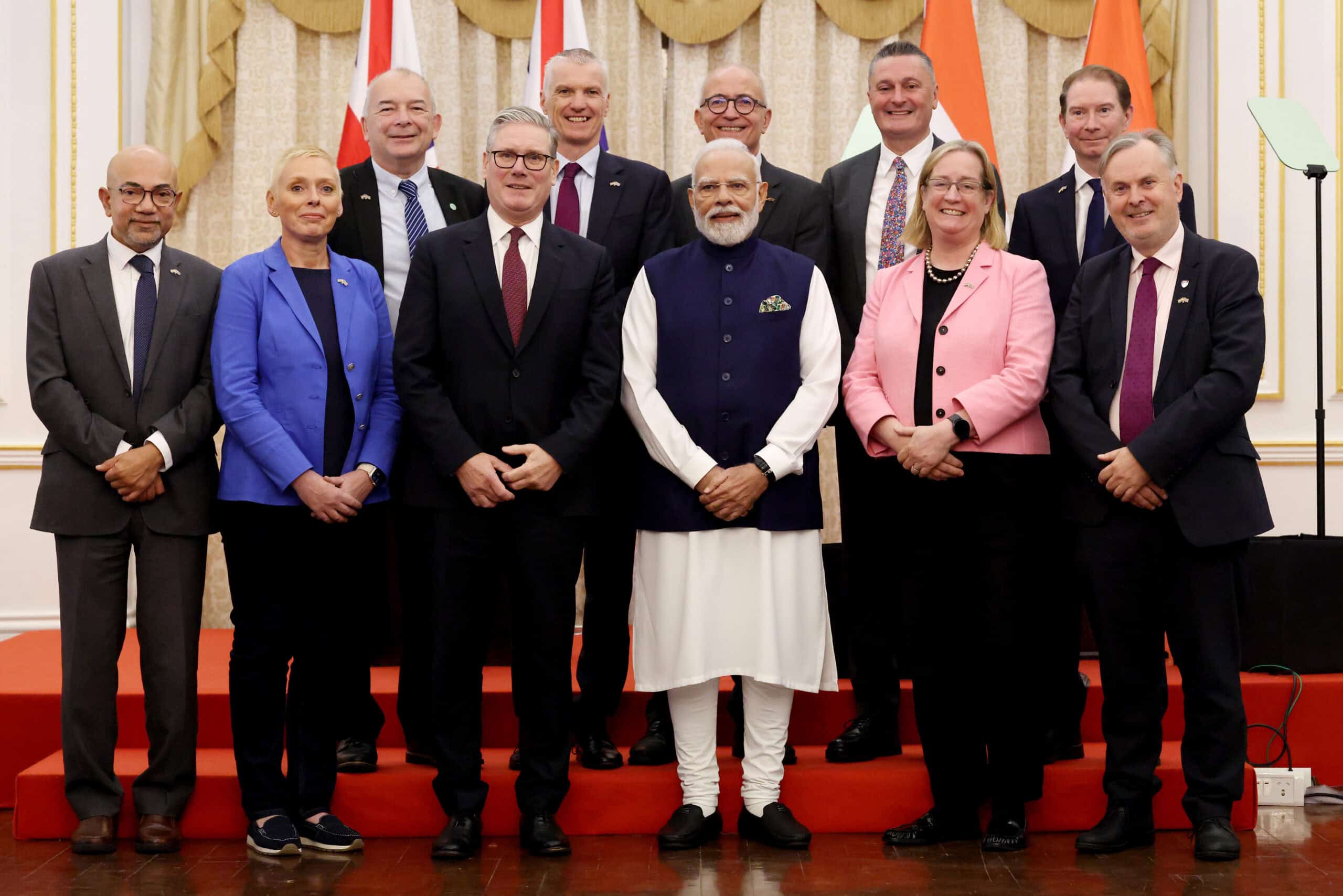
    The India–United Kingdom Comprehensive Economic and Trade Agreement (CETA), negotiations for which began in January 2022, was finalised on July 24, with UK Prime Minister Keir Starmer and Indian Prime Minister Narendra Modi calling it a ‘step-change’ in bilateral relations. 

    While the trade deal covers a wide range of areas, including tariff reductions, market access, mobility, and investment protection, aimed at delivering a £4.8bn annual boost to the UK economy and an estimated USD $9-10bn in export growth, the two Prime Ministers also endorsed the India-UK Vision 2035, “reaffirming their shared commitment to unlocking the full potential of a revitalised partnership”.

    Although technology, innovation, defence, and climate action are key pillars of India-UK cooperation under the Vision 2035 framework, education remains central to the shared goal of developing a skilled, future-ready talent pool to tackle global challenges and drive a sustainable future, according to a policy statement released alongside the FTA signing.

    In a first, both countries are launching an annual ministerial India-UK Education Dialogue, which will include reviews of mutually recognised qualifications and knowledge-sharing through joint participation in platforms such as the UK’s Education World Forum and India’s National Education Policy initiatives. 

    The launch of the ministerial dialogue also comes as UK universities increasingly recognise the potential of establishing academic and research-focused branch campuses in India.

    Just this Tuesday, the University of Bristol joined a growing list of UK institutions that have received approval to open campuses in India under the University Grants Commission’s Foreign Higher Educational Institutions (FHEI) regulations.

    Bristol’s Mumbai campus, slated to launch in Summer 2026, will offer undergraduate and postgraduate programs in data science, economics, finance and investment, immersive arts, and financial technology.

    Once operational, Bristol, ranked 51st globally, will become the highest-ranked British university to establish a campus in India, surpassing the University of Southampton, which launched its Gurugram campus earlier this month with classes beginning this August.

    Though Modi has welcomed the establishment of British campuses in India, calling it a “new chapter in the education sector of both countries”, some UK universities are facing flak at home “for seeking fortunes in India” amid ongoing financial woes and domestic job cuts.

    However, with universities like Bristol positioning their India campus as a hub for students, researchers, and industry to shape a better future, the Vision 2035 framework also underscores the India-UK Green Skills Partnership, an initiative focused on equipping young people in both countries with future-ready skills.

    The partnership aims to bridge skill gaps and enable joint initiatives, such as centres of excellence, climate-focused ventures, and courses and certifications in areas such as sustainability. 

    Moreover, the Vision 2035 framework also “encourages exchange and understanding among youth and students” to strengthen the success of existing initiatives like the Young Professionals Scheme (YPS) and the Study India Programme.

    While the YPS, launched in February 2023, is designed as a reciprocal visa scheme enabling British and Indian citizens aged 18-30 to live, work, travel, and study in each other’s country for up to two years, it has so far been largely one-sided. 

    Over 2,100 visas were issued to Indian nationals in 2023, while no such data is available for UK nationals going to India – suggesting participation has been minimal.

    But on the educational front, with UK universities setting up campuses in India and more exchange opportunities emerging, British students may also be encouraged to study in the South Asian country, Alison Barrett, country director India at the British Council, said in a recent interview with Financial Express.

    Once the FTA is ratified, the responsibility will shift to business organisations, institutions, and industry leaders to bring it to life
    Amarjit Singh, India Business Group

    Furthermore, a recent article by Bhawna Kumar, Acumen’s director of TNE and institutional partnerships, and Nikunj Agarwal, the company’s consultant in research and TNE, highlighted the pivotal role of India’s National Education Policy in shaping the FTA and the Vision 2035. 

    “Chapter 8B of the FTA (UK Schedule of Commitments) places no restriction on UK providers offering higher education services (CPC 923) in India. This opens doors for UK universities to expand through various TNE models such as joint degrees, dual degrees, and campus partnerships,” they noted, citing the example of University of Birmingham’s joint master’s programs with IIT Madras in Data Science and Artificial Intelligence, and Sustainable Energy Systems, as a key example. 

    “Chapter 14 of the FTA aligns closely, promoting joint R&D, researcher exchanges, and institutional partnerships in areas like digital innovation, clean energy, agriculture, and healthcare mirroring NEP’s multidisciplinary agenda,” they added. 

    While the Vision 2035 framework appears robust on paper, the authors point out several implementation challenges that remain pressing, chief among them being regulatory alignment, visa bottlenecks, and the slow pace of progress on mutual recognition agreements. 

    “Establishing a Joint Education and Skills Council, co-chaired by senior officials from both countries, would institutionalise cooperation, monitor delivery, and resolve bottlenecks in real time,” they suggested. 

    While the trade deal does not explicitly mention international students, CETA is expected to broaden “high-quality employment pathways” for young Indians by easing access to the services market and facilitating short-term mobility for skilled talent across sectors such as IT, healthcare, finance, and the creative industries. 

    Each year, up to 1,800 Indian chefs, yoga instructors, and classical musicians would be able to work in the UK temporarily under CETA. 

    Additionally, Indian workers will benefit from the Double Contribution Convention (DCC), which will exempt them and their employers from UK National Insurance contributions for up to three years.

    Will CETA stand the test of time in delivering benefits to students and professionals? Amarjit Singh, CEO, India Business Group, believes it can but only with a collaborative approach to ensure its long-term success.

    “The UK-India partnership is respected across party lines. While the 2030 Roadmap was negotiated last year, the framework has been in the making for nearly a decade. There is broad consensus not to jeopardize this progress,” Singh told The PIE News. 

    Though CETA has been signed by both countries, it still requires ratification by their respective parliaments, a process expected to take another six to 12 months.

    “Once the FTA is ratified, the responsibility will shift to business organisations, institutions, and industry leaders to bring it to life. That’s where we need more awareness, active engagement, and a bit of hand-holding to realise its full potential.” 

    Source link

  • KEDGE to launch associated campus in India

    KEDGE to launch associated campus in India

    The new associated campus, which is being launched in collaboration with Vijaybhoomi University in Karjat, a town near Mumbai, and its business education arm, the Jagdish Sheth School of Management, will initially offer a bachelor in business administration program starting September 2025.

    The collaboration with Vijaybhoomi aligns perfectly with our vision to nurture global leaders with a strong foundation in innovation and ethics
    Alexandre de Navailles, KEDGE

    To be eligible for the undergraduate program, students must have completed or be currently enrolled in grade 12, India’s equivalent of the final year of high school, and either have a minimum SAT score of 1300 or pass KEDGE’s internal entrance exam.

    “In line with its mission to educate future leaders in their local contexts, KEDGE already operates associated campuses in Abidjan and Dakar (Africa), as well as in Shanghai and Suzhou (China),” read a statement by the grande école. 

    “This new strategic partnership in South Asia, established with Vijaybhoomi University and its JAGSoM Business School, will enable the joint development of innovative programmes. These will combine KEDGE’s academic expertise with the evolving needs of the Indian market in areas such as sustainable management, the creative industries, sport, entrepreneurship and innovation.” 

    As its associated campus prepares to introduce a BBA program within the next two months, KEDGE’s collaboration with Vijaybhoomi University will also lead to the launch of several master of science programs in areas such as sports management, arts and creative industries, sustainable transformation, luxury management, entrepreneurship and innovation, and design.

    These programs are expected to launch in September 2026 and will be delivered at the Vijaybhoomi University campus, with select modules featuring remote lectures from KEDGE faculty based in France.

    According to a report by Careers360, an executive MBA and a PhD program tailored for working professionals are also expected to be introduced in the coming years.

    Moreover, a dedicated India operations team appointed by KEDGE will oversee all academic affairs related to the associated campus.

    “This partnership is a testament to KEDGE’s mission to extend its global footprint and bring top-tier education closer to students worldwide. The collaboration with Vijaybhoomi aligns perfectly with our vision to nurture global leaders with a strong foundation in innovation and ethics,” stated Alexandre de Navailles, general manager, KEDGE. 

    KEDGE’s India plans build on the success of its ventures in other parts of Asia and Africa.

     In China, the school has established two Franco-Chinese institutes – both recognised by the Chinese Ministry of Education – focused on art, design management, humanities, and social sciences, together welcoming over 300 high-potential Chinese students each year.

    Meanwhile in Africa, its Dakar campus in Senegal, operational since 2008, offers bachelor’s and master’s programs in management along with executive education. The Abidjan campus in Côte d’Ivoire, launched in 2020, reflects the school’s ambition to grow its footprint across the continent.

    Though French institutions have previously been encouraged to establish fully fledged campuses in India, Campus France has been actively exploring joint campus opportunities, a focus highlighted during The PIE Live India 2025.

    Moreover, it’s not just KEDGE, ranked among the top 10 business schools in France, that is expanding its presence. 

    ESCP, another leading French business school, has partnered with IIT Bombay and IIT Madras to facilitate student and faculty exchanges, joint research, and the integration of emerging technologies in sustainability, entrepreneurship, and AI.

    Source link

  • First look at the University of Southampton’s Delhi campus

    First look at the University of Southampton’s Delhi campus

    TFTDL podcast – David Winstanley (Who’s The Man?)

    Listen to David Winstanley, the man with the weight of expectation on his shoulders as all eyes are on the University of Southampton as they prepare to open their Indian campus in August 2025. The TFTDL crew return to the airwaves on the day of the Air India crash, in a rare, new episode.

    Source link

  • Prabhas Moghe, Rutgers University – The PIE News

    Prabhas Moghe, Rutgers University – The PIE News

    Introduce yourself in three words or phrases.

    I am an educator, an innovator, and a scholar.

    What do you like most about your job?

    Oh gosh, I love my job. I think what I really enjoy is the expanse, the scope, the landscape, it’s huge. I love that we are not just solving problems, we are actually defining them.

    Best work trip/Worst work trip?

    The best work trip? I have had so many good ones. This (APAIE 2025, Delhi, and overall India tour) has been a great work trip.

    But I also had a fantastic trip to London with my foundation president. We went together and ran a workshop on “friend-raising”, instead of just fundraising, the idea is to build genuine relationships. UK universities were trying to learn it, and since US universities are a bit ahead in that area, we worked with them. That was really fun.

    I also went to South Korea on a work trip. I love South Koreans, and I love the country, but they made me work so hard. The person who planned the trip, god bless her, packed the schedule so tight that I did not get even one hour of sightseeing.

    It was a 14–15 hour flight to Seoul, and the trip ended up being the kind of hard work that South Koreans put in every single day.

    If you could learn a language instantly, which would you pick and why?

    Definitely Mandarin and Spanish. I was foolish enough to promise a class at the University of Puerto Rico that, “next time I visit, I promise I will give you the lecture in Spanish”, so it ain’t happening. But I do take pride in speaking multiple languages, I would say I am fluent in at least five. I even started learning Mandarin with Rosetta Stone (language learning software). I didn’t get too far, but I absolutely love how the language sounds.

    What makes you get up in the morning?

    I think what drives me is a genuine passion for the work. There’s just so much to be done.

    As the chief academic officer at Rutgers, my role is about having a deep, self-aware understanding of the institution, in ways that few others might. While everyone else is focused on their specific responsibilities, I am constantly looking at the institution as a whole.

    How do we stay true to our mission? How do we improve? How do we gain recognition? And how do we move the needle on our academic standing?

    These are broad, complex challenges, but that’s what makes the work so meaningful.

    Champion/cheerleader which we should all follow and why?

    There are so many influential people now, and they each teach you something different. I have learned a lot from Kailash Satyarthi, Nobel Peace Prize winner, especially his approach to life.

    For instance, I was really impressed by Jennifer Doudna after reading her biography, The Code Breaker, which is written by Walter Isaacson.

    I am actually very intrigued by Isaacson himself, someone who writes about others so insightfully. He’s also written about Steve Jobs. The way he pieces together these stories is fascinating.

    In The Code Breaker, what struck me was how science and research are portrayed as incredibly competitive fields. And yet, the breakthroughs often come in these magical, nonlinear moments, when the right people come together with the right tools, and suddenly, something clicks.

    That idea of serendipity, of miraculous intersections, it really resonated with me. No one creates miracles alone; you need a village.

    The book also shows how intensely competitive some of these research groups can be.

    But more than anything, what stood out was the brilliance, the hard work, and the value of good observers, people who can see the bigger picture. I think we need more of those champions.

    Best international ed conference and why

    I think this is a very cool conference (APAIE 2025). I was walking around the booths, and was at a roundtable with several presidents and vice-chancellors. It’s really exciting because this is not what higher education looked like 20 or 30 years ago.

    What you see here today is different countries like Canada, Hong Kong, Malaysia, the UK coming together. It’s like the whole world is showing up and saying, Come be a part of us”.

    Worst conference food/beverage experience

    I was at a meeting at the World Biomaterials Congress, I think it was in Chengdu, China.

    We went out to eat, and let’s just say where we ate you’re pretty much eating reasonably raw food. That was pretty challenging.

    I mean I love Chinese food, I love Sichuan food, but that was challenging.

    Book or podcast recommendation for others in the sector?

    Definitely The Code Breaker by Isaacson, I would recommend that to people. I think it’s a pretty interesting book. If you are looking for something educationally oriented, then there’s Building Research Universities in India by Pankaj Jalote.

    I’m very impressed with how he’s drawn on the research in terms of how things have changed over the last hundred years, how India’s research landscape has changed.

    I am listening to a whole bunch of podcasts. Dementia Matters, a podcast about Alzheimer’s disease and other causes of dementia, is something I am really liking.

    Source link

  • Indian Student Handcuffed and Pinned to Ground at Newark Airport Before Deportation (One India)

    Indian Student Handcuffed and Pinned to Ground at Newark Airport Before Deportation (One India)

    A shocking video from Newark Airport shows an Indian student in handcuffs, pinned to the ground by U.S. authorities before being deported. The clip, shared by Indian-American entrepreneur Kunal Jain, has sparked outrage online. Jain described the young man as crying and being treated like a criminal, despite arriving with valid documents. He urged the Indian Embassy to intervene. Jain also claimed that similar incidents are now occurring frequently—3 to 4 deportations daily—often due to students being unable to explain their purpose in the U.S. properly at immigration.

    Source link

  • AAERI seeks visa overhaul for Australia’s student system

    AAERI seeks visa overhaul for Australia’s student system

    The Association of Australian Education Representatives in India (AAERI), in a submission to the Minister for Home Affairs and the Minister for Education, has urged the Labor government to link student visas to the institution of initial enrolment.

    The association, established in October 1996 to uphold the credibility of education agents recruiting students for Australian institutions, proposed that any change in course or institution should require a new visa application, with the existing visa automatically cancelled upon such a change.

    “This proposed reform means that a student’s visa would be directly linked to the education provider (institution) listed in their initial Confirmation of Enrolment (CoE) at the time of visa approval. The student would be required to remain enrolled at that institution,” read a statement by AAERI.  

    The association expalined that if a student wishes to change their course or education provider, they must obtain a new CoE from the new institution, apply for a fresh student visa, and once again demonstrate that they meet all Genuine Student requirements.

    “Such a measure will strengthen the integrity of Australia’s student visa program, reduce exploitation in the education sector, improve compliance with Genuine Student (GS) criteria, and safeguard Australia’s reputation as a provider of high-quality international education,” it added. 

    “Additionally, this reform will support ethical education agents and reputable institutions by discouraging course-hopping and misuse of the student visa system, thereby enhancing student retention and sector stability.”

    Such a measure will strengthen the integrity of Australia’s student visa program, reduce exploitation in the education sector, improve compliance with Genuine Student (GS) criteria, and safeguard Australia’s reputation as a provider of high-quality international education.
    AAERI

    Based on AAERI’s submission, such a policy would align with Condition 8516, which requires students to remain enrolled in a registered course at the same level or higher than the one for which their visa was originally granted.

    As per reports, education loan applications from India, one of Australia’s biggest student markets, have quadrupled since the Covid pandemic, with the number of loan-seeking students expected to rise further.

    With many students relying on Indian public and private banks for education loans, changes in their courses in Australia have often led to their original loans being considered void, placing many at significant financial risk.

    “Based on our communication with several Indian banks, if a student changes their course or education provider after arriving in Australia, their loan arrangements may need to be reassessed, taking into account new course fees, institution credibility, and repayment ability,” stated AAERI. 

    “The original loan is void and stands suspended. This poses significant financial risks for students and impacts their compliance with visa conditions.”

    According to AAERI, the problem is also prevalent among Nepali students, with nearly 60,000 currently studying in Australia. 

    The association also highlighted examples from other study destinations that Australia can learn from in implementing the proposed framework. 

    While New Zealand allows course or provider changes but may require a variation of conditions or a new visa, especially for pathway visa holders or when moving to lower-level courses, in the UK, the student visa system is closely tied to licensed sponsors through the Confirmation of Acceptance for Studies, so changing institutions generally requires a new CAS and immigration permission.

    In Canada, stricter rules have been implemented requiring international students to be enrolled at the Designated Learning Institution named on their study permit, and to change institutions, students must apply for and obtain a new study permit, emphasising the importance of linking visas to specific institutions.

    “Australia’s recent reforms, such as closing the concurrent CoE loophole and requiring CoEs for onshore visa applications, are steps in a similar direction but do not go far enough to address the core issue of unethical student poaching, misuse of student visa and provider switching,” stated AAERI. 

    AAERI’s call for action comes at a time when the return of the Labour government is viewed as “offering little comfort to an international education sector already under-siege”, as highlighted in a recent article by Ian Pratt, managing director of Lexis English, for The PIE News.

    In Anthony Albanese’s second term, the Prime Minister established a new role – assistant minister for international education – and appointed Victorian MP Julian Hill.

    “It’s important that students who come here get a quality education… This sector is complex and Julian Hill is someone who’s been involved as a local member as well, and I think he’ll be a very good appointment,” Albanese stated at a press conference this week. 

    Source link

  • Illinois Tech Establishes First U.S. Campus in India

    Illinois Tech Establishes First U.S. Campus in India

    On Wednesday, the Illinois Institute of Technology announced it had reached an agreement with India’s University Grants Commission to establish a branch campus in Mumbai, opening to students in fall 2026. It will be the first degree-granting U.S. institution on Indian soil and Illinois Tech’s first international branch campus.

    For decades, a complicated legal and tax system prevented U.S. institutions from opening campuses in India. Then, in 2020, the Indian government issued a new National Education Policy paving the way, officials promised, for a much easier pathway to fruitful academic partnerships.

    India is a major growth market for U.S. higher education; this year the country surpassed China for the first time as the top origin country for international students in the U.S. Establishing a beachhead in India could help institutions carve out a dominant space for themselves in the lucrative international recruitment market, especially since the vast majority of Indian international students come to the U.S. for postgraduate study.

    When the Indian government announced the NEP 2020 plan, officials envisioned the “top 100 universities in the world” setting up shop in the country. So far, that hasn’t happened.

    Illinois Tech is not a globally renowned university; it’s not even one of the better-known institutions in Chicago. Its undergraduate population numbers only around 3,000 students, and the postgraduate population isn’t much larger. So how did it get ahead of name-brand research universities that have been dipping their toes in the Indian market, like Johns Hopkins and Rice?

    Philip Altbach, professor emeritus at the Center for International Higher Education at Boston College and a longtime expert on academic internationalization, said American institutions have been hesitant even in recent years to invest in Indian branch campuses due to a mix of bureaucratic complications and uncertain financial returns.

    “There hasn’t exactly been a rush to the gates in India from American institutions, and I don’t think there’s going to be anytime soon,” Altbach said. “The challenges of doing business there are still pretty high, and that puts a lot of foreign universities off.”

    Illinois Tech president Raj Echambadi said his university is taking the long view. As the spending power of India’s burgeoning middle class grows along with demand for highly trained workers—especially in engineering and technology—he sees the Mumbai campus as an early investment in a partnership that will become central to American institutions’ global strategies in the years to come. His institution has already begun to see the importance of Indian students to their bottom line: The share of Indian master’s students has risen by nearly 75 percent over the past five years.

    “The potential upside is huge, which means if you get in early the ride is going to be phenomenal,” he said. “In the next 25 years, we’re going to be catching that elephant’s tail.”

    Illinois Tech had a head start on the competition: The institution has been active in the Indian education market since 1996, during a period of rapid technological innovation.

    When demand for skilled workers in exploding fields like communications technology skyrocketed in the mid-1990s, Illinois Tech offered an early version of distance learning, shipping VHS-tape lessons to engineers in Bangalore who wanted to earn credentials that the Indian higher education system had yet to develop.

    Now, Echambadi says, Illinois Tech is meeting new demands in a changing Indian economy; its Mumbai campus will offer 10 degree programs in growth fields like semiconductor engineering. It even has some built-in brand recognition: It’s known as IIT in Chicago, the same acronym as India’s main university system, the Indian Institutes of Technology.

    “India can’t build universities fast enough to meet the growing demand,” Echambadi said. “That’s where we come in.”

    Colleges Hang Back

    Many colleges that wanted to explore opening a campus in India simply may have struggled to navigate the complex application system, even after the NEP was issued. Rajika Bhandari, a longtime international education strategist and the founder of the South Asia International Education Network, said the 2020 NEP took years to translate into practice.

    “U.S. institutions have been trying to enter the Indian market for years, well before the NEP. But the Indian bureaucracy and strict regulations have always been a challenge,” she wrote in an email. “Even with the NEP, it has likely taken a while to implement aspects of the policy and actually get things going.”

    Having a 30-year presence in India, Echambadi said, helped ease the process. He added that it helped that both he and Mallik Sundharam—Illinois Tech’s vice president for enrollment management and student affairs, who led the Mumbai project—are of Indian origin; both attended college there before moving to the U.S. for their graduate degrees. They said their understanding of their home country’s byzantine bureaucracy helped them navigate the system quicker than their competition.

    Sundharam said there’s also a much more receptive attitude in India toward foreign universities and a simpler system. They applied to establish the Mumbai campus earlier this year, and the entire process, from submission to acceptance, took two months. More than 50 foreign institutions have applied to set up a campus in India this year.

    “The Indian government has come a long way,” he said.

    Altbach said U.S. colleges are more likely to establish joint degree programs with Indian universities than full branch campuses. Virginia Tech established the first of these in 2023, also in Mumbai. Other institutions, including Johns Hopkins and Purdue University, have stuck to research partnerships and exchanges. Rice, which was an early proponent of Indian-American higher ed collaboration, established a research center in Kanpur in early 2020, months before the new NEP was introduced. Altbach said he thinks branch campuses will remain the territory of “low- to midlevel research institutions” seeking to boost enrollment.

    But Bhandari, an Indian immigrant and a close observer of the country’s booming education market, said Illinois Tech may be on the vanguard of a new push in academic internationalization.

    As international enrollment in the U.S. staggers from President Trump’s policies to deport student visa holders and crack down on global academic partnerships, Bhandari said physical programs in growth countries like India will become increasingly important. There’s already evidence that Indian student mobility to the U.S. is on the decline: F-1 visa applications from India are down 34 percent from this time last year, according to a recent analysis by Chris Glass, a professor at Boston College’s Center for International Higher Education.

    “Other universities are operating under the assumption that international markets will stay the same, but they won’t,” Sundharam said. “Students may not want to be mobile in five to 10 years. They will want quality higher education at their doorstep.”

    Source link

  • Coventry given green light to open campus in GIFT City

    Coventry given green light to open campus in GIFT City

    The institution revealed its ambition to open the campus in December, when it launched an Indian hub in New Delhi to support the institute’s admissions, recruitment, and partnerships in the region.

    Approval for the £1 billion expenditure on the campus was announced at the London Stock Exchange on April 9 at the 13th UK-India Economic and Financial Dialogue (EFD).

    GIFT City (Gujarat International Finance Tec-City) is a business district in the Indian state of Gujarat.

    “We are delighted that approval has been given to commence the set-up process for Coventry University GIFT City and know that many students will benefit from the high-quality education we can offer over the years to come,” said John Latham CBE, vice-chancellor of Coventry University and Group.

    Competition among international universities has risen significantly in the region, with more UK universities keen on expanding into GIFT City. In January, The University of Surrey unveiled plans to open a campus in the city, as did Queen’s University Belfast.

    We… know that many students will benefit from the high-quality education we can offer over the years to come
    John Latham, Coventry University

    Coventry’s new India campus is offering postgraduate programs such as international business management and business and finance. The university plans to add further courses in the near future.

    Alison Barrett, director of India at the British Council said: “It emphasises our shared commitment to the internationalisation of education, as highlighted in the National Education Policy 2020. Thousands of students will benefit from the high-quality education that the university can offer in the years to come.”

    The campus building is set open its doors this month.

    Source link

  • Adapting TNE to student needs key, say stakeholders

    Adapting TNE to student needs key, say stakeholders

    The PIE News, in partnership with Oxford International Education Group (OIEG) and Studyportals, hosted a briefing where panelists explored university strategies, government collaboration, and financial sustainability for a successful TNE model.

    As international universities compete to establish TNE partnerships in India, the University of Southampton stands out, with its Delhi branch campus set to open in August 2025.

    Kasia Cakala, director of education pathways development at OIEG, which is collaborating with Southampton on the project, noted how education providers must continuously adapt to evolving expectations of the TNE model.

    “Not only do universities have to be mindful of the models they take in this very challenging market, but private providers like us also need to pivot, change, and adapt to support universities in their urgent needs,” stated Cakala at the briefing.

    “With Southampton, the key was defining a proposition that was not only sustainable but also aligned with government priorities and the domestic student ecosystem.”

    Cakala emphasised that as students from countries like India become more savvy, knowing what they need and expecting more from institutions, universities must adopt a “sophisticated market research strategy” to define their proposition, particularly when presenting expansion plans to government bodies.

    Private providers like us need to pivot, change, and adapt to support universities in their urgent needs
    Kasia Cakala, OIEG

    In light of the changing expectations, Carlie Sage, associate director, partnerships, APAC, Studyportals, underscored the importance of understanding student behaviour and market trends in shaping international education strategies.

    “A lot of universities still make decisions without really understanding the environment they’re operating in,” stated Sage. 

     “There’s amazing data out there that can help institutions navigate shifts, understand demand, identify gaps, and see what’s happening in real time.”

    According to Aziz Boussofiane, director, Cormack Consultancy Group, while TNE models need to be financially sustainable, they also need to be beneficial for both the university and the host country in the long run. 

    “For host countries, success (in TNE) means increasing capacity with quality provision – and for universities, it must align with their mission and strategic objectives,” stated Boussofiane, while addressing the audience. 

    “There are different drivers and processes depending on the market, whether it’s India or Nigeria, [and] it’s often about increasing in-country capacity and improving the quality of local providers.”

    While TNE is widely embraced by leading universities in major study destinations, challenges persist in building scalable models due to varying international perceptions of quality and value, which impact recognition, as previously reported by The PIE. 

    According to Daniel Cragg, director of Nous, while TNE is just another challenge for institutions, which are already dealing with academic workforce stress, new pressures from AI, and evolving student needs, the appetite for partnerships has only been rising. 

    “The appetite for collaboration is growing – universities want to share risk, balance success, and be more in-market experts,” said Cragg.

    “In international education, it feels like there’s a black swan event every three to four years. But universities constantly adapt, innovate, and thrive.”

    While universities in the UK and Australia have pushed through major TNE expansions in recent years, institutions in countries like New Zealand, though interested, prioritise strengthening their reputation and research over physical expansion.

    “New Zealand is a small player in TNE, but our partnerships focus on reputation and research rather than bricks-and-mortar expansion overseas,” stated Meredith Smart, international director, Auckland University of Technology

    “There’s a strong connection between our ranking strategy and our partnership strategy – reputation matters.”

    As the New Zealand government aims to boost international recruitment from emerging markets while strengthening educational partnerships in countries like India and Vietnam, institutions like AUT see an opportunity, while also learning from the missteps of their peers.

    “We are in a strong growth focus. The government wants us to grow. They’re desperate to win the next election, and I think they feel that international education can boost the economy,” stated Smart. 

    “New Zealanders love international students, but that could change as numbers rise. We must actively demonstrate the value of internationalisation to our economy, industries, and diplomatic relations.”

    This point was further reiterated by Cragg, who highlighted how working with governments in policymaking is essential. 

    “Working with governments to shape future visa policies is essential to ensuring sustainable international student growth,” he said. 

    “The value of international education extends across different areas of government, not just within universities.”

    Source link

  • Nepali students could shun India amid row over student’s death

    Nepali students could shun India amid row over student’s death

    A 20-year-old technology student was found dead in her hostel room at Odisha’s private deemed university, KIIT, allegedly after facing harassment from a fellow student.

    The incident sparked campus protests, forcing hundreds of students to leave after KIIT closed sine die for all Nepali international students on February 17.

    Though KIIT vice-chancellor Saranjit Singh issued a public apology later and action was taken against security officials and staff accused of abusing and physically harming protesting Nepali students, only a small percentage of students have returned. 

    With Nepali students comprising 28% of India’s international student population, the largest share, the recent incident has raised concerns that many students from Nepal might cancel their plans to study in India.

    “Students might reconsider their decision to study in India, and this incident could drive a policy shift in student recruitment. Obtaining an No Objection Certificate (NOC) might become mandatory for those aspiring to study in India, and a government-level grievance handling system could be introduced to address student concerns,” BK Shrestha, CEO, Study Global, a Kathmandu-based education consultancy, told The PIE News. 

    Though an NOC is mandatory for Nepali students wishing to study abroad, the open border and close ties between Nepal and India allow many Nepali students to study in the country without obtaining one.

    Despite this privilege, the Nepal government could restrict students from obtaining an NOC to study at institutions in Odisha if the KIIT incident is not resolved in a “justifiable and legal way,” according to Nepal’s Ministry of Science, Education, and Technology.

    Though India and Nepal have shared historically deep relations, the past decade has been marked by tensions, including allegations of a blockade on goods to Nepal, border disputes, and Nepal’s efforts to strengthen relations with China. 

    The recent incident at KIIT has only added fuel to the fire, prompting the Nepal Embassy in India to send officials to the campus to meet with agitating Nepali students. 

    Obtaining an NOC might become mandatory for those aspiring to study in India, and a government-level grievance handling system could be introduced to address student concerns
    BK Shrestha, Study Global

    Meanwhile, Nepal’s opposition and human rights body have urged the Indian government to conduct a “fair investigation” and ensure the safety of Nepali students.

    “The Nepalese government, including the Prime Minister and relevant ministries, took immediate action through the embassy, ensuring the safety of students,” said Mukesh Dhamala, member of education council, Confederation of Nepalese Industries

    “However, this incident has created diplomatic tensions, raised questions about the accountability of educational institutions, and sparked broader discussions about student welfare policies in host countries.”

    According to Dhamala, the student’s death has led to Nepali students and parents being more cautious, with a significant increase in inquiries about safety measures at Indian institutions.

    “Future students and parents may hesitate to choose Indian institutions unless there are strong safety measures in place,” stated Dhamala. 

    Moreover, domestic universities in Nepal have stepped up by offering returning students a chance to continue their studies. 

    Purbanchal University has announced that students reluctant to return to KIIT can continue their remaining courses at its affiliated colleges.

    “Any student who has returned to Nepal without completing their studies can continue through credit transfer,” the university stated, adding that students must meet the required criteria.

    Meanwhile, officials at Tribhuvan University, Nepal’s oldest and largest institution, have also expressed readiness to accommodate such students. 

    Many prospective students from Nepal are now rethinking their plans to study in India amid the row at KIIT. 

    “All of this has massively increased safety concerns for Nepalese students, especially female students. In fact, several of my friends have already canceled their upcoming admissions to very reputable Indian institutions because they no longer feel safe,” stated Sandesh Pokhrel, a Kathmandu-based student, who is planning to pursue his post-graduation studies abroad. 

    With many returning students from KIIT alleging that the university failed to take action against the accused despite the deceased student’s prior complaints, academic counsellors like Pragya Karki argue that stakeholders in Nepal should serve as the first point of contact for their students. 

    “KIIT’s initial response to the student’s case has been deeply concerning and raises serious questions about its commitment to student safety and well-being,” said Karki, an academic counsellor at Ullens School. 

    “We must go beyond just listening – we are advocates, allies, and a vital support system for students in distress. Proactive outreach is key: creating safe spaces, educating students on their rights, on how to recognise emotional distress, and ensuring they know where to seek help.”

    According to Dhamala, the recent incident has underscored the need for dedicated student support teams, ideally with Nepali staff, to address the concerns of Nepali students. He also emphasised the importance of Embassy monitoring on campuses to ensure their well-being.

    As part of its recent initiative, Nepal Rising, market entry firm Acumen brought many of its partner institutions from the UK, US, Japan, Australia, New Zealand, and Malaysia to Nepal. 

    The goal was to better understand and improve the Nepali student experience, a critical move in light of the KIIT incident.

    “A structured pre-departure program is key, equipping students with insights into academics, culture, finances, and well-being. Many of our partner universities already offer culturally tailored orientation programs, mentor-mentee buddy systems, and Nepalese student clubs, ensuring a smoother transition,” stated Ritu Sharma, director, partner success, UK, Ireland, and ANZ, Acumen

    “A strong support system, including career workshops and mental health services, is vital for long-term success.”

    As per a report by ICEF, in the past five years, approximately one in every five Nepali students pursuing higher education chose to study abroad.

    Nepal’s outbound mobility ratio was 19% in 2021, compared with less than 2% for China and India, this despite the country being vastly smaller in population compared to its giant Asian neighbours. 

    Pushpa Raj Joshi, a senior scientist and neurobiologist at Martin-Luther University Halle-Wittenberg, Germany, who writes monthly columns for The Kathmandu Post – a leading publication in Nepal – criticised the country’s lack of a “forward-thinking education policy.” 

    He argued that this drives many Nepali students to study abroad in large numbers, leaving them vulnerable and unprepared due to insufficient information.

    “This unfortunate incident underscores the urgent need for Nepal’s education authorities to reevaluate policies affecting students’ safety, dignity, and future abroad. More importantly, strengthening academic institutions is essential to retaining our students,” stated Joshi. 

    “Lack of seats in universities across Nepal and fewer post graduation courses have been age-old problems in Nepal, which prompts students to go to India or elsewhere.”

    As Nepal grapples with its policies around education, the recent incident is far from being resolved as the investigation into the B.tech student’s death intensifies. 

    The state government of Odisha has summoned four more KIIT officials for questioning, with the institute stating that it is “committed to a safe and uninterrupted learning environment for all students.”

    KIIT has not yet responded to questions from The PIE News.


    Source link