
Tag: Indianapolis

  • Charters Gain Power in New Indianapolis Plan – The 74

    Charters Gain Power in New Indianapolis Plan – The 74

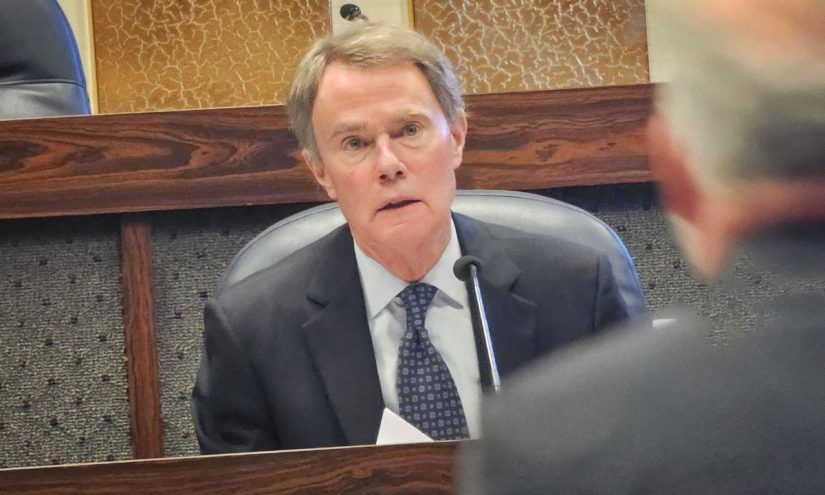
    In a move called historic by charter advocates and shameful by opponents, Indianapolis officials reached agreement on a plan to provide all charter students with buses and close struggling schools.   

    The proposal, recommended to the state legislature by a panel of leaders from around the city calls for creating a powerful new government agency, the Indianapolis Public Education Corporation, handing charters a measure of control over citywide education decisions they have never had. 

    The corporation — Indiana’s legal term for a school district — would oversee a unified transportation system for all schools; along with the ability to decide which schools are not serving students. The agency would also oversee a single enrollment system. 

    The plan, which still needs approval by the state legislature, is a big win, in some ways, for charter schools that have grown rapidly in recent years and now educate more than half of Indianapolis’ students. 

    Along with gaining transportation for students, charters will have representatives on the new board with equal standing to district officials for the first time in shaping Indianapolis school policy.

    That power, though, is taken from the Indianapolis Public Schools district, whose schools could be closed by the corporation and which already saw the state legislature shift property taxes away from the district to charters earlier this year. 

    Robert Enlow, CEO of the national charter advocacy group EdChoice, based in Indianapolis, called the recommendation “historic” in its support of charters.

    “It is a bold and courageous direction that represents a groundbreaking pathway,” Enlow said after the vote on Wednesday.

    But the proposal has tradeoffs for all sides, which have already sparked howls of opposition from voters and other charter advocates, as well as worry from the district about how the legislature could change the plan. 

    That more power could go to charters has enraged some residents since leaders started discussing the new plan this summer. Right before the vote, Rev. Clyde Posley, president of the General Missionary Baptist State Convention of Indiana, spoke on behalf of several clergy calling the entire effort a “heavy-handed public overreach” in support of “private agendas.”

    “(It) not only invites scavengers and investors to pillage off the plight of a broken school system,” Posley said. “It is not only wrong, it is vicious.”

    Indianapolis Public Schools Superintendent Aleesia Johnson, who worked on the plan for several months, urged residents to keep fighting as the plan goes to the legislature, but said change is necessary.

    “The proposal tonight is an imperfect solution for a challenging set of realities,” Johnson said before voting in favor of it..

    Those realities include growing pains from the rapid rise of charters in a city with a stagnant population. Many charter schools don’t offer buses, forcing students to use public transport or be driven by parents who have pleaded for buses for their children.

    The city also has about 50,000 school seats for 41,000 students, leaving 9,000 open, while the Indianapolis Public Schools faces a budget deficit that will require a tax increase from voters.

    Whether the plan will pass as is by the Republican-dominated, pro-charter legislature is unclear. State Sen. Jeff Raatz, chairman of the Senate Committee on Education and Career Development, had no immediate comment. 

    Bob Behning, the chairman of the House Education Committee who wrote the bill forcing Indianapolis officials to work out a partnership, said he was “pleased with the decision.” He did not elaborate on details of the plan, some of which he has opposed. 

    The new corporation would move toward mayoral control of schools, which cities across the U.S. have tried with varying success. It would have an executive director and a nine-member board  appointed by the mayor – three chosen from the Indianapolis Public Schools board, three charter school leaders and three others.

    That proposal for a mostly-unelected board immediately drew protest from residents, many with the Central Indiana Democratic Socialists of America. After constant shouts of “Unelected!” and “This is a sham!” residents called for the city’s voters, not the legislature, to approve the new corporation. One climbed onto the platform where the panel was seated and was removed by security. And audience members chanted “Shame!” as the panel ended its meeting.

    Charter schools are also raising opposition, including the recommendation that every charter must share money and participate in the new busing system, even as the overall recommendation would give them more power. 

    One charter school advocacy group, the Indiana Charter Innovation Center, called that an “unfunded mandate.”

    “The proposals put forward would place significant burdens on charter schools without providing funding, would reverse major legislative progress, and would create a structure that pulls decision-making farther from the schools and families most affected,” the center said in a social media post.

    The center also objected to the recommendation to limit charter authorizers — organizations that oversee charters and decide which can open — just to the mayor’s office, the state charter board and, as a recent development, the Indianapolis Public Schools board. 

    Andrew Neal, a member of the panel making the recommendation, said requiring all schools to be part of the plan is “a significant equity issue.”

    “I know there are some individuals out there who fear how that will impact their schools, or how that will impact their systems,” Neal said just before the vote. “But I am telling you, this is an opportunity for students…the ones that because of a fragmented system, continue to fall through the cracks.”

    Stand for Children, an education advocacy group that has led the push for busing, said parents will appreciate the new system.

    One parent, Christa Salgado, has repeatedly asked state and local officials for help with transportation after driving her son to school every day took a toll on her and her son had to move to live with his father.

    “I had to drive across the city about 30 minutes back and forth in the morning, and then in the afternoon to pick him up, as a single mother,” she told the panel just before Wednesday’s vote. “This was unsustainable, and unfortunately, I could only do this for a year.”

    The district still isn’t sure, with the final result still up to the legislature, what impact it will have on its authority and budgets. But superintendent Johnson voted in favor of the recommendations, while urging residents to put pressure on the state legislature to make sure the district doesn’t lose too much to charters.

     “If we continue to have an elected board with just the same oversight as they do today…,” she conceded, “the challenges of incoherence and thinning resources will remain.”


    Did you use this article in your work?

    We’d love to hear how The 74’s reporting is helping educators, researchers, and policymakers. Tell us how

    Source link

  • Indiana AG sues Indianapolis Public Schools for hindering ICE efforts

    Indiana AG sues Indianapolis Public Schools for hindering ICE efforts

    This audio is auto-generated. Please let us know if you have feedback.

    Dive Brief:

    • Indiana Attorney General Todd Rokita alleges Indianapolis Public Schools has multiple policies that violate state laws by prohibiting local government entities from limiting or restricting federal immigration enforcement.
    • In a lawsuit filed Thursday, Rokita claims the 30,000-student district has policies barring federal immigration officers from accessing nonpublic areas on school property without a judicial warrant, and that these policies are illegal under Indiana law and pose “grave risks to public safety.”
    • Rokita’s lawsuit also cited an incident on Jan. 8, 2025, in which IPS’ policies “directly contributed to the failure” of federal immigration officers attempting to deport an undocumented Honduran man.

    Dive Insight:

    The IPS Board of School Commissioners said in a Thursday statement that Rokita’s lawsuit is a “heavy burden” and “silly litigation and political posturing” that impacts students, families and taxpayers. 

    “Every dollar spent on defensive legal posture is a dollar not spent on instructional support, teacher development, student services, or enrichment,” the board said. “In this case, Mr. Rokita prefers those dollars go to fight gratuitous political battles, as has too often been the case.”

    The board emphasized that it has always upheld the law and will continue to do so while ensuring “safe, supportive, and welcoming learning environments for all students.”

    Beyond denying access to immigration enforcement officers to school property without a judicial warrant, IPS also requires its employees to not assist immigration efforts unless legally required and authorized by the superintendent, according to Rokita’s lawsuit. The other IPS policy challenged in the complaint is that district staff are prohibited from collecting, maintaining or sharing information about the immigration status of a student, their parents or a school employee.  

    The IPS Board of School Commissioners said it has been “actively collaborating” with Rokita’s office to go over relevant policies of concern. The board said, however, that Rokita only gave the district five business days to review and respond to his opinion on the policies.

    “Yet, these important issues deserve thoughtful, deliberative weighing of important legal rights — not impulsive, superficial efforts for political gain,” the board said.

    The IPS policies being challenged, however, are a common practice in other school districts looking to protect students affected by the Trump administration’s crackdown on immigration enforcement in communities nationwide this year.

    In fact, immigration lawyers have advised districts across the country to train their principals and teachers to know that Immigration and Customs Enforcement officers cannot enter school property without a warrant signed by a judge.

    Immigration advocates have also pointed to the U.S. Supreme Court’s 1982 decision in Plyler v. Doe, which ruled that states cannot constitutionally deny students a free public education based on their immigration status. Additionally, other state and local guidance has reminded school administrators this year that districts must maintain the confidentiality of all personally identifiable information in education records related to students under the Family Educational Rights and Privacy Act.

    As ICE efforts go on near school communities, some district leaders — most recently at Chicago Public Schools — are calling for virtual schooling for students and families living in fear of federal immigration enforcement presence. Educators, advocates and child psychology experts are continuing to sound the alarm on the traumatic impacts immigration enforcement has on students, including school avoidance and stress.

    But in Indiana, Attorney General Rokita said in a Thursday statement that sanctuary policies like those in place at IPS “are bad in any context, but they are especially troubling in our schools.” He added that, “schools across the country are vulnerable to infiltration by criminal illegal aliens — it’s happened in many other states — and it is essential that ICE be able to take action when that occurs to help keep our kids safe.”

    Rokita’s lawsuit also alleged that in January, ICE’s efforts to deport an undocumented Honduran man living in Indiana were thwarted because IPS did not let the man’s son, who is an IPS student, reunite and leave the U.S. on a flight with his father, who volunteered to board. 

    “IPS took the position that it would not release the child to an ICE officer unless the officer had a judicial warrant or other court order,” the lawsuit said. “ICE responded that it simply was asking that the son be released to the father so that they could depart the country as the father had agreed to do and that such action did not require a court order.”

    Because the father was unable to get custody of his son to board the flight with him, the father missed his flight, and the voluntary departure order expired, according to the complaint. As a result, the lawsuit said that “an illegal alien who should have departed the United States — who had voluntarily agreed to depart the United States — therefore remained in the United States because of IPS’s actions.”

    Source link

  • Indianapolis Public Schools to Transfer Two Closed School Buildings to Settle Legal Battle – The 74

    Indianapolis Public Schools to Transfer Two Closed School Buildings to Settle Legal Battle – The 74


    Get stories like this delivered straight to your inbox. Sign up for The 74 Newsletter

    Indianapolis Public Schools will put one closed school building up for lease or sale to charter schools for $1 and will sell another to a local nonprofit, the district announced Friday.

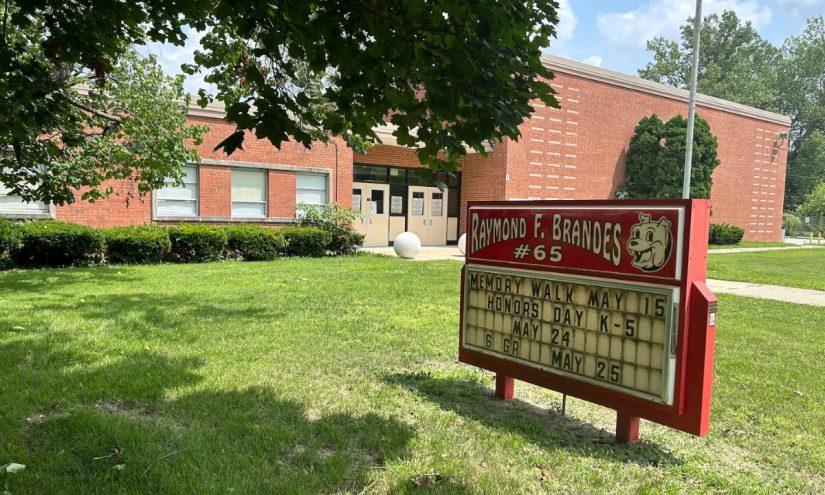
    The transfer of the buildings that used to house Raymond Brandes School 65 and Francis Bellamy School 102 stems from an Indiana Court of Appeals ruling in a lengthy battle over the state’s so-called $1 law, which requires districts to transfer unused school buildings to charter schools for the sale or lease price of $1. The court ruled in May that IPS must sell School 65.

    The announcement also comes as the Indianapolis Local Education Alliance ponders how to solve facility challenges for both IPS, which continues to lose students in its traditional schools every year, and charters, which frequently struggle to acquire school buildings.

    The district said in a statement that Damar Charter Academy, a school for students with developmental and behavioral challenges in Decatur Township, had reached out to IPS to express interest in School 65 — which is located on the southeast side of IPS. The district does not have the power to pick which charter school it will sell a building to — if more than one charter school is interested, state law requires a committee to decide.

    On Monday, Damar confirmed to Chalkbeat that it is interested in School 65.

    In the statement, the district said it would prefer to “move forward with disposition” of School 65 through a collaborative community process.

    “But, we respect the court’s decision and will proceed in full compliance with that order,” IPS Superintendent Aleesia Johnson said. “If the building is claimed by a charter school, we think Damar has a strong record of serving some of the most vulnerable and underserved students in our city and I have confidence that acquiring Raymond Brandes will allow them to expand their operations to serve even more students.”

    Meanwhile, the district will sell School 102 to Voices, a nonprofit that works with youth, for $550,000. The district had already leased the school on the Far Eastside to Voices, which also shares the space with two other youth programs.

    “Indianapolis Public Schools is committed to continuing to engage with our community on thoughtful re-use of our facilities and to being good stewards of our public assets,” Johnson said in a statement. “We are excited to move forward with our planned sale of the Francis Bellamy 102 building to VOICES and to see their impact in serving our community continue for many years into the future.”

    This story was originally published on Chalkbeat. Chalkbeat is a nonprofit news site covering educational change in public schools.


    Get stories like these delivered straight to your inbox. Sign up for The 74 Newsletter

    Source link