Tag: Indianas

  • Indiana’s Attack on Intellectual Diversity

    Indiana’s Attack on Intellectual Diversity

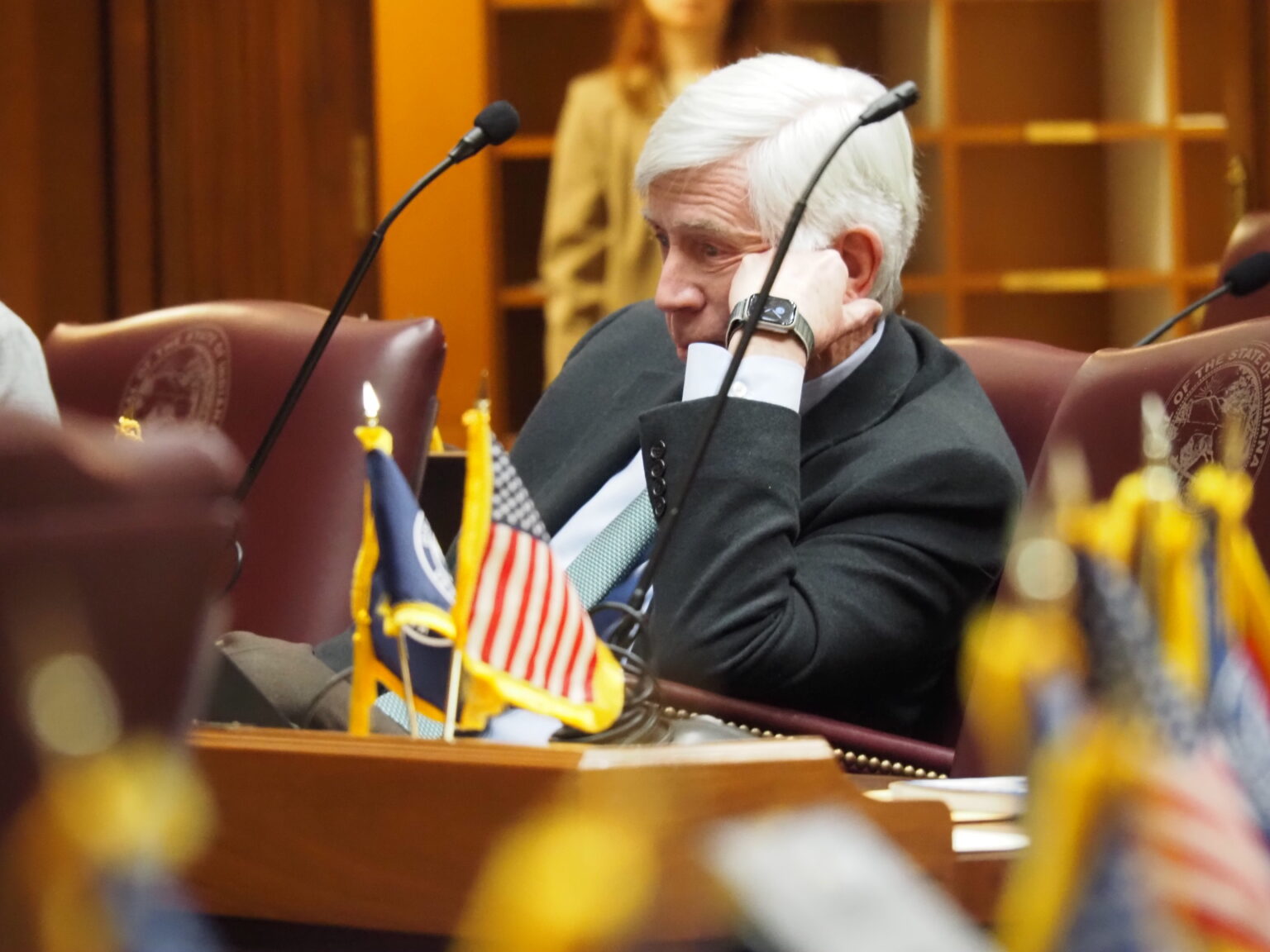
    Indiana’s new Act 202, which advocates of free inquiry have feared would suppress academic freedom despite its claims to promote intellectual diversity, now has been implemented in real life: Citing Act 202, Indiana University (IU) officials suspended Social Work professor Jessica Adams from teaching a class called “Diversity, Human Rights and Social Justice” because U.S. Senator Jim Banks complained that she showed a chart in class that included “Make America Great Again” as a slogan that can be used as covert white supremacy.

    Senator Banks declared, “At least one student in the classroom was uncomfortable, and I’m sure there are more. This type of hateful rhetoric has no place in the classroom.” He is wrong. Hateful rhetoric has every place in the classroom, and bans on all ideas deemed “hateful” by someone would require massive repression. The goal of a challenging university must be to make students uncomfortable at times.

    Although Act 202 is a terrible law, it’s important to point out that this law does not allow Adams to be suspended. Act 202 only allows colleges to do two things in response to complaints: Provide the information to the trustees, and “refer” them “for consideration in employee reviews and other tenure and promotion decisions.”

    It does not authorize censoring classes or removing teachers on the grounds of intellectual diversity. In fact, Act 202 specifically prohibits this action because it says that institutions cannot “Limit or restrict the academic freedom of faculty members or prevent faculty members from teaching, researching, or writing publications about diversity, equity, and inclusion or other topics.”

    Obviously, banning a professor from teaching because they used a chart about white supremacy is a direct violation of this provision of Act 202. By suspending a professor from a class and invoking this law, the Indiana University administration is going far beyond the requirements and the authority of the law, and Indiana officials are violating the Bill of Rights, Act 202 and their own policies.

    The unjustifiable, illegal suspension of Adams without due process is yet another act of repression by Indiana University officials.

    But the attack from Act 202 in the name of intellectual diversity has a long history. The right has taken the language of the left, mockingly imitating the words and then turning them into tools of repression.

    In 2003, David Horowitz urged conservatives to “use the language that the left has deployed” and declare that there is “a lack of ‘intellectual diversity’ on college faculties.” Horowitz tried to invoke “academic freedom” to justify suppressing it, creating the Academic Bill of Rights and his “Students for Academic Freedom,” claiming that protecting the rights of students meant banning professors from expressing political views.

    Horowitz’s terrible idea is implemented in Act 202, where one fireable offense is the crime of being deemed by trustees “likely” while teaching “to subject students to political or ideological views and opinions that are unrelated to the faculty member’s academic discipline or assigned course of instruction.” One problem is that no evidence of any misconduct is needed, simply a feeling that a professor might be “likely” to say something forbidden. But the deeper flaw is the belief that professors should not be allowed to say anything unrelated to their classes.

    The AAUP’s standard is for “teachers to avoid persistently intruding material which has no relation to their subject.” It’s not the presence of any ideas unrelated to a class that violates academic norms, but only persistently intruding material. And this rule must be applied in a viewpoint neutral manner. Colleges cannot punish unrelated speech about politics more than they punish unrelated speech about football or the weather or any other topic. By targeting political viewpoints alone for penalties, SB 202 clearly violates the First Amendment.

    Heterodox Academy, an organization that advocates for viewpoint diversity, spoke out strongly against these repressive aspects of Act 202. Joe Cohn warned: “The trustees’ guess that the faculty member is likely to ever express a political or ideological view that isn’t germane to the class is sufficient to justify the denial of promotion or tenure.”

    These kinds of massive, totalistic bans on speech have an enormous chilling effect in practice, since no one knows what ideas could be deemed “unrelated” to a professor’s field by a trustee who knows nothing about that field.

    Indiana has legislated Horowitz’s old dream of banning politics from the classroom, which in practice is meant to be a targeted attack on the expression of left-wing viewpoints.

    When we resist bad laws like Act 202 by attacking intellectual diversity, we end up undermining the values we’re trying to protect and undercutting public support. Instead of denouncing the concept of intellectual diversity, we ought to say instead that we are defending intellectual diversity against those who cynically or misguidedly invoke it in order to destroy it.

    In the past century, no concept has done more to protect intellectual diversity than tenure. Act 202, by creating a post-tenure review by trustees with no competence to judge academic work, undermines tenure and endangers intellectual diversity rather than defending it.

    The Indiana law, by weakening tenure protections, is one of the greatest threats to intellectual diversity in the state. We need to attack the “intellectual diversity” law not because we oppose intellectual diversity, but because we support it. We want professors to be judged by their academic work, not by their political views, and we want academic work to be judged by academic experts rather than unqualified political appointees, because intellectual diversity is endangered when academic freedom and shared governance are attacked.

    This week, I spoke about Indiana’s intellectual diversity law as part of a panel on academic freedom at Purdue University Northwest (an event funded by the University of Chicago’s Forum for Free Inquiry and Expression as part of its Academic Freedom Institute). And while attacks on academic freedom can inspire some people to mobilize against the threat, the far more common response is fear and silence.

    In an atmosphere of budget cuts, no one is safe. We’re all contingent now, even the diminishingly few faculty with tenure in places where tenure still means something, because entire departments can be whacked to pieces as easily as a controversial adjunct professor is not rehired.

    Indiana’s Act 202 attacks intellectual diversity. And when administrators violate the law to suspend faculty for presenting controversial views, academic freedom is under even greater threat.
    Source link

  • Shortage of Rural Private Schools Complicates Indiana’s Voucher Expansion – The 74

    Shortage of Rural Private Schools Complicates Indiana’s Voucher Expansion – The 74


    Get stories like this delivered straight to your inbox. Sign up for The 74 Newsletter

    Sitting on the Kentucky border, the Christian Academy of Indiana draws students from 56 different ZIP codes in southern Indiana. Some come from as far as 30 miles away and live in counties without private schools.

    Families in those distant communities make the drive every day — sometimes carpooling — because they’re drawn to the school’s environment and extracurriculars, and especially its Christian teaching, said Lorrie Baechtel, director of admissions for the school, which is part of a three-school network in Indiana and Kentucky.

    “There are lots of good public school options in Indiana. Families come to our Indiana campus more for that mission,” Baechtel said.

    The school’s enrollment has boomed in the last four years, driven in part by the expansion of the Choice Scholarship, Indiana’s signature voucher program. That’s made tuition more affordable, Baechtel said. More than 1,200 students attended in 2024-2025, up from around 700 in 2021-22.

    That reflects a statewide trend: Voucher use has surged in recent years as Indiana lawmakers loosened eligibility requirements. In 2026, the program will open to all families, regardless of income.

    But the Christian Academy’s ability to attract students from far away tells another story too. Even as vouchers have become more accessible, Indiana’s rural students aren’t using them at the same rate as their urban and suburban peers. That’s in part because one-third of counties don’t have a private school that accepts vouchers within their borders, and distance is a factor in parents’ decisions on school choice.

    The result is that students who live closer to an urban center — which typically have one or more voucher-accepting private schools — may use vouchers at rates up to 30 percentage points higher than those for students who live in a neighboring district.

    That also means rural families may be at a significant disadvantage when the state opens the Choice Scholarship to all, and when private school scholarships funded by new federal tax credits also begin to roll out in 2027.

    “If there are no schools there for you to attend it’s unlikely it’s going to be all that useful for you,” said Jon Valant, director of the Brown Center on Education Policy at the Brookings Institution.

    More than that, public education advocates say splitting state school funding with vouchers leaves less for the rural public schools these students do attend.

    “We’re making the policy choice to fund a lot more choices than we used to,” said Chris Lagoni, executive director of the Indiana Small and Rural Schools Association, which represents public schools. “We’re inviting more and more folks to Sunday dinner. It’s a little bit of a bigger meal, but a lot more guests.”

    But the state’s Republican lawmakers have dismissed the fears of a hit to public rural schools as a result of vouchers, saying that rural voters support choice and parents want educational options — whether that’s private, charter, or traditional public schools.

    Meanwhile, school choice advocates say the latest expansion of the Choice Scholarship, along with a growing preference for smaller learning environments and the rise of voucher-accepting online schools, could mean more private school access for rural areas in the near future.

    “I think we’re best when we have a robust ecosystem of private and public options,” said Eric Oglesbee of the Drexel Fund, a nonprofit venture philanthropy organization that funds new private schools in Indiana and throughout the U.S.

    Location matters in accessing a private school

    Across the state, around 76,000 students received vouchers for the 2024-25 school year — an increase of about 6,000 students from the year before. The program cost the state $497 million last year, and the average voucher recipient came from a household with just over $100,000 in income.

    But around one-third of Indiana counties don’t have voucher-accepting private schools within their borders, according to a Chalkbeat analysis of state data, which also shows that voucher use is lower in rural areas than urban ones.

    Voucher use can shift dramatically even between nearby areas. For example, around 16% of students who reside in the Madison school district in southern Indiana use vouchers, but that rate drops to as low as 1% in nearby districts that are more rural. Similar trends hold in other areas of the state, like Indianapolis, Evansville, Fort Wayne, and South Bend.

    Location matters because driving distance has been shown to be a factor in how parents choose a school.

    In a 2024 survey of parent preferences by EdChoice, an Indianapolis-based group that supports vouchers, around half of parents said they would drive a max of 15 minutes for their children “to attend a better school.” Just over a quarter said they would drive no more than 20 minutes, and the final quarter said 30 minutes would be their max.

    Concerns about this issue have persisted in the state for years. Alli Aldis of the advocacy group EdChoice pointed to a 2018 report from her organization that called areas of rural Indiana as “schooling deserts.” It estimated that in the 2017-18 school year, around 3% of Indiana students, many in rural counties, lived more than 30 minutes from a charter, magnet, or voucher-accepting private school.

    Starting a new school anywhere, but particularly in a rural area, comes with challenges like finding a building, said Oglesbee of the Drexel Fund.

    A 2023 Drexel Fund report found that facilities in the state are “inadequate to meet the needs of new entrants to the market.” Though the report notes that real estate is both affordable and available, there are no public sources of facilities funding, and surplus facilities are not available to private schools.

    But new laws in Indiana have the potential to change that. House Enrolled Act 1515 established voluntary school facility pilot programs open to both public and private schools to “allow for additional flexibility and creativity in terms of what is considered a school facility,” like colocating with schools, government entities, and community organizations.

    Oglesbee said the organization is fielding an explosion of interest from potential new private schools in Indiana, possibly as a latent result of the 2023 expansion to voucher eligibility, which made the program nearly universal.

    School succeeds ‘if the community asks for it’

    Other challenges to opening a private school include hiring staff and recruiting students, which can be a particular issue in rural areas with both fewer children and licensed teachers, advocates said.

    Opening a school also requires a team of people with both education and business experience, Oglesbee said. And they’re more likely to succeed if they have roots in the community they hope to serve.

    “I see less of the ‘if you build it, they will come’ idea,” Oglesbee said. “A school is successful if the community asks for it.”

    At a recent conservative policy conference, Indiana House Speaker Todd Huston said rural Indiana communities were “super excited” for school choice, and noted that no Republican lawmaker had been beaten in a primary for supporting the policy.

    But Indiana voters haven’t voted on school vouchers, and don’t have a legal avenue to overturn the policy, said Chris Lubienski of the Center for Evaluation and Education Policy at Indiana University. Last year, voters in Kentucky and Colorado rejected ballot measures in favor of school choice, while Nebraska voters partially repealed a state-funded scholarship program.

    “There’s resistance: ‘Why do I want to have my taxes fund a program I can’t use?’” Lubienski said.

    In rural areas, support for school choice may actually mean support for transfers between public school districts, said Lagoni.

    Ultimately, the Rural Schools Association believes any school receiving state dollars should be subject to the same expectations of transparency and accountability, Lagoni said.

    Asked about concerns that rural students often have difficulty using vouchers, Huston said he expects voucher usage to continue to grow once the program becomes universal in 2026-27.

    “We want to make sure our policies align with what works best for families,” Huston said.

    Vouchers add to financial stress for rural schools

    With more school options in Indiana, downward pressure on local tax revenue, and declining population, rural public schools feel pressure to compete. Sometimes that means closing and consolidating schools.

    Vigo County schools recently announced plans to close two rural elementary schools as part of a plan to renovate facilities and offer more programming. The school corporation’s enrollment has declined slightly, due in part to an overall decline in the county’s total population, said spokesperson Katie Shane.

    More students who reside in the district are using vouchers, although they’re not the biggest reason for the district’s falling enrollment. While 429 students used vouchers to attend private schools last school year, an increase from 252 the year before, around 870 Vigo students transferred to another public school district in the fall of the 2024-25 school year. That reflects a statewide trend.

    Without their nearest public elementary schools, students may have to travel by bus for half an hour or more to the nearest school, according to community members who have started a petition to save one of the two schools marked for closure, Hoosier Prairie Elementary School.

    “Hoosier Prairie isn’t just about going to school,” said Shyann Koziatek, an educational assistant at the school who also signed the petition to stop its closure. “Kids love to learn and love the routine we have.”

    Rural schools also often function as large area employers and drivers of the economy.

    “Schools are often the center and identity of the community, how people view who they are,” Lubienski said. “You go and cheer on your football team, it’s where you put on your school play.”

    But private schools can serve the same role, choice advocates say.

    “If people have stronger educational options, more choices, that only strengthens the community,” said Aldis of EdChoice.

    Chalkbeat is a nonprofit news site covering educational change in public schools. This story was originally published by Chalkbeat. Sign up for their newsletters at ckbe.at/newsletters.


    Get stories like these delivered straight to your inbox. Sign up for The 74 Newsletter

    Source link

  • Indiana’s College-Going Rate Drops Again, Dipping to 51.7% – The 74

    Indiana’s College-Going Rate Drops Again, Dipping to 51.7% – The 74


    Get stories like this delivered straight to your inbox. Sign up for The 74 Newsletter

    Fewer than 52% of Indiana high school graduates from the Class of 2023 went directly to college, according to the latest data quietly released by the Indiana Commission for Higher Education.

    That’s the state’s lowest rate in recent history and a continued decline from its previous plateau.

    Just 51.7% of 2023 graduates, about 39,000 students, enrolled in college within a year of finishing high school, data showed. That’s down from a steady 53% between 2020 and 2022, and far below the state’s peak of 65% a decade ago.

    Around 36% of all graduating seniors enrolled in one of Indiana’s public four-year institutions, followed by 8% who chose a private college or university.

    Another 7.6% went to a school outside of Indiana, according to the data.

    The figures, posted to the agency’s website earlier this month, reflect concerns state leaders have long expressed about Indiana’s declining college-going culture, especially as the state shifts focus toward career credentials and work-based learning.

    “The startling drop in our college-going rate yet again can be credited to the lack of two things: money and morale,” said Rep. Ed DeLaney, D-Indianapolis, in a statement released Wednesday.

    “While our governor has been taking a victory lap for getting our state universities to freeze tuition, he has failed to guarantee that his move will not decrease financial aid and scholarship opportunities,” DeLaney continued. “Any lack of opportunity for tuition support will lead to more Hoosiers not being able to afford college and being forced to choose a different path.”

    The 2023 numbers come just six months after the higher education commission approved sweeping changes to Indiana’s high school diploma, set to take effect statewide in 2029, that emphasize work-based learning and career readiness over traditional college preparation.

    High schoolers will be required to earn at least one “diploma seal” to graduate, including options for employment or postsecondary readiness. While some seal options are specifically geared toward college-bound students, graduates will no longer be required to complete all the coursework or meet other criteria typically expected for college admission.

    Rep. Ed DeLaney, D-Indianapolis, sits in the House Education Committee on Wednesday, Feb. 12. (Casey Smith/Indiana Capital Chronicle)

    DeLaney maintained that Republican leaders “have been devaluing the opportunities that our colleges and universities can offer students.”

    “At the same time, the supermajority has made attacking colleges and universities the centerpiece of their culture war agenda — from policing what can be taught in the classroom, to forcing institutions to eliminate hundreds of degree options, to creating an entirely new high school diploma that emphasizes the path directly into the workforce,” the lawmaker said.

    “Trying to bury this report in a website and not send a press release is a telling sign that the Commission on Higher Education knows this does not look good, and does not act to fix it,” DeLaney added. “It simply isn’t important enough to them. They are busy eliminating college courses and creating new tests. This is what the legislature has asked them to do.”

    CHE has not issued a press release on the latest data and did not immediately respond to a request for comment Wednesday.

    Indiana’s college-going rate has dropped more than any other state tracked by the National Center for Education Statistics over the past 15 years.

    Previously, Indiana reached a college-going rate of 65%.

    “We set a goal to get it back when it slumped,” DeLaney recalled. “Now, it doesn’t seem like we care to address the issue. That is a shame for our students, a shame for our economy, and a shame for our state.”

    Earlier this year, Republican lawmakers passed additional legislation requiring public colleges to eliminate low-enrollment degree programs. So far, Indiana’s public colleges and universities have collectively cut or consolidated more than 400 academic degree programs.

    “The supermajority has been in power for 20 years and this is their achievement,” DeLaney said. “At some point we have to ask ourselves: is a declining college-going rate not the result they want?”

    By the numbers

    According to the numbers published on CHE’s online college-going dashboard, the vast majority of 2023 grads who continued their education earned some form of college credit while still in high school: 85.6% of college-goers took and passed an Advanced Placement exam; 64.6% earned dual credit; 90.7% earned the Indiana College Core diploma, which comes with a block of 30 general education credits that can be transferred to and accepted at colleges across the state; 86.3% earned as associate’s degree; and 63.6% earned another type of credential.

    A quarter of postsecondary enrollees, 25%, are seeking STEM-related degrees, while:

    • 17.8% enrolled in business and communications programs
    • 16% enrolled in health programs
    • 11% enrolled in social and behavioral sciences and human services programs
    • 9.9% enrolled in arts and humanities programs
    • 7.4% enrolled in trades programs
    • 5.8% enrolled in education programs
    • 7% were undecided

    College-going among male students dropped to 45%, compared to 59% for female students — widening an existing gender gap.

    Among racial groups, Asian and white students had the highest college-going rates, at 70.7% and 54%, respectively. The college-going rates among other racial groups lagged, though, at 45.5% for Black students, and 41.7% for Hispanic students.

    The rate for students from low-income backgrounds — as measured by eligibility for free or reduced lunch — was 38.7%, compared to about 60% for their higher-income peers.

    More than 78% of college-bound graduates from the 2023 cohort were part of Indiana’s 21st Century Scholars program, according the the new data. The scholarship fund covers full tuition and fees at Indiana colleges and universities for low-income students, who enroll in the 8th grade.

    Also previewed in the data was an update on the Class of 2022.

    The CHE dashboard showed 53% of the 2022 cohort that enrolled in a postsecondary program within a year after high school graduation met all three early college success benchmarks: ​​they did not need remediation; they completed all courses they attempted during their first year of enrollment; and they persisted to their second year of schooling.

    According to the latest numbers, 77.5% of the 2022 cohort that enrolled in a postsecondary program persisted to the second year.

    Indiana Capital Chronicle is part of States Newsroom, a nonprofit news network supported by grants and a coalition of donors as a 501c(3) public charity. Indiana Capital Chronicle maintains editorial independence. Contact Editor Niki Kelly for questions: [email protected].


    Get stories like these delivered straight to your inbox. Sign up for The 74 Newsletter

    Source link