Tag: individual

  • Inclusivity should be about more than individual needs

    Inclusivity should be about more than individual needs

    Assessment lies at the core of higher education. It helps focus students’ learning and helps them evidence, to themselves and to others, the progress they have made in their learning and growth.

    Setting, supporting and marking assessed student work takes up a substantial proportion of academic colleagues’ effort and time.

    Approaches to assessment and outcomes of assessment experiences underpin the narratives crafted by many higher education providers to showcase how they secure meaningful educational gains for their students.

    It’s not just what you know

    Educational gains go well beyond academic assessment, yet assessment is central to student experiences and should not be limited to academic knowledge gains. Indeed, a nuanced and insightful independent report commissioned by the Office for Students in March 2024 on how educational gains were defined and articulated in TEF 2023 submissions notes that providers rated gold for student outcomes

    “make reference to enhancing student assessment practices as a vehicle for embedding identified educational gains into the curriculum, explaining that their range of assessments is designed to assess beyond subject knowledge.”

    Assessments that require evidence of learning beyond subject knowledge are a particularly pertinent point to ponder, because these assessments are more likely to underpin the kind of inclusive higher education experiences that providers hope to create for their students, with inclusion understood in broad rather than narrow terms.

    The link between inclusion and assessment has been problematised by scholars of higher education. A narrow view of inclusive assessment focuses on individual adjustments in response to specific student needs. Higher education providers, however, would benefit from developing a broad definition of inclusive assessment if they are intent on meaningfully defining educational gains. Such a definition will need to move beyond implementing individual adjustments on a case by case basis, to consider intersecting and diverse student backgrounds that may impact how a student engages with their learning.

    Well-defined

    A good definition should also be mindful of (but not constrained by) needs and priorities articulated by external bodies and employers. It should be based on a thorough understanding of how to create equitable student assessment experiences in interdisciplinary settings (being able to operate flexibly across disciplines is key to solving societal challenges). It should appreciate that bringing co and extra-curricular experiences into summative assessment does not dilute a course or programme academic core.

    It should be aligned to a view of assessment for and as learning. It should value impact that goes beyond individual student achievement and is experienced more broadly in the assessment context. Importantly, it should embrace the potential of generative artificial intelligence to enhance student learning while preserving the integrity of assessment decisions and the need for students to make responsible use of generative tools during and beyond their studies.

    All higher education providers are likely to be able to find at least some examples of good, broadly defined inclusive practice in their contexts – these may just need to be spotlighted for others to consider and engage with. To help with this task, providers should be exploring

    • · Who is included in conversations about what is assessed, when and how?
    • · How fully are experiences outside a more narrowly defined academic curriculum core included in summative evaluative judgements about student achievement of intended and desired outcomes?
    • · To what extent does the range of assessments within a course or programme include opportunities for students to have their most significant strengths developed and recognised?

    Providers should develop their own narratives and frameworks of educational gains to create full inclusion in and through assessment. As they carefully implement these (implementation is key), they may also consider not just the gains that can be evidenced but also whether they could attract, welcome and evidence gains for a broader range of students than might have been included in the providers’ initial plans.

    And suppose energy to rethink assessment reaches a low point. In that case, it will be useful to remember that insufficient attention to inclusion, broadly defined, when assessing learning and measuring gains can (inadvertently) create further disadvantage for individuals, as it preserves the system that created the disadvantage in the first place.
    Source link

  • Justin Amash | The Foundation for Individual Rights and Expression

    Justin Amash | The Foundation for Individual Rights and Expression

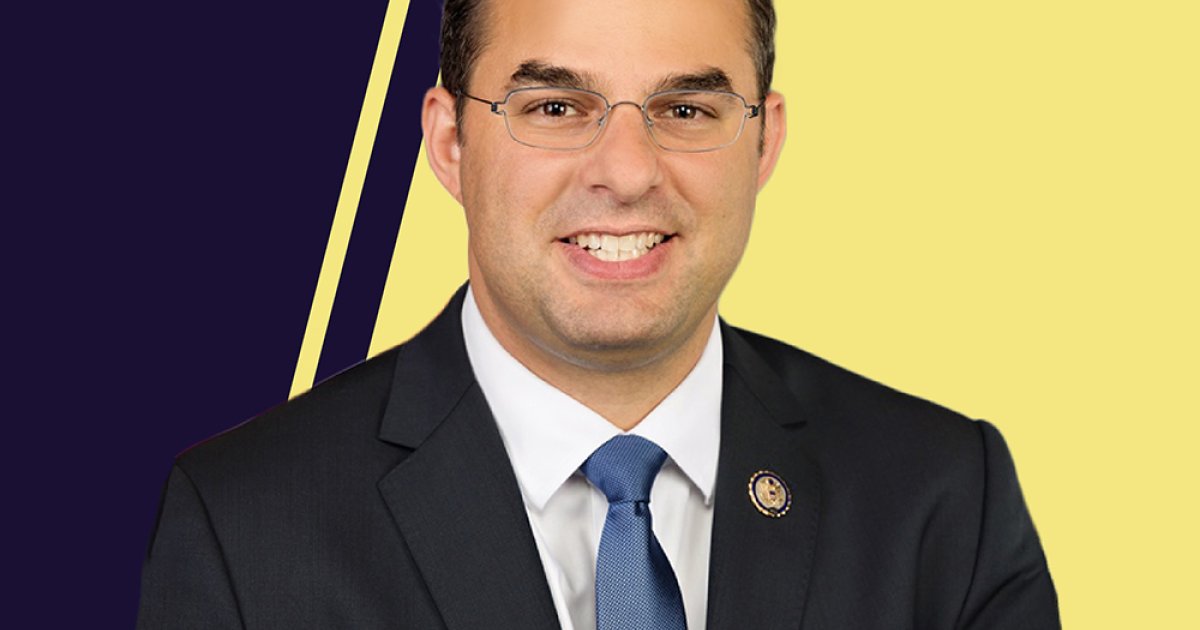
    Throughout his career, former Congressman Justin Amash
    has been a strong advocate for freedom of speech, writing that “The
    value of free speech comes from encountering views that are
    unorthodox, uncommon, or unaccepted…Free speech is a barren
    concept if people are limited to expressing views already widely
    held.”

    In this special live episode, filmed in front of 200+
    high schoolers attending FIRE’s Free Speech Forum at American
    University in Washington, D.C., Amash takes questions from the
    audience and discusses his upbringing, his political career, the
    state of American politics, and how the Constitution guided his
    work in Congress.

    Earlier this year, Congressman Amash
    joined
    FIRE’s Advisory Council.

    Timestamps:

    00:00 Intro

    03:30 Upbringing

    06:21 Law school

    13:15 Time in Congress

    15:59 Why Amash publicly explained each of his
    votes

    26:30 On being the first libertarian in Congress

    30:57 Connection between his principles and free
    speech

    33:10 Trump’s first impeachment

    42:48 Dealing with pushback from constituents

    46:03 Term limits for members of Congress?

    55:25 How high schoolers can pursue a career in
    politics

    59:45 Has there been a regression in First Amendment
    protections?

    01:07:32 What Amash is up to now

    01:08:06 Outro

    Enjoy listening to the podcast? Donate to FIRE today and
    get exclusive content like member webinars, special episodes, and
    more. If you became a FIRE Member
    through a donation to FIRE at thefire.org and would like access to
    Substack’s paid subscriber podcast feed, please email
    [email protected].

    Source link

  • Extortion in plain sight | The Foundation for Individual Rights and Expression

    Extortion in plain sight | The Foundation for Individual Rights and Expression

    This essay was originally published by The Dispatch on July 4, 2025.


    Paramount Global’s decision to pay $16 million to end President Donald Trump’s lawsuit over a 60 Minutes interview with Kamala Harris was a “win for the American people,” according to Trump’s lawyers. And it happened because “CBS and Paramount Global realized the strength of this historic case and had no choice but to settle.”

    Well, not quite.

    The case is “historic” for sure, but not in a good way or because the advocates came up with profound theories of media law. Quite to the contrary: The case is so baseless, so devoid of factual or legal support, and so diametrically opposed to basic First Amendment principles it is hard to imagine how those who filed it sleep at night. 

    The main question about Paramount’s decision to settle this comically frivolous lawsuit is not why the company decided to settle, but why did resolving it take this long if the “historic case” were so “strong?” The reason for the settlement is obvious. Paramount, the corporate parent of the CBS television network, had a gun to its head. 

    Paramount must get approval from the Federal Communications Commission for its proposed $8 billion merger with Skydance Media (which includes the transfer of 28 CBS-owned and -operated broadcast stations). The merger agreement expired April 7 but was extended to July 7. So it was pay-up or shut-up time.

    The holdup, in every sense of that word, came in the form of FCC Chairman Brendan Carr, whom President Trump elevated to head the commission on Inauguration Day. As one of his first official acts, Carr opened his own investigation of the Harris interview over supposed “news distortion,” and he slow-rolled the FCC’s merger review process. The Securities and Exchange Commission and European regulators had approved the merger back in February, but the FCC continued to “ponder” the matter as the deal clock ticked down.

    Trump’s $16M win over ’60 Minutes’ edit sends chilling message to journalists everywhere

    Trump’s $16M win over a “60 Minutes” edit sends a chilling message to journalists everywhere. FIRE’s Bob Corn-Revere calls it what it is: the FCC playing politics.


    Read More

    But let’s give him the benefit of the doubt: Couldn’t it be that Carr was just carefully considering nuanced issues of media law in order to safeguard the public from big-network media bias? After all, Trump had claimed that CBS had edited its interview deceptively to make Harris “look better” — something he called “totally illegal,” an “UNPRECEDENTED SCANDAL,” and for which the FCC should “TAKE AWAY THE CBS LICENSE.” Never mind that networks are not licensed by the FCC (stations are), the rant led to the lawsuit in Texas and later the FCC investigation.

    Loopy all-cap social media posts aside, there was never a legitimate basis either for the lawsuit or the FCC action. Every day, from the smallest newspaper to the largest network, reporters and editors must digest and condense the information they collect — including quotes from politicians and other newsmakers — to tell their stories concisely and understandably. For instance, Trump has repeatedly received the same treatment. Fox News repeatedly edited interviews with then-candidate Trump during the campaign, editing answers to enhance coherence, eliminate digressions, and excise insults. Making sense of the stuff that pours from politicians’ mouths is not easy. And here, CBS was accused of something unforgivable: committing standard journalism. 

    This was never about swapping out answers to different questions or rewriting answers, as Trump and his supporters falsely claim. During the interview, 60 Minutes correspondent Bill Whitaker asked then-Vice President Harris a question about the Biden administration’s relationship with Israeli Prime Minister Benjamin Netanyahu: 

    MR. BILL WHITAKER: But it seems that Prime Minister Netanyahu is not listening. The Wall Street Journal said that he — that your administration has repeatedly been blindsided by Netanyahu, and in fact, he has rebuffed just about all of your administration’s entreaties.

    VICE PRESIDENT KAMALA HARRIS: Well, Bill, the work that we have done has resulted in a number of movements in that region by Israel that were very much prompted by, or a result of many things, including our advocacy for what needs to happen in the region. And we’re not going to stop doing that. We are not going to stop pursuing what is necessary for the United States to be clear about where we stand on the need for this war to end.

    CBS broadcast two excerpts of Harris’ answer on two separate programs: On Face the Nation, CBS aired the first sentence of Harris’ answer. On 60 Minutes, CBS aired the last sentence of the answer. Really — that’s all this is about.

    The FCC in the past has never defined the editing process as “news distortion.” In fact, it has steadfastly maintained the First Amendment bars it from doing so. Chairman Carr’s decision to reopen a closed complaint in a matter he knows to be baseless and beyond the FCC’s authority is unprecedented and indefensible.

    We need a far stronger word than ‘hypocrite’ to capture this moment. We have a president who on day one issued an executive order purporting to ‘restore free speech’ … [then] deployed agency heads to retaliate against news organizations that displease him.

    And the arguments in the now-settled lawsuit are even more frivolous (if that’s even possible). Trump’s lawyers argued that the Harris interview violated the Texas Deceptive Trade Practices Act and the federal Lanham Act as a “false, misleading, or deceptive act or practice” and asserted $20 billion in damages. Those laws are designed to prevent consumer deception in marketing practices (like turning back the odometer on a used car) or false advertising. They simply don’t apply to editorial judgments by news organizations. No court in any jurisdiction has ever held that such a cause of action might be valid, and few plaintiffs have ever attempted to bring such outlandish claims. Those who have done so were promptly dismissed.

    But who needs good arguments or supporting legal authority when federal regulators are willing to ignore their oath to uphold the Constitution and back your political power play?

    Of course, Carr has maintained that there was no link between the Texas lawsuit and the FCC’s merger review or news distortion investigation. But let’s get real. Before he was named chairman, Carr said he didn’t think the 60 Minutes interview “should be a federal case,” and “we don’t want to get into authenticating news or being a Ministry of Truth.”

    But once Trump announced Carr as his pick to head the agency, Carr changed his tune, telling Fox News the FCC would review the 60 Minutes complaint while considering whether to approve the Paramount-Skydance merger. The hypocrisy here is staggering. As chairman, Carr has routinely boasted that he wants to move quickly to spur business and investment. Yet here, he mysteriously lagged in reviewing the Paramount Global-Skydance merger (coincidentally, no doubt) as settlement negotiations dragged on in Texas.

    We need a far stronger word than “hypocrite” to capture this moment. We have a president who on day one issued an executive order purporting to “restore free speech” and to bar any federal official from engaging in censorship. At the same time, the very same president deployed agency heads to retaliate against news organizations that displease him and to do so in support of his private litigation efforts. And we have an FCC chairman who used to say things like “[a] newsroom’s decision about what stories to cover and how to frame them should be beyond the reach of any government official, not targeted by them,” who has made micromanaging news editing a defining principle of his administration.

    Meanwhile, settlement of Trump’s case against CBS and the anticipated merger approval raise some significant questions. Sens. Elizabeth Warren, Bernie Sanders, and Ron Wyden have asked whether the settlement might violate federal bribery laws, which prohibit corruptly giving anything of value to public officials to influence an official act. In a similar vein, the Freedom of the Press Foundation has threatened (as a Paramount shareholder) to bring a derivative action against the company for conflict of interest, and last May filed a shareholder information demand. 

    Whatever else may happen, this week’s settlement announcement is not the end of this saga. But one thing is clear: The bullying tactics that led to this settlement stain our nation’s character and taint not just those who engage in them but also those who give in.

    Source link

  • Is cancel culture dead? | The Foundation for Individual Rights and Expression

    Is cancel culture dead? | The Foundation for Individual Rights and Expression

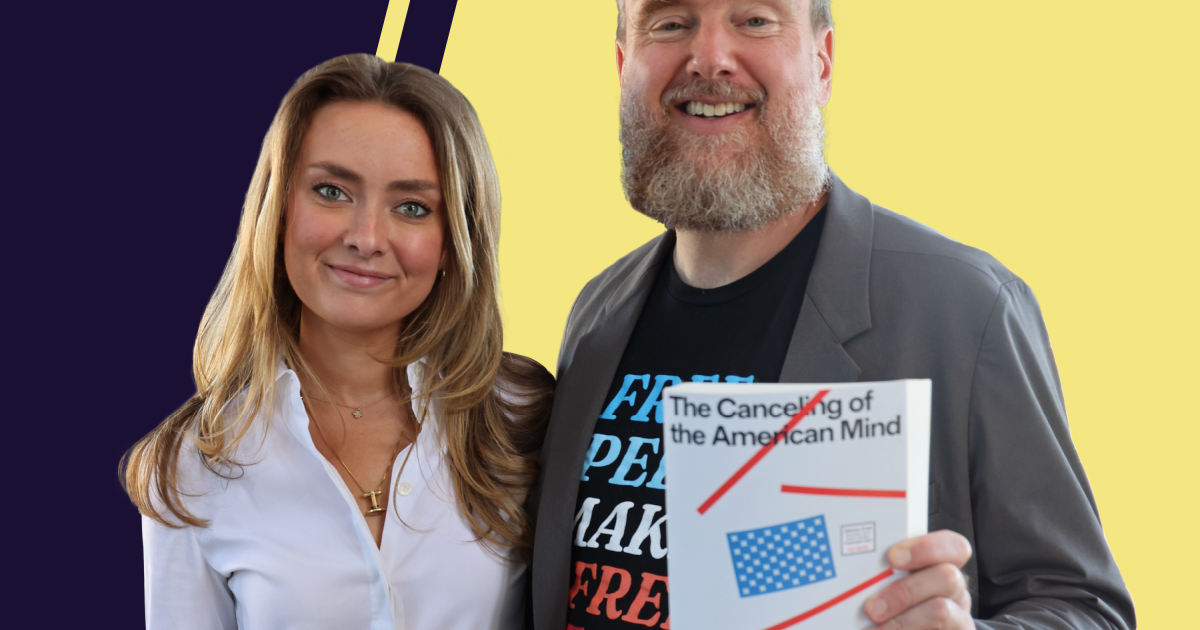
    The co-authors of “The Canceling of the American Mind”
    discuss its new paperback release and where cancel culture stands a
    year and a half after the book’s original publication.


    Greg Lukianoff

    Rikki Schlott

    Timestamps:

    00:00 Intro

    04:35 Origin of book

    07:56 Definition of cancel culture

    17:55 Mike Adams, canceled professor

    23:51 Alexi McCammond, former Teen Vogue
    editor-in-chief

    31:57 Echo chambers on social media

    35:09 Trump administration ‘canceling’ law firms and
    higher ed institutions

    44:02 Rikki’s libertarian political identity

    51:02 Is cancel culture dead?

    54:26 Outro


    Read the transcript.

    Enjoy listening to the podcast? Donate to FIRE today and
    get exclusive content like member webinars, special episodes, and
    more. If you became a FIRE Member
    through a donation to FIRE at thefire.org and would like access to
    Substack’s paid subscriber podcast feed, please email [email protected].

    Show notes:

    Source link

  • On Mahmoud Khalil | The Foundation for Individual Rights and Expression

    On Mahmoud Khalil | The Foundation for Individual Rights and Expression

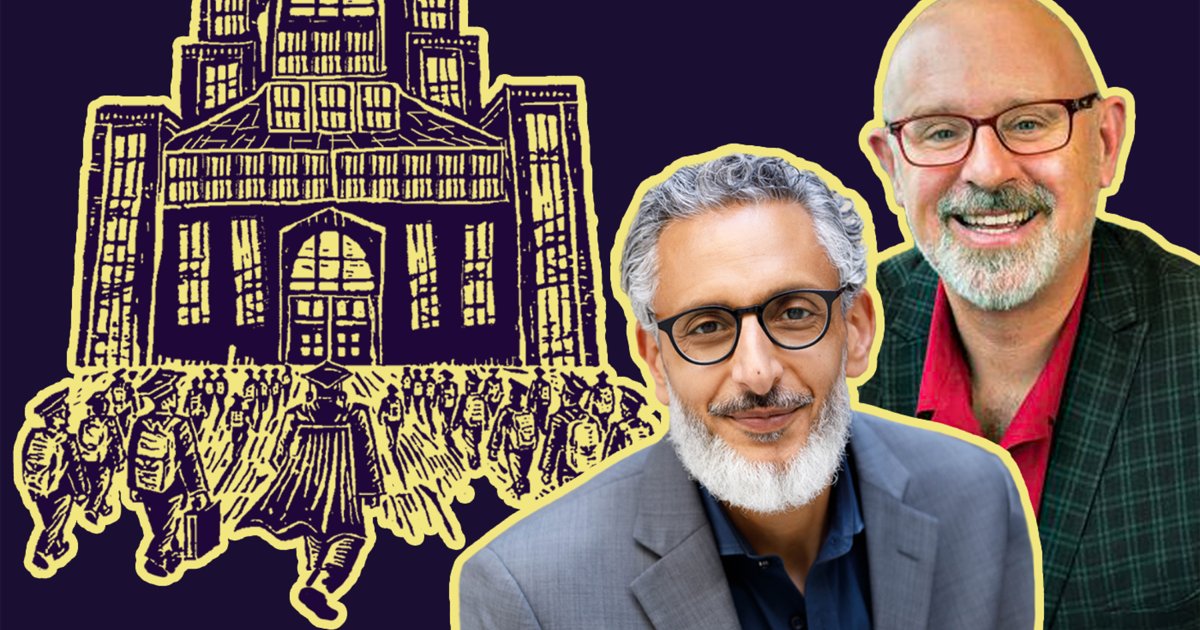
    First Amendment lawyer
    Marc Randazza
    and immigration lawyer
    Jeffrey Rubin
    join the show to discuss the arrest,
    detention, and possible deportation of green card holder Mahmoud
    Khalil.

    Timestamps:

    00:00 Intro

    00:53 Latest updates on Khalil

    02:51 First Amendment implications

    06:08 Legal perspectives on deportation

    11:54 Chilling effects on free expression

    21:06 Constitutional rights for non-citizens

    24:03 The intersection of free speech and immigration
    law

    27:02 Broader implication of immigration policies

    37:51 Outro

    Enjoy listening to the podcast? Donate to FIRE today and
    get exclusive content like member webinars, special episodes, and
    more. If you became a FIRE Member
    through a donation to FIRE at thefire.org and would like access to
    Substack’s paid subscriber podcast feed, please email
    [email protected].

    Show notes:

    – “We will be
    revoking the visas and/or green cards of Hamas supporters in
    America so they can be deported.
    ” Secretary of State Marco
    Rubio via X (2025)

    – “‘ICE proudly
    apprehended and detained Mahmoud Khalil, a radical foreign
    Pro-Hamas student on the campus of @Columbia University. This is
    the first arrest of many to come.
    ‘ President Donald J.
    Trump” The White House via X (2025)

    – “WATCH: White
    House downplays stock market declines as ‘a snapshot’
    ” PBS
    NewsHour (2025)

    – “Secretary
    Rubio’s remarks to the press
    ” U.S. Department of State
    (2025)

    – “Mahmoud
    Khalil. Notice to appear.
    ” Habeeb Habeeb via X (2025)

    Source link

  • The Chicago Canon | The Foundation for Individual Rights and Expression

    The Chicago Canon | The Foundation for Individual Rights and Expression

    The University of Chicago is known for its commitment to free
    speech and academic freedom. Why are these values important to the
    university? Where do they originate? And how do they help
    administrators navigate conflicts and controversies?

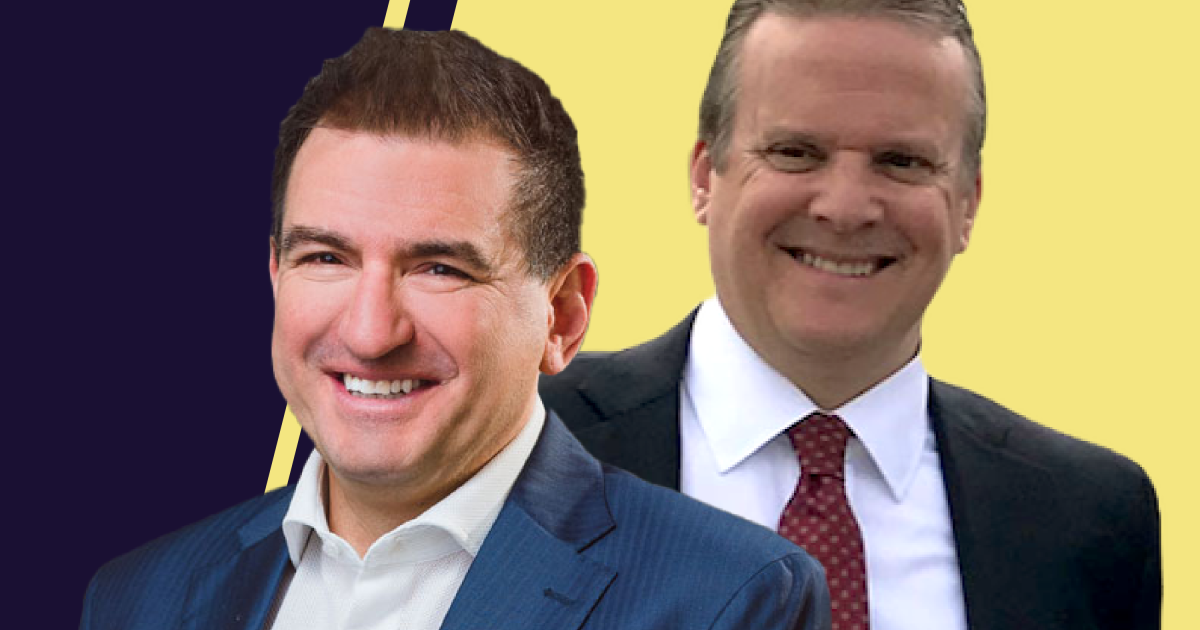
    Tony Banout and Tom Ginsburg direct the University of
    Chicago’s Forum for Free Inquiry
    and Expression
    , which
    received a $100 million gift
    last year. They are also
    editors of “The
    Chicago Canon on Free Inquiry and Expression
    ,” a new book
    that collects foundational texts that inform the university’s free
    speech tradition.

    Enjoy listening to our podcast? Donate to FIRE today and
    get exclusive content like member webinars, special episodes, and
    more. If you became a FIRE Member
    through a donation to FIRE at thefire.org and would like access to
    Substack’s paid subscriber podcast feed, please email
    [email protected].


    Read the transcript
    .

    Timestamps:

    00:00 Intro

    03:31 Origin of book

    07:14 UChicago’s founding principles

    12:41 Free speech in a university context

    19:17 2015 UChicago committee report

    32:03 1967 Kalven report

    38:02 Institutional neutrality

    57:41 Applying free speech principles beyond the
    university

    01:04:21 Future steps for the Forum

    01:06:35 Outro

    Show notes:


    The University of Chicago’s Report of the Committee on Freedom of
    Expression
    (2015)


    Chicago Statement: University and Faculty Body Support

    (last updated 2024)


    The University of Chicago Kalven Report
    (1967)

    Source link

  • Probabilities of generative AI pale next to individual ideas

    Probabilities of generative AI pale next to individual ideas

    While I was working on the manuscript for More Than Words: How to Think About Writing in the Age of AI, I did a significant amount of experimenting with large language models, spending the most time with ChatGPT (and its various successors) and Claude (in its different flavors).

    I anticipated that over time this experimenting would reveal some genuinely useful application of this technology to my work as a writer.

    In truth, it’s been the opposite, and I think it’s interesting to explore why.

    One factor is that I have become more concerned about what I see as a largely uncritical embrace of generative AI in educational contexts. I am not merely talking about egregiously wrongheaded moves like introducing an AI-powered Anne Frank emulator that has only gracious thoughts toward Nazis, but other examples of instructors and institutions assuming that because the technology is something of a wonder, it must have a positive effect on teaching and learning.

    This has pushed me closer to a resistance mindset, if for no other reason than to provide a counterbalance to those who see AI as an inevitability without considering what’s on the other side. In truth, however, rather than being a full-on resister I’m more in line with Marc Watkins, who believes that we should be seeing AI as “unavoidable” but not “inevitable.” While I think throwing a bear hug around generative AI is beyond foolish, I also do not dismiss the technology’s potential utility in helping students learn.

    (Though, a big open question is what and how we want them to learn these things.)

    Another factor has been that the more I worked with the LLMs, the less I trusted them. Part of this was because I was trying to deploy their capabilities to support me on writing in areas where I have significant background knowledge and I found them consistently steering me wrong in subtle yet meaningful ways. This in turn made me fearful of using them in areas where I do not have the necessary knowledge to police their hallucinations.

    Mostly, though, just about every time I tried to use them in the interests of giving myself a shortcut to a faster outcome, I realized by taking the shortcut I’d missed some important experience along the way.

    As one example, in a section where I argue for the importance of cultivating one’s own taste and sense of aesthetic quality, I intended to use some material from New Yorker staff writer Kyle Chayka’s book Filterworld: How Algorithms Flattened Culture. I’d read and even reviewed the book several months before, so I thought I had a good handle on it, but still, I needed a refresher on what Chayka calls “algorithmic anxiety” and prompted ChatGPT to remind me what Chayka meant by this.

    The summary delivered by ChatGPT was perfectly fine, accurate and nonhallucinatory, but I couldn’t manage to go from the notion I had in my head about Chayka’s idea to something useful on the page via that summary of Chayka’s idea. In the end, I had to go back and reread the material in the book surrounding the concept to kick my brain into gear in a way that allowed me to articulate a thought of my own.

    Something similar happened several other times, and I began to wonder exactly what was up. It’s possible that my writing process is idiosyncratic, but I discovered that to continue to work the problem of saying (hopefully) interesting and insightful things in the book was not a summary of the ideas of others, but the original expression of others as fuel for my thoughts.

    This phenomenon might be related to the nature of how I view writing, which is that writing is a continual process of discovery where I have initial thoughts that bring me to the page, but the act of bringing the idea to the page alters those initial thoughts.

    I tend to think all writing, or all good writing, anyway, operates this way because it is how you will know that you are getting the output of a unique intelligence on the page. The goal is to uncover something I didn’t know for myself, operating under the theory that this will also deliver something fresh for the audience. If the writer hasn’t discovered something for themselves in the process, what’s the point of the whole exercise?

    When I turned to an LLM for a summary and could find no use for it, I came to recognize that I was interacting not with an intelligence, but a probability. Without an interesting human feature to latch onto, I couldn’t find a way to engage my own humanity.

    I accept that others are having different experiences in working alongside large language models, that they find them truly generative (pardon the pun). Still, I wonder what it means to find a spark in generalized probabilities, rather than the singular intelligence.

    I believe I say a lot of interesting and insightful things in More Than Words. I’m also confident I may have some things wrong and, over time, my beliefs will be changed by exposing myself to the responses of others. This is the process of communication and conversation, processes that are not a capacity of large language models given they have no intention working underneath the hood of their algorithm.

    Believing otherwise is to indulge in a delusion. Maybe it’s a helpful delusion, but a delusion nonetheless.

    The capacities of this technology are amazing and increasing all the time, but to me, for my work, they don’t offer all that much of meaning.

    Source link