Tag: Indonesia

  • McGill in $12.8m trilateral partnership with UAE and Indonesia

    McGill in $12.8m trilateral partnership with UAE and Indonesia

    The $12.8 million in funding, provided by the Khalifa Bin Zayed Al Nahyan Foundation, will establish the UAE-Indonesia Future Leaders Program – a five-year scheme designed to support talent development in sustainability, infrastructure, health, and teacher education.

    It signals the growing emphasis on the transnational partnerships that connect the Gulf’s philanthropy, Southeast Asian development priorities, and North American higher education expertise.

    The academic and organisational partnerships developed will capitalise on the important ties between Indonesia and the United Arab Emirates
    Deep Saini, McGill University

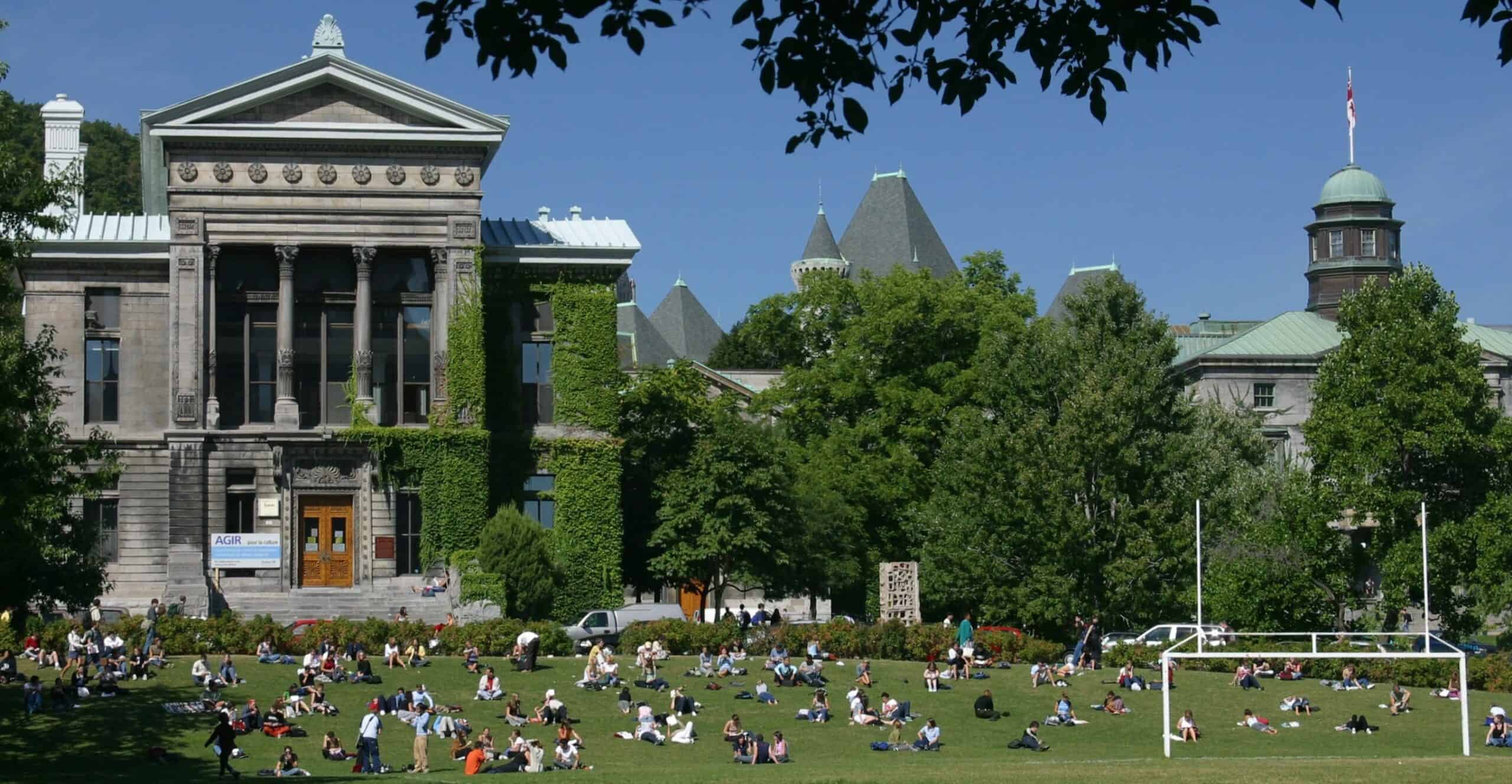
    “The impact of this new program will be far-reaching, across disciplines and countries, and the academic and organisational partnerships developed will capitalise on the important ties between Indonesia and the United Arab Emirates, while building on McGill’s expertise and international reputation,” stated Deep Saini, president and vice-chancellor of McGill University.

    For more than 50 years, McGill University has worked with Indonesian institutions on academic exchange and research collaboration. This latest initiative formalises and scales that engagement, positioning the Canadian institution as a hub for training Indonesian educators, researchers, and sector professionals while also fostering stronger institutional ties with Emirati universities.

    The program will be implemented by McGill University in collaboration with Indonesia’s Ministry of Primary and Secondary Education, and the University of Indonesia, with the participation of UAE University, Zayed University, University of Sharjah, and Khalifa University.

    This includes scholarships, professional development for teachers, and research awards.

    Through skill development based on McGill University’s international leadership in education and administrative development (ILEAD) curriculum, the program seeks to improve the abilities of educators, school principals, and administrators.

    The initiative will concentrate on enhancing faculty competencies at the University of Indonesia, supporting graduates’ transition into the private sector, building national capacity in health and sustainability, and offering graduate and postdoctoral programs, joint master’s and doctoral fellowships, research fellowships, executive leadership development, and advanced training to Indonesian researchers and postgraduate students.

    This closely aligns with Indonesia’s domestic development agenda, particularly in strengthening education systems and building workforce capacity in strategic industries. A core component that will target teachers, school leaders, and administrators, who will take part in the leadership training delivered through McGill’s education faculty.

    By focusing professional development rather than only postgraduate mobility, the scheme aims to extend its impact beyond universities into schools and local communities.

    “High-quality teachers and school leaders are among the most cost-effective and enduring investments a nation can make. Through this collaboration with the UAE and McGill University, we aim to strengthen teaching practice, school leadership, and learning outcomes by expanding structured professional development for educators and administrators,” said Abdul Mu’ti, minister of primary and secondary education, Indonesia.

    “Together, we will build a pipeline of high-calibre Indonesian education professionals who will deliver change and deepen people-to-people ties among Indonesia, the UAE, and Canada. We will ensure this next generation of professionals is not limited to university researchers, but extends to primary and secondary education, so that knowledge gained at McGill reaches schools and communities across Indonesia.”

    Indonesia’s government is supercharging its education landscape, with President Prabowo Subianto saying he wants to see more university campuses focussing on medicine and STEM in the country, as well as signalling an openness towards TNE partnerships with other countries.

    Source link

  • British Council honours Indonesian UK alumni at glitzy awards ceremony

    British Council honours Indonesian UK alumni at glitzy awards ceremony

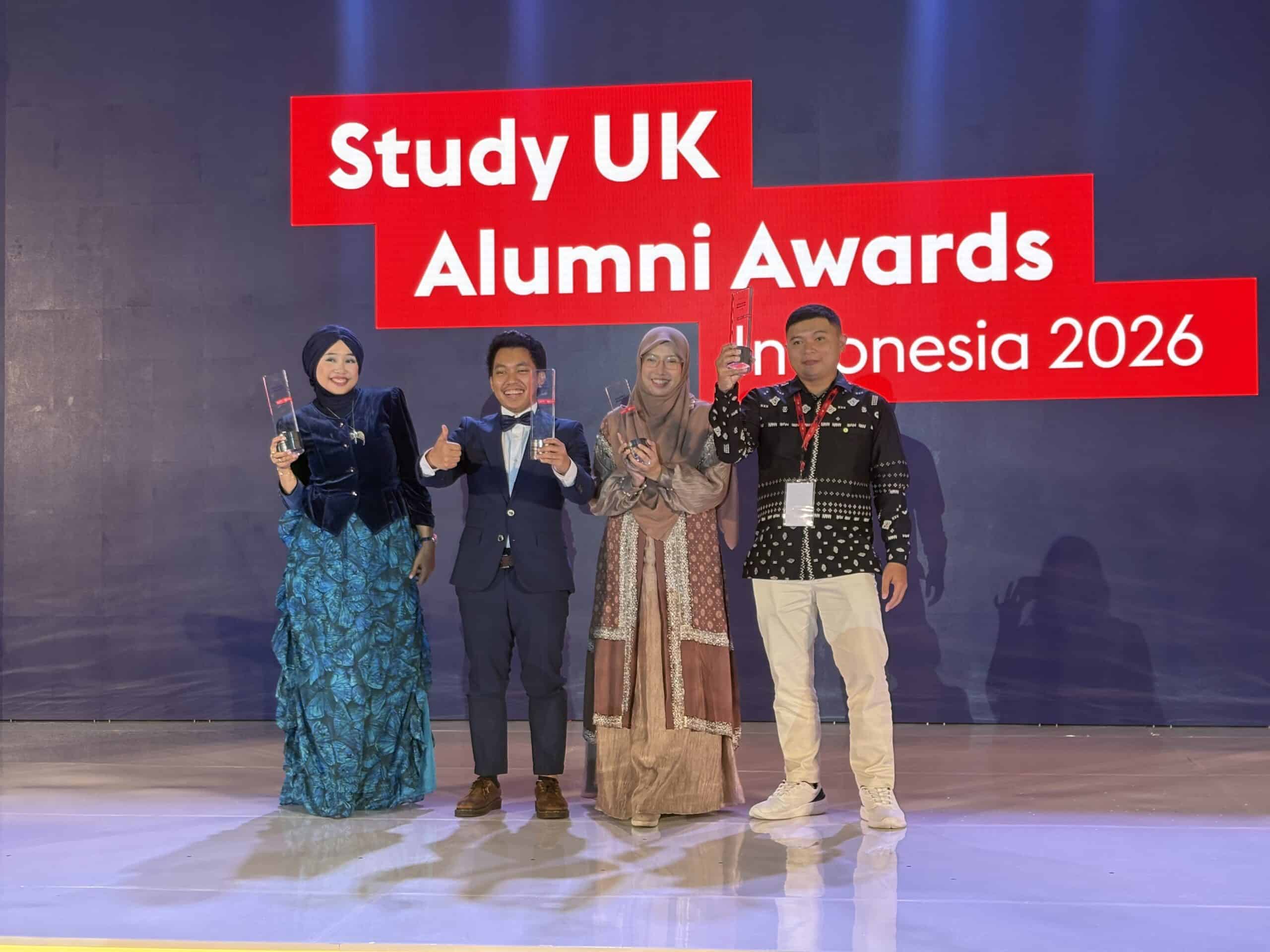
    The eighth edition of the awards was held as a gala dinner celebration in the Indonesian capital of Jakarta on February 6 and was the final event of East Asia Education Week 2026, which also featured events dedicated to agents and transnational education.

    Alumni were recognised across four categories; business and innovation, culture, creativity and sport, science and sustainability, and social action. The British Council’s Study UK Alumni Awards is celebrated in multiple ceremonies throughout the world, and finalists can then apply for the worldwide award in one of the four categories.

    Summer Xia, country director Indonesia and director South East Asia at the British Council highlighted the exceptional work of the finalists, as well as drawing attention to the benefits of studying in the UK.

    “You show what UK education looks like in action. Curiosity that never switches off. Confidence to collaborate across cultures and the courage to lead with purpose,” he told the audience.

    Each finalist’s achievements were showcased as they were announced in their category, with the winners facing stiff competition in their respective fields.

    Muh Agung Saputra, who graduated from Imperial College London, took home the Business and Innovation Award. He founded Surplus Indonesia, a climate-tech platform that transforms surplus or imperfect goods into affordable essentials for Indonesians.

    Though his work, Saputra has helped over one million people, created over 100 green jobs and reused 10,000 tons of products.

    He told The PIE News that it was “such an honour” to go home with the award, hoping that it would inspire the children in his home region of Papua to complete their education in the UK as well.

    The Culture, Creativity and Sport Award was given to Dinda Intan Prasmeti Putri – an alumni of Edinburgh’s Queen Margaret University as a Chevening Scholar and a cultural policy and festival ecosystem specialist. Her work has boosted Yogyakarta’s creative sector, helping it become a designated City of Festivals in 2025.

    She said she was “absolutely happy” to win in her category. “Studying in the UK means everything – experience, culture, the festival itself,” she said.

    Meanwhile, Dewi Nur Aisyah – who graduated from both University College London and Imperial College London as an Indonesia Presidential Scholar – took home the Science and Sustainability Award. She helped to shape Indonesia’s Covid-19 data system and has continued to lead on national digital health initiatives.

    “Studying in the UK really shaped how I think today,” she told The PIE. “I lead, I decide. It’s not only pursuing a degree – it’s more than that.”

    Studying in the UK really shaped how I think today. I lead, I decide. It’s not only pursuing a degree – it’s more than that
    Dewi Nur Aisyah, Science and Sustainability Award winner

    Mirza Idha Saifuddin, a Chevening Scholar and University of Warwick graduate, won the Social Action Award after dedicating his time towards addressing educational inequality on his remote hometown of Sawahan, Nganjuk. Over 13 years, he has helped to grow a tuition-free school from 17 to 240 students annually.

    He told The PIE that studying in the UK had allowed him to help “transform” his community by giving them access to a sustainable education model.

    Source link

  • Summer Xia, British Council

    Summer Xia, British Council

    Describe yourself in three words or phrases.

    Curious, positive, passionate.

    What do you like most about your job?

    I love working in a region where education genuinely transforms lives – and where every partnership feels like building a bridge between people, cultures, and future possibilities.

    Describe a project or initiative you’re currently working on that excites you.

    I’m very excited about the UK-Indonesia Education Roundtable I helped organise during President Prabowo’s recent visit to London. It brought together the President and senior leaders from 20 UK universities – something that doesn’t happen every day. Out of that meeting, we launched the new UK-Indonesia University Network, which will bring institutions together to collaborate on teaching, research and innovation in a much more strategic way. It genuinely feels like the start of something big.

    What’s a piece of work you’re proud of – and what did it teach you?

    I’m proud of helping UK and Indonesian partners navigate the early stages of transnational education – especially supporting new branch campuses and joint programs through the British Council’s Going Global Partnerships grants, including the King’s College London partnership in the Singhasari Special Economic Zone. It taught me that real progress often comes from patient relationship‑building and a willingness to walk with partners through uncertainty.

    What’s a small daily habit that helps you in your work?

    A five‑minute “reset walk” between meetings – usually around my apartment or the office. It clears my head, recentres me, and stops my calendar from swallowing my personality.

    What’s one change you’d like to see in your sector over the next few years?

    More student‑centred design in international education – not just programs built for institutions, but pathways shaped around real student needs, wellbeing, and aspirations.

    What idea, book, podcast or conversation has stayed with you recently?

    A recent conversation with our ASEAN‑UK SAGE Women in STEM scholars, who talked about wanting careers that make a real social impact in their communities, not just personal advancement. It reminded me how quickly expectations of education are shifting, and how responsible young people feel about the world – and how important it is that we keep up.

    What’s one piece of advice you’d give to someone starting out in this field?

    Stay curious, stay generous, and don’t underestimate the power of a well‑timed question. International education is ultimately about people – relationships will take you further than any job title.

    Source link